Online community management
Building on your stakeholder
engagement skills
Finding, growing and nurturing new
and existing relationships online
Time and resource
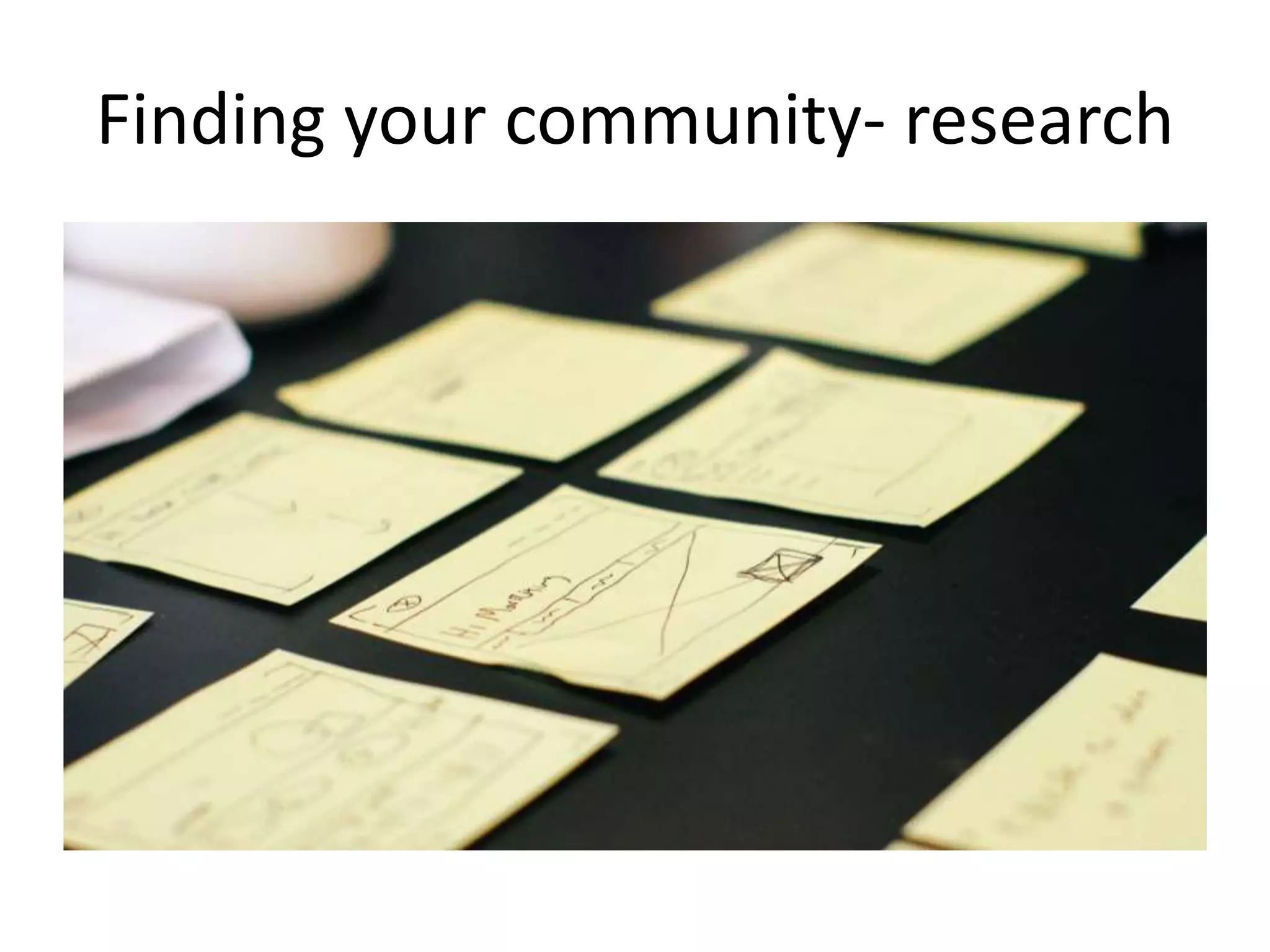
Finding your community- research
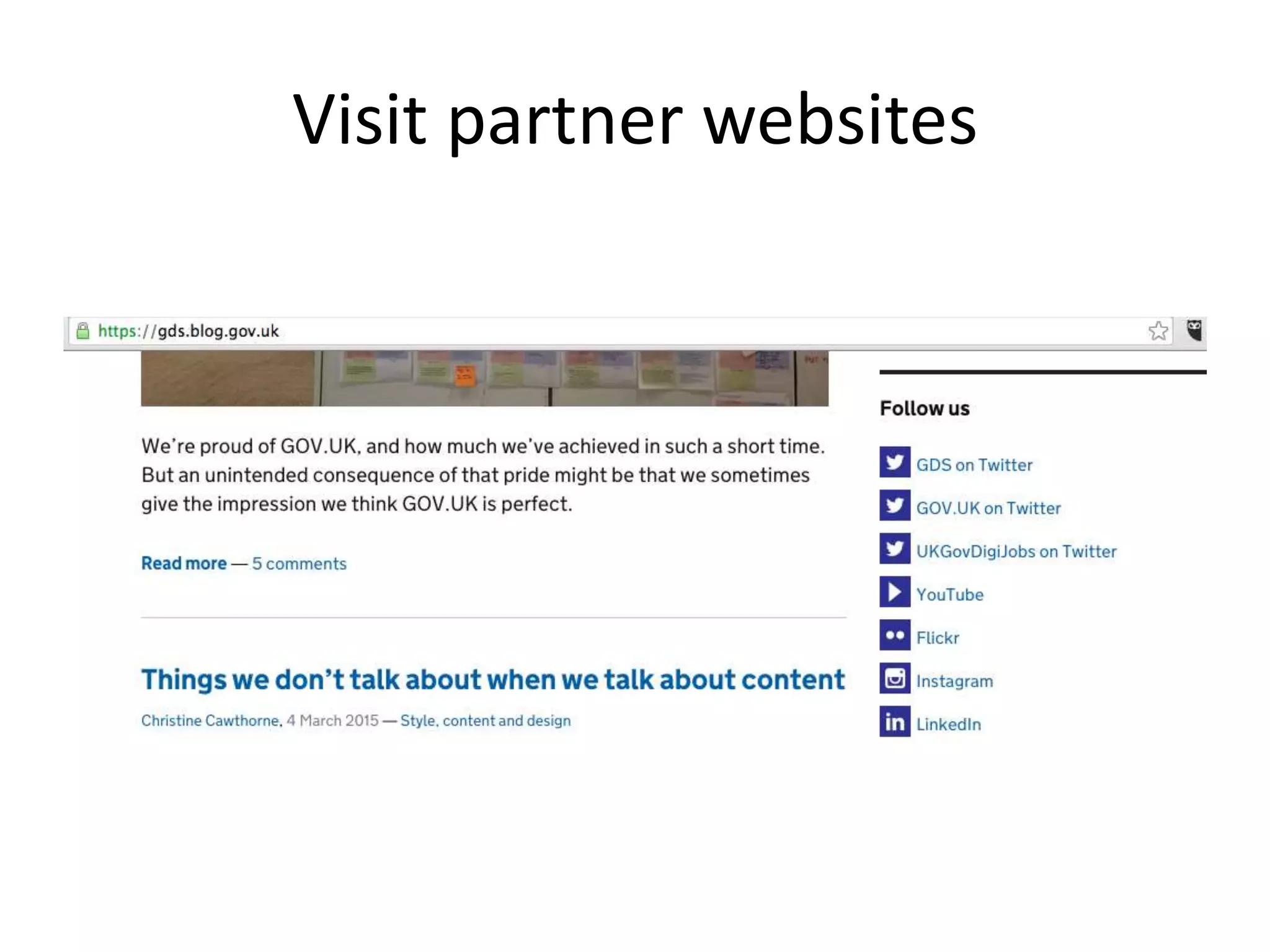
Visit partner websites
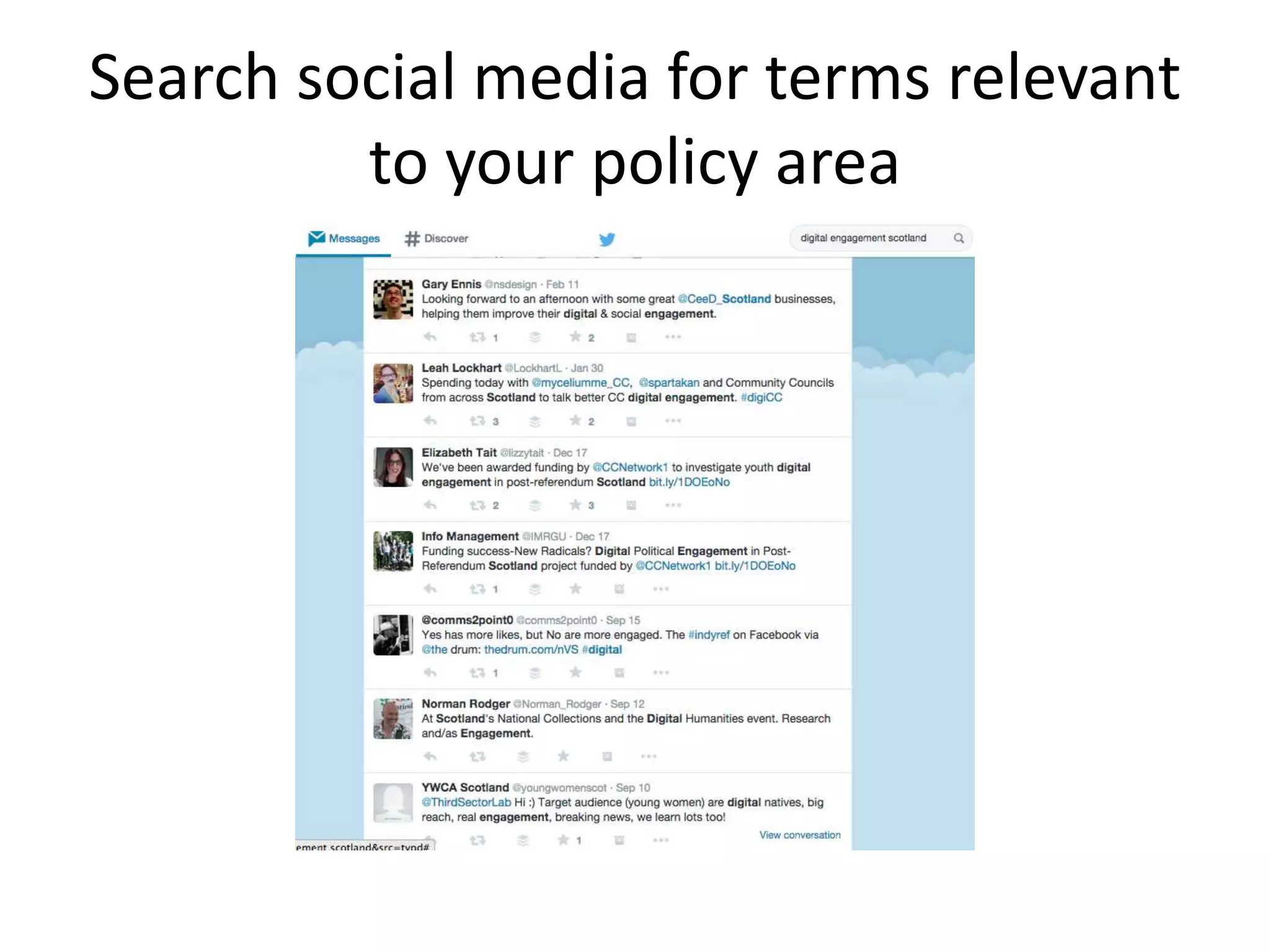
Search social media for terms relevant
to your policy area
After you’ve set up- some first steps
Content planning
Content planning- curation
• Subscribe to blogs
• Curation tools and websites
• Readers
• Attribution and copyright
Recruitment and outreach- new and
old members
New member recruitment
Focus on quality, not quantity.
Existing stakeholder recruitment
Focus on the keen beans and ask for their help.
Monitoring, analytics and reporting
Moderation and house rules
Assume people are trustworthy and considerate.
Address negativity and criticism head on and in
the open.
digitalengagement@scotland.gsi.gov.uk
@ScotGovEngage

Introduction to community management

Editor's Notes

  • #3 The stakeholder engagement skills you already have can easily be transitioned to doing engagement online. Complementing your existing engagement work with digital means you can reach more people who can inform your policy, you can gather useful intelligence about your business area and you can strengthen trust in government. Caveat: it is assumed you have a strategy in place before starting this work. If you need help with a digital engagement strategy, get in touch with our team.
  • #4 An online community manager is the front line of digital engagement and ideally has a good level of knowledge about the policy or business area and time built into their every day routine for looking after the team’s digital communities. There is no set amount of time a community manager should spend on their work
  • #5 Don’t lead with the platform. Do some research to find out where your audiences are before you open a bunch of accounts. Leading with the tool could be a waste of time and effort because you could be active in a place where none of your stakeholders are. Here are some ways you can start looking around to find your community….
  • #8 After you’ve done some research and determined where the best places are for you to be, here are some things you can do to start outreach and awareness raising.
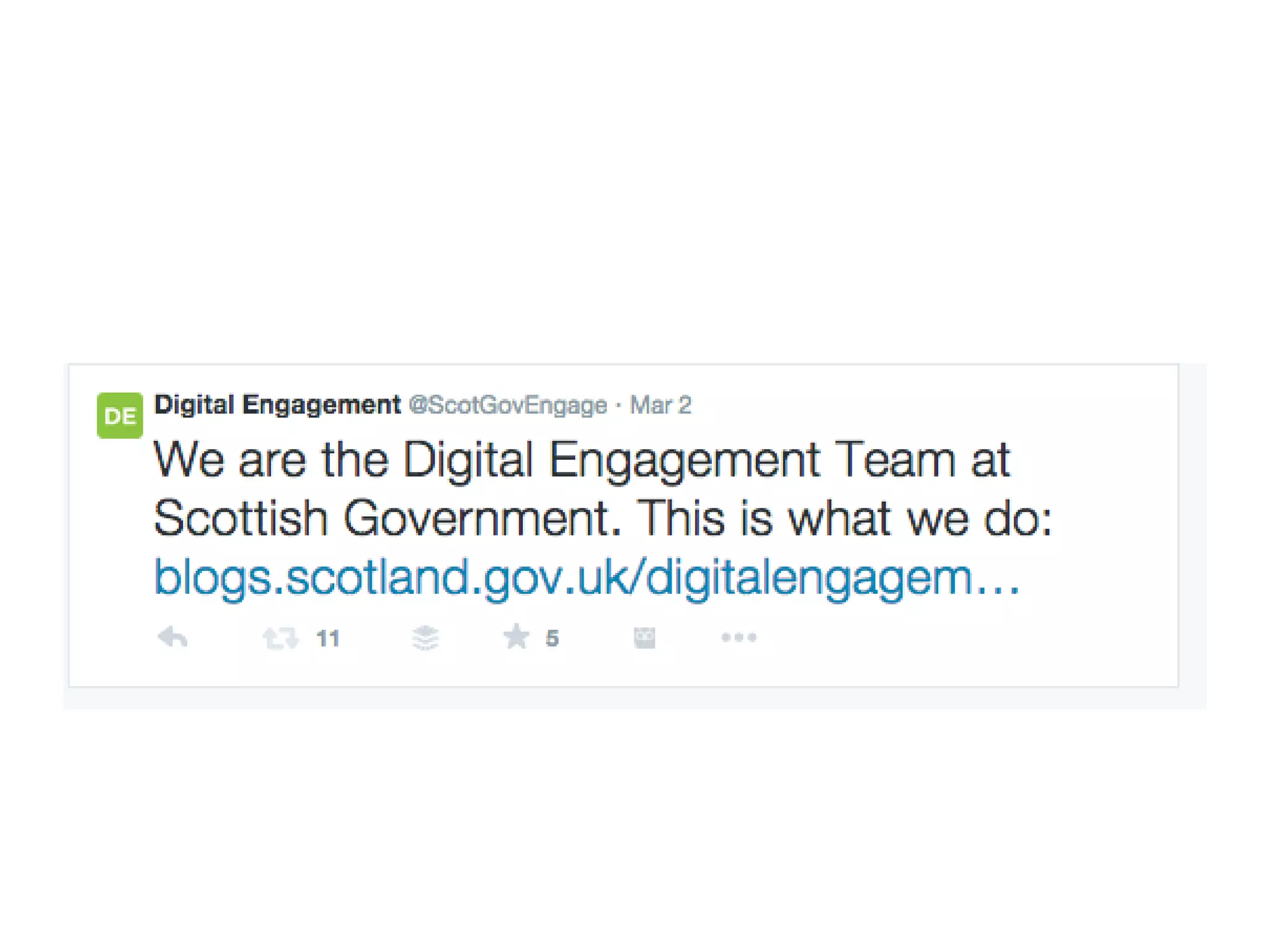
  • #9 We made sure we had a pre-populated space- a blog- and made sure our biography, real estate and first few follows were in place. We’re taking a slow, organic approach to building our audience and hoping word of mouth from followers and colleagues can help. We also make sure our accounts are highlighted in our face to face work.
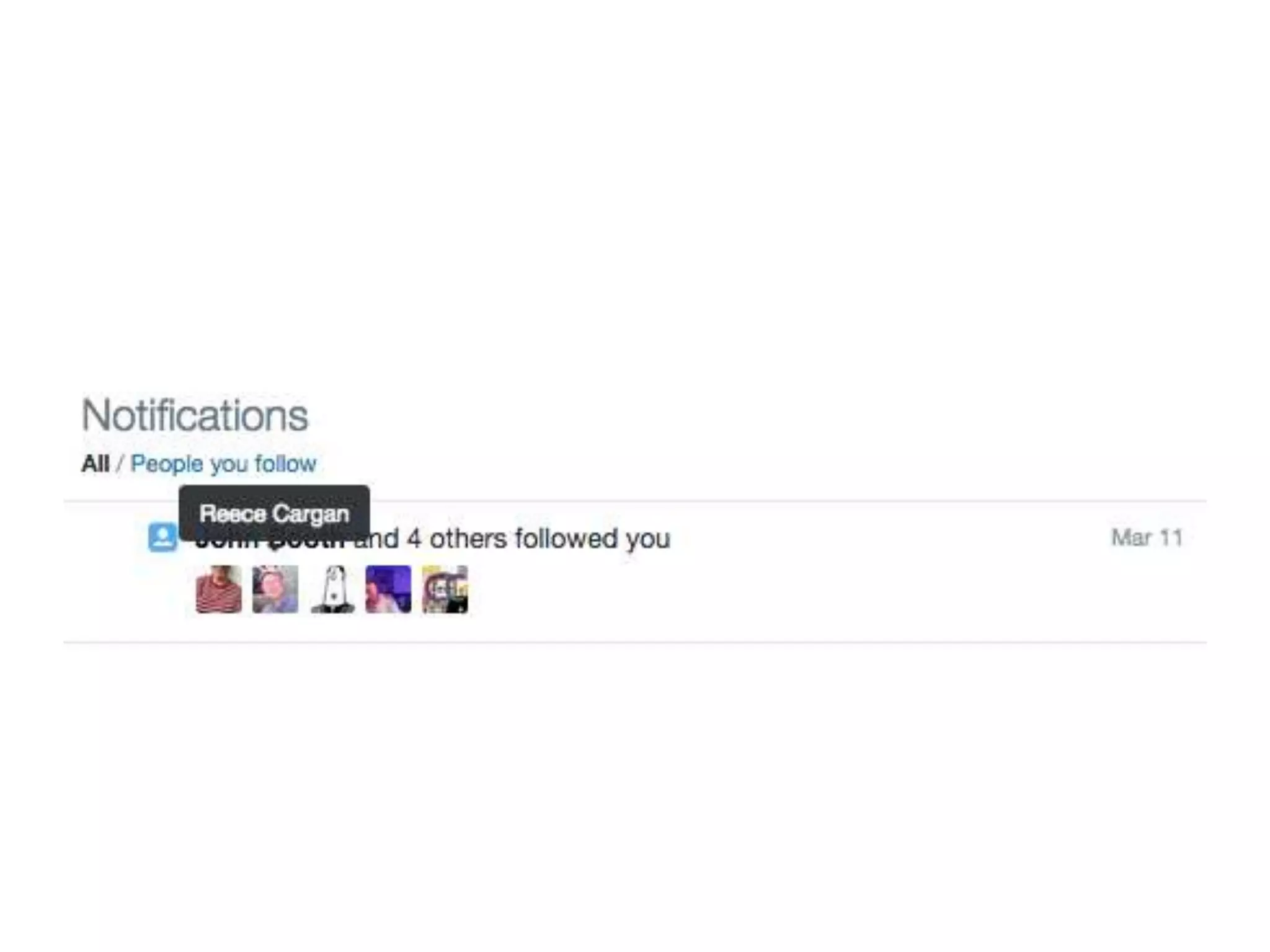
  • #10 When you start getting some attention, why not put a personal touch on some responses? Also dig into who the people and organisations are who are following you. Do you want to connect with them too?
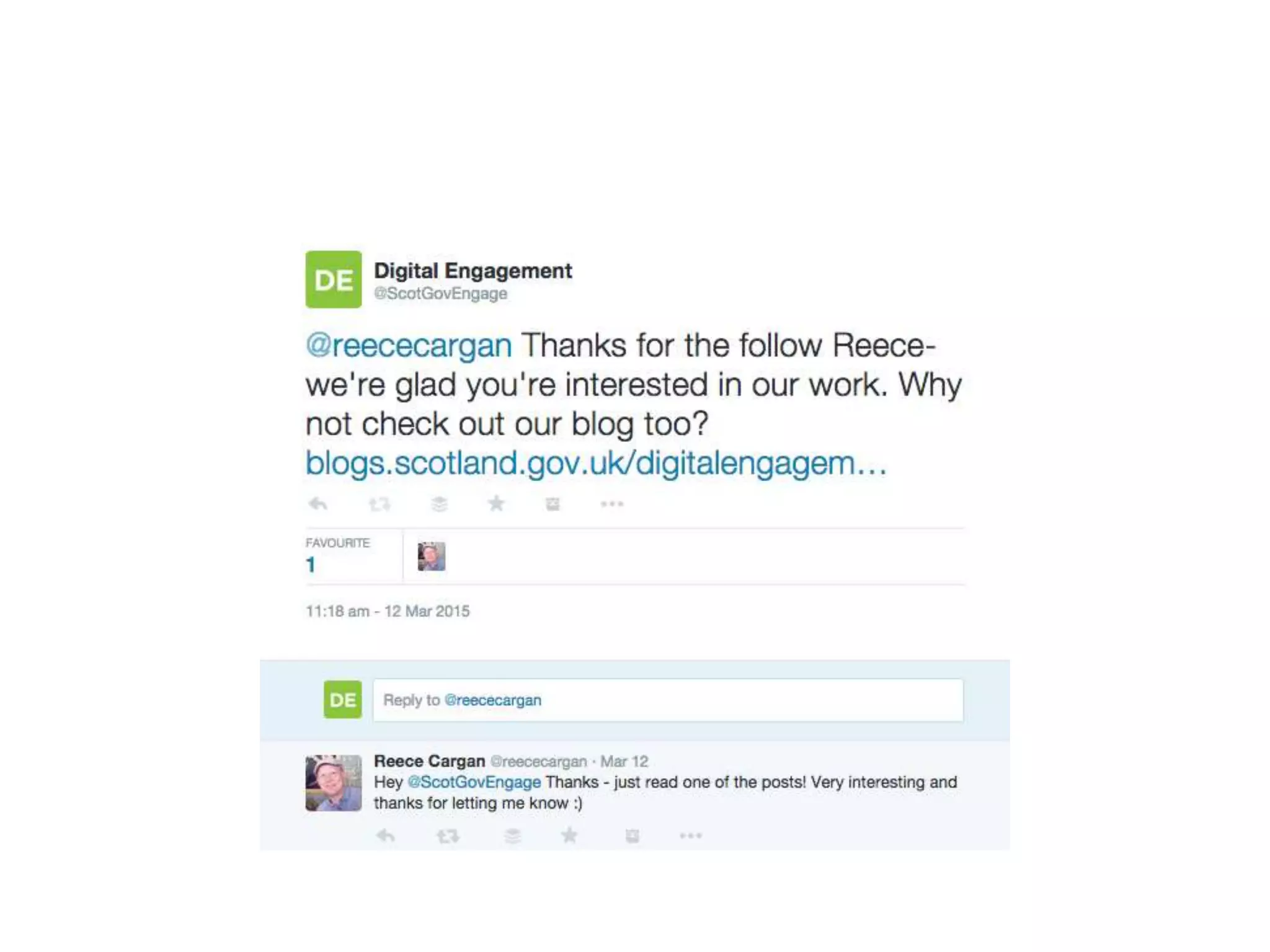
  • #11 Use a welcome message or an any outreach to promote your website, blog or additional pieces of information you want eyeballs on.
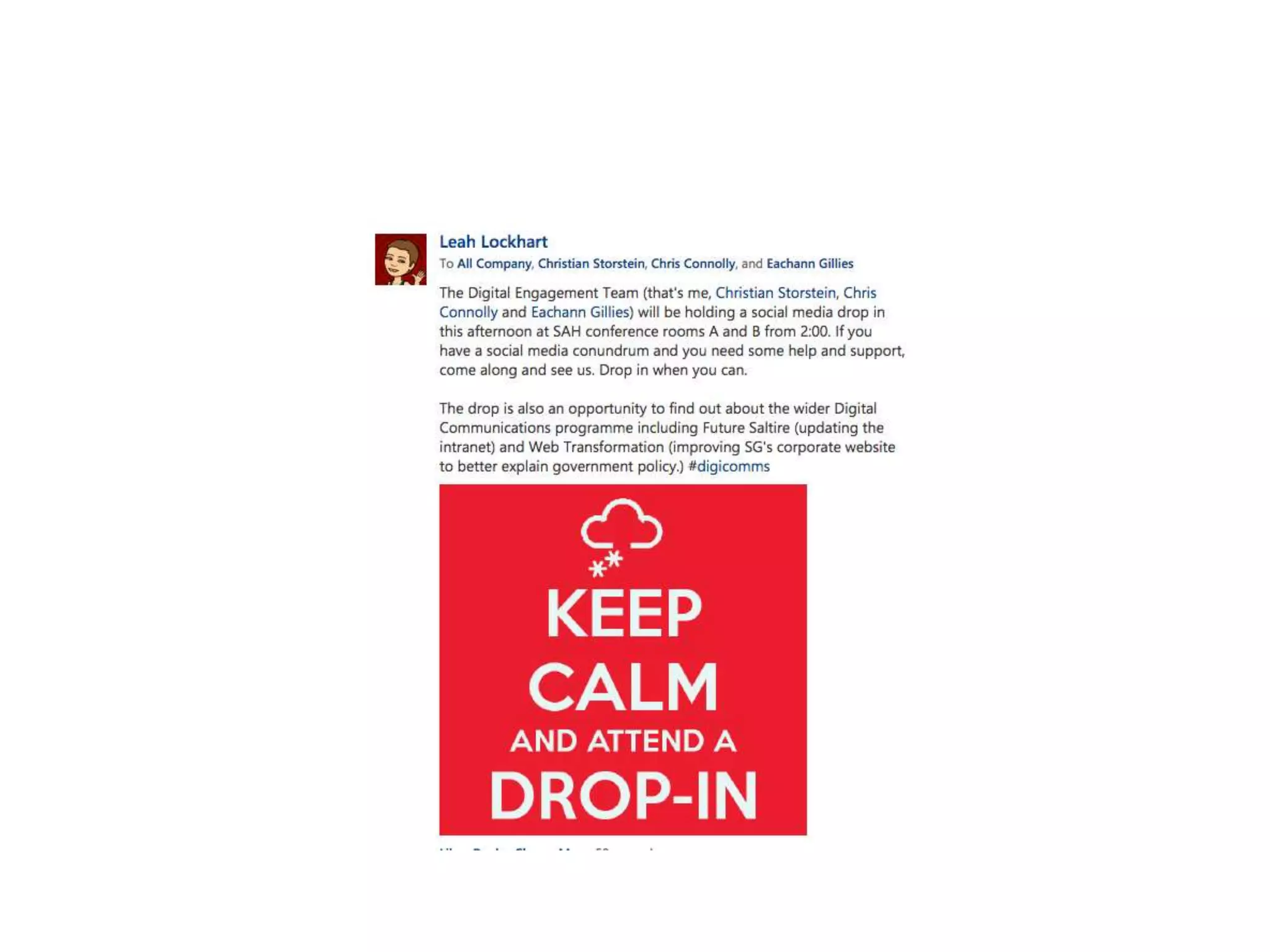
  • #12 Cheerleading. Don’t hesitate to raise awareness and toot your own horn. If you are just sending a message, think creatively about images, video, audio you might use to get more attention.
  • #13 Once you start connecting with people and getting attention, they’ll expect regular content that is informative, interesting and has value for them. Consider planning content for a period of time- maybe per week?- so your presence doesn’t go stale and you are being as active and transparent as possible. Unique content about your work is priority but you won’t always have stories to tell. In that case you can curate content to share.
  • #14 Blog subscriptions- Get updates right away. Turn content around fast or keep a hold of it for a time you’re stuck for unique content. Has the added benefit of making a new connection in a blogger, especially if they are influential. Curation tools and websites- great for isolating the type of content you want to know about. Can also be places to connect with others. Can usually push out to your social media right from the platform. Can be just articles or can also be visually led like Pinterest. Readers- tell you when a website has been updated
  • #15 This is about moving existing stakeholders to your new online space and doing outreach to find new people to join you online and perhaps offline as a consequence.
  • #16 This isn’t a numbers game. Chasing big numbers of followers might not result in engagement. Focus energy on influencers and people who are genuinely interested, excited about and engaged in your work. Take it slow, keep it organic and make sure you’re bringing in the right people, not the most people.
  • #17 You won’t move everyone at once. By focusing on the keen ones you can get help and real strong buy in by handing over some responsibility and showing you value their time. Maybe they can take a lead on some content or manage some of the work? Ask for their help in designing the community too. Get a shared sense of purpose and creating bonds.
  • #18 There are lots of ways to measure your growth and performance online. From top level metrics that measure things like the number of followers or subscribers, to more meaningful metrics like engagement times, and levels. Ideally your web and social media performance should be built into your regular reporting. Also consider your feedback loop. You are getting all this fantastic interaction. How are you recording it? Who knows about how and how quickly are you responding to people?
  • #19 Over time a strong community will become self policing. Is it worth the effort and time pre-moderating? What kind of tone does that set? Will it seem like censorship?