Introduction to
Substations
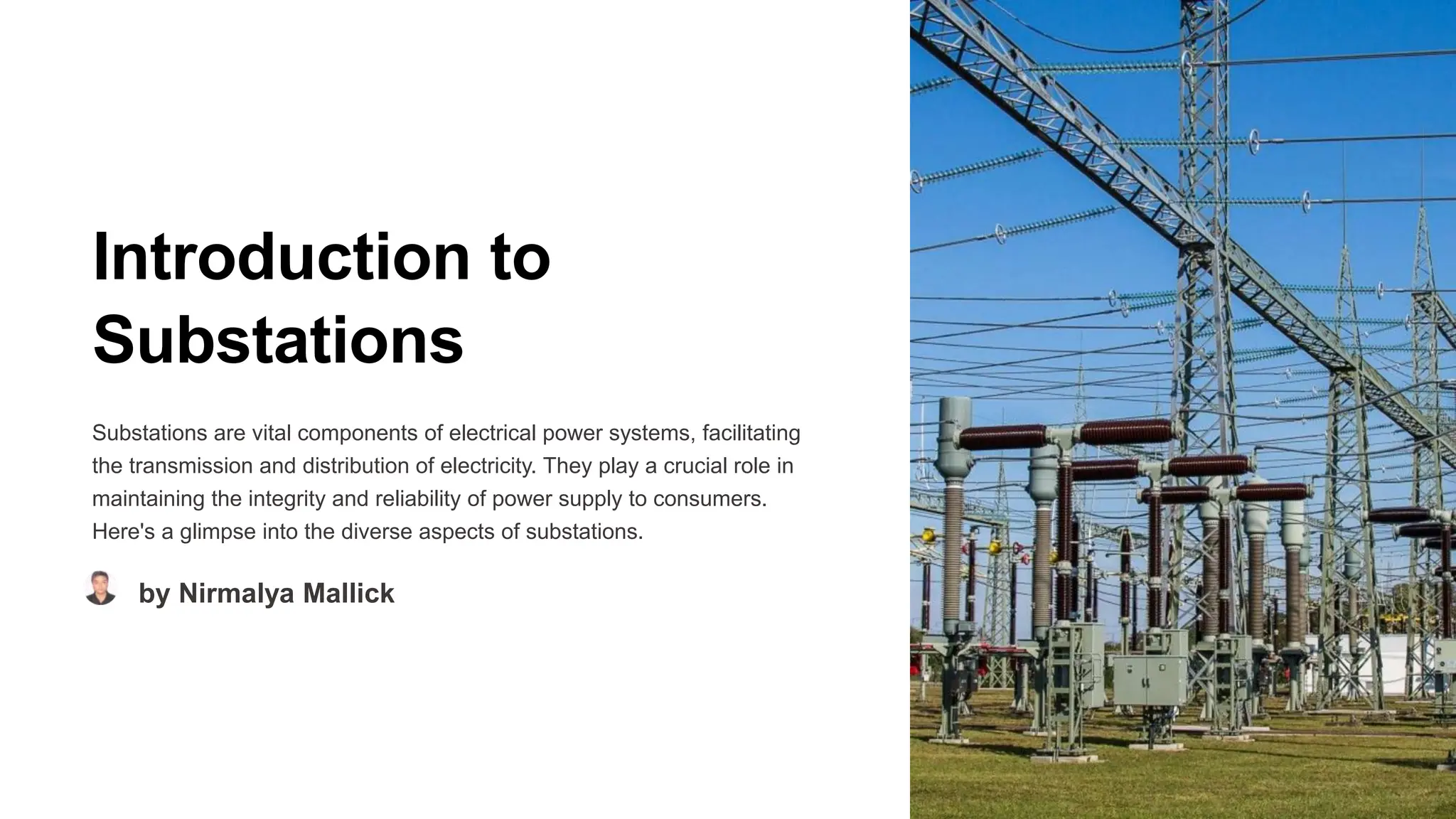
Substations are vital components of electrical power systems, facilitating
the transmission and distribution of electricity. They play a crucial role in
maintaining the integrity and reliability of power supply to consumers.
Here's a glimpse into the diverse aspects of substations.
by Nirmalya Mallick
Types of Substations
Step-Up
Step-up substations
increase voltage for
transmission.
Step-Down
Step-down substations
decrease voltage for
distribution.
Distribution
Distribution substations
supply electricity to local
areas.
Location Considerations for
Substations
1 Proximity to
Load Centers
Strategically located
near areas with high
power demand.
2 Accessibility
Easy to access for
maintenance and
operation.
3 Environmental
Factors
Adhering to
environmental
regulations and
mitigating impact.
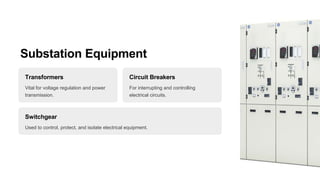
Substation Equipment
Transformers
Vital for voltage regulation and power
transmission.
Circuit Breakers
For interrupting and controlling
electrical circuits.
Switchgear
Used to control, protect, and isolate electrical equipment.
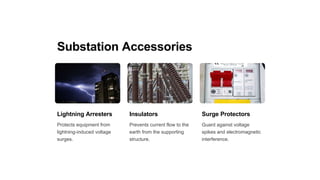
Substation Accessories
Lightning Arresters
Protects equipment from
lightning-induced voltage
surges.
Insulators
Prevents current flow to the
earth from the supporting
structure.
Surge Protectors
Guard against voltage
spikes and electromagnetic
interference.
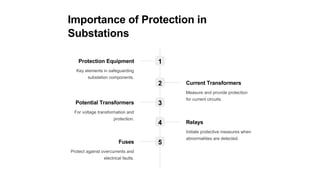
Importance of Protection in
Substations
1
Protection Equipment
Key elements in safeguarding
substation components.
2 Current Transformers
Measure and provide protection
for current circuits.
3
Potential Transformers
For voltage transformation and
protection.
4 Relays
Initiate protective measures when
abnormalities are detected.
5
Fuses
Protect against overcurrents and
electrical faults.
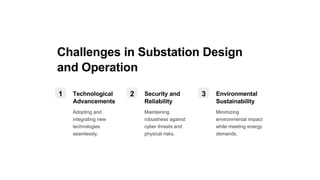
Challenges in Substation Design
and Operation
1 Technological
Advancements
Adopting and
integrating new
technologies
seamlessly.
2 Security and
Reliability
Maintaining
robustness against
cyber threats and
physical risks.
3 Environmental
Sustainability
Minimizing
environmental impact
while meeting energy
demands.
Future Trends in Substation
Technology and Automation
Smart Grids
Enhanced efficiency and
real-time monitoring
capabilities.
IoT Integration
Enabling seamless
connectivity and predictive
maintenance.
Renewable Energy
Integration
Adapting to the evolving
energy landscape with
sustainable solutions.
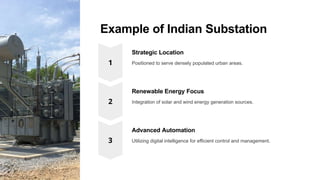
Example of Indian Substation
Strategic Location
Positioned to serve densely populated urban areas.
Renewable Energy Focus
Integration of solar and wind energy generation sources.
Advanced Automation
Utilizing digital intelligence for efficient control and management.
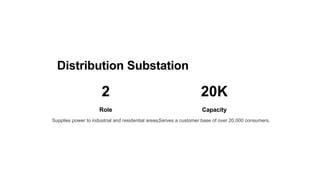
Distribution Substation
2
Role
Supplies power to industrial and residential areas.
20K
Capacity
Serves a customer base of over 20,000 consumers.

Introduction of Electrical Substation-Basics

  • 1.
    Introduction to Substations Substations arevital components of electrical power systems, facilitating the transmission and distribution of electricity. They play a crucial role in maintaining the integrity and reliability of power supply to consumers. Here's a glimpse into the diverse aspects of substations. by Nirmalya Mallick
  • 2.
    Types of Substations Step-Up Step-upsubstations increase voltage for transmission. Step-Down Step-down substations decrease voltage for distribution. Distribution Distribution substations supply electricity to local areas.
  • 3.
    Location Considerations for Substations 1Proximity to Load Centers Strategically located near areas with high power demand. 2 Accessibility Easy to access for maintenance and operation. 3 Environmental Factors Adhering to environmental regulations and mitigating impact.
  • 4.
    Substation Equipment Transformers Vital forvoltage regulation and power transmission. Circuit Breakers For interrupting and controlling electrical circuits. Switchgear Used to control, protect, and isolate electrical equipment.
  • 5.
    Substation Accessories Lightning Arresters Protectsequipment from lightning-induced voltage surges. Insulators Prevents current flow to the earth from the supporting structure. Surge Protectors Guard against voltage spikes and electromagnetic interference.
  • 6.
    Importance of Protectionin Substations 1 Protection Equipment Key elements in safeguarding substation components. 2 Current Transformers Measure and provide protection for current circuits. 3 Potential Transformers For voltage transformation and protection. 4 Relays Initiate protective measures when abnormalities are detected. 5 Fuses Protect against overcurrents and electrical faults.
  • 7.
    Challenges in SubstationDesign and Operation 1 Technological Advancements Adopting and integrating new technologies seamlessly. 2 Security and Reliability Maintaining robustness against cyber threats and physical risks. 3 Environmental Sustainability Minimizing environmental impact while meeting energy demands.
  • 8.
    Future Trends inSubstation Technology and Automation Smart Grids Enhanced efficiency and real-time monitoring capabilities. IoT Integration Enabling seamless connectivity and predictive maintenance. Renewable Energy Integration Adapting to the evolving energy landscape with sustainable solutions.
  • 9.
    Example of IndianSubstation Strategic Location Positioned to serve densely populated urban areas. Renewable Energy Focus Integration of solar and wind energy generation sources. Advanced Automation Utilizing digital intelligence for efficient control and management.
  • 10.
    Distribution Substation 2 Role Supplies powerto industrial and residential areas. 20K Capacity Serves a customer base of over 20,000 consumers.