Introduction to Object Oriented Programming in Perl with Moose.


  Introduction to Object
  Oriented Programming
       with Moose
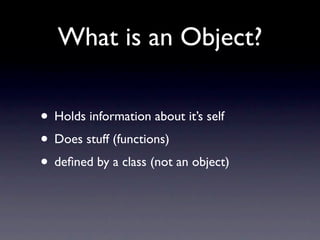
What is an Object?

• Holds information about it’s self
• Does stuff (functions)
• defined by a class (not an object)
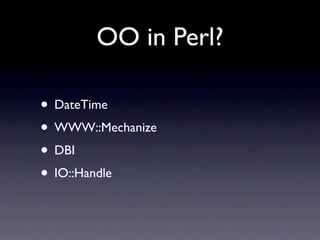
OO in Perl?

• DateTime
• WWW::Mechanize
• DBI
• IO::Handle
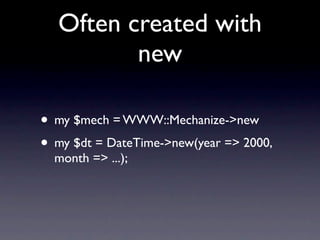
Often created with
         new

• my $mech = WWW::Mechanize->new
• my $dt = DateTime->new(year => 2000,
  month => ...);
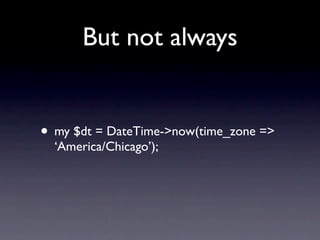
But not always


• my $dt = DateTime->now(time_zone =>
  ‘America/Chicago’);
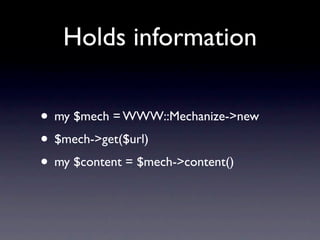
Holds information

• my $mech = WWW::Mechanize->new
• $mech->get($url)
• my $content = $mech->content()
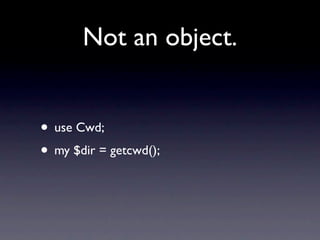
Not an object.


• use Cwd;
• my $dir = getcwd();
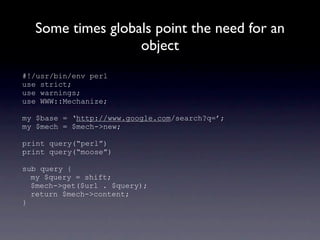
Some times globals point the need for an
                  object
#!/usr/bin/env perl
use strict;
use warnings;
use WWW::Mechanize;

my $base = ‘http://www.google.com/search?q=’;
my $mech = $mech->new;

print query(“perl”)
print query(“moose”)

sub query {
  my $query = shift;
  $mech->get($url . $query);
  return $mech->content;
}
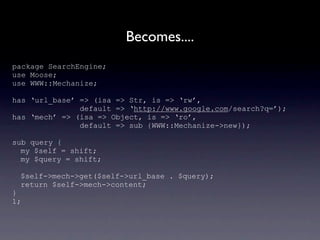
Becomes....
package SearchEngine;
use Moose;
use WWW::Mechanize;

has ‘url_base’ => (isa => Str, is => ‘rw’,
               default => ‘http://www.google.com/search?q=’);
has ‘mech’ => (isa => Object, is => ‘ro’,
               default => sub {WWW::Mechanize->new});

sub query {
  my $self = shift;
  my $query = shift;

 $self->mech->get($self->url_base . $query);
 return $self->mech->content;
}
1;
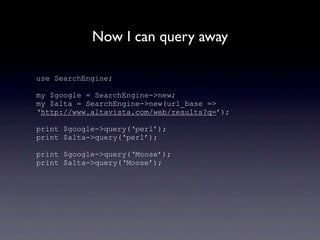
Now I can query away

use SearchEngine;

my $google = SearchEngine->new;
my $alta = SearchEngine->new(url_base =>
‘http://www.altavista.com/web/results?q=’);

print $google->query(‘perl’);
print $alta->query(‘perl’);

print $google->query(‘Moose’);
print $alta->query(‘Moose’);
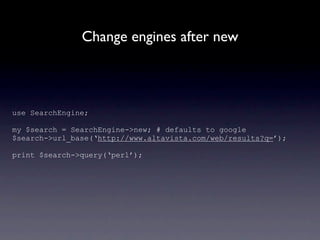
Change engines after new


use SearchEngine;

my $search = SearchEngine->new; # defaults to google
$search->url_base(‘http://www.altavista.com/web/results?q=’);

print $search->query(‘perl’);
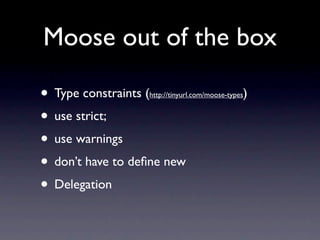
Moose out of the box

• Type constraints (                           )
                  http://tinyurl.com/moose-types


• use strict;
• use warnings
• don’t have to define new
• Delegation
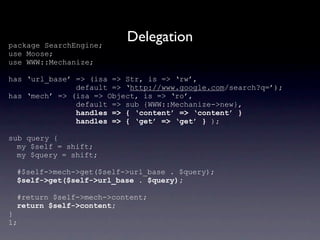
package SearchEngine;
                          Delegation
use Moose;
use WWW::Mechanize;

has ‘url_base’ => (isa => Str, is => ‘rw’,
               default => ‘http://www.google.com/search?q=’);
has ‘mech’ => (isa => Object, is => ‘ro’,
               default => sub {WWW::Mechanize->new},
               handles => { ‘content’ => ‘content’ }
               handles => { ‘get’ => ‘get’ } );

sub query {
  my $self = shift;
  my $query = shift;

 #$self->mech->get($self->url_base . $query);
 $self->get($self->url_base . $query);

 #return $self->mech->content;
 return $self->content;
}
1;
Why Moose?


• See slide 25 - Intro to Moose
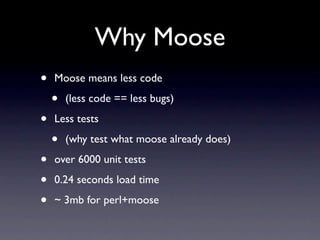
Why Moose
•   Moose means less code

    •   (less code == less bugs)

•   Less tests

    •   (why test what moose already does)

•   over 6000 unit tests

•   0.24 seconds load time

•   ~ 3mb for perl+moose
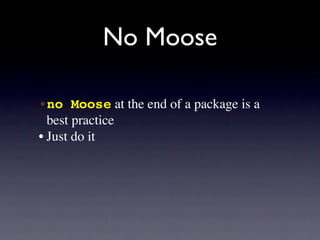
No Moose

•no Moose at the end of a package is a
  best practice
• Just do it
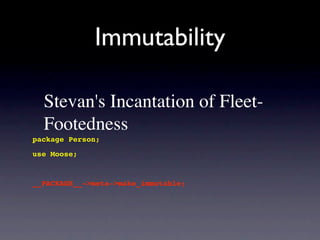
Immutability

  Stevan's Incantation of Fleet-
  Footedness
package Person;
use Moose;


__PACKAGE__->meta->make_immutable;
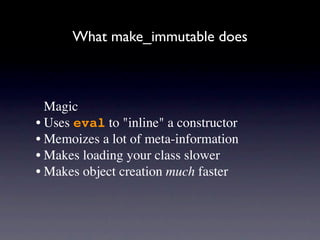
What make_immutable does


  Magic
• Uses eval to "inline" a constructor
• Memoizes a lot of meta-information
• Makes loading your class slower
• Makes object creation much faster
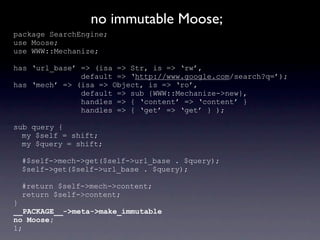
no immutable Moose;
package SearchEngine;
use Moose;
use WWW::Mechanize;

has ‘url_base’ => (isa => Str, is => ‘rw’,
               default => ‘http://www.google.com/search?q=’);
has ‘mech’ => (isa => Object, is => ‘ro’,
               default => sub {WWW::Mechanize->new},
               handles => { ‘content’ => ‘content’ }
               handles => { ‘get’ => ‘get’ } );

sub query {
  my $self = shift;
  my $query = shift;

 #$self->mech->get($self->url_base . $query);
 $self->get($self->url_base . $query);

 #return $self->mech->content;
 return $self->content;
}
__PACKAGE__->meta->make_immutable
no Moose;
1;
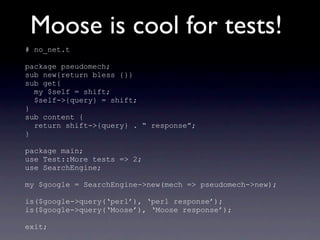
Moose is cool for tests!
# no_net.t

package pseudomech;
sub new{return bless {}}
sub get{
  my $self = shift;
  $self->{query} = shift;
}
sub content {
  return shift->{query} . “ response”;
}

package main;
use Test::More tests => 2;
use SearchEngine;

my $google = SearchEngine->new(mech => pseudomech->new);

is($google->query(‘perl’), ‘perl response’);
is($google->query(‘Moose’), ‘Moose response’);

exit;
Roles

• Usually what you want when you try to do
  inheritance
• lets 1 class take on the features of multiple
  packages.
More Reading
• Moose Cookbook (heavy on the
  inheritance)
 • http://search.cpan.org/dist/Moose/lib/
    Moose/Cookbook.pod
• Moose Website
 • http://moose.perl.org

Intro To Moose

  • 1.
    Introduction to ObjectOriented Programming in Perl with Moose. Introduction to Object Oriented Programming with Moose
  • 2.
    What is anObject? • Holds information about it’s self • Does stuff (functions) • defined by a class (not an object)
  • 3.
    OO in Perl? •DateTime • WWW::Mechanize • DBI • IO::Handle
  • 4.
    Often created with new • my $mech = WWW::Mechanize->new • my $dt = DateTime->new(year => 2000, month => ...);
  • 5.
    But not always •my $dt = DateTime->now(time_zone => ‘America/Chicago’);
  • 6.
    Holds information • my$mech = WWW::Mechanize->new • $mech->get($url) • my $content = $mech->content()
  • 7.
    Not an object. •use Cwd; • my $dir = getcwd();
  • 8.
    Some times globalspoint the need for an object #!/usr/bin/env perl use strict; use warnings; use WWW::Mechanize; my $base = ‘http://www.google.com/search?q=’; my $mech = $mech->new; print query(“perl”) print query(“moose”) sub query { my $query = shift; $mech->get($url . $query); return $mech->content; }
  • 9.
    Becomes.... package SearchEngine; use Moose; useWWW::Mechanize; has ‘url_base’ => (isa => Str, is => ‘rw’, default => ‘http://www.google.com/search?q=’); has ‘mech’ => (isa => Object, is => ‘ro’, default => sub {WWW::Mechanize->new}); sub query { my $self = shift; my $query = shift; $self->mech->get($self->url_base . $query); return $self->mech->content; } 1;
  • 10.
    Now I canquery away use SearchEngine; my $google = SearchEngine->new; my $alta = SearchEngine->new(url_base => ‘http://www.altavista.com/web/results?q=’); print $google->query(‘perl’); print $alta->query(‘perl’); print $google->query(‘Moose’); print $alta->query(‘Moose’);
  • 11.
    Change engines afternew use SearchEngine; my $search = SearchEngine->new; # defaults to google $search->url_base(‘http://www.altavista.com/web/results?q=’); print $search->query(‘perl’);
  • 12.
    Moose out ofthe box • Type constraints ( ) http://tinyurl.com/moose-types • use strict; • use warnings • don’t have to define new • Delegation
  • 13.
    package SearchEngine; Delegation use Moose; use WWW::Mechanize; has ‘url_base’ => (isa => Str, is => ‘rw’, default => ‘http://www.google.com/search?q=’); has ‘mech’ => (isa => Object, is => ‘ro’, default => sub {WWW::Mechanize->new}, handles => { ‘content’ => ‘content’ } handles => { ‘get’ => ‘get’ } ); sub query { my $self = shift; my $query = shift; #$self->mech->get($self->url_base . $query); $self->get($self->url_base . $query); #return $self->mech->content; return $self->content; } 1;
  • 14.
    Why Moose? • Seeslide 25 - Intro to Moose
  • 15.
    Why Moose • Moose means less code • (less code == less bugs) • Less tests • (why test what moose already does) • over 6000 unit tests • 0.24 seconds load time • ~ 3mb for perl+moose
  • 16.
    No Moose •no Mooseat the end of a package is a best practice • Just do it
  • 17.
    Immutability Stevan'sIncantation of Fleet- Footedness package Person; use Moose; __PACKAGE__->meta->make_immutable;
  • 18.
    What make_immutable does Magic • Uses eval to "inline" a constructor • Memoizes a lot of meta-information • Makes loading your class slower • Makes object creation much faster
  • 19.
    no immutable Moose; packageSearchEngine; use Moose; use WWW::Mechanize; has ‘url_base’ => (isa => Str, is => ‘rw’, default => ‘http://www.google.com/search?q=’); has ‘mech’ => (isa => Object, is => ‘ro’, default => sub {WWW::Mechanize->new}, handles => { ‘content’ => ‘content’ } handles => { ‘get’ => ‘get’ } ); sub query { my $self = shift; my $query = shift; #$self->mech->get($self->url_base . $query); $self->get($self->url_base . $query); #return $self->mech->content; return $self->content; } __PACKAGE__->meta->make_immutable no Moose; 1;
  • 20.
    Moose is coolfor tests! # no_net.t package pseudomech; sub new{return bless {}} sub get{ my $self = shift; $self->{query} = shift; } sub content { return shift->{query} . “ response”; } package main; use Test::More tests => 2; use SearchEngine; my $google = SearchEngine->new(mech => pseudomech->new); is($google->query(‘perl’), ‘perl response’); is($google->query(‘Moose’), ‘Moose response’); exit;
  • 21.
    Roles • Usually whatyou want when you try to do inheritance • lets 1 class take on the features of multiple packages.
  • 22.
    More Reading • MooseCookbook (heavy on the inheritance) • http://search.cpan.org/dist/Moose/lib/ Moose/Cookbook.pod • Moose Website • http://moose.perl.org