What is Stress?
Stress is the body's natural response to pressure or threat. It can be caused
by various factors, including work, relationships, and lifeevents.
There shouldbe various situation in which we experience stress-for example,
it couldbe the death of lovedone, new relationships, or meeting
deadlines.
4.
Effects of Stress
Chronic stress can have negative effects on both physical and mental health. It can lead
to anxiety, depression, and various physical ailments.
Stress affects us both physicallyand emotionally, Depending on how we deal with it, it
can be either a positive or negative influence.
As a positive influences, stress can help moveus to action. It can be stimulating and
exciting.
As a new negative influences,it can be lead to feeling of distrust, rejection, anger, and
depression. It can lead to health problem like headaches, upset stomach, high blood
pressure, and strokes.
5.
Identifying Stressors
Understandingthe sources of stress in your life is the first step in managing
it. Identify specific stressors and their impact on your well-being.
There may be more factor, which are causing you stress. Follow this simple process to identify the factors. Notice how your
body responds to stress
Notice your reaction to a stressful situation; don’t ignore it.
Find out what events trouble you.
After you identify the symptoms, identify the events causing you such symptoms. Are the
events related any of the categories shown on the right side of this side?
Poor health habits
Poor goal-setting and time management
Not knowing how to relax and have fun
6.
Healthy Coping Mechanisms
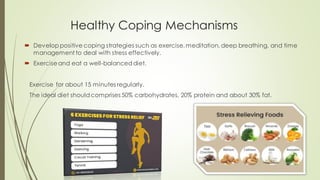
Developpositive coping strategies such as exercise,meditation, deep breathing, and time
management to deal with stress effectively.
Exerciseand eat a well-balanceddiet.
Exercise for about 15 minutes regularly.
The ideal diet shouldcomprises 50% carbohydrates, 20% protein and about 30% fat.
7.
Control your reactionto stress
Try to reduce the intensity of your emotional reactions to stress.
❖ Keep your physical reaction to stress under control. Use the breathing
control and relaxation techniques explainedin the next few slides.
❖ Don’t set goals like seeing to please everyone. Work at adopting more
moderate views.
❖ Take stress at something you can cope with rather than something that
overpowers you.
8.
Importance of SocialSupport
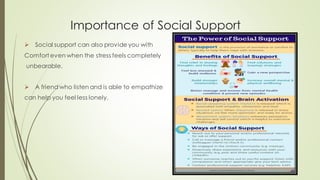
➢ Social support can also provide you with
Comfort even when the stress feels completely
unbearable.
➢ A friend who listen and is able to empathize
can help you feel less lonely.
9.
Effective Time Management
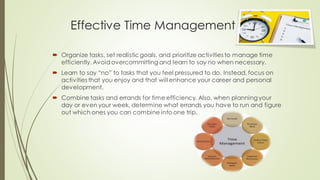
Organize tasks, set realisticgoals, and prioritize activities to manage time
efficiently. Avoidovercommitting and learn to say no when necessary.
Learn to say “no” to tasks that you feel pressured to do. Instead, focus on
activities that you enjoy and that will enhance your career and personal
development.
Combine tasks and errands for time efficiency.Also, when planning your
day or even your week, determine what errands you have to run and figure
out which ones you can combine into one trip.
10.
Relaxation Techniques
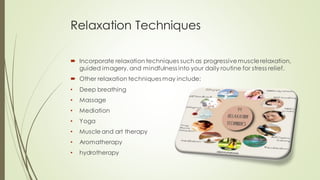
Incorporaterelaxation techniques such as progressivemusclerelaxation,
guided imagery, and mindfulness into your daily routine for stress relief.
Other relaxation techniques may include:
• Deep breathing
• Massage
• Mediation
• Yoga
• Muscle and art therapy
• Aromatherapy
• hydrotherapy
11.
In Conclusion
Stressmanagement is essential for maintaining a healthy and balanced life.
Implementing effective strategies can lead to improvedwell-being and
overall happiness.