Download to read offline

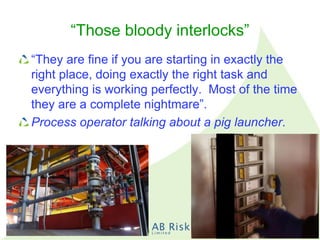

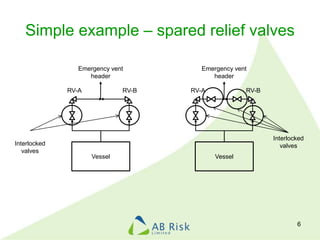


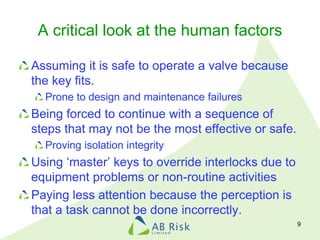

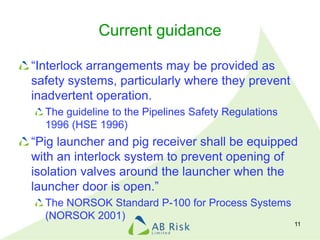
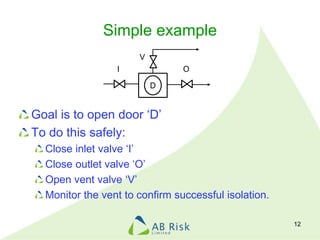
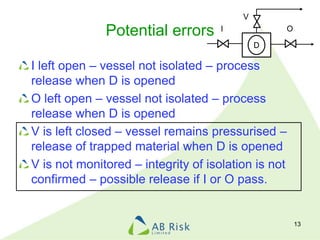


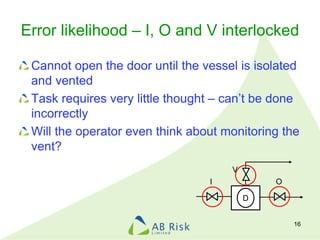
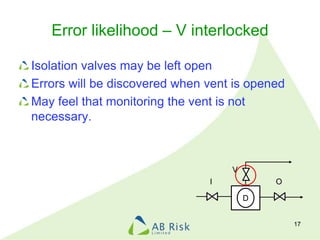


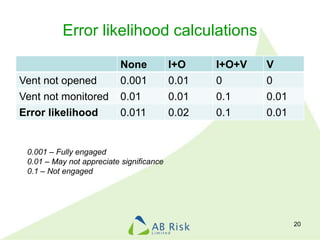




Interlocks are used to prevent unsafe operations but can paradoxically increase risks. A simple example of opening a pig launcher door illustrates how: - With no interlocks, the operator must think through each step but risks are low. - One or two interlocks reduces thought but increases risk if the interlock fails, as the operator may assume safety. - Multiple interlocks require little thought but the highest risk, as failure could occur without detection. Overall, the example shows that while intended to reduce human error, overreliance on interlocks can shift or increase error likelihood. Careful strategy is needed to manage both interlocks and their failures. Less interlocking may actually be safer.


