 Introduction to IVR
 How IVR Works
 Key Features of IVR
 Benefits of IVR
 Implementing IVR
 Future of IVR
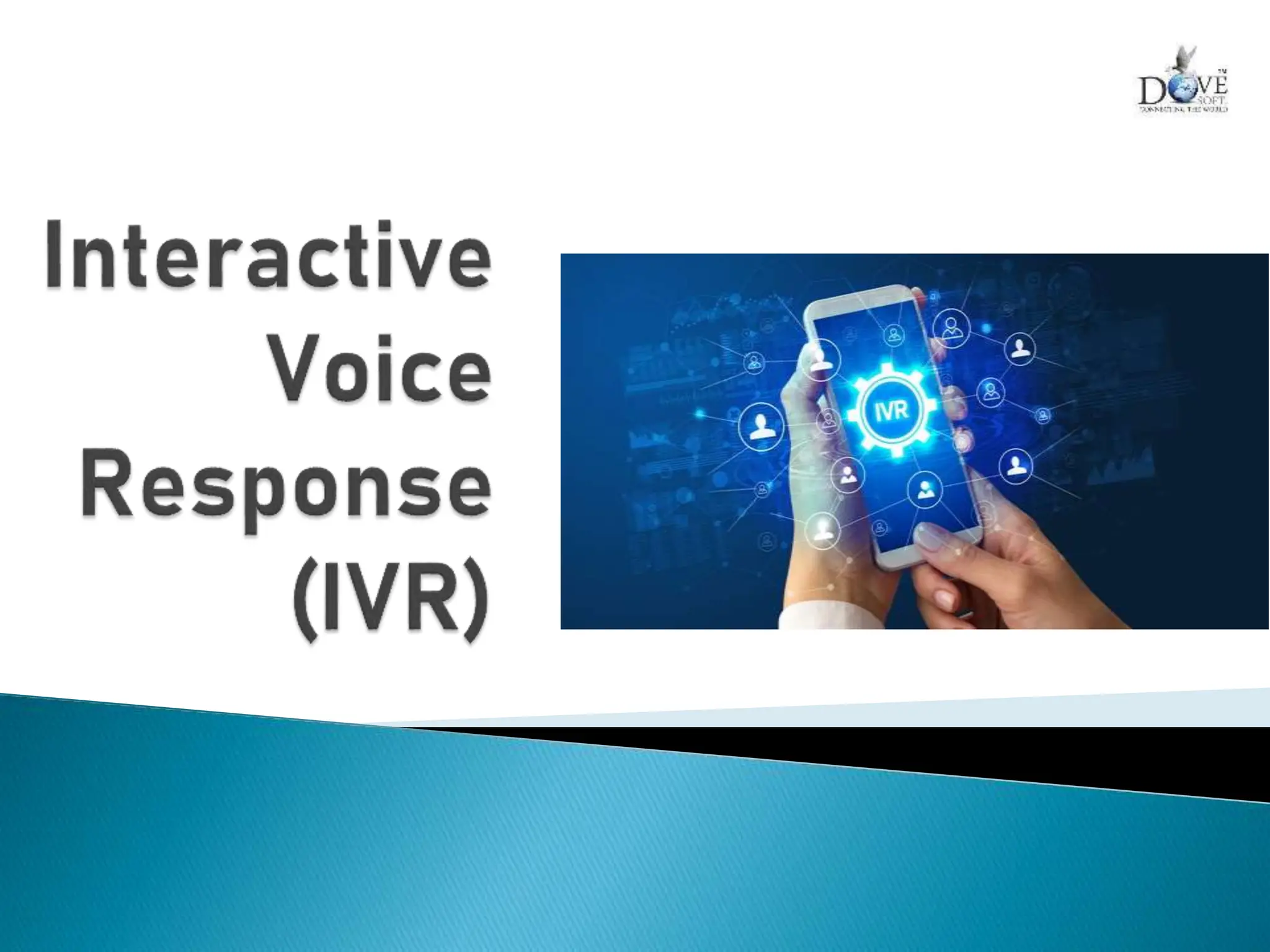
 Definition: Interactive Voice Response (IVR) is an
automated telephony system that interacts with
callers, gathers information, and routes calls to
the appropriate recipient.
 Usage: Commonly used in customer service,
telecommunication, and other industries for
automating routine interactions.
 Caller Interaction: Callers navigate through a
menu using voice or keypad inputs.
 Call Routing: Based on inputs, the IVR system
routes calls to the appropriate department or
agent.
 Data Collection: IVR collects data from callers,
which can be used for further processing or
analytics.
 Automated Call Handling: Reduces the need for
human operators.
 Multi-level Menus: Provides a structured way to
guide callers through various options.
 Integration with Databases: Allows for dynamic
interaction based on real-time data.
 Voice Recognition: Enables hands-free
navigation through voice commands.
 Personalization: Offers customized interactions
based on caller information.
 Enhanced Customer Service: Provides 24/7
availability and quick resolution of common
issues.
 Cost Savings: Reduces the need for a large
customer service team.
 Increased Efficiency: Speeds up call handling and
reduces wait times.
 Data Collection: Gathers valuable customer data
for analysis and improvement.
 Scalability: Easily handles a high volume of calls
without additional staffing.
 AI and Machine Learning: Enhancing IVR
capabilities with natural language processing
and predictive analytics.
 Omni-channel Integration: Providing a seamless
experience across multiple channels (voice, text,
web).
 Advanced Personalization: Using customer data
to offer highly personalized interactions.
For More Information Visit :
www.dove-soft.com
Thank You

Interactive Voice Response (IVR) Solution

  • 2.
     Introduction toIVR  How IVR Works  Key Features of IVR  Benefits of IVR  Implementing IVR  Future of IVR
  • 3.
     Definition: InteractiveVoice Response (IVR) is an automated telephony system that interacts with callers, gathers information, and routes calls to the appropriate recipient.  Usage: Commonly used in customer service, telecommunication, and other industries for automating routine interactions.
  • 4.
     Caller Interaction:Callers navigate through a menu using voice or keypad inputs.  Call Routing: Based on inputs, the IVR system routes calls to the appropriate department or agent.  Data Collection: IVR collects data from callers, which can be used for further processing or analytics.
  • 5.
     Automated CallHandling: Reduces the need for human operators.  Multi-level Menus: Provides a structured way to guide callers through various options.  Integration with Databases: Allows for dynamic interaction based on real-time data.  Voice Recognition: Enables hands-free navigation through voice commands.  Personalization: Offers customized interactions based on caller information.
  • 6.
     Enhanced CustomerService: Provides 24/7 availability and quick resolution of common issues.  Cost Savings: Reduces the need for a large customer service team.  Increased Efficiency: Speeds up call handling and reduces wait times.  Data Collection: Gathers valuable customer data for analysis and improvement.  Scalability: Easily handles a high volume of calls without additional staffing.
  • 7.
     AI andMachine Learning: Enhancing IVR capabilities with natural language processing and predictive analytics.  Omni-channel Integration: Providing a seamless experience across multiple channels (voice, text, web).  Advanced Personalization: Using customer data to offer highly personalized interactions.
  • 8.
    For More InformationVisit : www.dove-soft.com
  • 9.