Terminology in Healthcare and
Public Health Settings
Integumentary System
This material (Comp 3 Unit 2) was developed by the University of Alabama at Birmingham, funded by the
Department of Health and Human Services, Office of the National Coordinator for Health Information
Technology under Award Number 90WT0007.
This work is licensed under the Creative Commons Attribution-NonCommercial-ShareAlike 4.0 International
License. To view a copy of this license, visit http://creativecommons.org.
Integumentary System
Learning Objectives
• Objectives
– Define, understand and correctly pronounce
medical terms related to the integumentary
system
– Describe common diseases and conditions
with an overview of various treatments related
to the integumentary system
2
Integumentary System Overview
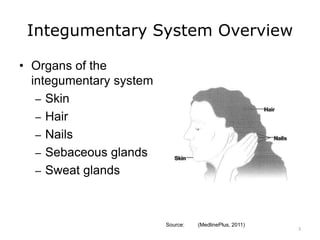
• Organs of the
integumentary system
– Skin
– Hair
– Nails
– Sebaceous glands
– Sweat glands
Source: (MedlinePlus, 2011)
3
Integumentary System Overview 2
• Covers the entire surface of the body
• Functions
– Protects against infection
– Houses nerve receptors
– Secretes fluids
– Regulates temperature
4
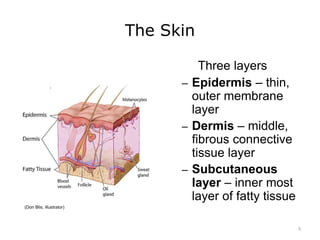
The Skin
Three layers
– Epidermis – thin,
outer membrane
layer
– Dermis – middle,
fibrous connective
tissue layer
– Subcutaneous
layer – inner most
layer of fatty tissue
5
(Don Blis, illustrator)
Accessory Organs
• Located within dermis
• Include:
– Hair
– Nails
– Sweat glands
– Sebaceous glands
6
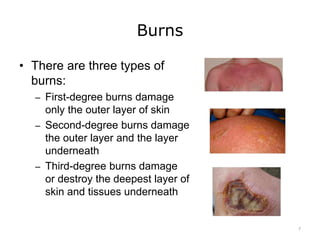
Burns
• There are three types of
burns:
– First-degree burns damage
only the outer layer of skin
– Second-degree burns damage
the outer layer and the layer
underneath
– Third-degree burns damage
or destroy the deepest layer of
skin and tissues underneath
7
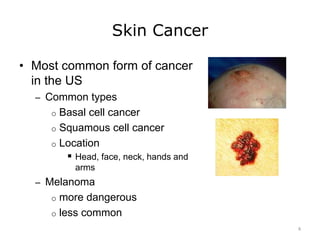
Skin Cancer
• Most common form of cancer
in the US
– Common types
o Basal cell cancer
o Squamous cell cancer
o Location
 Head, face, neck, hands and
arms
– Melanoma
o more dangerous
o less common
8
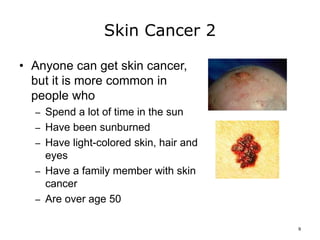
Skin Cancer 2
• Anyone can get skin cancer,
but it is more common in
people who
– Spend a lot of time in the sun
– Have been sunburned
– Have light-colored skin, hair and
eyes
– Have a family member with skin
cancer
– Are over age 50
9
Wounds
• Include cuts, scrapes, scratches and punctured
skin
• Often occur as a result of:
– an accident or injury
– surgical incisions
– sutures
– stitches
• Minor wounds usually aren't serious, but even
cuts and scrapes require care
10
Common Hair Problems
• Include hair loss, infections, and disorders causing
itching and scaling
• Hair loss (alopecia) is a frequent concern for both men
and women.
– Male pattern baldness
o most common cause of hair loss in men
o receding hair line
o baldness on the top of the head
– Female pattern baldness
o hair becomes thin over the entire scalp
11
Common Hair Problems 2
• Infections of the scalp
– bacterial infection of hair follicles
– head lice infestation
– fungal infection of scalp or ringworm
• Itching and excessive flaking of the scalp
– dandruff
– psoriasis
12
Problems With Nails
• Clue to your overall health
• Healthy nails
– smooth
– consistent in color
• Specific types of nail discoloration and changes
in growth rate can signal
– lung, heart, kidney and liver diseases
– diabetes and anemia
13
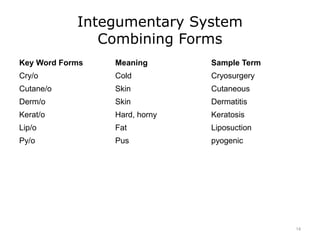
Integumentary System
Combining Forms
Key Word Forms Meaning Sample Term
Cry/o Cold Cryosurgery
Cutane/o Skin Cutaneous
Derm/o Skin Dermatitis
Kerat/o Hard, horny Keratosis
Lip/o Fat Liposuction
Py/o Pus pyogenic
14
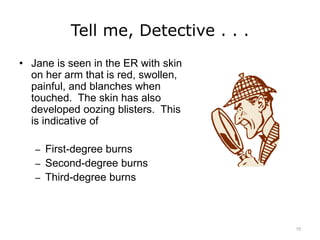
Tell me, Detective . . .
• Jane is seen in the ER with skin
on her arm that is red, swollen,
painful, and blanches when
touched. The skin has also
developed oozing blisters. This
is indicative of
– First-degree burns
– Second-degree burns
– Third-degree burns
15
Integumentary System
Summary
• Define, understand and correctly pronounce
various medical terms related to the
integumentary system
• Describe common diseases and conditions with
an overview of various treatments related to the
integumentary system
16
Integumentary System
References
References
MedlinePlus [Internet]. Skin, hair and nails. Bethesda (MD): National Library of Medicine (US);
[updated 2011 Jul 27]. Available from: www.nlm.nih.gov/medlineplus
Images
Slide 3: Available From: www.nlm.nih.gov/medlineplus
Slide 5: Don Blis, illustrator. Available From: commons.wikimedia.org
Slide 7: Available From: en.wikipedia.org
Slide 7: Craig0927. Available From: en.wikipedia.org
Slide 8,9: Available From: www.cancer.gov
Slide 15: Clip Art, Available from: Microsoft clips online; Used with permission from Microsoft
17
Terminology in Healthcare and
Public Health Settings
Integumentary System
This material was developed by the
University of Alabama at Birmingham,
funded by the Department of Health and
Human Services, Office of the National
Coordinator for Health Information
Technology under Award Number
90WT0007.
18

Integumentary System -Lecture A slides

  • 1.
    Terminology in Healthcareand Public Health Settings Integumentary System This material (Comp 3 Unit 2) was developed by the University of Alabama at Birmingham, funded by the Department of Health and Human Services, Office of the National Coordinator for Health Information Technology under Award Number 90WT0007. This work is licensed under the Creative Commons Attribution-NonCommercial-ShareAlike 4.0 International License. To view a copy of this license, visit http://creativecommons.org.
  • 2.
    Integumentary System Learning Objectives •Objectives – Define, understand and correctly pronounce medical terms related to the integumentary system – Describe common diseases and conditions with an overview of various treatments related to the integumentary system 2
  • 3.
    Integumentary System Overview •Organs of the integumentary system – Skin – Hair – Nails – Sebaceous glands – Sweat glands Source: (MedlinePlus, 2011) 3
  • 4.
    Integumentary System Overview2 • Covers the entire surface of the body • Functions – Protects against infection – Houses nerve receptors – Secretes fluids – Regulates temperature 4
  • 5.
    The Skin Three layers –Epidermis – thin, outer membrane layer – Dermis – middle, fibrous connective tissue layer – Subcutaneous layer – inner most layer of fatty tissue 5 (Don Blis, illustrator)
  • 6.
    Accessory Organs • Locatedwithin dermis • Include: – Hair – Nails – Sweat glands – Sebaceous glands 6
  • 7.
    Burns • There arethree types of burns: – First-degree burns damage only the outer layer of skin – Second-degree burns damage the outer layer and the layer underneath – Third-degree burns damage or destroy the deepest layer of skin and tissues underneath 7
  • 8.
    Skin Cancer • Mostcommon form of cancer in the US – Common types o Basal cell cancer o Squamous cell cancer o Location  Head, face, neck, hands and arms – Melanoma o more dangerous o less common 8
  • 9.
    Skin Cancer 2 •Anyone can get skin cancer, but it is more common in people who – Spend a lot of time in the sun – Have been sunburned – Have light-colored skin, hair and eyes – Have a family member with skin cancer – Are over age 50 9
  • 10.
    Wounds • Include cuts,scrapes, scratches and punctured skin • Often occur as a result of: – an accident or injury – surgical incisions – sutures – stitches • Minor wounds usually aren't serious, but even cuts and scrapes require care 10
  • 11.
    Common Hair Problems •Include hair loss, infections, and disorders causing itching and scaling • Hair loss (alopecia) is a frequent concern for both men and women. – Male pattern baldness o most common cause of hair loss in men o receding hair line o baldness on the top of the head – Female pattern baldness o hair becomes thin over the entire scalp 11
  • 12.
    Common Hair Problems2 • Infections of the scalp – bacterial infection of hair follicles – head lice infestation – fungal infection of scalp or ringworm • Itching and excessive flaking of the scalp – dandruff – psoriasis 12
  • 13.
    Problems With Nails •Clue to your overall health • Healthy nails – smooth – consistent in color • Specific types of nail discoloration and changes in growth rate can signal – lung, heart, kidney and liver diseases – diabetes and anemia 13
  • 14.
    Integumentary System Combining Forms KeyWord Forms Meaning Sample Term Cry/o Cold Cryosurgery Cutane/o Skin Cutaneous Derm/o Skin Dermatitis Kerat/o Hard, horny Keratosis Lip/o Fat Liposuction Py/o Pus pyogenic 14
  • 15.
    Tell me, Detective. . . • Jane is seen in the ER with skin on her arm that is red, swollen, painful, and blanches when touched. The skin has also developed oozing blisters. This is indicative of – First-degree burns – Second-degree burns – Third-degree burns 15
  • 16.
    Integumentary System Summary • Define,understand and correctly pronounce various medical terms related to the integumentary system • Describe common diseases and conditions with an overview of various treatments related to the integumentary system 16
  • 17.
    Integumentary System References References MedlinePlus [Internet].Skin, hair and nails. Bethesda (MD): National Library of Medicine (US); [updated 2011 Jul 27]. Available from: www.nlm.nih.gov/medlineplus Images Slide 3: Available From: www.nlm.nih.gov/medlineplus Slide 5: Don Blis, illustrator. Available From: commons.wikimedia.org Slide 7: Available From: en.wikipedia.org Slide 7: Available From: en.wikipedia.org Slide 7: Craig0927. Available From: en.wikipedia.org Slide 8,9: Available From: www.cancer.gov Slide 15: Clip Art, Available from: Microsoft clips online; Used with permission from Microsoft 17
  • 18.
    Terminology in Healthcareand Public Health Settings Integumentary System This material was developed by the University of Alabama at Birmingham, funded by the Department of Health and Human Services, Office of the National Coordinator for Health Information Technology under Award Number 90WT0007. 18