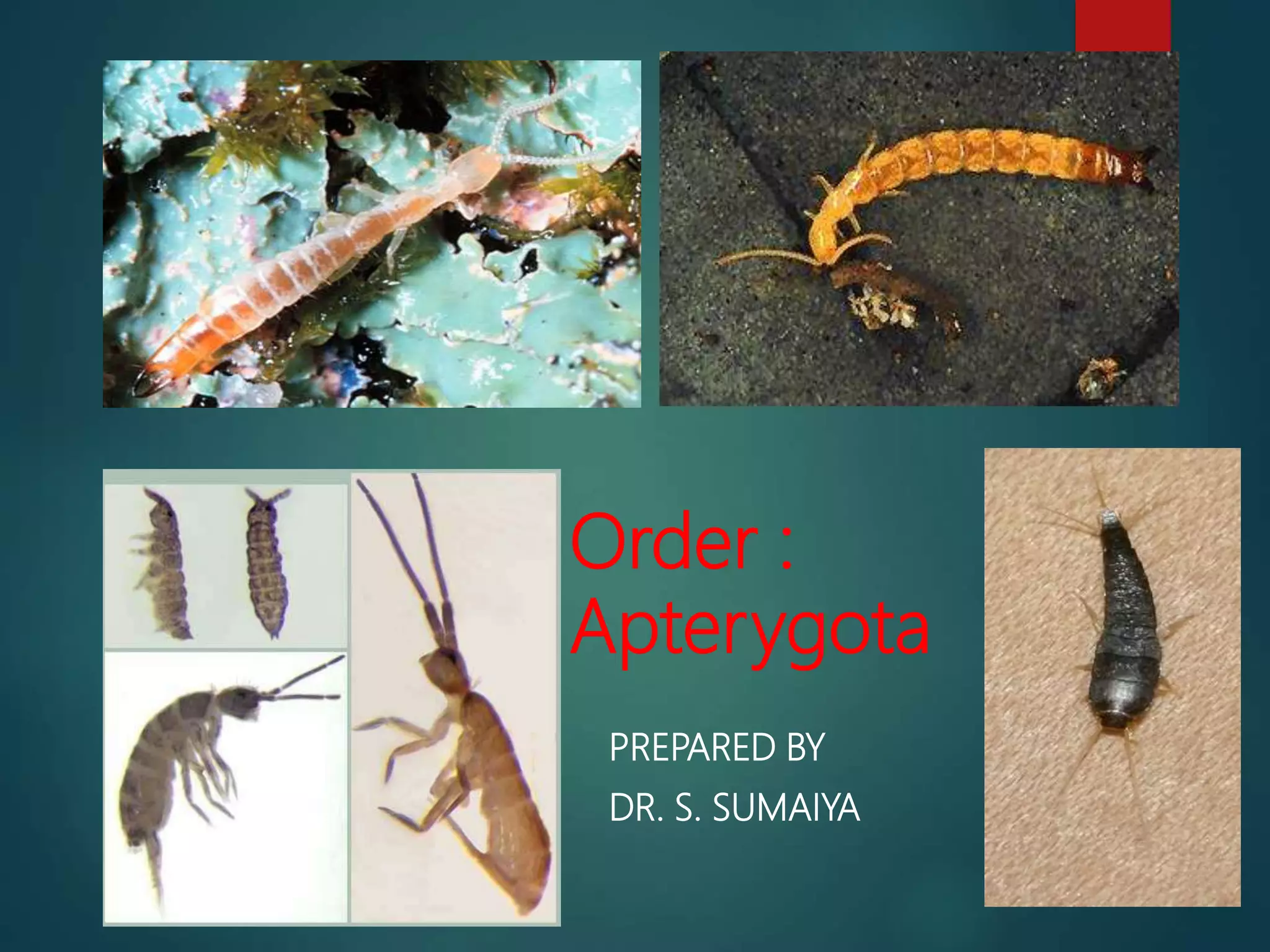
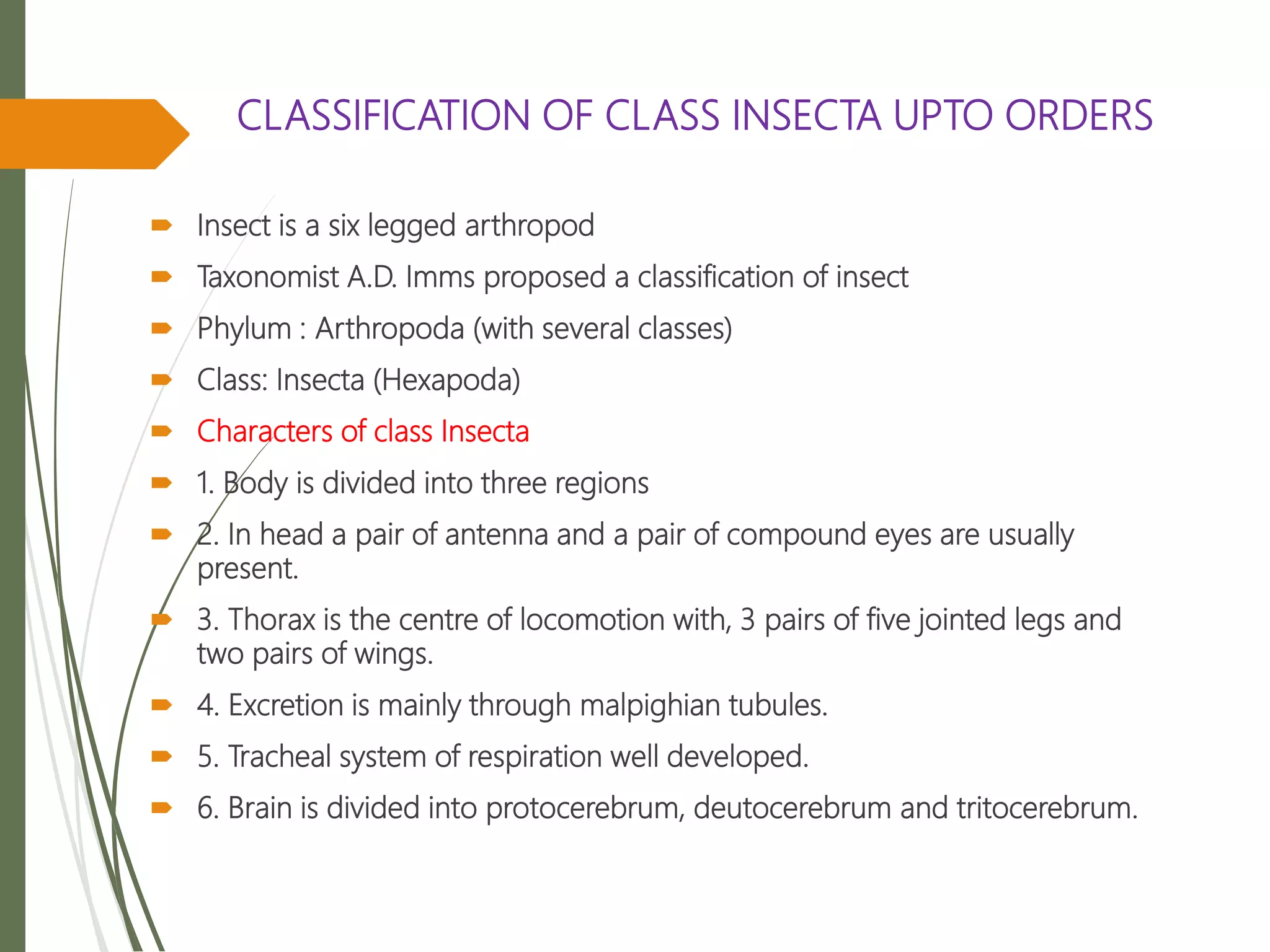
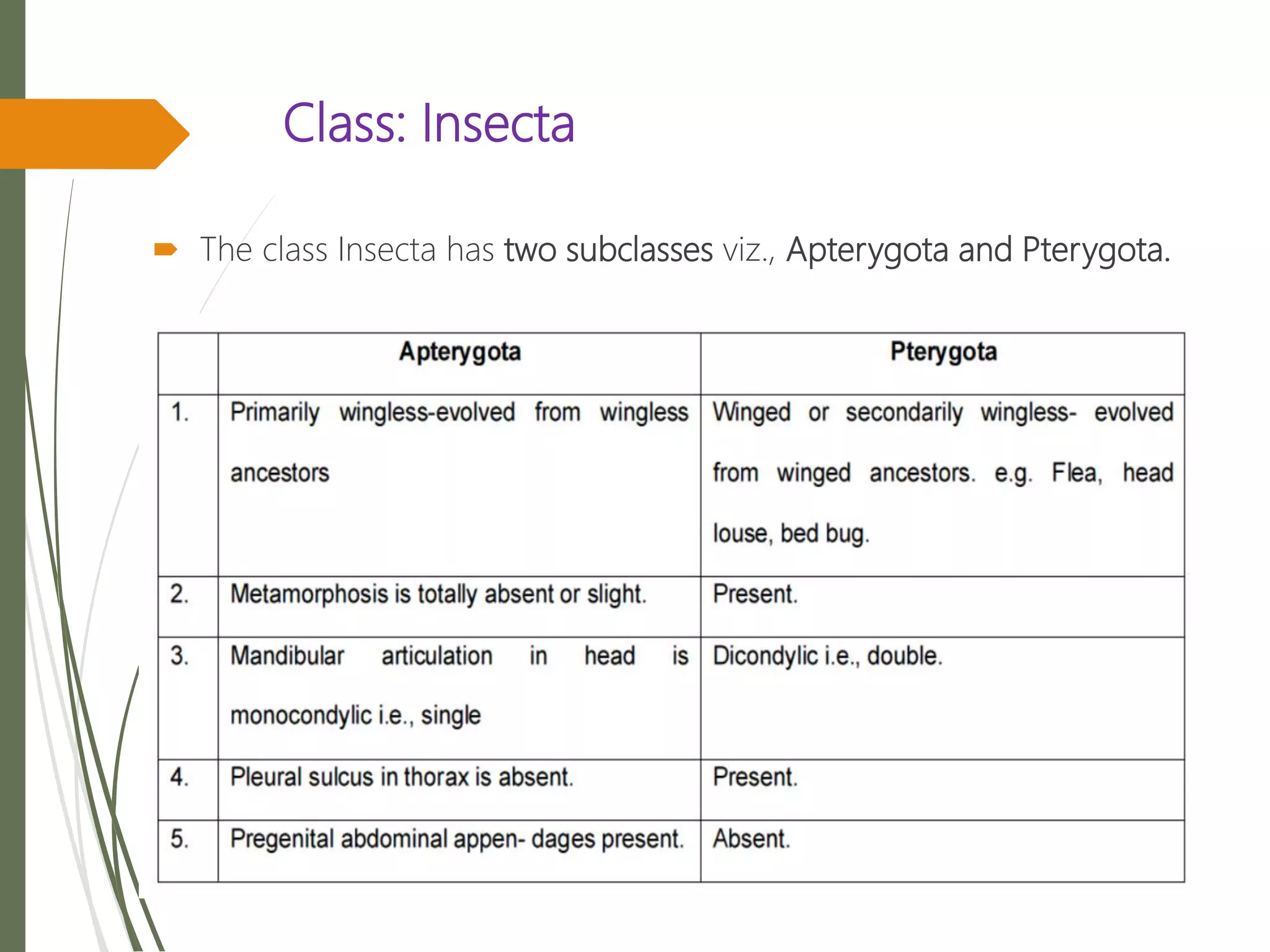
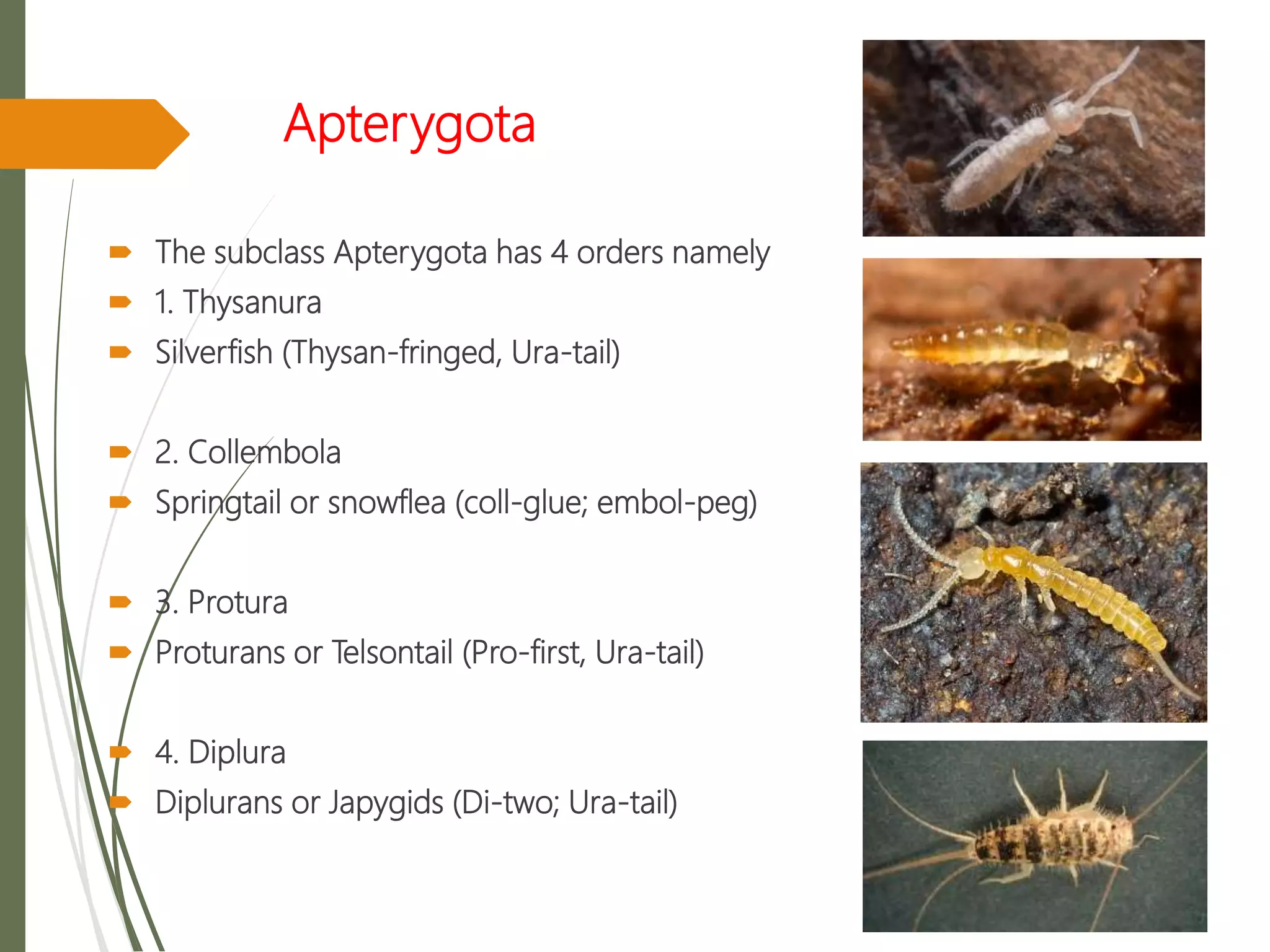
Order :
Apterygota
PREPARED BY
DR. S. SUMAIYA
CLASSIFICATION OF CLASS INSECTA UPTO ORDERS
 Insect is a six legged arthropod
 Taxonomist A.D. Imms proposed a classification of insect
 Phylum : Arthropoda (with several classes)
 Class: Insecta (Hexapoda)
 Characters of class Insecta
 1. Body is divided into three regions
 2. In head a pair of antenna and a pair of compound eyes are usually
present.
 3. Thorax is the centre of locomotion with, 3 pairs of five jointed legs and
two pairs of wings.
 4. Excretion is mainly through malpighian tubules.
 5. Tracheal system of respiration well developed.
 6. Brain is divided into protocerebrum, deutocerebrum and tritocerebrum.
Class: Insecta
 The class Insecta has two subclasses viz., Apterygota and Pterygota.
Apterygota
 The subclass Apterygota has 4 orders namely
 1. Thysanura
 Silverfish (Thysan-fringed, Ura-tail)
 2. Collembola
 Springtail or snowflea (coll-glue; embol-peg)
 3. Protura
 Proturans or Telsontail (Pro-first, Ura-tail)
 4. Diplura
 Diplurans or Japygids (Di-two; Ura-tail)
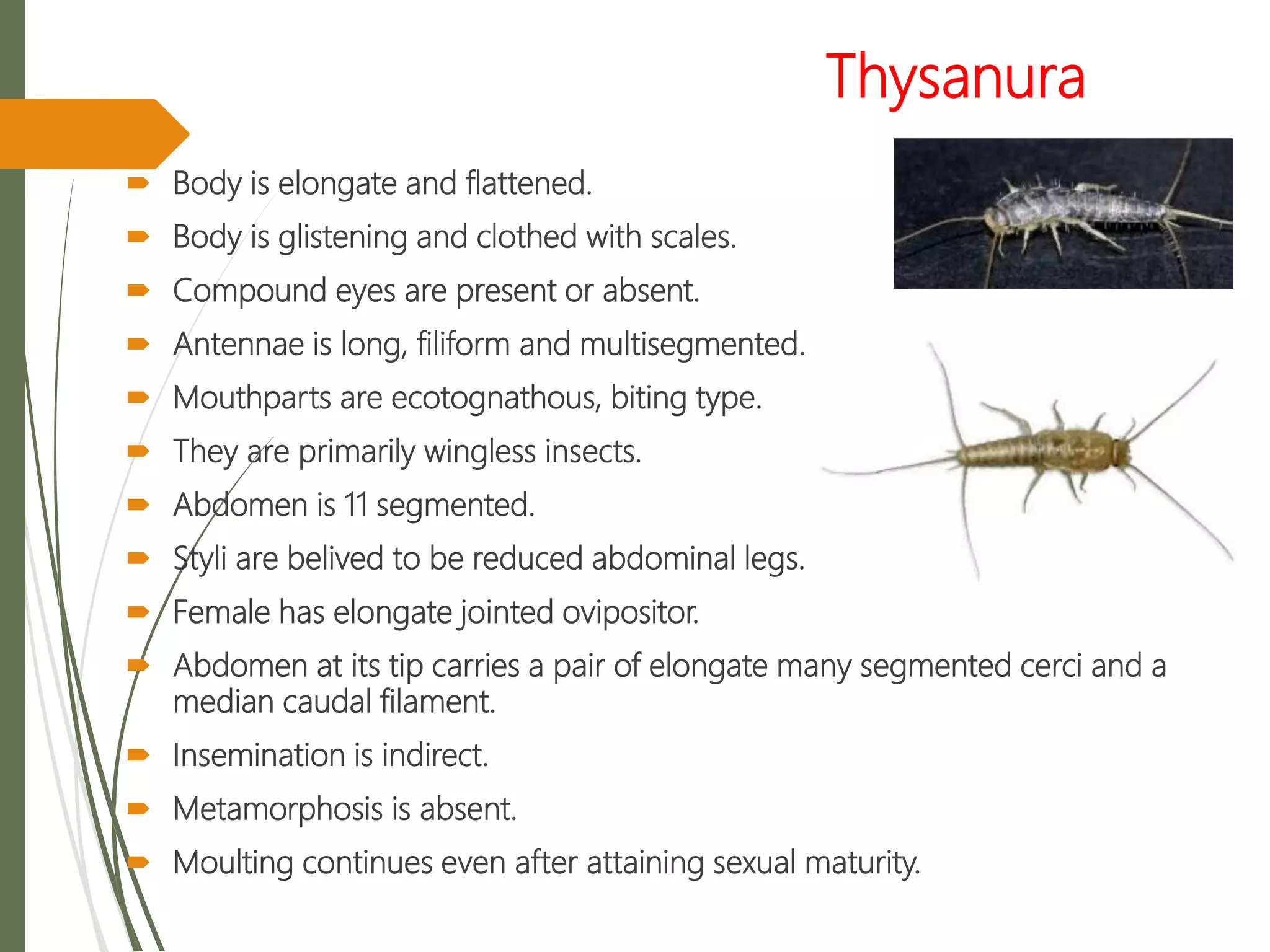
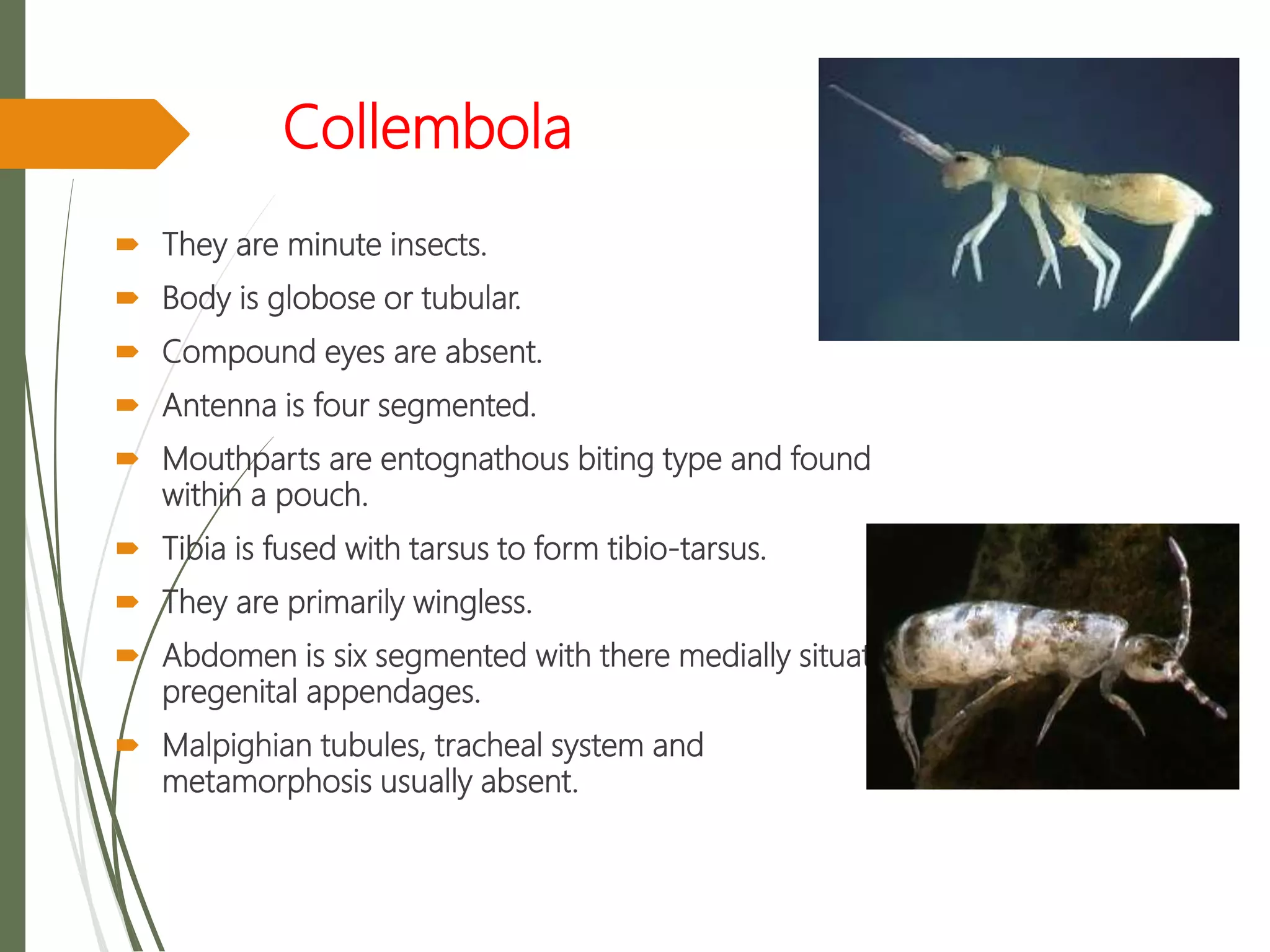
Thysanura
 Body is elongate and flattened.
 Body is glistening and clothed with scales.
 Compound eyes are present or absent.
 Antennae is long, filiform and multisegmented.
 Mouthparts are ecotognathous, biting type.
 They are primarily wingless insects.
 Abdomen is 11 segmented.
 Styli are belived to be reduced abdominal legs.
 Female has elongate jointed ovipositor.
 Abdomen at its tip carries a pair of elongate many segmented cerci and a
median caudal filament.
 Insemination is indirect.
 Metamorphosis is absent.
 Moulting continues even after attaining sexual maturity.
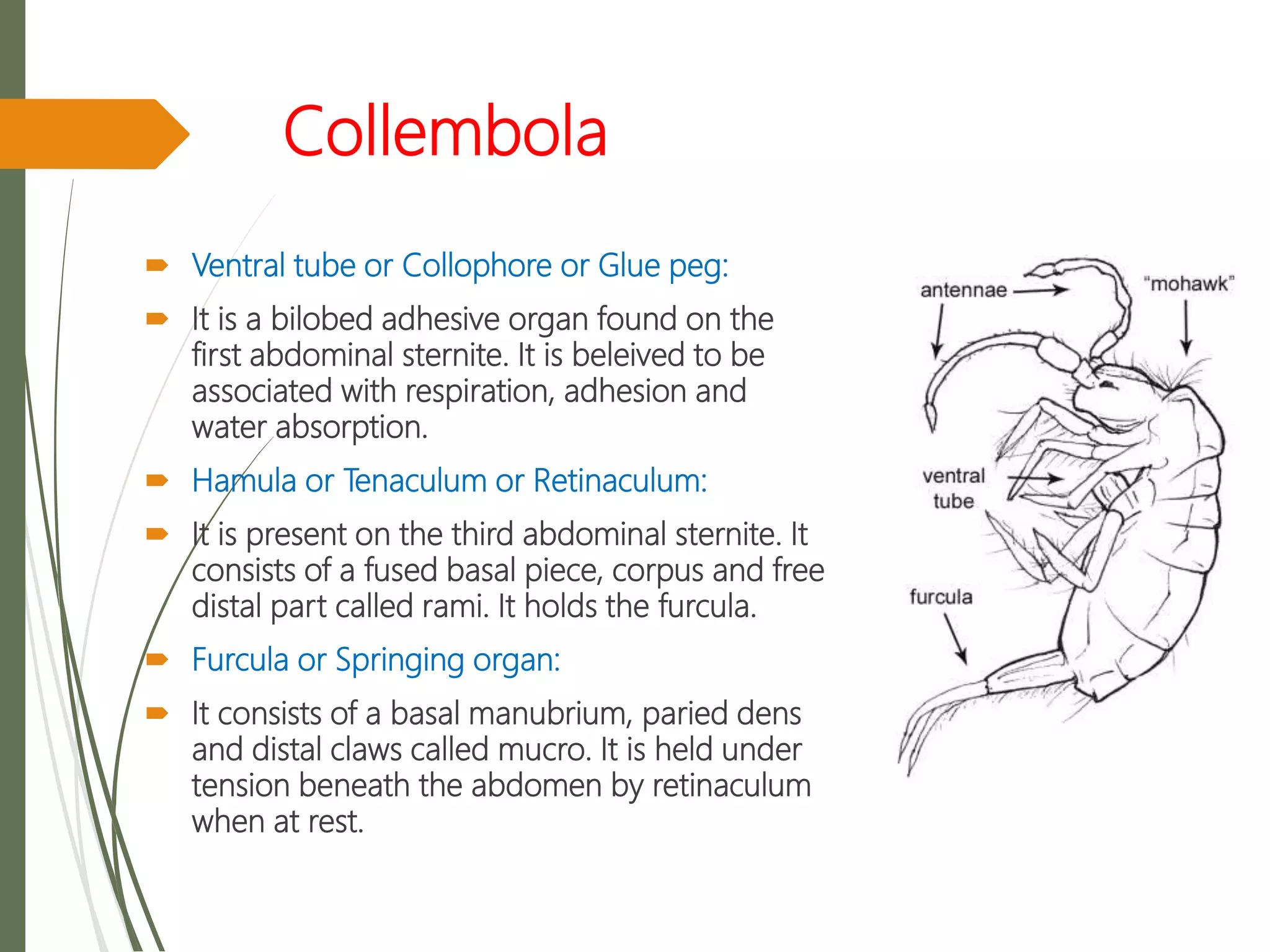
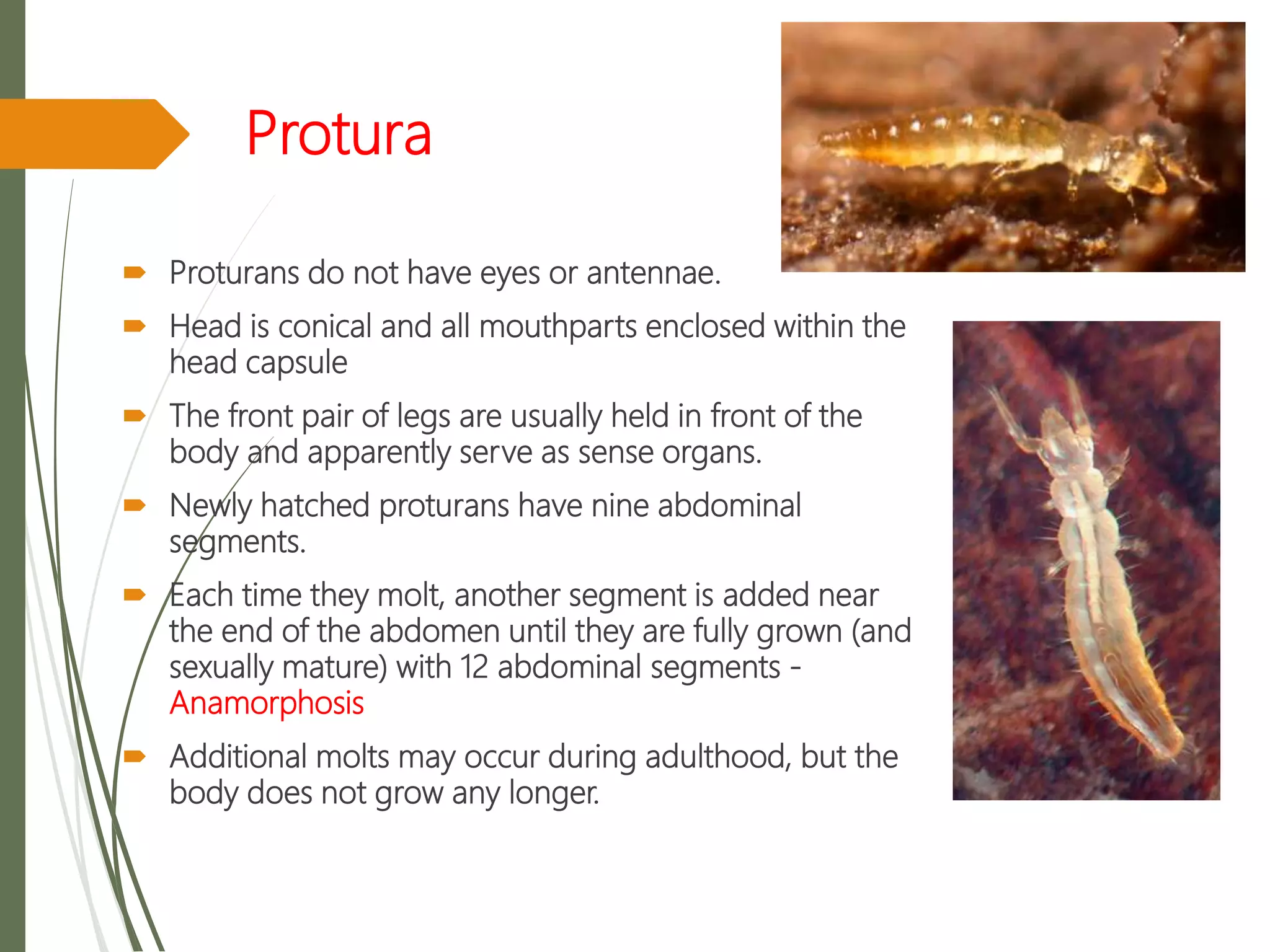
Collembola
 They are minute insects.
 Body is globose or tubular.
 Compound eyes are absent.
 Antenna is four segmented.
 Mouthparts are entognathous biting type and found
within a pouch.
 Tibia is fused with tarsus to form tibio-tarsus.
 They are primarily wingless.
 Abdomen is six segmented with there medially situated
pregenital appendages.
 Malpighian tubules, tracheal system and
metamorphosis usually absent.
Collembola
 Ventral tube or Collophore or Glue peg:
 It is a bilobed adhesive organ found on the
first abdominal sternite. It is beleived to be
associated with respiration, adhesion and
water absorption.
 Hamula or Tenaculum or Retinaculum:
 It is present on the third abdominal sternite. It
consists of a fused basal piece, corpus and free
distal part called rami. It holds the furcula.
 Furcula or Springing organ:
 It consists of a basal manubrium, paried dens
and distal claws called mucro. It is held under
tension beneath the abdomen by retinaculum
when at rest.
Protura
 Proturans do not have eyes or antennae.
 Head is conical and all mouthparts enclosed within the
head capsule
 The front pair of legs are usually held in front of the
body and apparently serve as sense organs.
 Newly hatched proturans have nine abdominal
segments.
 Each time they molt, another segment is added near
the end of the abdomen until they are fully grown (and
sexually mature) with 12 abdominal segments -
Anamorphosis
 Additional molts may occur during adulthood, but the
body does not grow any longer.
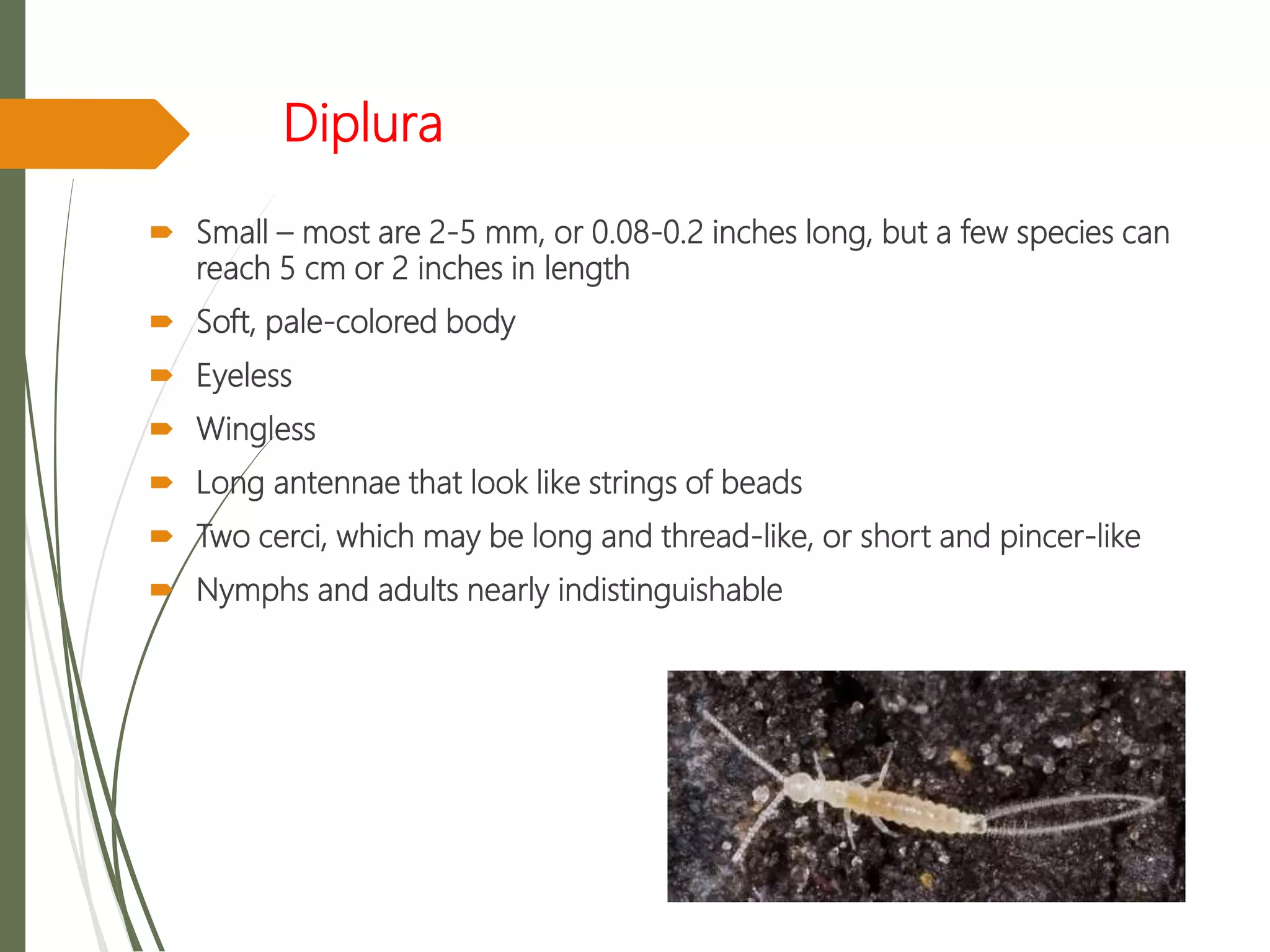
Diplura
 Small – most are 2-5 mm, or 0.08-0.2 inches long, but a few species can
reach 5 cm or 2 inches in length
 Soft, pale-colored body
 Eyeless
 Wingless
 Long antennae that look like strings of beads
 Two cerci, which may be long and thread-like, or short and pincer-like
 Nymphs and adults nearly indistinguishable

Insect Order : apterygota

  • 1.
  • 2.
    CLASSIFICATION OF CLASSINSECTA UPTO ORDERS  Insect is a six legged arthropod  Taxonomist A.D. Imms proposed a classification of insect  Phylum : Arthropoda (with several classes)  Class: Insecta (Hexapoda)  Characters of class Insecta  1. Body is divided into three regions  2. In head a pair of antenna and a pair of compound eyes are usually present.  3. Thorax is the centre of locomotion with, 3 pairs of five jointed legs and two pairs of wings.  4. Excretion is mainly through malpighian tubules.  5. Tracheal system of respiration well developed.  6. Brain is divided into protocerebrum, deutocerebrum and tritocerebrum.
  • 3.
    Class: Insecta  Theclass Insecta has two subclasses viz., Apterygota and Pterygota.
  • 4.
    Apterygota  The subclassApterygota has 4 orders namely  1. Thysanura  Silverfish (Thysan-fringed, Ura-tail)  2. Collembola  Springtail or snowflea (coll-glue; embol-peg)  3. Protura  Proturans or Telsontail (Pro-first, Ura-tail)  4. Diplura  Diplurans or Japygids (Di-two; Ura-tail)
  • 5.
    Thysanura  Body iselongate and flattened.  Body is glistening and clothed with scales.  Compound eyes are present or absent.  Antennae is long, filiform and multisegmented.  Mouthparts are ecotognathous, biting type.  They are primarily wingless insects.  Abdomen is 11 segmented.  Styli are belived to be reduced abdominal legs.  Female has elongate jointed ovipositor.  Abdomen at its tip carries a pair of elongate many segmented cerci and a median caudal filament.  Insemination is indirect.  Metamorphosis is absent.  Moulting continues even after attaining sexual maturity.
  • 6.
    Collembola  They areminute insects.  Body is globose or tubular.  Compound eyes are absent.  Antenna is four segmented.  Mouthparts are entognathous biting type and found within a pouch.  Tibia is fused with tarsus to form tibio-tarsus.  They are primarily wingless.  Abdomen is six segmented with there medially situated pregenital appendages.  Malpighian tubules, tracheal system and metamorphosis usually absent.
  • 7.
    Collembola  Ventral tubeor Collophore or Glue peg:  It is a bilobed adhesive organ found on the first abdominal sternite. It is beleived to be associated with respiration, adhesion and water absorption.  Hamula or Tenaculum or Retinaculum:  It is present on the third abdominal sternite. It consists of a fused basal piece, corpus and free distal part called rami. It holds the furcula.  Furcula or Springing organ:  It consists of a basal manubrium, paried dens and distal claws called mucro. It is held under tension beneath the abdomen by retinaculum when at rest.
  • 8.
    Protura  Proturans donot have eyes or antennae.  Head is conical and all mouthparts enclosed within the head capsule  The front pair of legs are usually held in front of the body and apparently serve as sense organs.  Newly hatched proturans have nine abdominal segments.  Each time they molt, another segment is added near the end of the abdomen until they are fully grown (and sexually mature) with 12 abdominal segments - Anamorphosis  Additional molts may occur during adulthood, but the body does not grow any longer.
  • 9.
    Diplura  Small –most are 2-5 mm, or 0.08-0.2 inches long, but a few species can reach 5 cm or 2 inches in length  Soft, pale-colored body  Eyeless  Wingless  Long antennae that look like strings of beads  Two cerci, which may be long and thread-like, or short and pincer-like  Nymphs and adults nearly indistinguishable