Infrastructure
of NYC
Student Name : Memon Amin I.
Enrollment No. : 191040106004
New York’s Infrastructure
AVIATION
BRIDGES
RAIL
DAMS
ROADS
DRINKING WATER
SOLID WASTE
PUBLIC PARKS
TRANSIT
PORTS
WASTE WATER
Aviation
 JFK is the main international airport serving New York
City.
 The airport is the busiest of the six airports in the New
York airport system, the 13th-busiest airport in the United
States, and the busiest international air passenger
gateway into North America.
 JFK is located in the Jamaica, New York.
Bridges
Brooklyn Bridge
 The Brooklyn Bridge provides passage
between Brooklyn and Manhattan for
motorists, trains, bicycles and pedestrians.
 One of the primary symbols of New York
City, it is a marvel of design and provides
spectacular views of the city's skyline.
ThankYou
someone@example.com
Manhattan Bridge
 This major bridge opened in 1909
linking Brooklyn and Manhattan.
Rails
 The $1.6 billion renovation restored
the Beaux-Arts Farley Building, a
designated landmark, and added a
central atrium with a glass roof.
 Moynihan Train Hall includes retail
space, a 320-seat waiting area, and
public restrooms.
Glass roof of the MoynihanTrain Hall, NewYork City
Dams
 The Kensico Reservoir is a reservoir
located in the towns of Armonk and
Valhalla, New York.
 The Kensico Reservoir was formed by the
old earth and gravel dam, built in 1885,
which impounded waters from the Bronx
and Byram rivers, and supplied about 18
million gallons daily.
Kensico Reservoir Dam
Roads
 Some of the most popular streets
in New York also happen to be
among the city’s must-see
places.
 Even so, New York has a
personality that changes from
street to street. One moment
you’ll meander down an upscale
cobblestone street, and the next
amazes you with massive
skyscrapers.
Time Square
Washington Street Wall Street
New York Strip in Mid Town Manhattan Washington Street
Drinking Water
 New York City has some of the
best tap water in the world.
 Grab your reusable bottle and
drink up! Each day, more than 1
billion gallons of fresh, clean
water are delivered to NYC from
pristine reservoirs in the Catskill
Mountains.
 New York City drinking water is
world-renowned for its quality.
Otisco Lake Dam, Marcellus, New York
Otisco Lake Water Treatment Plant
Solid waste
Management
New York City's waste
management system is a refuse
removal system primarily run by
the New York City Department of
Sanitation (DSNY).
The department maintains the waste
collection infrastructure and hires
public and private contractors who
remove the city's waste.
This waste, created by New York
City's population of more than eight
million, can amount to more than ten
thousand tons a day.
Public Garden
Turtle Pond is Central Park's
newest water body, created in
1937 as part of the construction
of the Great Lawn. It was referred
to as Belvedere Lake until 1987,
when Parks Commissioner Henry J.
Stern renamed the pond in honor of
its inhabitants.
Turtal Pond in Central Park
Transit
MTA—Subways and Buses
The City's rail and bus system is
run by the Metropolitan
Transportation Authority (MTA) and
known as MTA New York City
Transit.
It's inexpensive, environmentally
friendly and a great way to see
sights throughout the five
boroughs—and it operates 24 hours
a day, seven days a week.
Subways in NewYork
 Riding the subway costs $2.75 for
most riders. If you’re going to be
riding often, an unlimited card
might save you money.
Bus stop signs have route numbers printed
on them, with a bus icon printed in a circle
on top.
Look for bus stop signs to know where to
board. Some stops have bus shelters and
some don’t.
Ports
The Port of New York and New
Jersey is the port district of
the New York-Newark metropolitan
area,[encompassing the region
within approximately a 25-mile
(40 km) radius of the Statue of
Liberty National Monument.
Waste Water
 New York City’s 14 Wastewater
Resource Recovery
Facilities together treat 1.3
billion gallons of wastewater
daily.
 Each person can help our
wastewater treatment system run
better by conserving water,
disposing of garbage and
household chemicals properly
and being concerned about
water quality in the New York
City’s waterways.
New York City Largest Sewage Treatment Plant
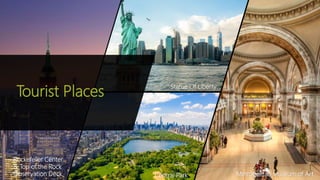
Tourist Places
Statue Of Liberty
Central Park
Rockefeller Center
& Top of the Rock
Observation Deck Metropolitan Museum of Art
Thank You…

Infrastructure of NYC.pptx

  • 1.
    Infrastructure of NYC Student Name: Memon Amin I. Enrollment No. : 191040106004
  • 2.
    New York’s Infrastructure AVIATION BRIDGES RAIL DAMS ROADS DRINKINGWATER SOLID WASTE PUBLIC PARKS TRANSIT PORTS WASTE WATER
  • 3.
    Aviation  JFK isthe main international airport serving New York City.  The airport is the busiest of the six airports in the New York airport system, the 13th-busiest airport in the United States, and the busiest international air passenger gateway into North America.  JFK is located in the Jamaica, New York.
  • 4.
    Bridges Brooklyn Bridge  TheBrooklyn Bridge provides passage between Brooklyn and Manhattan for motorists, trains, bicycles and pedestrians.  One of the primary symbols of New York City, it is a marvel of design and provides spectacular views of the city's skyline.
  • 5.
    ThankYou someone@example.com Manhattan Bridge  Thismajor bridge opened in 1909 linking Brooklyn and Manhattan.
  • 6.
    Rails  The $1.6billion renovation restored the Beaux-Arts Farley Building, a designated landmark, and added a central atrium with a glass roof.  Moynihan Train Hall includes retail space, a 320-seat waiting area, and public restrooms. Glass roof of the MoynihanTrain Hall, NewYork City
  • 7.
    Dams  The KensicoReservoir is a reservoir located in the towns of Armonk and Valhalla, New York.  The Kensico Reservoir was formed by the old earth and gravel dam, built in 1885, which impounded waters from the Bronx and Byram rivers, and supplied about 18 million gallons daily. Kensico Reservoir Dam
  • 8.
    Roads  Some ofthe most popular streets in New York also happen to be among the city’s must-see places.  Even so, New York has a personality that changes from street to street. One moment you’ll meander down an upscale cobblestone street, and the next amazes you with massive skyscrapers. Time Square
  • 9.
    Washington Street WallStreet New York Strip in Mid Town Manhattan Washington Street
  • 10.
    Drinking Water  NewYork City has some of the best tap water in the world.  Grab your reusable bottle and drink up! Each day, more than 1 billion gallons of fresh, clean water are delivered to NYC from pristine reservoirs in the Catskill Mountains.  New York City drinking water is world-renowned for its quality.
  • 11.
    Otisco Lake Dam,Marcellus, New York Otisco Lake Water Treatment Plant
  • 12.
    Solid waste Management New YorkCity's waste management system is a refuse removal system primarily run by the New York City Department of Sanitation (DSNY). The department maintains the waste collection infrastructure and hires public and private contractors who remove the city's waste. This waste, created by New York City's population of more than eight million, can amount to more than ten thousand tons a day.
  • 13.
    Public Garden Turtle Pondis Central Park's newest water body, created in 1937 as part of the construction of the Great Lawn. It was referred to as Belvedere Lake until 1987, when Parks Commissioner Henry J. Stern renamed the pond in honor of its inhabitants. Turtal Pond in Central Park
  • 14.
    Transit MTA—Subways and Buses TheCity's rail and bus system is run by the Metropolitan Transportation Authority (MTA) and known as MTA New York City Transit. It's inexpensive, environmentally friendly and a great way to see sights throughout the five boroughs—and it operates 24 hours a day, seven days a week.
  • 15.
    Subways in NewYork Riding the subway costs $2.75 for most riders. If you’re going to be riding often, an unlimited card might save you money.
  • 16.
    Bus stop signshave route numbers printed on them, with a bus icon printed in a circle on top. Look for bus stop signs to know where to board. Some stops have bus shelters and some don’t.
  • 17.
    Ports The Port ofNew York and New Jersey is the port district of the New York-Newark metropolitan area,[encompassing the region within approximately a 25-mile (40 km) radius of the Statue of Liberty National Monument.
  • 18.
    Waste Water  NewYork City’s 14 Wastewater Resource Recovery Facilities together treat 1.3 billion gallons of wastewater daily.  Each person can help our wastewater treatment system run better by conserving water, disposing of garbage and household chemicals properly and being concerned about water quality in the New York City’s waterways. New York City Largest Sewage Treatment Plant
  • 19.
    Tourist Places Statue OfLiberty Central Park Rockefeller Center & Top of the Rock Observation Deck Metropolitan Museum of Art
  • 20.