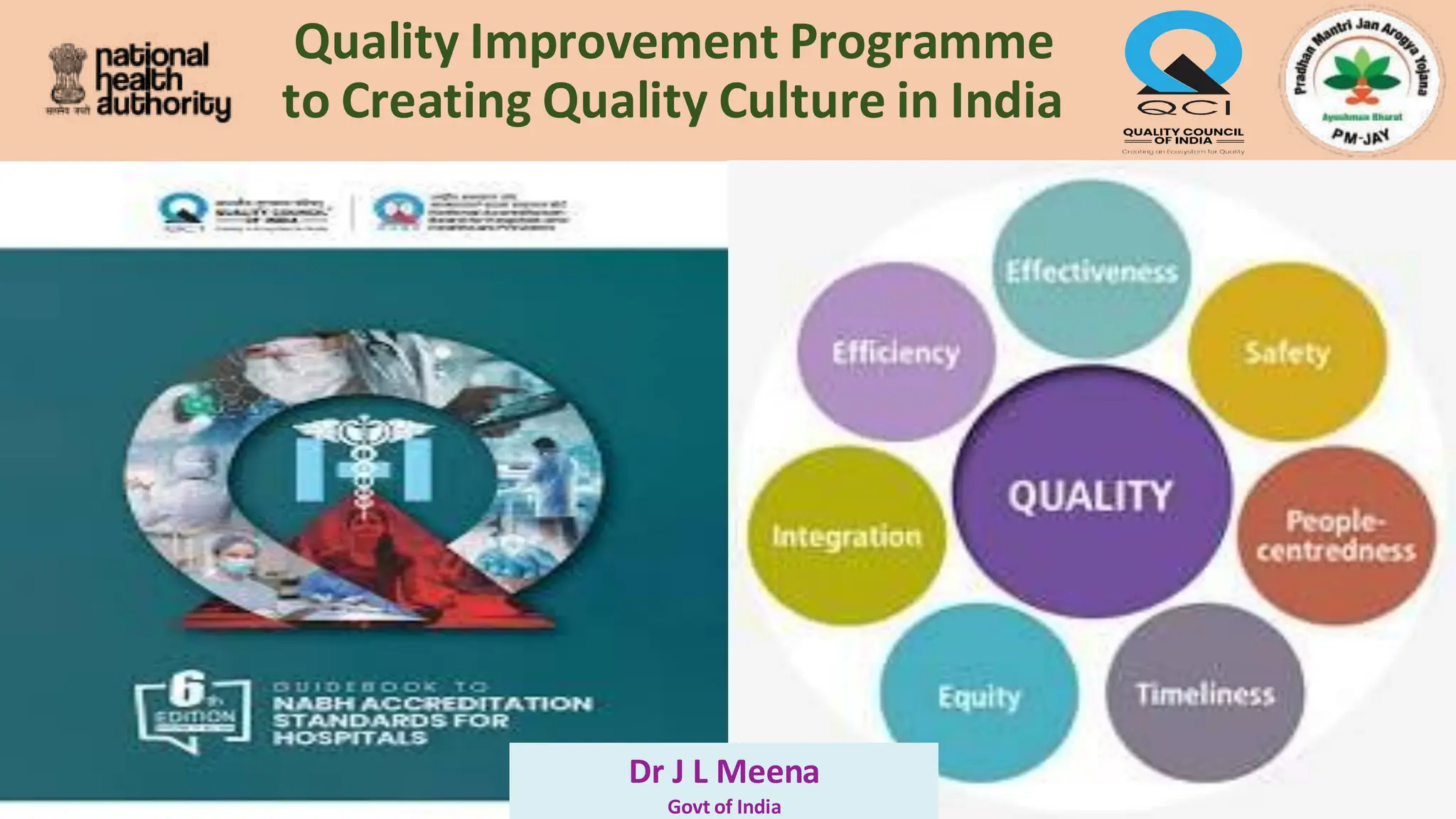
Quality Improvement Programme
to Creating Quality Culture in India
Dr J L Meena
Govt of India
Quality Improvement Programme
to Creating Quality Culture in India
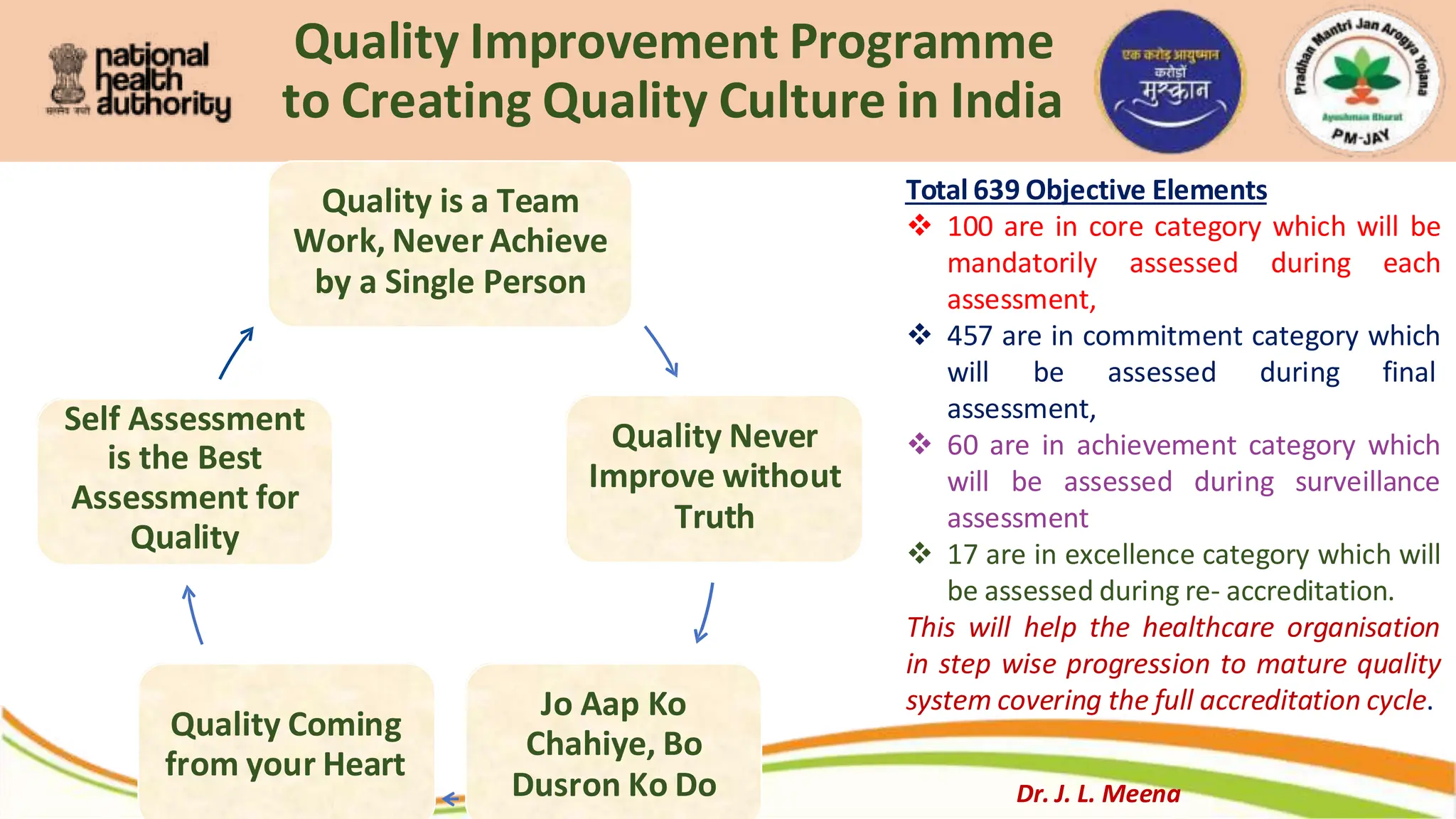
Quality is a Team
Work, Never Achieve
by a Single Person
Quality Never
Improve without
Truth
Jo Aap Ko
Chahiye, Bo
Dusron Ko Do
Quality Coming
from your Heart
Self Assessment
is the Best
Assessment for
Quality
Dr. J. L. Meena
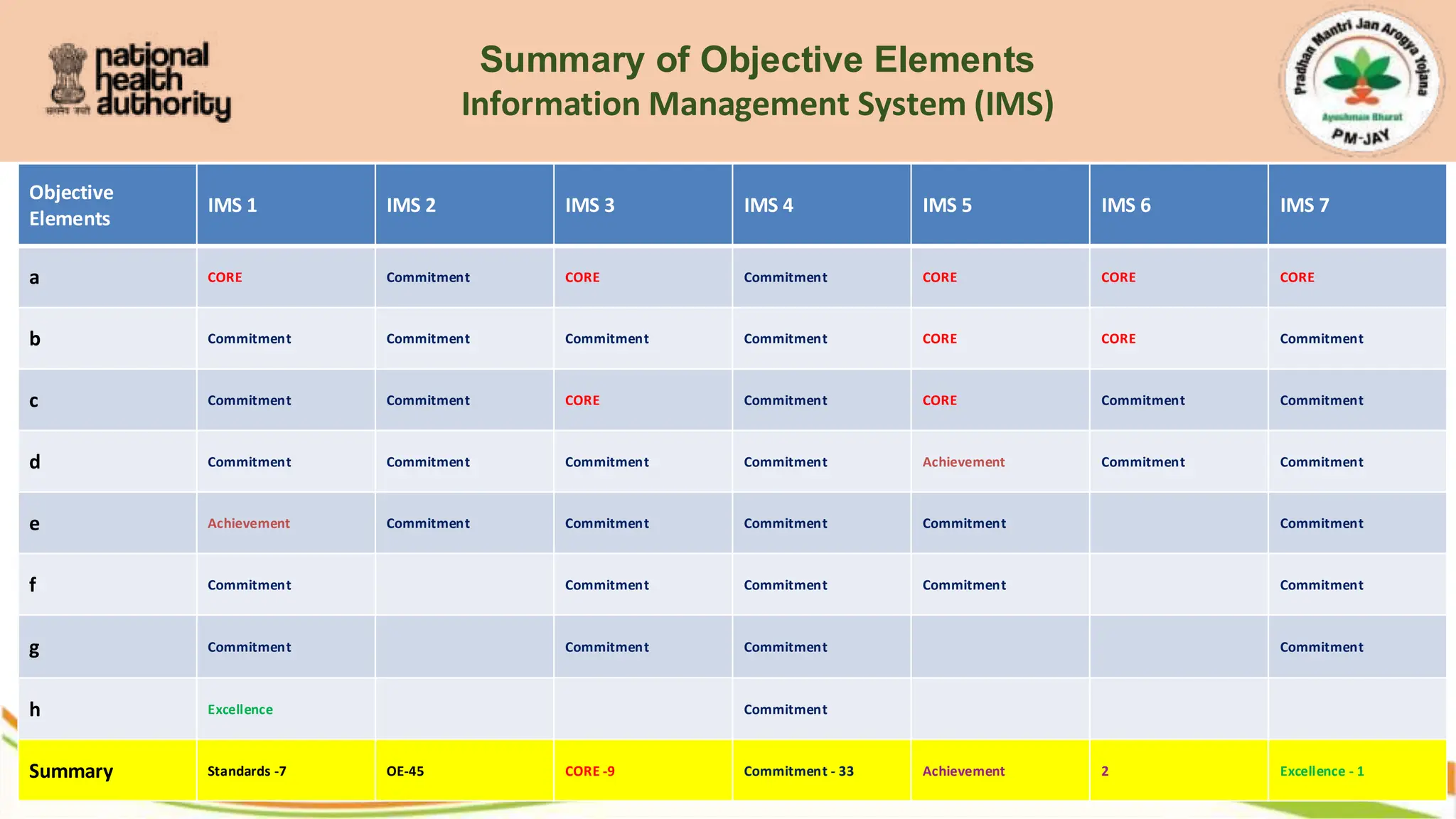
Total 639 Objective Elements
❖ 100 are in core category which will be
mandatorily assessed during each
assessment,
❖ 457 are in commitment category which
will be assessed during final
assessment,
❖ 60 are in achievement category which
will be assessed during surveillance
assessment
❖ 17 are in excellence category which will
be assessed during re- accreditation.
This will help the healthcare organisation
in step wise progression to mature quality
system covering the full accreditation cycle.
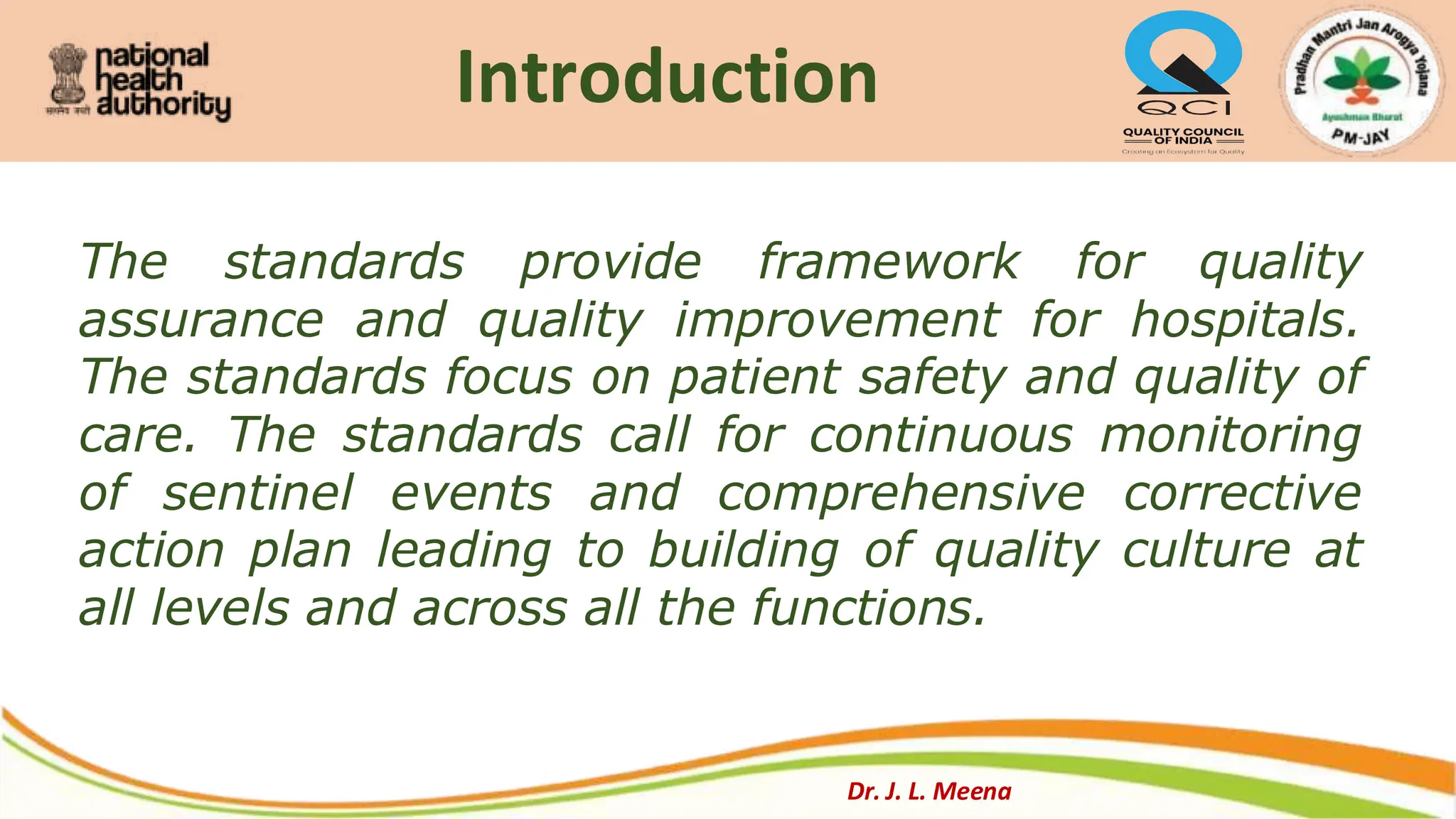
Introduction
Dr. J. L. Meena
The standards provide framework for quality
assurance and quality improvement for hospitals.
The standards focus on patient safety and quality of
care. The standards call for continuous monitoring
of sentinel events and comprehensive corrective
action plan leading to building of quality culture at
all levels and across all the functions.
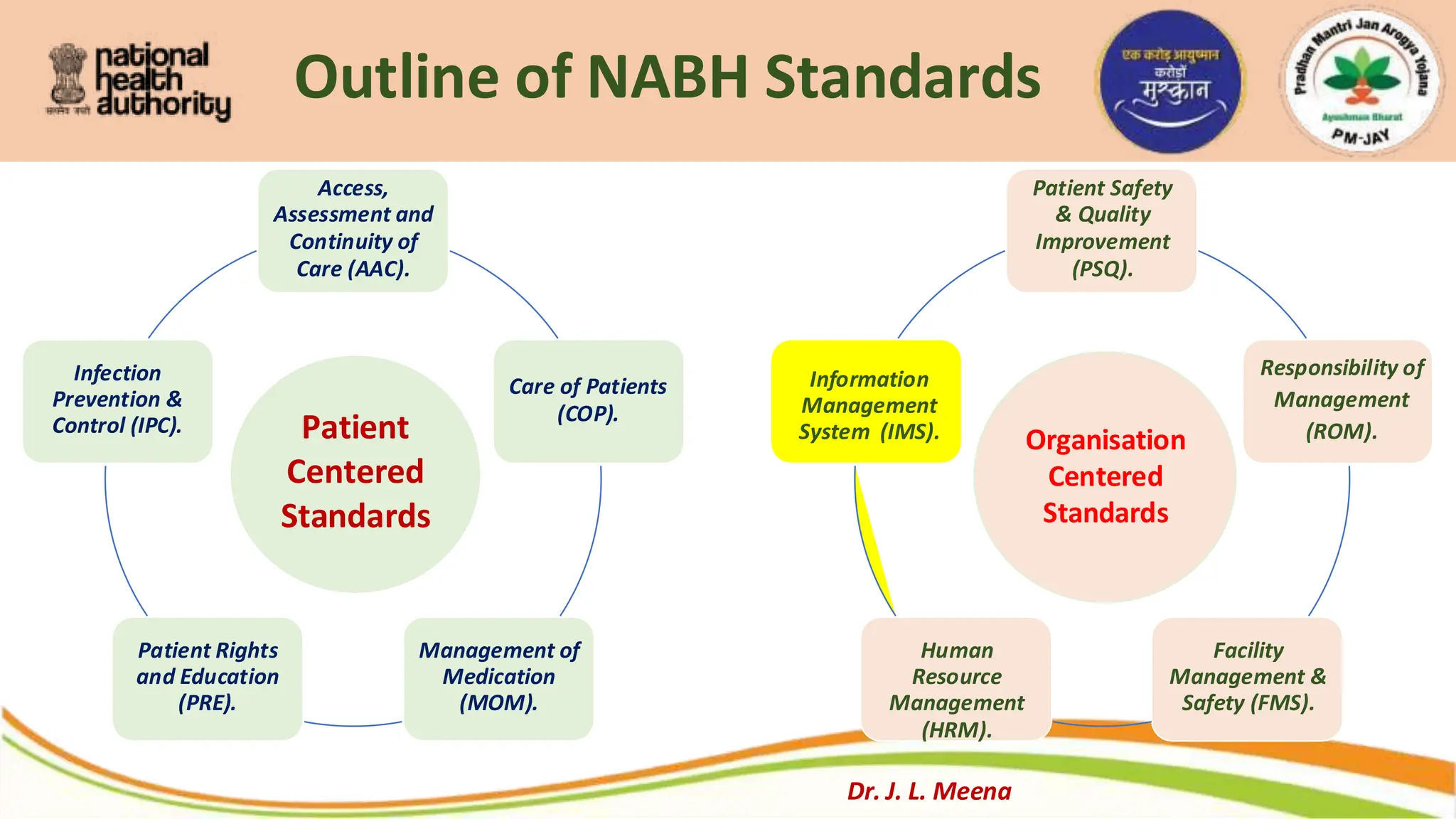
Outline of NABH Standards
Access,
Assessment and
Continuity of
Care (AAC).
Care of Patients
(COP).
Management of
Medication
(MOM).
Patient Rights
and Education
(PRE).
Infection
Prevention &
Control (IPC).
Patient Safety
& Quality
Improvement
(PSQ).
Responsibility of
Management
(ROM).
Facility
Management &
Safety (FMS).
Human
Resource
Management
(HRM).
Information
Management
System (IMS).
Patient
Centered
Standards
Organisation
Centered
Standards
Dr. J. L. Meena
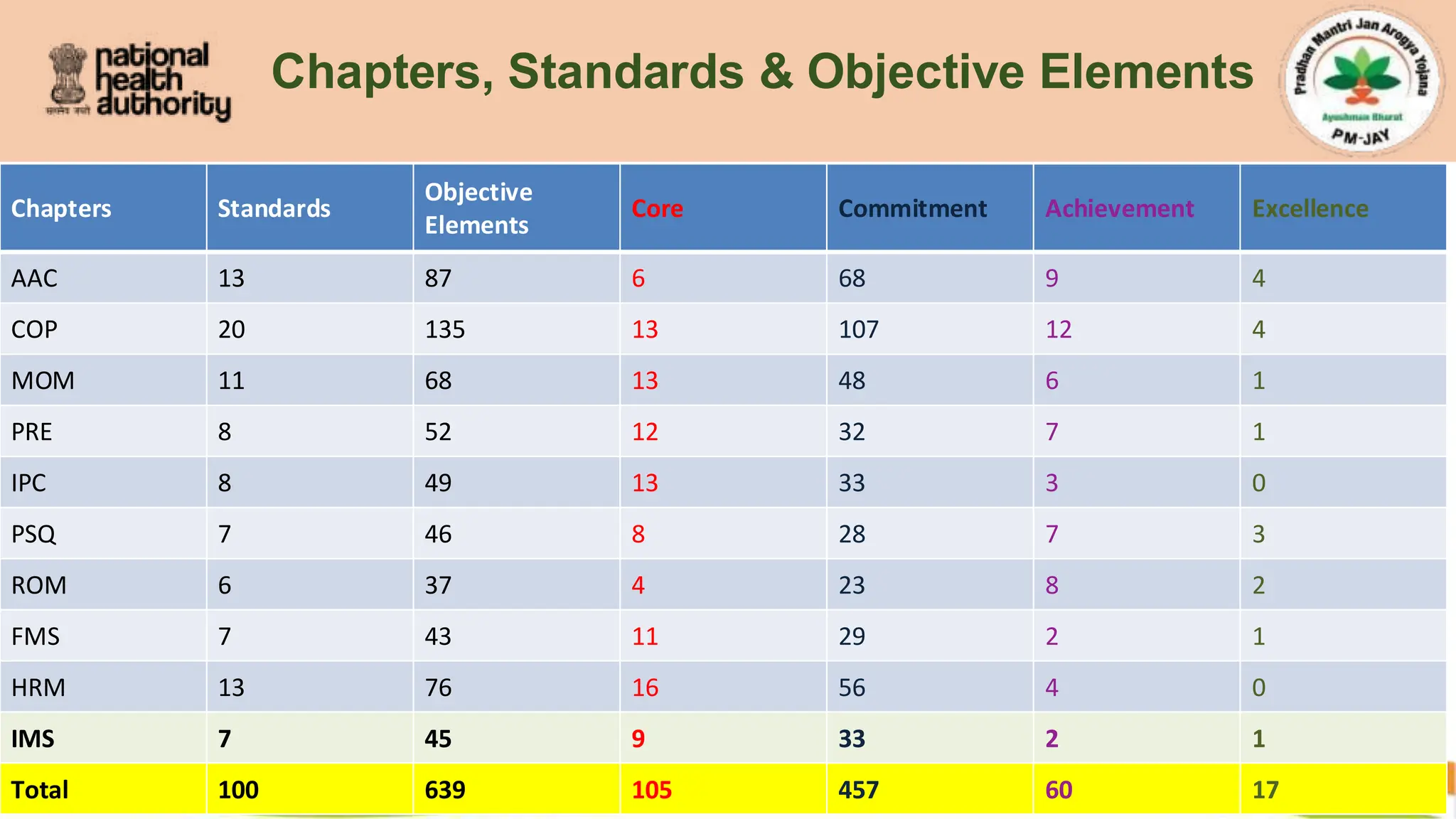
Chapters, Standards & Objective Elements
Chapters Standards
Objective
Elements
Core Commitment Achievement Excellence
AAC 13 87 6 68 9 4
COP 20 135 13 107 12 4
MOM 11 68 13 48 6 1
PRE 8 52 12 32 7 1
IPC 8 49 13 33 3 0
PSQ 7 46 8 28 7 3
ROM 6 37 4 23 8 2
FMS 7 43 11 29 2 1
HRM 13 76 16 56 4 0
IMS 7 45 9 33 2 1
Total 100 639 105 457 60 17
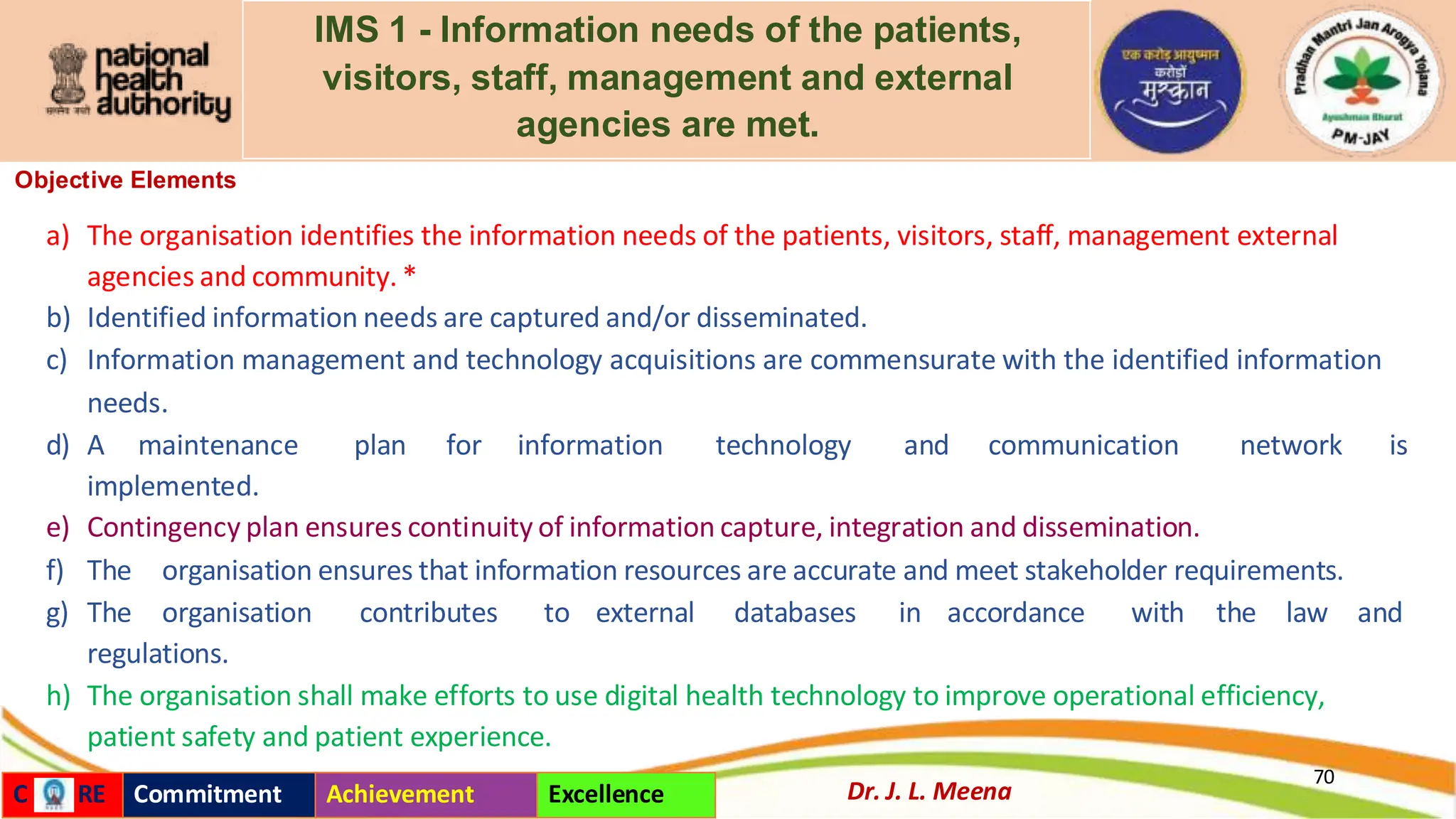
Healthcare facilities in India must address the
diverse information needs of patients, visitors,
staff, management, and external agencies
1. Patients:- Patients require clear, accessible, and timely information to make informed decisions about their care and navigate healthcare
facilities.
Information Needs:
- Medical Information: Diagnosis, treatment options, procedures, costs, and expected outcomes.
- Logistical Information: Appointment scheduling, hospital navigation, visiting hours, and accommodation options (especially for medical
tourists or rural patients).
- Cultural and Linguistic Needs: Information in regional languages or through interpreters for non-English/Hindi speakers.
- Financial Transparency: Cost estimates, insurance coverage, and government scheme details (e.g., Ayushman Bharat).
How Needs Are Met:
- Digital Tools: Many hospitals, provide patient portals and mobile apps for appointment booking, accessing medical records, and
teleconsultations. Government hospitals are increasingly adopting eHospital Management Software for patient registration and records.
- Multilingual Support: JCI- and NABH-accredited hospitals offer interpreters for languages like Arabic, Russian, and regional Indian
languages to cater to international and diverse domestic patients.
- Financial Counseling: Hospitals provide detailed cost estimates and assist with insurance or government scheme navigation. Ayushman
Bharat’s PM-JAY offers cashless treatment information at empaneled hospitals.
- Navigation Aids: Indoor navigation apps and signage in larger hospitals help patients locate departments, though rural facilities often lack
such systems.
Challenges: Public hospitals face resource constraints, leading to limited digital infrastructure and long wait times for information. Rural
patients may struggle with low digital literacy or language barriers.
Dr. J. L. Meena
Healthcare facilities in India must address the
diverse information needs of patients, visitors,
staff, management, and external agencies
2. Visitors:- Visitors, including family members and attendants, need information to support patients and comply with
hospital protocols.
Information Needs:
- Visiting Policies: Hours, restrictions, and badge requirements.
- Patient Updates: Status updates on patient condition or surgery progress.
- Facility Navigation: Directions to wards, cafeterias, or pharmacies.
- Safety Protocols: Infection control measures, especially post-COVID.
How Needs Are Met:
- Visitor Management Systems (VMS): Digital VMS in some hospitals use QR codes, e-passes, and contactless check-ins
to streamline entry, issue badges, and track visitor movements. These systems also screen for health risks like fever.
- Information Desks: Most hospitals have help desks to guide visitors, though staffing shortages in public facilities can
limit effectiveness.
- Real-Time Notifications: Advanced VMS notify staff of visitor arrivals, reducing wait times and ensuring compliance
with restricted areas.
Challenges: Adoption of digital VMS is low in rural and smaller hospitals, where paper-based logs persist, compromising
security and efficiency. Visitors in public hospitals often face unclear signage and overcrowding, increasing stress.
Dr. J. L. Meena
Healthcare facilities in India must address the
diverse information needs of patients, visitors,
staff, management, and external agencies
3. Staff:- Doctors, nurses, and support staff need accurate, real-time information to deliver care and manage operations.
Information Needs:
- Clinical Data: Access to patient records, test results, and treatment plans.
- Operational Data: Staff schedules, equipment availability, and patient flow.
- Safety and Compliance: Infection control protocols, emergency procedures, and visitor management data.
- Training and Updates: Continuous medical education (CME) and policy changes.
How Needs Are Met:
- Hospital Information Systems (HIS): Hospitals use HIS like eHospital or custom software to centralize patient data, staff
schedules, and asset tracking. Tele-ICU software aids remote patient monitoring.
- Asset Tracking: Real-time location systems (RTLS) in advanced facilities track equipment, saving time for staff.
- Training Programs: National Medical Commission mandates CME for doctors, and NABH accreditation ensures staff
training on infection control and safety.
- Visitor Management Integration: VMS provide staff with visitor data, flagging restricted individuals or overcrowding in
patient rooms.
Challenges: Public hospitals often lack integrated HIS, relying on manual records, which delays care. Staff in rural areas
may have limited access to digital tools or training.
Dr. J. L. Meena
Healthcare facilities in India must address the
diverse information needs of patients, visitors,
staff, management, and external agencies
4. Management:- Hospital administrators and management require data to optimize operations, ensure compliance, and
enhance patient satisfaction.
Information Needs:
- Operational Metrics: Bed occupancy, patient throughput, and resource utilization.
- Financial Data: Billing, insurance claims, and cost management.
- Compliance and Accreditation: Adherence to NABH, JCI, and government regulations.
- Security and Risk Management: Visitor logs, incident reports, and emergency preparedness.
How Needs Are Met:
- Centralized Dashboards: HIS and VMS provide real-time analytics on patient flow, visitor traffic, and resource use. For
example, geospatial intelligence software optimizes ambulance routing.
- Accreditation Support: NABH and JCI-accredited hospitals use standardized data systems to meet quality and safety
benchmarks.
- Government Initiatives: The 2017 district hospital performance tracking system ranks public hospitals based on resource
availability and patient satisfaction, aiding management decisions.
- Security Systems: Advanced VMS with CCTV integration and blacklisting features help manage risks, as seen in facilities.
Challenges: Smaller hospitals lack funds for advanced analytics tools, and public facilities struggle with bureaucratic delays
in implementing centralized systems.
Dr. J. L. Meena
Healthcare facilities in India must address the
diverse information needs of patients, visitors,
staff, management, and external agencies
5. External Agencies:- External agencies, such as government bodies, insurance providers, and accreditation organizations,
require data for oversight, funding, and quality assurance.
Information Needs:
- Regulatory Compliance: Data on patient safety, infection rates, and infrastructure (e.g., WASH facilities).
- Financial Accountability: Billing transparency and insurance claim validation.
- Public Health Monitoring: Disease surveillance and hospital performance metrics.
- Accreditation Standards: Evidence of quality care and staff qualifications.
How Needs Are Met:
- Government Reporting: Public hospitals submit data to the Ministry of Health and Family Welfare via centralized systems.
Initiatives like KAYAKALP and Swachh Swasth Sarvatra assess cleanliness and WASH compliance.
- Accreditation Bodies: NABH and JCI require hospitals to maintain detailed records on patient care, safety, and staff
training, accessible during audits.
- Insurance Integration: Private hospitals provide digital billing and claim data to insurers, supported by Ayushman Bharat’s
cashless treatment framework.
- Public Health Data: Hospitals report infectious disease cases to state health departments, though manual reporting in
rural areas can cause delays.
Challenges: Inconsistent data standards across hospitals hinder national-level monitoring. Rural facilities often lack the
infrastructure to provide timely data to external agencies. Dr. J. L. Meena
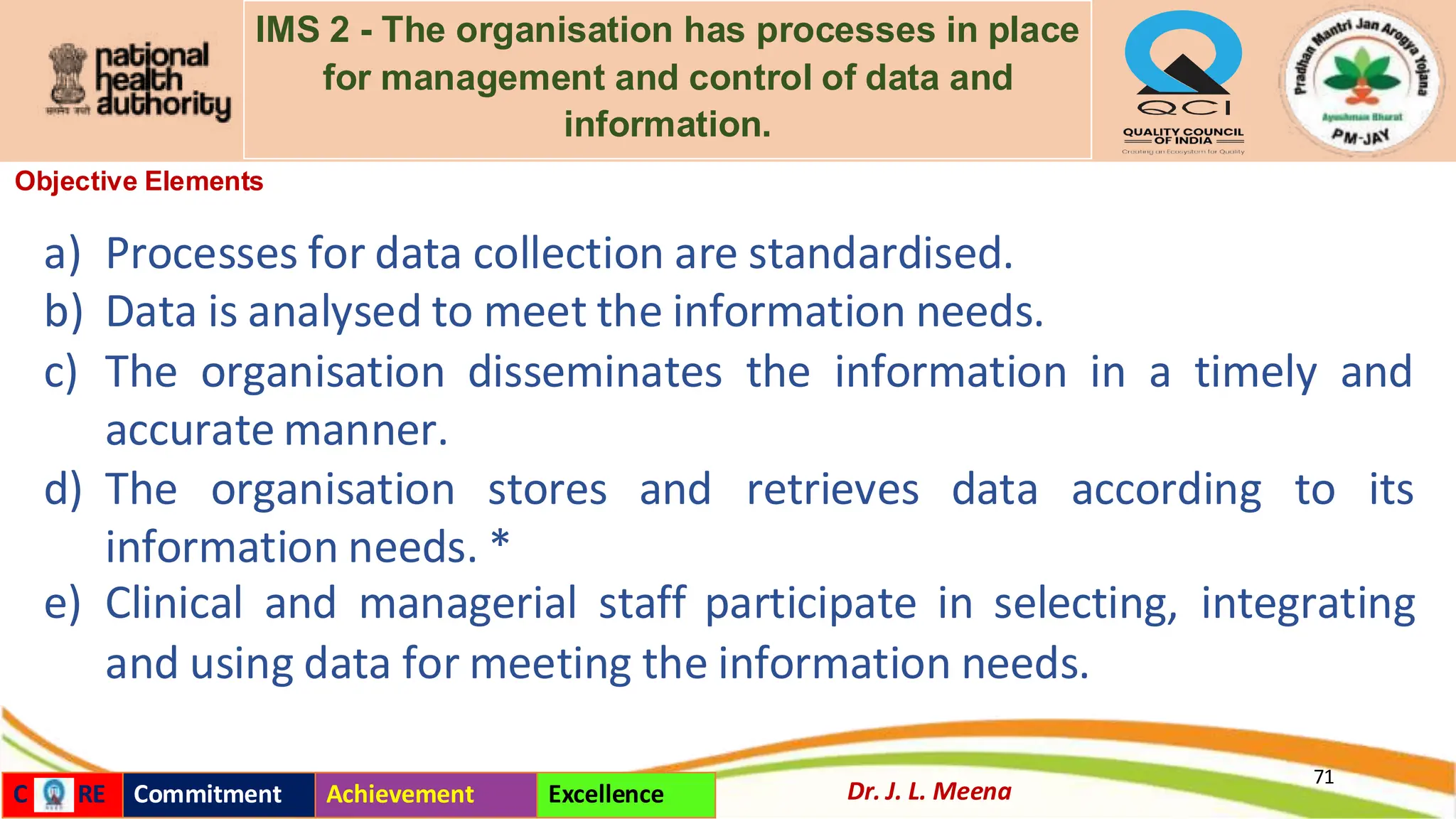
Hospital data management and
control processes in India
Hospital data management and control processes in India are critical for ensuring efficient healthcare delivery, regulatory
compliance, and patient data security. Below is an overview of typical processes and systems hospitals in India employ,
based on industry practices and available information:
1. Hospital Management Systems (HMS)
Hospitals in India widely adopt Hospital Management Systems (HMS) or Hospital Information Systems (HIS) to streamline
data management. These systems integrate various hospital functions, including:
- Patient Data Management: Centralized storage of electronic medical records (EMRs) or electronic health records (EHRs)
for patient demographics, medical history, diagnoses, treatments, and test results. Modules manage patient registration,
appointment scheduling, and billing.
- Administrative Processes: Automation of billing, invoicing, claims processing, and financial analytics to reduce errors and
optimize revenue cycles.
- Clinical Operations: Support for laboratory management, pharmacy, radiology, and operation theater scheduling to
ensure seamless data flow across departments.
- Inventory Management: Tracking medical supplies, equipment, and medications to prevent shortages or overstocking,
often using barcode or RFID technologies.
Examples: Software like TiaNuMR, MocDoc, Healthray, and Docpulse are popular in India, offering cloud-based, HIPAA-
compliant solutions with features like telemedicine integration and mobile access.
Dr. J. L. Meena
Hospital data management and
control processes in India
2. Data Security and Privacy
Hospitals handle sensitive personal data, including health and financial information, necessitating robust security
measures:
- Regulatory Compliance: Adherence to the **Information Technology Act 2000**, **IT (Reasonable Security Practices and
Procedures and Sensitive Personal Data or Information) Rules 2011**, and the proposed **Digital Information Security in
Healthcare Act (DISHA)**. These laws mandate encryption, access controls, and anonymization of health data.
- HIPAA and GDPR Compliance: Many HMS platforms (e.g., TiaNuMR, MediSoft+) comply with international standards like
HIPAA for secure data storage and transfer.
- Access Controls: Role-based access controls (RBAC) ensure only authorized personnel access specific data. Audit trails and
logs track data usage to prevent breaches.
- Cloud-Based Solutions: Increasing adoption of cloud storage with replicated data centers for backup, recovery, and
scalability, ensuring data protection against breaches or loss.
3. Data Quality and Standardization
- Metadata Management: Hospitals standardize terminology for diagnoses, procedures, and clinical data to enhance data
transparency and interoperability.
- Data Validation: Multi-step processes to detect and correct errors in data entry, ensuring accuracy for clinical decisions.
- Interoperability: Integration with third-party systems (e.g., EHRs, laboratory information systems) to eliminate duplicate
data and create a single source of truth.
Dr. J. L. Meena
Hospital data management and
control processes in India
4. Analytics and Reporting
- Business Intelligence: HMS modules generate comprehensive reports on hospital performance,
patient outcomes, and financial metrics, enabling data-driven decisions.
- Predictive Analytics: AI and machine learning tools analyze patient data to predict health
conditions, optimize treatment plans, and reduce readmissions.
- Real-Time Data Access: Dashboards and MIS reports provide instant insights into patient traffic,
resource utilization, and operational efficiency.
5. Patient-Centric Processes
- Patient Portals: Mobile apps and web platforms allow patients to access their records, book
appointments, and make payments, reducing manual processes.
- Telemedicine Integration: HMS platforms like Docpulse support virtual consultations, e-
prescriptions, and remote patient monitoring via IoT devices.
- Reduced Wait Times: Automation of appointment scheduling, billing, and report delivery
minimizes patient wait times and enhances satisfaction.
Dr. J. L. Meena
Hospital data management and
control processes in India
6. Challenges and Considerations
- Resource Constraints: Limited storage space and skilled personnel for data management can hinder scalability.
- Data Breaches: Rising cyber threats necessitate regular penetration testing and vulnerability assessments.
- Regulatory Gaps: While DISHA and the Health Data Management Policy are in development, India lacks a comprehensive
data protection law, relying on IT Act provisions.
- Manual Processes: Smaller hospitals may still rely on periodic inventory systems or paper-based records, leading to
inefficiencies and errors.
7. Case Studies
- Manipal Hospitals: Implemented LeadSquared’s HMS to centralize patient data across 27 multispecialty hospitals,
improving lead management and reporting.
- Vivekananda Kendra Bina Refinery Hospital: Uses Docpulse for seamless online booking, queue management, and
vaccine reminders, enhancing patient experience.
8. Emerging Trends
- AI and IoT: Adoption of AI for predictive modeling and IoT for remote monitoring to enhance proactive care.
- Blockchain: Emerging use for secure, transparent health data management to ensure traceability and privacy.
- Digital Twins: Virtual simulations of hospital processes for training and AI validation without disrupting EMR systems.
Dr. J. L. Meena
Hospital data management and
control processes in India
Conclusion
Hospitals in India leverage HMS platforms to manage and control
data, focusing on automation, security, and analytics to improve
patient care and operational efficiency. However, challenges like
regulatory gaps and resource limitations persist, particularly for
smaller facilities. Adopting scalable, cloud-based solutions and
adhering to evolving data protection laws are critical for robust data
management. For specific hospital processes, further details on the
organization’s size, software, or compliance needs would help tailor
the response.
Dr. J. L. Meena
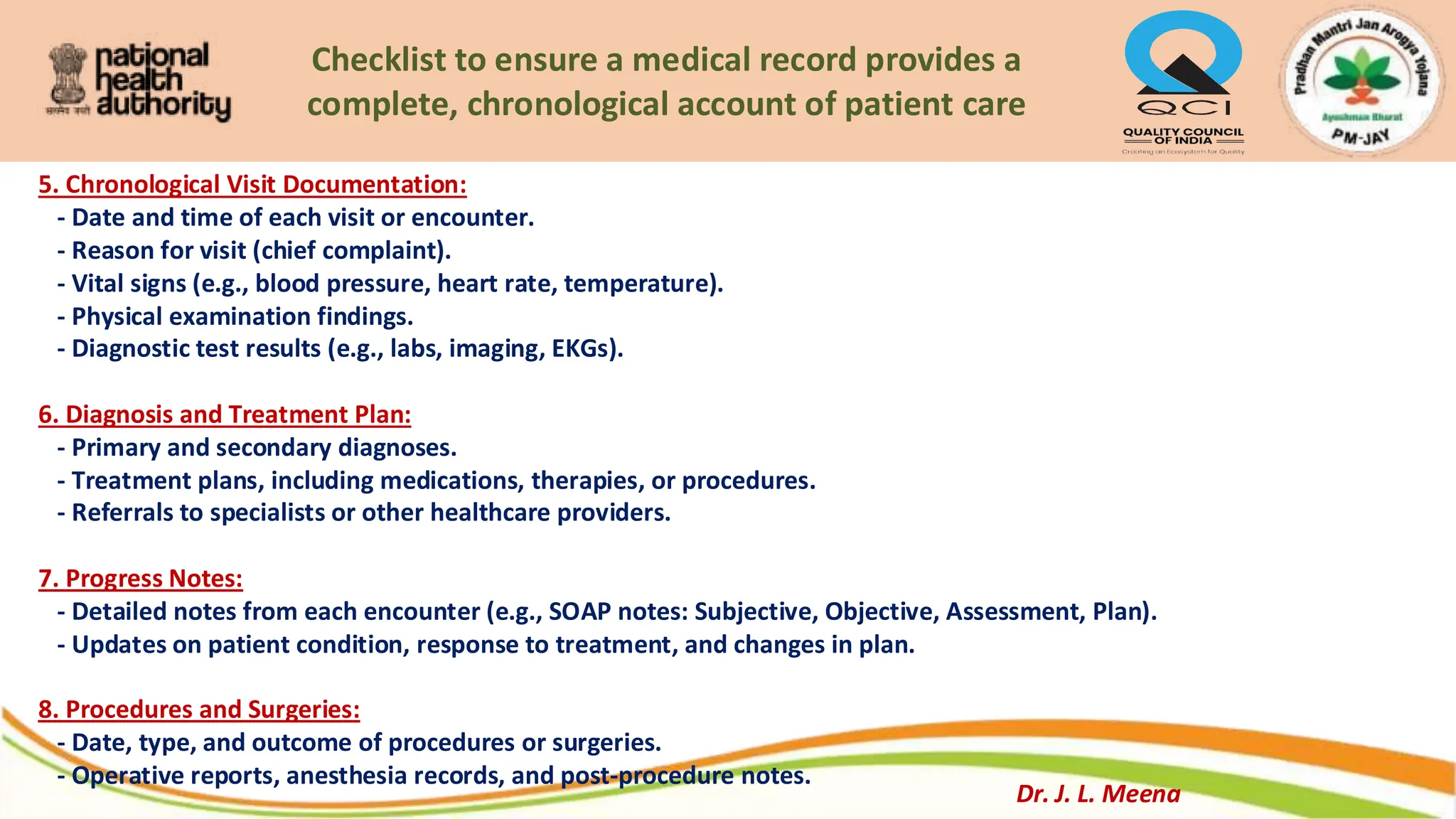
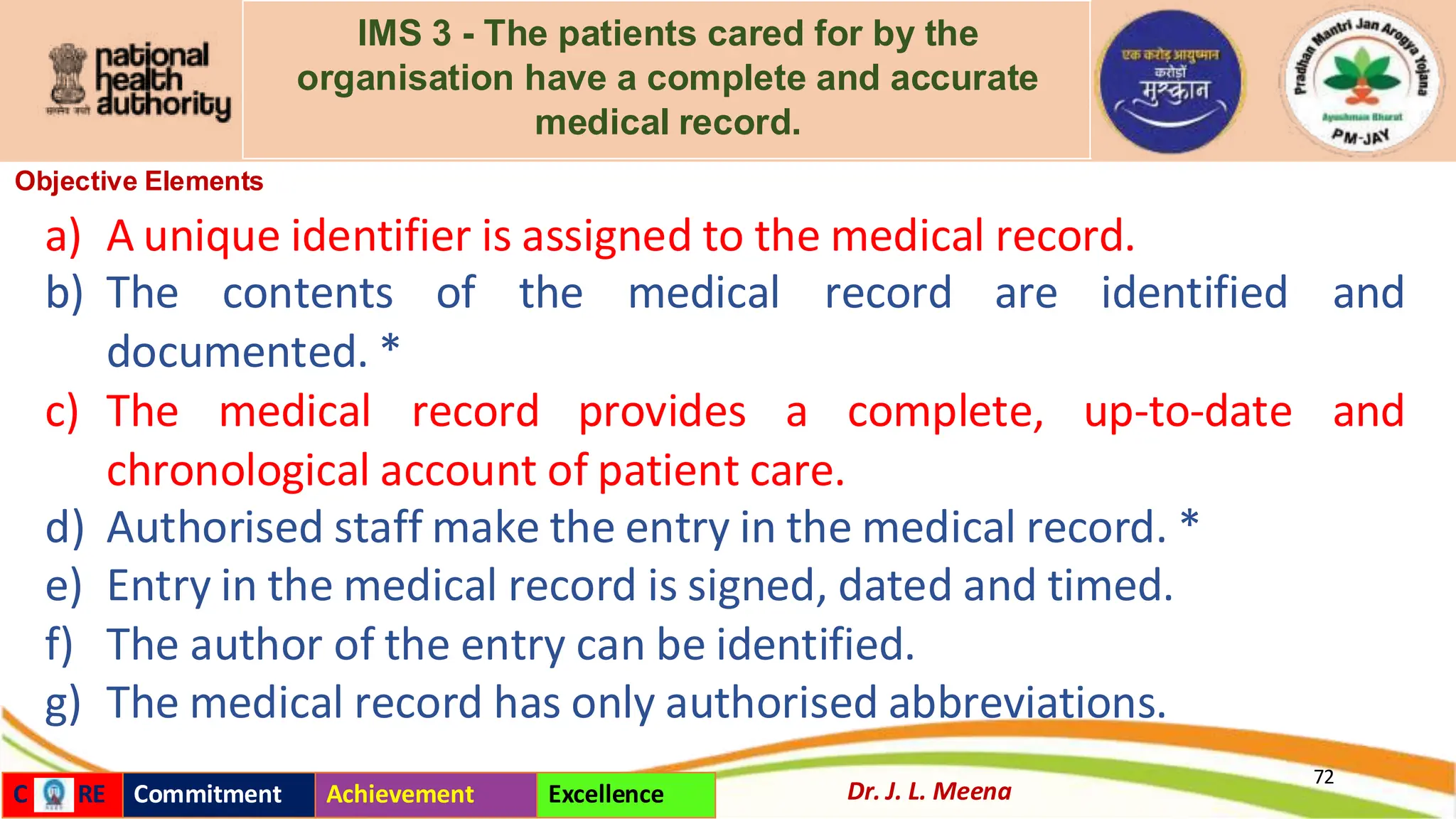
Checklist to ensure a medical record provides a
complete, chronological account of patient care
1. Patient Identification:
- Full name, date of birth, medical record number, and contact information.
- Emergency contact details.
2. Demographic Information:
- Age, gender, ethnicity, and occupation.
- Insurance information (if applicable).
3. Medical History:
- Past medical conditions, surgeries, and hospitalizations.
- Family medical history.
- Allergies (medications, food, environmental).
- Immunization records.
4. Medication History:
- Current and past medications (name, dosage, frequency, duration).
- Any adverse reactions or side effects.
Dr. J. L. Meena
Checklist to ensure a medical record provides a
complete, chronological account of patient care
5. Chronological Visit Documentation:
- Date and time of each visit or encounter.
- Reason for visit (chief complaint).
- Vital signs (e.g., blood pressure, heart rate, temperature).
- Physical examination findings.
- Diagnostic test results (e.g., labs, imaging, EKGs).
6. Diagnosis and Treatment Plan:
- Primary and secondary diagnoses.
- Treatment plans, including medications, therapies, or procedures.
- Referrals to specialists or other healthcare providers.
7. Progress Notes:
- Detailed notes from each encounter (e.g., SOAP notes: Subjective, Objective, Assessment, Plan).
- Updates on patient condition, response to treatment, and changes in plan.
8. Procedures and Surgeries:
- Date, type, and outcome of procedures or surgeries.
- Operative reports, anesthesia records, and post-procedure notes.
Dr. J. L. Meena
Checklist to ensure a medical record provides a
complete, chronological account of patient care
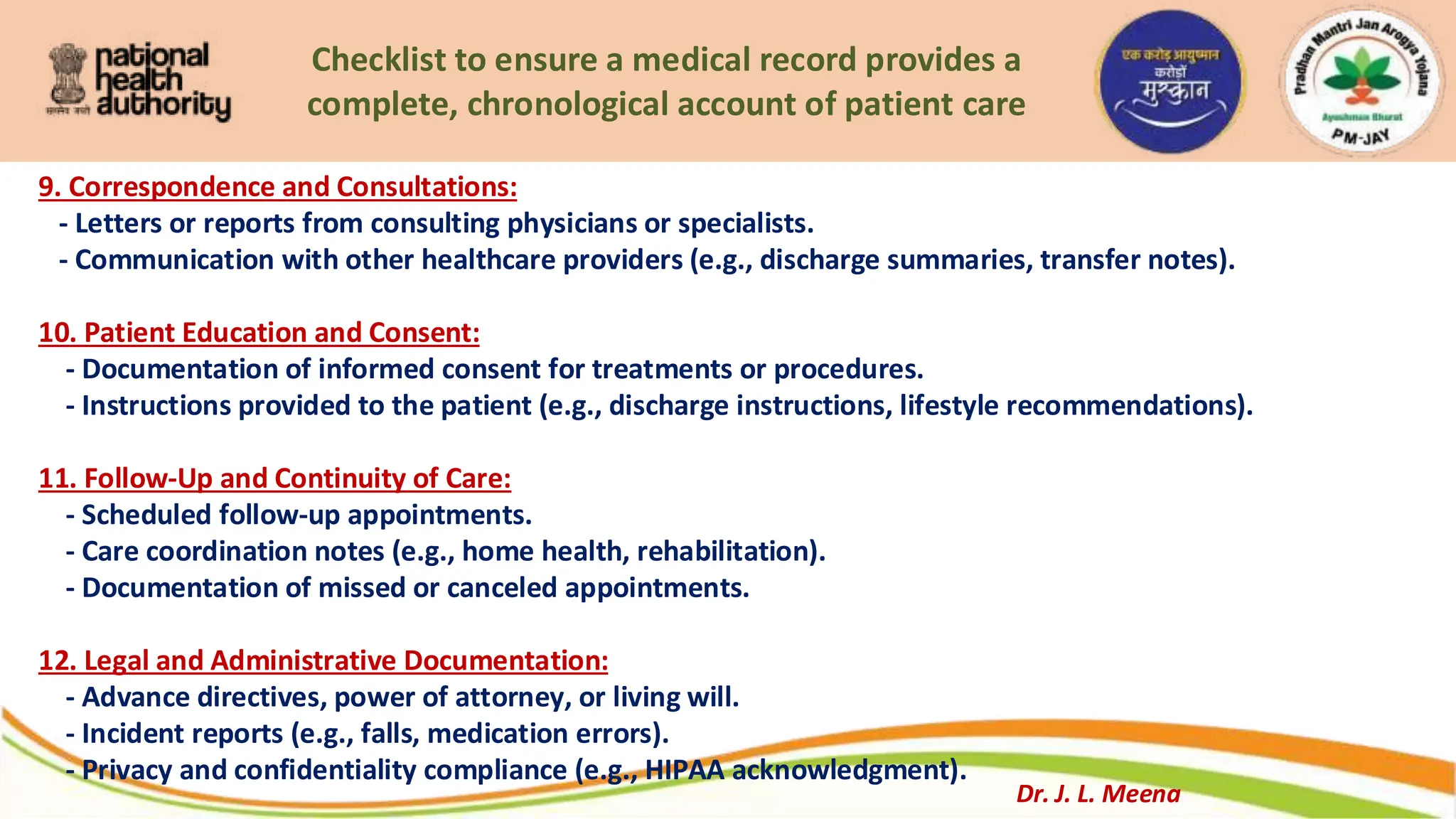
9. Correspondence and Consultations:
- Letters or reports from consulting physicians or specialists.
- Communication with other healthcare providers (e.g., discharge summaries, transfer notes).
10. Patient Education and Consent:
- Documentation of informed consent for treatments or procedures.
- Instructions provided to the patient (e.g., discharge instructions, lifestyle recommendations).
11. Follow-Up and Continuity of Care:
- Scheduled follow-up appointments.
- Care coordination notes (e.g., home health, rehabilitation).
- Documentation of missed or canceled appointments.
12. Legal and Administrative Documentation:
- Advance directives, power of attorney, or living will.
- Incident reports (e.g., falls, medication errors).
- Privacy and confidentiality compliance (e.g., HIPAA acknowledgment).
Dr. J. L. Meena
Checklist to ensure a medical record provides a
complete, chronological account of patient care
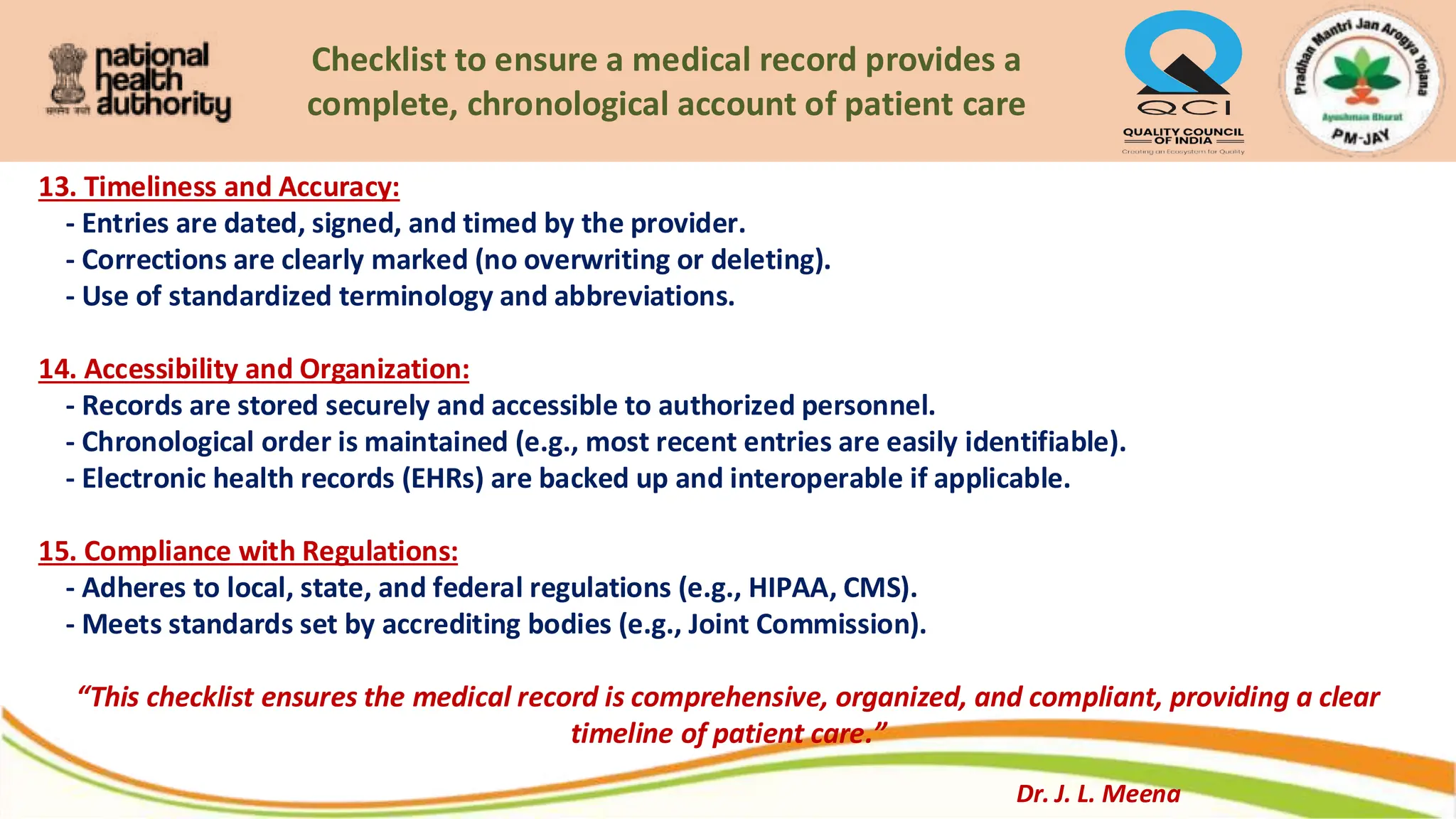
13. Timeliness and Accuracy:
- Entries are dated, signed, and timed by the provider.
- Corrections are clearly marked (no overwriting or deleting).
- Use of standardized terminology and abbreviations.
14. Accessibility and Organization:
- Records are stored securely and accessible to authorized personnel.
- Chronological order is maintained (e.g., most recent entries are easily identifiable).
- Electronic health records (EHRs) are backed up and interoperable if applicable.
15. Compliance with Regulations:
- Adheres to local, state, and federal regulations (e.g., HIPAA, CMS).
- Meets standards set by accrediting bodies (e.g., Joint Commission).
“This checklist ensures the medical record is comprehensive, organized, and compliant, providing a clear
timeline of patient care.”
Dr. J. L. Meena
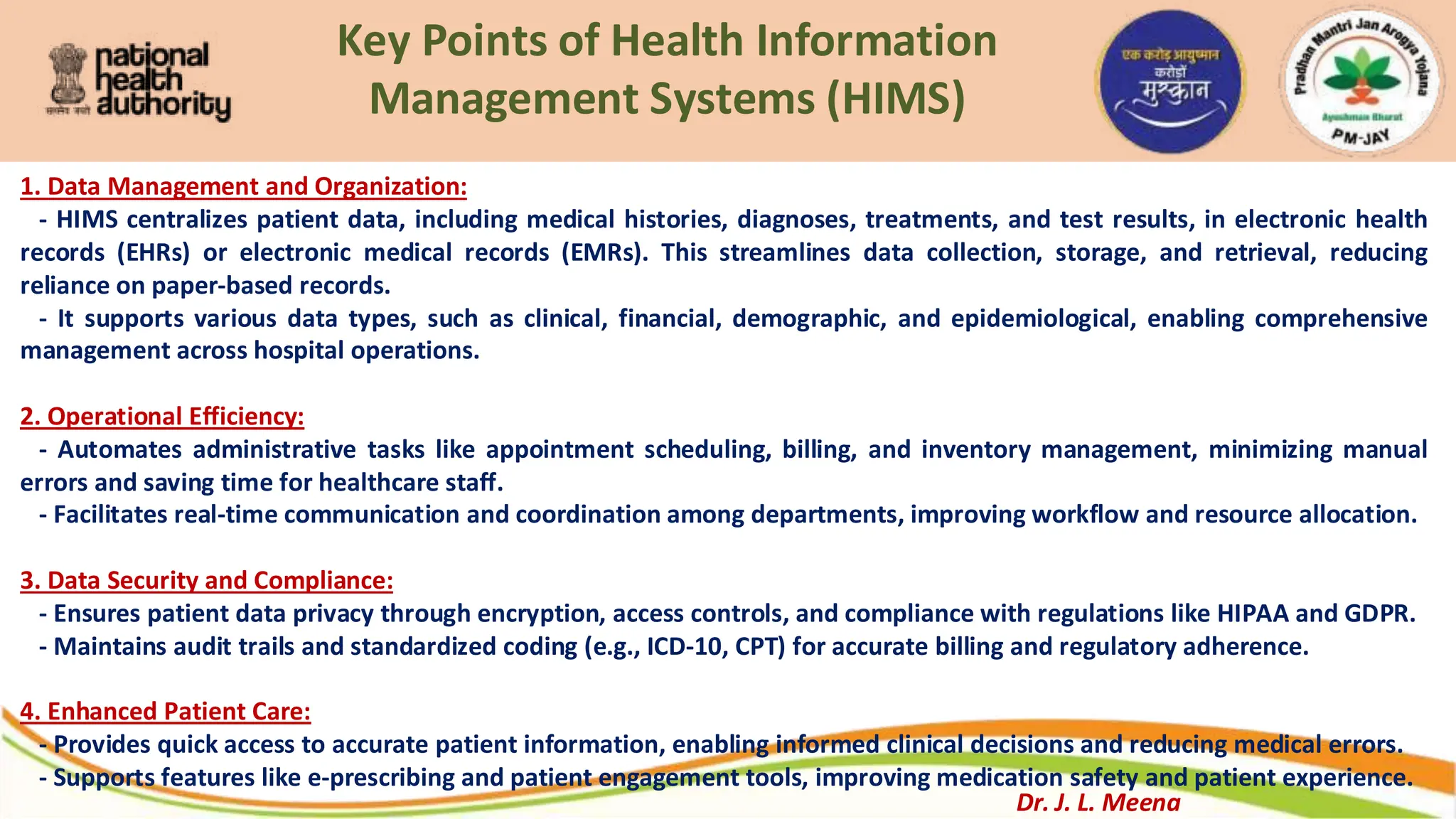
Key Points of Health Information
Management Systems (HIMS)
1. Data Management and Organization:
- HIMS centralizes patient data, including medical histories, diagnoses, treatments, and test results, in electronic health
records (EHRs) or electronic medical records (EMRs). This streamlines data collection, storage, and retrieval, reducing
reliance on paper-based records.
- It supports various data types, such as clinical, financial, demographic, and epidemiological, enabling comprehensive
management across hospital operations.
2. Operational Efficiency:
- Automates administrative tasks like appointment scheduling, billing, and inventory management, minimizing manual
errors and saving time for healthcare staff.
- Facilitates real-time communication and coordination among departments, improving workflow and resource allocation.
3. Data Security and Compliance:
- Ensures patient data privacy through encryption, access controls, and compliance with regulations like HIPAA and GDPR.
- Maintains audit trails and standardized coding (e.g., ICD-10, CPT) for accurate billing and regulatory adherence.
4. Enhanced Patient Care:
- Provides quick access to accurate patient information, enabling informed clinical decisions and reducing medical errors.
- Supports features like e-prescribing and patient engagement tools, improving medication safety and patient experience.
Dr. J. L. Meena
Key Points of Health Information
Management Systems (HIMS)
5. Analytics and Decision Support:
- Generates actionable insights through data analytics, tracking key performance indicators (KPIs) like patient
outcomes and resource utilization.
- Supports population health management, disease surveillance, and evidence-based research by analyzing
trends and patterns.
6. Interoperability:
- Integrates with other healthcare systems (e.g., laboratory, pharmacy, and billing systems), ensuring
seamless data sharing across providers and facilities.
- Enhances care continuity, especially in telemedicine and multi-facility settings.
Importance of HIMS
1. Improved Patient Outcomes:
- HIMS ensures timely access to complete and accurate patient data, reducing miscommunication and errors
(e.g., medication errors reduced by 50-80%). This leads to better diagnoses, treatments, and patient safety.
Dr. J. L. Meena
Key Points of Health Information
Management Systems (HIMS)
2. Cost and Time Efficiency:
- By automating processes, HIMS reduces administrative costs, paper usage, and operational inefficiencies. It
also optimizes revenue cycle management by minimizing billing errors and claim denials.
- Studies show HIMS can improve staff performance by up to 81.85% when strategically implemented.
3. Regulatory Compliance and Data Security:
- HIMS helps healthcare facilities adhere to strict data privacy laws, avoiding penalties and building patient
trust. Robust security measures protect against cyber threats, critical in an era where healthcare data breaches
are common.
4. Support for Evidence-Based Practice:
- Aggregated data from HIMS enables research, trend analysis, and policy development, contributing to
advancements in treatments and public health strategies.
5. Scalability and Adaptability:
- HIMS supports hospitals of all sizes, from small clinics to large networks, and integrates emerging
technologies like AI, machine learning, and blockchain to enhance functionality (e.g., reducing readmission
rates by 20%). Dr. J. L. Meena
Key Points of Health Information
Management Systems (HIMS)
6. Global Health Transformation:
- HIMS fosters interoperability and digital transformation, aligning with
initiatives like India’s Ayushman Bharat Digital Mission. It supports
telemedicine and unified EMR systems, improving access to care in
underserved areas.
Conclusion
HIMS is a cornerstone of modern healthcare, integrating technology to enhance
patient care, operational efficiency, and data security. Its ability to streamline
processes, ensure compliance, and provide data-driven insights makes it
indispensable for healthcare facilities aiming to deliver high-quality, equitable
care while staying competitive in a rapidly evolving industry.
Dr. J. L. Meena
Importance of the complete and
accurate medical record.
1. Improved Patient Safety and Care Quality: Accurate records ensure healthcare providers have full visibility
into a patient’s medical history, allergies, medications, and prior treatments, reducing errors like misdiagnoses
or harmful drug interactions. For example, knowing a patient’s penicillin allergy prevents prescribing errors.
2. Effective Care Coordination: Comprehensive records enable seamless communication among providers,
especially in multidisciplinary or referral-based care. This ensures continuity, prevents redundant tests, and
supports informed decision-making.
3. Legal and Regulatory Compliance: Accurate records are essential for meeting standards set by bodies like
HIPAA (U.S.), GDPR (EU), or local health authorities. Incomplete or erroneous records risk legal penalties,
audits, or loss of accreditation.
4. Billing and Reimbursement Accuracy: Precise documentation supports correct coding and billing, reducing
claim denials and ensuring financial sustainability for the organization.
5. Data-Driven Insights: Complete records fuel analytics for population health management, research, and
quality improvement initiatives, helping organizations identify trends and optimize care delivery.
Dr. J. L. Meena
Importance of the complete and
accurate medical record.
6. Patient Trust and Engagement: Reliable records foster trust, as patients feel confident
their health information is handled responsibly. This encourages active participation in
their care.
7. Risk Management: Thorough documentation protects against malpractice claims by
providing evidence of care provided, decisions made, and patient interactions.
Challenges to Address: Maintaining accuracy requires robust systems (e.g., EHRs), staff
training, and regular audits to catch errors like incomplete entries or outdated data.
“In summary, complete and accurate medical records are the backbone of safe, efficient,
and compliant healthcare delivery, benefiting patients, providers, and the organization.”
Dr. J. L. Meena
The medical record reflects the
continuity of care
1. Role of Medical Records in Continuity of Care
Medical records are the primary tool for documenting and sharing critical information about a patient’s health journey. They ensure that
healthcare providers have the necessary data to deliver consistent, informed, and personalized care. Keyways in which medical records
reflect, and support continuity of care include:
- Comprehensive Health History: Medical records compile a patient’s medical history, including diagnoses, treatments, medications,
allergies, surgeries, and immunizations. This longitudinal view allows providers to understand the patient’s health context, track disease
progression, and make informed decisions.
- Coordination Across Providers: Patients often interact with multiple healthcare professionals (e.g., primary care physicians, specialists,
pharmacists, therapists). Medical records enable these providers to share information, align treatment plans, and avoid duplication of
tests or conflicting interventions.
- Tracking Progress and Outcomes: By documenting clinical encounters, test results, and treatment responses, medical records allow
providers to monitor a patient’s progress over time. This is especially critical for chronic conditions like diabetes or hypertension, where
long-term management is essential.
- Facilitating Transitions of Care: When patients move between healthcare settings (e.g., from hospital to outpatient care or from pediatric
to adult care), medical records ensure that the receiving provider has access to relevant information, reducing the risk of gaps in care.
- Patient Empowerment and Engagement: Medical records, especially when accessible via patient portals, enable patients to review their
health information, adhere to treatment plans, and communicate effectively with providers, fostering shared decision-making.
Dr. J. L. Meena
The medical record reflects the
continuity of care
2. Key Components of Medical Records Supporting Continuity
A well-maintained medical record contains several standardized components that collectively support continuity of
care:
- Demographic Information: Basic details like name, date of birth, and contact information ensure accurate patient
identification across systems.
- Problem List: A summary of active and past medical conditions provides a quick reference for providers.
- Medication List: A record of current and past medications, including dosages and durations, helps prevent adverse
drug interactions and ensures appropriate prescribing.
- Allergy Information: Documenting allergies, especially to medications, is critical for patient safety.
- Clinical Notes: Detailed notes from each encounter (e.g., SOAP notes: Subjective, Objective, Assessment, Plan) capture
the provider’s observations, diagnoses, and treatment plans.
- Diagnostic Test Results: Lab reports, imaging studies, and other test results provide objective data to guide treatment.
- Immunization Records: A history of vaccinations ensures patients receive timely preventive care.
- Care Plans: Instructions for ongoing management, including follow-up appointments and lifestyle recommendations,
help maintain continuity.
- Correspondence: Letters or summaries from specialists or other providers ensure all parties are informed of the
patient’s care.
Dr. J. L. Meena
The medical record reflects the
continuity of care
3. Types of Medical Records and Their Role
The format and accessibility of medical records have evolved significantly, impacting their ability to support
continuity of care:
- Paper Records: Traditional paper charts, while still used in some settings, are limited by accessibility and
portability. They can hinder continuity when records are not easily shared between providers.
- Electronic Health Records (EHRs): EHRs have revolutionized continuity of care by digitizing and centralizing
patient information. EHRs allow real-time access, interoperability between systems (when standardized), and
integration of decision-support tools like drug interaction alerts.
- Personal Health Records (PHRs): Maintained by patients, PHRs complement provider-managed records by
allowing patients to track their health data and share it with providers, enhancing engagement.
- Health Information Exchanges (HIEs): HIEs enable secure sharing of medical records across organizations,
ensuring that providers in different systems can access a patient’s history, which is vital for continuity in
fragmented healthcare systems.
Dr. J. L. Meena
The medical record reflects the
continuity of care
4. Challenges in Using Medical Records for Continuity of Care
Despite their importance, medical records face several challenges that can disrupt continuity:
- Incomplete or Inaccurate Documentation: Missing or erroneous information (e.g., outdated
medication lists) can lead to misinformed decisions and errors.
- Interoperability Issues: Not all EHR systems are compatible, which can prevent seamless data
sharing between providers or facilities.
- Data Overload: Providers may struggle to extract relevant information from voluminous records,
especially in complex cases.
- Privacy and Security Concerns: Strict regulations like HIPAA (in the U.S.) or GDPR (in Europe) govern
medical record access, and breaches or misuse can undermine trust.
- Patient Access Barriers: Some patients, particularly in underserved populations, may lack access to
digital tools like patient portals, limiting their ability to engage with their records.
- Fragmentation: In systems without centralized records, patients seeing multiple providers may
have scattered records, complicating coordination.
Dr. J. L. Meena
The medical record reflects the
continuity of care
5. Legal and Ethical Considerations
Medical records are subject to stringent legal and ethical standards to protect
patient privacy and ensure quality care:
- Confidentiality: Laws like HIPAA mandate that patient information be safeguarded,
with access limited to authorized individuals.
- Accuracy and Timeliness: Providers are ethically and legally obligated to maintain
accurate and up-to-date records to support safe care.
- Patient Rights: Patients have the right to access their records, request
amendments, and control who can view their information (with some exceptions).
- Retention: Regulations often require records to be retained for a minimum period
(e.g., 7 years in the U.S.), ensuring availability for future care.
Dr. J. L. Meena
The medical record reflects the
continuity of care
6. Impact of Technology on Continuity of Care
Advancements in technology are enhancing the role of medical records in continuity of care:
- Artificial Intelligence (AI): AI tools can analyze medical records to identify patterns, predict risks, and suggest treatment
options, aiding providers in decision-making.
- Telemedicine Integration: Telehealth platforms integrate with EHRs, ensuring that virtual visits are documented and
accessible for future care.
- Wearable Devices: Data from wearables (e.g., glucose monitors, fitness trackers) can be incorporated into medical
records, providing real-time insights for chronic disease management.
- Blockchain: Emerging blockchain technologies aim to improve record security and interoperability, enabling secure,
decentralized access to patient data.
7. Real-World Example
Consider a patient with Type 2 diabetes managed by a primary care physician, an endocrinologist, and a dietitian. The
patient’s EHR documents their blood glucose levels, insulin regimen, dietary plan, and recent hospitalization for
hypoglycemia. When the patient visits the endocrinologist, the specialist can access the primary care physician’s notes, the
dietitian’s recommendations, and hospital discharge summary. This comprehensive view allows the endocrinologist to
adjust the insulin dose, coordinate with the dietitian, and schedule a follow-up, ensuring consistent care. If the patient uses
a patient portal, they can also review their care plan and communicate concerns, further enhancing continuity.
Dr. J. L. Meena
The medical record reflects the
continuity of care
8. Conclusion
The medical record is far more than a static document; it is a
dynamic tool that reflects and enables continuity of care by
capturing a patient’s health journey, facilitating communication
among providers, and empowering patients. While challenges like
interoperability and data accuracy persist, advancements in EHRs, AI,
and health information exchanges are strengthening the ability of
medical records to support seamless care. Ensuring that records are
complete, accessible, and secure is essential for delivering high-
quality, coordinated healthcare.
Dr. J. L. Meena
Maintenance of medical records, along with
ensuring their confidentiality, integrity and
security
In India, the organization and maintenance of medical records, along with ensuring their **confidentiality**,
**integrity**, and **security**, are critical for supporting continuity of care while complying with legal,
ethical, and regulatory frameworks.
1. Overview of Confidentiality, Integrity, and Security in India
- Confidentiality: Ensures that patient information is accessible only to authorized individuals (e.g., healthcare
providers, patients, or legal entities) and protected from unauthorized disclosure.
- Integrity: Guarantees that medical records and data remain accurate, complete, and unaltered, except by
authorized changes, to support reliable clinical decision-making.
- Security: Involves safeguards (physical, technical, and administrative) to protect records and data from
breaches, loss, or unauthorized access.
In India, these principles are governed by a combination of laws, regulations, and guidelines tailored to the
healthcare sector, with additional considerations for the growing adoption of digital health technologies.
Dr. J. L. Meena
Maintenance of medical records, along with
ensuring their confidentiality, integrity and
security
2. Legal and Regulatory Framework in India
Several laws and guidelines regulate the management of medical records and health data in India to ensure confidentiality,
integrity, and security:
Indian Medical Council (Professional Conduct, Etiquette, and Ethics) Regulations, 2002:
- Mandates that registered medical practitioners maintain confidentiality of patient information, except when required by law or
with patient consent.
- Requires maintenance of medical records for at least **3 years** and provision of records to patients upon request.
Information Technology Act, 2000 (IT Act):
- Section 43A and the **IT (Reasonable Security Practices and Procedures and Sensitive Personal Data or Information) Rules,
2011** classify health data as **sensitive personal data or information (SPDI)**.
- Organizations handling SPDI must implement reasonable security practices, including encryption, access controls, and audits, to
protect data confidentiality and security.
Digital Personal Data Protection Act, 2023 (DPDP Act):
- A comprehensive data protection law that governs the processing of personal data, including health data.
- Requires organizations to obtain explicit consent for processing health data, ensure data accuracy (integrity), and implement
robust security measures.
- Mandates data breach notifications and grants individuals rights to access, correct, or erase their data.
Dr. J. L. Meena
Maintenance of medical records, along with
ensuring their confidentiality, integrity and
security
National Digital Health Mission (NDHM) / Ayushman Bharat Digital Mission (ABDM):
- Introduced the **Health Data Management Policy** to regulate electronic health records (EHRs) and ensure
interoperability, confidentiality, and security.
- Establishes the **Health ID** system, allowing patients to control access to their health records via consent-based
sharing.
- Requires compliance with security standards like **ISO 27001** (Information Security Management) and encryption
protocols.
Clinical Establishments (Registration and Regulation) Act, 2010:
- Mandates healthcare facilities to maintain and securely store medical records as per prescribed standards.
- Emphasizes accurate documentation to ensure continuity of care.
Drugs and Cosmetics Act, 1940 and Pharmacy Practice Regulations, 2015:
- Require pharmacies and healthcare providers to maintain records of prescriptions and drug dispensing, ensuring
traceability and integrity.
3. Mechanisms to Ensure Confidentiality, Integrity, and Security
Healthcare organizations in India adopt various practices and technologies to uphold these principles:
Dr. J. L. Meena
Maintenance of medical records, along with
ensuring their confidentiality, integrity and
security
A. Confidentiality
Access Controls:
- Role-based access ensures that only authorized personnel (e.g., treating physicians, nurses) can view patient records.
- User authentication (e.g., passwords, biometrics) prevents unauthorized access to EHR systems.
Patient Consent:
- Under the DPDP Act and ABDM, explicit consent is required before sharing health data with third parties (e.g., specialists, insurance
companies).
- Patients can manage data sharing via Health IDs in the ABDM ecosystem.
Confidentiality Agreements: Healthcare staff are bound by non-disclosure agreements and ethical codes to prevent unauthorized
disclosure.
De-identification: Health data used for research or analytics is anonymized to protect patient identity.
B. Integrity
Standardized Documentation:
- Records follow formats prescribed by the National Medical Commission (NMC) or ABDM, ensuring completeness and consistency.
- Use of structured templates (e.g., SOAP notes) minimizes errors.
Audit Trails:
- EHR systems log all access and modifications to records, ensuring traceability of changes.
- Version control prevents unauthorized or accidental alterations.
Data Validation: Automated checks in EHRs flag inconsistencies (e.g., incorrect medication doses) to maintain accuracy.
Regular Updates: Providers are required to update records promptly after each patient encounter to reflect current health status.
Dr. J. L. Meena
Maintenance of medical records, along with
ensuring their confidentiality, integrity and
security
C. Security
Technical Safeguards:
- Encryption: Data is encrypted during storage and transmission (e.g., using AES-256 standards) to prevent
interception.
- Firewalls and Antivirus: Protect against cyber threats like malware or hacking.
- Secure Cloud Storage: Many hospitals use cloud-based EHRs with compliance to Indian security standards.
Physical Safeguards:
- Paper records and servers are stored in locked, access-controlled areas.
- Surveillance systems and restricted entry protect data centers.
Administrative Safeguards:
- Regular staff training on data protection laws and cybersecurity.
- Periodic security audits and risk assessments to identify vulnerabilities.
- Incident response plans for data breaches, including mandatory reporting under the DPDP Act.
Disaster Recovery: Backup systems ensure data availability in case of system failures or natural disasters.
Dr. J. L. Meena
Maintenance of medical records, along with
ensuring their confidentiality, integrity and
security
4. Role of Electronic Health Records (EHRs) and ABDM
The shift from paper-based to electronic records has significantly enhanced the ability to maintain confidentiality, integrity, and security:
- EHR Systems: Platforms like **e-Hospital**, **OpenMRS**, or proprietary systems used by private hospitals (e.g., Apollo, Fortis) enable
secure storage, real-time updates, and controlled access.
ABDM Ecosystem:
- Facilitates interoperability through the **Unified Health Interface (UHI)**, allowing secure data exchange between providers.
- Uses **Health Information Provider (HIP)** and **Health Information User (HIU)** frameworks to regulate data access.
- Employs blockchain-like technologies for secure, decentralized data management.
- Patient Portals: Patients can access their records via ABDM’s Health ID or hospital portals, ensuring transparency while maintaining
security through authentication.
5. Challenges in Maintaining Confidentiality, Integrity, and Security
Despite robust frameworks, challenges persist:
- Fragmented Healthcare System: India’s mix of public, private, and informal healthcare providers leads to inconsistent record-keeping
practices.
- Interoperability Issues: Not all EHR systems are ABDM-compliant, hindering seamless data sharing.
- Cybersecurity Threats: Increasing digitization exposes health data to risks like ransomware or phishing attacks.
- Resource Constraints: Smaller clinics and rural facilities may lack funds for advanced EHR systems or cybersecurity measures.
- Low Digital Literacy: Patients and staff may not fully understand data protection practices, leading to unintentional breaches.
- Compliance Gaps: Some organizations fail to fully adhere to DPDP Act or IT Rules due to lack of awareness or enforcement.
Dr. J. L. Meena
Maintenance of medical records, along with
ensuring their confidentiality, integrity and
security
6. Best Practices by Healthcare Organizations
Leading hospitals and organizations in India adopt global standards to enhance record management:
- NABH Accreditation: The National Accreditation Board for Hospitals (NABH) mandates strict protocols for record
maintenance, access control, and data security.
- ISO 27001 Certification: Many hospitals and IT vendors adopt this standard for information security management.
- Regular Training: Staff are trained on data privacy laws, ethical handling of records, and cybersecurity protocols.
- Patient Education: Hospitals provide guidance on using patient portals and understanding data rights under the DPDP Act.
- Collaboration with ABDM: Large healthcare chains integrate with ABDM to ensure standardized, secure record-keeping.
7. Real-World Example
A patient with chronic kidney disease visits a hospital in Delhi. Their EHR, integrated with ABDM, contains their dialysis
history, lab reports, and medication list. The hospital uses:
- Confidentiality: Role-based access ensures only the nephrologist and dialysis team view the records. The patient consents
to share data with a consulting urologist via their Health ID.
- Integrity: The EHR system logs all updates (e.g., new lab results) with timestamps and provider IDs, ensuring no
unauthorized changes.
- Security: Data is encrypted, stored on a secure cloud, and protected by multi-factor authentication. The hospital conducts
regular cybersecurity audits to prevent breaches.
Dr. J. L. Meena
Maintenance of medical records, along with
ensuring their confidentiality, integrity and
security
8. Conclusion
In India, healthcare organizations maintain confidentiality, integrity,
and security of medical records, data, and information through a
combination of legal compliance (e.g., DPDP Act, IT Act),
technological advancements (e.g., EHRs, ABDM), and operational
safeguards. While challenges like interoperability and cybersecurity
risks remain, initiatives like ABDM and increasing adoption of global
standards are strengthening data management practices. These
efforts ensure that medical records effectively support continuity of
care while protecting patient privacy and trust.
Dr. J. L. Meena
Hospitals are required to ensure the availability, maintenance,
and retention of current and relevant documents, records, data,
and information as per various legal and regulatory frameworks.
1. Regulatory Requirements:
- Clinical Establishments (Registration and Regulation) Act, 2010: Mandates hospitals to maintain and provide
access to medical records, ensuring they are current, accurate, and relevant.
- Indian Medical Council (Professional Conduct, Etiquette and Ethics) Regulations, 2002: Requires doctors and
hospitals to maintain patient records for a minimum of **3 years** from the last date of treatment or consultation.
- Drugs and Cosmetics Act, 1940: Ensures proper documentation of drug procurement, storage, and dispensing.
- National Accreditation Board for Hospitals & Healthcare Providers (NABH): For accredited hospitals, NABH
standards require robust systems for document control, data management, and record retention, including
electronic health records (EHRs).
2. Types of Records:
- Patient Records: Medical history, diagnosis, treatment plans, prescriptions, and discharge summaries.
- Administrative Records: Licenses, staff credentials, and hospital registration documents.
- Financial Records: Billing, insurance claims, and audit reports.
- Statutory Records: Compliance with labor laws, biomedical waste management, and radiation safety (if
applicable).
Dr. J. L. Meena
Hospitals are required to ensure the availability, maintenance,
and retention of current and relevant documents, records, data,
and information as per various legal and regulatory frameworks.
3. Retention Periods:
- Patient Records: Minimum 3 years (MCI guidelines); NABH recommends **5–10 years** for
medico-legal cases.
- Medico-Legal Cases (MLCs): Records should be retained longer (up to 7 years or as per state
laws) due to potential legal proceedings.
- Financial and Tax Records: As per the Income Tax Act, 1961, retain for **7 years**.
- Biomedical Waste Records: As per Biomedical Waste Management Rules, 2016, maintain for **5
years**.
4. Data Protection and Privacy:
- Digital Information Security in Healthcare Act (DISHA) (proposed): Ensures confidentiality,
security, and accessibility of digital health data.
- Personal Data Protection Bill (under consideration): Hospitals must comply with data localization
and patient consent requirements.
- IT Act, 2000: Mandates secure storage of electronic records with safeguards against
unauthorized access. Dr. J. L. Meena
Hospitals are required to ensure the availability, maintenance,
and retention of current and relevant documents, records, data,
and information as per various legal and regulatory frameworks.
5. Implementation in Hospitals:
- Electronic Medical Records (EMRs): Many hospitals use EMR systems for real-time data
access and compliance with MoHFW’s EHR Standards, 2016.
- Document Management Systems: Ensure version control and accessibility of policies,
SOPs, and clinical guidelines.
- Archival Systems: Physical and digital archives for long-term retention, with regular
audits to ensure compliance.
6. Challenges and Best Practices:
- Challenges: Inadequate infrastructure in rural hospitals, lack of trained staff, and
cybersecurity risks.
- Best Practices: Regular staff training, adoption of cloud-based EHRs with encryption, and
periodic audits to ensure compliance with NABH and legal standards.
Dr. J. L. Meena
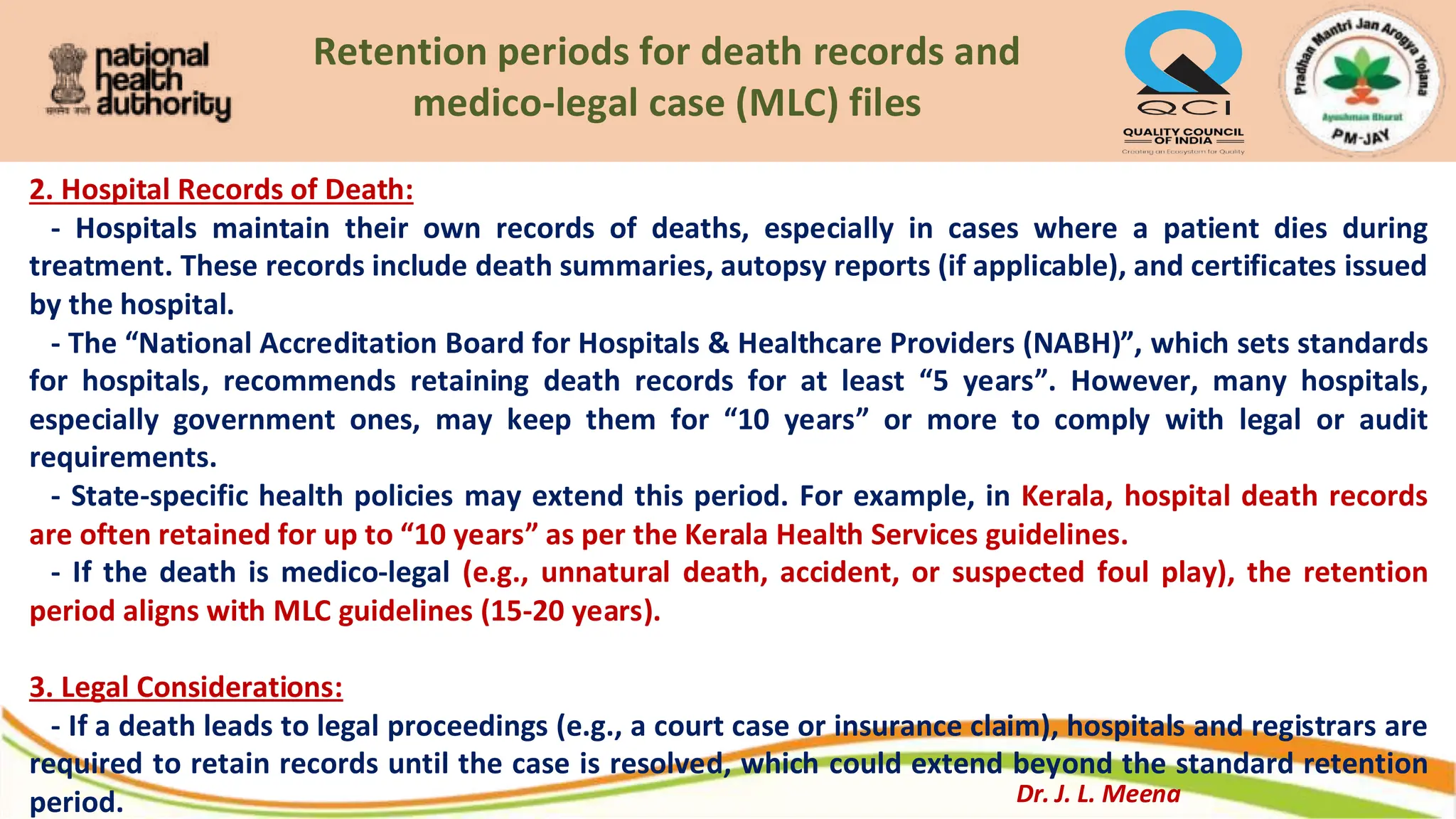
Retention periods for death records and
medico-legal case (MLC) files
In India, the retention periods for death records and medico-legal case (MLC) files are governed by a combination of
national laws, state regulations, institutional policies, and guidelines from medical bodies like the Indian Medical
Council (IMC).
Death Records
Death records in India are primarily managed under the **Registration of Births and Deaths Act, 1969**, which
mandates the registration of all births and deaths. The retention of these records varies depending on the entity
maintaining them (government registrars, hospitals, etc.).
1. Government Records (Registrar of Births and Deaths):
- Death records maintained by the Registrar of Births and Deaths are typically kept “permanently”. This is because
these records are part of vital statistics used for legal, administrative, and statistical purposes.
- The Office of the Registrar General, India (ORGI), oversees the system, and records are often digitized for long-
term preservation. For instance, the Civil Registration System (CRS) portal ensures digital archiving of these records.
- Physical copies, if maintained, are usually stored for a minimum of “30 years” before being archived, though this
can vary by state. For example, states like Maharashtra and Tamil Nadu have robust systems for permanent
retention, often transferring older records to state archives.
Dr. J. L. Meena
Retention periods for death records and
medico-legal case (MLC) files
2. Hospital Records of Death:
- Hospitals maintain their own records of deaths, especially in cases where a patient dies during
treatment. These records include death summaries, autopsy reports (if applicable), and certificates issued
by the hospital.
- The “National Accreditation Board for Hospitals & Healthcare Providers (NABH)”, which sets standards
for hospitals, recommends retaining death records for at least “5 years”. However, many hospitals,
especially government ones, may keep them for “10 years” or more to comply with legal or audit
requirements.
- State-specific health policies may extend this period. For example, in Kerala, hospital death records
are often retained for up to “10 years” as per the Kerala Health Services guidelines.
- If the death is medico-legal (e.g., unnatural death, accident, or suspected foul play), the retention
period aligns with MLC guidelines (15-20 years).
3. Legal Considerations:
- If a death leads to legal proceedings (e.g., a court case or insurance claim), hospitals and registrars are
required to retain records until the case is resolved, which could extend beyond the standard retention
period. Dr. J. L. Meena
Retention periods for death records and
medico-legal case (MLC) files
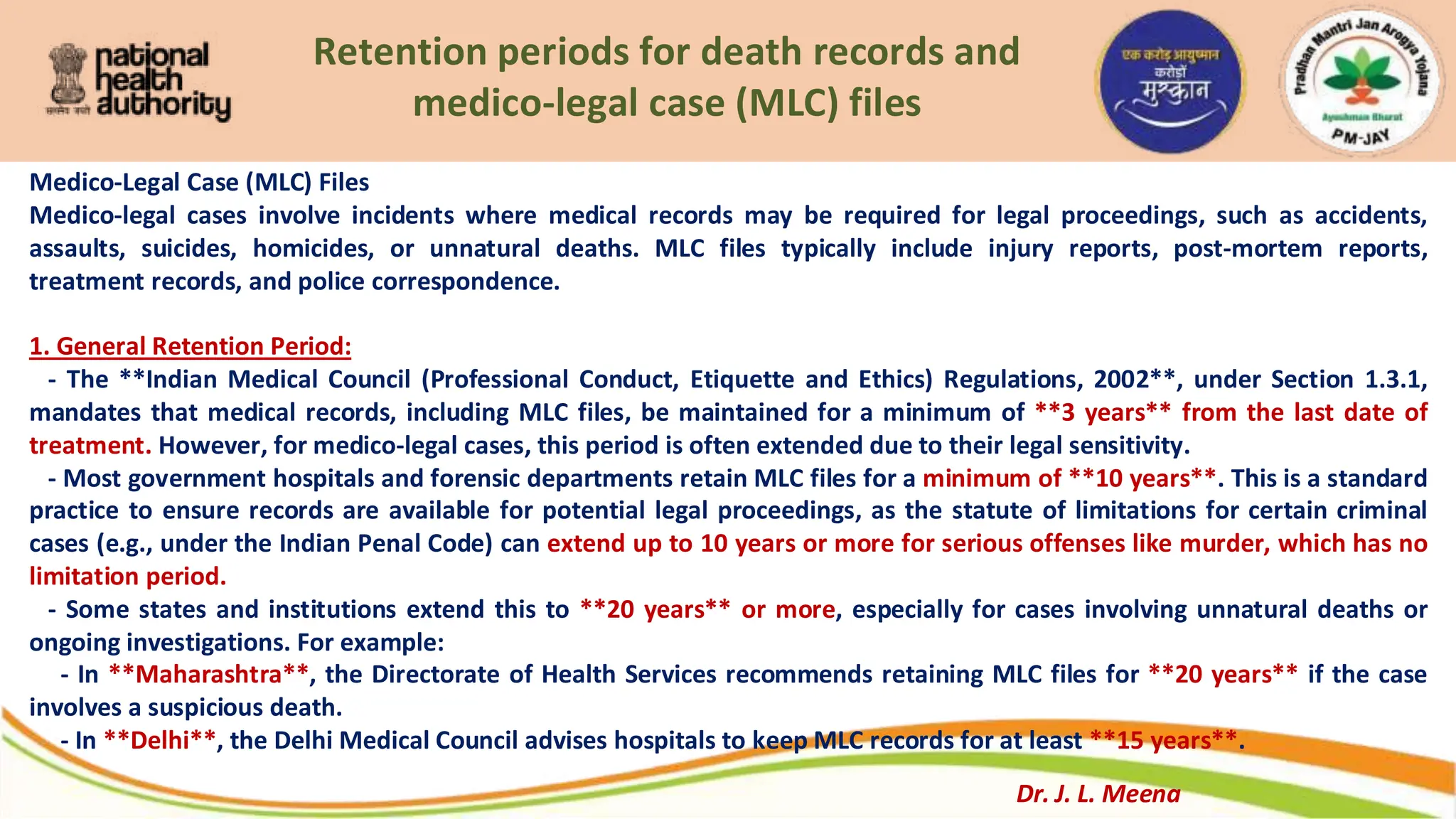
Medico-Legal Case (MLC) Files
Medico-legal cases involve incidents where medical records may be required for legal proceedings, such as accidents,
assaults, suicides, homicides, or unnatural deaths. MLC files typically include injury reports, post-mortem reports,
treatment records, and police correspondence.
1. General Retention Period:
- The **Indian Medical Council (Professional Conduct, Etiquette and Ethics) Regulations, 2002**, under Section 1.3.1,
mandates that medical records, including MLC files, be maintained for a minimum of **3 years** from the last date of
treatment. However, for medico-legal cases, this period is often extended due to their legal sensitivity.
- Most government hospitals and forensic departments retain MLC files for a minimum of **10 years**. This is a standard
practice to ensure records are available for potential legal proceedings, as the statute of limitations for certain criminal
cases (e.g., under the Indian Penal Code) can extend up to 10 years or more for serious offenses like murder, which has no
limitation period.
- Some states and institutions extend this to **20 years** or more, especially for cases involving unnatural deaths or
ongoing investigations. For example:
- In **Maharashtra**, the Directorate of Health Services recommends retaining MLC files for **20 years** if the case
involves a suspicious death.
- In **Delhi**, the Delhi Medical Council advises hospitals to keep MLC records for at least **15 years**.
Dr. J. L. Meena
Retention periods for death records and
medico-legal case (MLC) files
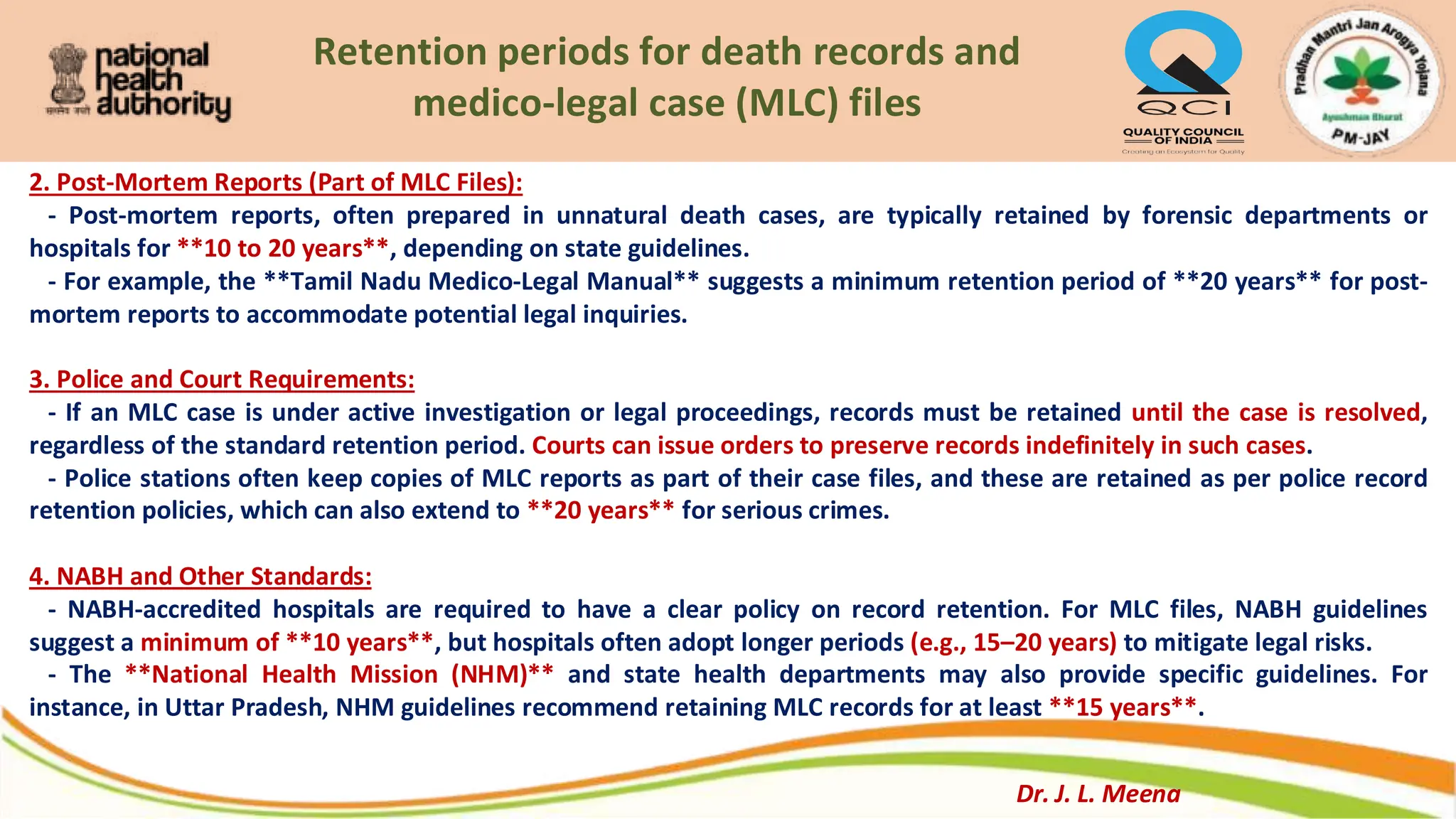
2. Post-Mortem Reports (Part of MLC Files):
- Post-mortem reports, often prepared in unnatural death cases, are typically retained by forensic departments or
hospitals for **10 to 20 years**, depending on state guidelines.
- For example, the **Tamil Nadu Medico-Legal Manual** suggests a minimum retention period of **20 years** for post-
mortem reports to accommodate potential legal inquiries.
3. Police and Court Requirements:
- If an MLC case is under active investigation or legal proceedings, records must be retained until the case is resolved,
regardless of the standard retention period. Courts can issue orders to preserve records indefinitely in such cases.
- Police stations often keep copies of MLC reports as part of their case files, and these are retained as per police record
retention policies, which can also extend to **20 years** for serious crimes.
4. NABH and Other Standards:
- NABH-accredited hospitals are required to have a clear policy on record retention. For MLC files, NABH guidelines
suggest a minimum of **10 years**, but hospitals often adopt longer periods (e.g., 15–20 years) to mitigate legal risks.
- The **National Health Mission (NHM)** and state health departments may also provide specific guidelines. For
instance, in Uttar Pradesh, NHM guidelines recommend retaining MLC records for at least **15 years**.
Dr. J. L. Meena
Retention periods for death records and
medico-legal case (MLC) files
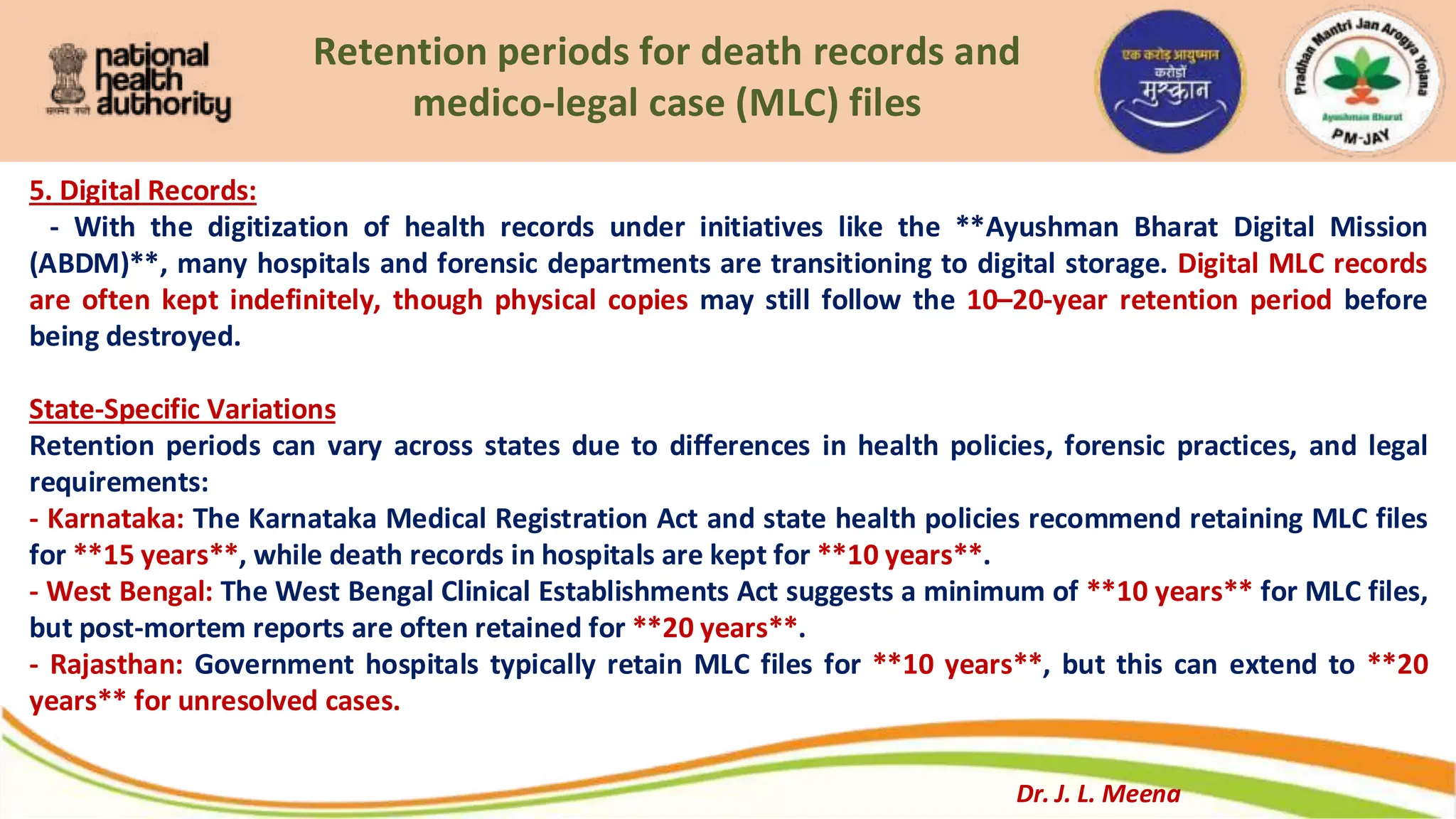
5. Digital Records:
- With the digitization of health records under initiatives like the **Ayushman Bharat Digital Mission
(ABDM)**, many hospitals and forensic departments are transitioning to digital storage. Digital MLC records
are often kept indefinitely, though physical copies may still follow the 10–20-year retention period before
being destroyed.
State-Specific Variations
Retention periods can vary across states due to differences in health policies, forensic practices, and legal
requirements:
- Karnataka: The Karnataka Medical Registration Act and state health policies recommend retaining MLC files
for **15 years**, while death records in hospitals are kept for **10 years**.
- West Bengal: The West Bengal Clinical Establishments Act suggests a minimum of **10 years** for MLC files,
but post-mortem reports are often retained for **20 years**.
- Rajasthan: Government hospitals typically retain MLC files for **10 years**, but this can extend to **20
years** for unresolved cases.
Dr. J. L. Meena
Retention periods for death records and
medico-legal case (MLC) files
Challenges and Practical Considerations
- Storage Constraints: Many government hospitals and forensic departments face storage issues, leading to
premature destruction of records in some cases, despite guidelines.
- Legal Awareness: Smaller hospitals may not strictly adhere to retention policies due to lack of awareness or
resources, which can lead to legal complications if records are requested later.
- Destruction Process: After the retention period, records are typically destroyed following a formal process
(e.g., shredding or incineration), often with approval from a hospital committee or legal authority to ensure no
pending cases are affected.
Conclusion
- Death Records: Permanent retention by registrars; hospitals typically retain for 5–10 years unless medico-
legal.
- MLC Files: Minimum 10 years, often extended to 20 years or more, depending on state guidelines, legal
proceedings, and institutional policies.
Dr. J. L. Meena
Patient medical records typically
contain the following components
Patient medical records typically contain the following components, though specific contents may vary depending on the
healthcare provider, system, or legal requirements:
1. Patient Demographics:
- Full name
- Date of birth
- Gender
- Contact information (address, phone, email)
- Emergency contact details
- Insurance information
2. Medical History:
- Past and current medical conditions
- Surgical history
- Allergies (medications, food, environmental)
- Immunization records
- Family medical history
- Social history (e.g., smoking, alcohol use, occupation)
Dr. J. L. Meena
Patient medical records typically
contain the following components
3. Medications:
- Current and past medications (prescription and over-the-counter)
- Dosage and frequency
- Prescribing physician
- Medication allergies or adverse reactions
4. Vital Signs and Measurements:
- Blood pressure
- Heart rate
- Respiratory rate
- Temperature
- Height, weight, BMI
5. Clinical Notes:
- Physician, nurse, or specialist notes
- Chief complaint or reason for visit
- Physical exam findings
- Assessment and plan
- Progress notes Dr. J. L. Meena
Patient medical records typically
contain the following components
6. Diagnostic Test Results:
- Laboratory results (blood tests, urinalysis, etc.)
- Imaging reports (X-rays, MRIs, CT scans)
- Pathology reports (biopsies, cultures)
- Other diagnostic procedures (e.g., ECG, EEG)
7. Treatment Plans:
- Prescribed treatments or therapies
- Referrals to specialists
- Follow-up appointments
- Patient instructions
8. Encounter Records:
- Dates and details of visits (inpatient, outpatient, or telehealth)
- Hospitalization records (admission/discharge summaries)
- Emergency room visits
9. Consent Forms and Legal Documents:
- Informed consent for procedures or treatments
- Advance directives (e.g., living will, power of attorney)
- Privacy acknowledgments (e.g., HIPAA forms) Dr. J. L. Meena
Patient medical records typically
contain the following components
10. Billing and Insurance Information:
- Billing codes (ICD, CPT)
- Insurance claims and approvals
- Payment history
11. Correspondence:
- Letters or communications between healthcare providers
- Referrals or consultation reports
- Patient-provider communication (e.g., secure messaging)
12. Miscellaneous:
- Dietary or lifestyle recommendations
- Rehabilitation or physical therapy records
- Mental health notes (if applicable)
- Research participation records (if enrolled in clinical trials)
Note: The exact contents depend on the healthcare system, country-specific regulations (e.g., HIPAA in the US), and
whether the record is electronic (EHR) or paper-based.
Dr. J. L. Meena
Conducting a medical record
review in India
Conducting a medical record review in India, whether for legal, insurance, healthcare, or research purposes,
requires a systematic approach to ensure accuracy, compliance, and usability.
Steps for Medical Record Review in India
1. Define the Purpose and Scope
- Action: Clearly identify the objective of the review (e.g., litigation support for personal injury, medical
malpractice, insurance claims, clinical research, or quality audits).
- Details:
- Determine the type of records needed (e.g., patient history, diagnostic reports, treatment plans, billing
records).
- Specify case types (e.g., personal injury, mass torts, workers’ compensation) and required outputs (e.g.,
chronology, summary, error detection).
- Establish timelines and budget constraints.
- Specific Note: Ensure the purpose aligns with legal requirements under the Indian Evidence Act, 1872,
which recognizes signed medical records as admissible evidence.
Dr. J. L. Meena
Conducting a medical record
review in India
2. Identify and Collect Relevant Medical Records
- Action: Request and gather all pertinent medical records from healthcare providers, hospitals, or
clinics.
- Details:
- Obtain patient consent or legal authorization (e.g., court order, attorney request) to access records.
- Request records in both physical and electronic formats, if available, as per the Clinical
Establishments Act, 2010, which mandates hospitals to provide records within 72 hours.
- Collect comprehensive records, including:
- Admission and discharge summaries
- Physician notes, nursing notes, and progress reports
- Diagnostic tests (e.g., X-rays, MRIs, lab reports)
- Medication and treatment records
- Billing and insurance documents
- Specific Note: Verify that records are signed by authorized personnel, as unsigned records lack legal
validity. Be aware of potential issues like incomplete or fabricated records, especially in smaller facilities.
Dr. J. L. Meena
Conducting a medical record
review in India
3. Organize and Index Records
- Action: Sort and categorize records to facilitate efficient review.
- Details:
- Digitize physical records (if not already in electronic format) using scanning and OCR (Optical
Character Recognition) tools.
- Index records by key categories, such as:
- Patient demographics
- Dates of service
- Type of document (e.g., lab report, prescription)
- Medical events (e.g., surgeries, consultations)
- Use software or AI-powered tools (e.g., NLP-based platforms) to automate indexing and ensure
accuracy.
- Specific Note: Indian hospitals may use inconsistent formats or handwritten notes. Engage
providers with expertise in deciphering illegible shorthand or regional medical terminology.
Dr. J. L. Meena
Conducting a medical record
review in India
4. Conduct Initial Review and Quality Check
- Action: Perform a preliminary review to ensure completeness and authenticity.
- Details:
- Check for missing pages, incomplete entries, or discrepancies in dates and signatures.
- Verify that records are from credible sources (e.g., registered hospitals or clinics).
- Flag any signs of tampering or fabrication, such as inconsistent handwriting or altered
dates, which can be a concern in India.
- Ensure compliance with data privacy laws, including the Digital Personal Data Protection
Act, 2023, and HIPAA (if serving international clients).
Specific Note: Cross-reference records with hospital logs or electronic medical record (EMR)
systems, if available, to confirm authenticity.
Dr. J. L. Meena
Conducting a medical record
review in India
5. Analyze and Summarize Medical Records
- Action: Review records in detail to extract relevant information and create actionable outputs.
- Details:
- Assign trained professionals (e.g., doctors, nurses, legal nurse consultants) to analyze records for:
- Medical history and pre-existing conditions
- Treatment timelines and outcomes
- Errors, negligence, or deviations from standard care
- Causation and liability (for legal cases)
- Produce deliverables, such as:
- Medical Chronology: A timeline of medical events.
- Narrative Summary: A concise overview of key findings.
- Deposition Summary: Highlights for legal proceedings.
- Error Reports: Identification of gaps or inconsistencies.
- Use AI tools (e.g., NLP, machine learning) to accelerate analysis and highlight critical details, such as missed diagnoses
or medication errors.
Specific Note: Ensure summaries address local medical practices and terminology, as Indian healthcare systems may differ
from Western standards.
Dr. J. L. Meena
Conducting a medical record
review in India
6. Ensure Compliance and Security
- Action: Adhere to legal and regulatory standards for data handling and confidentiality.
- Details:
- Follow HIPAA, ISO, and HITECH standards for international clients, and India’s Digital Personal Data Protection Act for
domestic cases.
- Use secure platforms (e.g., encrypted servers, VPNs) for data storage and transfer.
- Implement access controls to limit record handling to authorized personnel only.
- Maintain audit trails to track who accessed or modified records.
Specific Note: Indian providers must comply with the Indian Medical Council (Professional Conduct, Etiquette, and Ethics)
Regulations, 2002, for ethical record management.
7. Quality Assurance and Peer Review
- Action: Conduct a multi-tier quality check to ensure accuracy and reliability.
- Details:
- Perform a secondary review by a different team member to catch errors or omissions.
- Use standardized checklists to verify that all required elements (e.g., chronology, causation analysis) are included.
- Validate findings against original records to ensure no misinterpretations.
- For legal cases, have a medico-legal expert review outputs to ensure court admissibility.
Specific Note: Engage professionals familiar with Indian medico-legal frameworks to ensure summaries meet judicial
standards. Dr. J. L. Meena
Conducting a medical record
review in India
8. Deliver Outputs and Obtain Feedback
- Action: Provide the finalized deliverables to the client and address any follow-up needs.
- Details:
- Share outputs in the client’s preferred format (e.g., PDF, Word, or proprietary software).
- Ensure deliverables are concise, clear, and tailored to the case (e.g., highlighting negligence for malpractice cases).
- Offer revisions or additional analysis based on client feedback.
- Maintain records of the review process for future reference or audits.
Specific Note: For legal cases, ensure deliverables include references to relevant Indian laws or precedents, if applicable.
9. Maintain Records for Future Use
- Action: Archive records securely for potential future reviews or audits.
- Details:
- Store records in compliance with retention policies (e.g., 3 years for adult patients, 7 years for minors under Indian
law).
- Use cloud-based or encrypted storage systems to ensure accessibility and security.
- Document the review process for transparency in case of disputes or legal scrutiny.
Specific Note: Follow guidelines from the Ministry of Health and Family Welfare for record retention and disposal.
Dr. J. L. Meena
Conducting a medical record
review in India
Additional:-
- Leverage Technology: Use AI-powered tools (e.g., from providers like LezDo TechMed or PreludeSys) to handle large
volumes of records efficiently, especially for complex cases like mass torts.
- Engage Local Expertise: Work with Indian providers who understand local medical practices, regional terminology, and
legal nuances, as healthcare delivery varies across states.
- Address Fabrication Risks: Verify records against multiple sources (e.g., hospital EMRs, pharmacy logs) to mitigate risks of
falsified documents.
- Outsource Strategically: Consider reputable Indian providers like Flatworld Solutions, MOS, or SunTec India for cost-
effective, high-quality reviews, especially if handling international cases.
Tools and Resources
- Software: Use tools like Adobe Acrobat for digitization, CaseMap for legal case management, or AI platforms like those
offered by PreludeSys for automated analysis.
- Regulatory References: Refer to the Indian Evidence Act, 1872, Clinical Establishments Act, 2010, and Digital Personal Data
Protection Act, 2023, for compliance.
- Professional Support: Engage certified medical record reviewers or legal nurse consultants with experience in Indian
healthcare systems.
Dr. J. L. Meena
False medical record audits
lead to significant harm
False medical record audits in India—where records are inaccurately assessed, manipulated, or
misrepresented—can lead to significant harm across clinical, legal, financial, and ethical domains.
1. Clinical Harms: Compromised Patient Care
- Misdiagnosis and Inappropriate Treatment: False audits may fail to identify errors in medical records, such
as incorrect diagnoses, incomplete patient histories, or missing treatment details. This can perpetuate flawed
care plans, leading to adverse patient outcomes. For instance, a study highlighted that poor record-keeping in
Indian hospitals often omits critical details like patient history or operation notes, which audits should catch
but may overlook if falsified. (https://www.ncbi.nlm.nih.gov/pmc/articles/PMC4627207/)
- Delayed or Denied Care: If audits falsely deem records compliant, patients may face delays in receiving
necessary interventions, especially in insurance-driven systems where claims depend on accurate
documentation. Conversely, falsified audits may wrongly deny care by misrepresenting a patient’s condition
or treatment history.
- Medical Identity Theft Risks: False entries from medical identity theft, if undetected by audits, can introduce
erroneous data into records (e.g., diseases or treatments not belonging to the patient). This can lead to
inappropriate treatments or even life-threatening errors. Victims may face long-term consequences, such as
incorrect medical histories affecting future care.
Dr. J. L. Meena
False medical record audits
lead to significant harm
2. Legal and Ethical Harms
- Malpractice and Negligence Lawsuits: Inaccurate audits can obscure evidence of negligence, making it harder for patients
to seek justice. For example, courts in India have ruled that failure to produce or tampering with medical records can lead
to adverse inferences, implying negligence. Falsified audits may hide such tampering, denying patients legal recourse.
- Fraud and Criminal Liability: If audits falsely certify manipulated records, healthcare providers may face allegations of
fraud, especially under laws like the False Claims Act (applied in similar contexts globally) or India’s Medical Council
regulations. Falsifying records is a misdemeanor in some jurisdictions, with penalties including fines or imprisonment.
- Erosion of Trust: False audits undermine trust between patients and healthcare providers. Ethical breaches, such as
altering records to hide errors or inflate bills, damage the integrity of the medical profession and deter patients from
seeking care.
3. Financial Harms
- Insurance Claim Denials: Poor or falsified audits can lead to improper record-keeping, resulting in denied insurance
claims. In India, where medical insurance is growing, incomplete or inaccurate records often lead to claim rejections,
burdening patients with out-of-pocket costs. (https://www.ncbi.nlm.nih.gov/pmc/articles/PMC2779965/)
- Fraudulent Billing: False audits may fail to detect deliberate overbilling or billing for services not rendered, costing
insurers and patients. Healthcare fraud, including falsified records, is a global issue, with the U.S. estimating $68–105
billion in annual losses, suggesting a similar risk in India’s less-regulated system.
- Penalties for Providers: If false audits are later exposed, providers may face fines or repayment demands from insurers or
government programs, alongside reputational damage.
Dr. J. L. Meena
False medical record audits
lead to significant harm
3. Financial Harms
- Insurance Claim Denials: Poor or falsified audits can lead to improper record-keeping, resulting in denied insurance claims. In
India, where medical insurance is growing, incomplete or inaccurate records often lead to claim rejections, burdening patients with
out-of-pocket costs. (https://www.ncbi.nlm.nih.gov/pmc/articles/PMC2779965/)
- Fraudulent Billing: False audits may fail to detect deliberate overbilling or billing for services not rendered, costing insurers and
patients. Healthcare fraud, including falsified records, is a global issue, with the U.S. estimating $68–105 billion in annual losses,
suggesting a similar risk in India’s less-regulated system.
- Penalties for Providers: If false audits are later exposed, providers may face fines or repayment demands from insurers or
government programs, alongside reputational damage.
4. Systemic Harms
- Ineffective Quality Control: Clinical audits are meant to improve care by identifying gaps in processes, but false audits obscure
these gaps, preventing systemic improvements. In India, the lack of a legislative framework for standardized data collection
hampers meaningful audits, and falsified audits exacerbate this issue.
- Resource Misallocation: False audits may misrepresent hospital performance metrics (e.g., bed occupancy or infection rates),
leading to misinformed policy decisions or resource allocation. This can strain an already overburdened healthcare system.
- Barriers to Research: Inaccurate records and audits hinder medical research, as reliable data is critical for studying treatment
outcomes or public health trends. Ethical concerns also arise when patient data is used without proper oversight, a practice not
uniformly regulated in India.
Dr. J. L. Meena
False medical record audits
lead to significant harm
Critical Perspective
While the sources highlight the dangers of poor record-keeping and falsification, they often reflect an establishment view
that assumes audits are inherently beneficial if done correctly. This overlooks deeper systemic issues in India, such as
underfunded healthcare infrastructure, overworked staff, and cultural attitudes toward documentation. For example, one
doctor’s query about the need for operation notes reflects a broader lack of training or incentive for meticulous record-
keeping. False audits may also stem from institutional pressures to meet insurance or regulatory targets, which sources
rarely address. Moreover, the focus on legal penalties (e.g., fines or jail time) may disproportionately affect smaller clinics
while larger hospitals with better legal resources evade scrutiny.
Recommendations to Mitigate Harm
- Strengthen Legislative Frameworks: India needs laws mandating standardized, computer-readable medical records and
regular, independent audits to ensure compliance. Maharashtra’s initiative with structured data collection is a promising
model.
- Enhance Training: Regular training for medical and paramedical staff on proper documentation and audit processes can
reduce errors and intentional falsification.
- Implement Digital Systems: Electronic health records (EHRs) with audit trails can deter tampering by logging all changes.
However, these must be paired with robust cybersecurity to prevent unauthorized access.
- Patient Empowerment: Encouraging patients to review their records regularly can help detect discrepancies early, reducing
the impact of false audits.
- Independent Oversight: External audits by third-party bodies, as opposed to internal audits prone to bias, can improve
accountability. Dr. J. L. Meena
False medical record audits
lead to significant harm
Conclusion
False medical record audits in India can cause profound harm by jeopardizing
patient safety, enabling fraud, obstructing justice, and undermining
healthcare quality. The absence of a robust legislative framework and
standardized practices exacerbates these risks. While initiatives like
Maharashtra’s data collection efforts show promise, systemic reforms—
combining technology, training, and independent oversight—are critical to
ensuring audits serve their purpose of improving care rather than concealing
failures.
Dr. J. L. Meena
Intent of the Chapter
Information Management System (IMS)
➢ The goal of information management in the organisation is to ensure that the right information is available to
the right person at the right time.
➢ Information management includes management of hospital information system as well as all modalities of
information communicated to staff, patients, visitors and community in general.
➢ Data and information management must be directed to meet the organisation's needs and support the
delivery of quality patient care. The information needs are provided in an authenticated, secure and accurate
manner at the right time and place.
➢ Confidentiality, integrity and security of records, data and information is maintained. Confidentiality of
protected health information is paramount and is safeguarded across all information processing, storing and
disseminating platforms.
➢ Information management also includes periodic review, revision and withdrawal of obsolete information to
avoid confusion among staff, patients and visitors.
➢ The organisation maintains a complete and accurate medical record for every patient. Various aspects of the
medical record like contents, staff authorised to make entries and retention of records are addressed
effectively by the organisation. The medical record is available for appropriate care providers. The medical
records are reviewed at regular intervals.
67
Dr. J. L. Meena
C RE Commitment Achievement Excellence
Summary of Standards
Information Management System (IMS)
IMS.1.
Information needs of the patients, visitors, staff, management and external agencies are
met.
IMS.2.
The organisation has processes in place for management and control of data and
information.
IMS.3. The patients cared for by the organisation have a complete and accurate medical record.
IMS.4. The medical record reflects the continuity of care.
IMS.5.
The organisation maintains confidentiality, integrity and security of records, data and
information.
IMS.6.
The organisation ensures availability of current and relevant documents, records, data
and information and provides for retention of the same.
IMS.7. The organisation carries out a review of medical records.
68
Dr. J. L. Meena
C RE Commitment Achievement Excellence
Summary of Objective Elements
Information Management System (IMS)
Objective
Elements
IMS 1 IMS 2 IMS 3 IMS 4 IMS 5 IMS 6 IMS 7
a CORE Commitment CORE Commitment CORE CORE CORE
b Commitment Commitment Commitment Commitment CORE CORE Commitment
c Commitment Commitment CORE Commitment CORE Commitment Commitment
d Commitment Commitment Commitment Commitment Achievement Commitment Commitment
e Achievement Commitment Commitment Commitment Commitment Commitment
f Commitment Commitment Commitment Commitment Commitment
g Commitment Commitment Commitment Commitment
h Excellence Commitment
Summary Standards -7 OE-45 CORE -9 Commitment - 33 Achievement 2 Excellence - 1
IMS 1 - Information needs of the patients,
visitors, staff, management and external
agencies are met.
Objective Elements
a) The organisation identifies the information needs of the patients, visitors, staff, management external
agencies and community. *
b) Identified information needs are captured and/or disseminated.
c) Information management and technology acquisitions are commensurate with the identified information
needs.
d) A maintenance plan for information technology and communication network is
implemented.
e) Contingency plan ensures continuity of information capture, integration and dissemination.
f) The organisation ensures that information resources are accurate and meet stakeholder requirements.
g) The organisation contributes to external databases in accordance with the law and
regulations.
h) The organisation shall make efforts to use digital health technology to improve operational efficiency,
patient safety and patient experience.
70
Dr. J. L. Meena
C RE Commitment Achievement Excellence
IMS 2 - The organisation has processes in place
for management and control of data and
information.
Objective Elements
71
Dr. J. L. Meena
C RE Commitment Achievement Excellence
a) Processes for data collection are standardised.
b) Data is analysed to meet the information needs.
c) The organisation disseminates the information in a timely and
accurate manner.
d) The organisation stores and retrieves data according to its
information needs. *
e) Clinical and managerial staff participate in selecting, integrating
and using data for meeting the information needs.
IMS 3 - The patients cared for by the
organisation have a complete and accurate
medical record.
Objective Elements
a) A unique identifier is assigned to the medical record.
b) The contents of the medical record are identified and
documented. *
c) The medical record provides a complete, up-to-date and
chronological account of patient care.
d) Authorised staff make the entry in the medical record. *
e) Entry in the medical record is signed, dated and timed.
f) The author of the entry can be identified.
g) The medical record has only authorised abbreviations.
72
Dr. J. L. Meena
C RE Commitment Achievement Excellence
IMS 4 - The medical record reflects the
continuity of care.
Objective Elements
a) The medical record contains information regarding reasons for admission, diagnosis and
care plan.
b) The medical record contains the details of assessments, re-assessments and
consultations.
c) The medical record contains the results of investigations and the details of the care
provided.
d) Operative and other procedures performed are incorporated in the medical record.
e) When a patient is transferred to another organisation, the medical record contains the
details of the transfer.
f) The medical record contains a signed copy of the discharge summary.
g) In case of death, the medical record contains a copy of the medical certificate of the
cause of death.
h) Care providers have access to current and past medical record.
73
Dr. J. L. Meena
C RE Commitment Achievement Excellence
IMS 5 - The organisation maintains
confidentiality, integrity and security of records,
data and information.
Objective Elements
a) The organisation maintains the confidentiality of records, data and
information.*
b) The organisation maintains the integrity of records, data and information. *
c) The organisation maintains the security of records, data and information.*
d) The organisation uses developments in appropriate technology for
improving confidentiality, integrity and security.
e) The organisation discloses privileged health information as authorised by
the patient and/or as required by law.
f) Request for access to information in the medical records by
patients/physicians and other public agencies are addressed consistently.*
74
Dr. J. L. Meena
C RE Commitment Achievement Excellence
IMS 6 - The organisation ensures availability of
current and relevant documents, records, data and
information and provides for retention of the same.
Objective Elements
a) The organisation has an effective process for document
control. *
b) The organisation retains patient's clinical records, data and
information according to its requirements. *
c) The retention process provides expected confidentiality and
security.
d) The destruction of medical records, data and information are
in accordance with the written guidance.*
75
Dr. J. L. Meena
C RE Commitment Achievement Excellence
IMS 7 - The organisation carries out a
review of medical records.
Objective Elements
a)The medical records are reviewed periodically.
b)The review uses a representative sample based on statistical
principles.
c)The review is conducted by identified individuals.
d)The review of records is based on identified parameters.
e)The review process includes records of both active and discharged
patients.
f) The review points out and documents any deficiencies in records.
g)Appropriate corrective and preventive measures are undertaken
76
Dr. J. L. Meena
C RE Commitment Achievement Excellence
Summary
An Information Management System (IMS) promotes patient safety by
reducing medical errors, streamlining communication among healthcare
providers, and enabling data-driven decisions. Key features include automated
alerts for potential risks, compliance tracking, and secure data sharing. By
fostering transparency and accountability, IMS improves care quality,
minimizes adverse events, and supports regulatory compliance, ultimately
safeguarding patient well-being in healthcare settings. IMS for patient safety is
a digital framework designed to enhance healthcare delivery by organizing,
storing, and analyzing patient data. It integrates electronic health records,
incident reporting, and risk management tools to ensure accurate, real-time
information access.
Dr. J. L. Meena
THANKS
“Want your support for Continues Improvement”
Dr. J. L. Meena

Information Management System (IMS) NABH-6-STD-Jan-2025.pdf

  • 1.
    Quality Improvement Programme toCreating Quality Culture in India Dr J L Meena Govt of India
  • 2.
    Quality Improvement Programme toCreating Quality Culture in India Quality is a Team Work, Never Achieve by a Single Person Quality Never Improve without Truth Jo Aap Ko Chahiye, Bo Dusron Ko Do Quality Coming from your Heart Self Assessment is the Best Assessment for Quality Dr. J. L. Meena Total 639 Objective Elements ❖ 100 are in core category which will be mandatorily assessed during each assessment, ❖ 457 are in commitment category which will be assessed during final assessment, ❖ 60 are in achievement category which will be assessed during surveillance assessment ❖ 17 are in excellence category which will be assessed during re- accreditation. This will help the healthcare organisation in step wise progression to mature quality system covering the full accreditation cycle.
  • 3.
    Introduction Dr. J. L.Meena The standards provide framework for quality assurance and quality improvement for hospitals. The standards focus on patient safety and quality of care. The standards call for continuous monitoring of sentinel events and comprehensive corrective action plan leading to building of quality culture at all levels and across all the functions.
  • 4.
    Outline of NABHStandards Access, Assessment and Continuity of Care (AAC). Care of Patients (COP). Management of Medication (MOM). Patient Rights and Education (PRE). Infection Prevention & Control (IPC). Patient Safety & Quality Improvement (PSQ). Responsibility of Management (ROM). Facility Management & Safety (FMS). Human Resource Management (HRM). Information Management System (IMS). Patient Centered Standards Organisation Centered Standards Dr. J. L. Meena
  • 5.
    Chapters, Standards &Objective Elements Chapters Standards Objective Elements Core Commitment Achievement Excellence AAC 13 87 6 68 9 4 COP 20 135 13 107 12 4 MOM 11 68 13 48 6 1 PRE 8 52 12 32 7 1 IPC 8 49 13 33 3 0 PSQ 7 46 8 28 7 3 ROM 6 37 4 23 8 2 FMS 7 43 11 29 2 1 HRM 13 76 16 56 4 0 IMS 7 45 9 33 2 1 Total 100 639 105 457 60 17
  • 6.
    Healthcare facilities inIndia must address the diverse information needs of patients, visitors, staff, management, and external agencies 1. Patients:- Patients require clear, accessible, and timely information to make informed decisions about their care and navigate healthcare facilities. Information Needs: - Medical Information: Diagnosis, treatment options, procedures, costs, and expected outcomes. - Logistical Information: Appointment scheduling, hospital navigation, visiting hours, and accommodation options (especially for medical tourists or rural patients). - Cultural and Linguistic Needs: Information in regional languages or through interpreters for non-English/Hindi speakers. - Financial Transparency: Cost estimates, insurance coverage, and government scheme details (e.g., Ayushman Bharat). How Needs Are Met: - Digital Tools: Many hospitals, provide patient portals and mobile apps for appointment booking, accessing medical records, and teleconsultations. Government hospitals are increasingly adopting eHospital Management Software for patient registration and records. - Multilingual Support: JCI- and NABH-accredited hospitals offer interpreters for languages like Arabic, Russian, and regional Indian languages to cater to international and diverse domestic patients. - Financial Counseling: Hospitals provide detailed cost estimates and assist with insurance or government scheme navigation. Ayushman Bharat’s PM-JAY offers cashless treatment information at empaneled hospitals. - Navigation Aids: Indoor navigation apps and signage in larger hospitals help patients locate departments, though rural facilities often lack such systems. Challenges: Public hospitals face resource constraints, leading to limited digital infrastructure and long wait times for information. Rural patients may struggle with low digital literacy or language barriers. Dr. J. L. Meena
  • 7.
    Healthcare facilities inIndia must address the diverse information needs of patients, visitors, staff, management, and external agencies 2. Visitors:- Visitors, including family members and attendants, need information to support patients and comply with hospital protocols. Information Needs: - Visiting Policies: Hours, restrictions, and badge requirements. - Patient Updates: Status updates on patient condition or surgery progress. - Facility Navigation: Directions to wards, cafeterias, or pharmacies. - Safety Protocols: Infection control measures, especially post-COVID. How Needs Are Met: - Visitor Management Systems (VMS): Digital VMS in some hospitals use QR codes, e-passes, and contactless check-ins to streamline entry, issue badges, and track visitor movements. These systems also screen for health risks like fever. - Information Desks: Most hospitals have help desks to guide visitors, though staffing shortages in public facilities can limit effectiveness. - Real-Time Notifications: Advanced VMS notify staff of visitor arrivals, reducing wait times and ensuring compliance with restricted areas. Challenges: Adoption of digital VMS is low in rural and smaller hospitals, where paper-based logs persist, compromising security and efficiency. Visitors in public hospitals often face unclear signage and overcrowding, increasing stress. Dr. J. L. Meena
  • 8.
    Healthcare facilities inIndia must address the diverse information needs of patients, visitors, staff, management, and external agencies 3. Staff:- Doctors, nurses, and support staff need accurate, real-time information to deliver care and manage operations. Information Needs: - Clinical Data: Access to patient records, test results, and treatment plans. - Operational Data: Staff schedules, equipment availability, and patient flow. - Safety and Compliance: Infection control protocols, emergency procedures, and visitor management data. - Training and Updates: Continuous medical education (CME) and policy changes. How Needs Are Met: - Hospital Information Systems (HIS): Hospitals use HIS like eHospital or custom software to centralize patient data, staff schedules, and asset tracking. Tele-ICU software aids remote patient monitoring. - Asset Tracking: Real-time location systems (RTLS) in advanced facilities track equipment, saving time for staff. - Training Programs: National Medical Commission mandates CME for doctors, and NABH accreditation ensures staff training on infection control and safety. - Visitor Management Integration: VMS provide staff with visitor data, flagging restricted individuals or overcrowding in patient rooms. Challenges: Public hospitals often lack integrated HIS, relying on manual records, which delays care. Staff in rural areas may have limited access to digital tools or training. Dr. J. L. Meena
  • 9.
    Healthcare facilities inIndia must address the diverse information needs of patients, visitors, staff, management, and external agencies 4. Management:- Hospital administrators and management require data to optimize operations, ensure compliance, and enhance patient satisfaction. Information Needs: - Operational Metrics: Bed occupancy, patient throughput, and resource utilization. - Financial Data: Billing, insurance claims, and cost management. - Compliance and Accreditation: Adherence to NABH, JCI, and government regulations. - Security and Risk Management: Visitor logs, incident reports, and emergency preparedness. How Needs Are Met: - Centralized Dashboards: HIS and VMS provide real-time analytics on patient flow, visitor traffic, and resource use. For example, geospatial intelligence software optimizes ambulance routing. - Accreditation Support: NABH and JCI-accredited hospitals use standardized data systems to meet quality and safety benchmarks. - Government Initiatives: The 2017 district hospital performance tracking system ranks public hospitals based on resource availability and patient satisfaction, aiding management decisions. - Security Systems: Advanced VMS with CCTV integration and blacklisting features help manage risks, as seen in facilities. Challenges: Smaller hospitals lack funds for advanced analytics tools, and public facilities struggle with bureaucratic delays in implementing centralized systems. Dr. J. L. Meena
  • 10.
    Healthcare facilities inIndia must address the diverse information needs of patients, visitors, staff, management, and external agencies 5. External Agencies:- External agencies, such as government bodies, insurance providers, and accreditation organizations, require data for oversight, funding, and quality assurance. Information Needs: - Regulatory Compliance: Data on patient safety, infection rates, and infrastructure (e.g., WASH facilities). - Financial Accountability: Billing transparency and insurance claim validation. - Public Health Monitoring: Disease surveillance and hospital performance metrics. - Accreditation Standards: Evidence of quality care and staff qualifications. How Needs Are Met: - Government Reporting: Public hospitals submit data to the Ministry of Health and Family Welfare via centralized systems. Initiatives like KAYAKALP and Swachh Swasth Sarvatra assess cleanliness and WASH compliance. - Accreditation Bodies: NABH and JCI require hospitals to maintain detailed records on patient care, safety, and staff training, accessible during audits. - Insurance Integration: Private hospitals provide digital billing and claim data to insurers, supported by Ayushman Bharat’s cashless treatment framework. - Public Health Data: Hospitals report infectious disease cases to state health departments, though manual reporting in rural areas can cause delays. Challenges: Inconsistent data standards across hospitals hinder national-level monitoring. Rural facilities often lack the infrastructure to provide timely data to external agencies. Dr. J. L. Meena
  • 11.
    Hospital data managementand control processes in India Hospital data management and control processes in India are critical for ensuring efficient healthcare delivery, regulatory compliance, and patient data security. Below is an overview of typical processes and systems hospitals in India employ, based on industry practices and available information: 1. Hospital Management Systems (HMS) Hospitals in India widely adopt Hospital Management Systems (HMS) or Hospital Information Systems (HIS) to streamline data management. These systems integrate various hospital functions, including: - Patient Data Management: Centralized storage of electronic medical records (EMRs) or electronic health records (EHRs) for patient demographics, medical history, diagnoses, treatments, and test results. Modules manage patient registration, appointment scheduling, and billing. - Administrative Processes: Automation of billing, invoicing, claims processing, and financial analytics to reduce errors and optimize revenue cycles. - Clinical Operations: Support for laboratory management, pharmacy, radiology, and operation theater scheduling to ensure seamless data flow across departments. - Inventory Management: Tracking medical supplies, equipment, and medications to prevent shortages or overstocking, often using barcode or RFID technologies. Examples: Software like TiaNuMR, MocDoc, Healthray, and Docpulse are popular in India, offering cloud-based, HIPAA- compliant solutions with features like telemedicine integration and mobile access. Dr. J. L. Meena
  • 12.
    Hospital data managementand control processes in India 2. Data Security and Privacy Hospitals handle sensitive personal data, including health and financial information, necessitating robust security measures: - Regulatory Compliance: Adherence to the **Information Technology Act 2000**, **IT (Reasonable Security Practices and Procedures and Sensitive Personal Data or Information) Rules 2011**, and the proposed **Digital Information Security in Healthcare Act (DISHA)**. These laws mandate encryption, access controls, and anonymization of health data. - HIPAA and GDPR Compliance: Many HMS platforms (e.g., TiaNuMR, MediSoft+) comply with international standards like HIPAA for secure data storage and transfer. - Access Controls: Role-based access controls (RBAC) ensure only authorized personnel access specific data. Audit trails and logs track data usage to prevent breaches. - Cloud-Based Solutions: Increasing adoption of cloud storage with replicated data centers for backup, recovery, and scalability, ensuring data protection against breaches or loss. 3. Data Quality and Standardization - Metadata Management: Hospitals standardize terminology for diagnoses, procedures, and clinical data to enhance data transparency and interoperability. - Data Validation: Multi-step processes to detect and correct errors in data entry, ensuring accuracy for clinical decisions. - Interoperability: Integration with third-party systems (e.g., EHRs, laboratory information systems) to eliminate duplicate data and create a single source of truth. Dr. J. L. Meena
  • 13.
    Hospital data managementand control processes in India 4. Analytics and Reporting - Business Intelligence: HMS modules generate comprehensive reports on hospital performance, patient outcomes, and financial metrics, enabling data-driven decisions. - Predictive Analytics: AI and machine learning tools analyze patient data to predict health conditions, optimize treatment plans, and reduce readmissions. - Real-Time Data Access: Dashboards and MIS reports provide instant insights into patient traffic, resource utilization, and operational efficiency. 5. Patient-Centric Processes - Patient Portals: Mobile apps and web platforms allow patients to access their records, book appointments, and make payments, reducing manual processes. - Telemedicine Integration: HMS platforms like Docpulse support virtual consultations, e- prescriptions, and remote patient monitoring via IoT devices. - Reduced Wait Times: Automation of appointment scheduling, billing, and report delivery minimizes patient wait times and enhances satisfaction. Dr. J. L. Meena
  • 14.
    Hospital data managementand control processes in India 6. Challenges and Considerations - Resource Constraints: Limited storage space and skilled personnel for data management can hinder scalability. - Data Breaches: Rising cyber threats necessitate regular penetration testing and vulnerability assessments. - Regulatory Gaps: While DISHA and the Health Data Management Policy are in development, India lacks a comprehensive data protection law, relying on IT Act provisions. - Manual Processes: Smaller hospitals may still rely on periodic inventory systems or paper-based records, leading to inefficiencies and errors. 7. Case Studies - Manipal Hospitals: Implemented LeadSquared’s HMS to centralize patient data across 27 multispecialty hospitals, improving lead management and reporting. - Vivekananda Kendra Bina Refinery Hospital: Uses Docpulse for seamless online booking, queue management, and vaccine reminders, enhancing patient experience. 8. Emerging Trends - AI and IoT: Adoption of AI for predictive modeling and IoT for remote monitoring to enhance proactive care. - Blockchain: Emerging use for secure, transparent health data management to ensure traceability and privacy. - Digital Twins: Virtual simulations of hospital processes for training and AI validation without disrupting EMR systems. Dr. J. L. Meena
  • 15.
    Hospital data managementand control processes in India Conclusion Hospitals in India leverage HMS platforms to manage and control data, focusing on automation, security, and analytics to improve patient care and operational efficiency. However, challenges like regulatory gaps and resource limitations persist, particularly for smaller facilities. Adopting scalable, cloud-based solutions and adhering to evolving data protection laws are critical for robust data management. For specific hospital processes, further details on the organization’s size, software, or compliance needs would help tailor the response. Dr. J. L. Meena
  • 16.
    Checklist to ensurea medical record provides a complete, chronological account of patient care 1. Patient Identification: - Full name, date of birth, medical record number, and contact information. - Emergency contact details. 2. Demographic Information: - Age, gender, ethnicity, and occupation. - Insurance information (if applicable). 3. Medical History: - Past medical conditions, surgeries, and hospitalizations. - Family medical history. - Allergies (medications, food, environmental). - Immunization records. 4. Medication History: - Current and past medications (name, dosage, frequency, duration). - Any adverse reactions or side effects. Dr. J. L. Meena
  • 17.
    Checklist to ensurea medical record provides a complete, chronological account of patient care 5. Chronological Visit Documentation: - Date and time of each visit or encounter. - Reason for visit (chief complaint). - Vital signs (e.g., blood pressure, heart rate, temperature). - Physical examination findings. - Diagnostic test results (e.g., labs, imaging, EKGs). 6. Diagnosis and Treatment Plan: - Primary and secondary diagnoses. - Treatment plans, including medications, therapies, or procedures. - Referrals to specialists or other healthcare providers. 7. Progress Notes: - Detailed notes from each encounter (e.g., SOAP notes: Subjective, Objective, Assessment, Plan). - Updates on patient condition, response to treatment, and changes in plan. 8. Procedures and Surgeries: - Date, type, and outcome of procedures or surgeries. - Operative reports, anesthesia records, and post-procedure notes. Dr. J. L. Meena
  • 18.
    Checklist to ensurea medical record provides a complete, chronological account of patient care 9. Correspondence and Consultations: - Letters or reports from consulting physicians or specialists. - Communication with other healthcare providers (e.g., discharge summaries, transfer notes). 10. Patient Education and Consent: - Documentation of informed consent for treatments or procedures. - Instructions provided to the patient (e.g., discharge instructions, lifestyle recommendations). 11. Follow-Up and Continuity of Care: - Scheduled follow-up appointments. - Care coordination notes (e.g., home health, rehabilitation). - Documentation of missed or canceled appointments. 12. Legal and Administrative Documentation: - Advance directives, power of attorney, or living will. - Incident reports (e.g., falls, medication errors). - Privacy and confidentiality compliance (e.g., HIPAA acknowledgment). Dr. J. L. Meena
  • 19.
    Checklist to ensurea medical record provides a complete, chronological account of patient care 13. Timeliness and Accuracy: - Entries are dated, signed, and timed by the provider. - Corrections are clearly marked (no overwriting or deleting). - Use of standardized terminology and abbreviations. 14. Accessibility and Organization: - Records are stored securely and accessible to authorized personnel. - Chronological order is maintained (e.g., most recent entries are easily identifiable). - Electronic health records (EHRs) are backed up and interoperable if applicable. 15. Compliance with Regulations: - Adheres to local, state, and federal regulations (e.g., HIPAA, CMS). - Meets standards set by accrediting bodies (e.g., Joint Commission). “This checklist ensures the medical record is comprehensive, organized, and compliant, providing a clear timeline of patient care.” Dr. J. L. Meena
  • 20.
    Key Points ofHealth Information Management Systems (HIMS) 1. Data Management and Organization: - HIMS centralizes patient data, including medical histories, diagnoses, treatments, and test results, in electronic health records (EHRs) or electronic medical records (EMRs). This streamlines data collection, storage, and retrieval, reducing reliance on paper-based records. - It supports various data types, such as clinical, financial, demographic, and epidemiological, enabling comprehensive management across hospital operations. 2. Operational Efficiency: - Automates administrative tasks like appointment scheduling, billing, and inventory management, minimizing manual errors and saving time for healthcare staff. - Facilitates real-time communication and coordination among departments, improving workflow and resource allocation. 3. Data Security and Compliance: - Ensures patient data privacy through encryption, access controls, and compliance with regulations like HIPAA and GDPR. - Maintains audit trails and standardized coding (e.g., ICD-10, CPT) for accurate billing and regulatory adherence. 4. Enhanced Patient Care: - Provides quick access to accurate patient information, enabling informed clinical decisions and reducing medical errors. - Supports features like e-prescribing and patient engagement tools, improving medication safety and patient experience. Dr. J. L. Meena
  • 21.
    Key Points ofHealth Information Management Systems (HIMS) 5. Analytics and Decision Support: - Generates actionable insights through data analytics, tracking key performance indicators (KPIs) like patient outcomes and resource utilization. - Supports population health management, disease surveillance, and evidence-based research by analyzing trends and patterns. 6. Interoperability: - Integrates with other healthcare systems (e.g., laboratory, pharmacy, and billing systems), ensuring seamless data sharing across providers and facilities. - Enhances care continuity, especially in telemedicine and multi-facility settings. Importance of HIMS 1. Improved Patient Outcomes: - HIMS ensures timely access to complete and accurate patient data, reducing miscommunication and errors (e.g., medication errors reduced by 50-80%). This leads to better diagnoses, treatments, and patient safety. Dr. J. L. Meena
  • 22.
    Key Points ofHealth Information Management Systems (HIMS) 2. Cost and Time Efficiency: - By automating processes, HIMS reduces administrative costs, paper usage, and operational inefficiencies. It also optimizes revenue cycle management by minimizing billing errors and claim denials. - Studies show HIMS can improve staff performance by up to 81.85% when strategically implemented. 3. Regulatory Compliance and Data Security: - HIMS helps healthcare facilities adhere to strict data privacy laws, avoiding penalties and building patient trust. Robust security measures protect against cyber threats, critical in an era where healthcare data breaches are common. 4. Support for Evidence-Based Practice: - Aggregated data from HIMS enables research, trend analysis, and policy development, contributing to advancements in treatments and public health strategies. 5. Scalability and Adaptability: - HIMS supports hospitals of all sizes, from small clinics to large networks, and integrates emerging technologies like AI, machine learning, and blockchain to enhance functionality (e.g., reducing readmission rates by 20%). Dr. J. L. Meena
  • 23.
    Key Points ofHealth Information Management Systems (HIMS) 6. Global Health Transformation: - HIMS fosters interoperability and digital transformation, aligning with initiatives like India’s Ayushman Bharat Digital Mission. It supports telemedicine and unified EMR systems, improving access to care in underserved areas. Conclusion HIMS is a cornerstone of modern healthcare, integrating technology to enhance patient care, operational efficiency, and data security. Its ability to streamline processes, ensure compliance, and provide data-driven insights makes it indispensable for healthcare facilities aiming to deliver high-quality, equitable care while staying competitive in a rapidly evolving industry. Dr. J. L. Meena
  • 24.
    Importance of thecomplete and accurate medical record. 1. Improved Patient Safety and Care Quality: Accurate records ensure healthcare providers have full visibility into a patient’s medical history, allergies, medications, and prior treatments, reducing errors like misdiagnoses or harmful drug interactions. For example, knowing a patient’s penicillin allergy prevents prescribing errors. 2. Effective Care Coordination: Comprehensive records enable seamless communication among providers, especially in multidisciplinary or referral-based care. This ensures continuity, prevents redundant tests, and supports informed decision-making. 3. Legal and Regulatory Compliance: Accurate records are essential for meeting standards set by bodies like HIPAA (U.S.), GDPR (EU), or local health authorities. Incomplete or erroneous records risk legal penalties, audits, or loss of accreditation. 4. Billing and Reimbursement Accuracy: Precise documentation supports correct coding and billing, reducing claim denials and ensuring financial sustainability for the organization. 5. Data-Driven Insights: Complete records fuel analytics for population health management, research, and quality improvement initiatives, helping organizations identify trends and optimize care delivery. Dr. J. L. Meena
  • 25.
    Importance of thecomplete and accurate medical record. 6. Patient Trust and Engagement: Reliable records foster trust, as patients feel confident their health information is handled responsibly. This encourages active participation in their care. 7. Risk Management: Thorough documentation protects against malpractice claims by providing evidence of care provided, decisions made, and patient interactions. Challenges to Address: Maintaining accuracy requires robust systems (e.g., EHRs), staff training, and regular audits to catch errors like incomplete entries or outdated data. “In summary, complete and accurate medical records are the backbone of safe, efficient, and compliant healthcare delivery, benefiting patients, providers, and the organization.” Dr. J. L. Meena
  • 26.
    The medical recordreflects the continuity of care 1. Role of Medical Records in Continuity of Care Medical records are the primary tool for documenting and sharing critical information about a patient’s health journey. They ensure that healthcare providers have the necessary data to deliver consistent, informed, and personalized care. Keyways in which medical records reflect, and support continuity of care include: - Comprehensive Health History: Medical records compile a patient’s medical history, including diagnoses, treatments, medications, allergies, surgeries, and immunizations. This longitudinal view allows providers to understand the patient’s health context, track disease progression, and make informed decisions. - Coordination Across Providers: Patients often interact with multiple healthcare professionals (e.g., primary care physicians, specialists, pharmacists, therapists). Medical records enable these providers to share information, align treatment plans, and avoid duplication of tests or conflicting interventions. - Tracking Progress and Outcomes: By documenting clinical encounters, test results, and treatment responses, medical records allow providers to monitor a patient’s progress over time. This is especially critical for chronic conditions like diabetes or hypertension, where long-term management is essential. - Facilitating Transitions of Care: When patients move between healthcare settings (e.g., from hospital to outpatient care or from pediatric to adult care), medical records ensure that the receiving provider has access to relevant information, reducing the risk of gaps in care. - Patient Empowerment and Engagement: Medical records, especially when accessible via patient portals, enable patients to review their health information, adhere to treatment plans, and communicate effectively with providers, fostering shared decision-making. Dr. J. L. Meena
  • 27.
    The medical recordreflects the continuity of care 2. Key Components of Medical Records Supporting Continuity A well-maintained medical record contains several standardized components that collectively support continuity of care: - Demographic Information: Basic details like name, date of birth, and contact information ensure accurate patient identification across systems. - Problem List: A summary of active and past medical conditions provides a quick reference for providers. - Medication List: A record of current and past medications, including dosages and durations, helps prevent adverse drug interactions and ensures appropriate prescribing. - Allergy Information: Documenting allergies, especially to medications, is critical for patient safety. - Clinical Notes: Detailed notes from each encounter (e.g., SOAP notes: Subjective, Objective, Assessment, Plan) capture the provider’s observations, diagnoses, and treatment plans. - Diagnostic Test Results: Lab reports, imaging studies, and other test results provide objective data to guide treatment. - Immunization Records: A history of vaccinations ensures patients receive timely preventive care. - Care Plans: Instructions for ongoing management, including follow-up appointments and lifestyle recommendations, help maintain continuity. - Correspondence: Letters or summaries from specialists or other providers ensure all parties are informed of the patient’s care. Dr. J. L. Meena
  • 28.
    The medical recordreflects the continuity of care 3. Types of Medical Records and Their Role The format and accessibility of medical records have evolved significantly, impacting their ability to support continuity of care: - Paper Records: Traditional paper charts, while still used in some settings, are limited by accessibility and portability. They can hinder continuity when records are not easily shared between providers. - Electronic Health Records (EHRs): EHRs have revolutionized continuity of care by digitizing and centralizing patient information. EHRs allow real-time access, interoperability between systems (when standardized), and integration of decision-support tools like drug interaction alerts. - Personal Health Records (PHRs): Maintained by patients, PHRs complement provider-managed records by allowing patients to track their health data and share it with providers, enhancing engagement. - Health Information Exchanges (HIEs): HIEs enable secure sharing of medical records across organizations, ensuring that providers in different systems can access a patient’s history, which is vital for continuity in fragmented healthcare systems. Dr. J. L. Meena
  • 29.
    The medical recordreflects the continuity of care 4. Challenges in Using Medical Records for Continuity of Care Despite their importance, medical records face several challenges that can disrupt continuity: - Incomplete or Inaccurate Documentation: Missing or erroneous information (e.g., outdated medication lists) can lead to misinformed decisions and errors. - Interoperability Issues: Not all EHR systems are compatible, which can prevent seamless data sharing between providers or facilities. - Data Overload: Providers may struggle to extract relevant information from voluminous records, especially in complex cases. - Privacy and Security Concerns: Strict regulations like HIPAA (in the U.S.) or GDPR (in Europe) govern medical record access, and breaches or misuse can undermine trust. - Patient Access Barriers: Some patients, particularly in underserved populations, may lack access to digital tools like patient portals, limiting their ability to engage with their records. - Fragmentation: In systems without centralized records, patients seeing multiple providers may have scattered records, complicating coordination. Dr. J. L. Meena
  • 30.
    The medical recordreflects the continuity of care 5. Legal and Ethical Considerations Medical records are subject to stringent legal and ethical standards to protect patient privacy and ensure quality care: - Confidentiality: Laws like HIPAA mandate that patient information be safeguarded, with access limited to authorized individuals. - Accuracy and Timeliness: Providers are ethically and legally obligated to maintain accurate and up-to-date records to support safe care. - Patient Rights: Patients have the right to access their records, request amendments, and control who can view their information (with some exceptions). - Retention: Regulations often require records to be retained for a minimum period (e.g., 7 years in the U.S.), ensuring availability for future care. Dr. J. L. Meena
  • 31.
    The medical recordreflects the continuity of care 6. Impact of Technology on Continuity of Care Advancements in technology are enhancing the role of medical records in continuity of care: - Artificial Intelligence (AI): AI tools can analyze medical records to identify patterns, predict risks, and suggest treatment options, aiding providers in decision-making. - Telemedicine Integration: Telehealth platforms integrate with EHRs, ensuring that virtual visits are documented and accessible for future care. - Wearable Devices: Data from wearables (e.g., glucose monitors, fitness trackers) can be incorporated into medical records, providing real-time insights for chronic disease management. - Blockchain: Emerging blockchain technologies aim to improve record security and interoperability, enabling secure, decentralized access to patient data. 7. Real-World Example Consider a patient with Type 2 diabetes managed by a primary care physician, an endocrinologist, and a dietitian. The patient’s EHR documents their blood glucose levels, insulin regimen, dietary plan, and recent hospitalization for hypoglycemia. When the patient visits the endocrinologist, the specialist can access the primary care physician’s notes, the dietitian’s recommendations, and hospital discharge summary. This comprehensive view allows the endocrinologist to adjust the insulin dose, coordinate with the dietitian, and schedule a follow-up, ensuring consistent care. If the patient uses a patient portal, they can also review their care plan and communicate concerns, further enhancing continuity. Dr. J. L. Meena
  • 32.
    The medical recordreflects the continuity of care 8. Conclusion The medical record is far more than a static document; it is a dynamic tool that reflects and enables continuity of care by capturing a patient’s health journey, facilitating communication among providers, and empowering patients. While challenges like interoperability and data accuracy persist, advancements in EHRs, AI, and health information exchanges are strengthening the ability of medical records to support seamless care. Ensuring that records are complete, accessible, and secure is essential for delivering high- quality, coordinated healthcare. Dr. J. L. Meena
  • 33.
    Maintenance of medicalrecords, along with ensuring their confidentiality, integrity and security In India, the organization and maintenance of medical records, along with ensuring their **confidentiality**, **integrity**, and **security**, are critical for supporting continuity of care while complying with legal, ethical, and regulatory frameworks. 1. Overview of Confidentiality, Integrity, and Security in India - Confidentiality: Ensures that patient information is accessible only to authorized individuals (e.g., healthcare providers, patients, or legal entities) and protected from unauthorized disclosure. - Integrity: Guarantees that medical records and data remain accurate, complete, and unaltered, except by authorized changes, to support reliable clinical decision-making. - Security: Involves safeguards (physical, technical, and administrative) to protect records and data from breaches, loss, or unauthorized access. In India, these principles are governed by a combination of laws, regulations, and guidelines tailored to the healthcare sector, with additional considerations for the growing adoption of digital health technologies. Dr. J. L. Meena
  • 34.
    Maintenance of medicalrecords, along with ensuring their confidentiality, integrity and security 2. Legal and Regulatory Framework in India Several laws and guidelines regulate the management of medical records and health data in India to ensure confidentiality, integrity, and security: Indian Medical Council (Professional Conduct, Etiquette, and Ethics) Regulations, 2002: - Mandates that registered medical practitioners maintain confidentiality of patient information, except when required by law or with patient consent. - Requires maintenance of medical records for at least **3 years** and provision of records to patients upon request. Information Technology Act, 2000 (IT Act): - Section 43A and the **IT (Reasonable Security Practices and Procedures and Sensitive Personal Data or Information) Rules, 2011** classify health data as **sensitive personal data or information (SPDI)**. - Organizations handling SPDI must implement reasonable security practices, including encryption, access controls, and audits, to protect data confidentiality and security. Digital Personal Data Protection Act, 2023 (DPDP Act): - A comprehensive data protection law that governs the processing of personal data, including health data. - Requires organizations to obtain explicit consent for processing health data, ensure data accuracy (integrity), and implement robust security measures. - Mandates data breach notifications and grants individuals rights to access, correct, or erase their data. Dr. J. L. Meena
  • 35.
    Maintenance of medicalrecords, along with ensuring their confidentiality, integrity and security National Digital Health Mission (NDHM) / Ayushman Bharat Digital Mission (ABDM): - Introduced the **Health Data Management Policy** to regulate electronic health records (EHRs) and ensure interoperability, confidentiality, and security. - Establishes the **Health ID** system, allowing patients to control access to their health records via consent-based sharing. - Requires compliance with security standards like **ISO 27001** (Information Security Management) and encryption protocols. Clinical Establishments (Registration and Regulation) Act, 2010: - Mandates healthcare facilities to maintain and securely store medical records as per prescribed standards. - Emphasizes accurate documentation to ensure continuity of care. Drugs and Cosmetics Act, 1940 and Pharmacy Practice Regulations, 2015: - Require pharmacies and healthcare providers to maintain records of prescriptions and drug dispensing, ensuring traceability and integrity. 3. Mechanisms to Ensure Confidentiality, Integrity, and Security Healthcare organizations in India adopt various practices and technologies to uphold these principles: Dr. J. L. Meena
  • 36.
    Maintenance of medicalrecords, along with ensuring their confidentiality, integrity and security A. Confidentiality Access Controls: - Role-based access ensures that only authorized personnel (e.g., treating physicians, nurses) can view patient records. - User authentication (e.g., passwords, biometrics) prevents unauthorized access to EHR systems. Patient Consent: - Under the DPDP Act and ABDM, explicit consent is required before sharing health data with third parties (e.g., specialists, insurance companies). - Patients can manage data sharing via Health IDs in the ABDM ecosystem. Confidentiality Agreements: Healthcare staff are bound by non-disclosure agreements and ethical codes to prevent unauthorized disclosure. De-identification: Health data used for research or analytics is anonymized to protect patient identity. B. Integrity Standardized Documentation: - Records follow formats prescribed by the National Medical Commission (NMC) or ABDM, ensuring completeness and consistency. - Use of structured templates (e.g., SOAP notes) minimizes errors. Audit Trails: - EHR systems log all access and modifications to records, ensuring traceability of changes. - Version control prevents unauthorized or accidental alterations. Data Validation: Automated checks in EHRs flag inconsistencies (e.g., incorrect medication doses) to maintain accuracy. Regular Updates: Providers are required to update records promptly after each patient encounter to reflect current health status. Dr. J. L. Meena
  • 37.
    Maintenance of medicalrecords, along with ensuring their confidentiality, integrity and security C. Security Technical Safeguards: - Encryption: Data is encrypted during storage and transmission (e.g., using AES-256 standards) to prevent interception. - Firewalls and Antivirus: Protect against cyber threats like malware or hacking. - Secure Cloud Storage: Many hospitals use cloud-based EHRs with compliance to Indian security standards. Physical Safeguards: - Paper records and servers are stored in locked, access-controlled areas. - Surveillance systems and restricted entry protect data centers. Administrative Safeguards: - Regular staff training on data protection laws and cybersecurity. - Periodic security audits and risk assessments to identify vulnerabilities. - Incident response plans for data breaches, including mandatory reporting under the DPDP Act. Disaster Recovery: Backup systems ensure data availability in case of system failures or natural disasters. Dr. J. L. Meena
  • 38.
    Maintenance of medicalrecords, along with ensuring their confidentiality, integrity and security 4. Role of Electronic Health Records (EHRs) and ABDM The shift from paper-based to electronic records has significantly enhanced the ability to maintain confidentiality, integrity, and security: - EHR Systems: Platforms like **e-Hospital**, **OpenMRS**, or proprietary systems used by private hospitals (e.g., Apollo, Fortis) enable secure storage, real-time updates, and controlled access. ABDM Ecosystem: - Facilitates interoperability through the **Unified Health Interface (UHI)**, allowing secure data exchange between providers. - Uses **Health Information Provider (HIP)** and **Health Information User (HIU)** frameworks to regulate data access. - Employs blockchain-like technologies for secure, decentralized data management. - Patient Portals: Patients can access their records via ABDM’s Health ID or hospital portals, ensuring transparency while maintaining security through authentication. 5. Challenges in Maintaining Confidentiality, Integrity, and Security Despite robust frameworks, challenges persist: - Fragmented Healthcare System: India’s mix of public, private, and informal healthcare providers leads to inconsistent record-keeping practices. - Interoperability Issues: Not all EHR systems are ABDM-compliant, hindering seamless data sharing. - Cybersecurity Threats: Increasing digitization exposes health data to risks like ransomware or phishing attacks. - Resource Constraints: Smaller clinics and rural facilities may lack funds for advanced EHR systems or cybersecurity measures. - Low Digital Literacy: Patients and staff may not fully understand data protection practices, leading to unintentional breaches. - Compliance Gaps: Some organizations fail to fully adhere to DPDP Act or IT Rules due to lack of awareness or enforcement. Dr. J. L. Meena
  • 39.
    Maintenance of medicalrecords, along with ensuring their confidentiality, integrity and security 6. Best Practices by Healthcare Organizations Leading hospitals and organizations in India adopt global standards to enhance record management: - NABH Accreditation: The National Accreditation Board for Hospitals (NABH) mandates strict protocols for record maintenance, access control, and data security. - ISO 27001 Certification: Many hospitals and IT vendors adopt this standard for information security management. - Regular Training: Staff are trained on data privacy laws, ethical handling of records, and cybersecurity protocols. - Patient Education: Hospitals provide guidance on using patient portals and understanding data rights under the DPDP Act. - Collaboration with ABDM: Large healthcare chains integrate with ABDM to ensure standardized, secure record-keeping. 7. Real-World Example A patient with chronic kidney disease visits a hospital in Delhi. Their EHR, integrated with ABDM, contains their dialysis history, lab reports, and medication list. The hospital uses: - Confidentiality: Role-based access ensures only the nephrologist and dialysis team view the records. The patient consents to share data with a consulting urologist via their Health ID. - Integrity: The EHR system logs all updates (e.g., new lab results) with timestamps and provider IDs, ensuring no unauthorized changes. - Security: Data is encrypted, stored on a secure cloud, and protected by multi-factor authentication. The hospital conducts regular cybersecurity audits to prevent breaches. Dr. J. L. Meena
  • 40.
    Maintenance of medicalrecords, along with ensuring their confidentiality, integrity and security 8. Conclusion In India, healthcare organizations maintain confidentiality, integrity, and security of medical records, data, and information through a combination of legal compliance (e.g., DPDP Act, IT Act), technological advancements (e.g., EHRs, ABDM), and operational safeguards. While challenges like interoperability and cybersecurity risks remain, initiatives like ABDM and increasing adoption of global standards are strengthening data management practices. These efforts ensure that medical records effectively support continuity of care while protecting patient privacy and trust. Dr. J. L. Meena
  • 41.
    Hospitals are requiredto ensure the availability, maintenance, and retention of current and relevant documents, records, data, and information as per various legal and regulatory frameworks. 1. Regulatory Requirements: - Clinical Establishments (Registration and Regulation) Act, 2010: Mandates hospitals to maintain and provide access to medical records, ensuring they are current, accurate, and relevant. - Indian Medical Council (Professional Conduct, Etiquette and Ethics) Regulations, 2002: Requires doctors and hospitals to maintain patient records for a minimum of **3 years** from the last date of treatment or consultation. - Drugs and Cosmetics Act, 1940: Ensures proper documentation of drug procurement, storage, and dispensing. - National Accreditation Board for Hospitals & Healthcare Providers (NABH): For accredited hospitals, NABH standards require robust systems for document control, data management, and record retention, including electronic health records (EHRs). 2. Types of Records: - Patient Records: Medical history, diagnosis, treatment plans, prescriptions, and discharge summaries. - Administrative Records: Licenses, staff credentials, and hospital registration documents. - Financial Records: Billing, insurance claims, and audit reports. - Statutory Records: Compliance with labor laws, biomedical waste management, and radiation safety (if applicable). Dr. J. L. Meena
  • 42.
    Hospitals are requiredto ensure the availability, maintenance, and retention of current and relevant documents, records, data, and information as per various legal and regulatory frameworks. 3. Retention Periods: - Patient Records: Minimum 3 years (MCI guidelines); NABH recommends **5–10 years** for medico-legal cases. - Medico-Legal Cases (MLCs): Records should be retained longer (up to 7 years or as per state laws) due to potential legal proceedings. - Financial and Tax Records: As per the Income Tax Act, 1961, retain for **7 years**. - Biomedical Waste Records: As per Biomedical Waste Management Rules, 2016, maintain for **5 years**. 4. Data Protection and Privacy: - Digital Information Security in Healthcare Act (DISHA) (proposed): Ensures confidentiality, security, and accessibility of digital health data. - Personal Data Protection Bill (under consideration): Hospitals must comply with data localization and patient consent requirements. - IT Act, 2000: Mandates secure storage of electronic records with safeguards against unauthorized access. Dr. J. L. Meena
  • 43.
    Hospitals are requiredto ensure the availability, maintenance, and retention of current and relevant documents, records, data, and information as per various legal and regulatory frameworks. 5. Implementation in Hospitals: - Electronic Medical Records (EMRs): Many hospitals use EMR systems for real-time data access and compliance with MoHFW’s EHR Standards, 2016. - Document Management Systems: Ensure version control and accessibility of policies, SOPs, and clinical guidelines. - Archival Systems: Physical and digital archives for long-term retention, with regular audits to ensure compliance. 6. Challenges and Best Practices: - Challenges: Inadequate infrastructure in rural hospitals, lack of trained staff, and cybersecurity risks. - Best Practices: Regular staff training, adoption of cloud-based EHRs with encryption, and periodic audits to ensure compliance with NABH and legal standards. Dr. J. L. Meena
  • 44.
    Retention periods fordeath records and medico-legal case (MLC) files In India, the retention periods for death records and medico-legal case (MLC) files are governed by a combination of national laws, state regulations, institutional policies, and guidelines from medical bodies like the Indian Medical Council (IMC). Death Records Death records in India are primarily managed under the **Registration of Births and Deaths Act, 1969**, which mandates the registration of all births and deaths. The retention of these records varies depending on the entity maintaining them (government registrars, hospitals, etc.). 1. Government Records (Registrar of Births and Deaths): - Death records maintained by the Registrar of Births and Deaths are typically kept “permanently”. This is because these records are part of vital statistics used for legal, administrative, and statistical purposes. - The Office of the Registrar General, India (ORGI), oversees the system, and records are often digitized for long- term preservation. For instance, the Civil Registration System (CRS) portal ensures digital archiving of these records. - Physical copies, if maintained, are usually stored for a minimum of “30 years” before being archived, though this can vary by state. For example, states like Maharashtra and Tamil Nadu have robust systems for permanent retention, often transferring older records to state archives. Dr. J. L. Meena
  • 45.
    Retention periods fordeath records and medico-legal case (MLC) files 2. Hospital Records of Death: - Hospitals maintain their own records of deaths, especially in cases where a patient dies during treatment. These records include death summaries, autopsy reports (if applicable), and certificates issued by the hospital. - The “National Accreditation Board for Hospitals & Healthcare Providers (NABH)”, which sets standards for hospitals, recommends retaining death records for at least “5 years”. However, many hospitals, especially government ones, may keep them for “10 years” or more to comply with legal or audit requirements. - State-specific health policies may extend this period. For example, in Kerala, hospital death records are often retained for up to “10 years” as per the Kerala Health Services guidelines. - If the death is medico-legal (e.g., unnatural death, accident, or suspected foul play), the retention period aligns with MLC guidelines (15-20 years). 3. Legal Considerations: - If a death leads to legal proceedings (e.g., a court case or insurance claim), hospitals and registrars are required to retain records until the case is resolved, which could extend beyond the standard retention period. Dr. J. L. Meena
  • 46.
    Retention periods fordeath records and medico-legal case (MLC) files Medico-Legal Case (MLC) Files Medico-legal cases involve incidents where medical records may be required for legal proceedings, such as accidents, assaults, suicides, homicides, or unnatural deaths. MLC files typically include injury reports, post-mortem reports, treatment records, and police correspondence. 1. General Retention Period: - The **Indian Medical Council (Professional Conduct, Etiquette and Ethics) Regulations, 2002**, under Section 1.3.1, mandates that medical records, including MLC files, be maintained for a minimum of **3 years** from the last date of treatment. However, for medico-legal cases, this period is often extended due to their legal sensitivity. - Most government hospitals and forensic departments retain MLC files for a minimum of **10 years**. This is a standard practice to ensure records are available for potential legal proceedings, as the statute of limitations for certain criminal cases (e.g., under the Indian Penal Code) can extend up to 10 years or more for serious offenses like murder, which has no limitation period. - Some states and institutions extend this to **20 years** or more, especially for cases involving unnatural deaths or ongoing investigations. For example: - In **Maharashtra**, the Directorate of Health Services recommends retaining MLC files for **20 years** if the case involves a suspicious death. - In **Delhi**, the Delhi Medical Council advises hospitals to keep MLC records for at least **15 years**. Dr. J. L. Meena
  • 47.
    Retention periods fordeath records and medico-legal case (MLC) files 2. Post-Mortem Reports (Part of MLC Files): - Post-mortem reports, often prepared in unnatural death cases, are typically retained by forensic departments or hospitals for **10 to 20 years**, depending on state guidelines. - For example, the **Tamil Nadu Medico-Legal Manual** suggests a minimum retention period of **20 years** for post- mortem reports to accommodate potential legal inquiries. 3. Police and Court Requirements: - If an MLC case is under active investigation or legal proceedings, records must be retained until the case is resolved, regardless of the standard retention period. Courts can issue orders to preserve records indefinitely in such cases. - Police stations often keep copies of MLC reports as part of their case files, and these are retained as per police record retention policies, which can also extend to **20 years** for serious crimes. 4. NABH and Other Standards: - NABH-accredited hospitals are required to have a clear policy on record retention. For MLC files, NABH guidelines suggest a minimum of **10 years**, but hospitals often adopt longer periods (e.g., 15–20 years) to mitigate legal risks. - The **National Health Mission (NHM)** and state health departments may also provide specific guidelines. For instance, in Uttar Pradesh, NHM guidelines recommend retaining MLC records for at least **15 years**. Dr. J. L. Meena
  • 48.
    Retention periods fordeath records and medico-legal case (MLC) files 5. Digital Records: - With the digitization of health records under initiatives like the **Ayushman Bharat Digital Mission (ABDM)**, many hospitals and forensic departments are transitioning to digital storage. Digital MLC records are often kept indefinitely, though physical copies may still follow the 10–20-year retention period before being destroyed. State-Specific Variations Retention periods can vary across states due to differences in health policies, forensic practices, and legal requirements: - Karnataka: The Karnataka Medical Registration Act and state health policies recommend retaining MLC files for **15 years**, while death records in hospitals are kept for **10 years**. - West Bengal: The West Bengal Clinical Establishments Act suggests a minimum of **10 years** for MLC files, but post-mortem reports are often retained for **20 years**. - Rajasthan: Government hospitals typically retain MLC files for **10 years**, but this can extend to **20 years** for unresolved cases. Dr. J. L. Meena
  • 49.
    Retention periods fordeath records and medico-legal case (MLC) files Challenges and Practical Considerations - Storage Constraints: Many government hospitals and forensic departments face storage issues, leading to premature destruction of records in some cases, despite guidelines. - Legal Awareness: Smaller hospitals may not strictly adhere to retention policies due to lack of awareness or resources, which can lead to legal complications if records are requested later. - Destruction Process: After the retention period, records are typically destroyed following a formal process (e.g., shredding or incineration), often with approval from a hospital committee or legal authority to ensure no pending cases are affected. Conclusion - Death Records: Permanent retention by registrars; hospitals typically retain for 5–10 years unless medico- legal. - MLC Files: Minimum 10 years, often extended to 20 years or more, depending on state guidelines, legal proceedings, and institutional policies. Dr. J. L. Meena
  • 50.
    Patient medical recordstypically contain the following components Patient medical records typically contain the following components, though specific contents may vary depending on the healthcare provider, system, or legal requirements: 1. Patient Demographics: - Full name - Date of birth - Gender - Contact information (address, phone, email) - Emergency contact details - Insurance information 2. Medical History: - Past and current medical conditions - Surgical history - Allergies (medications, food, environmental) - Immunization records - Family medical history - Social history (e.g., smoking, alcohol use, occupation) Dr. J. L. Meena
  • 51.
    Patient medical recordstypically contain the following components 3. Medications: - Current and past medications (prescription and over-the-counter) - Dosage and frequency - Prescribing physician - Medication allergies or adverse reactions 4. Vital Signs and Measurements: - Blood pressure - Heart rate - Respiratory rate - Temperature - Height, weight, BMI 5. Clinical Notes: - Physician, nurse, or specialist notes - Chief complaint or reason for visit - Physical exam findings - Assessment and plan - Progress notes Dr. J. L. Meena
  • 52.
    Patient medical recordstypically contain the following components 6. Diagnostic Test Results: - Laboratory results (blood tests, urinalysis, etc.) - Imaging reports (X-rays, MRIs, CT scans) - Pathology reports (biopsies, cultures) - Other diagnostic procedures (e.g., ECG, EEG) 7. Treatment Plans: - Prescribed treatments or therapies - Referrals to specialists - Follow-up appointments - Patient instructions 8. Encounter Records: - Dates and details of visits (inpatient, outpatient, or telehealth) - Hospitalization records (admission/discharge summaries) - Emergency room visits 9. Consent Forms and Legal Documents: - Informed consent for procedures or treatments - Advance directives (e.g., living will, power of attorney) - Privacy acknowledgments (e.g., HIPAA forms) Dr. J. L. Meena
  • 53.
    Patient medical recordstypically contain the following components 10. Billing and Insurance Information: - Billing codes (ICD, CPT) - Insurance claims and approvals - Payment history 11. Correspondence: - Letters or communications between healthcare providers - Referrals or consultation reports - Patient-provider communication (e.g., secure messaging) 12. Miscellaneous: - Dietary or lifestyle recommendations - Rehabilitation or physical therapy records - Mental health notes (if applicable) - Research participation records (if enrolled in clinical trials) Note: The exact contents depend on the healthcare system, country-specific regulations (e.g., HIPAA in the US), and whether the record is electronic (EHR) or paper-based. Dr. J. L. Meena
  • 54.
    Conducting a medicalrecord review in India Conducting a medical record review in India, whether for legal, insurance, healthcare, or research purposes, requires a systematic approach to ensure accuracy, compliance, and usability. Steps for Medical Record Review in India 1. Define the Purpose and Scope - Action: Clearly identify the objective of the review (e.g., litigation support for personal injury, medical malpractice, insurance claims, clinical research, or quality audits). - Details: - Determine the type of records needed (e.g., patient history, diagnostic reports, treatment plans, billing records). - Specify case types (e.g., personal injury, mass torts, workers’ compensation) and required outputs (e.g., chronology, summary, error detection). - Establish timelines and budget constraints. - Specific Note: Ensure the purpose aligns with legal requirements under the Indian Evidence Act, 1872, which recognizes signed medical records as admissible evidence. Dr. J. L. Meena
  • 55.
    Conducting a medicalrecord review in India 2. Identify and Collect Relevant Medical Records - Action: Request and gather all pertinent medical records from healthcare providers, hospitals, or clinics. - Details: - Obtain patient consent or legal authorization (e.g., court order, attorney request) to access records. - Request records in both physical and electronic formats, if available, as per the Clinical Establishments Act, 2010, which mandates hospitals to provide records within 72 hours. - Collect comprehensive records, including: - Admission and discharge summaries - Physician notes, nursing notes, and progress reports - Diagnostic tests (e.g., X-rays, MRIs, lab reports) - Medication and treatment records - Billing and insurance documents - Specific Note: Verify that records are signed by authorized personnel, as unsigned records lack legal validity. Be aware of potential issues like incomplete or fabricated records, especially in smaller facilities. Dr. J. L. Meena
  • 56.
    Conducting a medicalrecord review in India 3. Organize and Index Records - Action: Sort and categorize records to facilitate efficient review. - Details: - Digitize physical records (if not already in electronic format) using scanning and OCR (Optical Character Recognition) tools. - Index records by key categories, such as: - Patient demographics - Dates of service - Type of document (e.g., lab report, prescription) - Medical events (e.g., surgeries, consultations) - Use software or AI-powered tools (e.g., NLP-based platforms) to automate indexing and ensure accuracy. - Specific Note: Indian hospitals may use inconsistent formats or handwritten notes. Engage providers with expertise in deciphering illegible shorthand or regional medical terminology. Dr. J. L. Meena
  • 57.
    Conducting a medicalrecord review in India 4. Conduct Initial Review and Quality Check - Action: Perform a preliminary review to ensure completeness and authenticity. - Details: - Check for missing pages, incomplete entries, or discrepancies in dates and signatures. - Verify that records are from credible sources (e.g., registered hospitals or clinics). - Flag any signs of tampering or fabrication, such as inconsistent handwriting or altered dates, which can be a concern in India. - Ensure compliance with data privacy laws, including the Digital Personal Data Protection Act, 2023, and HIPAA (if serving international clients). Specific Note: Cross-reference records with hospital logs or electronic medical record (EMR) systems, if available, to confirm authenticity. Dr. J. L. Meena
  • 58.
    Conducting a medicalrecord review in India 5. Analyze and Summarize Medical Records - Action: Review records in detail to extract relevant information and create actionable outputs. - Details: - Assign trained professionals (e.g., doctors, nurses, legal nurse consultants) to analyze records for: - Medical history and pre-existing conditions - Treatment timelines and outcomes - Errors, negligence, or deviations from standard care - Causation and liability (for legal cases) - Produce deliverables, such as: - Medical Chronology: A timeline of medical events. - Narrative Summary: A concise overview of key findings. - Deposition Summary: Highlights for legal proceedings. - Error Reports: Identification of gaps or inconsistencies. - Use AI tools (e.g., NLP, machine learning) to accelerate analysis and highlight critical details, such as missed diagnoses or medication errors. Specific Note: Ensure summaries address local medical practices and terminology, as Indian healthcare systems may differ from Western standards. Dr. J. L. Meena
  • 59.
    Conducting a medicalrecord review in India 6. Ensure Compliance and Security - Action: Adhere to legal and regulatory standards for data handling and confidentiality. - Details: - Follow HIPAA, ISO, and HITECH standards for international clients, and India’s Digital Personal Data Protection Act for domestic cases. - Use secure platforms (e.g., encrypted servers, VPNs) for data storage and transfer. - Implement access controls to limit record handling to authorized personnel only. - Maintain audit trails to track who accessed or modified records. Specific Note: Indian providers must comply with the Indian Medical Council (Professional Conduct, Etiquette, and Ethics) Regulations, 2002, for ethical record management. 7. Quality Assurance and Peer Review - Action: Conduct a multi-tier quality check to ensure accuracy and reliability. - Details: - Perform a secondary review by a different team member to catch errors or omissions. - Use standardized checklists to verify that all required elements (e.g., chronology, causation analysis) are included. - Validate findings against original records to ensure no misinterpretations. - For legal cases, have a medico-legal expert review outputs to ensure court admissibility. Specific Note: Engage professionals familiar with Indian medico-legal frameworks to ensure summaries meet judicial standards. Dr. J. L. Meena
  • 60.
    Conducting a medicalrecord review in India 8. Deliver Outputs and Obtain Feedback - Action: Provide the finalized deliverables to the client and address any follow-up needs. - Details: - Share outputs in the client’s preferred format (e.g., PDF, Word, or proprietary software). - Ensure deliverables are concise, clear, and tailored to the case (e.g., highlighting negligence for malpractice cases). - Offer revisions or additional analysis based on client feedback. - Maintain records of the review process for future reference or audits. Specific Note: For legal cases, ensure deliverables include references to relevant Indian laws or precedents, if applicable. 9. Maintain Records for Future Use - Action: Archive records securely for potential future reviews or audits. - Details: - Store records in compliance with retention policies (e.g., 3 years for adult patients, 7 years for minors under Indian law). - Use cloud-based or encrypted storage systems to ensure accessibility and security. - Document the review process for transparency in case of disputes or legal scrutiny. Specific Note: Follow guidelines from the Ministry of Health and Family Welfare for record retention and disposal. Dr. J. L. Meena
  • 61.
    Conducting a medicalrecord review in India Additional:- - Leverage Technology: Use AI-powered tools (e.g., from providers like LezDo TechMed or PreludeSys) to handle large volumes of records efficiently, especially for complex cases like mass torts. - Engage Local Expertise: Work with Indian providers who understand local medical practices, regional terminology, and legal nuances, as healthcare delivery varies across states. - Address Fabrication Risks: Verify records against multiple sources (e.g., hospital EMRs, pharmacy logs) to mitigate risks of falsified documents. - Outsource Strategically: Consider reputable Indian providers like Flatworld Solutions, MOS, or SunTec India for cost- effective, high-quality reviews, especially if handling international cases. Tools and Resources - Software: Use tools like Adobe Acrobat for digitization, CaseMap for legal case management, or AI platforms like those offered by PreludeSys for automated analysis. - Regulatory References: Refer to the Indian Evidence Act, 1872, Clinical Establishments Act, 2010, and Digital Personal Data Protection Act, 2023, for compliance. - Professional Support: Engage certified medical record reviewers or legal nurse consultants with experience in Indian healthcare systems. Dr. J. L. Meena
  • 62.
    False medical recordaudits lead to significant harm False medical record audits in India—where records are inaccurately assessed, manipulated, or misrepresented—can lead to significant harm across clinical, legal, financial, and ethical domains. 1. Clinical Harms: Compromised Patient Care - Misdiagnosis and Inappropriate Treatment: False audits may fail to identify errors in medical records, such as incorrect diagnoses, incomplete patient histories, or missing treatment details. This can perpetuate flawed care plans, leading to adverse patient outcomes. For instance, a study highlighted that poor record-keeping in Indian hospitals often omits critical details like patient history or operation notes, which audits should catch but may overlook if falsified. (https://www.ncbi.nlm.nih.gov/pmc/articles/PMC4627207/) - Delayed or Denied Care: If audits falsely deem records compliant, patients may face delays in receiving necessary interventions, especially in insurance-driven systems where claims depend on accurate documentation. Conversely, falsified audits may wrongly deny care by misrepresenting a patient’s condition or treatment history. - Medical Identity Theft Risks: False entries from medical identity theft, if undetected by audits, can introduce erroneous data into records (e.g., diseases or treatments not belonging to the patient). This can lead to inappropriate treatments or even life-threatening errors. Victims may face long-term consequences, such as incorrect medical histories affecting future care. Dr. J. L. Meena
  • 63.
    False medical recordaudits lead to significant harm 2. Legal and Ethical Harms - Malpractice and Negligence Lawsuits: Inaccurate audits can obscure evidence of negligence, making it harder for patients to seek justice. For example, courts in India have ruled that failure to produce or tampering with medical records can lead to adverse inferences, implying negligence. Falsified audits may hide such tampering, denying patients legal recourse. - Fraud and Criminal Liability: If audits falsely certify manipulated records, healthcare providers may face allegations of fraud, especially under laws like the False Claims Act (applied in similar contexts globally) or India’s Medical Council regulations. Falsifying records is a misdemeanor in some jurisdictions, with penalties including fines or imprisonment. - Erosion of Trust: False audits undermine trust between patients and healthcare providers. Ethical breaches, such as altering records to hide errors or inflate bills, damage the integrity of the medical profession and deter patients from seeking care. 3. Financial Harms - Insurance Claim Denials: Poor or falsified audits can lead to improper record-keeping, resulting in denied insurance claims. In India, where medical insurance is growing, incomplete or inaccurate records often lead to claim rejections, burdening patients with out-of-pocket costs. (https://www.ncbi.nlm.nih.gov/pmc/articles/PMC2779965/) - Fraudulent Billing: False audits may fail to detect deliberate overbilling or billing for services not rendered, costing insurers and patients. Healthcare fraud, including falsified records, is a global issue, with the U.S. estimating $68–105 billion in annual losses, suggesting a similar risk in India’s less-regulated system. - Penalties for Providers: If false audits are later exposed, providers may face fines or repayment demands from insurers or government programs, alongside reputational damage. Dr. J. L. Meena
  • 64.
    False medical recordaudits lead to significant harm 3. Financial Harms - Insurance Claim Denials: Poor or falsified audits can lead to improper record-keeping, resulting in denied insurance claims. In India, where medical insurance is growing, incomplete or inaccurate records often lead to claim rejections, burdening patients with out-of-pocket costs. (https://www.ncbi.nlm.nih.gov/pmc/articles/PMC2779965/) - Fraudulent Billing: False audits may fail to detect deliberate overbilling or billing for services not rendered, costing insurers and patients. Healthcare fraud, including falsified records, is a global issue, with the U.S. estimating $68–105 billion in annual losses, suggesting a similar risk in India’s less-regulated system. - Penalties for Providers: If false audits are later exposed, providers may face fines or repayment demands from insurers or government programs, alongside reputational damage. 4. Systemic Harms - Ineffective Quality Control: Clinical audits are meant to improve care by identifying gaps in processes, but false audits obscure these gaps, preventing systemic improvements. In India, the lack of a legislative framework for standardized data collection hampers meaningful audits, and falsified audits exacerbate this issue. - Resource Misallocation: False audits may misrepresent hospital performance metrics (e.g., bed occupancy or infection rates), leading to misinformed policy decisions or resource allocation. This can strain an already overburdened healthcare system. - Barriers to Research: Inaccurate records and audits hinder medical research, as reliable data is critical for studying treatment outcomes or public health trends. Ethical concerns also arise when patient data is used without proper oversight, a practice not uniformly regulated in India. Dr. J. L. Meena
  • 65.
    False medical recordaudits lead to significant harm Critical Perspective While the sources highlight the dangers of poor record-keeping and falsification, they often reflect an establishment view that assumes audits are inherently beneficial if done correctly. This overlooks deeper systemic issues in India, such as underfunded healthcare infrastructure, overworked staff, and cultural attitudes toward documentation. For example, one doctor’s query about the need for operation notes reflects a broader lack of training or incentive for meticulous record- keeping. False audits may also stem from institutional pressures to meet insurance or regulatory targets, which sources rarely address. Moreover, the focus on legal penalties (e.g., fines or jail time) may disproportionately affect smaller clinics while larger hospitals with better legal resources evade scrutiny. Recommendations to Mitigate Harm - Strengthen Legislative Frameworks: India needs laws mandating standardized, computer-readable medical records and regular, independent audits to ensure compliance. Maharashtra’s initiative with structured data collection is a promising model. - Enhance Training: Regular training for medical and paramedical staff on proper documentation and audit processes can reduce errors and intentional falsification. - Implement Digital Systems: Electronic health records (EHRs) with audit trails can deter tampering by logging all changes. However, these must be paired with robust cybersecurity to prevent unauthorized access. - Patient Empowerment: Encouraging patients to review their records regularly can help detect discrepancies early, reducing the impact of false audits. - Independent Oversight: External audits by third-party bodies, as opposed to internal audits prone to bias, can improve accountability. Dr. J. L. Meena
  • 66.
    False medical recordaudits lead to significant harm Conclusion False medical record audits in India can cause profound harm by jeopardizing patient safety, enabling fraud, obstructing justice, and undermining healthcare quality. The absence of a robust legislative framework and standardized practices exacerbates these risks. While initiatives like Maharashtra’s data collection efforts show promise, systemic reforms— combining technology, training, and independent oversight—are critical to ensuring audits serve their purpose of improving care rather than concealing failures. Dr. J. L. Meena
  • 67.
    Intent of theChapter Information Management System (IMS) ➢ The goal of information management in the organisation is to ensure that the right information is available to the right person at the right time. ➢ Information management includes management of hospital information system as well as all modalities of information communicated to staff, patients, visitors and community in general. ➢ Data and information management must be directed to meet the organisation's needs and support the delivery of quality patient care. The information needs are provided in an authenticated, secure and accurate manner at the right time and place. ➢ Confidentiality, integrity and security of records, data and information is maintained. Confidentiality of protected health information is paramount and is safeguarded across all information processing, storing and disseminating platforms. ➢ Information management also includes periodic review, revision and withdrawal of obsolete information to avoid confusion among staff, patients and visitors. ➢ The organisation maintains a complete and accurate medical record for every patient. Various aspects of the medical record like contents, staff authorised to make entries and retention of records are addressed effectively by the organisation. The medical record is available for appropriate care providers. The medical records are reviewed at regular intervals. 67 Dr. J. L. Meena C RE Commitment Achievement Excellence
  • 68.
    Summary of Standards InformationManagement System (IMS) IMS.1. Information needs of the patients, visitors, staff, management and external agencies are met. IMS.2. The organisation has processes in place for management and control of data and information. IMS.3. The patients cared for by the organisation have a complete and accurate medical record. IMS.4. The medical record reflects the continuity of care. IMS.5. The organisation maintains confidentiality, integrity and security of records, data and information. IMS.6. The organisation ensures availability of current and relevant documents, records, data and information and provides for retention of the same. IMS.7. The organisation carries out a review of medical records. 68 Dr. J. L. Meena C RE Commitment Achievement Excellence
  • 69.
    Summary of ObjectiveElements Information Management System (IMS) Objective Elements IMS 1 IMS 2 IMS 3 IMS 4 IMS 5 IMS 6 IMS 7 a CORE Commitment CORE Commitment CORE CORE CORE b Commitment Commitment Commitment Commitment CORE CORE Commitment c Commitment Commitment CORE Commitment CORE Commitment Commitment d Commitment Commitment Commitment Commitment Achievement Commitment Commitment e Achievement Commitment Commitment Commitment Commitment Commitment f Commitment Commitment Commitment Commitment Commitment g Commitment Commitment Commitment Commitment h Excellence Commitment Summary Standards -7 OE-45 CORE -9 Commitment - 33 Achievement 2 Excellence - 1
  • 70.
    IMS 1 -Information needs of the patients, visitors, staff, management and external agencies are met. Objective Elements a) The organisation identifies the information needs of the patients, visitors, staff, management external agencies and community. * b) Identified information needs are captured and/or disseminated. c) Information management and technology acquisitions are commensurate with the identified information needs. d) A maintenance plan for information technology and communication network is implemented. e) Contingency plan ensures continuity of information capture, integration and dissemination. f) The organisation ensures that information resources are accurate and meet stakeholder requirements. g) The organisation contributes to external databases in accordance with the law and regulations. h) The organisation shall make efforts to use digital health technology to improve operational efficiency, patient safety and patient experience. 70 Dr. J. L. Meena C RE Commitment Achievement Excellence
  • 71.
    IMS 2 -The organisation has processes in place for management and control of data and information. Objective Elements 71 Dr. J. L. Meena C RE Commitment Achievement Excellence a) Processes for data collection are standardised. b) Data is analysed to meet the information needs. c) The organisation disseminates the information in a timely and accurate manner. d) The organisation stores and retrieves data according to its information needs. * e) Clinical and managerial staff participate in selecting, integrating and using data for meeting the information needs.
  • 72.
    IMS 3 -The patients cared for by the organisation have a complete and accurate medical record. Objective Elements a) A unique identifier is assigned to the medical record. b) The contents of the medical record are identified and documented. * c) The medical record provides a complete, up-to-date and chronological account of patient care. d) Authorised staff make the entry in the medical record. * e) Entry in the medical record is signed, dated and timed. f) The author of the entry can be identified. g) The medical record has only authorised abbreviations. 72 Dr. J. L. Meena C RE Commitment Achievement Excellence
  • 73.
    IMS 4 -The medical record reflects the continuity of care. Objective Elements a) The medical record contains information regarding reasons for admission, diagnosis and care plan. b) The medical record contains the details of assessments, re-assessments and consultations. c) The medical record contains the results of investigations and the details of the care provided. d) Operative and other procedures performed are incorporated in the medical record. e) When a patient is transferred to another organisation, the medical record contains the details of the transfer. f) The medical record contains a signed copy of the discharge summary. g) In case of death, the medical record contains a copy of the medical certificate of the cause of death. h) Care providers have access to current and past medical record. 73 Dr. J. L. Meena C RE Commitment Achievement Excellence
  • 74.
    IMS 5 -The organisation maintains confidentiality, integrity and security of records, data and information. Objective Elements a) The organisation maintains the confidentiality of records, data and information.* b) The organisation maintains the integrity of records, data and information. * c) The organisation maintains the security of records, data and information.* d) The organisation uses developments in appropriate technology for improving confidentiality, integrity and security. e) The organisation discloses privileged health information as authorised by the patient and/or as required by law. f) Request for access to information in the medical records by patients/physicians and other public agencies are addressed consistently.* 74 Dr. J. L. Meena C RE Commitment Achievement Excellence
  • 75.
    IMS 6 -The organisation ensures availability of current and relevant documents, records, data and information and provides for retention of the same. Objective Elements a) The organisation has an effective process for document control. * b) The organisation retains patient's clinical records, data and information according to its requirements. * c) The retention process provides expected confidentiality and security. d) The destruction of medical records, data and information are in accordance with the written guidance.* 75 Dr. J. L. Meena C RE Commitment Achievement Excellence
  • 76.
    IMS 7 -The organisation carries out a review of medical records. Objective Elements a)The medical records are reviewed periodically. b)The review uses a representative sample based on statistical principles. c)The review is conducted by identified individuals. d)The review of records is based on identified parameters. e)The review process includes records of both active and discharged patients. f) The review points out and documents any deficiencies in records. g)Appropriate corrective and preventive measures are undertaken 76 Dr. J. L. Meena C RE Commitment Achievement Excellence
  • 77.
    Summary An Information ManagementSystem (IMS) promotes patient safety by reducing medical errors, streamlining communication among healthcare providers, and enabling data-driven decisions. Key features include automated alerts for potential risks, compliance tracking, and secure data sharing. By fostering transparency and accountability, IMS improves care quality, minimizes adverse events, and supports regulatory compliance, ultimately safeguarding patient well-being in healthcare settings. IMS for patient safety is a digital framework designed to enhance healthcare delivery by organizing, storing, and analyzing patient data. It integrates electronic health records, incident reporting, and risk management tools to ensure accurate, real-time information access. Dr. J. L. Meena
  • 78.
    THANKS “Want your supportfor Continues Improvement” Dr. J. L. Meena