Industrial Relations
 Industrial relations explains the relationship
between employees and management which stem
directly or indirectly from union-employer
relationship.
Industrial relations are the relationships between
employees and employers within the organizational
settings.
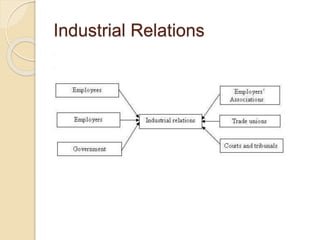
 Industrial relations are basically the interactions
between employers, employees and the
government, and the institutions and associations
through which such interactions are mediated
Industrial Relations
SCOPE of IR
 Collective bargaining
 Machinery for settlement of
industrial disputes
 Standing orders
 Workers participation in
management
 Unfair labor practices
Importance Of Industrial
Relations
 Uninterrupted production
 Reduction in Industrial Disputes
 High morale
 Mental Revolution
 Reduced Wastage
Trade Unions
 Trade unions are formed to protect
and promote the interests of their
members. Their primary function is
to protect the interests of workers
against discrimination and unfair
labour practices
Objectives Of Trade Unions
 Representation
 Negotiation
 Voice in decisions affecting workers
 Provision for Social and Economic
security
 Industrial Democracy
 Industrial Discipline
 Harmonious IR
Reasons For Joining Trade
Unions
 Greater Bargaining Power
 Minimize Discrimination
 Sense of Security
 Sense of Participation
 Sense of Belongingness
 Platform for self expression
 Betterment of relationships
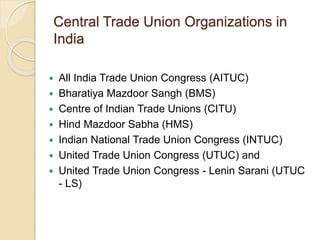
Central Trade Union Organizations in
India
 All India Trade Union Congress (AITUC)
 Bharatiya Mazdoor Sangh (BMS)
 Centre of Indian Trade Unions (CITU)
 Hind Mazdoor Sabha (HMS)
 Indian National Trade Union Congress (INTUC)
 United Trade Union Congress (UTUC) and
 United Trade Union Congress - Lenin Sarani (UTUC
- LS)
LIMITATIONS IN TUism
 Militant Attitude
 Adversarial Relations
 Multiplicity
 Politicisation
 Outside Leadership
 Lack of Resources
 Lack of Credibility of TU Leaders
 Infighting
 No clear recognition process
Measures For Improving Industrial
Relations
 Strong and Stable Union
 Mutual Trust
 Workers’ Participation in Management
 Mutual Accommodation
 Sincere Implementation of Agreements
 Sound Personnel Policies
 Progressive Outlook(Industry, TU &Government)
Collective Bargaining
 Collective bargaining is process of joint decision
making and basically represents a democratic
way of life in industry.
 It is the process of negotiation between firm’s
and workers’ representatives for the purpose of
establishing mutually agreeable conditions of
employment.
 It is a technique adopted by two parties to reach
an understanding acceptable to both through the
process of discussion and negotiation
Collective bargaining
 Collective process in which representatives of
both the management and employees participate.
 Continuous process which aims at establishing
stable relationships between the parties involved.
 Not only involves the bargaining agreement, but
also
involves the implementation of such an
agreement.
 Attempts in achieving discipline in the industry
 Flexible approach, as the parties involved have to
adopt
a flexible attitude towards negotiations.
Characteristics Of Collective Bargaining
 Group process
 Negotiations form an important
aspect
 Formalized process
 Bipartite, complementary &
continuous process
 Political activity
Collective Bargaining Process
 Prepare: involves composition of a
negotiation team
 Discuss: parties decide the ground rules
that will guide the negotiations
 Propose: involves the initial opening
statements and the possible options that
exist to resolve them.
 Bargain: negotiations are easy if a problem
solving attitude is adopted
 Settlement
Collective Bargaining
Process
Importance to employees
 Increases the strength of the workforce, thereby,
increasing their bargaining capacity as a group.
 Collective bargaining increases the morale and
productivity of employees.
 It restricts management’s freedom for arbitrary action
against the employees.
 Effective collective bargaining machinery strengthens
the trade unions movement.
 The workers feel motivated as they can approach the
management on various matters and bargain for higher
benefits.
 It helps in securing a prompt and fair settlement of
grievances. It provides a flexible means for the
adjustment of wages and employment conditions to
economic and technological changes in the industry, as
a result of which the chances for conflicts are reduced.
Importance to employers
 Easier for the management to resolve issues at the
bargaining level rather than taking up complaints of
individual workers.
 Collective bargaining tends to promote a sense of
job security among employees and thereby tends
to reduce the cost of labor turnover to
management.
 Collective bargaining opens up the channel of
communication between the workers and the
management and increases worker participation in
decision making.
 Collective bargaining plays a vital role in settling
and preventing industrial disputes.
Importance to society
 Collective bargaining leads to industrial peace in
the country
 Results in establishment of a harmonious
industrial climate
 The discrimination and exploitation of workers is
constantly being checked.
 Provides a method or the regulation of the
conditions of employment of those who are directly
concerned about them.
Thank You

Industrial_Relations.pptx

  • 1.
  • 2.
    Industrial Relations  Industrialrelations explains the relationship between employees and management which stem directly or indirectly from union-employer relationship. Industrial relations are the relationships between employees and employers within the organizational settings.  Industrial relations are basically the interactions between employers, employees and the government, and the institutions and associations through which such interactions are mediated
  • 3.
  • 4.
    SCOPE of IR Collective bargaining  Machinery for settlement of industrial disputes  Standing orders  Workers participation in management  Unfair labor practices
  • 5.
    Importance Of Industrial Relations Uninterrupted production  Reduction in Industrial Disputes  High morale  Mental Revolution  Reduced Wastage
  • 6.
    Trade Unions  Tradeunions are formed to protect and promote the interests of their members. Their primary function is to protect the interests of workers against discrimination and unfair labour practices
  • 7.
    Objectives Of TradeUnions  Representation  Negotiation  Voice in decisions affecting workers  Provision for Social and Economic security  Industrial Democracy  Industrial Discipline  Harmonious IR
  • 8.
    Reasons For JoiningTrade Unions  Greater Bargaining Power  Minimize Discrimination  Sense of Security  Sense of Participation  Sense of Belongingness  Platform for self expression  Betterment of relationships
  • 9.
    Central Trade UnionOrganizations in India  All India Trade Union Congress (AITUC)  Bharatiya Mazdoor Sangh (BMS)  Centre of Indian Trade Unions (CITU)  Hind Mazdoor Sabha (HMS)  Indian National Trade Union Congress (INTUC)  United Trade Union Congress (UTUC) and  United Trade Union Congress - Lenin Sarani (UTUC - LS)
  • 10.
    LIMITATIONS IN TUism Militant Attitude  Adversarial Relations  Multiplicity  Politicisation  Outside Leadership  Lack of Resources  Lack of Credibility of TU Leaders  Infighting  No clear recognition process
  • 11.
    Measures For ImprovingIndustrial Relations  Strong and Stable Union  Mutual Trust  Workers’ Participation in Management  Mutual Accommodation  Sincere Implementation of Agreements  Sound Personnel Policies  Progressive Outlook(Industry, TU &Government)
  • 12.
    Collective Bargaining  Collectivebargaining is process of joint decision making and basically represents a democratic way of life in industry.  It is the process of negotiation between firm’s and workers’ representatives for the purpose of establishing mutually agreeable conditions of employment.  It is a technique adopted by two parties to reach an understanding acceptable to both through the process of discussion and negotiation
  • 13.
    Collective bargaining  Collectiveprocess in which representatives of both the management and employees participate.  Continuous process which aims at establishing stable relationships between the parties involved.  Not only involves the bargaining agreement, but also involves the implementation of such an agreement.  Attempts in achieving discipline in the industry  Flexible approach, as the parties involved have to adopt a flexible attitude towards negotiations.
  • 14.
    Characteristics Of CollectiveBargaining  Group process  Negotiations form an important aspect  Formalized process  Bipartite, complementary & continuous process  Political activity
  • 15.
    Collective Bargaining Process Prepare: involves composition of a negotiation team  Discuss: parties decide the ground rules that will guide the negotiations  Propose: involves the initial opening statements and the possible options that exist to resolve them.  Bargain: negotiations are easy if a problem solving attitude is adopted  Settlement
  • 16.
  • 17.
    Importance to employees Increases the strength of the workforce, thereby, increasing their bargaining capacity as a group.  Collective bargaining increases the morale and productivity of employees.  It restricts management’s freedom for arbitrary action against the employees.  Effective collective bargaining machinery strengthens the trade unions movement.  The workers feel motivated as they can approach the management on various matters and bargain for higher benefits.  It helps in securing a prompt and fair settlement of grievances. It provides a flexible means for the adjustment of wages and employment conditions to economic and technological changes in the industry, as a result of which the chances for conflicts are reduced.
  • 18.
    Importance to employers Easier for the management to resolve issues at the bargaining level rather than taking up complaints of individual workers.  Collective bargaining tends to promote a sense of job security among employees and thereby tends to reduce the cost of labor turnover to management.  Collective bargaining opens up the channel of communication between the workers and the management and increases worker participation in decision making.  Collective bargaining plays a vital role in settling and preventing industrial disputes.
  • 19.
    Importance to society Collective bargaining leads to industrial peace in the country  Results in establishment of a harmonious industrial climate  The discrimination and exploitation of workers is constantly being checked.  Provides a method or the regulation of the conditions of employment of those who are directly concerned about them.
  • 20.