Industry-Flanges:
Hidden Histories
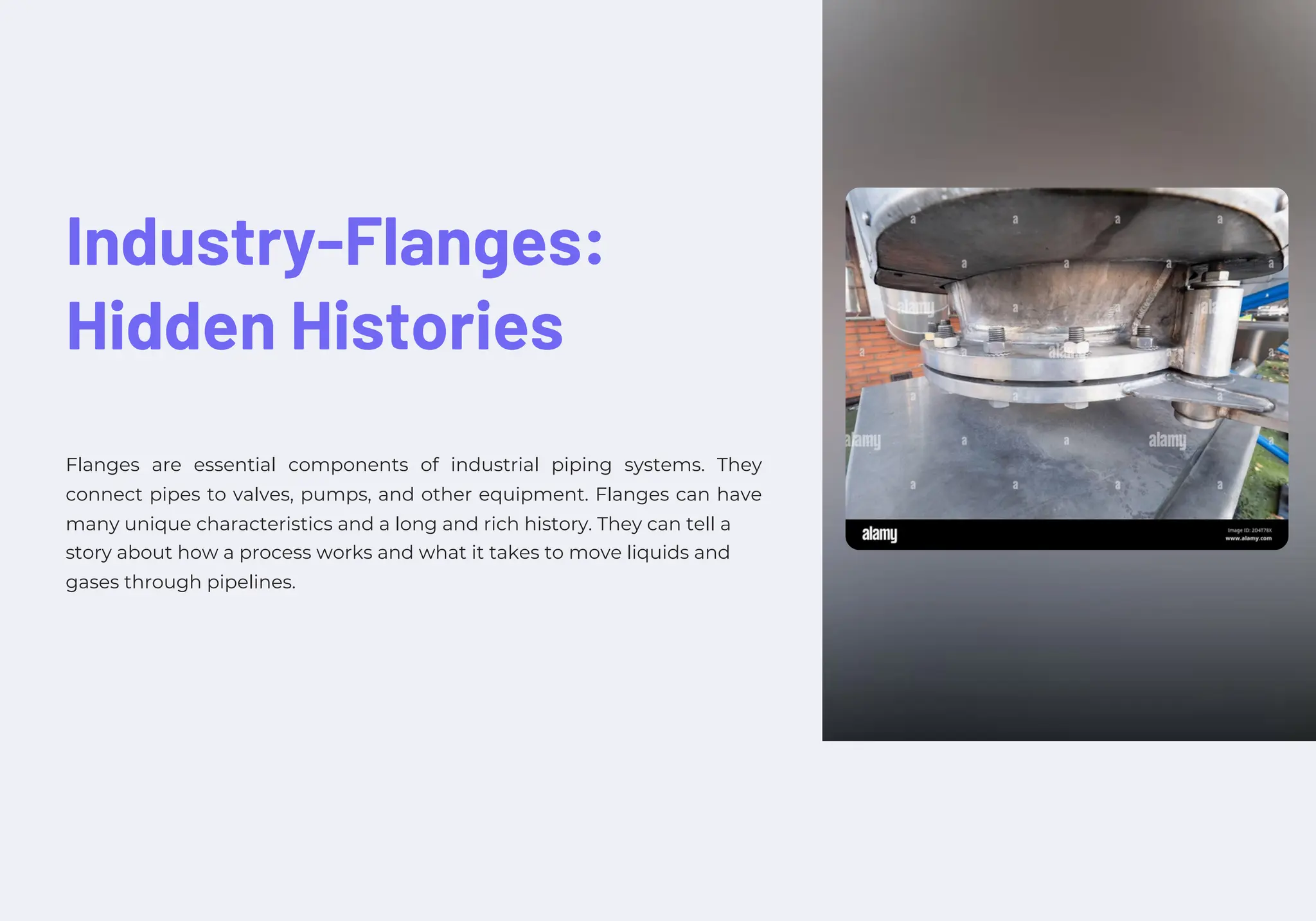
Flanges are essential components of industrial piping systems. They
connect pipes to valves, pumps, and other equipment. Flanges can have
many unique characteristics and a long and rich history. They can tell a
story about how a process works and what it takes to move liquids and
gases through pipelines.
The Origin of Flanges
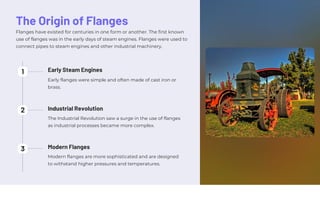
Flanges have existed for centuries in one form or another. The first known
use of flanges was in the early days of steam engines. Flanges were used to
connect pipes to steam engines and other industrial machinery.
Early flanges were simple and often made of cast iron or
brass.
Modern flanges are more sophisticated and are designed
to withstand higher pressures and temperatures.
The Industrial Revolution saw a surge in the use of flanges
as industrial processes became more complex.
2
3
1
Modern Flanges
Industrial Revolution
Early Steam Engines
The Importance of Flange Standards
Flange standards are crucial for ensuring that flanges from different manufacturers can be easily interchanged. This is
essential for ensuring the safe and reliable operation of industrial equipment.
Standards guarantee that flanges
from different manufacturers can be
connected without leaks or failures.
Flange standards help ensure the safe
and reliable operation of industrial
equipment.
Standards reduce the cost of
manufacturing and maintenance by
ensuring compatibility and
interchangeability.
Interchangeability Safety and Reliability Cost Efficiency
Unique Flange Designs
Flanges come in a variety of shapes and sizes. Some flanges are designed
for specific applications, such as high-pressure or high-temperature
environments.
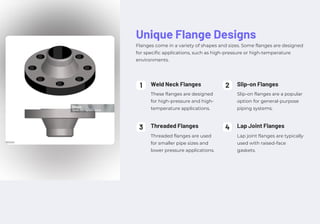
These flanges are designed
for high-pressure and high-
temperature applications.
Threaded flanges are used
for smaller pipe sizes and
lower pressure applications.
Slip-on flanges are a popular
option for general-purpose
piping systems.
Lap joint flanges are typically
used with raised-face
gaskets.
3
1
4
2
Threaded Flanges
Weld Neck Flanges Slip-on Flanges
Lap Joint Flanges
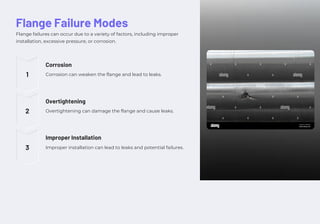
Flange Failure Modes
Flange failures can occur due to a variety of factors, including improper
installation, excessive pressure, or corrosion.
Corrosion can weaken the flange and lead to leaks.
Overtightening can damage the flange and cause leaks.
Improper installation can lead to leaks and potential failures.
2
3
1
Corrosion
Overtightening
Improper Installation
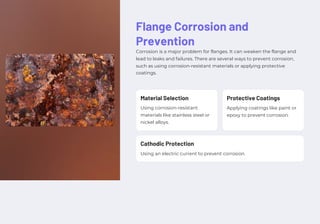
Flange Corrosion and
Prevention
Corrosion is a major problem for flanges. It can weaken the flange and
lead to leaks and failures. There are several ways to prevent corrosion,
such as using corrosion-resistant materials or applying protective
coatings.
Using corrosion-resistant
materials like stainless steel or
nickel alloys.
Using an electric current to prevent corrosion.
Applying coatings like paint or
epoxy to prevent corrosion.
Material Selection
Cathodic Protection
Protective Coatings
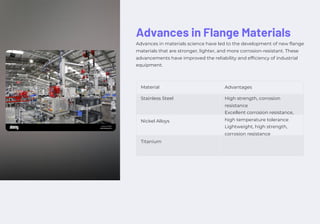
Advances in Flange Materials
Advances in materials science have led to the development of new flange
materials that are stronger, lighter, and more corrosion-resistant. These
advancements have improved the reliability and efficiency of industrial
equipment.
Material
Stainless Steel
Advantages
High strength, corrosion
resistance
Excellent corrosion resistance,
high temperature tolerance
Lightweight, high strength,
corrosion resistance
Nickel Alloys
Titanium
The Future of Flanges in
Industry
The future of flanges is likely to be driven by advances in materials science,
manufacturing techniques, and automation. New materials and designs
will continue to improve the performance and reliability of flanges.
Flanges will be designed for environmental sustainability.
New materials and designs will continue to be developed.
Automated manufacturing will improve efficiency and reduce costs.
Innovation
Automation
Sustainability
Texas flange provides different types of industrial flanges like socket weld, alloy pipe, chrome, duplex,
carbon steel, lap joint, stainless steel, custom, weld neck, and many more. Call or email us today!
Business Address: P.O. Box 2889, Pearland, TX 77588 Phone no 1: 800-826(3801)
Website: https://www.texasflange.com/
Facebook:https://www.facebook.com/TexasFlangeandFitting
Instagram:https://www.instagram.com/texasflange/
Twitter:https://twitter.com/TexasFlange
Linkedin:https://www.linkedin.com/company/texas-flange/
Youtube:https://www.youtube.com/channel/UCHeKP7nuVLBXXEC_qXZ8VVg

Industrial Flanges: Covers Unknown Facts.pdf

  • 1.
    Industry-Flanges: Hidden Histories Flanges areessential components of industrial piping systems. They connect pipes to valves, pumps, and other equipment. Flanges can have many unique characteristics and a long and rich history. They can tell a story about how a process works and what it takes to move liquids and gases through pipelines.
  • 2.
    The Origin ofFlanges Flanges have existed for centuries in one form or another. The first known use of flanges was in the early days of steam engines. Flanges were used to connect pipes to steam engines and other industrial machinery. Early flanges were simple and often made of cast iron or brass. Modern flanges are more sophisticated and are designed to withstand higher pressures and temperatures. The Industrial Revolution saw a surge in the use of flanges as industrial processes became more complex. 2 3 1 Modern Flanges Industrial Revolution Early Steam Engines
  • 3.
    The Importance ofFlange Standards Flange standards are crucial for ensuring that flanges from different manufacturers can be easily interchanged. This is essential for ensuring the safe and reliable operation of industrial equipment. Standards guarantee that flanges from different manufacturers can be connected without leaks or failures. Flange standards help ensure the safe and reliable operation of industrial equipment. Standards reduce the cost of manufacturing and maintenance by ensuring compatibility and interchangeability. Interchangeability Safety and Reliability Cost Efficiency
  • 4.
    Unique Flange Designs Flangescome in a variety of shapes and sizes. Some flanges are designed for specific applications, such as high-pressure or high-temperature environments. These flanges are designed for high-pressure and high- temperature applications. Threaded flanges are used for smaller pipe sizes and lower pressure applications. Slip-on flanges are a popular option for general-purpose piping systems. Lap joint flanges are typically used with raised-face gaskets. 3 1 4 2 Threaded Flanges Weld Neck Flanges Slip-on Flanges Lap Joint Flanges
  • 5.
    Flange Failure Modes Flangefailures can occur due to a variety of factors, including improper installation, excessive pressure, or corrosion. Corrosion can weaken the flange and lead to leaks. Overtightening can damage the flange and cause leaks. Improper installation can lead to leaks and potential failures. 2 3 1 Corrosion Overtightening Improper Installation
  • 6.
    Flange Corrosion and Prevention Corrosionis a major problem for flanges. It can weaken the flange and lead to leaks and failures. There are several ways to prevent corrosion, such as using corrosion-resistant materials or applying protective coatings. Using corrosion-resistant materials like stainless steel or nickel alloys. Using an electric current to prevent corrosion. Applying coatings like paint or epoxy to prevent corrosion. Material Selection Cathodic Protection Protective Coatings
  • 7.
    Advances in FlangeMaterials Advances in materials science have led to the development of new flange materials that are stronger, lighter, and more corrosion-resistant. These advancements have improved the reliability and efficiency of industrial equipment. Material Stainless Steel Advantages High strength, corrosion resistance Excellent corrosion resistance, high temperature tolerance Lightweight, high strength, corrosion resistance Nickel Alloys Titanium
  • 8.
    The Future ofFlanges in Industry The future of flanges is likely to be driven by advances in materials science, manufacturing techniques, and automation. New materials and designs will continue to improve the performance and reliability of flanges. Flanges will be designed for environmental sustainability. New materials and designs will continue to be developed. Automated manufacturing will improve efficiency and reduce costs. Innovation Automation Sustainability
  • 9.
    Texas flange providesdifferent types of industrial flanges like socket weld, alloy pipe, chrome, duplex, carbon steel, lap joint, stainless steel, custom, weld neck, and many more. Call or email us today! Business Address: P.O. Box 2889, Pearland, TX 77588 Phone no 1: 800-826(3801) Website: https://www.texasflange.com/ Facebook:https://www.facebook.com/TexasFlangeandFitting Instagram:https://www.instagram.com/texasflange/ Twitter:https://twitter.com/TexasFlange Linkedin:https://www.linkedin.com/company/texas-flange/ Youtube:https://www.youtube.com/channel/UCHeKP7nuVLBXXEC_qXZ8VVg