Exploring Pipe Flanges:
Applications, Types, and
Benefits
Pipe flanges are critical components in various industrial and commercial
applications, serving as the connecting points between different sections
of piping systems. These flanged joints allow for easy installation,
disassembly, and maintenance of pipelines, making them an
indispensable part of modern infrastructure. From water and wastewater
treatment to power generation and chemical processing, pipe flanges
play a crucial role in ensuring the safe and efficient transfer of fluids and
gases across diverse industries.
Common Applications of Pipe Flanges
Oil and Gas
Pipe flanges are extensively
used in the oil and gas
industry for the construction
and maintenance of pipelines,
storage tanks, and processing
equipment. Their versatility
allows for the easy
connection and disconnection
of various components,
enabling efficient and reliable
transportation of crude oil,
natural gas, and refined
products.
Water and Wastewater
In water and wastewater
treatment facilities, pipe
flanges are crucial for the
installation and management
of pumps, valves, and other
equipment involved in the
collection, distribution, and
treatment of water. Their
ability to create leak-proof
seals is essential for
maintaining the integrity of
these critical infrastructure
systems.
Power Generation
Pipe flanges play a vital role
in power plants, where they
are used to connect boilers,
turbines, and other
components of the steam and
cooling water systems. Their
durability and resistance to
high temperatures and
pressures make them
indispensable for the safe and
efficient operation of these
facilities.
Types of Pipe Flanges: Flanged Joints
1 Slip-On Flanges
These flanges slide over the end of a pipe
and are then secured in place, often with a
weld. Slip-on flanges are a popular choice
for their ease of installation and cost-
effectiveness.
2 Weld Neck Flanges
Weld neck flanges feature a tapered neck
that extends into the pipe, allowing for a
stronger, more secure connection. They
are commonly used in high-pressure
applications where a robust joint is
required.
3 Threaded Flanges
Threaded flanges are screwed directly
onto the pipe, providing a quick and easy
way to create a flanged connection. They
are often used for smaller diameter pipes
and in applications with lower pressure
requirements.
4 Blind Flanges
Blind flanges are used to seal the end of a
pipe or flange opening, preventing the flow
of fluid or gas. They are commonly used
for maintenance, inspection, or to isolate
sections of a piping system.
Advantages of Using Pipe Flanges
Modularity and
Flexibility
Pipe flanges allow for easy
assembly and disassembly of
piping systems, enabling
quick and efficient
maintenance, modification, or
expansion of the
infrastructure. This modularity
is particularly beneficial in
industrial settings where
downtime must be minimized.
Leak-Proof Sealing
Flanged joints, when properly
installed and maintained,
create a reliable seal that
prevents leaks and ensures
the safe and efficient transfer
of fluids and gases. This is
crucial for applications where
environmental protection and
worker safety are paramount.
Versatility and
Compatibility
Pipe flanges are available in a
wide range of sizes,
materials, and pressure
ratings, allowing them to be
used in a variety of
applications and
environments. This versatility
makes them a flexible and
adaptable solution for diverse
piping systems.
Selecting the Right Pipe Flange
1 Size and Diameter
The first consideration
when selecting a pipe
flange is the size and
diameter of the pipe it
will be connecting.
Choosing the correct
flange size is crucial to
ensure a proper and
secure fit.
2 Pressure Rating
Pipe flanges are
designed to withstand
specific pressure ratings,
which are determined by
factors such as the pipe
material, operating
temperature, and the
intended application.
Selecting the
appropriate pressure
rating is essential for
safety and performance.
3 Material
Compatibility
Pipe flanges are
available in a variety of
materials, including
carbon steel, stainless
steel, and specialty
alloys. Choosing a
flange material that is
compatible with the pipe
and the fluid or gas
being transported is
critical to prevent
corrosion and ensure
long-term reliability.
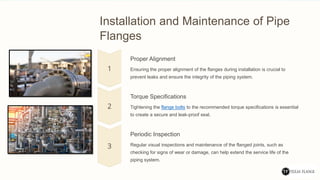
Installation and Maintenance of Pipe
Flanges
Proper Alignment
Ensuring the proper alignment of the flanges during installation is crucial to
prevent leaks and ensure the integrity of the piping system.
Torque Specifications
Tightening the flange bolts to the recommended torque specifications is essential
to create a secure and leak-proof seal.
Periodic Inspection
Regular visual inspections and maintenance of the flanged joints, such as
checking for signs of wear or damage, can help extend the service life of the
piping system.
Industry Standards and Regulations
ASTM Standards
Pipe flanges must comply with
ASTM (American Society for
Testing and Materials)
standards, which ensure
consistent quality, safety, and
performance.
ASME Standards
The American Society of
Mechanical Engineers (ASME)
also sets industry standards for
pipe flanges, focusing on
design, manufacturing, and
testing requirements.
Safety Regulations
Pipe flanges must adhere to
various safety regulations,
such as those established by
OSHA (Occupational Safety
and Health Administration), to
protect workers and the
environment.
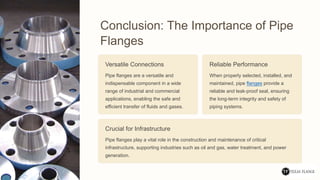
Conclusion: The Importance of Pipe
Flanges
Versatile Connections
Pipe flanges are a versatile and
indispensable component in a wide
range of industrial and commercial
applications, enabling the safe and
efficient transfer of fluids and gases.
Reliable Performance
When properly selected, installed, and
maintained, pipe flanges provide a
reliable and leak-proof seal, ensuring
the long-term integrity and safety of
piping systems.
Crucial for Infrastructure
Pipe flanges play a vital role in the construction and maintenance of critical
infrastructure, supporting industries such as oil and gas, water treatment, and power
generation.
Contact Us:
Address: P.O. Box 2889, Pearland, TX 77588
Phone: +1800-826(3801)
URL: https://www.texasflange.com/
Facebook - https://www.facebook.com/TexasFlangeandFitting
Linkedin - https://www.linkedin.com/company/texas-flange/
Instagram - https://www.instagram.com/texasflange/
Twitter - https://twitter.com/TexasFlange
Youtube - https://www.youtube.com/channel/UCHeKP7nuVLBXXEC_qXZ8VVg

Exploring-Pipe-Flanges-Applications-Types-and-Benefits.pptx

  • 1.
    Exploring Pipe Flanges: Applications,Types, and Benefits Pipe flanges are critical components in various industrial and commercial applications, serving as the connecting points between different sections of piping systems. These flanged joints allow for easy installation, disassembly, and maintenance of pipelines, making them an indispensable part of modern infrastructure. From water and wastewater treatment to power generation and chemical processing, pipe flanges play a crucial role in ensuring the safe and efficient transfer of fluids and gases across diverse industries.
  • 2.
    Common Applications ofPipe Flanges Oil and Gas Pipe flanges are extensively used in the oil and gas industry for the construction and maintenance of pipelines, storage tanks, and processing equipment. Their versatility allows for the easy connection and disconnection of various components, enabling efficient and reliable transportation of crude oil, natural gas, and refined products. Water and Wastewater In water and wastewater treatment facilities, pipe flanges are crucial for the installation and management of pumps, valves, and other equipment involved in the collection, distribution, and treatment of water. Their ability to create leak-proof seals is essential for maintaining the integrity of these critical infrastructure systems. Power Generation Pipe flanges play a vital role in power plants, where they are used to connect boilers, turbines, and other components of the steam and cooling water systems. Their durability and resistance to high temperatures and pressures make them indispensable for the safe and efficient operation of these facilities.
  • 3.
    Types of PipeFlanges: Flanged Joints 1 Slip-On Flanges These flanges slide over the end of a pipe and are then secured in place, often with a weld. Slip-on flanges are a popular choice for their ease of installation and cost- effectiveness. 2 Weld Neck Flanges Weld neck flanges feature a tapered neck that extends into the pipe, allowing for a stronger, more secure connection. They are commonly used in high-pressure applications where a robust joint is required. 3 Threaded Flanges Threaded flanges are screwed directly onto the pipe, providing a quick and easy way to create a flanged connection. They are often used for smaller diameter pipes and in applications with lower pressure requirements. 4 Blind Flanges Blind flanges are used to seal the end of a pipe or flange opening, preventing the flow of fluid or gas. They are commonly used for maintenance, inspection, or to isolate sections of a piping system.
  • 4.
    Advantages of UsingPipe Flanges Modularity and Flexibility Pipe flanges allow for easy assembly and disassembly of piping systems, enabling quick and efficient maintenance, modification, or expansion of the infrastructure. This modularity is particularly beneficial in industrial settings where downtime must be minimized. Leak-Proof Sealing Flanged joints, when properly installed and maintained, create a reliable seal that prevents leaks and ensures the safe and efficient transfer of fluids and gases. This is crucial for applications where environmental protection and worker safety are paramount. Versatility and Compatibility Pipe flanges are available in a wide range of sizes, materials, and pressure ratings, allowing them to be used in a variety of applications and environments. This versatility makes them a flexible and adaptable solution for diverse piping systems.
  • 5.
    Selecting the RightPipe Flange 1 Size and Diameter The first consideration when selecting a pipe flange is the size and diameter of the pipe it will be connecting. Choosing the correct flange size is crucial to ensure a proper and secure fit. 2 Pressure Rating Pipe flanges are designed to withstand specific pressure ratings, which are determined by factors such as the pipe material, operating temperature, and the intended application. Selecting the appropriate pressure rating is essential for safety and performance. 3 Material Compatibility Pipe flanges are available in a variety of materials, including carbon steel, stainless steel, and specialty alloys. Choosing a flange material that is compatible with the pipe and the fluid or gas being transported is critical to prevent corrosion and ensure long-term reliability.
  • 6.
    Installation and Maintenanceof Pipe Flanges Proper Alignment Ensuring the proper alignment of the flanges during installation is crucial to prevent leaks and ensure the integrity of the piping system. Torque Specifications Tightening the flange bolts to the recommended torque specifications is essential to create a secure and leak-proof seal. Periodic Inspection Regular visual inspections and maintenance of the flanged joints, such as checking for signs of wear or damage, can help extend the service life of the piping system.
  • 7.
    Industry Standards andRegulations ASTM Standards Pipe flanges must comply with ASTM (American Society for Testing and Materials) standards, which ensure consistent quality, safety, and performance. ASME Standards The American Society of Mechanical Engineers (ASME) also sets industry standards for pipe flanges, focusing on design, manufacturing, and testing requirements. Safety Regulations Pipe flanges must adhere to various safety regulations, such as those established by OSHA (Occupational Safety and Health Administration), to protect workers and the environment.
  • 8.
    Conclusion: The Importanceof Pipe Flanges Versatile Connections Pipe flanges are a versatile and indispensable component in a wide range of industrial and commercial applications, enabling the safe and efficient transfer of fluids and gases. Reliable Performance When properly selected, installed, and maintained, pipe flanges provide a reliable and leak-proof seal, ensuring the long-term integrity and safety of piping systems. Crucial for Infrastructure Pipe flanges play a vital role in the construction and maintenance of critical infrastructure, supporting industries such as oil and gas, water treatment, and power generation.
  • 9.
    Contact Us: Address: P.O.Box 2889, Pearland, TX 77588 Phone: +1800-826(3801) URL: https://www.texasflange.com/ Facebook - https://www.facebook.com/TexasFlangeandFitting Linkedin - https://www.linkedin.com/company/texas-flange/ Instagram - https://www.instagram.com/texasflange/ Twitter - https://twitter.com/TexasFlange Youtube - https://www.youtube.com/channel/UCHeKP7nuVLBXXEC_qXZ8VVg