Making Health Systems Work for the Poor Increasing Access to Institutional Deliveries Using Demand and Supply Side Incentives Elizabeth Ekirapa-Kiracho Makerere University School of Public health Research Coordinator, FHS Uganda XII Ascon, Dhaka
Outline of the presentation Introduction Access to  maternal  health  services  in Uganda Increasing access to services for the poor The Intervention Focus on the poor
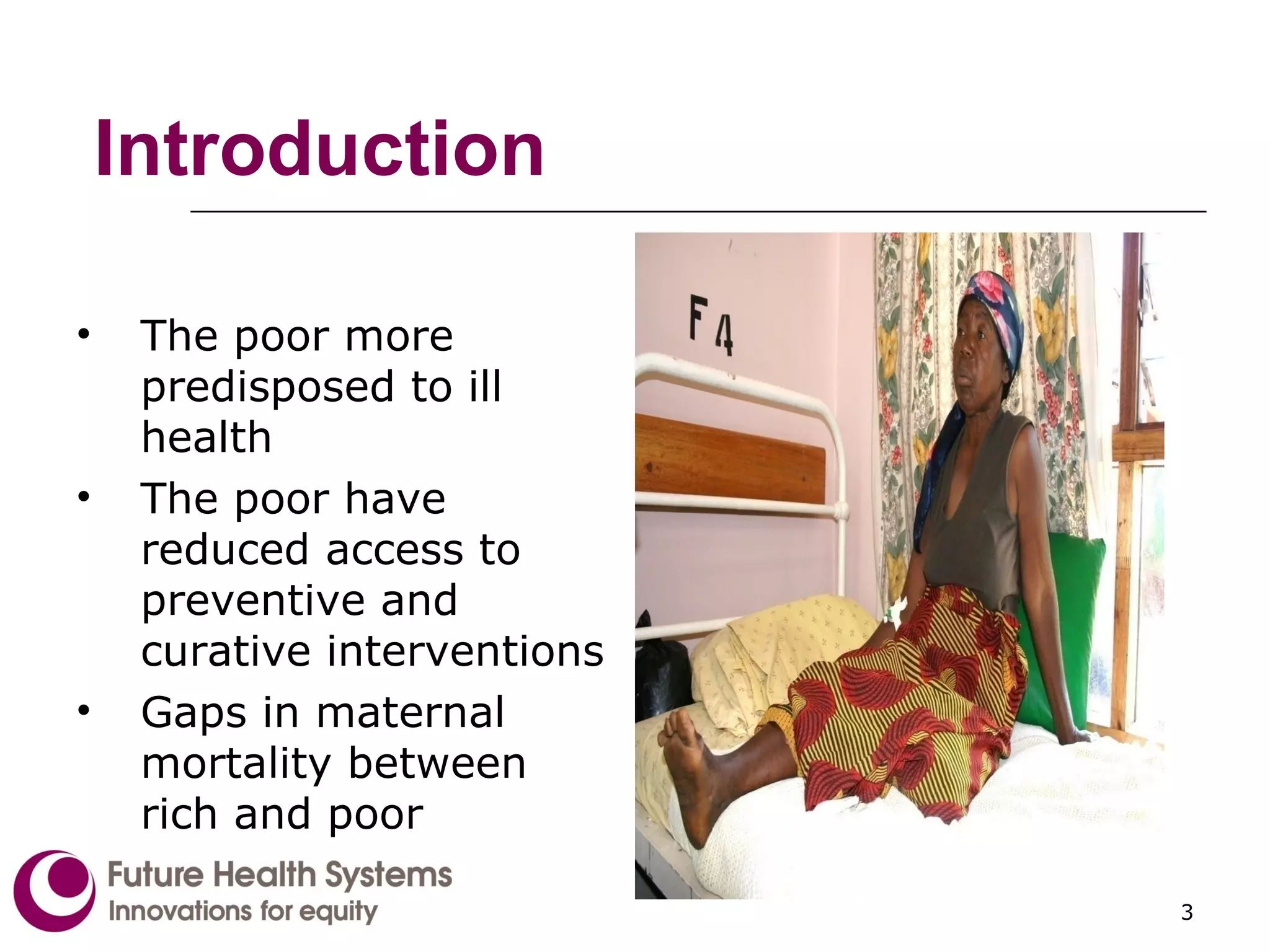
Introduction  The poor more predisposed to ill health The poor have reduced access to preventive and curative interventions Gaps in maternal mortality between rich and poor
Increasing access to services for the poor New innovations in financing hold promise for improving access to the poor CBHI/Subsidized health insurance Conditional cash transfers Equity funds Vouchers Provider subsidies [Gwatkin et al (2004),Jacobs et al (2005),Lagarde et al (2007),Peters et al (2007)]
Interventions that increase access Systematic & intensive approaches to delivering effective health care Improvement in access Prompts to encourage  utilization Combination of approaches Multidisciplinary approaches Expressed/ identified needs Involve  peers [Arblaster et al ( 1996), Victoria et al ( 2007) ]
Why maternal health services? Maternal mortality has been almost stagnant for the past  2 decades Maternal mortality ratio 435 per 100,000 Fifth  MDG – reduce by 75% Over 80% of maternal deaths are due to five direct causes, each of which require facility-based care  .
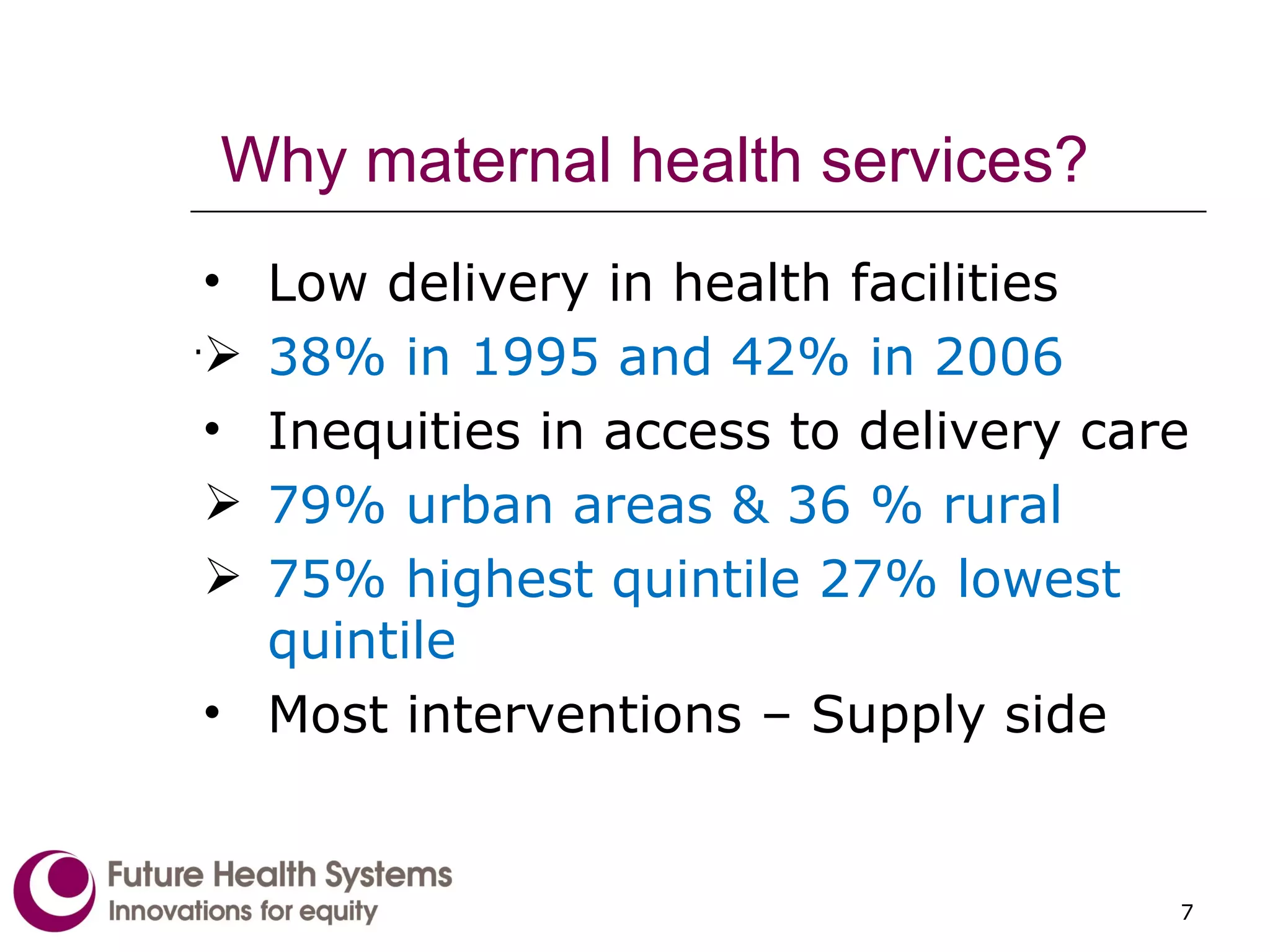
Why maternal health services? Low delivery in health facilities  38% in 1995 and 42% in 2006  Inequities in access to delivery care 79% urban areas & 36 % rural 75% highest quintile 27% lowest quintile Most interventions – Supply side .
The intervention ?
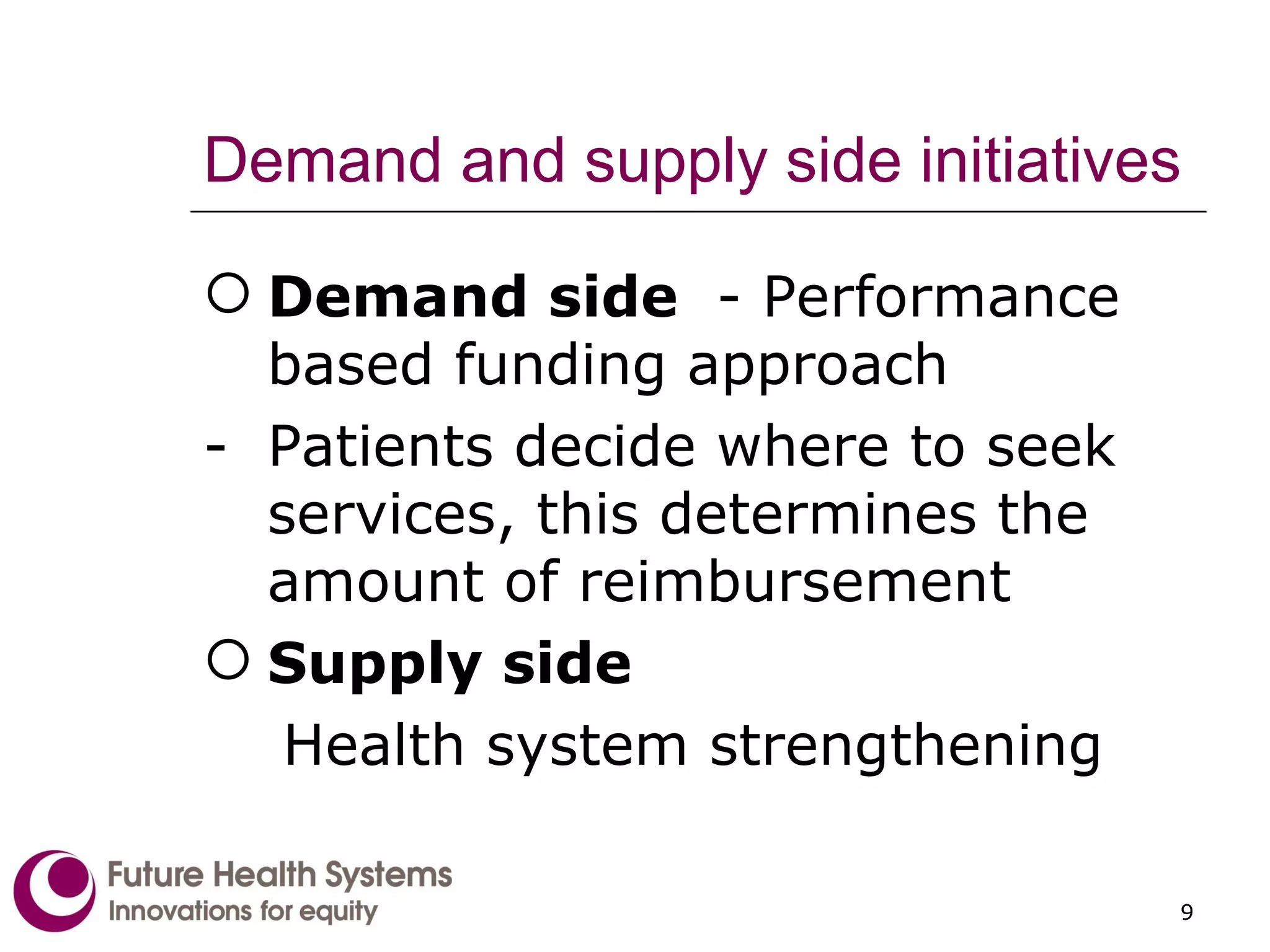
Demand and supply side initiatives  Demand side  - Performance based funding approach  Patients decide where to seek services, this determines the amount of reimbursement  Supply side Health system strengthening
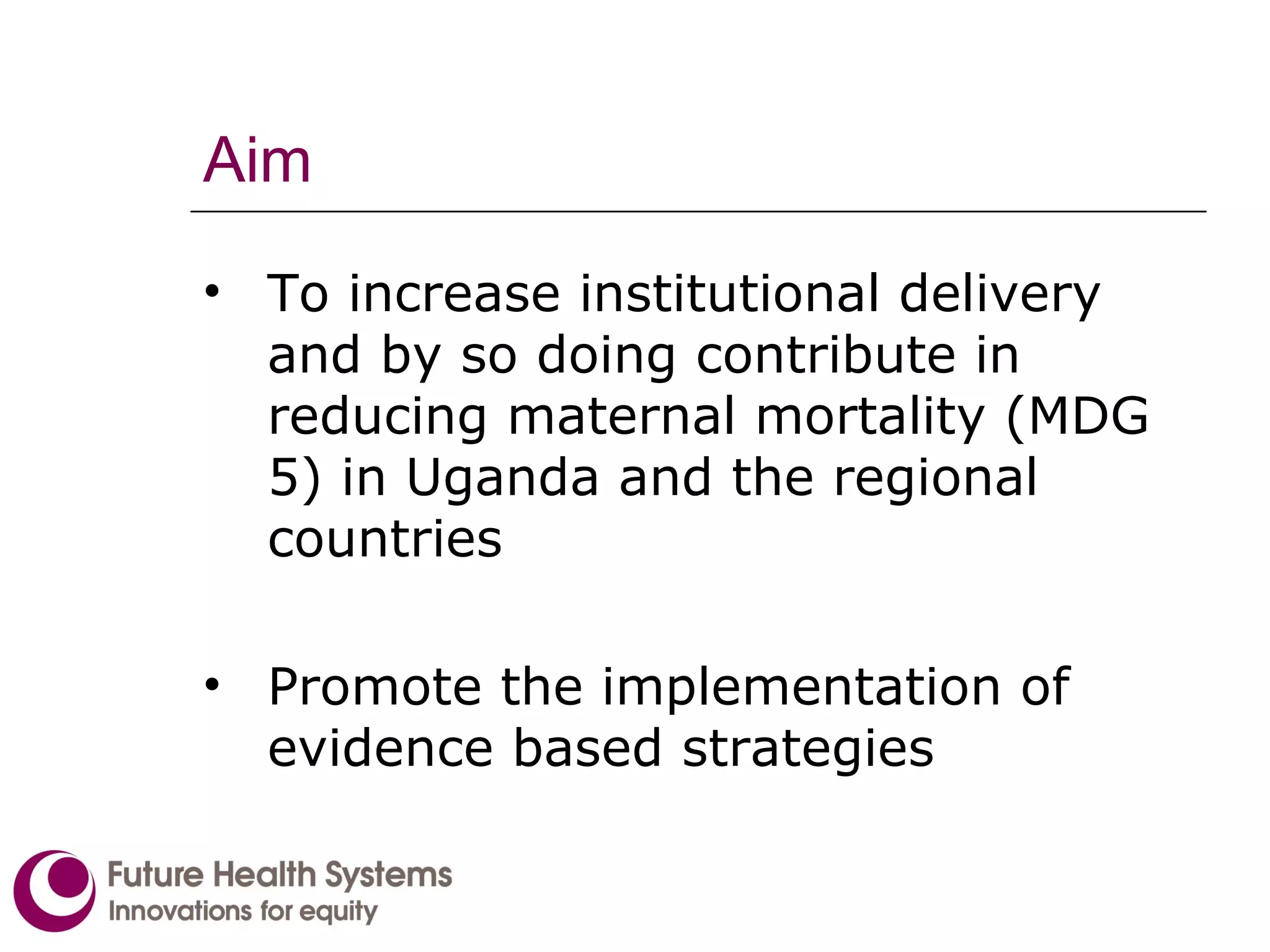
Aim To increase institutional delivery and by so doing contribute in reducing maternal mortality (MDG 5) in Uganda and the regional countries  Promote the implementation of evidence based strategies
Objectives Identify the demand side factors that influence delivery at health facilities Identify the appropriate pathways through which vouchers influence delivery care services at public, PNFP and PFP health facilities
Specific Objectives Assess the effectiveness of a voucher system in increasing deliveries at public, PNFP and PFP health facilities Assess the effectiveness of a voucher system in increasing deliveries among the poor at public, PNFP and PFP health facilities Estimate the incremental cost of implementing a voucher system for increasing deliveries at health facilities
Methodology Cluster randomized trial 4 sub-districts  (2 intervention and 2 control) Intervention:  Voucher for transport and maternity services
Methodology Primary outcome:  % change in the proportion of women delivering in health facilities in the intervention and control areas Secondary outcomes Birth outcomes Number of ANC visits Number of post natal visits
Methodology Analytical method:  Difference in differences analysis The difference of differences of the results from the intervention and control sites  Obtained from baseline and end line surveys
Main activities during the intervention Stakeholder Consultation Needs assessment Baseline survey  Training  Piloting of the intervention  Implementation Endline survey Dissemination
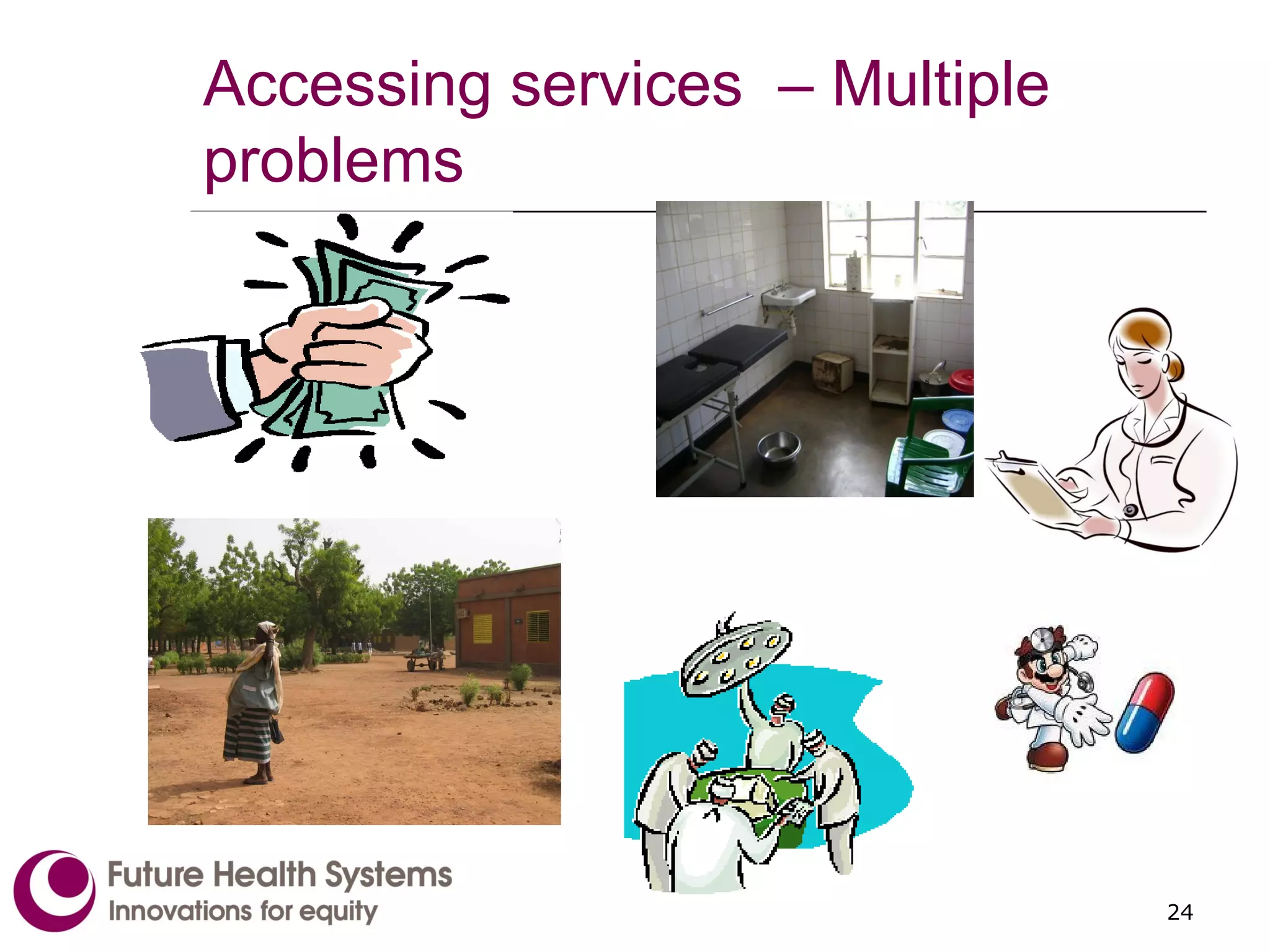
Barriers to the poor using services Cost Long distances and lack of transport Attitudes of health workers and other quality  related issues Informal payments Preference for traditional birth positions/ attendants [ Amooti et al (1997); Atuyambe et al (2005;) Kyomuhendo et al (2003); Munaaba (1995);Waiswa ( 2008) ]
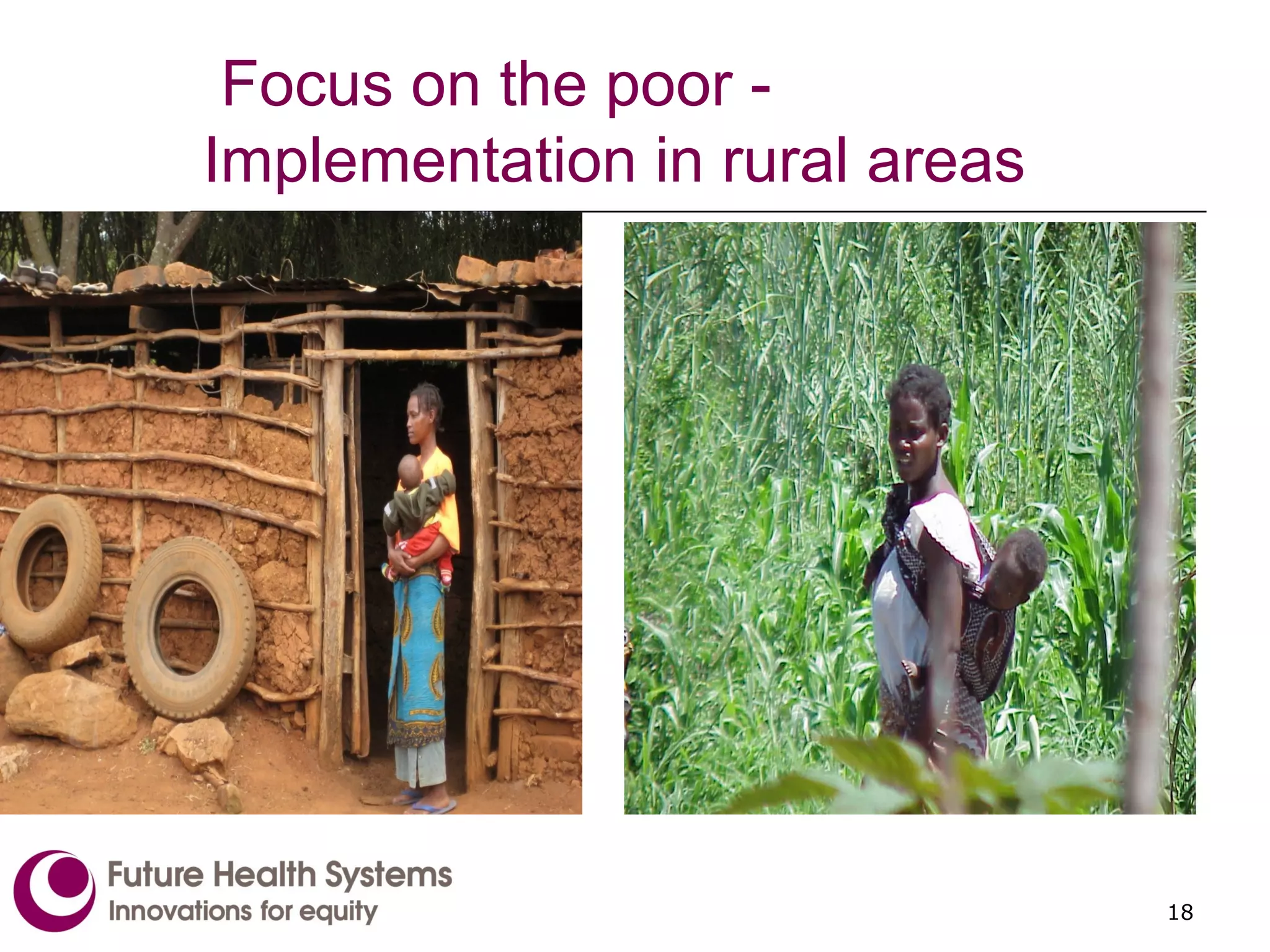
  Focus on the poor - Implementation in rural areas
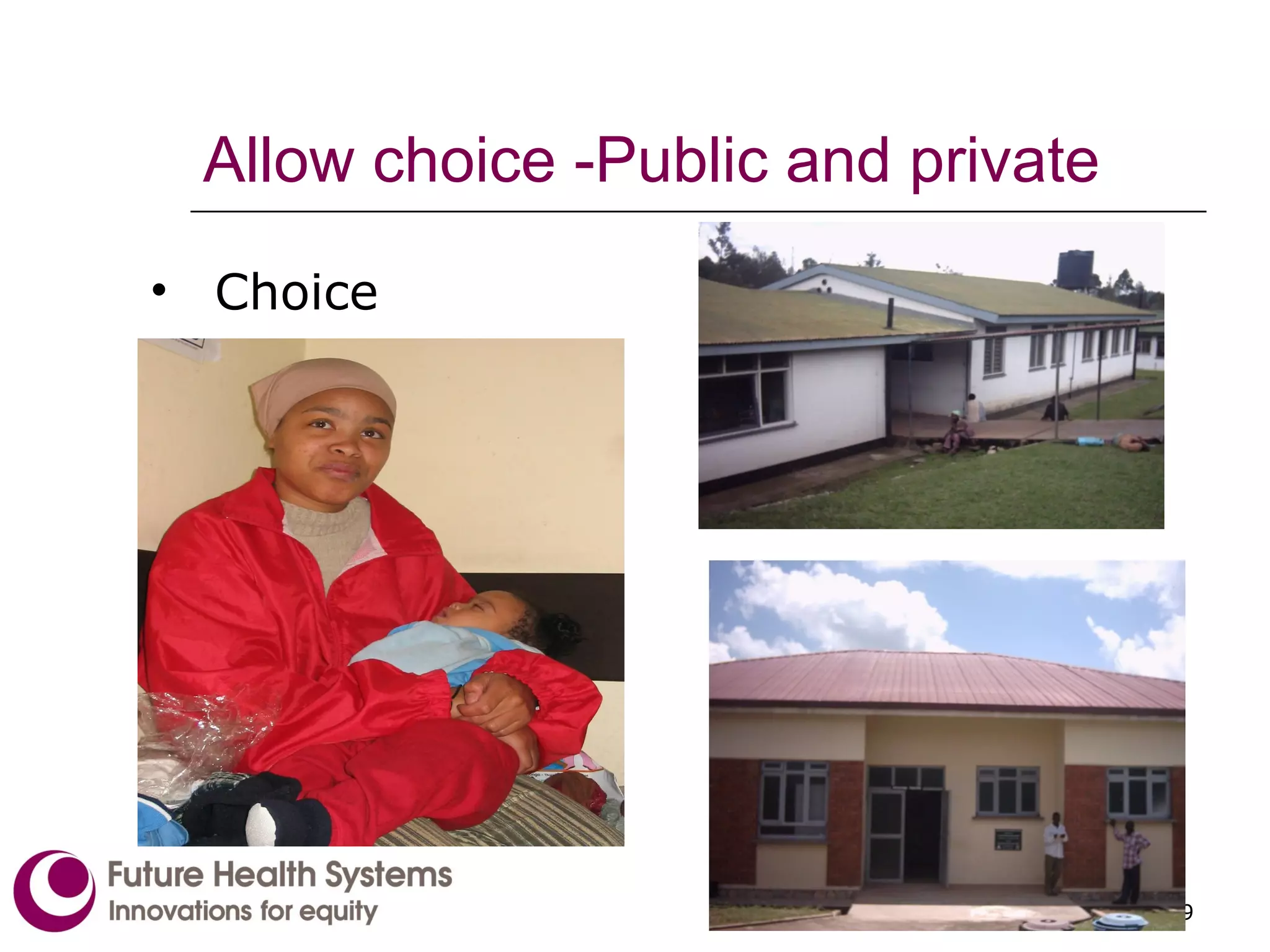
Allow choice -Public and private Choice Choice
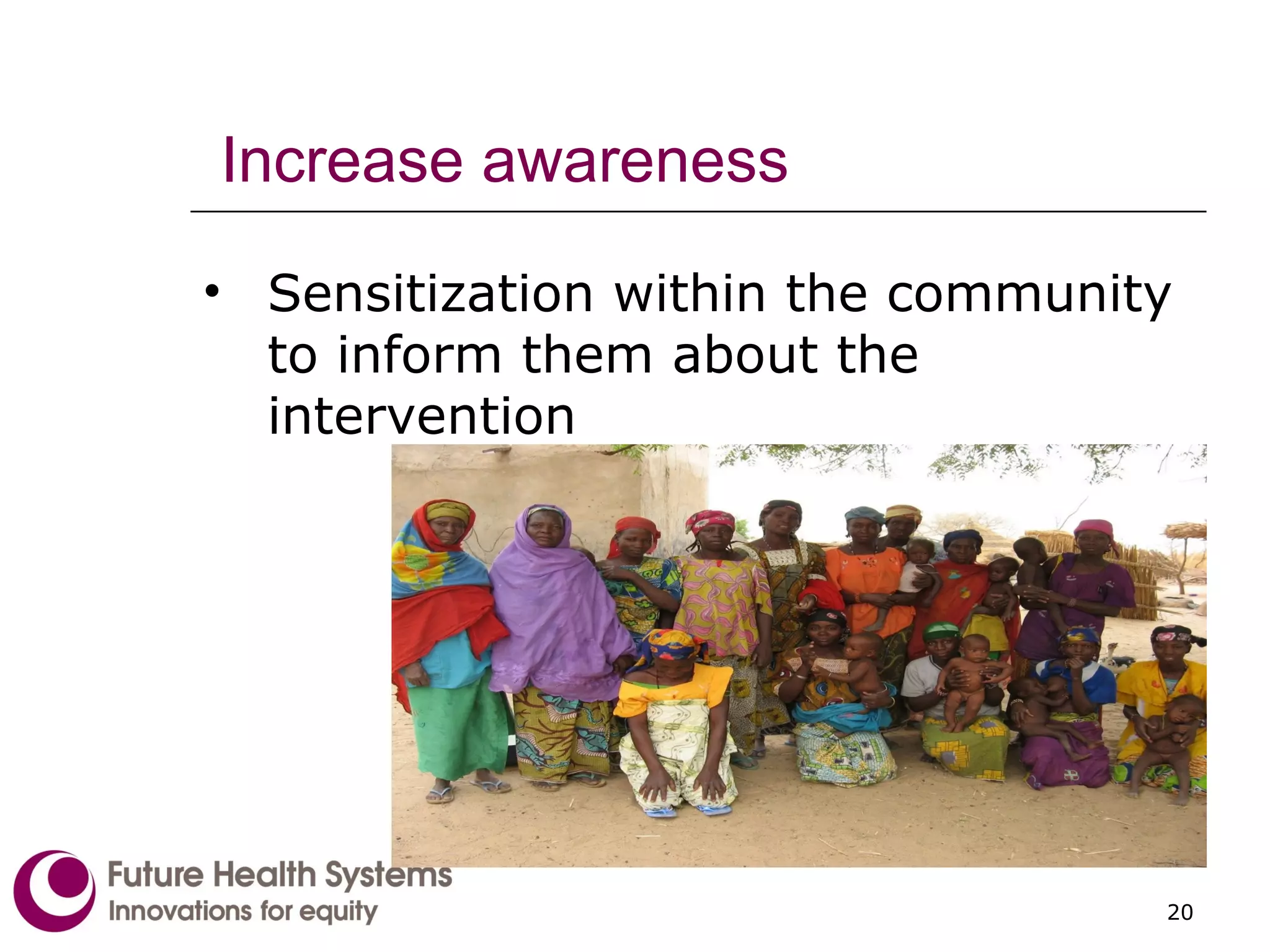
Increase awareness Sensitization within the community to inform them about the intervention
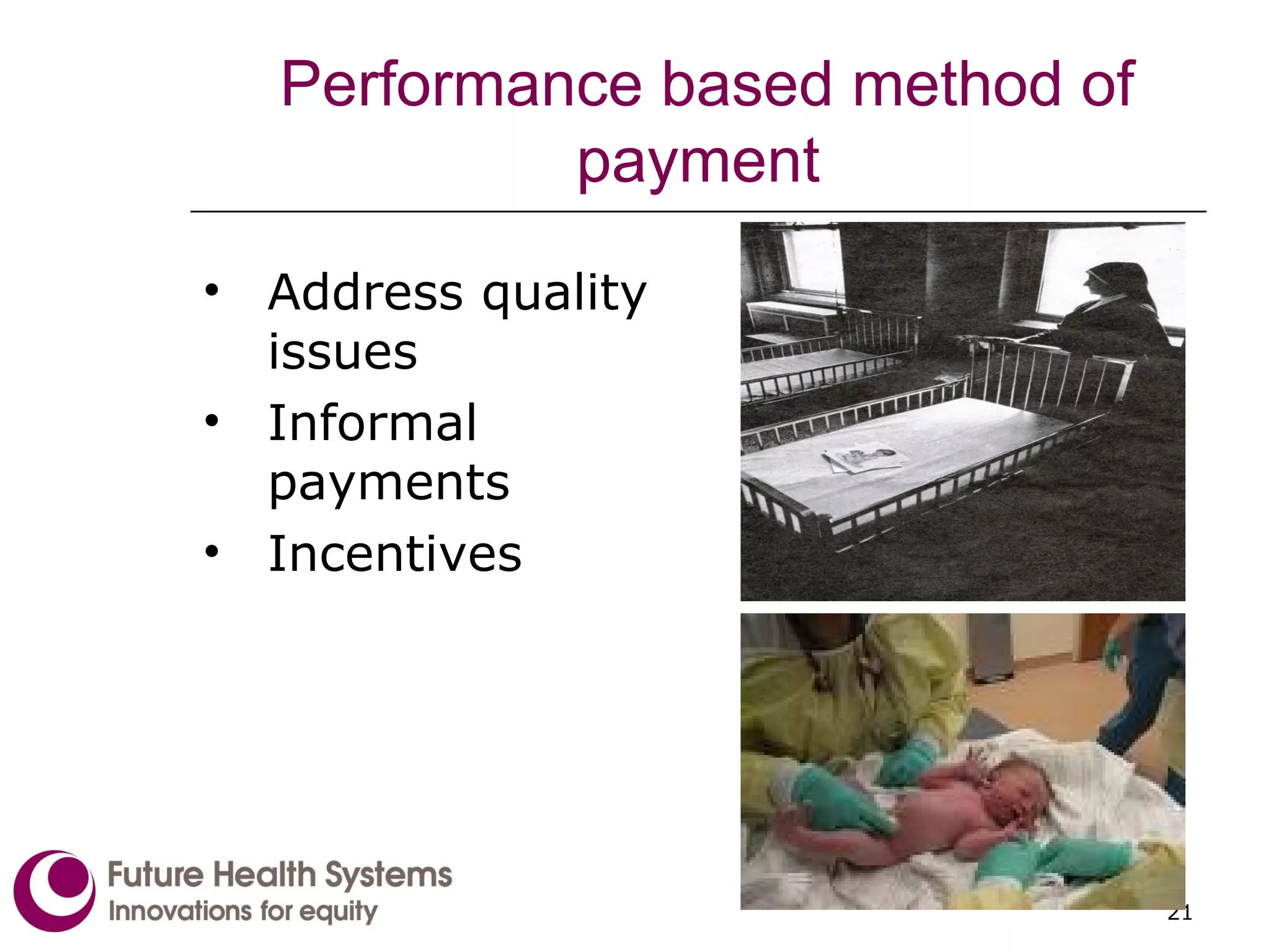
  Performance based method of payment Address quality issues Informal payments Incentives
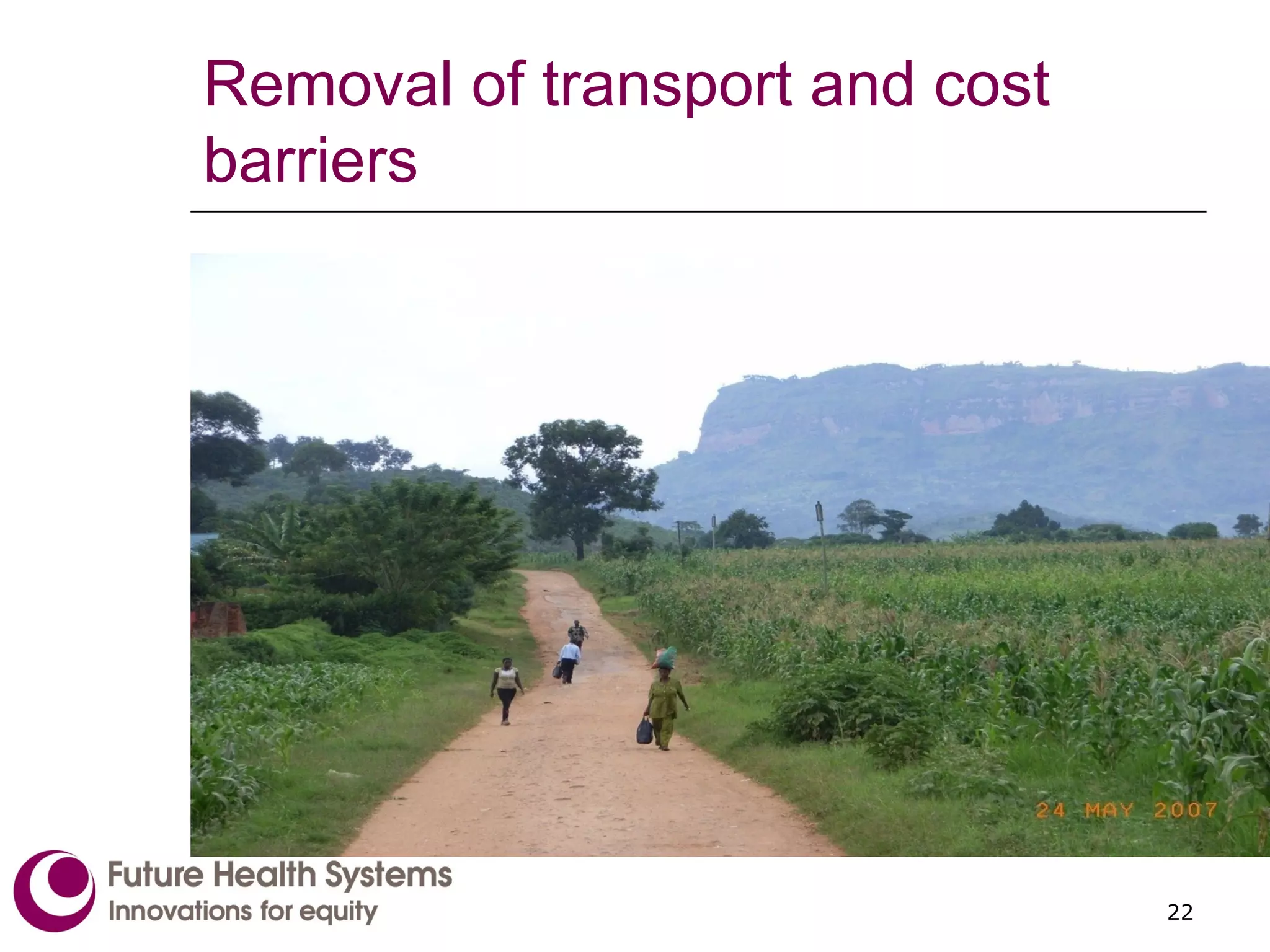
Removal of transport and cost barriers
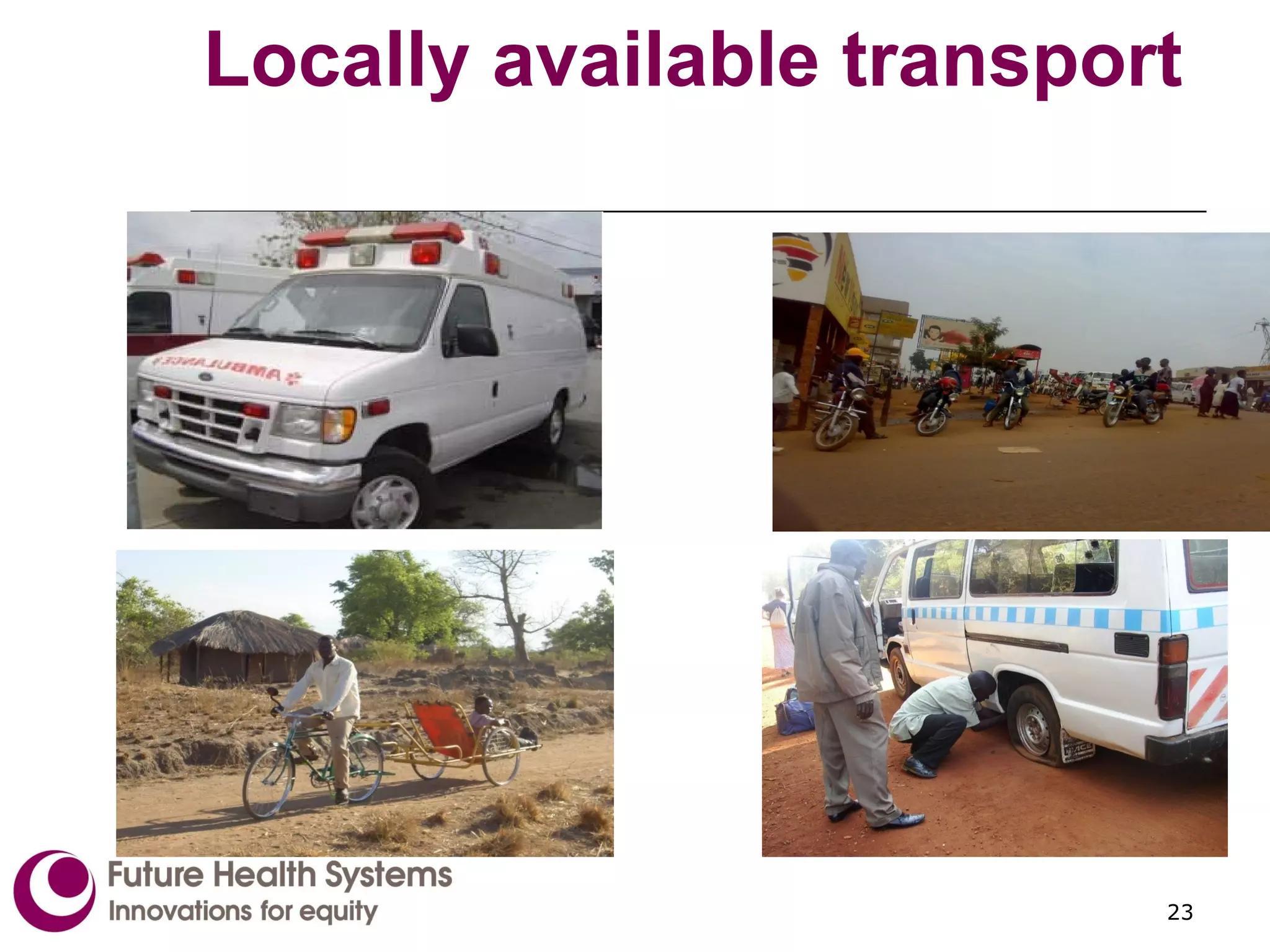
Locally available transport
Accessing services  – Multiple problems
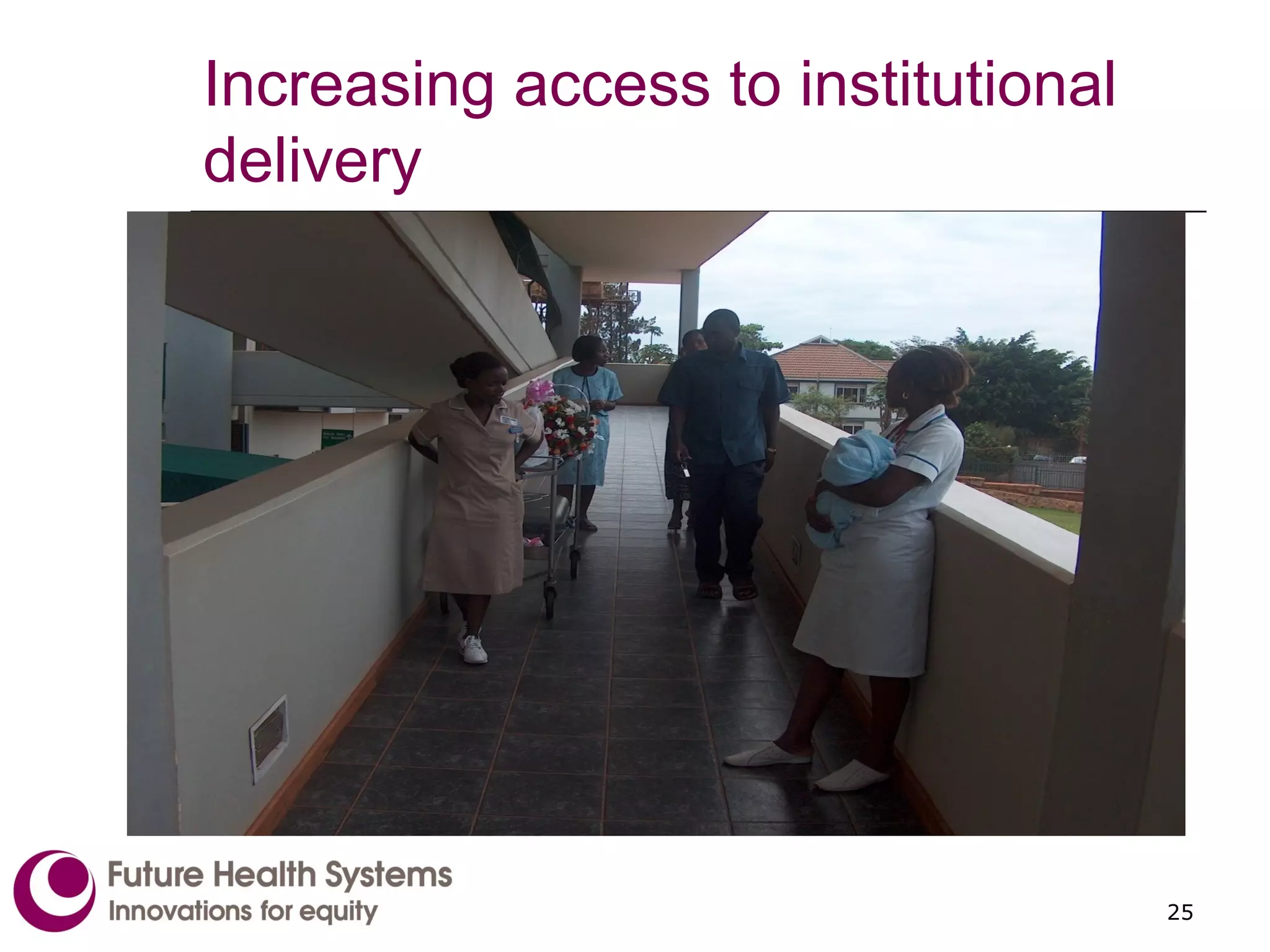
Increasing access to institutional delivery
Acknowledgements DFID FHS Partner Institutions Researchers
Referances Arblaster l, Lambert m, Entwistle V, Forster M, Fullerton D Sheldon T, Watt I. A systematic review of the effectiveness of health service interventions aimed at reducing inequalities in health.  J Health Serv Res Policy . 1996 Apr;1(2):93-103. Amooti,, B. (1997). Factors influencing choice of delivery sites by pregnant mothers in Rakai district, Uganda. . Kampala, Makerere University School of Public Health. Master of  Public  Health. Atuyambe, L., F. Mirembe, et al. (2005). "Experiences of pregnant adolescents - voices from Wakiso district, Uganda."  Afr Health Sci  5(4): 304-9. Gwatkin, D. R., A. Bhuiya, et al. (2004). "Making health systems more equitable."  Lancet  364(9441): 1273-80. Jacobs, B. and N. Price (2005). "Improving access for the poorest to public sector health services: insights from Kirivong Operational Health District in Cambodia."  Health Policy and Planning  21(1): 27-39.
Referances Kyomuhendo, G. B. (2003). "Low use of rural maternity services in Uganda: impact of women's status, traditional beliefs and limited resources."  Reprod Health Matters  11(21): 16-26. Lagarde, M., A. Haines, et al. (2007). "Conditional cash transfers for improving uptake of health interventions in low- and middle-income countries: a systematic review."  JAMA  298(16): 1900-10. Munaaba (1995). Factors which influence mothers choice of location of child birth in Pallisa district, Uganda. Kampala, Makerere University School of Public Health. Masters in Public health. Peters, D. H., A. Gary, et al. (2007). "Poverty and Access to Health Care in Developing Countries."  Ann N Y Acad Sci. 2007 Oct 22 [Epub ahead of print] . UBoS  (2007). Uganda demographic and health survey, 2006. Calverton, Maryland, USA. Victoria et al .JAMA. 2007 Oct 24;298(16):1900-10. Waiswa, P., M. Kemigisa, et al. (2008). "Acceptability of evidence-based neonatal care practices in rural Uganda - implications for programming."  BMC Pregnancy Childbirth  8: 21.  
Thank you for listening  Good ending slide [Thank you for listening]

Increasing Access to Institutional Deliveries Using Demand and Supply Side Incentives

  • 1.
    Making Health SystemsWork for the Poor Increasing Access to Institutional Deliveries Using Demand and Supply Side Incentives Elizabeth Ekirapa-Kiracho Makerere University School of Public health Research Coordinator, FHS Uganda XII Ascon, Dhaka
  • 2.
    Outline of thepresentation Introduction Access to maternal health services in Uganda Increasing access to services for the poor The Intervention Focus on the poor
  • 3.
    Introduction Thepoor more predisposed to ill health The poor have reduced access to preventive and curative interventions Gaps in maternal mortality between rich and poor
  • 4.
    Increasing access toservices for the poor New innovations in financing hold promise for improving access to the poor CBHI/Subsidized health insurance Conditional cash transfers Equity funds Vouchers Provider subsidies [Gwatkin et al (2004),Jacobs et al (2005),Lagarde et al (2007),Peters et al (2007)]
  • 5.
    Interventions that increaseaccess Systematic & intensive approaches to delivering effective health care Improvement in access Prompts to encourage utilization Combination of approaches Multidisciplinary approaches Expressed/ identified needs Involve peers [Arblaster et al ( 1996), Victoria et al ( 2007) ]
  • 6.
    Why maternal healthservices? Maternal mortality has been almost stagnant for the past 2 decades Maternal mortality ratio 435 per 100,000 Fifth MDG – reduce by 75% Over 80% of maternal deaths are due to five direct causes, each of which require facility-based care .
  • 7.
    Why maternal healthservices? Low delivery in health facilities 38% in 1995 and 42% in 2006 Inequities in access to delivery care 79% urban areas & 36 % rural 75% highest quintile 27% lowest quintile Most interventions – Supply side .
  • 8.
  • 9.
    Demand and supplyside initiatives Demand side - Performance based funding approach Patients decide where to seek services, this determines the amount of reimbursement Supply side Health system strengthening
  • 10.
    Aim To increaseinstitutional delivery and by so doing contribute in reducing maternal mortality (MDG 5) in Uganda and the regional countries Promote the implementation of evidence based strategies
  • 11.
    Objectives Identify thedemand side factors that influence delivery at health facilities Identify the appropriate pathways through which vouchers influence delivery care services at public, PNFP and PFP health facilities
  • 12.
    Specific Objectives Assessthe effectiveness of a voucher system in increasing deliveries at public, PNFP and PFP health facilities Assess the effectiveness of a voucher system in increasing deliveries among the poor at public, PNFP and PFP health facilities Estimate the incremental cost of implementing a voucher system for increasing deliveries at health facilities
  • 13.
    Methodology Cluster randomizedtrial 4 sub-districts (2 intervention and 2 control) Intervention: Voucher for transport and maternity services
  • 14.
    Methodology Primary outcome: % change in the proportion of women delivering in health facilities in the intervention and control areas Secondary outcomes Birth outcomes Number of ANC visits Number of post natal visits
  • 15.
    Methodology Analytical method: Difference in differences analysis The difference of differences of the results from the intervention and control sites Obtained from baseline and end line surveys
  • 16.
    Main activities duringthe intervention Stakeholder Consultation Needs assessment Baseline survey Training Piloting of the intervention Implementation Endline survey Dissemination
  • 17.
    Barriers to thepoor using services Cost Long distances and lack of transport Attitudes of health workers and other quality related issues Informal payments Preference for traditional birth positions/ attendants [ Amooti et al (1997); Atuyambe et al (2005;) Kyomuhendo et al (2003); Munaaba (1995);Waiswa ( 2008) ]
  • 18.
    Focuson the poor - Implementation in rural areas
  • 19.
    Allow choice -Publicand private Choice Choice
  • 20.
    Increase awareness Sensitizationwithin the community to inform them about the intervention
  • 21.
    Performancebased method of payment Address quality issues Informal payments Incentives
  • 22.
    Removal of transportand cost barriers
  • 23.
  • 24.
    Accessing services – Multiple problems
  • 25.
    Increasing access toinstitutional delivery
  • 26.
    Acknowledgements DFID FHSPartner Institutions Researchers
  • 27.
    Referances Arblaster l,Lambert m, Entwistle V, Forster M, Fullerton D Sheldon T, Watt I. A systematic review of the effectiveness of health service interventions aimed at reducing inequalities in health. J Health Serv Res Policy . 1996 Apr;1(2):93-103. Amooti,, B. (1997). Factors influencing choice of delivery sites by pregnant mothers in Rakai district, Uganda. . Kampala, Makerere University School of Public Health. Master of Public Health. Atuyambe, L., F. Mirembe, et al. (2005). "Experiences of pregnant adolescents - voices from Wakiso district, Uganda." Afr Health Sci 5(4): 304-9. Gwatkin, D. R., A. Bhuiya, et al. (2004). "Making health systems more equitable." Lancet 364(9441): 1273-80. Jacobs, B. and N. Price (2005). "Improving access for the poorest to public sector health services: insights from Kirivong Operational Health District in Cambodia." Health Policy and Planning 21(1): 27-39.
  • 28.
    Referances Kyomuhendo, G.B. (2003). "Low use of rural maternity services in Uganda: impact of women's status, traditional beliefs and limited resources." Reprod Health Matters 11(21): 16-26. Lagarde, M., A. Haines, et al. (2007). "Conditional cash transfers for improving uptake of health interventions in low- and middle-income countries: a systematic review." JAMA 298(16): 1900-10. Munaaba (1995). Factors which influence mothers choice of location of child birth in Pallisa district, Uganda. Kampala, Makerere University School of Public Health. Masters in Public health. Peters, D. H., A. Gary, et al. (2007). "Poverty and Access to Health Care in Developing Countries." Ann N Y Acad Sci. 2007 Oct 22 [Epub ahead of print] . UBoS (2007). Uganda demographic and health survey, 2006. Calverton, Maryland, USA. Victoria et al .JAMA. 2007 Oct 24;298(16):1900-10. Waiswa, P., M. Kemigisa, et al. (2008). "Acceptability of evidence-based neonatal care practices in rural Uganda - implications for programming." BMC Pregnancy Childbirth 8: 21.  
  • 29.
    Thank you forlistening Good ending slide [Thank you for listening]