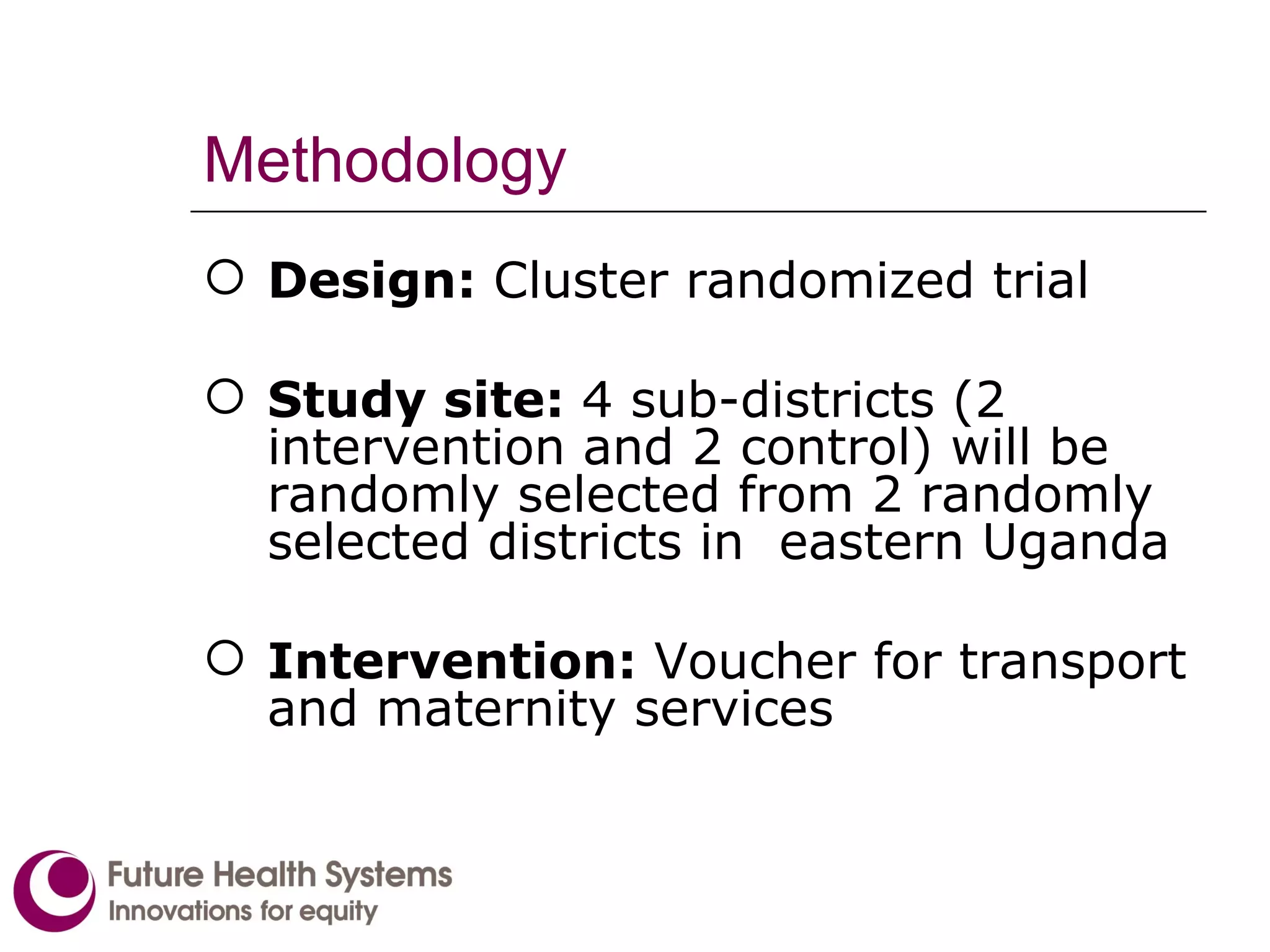
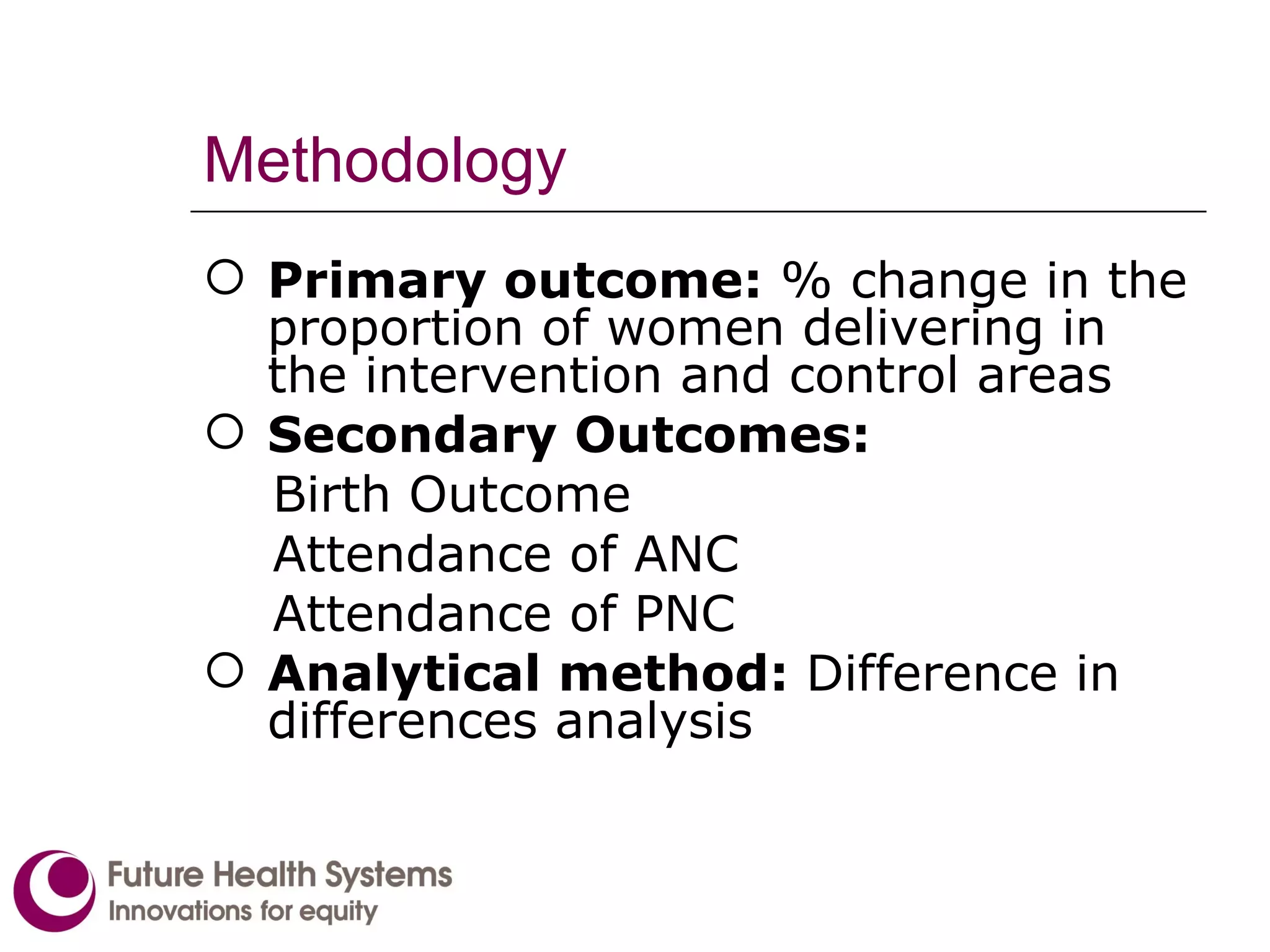
The document outlines a DFID-funded research program aimed at improving maternal health in Uganda through increased access to institutional deliveries via demand and supply-side interventions. It includes objectives such as assessing the effectiveness of a voucher system for transport and services, as well as identifying factors influencing delivery care. A cluster randomized trial methodology will be employed in selected sub-districts to evaluate the impact of these interventions on maternal health outcomes.

![Making Health Systems Work for the Poor Increasing Access to Institutional Deliveries Using Demand and Supply Side Incentives [Uganda]](https://image.slidesharecdn.com/nigeria-innovators-meeeting-presentation-12th-jan-1232050374087744-1/75/Future-Health-Systems-Uganda-2-2048.jpg)
![[Uganda]](https://image.slidesharecdn.com/nigeria-innovators-meeeting-presentation-12th-jan-1232050374087744-1/75/Future-Health-Systems-Uganda-4-2048.jpg)
![Objectives Identify the demand side factors that influence delivery at health facilities Assess the effectiveness of a voucher system for services and transport in increasing deliveries at public, PNFP and PFP health facilities Assess the effectiveness of a voucher system in increasing deliveries among the poor at public, PNFP and PFP health facilities [Uganda]](https://image.slidesharecdn.com/nigeria-innovators-meeeting-presentation-12th-jan-1232050374087744-1/75/Future-Health-Systems-Uganda-5-2048.jpg)
![Objectives Identify the appropriate pathways through which vouchers influence delivery care services at public, PNFP and PFP health facilities Estimate the incremental cost of implementing a voucher system for increasing deliveries at health facilities [Uganda]](https://image.slidesharecdn.com/nigeria-innovators-meeeting-presentation-12th-jan-1232050374087744-1/75/Future-Health-Systems-Uganda-6-2048.jpg)
![[Uganda]](https://image.slidesharecdn.com/nigeria-innovators-meeeting-presentation-12th-jan-1232050374087744-1/75/Future-Health-Systems-Uganda-9-2048.jpg)
![Innovations in the project Transport scheme that uses locally available transport Performance based method of payment Inclusion of public and private facilities [Uganda]](https://image.slidesharecdn.com/nigeria-innovators-meeeting-presentation-12th-jan-1232050374087744-1/75/Future-Health-Systems-Uganda-10-2048.jpg)
![Actors Makerere University School of Public Health Ministry of Health District health system Donors Health consumer organizations Consumers United Nations agencies Bilateral agencies Politicians Other academic institutions [Uganda]](https://image.slidesharecdn.com/nigeria-innovators-meeeting-presentation-12th-jan-1232050374087744-1/75/Future-Health-Systems-Uganda-11-2048.jpg)
![[Uganda]](https://image.slidesharecdn.com/nigeria-innovators-meeeting-presentation-12th-jan-1232050374087744-1/75/Future-Health-Systems-Uganda-12-2048.jpg)


