1
Zhenzhong ZHANG, Yunping WANG
China National Health Development Research Center
From Research to Policy:
CNHDRC Strategies
2
Outlines
 The need in practice
 Objectives and missions of CNHDRC
 Strategies employed
 Key successes and constraints
 Outlook for international communications
The need in practice
 Characters underlying the process of China social and
economic reform: more involvement of consultation
agencies
 Ongoing health reform: comprehensive demand for
evidence-based consultation
 Significant opportunities for CNHDRC
3
Objectives and Missions of CNHDRC
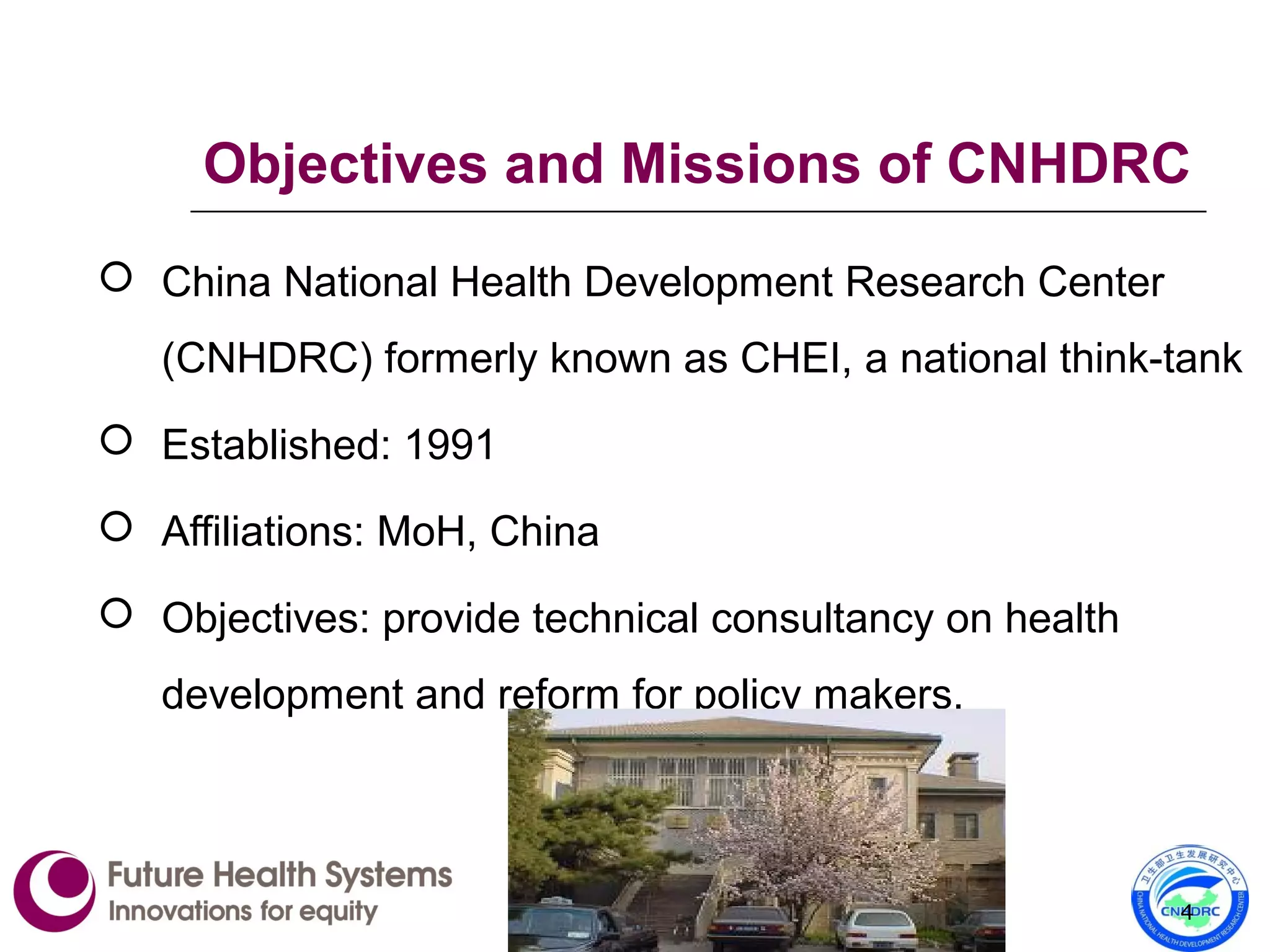
 China National Health Development Research Center
(CNHDRC) formerly known as CHEI, a national think-tank
 Established: 1991
 Affiliations: MoH, China
 Objectives: provide technical consultancy on health
development and reform for policy makers.
4
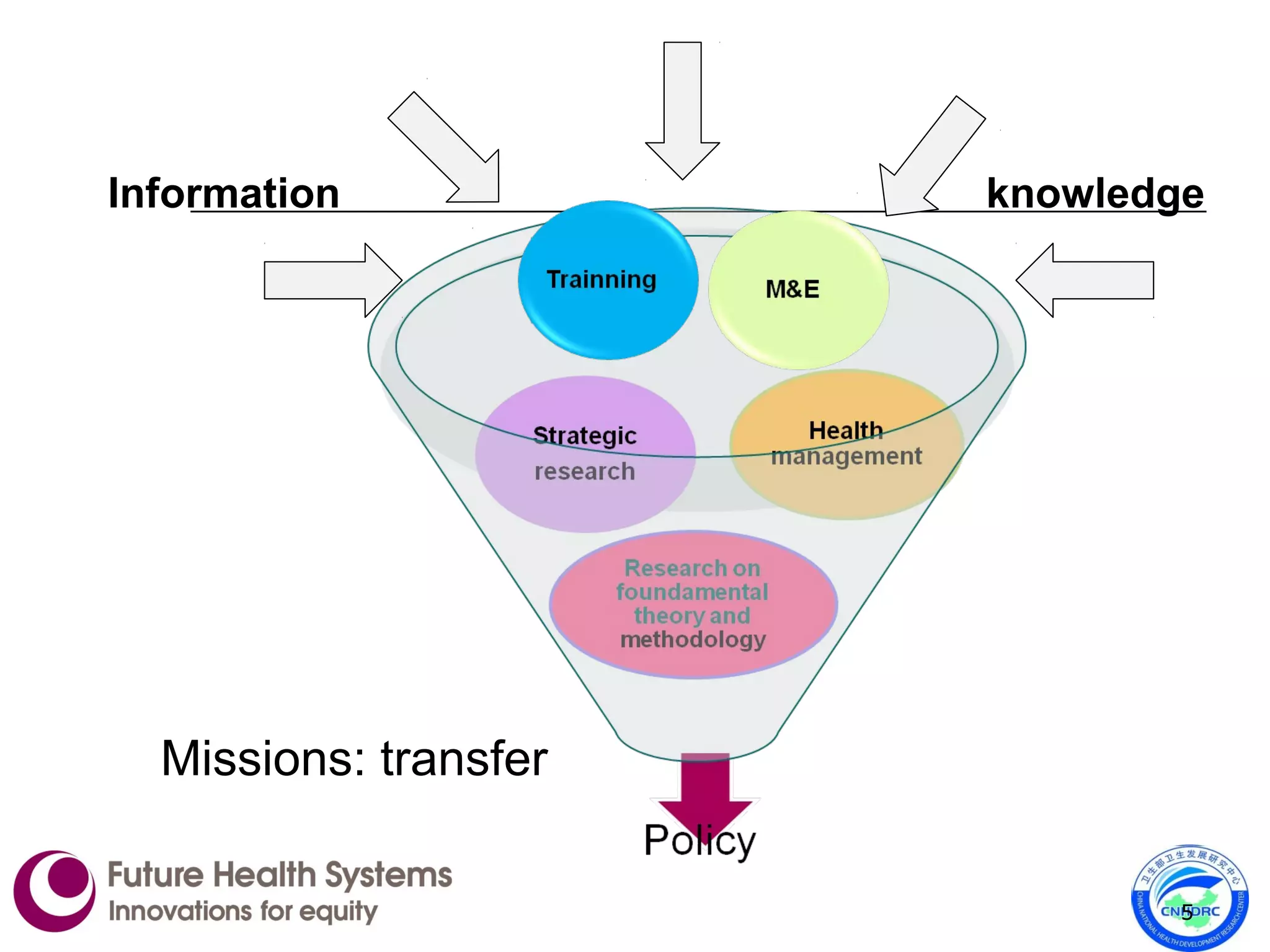
5
Information knowledge
Missions: transfer
Strategies Employed
1. Organizational structure: MoH orientied & reach to other
ministries at central level
6
“Express channel”
to departments of
MoH
“Binding” with other
ministries
Assumed the policy
consultant for central
government
2. Targeting the needs of policy makers
 Priorities on their agenda
 Prospective + foundamental + applied research
 Combine the mid-long research with quick-response research
3. Developing network
 China Network for Training and Research on Health Economics
and Financing
 China Health Development Forum (CHDF)
 Scaling-up international partners
7
Strategies Employed
4. Wide study fields for policy incubating:
 Maintaining a sound cooperation with local
governement in programmes
 Engage policy makers and health managers in learning
process
 Generalize and synthesis experience from local
practice
 Upwards + outwards tansmit models
8
Strategies Employed
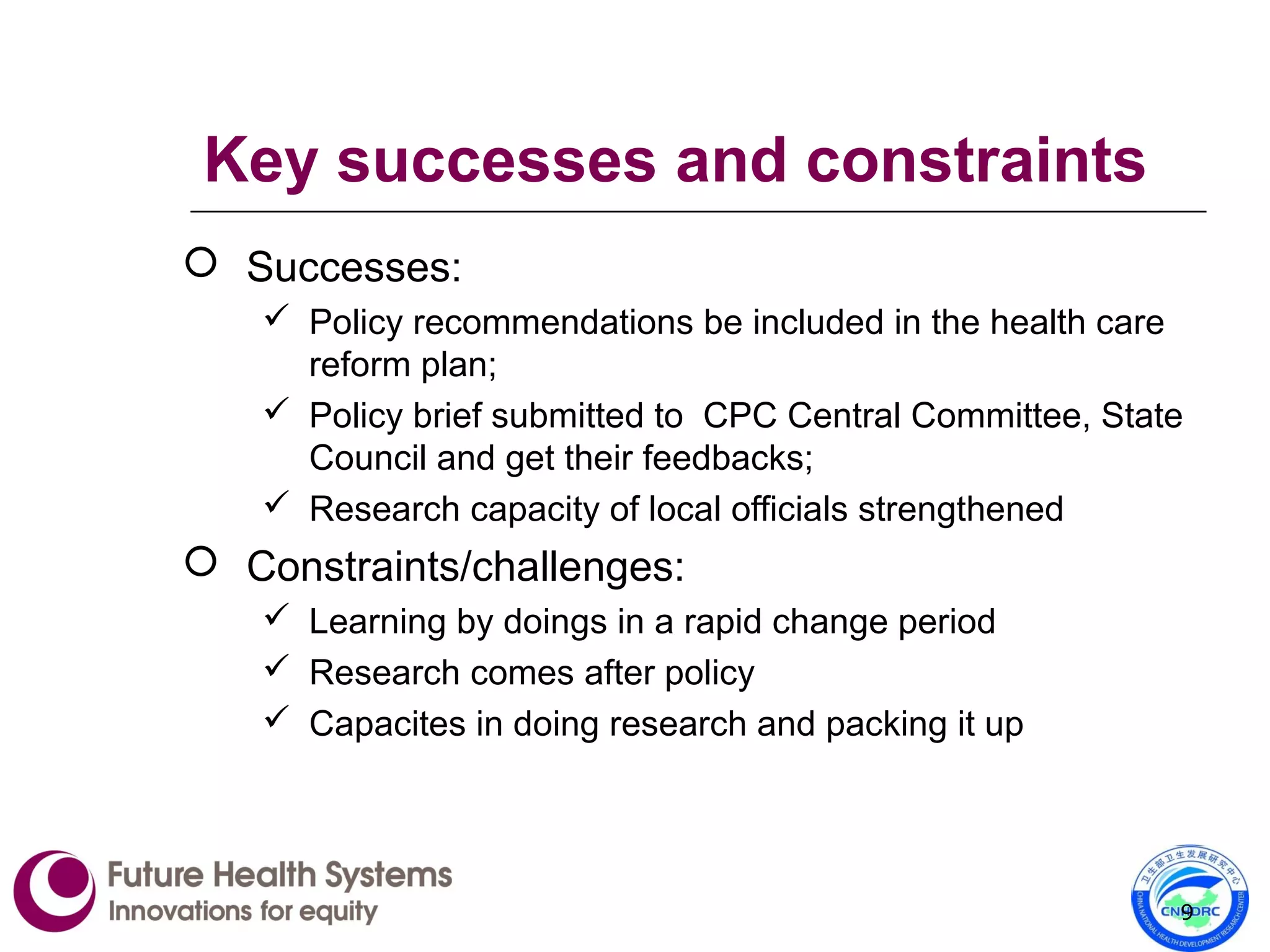
Key successes and constraints
 Successes:
 Policy recommendations be included in the health care
reform plan;
 Policy brief submitted to CPC Central Committee, State
Council and get their feedbacks;
 Research capacity of local officials strengthened
 Constraints/challenges:
 Learning by doings in a rapid change period
 Research comes after policy
 Capacites in doing research and packing it up
9
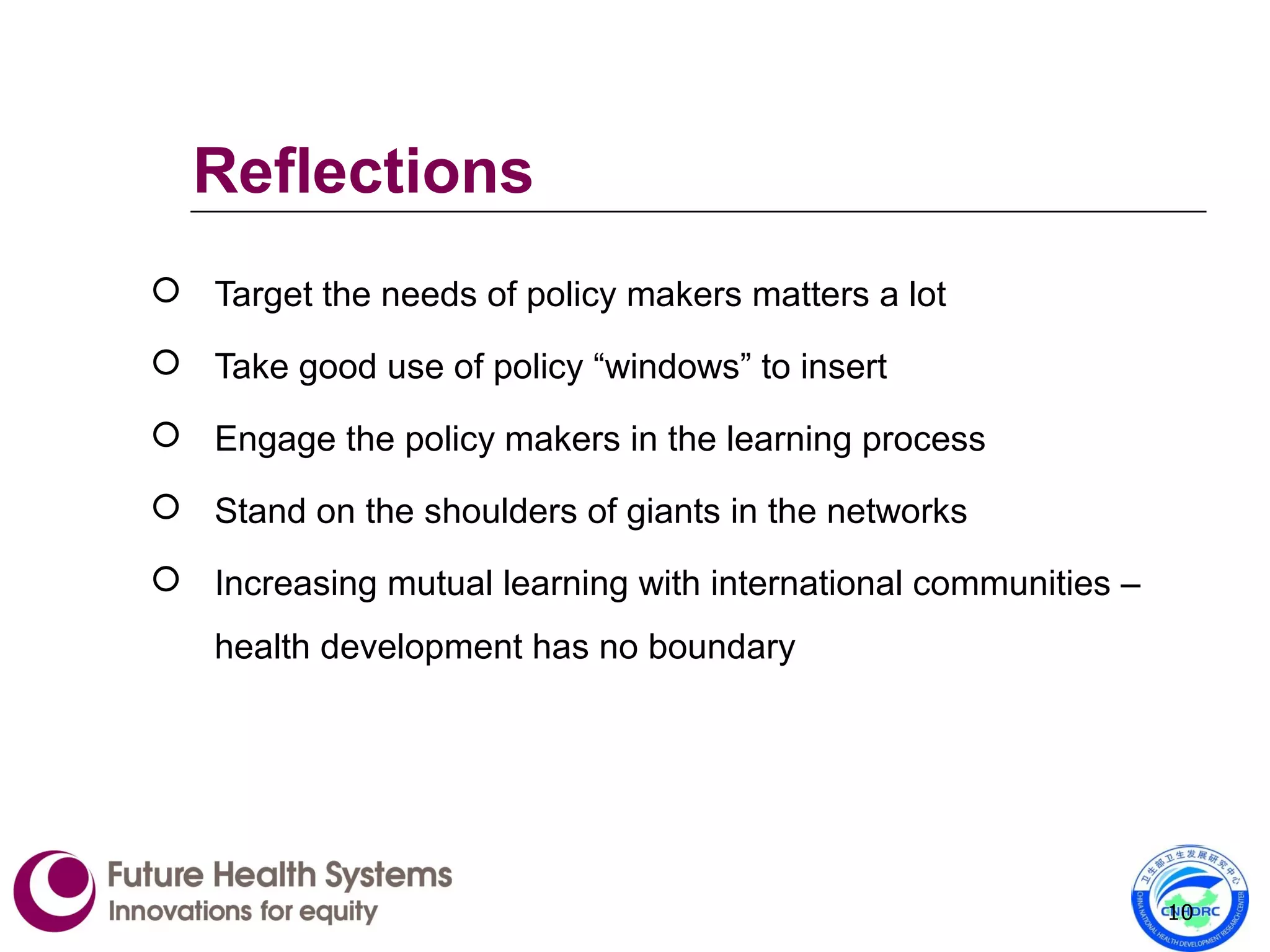
Reflections
 Target the needs of policy makers matters a lot
 Take good use of policy “windows” to insert
 Engage the policy makers in the learning process
 Stand on the shoulders of giants in the networks
 Increasing mutual learning with international communities –
health development has no boundary
10

From research to policy CNHDRC strategies

  • 1.
    1 Zhenzhong ZHANG, YunpingWANG China National Health Development Research Center From Research to Policy: CNHDRC Strategies
  • 2.
    2 Outlines  The needin practice  Objectives and missions of CNHDRC  Strategies employed  Key successes and constraints  Outlook for international communications
  • 3.
    The need inpractice  Characters underlying the process of China social and economic reform: more involvement of consultation agencies  Ongoing health reform: comprehensive demand for evidence-based consultation  Significant opportunities for CNHDRC 3
  • 4.
    Objectives and Missionsof CNHDRC  China National Health Development Research Center (CNHDRC) formerly known as CHEI, a national think-tank  Established: 1991  Affiliations: MoH, China  Objectives: provide technical consultancy on health development and reform for policy makers. 4
  • 5.
  • 6.
    Strategies Employed 1. Organizationalstructure: MoH orientied & reach to other ministries at central level 6 “Express channel” to departments of MoH “Binding” with other ministries Assumed the policy consultant for central government
  • 7.
    2. Targeting theneeds of policy makers  Priorities on their agenda  Prospective + foundamental + applied research  Combine the mid-long research with quick-response research 3. Developing network  China Network for Training and Research on Health Economics and Financing  China Health Development Forum (CHDF)  Scaling-up international partners 7 Strategies Employed
  • 8.
    4. Wide studyfields for policy incubating:  Maintaining a sound cooperation with local governement in programmes  Engage policy makers and health managers in learning process  Generalize and synthesis experience from local practice  Upwards + outwards tansmit models 8 Strategies Employed
  • 9.
    Key successes andconstraints  Successes:  Policy recommendations be included in the health care reform plan;  Policy brief submitted to CPC Central Committee, State Council and get their feedbacks;  Research capacity of local officials strengthened  Constraints/challenges:  Learning by doings in a rapid change period  Research comes after policy  Capacites in doing research and packing it up 9
  • 10.
    Reflections  Target theneeds of policy makers matters a lot  Take good use of policy “windows” to insert  Engage the policy makers in the learning process  Stand on the shoulders of giants in the networks  Increasing mutual learning with international communities – health development has no boundary 10