Importance
Of
Technology
In
Education
By:
Rosellosa ,Hershell A.
EDTECH 2D
2015
Future:
The world is moving towards technology at a breakneck
pace. Educators have a responsibility to introduce,
encourage, and help students master technology, as well as
subjects, as it applies to school and the future. Technology
will be used in every aspect of the professional lives of
current students. So upon graduation, whether the next step
is college or career, technology will be used daily. Why not
use it daily in school?
Mobile:
Using technology the classroom can be taken anywhere.
With all the knowledge and resources contained and
deliverable on demand in a mobile device, students can
learn at home or in the “field”. Mobile technology allows
for greater collaboration between students promoting
strong foundations in group work.
Motivation:
Technology tracks and reports student’s
progress instantly. What fun is running a
marathon if you don’t know how long it
takes. Runners can get instant feedback for
hundreds of data points as to their condition.
This feedback provides instant motivation to
improve performance.
Similarly students who use technology are
motivated to improve performance. Just like
they do at home on their gaming consoles.
Trying to beat high scores at home and
trying to beat high scores in math use the
same psychology.
Social:
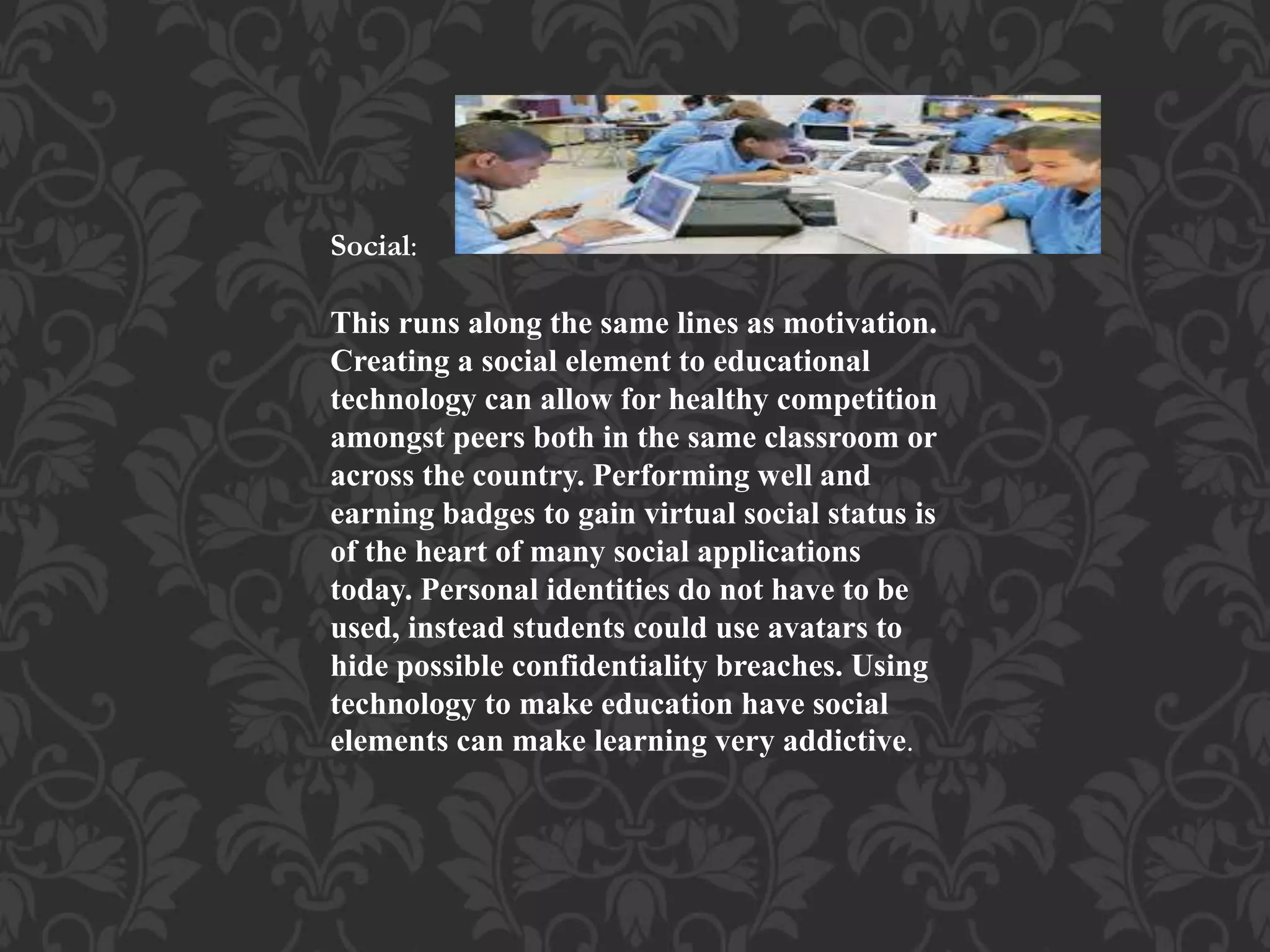
This runs along the same lines as motivation.
Creating a social element to educational
technology can allow for healthy competition
amongst peers both in the same classroom or
across the country. Performing well and
earning badges to gain virtual social status is
of the heart of many social applications
today. Personal identities do not have to be
used, instead students could use avatars to
hide possible confidentiality breaches. Using
technology to make education have social
elements can make learning very addictive.
Updates:
I recently read an article that reported students
using 10 year old textbook in school. Updating
textbooks can cost lots of money and do
significant damage to budgets. On the other
hand, updating software and educational
content is not as expensive or cumbersome.
With the help of technology course curriculum
can reflect real world data. In some
applications students can be exposed to real-
time information.
Assessments:
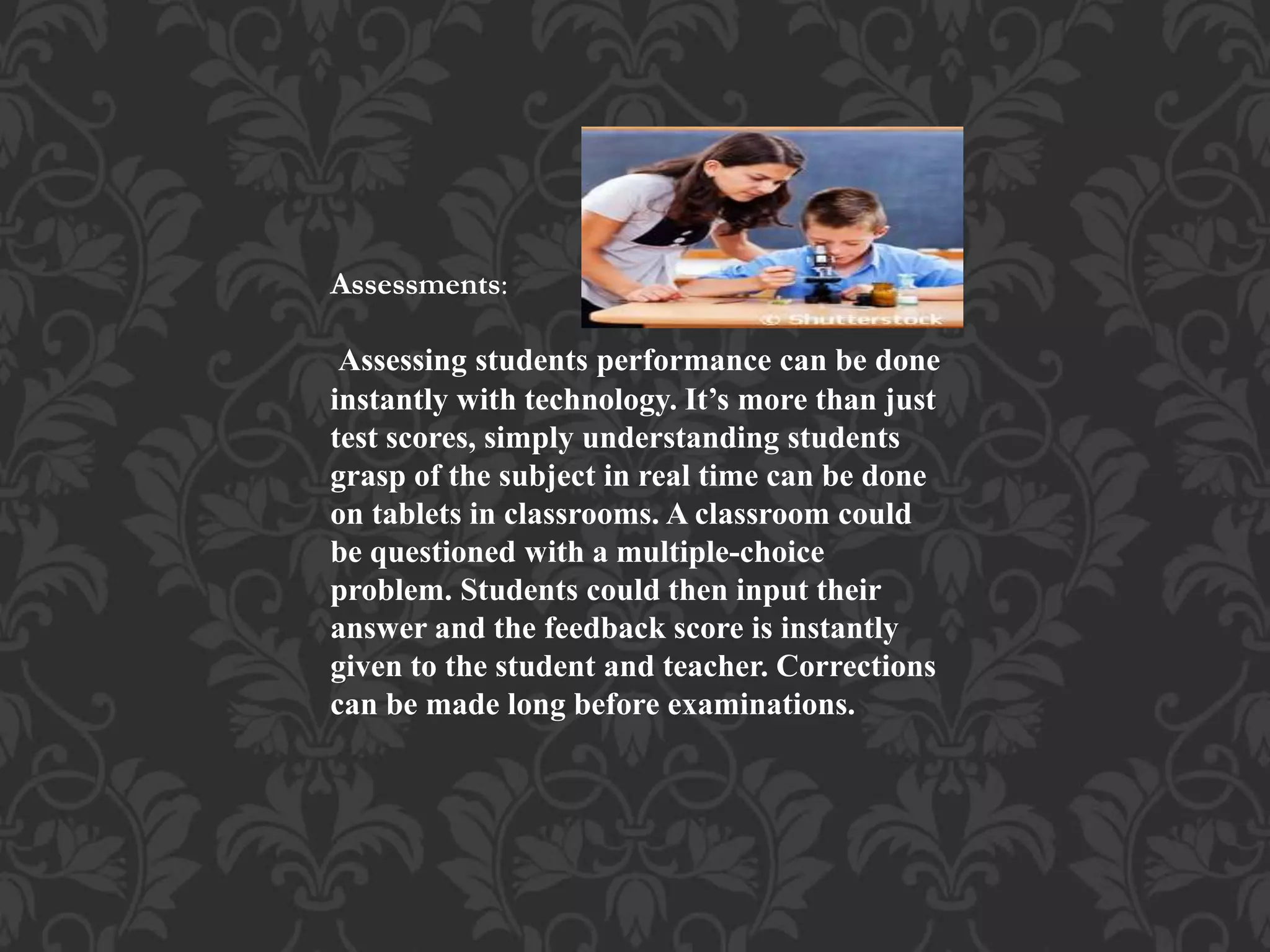
Assessing students performance can be done
instantly with technology. It’s more than just
test scores, simply understanding students
grasp of the subject in real time can be done
on tablets in classrooms. A classroom could
be questioned with a multiple-choice
problem. Students could then input their
answer and the feedback score is instantly
given to the student and teacher. Corrections
can be made long before examinations.
Global:
Students and classrooms or even schools can
be connected to anyone in the world
instantly. Devices coupled with the Internet
can allow for a free way to communicate
globally. The chance to understand
international or different cultural
perspectives on the same topic is incredible.

importance of technology

  • 1.
  • 2.
    Future: The world ismoving towards technology at a breakneck pace. Educators have a responsibility to introduce, encourage, and help students master technology, as well as subjects, as it applies to school and the future. Technology will be used in every aspect of the professional lives of current students. So upon graduation, whether the next step is college or career, technology will be used daily. Why not use it daily in school?
  • 3.
    Mobile: Using technology theclassroom can be taken anywhere. With all the knowledge and resources contained and deliverable on demand in a mobile device, students can learn at home or in the “field”. Mobile technology allows for greater collaboration between students promoting strong foundations in group work.
  • 4.
    Motivation: Technology tracks andreports student’s progress instantly. What fun is running a marathon if you don’t know how long it takes. Runners can get instant feedback for hundreds of data points as to their condition. This feedback provides instant motivation to improve performance. Similarly students who use technology are motivated to improve performance. Just like they do at home on their gaming consoles. Trying to beat high scores at home and trying to beat high scores in math use the same psychology.
  • 5.
    Social: This runs alongthe same lines as motivation. Creating a social element to educational technology can allow for healthy competition amongst peers both in the same classroom or across the country. Performing well and earning badges to gain virtual social status is of the heart of many social applications today. Personal identities do not have to be used, instead students could use avatars to hide possible confidentiality breaches. Using technology to make education have social elements can make learning very addictive.
  • 6.
    Updates: I recently readan article that reported students using 10 year old textbook in school. Updating textbooks can cost lots of money and do significant damage to budgets. On the other hand, updating software and educational content is not as expensive or cumbersome. With the help of technology course curriculum can reflect real world data. In some applications students can be exposed to real- time information.
  • 7.
    Assessments: Assessing students performancecan be done instantly with technology. It’s more than just test scores, simply understanding students grasp of the subject in real time can be done on tablets in classrooms. A classroom could be questioned with a multiple-choice problem. Students could then input their answer and the feedback score is instantly given to the student and teacher. Corrections can be made long before examinations.
  • 8.
    Global: Students and classroomsor even schools can be connected to anyone in the world instantly. Devices coupled with the Internet can allow for a free way to communicate globally. The chance to understand international or different cultural perspectives on the same topic is incredible.