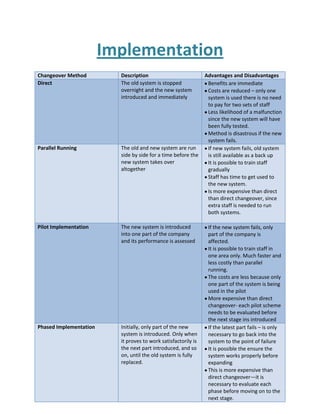
Changeover MethodDescriptionAdvantages and Disadvantages DirectThe old system is stopped overnight and the new system introduced and immediatelyBenefits are immediateCosts are reduced – only one system is used there is no need to pay for two sets of staffLess likelihood of a malfunction since the new system will have been fully tested.Method is disastrous if the new system fails.Parallel RunningThe old and new system are run side by side for a time before the new system takes over altogetherIf new system fails, old system is still available as a back upIt is possible to train staff graduallyStaff has time to get used to the new system.Is more expensive than direct than direct changeover, since extra staff is needed to run both systems.Pilot ImplementationThe new system is introduced into one part of the company and its performance is assessedIf the new system fails, only part of the company is affected.It is possible to train staff in one area only. Much faster and less costly than parallel running.The costs are less because only one part of the system is being used in the pilotMore expensive than direct changeover- each pilot scheme needs to be evaluated before the next stage ins introducedPhased ImplementationInitially, only part of the new system is introduced. Only when it proves to work satisfactorily is the next part introduced, and so on, until the old system is fully replaced.If the latest part fails – is only necessary to go back into the system to the point of failureIt is possible the ensure the system works properly before expandingThis is more expensive than direct changeover—it is necessary to evaluate each phase before moving on to the next stage.Implementation<br />

Implementation

  • 1.
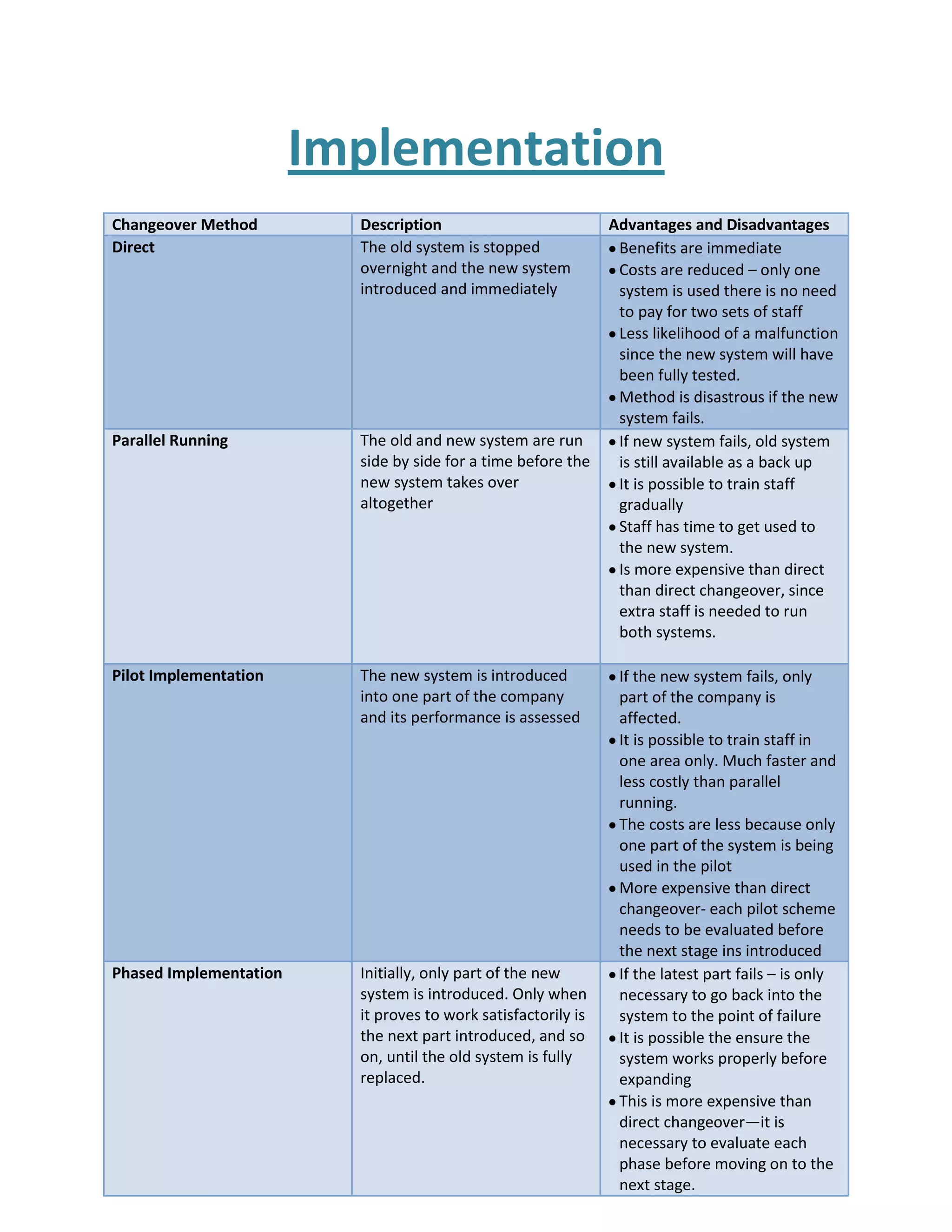
    Changeover MethodDescriptionAdvantages andDisadvantages DirectThe old system is stopped overnight and the new system introduced and immediatelyBenefits are immediateCosts are reduced – only one system is used there is no need to pay for two sets of staffLess likelihood of a malfunction since the new system will have been fully tested.Method is disastrous if the new system fails.Parallel RunningThe old and new system are run side by side for a time before the new system takes over altogetherIf new system fails, old system is still available as a back upIt is possible to train staff graduallyStaff has time to get used to the new system.Is more expensive than direct than direct changeover, since extra staff is needed to run both systems.Pilot ImplementationThe new system is introduced into one part of the company and its performance is assessedIf the new system fails, only part of the company is affected.It is possible to train staff in one area only. Much faster and less costly than parallel running.The costs are less because only one part of the system is being used in the pilotMore expensive than direct changeover- each pilot scheme needs to be evaluated before the next stage ins introducedPhased ImplementationInitially, only part of the new system is introduced. Only when it proves to work satisfactorily is the next part introduced, and so on, until the old system is fully replaced.If the latest part fails – is only necessary to go back into the system to the point of failureIt is possible the ensure the system works properly before expandingThis is more expensive than direct changeover—it is necessary to evaluate each phase before moving on to the next stage.Implementation<br />