implantation
Survival
protection
naturalness
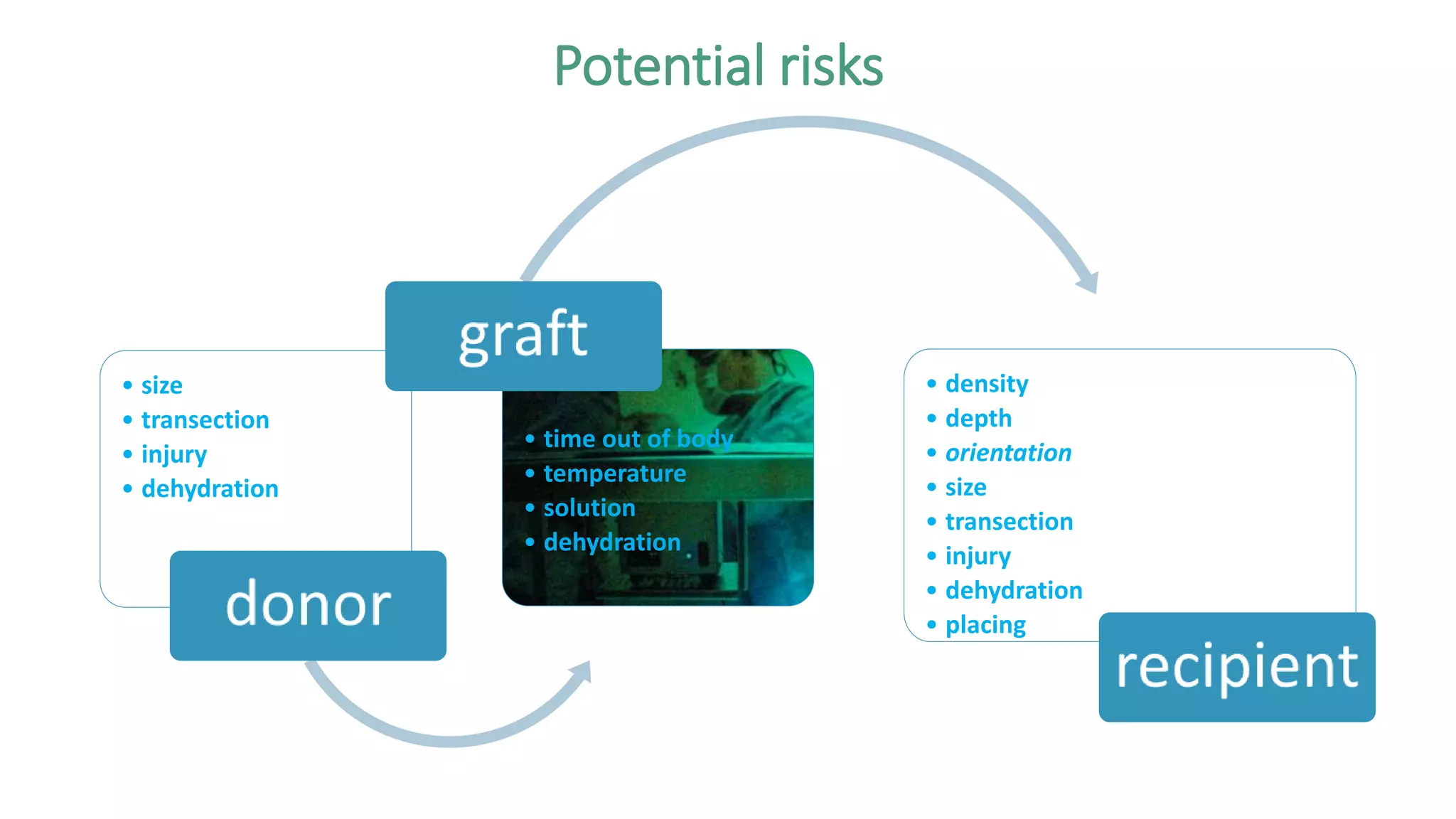
Potential risks
• size
• transection
• injury
• dehydration
• time out of body
• temperature
• solution
• dehydration
• density
• depth
• orientation
• size
• transection
• injury
• dehydration
• placing
respond to
• Does the harvesting method have any affect on implantation?
• Are there any differences between FUE and strip harvesting grafts?
Hair follicle
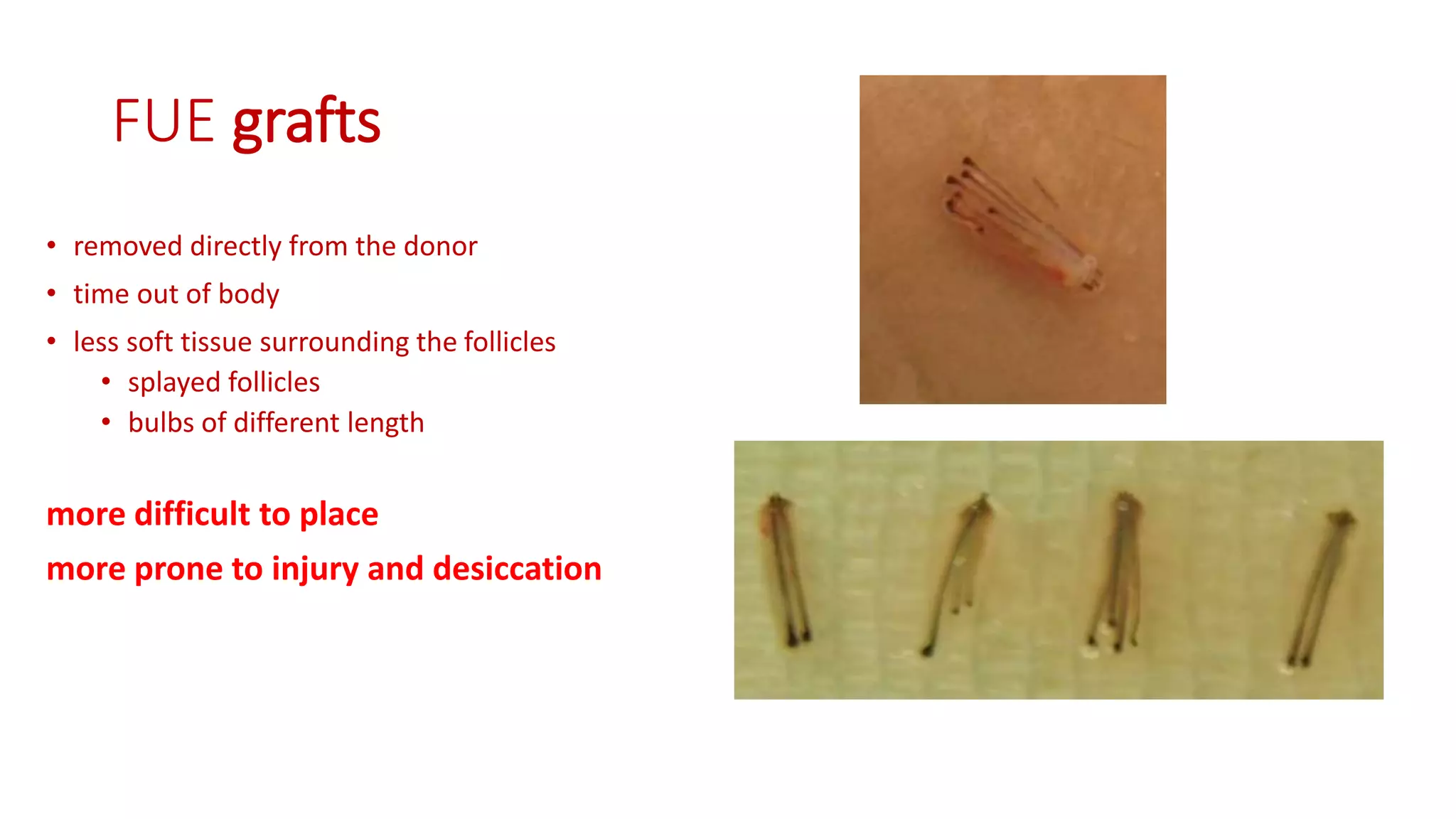
FUE grafts
• removed directly from the donor
• time out of body
• less soft tissue surrounding the follicles
• splayed follicles
• bulbs of different length
more difficult to place
more prone to injury and desiccation
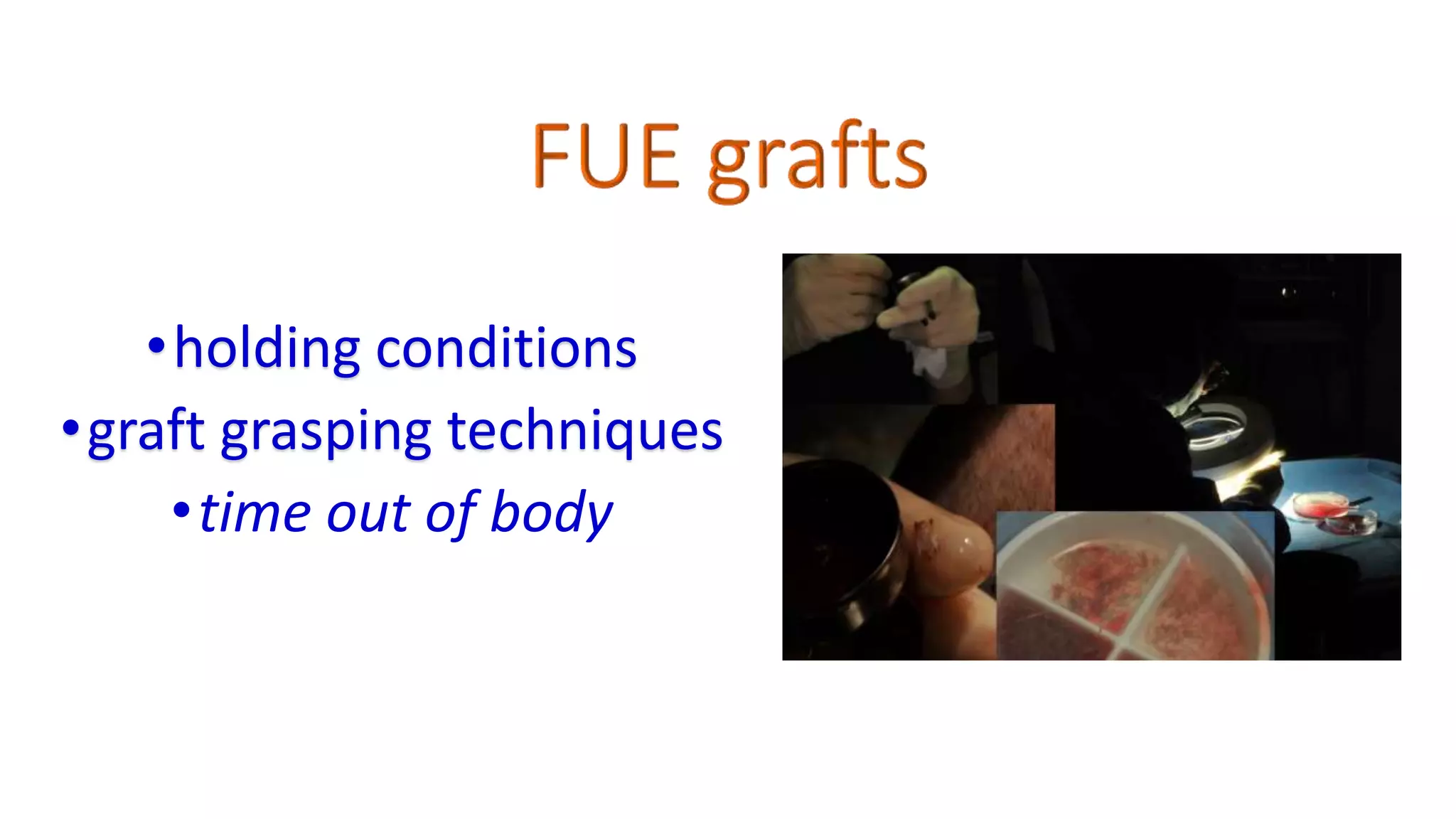
•holding conditions
•graft grasping techniques
•time out of body
graft placement techniques
•premade incisions
•stick and place
•implanter
Recipient site
• vary in
• size
• shape
• depth
• width
• direction
• angulation
• orientation
• techniques
• sagittal to coronal incisions
• chisel blades to needles
Incision Orientation
perpendicular
• perpendicular to the long axis of hairs
• control of hair angle and direction
• improved hairlines
• greater densities
• better coverage
• vascular damage ?
• faster healing
• greater scalp coverage
parallel
• parallel to the long axis of hairs
• easier to place
• damage less of the surrounding hair
• easier to get inbetween native hairs
Basic Principles For Graft Placement
• maximize visualization
• avoid dehydration
• proper graft sizing
• gentle grasping
• maintaining appropriate rotation
of the natural CURVATURE
• avoid multiple placing attempts
• angle and directions of grafted
hair should match the RESIDUAl
hair
grasping the graft
• Ideally at the fat
• What about FUE ?
• special attention
• difficult to grasp in a bundle
formation
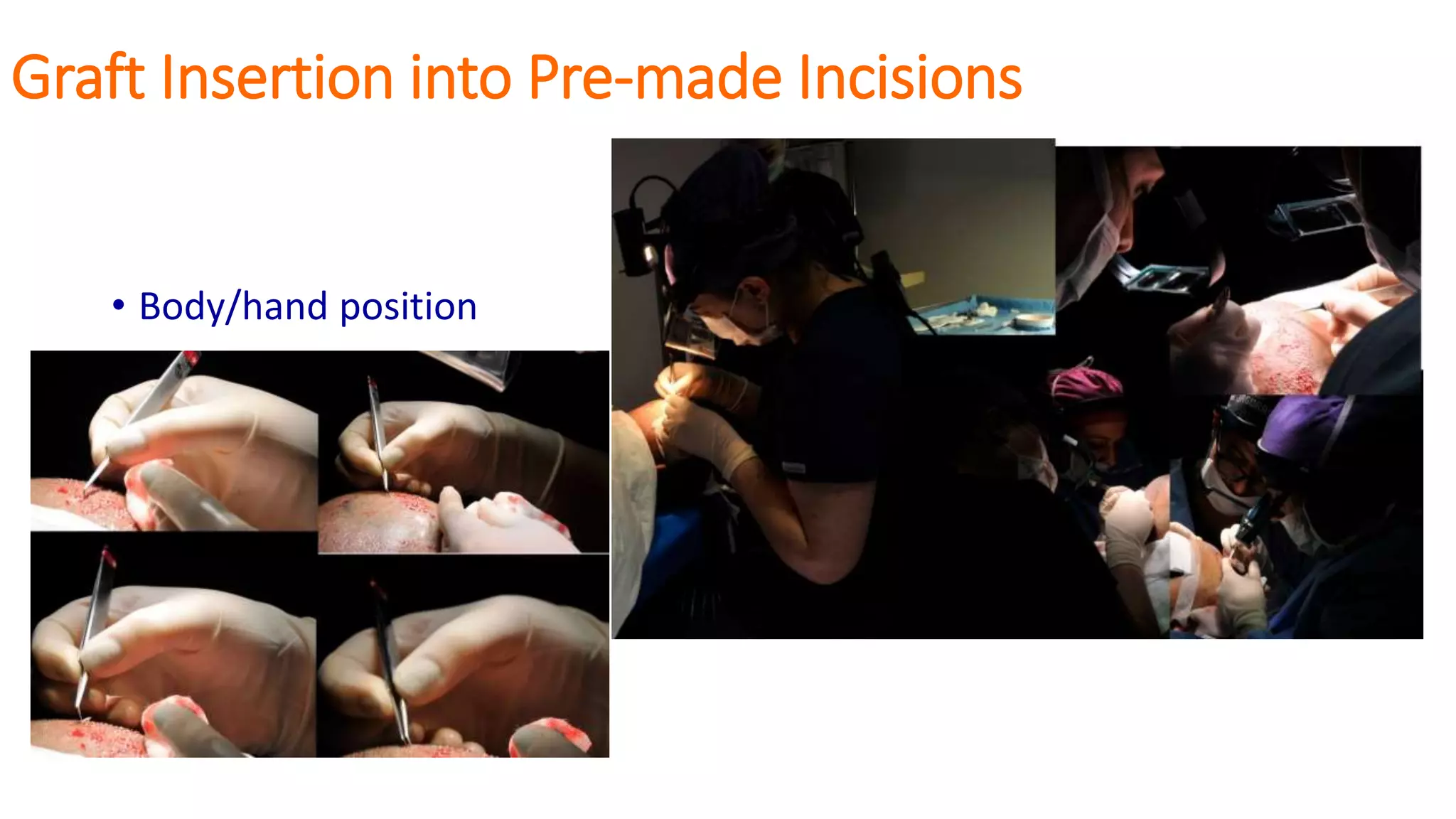
Graft Insertion into Pre-made Incisions
• Body/hand position
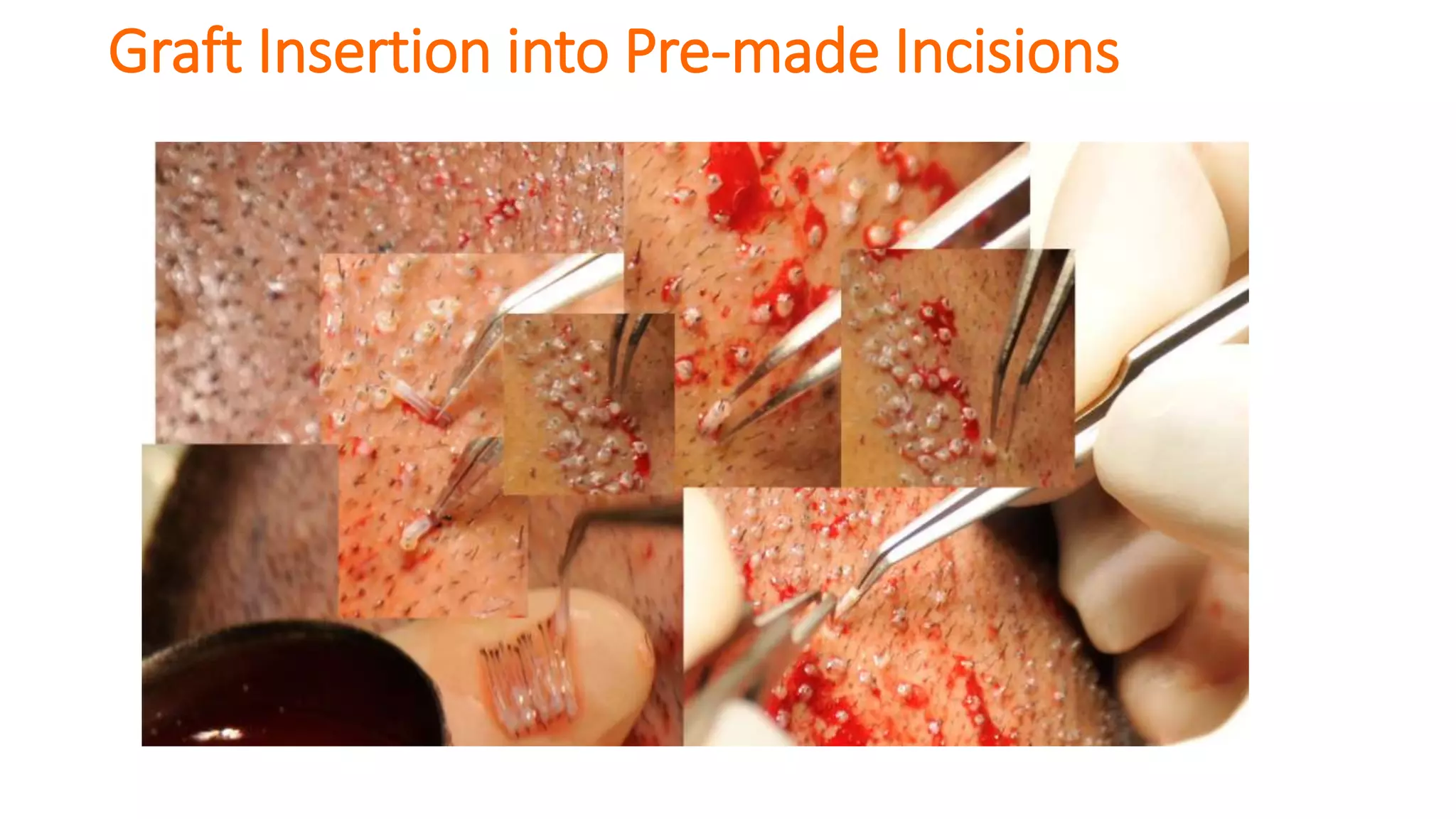
Graft Insertion into Pre-made Incisions
Stick and place
• sticker creates the site, and placer inserts the graft
• less bleeding
• no missed sites or piggy backing
• more difficult to control the distribution of the grafts
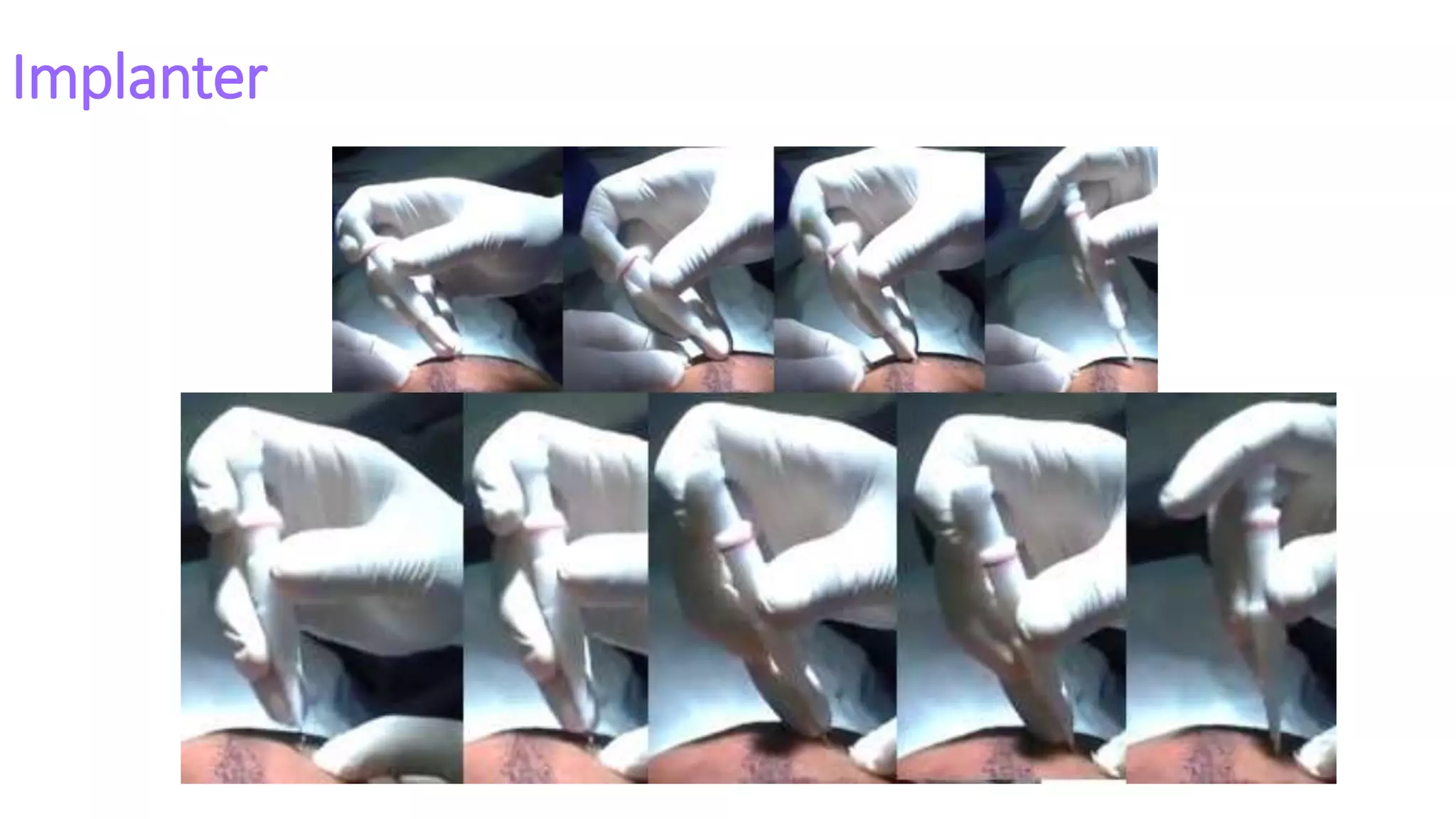
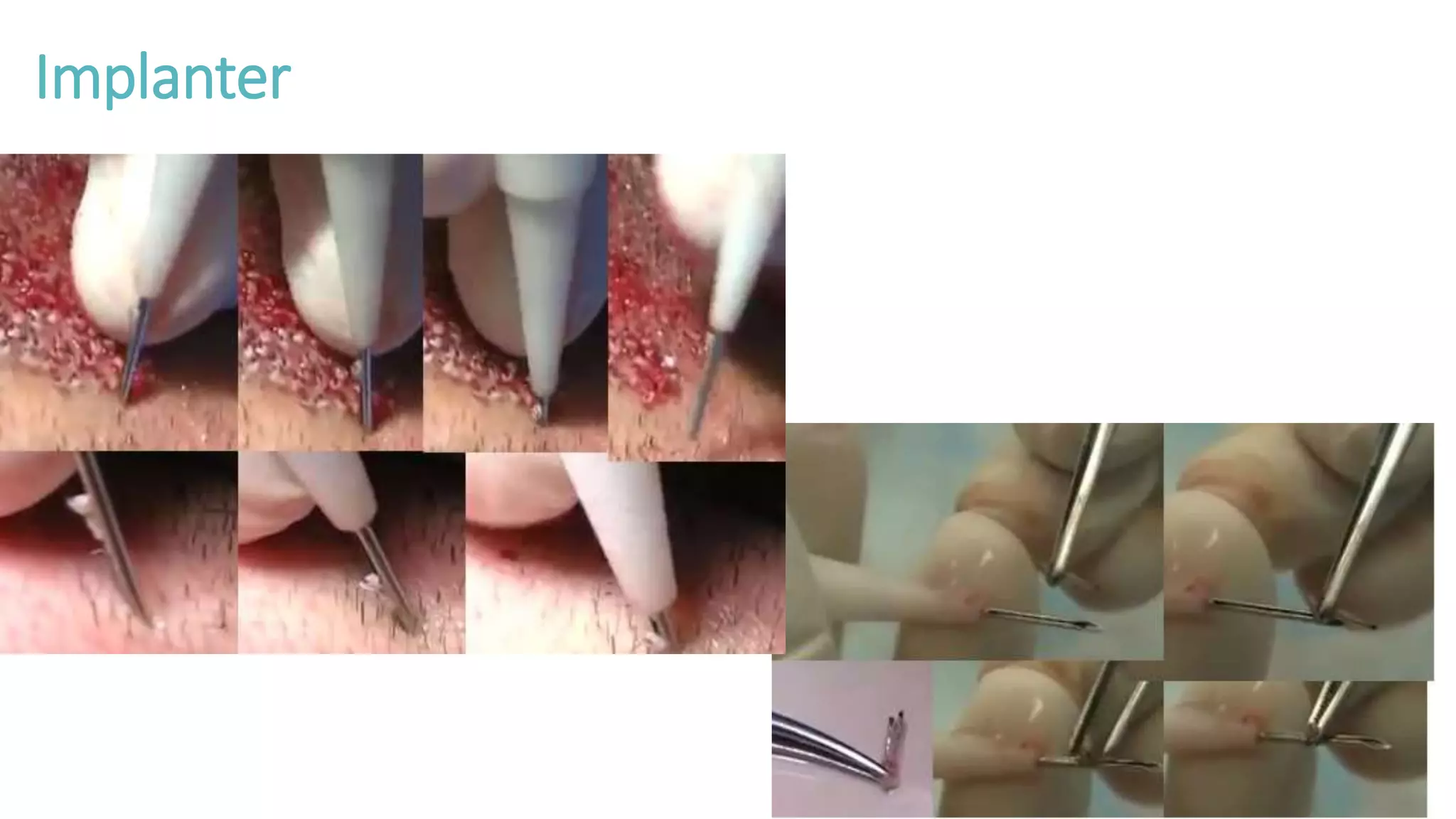
Implanter
• the incision is made and graft is placed simultaneously
• less bleeding
• no missed sites or piggy backing
• no time gap in which the recipient site is left empty and capable of
bleeding
• less trauma
• faster than traditional S&P
Implanter
Implanter
Trauma to hair bulb kinky hair growth
Desiccation poor growth or no growth
Incorrect position poor growth or no growth
pitting
compression
inclusion cyst
ingrown hair
grafty look
unnatural cowlick
Careless handling difficult insertion
irregular growth
popping
ingrown hair
unnatural result

Implantation- New Delhi Presentation

  • 1.
  • 3.
  • 5.
    Potential risks • size •transection • injury • dehydration • time out of body • temperature • solution • dehydration • density • depth • orientation • size • transection • injury • dehydration • placing
  • 6.
    respond to • Doesthe harvesting method have any affect on implantation? • Are there any differences between FUE and strip harvesting grafts?
  • 7.
  • 8.
    FUE grafts • removeddirectly from the donor • time out of body • less soft tissue surrounding the follicles • splayed follicles • bulbs of different length more difficult to place more prone to injury and desiccation
  • 9.
    •holding conditions •graft graspingtechniques •time out of body
  • 10.
    graft placement techniques •premadeincisions •stick and place •implanter
  • 11.
    Recipient site • varyin • size • shape • depth • width • direction • angulation • orientation • techniques • sagittal to coronal incisions • chisel blades to needles
  • 12.
    Incision Orientation perpendicular • perpendicularto the long axis of hairs • control of hair angle and direction • improved hairlines • greater densities • better coverage • vascular damage ? • faster healing • greater scalp coverage parallel • parallel to the long axis of hairs • easier to place • damage less of the surrounding hair • easier to get inbetween native hairs
  • 13.
    Basic Principles ForGraft Placement • maximize visualization • avoid dehydration • proper graft sizing • gentle grasping • maintaining appropriate rotation of the natural CURVATURE • avoid multiple placing attempts • angle and directions of grafted hair should match the RESIDUAl hair
  • 14.
    grasping the graft •Ideally at the fat • What about FUE ? • special attention • difficult to grasp in a bundle formation
  • 17.
    Graft Insertion intoPre-made Incisions • Body/hand position
  • 18.
    Graft Insertion intoPre-made Incisions
  • 19.
    Stick and place •sticker creates the site, and placer inserts the graft • less bleeding • no missed sites or piggy backing • more difficult to control the distribution of the grafts
  • 20.
    Implanter • the incisionis made and graft is placed simultaneously • less bleeding • no missed sites or piggy backing • no time gap in which the recipient site is left empty and capable of bleeding • less trauma • faster than traditional S&P
  • 21.
  • 22.
  • 23.
    Trauma to hairbulb kinky hair growth Desiccation poor growth or no growth Incorrect position poor growth or no growth pitting compression inclusion cyst ingrown hair grafty look unnatural cowlick Careless handling difficult insertion irregular growth popping ingrown hair unnatural result