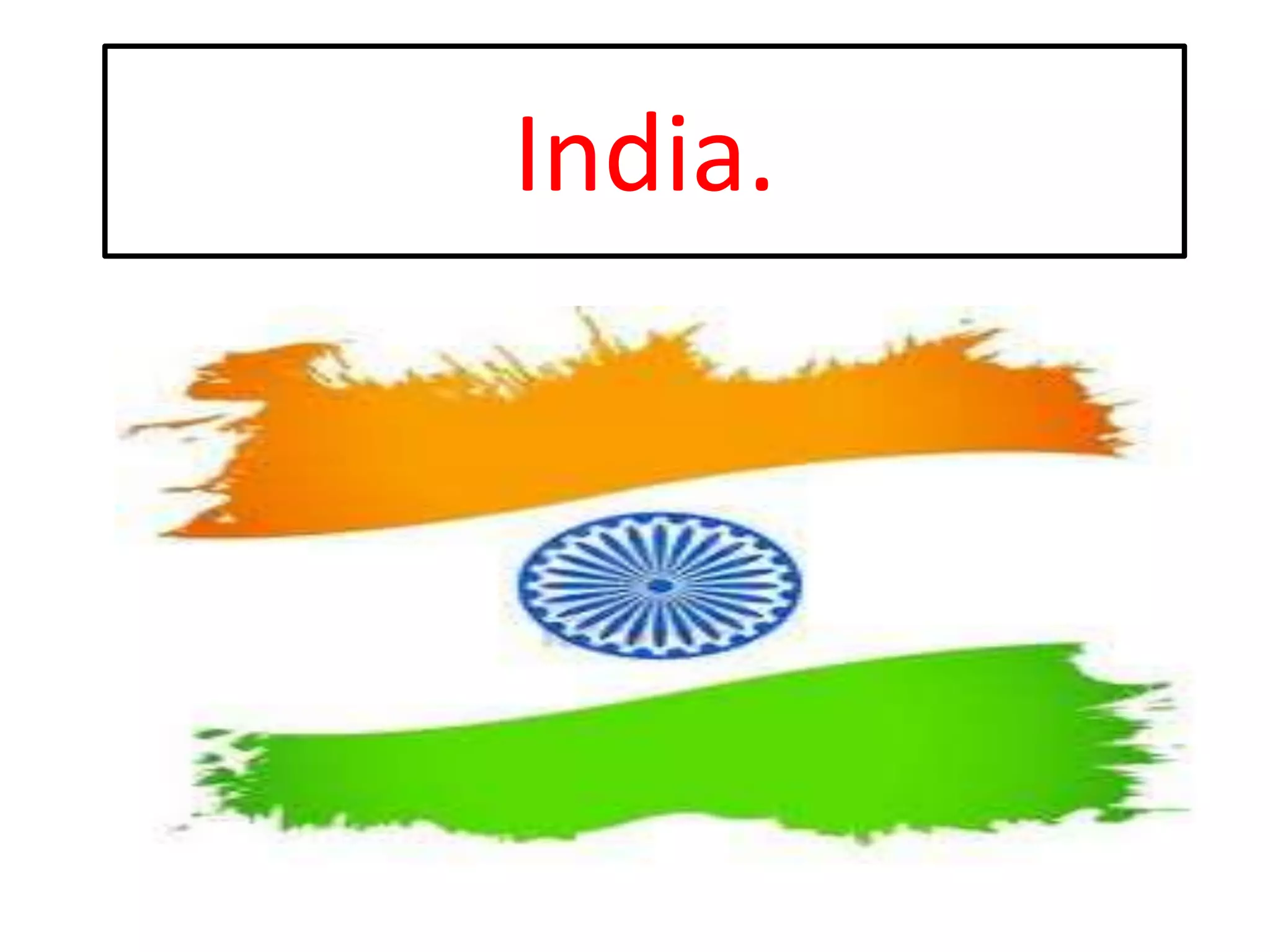
India.
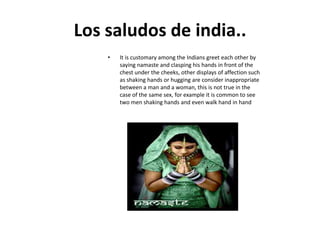
Los saludos de india..
•

It is customary among the Indians greet each other by
saying namaste and clasping his hands in front of the
chest under the cheeks, other displays of affection such
as shaking hands or hugging are consider inappropriate
between a man and a woman, this is not true in the
case of the same sex, for example it is common to see
two men shaking hands and even walk hand in hand
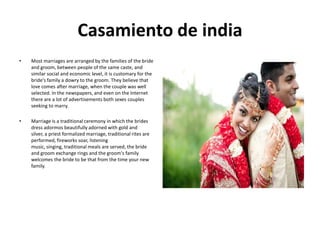
Casamiento de india
•

Most marriages are arranged by the families of the bride
and groom, between people of the same caste, and
similar social and economic level, it is customary for the
bride's family a dowry to the groom. They believe that
love comes after marriage, when the couple was well
selected. In the newspapers, and even on the Internet
there are a lot of advertisements both sexes couples
seeking to marry.

•

Marriage is a traditional ceremony in which the brides
dress adormos beautifully adorned with gold and
silver, a priest formalized marriage, traditional rites are
performed, fireworks soar, listening
music, singing, traditional meals are served, the bride
and groom exchange rings and the groom's family
welcomes the bride to be that from the time your new
family.
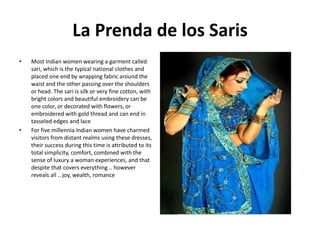
La Prenda de los Saris
•

•

Most Indian women wearing a garment called
sari, which is the typical national clothes and
placed one end by wrapping fabric around the
waist and the other passing over the shoulders
or head. The sari is silk or very fine cotton, with
bright colors and beautiful embroidery can be
one color, or decorated with flowers, or
embroidered with gold thread and can end in
tasseled edges and lace
For five millennia Indian women have charmed
visitors from distant realms using these dresses,
their success during this time is attributed to its
total simplicity, comfort, combined with the
sense of luxury a woman experiences, and that
despite that covers everything .. however
reveals all .. joy, wealth, romance
La Tika de las Mujeres
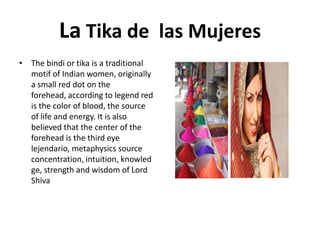
• The bindi or tika is a traditional
motif of Indian women, originally
a small red dot on the
forehead, according to legend red
is the color of blood, the source
of life and energy. It is also
believed that the center of the
forehead is the third eye
lejendario, metaphysics source
concentration, intuition, knowled
ge, strength and wisdom of Lord
Shiva
Los Turbantes
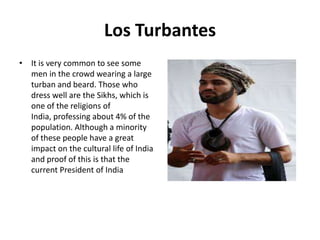
• It is very common to see some
men in the crowd wearing a large
turban and beard. Those who
dress well are the Sikhs, which is
one of the religions of
India, professing about 4% of the
population. Although a minority
of these people have a great
impact on the cultural life of India
and proof of this is that the
current President of India
Platos indios
•

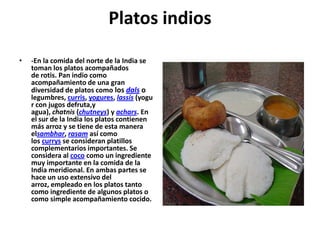
-En la comida del norte de la India se
toman los platos acompañados
de rotis. Pan indio como
acompañamiento de una gran
diversidad de platos como los dals o
legumbres, curris, yogures, lassis (yogu
r con jugos defruta,y
agua), chatnis (chutneys) y achars. En
el sur de la India los platos contienen
más arroz y se tiene de esta manera
elsambhar, rasam así como
los currys se consideran platillos
complementarios importantes. Se
considera al coco como un ingrediente
muy importante en la comida de la
India meridional. En ambas partes se
hace un uso extensivo del
arroz, empleado en los platos tanto
como ingrediente de algunos platos o
como simple acompañamiento cocido.
Los bailes.
•

•

Se denominan danzas clásicas de la
India a las incluidas en el "Nâtyashâstra",2 un tratado artístico que se
atribuye al rishi Bhârataescrito alrededor
del año 400 a c
Esta obra se divide en treinta y ocho
capítulos, que describen las convenciones
del tearto, el drama, la poseía, el canto y
la musica. Incluye reglas sobre temas tan
diversos como los edificios ideales para
interpretar estas artes, las reglas
de prosodia y dicciíon , los tipos de
personaje, la forma de representar los
sentimientos, y los movimientos de cada
miembro. Se describen en detalle sesenta
y siete mudrâ(posiciones de las manos) y
treinta y seis movimientos de ojos

• http://www.youtube.co
m/watch?v=r7zqLiZ1GO
o&feature=share

Ilef's favourite country

  • 1.
  • 2.
    Los saludos deindia.. • It is customary among the Indians greet each other by saying namaste and clasping his hands in front of the chest under the cheeks, other displays of affection such as shaking hands or hugging are consider inappropriate between a man and a woman, this is not true in the case of the same sex, for example it is common to see two men shaking hands and even walk hand in hand
  • 3.
    Casamiento de india • Mostmarriages are arranged by the families of the bride and groom, between people of the same caste, and similar social and economic level, it is customary for the bride's family a dowry to the groom. They believe that love comes after marriage, when the couple was well selected. In the newspapers, and even on the Internet there are a lot of advertisements both sexes couples seeking to marry. • Marriage is a traditional ceremony in which the brides dress adormos beautifully adorned with gold and silver, a priest formalized marriage, traditional rites are performed, fireworks soar, listening music, singing, traditional meals are served, the bride and groom exchange rings and the groom's family welcomes the bride to be that from the time your new family.
  • 4.
    La Prenda delos Saris • • Most Indian women wearing a garment called sari, which is the typical national clothes and placed one end by wrapping fabric around the waist and the other passing over the shoulders or head. The sari is silk or very fine cotton, with bright colors and beautiful embroidery can be one color, or decorated with flowers, or embroidered with gold thread and can end in tasseled edges and lace For five millennia Indian women have charmed visitors from distant realms using these dresses, their success during this time is attributed to its total simplicity, comfort, combined with the sense of luxury a woman experiences, and that despite that covers everything .. however reveals all .. joy, wealth, romance
  • 5.
    La Tika delas Mujeres • The bindi or tika is a traditional motif of Indian women, originally a small red dot on the forehead, according to legend red is the color of blood, the source of life and energy. It is also believed that the center of the forehead is the third eye lejendario, metaphysics source concentration, intuition, knowled ge, strength and wisdom of Lord Shiva
  • 6.
    Los Turbantes • Itis very common to see some men in the crowd wearing a large turban and beard. Those who dress well are the Sikhs, which is one of the religions of India, professing about 4% of the population. Although a minority of these people have a great impact on the cultural life of India and proof of this is that the current President of India
  • 7.
    Platos indios • -En lacomida del norte de la India se toman los platos acompañados de rotis. Pan indio como acompañamiento de una gran diversidad de platos como los dals o legumbres, curris, yogures, lassis (yogu r con jugos defruta,y agua), chatnis (chutneys) y achars. En el sur de la India los platos contienen más arroz y se tiene de esta manera elsambhar, rasam así como los currys se consideran platillos complementarios importantes. Se considera al coco como un ingrediente muy importante en la comida de la India meridional. En ambas partes se hace un uso extensivo del arroz, empleado en los platos tanto como ingrediente de algunos platos o como simple acompañamiento cocido.
  • 8.
    Los bailes. • • Se denominandanzas clásicas de la India a las incluidas en el "Nâtyashâstra",2 un tratado artístico que se atribuye al rishi Bhârataescrito alrededor del año 400 a c Esta obra se divide en treinta y ocho capítulos, que describen las convenciones del tearto, el drama, la poseía, el canto y la musica. Incluye reglas sobre temas tan diversos como los edificios ideales para interpretar estas artes, las reglas de prosodia y dicciíon , los tipos de personaje, la forma de representar los sentimientos, y los movimientos de cada miembro. Se describen en detalle sesenta y siete mudrâ(posiciones de las manos) y treinta y seis movimientos de ojos • http://www.youtube.co m/watch?v=r7zqLiZ1GO o&feature=share