1
LEASE BASED
CONTRACT (IJARAH)
- The Concept of
Ijarah
2
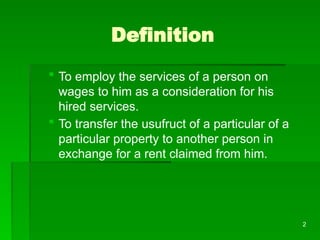
Definition
 To employ the services of a person on
wages to him as a consideration for his
hired services.
 To transfer the usufruct of a particular of a
particular property to another person in
exchange for a rent claimed from him.
3
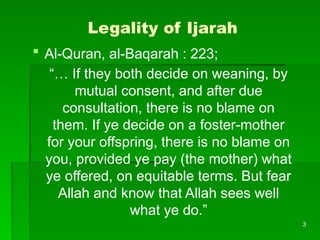
Legality of Ijarah
 Al-Quran, al-Baqarah : 223;
“… If they both decide on weaning, by
mutual consent, and after due
consultation, there is no blame on
them. If ye decide on a foster-mother
for your offspring, there is no blame on
you, provided ye pay (the mother) what
ye offered, on equitable terms. But fear
Allah and know that Allah sees well
what ye do.”
4
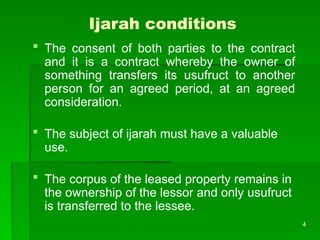
Ijarah conditions
 The consent of both parties to the contract
and it is a contract whereby the owner of
something transfers its usufruct to another
person for an agreed period, at an agreed
consideration.
 The subject of ijarah must have a valuable
use.
 The corpus of the leased property remains in
the ownership of the lessor and only usufruct
is transferred to the lessee.
5
 All the liabilities emerging from the
ownership shall be born by lessor, but
the liabilities referable to the use of the
property shall be born by the lessee.
 The period of lease must be determine
in clear terms.
 The lessee cannot use the leased
property for any purpose other than the
purpose specified in the agreement.
6
 The lessee is liable to compensate the lessor
for any harm caused to the leased asset by
any misuse or negligence on the part of the
lessee.
 The leased asset shall remain in the risk of the
lessor throughout the lease period in the that
any harm or loss caused by the factors beyond
the control of the lessee shall be borne by the
lessor.
 A property jointly owned by two or more
persons can be leased out, and the rental shall
be distributed between all the joint owners
according to the proportion of their respective
shares in the property.
7
 A joint owner of a property can lease his
proportionate share to his co-sharer only, and not
to another person.
 The leased asset is fully identified by the parties.
 The rental must be determined at the time of
contract for the whole period of lease. It is
permissible that different amounts of rent are
fixed for different phases during the leased
period, provided that the amount of rent for each
phase is specifically agreed upon at the time of
affecting a lease. If the rent for a subsequent
phase of the leased period has not been
determined or has been left at the option of the
lessor, the lease is not valid.
8
 The lessor cannot increase the rent unilaterally,
and any agreement to this effect is void.
 The rent or any part thereof may be payable in
advance before the delivery of the asset to the
lessee, but the amount so collected by the
lessor shall remain with him as ‘on account’
payment shall be adjusted towards the rent after
its being due.
 The lease period shall commence from the date
on which the leased asset has been delivered to
the lessee, no matter whether the lessee has
started using it or not.
9
 If the leased asset has totally lost the
function for which it was leased, and no
repair is possible, the lease shall
terminate on the day on which such
loss has been caused. However, if the
loss caused by the misuse or by the
negligence of the lessee, he will be
liable to compensate the landlord for
the depreciate value of the asset as, it
was immediately before the loss.
10
Termination of Ijarah
 The lessor has right to terminate the lease
contract unilaterally if the lessee contravenes
any terms of the agreement.
 If there is no contravention on the part of the
lessee, the lease cannot be terminated
without mutual consent.
 A contract is cancelled by the destruction of
the leases property.
11
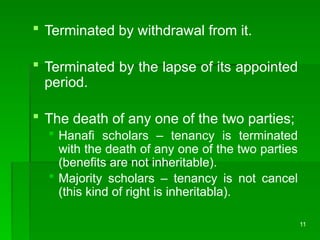
 Terminated by withdrawal from it.
 Terminated by the lapse of its appointed
period.
 The death of any one of the two parties;
 Hanafi scholars – tenancy is terminated
with the death of any one of the two parties
(benefits are not inheritable).
 Majority scholars – tenancy is not cancel
(this kind of right is inheritabla).

Ijarah lease based contract in Islamic Banking

  • 1.
    1 LEASE BASED CONTRACT (IJARAH) -The Concept of Ijarah
  • 2.
    2 Definition  To employthe services of a person on wages to him as a consideration for his hired services.  To transfer the usufruct of a particular of a particular property to another person in exchange for a rent claimed from him.
  • 3.
    3 Legality of Ijarah Al-Quran, al-Baqarah : 223; “… If they both decide on weaning, by mutual consent, and after due consultation, there is no blame on them. If ye decide on a foster-mother for your offspring, there is no blame on you, provided ye pay (the mother) what ye offered, on equitable terms. But fear Allah and know that Allah sees well what ye do.”
  • 4.
    4 Ijarah conditions  Theconsent of both parties to the contract and it is a contract whereby the owner of something transfers its usufruct to another person for an agreed period, at an agreed consideration.  The subject of ijarah must have a valuable use.  The corpus of the leased property remains in the ownership of the lessor and only usufruct is transferred to the lessee.
  • 5.
    5  All theliabilities emerging from the ownership shall be born by lessor, but the liabilities referable to the use of the property shall be born by the lessee.  The period of lease must be determine in clear terms.  The lessee cannot use the leased property for any purpose other than the purpose specified in the agreement.
  • 6.
    6  The lesseeis liable to compensate the lessor for any harm caused to the leased asset by any misuse or negligence on the part of the lessee.  The leased asset shall remain in the risk of the lessor throughout the lease period in the that any harm or loss caused by the factors beyond the control of the lessee shall be borne by the lessor.  A property jointly owned by two or more persons can be leased out, and the rental shall be distributed between all the joint owners according to the proportion of their respective shares in the property.
  • 7.
    7  A jointowner of a property can lease his proportionate share to his co-sharer only, and not to another person.  The leased asset is fully identified by the parties.  The rental must be determined at the time of contract for the whole period of lease. It is permissible that different amounts of rent are fixed for different phases during the leased period, provided that the amount of rent for each phase is specifically agreed upon at the time of affecting a lease. If the rent for a subsequent phase of the leased period has not been determined or has been left at the option of the lessor, the lease is not valid.
  • 8.
    8  The lessorcannot increase the rent unilaterally, and any agreement to this effect is void.  The rent or any part thereof may be payable in advance before the delivery of the asset to the lessee, but the amount so collected by the lessor shall remain with him as ‘on account’ payment shall be adjusted towards the rent after its being due.  The lease period shall commence from the date on which the leased asset has been delivered to the lessee, no matter whether the lessee has started using it or not.
  • 9.
    9  If theleased asset has totally lost the function for which it was leased, and no repair is possible, the lease shall terminate on the day on which such loss has been caused. However, if the loss caused by the misuse or by the negligence of the lessee, he will be liable to compensate the landlord for the depreciate value of the asset as, it was immediately before the loss.
  • 10.
    10 Termination of Ijarah The lessor has right to terminate the lease contract unilaterally if the lessee contravenes any terms of the agreement.  If there is no contravention on the part of the lessee, the lease cannot be terminated without mutual consent.  A contract is cancelled by the destruction of the leases property.
  • 11.
    11  Terminated bywithdrawal from it.  Terminated by the lapse of its appointed period.  The death of any one of the two parties;  Hanafi scholars – tenancy is terminated with the death of any one of the two parties (benefits are not inheritable).  Majority scholars – tenancy is not cancel (this kind of right is inheritabla).