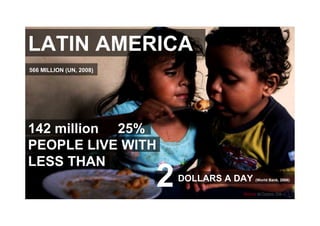
LATIN AMERICA 142 million  25% PEOPLE LIVE WITH LESS THAN DOLLARS A DAY  (World Bank, 2006) 2 566 MILLION (UN, 2008 )
Carlos Slim from Mexico is the RICHEST MAN in the world (Forbes, 2010)
Soledad Ferreiro  [email_address] LIBRARY OF CONGRESS 26th IFLA Pre-Conference of Library and Research Services for Parliaments   Current and Future Challenges for Latin American Parliamentary Libraries 6 – 9  august  2010 Stockolm Sweden A detailed analysis of the subjects presented can be found  here   .
CHILE AREA (SQ KM) 756,102 POPULATION  16,746,491 GDP PER CAPITA (US$) 14,700 INTERNET USERS PERCENTAGE 32.6 WORLDWIDE FACEBOOK ACCESS 40.7% NICARAGUA AREA (SQ KM)   130,370  POPULATION    5,995,928  GDP PER CAPITA (US$)   2,800  INTERNET USERS PERCENTAGE  3.1  WORLDWIDE FACEBOOK ACCESS  Not available  NICARAGUA   MEXICO  COLOMBIA  CHILE   BRAZIL  PERU  ARGENTINA A continent   of contrasts DIVERSITY OF  LANGUAGES, CULTURES A WIDE RANGE OF REALITIES AMONG  PARLIAMENTARY   LIBRARIES
UNDERSTANDING OUR PAST AND BUILDING OUR FUTURE Image of MOVILE PHONE RENTAL SERVICE in Colombia
Facebook reaches 50% of the population in Latin America High internet consumption/ penetration EMBRACING ONLINE  ENVIRONMENTS
No longer plagued by DICTATORSHIPS and violence. Ongoing DEMOCRATIC TRANSITION and CHALLENGES FOR CONGRESS. Still threatened by INSTITUTIONAL weaknesses and public MISTRUST. A REGION AT THE POLITICAL CROSS-ROADS
Congress as a space for inclusion, discusion and dissent Libraries have the POTENTIAL to become NEUTRAL SPACES, key players in the continuity of our POLITICAL HISTORY, active participants in the current LEGISLATIVE MOMENT and help visualize the FUTURE.
OPPORTUNITIES FOR   OUR LIBRARIES PALIAMENTARY LIBRARIES:   drawing on our  DIGITAL CAPACITIES  to build bridges with our constituents and with our fellow  PARLIAMENTARY LIBRARIES
LEARNING FROM SOCIAL NETWORKS: Libraries must lead Enhancing RELATIONSHIPS through BI-DIRECTIONAL COMMUNICATION channels and COLLABORATIVE content building   Engaging with social networks: Parliaments must listen
Major Leagues, a Library initiative results in a digital platform and today Senior citizens PARTICIPATE in ad-hoc committees and COMMUNICATE their concerns
a proposal for Latin American Parliamentary Libraries The way forward KEY STRATEGIES Redefining our role:
Provide subject-expert, interdisciplinary, neutral and high quality advisory services to Members KEY STRATEGIES
Engage with citizens, to promote society´s understanding of Parliament and the Law KEY STRATEGIES
Make knowledge available through the provision of a diversity of sources assuring quality and usability.  KEY STRATEGIES
Generate political and legislative history, as a way of rescuing our memory, creating understanding for our present and strengthening our future. KEY STRATEGIES
Progress towards a client orientated style of management, promoting the human development of those within our organizations.  KEY STRATEGIES
Embrace   appropriate information and technology infraestructure aimed at providing the best possible experience for our users KEY STRATEGIES
Lines of  action The future is here – let´s grasp it!
Respond to the concerns of the Parliamentary community
Encourage a closer relationship between Congress and citizens
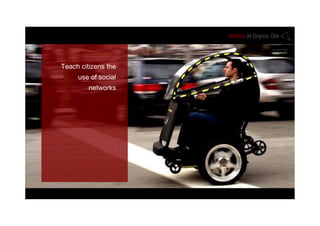
Teach citizens the use of social networks
Actively promote civic education
Generate spaces for the deliberation of emerging issues
Maintain and transmit the political legislative history
Establish and nurture relationships with other Parliaments
I foresee an opportunity for Libraries to reposition POLITICS and CONGRESS among citizens and NURTURE DEMOCRACY Soledad Ferreiro  [email_address]

Current and Future Challenges for Latin American Parliamentary Libraries. Presentation by Soledad Ferreiro, Director of the Chilean Library of Congress at the 26th IFLA Pre-Conference of Library and Research Services for Parliaments, Sweden 2010.

  • 1.
    LATIN AMERICA 142million 25% PEOPLE LIVE WITH LESS THAN DOLLARS A DAY (World Bank, 2006) 2 566 MILLION (UN, 2008 )
  • 2.
    Carlos Slim fromMexico is the RICHEST MAN in the world (Forbes, 2010)
  • 3.
    Soledad Ferreiro [email_address] LIBRARY OF CONGRESS 26th IFLA Pre-Conference of Library and Research Services for Parliaments Current and Future Challenges for Latin American Parliamentary Libraries 6 – 9 august 2010 Stockolm Sweden A detailed analysis of the subjects presented can be found here .
  • 4.
    CHILE AREA (SQKM) 756,102 POPULATION 16,746,491 GDP PER CAPITA (US$) 14,700 INTERNET USERS PERCENTAGE 32.6 WORLDWIDE FACEBOOK ACCESS 40.7% NICARAGUA AREA (SQ KM) 130,370 POPULATION 5,995,928 GDP PER CAPITA (US$) 2,800 INTERNET USERS PERCENTAGE 3.1 WORLDWIDE FACEBOOK ACCESS Not available NICARAGUA MEXICO COLOMBIA CHILE BRAZIL PERU ARGENTINA A continent of contrasts DIVERSITY OF LANGUAGES, CULTURES A WIDE RANGE OF REALITIES AMONG PARLIAMENTARY LIBRARIES
  • 5.
    UNDERSTANDING OUR PASTAND BUILDING OUR FUTURE Image of MOVILE PHONE RENTAL SERVICE in Colombia
  • 6.
    Facebook reaches 50%of the population in Latin America High internet consumption/ penetration EMBRACING ONLINE ENVIRONMENTS
  • 7.
    No longer plaguedby DICTATORSHIPS and violence. Ongoing DEMOCRATIC TRANSITION and CHALLENGES FOR CONGRESS. Still threatened by INSTITUTIONAL weaknesses and public MISTRUST. A REGION AT THE POLITICAL CROSS-ROADS
  • 8.
    Congress as aspace for inclusion, discusion and dissent Libraries have the POTENTIAL to become NEUTRAL SPACES, key players in the continuity of our POLITICAL HISTORY, active participants in the current LEGISLATIVE MOMENT and help visualize the FUTURE.
  • 9.
    OPPORTUNITIES FOR OUR LIBRARIES PALIAMENTARY LIBRARIES: drawing on our DIGITAL CAPACITIES to build bridges with our constituents and with our fellow PARLIAMENTARY LIBRARIES
  • 10.
    LEARNING FROM SOCIALNETWORKS: Libraries must lead Enhancing RELATIONSHIPS through BI-DIRECTIONAL COMMUNICATION channels and COLLABORATIVE content building Engaging with social networks: Parliaments must listen
  • 11.
    Major Leagues, aLibrary initiative results in a digital platform and today Senior citizens PARTICIPATE in ad-hoc committees and COMMUNICATE their concerns
  • 12.
    a proposal forLatin American Parliamentary Libraries The way forward KEY STRATEGIES Redefining our role:
  • 13.
    Provide subject-expert, interdisciplinary,neutral and high quality advisory services to Members KEY STRATEGIES
  • 14.
    Engage with citizens,to promote society´s understanding of Parliament and the Law KEY STRATEGIES
  • 15.
    Make knowledge availablethrough the provision of a diversity of sources assuring quality and usability. KEY STRATEGIES
  • 16.
    Generate political andlegislative history, as a way of rescuing our memory, creating understanding for our present and strengthening our future. KEY STRATEGIES
  • 17.
    Progress towards aclient orientated style of management, promoting the human development of those within our organizations. KEY STRATEGIES
  • 18.
    Embrace appropriate information and technology infraestructure aimed at providing the best possible experience for our users KEY STRATEGIES
  • 19.
    Lines of action The future is here – let´s grasp it!
  • 20.
    Respond to theconcerns of the Parliamentary community
  • 21.
    Encourage a closerrelationship between Congress and citizens
  • 22.
    Teach citizens theuse of social networks
  • 23.
  • 24.
    Generate spaces forthe deliberation of emerging issues
  • 25.
    Maintain and transmitthe political legislative history
  • 26.
    Establish and nurturerelationships with other Parliaments
  • 27.
    I foresee anopportunity for Libraries to reposition POLITICS and CONGRESS among citizens and NURTURE DEMOCRACY Soledad Ferreiro [email_address]

Editor's Notes

  • #2 I would like to start with two very different images that speak for themselves.
  • #4 - Good Morning. My name is Soledad Ferreriro and the question I want to discuss today is: - What are the Current and Future Challenges for Latin American Parliamentary Libraries? - This is a presentation based on my experience as Director of the Chilean Library of Congress.
  • #5 20 different countries representing 20 different realities Big differences in income b etween countries Worrying high levels of income inequality within countries A continent shaped by 3 cultures : European, African and that of pre-colonial indigenous communities. Main languages spoken are Spanish, Portuguese, French and indigenous languages. Parliamentary libraries vary widely from one country to another: they come in all shapes and forms!
  • #6 - This year we are celebrating our 200 years of independence in many Latin American countries. - It is a moment to reconsider our history as nations and our identities as societies. - While many challenges remain, Latin America has been open to embracing new developments. - Historic geographical isolation means we are eager to connect with a globalised world. - The take up of information and communication technology has and will mark the continent, differently to other regions. - Here for example we see an image of a mobile phone rental service in a street in Colombia.
  • #7 Social networking sites have been particularly successful in Latin America. Internet penetration increased by 23% in 2010, the biggest rise world-wide.
  • #8 - Politically Latin America is at a decisive moment. - The last 50 years have been marked by traumatic events. - Today the continent is still experiencing political instability. - Democracy is threatened by corruption, low public participation, little control of the state, poverty and urban violence. Congresses face constant challenges.
  • #9 So what role do parliaments and their libraries play in this complex reality? We are at a unique political moment , we have the opportunity to become stable democratic countries. First we must change perceptions of politics and parliaments in Latin American among citizens. We must rescue their value as historic spaces of inclusion, discussion and dissent . SO what is the role for libraries? Libraries have the potential to become neutral spaces, key players in the continuity of our political history, active participants in the current legislative moment and help visualize the future.
  • #10 These challenges open up many opportunities for libraries. We can draw on our traditional expertise and our digital capacities to build new bridges.
  • #11 Internet consumption is rising in the region. Communities are generating their own content and communicating their concerns through social networks. We are witnessing a spare-time revolution towards collective creation. Future relationships will be inclusive and non-hierarchical. Members of Parliament must use these channels to enhance their relationship with citizens, listen and react. This is a big opportunities for Parliamentary Libraries to lead the way.
  • #12 But how can new forms of communication be channeled into new modes of participation ? An example from the Chilean Library of Congress and our blog Ligas Mayores/ Major Leagues.
  • #13 Considering these opportunities I would like to present a series of proposals for Latin American Parliamentary Libraries: How we can redefine their role and what should be the way forward? Key strategies for Latin American libraries are to:
  • #20 How can we implement these strategies? I suggest the following lines of action:
  • #28 In conclusion: