ICT for Social
Change: A
Collaborative
Journey
This presentation outlines a framework for developing an ICT project for
social change. We will explore key steps, from identifying a local cause
to evaluating the project's impact.
by Sherra Mae Bagood
Identifying a Local Cause for
Social Change
1 Community Needs
Start by identifying
pressing issues within your
local community, such as
lack of access to resources,
education, or healthcare.
2 Data Collection
Use data sources like
surveys, interviews, and
social media analysis to
understand the scope and
nature of the problem.
3 Collaboration
Engage with local organizations, community leaders, and
residents to gain insights and build support for your project.
Defining the Professional
Track
Software Development
Develop mobile applications,
web platforms, or data
analysis tools to address the
chosen social issue.
Data Science
Analyze data to identify
patterns and trends, providing
insights for decision-making
and intervention strategies.
User Experience Design
Create intuitive and accessible interfaces that ensure the ICT project
is user-friendly and meets the needs of the target audience.
Introducing the ICT Project for Social Change
Problem Statement
Clearly articulate the social issue and its
impact on the community.
Project Goals
Outline the project's objectives and
expected outcomes in addressing the
chosen social issue.
Project Scope
Define the project's boundaries, including
target audience, geographical area, and
the functionalities of the ICT solution.
Understanding the Target Audience
Demographics
Identify the age, gender, location, and
socioeconomic characteristics of the
target audience.
Needs and Barriers
Understand their specific needs and
any challenges they face in accessing
resources or information related to
the social issue.
Digital Literacy
Assess their level of familiarity with
technology and their ability to use the
ICT solution.
Analyzing User Needs and
Expectations
Feature User Need Expectation
Information Access Need for reliable
and up-to-date
information on the
social issue
Easy navigation,
clear language,
and mobile-friendly
design
Resource
Connection
Need for
connections to
local services and
support
organizations
Efficient and user-
friendly interface
for connecting with
resources
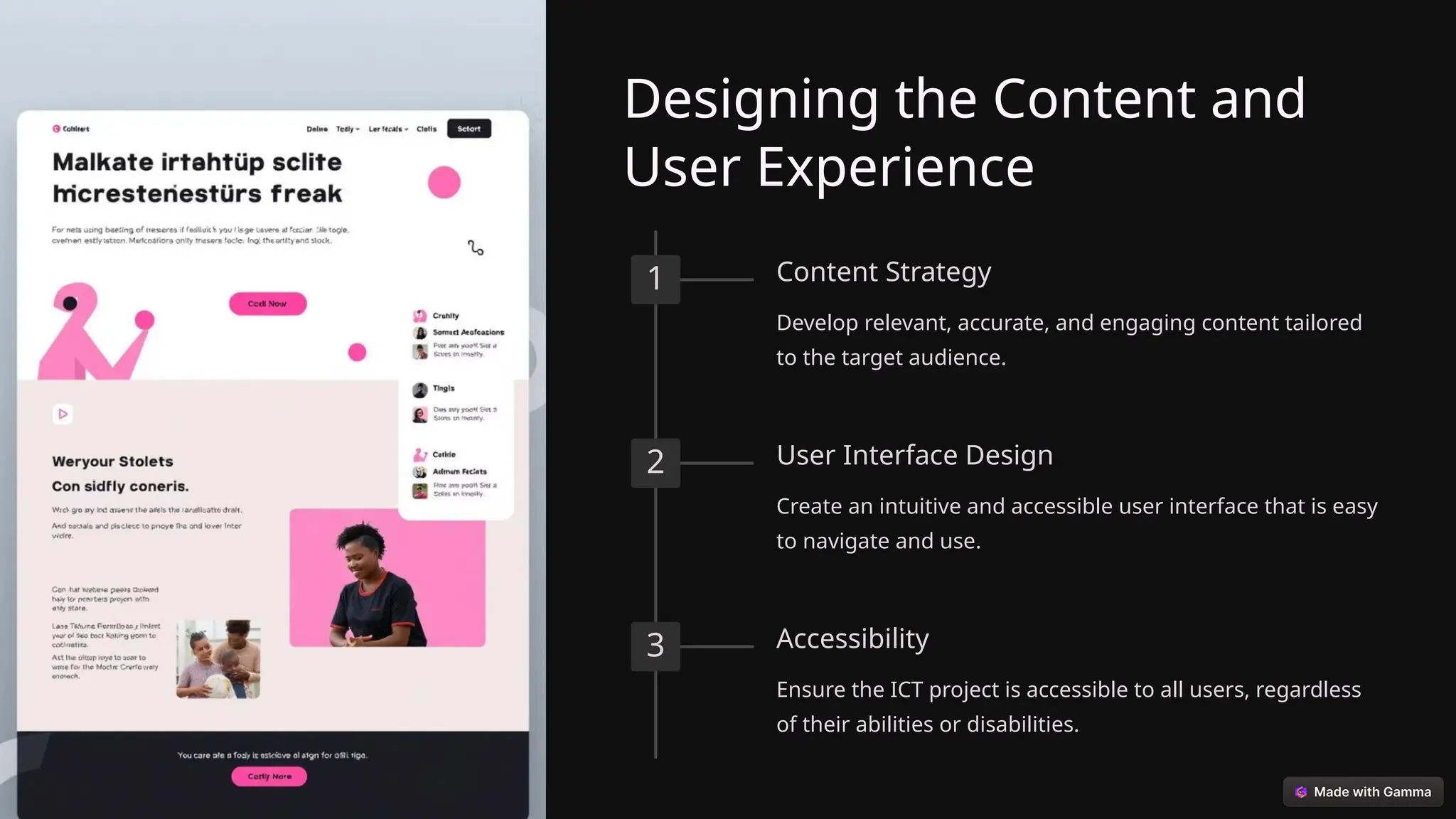
Designing the Content and
User Experience
1 Content Strategy
Develop relevant, accurate, and engaging content tailored
to the target audience.
2 User Interface Design
Create an intuitive and accessible user interface that is easy
to navigate and use.
3 Accessibility
Ensure the ICT project is accessible to all users, regardless
of their abilities or disabilities.
Leveraging Technology for
Social Impact
Mobile Applications
Provide access to information and
resources through mobile devices.
Social Media Platforms
Engage the target audience and raise
awareness about the social issue.
Cloud Computing
Store and manage data securely and
efficiently, enabling scalability and
collaboration.
Data Analytics
Use data to monitor the project's
impact and make data-driven
decisions.
Evaluating the Project's
Effectiveness
1 Metrics
Define key performance
indicators (KPIs) to measure
the project's success in
addressing the social issue.
2 Data Collection
Collect data on user
engagement, resource
utilization, and changes in
social outcomes.
3 Feedback
Gather feedback from users, stakeholders, and community
members to identify areas for improvement.
Addressing Challenges and
Limitations
Funding
Secure funding for project
development, maintenance,
and ongoing support.
Sustainability
Develop a sustainable model
for the project's long-term
operation and impact.
Accessibility
Ensure the ICT project is accessible to all users, regardless of their
digital literacy or location.
Conclusion and Next Steps
1 Impactful Solutions
ICT projects can effectively
address social issues,
improve community well-
being, and create lasting
change.
2 Collaboration
Collaboration is essential
for successful social impact
projects, bringing together
diverse perspectives and
expertise.
3 Evaluation and Adaptation
Continuous evaluation and adaptation are crucial for ensuring
the project's effectiveness and relevance.

ICT-for-Social-Change-A-Collaborative-Journey.pptx

  • 1.
    ICT for Social Change:A Collaborative Journey This presentation outlines a framework for developing an ICT project for social change. We will explore key steps, from identifying a local cause to evaluating the project's impact. by Sherra Mae Bagood
  • 2.
    Identifying a LocalCause for Social Change 1 Community Needs Start by identifying pressing issues within your local community, such as lack of access to resources, education, or healthcare. 2 Data Collection Use data sources like surveys, interviews, and social media analysis to understand the scope and nature of the problem. 3 Collaboration Engage with local organizations, community leaders, and residents to gain insights and build support for your project.
  • 3.
    Defining the Professional Track SoftwareDevelopment Develop mobile applications, web platforms, or data analysis tools to address the chosen social issue. Data Science Analyze data to identify patterns and trends, providing insights for decision-making and intervention strategies. User Experience Design Create intuitive and accessible interfaces that ensure the ICT project is user-friendly and meets the needs of the target audience.
  • 4.
    Introducing the ICTProject for Social Change Problem Statement Clearly articulate the social issue and its impact on the community. Project Goals Outline the project's objectives and expected outcomes in addressing the chosen social issue. Project Scope Define the project's boundaries, including target audience, geographical area, and the functionalities of the ICT solution.
  • 5.
    Understanding the TargetAudience Demographics Identify the age, gender, location, and socioeconomic characteristics of the target audience. Needs and Barriers Understand their specific needs and any challenges they face in accessing resources or information related to the social issue. Digital Literacy Assess their level of familiarity with technology and their ability to use the ICT solution.
  • 6.
    Analyzing User Needsand Expectations Feature User Need Expectation Information Access Need for reliable and up-to-date information on the social issue Easy navigation, clear language, and mobile-friendly design Resource Connection Need for connections to local services and support organizations Efficient and user- friendly interface for connecting with resources
  • 7.
    Designing the Contentand User Experience 1 Content Strategy Develop relevant, accurate, and engaging content tailored to the target audience. 2 User Interface Design Create an intuitive and accessible user interface that is easy to navigate and use. 3 Accessibility Ensure the ICT project is accessible to all users, regardless of their abilities or disabilities.
  • 8.
    Leveraging Technology for SocialImpact Mobile Applications Provide access to information and resources through mobile devices. Social Media Platforms Engage the target audience and raise awareness about the social issue. Cloud Computing Store and manage data securely and efficiently, enabling scalability and collaboration. Data Analytics Use data to monitor the project's impact and make data-driven decisions.
  • 9.
    Evaluating the Project's Effectiveness 1Metrics Define key performance indicators (KPIs) to measure the project's success in addressing the social issue. 2 Data Collection Collect data on user engagement, resource utilization, and changes in social outcomes. 3 Feedback Gather feedback from users, stakeholders, and community members to identify areas for improvement.
  • 10.
    Addressing Challenges and Limitations Funding Securefunding for project development, maintenance, and ongoing support. Sustainability Develop a sustainable model for the project's long-term operation and impact. Accessibility Ensure the ICT project is accessible to all users, regardless of their digital literacy or location.
  • 11.
    Conclusion and NextSteps 1 Impactful Solutions ICT projects can effectively address social issues, improve community well- being, and create lasting change. 2 Collaboration Collaboration is essential for successful social impact projects, bringing together diverse perspectives and expertise. 3 Evaluation and Adaptation Continuous evaluation and adaptation are crucial for ensuring the project's effectiveness and relevance.