Intelligent User
Interfaces
ICS2208
Dr Vanessa Camiller
i

Department of AI,
 

University of Malta
Topic 9: Emotion & Cognition
in Smart Systems
• Emotional AI


• Emotion & Cognition in Games


• Machine Learning for Cognitive Behaviour
Assessment


• Modelling Behaviour using Wearable Devices
2
Emotional AI
• Emotional AI is a term to refer to affective
computing techniques, machine learning and
Artificial Intelligence (AI)
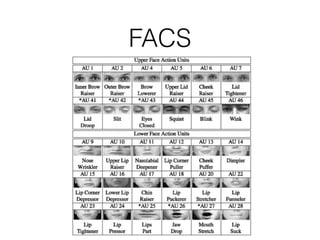
FACS
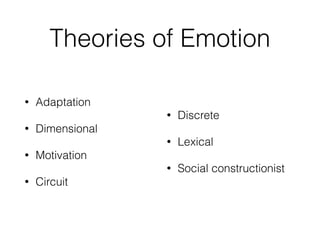
Theories of Emotion
• Adaptation


• Dimensional


• Motivation


• Circuit


• Discrete


• Lexical


• Social constructionist
Discussion Time
• In which fields or domains would you see the
practicality of applying Emotional AI?
Discussion Time
• Would Emotional AI be necessary in education?
Why and why not?
Discussion Time
• What questions would you ask to address a
number of concerns in Emotional AI (for example
the validity of the training data, mental health in
users, opt out or opt in policies, or people
reactions?)
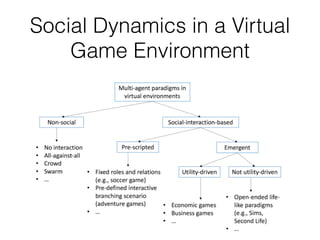
Social Dynamics in a Virtual
Game Environment
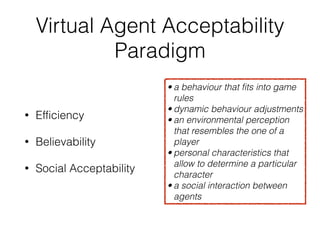
Virtual Agent Acceptability
Paradigm
• Efficiency


• Believability


• Social Acceptability
• a behaviour that fits into game
rules


• dynamic behaviour adjustments


• an environmental perception
that resembles the one of a
player


• personal characteristics that
allow to determine a particular
character


• a social interaction between
agents
Decision Making Systems
• Planned behaviour


• Finite State Machine


• Behaviour Trees


• Machine Learning Methods


• Utility AI
Machine Learning for
Cognitive Behaviour
• Cognitive impairments in early childhood may lead
to poor academic performance


• Research shows that a traditional game of Head-
Shoulders-Knees-Toes can provide psychometric
information leading to behavioural self-regulation


• Visual observation of HSKT can lead to predicting
cognitive behaviour
Method
• Use of Microsoft Kinect V2 Camera


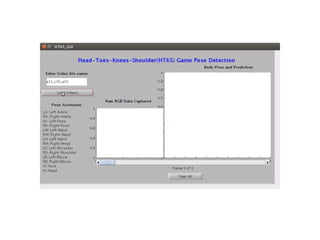
• UI for recording and observing HSKT


• Machine learning techniques on pose estimation
from RGB video streams
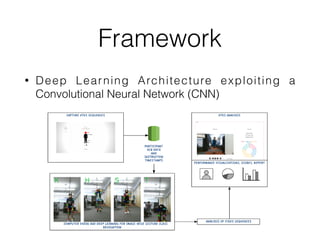
Framework
• Deep Learning Architecture exploiting a
Convolutional Neural Network (CNN)
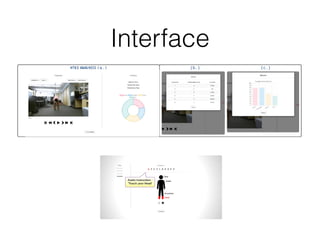
Interface
Experiment
• 15 participants (18-30 years as pilot test beds)


• 60,000 frames of RGB data collected, 4443 frames
annotated


• Dataset available: http://vlm1.uta.edu/˜srujana/
HTKS/CogniLearn_HTKS_Dataset.html
Modelling Intelligence using
Wearable Devices
• Social Signal Processing techniques used to
analyse human behaviour


• Training a computational model to provide
feedback to a public speaker about his co-verbal
communication


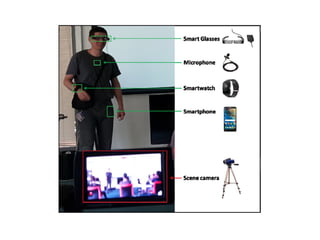
• Using wearable devices: smart watch, smart
phone, eye tracking device with microphone.
Social Intelligence Modelling
• Dynamic Bayesian Networks to model complex
temporal relationships between variables


• Machine learning techniques are used to associate
the cognitive state of the public speaker to the
annotated feedback
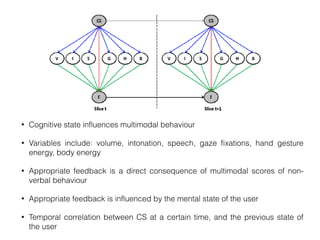
• Cognitive state influences multimodal behaviour


• Variables include: volume, intonation, speech, gaze fixations, hand gesture
energy, body energy


• Appropriate feedback is a direct consequence of multimodal scores of non-
verbal behaviour


• Appropriate feedback is influenced by the mental state of the user


• Temporal correlation between CS at a certain time, and the previous state of
the user
• For the case studies mentioned, think about the
following questions:


• How can we place the human at the centre of
every day's interaction and task activity?


• How can an interactive system adapt to human
cognitive and emotional factors with the aim to
deliver a personalised and more usable
interface?


• What models, architectures and frameworks, do
these case studies use? Discuss them

ICS2208 lecture9

  • 1.
    Intelligent User Interfaces ICS2208 Dr VanessaCamiller i Department of AI, University of Malta
  • 2.
    Topic 9: Emotion& Cognition in Smart Systems • Emotional AI • Emotion & Cognition in Games • Machine Learning for Cognitive Behaviour Assessment • Modelling Behaviour using Wearable Devices 2
  • 3.
    Emotional AI • EmotionalAI is a term to refer to affective computing techniques, machine learning and Artificial Intelligence (AI)
  • 5.
  • 6.
    Theories of Emotion •Adaptation • Dimensional • Motivation • Circuit • Discrete • Lexical • Social constructionist
  • 8.
    Discussion Time • Inwhich fields or domains would you see the practicality of applying Emotional AI?
  • 9.
    Discussion Time • WouldEmotional AI be necessary in education? Why and why not?
  • 10.
    Discussion Time • Whatquestions would you ask to address a number of concerns in Emotional AI (for example the validity of the training data, mental health in users, opt out or opt in policies, or people reactions?)
  • 11.
    Social Dynamics ina Virtual Game Environment
  • 12.
    Virtual Agent Acceptability Paradigm •Efficiency • Believability • Social Acceptability • a behaviour that fits into game rules • dynamic behaviour adjustments • an environmental perception that resembles the one of a player • personal characteristics that allow to determine a particular character • a social interaction between agents
  • 13.
    Decision Making Systems •Planned behaviour • Finite State Machine • Behaviour Trees • Machine Learning Methods • Utility AI
  • 14.
    Machine Learning for CognitiveBehaviour • Cognitive impairments in early childhood may lead to poor academic performance • Research shows that a traditional game of Head- Shoulders-Knees-Toes can provide psychometric information leading to behavioural self-regulation • Visual observation of HSKT can lead to predicting cognitive behaviour
  • 15.
    Method • Use ofMicrosoft Kinect V2 Camera • UI for recording and observing HSKT • Machine learning techniques on pose estimation from RGB video streams
  • 16.
    Framework • Deep LearningArchitecture exploiting a Convolutional Neural Network (CNN)
  • 18.
  • 19.
    Experiment • 15 participants(18-30 years as pilot test beds) • 60,000 frames of RGB data collected, 4443 frames annotated • Dataset available: http://vlm1.uta.edu/˜srujana/ HTKS/CogniLearn_HTKS_Dataset.html
  • 20.
    Modelling Intelligence using WearableDevices • Social Signal Processing techniques used to analyse human behaviour • Training a computational model to provide feedback to a public speaker about his co-verbal communication • Using wearable devices: smart watch, smart phone, eye tracking device with microphone.
  • 22.
    Social Intelligence Modelling •Dynamic Bayesian Networks to model complex temporal relationships between variables • Machine learning techniques are used to associate the cognitive state of the public speaker to the annotated feedback
  • 23.
    • Cognitive stateinfluences multimodal behaviour • Variables include: volume, intonation, speech, gaze fixations, hand gesture energy, body energy • Appropriate feedback is a direct consequence of multimodal scores of non- verbal behaviour • Appropriate feedback is influenced by the mental state of the user • Temporal correlation between CS at a certain time, and the previous state of the user
  • 24.
    • For thecase studies mentioned, think about the following questions: • How can we place the human at the centre of every day's interaction and task activity? • How can an interactive system adapt to human cognitive and emotional factors with the aim to deliver a personalised and more usable interface? • What models, architectures and frameworks, do these case studies use? Discuss them