Dr V. Camilleri - vanessa.camilleri@um.edu.mt November 2020
Foundations of Ai
Principles of Computer Vision
Hi 

I’m Vanessa Camilleri
I’m a lecturer at the Department of AI, Faculty of ICT
I can be contacted via vanessa.camilleri@um.edu.mt
My main interests are in the ïŹelds of Creative
Computing & Education, which include VR, AR & MR,
Games & Game AI, and ML for Education.
Quite a vast topic!
Computer
Vision 

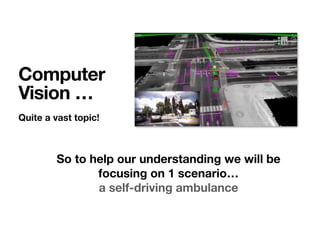
So to help our understanding we will be
focusing on 1 scenario

a self-driving ambulance
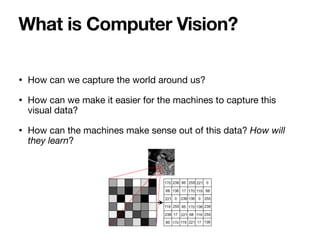
‱ How can we capture the world around us? 

‱ How can we make it easier for the machines to capture this
visual data? 

‱ How can the machines make sense out of this data? How will
they learn?
What is Computer Vision?
Computer Vision helps
machines make sense out
of received visual data.
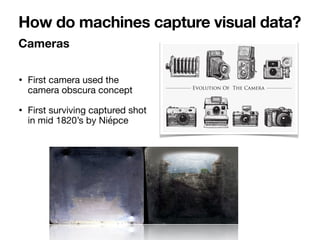
‱ First camera used the
camera obscura concept

‱ First surviving captured shot
in mid 1820’s by NiĂ©pce
Cameras
How do machines capture visual data?
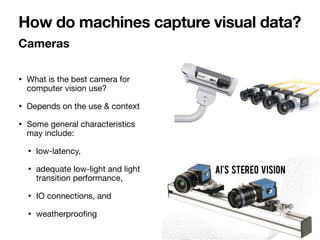
‱ What is the best camera for
computer vision use? 

‱ Depends on the use & context 

‱ Some general characteristics
may include: 

‱ low-latency, 

‱ adequate low-light and light
transition performance, 

‱ IO connections, and

‱ weatherprooïŹng
Cameras
How do machines capture visual data?
Activity time
Work in groups (use chat/social media/
)
Focus on Practical Applications of Computer
Vision and discuss current developments in
one of these research ïŹelds: facial recognition,
self-driving cars, AR & MR, healthcare, etc.
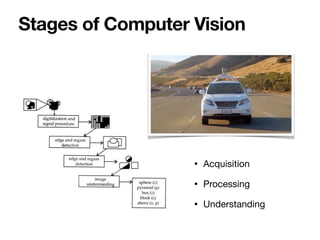
‱ Acquisition 

‱ Processing 

‱ Understanding
Stages of Computer Vision
‱ The process of acquiring images 

‱ 2D media 

‱ 3D media 

‱ An engineering discipline focusing on automating/digitising the
human vision system
Image Acquisition
Stages of Computer Vision
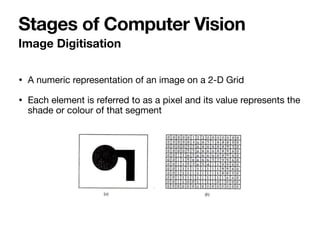
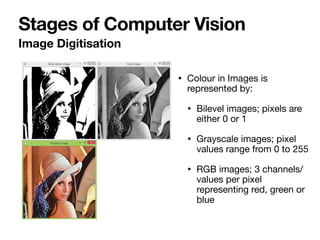
‱ A numeric representation of an image on a 2-D Grid

‱ Each element is referred to as a pixel and its value represents the
shade or colour of that segment
Image Digitisation
Stages of Computer Vision
‱ Colour in Images is
represented by: 

‱ Bilevel images; pixels are
either 0 or 1

‱ Grayscale images; pixel
values range from 0 to 255

‱ RGB images; 3 channels/
values per pixel
representing red, green or
blue
Image Digitisation
Stages of Computer Vision
‱ Intrinsic Parameters: 

‱ Focal length

‱ Principal Point

‱ Lens Distortion

‱ Extrinsic Parameters: 

‱ Rotation 

‱ Translation (relative to other cameras or original position)
Camera Parameters
Stages of Computer Vision
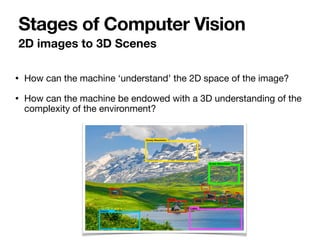
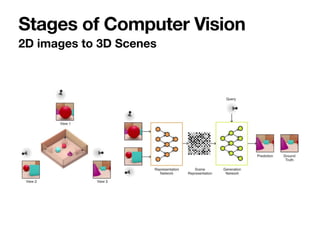
‱ How can the machine ‘understand’ the 2D space of the image? 

‱ How can the machine be endowed with a 3D understanding of the
complexity of the environment?
2D images to 3D Scenes
Stages of Computer Vision
2D images to 3D Scenes
Stages of Computer Vision
Making sense
Stages of Computer Vision
‱ 6 main techniques 

‱ Object ClassiïŹcation & Detection

‱ Object Recognition

‱ Object Tracking 

‱ Object Labelling 

‱ Text Recognition
Making sense
Stages of Computer Vision
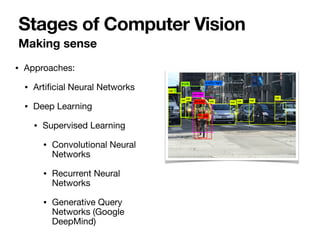
‱ Approaches: 

‱ ArtiïŹcial Neural Networks

‱ Deep Learning 

‱ Supervised Learning 

‱ Convolutional Neural
Networks

‱ Recurrent Neural
Networks 

‱ Generative Query
Networks (Google
DeepMind)
Making sense
Stages of Computer Vision
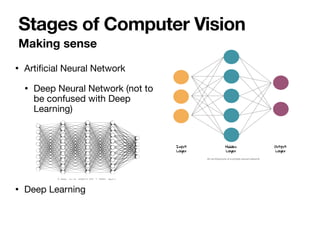
‱ ArtiïŹcial Neural Network

‱ Deep Neural Network (not to
be confused with Deep
Learning)

‱ Deep Learning
Making sense
Stages of Computer Vision
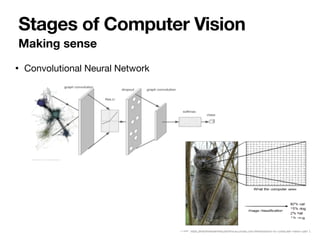
‱ Convolutional Neural Network
Object ClassiïŹcation & Detection
Stages of Computer Vision
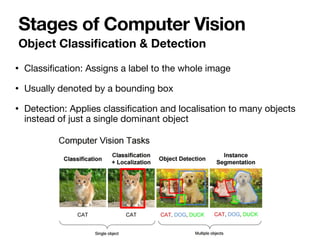
‱ ClassiïŹcation: Assigns a label to the whole image

‱ Usually denoted by a bounding box 

‱ Detection: Applies classiïŹcation and localisation to many objects
instead of just a single dominant object
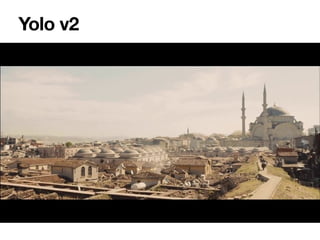
Yolo v2
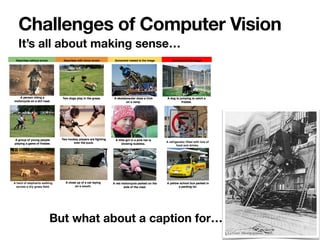
It’s all about making sense

Challenges of Computer Vision
But what about a caption for

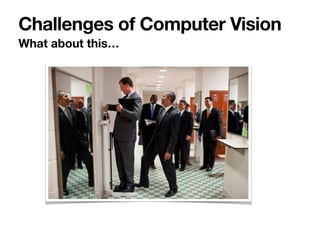
What about this

Challenges of Computer Vision
Activity time
Work in groups (use chat/social media/
)
Go back to the self-driving ambulance
scenario. Think about Computer Vision.
1. How can diïŹ€erent applications of CV be
used during an accident?
2. What services can CV oïŹ€er for the
ambulance?

ICS1020 CV

  • 1.
    Dr V. Camilleri- vanessa.camilleri@um.edu.mt November 2020 Foundations of Ai Principles of Computer Vision
  • 2.
    Hi 
 I’m VanessaCamilleri I’m a lecturer at the Department of AI, Faculty of ICT I can be contacted via vanessa.camilleri@um.edu.mt My main interests are in the ïŹelds of Creative Computing & Education, which include VR, AR & MR, Games & Game AI, and ML for Education.
  • 4.
    Quite a vasttopic! Computer Vision 
 So to help our understanding we will be focusing on 1 scenario
 a self-driving ambulance
  • 5.
    ‱ How canwe capture the world around us? ‱ How can we make it easier for the machines to capture this visual data? ‱ How can the machines make sense out of this data? How will they learn? What is Computer Vision?
  • 7.
    Computer Vision helps machinesmake sense out of received visual data.
  • 8.
    ‱ First cameraused the camera obscura concept ‱ First surviving captured shot in mid 1820’s by NiĂ©pce Cameras How do machines capture visual data?
  • 9.
    ‱ What isthe best camera for computer vision use? ‱ Depends on the use & context ‱ Some general characteristics may include: ‱ low-latency, ‱ adequate low-light and light transition performance, ‱ IO connections, and ‱ weatherprooïŹng Cameras How do machines capture visual data?
  • 10.
    Activity time Work ingroups (use chat/social media/
) Focus on Practical Applications of Computer Vision and discuss current developments in one of these research ïŹelds: facial recognition, self-driving cars, AR & MR, healthcare, etc.
  • 11.
    ‱ Acquisition ‱Processing ‱ Understanding Stages of Computer Vision
  • 12.
    ‱ The processof acquiring images ‱ 2D media ‱ 3D media ‱ An engineering discipline focusing on automating/digitising the human vision system Image Acquisition Stages of Computer Vision
  • 13.
    ‱ A numericrepresentation of an image on a 2-D Grid ‱ Each element is referred to as a pixel and its value represents the shade or colour of that segment Image Digitisation Stages of Computer Vision
  • 14.
    ‱ Colour inImages is represented by: ‱ Bilevel images; pixels are either 0 or 1 ‱ Grayscale images; pixel values range from 0 to 255 ‱ RGB images; 3 channels/ values per pixel representing red, green or blue Image Digitisation Stages of Computer Vision
  • 15.
    ‱ Intrinsic Parameters: ‱ Focal length ‱ Principal Point ‱ Lens Distortion ‱ Extrinsic Parameters: ‱ Rotation ‱ Translation (relative to other cameras or original position) Camera Parameters Stages of Computer Vision
  • 16.
    ‱ How canthe machine ‘understand’ the 2D space of the image? ‱ How can the machine be endowed with a 3D understanding of the complexity of the environment? 2D images to 3D Scenes Stages of Computer Vision
  • 17.
    2D images to3D Scenes Stages of Computer Vision
  • 18.
    Making sense Stages ofComputer Vision ‱ 6 main techniques ‱ Object ClassiïŹcation & Detection ‱ Object Recognition ‱ Object Tracking ‱ Object Labelling ‱ Text Recognition
  • 19.
    Making sense Stages ofComputer Vision ‱ Approaches: ‱ ArtiïŹcial Neural Networks ‱ Deep Learning ‱ Supervised Learning ‱ Convolutional Neural Networks ‱ Recurrent Neural Networks ‱ Generative Query Networks (Google DeepMind)
  • 20.
    Making sense Stages ofComputer Vision ‱ ArtiïŹcial Neural Network ‱ Deep Neural Network (not to be confused with Deep Learning) ‱ Deep Learning
  • 21.
    Making sense Stages ofComputer Vision ‱ Convolutional Neural Network
  • 22.
    Object ClassiïŹcation &Detection Stages of Computer Vision ‱ ClassiïŹcation: Assigns a label to the whole image ‱ Usually denoted by a bounding box ‱ Detection: Applies classiïŹcation and localisation to many objects instead of just a single dominant object
  • 23.
  • 24.
    It’s all aboutmaking sense
 Challenges of Computer Vision But what about a caption for

  • 25.
  • 26.
    Activity time Work ingroups (use chat/social media/
) Go back to the self-driving ambulance scenario. Think about Computer Vision. 1. How can diïŹ€erent applications of CV be used during an accident? 2. What services can CV oïŹ€er for the ambulance?