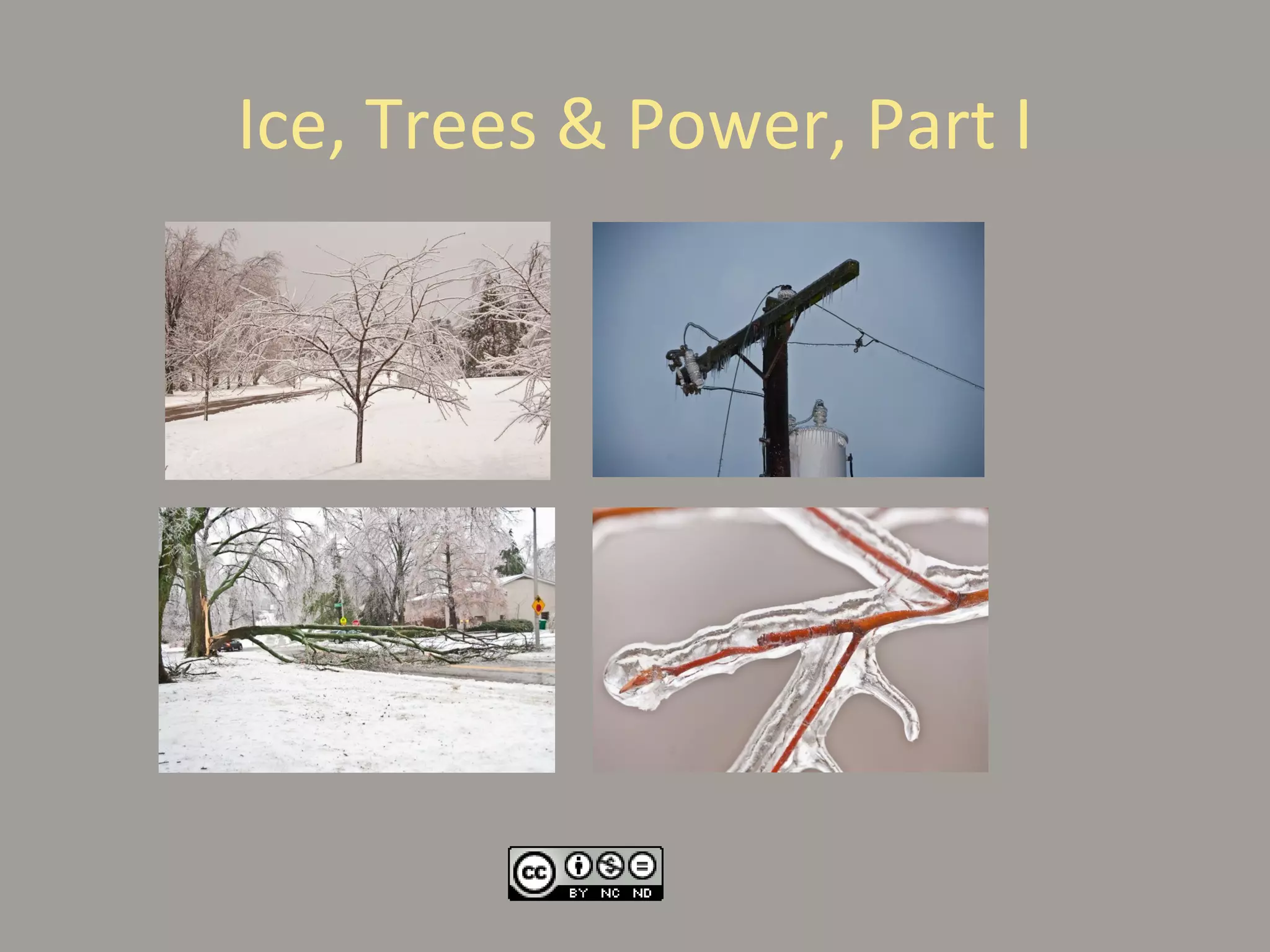
Ice, Trees & Power, Part I
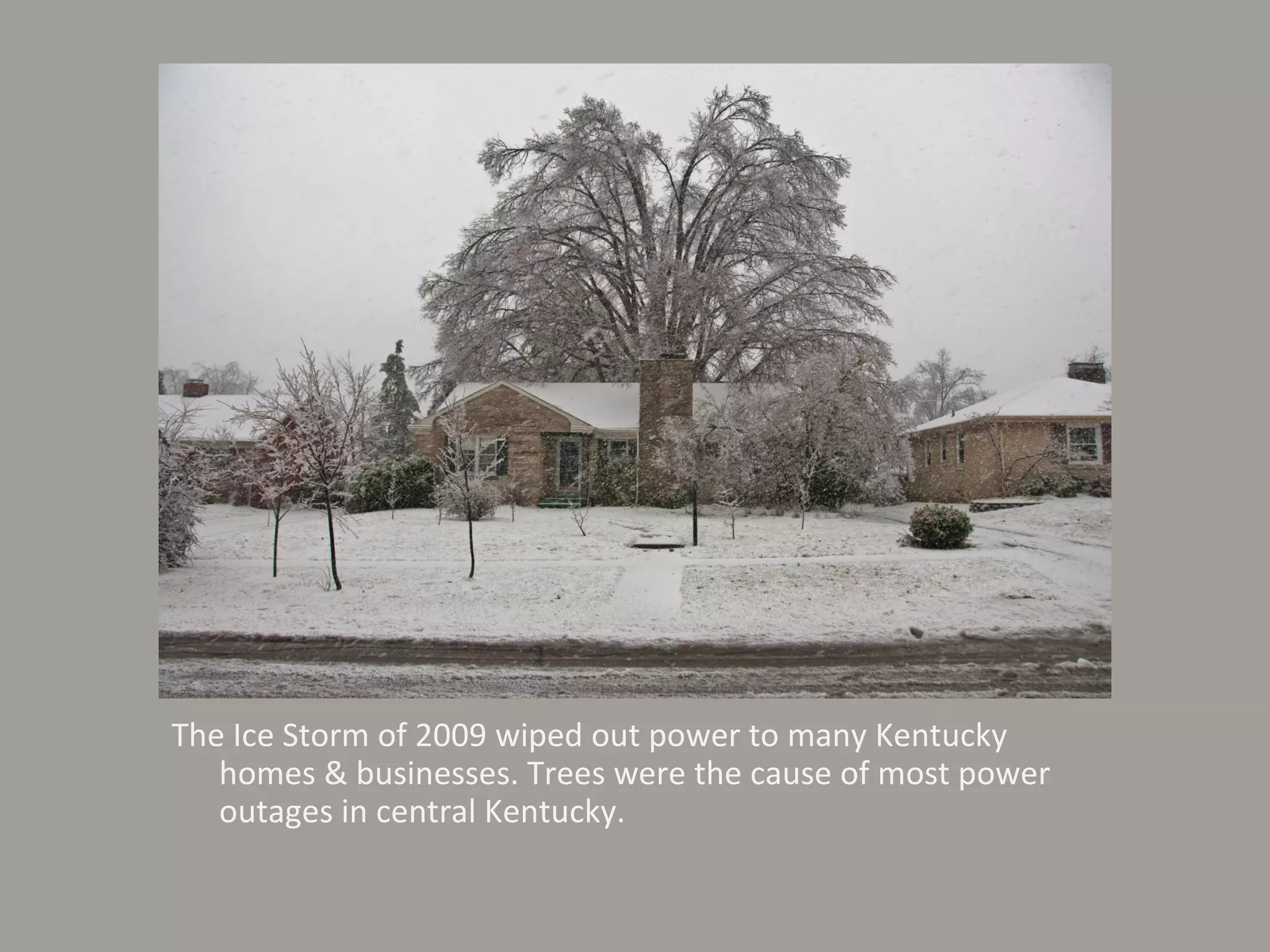
The Ice Storm of 2009 wiped out power to many Kentucky homes & businesses. Trees were the cause of most power outages in central Kentucky.
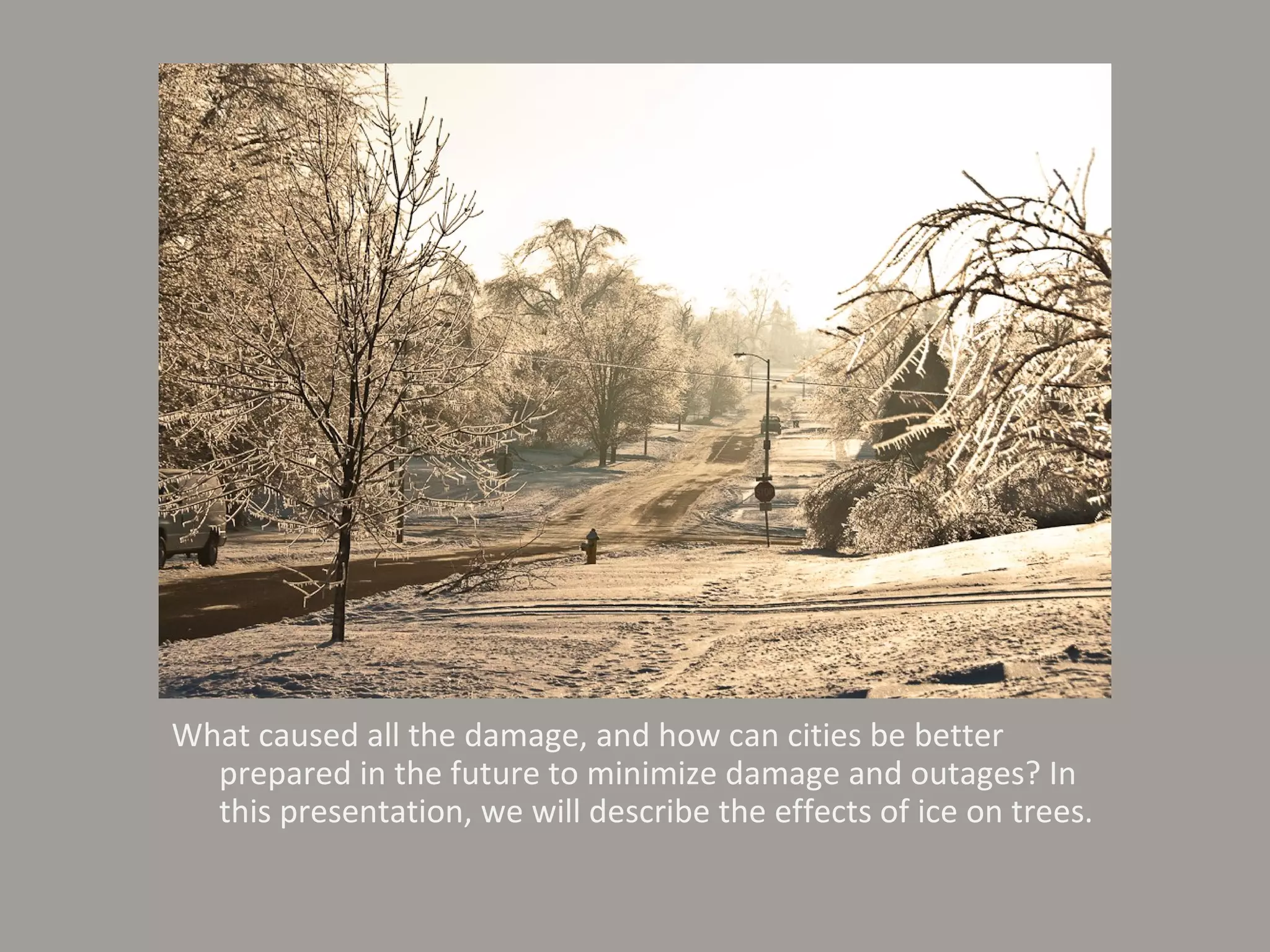
What caused all the damage, and how can cities be better prepared in the future to minimize damage and outages? In this presentation, we will describe the effects of ice on trees.
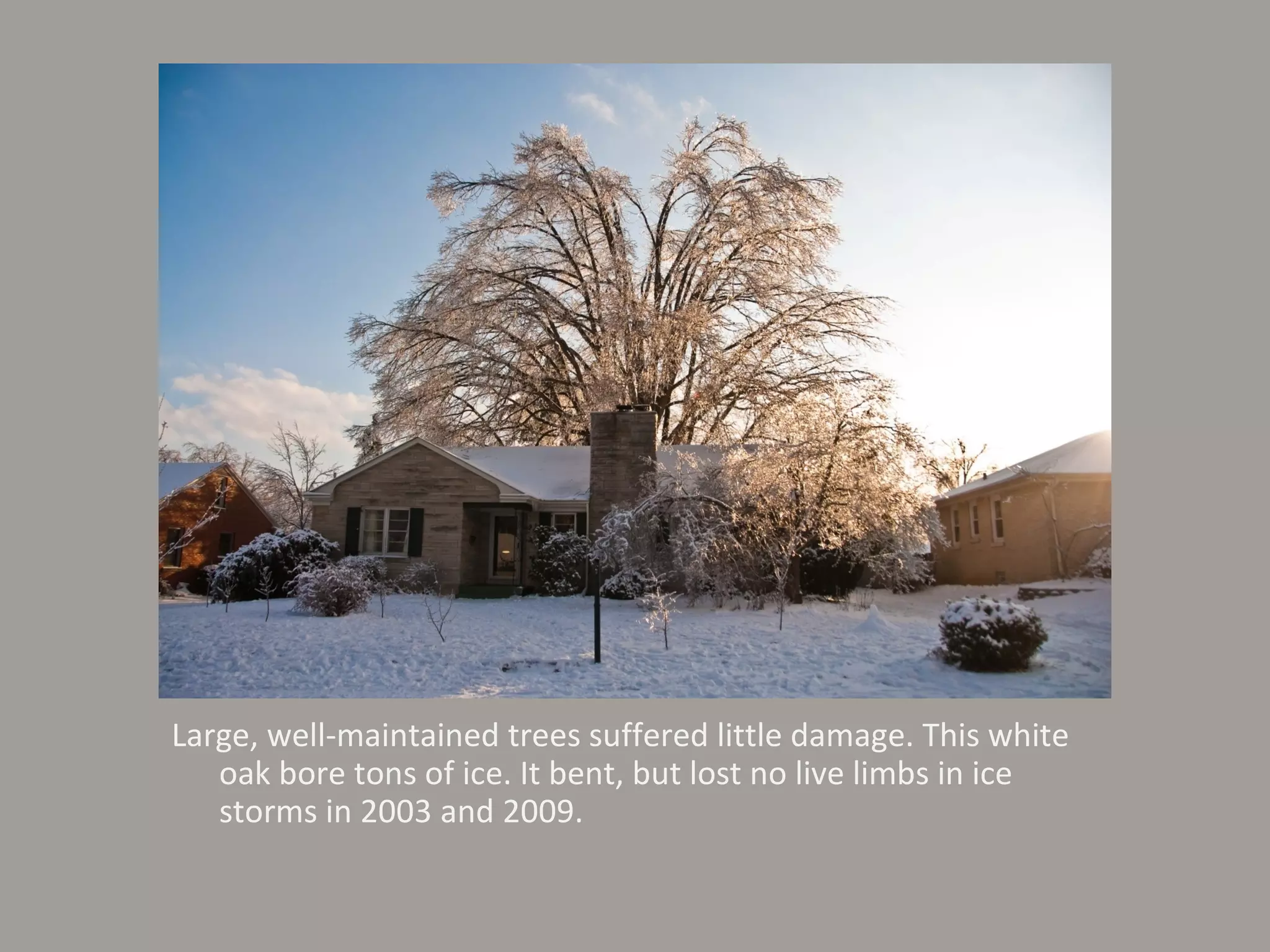
Large, well-maintained trees suffered little damage. This white oak bore tons of ice. It bent, but lost no live limbs in ice storms in 2003 and 2009.
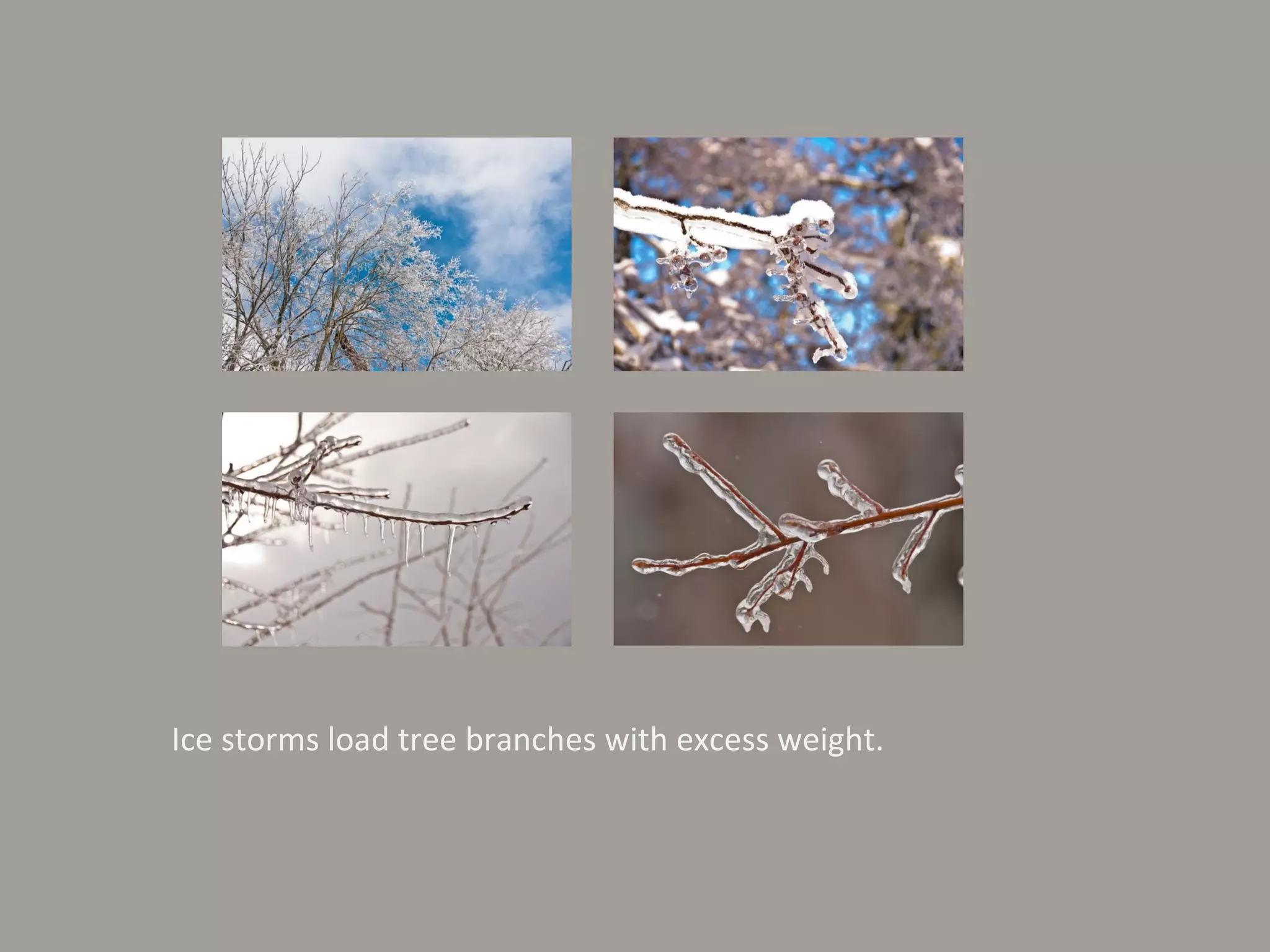
Ice storms load tree branches with excess weight.
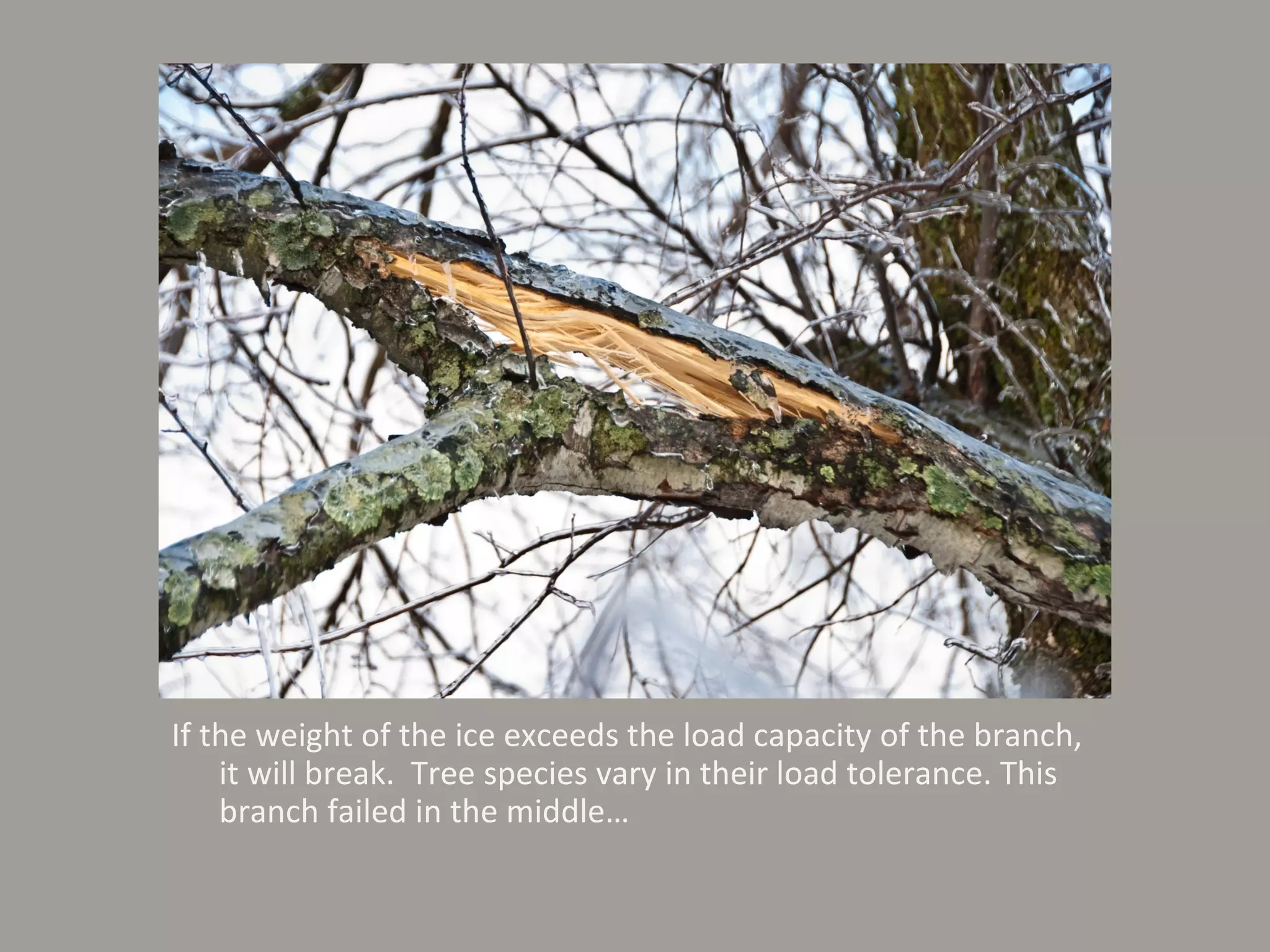
If the weight of the ice exceeds the load capacity of the branch, it will break.  Tree species vary in their load tolerance. This branch failed in the middle…
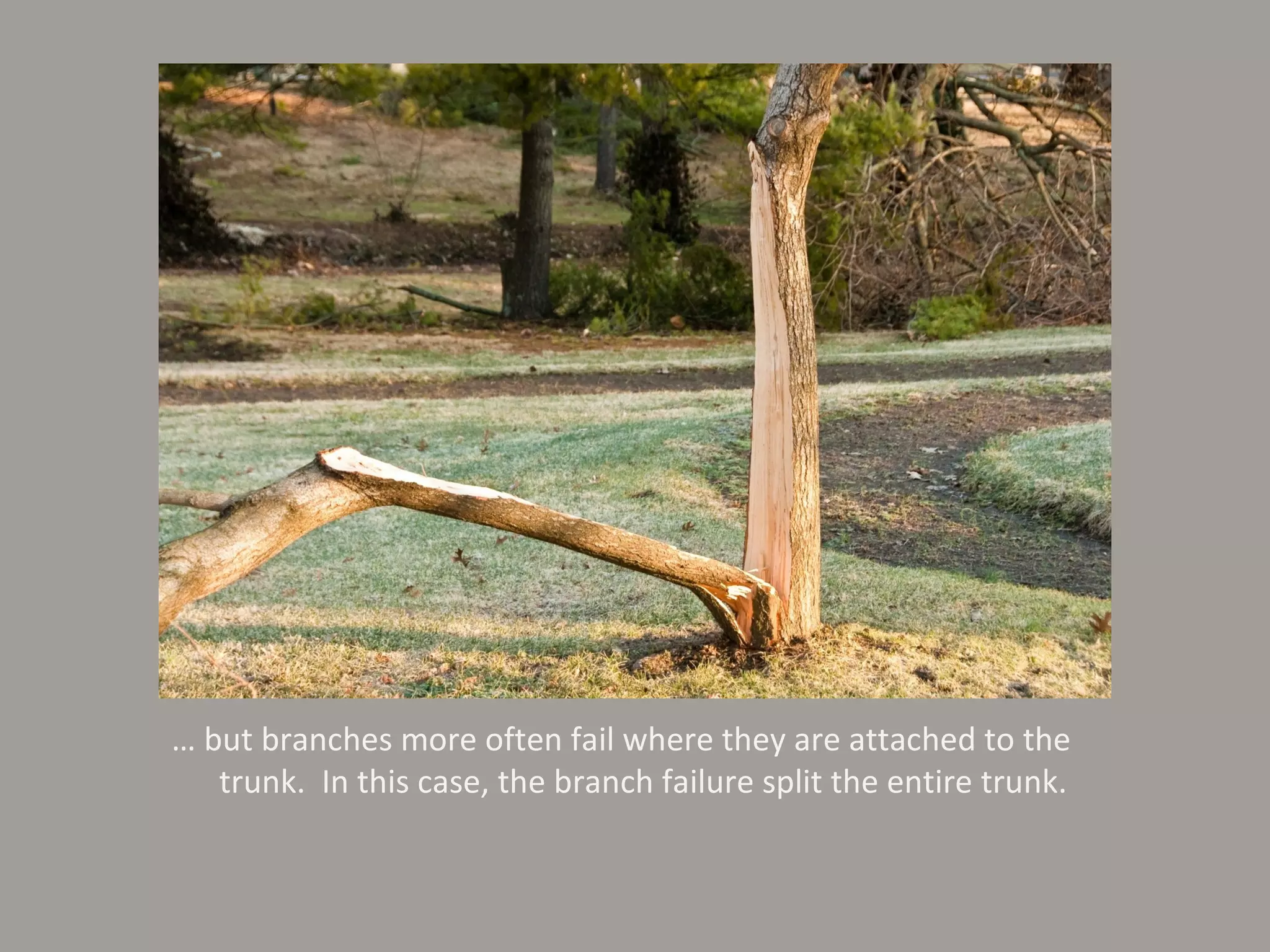
…  but branches more often fail where they are attached to the trunk.  In this case, the branch failure split the entire trunk.
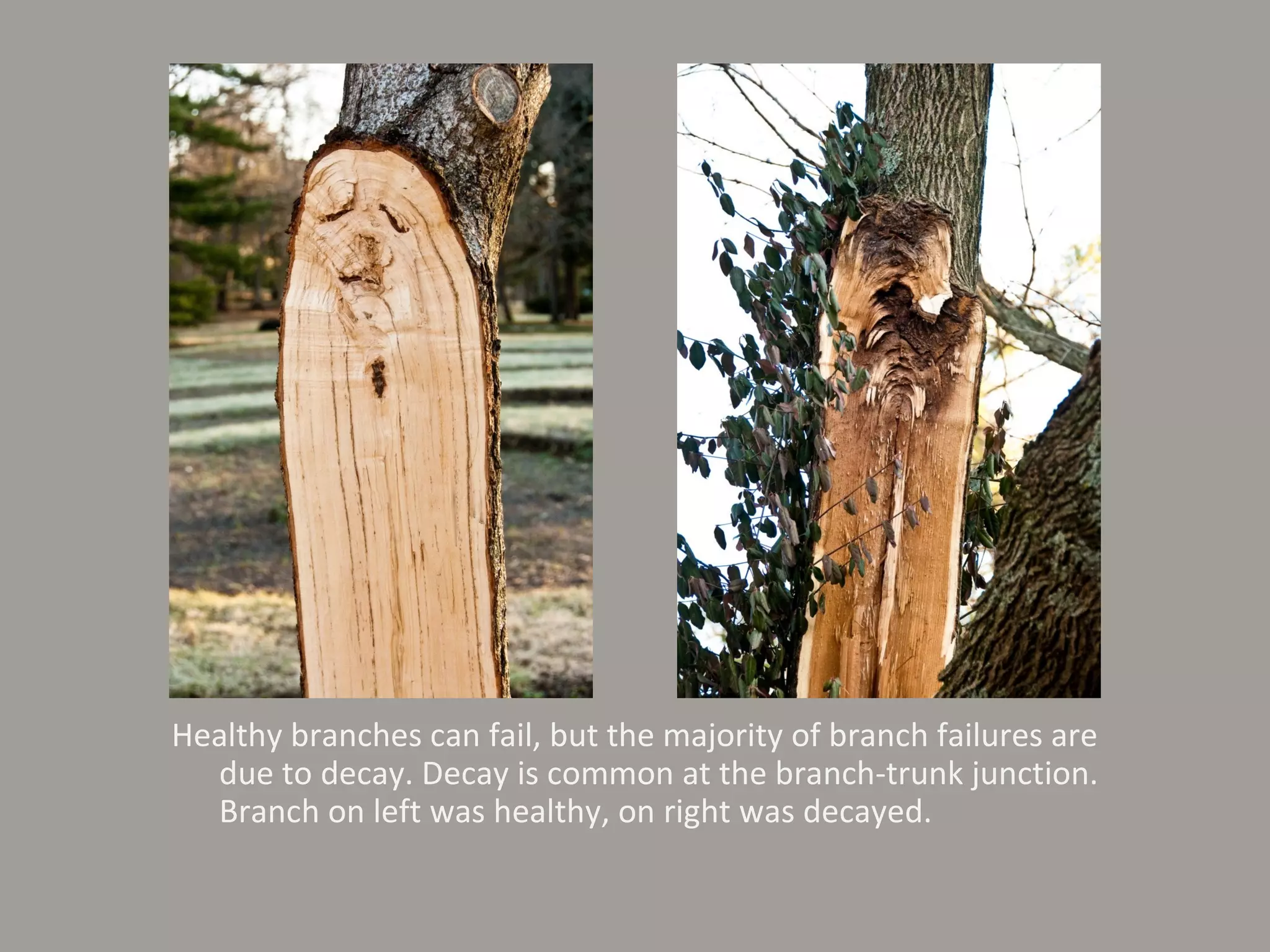
Healthy branches can fail, but the majority of branch failures are due to decay. Decay is common at the branch-trunk junction. Branch on left was healthy, on right was decayed.
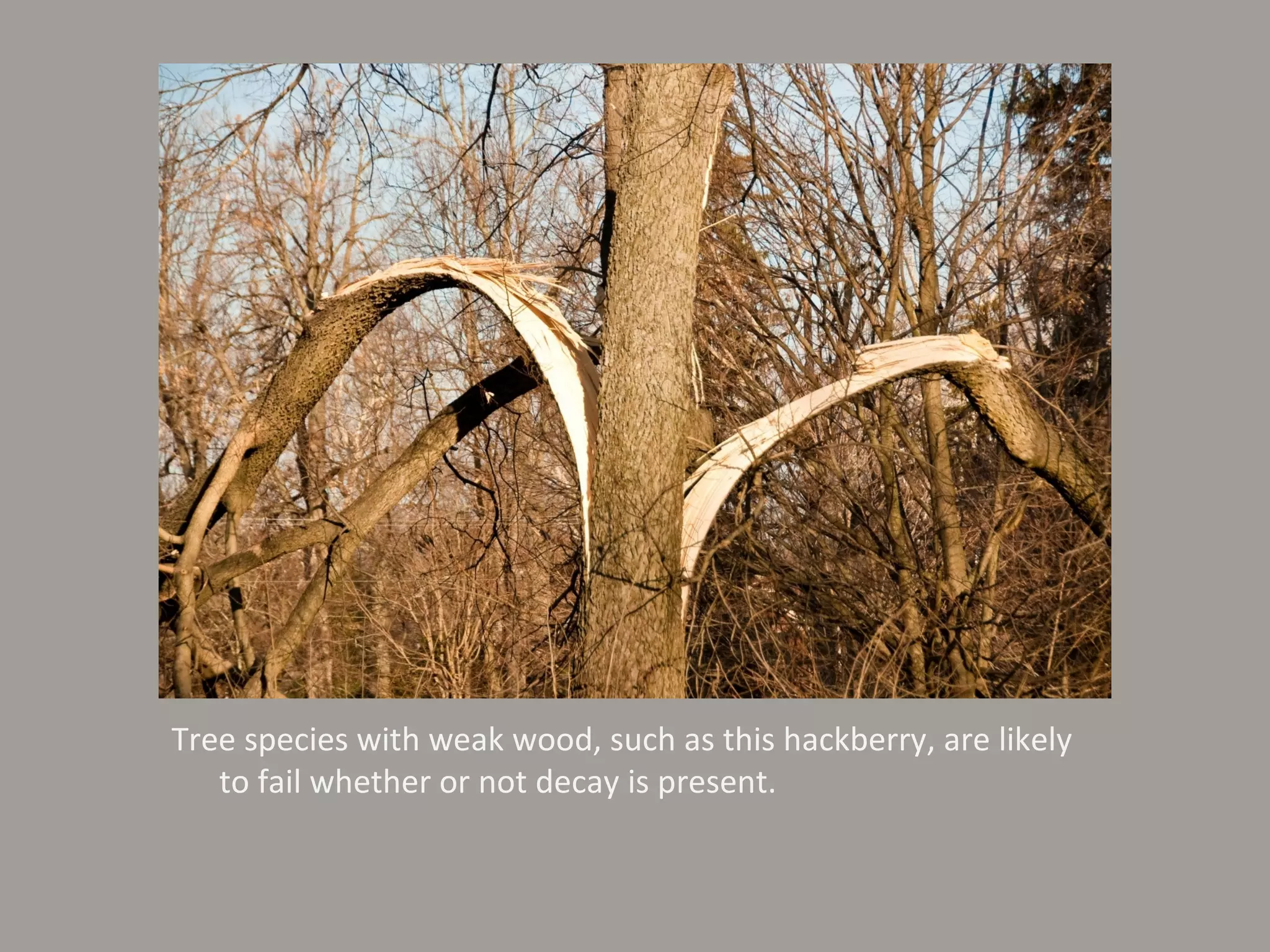
Tree species with weak wood, such as this hackberry, are likely to fail whether or not decay is present.
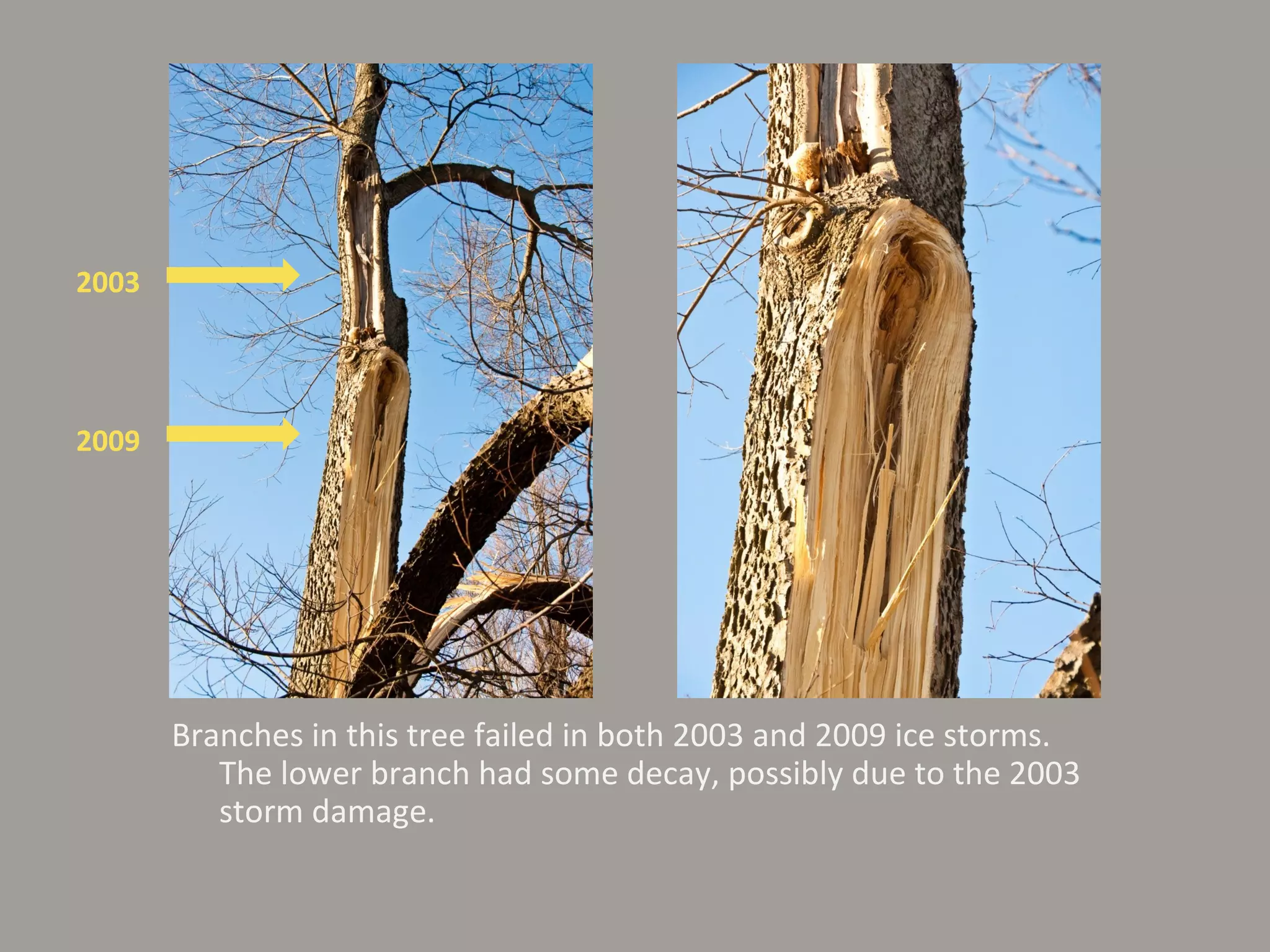
Branches in this tree failed in both 2003 and 2009 ice storms. The lower branch had some decay, possibly due to the 2003 storm damage. 2003 2009
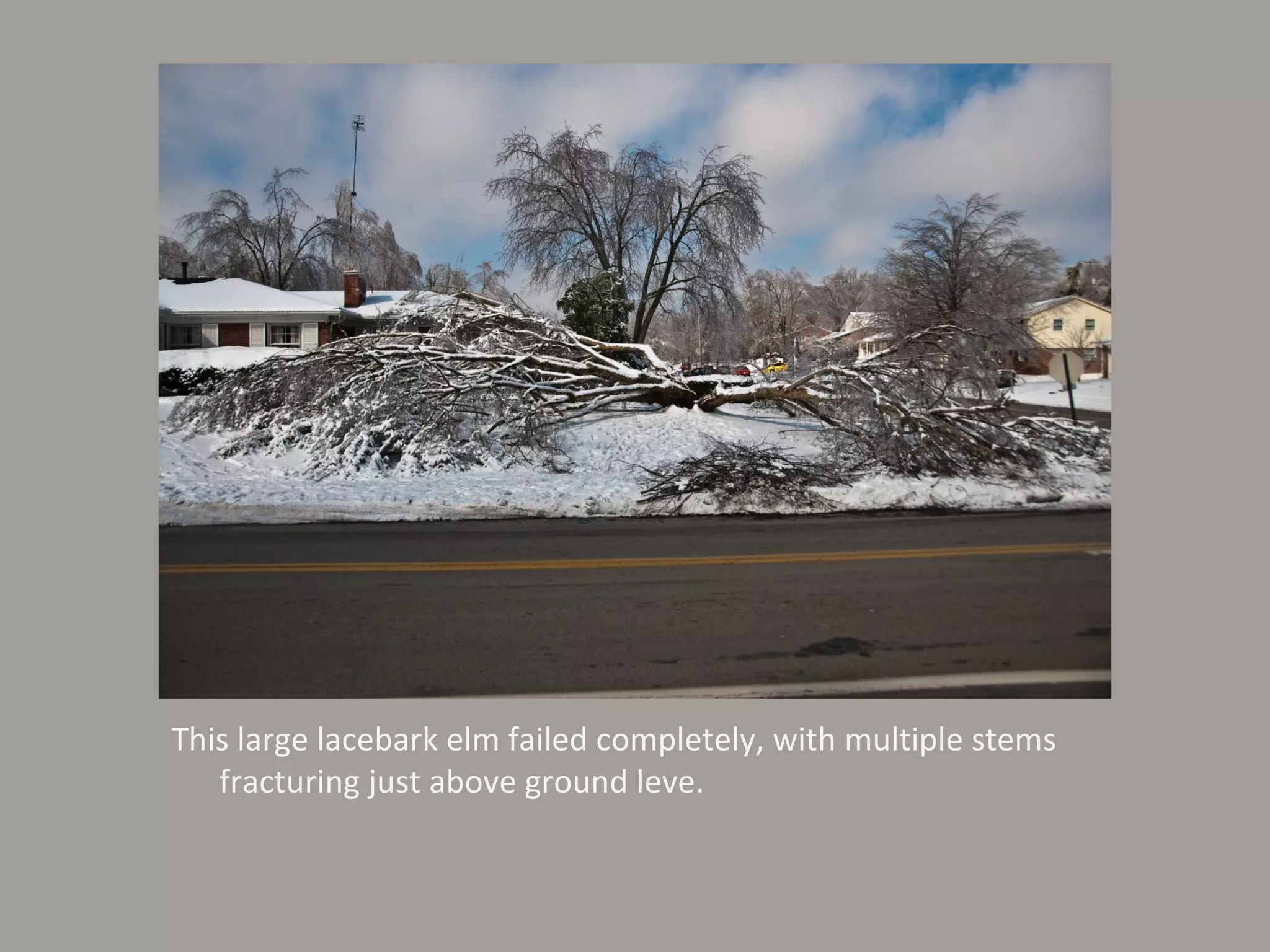
This large lacebark elm failed completely, with multiple stems fracturing just above ground leve.
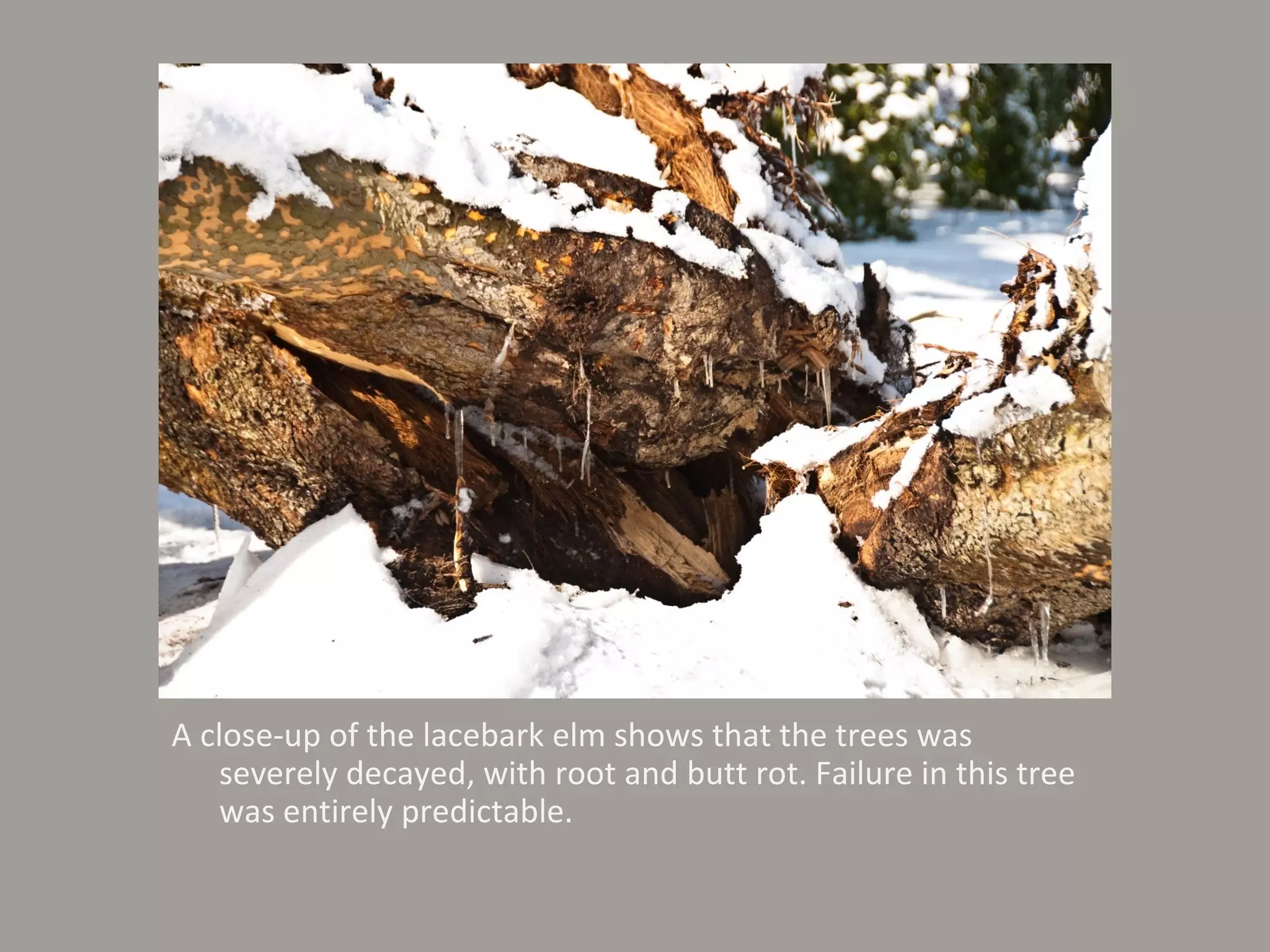
A close-up of the lacebark elm shows that the trees was severely decayed, with root and butt rot. Failure in this tree was entirely predictable.
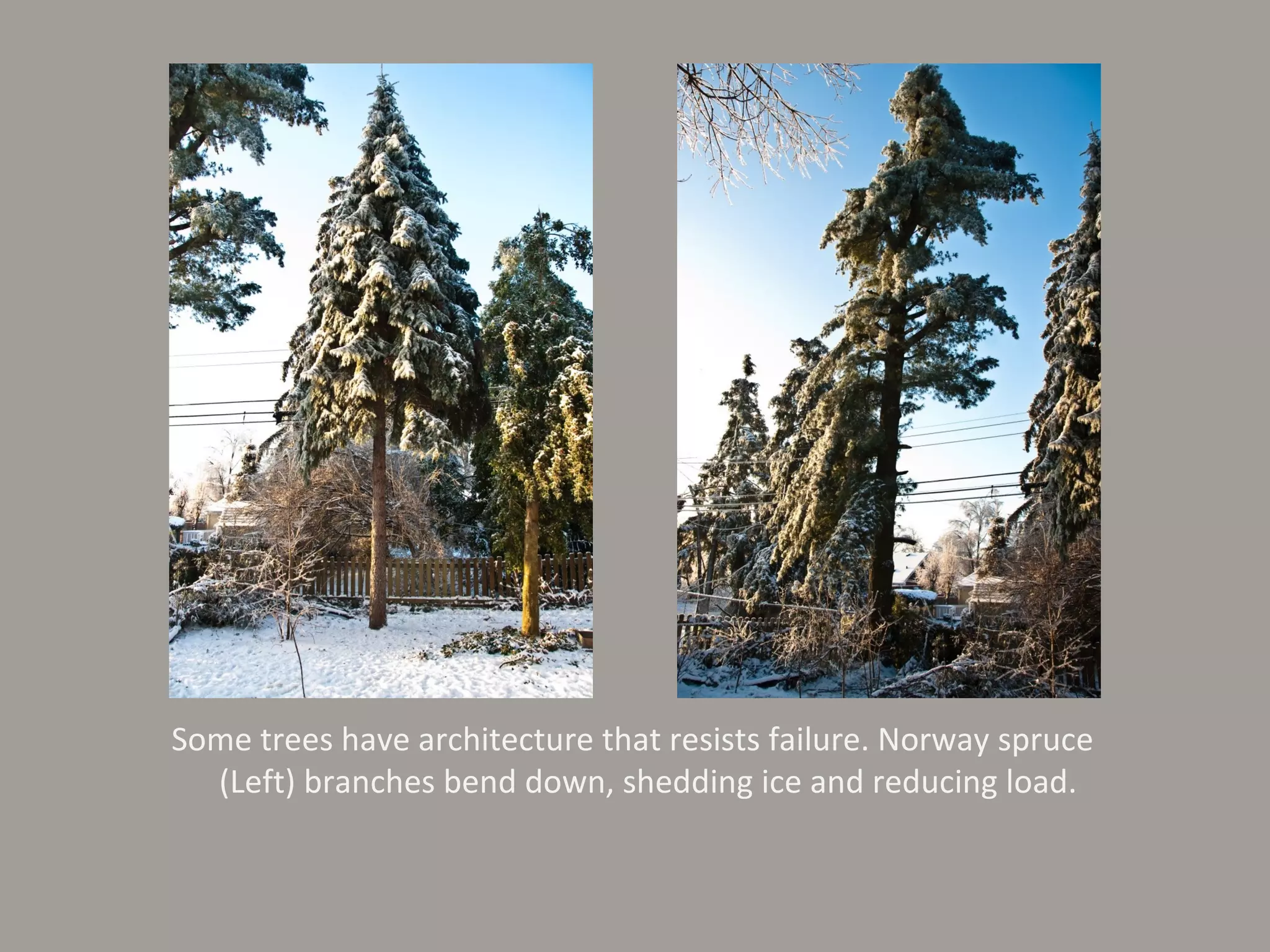
Some trees have architecture that resists failure. Norway spruce (Left) branches bend down, shedding ice and reducing load.
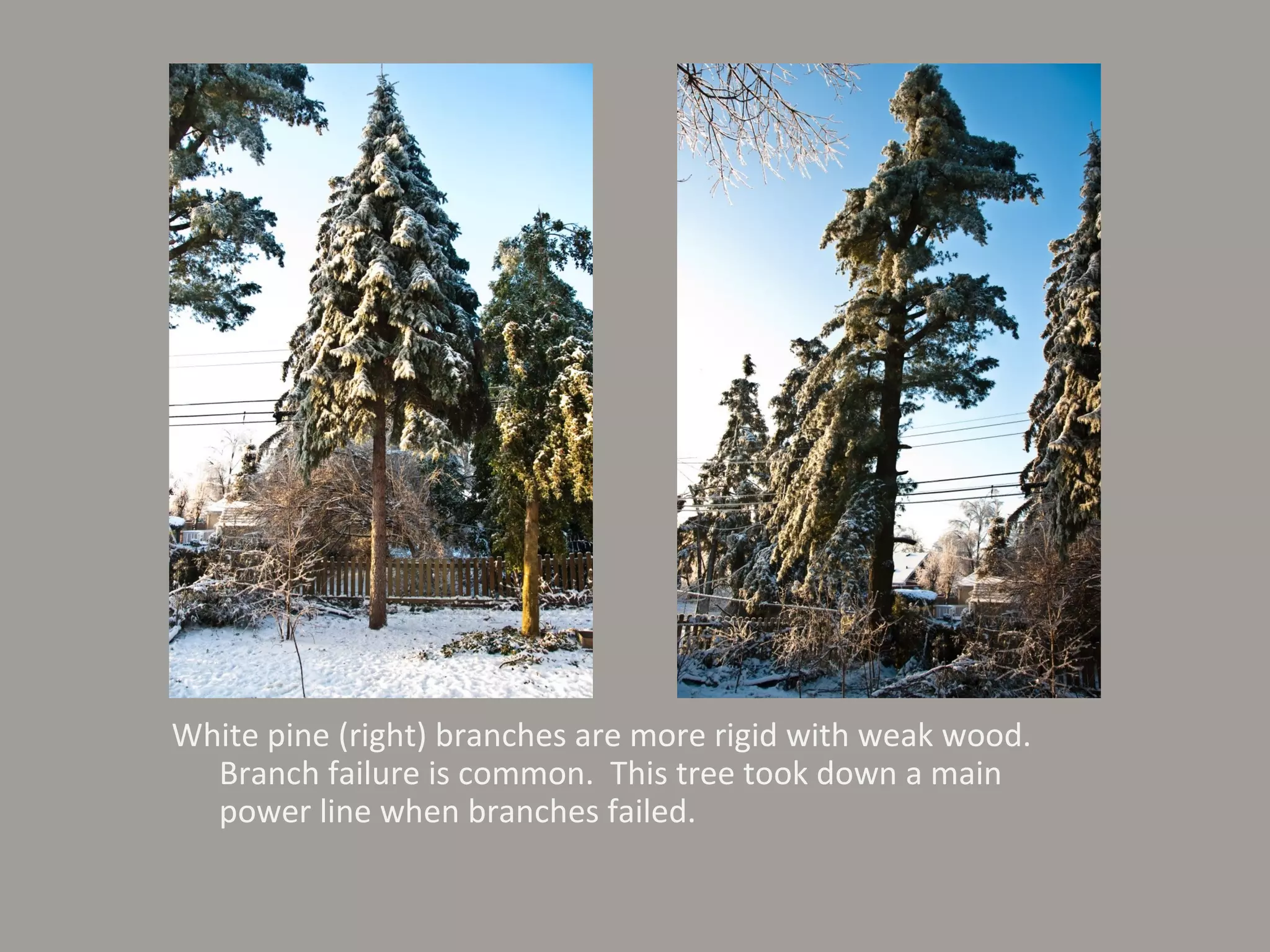
White pine (right) branches are more rigid with weak wood. Branch failure is common.  This tree took down a main power line when branches failed.
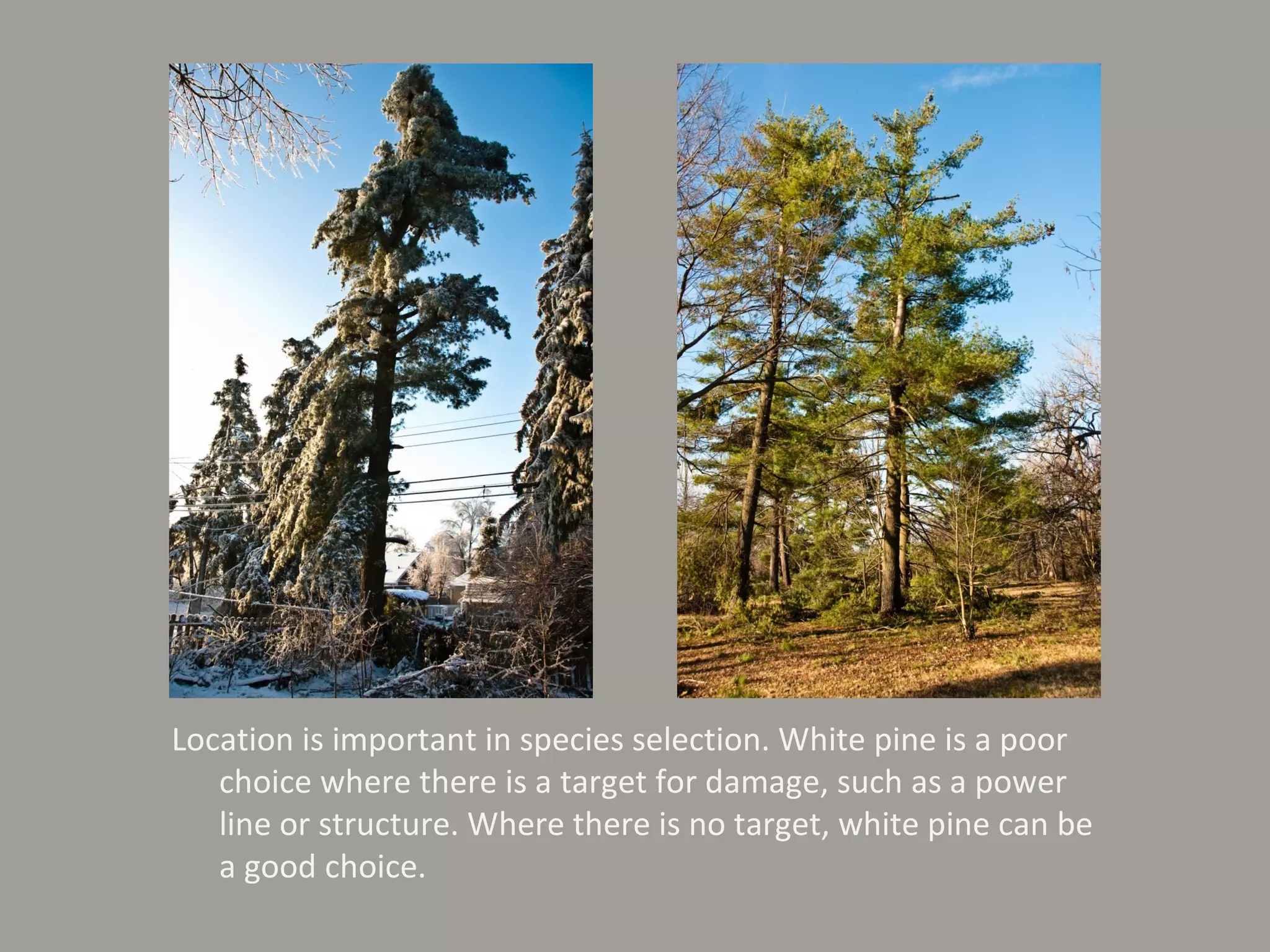
Location is important in species selection. White pine is a poor choice where there is a target for damage, such as a power line or structure. Where there is no target, white pine can be a good choice.
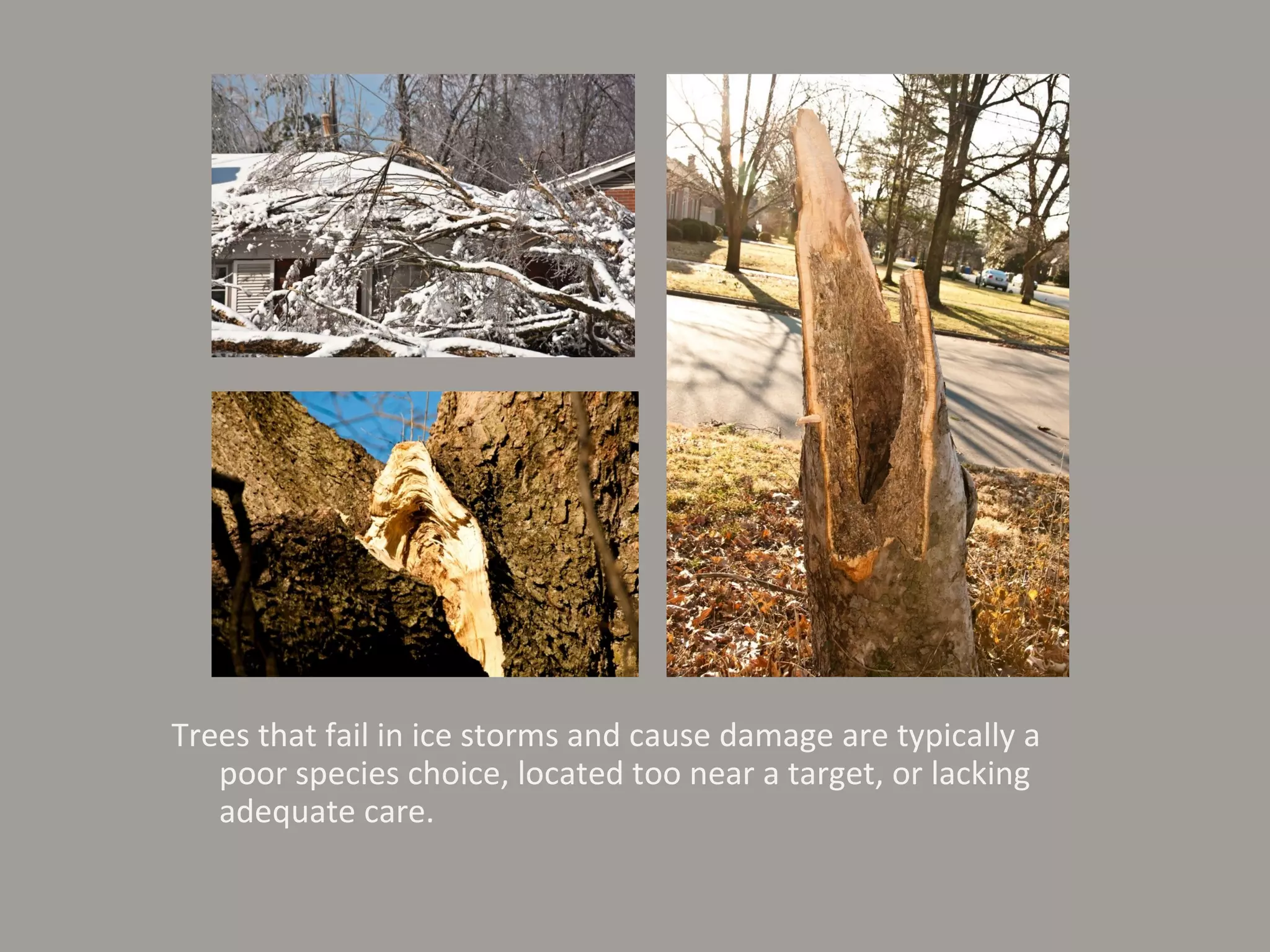
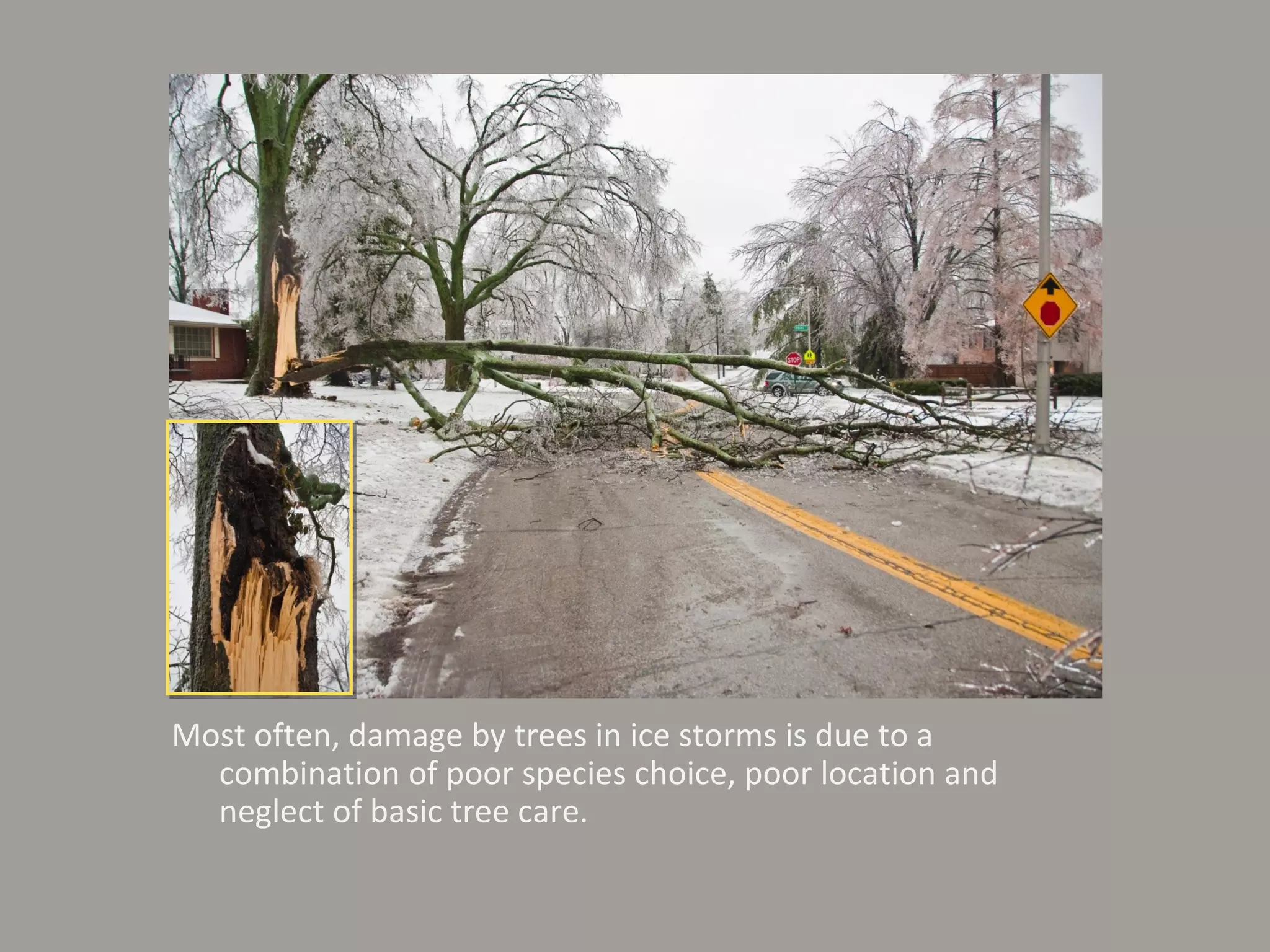
Trees that fail in ice storms and cause damage are typically a poor species choice, located too near a target, or lacking adequate care.
Most often, damage by trees in ice storms is due to a combination of poor species choice, poor location and neglect of basic tree care.
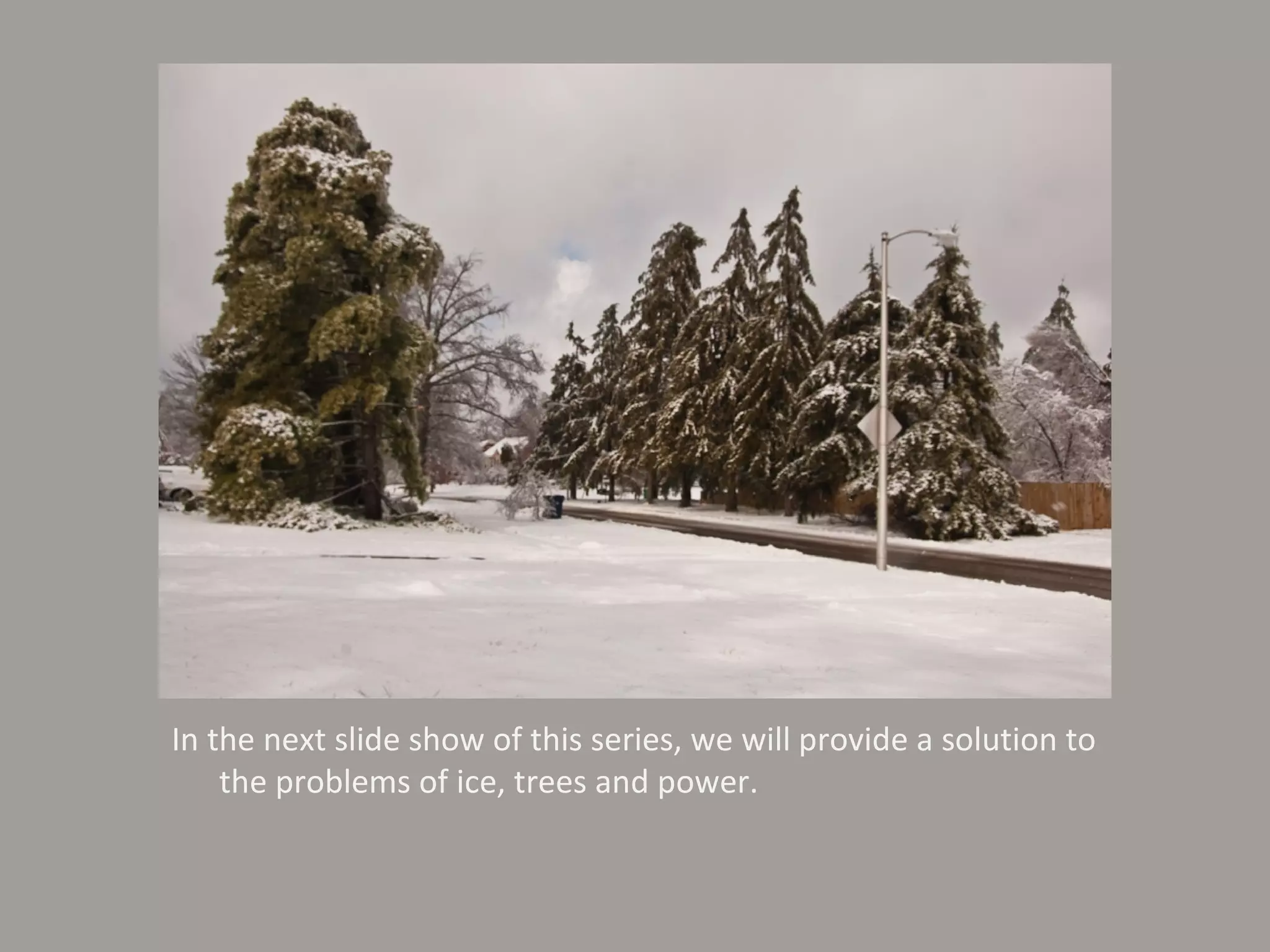
In the next slide show of this series, we will provide a solution to the problems of ice, trees and power.

Ice, Trees & Power, Part 1

  • 1.
    Ice, Trees &Power, Part I
  • 2.
    The Ice Stormof 2009 wiped out power to many Kentucky homes & businesses. Trees were the cause of most power outages in central Kentucky.
  • 3.
    What caused allthe damage, and how can cities be better prepared in the future to minimize damage and outages? In this presentation, we will describe the effects of ice on trees.
  • 4.
    Large, well-maintained treessuffered little damage. This white oak bore tons of ice. It bent, but lost no live limbs in ice storms in 2003 and 2009.
  • 5.
    Ice storms loadtree branches with excess weight.
  • 6.
    If the weightof the ice exceeds the load capacity of the branch, it will break. Tree species vary in their load tolerance. This branch failed in the middle…
  • 7.
    … butbranches more often fail where they are attached to the trunk. In this case, the branch failure split the entire trunk.
  • 8.
    Healthy branches canfail, but the majority of branch failures are due to decay. Decay is common at the branch-trunk junction. Branch on left was healthy, on right was decayed.
  • 9.
    Tree species withweak wood, such as this hackberry, are likely to fail whether or not decay is present.
  • 10.
    Branches in thistree failed in both 2003 and 2009 ice storms. The lower branch had some decay, possibly due to the 2003 storm damage. 2003 2009
  • 11.
    This large lacebarkelm failed completely, with multiple stems fracturing just above ground leve.
  • 12.
    A close-up ofthe lacebark elm shows that the trees was severely decayed, with root and butt rot. Failure in this tree was entirely predictable.
  • 13.
    Some trees havearchitecture that resists failure. Norway spruce (Left) branches bend down, shedding ice and reducing load.
  • 14.
    White pine (right)branches are more rigid with weak wood. Branch failure is common. This tree took down a main power line when branches failed.
  • 15.
    Location is importantin species selection. White pine is a poor choice where there is a target for damage, such as a power line or structure. Where there is no target, white pine can be a good choice.
  • 16.
    Trees that failin ice storms and cause damage are typically a poor species choice, located too near a target, or lacking adequate care.
  • 17.
    Most often, damageby trees in ice storms is due to a combination of poor species choice, poor location and neglect of basic tree care.
  • 18.
    In the nextslide show of this series, we will provide a solution to the problems of ice, trees and power.