Swami Keshvanand Instituteof Technology, Management & Gramothan
Supervisor
Dr. Prem singh
Professo
r
Presented by
Vikram
22ESKME046
7th Sem Mech
2.
Hybrid Power Generation
•Combinationof renewable and
non- renewable sources
• Ensures continuous power supply
• Improves efficiency
•Reduces dependency on single
energy source
• Supports sustainable development
3.
Overview of Topics
•Introduction
• Context of Hybrid Systems
• Energy Efficiency
• Environmental Impact
• Challenges and Future Trends
4.
Introduction
•Hybrid systems combinetwo or
more energy sources
•Common combinations: solar-wind, solar-
diesel
•Used in rural and remote
power applications
• Reduces greenhouse
emissions
• Provides reliable power
5.
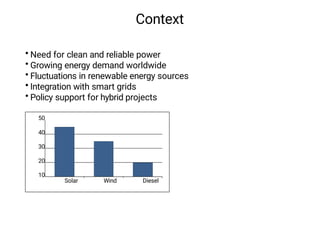
Context
Solar Wind Diesel
•Need for clean and reliable power
• Growing energy demand worldwide
• Fluctuations in renewable energy sources
• Integration with smart grids
• Policy support for hybrid projects
50
40
30
20
10
6.
Working Principle
• Energyfrom multiple sources combined
•Power management via
intelligent controllers
• Storage through batteries
• Grid and off-grid compatibility
• Improves supply reliability
7.
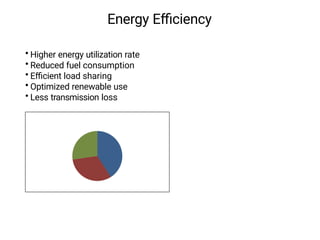
Energy Efficiency
• Higherenergy utilization rate
• Reduced fuel consumption
• Efficient load sharing
• Optimized renewable use
• Less transmission loss
8.
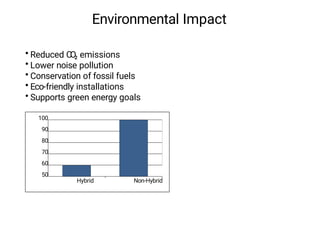
Environmental Impact
Hybrid Non-Hybrid
•Reduced C
O
₂ emissions
• Lower noise pollution
• Conservation of fossil fuels
• Eco-friendly installations
• Supports green energy goals
100
90
80
70
60
50
9.
Limitations and Challenges
•High installation cost
• Complex control systems
• Maintenance of multiple units
• Intermittency of renewables
• Infrastructure and policy barriers
10.
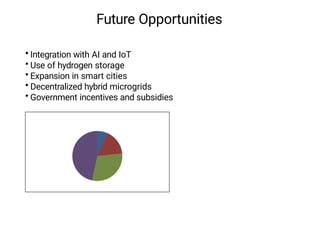
Future Opportunities
• Integrationwith AI and IoT
• Use of hydrogen storage
• Expansion in smart cities
• Decentralized hybrid microgrids
• Government incentives and subsidies
11.
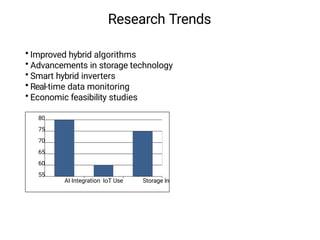
Research Trends
AI IntegrationIoT Use Storage In
• Improved hybrid algorithms
• Advancements in storage technology
• Smart hybrid inverters
• Real-time data monitoring
• Economic feasibility studies
80
75
70
65
60
55
12.
Conclusion
• Hybrid systemsensure energy reliability
• Sustainability and cost efficiency
• Key solution for remote areas
• Encourages renewable adoption
• Future of energy lies in hybridization
13.
References
• IEEE Paperson Hybrid Energy Systems
• Renewable Energy Journal 2024
• World Energy Outlook 2023
• ScienceDirect – Hybrid Systems Review
• ResearchGate – Hybrid Microgrids Study