Hybrid vehicles combine traditional internal combustion engines with
electric propulsion systems, offering improved fuel efficiency and
reduced emissions. They are designed to utilize both gasoline and
electricity, allowing for a more sustainable driving experience. This
presentation will explore the various types of hybrid vehicles, their
benefits, challenges, and the future of this technology.
Hybrid Vehicles
Explained
3
1 2
Overview of
Hybrid
Vehicles
CONTENTS(1)
Types of
Hybrid
Vehicles
Benefits of
Hybrid
Vehicles
3
1
4
2 The Future of Hybrid Vehicles
Hybrid Vehicles vs. Electric Vehicles
Conclusion
Challenges of Hybrid Vehicles
CONTENTS(2)
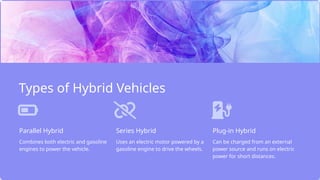
Can be charged from an external
power source and operates on
electric power for short
distances.
Plug-in Hybrid
Combines both electric and
gasoline engines to power the
vehicle.
Parallel Hybrid Series Hybrid
Types of Hybrid Vehicles
Uses an electric motor powered
by a gasoline engine to drive the
wheels.
Parallel Hybrid Plug-in Hybrid
Combines both electric and gasoline
engines to power the vehicle.
Can be charged from an external
power source and runs on electric
power for short distances.
Types of Hybrid Vehicles
Uses an electric motor powered by a
gasoline engine to drive the wheels.
Series Hybrid
Full Hybrids
Use the electric
motor to assist the
gasoline engine but
cannot drive solely
on electric power.
Can run on just the
electric motor, the
gasoline engine, or
both simultaneously.
Types of Hybrid Vehicles
Can be charged from
an external power
source and typically
have a larger battery
for extended electric-
only driving.
Mild Hybrids Plug-in Hybrids
1 3
2
Fuel Efficiency
Long-term savings on fuel and
maintenance costs.
Benefits of Hybrid Vehicles
Reduced Emissions
Lower greenhouse gas
emissions contribute to a
cleaner environment.
Hybrid vehicles consume less
fuel compared to traditional
cars.
Cost Savings
Lower greenhouse gas
emissions contribute to a
cleaner environment.
Hybrids generally
consume less fuel than
traditional vehicles,
leading to cost savings.
Captures energy during
braking to recharge the
battery, improving overall
efficiency.
Regenerative
Braking
Reduced Emissions
Benefits of Hybrid Vehicles
Fuel Efficiency Tax Incentives
Many governments offer
tax credits or rebates for
hybrid vehicle purchases.
Challenges of Hybrid
Vehicles
Battery Issues
Cost of
Production
Limited Range
Hybrid vehicles are
often more
expensive to
produce due to
complex
technology.
Battery life and
disposal can pose
significant
environmental
challenges.
Some hybrids may
not offer the same
range as traditional
vehicles.
Battery
Replacement
Over time, hybrid
batteries may
need
replacement,
which can be
costly.
Limited
Electric Range
Hybrids can be
more expensive
to purchase than
conventional
vehicles.
Higher Initial
Cost
Challenges of Hybrid
Vehicles
Some hybrids
have a limited
range when
operating solely
on electric power.
1 3
2 Environment
al Impact
Increase in
consumer
demand for
hybrids.
Reduction in
carbon
emissions
expected.
The Future of Hybrid
Vehicles
Integration of
AI for better
efficiency.
Technologic
al
Advancemen
ts
Market
Growth
The Future of Hybrid Vehicles
Technological
Advancements
Increased Adoption Integration with
Renewable Energy
As environmental concerns
grow, more consumers are
considering hybrids.
Ongoing research aims to
improve battery technology and
efficiency.
Future hybrids may be designed
to work seamlessly with
renewable energy sources.
1 2 3
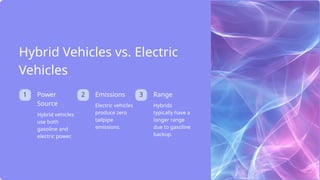
Hybrid vehicles
use both
gasoline and
electric power.
Hybrids
typically have a
longer range
due to gasoline
backup.
Power
Source
Emissions
Electric vehicles
produce zero
tailpipe
emissions.
Hybrid Vehicles vs. Electric
Vehicles
Range
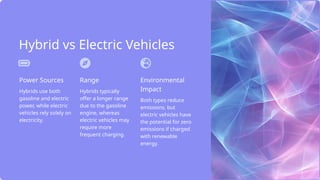
Range
Hybrids typically
offer a longer range
due to the gasoline
engine, whereas
electric vehicles may
require more
frequent charging.
Environmental
Impact
Hybrids use both
gasoline and electric
power, while electric
vehicles rely solely on
electricity.
Both types reduce
emissions, but
electric vehicles have
the potential for zero
emissions if charged
with renewable
energy.
Power Sources
Hybrid vs Electric Vehicles
Growing interest
in eco-friendly
transportation.
Hybrid vehicles
contribute to
reducing
emissions.
Technological
Advancement
s
Sustainable
Future
Consumer
Awareness
Continuous
improvements in
hybrid
technology.
Conclusion
Thank You
Appreciation
Thank you for
your attention.
Feedback
Your feedback is
valuable to us.
Feel free to ask
any questions.
Questions
Hybrid Vehicles Explained.pptx power point presentation

  • 1.
    Hybrid vehicles combinetraditional internal combustion engines with electric propulsion systems, offering improved fuel efficiency and reduced emissions. They are designed to utilize both gasoline and electricity, allowing for a more sustainable driving experience. This presentation will explore the various types of hybrid vehicles, their benefits, challenges, and the future of this technology. Hybrid Vehicles Explained
  • 2.
    3 1 2 Overview of Hybrid Vehicles CONTENTS(1) Typesof Hybrid Vehicles Benefits of Hybrid Vehicles
  • 3.
    3 1 4 2 The Futureof Hybrid Vehicles Hybrid Vehicles vs. Electric Vehicles Conclusion Challenges of Hybrid Vehicles CONTENTS(2)
  • 4.
    Can be chargedfrom an external power source and operates on electric power for short distances. Plug-in Hybrid Combines both electric and gasoline engines to power the vehicle. Parallel Hybrid Series Hybrid Types of Hybrid Vehicles Uses an electric motor powered by a gasoline engine to drive the wheels.
  • 5.
    Parallel Hybrid Plug-inHybrid Combines both electric and gasoline engines to power the vehicle. Can be charged from an external power source and runs on electric power for short distances. Types of Hybrid Vehicles Uses an electric motor powered by a gasoline engine to drive the wheels. Series Hybrid
  • 6.
    Full Hybrids Use theelectric motor to assist the gasoline engine but cannot drive solely on electric power. Can run on just the electric motor, the gasoline engine, or both simultaneously. Types of Hybrid Vehicles Can be charged from an external power source and typically have a larger battery for extended electric- only driving. Mild Hybrids Plug-in Hybrids
  • 7.
    1 3 2 Fuel Efficiency Long-termsavings on fuel and maintenance costs. Benefits of Hybrid Vehicles Reduced Emissions Lower greenhouse gas emissions contribute to a cleaner environment. Hybrid vehicles consume less fuel compared to traditional cars. Cost Savings
  • 8.
    Lower greenhouse gas emissionscontribute to a cleaner environment. Hybrids generally consume less fuel than traditional vehicles, leading to cost savings. Captures energy during braking to recharge the battery, improving overall efficiency. Regenerative Braking Reduced Emissions Benefits of Hybrid Vehicles Fuel Efficiency Tax Incentives Many governments offer tax credits or rebates for hybrid vehicle purchases.
  • 9.
    Challenges of Hybrid Vehicles BatteryIssues Cost of Production Limited Range Hybrid vehicles are often more expensive to produce due to complex technology. Battery life and disposal can pose significant environmental challenges. Some hybrids may not offer the same range as traditional vehicles.
  • 10.
    Battery Replacement Over time, hybrid batteriesmay need replacement, which can be costly. Limited Electric Range Hybrids can be more expensive to purchase than conventional vehicles. Higher Initial Cost Challenges of Hybrid Vehicles Some hybrids have a limited range when operating solely on electric power.
  • 11.
    1 3 2 Environment alImpact Increase in consumer demand for hybrids. Reduction in carbon emissions expected. The Future of Hybrid Vehicles Integration of AI for better efficiency. Technologic al Advancemen ts Market Growth
  • 12.
    The Future ofHybrid Vehicles Technological Advancements Increased Adoption Integration with Renewable Energy As environmental concerns grow, more consumers are considering hybrids. Ongoing research aims to improve battery technology and efficiency. Future hybrids may be designed to work seamlessly with renewable energy sources.
  • 13.
    1 2 3 Hybridvehicles use both gasoline and electric power. Hybrids typically have a longer range due to gasoline backup. Power Source Emissions Electric vehicles produce zero tailpipe emissions. Hybrid Vehicles vs. Electric Vehicles Range
  • 14.
    Range Hybrids typically offer alonger range due to the gasoline engine, whereas electric vehicles may require more frequent charging. Environmental Impact Hybrids use both gasoline and electric power, while electric vehicles rely solely on electricity. Both types reduce emissions, but electric vehicles have the potential for zero emissions if charged with renewable energy. Power Sources Hybrid vs Electric Vehicles
  • 15.
    Growing interest in eco-friendly transportation. Hybridvehicles contribute to reducing emissions. Technological Advancement s Sustainable Future Consumer Awareness Continuous improvements in hybrid technology. Conclusion
  • 16.
    Thank You Appreciation Thank youfor your attention. Feedback Your feedback is valuable to us. Feel free to ask any questions. Questions