ENHANCING BUSINESS
CONTINUITY WITH
HYBRID CLOUD
SOLUTIONS
Hybrid cloud solutions offer a robust approach to business continuity by
combining the benefits of both on-premises and cloud infrastructure.
www.acnstechnologies.com
CHALLENGES OF RELYING ON
ON- PREMISES INFRASTRUCTURE
1 2
3 SECURITY RISKS
On-premises infrastructure can be vulnerable to security
breaches, especially when dealing with outdated equipment
and software.
LIMITED
SCALABILITY
On-premises
infrastructure can struggle
to meet fluctuating
demands, leading to
performance issues and
downtime.
HIGH COSTS
Maintaining and upgrading
on-premises infrastructure
can be expensive, with
ongoing capital
expenditures
and operational expenses.
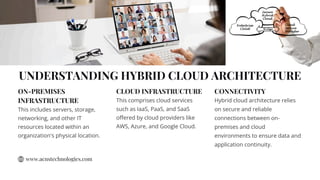
UNDERSTANDING HYBRID CLOUD ARCHITECTURE
ON-PREMISES
INFRASTRUCTURE
This includes servers, storage,
networking, and other IT
resources located within an
organization's physical location.
CLOUD INFRASTRUCTURE
This comprises cloud services
such as IaaS, PaaS, and SaaS
offered by cloud providers like
AWS, Azure, and Google Cloud.
CONNECTIVITY
Hybrid cloud architecture relies
on secure and reliable
connections between on-
premises and cloud
environments to ensure data and
application continuity.
www.acnstechnologies.com
KEY BENEFITS OF HYBRID CLOUD
FOR BUSINESS CONTINUITY
IMPROVED SECURITY
Hybrid cloud offers advanced security features and tools to protect
sensitive data and applications, mitigating risks associated with on-
premises environments.
ENHANCED
SCALABILITY
Hybrid cloud allows
organizations to scale their
resources up or down quickly
and easily to meet changing
demands.
COST OPTIMIZATION
Hybrid cloud enables
organizations to leverage the
cost-effectiveness of cloud
services while retaining control
over on-premises
infrastructure.
HYBRID CLOUD DISASTER RECOVERY AND DATA PROTECTION
1 2 3
DATA REPLICATION
Regularly replicate critical data to
the cloud to create a secure and
readily accessible backup.
FAILOVER MECHANISMS
Implement failover mechanisms to
automatically switch operations to
the cloud in the event of a disaster.
RECOVERY PROCEDURES
Develop and test recovery
procedures to ensure a swift and
efficient restoration of critical
services.
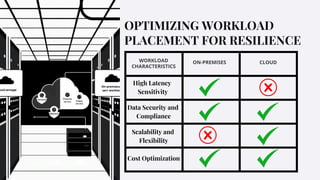
OPTIMIZING WORKLOAD
PLACEMENT FOR RESILIENCE
ON-PREMISES CLOUD
Cost Optimization
WORKLOAD
CHARACTERISTICS
High Latency
Sensitivity
Data Security and
Compliance
Scalability and
Flexibility
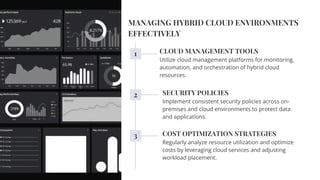
CLOUD MANAGEMENT TOOLS
Utilize cloud management platforms for monitoring,
automation, and orchestration of hybrid cloud
resources.
1
2
3
SECURITY POLICIES
Implement consistent security policies across on-
premises and cloud environments to protect data
and applications.
COST OPTIMIZATION STRATEGIES
Regularly analyze resource utilization and optimize
costs by leveraging cloud services and adjusting
workload placement.
MANAGING HYBRID CLOUD ENVIRONMENTS
EFFECTIVELY
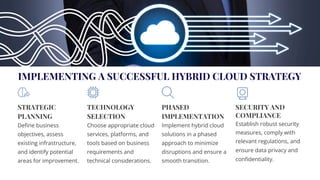
IMPLEMENTING A SUCCESSFUL HYBRID CLOUD STRATEGY
STRATEGIC
PLANNING
Define business
objectives, assess
existing infrastructure,
and identify potential
areas for improvement.
TECHNOLOGY
SELECTION
Choose appropriate cloud
services, platforms, and
tools based on business
requirements and
technical considerations.
PHASED
IMPLEMENTATION
Implement hybrid cloud
solutions in a phased
approach to minimize
disruptions and ensure a
smooth transition.
SECURITY AND
COMPLIANCE
Establish robust security
measures, comply with
relevant regulations, and
ensure data privacy and
confidentiality.

Hybrid Cloud Solutions for Business Continuity & Security

  • 1.
    ENHANCING BUSINESS CONTINUITY WITH HYBRIDCLOUD SOLUTIONS Hybrid cloud solutions offer a robust approach to business continuity by combining the benefits of both on-premises and cloud infrastructure. www.acnstechnologies.com
  • 2.
    CHALLENGES OF RELYINGON ON- PREMISES INFRASTRUCTURE 1 2 3 SECURITY RISKS On-premises infrastructure can be vulnerable to security breaches, especially when dealing with outdated equipment and software. LIMITED SCALABILITY On-premises infrastructure can struggle to meet fluctuating demands, leading to performance issues and downtime. HIGH COSTS Maintaining and upgrading on-premises infrastructure can be expensive, with ongoing capital expenditures and operational expenses.
  • 3.
    UNDERSTANDING HYBRID CLOUDARCHITECTURE ON-PREMISES INFRASTRUCTURE This includes servers, storage, networking, and other IT resources located within an organization's physical location. CLOUD INFRASTRUCTURE This comprises cloud services such as IaaS, PaaS, and SaaS offered by cloud providers like AWS, Azure, and Google Cloud. CONNECTIVITY Hybrid cloud architecture relies on secure and reliable connections between on- premises and cloud environments to ensure data and application continuity. www.acnstechnologies.com
  • 4.
    KEY BENEFITS OFHYBRID CLOUD FOR BUSINESS CONTINUITY IMPROVED SECURITY Hybrid cloud offers advanced security features and tools to protect sensitive data and applications, mitigating risks associated with on- premises environments. ENHANCED SCALABILITY Hybrid cloud allows organizations to scale their resources up or down quickly and easily to meet changing demands. COST OPTIMIZATION Hybrid cloud enables organizations to leverage the cost-effectiveness of cloud services while retaining control over on-premises infrastructure.
  • 5.
    HYBRID CLOUD DISASTERRECOVERY AND DATA PROTECTION 1 2 3 DATA REPLICATION Regularly replicate critical data to the cloud to create a secure and readily accessible backup. FAILOVER MECHANISMS Implement failover mechanisms to automatically switch operations to the cloud in the event of a disaster. RECOVERY PROCEDURES Develop and test recovery procedures to ensure a swift and efficient restoration of critical services.
  • 6.
    OPTIMIZING WORKLOAD PLACEMENT FORRESILIENCE ON-PREMISES CLOUD Cost Optimization WORKLOAD CHARACTERISTICS High Latency Sensitivity Data Security and Compliance Scalability and Flexibility
  • 7.
    CLOUD MANAGEMENT TOOLS Utilizecloud management platforms for monitoring, automation, and orchestration of hybrid cloud resources. 1 2 3 SECURITY POLICIES Implement consistent security policies across on- premises and cloud environments to protect data and applications. COST OPTIMIZATION STRATEGIES Regularly analyze resource utilization and optimize costs by leveraging cloud services and adjusting workload placement. MANAGING HYBRID CLOUD ENVIRONMENTS EFFECTIVELY
  • 8.
    IMPLEMENTING A SUCCESSFULHYBRID CLOUD STRATEGY STRATEGIC PLANNING Define business objectives, assess existing infrastructure, and identify potential areas for improvement. TECHNOLOGY SELECTION Choose appropriate cloud services, platforms, and tools based on business requirements and technical considerations. PHASED IMPLEMENTATION Implement hybrid cloud solutions in a phased approach to minimize disruptions and ensure a smooth transition. SECURITY AND COMPLIANCE Establish robust security measures, comply with relevant regulations, and ensure data privacy and confidentiality.