Fidia Advanced Biopolymers Srl
HYALOBARRIER GEL
Product technology & preclinical data
Enrico Tognana, PhD
Head of R&D Unit
FAB-Nordic Pharma kick-off meeting, Abano terme - 18 March 2008
Fidia Advanced Biopolymers Srl
HYALURONAN:
CLINICAL AND SURGICAL APPLICATIONS
 Wound healing
 Scaffold for tissue engineering
 Used in treatment of osteoarthritis
 Ocular surgery
 Anti-adhesive barrier
Fidia Advanced Biopolymers Srl
HYALURONAN:
IN ADHESION PREVENTION
Why?
Biocompatible
Barrier function
(viscosity)
Bio-absorbable
Role in modulation of
inflammatory phase in
wound healing
Role in scarless wound
healing
Inadequacy because of:
Quickly cleared
Inadequately
viscous
Low residence time
 Yarali H J Reprod Med 1994;39:667-670
 Hill-West J Fertil Steril 1994;62:630-4
 Burns JW Surg Res 1995;59:644-52
 Urman B Fertil Steril 1991;56:563-7
BUT…
Fidia Advanced Biopolymers Srl
HYALURONAN DERIVATIVES
IN POST-SURGICAL ADHESION PREVENTION
FAB developed a hyaluronan derivative
which overcomes the limits of native
hyaluronan
Characteristics:
 Prolonged residence time
 Prolonged barrier effect
 High viscosity
 High biocompatibility
 Pure HA is the result of degradation process
…THEN…
ACP®
Fidia Advanced Biopolymers Srl
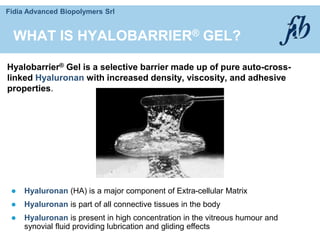
WHAT IS HYALOBARRIER® GEL?
Hyalobarrier® Gel is a selective barrier made up of pure auto-cross-
linked Hyaluronan with increased density, viscosity, and adhesive
properties.
 Hyaluronan (HA) is a major component of Extra-cellular Matrix
 Hyaluronan is part of all connective tissues in the body
 Hyaluronan is present in high concentration in the vitreous humour and
synovial fluid providing lubrication and gliding effects
Fidia Advanced Biopolymers Srl
WHAT IS HYALOBARRIER® GEL?
Classification
Medical device, class III.
Indications for use
 Prevention and reduction of post-surgical adhesion formation in the
abdominal pelvic area
Intended use
 Mechanical barrier to prevent or minimize post-surgical adhesions after
surgical interventions.
Fidia Advanced Biopolymers Srl
REGULATORY STATUS
EUROPE
 Approved CE mark 0459
(notified body G-Med)
USA
 Medical Device with PMA registration
OTHER COUNTRIES
 Medical Device
Fidia Advanced Biopolymers Srl
 ACP gel: EP 0614914
 Anti-adhesion gel: WO 97/07/833
PATENTS
Fidia Advanced Biopolymers Srl
WHAT IS HYALOBARRIER® GEL
MADE OF?
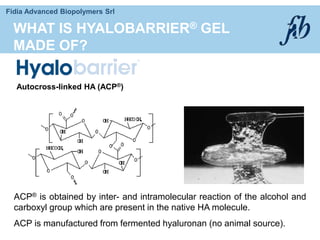
ACP® is obtained by inter- and intramolecular reaction of the alcohol and
carboxyl group which are present in the native HA molecule.
ACP is manufactured from fermented hyaluronan (no animal source).
Autocross-linked HA (ACP®)
Fidia Advanced Biopolymers Srl
HOW IS HYALOBARRIER® GEL
DEGRADED?
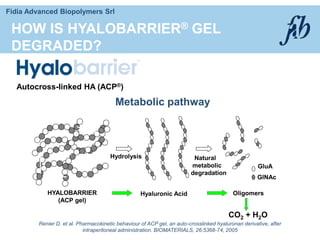
Autocross-linked HA (ACP®)
Metabolic pathway
Hydrolysis Natural
metabolic
degradation
HYALOBARRIER
(ACP gel)
Hyaluronic Acid Oligomers
GluA
GlNAc
CO2 + H2O
Renier D. et al. Pharmacokinetic behaviour of ACP gel, an auto-crosslinked hyaluronan derivative, after
intraperitoneal administration. BIOMATERIALS, 26:5368-74, 2005
Fidia Advanced Biopolymers Srl
WHAT IS HYALOBARRIER® GEL
MADE OF?
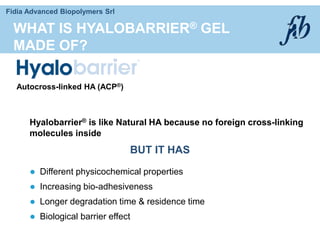
Autocross-linked HA (ACP®)
Hyalobarrier® is like Natural HA because no foreign cross-linking
molecules inside
 Different physicochemical properties
 Increasing bio-adhesiveness
 Longer degradation time & residence time
 Biological barrier effect
BUT IT HAS
Fidia Advanced Biopolymers Srl
 Hyalobarrier® is resorbed in 3 to 7 days
 Hyalobarrier® therefore covers the critical period of
postoperative adhesion onset
WHEN IS HYALOBARRIER® GEL
DEGRADED?
Fidia Advanced Biopolymers Srl
Due to higher adhesivity and prolonged residence time vs unmodified HA,
Hyalobarrier Gel seems particularly suitable for preventing adhesion formation
(Mensitieri et al. 1996)
HOW DOES HYALOBARRIER® GEL
WORK?
 Keep tissue separated during the critical period following injury
 Protects traumatized and ischemic serous membranes
 Hydrates underlying tissues
 Modulates the peritoneal wound healing process
Clinical use
Prevention and reduction of post-surgical adhesion formation in
gynecological and abdomino-pelvic surgery, both in laparoscopy and
laparotomy
Fidia Advanced Biopolymers Srl
 Efficacy and safety in different types of surgery:open
and close
 Determine kinetics of in vivo degradation
 Answers to questions relevant in a clinical setting:
Behaviour in case of inadequate hemostasis
Effect on tumour growth
PRECLINICAL STUDIES
Fidia Advanced Biopolymers Srl
IS HYALOBARRIER® GEL SAFE?
 The safety of Hyalobarrier® Gel was evaluated through a series of
toxicological tests. All these evaluations demonstrated that
Hyalobarrier® is:
 Non toxic
 Non irritant
 Non sensitizing
 Non cytotoxic
 Non pyrogenic
 Non mutagenic
 Non carcinogenic
Yes
Fidia Advanced Biopolymers Srl
DeIaco P.A. et al.Fertility Sterility 1998;69 (2):318-323
Belluco C. et al. J Surg Res. 2001; 100:217-221
Kocak I , Unlü C., Akcan Y et al. Fertility Sterility 1999, vol.72. N°5
Wallwiener M., Brucker S.,Hierlemann H et al. Fertility and Sterility 2006;86 (3):1266-1276
Binda MM, Molinas CR, Bastidas A et al. The Journal of Minimally Invasive Gynecology 2007;14:591-599
 In experimental studies (rabbit, rat, mouse), uterine horn in laparoscopy
and abdominal model in laparotomy it was detected a statistically
significant difference between Hyalobarrier and Control group with
respect to the incidence and severity of adhesions formation
IS HYALOBARRIER® GEL EFFECTIVE?
Yes
Fidia Advanced Biopolymers Srl
HYALOBARRIER® GEL ADVANTAGES
 Pure hyaluronan derivative containing no foreign substances
 High viscosity, site-specific for the intended use
 Excellent conformability
 Prolonged residence time in the application site
 Excellent bio-compatibility
Major Advantages
Fidia Advanced Biopolymers Srl
CAN HYALOBARRIER BE USED IN
PRESENCE OF MALIGNANCIES?
PRECLINICAL STUDY
The safety of Hyalobarrier
was demonstrated in presence
of malignancies in preclinical study
Hyalobarrier gel does not potentiate HT 29 colorectal human
intraperitoneal tumour cells growth in an experimental model of
tumour induction
Fidia Advanced Biopolymers Srl
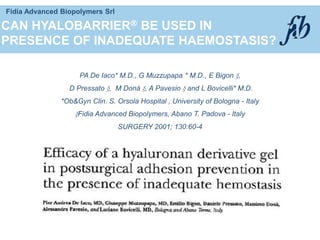
CAN HYALOBARRIER BE USED IN
PRESENCE OF INADEQUATE HAEMOSTASIS?
PA De Iaco* M.D., G Muzzupapa * M.D., E Bigon §,
D Pressato §, M Donà §, A Pavesio § and L Bovicelli* M.D.
*Ob&Gyn Clin. S. Orsola Hospital , University of Bologna - Italy
§Fidia Advanced Biopolymers, Abano T. Padova - Italy
SURGERY 2001; 130:60-4
Fidia Advanced Biopolymers Srl
 Safety and efficacy in reducing postsurgical adhesions
DeIaco P.A. et al. Fertility Sterility 1998;69 (2):318-323 (Laparoscopy)
Belluco C. et al. J Surg Res. 2001; 100:217-221 (Laparotomy)
Kocak I et al. Fert.Ster.1999, vol.72. N°5 (Laparotomy)
Wallwiener M et al. Fertility and Sterility 2006;86 (3):1266-1276 (Laparotomy)
Binda MM et al. The J Minimal Inv Gynecology 2007;14:591-599 (Laparoscopy)
 Pharmacokinetic behaviour of ACP gel, an autocrosslinked hyaluronan derivative, after
intraperitoneal administration
Renier D, Bellato P, Bellini D. et al. Biomaterials 2005; 26: 5368-5374.
 Efficacy in presence of inadequate hemostasis
De Iaco P.A. Surgery 2001; 130 (1): 60-64 (Laparotomy)
 No effect on colon-rectal tumour growth
Pucciarelli S. et al. British Journal Surgery 2003;90:66-71 (Laparotomy)
PRECLINICAL PUBLICATIONS
Fidia Advanced Biopolymers Srl
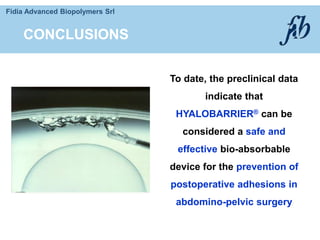
To date, the preclinical data
indicate that
HYALOBARRIER® can be
considered a safe and
effective bio-absorbable
device for the prevention of
postoperative adhesions in
abdomino-pelvic surgery
CONCLUSIONS
Fidia Advanced Biopolymers Srl
Kickoff Meeting NordicPharma-FAB
March 18th, 2008
F.Torasso
Fidia Advanced Biopolymers Srl
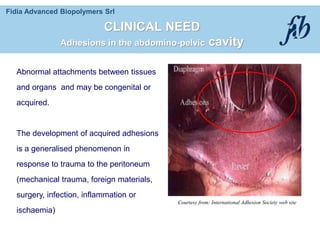
CLINICAL NEED
Adhesions in the abdomino-pelvic cavity
Courtesy from: International Adhesion Society web site
Abnormal attachments between tissues
and organs and may be congenital or
acquired.
The development of acquired adhesions
is a generalised phenomenon in
response to trauma to the peritoneum
(mechanical trauma, foreign materials,
surgery, infection, inflammation or
ischaemia)
Fidia Advanced Biopolymers Srl
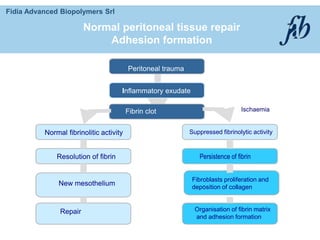
Peritoneal trauma
Inflammatory exudate
Fibrin clot
Normal fibrinolitic activity
Resolution of fibrin
New mesothelium
Repair
Suppressed fibrinolytic activity
Persistence of fibrin
Fibroblasts proliferation and
deposition of collagen
.
Organisation of fibrin matrix
and adhesion formation
Normal peritoneal tissue repair
Adhesion formation
Ischaemia
Fidia Advanced Biopolymers Srl
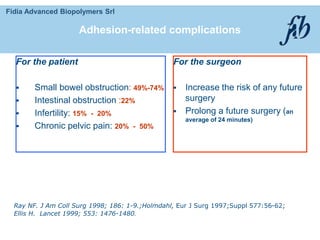
Adhesion-related complications
For the patient
 Small bowel obstruction: 49%-74%
 Intestinal obstruction :22%
 Infertility: 15% - 20%
 Chronic pelvic pain: 20% - 50%
For the surgeon
 Increase the risk of any future
surgery
 Prolong a future surgery (an
average of 24 minutes)
Ray NF. J Am Coll Surg 1998; 186: 1-9.;Holmdahl, Eur J Surg 1997;Suppl 577:56-62;
Ellis H. Lancet 1999; 553: 1476-1480.
Fidia Advanced Biopolymers Srl
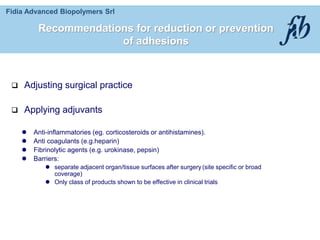
Recommendations for reduction or prevention
of adhesions
 Adjusting surgical practice
 Applying adjuvants
 Anti-inflammatories (eg. corticosteroids or antihistamines).
 Anti coagulants (e.g.heparin)
 Fibrinolytic agents (e.g. urokinase, pepsin)
 Barriers:
 separate adjacent organ/tissue surfaces after surgery (site specific or broad
coverage)
 Only class of products shown to be effective in clinical trials
Fidia Advanced Biopolymers Srl
Efficacy Clinical Evidence
Fidia Advanced Biopolymers Srl
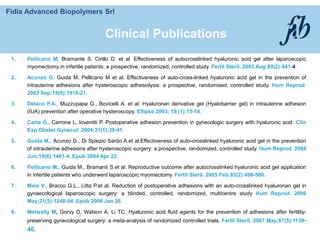
1. Pellicano M, Bramante S, Cirillo D. et al. Effectiveness of autocrosslinked hyaluronic acid gel after laparoscopic
myomectomy in infertile patients: a prospective, randomized, controlled study. Fertil Steril. 2003 Aug;80(2):441-4
2. Acunzo G, Guida M, Pellicano M et al. Effectiveness of auto-cross-linked hyaluronic acid gel in the prevention of
intrauterine adhesions after hysteroscopic adhesiolysis: a prospective, randomised, controlled study. Hum Reprod.
2003 Sep;18(9):1918-21.
3. DeIaco P.A., Muzzupapa G., Bovicelli A. et al. Hyaluronan derivative gel (Hyalobarrier gel) in intrauterine adhesion
(IUA) prevention after operative hysteroscopy. Ellipse 2003; 19 (1):15-18.
4. Carta G., Cerrone L, Iovenitti P. Postoperative adhesion prevention in gynecologic surgery with hyaluronic acid Clin
Exp Obstet Gynecol. 2004;31(1):39-41.
5. Guida M., Acunzo G., Di Spiezio Sardo A.et al.Effectiveness of auto-crosslinked hyaluronic acid gel in the prevention
of intrauterine adhesions after hysteroscopic surgery: a prospective, randomized, controlled study. Hum Reprod. 2004
Jun;19(6):1461-4. Epub 2004 Apr 22.
6. Pellicano M., Guida M., Bramanti S.et al. Reproductive outcome after autocrosslinked hyaluronic acid gel application
in infertile patients who underwent laparoscopic myomectomy. Fertil Steril. 2005 Feb;83(2):498-500.
7. Mais V., Bracco G.L., Litta P.et al. Reduction of postoperative adhesions with an auto-crosslinked hyaluronan gel in
gynaecological laparoscopic surgery: a blinded, controlled, randomized, multicentre study Hum Reprod. 2006
May;21(5):1248-54. Epub 2006 Jan 26.
8. Metwally M, Gorvy D, Watson A, Li TC. Hyaluronic acid fluid agents for the prevention of adhesions after fertility-
preserving gynecological surgery: a meta-analysis of randomized controlled trials. Fertil Steril. 2007 May;87(5):1139-
46.
Clinical Publications
Fidia Advanced Biopolymers Srl
 5 RCT, randomized controlled clinical trials, in gynecological endoscopy.
 1 clinical trial showed as efficacy date the significant increase in
pregnancy rate
 1 clinical trial in gynecologic laparotomy
 Hyalobarrier® was included in an indipendent Cochrane meta-analysis on
hyaluronan based anti-adhesion products in the conservative gynecologic
surgery.
To highlight
Fidia Advanced Biopolymers Srl
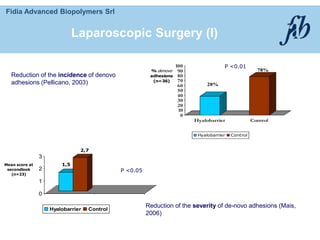
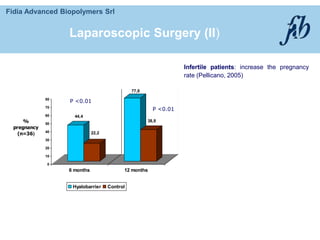
• LAPAROSCOPIC Surgery (Myoma): Hyalobarrier® was effective
in the prevention of de-novo adhesions, reducing the incidence
(Pellicano, 2003) and severity (Mais, 2006).
in infertile patients resulting in a significant increase in the pregnancy
rate (Pellicano 2005)
Key findings from clinical trials
Fidia Advanced Biopolymers Srl
28%
78%
0
10
20
30
40
50
60
70
80
90
100
% denovo
adhesions
(n=36)
Hyalobarrier Control
P <0.01
1,5
2,7
0
1
2
3
Mean score at
secondlook
(n=23)
Hyalobarrier Control
P <0.05
Laparoscopic Surgery (I)
Reduction of the incidence of denovo
adhesions (Pellicano, 2003)
Reduction of the severity of de-novo adhesions (Mais,
2006)
Fidia Advanced Biopolymers Srl
44,4
22,2
77,8
38,8
0
10
20
30
40
50
60
70
80
%
pregnancy
(n=36)
6 months 12 months
Hyalobarrier Control
Infertile patients: increase the pregnancy
rate (Pellicano, 2005)
P <0.01
P <0.01
Laparoscopic Surgery (II)
Fidia Advanced Biopolymers Srl
• HYSTEROSCOPIC Surgery (Polyps, Myomas, Uterine Septae,
Adhesions): Hyalobarrier® was effective
in the prevention of denovo uterine adhesions, resulting in reduction of
both the incidence and the severity (Guida, 2004) and
in the prevention of the reformed uterine adhesions, resulting in reduction
of both the incidence and the severity (Acunzo, 2003)
Key findings from clinical trials
Fidia Advanced Biopolymers Srl
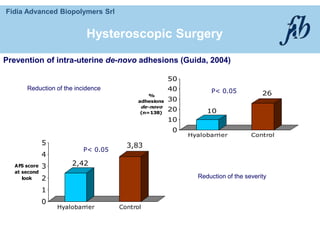
10
26
0
10
20
30
40
50
%
adhesions
de-novo
(n=138)
Hyalobarrier Control
P< 0.05
Hysteroscopic Surgery
2,42
3,83
0
1
2
3
4
5
AFS score
at second
look
Hyalobarrier Control
P< 0.05
Reduction of the incidence
Reduction of the severity
Prevention of intra-uterine de-novo adhesions (Guida, 2004)
Fidia Advanced Biopolymers Srl
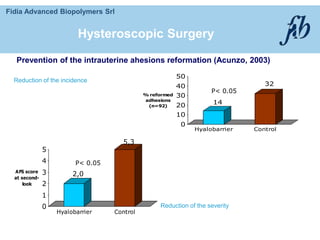
14
32
0
10
20
30
40
50
% reformed
adhesions
(n=92)
Hyalobarrier Control
P< 0.05
Prevention of the intrauterine ahesions reformation (Acunzo, 2003)
2,0
5,3
0
1
2
3
4
5
AFS score
at second-
look
Hyalobarrier Control
P< 0.05
Reduction of the incidence
Reduction of the severity
Hysteroscopic Surgery
Fidia Advanced Biopolymers Srl
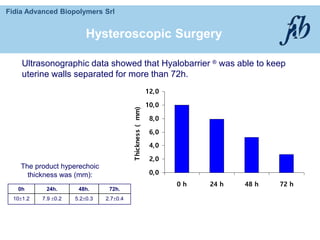
Ultrasonographic data showed that Hyalobarrier ® was able to keep
uterine walls separated for more than 72h.
0h 24h. 48h. 72h.
101.2 7.9 0.2 5.20.3 2.70.4
0,0
2,0
4,0
6,0
8,0
10,0
12,0
0 h 24 h 48 h 72 h
Thickness
(
mm)
The product hyperechoic
thickness was (mm):
Hysteroscopic Surgery
Fidia Advanced Biopolymers Srl
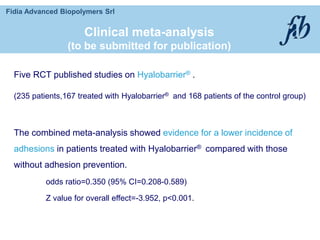
Five RCT published studies on Hyalobarrier® .
(235 patients,167 treated with Hyalobarrier® and 168 patients of the control group)
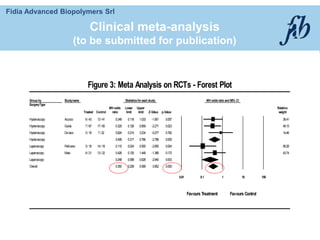
The combined meta-analysis showed evidence for a lower incidence of
adhesions in patients treated with Hyalobarrier® compared with those
without adhesion prevention.
odds ratio=0.350 (95% CI=0.208-0.589)
Z value for overall effect=-3.952, p<0.001.
Clinical meta-analysis
(to be submitted for publication)
Fidia Advanced Biopolymers Srl
Group by
SurgeryType
Studyname Statisticsfor each study MH oddsratio and 95% CI
MH odds Lower Upper Relative
Treated Control ratio limit limit Z-Value p-Value weight
Hysteroscopy Acunzo 6/43 13/41 0.349 0.118 1.033 -1.901 0.057 36.41
Hysteroscopy Guida 7/67 17/65 0.329 0.126 0.859 -2.271 0.023 49.13
Hysteroscopy DeIaco 5/18 7/22 0.824 0.210 3.234 -0.277 0.782 14.46
Hysteroscopy 0.408 0.217 0.766 -2.788 0.005
Laparoscopy Pellicano 5/18 14/18 0.110 0.024 0.500 -2.855 0.004 56.26
Laparoscopy Mais 8/21 13/22 0.426 0.125 1.449 -1.366 0.172 43.74
Laparoscopy 0.248 0.098 0.628 -2.940 0.003
Overall 0.350 0.208 0.589 -3.952 0.000
0.01 0.1 1 10 100
Favours Treatment Favours Control
Figure 3: Meta Analysis on RCTs - Forest Plot
Clinical meta-analysis
(to be submitted for publication)
Fidia Advanced Biopolymers Srl
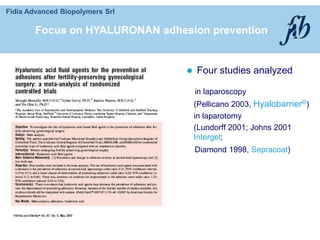
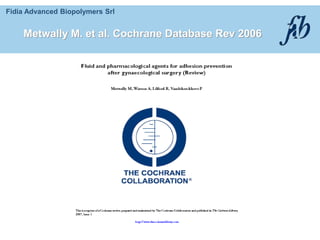
Metwally M. et al. Cochrane Database Rev 2006
Fidia Advanced Biopolymers Srl
in laparoscopy
(Pellicano 2003, Hyalobarrier®)
in laparotomy
(Lundorff 2001; Johns 2001
Intergel;
Diamond 1998, Sepracoat)
 Four studies analyzed
Focus on HYALURONAN adhesion prevention
Fidia Advanced Biopolymers Srl
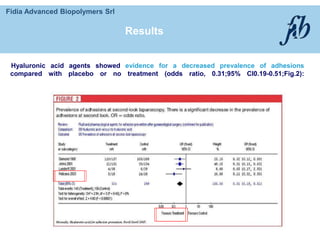
Hyaluronic acid agents showed evidence for a decreased prevalence of adhesions
compared with placebo or no treatment (odds ratio, 0.31;95% CI0.19-0.51;Fig.2):
Results
Fidia Advanced Biopolymers Srl
Safety Evidence
Fidia Advanced Biopolymers Srl
Safety in preclinical studies
 Biocompatibility was confirmed by toxicological tests
(irritation, sensitization, cytotoxicity, acute systemic toxicity,
haemolysis, pyrogenicity, implantation, mutagenesis, subchronic
toxicity, chronic toxicity, carcinogenicity, ADME test)
 All in vivo experimental studies had an excellent
safety profile of Hyalobarrier®.
Fidia Advanced Biopolymers Srl
All patients treated in clinical trials with
Hyalobarrier® had no adverse event related to the
product
Safety in clinical trials
Fidia Advanced Biopolymers Srl
More than 20.000 patients have been treated
with Hyalobarrier® in Europe since 2002.
No reports of adverse events related to the product
Safety in Postmarketing surveillance
Fidia Advanced Biopolymers Srl
Hyalobarrier® is recognized by the
European Scientific Community
as a technology leader
in the site-specific adhesion prevention.
Fidia Advanced Biopolymers Srl
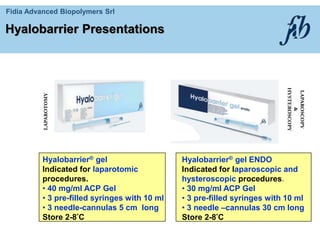
Hyalobarrier® gel
Indicated for laparotomic
procedures.
• 40 mg/ml ACP Gel
• 3 pre-filled syringes with 10 ml
• 3 needle-cannulas 5 cm long
Store 2-8°C
Hyalobarrier® gel ENDO
Indicated for laparoscopic and
hysteroscopic procedures.
• 30 mg/ml ACP Gel
• 3 pre-filled syringes with 10 ml
• 3 needle –cannulas 30 cm long
Store 2-8°C
LAPAROTOMY
LAPAROSCOPY
&
HYSTEROSCOPY
Hyalobarrier Presentations
Fidia Advanced Biopolymers Srl
Highly viscous - effective barrier function
Autocrosslinked HA – no bridge molecules
HA of fermentative origin
Safe and biocompatible
Easy to use: applicable in laparotomy, laparoscopy and hysteroscopy
Completely bio-absorbable – same metabolic pathway as native HA
Residence time of 7 days
Mucoadhesive - adheres to surfaces even in vertical position
Costs within cost-benefit range – ESGE Consensus
Hyalobarrier - Characteristics
Fidia Advanced Biopolymers Srl
Hyalobarrier Product Positioning
 A natural site-specific adhesion prevention product that can
be positioned where you need it
 Safe and Effective
 Easy to handle
 Presentations specifically designed for Laparoscopic &
Laparotomic surgery
Fidia Advanced Biopolymers Srl
FAQs
Fidia Advanced Biopolymers Srl
Can I use HB in a tumor patient?
 Although preclinical evidence shows no effect of HB on tumor
growth and tumor implantation, HB gel has not been evaluated
in patients affected by malignant tumors.
Fidia Advanced Biopolymers Srl
How many syringes per procedure do I
have to use?
 Generally in case of adnexal surgery, 1 syringe / adnexus is
indicated.
 The content of a syringe (10 ml) covers approximately 100 cm2
Fidia Advanced Biopolymers Srl
How long can HB be kept out of the
fridge?
 “Storage at room temperature is allowed only for a limited
period of time, after which the product can be refrigerated
again”
 In our experience, the product can be left at RT for some hours
and then refrigerated again
Fidia Advanced Biopolymers Srl
How does HB stick to tissues?
 Thanks to the mucoadhesive properties of the ACP gel, HB
remains in situ for the proper time.
Fidia Advanced Biopolymers Srl
What is the thickness of the gel layer
needed to coat the viscera?
 It is not necessary to “overcoat” the surface of the application
site since HB is mucoadhesive and remains in situ quite well.
Fidia Advanced Biopolymers Srl
Can I use the product in case of
incomplete haemostasis?
 Based on preclinical studies, HB can be used in case of
incomplete haemostasis since its efficacy is not compromised
by the blood presence
Fidia Advanced Biopolymers Srl
Why the surgical field should not be
irrigated after application of HB?
 Irrigation with ringer lactate or saline is a recommended
procedure for any gynecological surgery, at the very end of the
intervention there is no need of further irrigation, at this time
HB is applied. Irrigation after application could partially
dislodge the product from the application site.
Fidia Advanced Biopolymers Srl
Can I use a drainage in presence of HB?
 Catheter or drainage can be use in combination with HB, simply
do not place the end of the drainage very close to the gel layer.

Hyalobarrier

  • 1.
    Fidia Advanced BiopolymersSrl HYALOBARRIER GEL Product technology & preclinical data Enrico Tognana, PhD Head of R&D Unit FAB-Nordic Pharma kick-off meeting, Abano terme - 18 March 2008
  • 2.
    Fidia Advanced BiopolymersSrl HYALURONAN: CLINICAL AND SURGICAL APPLICATIONS  Wound healing  Scaffold for tissue engineering  Used in treatment of osteoarthritis  Ocular surgery  Anti-adhesive barrier
  • 3.
    Fidia Advanced BiopolymersSrl HYALURONAN: IN ADHESION PREVENTION Why? Biocompatible Barrier function (viscosity) Bio-absorbable Role in modulation of inflammatory phase in wound healing Role in scarless wound healing Inadequacy because of: Quickly cleared Inadequately viscous Low residence time  Yarali H J Reprod Med 1994;39:667-670  Hill-West J Fertil Steril 1994;62:630-4  Burns JW Surg Res 1995;59:644-52  Urman B Fertil Steril 1991;56:563-7 BUT…
  • 4.
    Fidia Advanced BiopolymersSrl HYALURONAN DERIVATIVES IN POST-SURGICAL ADHESION PREVENTION FAB developed a hyaluronan derivative which overcomes the limits of native hyaluronan Characteristics:  Prolonged residence time  Prolonged barrier effect  High viscosity  High biocompatibility  Pure HA is the result of degradation process …THEN… ACP®
  • 5.
    Fidia Advanced BiopolymersSrl WHAT IS HYALOBARRIER® GEL? Hyalobarrier® Gel is a selective barrier made up of pure auto-cross- linked Hyaluronan with increased density, viscosity, and adhesive properties.  Hyaluronan (HA) is a major component of Extra-cellular Matrix  Hyaluronan is part of all connective tissues in the body  Hyaluronan is present in high concentration in the vitreous humour and synovial fluid providing lubrication and gliding effects
  • 6.
    Fidia Advanced BiopolymersSrl WHAT IS HYALOBARRIER® GEL? Classification Medical device, class III. Indications for use  Prevention and reduction of post-surgical adhesion formation in the abdominal pelvic area Intended use  Mechanical barrier to prevent or minimize post-surgical adhesions after surgical interventions.
  • 7.
    Fidia Advanced BiopolymersSrl REGULATORY STATUS EUROPE  Approved CE mark 0459 (notified body G-Med) USA  Medical Device with PMA registration OTHER COUNTRIES  Medical Device
  • 8.
    Fidia Advanced BiopolymersSrl  ACP gel: EP 0614914  Anti-adhesion gel: WO 97/07/833 PATENTS
  • 9.
    Fidia Advanced BiopolymersSrl WHAT IS HYALOBARRIER® GEL MADE OF? ACP® is obtained by inter- and intramolecular reaction of the alcohol and carboxyl group which are present in the native HA molecule. ACP is manufactured from fermented hyaluronan (no animal source). Autocross-linked HA (ACP®)
  • 10.
    Fidia Advanced BiopolymersSrl HOW IS HYALOBARRIER® GEL DEGRADED? Autocross-linked HA (ACP®) Metabolic pathway Hydrolysis Natural metabolic degradation HYALOBARRIER (ACP gel) Hyaluronic Acid Oligomers GluA GlNAc CO2 + H2O Renier D. et al. Pharmacokinetic behaviour of ACP gel, an auto-crosslinked hyaluronan derivative, after intraperitoneal administration. BIOMATERIALS, 26:5368-74, 2005
  • 11.
    Fidia Advanced BiopolymersSrl WHAT IS HYALOBARRIER® GEL MADE OF? Autocross-linked HA (ACP®) Hyalobarrier® is like Natural HA because no foreign cross-linking molecules inside  Different physicochemical properties  Increasing bio-adhesiveness  Longer degradation time & residence time  Biological barrier effect BUT IT HAS
  • 12.
    Fidia Advanced BiopolymersSrl  Hyalobarrier® is resorbed in 3 to 7 days  Hyalobarrier® therefore covers the critical period of postoperative adhesion onset WHEN IS HYALOBARRIER® GEL DEGRADED?
  • 13.
    Fidia Advanced BiopolymersSrl Due to higher adhesivity and prolonged residence time vs unmodified HA, Hyalobarrier Gel seems particularly suitable for preventing adhesion formation (Mensitieri et al. 1996) HOW DOES HYALOBARRIER® GEL WORK?  Keep tissue separated during the critical period following injury  Protects traumatized and ischemic serous membranes  Hydrates underlying tissues  Modulates the peritoneal wound healing process Clinical use Prevention and reduction of post-surgical adhesion formation in gynecological and abdomino-pelvic surgery, both in laparoscopy and laparotomy
  • 14.
    Fidia Advanced BiopolymersSrl  Efficacy and safety in different types of surgery:open and close  Determine kinetics of in vivo degradation  Answers to questions relevant in a clinical setting: Behaviour in case of inadequate hemostasis Effect on tumour growth PRECLINICAL STUDIES
  • 15.
    Fidia Advanced BiopolymersSrl IS HYALOBARRIER® GEL SAFE?  The safety of Hyalobarrier® Gel was evaluated through a series of toxicological tests. All these evaluations demonstrated that Hyalobarrier® is:  Non toxic  Non irritant  Non sensitizing  Non cytotoxic  Non pyrogenic  Non mutagenic  Non carcinogenic Yes
  • 16.
    Fidia Advanced BiopolymersSrl DeIaco P.A. et al.Fertility Sterility 1998;69 (2):318-323 Belluco C. et al. J Surg Res. 2001; 100:217-221 Kocak I , Unlü C., Akcan Y et al. Fertility Sterility 1999, vol.72. N°5 Wallwiener M., Brucker S.,Hierlemann H et al. Fertility and Sterility 2006;86 (3):1266-1276 Binda MM, Molinas CR, Bastidas A et al. The Journal of Minimally Invasive Gynecology 2007;14:591-599  In experimental studies (rabbit, rat, mouse), uterine horn in laparoscopy and abdominal model in laparotomy it was detected a statistically significant difference between Hyalobarrier and Control group with respect to the incidence and severity of adhesions formation IS HYALOBARRIER® GEL EFFECTIVE? Yes
  • 17.
    Fidia Advanced BiopolymersSrl HYALOBARRIER® GEL ADVANTAGES  Pure hyaluronan derivative containing no foreign substances  High viscosity, site-specific for the intended use  Excellent conformability  Prolonged residence time in the application site  Excellent bio-compatibility Major Advantages
  • 18.
    Fidia Advanced BiopolymersSrl CAN HYALOBARRIER BE USED IN PRESENCE OF MALIGNANCIES? PRECLINICAL STUDY The safety of Hyalobarrier was demonstrated in presence of malignancies in preclinical study Hyalobarrier gel does not potentiate HT 29 colorectal human intraperitoneal tumour cells growth in an experimental model of tumour induction
  • 19.
    Fidia Advanced BiopolymersSrl CAN HYALOBARRIER BE USED IN PRESENCE OF INADEQUATE HAEMOSTASIS? PA De Iaco* M.D., G Muzzupapa * M.D., E Bigon §, D Pressato §, M Donà §, A Pavesio § and L Bovicelli* M.D. *Ob&Gyn Clin. S. Orsola Hospital , University of Bologna - Italy §Fidia Advanced Biopolymers, Abano T. Padova - Italy SURGERY 2001; 130:60-4
  • 20.
    Fidia Advanced BiopolymersSrl  Safety and efficacy in reducing postsurgical adhesions DeIaco P.A. et al. Fertility Sterility 1998;69 (2):318-323 (Laparoscopy) Belluco C. et al. J Surg Res. 2001; 100:217-221 (Laparotomy) Kocak I et al. Fert.Ster.1999, vol.72. N°5 (Laparotomy) Wallwiener M et al. Fertility and Sterility 2006;86 (3):1266-1276 (Laparotomy) Binda MM et al. The J Minimal Inv Gynecology 2007;14:591-599 (Laparoscopy)  Pharmacokinetic behaviour of ACP gel, an autocrosslinked hyaluronan derivative, after intraperitoneal administration Renier D, Bellato P, Bellini D. et al. Biomaterials 2005; 26: 5368-5374.  Efficacy in presence of inadequate hemostasis De Iaco P.A. Surgery 2001; 130 (1): 60-64 (Laparotomy)  No effect on colon-rectal tumour growth Pucciarelli S. et al. British Journal Surgery 2003;90:66-71 (Laparotomy) PRECLINICAL PUBLICATIONS
  • 21.
    Fidia Advanced BiopolymersSrl To date, the preclinical data indicate that HYALOBARRIER® can be considered a safe and effective bio-absorbable device for the prevention of postoperative adhesions in abdomino-pelvic surgery CONCLUSIONS
  • 22.
    Fidia Advanced BiopolymersSrl Kickoff Meeting NordicPharma-FAB March 18th, 2008 F.Torasso
  • 23.
    Fidia Advanced BiopolymersSrl CLINICAL NEED Adhesions in the abdomino-pelvic cavity Courtesy from: International Adhesion Society web site Abnormal attachments between tissues and organs and may be congenital or acquired. The development of acquired adhesions is a generalised phenomenon in response to trauma to the peritoneum (mechanical trauma, foreign materials, surgery, infection, inflammation or ischaemia)
  • 24.
    Fidia Advanced BiopolymersSrl Peritoneal trauma Inflammatory exudate Fibrin clot Normal fibrinolitic activity Resolution of fibrin New mesothelium Repair Suppressed fibrinolytic activity Persistence of fibrin Fibroblasts proliferation and deposition of collagen . Organisation of fibrin matrix and adhesion formation Normal peritoneal tissue repair Adhesion formation Ischaemia
  • 25.
    Fidia Advanced BiopolymersSrl Adhesion-related complications For the patient  Small bowel obstruction: 49%-74%  Intestinal obstruction :22%  Infertility: 15% - 20%  Chronic pelvic pain: 20% - 50% For the surgeon  Increase the risk of any future surgery  Prolong a future surgery (an average of 24 minutes) Ray NF. J Am Coll Surg 1998; 186: 1-9.;Holmdahl, Eur J Surg 1997;Suppl 577:56-62; Ellis H. Lancet 1999; 553: 1476-1480.
  • 26.
    Fidia Advanced BiopolymersSrl Recommendations for reduction or prevention of adhesions  Adjusting surgical practice  Applying adjuvants  Anti-inflammatories (eg. corticosteroids or antihistamines).  Anti coagulants (e.g.heparin)  Fibrinolytic agents (e.g. urokinase, pepsin)  Barriers:  separate adjacent organ/tissue surfaces after surgery (site specific or broad coverage)  Only class of products shown to be effective in clinical trials
  • 27.
    Fidia Advanced BiopolymersSrl Efficacy Clinical Evidence
  • 28.
    Fidia Advanced BiopolymersSrl 1. Pellicano M, Bramante S, Cirillo D. et al. Effectiveness of autocrosslinked hyaluronic acid gel after laparoscopic myomectomy in infertile patients: a prospective, randomized, controlled study. Fertil Steril. 2003 Aug;80(2):441-4 2. Acunzo G, Guida M, Pellicano M et al. Effectiveness of auto-cross-linked hyaluronic acid gel in the prevention of intrauterine adhesions after hysteroscopic adhesiolysis: a prospective, randomised, controlled study. Hum Reprod. 2003 Sep;18(9):1918-21. 3. DeIaco P.A., Muzzupapa G., Bovicelli A. et al. Hyaluronan derivative gel (Hyalobarrier gel) in intrauterine adhesion (IUA) prevention after operative hysteroscopy. Ellipse 2003; 19 (1):15-18. 4. Carta G., Cerrone L, Iovenitti P. Postoperative adhesion prevention in gynecologic surgery with hyaluronic acid Clin Exp Obstet Gynecol. 2004;31(1):39-41. 5. Guida M., Acunzo G., Di Spiezio Sardo A.et al.Effectiveness of auto-crosslinked hyaluronic acid gel in the prevention of intrauterine adhesions after hysteroscopic surgery: a prospective, randomized, controlled study. Hum Reprod. 2004 Jun;19(6):1461-4. Epub 2004 Apr 22. 6. Pellicano M., Guida M., Bramanti S.et al. Reproductive outcome after autocrosslinked hyaluronic acid gel application in infertile patients who underwent laparoscopic myomectomy. Fertil Steril. 2005 Feb;83(2):498-500. 7. Mais V., Bracco G.L., Litta P.et al. Reduction of postoperative adhesions with an auto-crosslinked hyaluronan gel in gynaecological laparoscopic surgery: a blinded, controlled, randomized, multicentre study Hum Reprod. 2006 May;21(5):1248-54. Epub 2006 Jan 26. 8. Metwally M, Gorvy D, Watson A, Li TC. Hyaluronic acid fluid agents for the prevention of adhesions after fertility- preserving gynecological surgery: a meta-analysis of randomized controlled trials. Fertil Steril. 2007 May;87(5):1139- 46. Clinical Publications
  • 29.
    Fidia Advanced BiopolymersSrl  5 RCT, randomized controlled clinical trials, in gynecological endoscopy.  1 clinical trial showed as efficacy date the significant increase in pregnancy rate  1 clinical trial in gynecologic laparotomy  Hyalobarrier® was included in an indipendent Cochrane meta-analysis on hyaluronan based anti-adhesion products in the conservative gynecologic surgery. To highlight
  • 30.
    Fidia Advanced BiopolymersSrl • LAPAROSCOPIC Surgery (Myoma): Hyalobarrier® was effective in the prevention of de-novo adhesions, reducing the incidence (Pellicano, 2003) and severity (Mais, 2006). in infertile patients resulting in a significant increase in the pregnancy rate (Pellicano 2005) Key findings from clinical trials
  • 31.
    Fidia Advanced BiopolymersSrl 28% 78% 0 10 20 30 40 50 60 70 80 90 100 % denovo adhesions (n=36) Hyalobarrier Control Hyalobarrier Control P <0.01 1,5 2,7 0 1 2 3 Mean score at secondlook (n=23) Hyalobarrier Control P <0.05 Laparoscopic Surgery (I) Reduction of the incidence of denovo adhesions (Pellicano, 2003) Reduction of the severity of de-novo adhesions (Mais, 2006)
  • 32.
    Fidia Advanced BiopolymersSrl 44,4 22,2 77,8 38,8 0 10 20 30 40 50 60 70 80 % pregnancy (n=36) 6 months 12 months Hyalobarrier Control Infertile patients: increase the pregnancy rate (Pellicano, 2005) P <0.01 P <0.01 Laparoscopic Surgery (II)
  • 33.
    Fidia Advanced BiopolymersSrl • HYSTEROSCOPIC Surgery (Polyps, Myomas, Uterine Septae, Adhesions): Hyalobarrier® was effective in the prevention of denovo uterine adhesions, resulting in reduction of both the incidence and the severity (Guida, 2004) and in the prevention of the reformed uterine adhesions, resulting in reduction of both the incidence and the severity (Acunzo, 2003) Key findings from clinical trials
  • 34.
    Fidia Advanced BiopolymersSrl 10 26 0 10 20 30 40 50 % adhesions de-novo (n=138) Hyalobarrier Control P< 0.05 Hysteroscopic Surgery 2,42 3,83 0 1 2 3 4 5 AFS score at second look Hyalobarrier Control P< 0.05 Reduction of the incidence Reduction of the severity Prevention of intra-uterine de-novo adhesions (Guida, 2004)
  • 35.
    Fidia Advanced BiopolymersSrl 14 32 0 10 20 30 40 50 % reformed adhesions (n=92) Hyalobarrier Control P< 0.05 Prevention of the intrauterine ahesions reformation (Acunzo, 2003) 2,0 5,3 0 1 2 3 4 5 AFS score at second- look Hyalobarrier Control P< 0.05 Reduction of the incidence Reduction of the severity Hysteroscopic Surgery
  • 36.
    Fidia Advanced BiopolymersSrl Ultrasonographic data showed that Hyalobarrier ® was able to keep uterine walls separated for more than 72h. 0h 24h. 48h. 72h. 101.2 7.9 0.2 5.20.3 2.70.4 0,0 2,0 4,0 6,0 8,0 10,0 12,0 0 h 24 h 48 h 72 h Thickness ( mm) The product hyperechoic thickness was (mm): Hysteroscopic Surgery
  • 37.
    Fidia Advanced BiopolymersSrl Five RCT published studies on Hyalobarrier® . (235 patients,167 treated with Hyalobarrier® and 168 patients of the control group) The combined meta-analysis showed evidence for a lower incidence of adhesions in patients treated with Hyalobarrier® compared with those without adhesion prevention. odds ratio=0.350 (95% CI=0.208-0.589) Z value for overall effect=-3.952, p<0.001. Clinical meta-analysis (to be submitted for publication)
  • 38.
    Fidia Advanced BiopolymersSrl Group by SurgeryType Studyname Statisticsfor each study MH oddsratio and 95% CI MH odds Lower Upper Relative Treated Control ratio limit limit Z-Value p-Value weight Hysteroscopy Acunzo 6/43 13/41 0.349 0.118 1.033 -1.901 0.057 36.41 Hysteroscopy Guida 7/67 17/65 0.329 0.126 0.859 -2.271 0.023 49.13 Hysteroscopy DeIaco 5/18 7/22 0.824 0.210 3.234 -0.277 0.782 14.46 Hysteroscopy 0.408 0.217 0.766 -2.788 0.005 Laparoscopy Pellicano 5/18 14/18 0.110 0.024 0.500 -2.855 0.004 56.26 Laparoscopy Mais 8/21 13/22 0.426 0.125 1.449 -1.366 0.172 43.74 Laparoscopy 0.248 0.098 0.628 -2.940 0.003 Overall 0.350 0.208 0.589 -3.952 0.000 0.01 0.1 1 10 100 Favours Treatment Favours Control Figure 3: Meta Analysis on RCTs - Forest Plot Clinical meta-analysis (to be submitted for publication)
  • 39.
    Fidia Advanced BiopolymersSrl Metwally M. et al. Cochrane Database Rev 2006
  • 40.
    Fidia Advanced BiopolymersSrl in laparoscopy (Pellicano 2003, Hyalobarrier®) in laparotomy (Lundorff 2001; Johns 2001 Intergel; Diamond 1998, Sepracoat)  Four studies analyzed Focus on HYALURONAN adhesion prevention
  • 41.
    Fidia Advanced BiopolymersSrl Hyaluronic acid agents showed evidence for a decreased prevalence of adhesions compared with placebo or no treatment (odds ratio, 0.31;95% CI0.19-0.51;Fig.2): Results
  • 42.
    Fidia Advanced BiopolymersSrl Safety Evidence
  • 43.
    Fidia Advanced BiopolymersSrl Safety in preclinical studies  Biocompatibility was confirmed by toxicological tests (irritation, sensitization, cytotoxicity, acute systemic toxicity, haemolysis, pyrogenicity, implantation, mutagenesis, subchronic toxicity, chronic toxicity, carcinogenicity, ADME test)  All in vivo experimental studies had an excellent safety profile of Hyalobarrier®.
  • 44.
    Fidia Advanced BiopolymersSrl All patients treated in clinical trials with Hyalobarrier® had no adverse event related to the product Safety in clinical trials
  • 45.
    Fidia Advanced BiopolymersSrl More than 20.000 patients have been treated with Hyalobarrier® in Europe since 2002. No reports of adverse events related to the product Safety in Postmarketing surveillance
  • 46.
    Fidia Advanced BiopolymersSrl Hyalobarrier® is recognized by the European Scientific Community as a technology leader in the site-specific adhesion prevention.
  • 47.
  • 48.
  • 49.
  • 50.
  • 51.
    Fidia Advanced BiopolymersSrl Hyalobarrier® gel Indicated for laparotomic procedures. • 40 mg/ml ACP Gel • 3 pre-filled syringes with 10 ml • 3 needle-cannulas 5 cm long Store 2-8°C Hyalobarrier® gel ENDO Indicated for laparoscopic and hysteroscopic procedures. • 30 mg/ml ACP Gel • 3 pre-filled syringes with 10 ml • 3 needle –cannulas 30 cm long Store 2-8°C LAPAROTOMY LAPAROSCOPY & HYSTEROSCOPY Hyalobarrier Presentations
  • 52.
    Fidia Advanced BiopolymersSrl Highly viscous - effective barrier function Autocrosslinked HA – no bridge molecules HA of fermentative origin Safe and biocompatible Easy to use: applicable in laparotomy, laparoscopy and hysteroscopy Completely bio-absorbable – same metabolic pathway as native HA Residence time of 7 days Mucoadhesive - adheres to surfaces even in vertical position Costs within cost-benefit range – ESGE Consensus Hyalobarrier - Characteristics
  • 53.
    Fidia Advanced BiopolymersSrl Hyalobarrier Product Positioning  A natural site-specific adhesion prevention product that can be positioned where you need it  Safe and Effective  Easy to handle  Presentations specifically designed for Laparoscopic & Laparotomic surgery
  • 54.
  • 55.
    Fidia Advanced BiopolymersSrl Can I use HB in a tumor patient?  Although preclinical evidence shows no effect of HB on tumor growth and tumor implantation, HB gel has not been evaluated in patients affected by malignant tumors.
  • 56.
    Fidia Advanced BiopolymersSrl How many syringes per procedure do I have to use?  Generally in case of adnexal surgery, 1 syringe / adnexus is indicated.  The content of a syringe (10 ml) covers approximately 100 cm2
  • 57.
    Fidia Advanced BiopolymersSrl How long can HB be kept out of the fridge?  “Storage at room temperature is allowed only for a limited period of time, after which the product can be refrigerated again”  In our experience, the product can be left at RT for some hours and then refrigerated again
  • 58.
    Fidia Advanced BiopolymersSrl How does HB stick to tissues?  Thanks to the mucoadhesive properties of the ACP gel, HB remains in situ for the proper time.
  • 59.
    Fidia Advanced BiopolymersSrl What is the thickness of the gel layer needed to coat the viscera?  It is not necessary to “overcoat” the surface of the application site since HB is mucoadhesive and remains in situ quite well.
  • 60.
    Fidia Advanced BiopolymersSrl Can I use the product in case of incomplete haemostasis?  Based on preclinical studies, HB can be used in case of incomplete haemostasis since its efficacy is not compromised by the blood presence
  • 61.
    Fidia Advanced BiopolymersSrl Why the surgical field should not be irrigated after application of HB?  Irrigation with ringer lactate or saline is a recommended procedure for any gynecological surgery, at the very end of the intervention there is no need of further irrigation, at this time HB is applied. Irrigation after application could partially dislodge the product from the application site.
  • 62.
    Fidia Advanced BiopolymersSrl Can I use a drainage in presence of HB?  Catheter or drainage can be use in combination with HB, simply do not place the end of the drainage very close to the gel layer.