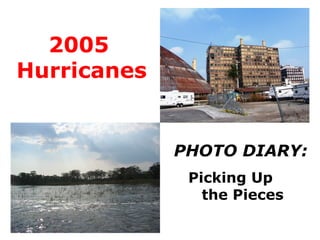
2005
Hurricanes
PHOTO DIARY:
Picking Up
the Pieces
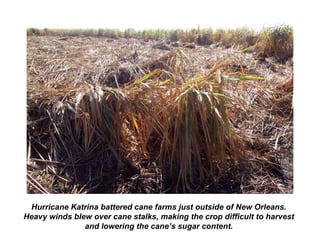
Hurricane Katrina battered cane farms just outside of New Orleans.
Heavy winds blew over cane stalks, making the crop difficult to harvest
and lowering the cane’s sugar content.
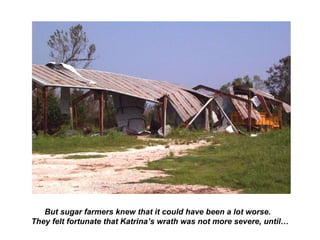
But sugar farmers knew that it could have been a lot worse.
They felt fortunate that Katrina’s wrath was not more severe, until…
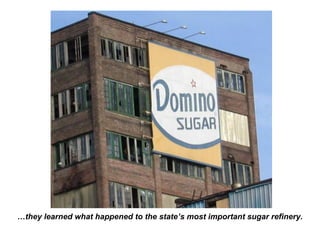
…they learned what happened to the state’s most important sugar refinery.
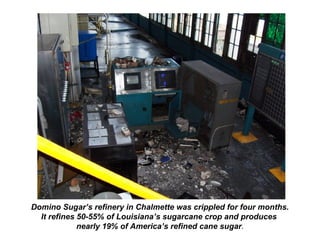
Domino Sugar’s refinery in Chalmette was crippled for four months.
It refines 50-55% of Louisiana’s sugarcane crop and produces
nearly 19% of America’s refined cane sugar.
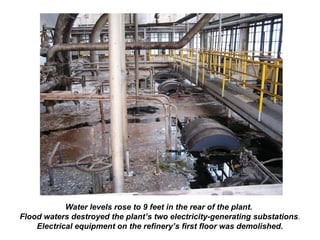
Water levels rose to 9 feet in the rear of the plant.
Flood waters destroyed the plant’s two electricity-generating substations.
Electrical equipment on the refinery’s first floor was demolished.
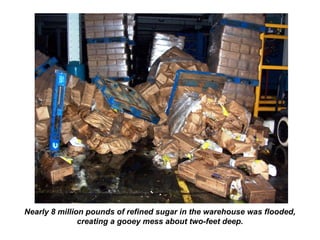
Nearly 8 million pounds of refined sugar in the warehouse was flooded,
creating a gooey mess about two-feet deep.
The refinery became a staging ground for rescue operations.
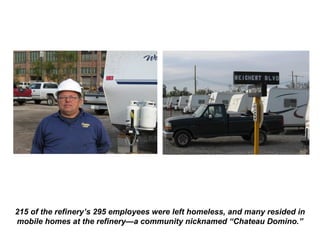
215 of the refinery’s 295 employees were left homeless, and many resided in
mobile homes at the refinery—a community nicknamed “Chateau Domino.”
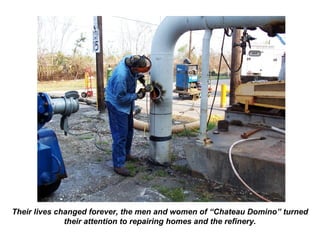
Their lives changed forever, the men and women of “Chateau Domino” turned
their attention to repairing homes and the refinery.
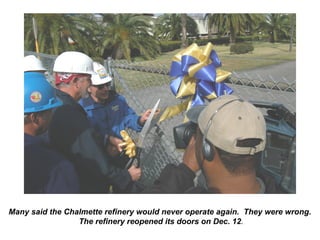
Many said the Chalmette refinery would never operate again. They were wrong.
The refinery reopened its doors on Dec. 12.
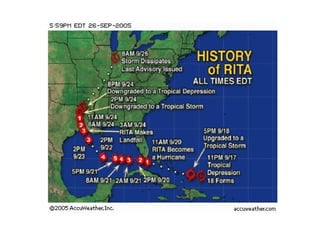
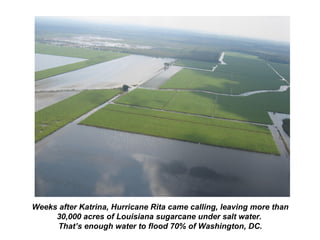
Weeks after Katrina, Hurricane Rita came calling, leaving more than
30,000 acres of Louisiana sugarcane under salt water.
That’s enough water to flood 70% of Washington, DC.
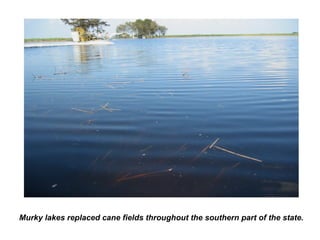
Murky lakes replaced cane fields throughout the southern part of the state.
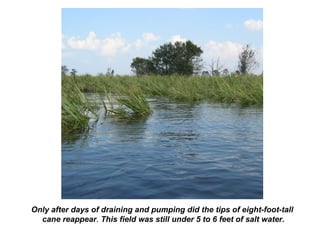
Only after days of draining and pumping did the tips of eight-foot-tall
cane reappear. This field was still under 5 to 6 feet of salt water.
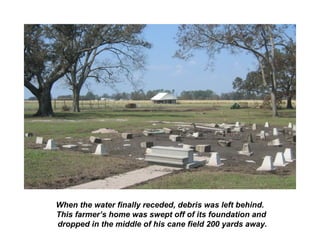
When the water finally receded, debris was left behind.
This farmer’s home was swept off of its foundation and
dropped in the middle of his cane field 200 yards away.
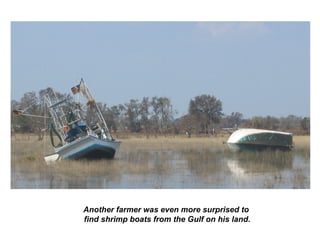
Another farmer was even more surprised to
find shrimp boats from the Gulf on his land.
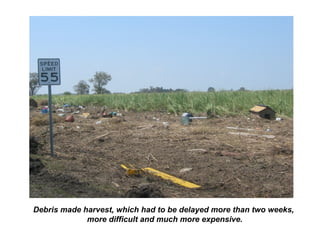
Debris made harvest, which had to be delayed more than two weeks,
more difficult and much more expensive.
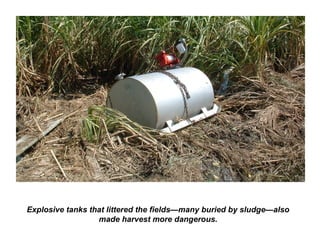
Explosive tanks that littered the fields—many buried by sludge—also
made harvest more dangerous.
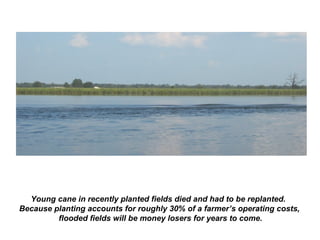
Young cane in recently planted fields died and had to be replanted.
Because planting accounts for roughly 30% of a farmer’s operating costs,
flooded fields will be money losers for years to come.
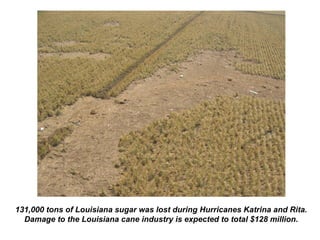
131,000 tons of Louisiana sugar was lost during Hurricanes Katrina and Rita.
Damage to the Louisiana cane industry is expected to total $128 million.
The industry and the communities it supports must be rebuilt.
Louisiana will need a stable U.S. sugar policy.
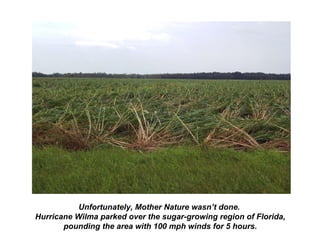
Unfortunately, Mother Nature wasn’t done.
Hurricane Wilma parked over the sugar-growing region of Florida,
pounding the area with 100 mph winds for 5 hours.
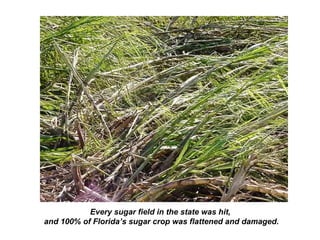
Every sugar field in the state was hit,
and 100% of Florida’s sugar crop was flattened and damaged.
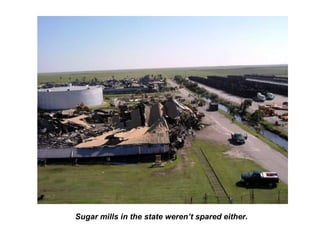
Sugar mills in the state weren’t spared either.
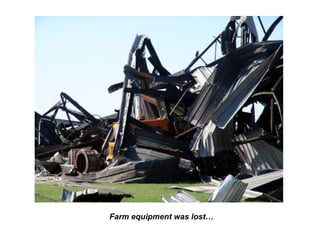
Farm equipment was lost…
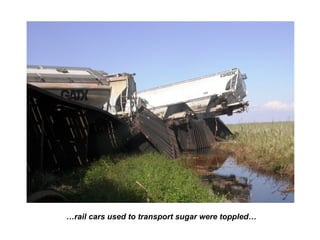
…rail cars used to transport sugar were toppled…
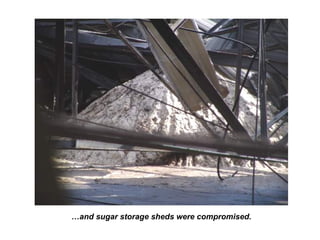
…and sugar storage sheds were compromised.
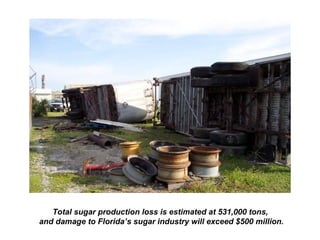
Total sugar production loss is estimated at 531,000 tons,
and damage to Florida’s sugar industry will exceed $500 million.
Like their colleagues in Louisiana,
Florida’s sugar producers need sugar policy stability.
Congress should extend
America’s no-cost sugar policy.
It has a proven track record and
will be key to Louisiana and
Florida rebuilding efforts.

Hurricane photo diary

  • 1.
  • 3.
    Hurricane Katrina batteredcane farms just outside of New Orleans. Heavy winds blew over cane stalks, making the crop difficult to harvest and lowering the cane’s sugar content.
  • 4.
    But sugar farmersknew that it could have been a lot worse. They felt fortunate that Katrina’s wrath was not more severe, until…
  • 5.
    …they learned whathappened to the state’s most important sugar refinery.
  • 6.
    Domino Sugar’s refineryin Chalmette was crippled for four months. It refines 50-55% of Louisiana’s sugarcane crop and produces nearly 19% of America’s refined cane sugar.
  • 7.
    Water levels roseto 9 feet in the rear of the plant. Flood waters destroyed the plant’s two electricity-generating substations. Electrical equipment on the refinery’s first floor was demolished.
  • 8.
    Nearly 8 millionpounds of refined sugar in the warehouse was flooded, creating a gooey mess about two-feet deep.
  • 9.
    The refinery becamea staging ground for rescue operations.
  • 10.
    215 of therefinery’s 295 employees were left homeless, and many resided in mobile homes at the refinery—a community nicknamed “Chateau Domino.”
  • 11.
    Their lives changedforever, the men and women of “Chateau Domino” turned their attention to repairing homes and the refinery.
  • 12.
    Many said theChalmette refinery would never operate again. They were wrong. The refinery reopened its doors on Dec. 12.
  • 14.
    Weeks after Katrina,Hurricane Rita came calling, leaving more than 30,000 acres of Louisiana sugarcane under salt water. That’s enough water to flood 70% of Washington, DC.
  • 15.
    Murky lakes replacedcane fields throughout the southern part of the state.
  • 16.
    Only after daysof draining and pumping did the tips of eight-foot-tall cane reappear. This field was still under 5 to 6 feet of salt water.
  • 17.
    When the waterfinally receded, debris was left behind. This farmer’s home was swept off of its foundation and dropped in the middle of his cane field 200 yards away.
  • 18.
    Another farmer waseven more surprised to find shrimp boats from the Gulf on his land.
  • 19.
    Debris made harvest,which had to be delayed more than two weeks, more difficult and much more expensive.
  • 20.
    Explosive tanks thatlittered the fields—many buried by sludge—also made harvest more dangerous.
  • 21.
    Young cane inrecently planted fields died and had to be replanted. Because planting accounts for roughly 30% of a farmer’s operating costs, flooded fields will be money losers for years to come.
  • 22.
    131,000 tons ofLouisiana sugar was lost during Hurricanes Katrina and Rita. Damage to the Louisiana cane industry is expected to total $128 million.
  • 23.
    The industry andthe communities it supports must be rebuilt. Louisiana will need a stable U.S. sugar policy.
  • 25.
    Unfortunately, Mother Naturewasn’t done. Hurricane Wilma parked over the sugar-growing region of Florida, pounding the area with 100 mph winds for 5 hours.
  • 26.
    Every sugar fieldin the state was hit, and 100% of Florida’s sugar crop was flattened and damaged.
  • 27.
    Sugar mills inthe state weren’t spared either.
  • 28.
  • 29.
    …rail cars usedto transport sugar were toppled…
  • 30.
    …and sugar storagesheds were compromised.
  • 31.
    Total sugar productionloss is estimated at 531,000 tons, and damage to Florida’s sugar industry will exceed $500 million.
  • 32.
    Like their colleaguesin Louisiana, Florida’s sugar producers need sugar policy stability.
  • 33.
    Congress should extend America’sno-cost sugar policy. It has a proven track record and will be key to Louisiana and Florida rebuilding efforts.