Vernacular Architecture based on climate
considerations
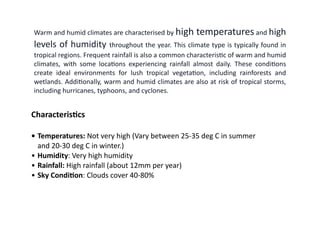
Warm and Humid
Characteris
ti
cs
• Temperatures: Not very high (Vary between 25-35 deg C in summer
and 20-30 deg C in winter.)
• Humidity: Very high humidity
• Rainfall: High rainfall (about 12mm per year)
• Sky Condi
ti
on: Clouds cover 40-80%
Warm and humid climates are characterised by high temperatures and high
levels of humidity throughout the year. This climate type is typically found in
tropical regions. Frequent rainfall is also a common characteris
ti
c of warm and humid
climates, with some loca
ti
ons experiencing rainfall almost daily. These condi
ti
ons
create ideal environments for lush tropical vegeta
ti
on, including rainforests and
wetlands. Addi
ti
onally, warm and humid climates are also at risk of tropical storms,
including hurricanes, typhoons, and cyclones.
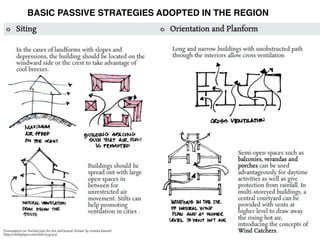
BASIC PASSIVE STRATEGIES ADOPTED IN THE REGION
•Building Orientation
•Natural Ventilation
•Shading Devices
•Daylighting
•Sustainable Materials
•Humidity Control
Passive Design Strategies for Warm and Humid Climate
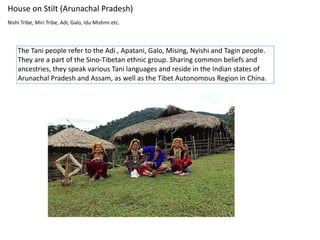
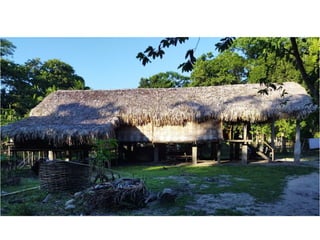
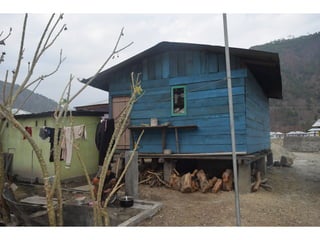
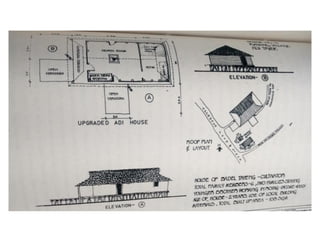
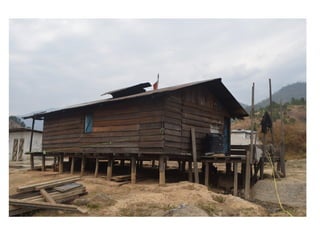
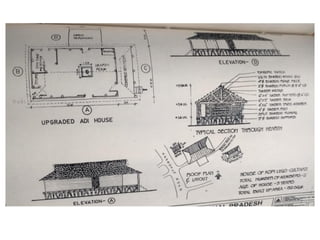
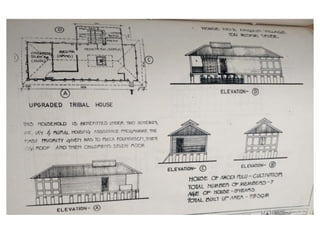
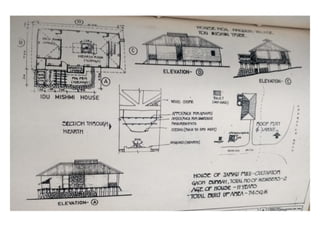
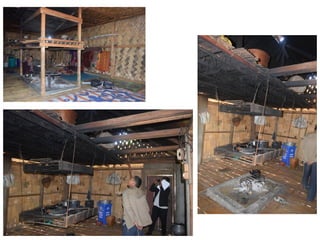
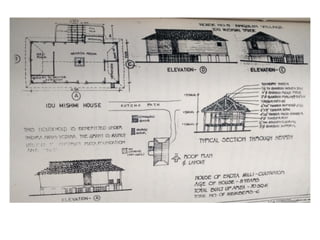
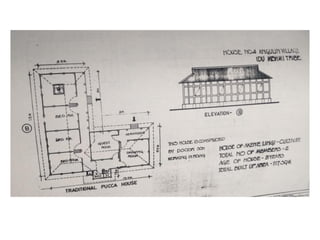
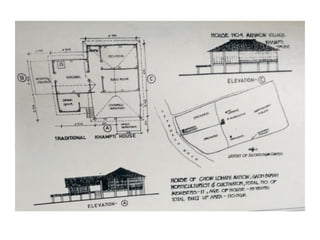
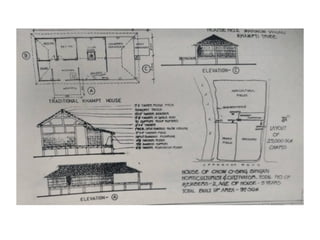
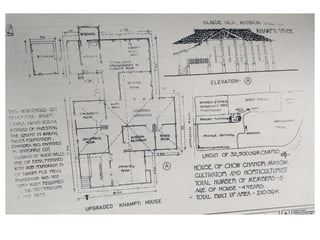
House on Stilt (Arunachal Pradesh)
Nishi Tribe, Miri Tribe, Adi, Galo, Idu Mishmi etc.
The Tani people refer to the Adi , Apatani, Galo, Mising, Nyishi and Tagin people.
They are a part of the Sino-Tibetan ethnic group. Sharing common beliefs and
ancestries, they speak various Tani languages and reside in the Indian states of
Arunachal Pradesh and Assam, as well as the Tibet Autonomous Region in China.
Roof
Thatched
Roofing
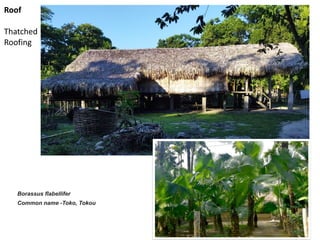
Borassus flabellifer
Common name -Toko, Tokou
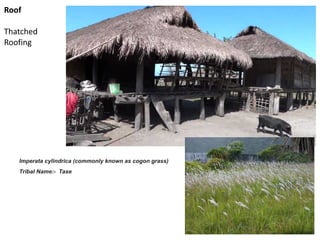
Imperata cylindrica (commonly known as cogon grass)
Tribal Name:- Tase
Roof
Thatched
Roofing
Roof
Thatched
Roofing
Roof
Thatched
Roofing
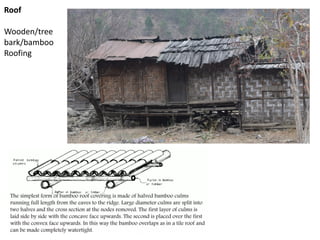
Roof
Wooden/tree
bark/bamboo
Roofing
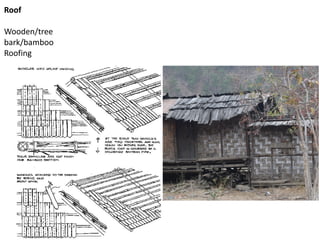
Roof
Wooden/tree
bark/bamboo
Roofing
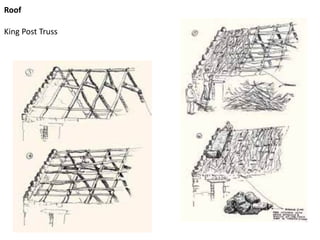
Roof
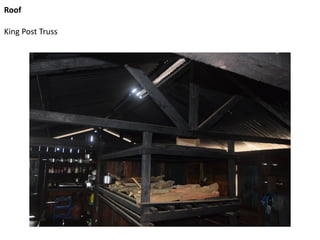
King Post Truss
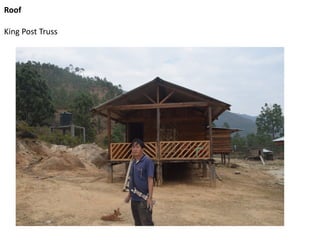
Roof
King Post Truss
Roof
King Post Truss
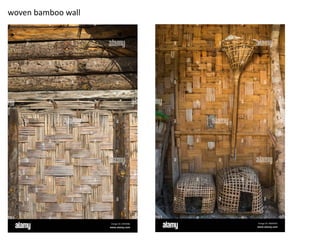
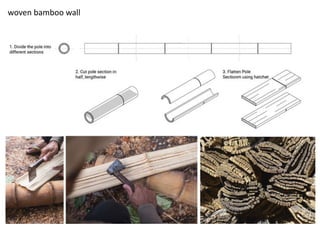
woven bamboo wall
woven bamboo wall
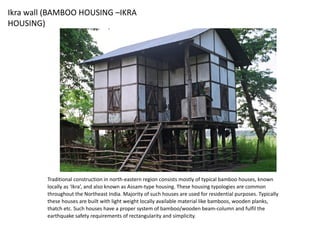
Ikra wall (BAMBOO HOUSING –IKRA
HOUSING)
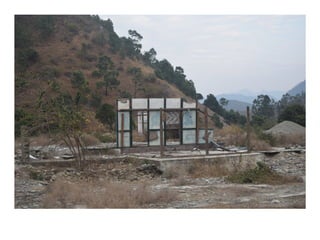
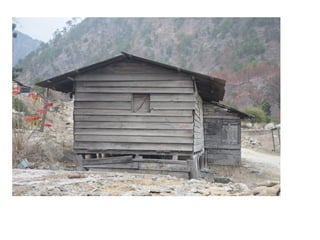
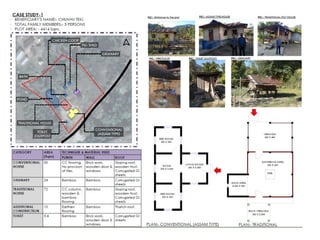
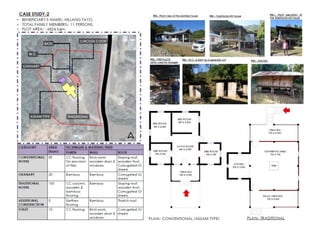
Traditional construction in north-eastern region consists mostly of typical bamboo houses, known
locally as ‘Ikra’, and also known as Assam-type housing. These housing typologies are common
throughout the Northeast India. Majority of such houses are used for residential purposes. Typically
these houses are built with light weight locally available material like bamboos, wooden planks,
thatch etc. Such houses have a proper system of bamboo/wooden beam-column and fulfil the
earthquake safety requirements of rectangularity and simplicity.
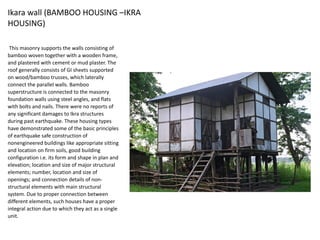
Ikara wall (BAMBOO HOUSING –IKRA
HOUSING)
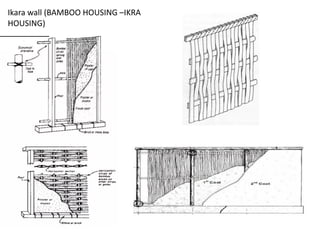
This masonry supports the walls consisting of
bamboo woven together with a wooden frame,
and plastered with cement or mud plaster. The
roof generally consists of GI sheets supported
on wood/bamboo trusses, which laterally
connect the parallel walls. Bamboo
superstructure is connected to the masonry
foundation walls using steel angles, and flats
with bolts and nails. There were no reports of
any significant damages to Ikra structures
during past earthquake. These housing types
have demonstrated some of the basic principles
of earthquake safe construction of
nonengineered buildings like appropriate sitting
and location on firm soils, good building
configuration i.e. its form and shape in plan and
elevation; location and size of major structural
elements; number, location and size of
openings; and connection details of non-
structural elements with main structural
system. Due to proper connection between
different elements, such houses have a proper
integral action due to which they act as a single
unit.
Ikara wall (BAMBOO HOUSING –IKRA
HOUSING)
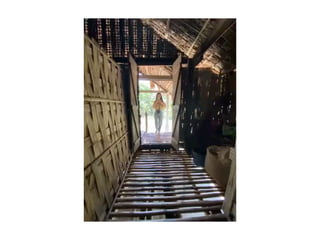
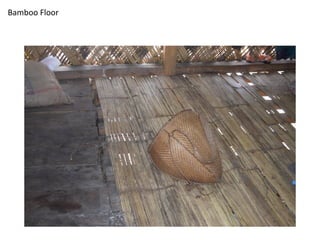
Bamboo Floor
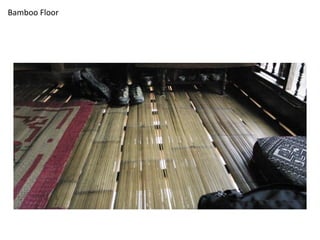
Bamboo Floor
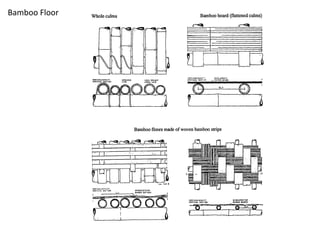
Bamboo Floor
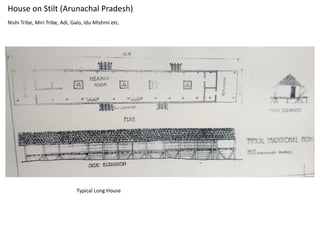
House on Stilt (Arunachal Pradesh)
Nishi Tribe, Miri Tribe, Adi, Galo, Idu Mishmi etc.
Typical Long House
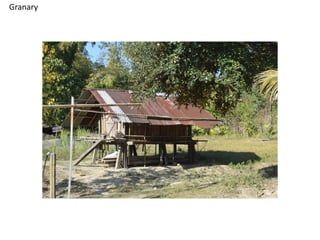
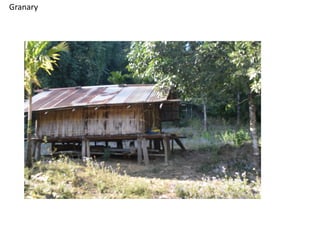
Granary
Granary
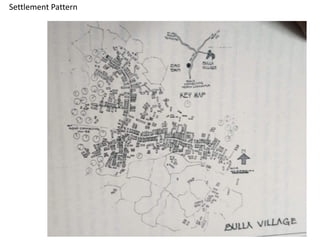
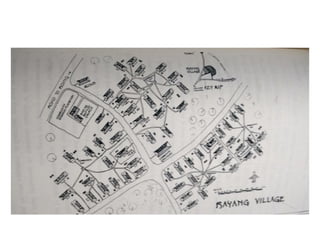
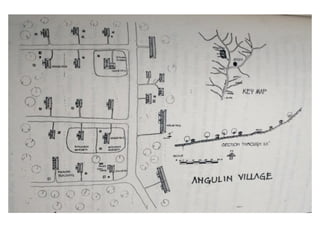
Settlement Pattern
human settlement and vernacular architecture

human settlement and vernacular architecture

  • 1.
    Vernacular Architecture basedon climate considerations Warm and Humid
  • 2.
    Characteris ti cs • Temperatures: Notvery high (Vary between 25-35 deg C in summer and 20-30 deg C in winter.) • Humidity: Very high humidity • Rainfall: High rainfall (about 12mm per year) • Sky Condi ti on: Clouds cover 40-80% Warm and humid climates are characterised by high temperatures and high levels of humidity throughout the year. This climate type is typically found in tropical regions. Frequent rainfall is also a common characteris ti c of warm and humid climates, with some loca ti ons experiencing rainfall almost daily. These condi ti ons create ideal environments for lush tropical vegeta ti on, including rainforests and wetlands. Addi ti onally, warm and humid climates are also at risk of tropical storms, including hurricanes, typhoons, and cyclones.
  • 4.
    BASIC PASSIVE STRATEGIESADOPTED IN THE REGION
  • 8.
    •Building Orientation •Natural Ventilation •ShadingDevices •Daylighting •Sustainable Materials •Humidity Control Passive Design Strategies for Warm and Humid Climate
  • 9.
    House on Stilt(Arunachal Pradesh) Nishi Tribe, Miri Tribe, Adi, Galo, Idu Mishmi etc. The Tani people refer to the Adi , Apatani, Galo, Mising, Nyishi and Tagin people. They are a part of the Sino-Tibetan ethnic group. Sharing common beliefs and ancestries, they speak various Tani languages and reside in the Indian states of Arunachal Pradesh and Assam, as well as the Tibet Autonomous Region in China.
  • 14.
  • 15.
    Imperata cylindrica (commonlyknown as cogon grass) Tribal Name:- Tase Roof Thatched Roofing
  • 16.
  • 17.
  • 18.
  • 19.
  • 20.
  • 21.
  • 22.
  • 23.
  • 24.
  • 25.
    Ikra wall (BAMBOOHOUSING –IKRA HOUSING) Traditional construction in north-eastern region consists mostly of typical bamboo houses, known locally as ‘Ikra’, and also known as Assam-type housing. These housing typologies are common throughout the Northeast India. Majority of such houses are used for residential purposes. Typically these houses are built with light weight locally available material like bamboos, wooden planks, thatch etc. Such houses have a proper system of bamboo/wooden beam-column and fulfil the earthquake safety requirements of rectangularity and simplicity.
  • 26.
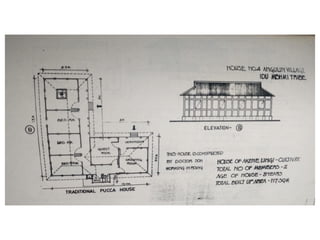
    Ikara wall (BAMBOOHOUSING –IKRA HOUSING) This masonry supports the walls consisting of bamboo woven together with a wooden frame, and plastered with cement or mud plaster. The roof generally consists of GI sheets supported on wood/bamboo trusses, which laterally connect the parallel walls. Bamboo superstructure is connected to the masonry foundation walls using steel angles, and flats with bolts and nails. There were no reports of any significant damages to Ikra structures during past earthquake. These housing types have demonstrated some of the basic principles of earthquake safe construction of nonengineered buildings like appropriate sitting and location on firm soils, good building configuration i.e. its form and shape in plan and elevation; location and size of major structural elements; number, location and size of openings; and connection details of non- structural elements with main structural system. Due to proper connection between different elements, such houses have a proper integral action due to which they act as a single unit.
  • 28.
    Ikara wall (BAMBOOHOUSING –IKRA HOUSING)
  • 31.
  • 32.
  • 33.
  • 36.
    House on Stilt(Arunachal Pradesh) Nishi Tribe, Miri Tribe, Adi, Galo, Idu Mishmi etc. Typical Long House
  • 47.
  • 48.
  • 49.