Creating the HR 
Operating Model for 
the Next Generation

    Andy Spence 
    Glass Bead Consulting
    EMRG BPO Conference 
    London June 23rd 2009
Creating the HR Operating Model for the Next Generation


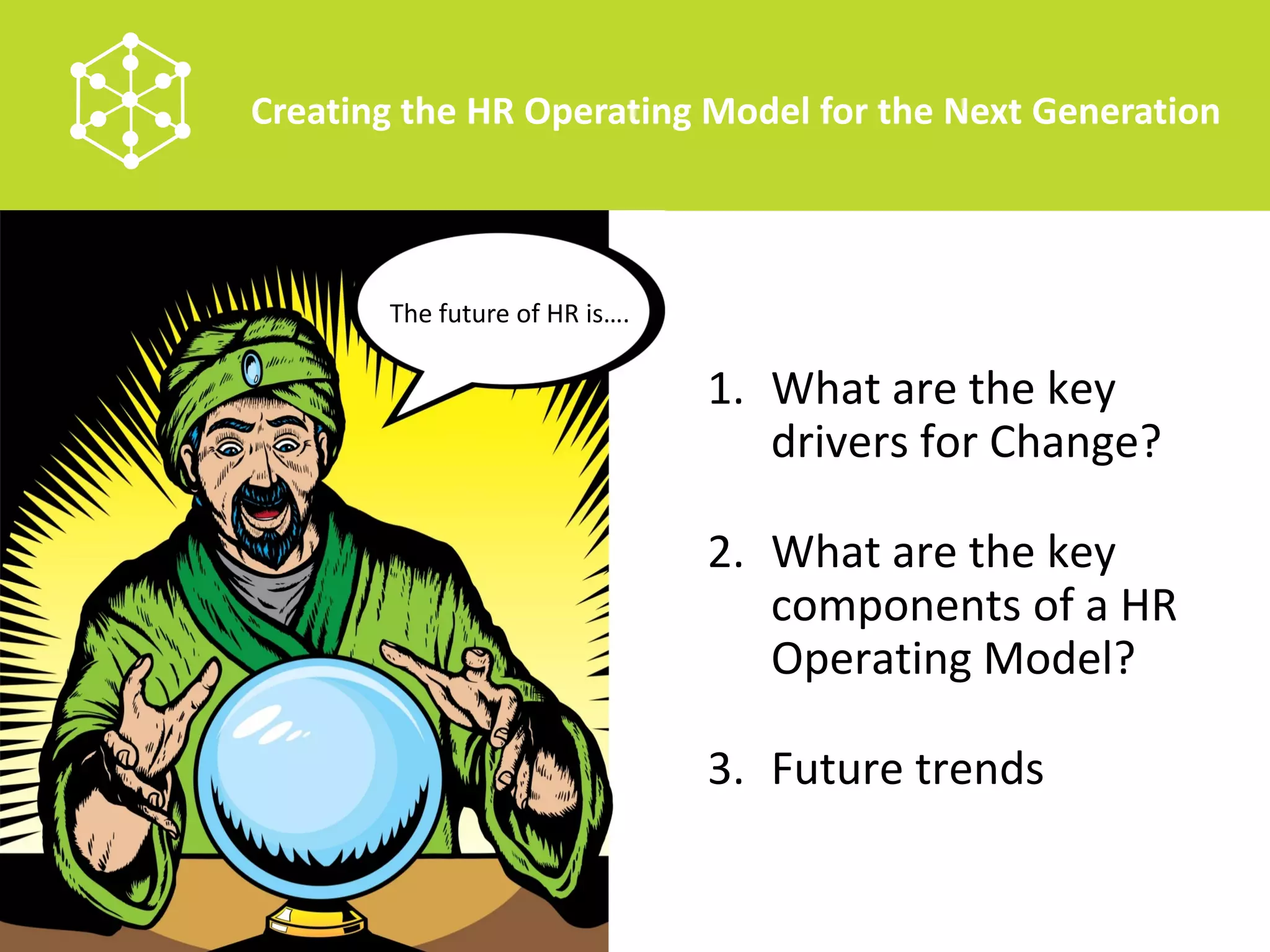
       The future of HR is….

                               1. What are the key 
                                  drivers for Change?

                               2. What are the key 
                                  components of a HR 
                                  Operating Model?

                               3. Future trends
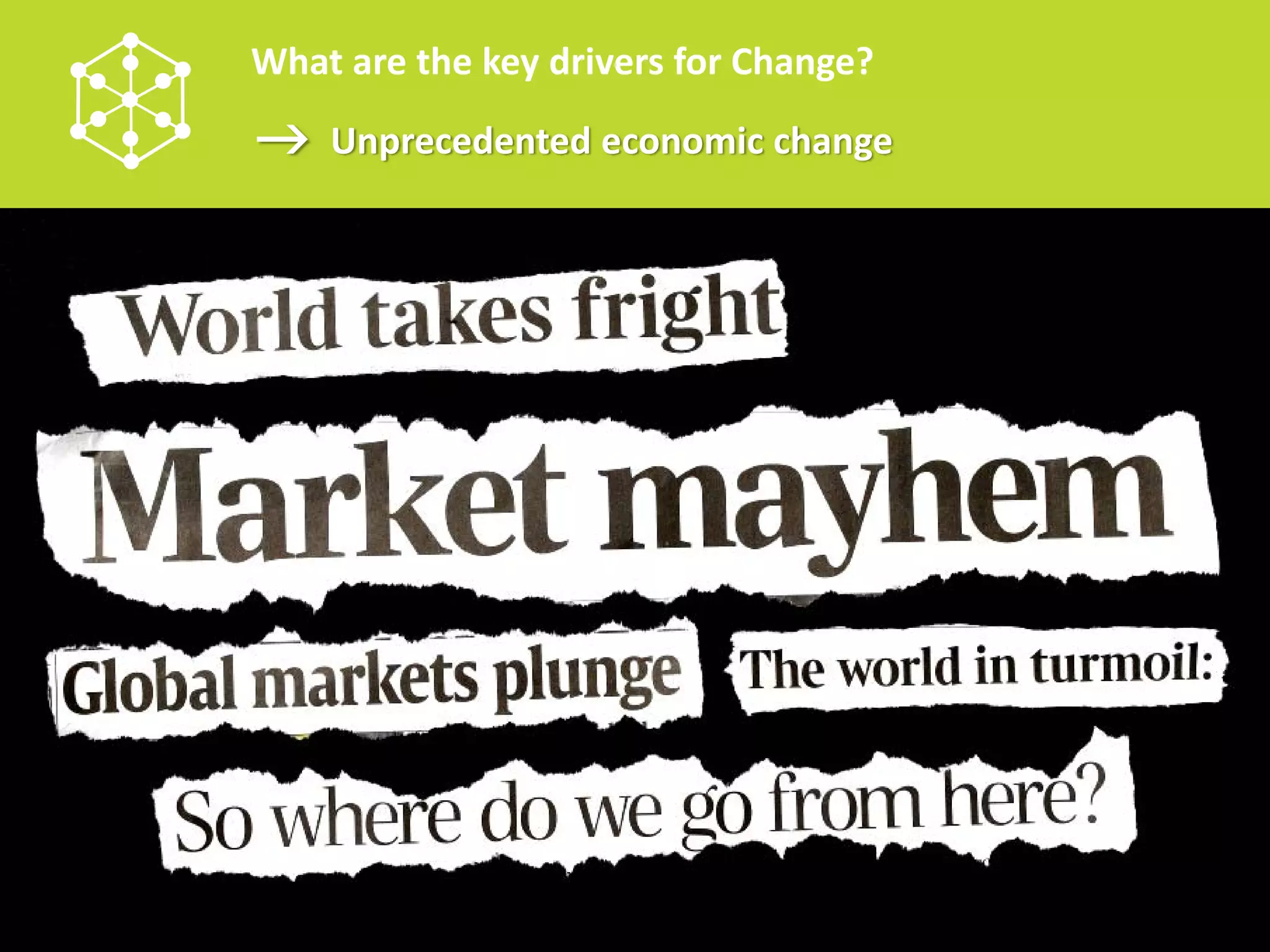
What are the key drivers for Change?
    Unprecedented economic change
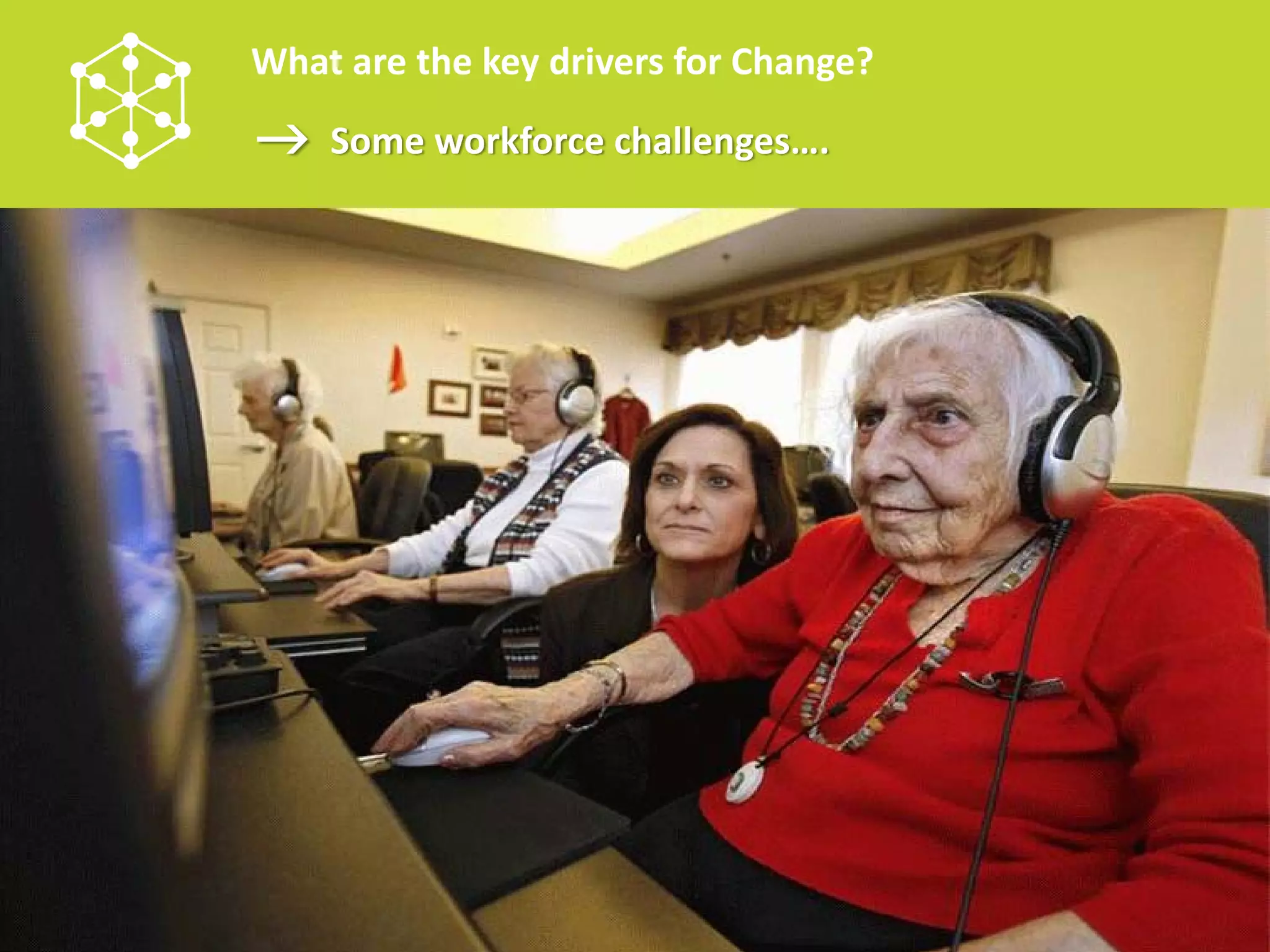
What are the key drivers for Change?
    Some workforce challenges….
What are the key drivers for Change?
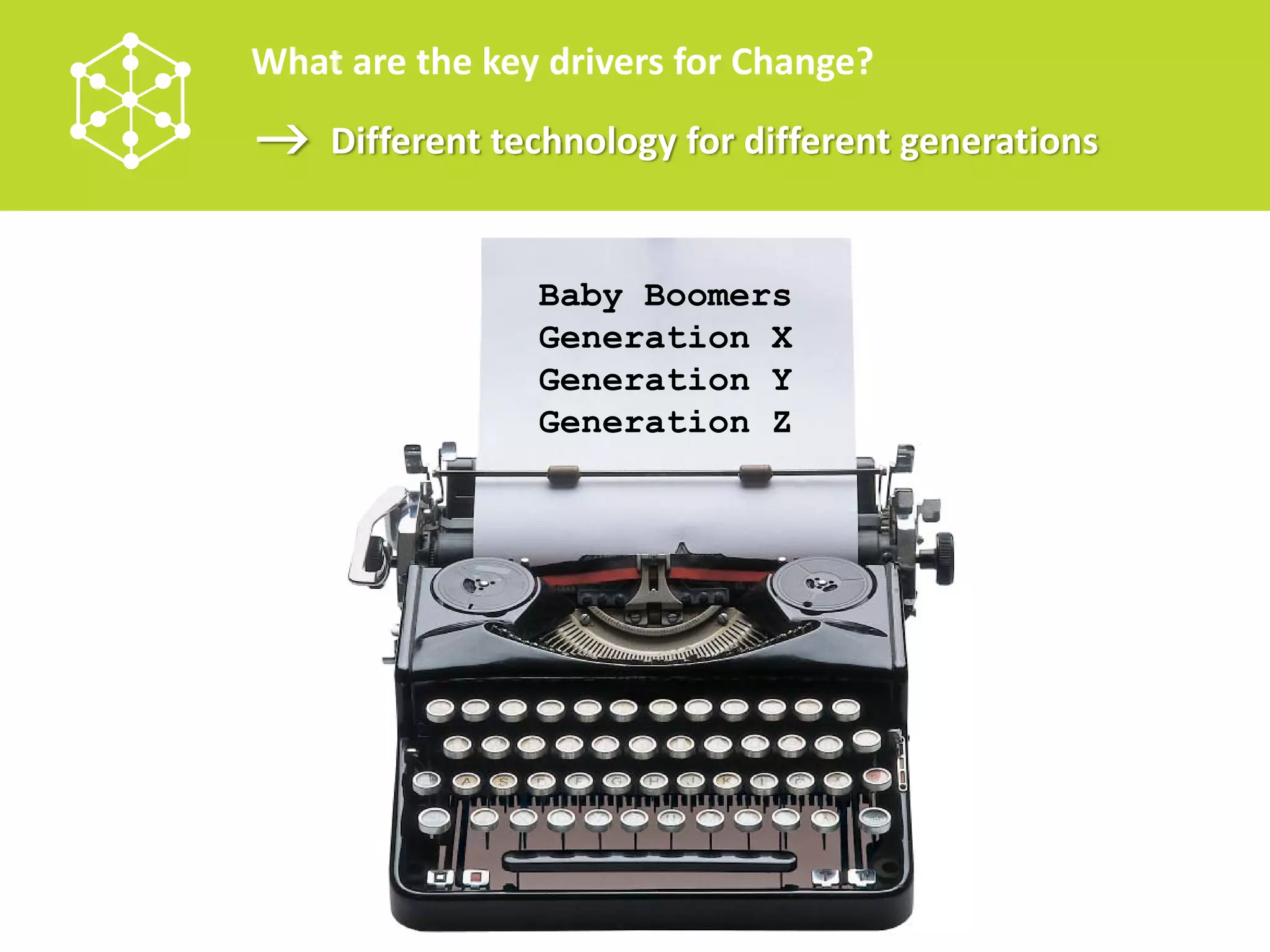
    Different technology for different generations


                Baby Boomers
                Generation X
                Generation Y
                Generation Z
What are the key drivers for Change?
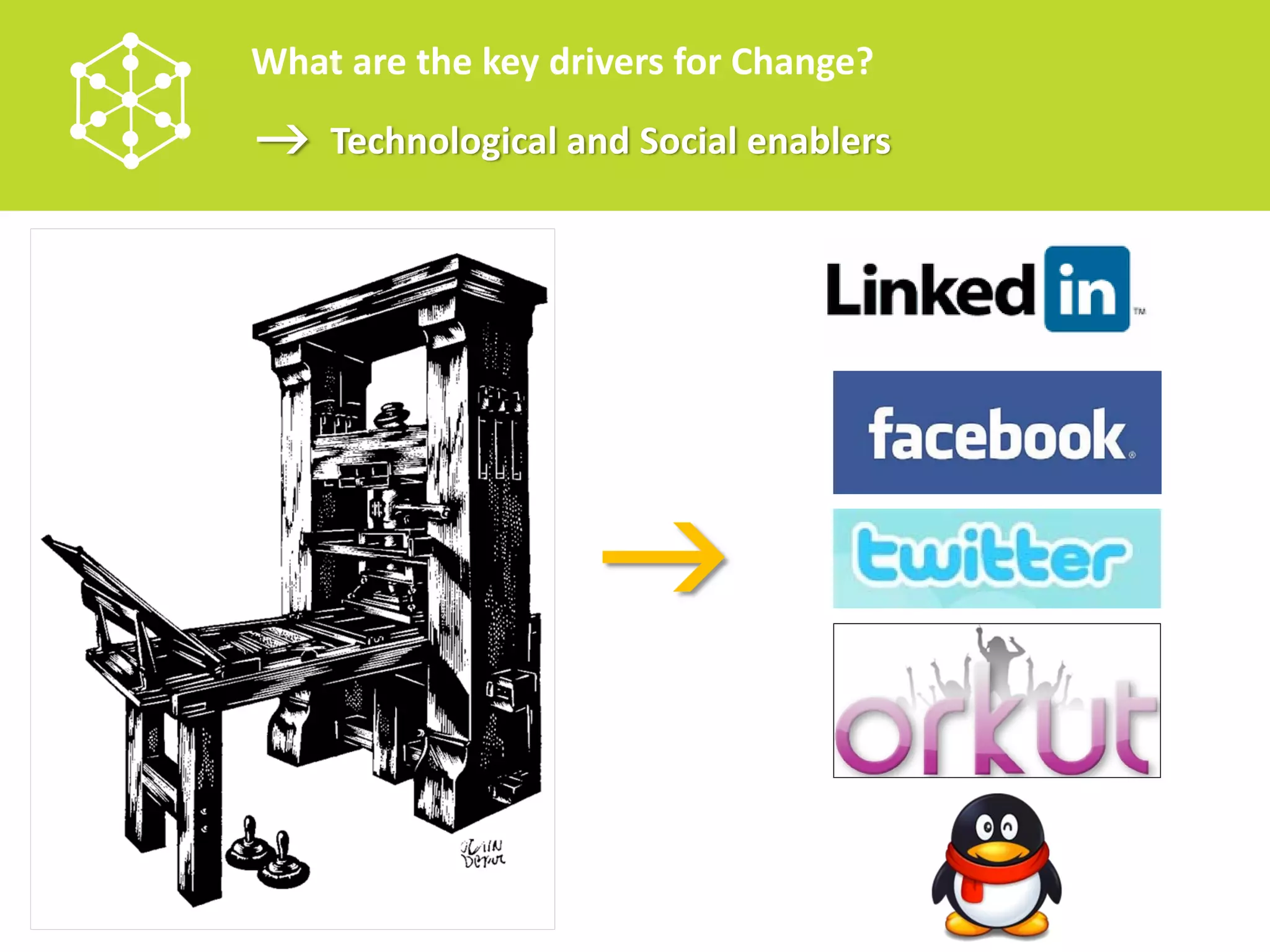
    Technological and Social enablers
What are the key drivers for Change?
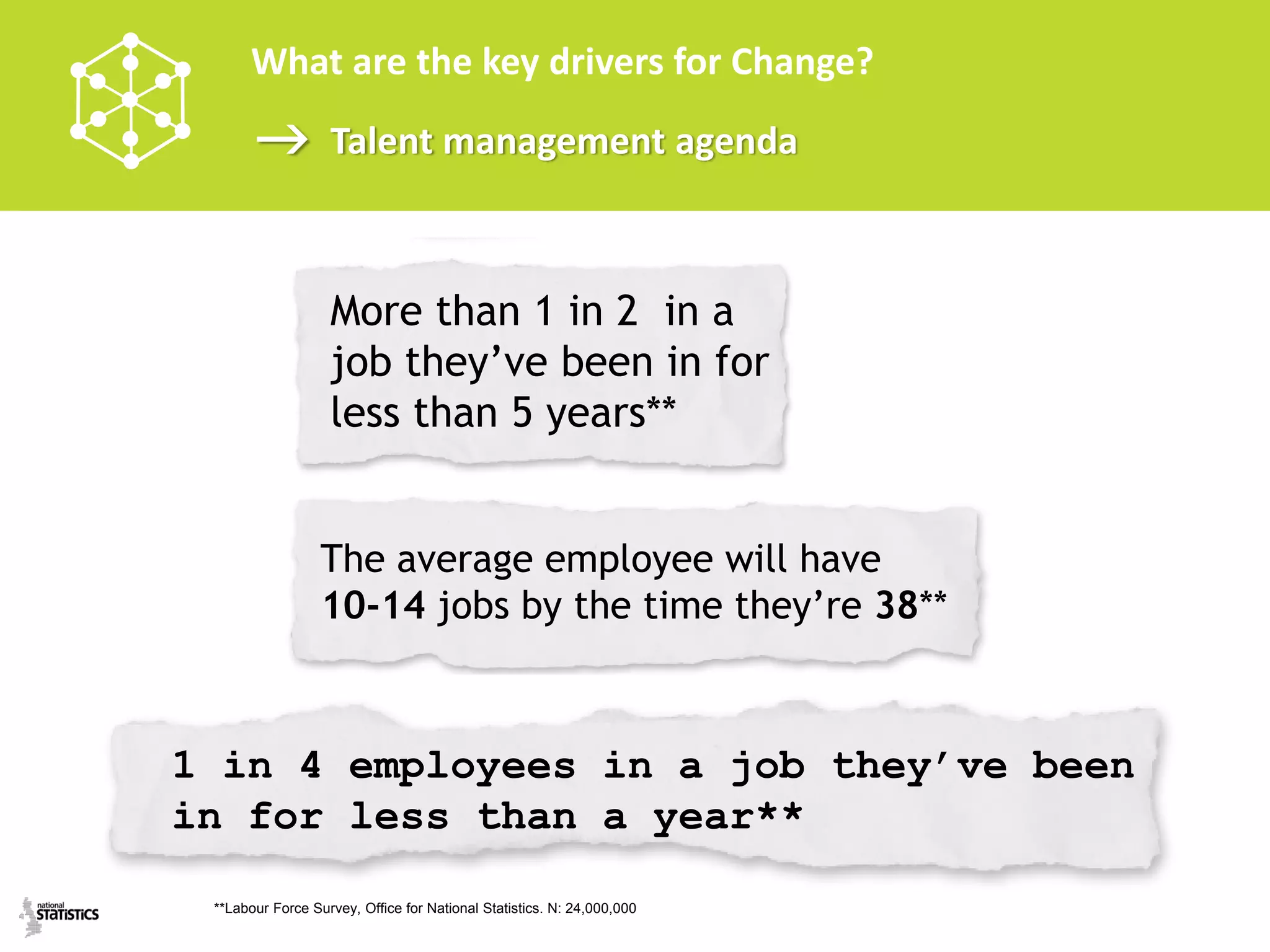
                   Talent management agenda


                   More than 1 in 2 in a
                   job they’ve been in for
                   less than 5 years**


                  The average employee will have
                  10-14 jobs by the time they’re 38**


1 in 4 employees in a job they’ve been
in for less than a year**
 **Labour Force Survey, Office for National Statistics. N: 24,000,000
What are the key drivers for Change?
    The HR Vendor market and services are evolving
What are the key drivers for Change?
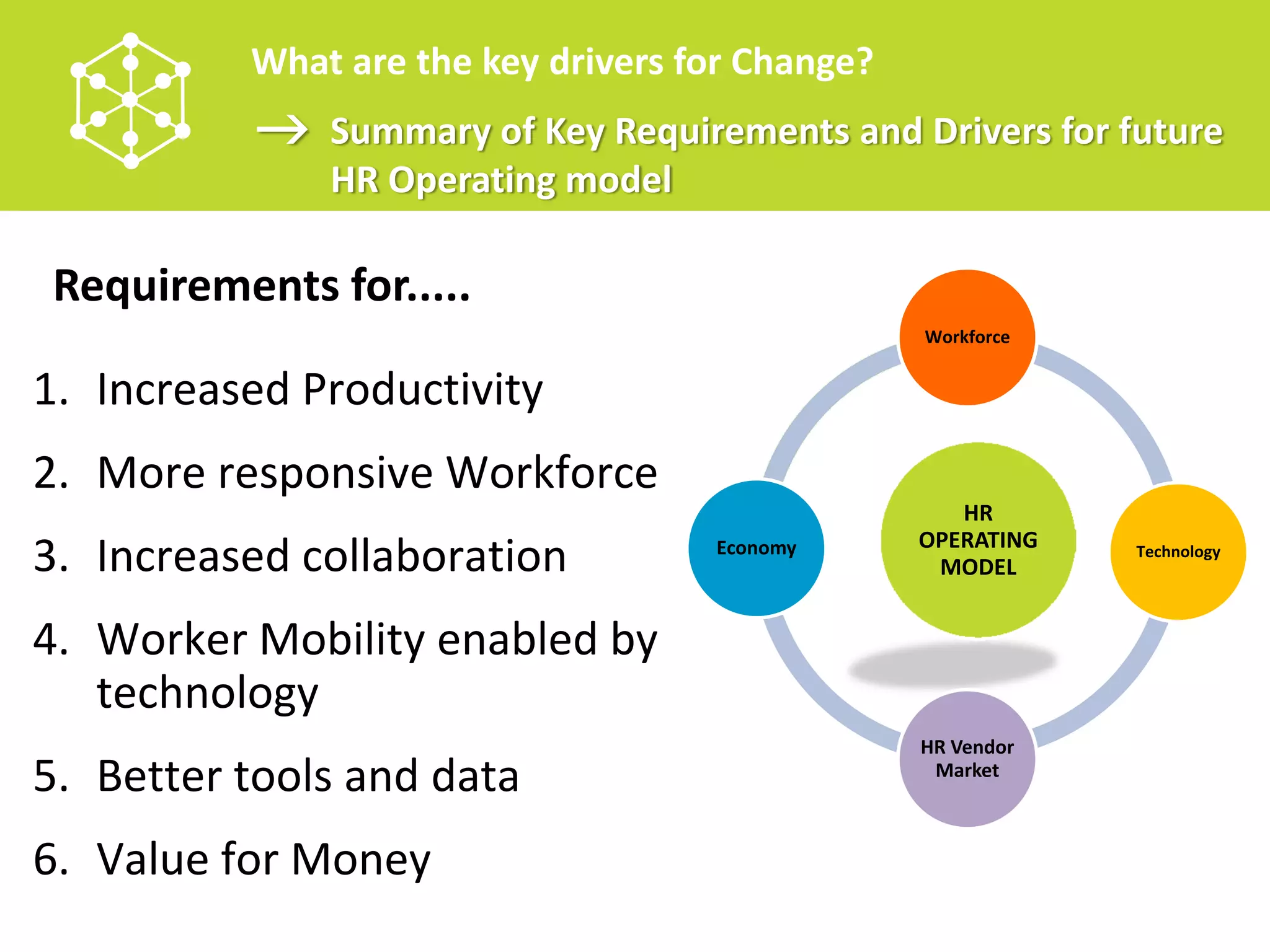
              Summary of Key Requirements and Drivers for future 
              HR Operating model

Requirements for.....
                                                 Workforce


1. Increased Productivity
2. More responsive Workforce
                                                    HR 
                                                 OPERATING 
3. Increased collaboration          Economy
                                                  MODEL
                                                              Technology


4. Worker Mobility enabled by 
   technology
                                                 HR Vendor 
5. Better tools and data                          Market


6. Value for Money
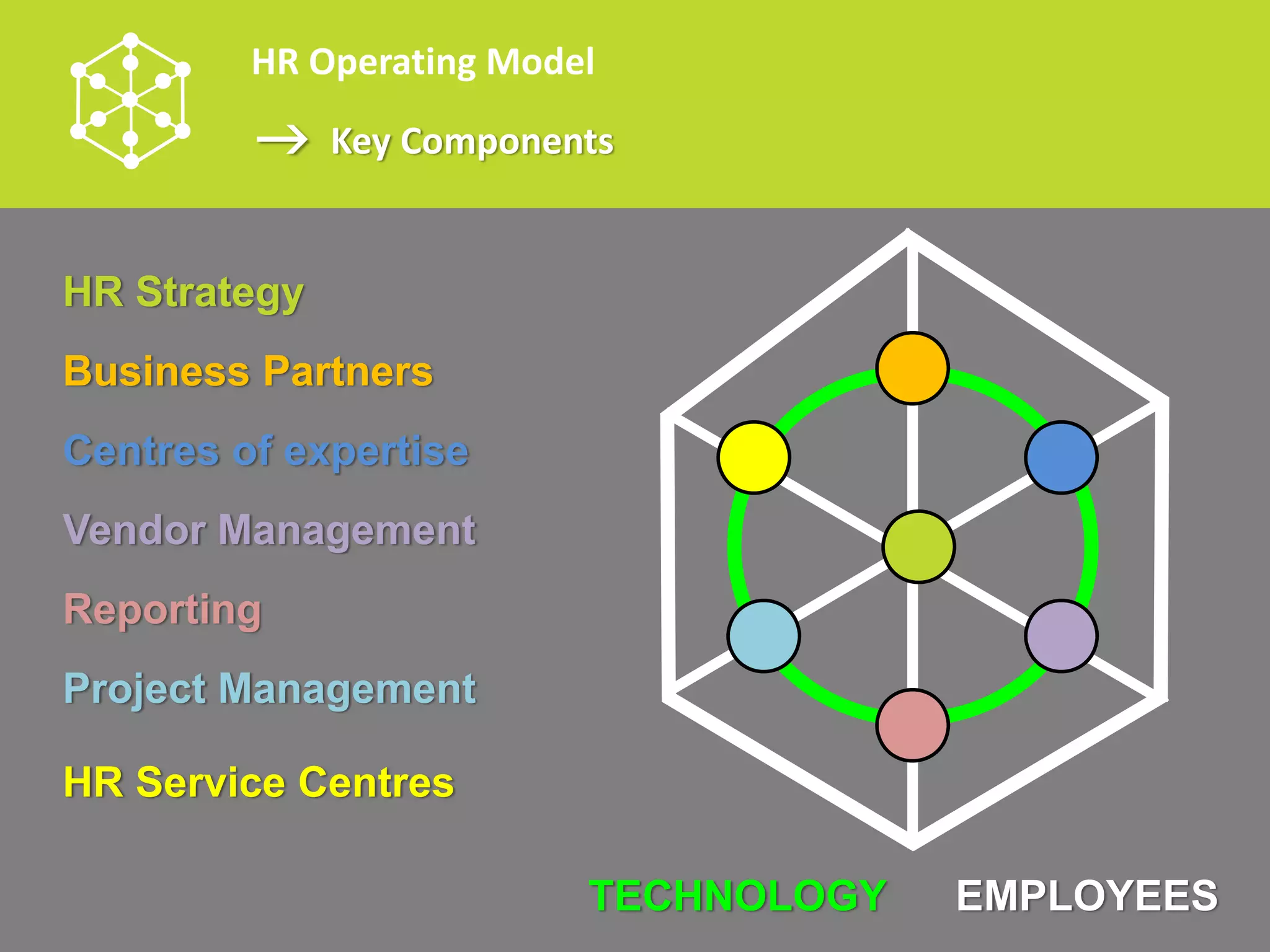
HR Operating Model
              Key Components


HR Strategy
Business Partners
Centres of expertise
Vendor Management
Reporting
Project Management

HR Service Centres

                          TECHNOLOGY   EMPLOYEES
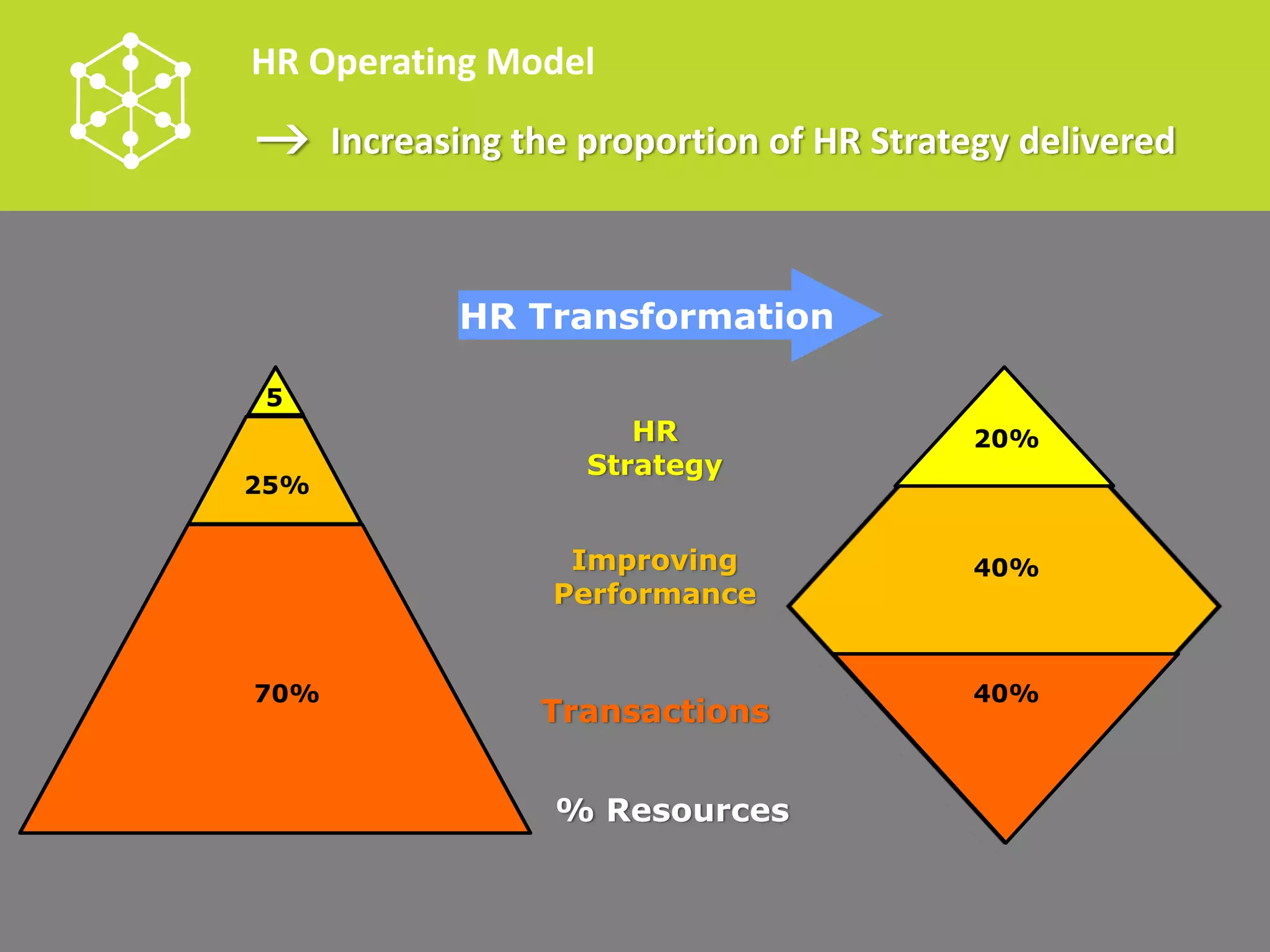
HR Operating Model
      Increasing the proportion of HR Strategy delivered


             HR Transformation

5
                        HR                  20%
                     Strategy
25%


                    Improving               40%
                   Performance


70%                                         40%
                  Transactions


                   % Resources
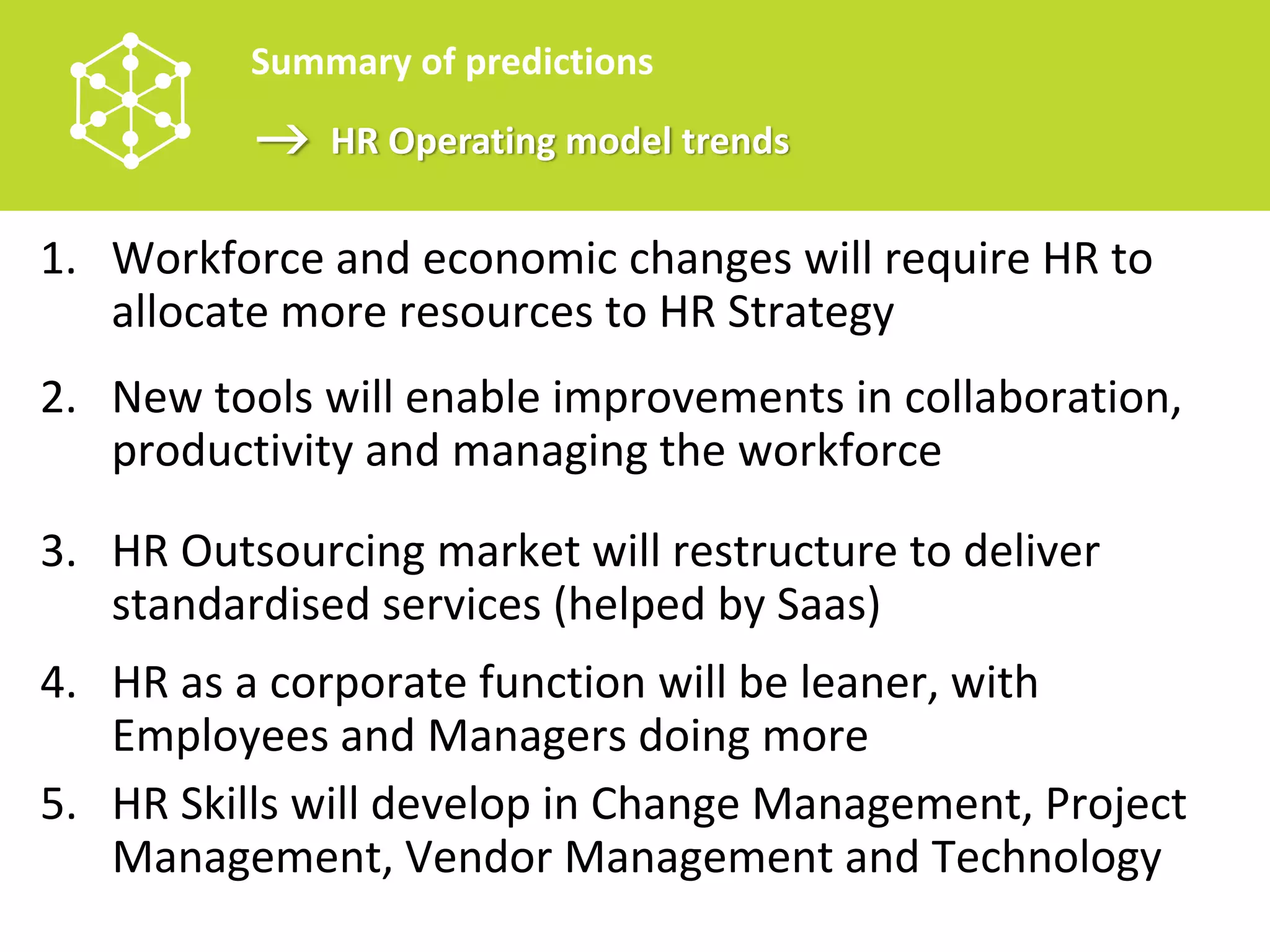
Summary of predictions
              HR Operating model trends

1. Workforce and economic changes will require HR to 
   allocate more resources to HR Strategy
2. New tools will enable improvements in collaboration, 
   productivity and managing the workforce

3. HR Outsourcing market will restructure to deliver 
   standardised services (helped by Saas)
4. HR as a corporate function will be leaner, with 
   Employees and Managers doing more
5. HR Skills will develop in Change Management, Project 
   Management, Vendor Management and Technology
How do we get there?
             Suggested steps…


1. Re‐Define your HR and Workforce strategy
2. Sharpen the HR Operating Model 
3. Reallocate more resources to strategic HR
4. Set‐up a formal Project (with non‐HR sponsors)
5. Lead in providing new business tools to managers
6. Take the Outsourcing decision to the Board 
   (not the other way round)
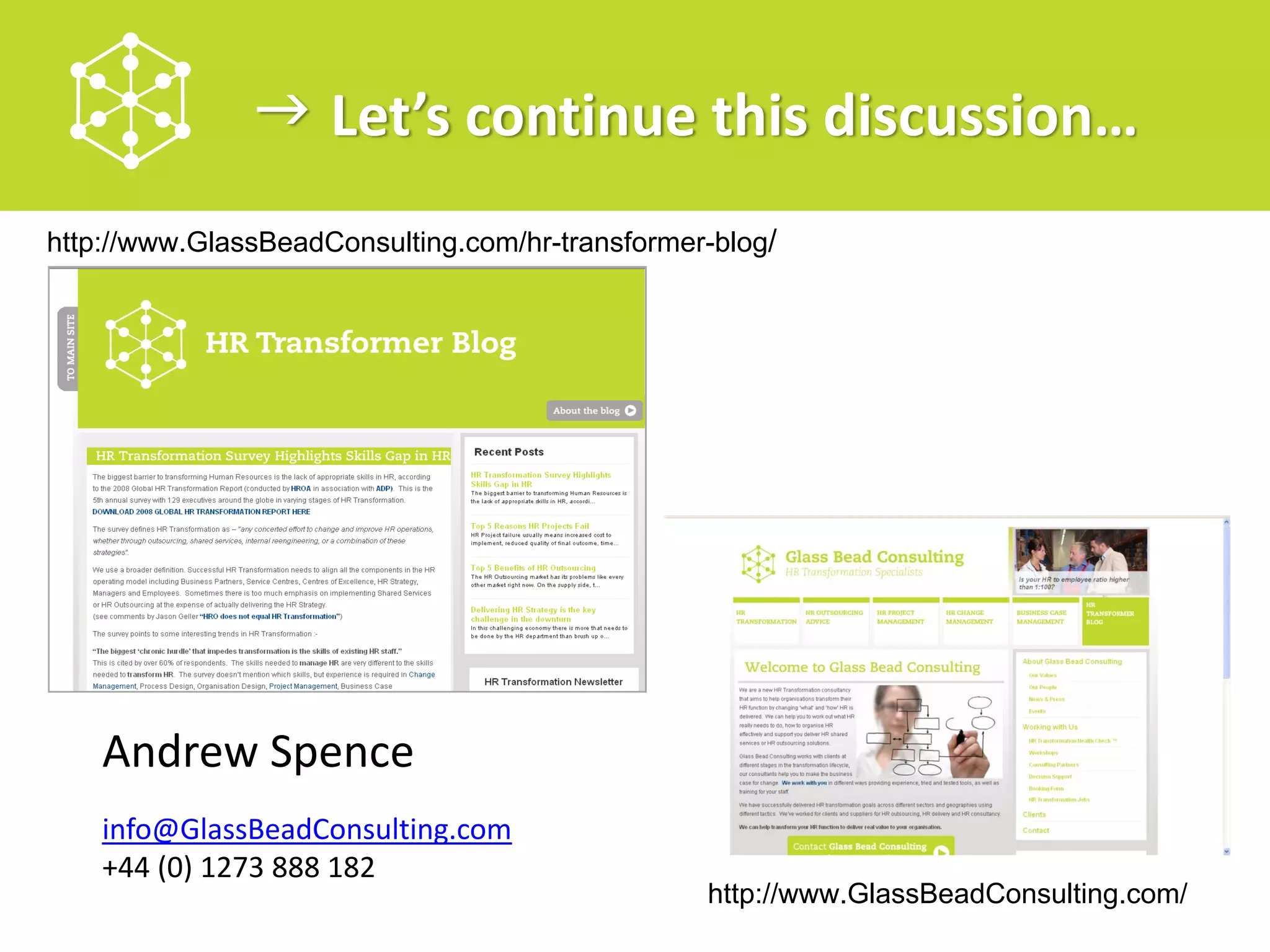
Let’s continue this discussion…
http://www.GlassBeadConsulting.com/hr-transformer-blog/


    Andrew Spence
    info@GlassBeadConsulting.com
    +44 (0) 1273 888 182
                                                 http://www.GlassBeadConsulting.com/
Glass Bead Consulting

HR Operating Models - future trends