HOW TO WRITE A HISTORY
ESSAY
https://historyhomeworkhelp.org/
VERY PERI
Introducing the Pantone Color of the Year
2022. PANTONE 17-3938 Very Peri is a
dynamic hue that blends the faithfulness
and constancy of blue with the energy and
excitement of red.
The four color palettes in this template
feature Very Peri to help you express your
ideas and convey the right mood. Read on
to learn how to use these colors in any
presentation.
Hire a History Expert
https://historyhomeworkhelp.org/order
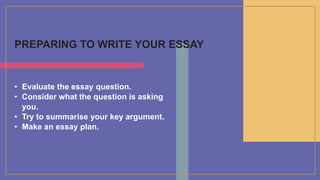
PREPARING TO WRITE YOUR ESSAY
• Evaluate the essay question.
• Consider what the question is asking
you.
• Try to summarise your key argument.
• Make an essay plan.
DO YOUR RESEARCH
• Distinguish between primary and
secondary sources
• Find your sources
• Evaluate your secondary sources.
• Read critically.
• Take thorough notes.
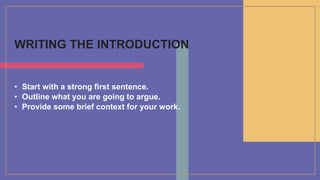
WRITING THE INTRODUCTION
• Start with a strong first sentence.
• Outline what you are going to argue.
• Provide some brief context for your work.
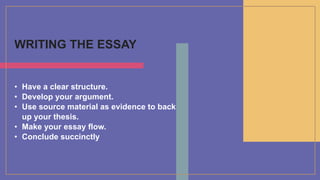
WRITING THE ESSAY
• Have a clear structure.
• Develop your argument.
• Use source material as evidence to back
up your thesis.
• Make your essay flow.
• Conclude succinctly
PROOFREADING AND
EVALUATING YOUR ESSAY
• Proofread your essay
• Analyse don't describe.
• Check your references and bibliography.

How to Write a History Essay.pptx

  • 1.
    HOW TO WRITEA HISTORY ESSAY https://historyhomeworkhelp.org/
  • 2.
    VERY PERI Introducing thePantone Color of the Year 2022. PANTONE 17-3938 Very Peri is a dynamic hue that blends the faithfulness and constancy of blue with the energy and excitement of red. The four color palettes in this template feature Very Peri to help you express your ideas and convey the right mood. Read on to learn how to use these colors in any presentation. Hire a History Expert https://historyhomeworkhelp.org/order
  • 3.
    PREPARING TO WRITEYOUR ESSAY • Evaluate the essay question. • Consider what the question is asking you. • Try to summarise your key argument. • Make an essay plan.
  • 4.
    DO YOUR RESEARCH •Distinguish between primary and secondary sources • Find your sources • Evaluate your secondary sources. • Read critically. • Take thorough notes.
  • 5.
    WRITING THE INTRODUCTION •Start with a strong first sentence. • Outline what you are going to argue. • Provide some brief context for your work.
  • 6.
    WRITING THE ESSAY •Have a clear structure. • Develop your argument. • Use source material as evidence to back up your thesis. • Make your essay flow. • Conclude succinctly
  • 7.
    PROOFREADING AND EVALUATING YOURESSAY • Proofread your essay • Analyse don't describe. • Check your references and bibliography.