Introduction
Installing an air compressor for power tool use is a critical step that directly affects the efficiency, safety, and lifespan of your tools and equipment.
Whether you're outfitting a home garage, a small workshop, or a larger commercial facility, taking the time to properly plan and execute your air
compressor installation can prevent costly mistakes and downtime later on. A poorly installed compressor can lead to air leaks, inconsistent
pressure, and even long-term damage to your tools. This comprehensive guide will walk you through everything you need to know, from
understanding why proper installation matters to a detailed step-by-step setup process. You9ll also learn about common mistakes to avoid and
practical, expert-backed tips that ensure your air compressor runs smoothly and supports optimal tool performance.
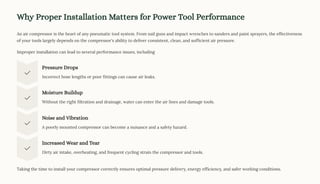
Why Proper Installation Matters for Power Tool Performance
An air compressor is the heart of any pneumatic tool system. From nail guns and impact wrenches to sanders and paint sprayers, the effectiveness
of your tools largely depends on the compressor's ability to deliver consistent, clean, and sufficient air pressure.
Improper installation can lead to several performance issues, including
Pressure Drops
Incorrect hose lengths or poor fittings can cause air leaks.
Moisture Buildup
Without the right filtration and drainage, water can enter the air lines and damage tools.
Noise and Vibration
A poorly mounted compressor can become a nuisance and a safety hazard.
Increased Wear and Tear
Dirty air intake, overheating, and frequent cycling strain the compressor and tools.
Taking the time to install your compressor correctly ensures optimal pressure delivery, energy efficiency, and safer working conditions.
Tools and Accessories You'll Need for Installation
Before you begin the air compressor setup, gather the necessary tools and accessories. Having everything on hand will streamline the process and
help avoid interruptions.
Adjustable wrench set
Pipe wrench
Teflon/PTFE tape or thread sealant
Screwdrivers (Phillips and flat-head)
Drill and bits (if mounting)
Level
Measuring tape
Accessories and Components:
Air hoses (appropriately rated and sized)
Quick-connect couplers and fittings
Pressure regulator
Air filter and moisture trap
Hose reel (optional but recommended)
Vibration pads or rubber feet
Power supply cord (check compressor requirements)
Mounting brackets (if wall- or bench-mounted)
Make sure all fittings and hoses are rated for the maximum pressure your compressor delivers. This avoids safety risks and ensures system
integrity.
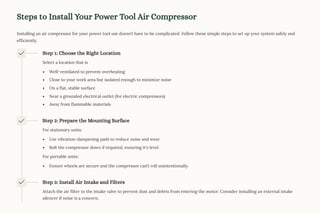
Steps to Install Your Power Tool Air Compressor
Installing an air compressor for your power tool use doesn9t have to be complicated. Follow these simple steps to set up your system safely and
efficiently.
Step 1: Choose the Right Location
Select a location that is
Well-ventilated to prevent overheating
Close to your work area but isolated enough to minimize noise
On a flat, stable surface
Near a grounded electrical outlet (for electric compressors)
Away from flammable materials
Step 2: Prepare the Mounting Surface
For stationary units:
Use vibration-dampening pads to reduce noise and wear.
Bolt the compressor down if required, ensuring it's level.
For portable units:
Ensure wheels are secure and the compressor can9t roll unintentionally.
Step 3: Install Air Intake and Filters
Attach the air filter to the intake valve to prevent dust and debris from entering the motor. Consider installing an external intake
silencer if noise is a concern.
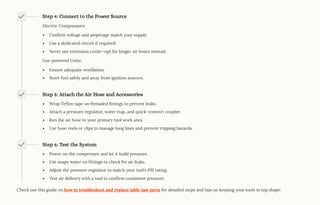
Step 4: Connect to the Power Source
Electric Compressors:
Confirm voltage and amperage match your supply.
Use a dedicated circuit if required.
Never use extension cords4opt for longer air hoses instead.
Gas-powered Units:
Ensure adequate ventilation.
Store fuel safely and away from ignition sources.
Step 5: Attach the Air Hose and Accessories
Wrap Teflon tape on threaded fittings to prevent leaks.
Attach a pressure regulator, water trap, and quick-connect coupler.
Run the air hose to your primary tool work area.
Use hose reels or clips to manage long lines and prevent tripping hazards.
Step 6: Test the System
Power on the compressor and let it build pressure.
Use soapy water on fittings to check for air leaks.
Adjust the pressure regulator to match your tool9s PSI rating.
Test air delivery with a tool to confirm consistent pressure.
Check out this guide on how to troubleshoot and replace table saw parts for detailed steps and tips on keeping your tools in top shape.
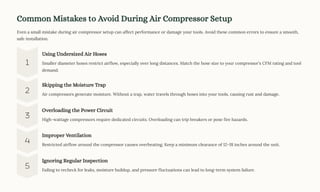
Common Mistakes to Avoid During Air Compressor Setup
Even a small mistake during air compressor setup can affect performance or damage your tools. Avoid these common errors to ensure a smooth,
safe installation.
Using Undersized Air Hoses
Smaller diameter hoses restrict airflow, especially over long distances. Match the hose size to your compressor's CFM rating and tool
demand.
Skipping the Moisture Trap
Air compressors generate moisture. Without a trap, water travels through hoses into your tools, causing rust and damage.
Overloading the Power Circuit
High-wattage compressors require dedicated circuits. Overloading can trip breakers or pose fire hazards.
Improper Ventilation
Restricted airflow around the compressor causes overheating. Keep a minimum clearance of 12318 inches around the unit.
Ignoring Regular Inspection
Failing to recheck for leaks, moisture buildup, and pressure fluctuations can lead to long-term system failure.
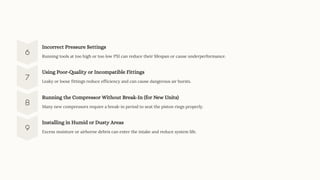
Incorrect Pressure Settings
Running tools at too high or too low PSI can reduce their lifespan or cause underperformance.
Using Poor-Quality or Incompatible Fittings
Leaky or loose fittings reduce efficiency and can cause dangerous air bursts.
Running the Compressor Without Break-In (for New Units)
Many new compressors require a break-in period to seat the piston rings properly.
Installing in Humid or Dusty Areas
Excess moisture or airborne debris can enter the intake and reduce system life.
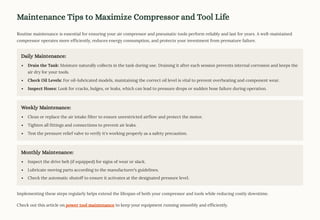
Maintenance Tips to Maximize Compressor and Tool Life
Routine maintenance is essential for ensuring your air compressor and pneumatic tools perform reliably and last for years. A well-maintained
compressor operates more efficiently, reduces energy consumption, and protects your investment from premature failure.
Daily Maintenance:
Drain the Tank: Moisture naturally collects in the tank during use. Draining it after each session prevents internal corrosion and keeps the
air dry for your tools.
Check Oil Levels: For oil-lubricated models, maintaining the correct oil level is vital to prevent overheating and component wear.
Inspect Hoses: Look for cracks, bulges, or leaks, which can lead to pressure drops or sudden hose failure during operation.
Weekly Maintenance:
Clean or replace the air intake filter to ensure unrestricted airflow and protect the motor.
Tighten all fittings and connections to prevent air leaks.
Test the pressure relief valve to verify it's working properly as a safety precaution.
Monthly Maintenance:
Inspect the drive belt (if equipped) for signs of wear or slack.
Lubricate moving parts according to the manufacturer9s guidelines.
Check the automatic shutoff to ensure it activates at the designated pressure level.
Implementing these steps regularly helps extend the lifespan of both your compressor and tools while reducing costly downtime.
Check out this article on power tool maintenance to keep your equipment running smoothly and efficiently.
Testing the Compressor After Setup
Once your air compressor is installed, testing it properly is essential to ensure safety, performance, and efficiency. Skipping this step or rushing
through it can lead to poor tool performance, system leaks, or even long-term damage.
Double-Check Installation Before Powering On
Ensure all fittings and hoses are securely attached.
Verify the power source (voltage and amperage) matches your compressor9s specifications.
Make sure all valves are in the closed position, except the tank drain valve (initially open for break-in).
Check that the pressure regulator is set to zero before the first run.
Power On and Let the Tank Pressurize
Plug in or switch on the unit.
Watch the pressure gauge climb to the cut-off pressure (usually around 1003150 PSI, depending on your model).
The compressor should automatically shut off when full pressure is reached.
Listen for any abnormal noises like rattling, knocking, or excessive vibration.
Check Pressure Drop Under Load
Set the pressure regulator to match the tool9s recommended PSI.
Trigger the tool and observe the pressure gauge.
A significant drop may indicate a restricted airflow, undersized hose, or insufficient tank size.
How to Troubleshoot Common Air Compressor Installation Issues
Troubleshooting common air compressor installation issues involves checking several factors that can impact performance, efficiency, and safety.
Here are some key areas to focus on, along with tips for diagnosing and resolving typical problems:
Power Supply Issues
Symptoms:
The compressor won9t start.
Tripping circuit breakers.
Troubleshooting:
Check that the voltage and phase match the compressor9s requirements.
Inspect circuit breakers and fuses.
Pressure Switch and Control Problems
Symptoms:
The compressor doesn9t shut off or turn on at set pressure.
Fluctuating or unstable pressure readings.
Troubleshooting:
Inspect and adjust the pressure switch settings.
Check for damaged or corroded contacts.
Noise and Vibration
Symptoms:
Excessive or unusual noise.
Vibration traveling through the floor or structure.
Troubleshooting:
Tighten loose bolts and fasteners.
Ensure proper mounting.
Improper Placement
Symptoms:
Overheating.
Excessive noise or vibration.
Reduced efficiency.
Troubleshooting:
Ensure the compressor is on a level surface with good ventilation.
Keep the unit away from walls or obstructions to allow airflow.
Conclusion
Installing an air compressor may seem intimidating at first, but with a structured approach, the right tools, and a bit of planning, it becomes a
manageable and rewarding project. Proper installation not only ensures the optimal performance of your power tools but also prolongs the life of
your equipment and enhances safety in your workspace.
Looking for top-quality air compressors and parts? WholeToolBox offers a wide range of trusted brands like Ridgid, Dewalt, and Makita, along with
essential parts like air filters, pressure regulators, and hoses. Shop now to get everything you need for a smooth air compressor installation and
reliable power tool performance!
FAQs
1 What type of hose is best for air-powered tools?
Use a high-quality, kink-resistant air hose with the correct diameter for your tools. For most power tools, a 3/8" hose balances flexibility
and airflow well.
2 What size air compressor do I need for power tools?
Match the compressor9s CFM and PSI to your tool9s requirements. Light tools need 234 CFM; heavier ones may need 5310+. Choose a
compressor with at least 25% more CFM than required.
3 Can I use one air compressor for multiple power tools?
Yes, but make sure your compressor's CFM rating matches or exceeds the combined demand of the tools you9ll use. Using a splitter or
manifold with proper regulators can help distribute air effectively.

How to Install an Air Compressor: A Complete Step-by-Step Guide

  • 2.
    Introduction Installing an aircompressor for power tool use is a critical step that directly affects the efficiency, safety, and lifespan of your tools and equipment. Whether you're outfitting a home garage, a small workshop, or a larger commercial facility, taking the time to properly plan and execute your air compressor installation can prevent costly mistakes and downtime later on. A poorly installed compressor can lead to air leaks, inconsistent pressure, and even long-term damage to your tools. This comprehensive guide will walk you through everything you need to know, from understanding why proper installation matters to a detailed step-by-step setup process. You9ll also learn about common mistakes to avoid and practical, expert-backed tips that ensure your air compressor runs smoothly and supports optimal tool performance.
  • 3.
    Why Proper InstallationMatters for Power Tool Performance An air compressor is the heart of any pneumatic tool system. From nail guns and impact wrenches to sanders and paint sprayers, the effectiveness of your tools largely depends on the compressor's ability to deliver consistent, clean, and sufficient air pressure. Improper installation can lead to several performance issues, including Pressure Drops Incorrect hose lengths or poor fittings can cause air leaks. Moisture Buildup Without the right filtration and drainage, water can enter the air lines and damage tools. Noise and Vibration A poorly mounted compressor can become a nuisance and a safety hazard. Increased Wear and Tear Dirty air intake, overheating, and frequent cycling strain the compressor and tools. Taking the time to install your compressor correctly ensures optimal pressure delivery, energy efficiency, and safer working conditions.
  • 4.
    Tools and AccessoriesYou'll Need for Installation Before you begin the air compressor setup, gather the necessary tools and accessories. Having everything on hand will streamline the process and help avoid interruptions. Adjustable wrench set Pipe wrench Teflon/PTFE tape or thread sealant Screwdrivers (Phillips and flat-head) Drill and bits (if mounting) Level Measuring tape
  • 5.
    Accessories and Components: Airhoses (appropriately rated and sized) Quick-connect couplers and fittings Pressure regulator Air filter and moisture trap Hose reel (optional but recommended) Vibration pads or rubber feet Power supply cord (check compressor requirements) Mounting brackets (if wall- or bench-mounted) Make sure all fittings and hoses are rated for the maximum pressure your compressor delivers. This avoids safety risks and ensures system integrity.
  • 6.
    Steps to InstallYour Power Tool Air Compressor Installing an air compressor for your power tool use doesn9t have to be complicated. Follow these simple steps to set up your system safely and efficiently. Step 1: Choose the Right Location Select a location that is Well-ventilated to prevent overheating Close to your work area but isolated enough to minimize noise On a flat, stable surface Near a grounded electrical outlet (for electric compressors) Away from flammable materials Step 2: Prepare the Mounting Surface For stationary units: Use vibration-dampening pads to reduce noise and wear. Bolt the compressor down if required, ensuring it's level. For portable units: Ensure wheels are secure and the compressor can9t roll unintentionally. Step 3: Install Air Intake and Filters Attach the air filter to the intake valve to prevent dust and debris from entering the motor. Consider installing an external intake silencer if noise is a concern.
  • 7.
    Step 4: Connectto the Power Source Electric Compressors: Confirm voltage and amperage match your supply. Use a dedicated circuit if required. Never use extension cords4opt for longer air hoses instead. Gas-powered Units: Ensure adequate ventilation. Store fuel safely and away from ignition sources. Step 5: Attach the Air Hose and Accessories Wrap Teflon tape on threaded fittings to prevent leaks. Attach a pressure regulator, water trap, and quick-connect coupler. Run the air hose to your primary tool work area. Use hose reels or clips to manage long lines and prevent tripping hazards. Step 6: Test the System Power on the compressor and let it build pressure. Use soapy water on fittings to check for air leaks. Adjust the pressure regulator to match your tool9s PSI rating. Test air delivery with a tool to confirm consistent pressure. Check out this guide on how to troubleshoot and replace table saw parts for detailed steps and tips on keeping your tools in top shape.
  • 8.
    Common Mistakes toAvoid During Air Compressor Setup Even a small mistake during air compressor setup can affect performance or damage your tools. Avoid these common errors to ensure a smooth, safe installation. Using Undersized Air Hoses Smaller diameter hoses restrict airflow, especially over long distances. Match the hose size to your compressor's CFM rating and tool demand. Skipping the Moisture Trap Air compressors generate moisture. Without a trap, water travels through hoses into your tools, causing rust and damage. Overloading the Power Circuit High-wattage compressors require dedicated circuits. Overloading can trip breakers or pose fire hazards. Improper Ventilation Restricted airflow around the compressor causes overheating. Keep a minimum clearance of 12318 inches around the unit. Ignoring Regular Inspection Failing to recheck for leaks, moisture buildup, and pressure fluctuations can lead to long-term system failure.
  • 9.
    Incorrect Pressure Settings Runningtools at too high or too low PSI can reduce their lifespan or cause underperformance. Using Poor-Quality or Incompatible Fittings Leaky or loose fittings reduce efficiency and can cause dangerous air bursts. Running the Compressor Without Break-In (for New Units) Many new compressors require a break-in period to seat the piston rings properly. Installing in Humid or Dusty Areas Excess moisture or airborne debris can enter the intake and reduce system life.
  • 10.
    Maintenance Tips toMaximize Compressor and Tool Life Routine maintenance is essential for ensuring your air compressor and pneumatic tools perform reliably and last for years. A well-maintained compressor operates more efficiently, reduces energy consumption, and protects your investment from premature failure. Daily Maintenance: Drain the Tank: Moisture naturally collects in the tank during use. Draining it after each session prevents internal corrosion and keeps the air dry for your tools. Check Oil Levels: For oil-lubricated models, maintaining the correct oil level is vital to prevent overheating and component wear. Inspect Hoses: Look for cracks, bulges, or leaks, which can lead to pressure drops or sudden hose failure during operation. Weekly Maintenance: Clean or replace the air intake filter to ensure unrestricted airflow and protect the motor. Tighten all fittings and connections to prevent air leaks. Test the pressure relief valve to verify it's working properly as a safety precaution. Monthly Maintenance: Inspect the drive belt (if equipped) for signs of wear or slack. Lubricate moving parts according to the manufacturer9s guidelines. Check the automatic shutoff to ensure it activates at the designated pressure level. Implementing these steps regularly helps extend the lifespan of both your compressor and tools while reducing costly downtime. Check out this article on power tool maintenance to keep your equipment running smoothly and efficiently.
  • 11.
    Testing the CompressorAfter Setup Once your air compressor is installed, testing it properly is essential to ensure safety, performance, and efficiency. Skipping this step or rushing through it can lead to poor tool performance, system leaks, or even long-term damage. Double-Check Installation Before Powering On Ensure all fittings and hoses are securely attached. Verify the power source (voltage and amperage) matches your compressor9s specifications. Make sure all valves are in the closed position, except the tank drain valve (initially open for break-in). Check that the pressure regulator is set to zero before the first run. Power On and Let the Tank Pressurize Plug in or switch on the unit. Watch the pressure gauge climb to the cut-off pressure (usually around 1003150 PSI, depending on your model). The compressor should automatically shut off when full pressure is reached. Listen for any abnormal noises like rattling, knocking, or excessive vibration. Check Pressure Drop Under Load Set the pressure regulator to match the tool9s recommended PSI. Trigger the tool and observe the pressure gauge. A significant drop may indicate a restricted airflow, undersized hose, or insufficient tank size.
  • 12.
    How to TroubleshootCommon Air Compressor Installation Issues Troubleshooting common air compressor installation issues involves checking several factors that can impact performance, efficiency, and safety. Here are some key areas to focus on, along with tips for diagnosing and resolving typical problems: Power Supply Issues Symptoms: The compressor won9t start. Tripping circuit breakers. Troubleshooting: Check that the voltage and phase match the compressor9s requirements. Inspect circuit breakers and fuses. Pressure Switch and Control Problems Symptoms: The compressor doesn9t shut off or turn on at set pressure. Fluctuating or unstable pressure readings. Troubleshooting: Inspect and adjust the pressure switch settings. Check for damaged or corroded contacts.
  • 13.
    Noise and Vibration Symptoms: Excessiveor unusual noise. Vibration traveling through the floor or structure. Troubleshooting: Tighten loose bolts and fasteners. Ensure proper mounting. Improper Placement Symptoms: Overheating. Excessive noise or vibration. Reduced efficiency. Troubleshooting: Ensure the compressor is on a level surface with good ventilation. Keep the unit away from walls or obstructions to allow airflow.
  • 14.
    Conclusion Installing an aircompressor may seem intimidating at first, but with a structured approach, the right tools, and a bit of planning, it becomes a manageable and rewarding project. Proper installation not only ensures the optimal performance of your power tools but also prolongs the life of your equipment and enhances safety in your workspace. Looking for top-quality air compressors and parts? WholeToolBox offers a wide range of trusted brands like Ridgid, Dewalt, and Makita, along with essential parts like air filters, pressure regulators, and hoses. Shop now to get everything you need for a smooth air compressor installation and reliable power tool performance!
  • 15.
    FAQs 1 What typeof hose is best for air-powered tools? Use a high-quality, kink-resistant air hose with the correct diameter for your tools. For most power tools, a 3/8" hose balances flexibility and airflow well. 2 What size air compressor do I need for power tools? Match the compressor9s CFM and PSI to your tool9s requirements. Light tools need 234 CFM; heavier ones may need 5310+. Choose a compressor with at least 25% more CFM than required. 3 Can I use one air compressor for multiple power tools? Yes, but make sure your compressor's CFM rating matches or exceeds the combined demand of the tools you9ll use. Using a splitter or manifold with proper regulators can help distribute air effectively.