COUNTABLE AND
UNCOUNTABLE
THERE IS / THERE ARE
DAILY EXPRESSIONS…
             Pre – Services Teachers:
                        Jannia Botia
                       Sandra Guio.
SUPERMARKET. I NEED TO BUY
 SOME FOOD. I NEED SOME MEAT
 AND SOME VEGETABLES. I NEED
ONE KILO OF TOMATOES AND TWO
KILOS OF ORANGES. I ALSO NEED A
   BOX OF CEREAL AND THREE
  BOTTLES OF MINERAL WATER. I
 ALWAYS GO TO THE SAME PLACE.
THEY HAVE GOOD PRICES AND IT'S
NEAR MY HOME. I USUALLY PAY BY
         CREDIT CARD.
SHOPPING …
         I HAVE TO BUY...

             I NEED...

 DO YOU HAVE FRESH TOMATOES?

       HOW MUCH IS THIS?

      HOW ARE YOU PAYING?

BY CREDIT CARD / BY CHEQUE / CASH.

IT'S TWENTY DOLLARS AND 45 CENTS.

      HERE'S YOUR CHANGE.
MONEY…


        ONE DOLLAR / UN DÓLAR
        ONE CENT / UN CENTAVO
      ONE QUARTER / 25 CENTAVOS
        ONE DIME / 10 CENTAVOS
FIVE DOLLARS AND THIRTY CENTS /CINCO
    DÓLARES CON TREINTA CENTAVOS
   ONE POUND / UNA LIBRA ESTERLINA
   ONE PENNY / UN CENTAVO DE LIBRA
  TWO PENCE / DOS CENTAVOS DE LIBRA
FIVE POUNDS AND THIRTY PENCE / CINCO
     LIBRAS CON TREINTA CENTAVOS
EXPRESSIONS…


   I'm hungry. 
   I'm thirsty. 

       to eat 

     to drink 

    breakfast 

       lunch 

        tea 

      dinner 
COUNTABLE AND
            UNCOUNTABLE…


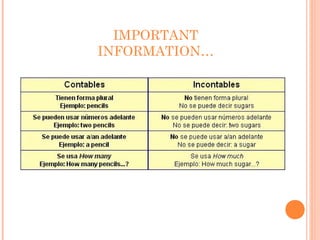
   A noun is countable when it can count on units .
    For example, book is a countable noun, because
    you can say one book, two books, five books.

   A noun is uncountable when you can not count on
    units. For example, milk is uncountable because
    you can not say one milk, two milks but you can
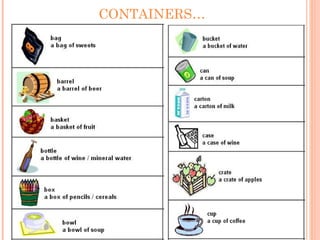
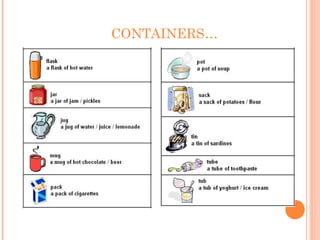
    use the container: two bottles of milk.
IMPORTANT
INFORMATION…
HOW MUCH / HOW MANY…

They are used to ask for quantities of something.

 If it is countable: How many!...
 If it is uncountable nouns: How much!...


These expressions are always followed by a noun,
then the verb and the complement of the sentence.
HOW MUCH / HOW MANY…

             How many cars do you have?

         How much money do you have?

How much is also used for asking about prices…

                  How much is this car?

             How much are the potatoes?
THEY ARE ALSO USED IN A GENERIC
SENSE TO ASK "HOW'S". IN THIS CASE,
   THE NOUN ARE FOLLOWED AND
       THEN, IS / ARE THERE
   How many cars are there?

   How much money is there?

    These questions are answered using There is /
      are, depending on it is singular or plural.

   There are nine cars.

   There is one dollar.
TO REFERENCE UNCOUNTABLE
NOUNS, YOU CAN USE CONTAINERS
  OR MEASURES THAT CONTAIN
            THEM…

          How much milk is there?


              There are three liters.


          There are three bottles.
CONTAINERS…
CONTAINERS…
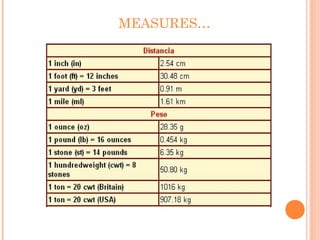
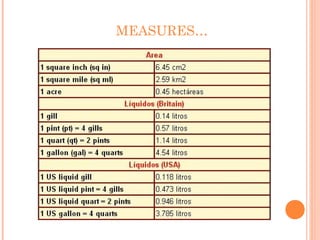
MEASURES…
MEASURES…
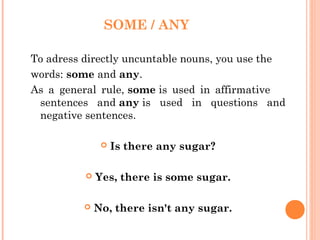
SOME / ANY

To adress directly uncuntable nouns, you use the
words: some and any.
As a general rule, some is used in affirmative
 sentences and any is used in questions and
 negative sentences.

                  Is there any sugar?

             Yes, there is some sugar.

             No, there isn't any sugar.
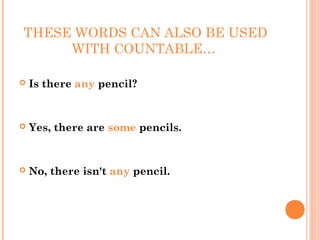
THESE WORDS CAN ALSO BE USED
     WITH COUNTABLE…

   Is there any pencil?


   Yes, there are some pencils.


   No, there isn't any pencil.
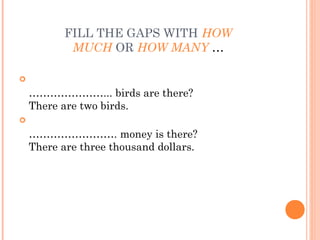
FILL THE GAPS WITH HOW
           MUCH OR HOW MANY …


    …………………... birds are there? 
    There are two birds.

    ……………………. money is there? 
    There are three thousand dollars.

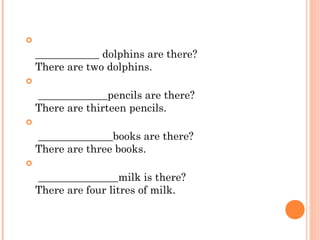
    ____________ dolphins are there? 
    There are two dolphins.

     _____________pencils are there? 
    There are thirteen pencils.

     ______________books are there? 
    There are three books.

     _______________milk is there? 
    There are four litres of milk.
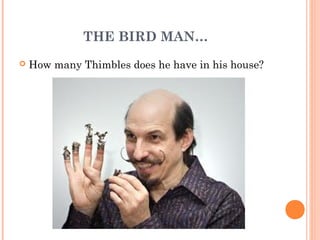
THE BIRD MAN…
   How many Thimbles does he have in his house?
How many how much

  • 1.
    COUNTABLE AND UNCOUNTABLE THERE IS/ THERE ARE DAILY EXPRESSIONS… Pre – Services Teachers: Jannia Botia Sandra Guio.
  • 2.
    SUPERMARKET. I NEEDTO BUY SOME FOOD. I NEED SOME MEAT AND SOME VEGETABLES. I NEED ONE KILO OF TOMATOES AND TWO KILOS OF ORANGES. I ALSO NEED A BOX OF CEREAL AND THREE BOTTLES OF MINERAL WATER. I ALWAYS GO TO THE SAME PLACE. THEY HAVE GOOD PRICES AND IT'S NEAR MY HOME. I USUALLY PAY BY CREDIT CARD.
  • 3.
    SHOPPING … I HAVE TO BUY... I NEED... DO YOU HAVE FRESH TOMATOES? HOW MUCH IS THIS? HOW ARE YOU PAYING? BY CREDIT CARD / BY CHEQUE / CASH. IT'S TWENTY DOLLARS AND 45 CENTS. HERE'S YOUR CHANGE.
  • 4.
    MONEY… ONE DOLLAR / UN DÓLAR ONE CENT / UN CENTAVO ONE QUARTER / 25 CENTAVOS ONE DIME / 10 CENTAVOS FIVE DOLLARS AND THIRTY CENTS /CINCO DÓLARES CON TREINTA CENTAVOS ONE POUND / UNA LIBRA ESTERLINA ONE PENNY / UN CENTAVO DE LIBRA TWO PENCE / DOS CENTAVOS DE LIBRA FIVE POUNDS AND THIRTY PENCE / CINCO LIBRAS CON TREINTA CENTAVOS
  • 5.
    EXPRESSIONS… I'm hungry.   I'm thirsty.   to eat   to drink   breakfast   lunch   tea   dinner 
  • 6.
    COUNTABLE AND UNCOUNTABLE…  A noun is countable when it can count on units . For example, book is a countable noun, because you can say one book, two books, five books.  A noun is uncountable when you can not count on units. For example, milk is uncountable because you can not say one milk, two milks but you can use the container: two bottles of milk.
  • 7.
  • 8.
    HOW MUCH /HOW MANY… They are used to ask for quantities of something.  If it is countable: How many!...  If it is uncountable nouns: How much!... These expressions are always followed by a noun, then the verb and the complement of the sentence.
  • 9.
    HOW MUCH /HOW MANY…  How many cars do you have?  How much money do you have? How much is also used for asking about prices…  How much is this car?  How much are the potatoes?
  • 10.
    THEY ARE ALSOUSED IN A GENERIC SENSE TO ASK "HOW'S". IN THIS CASE, THE NOUN ARE FOLLOWED AND THEN, IS / ARE THERE  How many cars are there?  How much money is there? These questions are answered using There is / are, depending on it is singular or plural.  There are nine cars.  There is one dollar.
  • 11.
    TO REFERENCE UNCOUNTABLE NOUNS,YOU CAN USE CONTAINERS OR MEASURES THAT CONTAIN THEM…  How much milk is there?  There are three liters.  There are three bottles.
  • 12.
  • 13.
  • 14.
  • 15.
  • 16.
    SOME / ANY Toadress directly uncuntable nouns, you use the words: some and any. As a general rule, some is used in affirmative sentences and any is used in questions and negative sentences.  Is there any sugar?  Yes, there is some sugar.  No, there isn't any sugar.
  • 17.
    THESE WORDS CANALSO BE USED WITH COUNTABLE…  Is there any pencil?  Yes, there are some pencils.  No, there isn't any pencil.
  • 18.
    FILL THE GAPSWITH HOW MUCH OR HOW MANY …  …………………... birds are there?  There are two birds.  ……………………. money is there?  There are three thousand dollars.
  • 19.
    ____________ dolphins are there?  There are two dolphins.   _____________pencils are there?  There are thirteen pencils.   ______________books are there?  There are three books.   _______________milk is there?  There are four litres of milk.
  • 20.
    THE BIRD MAN…  How many Thimbles does he have in his house?