How a Design Thinking
Course Can Benefit
Working Professionals
mitidinnovation.com
The aim is to highlight how
such a course can enhance
creativity, problem-solving
skills, and innovation in the
workplace.
Introduction
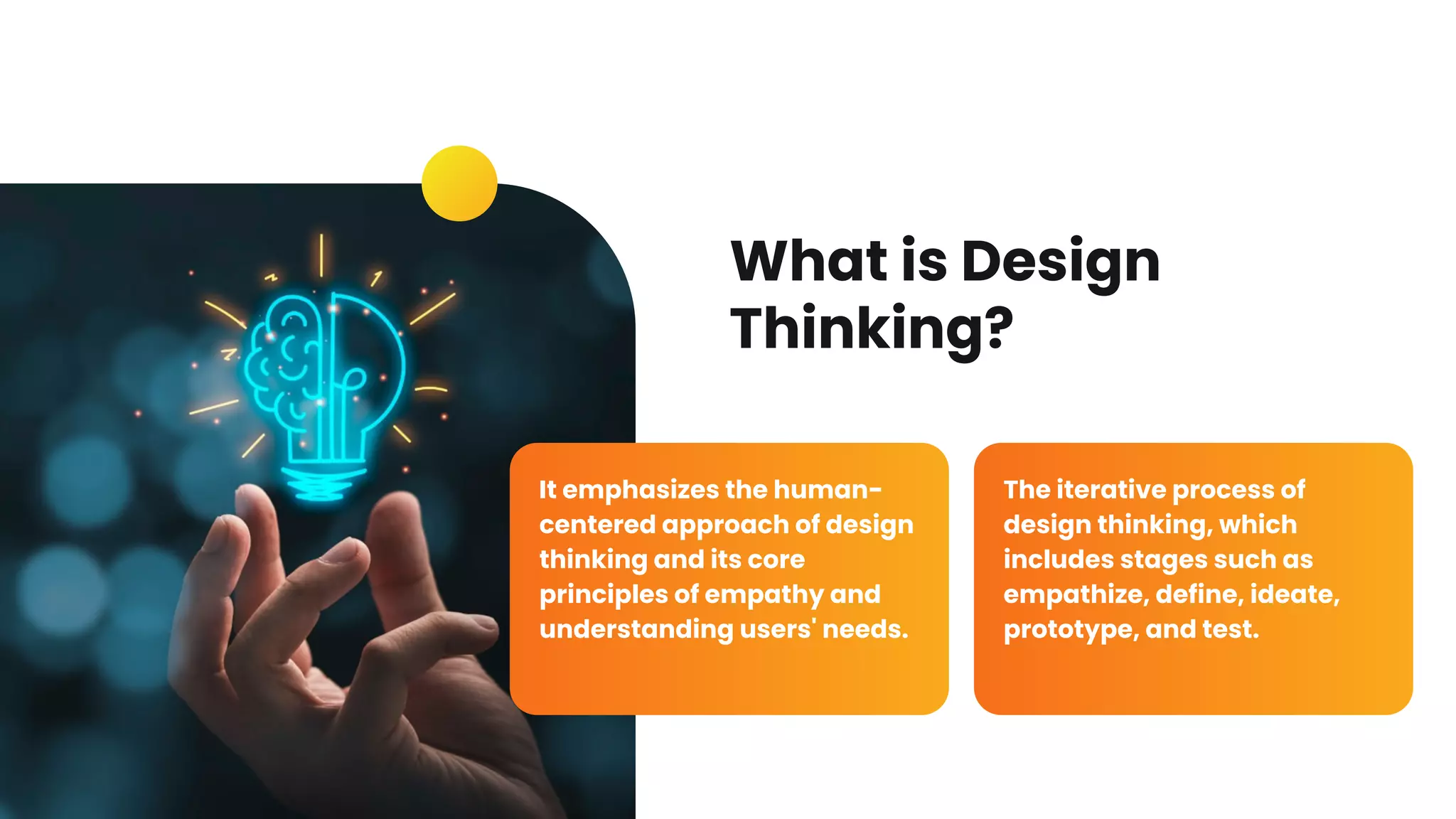
It emphasizes the human-
centered approach of design
thinking and its core
principles of empathy and
understanding users' needs.
The iterative process of
design thinking, which
includes stages such as
empathize, define, ideate,
prototype, and test.
What is Design
Thinking?
Why Design Thinking
Matters for Working
Professionals?
The significance of design thinking for working professionals.
It emphasizes three key benefits:
Improved Problem-Solving Skills: Design thinking enhances the
ability to identify and solve problems effectively by encouraging a
systematic and creative approach.
Fostered Innovation: Design thinking stimulates innovative
thinking and promotes the development of groundbreaking
solutions by challenging traditional perspectives.
Enhanced Collaboration: Design thinking encourages
collaboration and teamwork among professionals from various
disciplines, fostering a culture of shared creativity and problem-
solving.
Real-World
Applications of
Design Thinking
Examples of industries and sectors
where design thinking has been
successfully applied.
It highlights case studies or success
stories of organizations that have
implemented design thinking to
address complex challenges or
improve their products/services.
The examples serve to demonstrate
the practical and tangible impact of
design thinking in real-world scenarios.
Benefits of Taking a
Design Thinking Course
The advantages of enrolling in a design thinking course for
working professionals.
It emphasizes three main benefits:
Acquire New Skills: The course provides an opportunity to learn
and develop valuable skills related to problem-solving, creativity,
and innovation.
Boost Career Opportunities: Proficiency in design thinking can
enhance career prospects by enabling professionals to approach
challenges with a unique and sought-after skill set.
Networking and Collaboration: The course offers a chance to
connect with like-minded professionals and engage in
collaborative projects, fostering valuable networking
opportunities.
Conclusion:
This slide summarizes the key points
discussed in the presentation.
It reinforces the importance of design
thinking for working professionals in
today's dynamic business environment.
The audience is encouraged to take
advantage of the opportunities
provided by the design thinking course
to enhance their skills and drive
success in their careers.
Good Luck!
For more information Please visit our website
www.mitidinnovation.com

How a Design Thinking Course Can Benefit Working Professionals

  • 1.
    How a DesignThinking Course Can Benefit Working Professionals mitidinnovation.com
  • 2.
    The aim isto highlight how such a course can enhance creativity, problem-solving skills, and innovation in the workplace. Introduction
  • 3.
    It emphasizes thehuman- centered approach of design thinking and its core principles of empathy and understanding users' needs. The iterative process of design thinking, which includes stages such as empathize, define, ideate, prototype, and test. What is Design Thinking?
  • 4.
    Why Design Thinking Mattersfor Working Professionals? The significance of design thinking for working professionals. It emphasizes three key benefits: Improved Problem-Solving Skills: Design thinking enhances the ability to identify and solve problems effectively by encouraging a systematic and creative approach. Fostered Innovation: Design thinking stimulates innovative thinking and promotes the development of groundbreaking solutions by challenging traditional perspectives. Enhanced Collaboration: Design thinking encourages collaboration and teamwork among professionals from various disciplines, fostering a culture of shared creativity and problem- solving.
  • 5.
    Real-World Applications of Design Thinking Examplesof industries and sectors where design thinking has been successfully applied. It highlights case studies or success stories of organizations that have implemented design thinking to address complex challenges or improve their products/services. The examples serve to demonstrate the practical and tangible impact of design thinking in real-world scenarios.
  • 6.
    Benefits of Takinga Design Thinking Course The advantages of enrolling in a design thinking course for working professionals. It emphasizes three main benefits: Acquire New Skills: The course provides an opportunity to learn and develop valuable skills related to problem-solving, creativity, and innovation. Boost Career Opportunities: Proficiency in design thinking can enhance career prospects by enabling professionals to approach challenges with a unique and sought-after skill set. Networking and Collaboration: The course offers a chance to connect with like-minded professionals and engage in collaborative projects, fostering valuable networking opportunities.
  • 7.
    Conclusion: This slide summarizesthe key points discussed in the presentation. It reinforces the importance of design thinking for working professionals in today's dynamic business environment. The audience is encouraged to take advantage of the opportunities provided by the design thinking course to enhance their skills and drive success in their careers.
  • 8.
    Good Luck! For moreinformation Please visit our website www.mitidinnovation.com