Proofreaders’ Marks
Basic Tools for
Proofreading
and
Editing
Editing Printed Documents
C’s of Copy Reading
Correcting General Errors
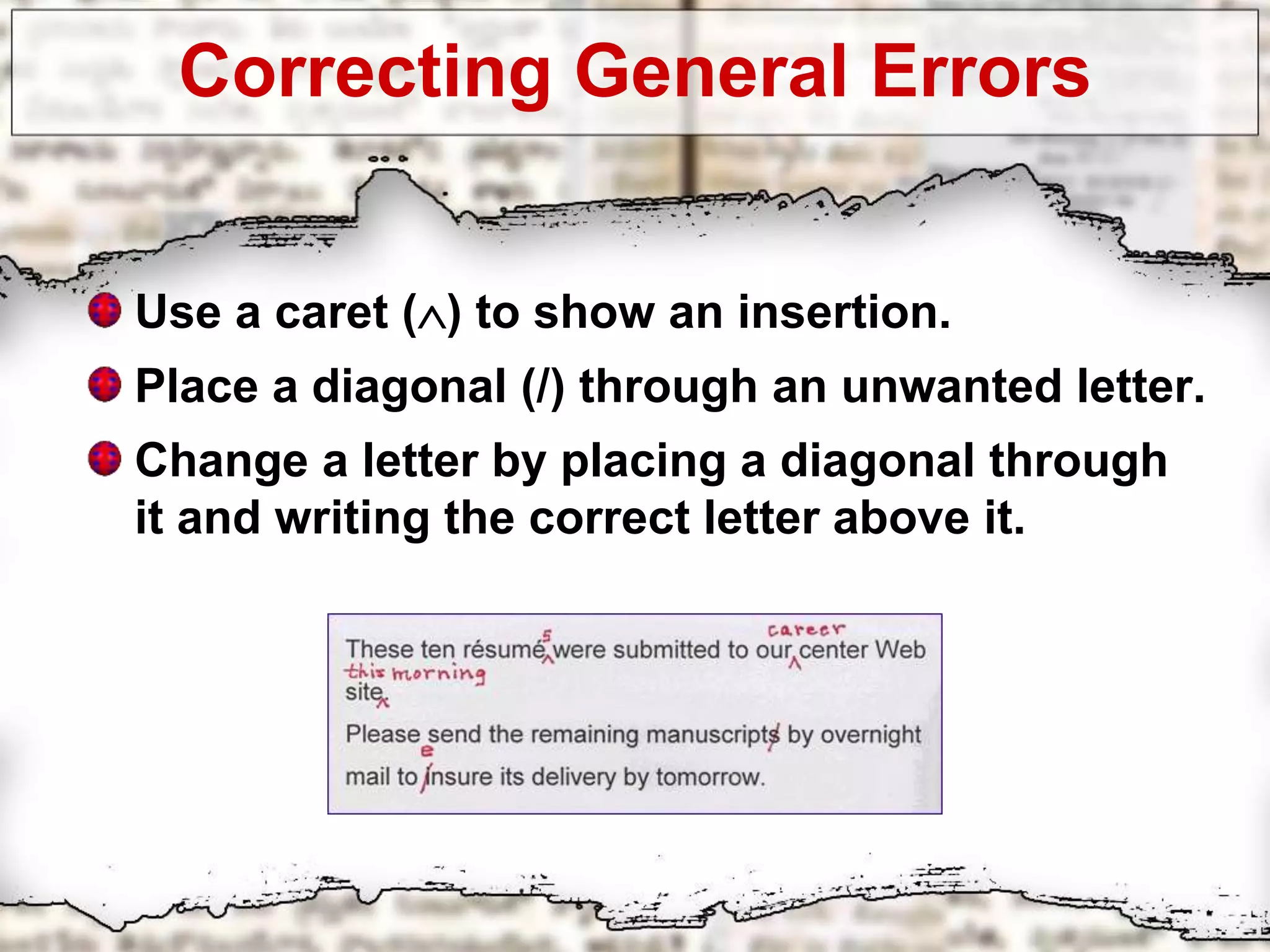
Use a caret () to show an insertion.
Place a diagonal (/) through an unwanted letter.
Change a letter by placing a diagonal through
it and writing the correct letter above it.
Deleting and Changing
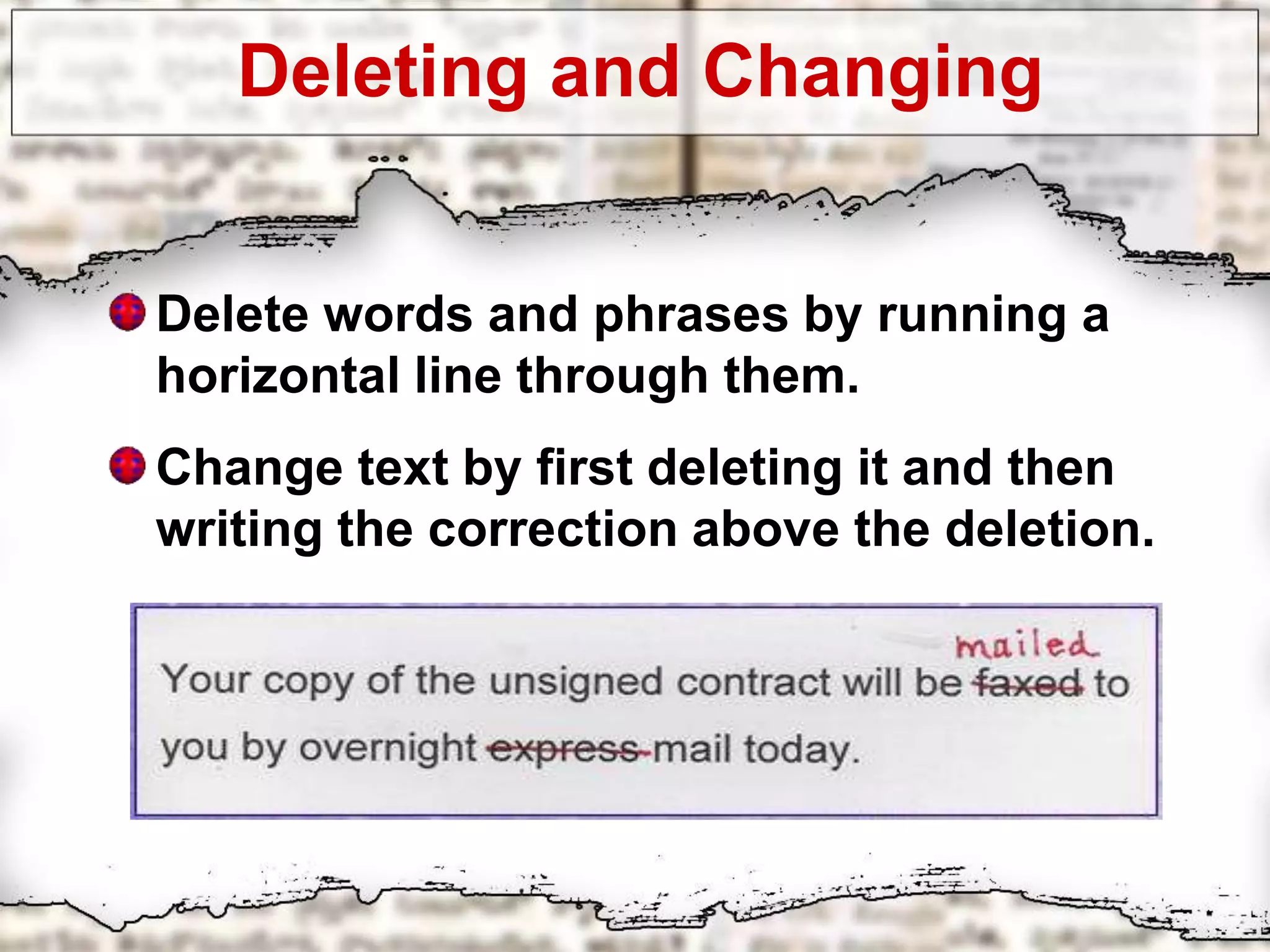
Delete words and phrases by running a
horizontal line through them.
Change text by first deleting it and then
writing the correction above the deletion.
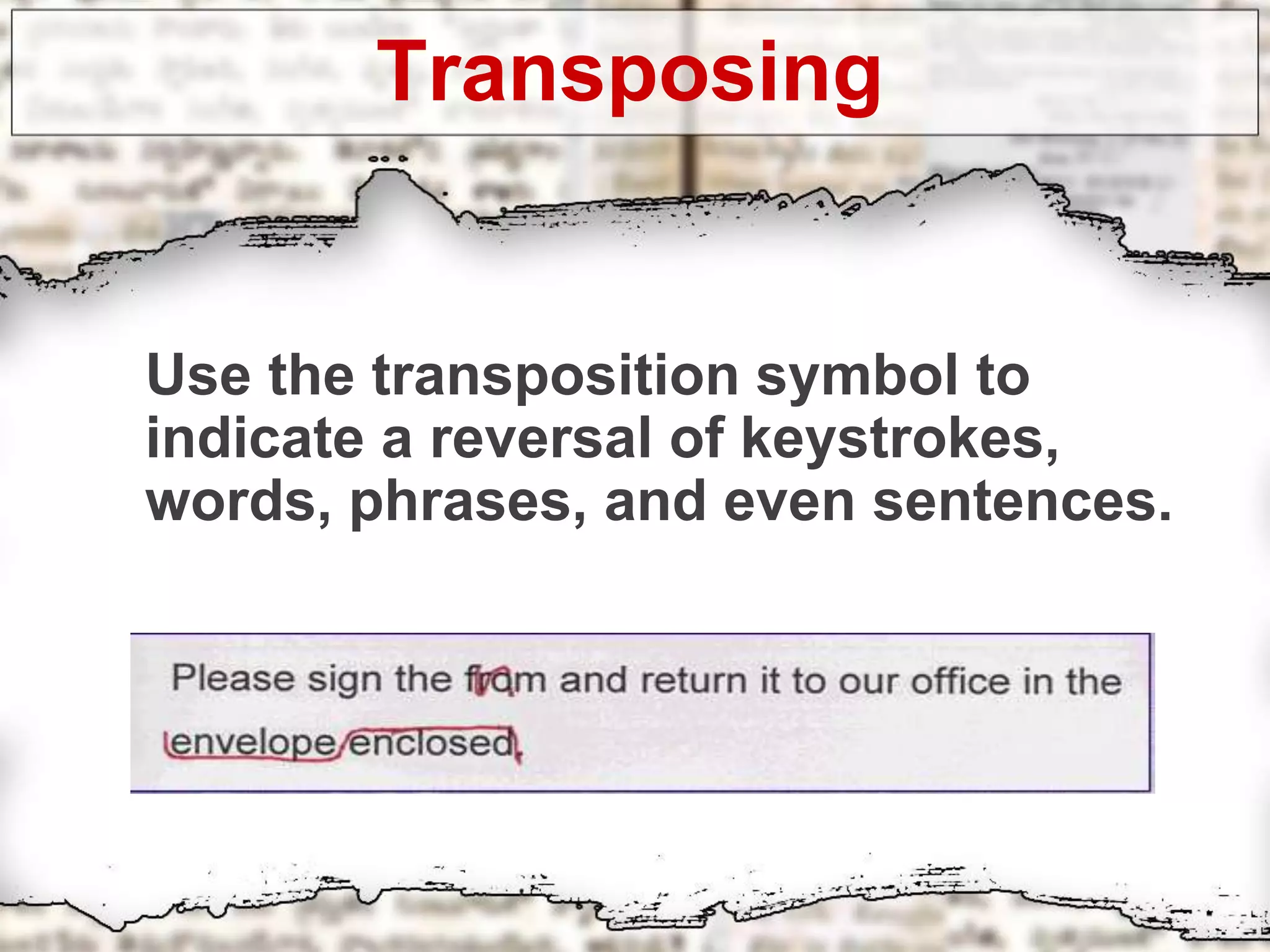
Transposing
Use the transposition symbol to
indicate a reversal of keystrokes,
words, phrases, and even sentences.
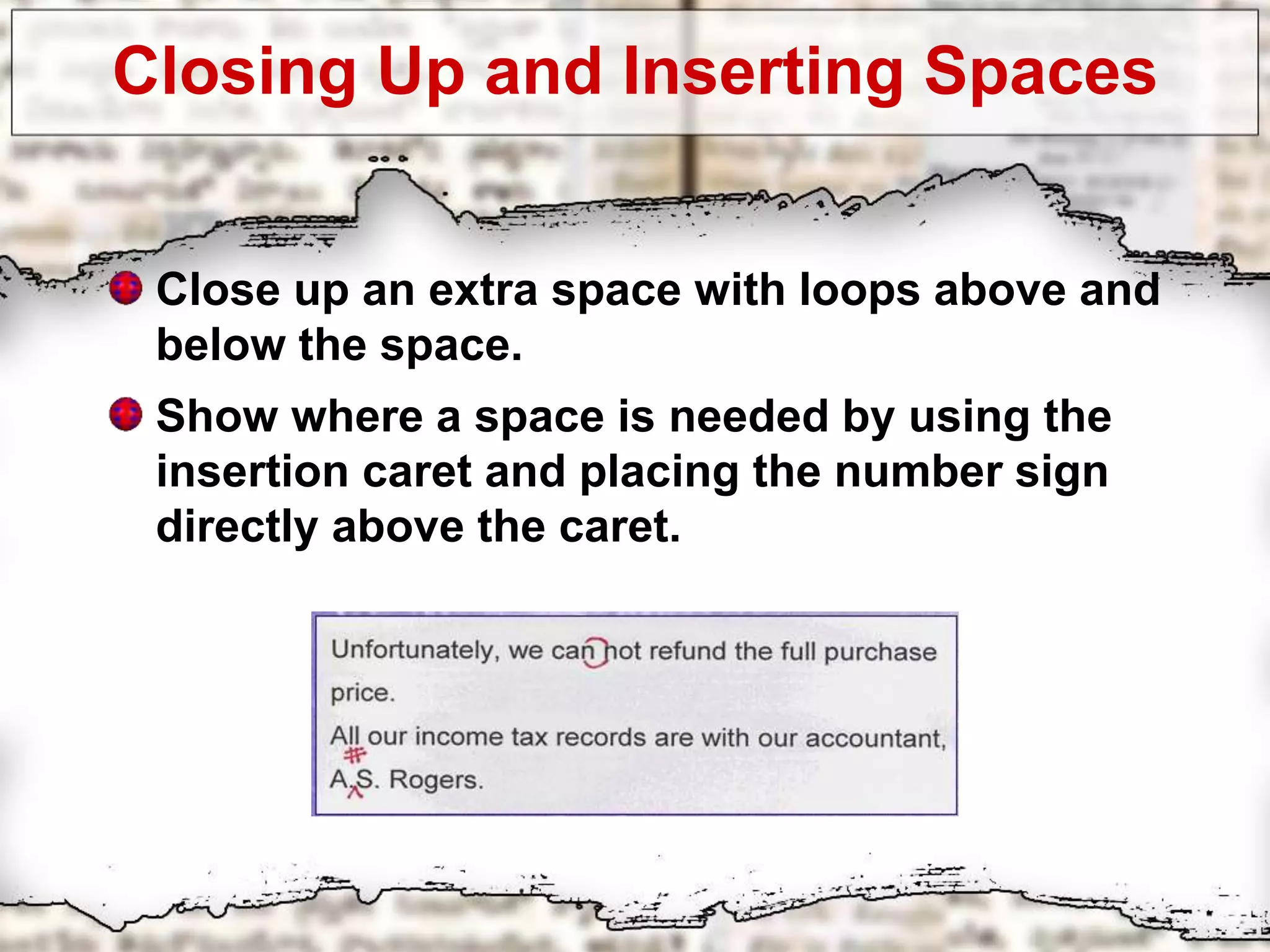
Closing Up and Inserting Spaces
Close up an extra space with loops above and
below the space.
Show where a space is needed by using the
insertion caret and placing the number sign
directly above the caret.
Just a few more
proofreaders’
marks . . .
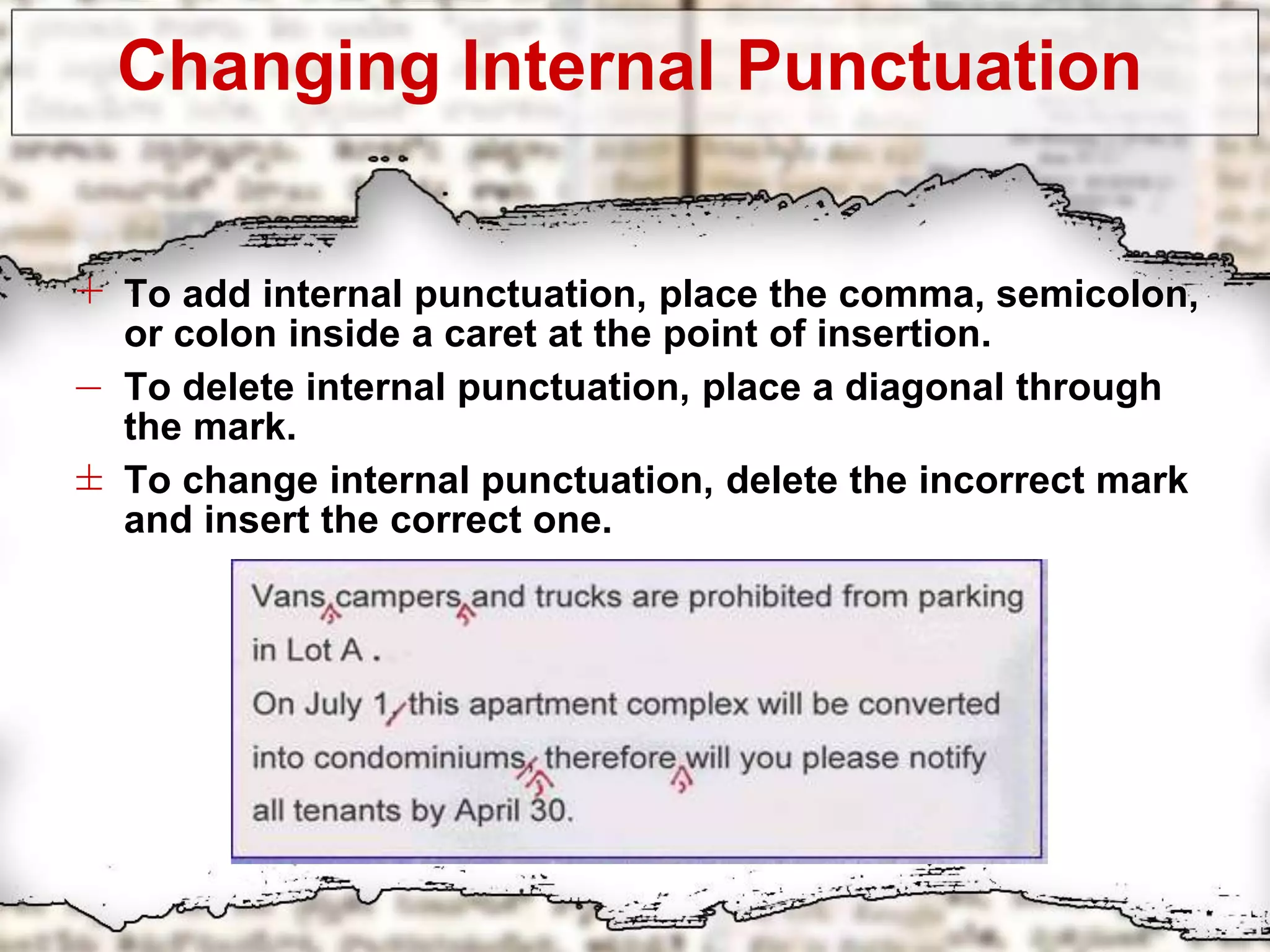
Changing Internal Punctuation
+ To add internal punctuation, place the comma, semicolon,
or colon inside a caret at the point of insertion.
– To delete internal punctuation, place a diagonal through
the mark.
± To change internal punctuation, delete the incorrect mark
and insert the correct one.
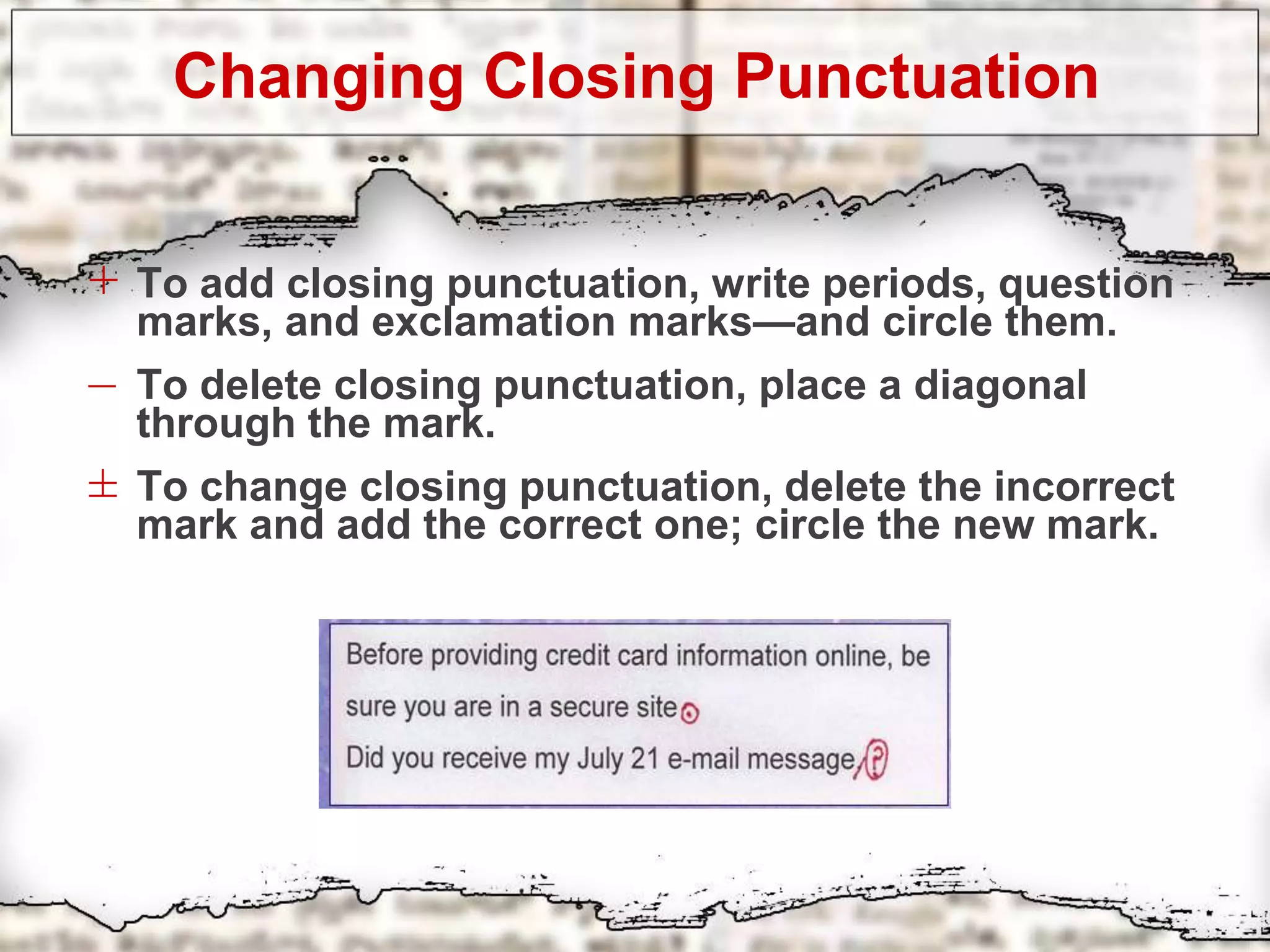
Changing Closing Punctuation
+ To add closing punctuation, write periods, question
marks, and exclamation marks—and circle them.
– To delete closing punctuation, place a diagonal
through the mark.
± To change closing punctuation, delete the incorrect
mark and add the correct one; circle the new mark.
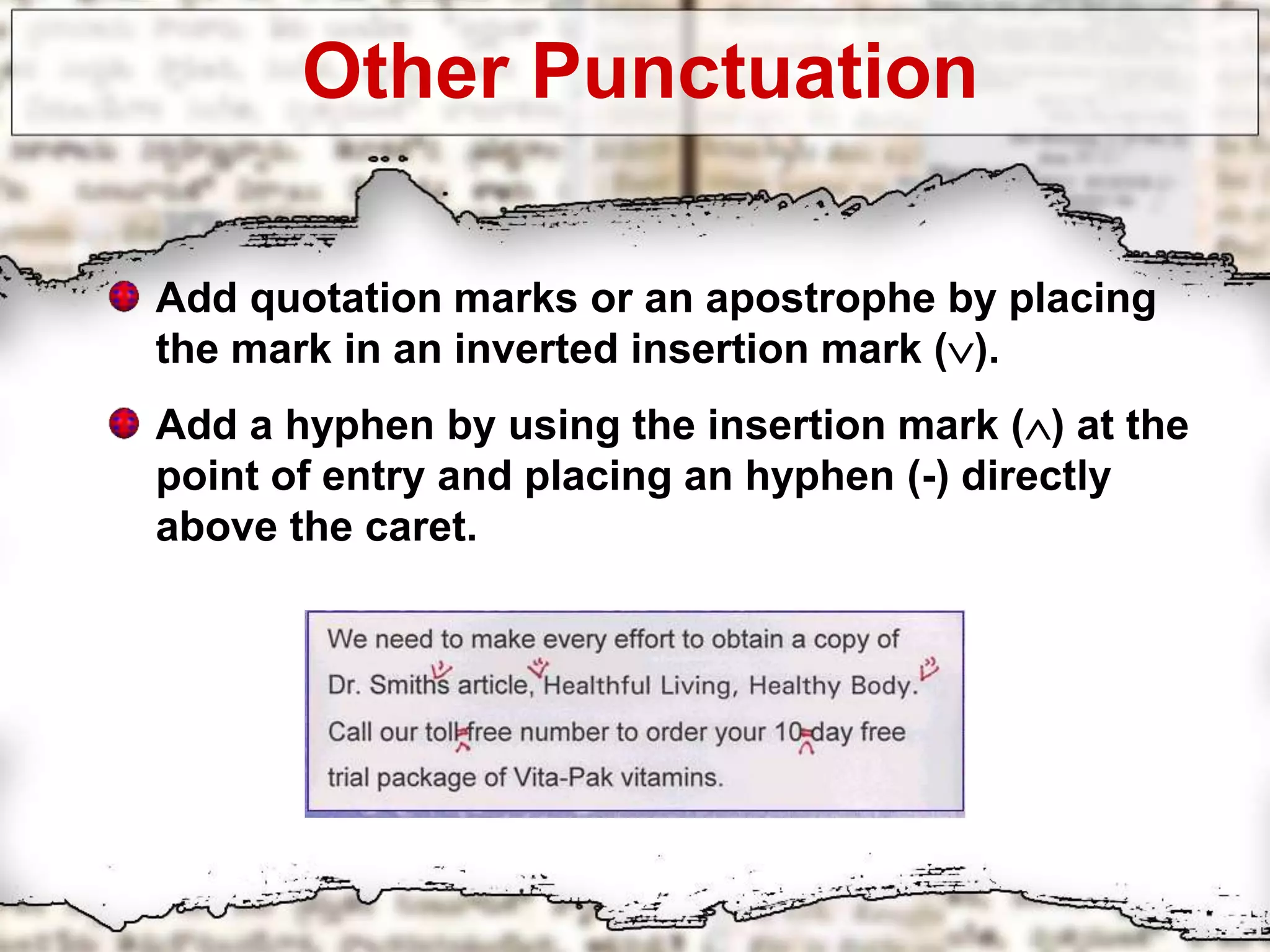
Other Punctuation
Add quotation marks or an apostrophe by placing
the mark in an inverted insertion mark ().
Add a hyphen by using the insertion mark () at the
point of entry and placing an hyphen (-) directly
above the caret.
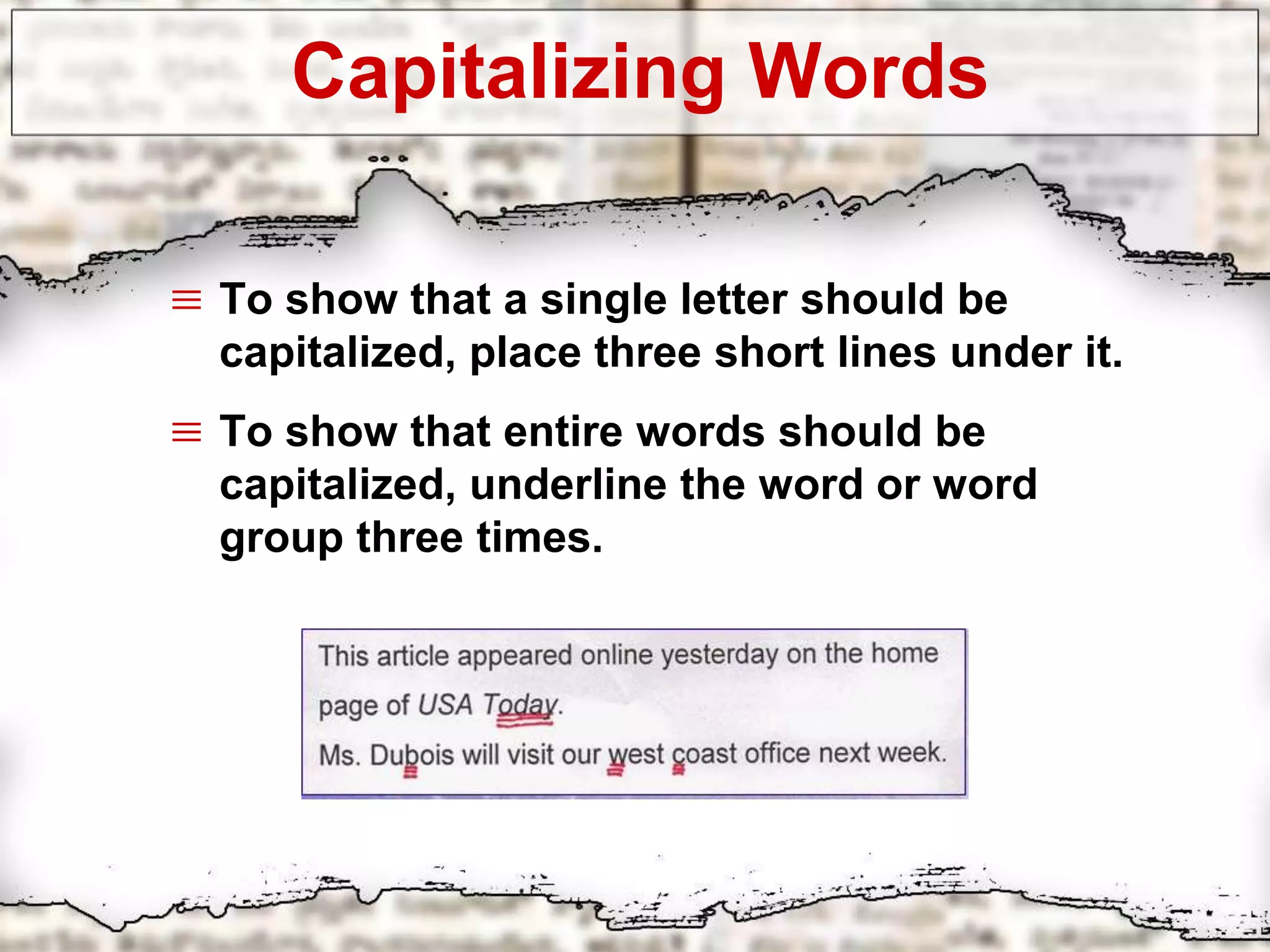
Capitalizing Words
 To show that a single letter should be
capitalized, place three short lines under it.
 To show that entire words should be
capitalized, underline the word or word
group three times.
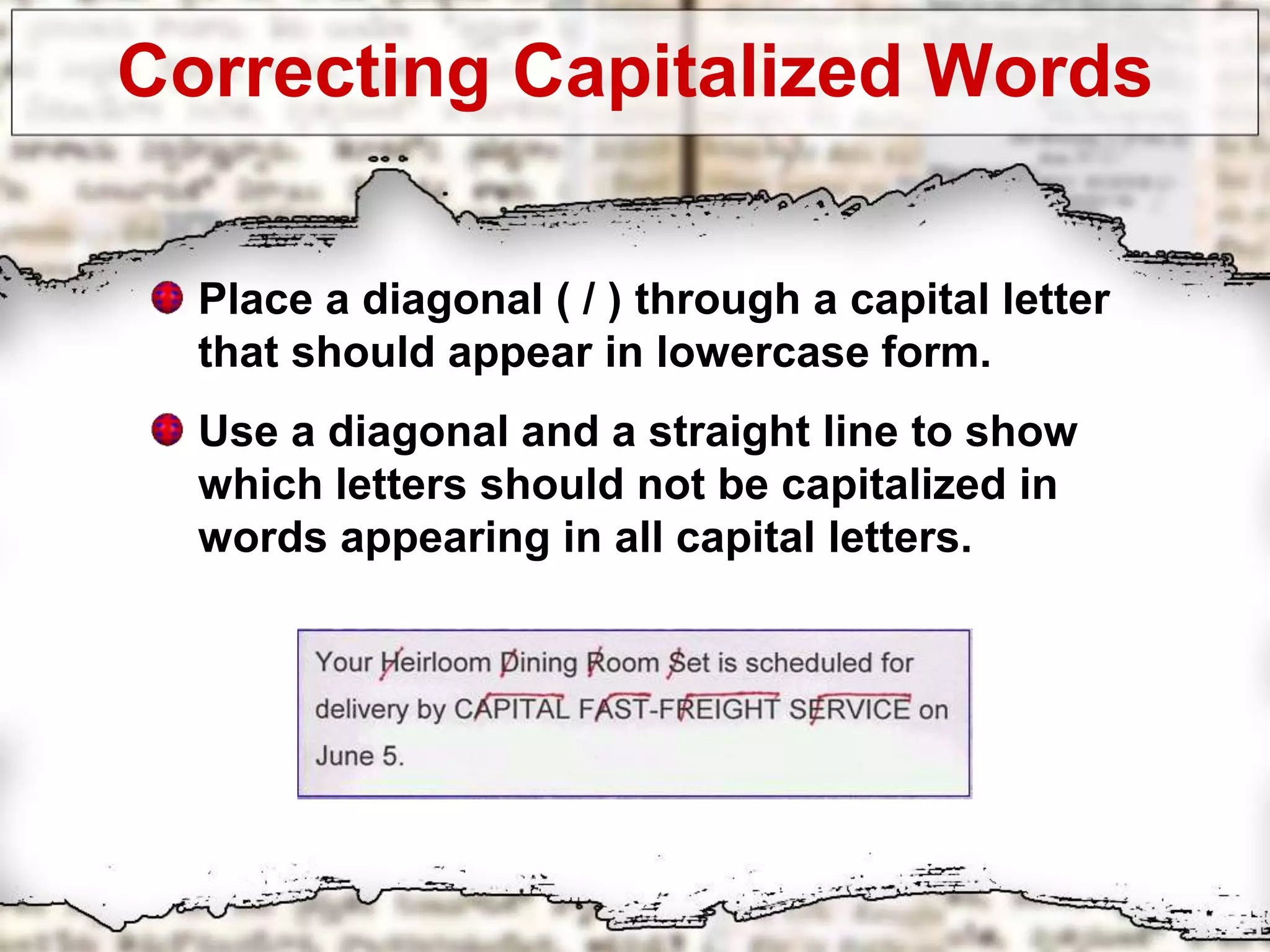
Correcting Capitalized Words
Place a diagonal ( / ) through a capital letter
that should appear in lowercase form.
Use a diagonal and a straight line to show
which letters should not be capitalized in
words appearing in all capital letters.
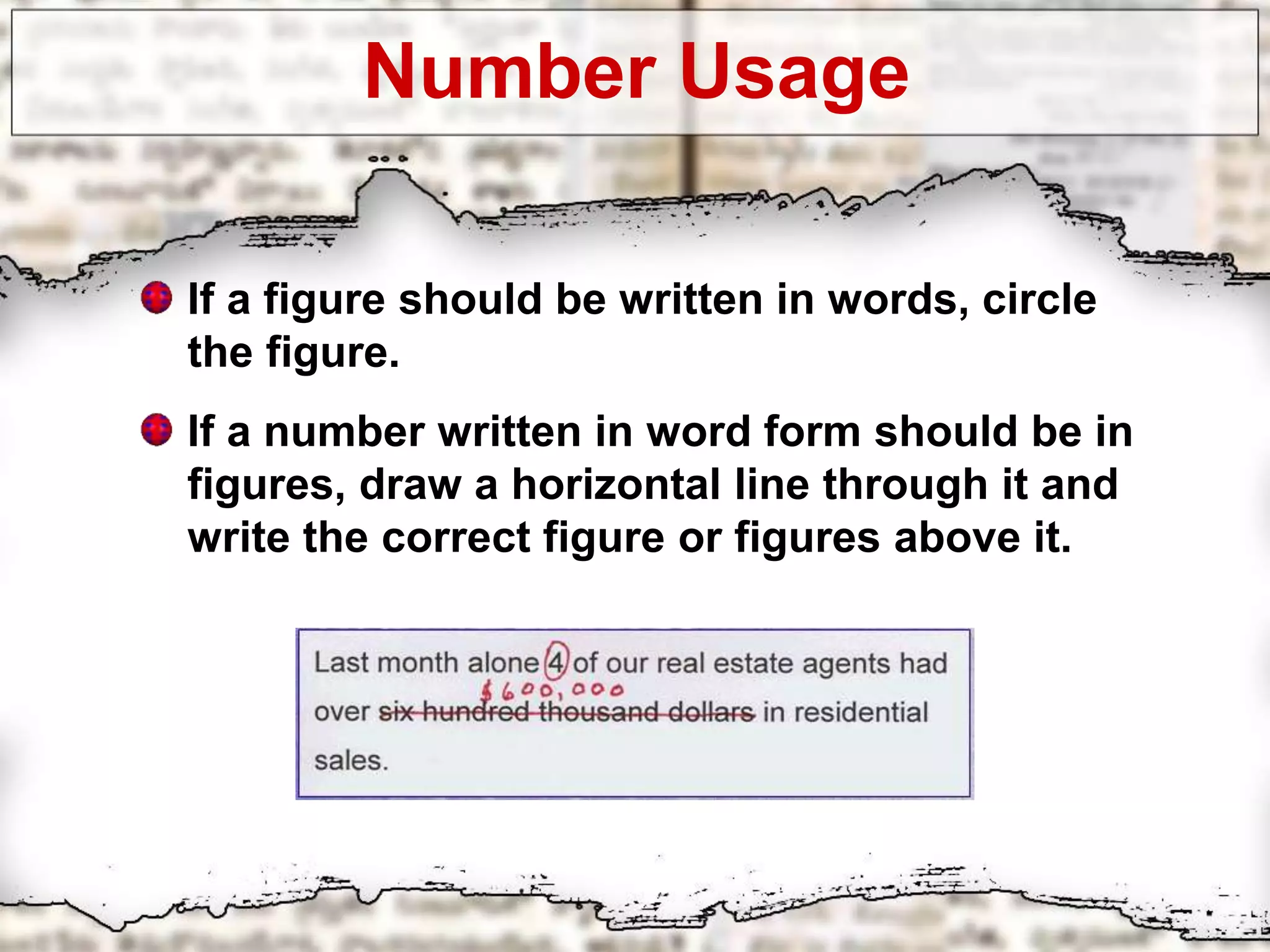
Number Usage
If a figure should be written in words, circle
the figure.
If a number written in word form should be in
figures, draw a horizontal line through it and
write the correct figure or figures above it.
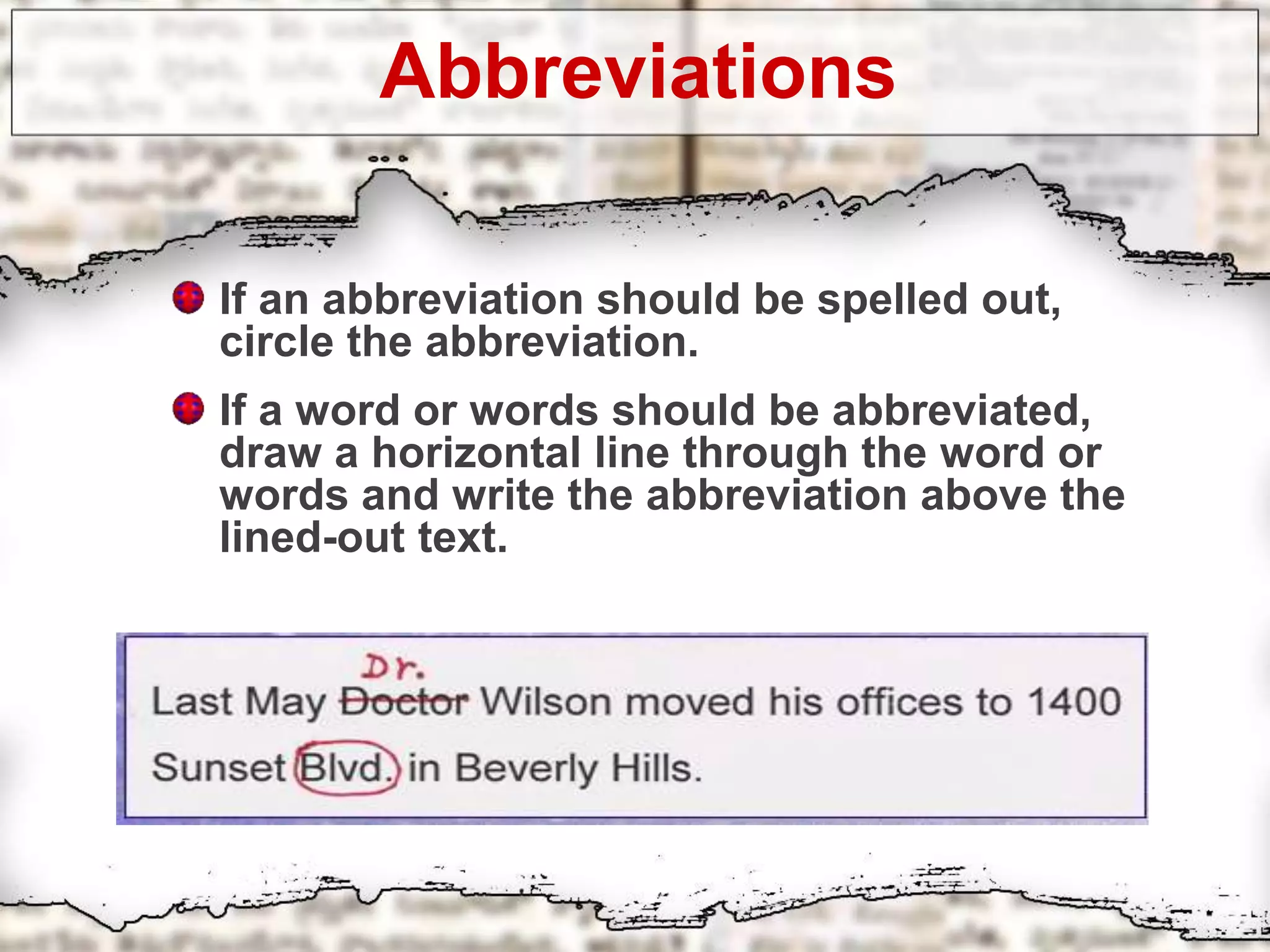
Abbreviations
If an abbreviation should be spelled out,
circle the abbreviation.
If a word or words should be abbreviated,
draw a horizontal line through the word or
words and write the abbreviation above the
lined-out text.
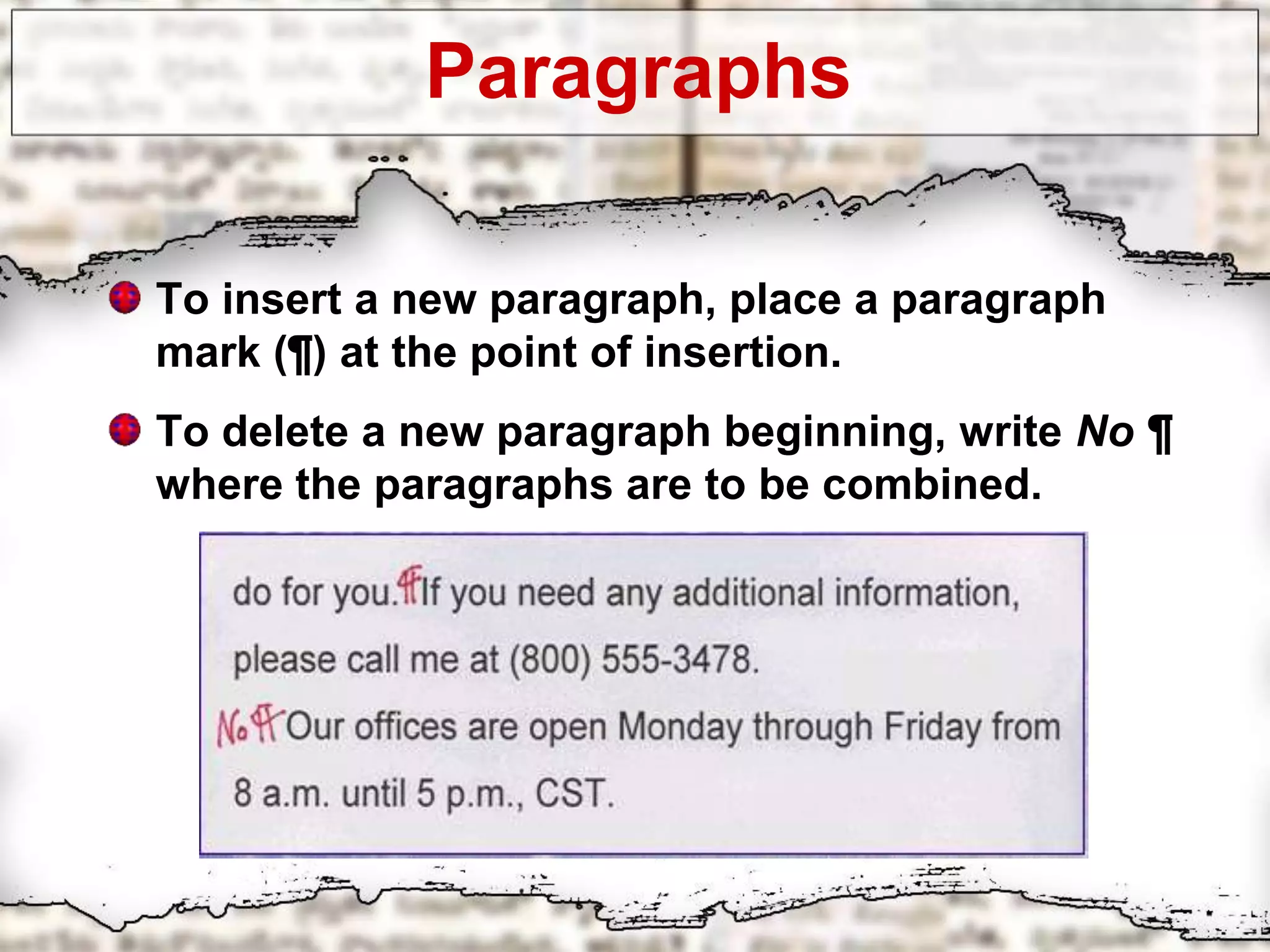
Paragraphs
To insert a new paragraph, place a paragraph
mark (¶) at the point of insertion.
To delete a new paragraph beginning, write No 
where the paragraphs are to be combined.
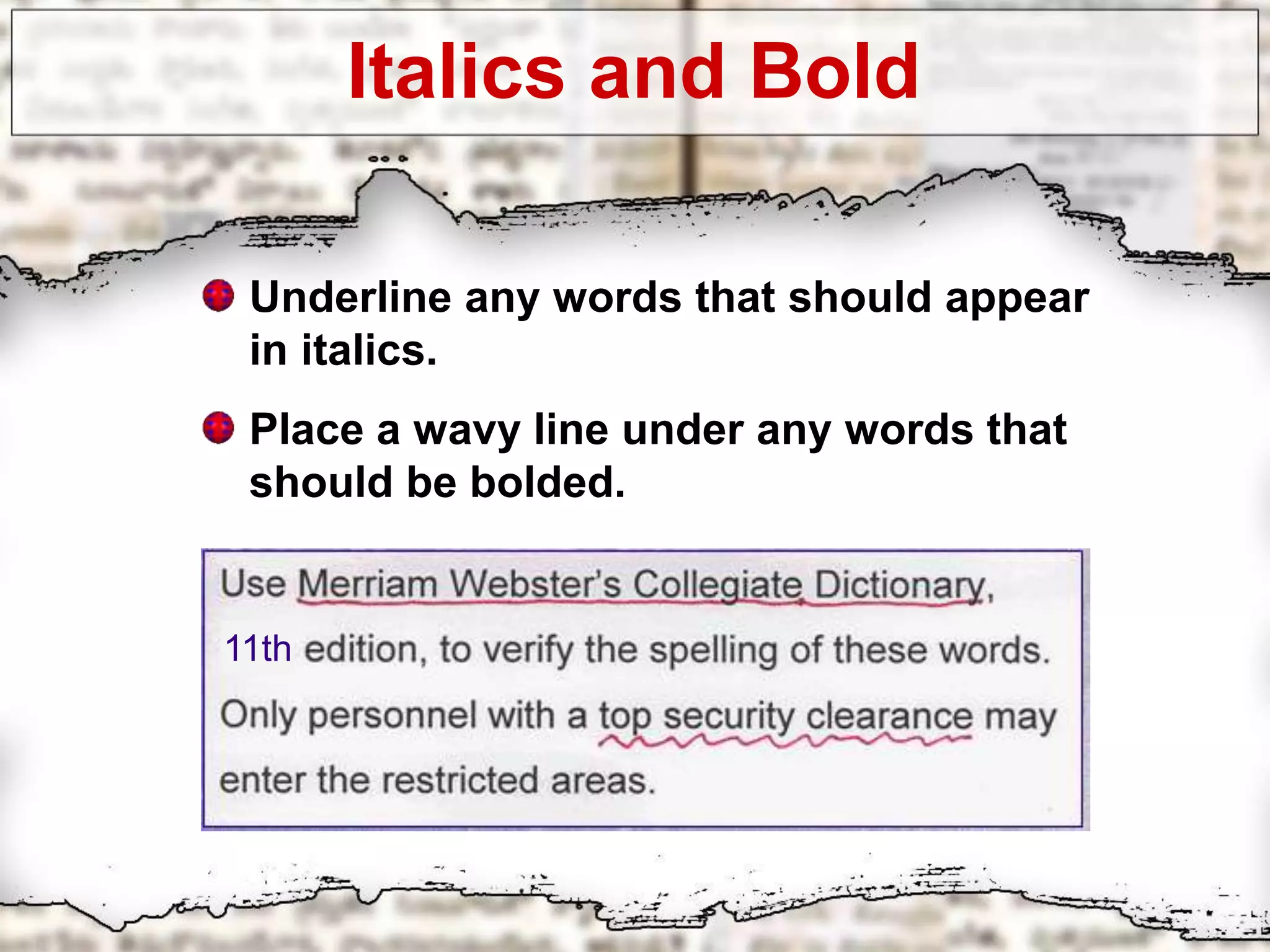
Italics and Bold
Underline any words that should appear
in italics.
Place a wavy line under any words that
should be bolded.
11th
The Finished Document
OUT

HOW 12 Proofreading Symbols.ppt

  • 1.
    Proofreaders’ Marks Basic Toolsfor Proofreading and Editing
  • 2.
  • 3.
    Correcting General Errors Usea caret () to show an insertion. Place a diagonal (/) through an unwanted letter. Change a letter by placing a diagonal through it and writing the correct letter above it.
  • 4.
    Deleting and Changing Deletewords and phrases by running a horizontal line through them. Change text by first deleting it and then writing the correction above the deletion.
  • 5.
    Transposing Use the transpositionsymbol to indicate a reversal of keystrokes, words, phrases, and even sentences.
  • 6.
    Closing Up andInserting Spaces Close up an extra space with loops above and below the space. Show where a space is needed by using the insertion caret and placing the number sign directly above the caret.
  • 7.
    Just a fewmore proofreaders’ marks . . .
  • 8.
    Changing Internal Punctuation +To add internal punctuation, place the comma, semicolon, or colon inside a caret at the point of insertion. – To delete internal punctuation, place a diagonal through the mark. ± To change internal punctuation, delete the incorrect mark and insert the correct one.
  • 9.
    Changing Closing Punctuation +To add closing punctuation, write periods, question marks, and exclamation marks—and circle them. – To delete closing punctuation, place a diagonal through the mark. ± To change closing punctuation, delete the incorrect mark and add the correct one; circle the new mark.
  • 10.
    Other Punctuation Add quotationmarks or an apostrophe by placing the mark in an inverted insertion mark (). Add a hyphen by using the insertion mark () at the point of entry and placing an hyphen (-) directly above the caret.
  • 11.
    Capitalizing Words  Toshow that a single letter should be capitalized, place three short lines under it.  To show that entire words should be capitalized, underline the word or word group three times.
  • 12.
    Correcting Capitalized Words Placea diagonal ( / ) through a capital letter that should appear in lowercase form. Use a diagonal and a straight line to show which letters should not be capitalized in words appearing in all capital letters.
  • 13.
    Number Usage If afigure should be written in words, circle the figure. If a number written in word form should be in figures, draw a horizontal line through it and write the correct figure or figures above it.
  • 14.
    Abbreviations If an abbreviationshould be spelled out, circle the abbreviation. If a word or words should be abbreviated, draw a horizontal line through the word or words and write the abbreviation above the lined-out text.
  • 15.
    Paragraphs To insert anew paragraph, place a paragraph mark (¶) at the point of insertion. To delete a new paragraph beginning, write No ¶ where the paragraphs are to be combined.
  • 16.
    Italics and Bold Underlineany words that should appear in italics. Place a wavy line under any words that should be bolded. 11th
  • 17.