Download to read offline
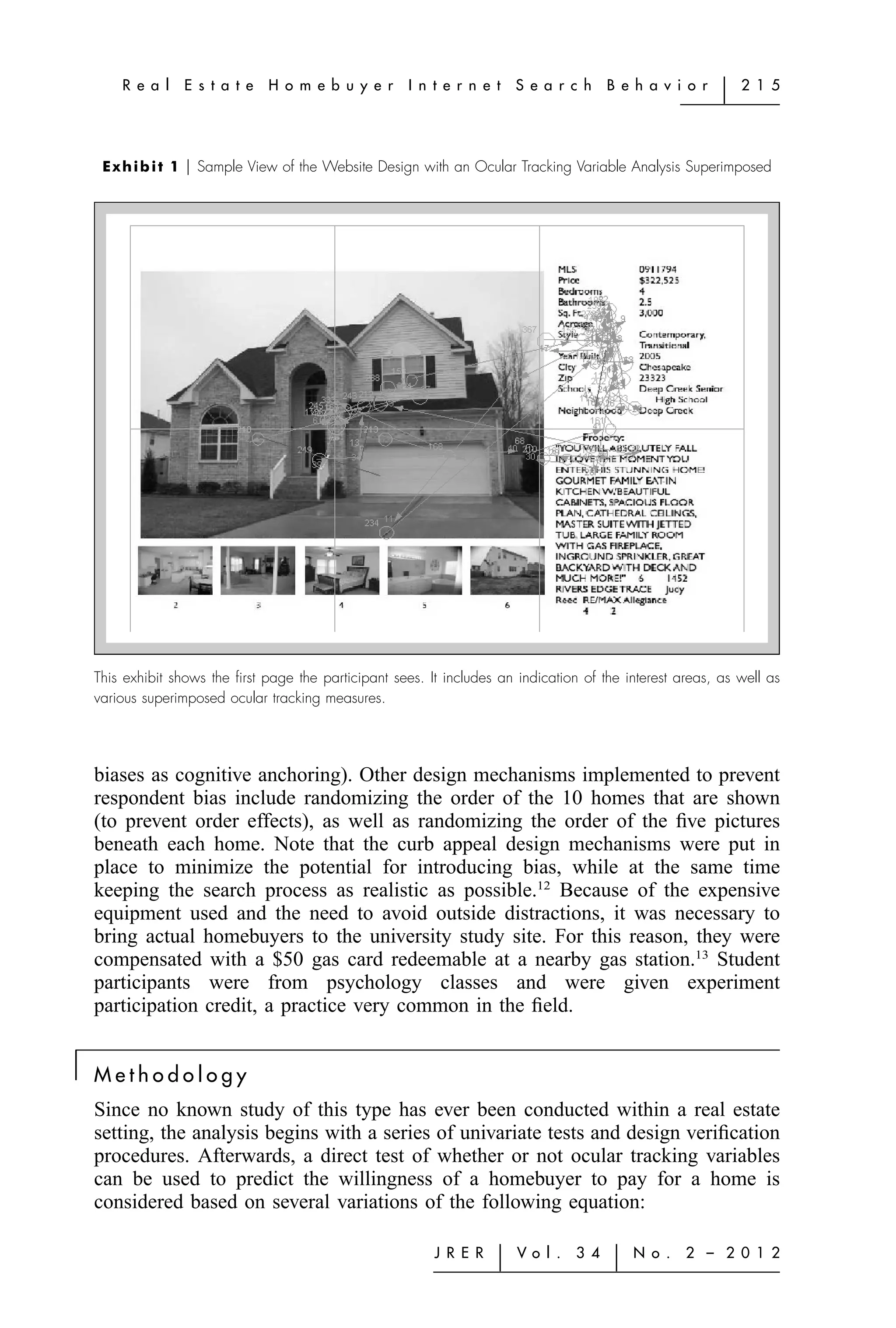
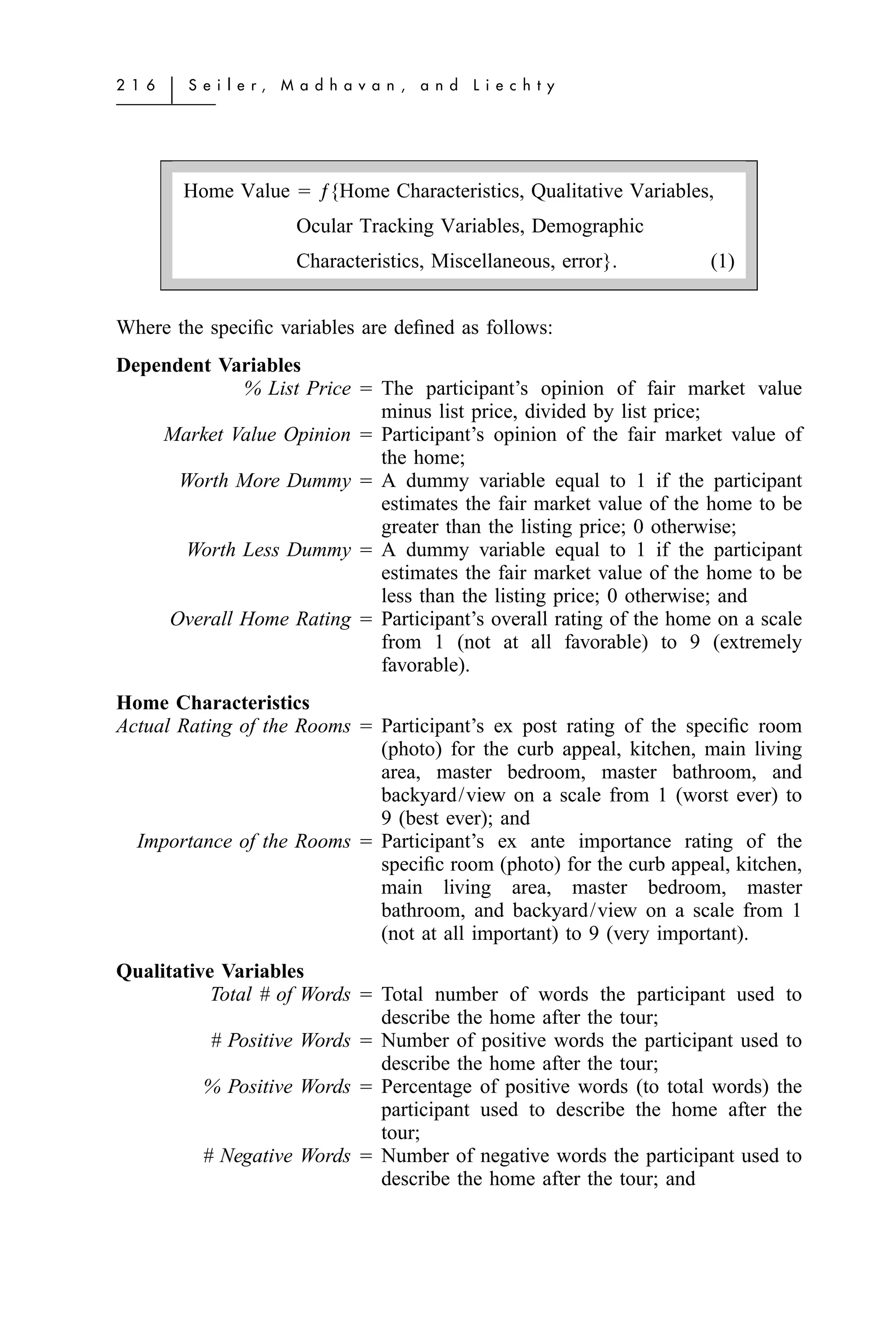
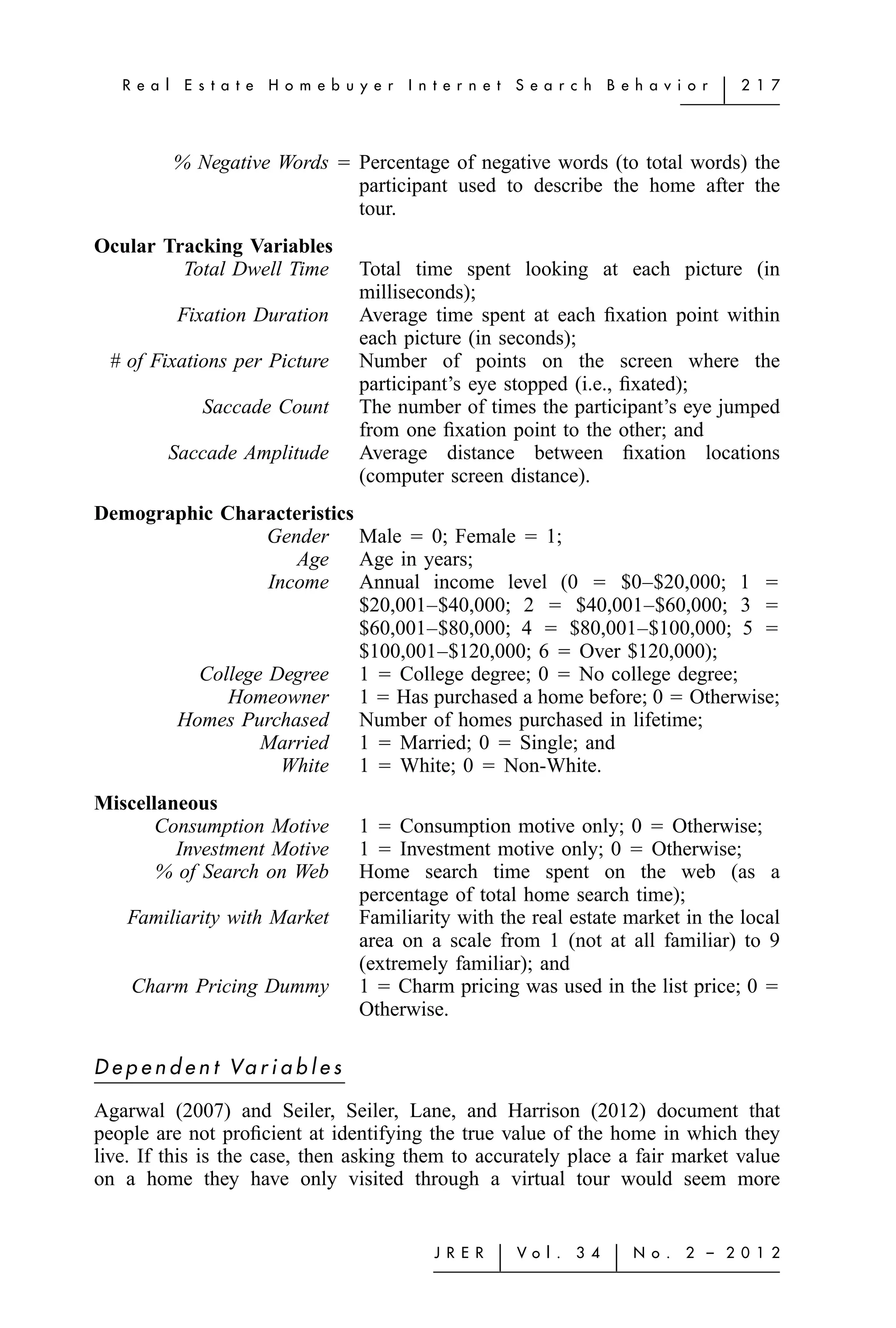
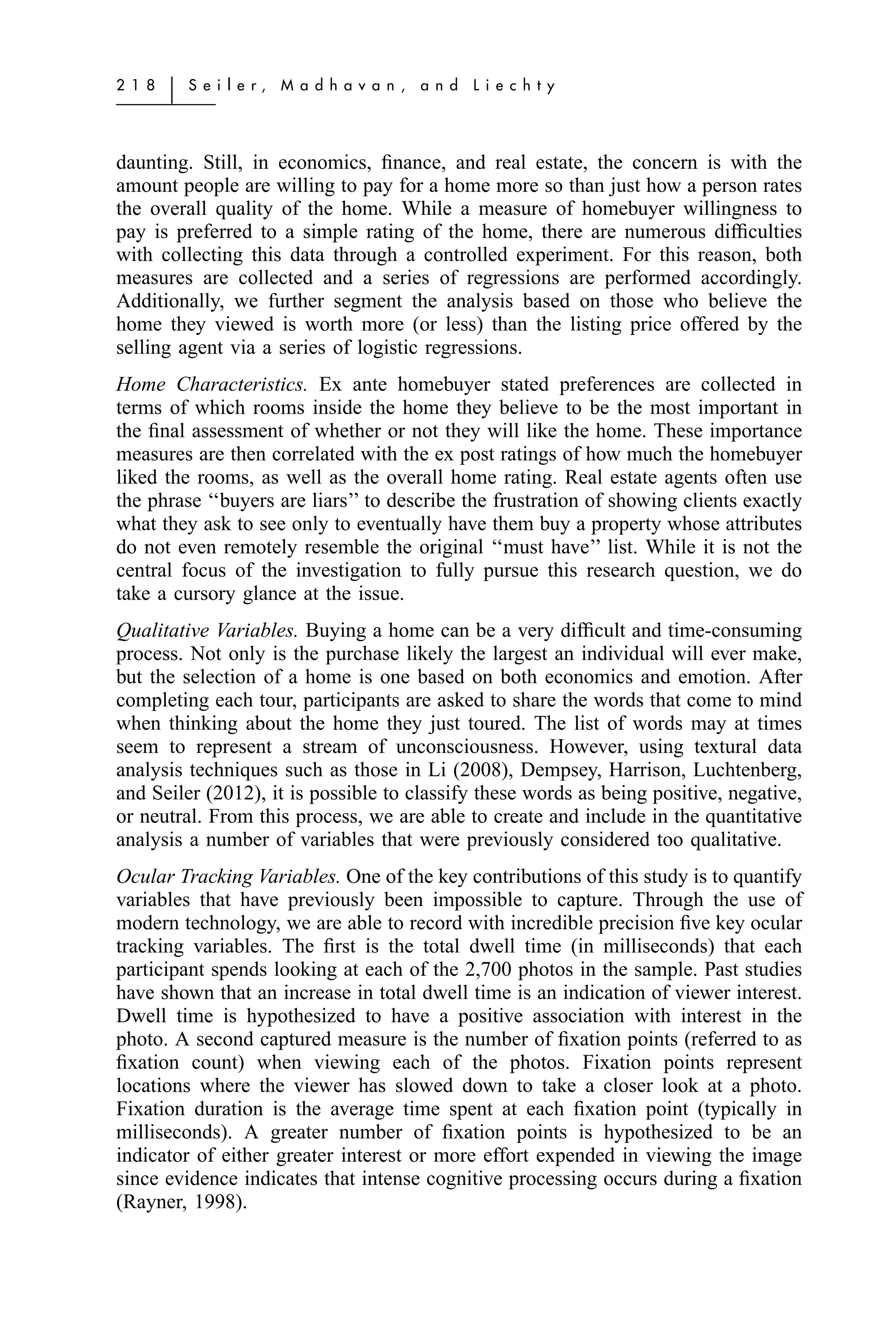
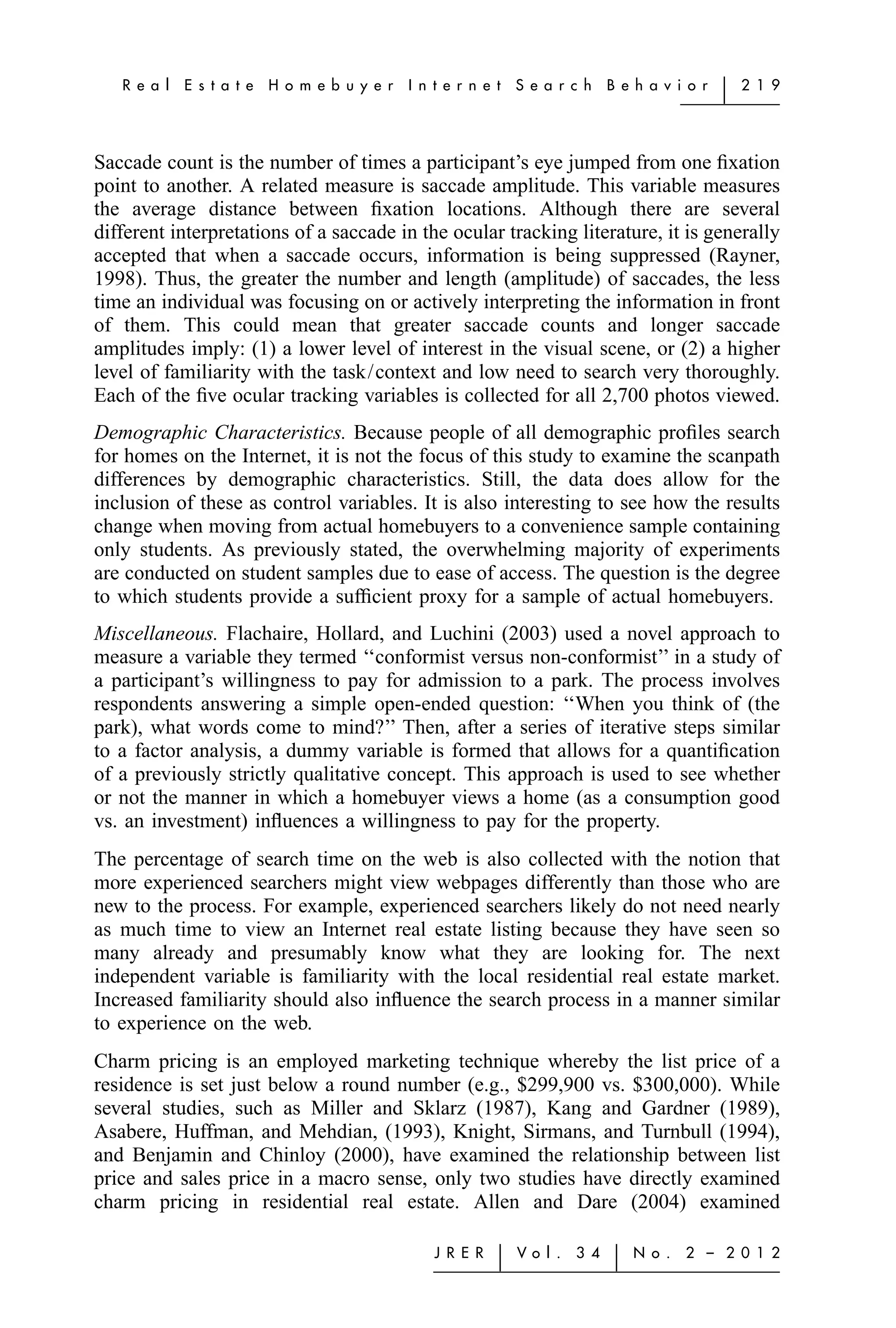
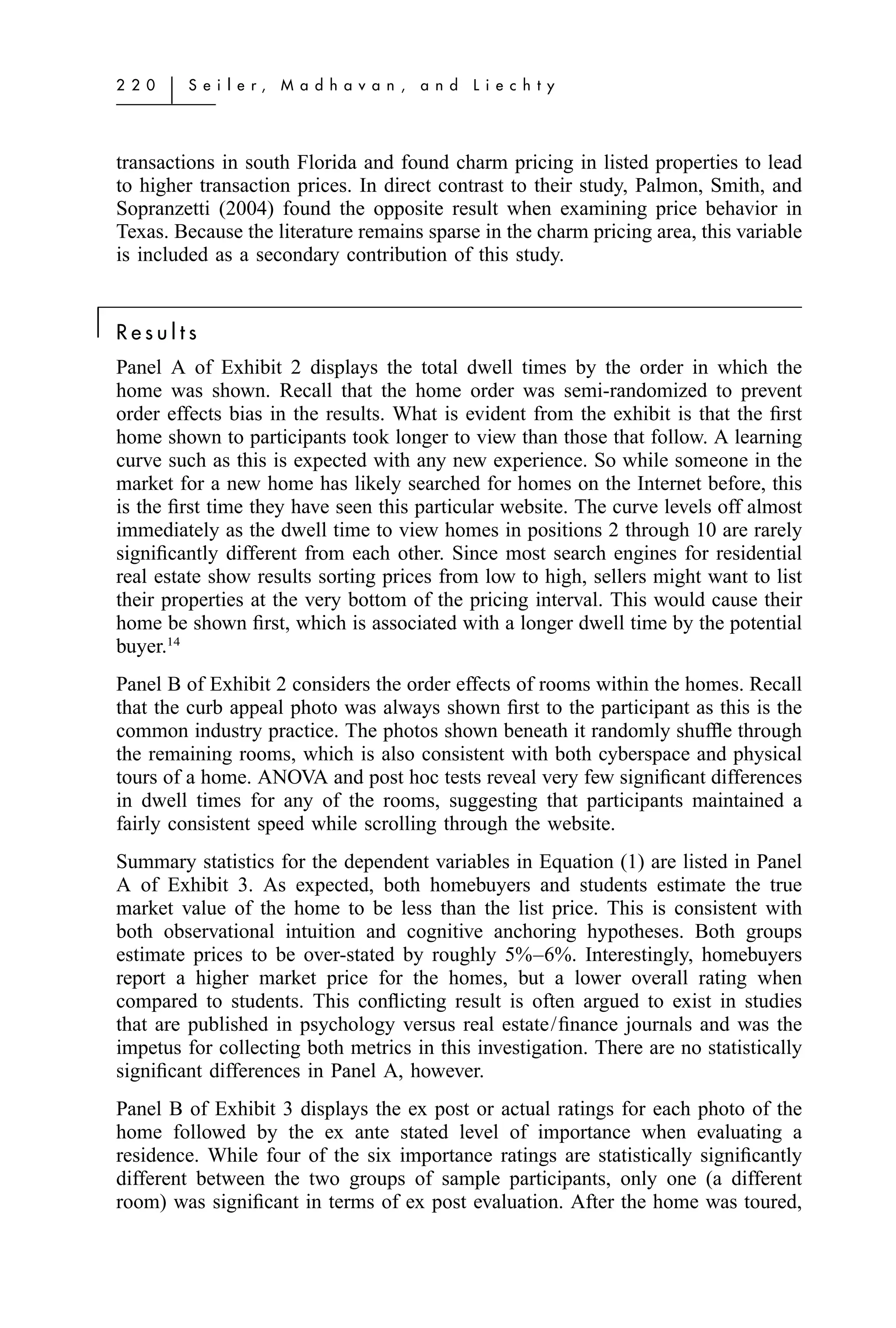
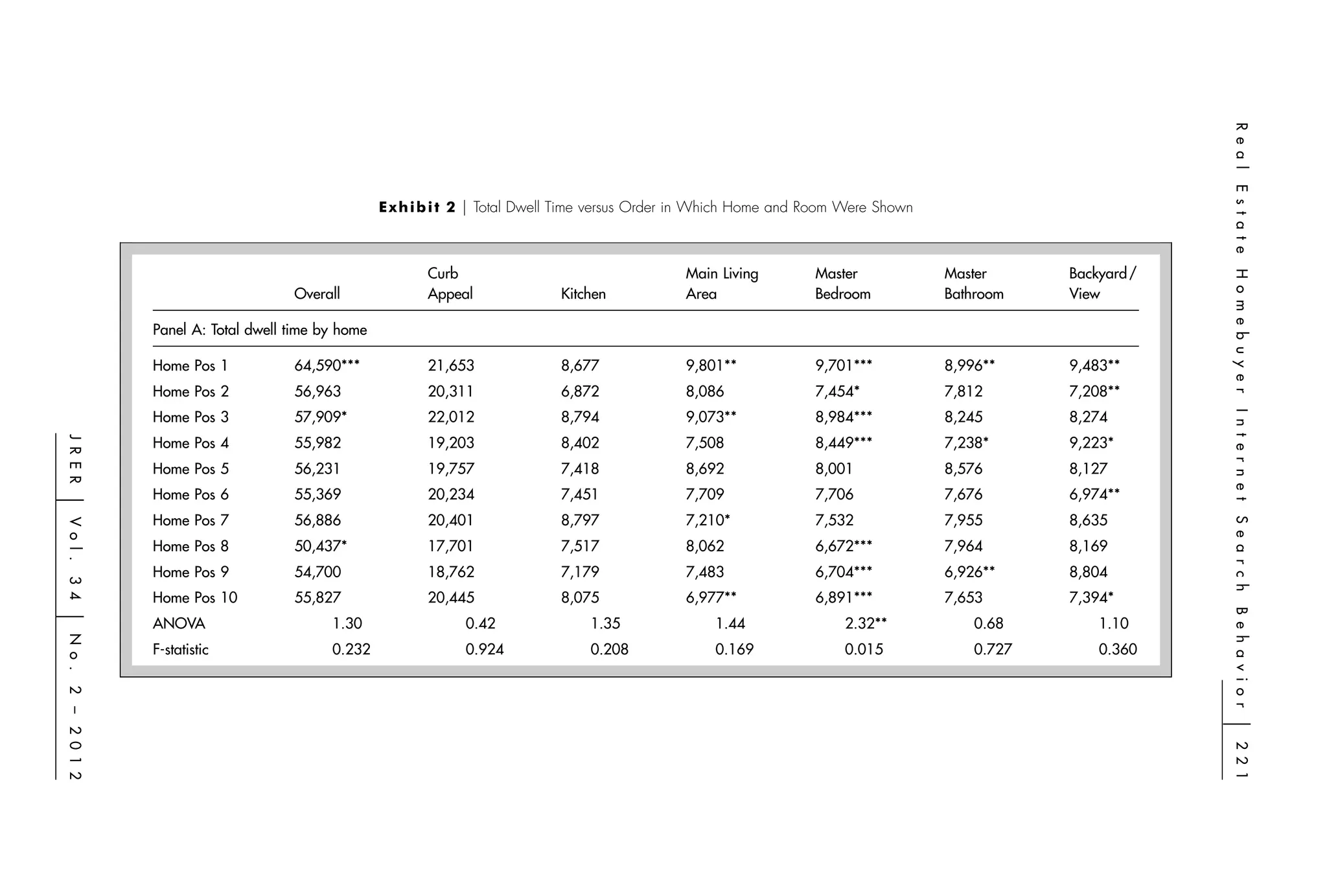
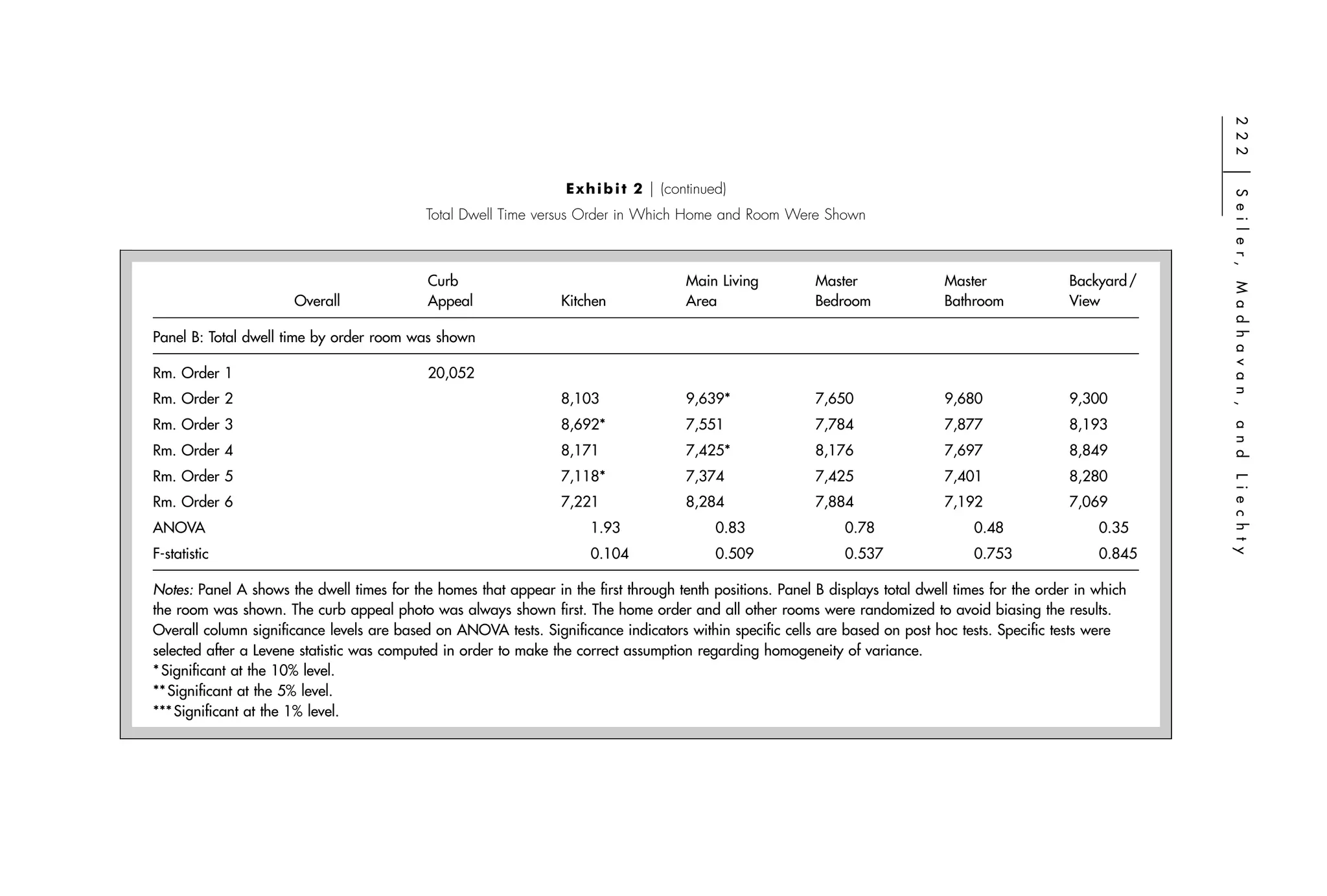
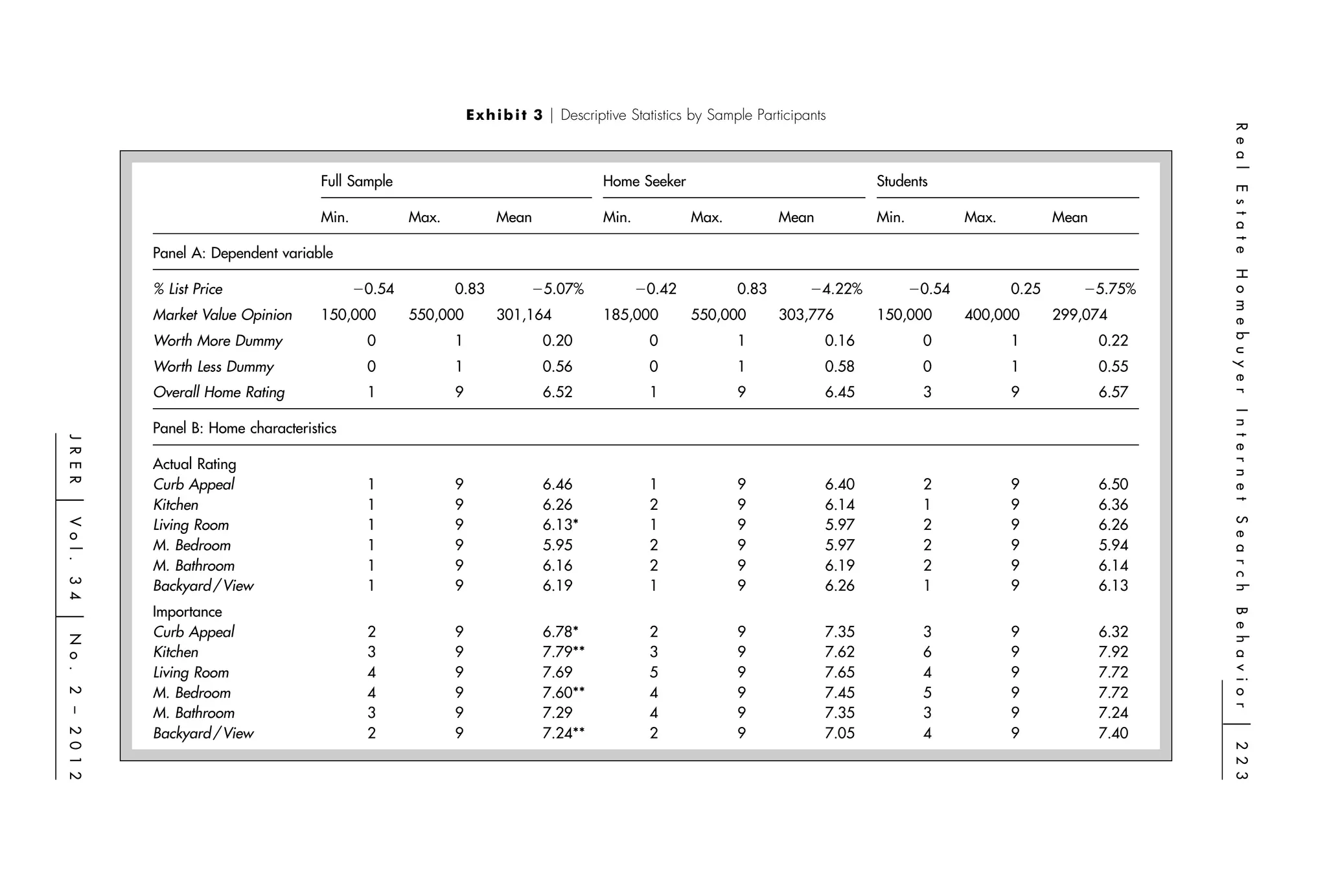
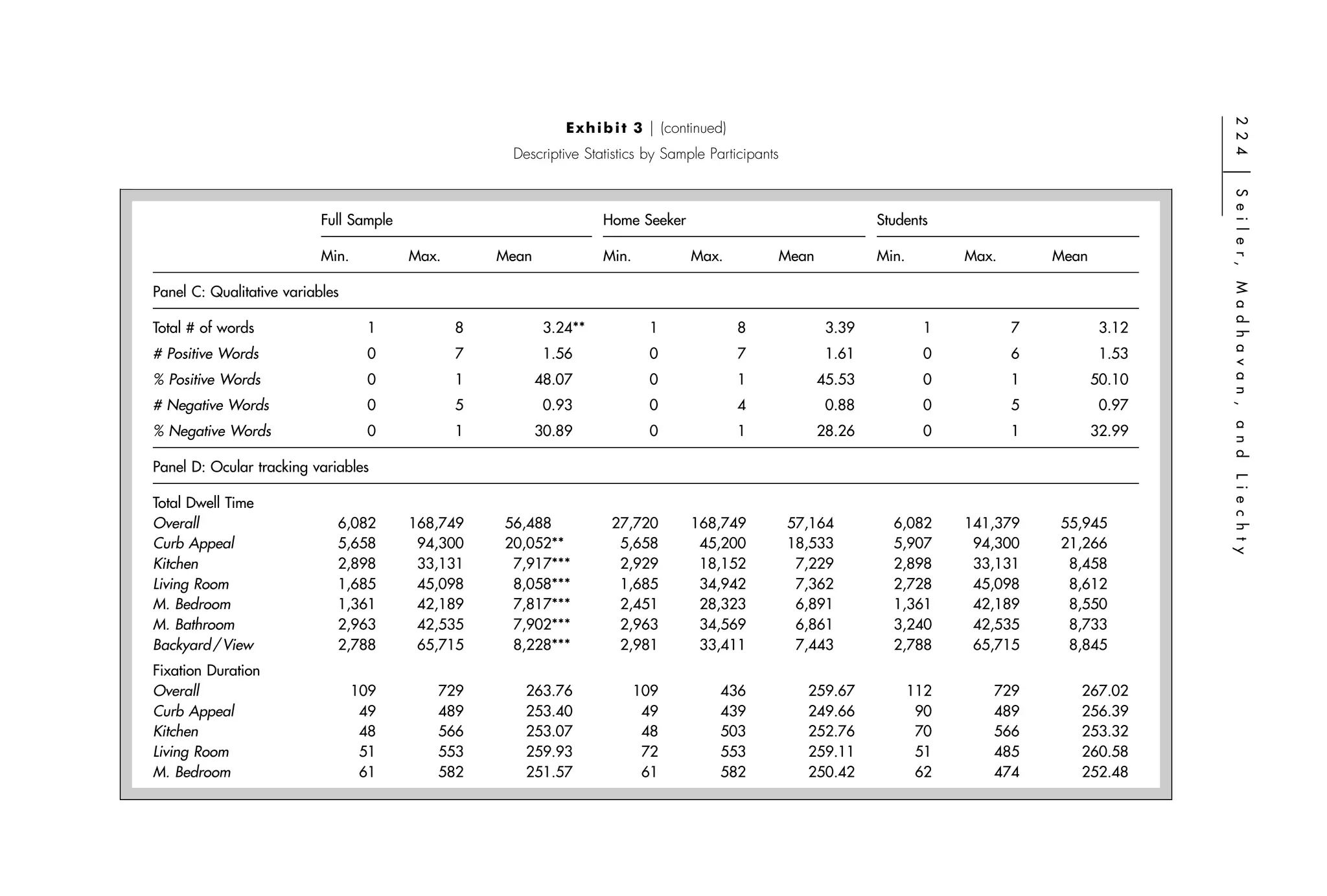
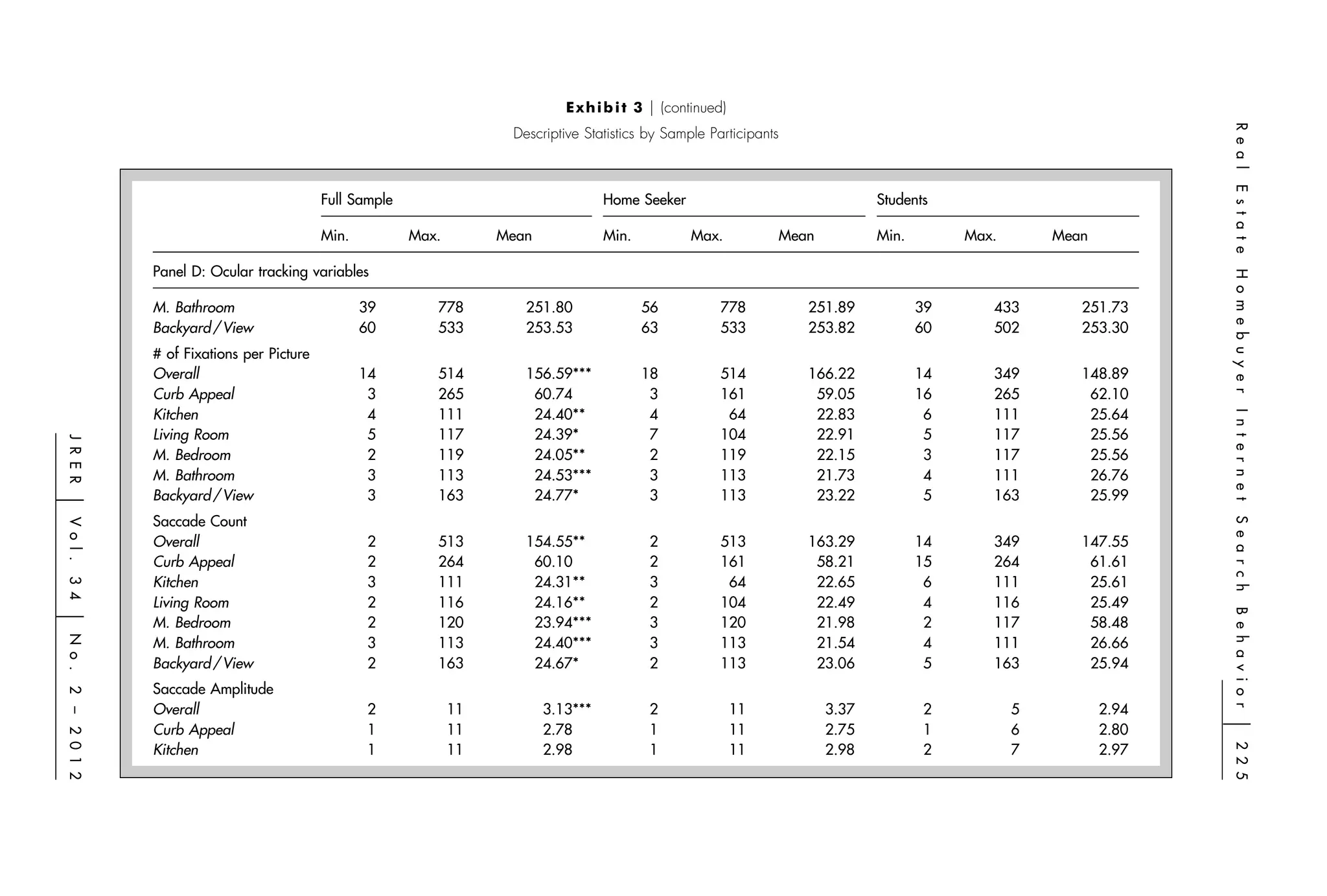
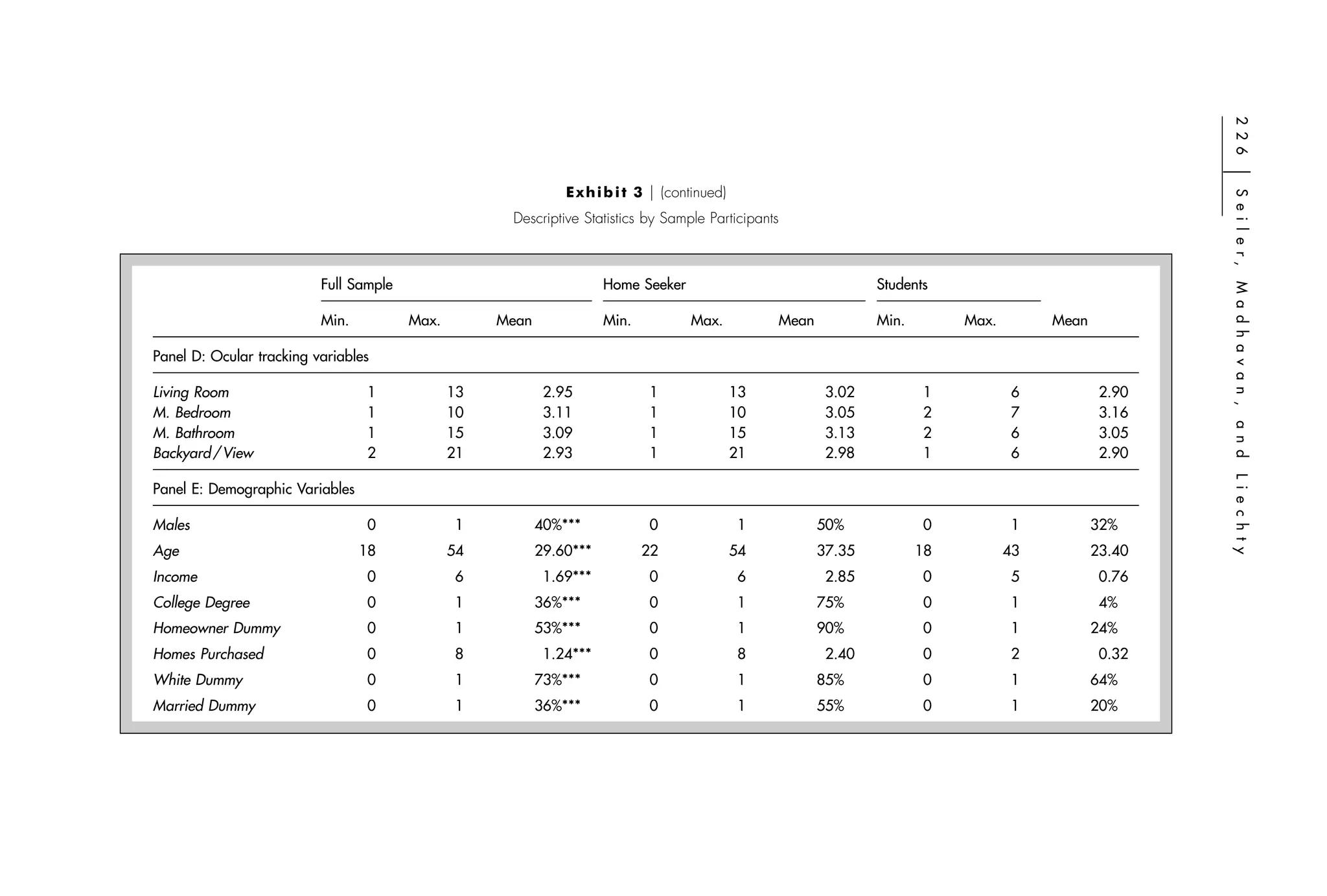
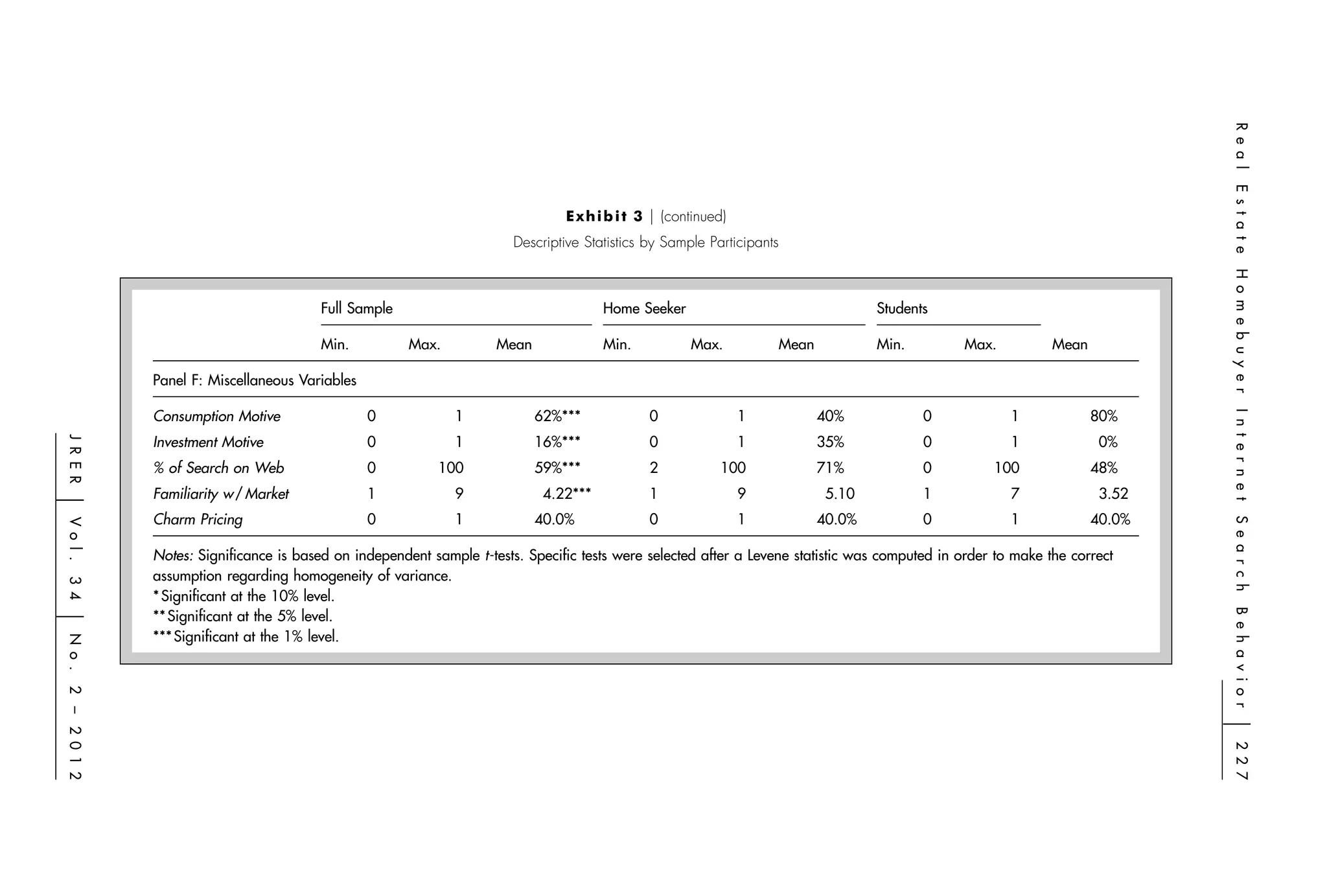
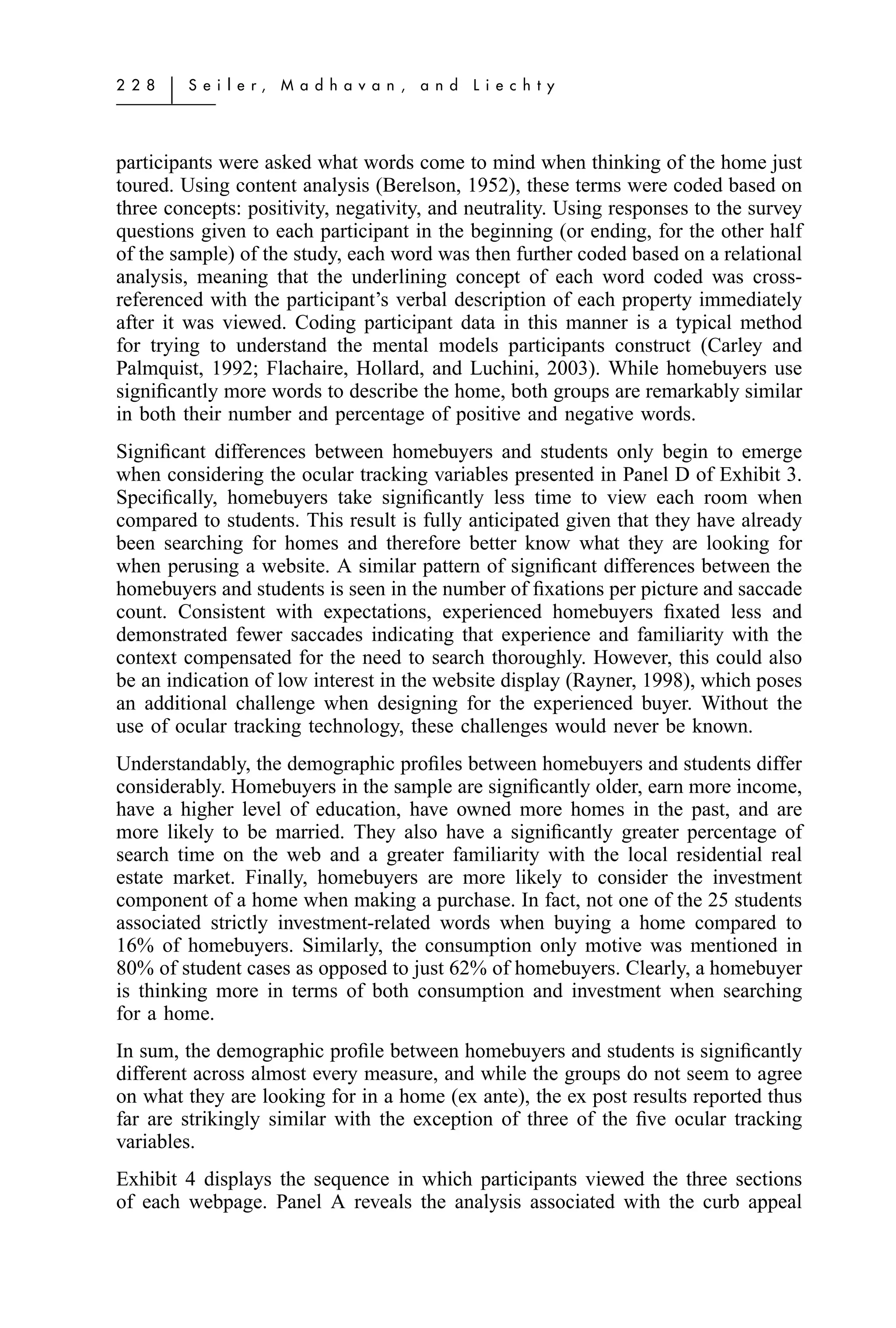
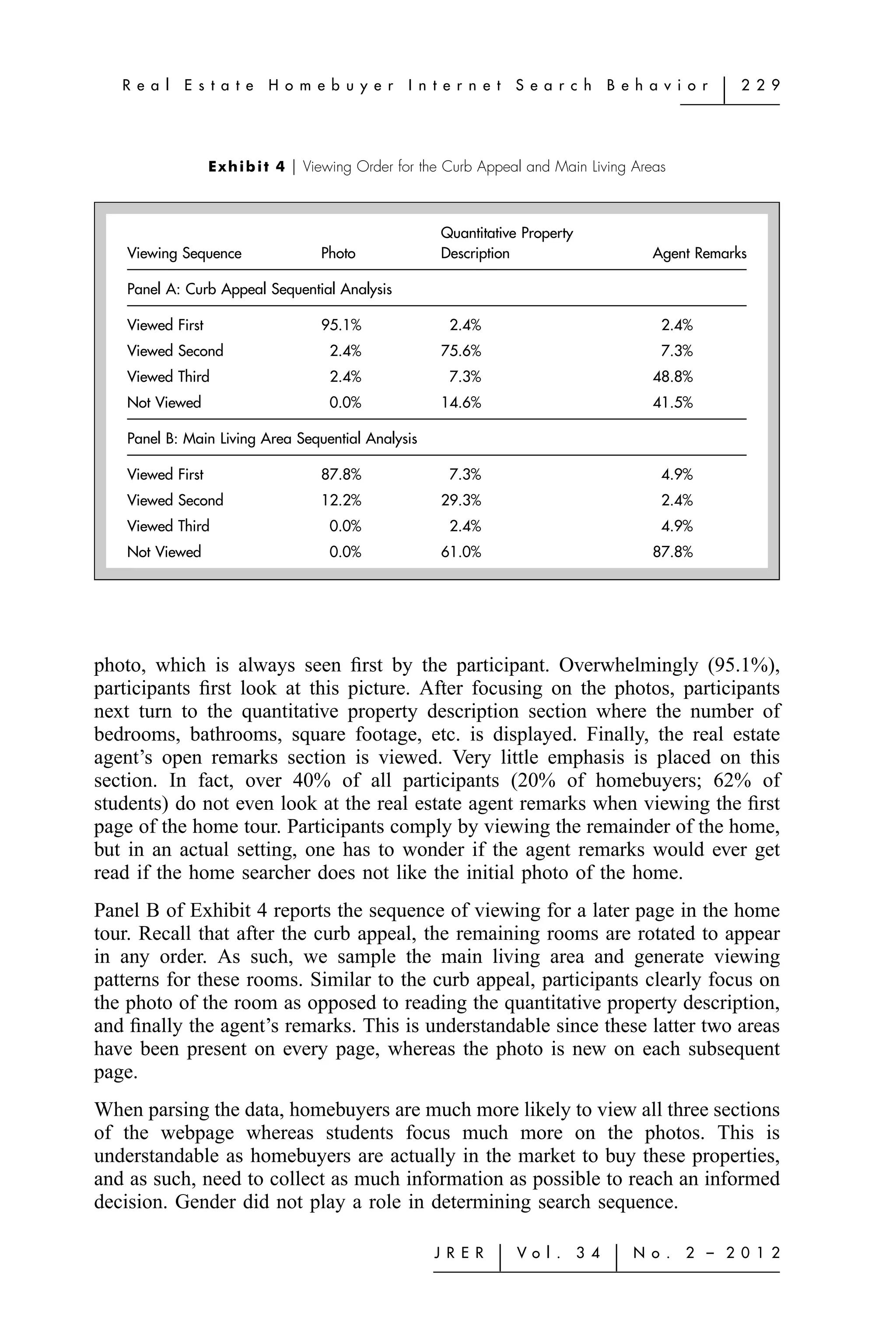
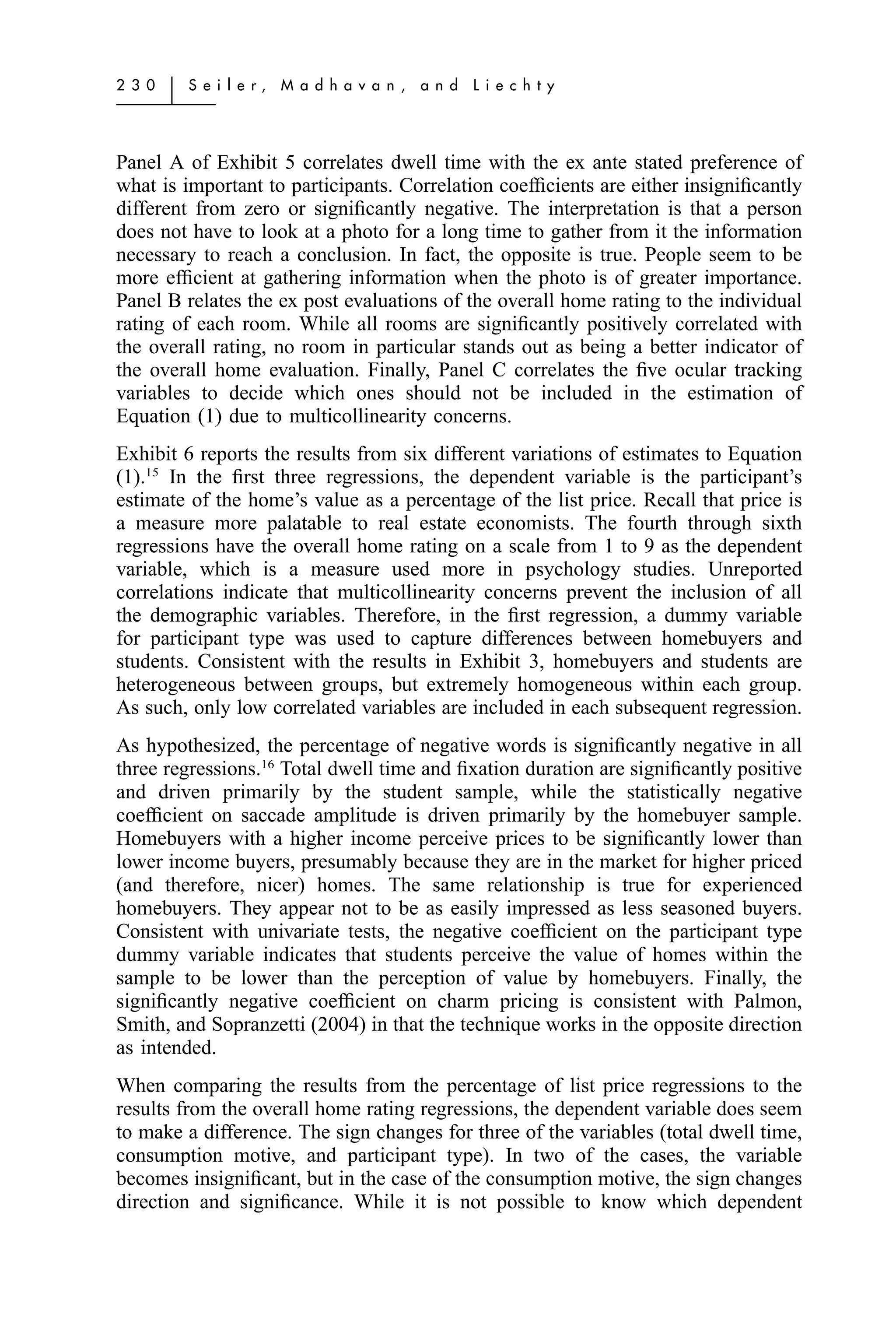
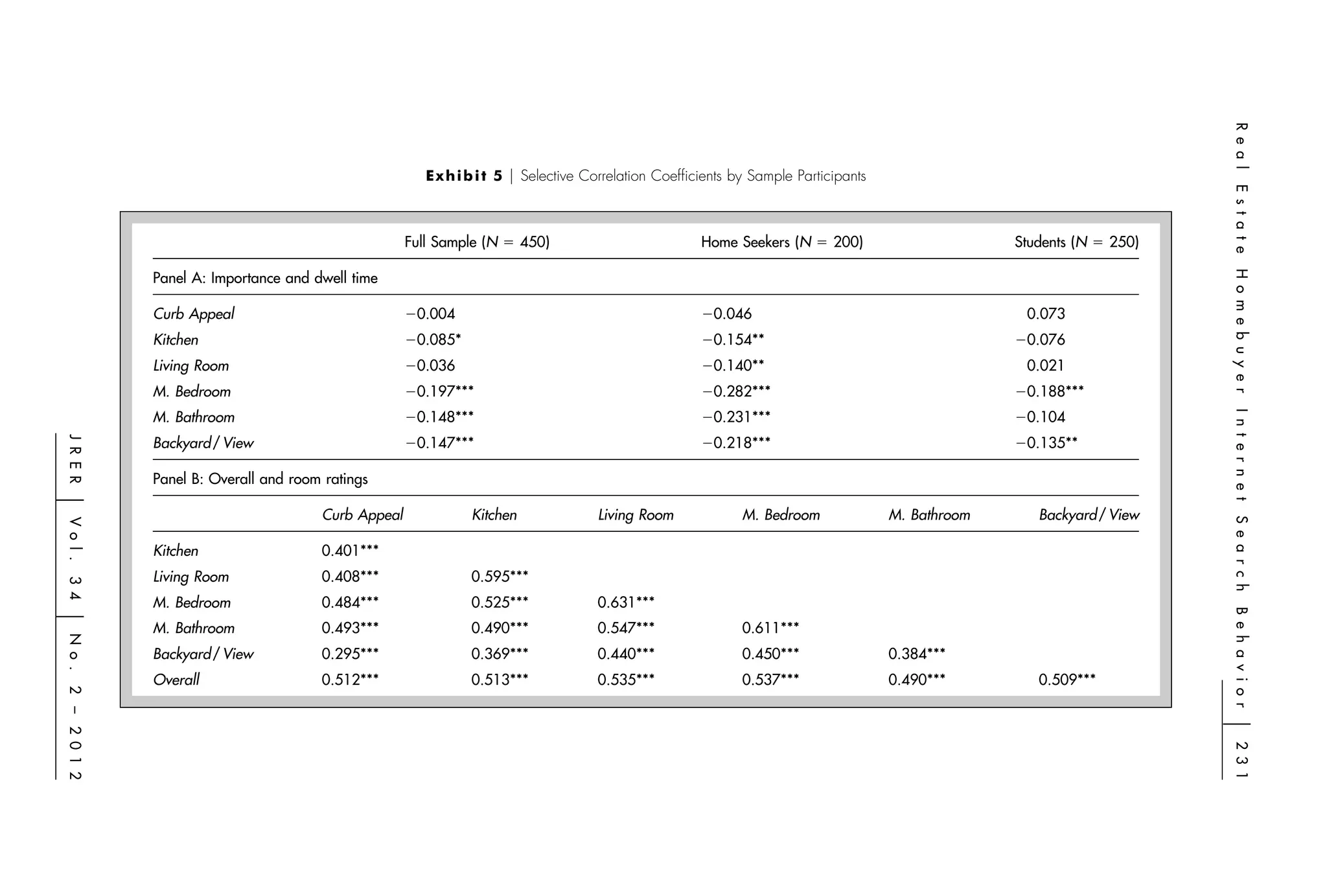
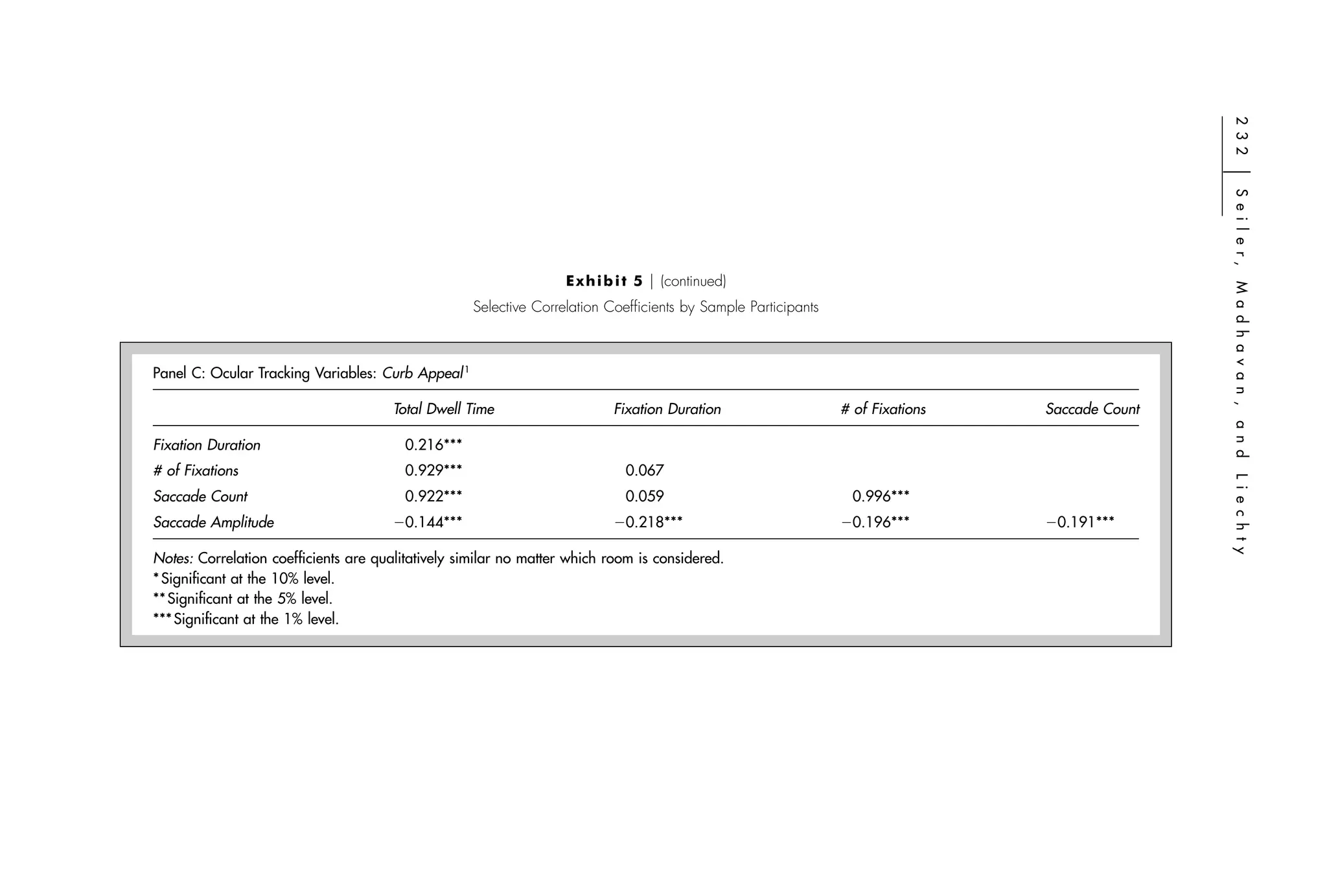
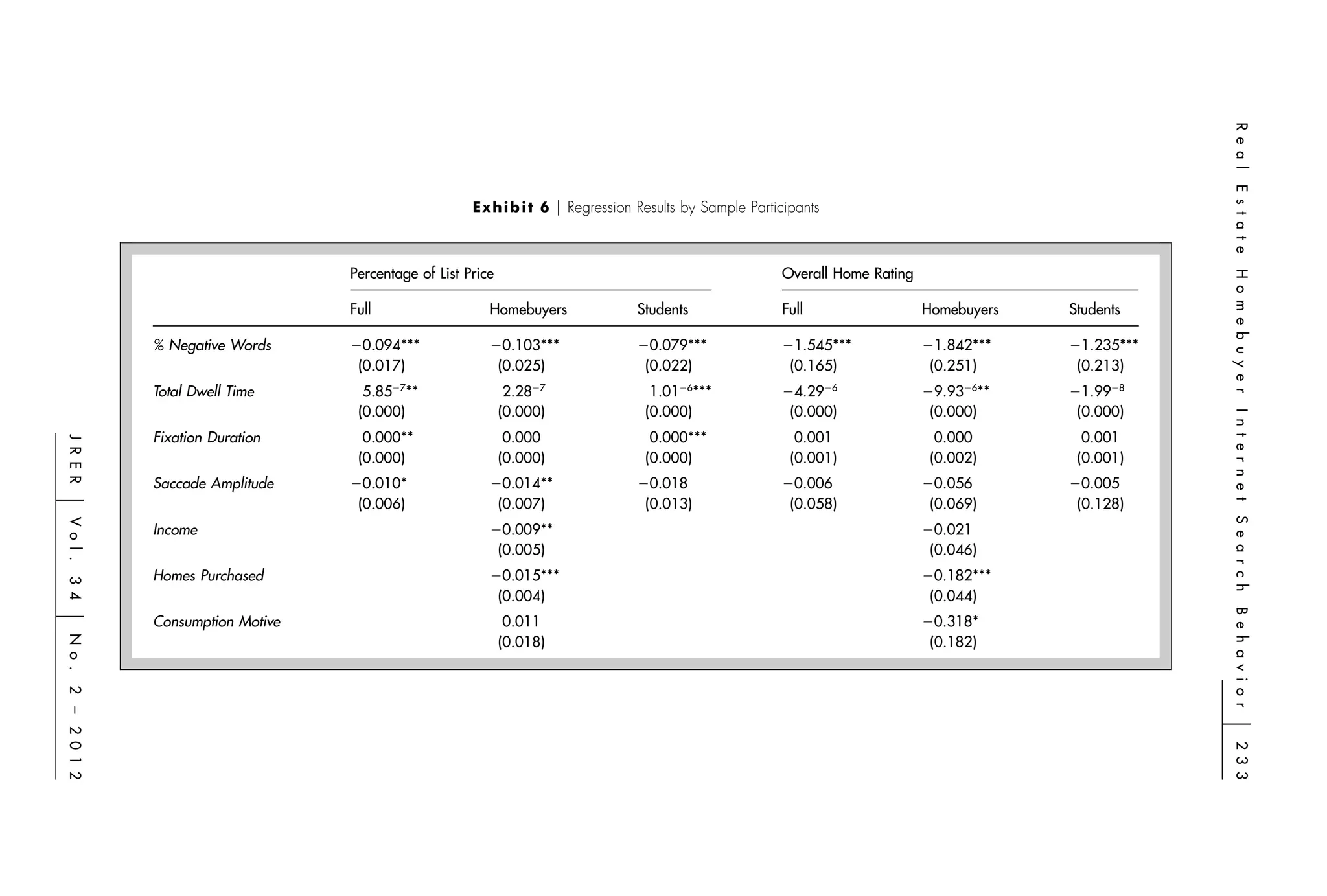
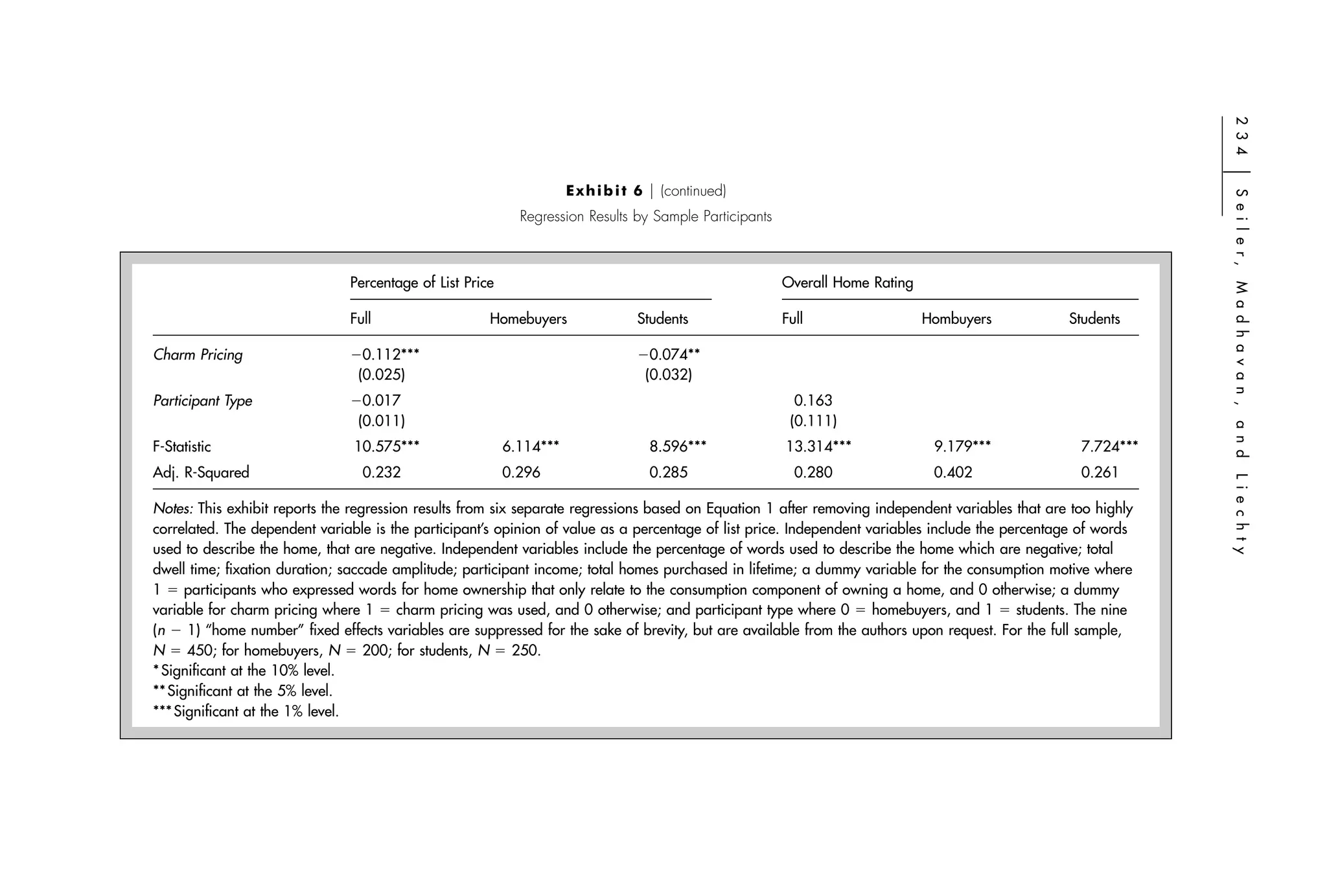
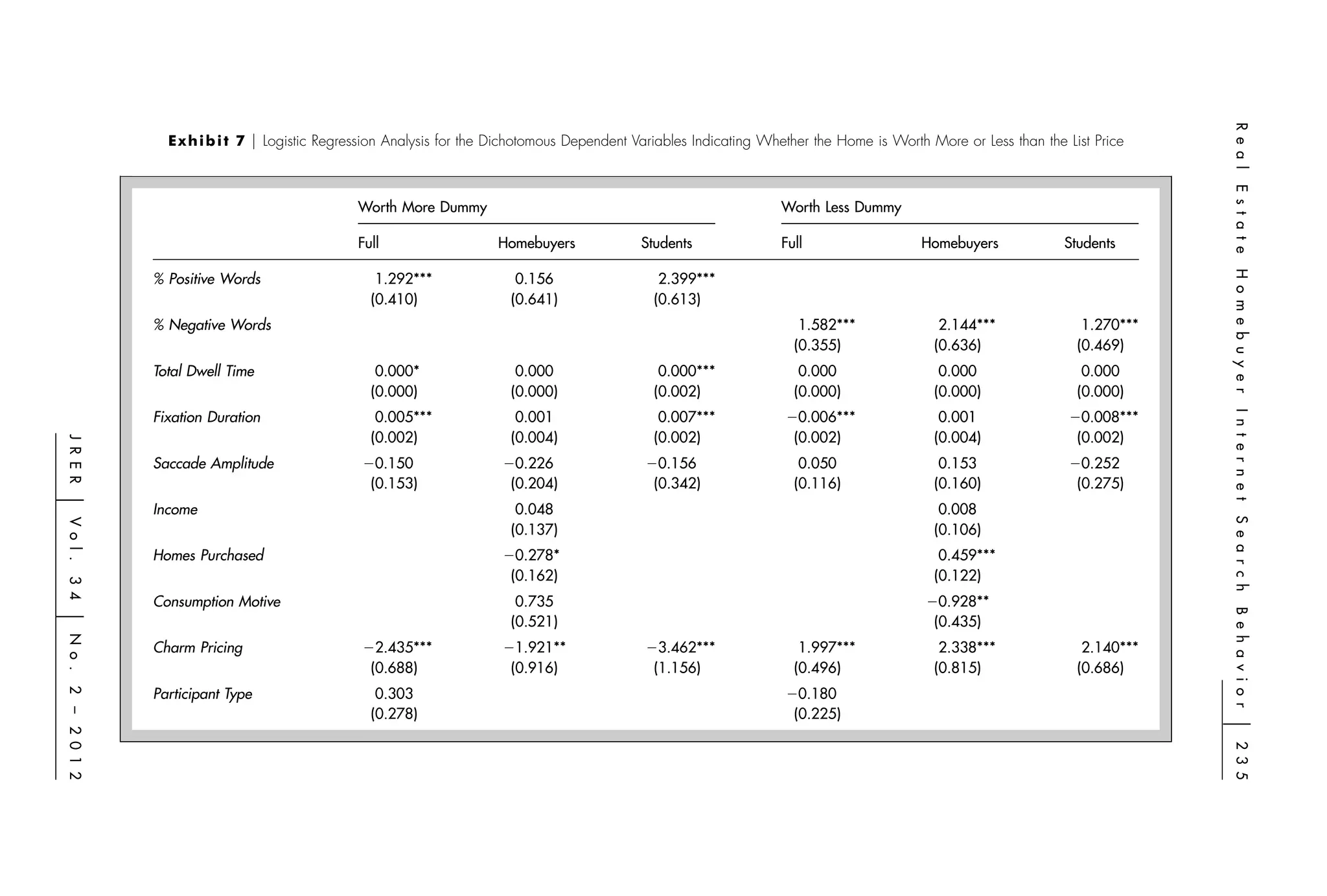
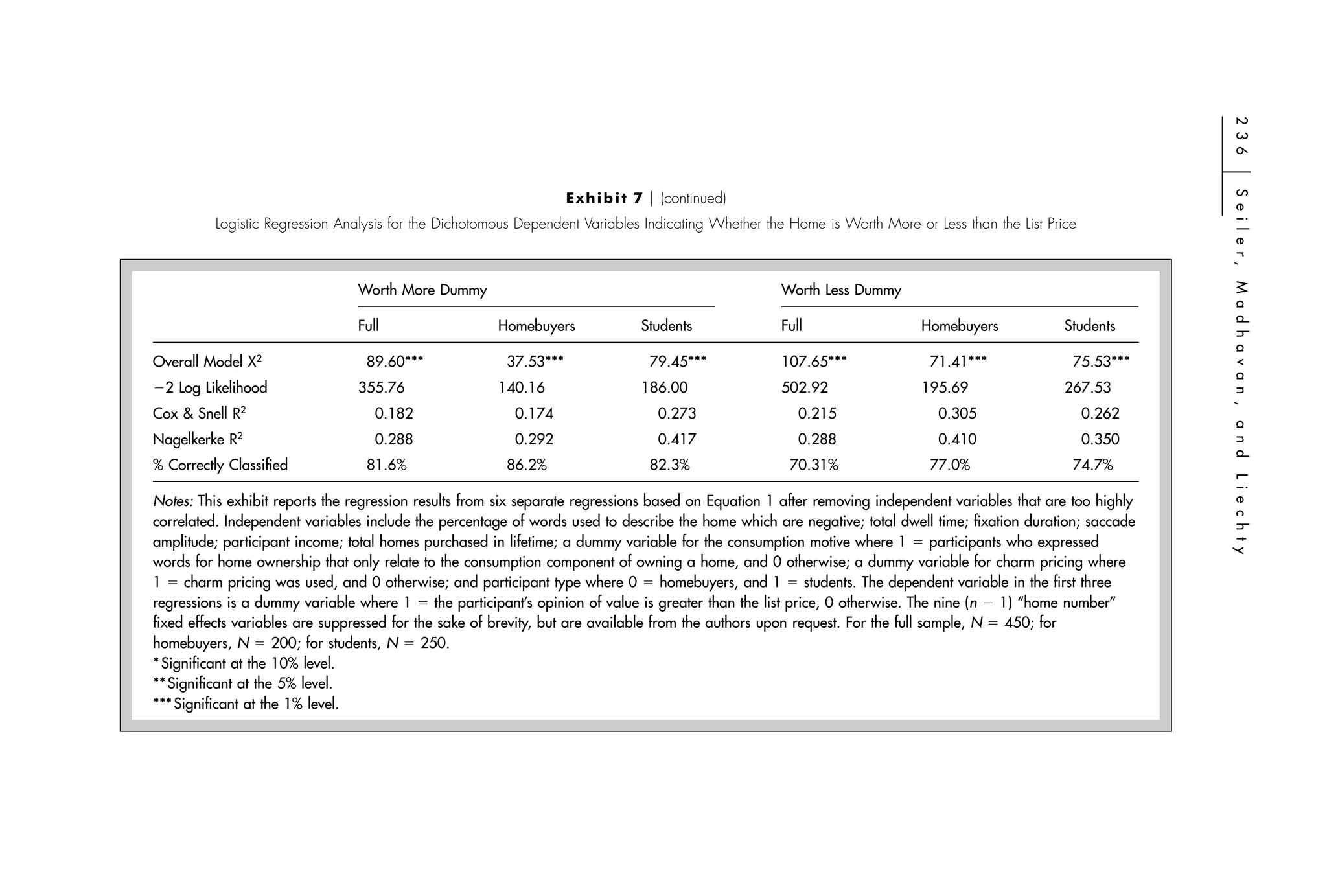
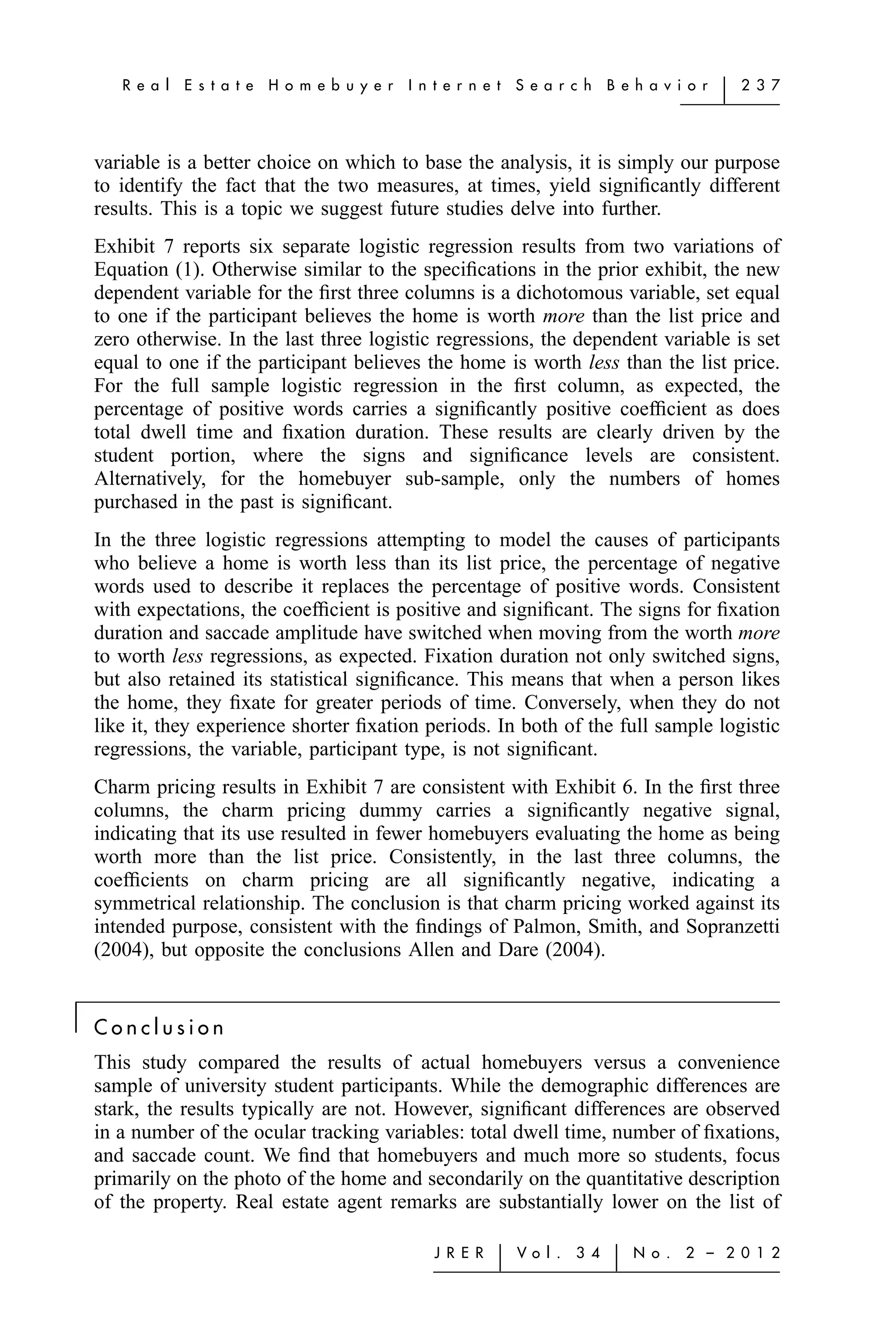


This paper analyzes the eye movements of homebuyers using ocular tracking technology to better understand their online search behavior when looking for homes. Key findings reveal that homebuyers pay significant attention to photos and descriptions of properties, while charm pricing strategies, meant to appear more attractive, may work against sellers as they do not align with homebuyers' viewing patterns. The study highlights the importance of physiological measures over self-reported preferences to accurately capture homebuyer behavior and preferences in real estate.


