
  On a recent visit to „charming textiles‟ I saw that there are not many
  health and safety regulations. I have noticed that the place is extremely
     hot and stuffy as there is no air ventilation! The workers also look
    particularly pale and green whilst working. I think workers should
    maybe get a break every now and again so they can catch some fresh
     air. To let some fresh air in I think you should have some new and
          bigger windows fitted so it doesn‟t become too hot inside!
 Workers also look tremendously tired whilst they are working as
  they have long hour shifts! This could make them careless and result in
  a serious accident. They may also not be able to work as well or fast
  enough due to tiredness this could put YOUR profits down if work
  isn‟t done up to its standard. Workers should be given a maximum of
  8hour shifts so they can go home catch up on some sleep and not
  become so tired out.
 - Visitor
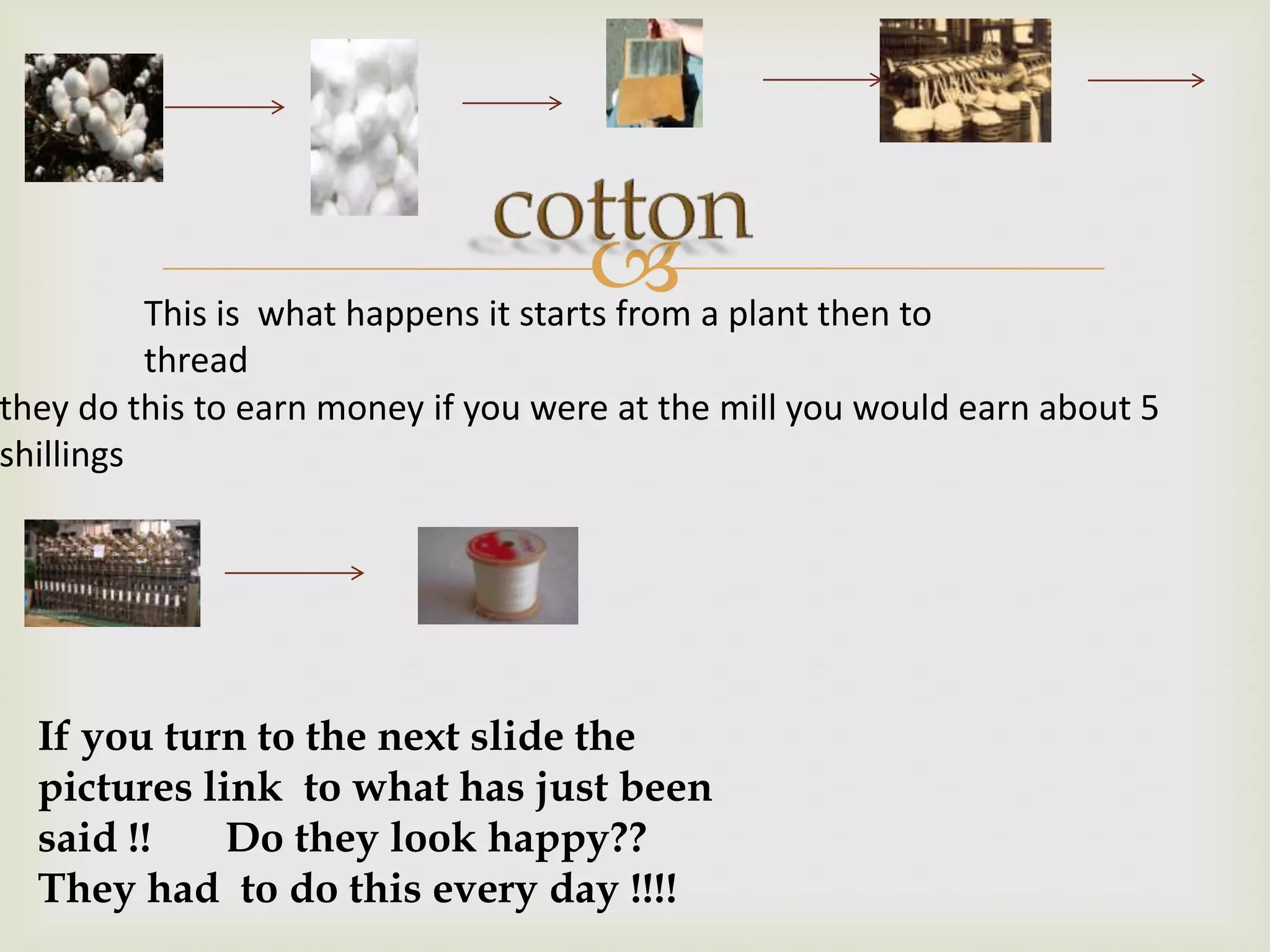
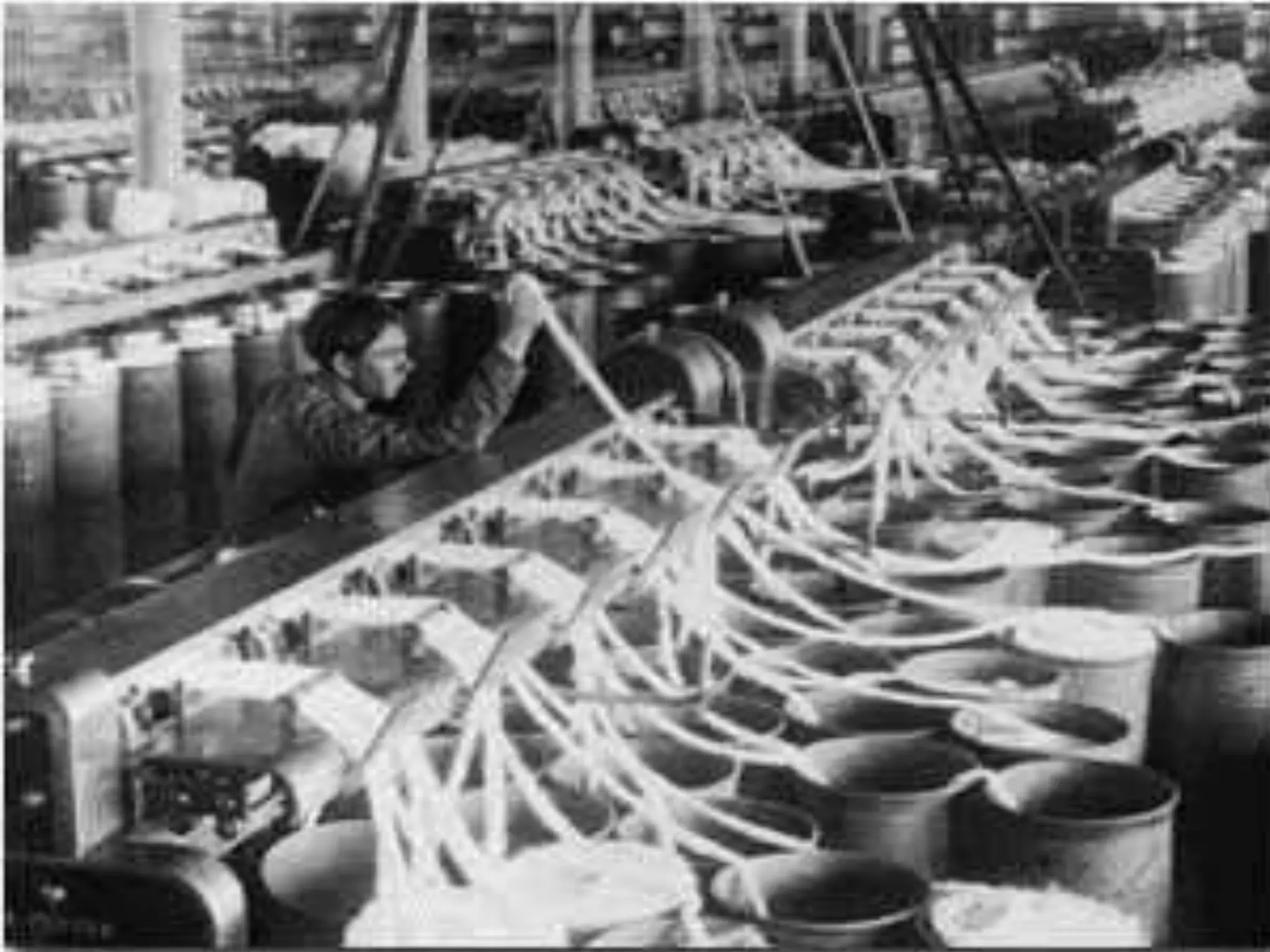
 a plant then to
         This is what happens it starts from
          thread
they do this to earn money if you were at the mill you would earn about 5
shillings


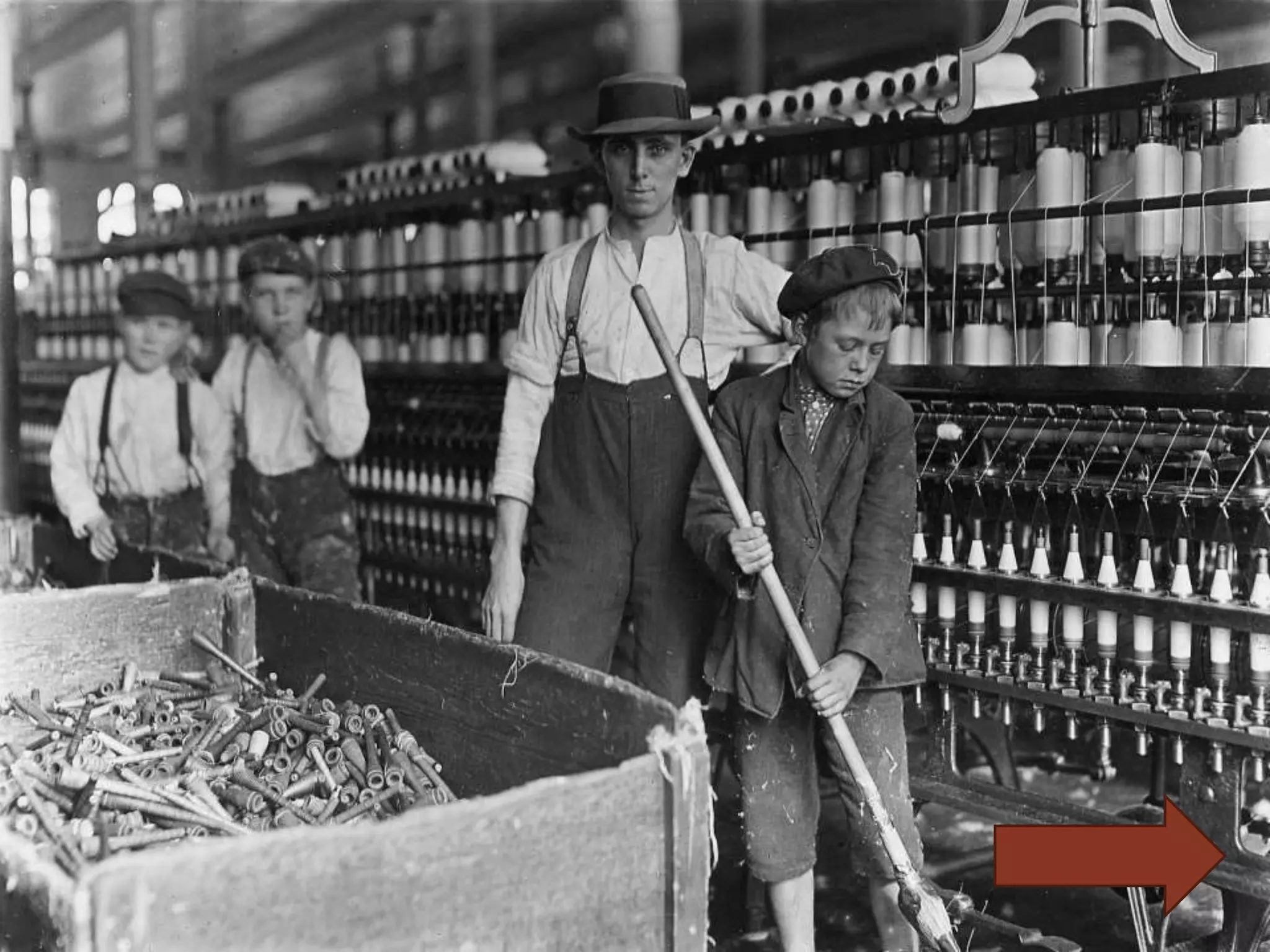
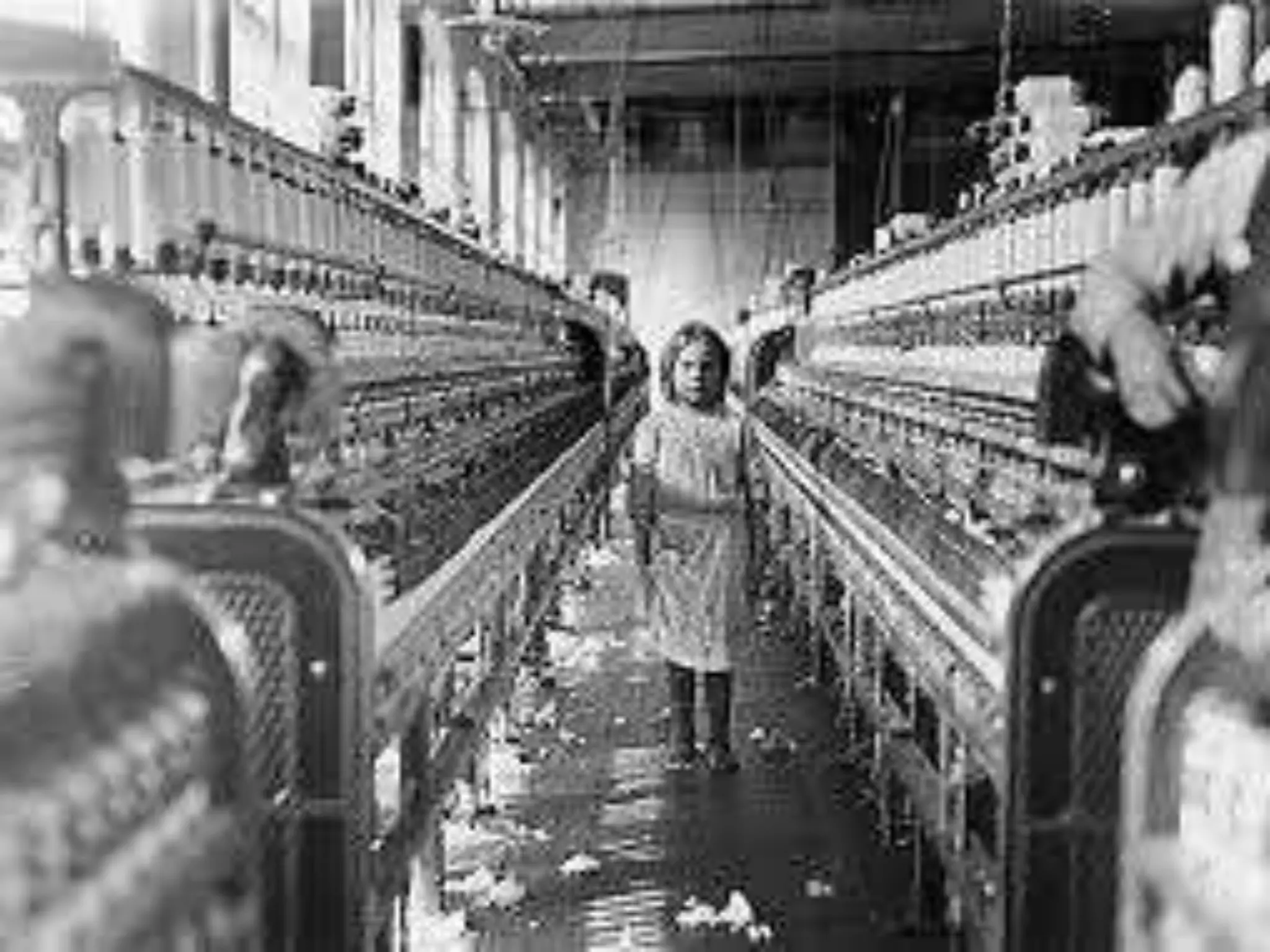
  If you turn to the next slide the
  pictures link to what has just been
  said !!    Do they look happy??
  They had to do this every day !!!!



 Many parents were unwilling to allow their children
  to work in these new textile factories. To overcome
  this labor shortage factory owners had to find other
  ways of obtaining workers. One solution to the
  problem was to buy children from orphanages and
  workhouses. The children became known as pauper
  apprentices. This involved the children signing
  contracts that virtually made them the property of
  the factory owner. Pauper apprentices were cheaper
  to house than adult workers. It cost Samuel Greg
  who owned the large Quarry Bank Mill at Style,
  £100 to build a cottage for a family, where as his
  apprentice house, that cost £300, provided living
  accommodation for over 90 children.


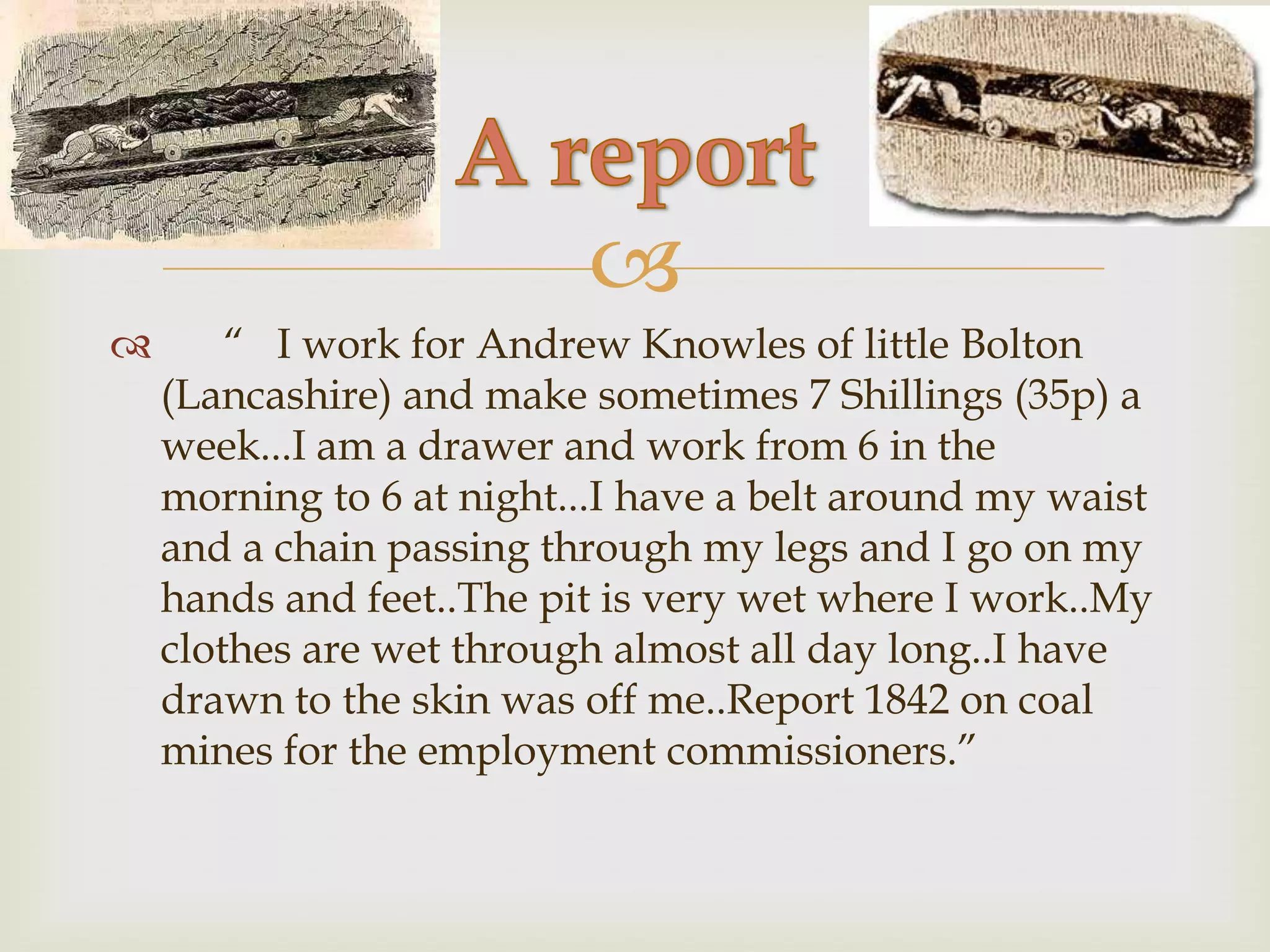
       “ I work for Andrew Knowles of little Bolton
    (Lancashire) and make sometimes 7 Shillings (35p) a
    week...I am a drawer and work from 6 in the
    morning to 6 at night...I have a belt around my waist
    and a chain passing through my legs and I go on my
    hands and feet..The pit is very wet where I work..My
    clothes are wet through almost all day long..I have
    drawn to the skin was off me..Report 1842 on coal
    mines for the employment commissioners.”
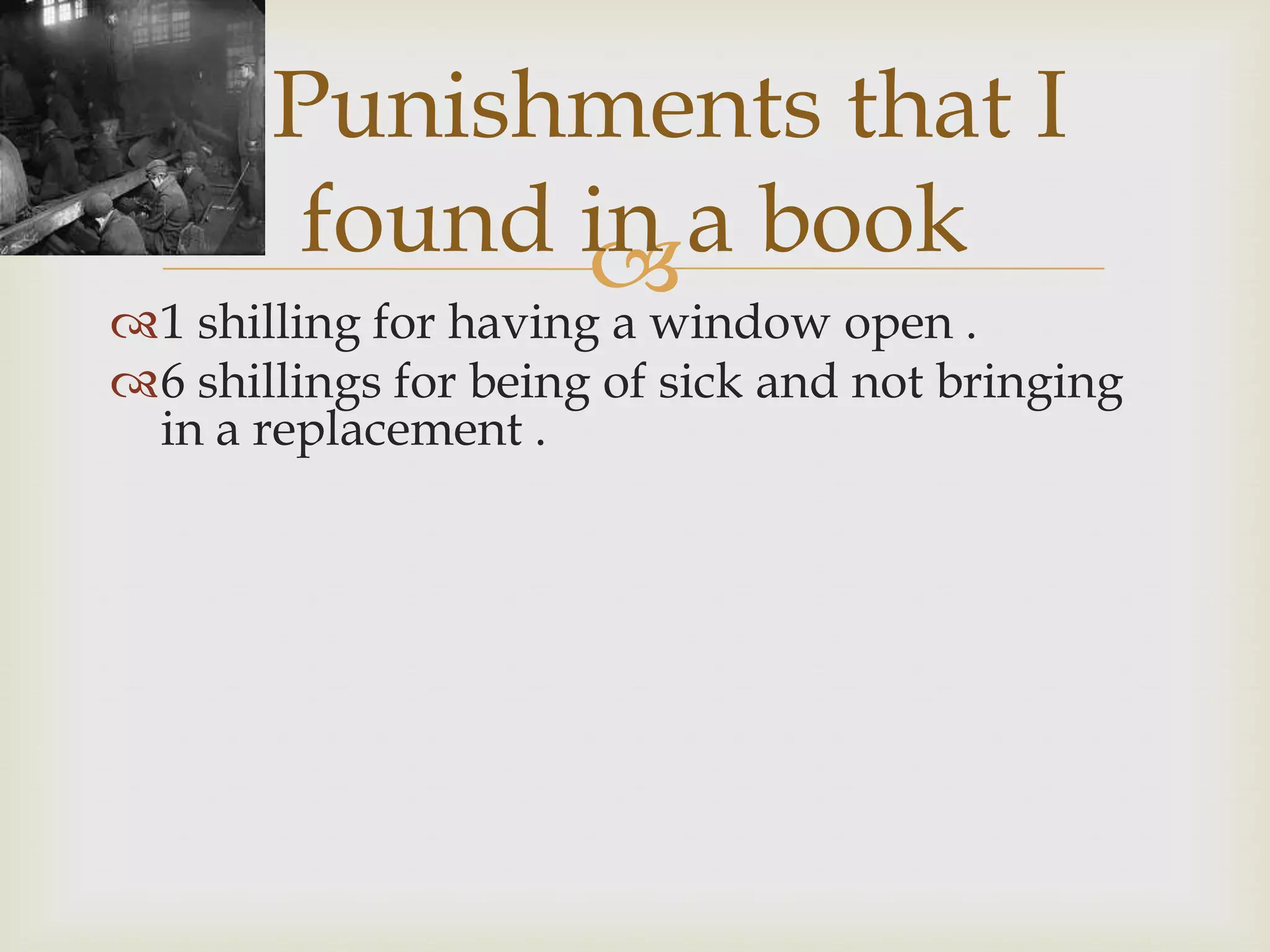
Punishments that I
        found in a book
              
1 shilling for having a window open .
6 shillings for being of sick and not bringing
 in a replacement .

By Georgia Allsop

History project

  • 2.
      Ona recent visit to „charming textiles‟ I saw that there are not many health and safety regulations. I have noticed that the place is extremely hot and stuffy as there is no air ventilation! The workers also look particularly pale and green whilst working. I think workers should maybe get a break every now and again so they can catch some fresh air. To let some fresh air in I think you should have some new and bigger windows fitted so it doesn‟t become too hot inside!  Workers also look tremendously tired whilst they are working as they have long hour shifts! This could make them careless and result in a serious accident. They may also not be able to work as well or fast enough due to tiredness this could put YOUR profits down if work isn‟t done up to its standard. Workers should be given a maximum of 8hour shifts so they can go home catch up on some sleep and not become so tired out.  - Visitor
  • 3.
     a plantthen to This is what happens it starts from thread they do this to earn money if you were at the mill you would earn about 5 shillings If you turn to the next slide the pictures link to what has just been said !! Do they look happy?? They had to do this every day !!!!
  • 4.
  • 5.
  • 6.
      Many parentswere unwilling to allow their children to work in these new textile factories. To overcome this labor shortage factory owners had to find other ways of obtaining workers. One solution to the problem was to buy children from orphanages and workhouses. The children became known as pauper apprentices. This involved the children signing contracts that virtually made them the property of the factory owner. Pauper apprentices were cheaper to house than adult workers. It cost Samuel Greg who owned the large Quarry Bank Mill at Style, £100 to build a cottage for a family, where as his apprentice house, that cost £300, provided living accommodation for over 90 children.
  • 7.
  • 8.
      “ I work for Andrew Knowles of little Bolton (Lancashire) and make sometimes 7 Shillings (35p) a week...I am a drawer and work from 6 in the morning to 6 at night...I have a belt around my waist and a chain passing through my legs and I go on my hands and feet..The pit is very wet where I work..My clothes are wet through almost all day long..I have drawn to the skin was off me..Report 1842 on coal mines for the employment commissioners.”
  • 9.
    Punishments that I found in a book  1 shilling for having a window open . 6 shillings for being of sick and not bringing in a replacement .
  • 10.
  • 11.

Editor's Notes

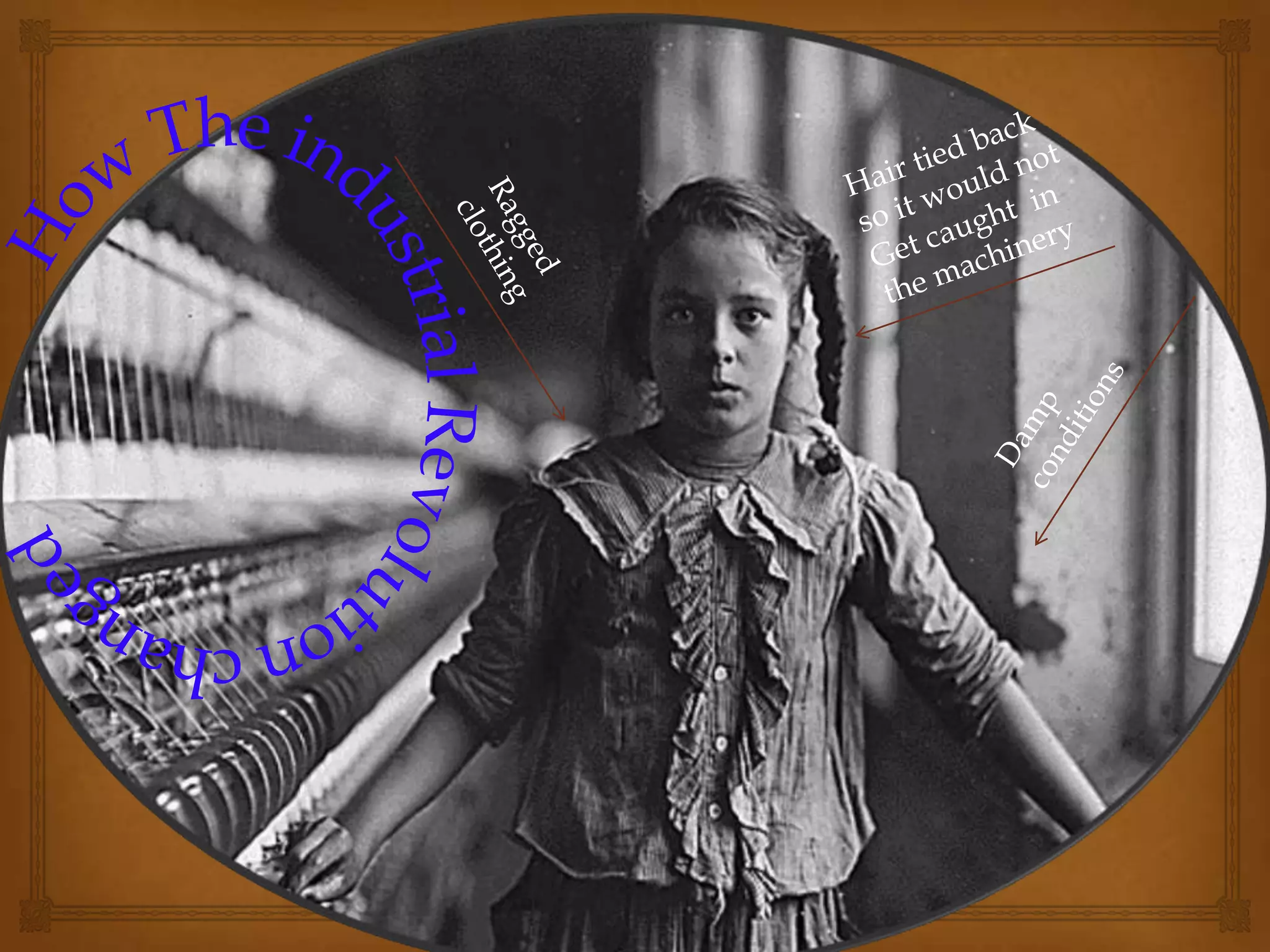
  • #3 I chose this source because it shows that it was not very nice and it was not very safe .
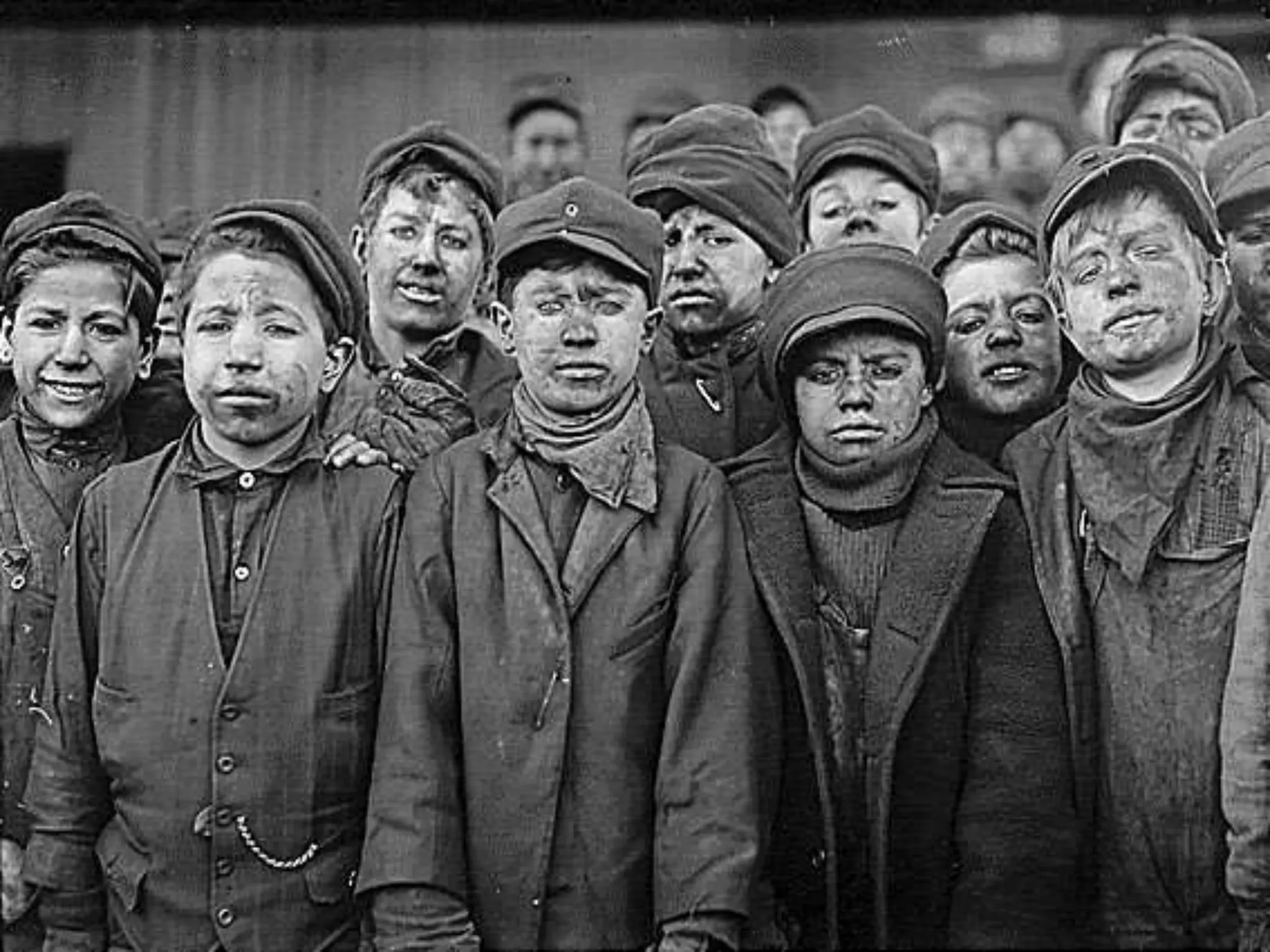
  • #5 I chose this source because they don’t look happy , they have to do this from 6 in the morning to 6 at night !!!
  • #7 Samuel Greg was very kind to do this because he gave them a food somewhere to sleep and work and have education where as the workhouse was dull and soulless
  • #10 This shows that it was very strict and cruel for thechildren