Leadership. Knowledge. Community.
Diagnosis and Management of
Heart Failure: Update 2010
HF in ethnic minority populations, HF and pregnancy,
disease management and
quality improvement/assurance programs
Howlett JG, McKelvie RS, Costigan J et al. Can J Cardiol 2010;26(4):185-202.
Slide sets for 2006 through 2010 available at www.hfcc.ca
2
Consensus Conference Panelists 2010
Primary panelists:
Jonathan G Howlett, Robert S McKelvie, Jeannine Costigan,
Anique Ducharme, Estrellita Estrella-Holder, Justin A Ezekowitz,
Nadia Giannetti, Haissam Haddad, George A Heckman,
Anthony M Herd, Debra Isaac, Simon Kouz, Kori Leblanc,
Peter Liu, Elizabeth Mann, Gordon W Moe, Eileen O’Meara,
Miroslav Rajda, Samuel Siu, Paul Stolee, Elizabeth Swiggum,
Shelley Zeiroth
Secondary panelists:
Malcolm Arnold, Michel White, Heather Ross, Paul Dorian,
Michel D’Astous, James Cherry, Candice Silversides, Tom Ashton,
Marie-Hélène Leblanc, Gary E Newton, Stuart Smith, Bruce A Sussex,
Vivek Rao
Howlett JG, McKelvie RS, Costigan J et al. Can J Cardiol 2010;26(4):185-202.
3
Process and Purpose of 2010
HF Recommendations Update
• Topics were identified due to their importance to clinicians,
based on needs assessments of cardiovascular care providers
• Topics chosen for the 2010 update:
– Heart failure in ethnic minority populations
– Heart failure and pregnancy
– Disease management
– Quality improvement/assurance programs
Howlett JG, McKelvie RS, Costigan J et al. Can J Cardiol 2010;26(4):185-202.
4
Class of Recommendation and
Grade of Evidence
Evidence or general agreement that a given procedure or
treatment is beneficial, useful and effective
Conflicting evidence or a divergence of opinion about the
usefulness or efficacy of a procedure or treatment
Weight of evidence is in favour of usefulness or efficacy
Usefulness or efficacy is less well established by
evidence or opinion
Evidence or general agreement that the procedure or
treatment is not useful or effective and in some cases
may be harmful
Howlett JG, McKelvie RS, Costigan J et al. Can J Cardiol 2010;26(4):185-202.
5
Class of Recommendation and
Grade of Evidence
Data derived from multiple randomized
clinical trials or meta-analyses
Data derived from a single randomized
clinical trial or nonrandomized studies
Consensus of opinion of experts and/or
small studies
Howlett JG, McKelvie RS, Costigan J et al. Can J Cardiol 2010;26(4):185-202.
6
Objectives of 2010 Update
• To provide Canadian practitioners with
recommendations and advice in four emerging
areas:
– HF in ethnic minority populations
– HF and pregnancy
– Disease management programs
– Quality improvement and assurance in HF care
Howlett JG, McKelvie RS, Costigan J et al. Can J Cardiol 2010;26(4):185-202.
7
HF in Ethnic Minority Populations
8
Recommendations
• Health care providers should consider the prevalent
etiological factors for HF, language, ethnoculture and
social values, and diagnostic patterns as well as the
potential barriers to health care specific to patients with
HF from an ethnic minority group
(Class I, Level C)
HF in Ethnic Minority Populations
Howlett JG, McKelvie RS, Costigan J et al. Can J Cardiol 2010;26(4):185-202.
9
HF in Ethnic Minority Populations
Recommendations (cont’d)
In the management of black subjects with HF, the
following are recommended:
• ACE-I as standard therapy in patients with HF and
LVEF < 40% (Class I, Level A)
• Beta-blockers as standard therapy in patients with HF
and an LVEF < 40% (Class I, Level B)
• A combination of hydralazine and isosorbide dinitrate as
part of standard therapy in addition to beta-blockers and
ACE-I in patients with moderate to severe HF and
LVEF < 35% (Class I, Level B)
ACE-I: angiotensin converting enzyme inhibitor
LVEF: left ventricular ejection fraction Howlett JG, McKelvie RS, Costigan J et al. Can J Cardiol 2010;26(4):185-202.
10
Practical Tips
Family and social values within the ethnocultural background
underlie a patient’s attitudes and beliefs toward health and disease.
When managing patients from ethnic minority groups with HF,
health care professionals, where possible, should do the following:
• Ensure proper language translation is available and include family
members in the overall management plan
• Provide medical information or educational aids in a language understood
by patients or their caregivers
• Respect local traditions and be careful not to impose professionals’ own
values
• Work as multidisciplinary teams
• Include community health representatives, where appropriate
HF in Ethnic Minority Populations
Howlett JG, McKelvie RS, Costigan J et al. Can J Cardiol 2010;26(4):185-202.
11
Practical Tips (cont’d)
• Health care workers and patients should be aware of the risk factors for the
development of HF, such as hypertension and obesity, which are more
prevalent in certain ethnic groups, and should work to prevent and treat
these conditions
• During assessment, etiologies that are prevalent in a patient’s home region
must be considered in addition to common causes of HF in Canada (eg,
Chagas or rheumatic heart disease in South America; rheumatic heart
disease in Africa)
• Diastolic HF or HF with preserved systolic function is common particularly
in Chinese and black patients
HF in Ethnic Minority Populations
Howlett JG, McKelvie RS, Costigan J et al. Can J Cardiol 2010;26(4):185-202.
12
Practical Tips (cont’d)
• Treatment of a patient with HF from an ethnic minority group
should follow the same treatment recommendations from
current practice guidelines
• However, consideration should be given to lower starting
dosages for pharmacotherapy in certain ethnic groups (ie,
Chinese and Japanese patients frequently are administered a
lower starting dose of ACE-I or beta-blockers)
• Target dosage remains identical to guideline
recommendations
HF in Ethnic Minority Populations
ACE-I: angiotensin converting enzyme inhibitor Howlett JG, McKelvie RS, Costigan J et al. Can J Cardiol 2010;26(4):185-202.
13
General Considerations: South Asian Population
• Increased susceptibility to premature morbidity and mortality from coronary
artery disease
• Higher risk factor burden for the development of CAD and HF, although
outcomes may not be different from those in a Caucasian population
• Health care professionals and the South Asian community should be made
aware of this unique risk factor profile so that appropriate ethnocultural-
specific screening procedures and support programs can be implemented
HF in Ethnic Minority Populations
CAD: coronary artery disease Howlett JG, McKelvie RS, Costigan J et al. Can J Cardiol 2010;26(4):185-202.
14
General Considerations: Chinese Population
• Available data suggest hypertension is the most important identifiable risk
factor for HF
• Metabolic syndrome, obesity, CAD are emerging risk factors
• HF with normal LVEF is common
• Health care professionals should be aware of the use of traditional Chinese
medicines, which may expose the patient to potentially undesirable drug-
drug or drug-herb interactions
– eg. the effect of warfarin is altered by use of dong quai; the effects of diuretics
and vasodilators are attenuated by use of fuling and ma huang
HF in Ethnic Minority Populations
CAD: coronary artery disease
LVEF: left ventricular ejection fraction Howlett JG, McKelvie RS, Costigan J et al. Can J Cardiol 2010;26(4):185-202.
15
General Considerations: Black Population
• Data in African-Americans suggest black individuals experience higher
rates of HF and symptoms at younger age
• Young black subjects with risk factors should be targeted for more
aggressive intervention for HF prevention
• Study data support the use of isosorbide dinitrate/hydralazine in addition to
the standard medical regimen in patients with moderately severe HF with
low ejection fraction
HF in Ethnic Minority Populations
Howlett JG, McKelvie RS, Costigan J et al. Can J Cardiol 2010;26(4):185-202.
16
General Considerations: Aboriginal Population
• Higher frequency of cardiovascular disease and atherosclerosis than in
Canadians of European ancestry
• CVD and HF prevalence expected to increase with increasing incidence of
diabetes
• Treatment plans may need to be adapted to ethnocultural factors, remote
locations, inadequate resources
• Multidisciplinary teams including community health representatives and
chronic disease management programs may be useful
HF in Ethnic Minority Populations
CVD: cardiovascular disease Howlett JG, McKelvie RS, Costigan J et al. Can J Cardiol 2010;26(4):185-202.
17
Population
(% of minorities
in Canada)
Important risk
factors for HF
prevention
Language and
ethnocultural
considerations Treatment
South Asian
(25%)
Diabetes
Obesity
Metabolic syndrome
Mostly speak English
Family involvement in health care
behaviour is common
Evidence-based
therapy from HF
guidelines
Chinese (24%) Hypertension
(coronary artery
disease, diabetes
and obesity are
rapidly emerging)
Mostly speak Cantonese and
Mandarin
Family involvement in health care
behaviour is common
Follow HF guidelines
Be aware of the use
of traditional
Chinese medicines
Black (15.8%) Hypertension Almost all speak English
(except in Quebec, where French
is prominent in Quebec)
Follow HF guidelines
Consider adding
nitrate/hydralazine
in severe HF
Aboriginal (24%) Diabetes
Obesity
Cree, Ojibwe are main spoken
languages
Frequently need to involve family,
community representatives in
health care initiatives
Follow HF guidelines
Howlett JG, McKelvie RS, Costigan J et al. Can J Cardiol 2010;26(4):185-202.
18
Definition
• Evidence of inadequate cardiac output despite elevated
or normal cardiac filling pressure secondary to cardiac
dysfunction occurring during pregnancy, labour and
delivery, or in the early postpartum period
HF and Pregnancy
Timing
• Women with new-onset or pre-existing LV dysfunction may exhibit
marked clinical deterioration during the course of pregnancy
• Cardiac decompensation can occur at any time during pregnancy;
however, there are specific periods when the risk is increased
• Clinical deterioration can occur late in the second trimester, during the
third trimester or in the peripartum period, which is high risk due to rapid
hemodynamic changes that take place
LV: left ventricular Howlett JG, McKelvie RS, Costigan J et al. Can J Cardiol 2010;26(4):185-202.
19
• Congenital heart disease
• Valvular heart disease
• Idiopathic dilated cardiomyopathy
• Familial cardiomyopathies
• Drug-induced (ie, adriamycin) cardiomyopathy
• Peripartum cardiomyopathy (PPCM)
• Ischemic cardiomyopathy
• Hypertension-related cardiomyopathy
Cardiac failure may be secondary to myocardial infarction
or severe pre-eclampsia.
Common Causes of HF in Women of
Childbearing Age
Howlett JG, McKelvie RS, Costigan J et al. Can J Cardiol 2010;26(4):185-202.
20
• Pneumonia
• Pulmonary embolus
• Amniotic fluid embolus
• Renal failure with volume overload
• Acute lung injury
Noncardiac Conditions That May Mimic
Decompensated HF
Howlett JG, McKelvie RS, Costigan J et al. Can J Cardiol 2010;26(4):185-202.
21
• Detailed history to document functional status
• Physical examination
• ECG
• Echocardiography
• Complete blood count, electrolytes, renal function,
thyroid-stimulating hormone
• Measurement of b-type natriuretic peptide may be useful
if diagnosis is not clear
– Criteria for BNP measurement in pregnancy are not yet
available; however, normal levels make HF unlikely
Evaluation of Suspected HF in Pregnancy
BNP: b-type natriuretic peptide
ECG: electrocardiography Howlett JG, McKelvie RS, Costigan J et al. Can J Cardiol 2010;26(4):185-202.
22
Recommendations
• Health care professionals should be aware of the cardiovascular changes
associated with normal pregnancy because those changes may unmask
pre-existing heart conditions or precipitate decompensation in established
or new-onset HF
(Class I, Level C)
Practical Tip
• The diagnosis of HF may be a challenge because many women in their
final month of pregnancy experience symptoms identical to early HF.
Progressive dyspnea on exertion, paroxysmal nocturnal dyspnea,
orthopnea and recumbent cough are likely to be indicative of HF
HF and Pregnancy
Howlett JG, McKelvie RS, Costigan J et al. Can J Cardiol 2010;26(4):185-202.
23
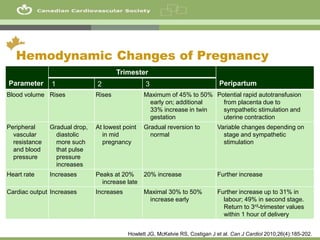
Hemodynamic Changes of Pregnancy
Parameter
Trimester
Peripartum
1 2 3
Blood volume Rises Rises Maximum of 45% to 50%
early on; additional
33% increase in twin
gestation
Potential rapid autotransfusion
from placenta due to
sympathetic stimulation and
uterine contraction
Peripheral
vascular
resistance
and blood
pressure
Gradual drop,
diastolic
more such
that pulse
pressure
increases
At lowest point
in mid
pregnancy
Gradual reversion to
normal
Variable changes depending on
stage and sympathetic
stimulation
Heart rate Increases Peaks at 20%
increase late
20% increase Further increase
Cardiac output Increases Increases Maximal 30% to 50%
increase early
Further increase up to 31% in
labour; 49% in second stage.
Return to 3rd-trimester values
within 1 hour of delivery
Howlett JG, McKelvie RS, Costigan J et al. Can J Cardiol 2010;26(4):185-202.
24
CV Symptoms and Signs in Pregnancy
Findings
Noted in normal
pregnancy Not seen in normal pregnancy
Dizziness
Palpitations
Common Syncope on exertion
Dyspnea Common (75%) if mild, not
progressive
Progressive or New York Heart
Association class IV
Orthopnea Common, especially late in term
Decreased exercise
capacity
Mild, not progressive NYHA functional class IV symptoms
Chest pain Common, may be
musculoskeletal in origin, not
progressive. Not typically
anginal
Typical angina pain, severe or tearing
pain may be dissection, especially
late in term/peripartum
Pulse Increased volume, rate Decreased volume or upstroke
Continued on next slide
Howlett JG, McKelvie RS, Costigan J et al. Can J Cardiol 2010;26(4):185-202.
25
CV Symptoms and Signs in Pregnancy
Findings
Noted in normal
pregnancy Not seen in normal pregnancy
Peripheral edema Mild, common Severe or progressive edema
Apical beat Mildly displaced laterally,
hyperdynamic
Double or triple apex beat, thrill
Heart rate Sinus tachycardia common Atrial fibrillation, persistent
supraventricular tachycardia,
symptomatic ventricular arrhythmia
Neck veins May be mildly distended Progressively distended with dominant
V wave
Heart sounds Increased S1, S2, S3 common
Systolic ejection murmur
common; continuous murmur
(venous hum, mammary
souffle) uncommon
Late peaking systolic murmur, diastolic
murmur, other continuous murmurs
Howlett JG, McKelvie RS, Costigan J et al. Can J Cardiol 2010;26(4):185-202.
26
Practical Tips
• Dyspnea of normal pregnancy is often described as an inability to get
enough air in, to get a deep breath, or both. Mild dyspnea on exertion alone
does not suggest HF
• On physical examination, healthy pregnant women may hyperventilate but
the rate of respiration should be normal. Pulmonary crackles are rarely
observed in normal pregnancy and their presence suggests HF. Jugular
venous pulsation may be mildly distended with an exaggerated X and Y
descent in normal pregnancy
• With echocardiography, cardiac chambers are normal or slightly enlarged,
and atrioventricular valve regurgitation increases mildly during pregnancy.
Diastolic dysfunction may be observed in patients with severe pre-
eclampsia, although this is an uncommon cause of HF in pregnant women.
Normal cardiac structures and preserved LVEF suggests a noncardiac
cause for symptoms
HF and Pregnancy
LVEF: left ventricular ejection fraction Howlett JG, McKelvie RS, Costigan J et al. Can J Cardiol 2010;26(4):185-202.
27
Recommendations
• Cardiac testing of women with worsening or suspected new-onset HF
during pregnancy should include echocardiography; radiation should be
avoided where possible (Class I, Level C)
• Women with a history of HF should have a complete evaluation and
counselling by an individual with expertise and experience in HF and
pregnancy before becoming pregnant or as early as possible once
pregnancy is known. Risk of transmission of inheritable cardiac disease
should be addressed where appropriate (Class I, Level C)
• Women with mechanical heart valves, Eisenmenger’s syndrome, Marfan
syndrome with aortopathy, and PPCM with reduced LVEF should be
referred to a regional centre with expertise in management of HF in
pregnancy for evaluation, ongoing care and discussion of the health
consequences of continuing the pregnancy (Class I, Level C)
HF and Pregnancy: Evaluation
PPCM: peripartum cardiomyopathy
LVEF: left ventricular ejection fraction Howlett JG, McKelvie RS, Costigan J et al. Can J Cardiol 2010;26(4):185-202.
28
Recommendations (cont’d)
• Women with HF during pregnancy should be closely followed during
their pregnancy and monitored at the time of delivery and the early
postpartum period (Class I, Level C)
• A risk score used to identify predictors associated with the development
of unfavourable cardiac events in women with heart disease may be
used to allow for establishment of a plan of management for the
antepartum, peripartum and postpartum periods (Class I, Level C)
HF and Pregnancy: Evaluation
Number of
maternal conditions
Estimated/expected risk
(primarily hospitalization), % Observed event rate, %
0 5 3
1 27 30
> 1 75 66
Howlett JG, McKelvie RS, Costigan J et al. Can J Cardiol 2010;26(4):185-202.
29
Recommendations
• Where possible, cardiac medications of a certain class
(such as beta-blockers) should be switched to a member
of that class where safety in pregnancy has been
accepted (Class IIa, Level C)
• Anticoagulation during pregnancy should be undertaken
according to the American College of Chest Physicians
Evidence-Based Clinical Practice Guidelines (8th Edition)
2008 (Class I, Level C)
• Several commonly used cardiac medications, such as
ACE-I, ARBs, aldosterone antagonists and warfarin, are
teratogenic. Their use should be avoided or, in the case of
warfarin, restricted to certain portions of the pregnancy
(Class I, Level C)
HF and Pregnancy: Medications
ACE-I: angiotensin converting enzyme
ARB: angiotensin receptor blocker Howlett JG, McKelvie RS, Costigan J et al. Can J Cardiol 2010;26(4):185-202.
30
Consult www.motherisk.org for a more comprehensive list.
Medications That May Be Useful
Medication Use in pregnancy
Beta-blockers Should be continued or initiated during pregnancy
Use requires close fetal monitoring for growth retardation
Beta-1 selective antagonists preferred to avoid potential
increased uterine tone and decreased uterine perfusion
Digoxin May be used if volume overload symptoms persist despite
vasodilator and diuretic therapy
Diuretics May be used, but with caution regarding excessive volume
contraction leading to reduced placental perfusion
Hydralazine May be used for management of HF symptoms or elevated
blood pressure
Nitrates May be used to treat decompensated HF in pregnancy
Howlett JG, McKelvie RS, Costigan J et al. Can J Cardiol 2010;26(4):185-202.
31
Recommendations (cont’d)
• Pregnant women (or in the peripartum period) with acute
decompensated HF should be managed according to Canadian
Cardiovascular Society guidelines and should be referred to a tertiary
centre with expertise in advanced HF management, including
mechanical circulatory support and cardiac transplantation
(Class I, Level C)
HF and Pregnancy
Howlett JG, McKelvie RS, Costigan J et al. Can J Cardiol 2010;26(4):185-202.
32
What is it?
• Peripartum cardiomyopathy: dilated cardiomyopathy (LVEF < 45%) with
the development of HF in the last month of pregnancy or within five
months after delivery, in the absence of a demonstrable cause for HF and
in the absence of documented heart disease before the last month of
pregnancy
• Risk factors:
– Multiparity
– Multiple fetus gestations
– Maternal age > 30 yrs
– History of gestational hypertension
– African descent
– Maternal cocaine use
– Long-term oral tocolytic therapy
Peripartum cardiomyopathy
LVEF: left ventricular ejection fraction Howlett JG, McKelvie RS, Costigan J et al. Can J Cardiol 2010;26(4):185-202.
33
• Diagnosis made by documenting reduced LVEF and by ruling out other
potential causes of cardiac dysfunction
• Treatment and goals of therapy similar to those of chronic systolic HF in
pregnant women
• With appropriate medical therapy, approximately 50% of women with
PPCM will recover cardiac function, usually within six months
• Recovery less likely in women with increased LV dimension
(> 5.6 cm) and those with LV thrombus
• Risk of worsening cardiac function with subsequent pregnancies
depends on the extent of LV recovery; patients are at increased risk of
complications including recurrent HF and reduced LVEF
Peripartum cardiomyopathy
LVEF: left ventricular ejection fraction
PPCM: peripartum cardiomyopathy Howlett JG, McKelvie RS, Costigan J et al. Can J Cardiol 2010;26(4):185-202.
34
Recommendations
• Patients with PPCM who do not recover normal LV function should
be advised against future pregnancies due to the high risk of
worsening HF and death
(Class I, Level B)
• Patients with PPCM who recover normal LV function should be
advised regarding the potential for recurrent LV dysfunction in
subsequent pregnancies
(Class I, Level B)
Peripartum cardiomyopathy
LV: left ventricular
PPCM: peripartum cardiomyopathy Howlett JG, McKelvie RS, Costigan J et al. Can J Cardiol 2010;26(4):185-202.
35
Practical Tips
• The possibility of HF and/or PPCM should be considered in patients with
new-onset dyspnea or hemodynamic decompensation late in pregnancy,
during labour and delivery, or in the postpartum period
• The risk of thromboembolism associated with PPCM is increased due to
the hypercoagulable state of pregnancy, and is highest during the first
four weeks postpartum
Peripartum cardiomyopathy
PPCM: peripartum cardiomyopathy Howlett JG, McKelvie RS, Costigan J et al. Can J Cardiol 2010;26(4):185-202.
36
• Four conditions are associated with a mortality risk of up to 50%
during/after pregnancy:
– Ongoing HF with LVEF < 35%
– Pulmonary hypertension
– Eisenmenger’s syndrome
– Marfan syndrome
• Patients with NYHA class I or II symptoms prepregnancy tolerate
pregnancy well (mortality < 1%)
• Mortality in patients with NYHA class III or IV is 5% to 15%
• Anticoagulation, NYHA class > II or cyanosis before pregnancy, LV inflow
or outflow tract obstruction, smoking, and multiple gestations are
associated with unfavourable neonatal events
Pregnancy and Chronic
Cardiovascular Disease
LVEF: left ventricular ejection fraction
NYHA: New York Heart Association Howlett JG, McKelvie RS, Costigan J et al. Can J Cardiol 2010;26(4):185-202.
37
• In general, pregnant patients should be managed according to
CCS management algorithm
Acute Decompensated HF in Pregnancy
Clinical Setting Recommendations
Worsening HF or pulmonary edema that is
difficult to manage, preserved BP
Intravenous vasodilators such as nitrates can be
used with close monitoring
Use nesiritide only if believed essential
Nitroprusside not recommended except when
significant afterload reduction needed
Decompensation with hypotension, unresolved
pulmonary edema and/or organ hypotension
Inotropic support with dopamine, dobutamine or
milrinone
Severe hypotension requiring vasopressor
support
Dopamine may be less deleterious to uterine blood
flow than phenylephrine or noradrenaline
Cardiogenic shock Intra-aortic balloon pump may be considered;
however, recommended management is transfer
to a centre with capability to provide mechanical
circulatory support and/or cardiac transplantation
Howlett JG, McKelvie RS, Costigan J et al. Can J Cardiol 2010;26(4):185-202.
38
Recommendation
• The decision regarding timing and mode of delivery is typically
based on obstetrical factors. Caesarean deliveries are not routinely
necessary. Delivery before term for cardiac decompensation is
rarely required
(Class IIa, Level C)
Labour and Delivery
Howlett JG, McKelvie RS, Costigan J et al. Can J Cardiol 2010;26(4):185-202.
39
Practical Tips
• To optimize outcome in high-risk populations, tertiary regional centres
should have a multidisciplinary team with expertise in management of
HF in pregnancy, which should include obstetrical, anesthesia, and
neonatology specialists, as well as cardiology expertise in HF
• Pain control during delivery is very important in patients with limited
cardiac reserve. Pain results in tachycardia and may precipitate cardiac
decompensation
• Patients should be monitored carefully throughout labour, but also in the
early postpartum period. In women at highest risk, close monitoring in
an intensive care unit or cardiac care unit for the first 24 h to 48 h may
be useful
Labour and Delivery
Howlett JG, McKelvie RS, Costigan J et al. Can J Cardiol 2010;26(4):185-202.
40
Anesthesia
• Specialized management required during labour and delivery for
pregnant women with chronic or new-onset HF
• Early administration of labour anesthesia important because pain results
in tachycardia and may precipitate cardiac decompensation
• Goals of anesthesia:
– Avoidance of excessive anesthetic-induced myocardial depression
– Maintenance of normovolemia
– Attenuation of increases in systemic vascular resistance
– Minimized wall stress and sympathetic stimulation associated with pain
Labour and Delivery
Howlett JG, McKelvie RS, Costigan J et al. Can J Cardiol 2010;26(4):185-202.
41
• Early delivery not required unless medical management
unsuccessful and the patient is hemodynamically
deteriorating
• Induction of labour not contraindicated
• Vaginal delivery preferable to caesarean
• Monitoring should include noninvasive BP, continuous
maternal ECG, tocodynamometry with fetal heart rate
monitoring and should continue throughout labour and
the early postpartum period
• In hemodynamically compromised or unstable patients:
more invasive monitoring indicated
Labour and Delivery
BP: blood pressure
ECG: electrocardiography Howlett JG, McKelvie RS, Costigan J et al. Can J Cardiol 2010;26(4):185-202.
42
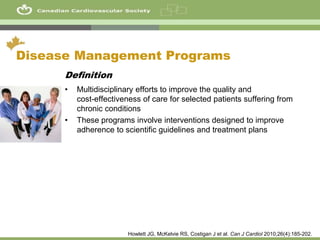
Disease Management Programs
Definition
• Multidisciplinary efforts to improve the quality and
cost-effectiveness of care for selected patients suffering from
chronic conditions
• These programs involve interventions designed to improve
adherence to scientific guidelines and treatment plans
Howlett JG, McKelvie RS, Costigan J et al. Can J Cardiol 2010;26(4):185-202.
43
Disease Management Programs
Recommendations
• Specialized hospital-based clinics or DMPs staffed by physicians, nurses,
pharmacists, dietitians and other health care professionals with expertise in
HF management should be developed and used for assessment and
management of higher-risk (eg, two or more HF admissions in six months)
HF patients
(Class I, Level A)
• Multidisciplinary care should include close follow-up, and patient and
caregiver education in an outpatient HF clinic and/or through
telemanagement or telemonitoring, or home visits by specialized HF health
care professionals where resources are available
(Class I, Level A)
Howlett JG, McKelvie RS, Costigan J et al. Can J Cardiol 2010;26(4):185-202.
44
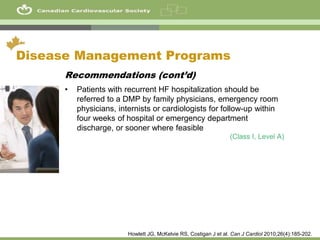
Disease Management Programs
Recommendations (cont’d)
• Patients with recurrent HF hospitalization should be
referred to a DMP by family physicians, emergency room
physicians, internists or cardiologists for follow-up within
four weeks of hospital or emergency department
discharge, or sooner where feasible
(Class I, Level A)
Howlett JG, McKelvie RS, Costigan J et al. Can J Cardiol 2010;26(4):185-202.
45
Practical Tips
• The optimal care model should reflect local circumstances, current
resources and available health care personnel. In some situations, it may
be beneficial to include HF care in an integrated model of care with other
chronic diseases such as diabetes mellitus, which is related to the
development of cardiovascular disease
• Integration of a DMP into a primary care setting, with adequate specialist
support may be the most feasible solution in certain health care settings
• Practical resources to aid in HF diagnosis and management should be
made available across the continuum of community health care delivery
• In Canada, suggestions on how to set up a multidisciplinary HF (function)
clinic are available at www.chfn.org. Routine follow-up and protocols are
available at www.qhfs.org
Disease Management Programs
Howlett JG, McKelvie RS, Costigan J et al. Can J Cardiol 2010;26(4):185-202.
46
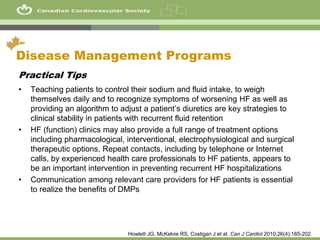
Practical Tips
• Teaching patients to control their sodium and fluid intake, to weigh
themselves daily and to recognize symptoms of worsening HF as well as
providing an algorithm to adjust a patient’s diuretics are key strategies to
clinical stability in patients with recurrent fluid retention
• HF (function) clinics may also provide a full range of treatment options
including pharmacological, interventional, electrophysiological and surgical
therapeutic options. Repeat contacts, including by telephone or Internet
calls, by experienced health care professionals to HF patients, appears to
be an important intervention in preventing recurrent HF hospitalizations
• Communication among relevant care providers for HF patients is essential
to realize the benefits of DMPs
Disease Management Programs
Howlett JG, McKelvie RS, Costigan J et al. Can J Cardiol 2010;26(4):185-202.
47
What is it?
• A process whereby a health care organization can ensure that the care it
delivers for a particular illness meets accepted quality standards. The
process should:
– Employ evidence-based clinical guidelines for the illness, from which quality of
care performance indicators (structures, processes or outcomes) can be
derived
– Include a health information database representative of the patients served by
the health care organization and pertinent to the illness. The database can be
audited and benchmarked against the performance indicators to assess the
quality of care
– Ensure there are mechanisms to evaluate and address care deficiencies
identified and improve care quality
– Undertake repeated database audits to assess the effectiveness of measures
taken to improve care delivery and to ensure ongoing delivery of quality care
Quality Assurance and HF
Howlett JG, McKelvie RS, Costigan J et al. Can J Cardiol 2010;26(4):185-202.
48
Defining quality of care
• “The degree to which health services for individuals and
populations increase the likelihood of desired health
outcomes and are consistent with current professional
knowledge.” – Institute of Medicine
• Other considerations:
– Accessibility of care
– Quality of the patient experience when receiving care
– How the processes of care delivery are structured in a
manner to constrain health care costs
Quality Assurance and HF
Howlett JG, McKelvie RS, Costigan J et al. Can J Cardiol 2010;26(4):185-202.
49
Why is quality assurance needed?
• The care provided to many patients with HF,
particularly those who are elderly, still fails to meet
the standards set out in the Canadian Cardiovascular
Society recommendations on HF
Quality Assurance and HF
Howlett JG, McKelvie RS, Costigan J et al. Can J Cardiol 2010;26(4):185-202.
50
What performance indicators might be appropriate?
• Therapeutics: use of ACE-I/ARBs, beta-blockers, statins, aldosterone,
anticoagulants, ICD, CRT in eligible patients; appropriate
contraindications; time to initiation of appropriate therapy...
• Investigations: time to/accuracy of diagnosis, baseline tests, biochemical
monitoring, LV function, drug toxicity, patient assessment at
discharge/transition of care, etc....
• Education and follow-up: patient education/discharge instructions,
outpatient follow-up, smoking cessation advice/support, etc....
Quality Assurance and HF
ACE-I: angiotensin converting enzyme inhibitor
ARB: angiotensin receptor blocker
CRT: cardiac resynchronization therapy
ICD: implantable cardioverter defibrillator
LV: left ventricular Howlett JG, McKelvie RS, Costigan J et al. Can J Cardiol 2010;26(4):185-202.
51
Who should participate?
• Quality assurance principles can be applied by any health care
professional providing HF care, from the individual practitioner to group
family or specialty practices and clinics, hospitals, and regional or
provincial health authorities
Can quality assurance initiatives truly alter outcomes?
• Evidence for a relationship between specific performance measures and
patient outcomes remains somewhat sparse and limited by factors such as
study methodologies, short follow-up and a focus on only two phases of
the HF cycle (stable outpatient and hospitalization)
• A potentially important improvement may be the achievement of greater
coordination of care
Quality Assurance and HF
Howlett JG, McKelvie RS, Costigan J et al. Can J Cardiol 2010;26(4):185-202.
52
Recommendations
• Health care systems should provide for quality assurance in both the
process and content of care provision
(Class I, Level C)
• Quality assurance programs should ensure the following to improve
adherence to HF guidelines and improve patient outcomes:
(Class I, Level B)
– Use evidence-based performance indicators to identify care gaps in the
management of HF in a particular population
– Provide intervention supports such as clinical tools or practice change to
facilitate best practices
– Provide feedback and education to help HF care professionals meet these
performance indicators
Quality Assurance and HF
Howlett JG, McKelvie RS, Costigan J et al. Can J Cardiol 2010;26(4):185-202.
53
Practical Tips
• Selection of performance indicators that have been associated with
improved patient outcomes in randomized clinical trials is preferred
• Quality improvement initiatives that combine practice audits with
multifaceted, proscriptive education strategies are preferred
• Recent reviews also suggest the greatest gain in terms of quality of care is
system change with an emphasis on the multidisciplinary team approach
• Strategies shown to result in improved care processes and/or outcomes
usually have included administrative support, change management
support, resource support and a physician champion
• Broader regional, provincial and national frameworks are required to
promote and facilitate quality assurance initiatives at all levels of HF care
Quality Assurance and HF
Howlett JG, McKelvie RS, Costigan J et al. Can J Cardiol 2010;26(4):185-202.
54
Performance Objectives/Indicators
Discharge/Transitional Care Phase
Assessment of cognition in hospitalized older patients before discharge
Assessment of frailty in hospitalized older patients in view of identifying those requiring
development of a multidisciplinary care plan
Provision of HF education initiation before discharge, and continuing after discharge,
focusing on:
- Home visits
- Medication reconciliation
- Self-management skills
- Health system navigation
Provision of written discharge summary to the primary care physician within 48 hours of
discharge, including:
- Plan of care and follow-up
- Inclusion of relevant care settings (HF clinic, other clinics, specialist, primary care)
Continued on next slide
Howlett JG, McKelvie RS, Costigan J et al. Can J Cardiol 2010;26(4):185-202.
55
Performance Objectives/Indicators
Outpatient Phase
Percentage of eligible patients receiving ICDs, CRT, beta-blockers, ACE-I/ARB, spironolactone
Percentage of newly diagnosed HF patients who see an HF specialist within 6 weeks
Percentage of HF patients referred to cardiac rehabilitation
Referral of higher risk HF patients to disease management programs, including those with multiple
comorbidities or multiple recent hospitalizations
Percentage of HF patients admitted to an outpatient clinic within recommended benchmarks:
• <24 h if NYHA IV or progressive HF
• <4 weeks if NYHA III
• <6 weeks if NYHA II
Medication review to identify potential drug interactions
Ensure appropriate immunizations (influenza, pneumococcal)
Ensure appropriate communication between referring physician and HF clinic/specialist including:
• Results of pertinent investigations
• Pertinent medical history and consultant notes
• Recommendations regarding clinical and laboratory monitoring
• Recommendations regarding medication dose titration
Continued on next slide
Howlett JG, McKelvie RS, Costigan J et al. Can J Cardiol 2010;26(4):185-202.
56
Performance Objectives/Indicators
Acute HF
Time to diagnosis of HF in acute decompensated setting
Accuracy of provisional HF diagnosis compared with final discharge diagnosis
Time to initiation of appropriate therapy specific to HF:
• Diuretics
• Nitrates as appropriate
Time of transfer to tertiary care centre for eligible patients with persistent
cardiogenic shock
Continued on next slide
Howlett JG, McKelvie RS, Costigan J et al. Can J Cardiol 2010;26(4):185-202.
57
Performance Objectives/Indicators
End-of-life Planning and Care
Percentage of HF patients who have a documented
• advanced care directive
• proxy decision maker
• discussion on resuscitation preferences
Number of reviews and revisions to a patient’s advanced care directive
Measures of quality of end-of-life planning and care:
• Patient- and family-centred decision making
• Communication about disease course and care plan
• Continuity of care
• Emotional and practical support
• Symptom management and comfort care
• Spiritual support
• Caregiver well-being
Percentage of HF patients who die in their place of preference
Howlett JG, McKelvie RS, Costigan J et al. Can J Cardiol 2010;26(4):185-202.
58
Conclusion
• The 2010 update is the fifth consecutive guidelines
document focusing on HF, a complex, progressive
disorder with a high health care burden
• This year’s update includes clinical information of
increasing importance for the western world – HF in ethnic
minorities – and in an uncommon but important setting –
the pregnant patient
• Increasing attention and resources have been devoted to
assessment of how care is delivered and how that care is
measured in terms of effectiveness. As such, this update
includes clinical perspectives on DMPs and quality
assurance
• Additional information, resources and tools are published
on the CCS heart failure guideline web site (www.hfcc.ca)
Howlett JG, McKelvie RS, Costigan J et al. Can J Cardiol 2010;26(4):185-202.
59
Acknowledgments
• This consensus conference was supported by the CCS. The
authors are indebted to Marie-Josée Martin and Jody McCombe
for logistic and administrative support
• The Primary and Secondary Panelists thank
Dr David Lewis PhD, Assistant Clinical Professor (part-time),
Division of Geriatric Medicine, McMaster University, Hamilton, for
insight and suggestion of additional reference material
Howlett JG, McKelvie RS, Costigan J et al. Can J Cardiol 2010;26(4):185-202.
60
Acknowledgments
The following Primary Panel members also represented their
respective societies:
– Kori Leblanc, Canadian Pharmacists Association
– Estrellita Estrella-Holder, Canadian Council of Cardiovascular
Nurses
– George Heckman, Canadian Geriatrics Society
– Anthony M Herd, College of Family Physicians of Canada
– Elizabeth Mann, Canadian Society of Internal Medicine
– Jeannine Costigan, Canadian Association of Advanced
Practice Nurses
Howlett JG, McKelvie RS, Costigan J et al. Can J Cardiol 2010;26(4):185-202.
61
Conflicts of Interest
The panelists had complete editorial independence in the
development and writing of this manuscript. They also completed
conflict of interest disclosure statements, which are available at
www.hfcc.ca or www.ccs.ca. A full description of the planning of the
HF Consensus Conference and the ongoing process (including the
needs assessment, the methods of searching for and selecting the
evidence for review) are also available on these Web sites.
Howlett JG, McKelvie RS, Costigan J et al. Can J Cardiol 2010;26(4):185-202.

HF_Gui_2010_SD_EN.ppt

  • 1.
    Leadership. Knowledge. Community. Diagnosisand Management of Heart Failure: Update 2010 HF in ethnic minority populations, HF and pregnancy, disease management and quality improvement/assurance programs Howlett JG, McKelvie RS, Costigan J et al. Can J Cardiol 2010;26(4):185-202. Slide sets for 2006 through 2010 available at www.hfcc.ca
  • 2.
    2 Consensus Conference Panelists2010 Primary panelists: Jonathan G Howlett, Robert S McKelvie, Jeannine Costigan, Anique Ducharme, Estrellita Estrella-Holder, Justin A Ezekowitz, Nadia Giannetti, Haissam Haddad, George A Heckman, Anthony M Herd, Debra Isaac, Simon Kouz, Kori Leblanc, Peter Liu, Elizabeth Mann, Gordon W Moe, Eileen O’Meara, Miroslav Rajda, Samuel Siu, Paul Stolee, Elizabeth Swiggum, Shelley Zeiroth Secondary panelists: Malcolm Arnold, Michel White, Heather Ross, Paul Dorian, Michel D’Astous, James Cherry, Candice Silversides, Tom Ashton, Marie-Hélène Leblanc, Gary E Newton, Stuart Smith, Bruce A Sussex, Vivek Rao Howlett JG, McKelvie RS, Costigan J et al. Can J Cardiol 2010;26(4):185-202.
  • 3.
    3 Process and Purposeof 2010 HF Recommendations Update • Topics were identified due to their importance to clinicians, based on needs assessments of cardiovascular care providers • Topics chosen for the 2010 update: – Heart failure in ethnic minority populations – Heart failure and pregnancy – Disease management – Quality improvement/assurance programs Howlett JG, McKelvie RS, Costigan J et al. Can J Cardiol 2010;26(4):185-202.
  • 4.
    4 Class of Recommendationand Grade of Evidence Evidence or general agreement that a given procedure or treatment is beneficial, useful and effective Conflicting evidence or a divergence of opinion about the usefulness or efficacy of a procedure or treatment Weight of evidence is in favour of usefulness or efficacy Usefulness or efficacy is less well established by evidence or opinion Evidence or general agreement that the procedure or treatment is not useful or effective and in some cases may be harmful Howlett JG, McKelvie RS, Costigan J et al. Can J Cardiol 2010;26(4):185-202.
  • 5.
    5 Class of Recommendationand Grade of Evidence Data derived from multiple randomized clinical trials or meta-analyses Data derived from a single randomized clinical trial or nonrandomized studies Consensus of opinion of experts and/or small studies Howlett JG, McKelvie RS, Costigan J et al. Can J Cardiol 2010;26(4):185-202.
  • 6.
    6 Objectives of 2010Update • To provide Canadian practitioners with recommendations and advice in four emerging areas: – HF in ethnic minority populations – HF and pregnancy – Disease management programs – Quality improvement and assurance in HF care Howlett JG, McKelvie RS, Costigan J et al. Can J Cardiol 2010;26(4):185-202.
  • 7.
    7 HF in EthnicMinority Populations
  • 8.
    8 Recommendations • Health careproviders should consider the prevalent etiological factors for HF, language, ethnoculture and social values, and diagnostic patterns as well as the potential barriers to health care specific to patients with HF from an ethnic minority group (Class I, Level C) HF in Ethnic Minority Populations Howlett JG, McKelvie RS, Costigan J et al. Can J Cardiol 2010;26(4):185-202.
  • 9.
    9 HF in EthnicMinority Populations Recommendations (cont’d) In the management of black subjects with HF, the following are recommended: • ACE-I as standard therapy in patients with HF and LVEF < 40% (Class I, Level A) • Beta-blockers as standard therapy in patients with HF and an LVEF < 40% (Class I, Level B) • A combination of hydralazine and isosorbide dinitrate as part of standard therapy in addition to beta-blockers and ACE-I in patients with moderate to severe HF and LVEF < 35% (Class I, Level B) ACE-I: angiotensin converting enzyme inhibitor LVEF: left ventricular ejection fraction Howlett JG, McKelvie RS, Costigan J et al. Can J Cardiol 2010;26(4):185-202.
  • 10.
    10 Practical Tips Family andsocial values within the ethnocultural background underlie a patient’s attitudes and beliefs toward health and disease. When managing patients from ethnic minority groups with HF, health care professionals, where possible, should do the following: • Ensure proper language translation is available and include family members in the overall management plan • Provide medical information or educational aids in a language understood by patients or their caregivers • Respect local traditions and be careful not to impose professionals’ own values • Work as multidisciplinary teams • Include community health representatives, where appropriate HF in Ethnic Minority Populations Howlett JG, McKelvie RS, Costigan J et al. Can J Cardiol 2010;26(4):185-202.
  • 11.
    11 Practical Tips (cont’d) •Health care workers and patients should be aware of the risk factors for the development of HF, such as hypertension and obesity, which are more prevalent in certain ethnic groups, and should work to prevent and treat these conditions • During assessment, etiologies that are prevalent in a patient’s home region must be considered in addition to common causes of HF in Canada (eg, Chagas or rheumatic heart disease in South America; rheumatic heart disease in Africa) • Diastolic HF or HF with preserved systolic function is common particularly in Chinese and black patients HF in Ethnic Minority Populations Howlett JG, McKelvie RS, Costigan J et al. Can J Cardiol 2010;26(4):185-202.
  • 12.
    12 Practical Tips (cont’d) •Treatment of a patient with HF from an ethnic minority group should follow the same treatment recommendations from current practice guidelines • However, consideration should be given to lower starting dosages for pharmacotherapy in certain ethnic groups (ie, Chinese and Japanese patients frequently are administered a lower starting dose of ACE-I or beta-blockers) • Target dosage remains identical to guideline recommendations HF in Ethnic Minority Populations ACE-I: angiotensin converting enzyme inhibitor Howlett JG, McKelvie RS, Costigan J et al. Can J Cardiol 2010;26(4):185-202.
  • 13.
    13 General Considerations: SouthAsian Population • Increased susceptibility to premature morbidity and mortality from coronary artery disease • Higher risk factor burden for the development of CAD and HF, although outcomes may not be different from those in a Caucasian population • Health care professionals and the South Asian community should be made aware of this unique risk factor profile so that appropriate ethnocultural- specific screening procedures and support programs can be implemented HF in Ethnic Minority Populations CAD: coronary artery disease Howlett JG, McKelvie RS, Costigan J et al. Can J Cardiol 2010;26(4):185-202.
  • 14.
    14 General Considerations: ChinesePopulation • Available data suggest hypertension is the most important identifiable risk factor for HF • Metabolic syndrome, obesity, CAD are emerging risk factors • HF with normal LVEF is common • Health care professionals should be aware of the use of traditional Chinese medicines, which may expose the patient to potentially undesirable drug- drug or drug-herb interactions – eg. the effect of warfarin is altered by use of dong quai; the effects of diuretics and vasodilators are attenuated by use of fuling and ma huang HF in Ethnic Minority Populations CAD: coronary artery disease LVEF: left ventricular ejection fraction Howlett JG, McKelvie RS, Costigan J et al. Can J Cardiol 2010;26(4):185-202.
  • 15.
    15 General Considerations: BlackPopulation • Data in African-Americans suggest black individuals experience higher rates of HF and symptoms at younger age • Young black subjects with risk factors should be targeted for more aggressive intervention for HF prevention • Study data support the use of isosorbide dinitrate/hydralazine in addition to the standard medical regimen in patients with moderately severe HF with low ejection fraction HF in Ethnic Minority Populations Howlett JG, McKelvie RS, Costigan J et al. Can J Cardiol 2010;26(4):185-202.
  • 16.
    16 General Considerations: AboriginalPopulation • Higher frequency of cardiovascular disease and atherosclerosis than in Canadians of European ancestry • CVD and HF prevalence expected to increase with increasing incidence of diabetes • Treatment plans may need to be adapted to ethnocultural factors, remote locations, inadequate resources • Multidisciplinary teams including community health representatives and chronic disease management programs may be useful HF in Ethnic Minority Populations CVD: cardiovascular disease Howlett JG, McKelvie RS, Costigan J et al. Can J Cardiol 2010;26(4):185-202.
  • 17.
    17 Population (% of minorities inCanada) Important risk factors for HF prevention Language and ethnocultural considerations Treatment South Asian (25%) Diabetes Obesity Metabolic syndrome Mostly speak English Family involvement in health care behaviour is common Evidence-based therapy from HF guidelines Chinese (24%) Hypertension (coronary artery disease, diabetes and obesity are rapidly emerging) Mostly speak Cantonese and Mandarin Family involvement in health care behaviour is common Follow HF guidelines Be aware of the use of traditional Chinese medicines Black (15.8%) Hypertension Almost all speak English (except in Quebec, where French is prominent in Quebec) Follow HF guidelines Consider adding nitrate/hydralazine in severe HF Aboriginal (24%) Diabetes Obesity Cree, Ojibwe are main spoken languages Frequently need to involve family, community representatives in health care initiatives Follow HF guidelines Howlett JG, McKelvie RS, Costigan J et al. Can J Cardiol 2010;26(4):185-202.
  • 18.
    18 Definition • Evidence ofinadequate cardiac output despite elevated or normal cardiac filling pressure secondary to cardiac dysfunction occurring during pregnancy, labour and delivery, or in the early postpartum period HF and Pregnancy Timing • Women with new-onset or pre-existing LV dysfunction may exhibit marked clinical deterioration during the course of pregnancy • Cardiac decompensation can occur at any time during pregnancy; however, there are specific periods when the risk is increased • Clinical deterioration can occur late in the second trimester, during the third trimester or in the peripartum period, which is high risk due to rapid hemodynamic changes that take place LV: left ventricular Howlett JG, McKelvie RS, Costigan J et al. Can J Cardiol 2010;26(4):185-202.
  • 19.
    19 • Congenital heartdisease • Valvular heart disease • Idiopathic dilated cardiomyopathy • Familial cardiomyopathies • Drug-induced (ie, adriamycin) cardiomyopathy • Peripartum cardiomyopathy (PPCM) • Ischemic cardiomyopathy • Hypertension-related cardiomyopathy Cardiac failure may be secondary to myocardial infarction or severe pre-eclampsia. Common Causes of HF in Women of Childbearing Age Howlett JG, McKelvie RS, Costigan J et al. Can J Cardiol 2010;26(4):185-202.
  • 20.
    20 • Pneumonia • Pulmonaryembolus • Amniotic fluid embolus • Renal failure with volume overload • Acute lung injury Noncardiac Conditions That May Mimic Decompensated HF Howlett JG, McKelvie RS, Costigan J et al. Can J Cardiol 2010;26(4):185-202.
  • 21.
    21 • Detailed historyto document functional status • Physical examination • ECG • Echocardiography • Complete blood count, electrolytes, renal function, thyroid-stimulating hormone • Measurement of b-type natriuretic peptide may be useful if diagnosis is not clear – Criteria for BNP measurement in pregnancy are not yet available; however, normal levels make HF unlikely Evaluation of Suspected HF in Pregnancy BNP: b-type natriuretic peptide ECG: electrocardiography Howlett JG, McKelvie RS, Costigan J et al. Can J Cardiol 2010;26(4):185-202.
  • 22.
    22 Recommendations • Health careprofessionals should be aware of the cardiovascular changes associated with normal pregnancy because those changes may unmask pre-existing heart conditions or precipitate decompensation in established or new-onset HF (Class I, Level C) Practical Tip • The diagnosis of HF may be a challenge because many women in their final month of pregnancy experience symptoms identical to early HF. Progressive dyspnea on exertion, paroxysmal nocturnal dyspnea, orthopnea and recumbent cough are likely to be indicative of HF HF and Pregnancy Howlett JG, McKelvie RS, Costigan J et al. Can J Cardiol 2010;26(4):185-202.
  • 23.
    23 Hemodynamic Changes ofPregnancy Parameter Trimester Peripartum 1 2 3 Blood volume Rises Rises Maximum of 45% to 50% early on; additional 33% increase in twin gestation Potential rapid autotransfusion from placenta due to sympathetic stimulation and uterine contraction Peripheral vascular resistance and blood pressure Gradual drop, diastolic more such that pulse pressure increases At lowest point in mid pregnancy Gradual reversion to normal Variable changes depending on stage and sympathetic stimulation Heart rate Increases Peaks at 20% increase late 20% increase Further increase Cardiac output Increases Increases Maximal 30% to 50% increase early Further increase up to 31% in labour; 49% in second stage. Return to 3rd-trimester values within 1 hour of delivery Howlett JG, McKelvie RS, Costigan J et al. Can J Cardiol 2010;26(4):185-202.
  • 24.
    24 CV Symptoms andSigns in Pregnancy Findings Noted in normal pregnancy Not seen in normal pregnancy Dizziness Palpitations Common Syncope on exertion Dyspnea Common (75%) if mild, not progressive Progressive or New York Heart Association class IV Orthopnea Common, especially late in term Decreased exercise capacity Mild, not progressive NYHA functional class IV symptoms Chest pain Common, may be musculoskeletal in origin, not progressive. Not typically anginal Typical angina pain, severe or tearing pain may be dissection, especially late in term/peripartum Pulse Increased volume, rate Decreased volume or upstroke Continued on next slide Howlett JG, McKelvie RS, Costigan J et al. Can J Cardiol 2010;26(4):185-202.
  • 25.
    25 CV Symptoms andSigns in Pregnancy Findings Noted in normal pregnancy Not seen in normal pregnancy Peripheral edema Mild, common Severe or progressive edema Apical beat Mildly displaced laterally, hyperdynamic Double or triple apex beat, thrill Heart rate Sinus tachycardia common Atrial fibrillation, persistent supraventricular tachycardia, symptomatic ventricular arrhythmia Neck veins May be mildly distended Progressively distended with dominant V wave Heart sounds Increased S1, S2, S3 common Systolic ejection murmur common; continuous murmur (venous hum, mammary souffle) uncommon Late peaking systolic murmur, diastolic murmur, other continuous murmurs Howlett JG, McKelvie RS, Costigan J et al. Can J Cardiol 2010;26(4):185-202.
  • 26.
    26 Practical Tips • Dyspneaof normal pregnancy is often described as an inability to get enough air in, to get a deep breath, or both. Mild dyspnea on exertion alone does not suggest HF • On physical examination, healthy pregnant women may hyperventilate but the rate of respiration should be normal. Pulmonary crackles are rarely observed in normal pregnancy and their presence suggests HF. Jugular venous pulsation may be mildly distended with an exaggerated X and Y descent in normal pregnancy • With echocardiography, cardiac chambers are normal or slightly enlarged, and atrioventricular valve regurgitation increases mildly during pregnancy. Diastolic dysfunction may be observed in patients with severe pre- eclampsia, although this is an uncommon cause of HF in pregnant women. Normal cardiac structures and preserved LVEF suggests a noncardiac cause for symptoms HF and Pregnancy LVEF: left ventricular ejection fraction Howlett JG, McKelvie RS, Costigan J et al. Can J Cardiol 2010;26(4):185-202.
  • 27.
    27 Recommendations • Cardiac testingof women with worsening or suspected new-onset HF during pregnancy should include echocardiography; radiation should be avoided where possible (Class I, Level C) • Women with a history of HF should have a complete evaluation and counselling by an individual with expertise and experience in HF and pregnancy before becoming pregnant or as early as possible once pregnancy is known. Risk of transmission of inheritable cardiac disease should be addressed where appropriate (Class I, Level C) • Women with mechanical heart valves, Eisenmenger’s syndrome, Marfan syndrome with aortopathy, and PPCM with reduced LVEF should be referred to a regional centre with expertise in management of HF in pregnancy for evaluation, ongoing care and discussion of the health consequences of continuing the pregnancy (Class I, Level C) HF and Pregnancy: Evaluation PPCM: peripartum cardiomyopathy LVEF: left ventricular ejection fraction Howlett JG, McKelvie RS, Costigan J et al. Can J Cardiol 2010;26(4):185-202.
  • 28.
    28 Recommendations (cont’d) • Womenwith HF during pregnancy should be closely followed during their pregnancy and monitored at the time of delivery and the early postpartum period (Class I, Level C) • A risk score used to identify predictors associated with the development of unfavourable cardiac events in women with heart disease may be used to allow for establishment of a plan of management for the antepartum, peripartum and postpartum periods (Class I, Level C) HF and Pregnancy: Evaluation Number of maternal conditions Estimated/expected risk (primarily hospitalization), % Observed event rate, % 0 5 3 1 27 30 > 1 75 66 Howlett JG, McKelvie RS, Costigan J et al. Can J Cardiol 2010;26(4):185-202.
  • 29.
    29 Recommendations • Where possible,cardiac medications of a certain class (such as beta-blockers) should be switched to a member of that class where safety in pregnancy has been accepted (Class IIa, Level C) • Anticoagulation during pregnancy should be undertaken according to the American College of Chest Physicians Evidence-Based Clinical Practice Guidelines (8th Edition) 2008 (Class I, Level C) • Several commonly used cardiac medications, such as ACE-I, ARBs, aldosterone antagonists and warfarin, are teratogenic. Their use should be avoided or, in the case of warfarin, restricted to certain portions of the pregnancy (Class I, Level C) HF and Pregnancy: Medications ACE-I: angiotensin converting enzyme ARB: angiotensin receptor blocker Howlett JG, McKelvie RS, Costigan J et al. Can J Cardiol 2010;26(4):185-202.
  • 30.
    30 Consult www.motherisk.org fora more comprehensive list. Medications That May Be Useful Medication Use in pregnancy Beta-blockers Should be continued or initiated during pregnancy Use requires close fetal monitoring for growth retardation Beta-1 selective antagonists preferred to avoid potential increased uterine tone and decreased uterine perfusion Digoxin May be used if volume overload symptoms persist despite vasodilator and diuretic therapy Diuretics May be used, but with caution regarding excessive volume contraction leading to reduced placental perfusion Hydralazine May be used for management of HF symptoms or elevated blood pressure Nitrates May be used to treat decompensated HF in pregnancy Howlett JG, McKelvie RS, Costigan J et al. Can J Cardiol 2010;26(4):185-202.
  • 31.
    31 Recommendations (cont’d) • Pregnantwomen (or in the peripartum period) with acute decompensated HF should be managed according to Canadian Cardiovascular Society guidelines and should be referred to a tertiary centre with expertise in advanced HF management, including mechanical circulatory support and cardiac transplantation (Class I, Level C) HF and Pregnancy Howlett JG, McKelvie RS, Costigan J et al. Can J Cardiol 2010;26(4):185-202.
  • 32.
    32 What is it? •Peripartum cardiomyopathy: dilated cardiomyopathy (LVEF < 45%) with the development of HF in the last month of pregnancy or within five months after delivery, in the absence of a demonstrable cause for HF and in the absence of documented heart disease before the last month of pregnancy • Risk factors: – Multiparity – Multiple fetus gestations – Maternal age > 30 yrs – History of gestational hypertension – African descent – Maternal cocaine use – Long-term oral tocolytic therapy Peripartum cardiomyopathy LVEF: left ventricular ejection fraction Howlett JG, McKelvie RS, Costigan J et al. Can J Cardiol 2010;26(4):185-202.
  • 33.
    33 • Diagnosis madeby documenting reduced LVEF and by ruling out other potential causes of cardiac dysfunction • Treatment and goals of therapy similar to those of chronic systolic HF in pregnant women • With appropriate medical therapy, approximately 50% of women with PPCM will recover cardiac function, usually within six months • Recovery less likely in women with increased LV dimension (> 5.6 cm) and those with LV thrombus • Risk of worsening cardiac function with subsequent pregnancies depends on the extent of LV recovery; patients are at increased risk of complications including recurrent HF and reduced LVEF Peripartum cardiomyopathy LVEF: left ventricular ejection fraction PPCM: peripartum cardiomyopathy Howlett JG, McKelvie RS, Costigan J et al. Can J Cardiol 2010;26(4):185-202.
  • 34.
    34 Recommendations • Patients withPPCM who do not recover normal LV function should be advised against future pregnancies due to the high risk of worsening HF and death (Class I, Level B) • Patients with PPCM who recover normal LV function should be advised regarding the potential for recurrent LV dysfunction in subsequent pregnancies (Class I, Level B) Peripartum cardiomyopathy LV: left ventricular PPCM: peripartum cardiomyopathy Howlett JG, McKelvie RS, Costigan J et al. Can J Cardiol 2010;26(4):185-202.
  • 35.
    35 Practical Tips • Thepossibility of HF and/or PPCM should be considered in patients with new-onset dyspnea or hemodynamic decompensation late in pregnancy, during labour and delivery, or in the postpartum period • The risk of thromboembolism associated with PPCM is increased due to the hypercoagulable state of pregnancy, and is highest during the first four weeks postpartum Peripartum cardiomyopathy PPCM: peripartum cardiomyopathy Howlett JG, McKelvie RS, Costigan J et al. Can J Cardiol 2010;26(4):185-202.
  • 36.
    36 • Four conditionsare associated with a mortality risk of up to 50% during/after pregnancy: – Ongoing HF with LVEF < 35% – Pulmonary hypertension – Eisenmenger’s syndrome – Marfan syndrome • Patients with NYHA class I or II symptoms prepregnancy tolerate pregnancy well (mortality < 1%) • Mortality in patients with NYHA class III or IV is 5% to 15% • Anticoagulation, NYHA class > II or cyanosis before pregnancy, LV inflow or outflow tract obstruction, smoking, and multiple gestations are associated with unfavourable neonatal events Pregnancy and Chronic Cardiovascular Disease LVEF: left ventricular ejection fraction NYHA: New York Heart Association Howlett JG, McKelvie RS, Costigan J et al. Can J Cardiol 2010;26(4):185-202.
  • 37.
    37 • In general,pregnant patients should be managed according to CCS management algorithm Acute Decompensated HF in Pregnancy Clinical Setting Recommendations Worsening HF or pulmonary edema that is difficult to manage, preserved BP Intravenous vasodilators such as nitrates can be used with close monitoring Use nesiritide only if believed essential Nitroprusside not recommended except when significant afterload reduction needed Decompensation with hypotension, unresolved pulmonary edema and/or organ hypotension Inotropic support with dopamine, dobutamine or milrinone Severe hypotension requiring vasopressor support Dopamine may be less deleterious to uterine blood flow than phenylephrine or noradrenaline Cardiogenic shock Intra-aortic balloon pump may be considered; however, recommended management is transfer to a centre with capability to provide mechanical circulatory support and/or cardiac transplantation Howlett JG, McKelvie RS, Costigan J et al. Can J Cardiol 2010;26(4):185-202.
  • 38.
    38 Recommendation • The decisionregarding timing and mode of delivery is typically based on obstetrical factors. Caesarean deliveries are not routinely necessary. Delivery before term for cardiac decompensation is rarely required (Class IIa, Level C) Labour and Delivery Howlett JG, McKelvie RS, Costigan J et al. Can J Cardiol 2010;26(4):185-202.
  • 39.
    39 Practical Tips • Tooptimize outcome in high-risk populations, tertiary regional centres should have a multidisciplinary team with expertise in management of HF in pregnancy, which should include obstetrical, anesthesia, and neonatology specialists, as well as cardiology expertise in HF • Pain control during delivery is very important in patients with limited cardiac reserve. Pain results in tachycardia and may precipitate cardiac decompensation • Patients should be monitored carefully throughout labour, but also in the early postpartum period. In women at highest risk, close monitoring in an intensive care unit or cardiac care unit for the first 24 h to 48 h may be useful Labour and Delivery Howlett JG, McKelvie RS, Costigan J et al. Can J Cardiol 2010;26(4):185-202.
  • 40.
    40 Anesthesia • Specialized managementrequired during labour and delivery for pregnant women with chronic or new-onset HF • Early administration of labour anesthesia important because pain results in tachycardia and may precipitate cardiac decompensation • Goals of anesthesia: – Avoidance of excessive anesthetic-induced myocardial depression – Maintenance of normovolemia – Attenuation of increases in systemic vascular resistance – Minimized wall stress and sympathetic stimulation associated with pain Labour and Delivery Howlett JG, McKelvie RS, Costigan J et al. Can J Cardiol 2010;26(4):185-202.
  • 41.
    41 • Early deliverynot required unless medical management unsuccessful and the patient is hemodynamically deteriorating • Induction of labour not contraindicated • Vaginal delivery preferable to caesarean • Monitoring should include noninvasive BP, continuous maternal ECG, tocodynamometry with fetal heart rate monitoring and should continue throughout labour and the early postpartum period • In hemodynamically compromised or unstable patients: more invasive monitoring indicated Labour and Delivery BP: blood pressure ECG: electrocardiography Howlett JG, McKelvie RS, Costigan J et al. Can J Cardiol 2010;26(4):185-202.
  • 42.
    42 Disease Management Programs Definition •Multidisciplinary efforts to improve the quality and cost-effectiveness of care for selected patients suffering from chronic conditions • These programs involve interventions designed to improve adherence to scientific guidelines and treatment plans Howlett JG, McKelvie RS, Costigan J et al. Can J Cardiol 2010;26(4):185-202.
  • 43.
    43 Disease Management Programs Recommendations •Specialized hospital-based clinics or DMPs staffed by physicians, nurses, pharmacists, dietitians and other health care professionals with expertise in HF management should be developed and used for assessment and management of higher-risk (eg, two or more HF admissions in six months) HF patients (Class I, Level A) • Multidisciplinary care should include close follow-up, and patient and caregiver education in an outpatient HF clinic and/or through telemanagement or telemonitoring, or home visits by specialized HF health care professionals where resources are available (Class I, Level A) Howlett JG, McKelvie RS, Costigan J et al. Can J Cardiol 2010;26(4):185-202.
  • 44.
    44 Disease Management Programs Recommendations(cont’d) • Patients with recurrent HF hospitalization should be referred to a DMP by family physicians, emergency room physicians, internists or cardiologists for follow-up within four weeks of hospital or emergency department discharge, or sooner where feasible (Class I, Level A) Howlett JG, McKelvie RS, Costigan J et al. Can J Cardiol 2010;26(4):185-202.
  • 45.
    45 Practical Tips • Theoptimal care model should reflect local circumstances, current resources and available health care personnel. In some situations, it may be beneficial to include HF care in an integrated model of care with other chronic diseases such as diabetes mellitus, which is related to the development of cardiovascular disease • Integration of a DMP into a primary care setting, with adequate specialist support may be the most feasible solution in certain health care settings • Practical resources to aid in HF diagnosis and management should be made available across the continuum of community health care delivery • In Canada, suggestions on how to set up a multidisciplinary HF (function) clinic are available at www.chfn.org. Routine follow-up and protocols are available at www.qhfs.org Disease Management Programs Howlett JG, McKelvie RS, Costigan J et al. Can J Cardiol 2010;26(4):185-202.
  • 46.
    46 Practical Tips • Teachingpatients to control their sodium and fluid intake, to weigh themselves daily and to recognize symptoms of worsening HF as well as providing an algorithm to adjust a patient’s diuretics are key strategies to clinical stability in patients with recurrent fluid retention • HF (function) clinics may also provide a full range of treatment options including pharmacological, interventional, electrophysiological and surgical therapeutic options. Repeat contacts, including by telephone or Internet calls, by experienced health care professionals to HF patients, appears to be an important intervention in preventing recurrent HF hospitalizations • Communication among relevant care providers for HF patients is essential to realize the benefits of DMPs Disease Management Programs Howlett JG, McKelvie RS, Costigan J et al. Can J Cardiol 2010;26(4):185-202.
  • 47.
    47 What is it? •A process whereby a health care organization can ensure that the care it delivers for a particular illness meets accepted quality standards. The process should: – Employ evidence-based clinical guidelines for the illness, from which quality of care performance indicators (structures, processes or outcomes) can be derived – Include a health information database representative of the patients served by the health care organization and pertinent to the illness. The database can be audited and benchmarked against the performance indicators to assess the quality of care – Ensure there are mechanisms to evaluate and address care deficiencies identified and improve care quality – Undertake repeated database audits to assess the effectiveness of measures taken to improve care delivery and to ensure ongoing delivery of quality care Quality Assurance and HF Howlett JG, McKelvie RS, Costigan J et al. Can J Cardiol 2010;26(4):185-202.
  • 48.
    48 Defining quality ofcare • “The degree to which health services for individuals and populations increase the likelihood of desired health outcomes and are consistent with current professional knowledge.” – Institute of Medicine • Other considerations: – Accessibility of care – Quality of the patient experience when receiving care – How the processes of care delivery are structured in a manner to constrain health care costs Quality Assurance and HF Howlett JG, McKelvie RS, Costigan J et al. Can J Cardiol 2010;26(4):185-202.
  • 49.
    49 Why is qualityassurance needed? • The care provided to many patients with HF, particularly those who are elderly, still fails to meet the standards set out in the Canadian Cardiovascular Society recommendations on HF Quality Assurance and HF Howlett JG, McKelvie RS, Costigan J et al. Can J Cardiol 2010;26(4):185-202.
  • 50.
    50 What performance indicatorsmight be appropriate? • Therapeutics: use of ACE-I/ARBs, beta-blockers, statins, aldosterone, anticoagulants, ICD, CRT in eligible patients; appropriate contraindications; time to initiation of appropriate therapy... • Investigations: time to/accuracy of diagnosis, baseline tests, biochemical monitoring, LV function, drug toxicity, patient assessment at discharge/transition of care, etc.... • Education and follow-up: patient education/discharge instructions, outpatient follow-up, smoking cessation advice/support, etc.... Quality Assurance and HF ACE-I: angiotensin converting enzyme inhibitor ARB: angiotensin receptor blocker CRT: cardiac resynchronization therapy ICD: implantable cardioverter defibrillator LV: left ventricular Howlett JG, McKelvie RS, Costigan J et al. Can J Cardiol 2010;26(4):185-202.
  • 51.
    51 Who should participate? •Quality assurance principles can be applied by any health care professional providing HF care, from the individual practitioner to group family or specialty practices and clinics, hospitals, and regional or provincial health authorities Can quality assurance initiatives truly alter outcomes? • Evidence for a relationship between specific performance measures and patient outcomes remains somewhat sparse and limited by factors such as study methodologies, short follow-up and a focus on only two phases of the HF cycle (stable outpatient and hospitalization) • A potentially important improvement may be the achievement of greater coordination of care Quality Assurance and HF Howlett JG, McKelvie RS, Costigan J et al. Can J Cardiol 2010;26(4):185-202.
  • 52.
    52 Recommendations • Health caresystems should provide for quality assurance in both the process and content of care provision (Class I, Level C) • Quality assurance programs should ensure the following to improve adherence to HF guidelines and improve patient outcomes: (Class I, Level B) – Use evidence-based performance indicators to identify care gaps in the management of HF in a particular population – Provide intervention supports such as clinical tools or practice change to facilitate best practices – Provide feedback and education to help HF care professionals meet these performance indicators Quality Assurance and HF Howlett JG, McKelvie RS, Costigan J et al. Can J Cardiol 2010;26(4):185-202.
  • 53.
    53 Practical Tips • Selectionof performance indicators that have been associated with improved patient outcomes in randomized clinical trials is preferred • Quality improvement initiatives that combine practice audits with multifaceted, proscriptive education strategies are preferred • Recent reviews also suggest the greatest gain in terms of quality of care is system change with an emphasis on the multidisciplinary team approach • Strategies shown to result in improved care processes and/or outcomes usually have included administrative support, change management support, resource support and a physician champion • Broader regional, provincial and national frameworks are required to promote and facilitate quality assurance initiatives at all levels of HF care Quality Assurance and HF Howlett JG, McKelvie RS, Costigan J et al. Can J Cardiol 2010;26(4):185-202.
  • 54.
    54 Performance Objectives/Indicators Discharge/Transitional CarePhase Assessment of cognition in hospitalized older patients before discharge Assessment of frailty in hospitalized older patients in view of identifying those requiring development of a multidisciplinary care plan Provision of HF education initiation before discharge, and continuing after discharge, focusing on: - Home visits - Medication reconciliation - Self-management skills - Health system navigation Provision of written discharge summary to the primary care physician within 48 hours of discharge, including: - Plan of care and follow-up - Inclusion of relevant care settings (HF clinic, other clinics, specialist, primary care) Continued on next slide Howlett JG, McKelvie RS, Costigan J et al. Can J Cardiol 2010;26(4):185-202.
  • 55.
    55 Performance Objectives/Indicators Outpatient Phase Percentageof eligible patients receiving ICDs, CRT, beta-blockers, ACE-I/ARB, spironolactone Percentage of newly diagnosed HF patients who see an HF specialist within 6 weeks Percentage of HF patients referred to cardiac rehabilitation Referral of higher risk HF patients to disease management programs, including those with multiple comorbidities or multiple recent hospitalizations Percentage of HF patients admitted to an outpatient clinic within recommended benchmarks: • <24 h if NYHA IV or progressive HF • <4 weeks if NYHA III • <6 weeks if NYHA II Medication review to identify potential drug interactions Ensure appropriate immunizations (influenza, pneumococcal) Ensure appropriate communication between referring physician and HF clinic/specialist including: • Results of pertinent investigations • Pertinent medical history and consultant notes • Recommendations regarding clinical and laboratory monitoring • Recommendations regarding medication dose titration Continued on next slide Howlett JG, McKelvie RS, Costigan J et al. Can J Cardiol 2010;26(4):185-202.
  • 56.
    56 Performance Objectives/Indicators Acute HF Timeto diagnosis of HF in acute decompensated setting Accuracy of provisional HF diagnosis compared with final discharge diagnosis Time to initiation of appropriate therapy specific to HF: • Diuretics • Nitrates as appropriate Time of transfer to tertiary care centre for eligible patients with persistent cardiogenic shock Continued on next slide Howlett JG, McKelvie RS, Costigan J et al. Can J Cardiol 2010;26(4):185-202.
  • 57.
    57 Performance Objectives/Indicators End-of-life Planningand Care Percentage of HF patients who have a documented • advanced care directive • proxy decision maker • discussion on resuscitation preferences Number of reviews and revisions to a patient’s advanced care directive Measures of quality of end-of-life planning and care: • Patient- and family-centred decision making • Communication about disease course and care plan • Continuity of care • Emotional and practical support • Symptom management and comfort care • Spiritual support • Caregiver well-being Percentage of HF patients who die in their place of preference Howlett JG, McKelvie RS, Costigan J et al. Can J Cardiol 2010;26(4):185-202.
  • 58.
    58 Conclusion • The 2010update is the fifth consecutive guidelines document focusing on HF, a complex, progressive disorder with a high health care burden • This year’s update includes clinical information of increasing importance for the western world – HF in ethnic minorities – and in an uncommon but important setting – the pregnant patient • Increasing attention and resources have been devoted to assessment of how care is delivered and how that care is measured in terms of effectiveness. As such, this update includes clinical perspectives on DMPs and quality assurance • Additional information, resources and tools are published on the CCS heart failure guideline web site (www.hfcc.ca) Howlett JG, McKelvie RS, Costigan J et al. Can J Cardiol 2010;26(4):185-202.
  • 59.
    59 Acknowledgments • This consensusconference was supported by the CCS. The authors are indebted to Marie-Josée Martin and Jody McCombe for logistic and administrative support • The Primary and Secondary Panelists thank Dr David Lewis PhD, Assistant Clinical Professor (part-time), Division of Geriatric Medicine, McMaster University, Hamilton, for insight and suggestion of additional reference material Howlett JG, McKelvie RS, Costigan J et al. Can J Cardiol 2010;26(4):185-202.
  • 60.
    60 Acknowledgments The following PrimaryPanel members also represented their respective societies: – Kori Leblanc, Canadian Pharmacists Association – Estrellita Estrella-Holder, Canadian Council of Cardiovascular Nurses – George Heckman, Canadian Geriatrics Society – Anthony M Herd, College of Family Physicians of Canada – Elizabeth Mann, Canadian Society of Internal Medicine – Jeannine Costigan, Canadian Association of Advanced Practice Nurses Howlett JG, McKelvie RS, Costigan J et al. Can J Cardiol 2010;26(4):185-202.
  • 61.
    61 Conflicts of Interest Thepanelists had complete editorial independence in the development and writing of this manuscript. They also completed conflict of interest disclosure statements, which are available at www.hfcc.ca or www.ccs.ca. A full description of the planning of the HF Consensus Conference and the ongoing process (including the needs assessment, the methods of searching for and selecting the evidence for review) are also available on these Web sites. Howlett JG, McKelvie RS, Costigan J et al. Can J Cardiol 2010;26(4):185-202.