International Civil Aviation Organization
Approved by the Secretary General
and published under his authority
Human Factors
Guidelines for
Safety Audits Manual
First Edition — 2002
Doc 9806
AN/763
AMENDMENTS
The issue of amendments is announced regularly in the ICAO Journal and in the
monthly Supplement to the Catalogue of ICAO Publications and Audio-visual
Training Aids, which holders of this publication should consult. The space below
is provided to keep a record of such amendments.
RECORD OF AMENDMENTS AND CORRIGENDA
AMENDMENTS CORRIGENDA
No.
Date
applicable
Date
entered
Entered
by No.
Date
of issue
Date
entered
Entered
by
(ii)
(iii)
FOREWORD
The safety of civil aviation is the major objective of the
International Civil Aviation Organization (ICAO). Con-
siderable progress has been made in increasing safety, but
additional improvements are needed and can be achieved. It
has long been known that the majority of aviation accidents
and incidents result from less than optimum human per-
formance, indicating that any advance in this field can be
expected to have a significant impact on the improvement
of aviation safety.
This was recognized by the ICAO Assembly, which in 1986
adopted Resolution A26-9 on Flight Safety and Human
Factors. As a follow-up to the Assembly Resolution, the
Air Navigation Commission formulated the following
objective for the task:
“To improve safety in aviation by making States more
aware and responsive to the importance of Human
Factors in civil aviation operations through the pro-
vision of practical Human Factors material and
measures, developed on the basis of experience in
States, and by developing and recommending appro-
priate amendments to existing material in Annexes and
other documents with regard to the role of Human
Factors in the present and future operational environ-
ments. Special emphasis will be directed to the Human
Factors issues that may influence the design, transition
and in-service use of the future ICAO CNS/ATM
systems.”
One of the methods chosen to implement Assembly
Resolution A26-9 is the publication of guidance materials,
including manuals and a series of digests, that address
various aspects of Human Factors and its impact on
aviation safety. These documents are intended primarily for
use by States to increase the awareness of their personnel of
the influence of human performance on safety.
The target audience of Human Factors manuals and digests
includes the managers of both civil aviation administrations
and the airline industry (including airline safety, training
and operational managers), regulatory bodies, safety and
investigation agencies and training establishments, as well
as senior and middle non-operational airline management.
This manual provides the ICAO Universal Safety Oversight
Audit Programme auditors and Contracting States with
standard procedures for the conduct of safety oversight
audits, with respect to those factors dealing with human
performance. The manual includes:
• an introduction to aviation Human Factors to assist
in better understanding some of the fundamental
concepts upon which the SARPs and industry-wide,
safety-related practices are based;
• practical guidance regarding means of compliance
with ICAO’s Human Factors-related SARPs and
industry-wide, safety-related practices;
• specific guidance material for the auditors in
particular specialities; and
• an examination of some of the Human Factors
affecting the performance of the auditor, including
cross-cultural issues.
This manual is intended as a living document and will be
kept up to date by periodic amendments as experience is
gained during safety oversight audits.
(v)
TABLE OF CONTENTS
Page Page
Chapter 1. Introduction . . . . . . . . . . . . . . . . . . . 1-1
1.1 Background to the ICAO Universal
Safety Oversight Audit Programme . . . . 1-1
1.2 Relationship to Human Factors . . . . . . . . 1-2
1.3 Purpose of the Human Factors Guidelines
for Safety Audits Manual. . . . . . . . . . . . . 1-3
1.4 Using the Human Factors Guidelines
for Safety Audits Manual. . . . . . . . . . . . . 1-4
References. . . . . . . . . . . . . . . . . . . . . . . . . . . . . . 1-4
Chapter 2. Basic Concepts in Human Factors. 1-2
2.1 Introduction . . . . . . . . . . . . . . . . . . . . . . . 2-1
2.2 The meaning of Human Factors . . . . . . . 2-1
2.3 A conceptual model of Human Factors . 2-3
2.4 Human error. . . . . . . . . . . . . . . . . . . . . . . 2-5
2.5 Summary . . . . . . . . . . . . . . . . . . . . . . . . . 2-7
References. . . . . . . . . . . . . . . . . . . . . . . . . . . . . . 2-8
Appendix 1 to Chapter 2. Factors affecting
human performance . . . . . . . . . . . . . . . . . . . . . . 2-9
Appendix 2 to Chapter 2. Crew resource
management (CRM) and line-oriented
flight training (LOFT) . . . . . . . . . . . . . . . . . . . . 2-16
Chapter 3. Organizational and management
factors. . . . . . . . . . . . . . . . . . . . . . . . . . . . . . . . . . . . 3-1
3.1 Introduction . . . . . . . . . . . . . . . . . . . . . . . 3-1
3.2 Basics of system safety . . . . . . . . . . . . . . 3-1
3.3 Safe and unsafe organizations . . . . . . . . . 3-6
3.4 Management’s contribution to safety . . . 3-10
3.5 Summary . . . . . . . . . . . . . . . . . . . . . . . . . 3-13
References. . . . . . . . . . . . . . . . . . . . . . . . . . . . . . 3-14
Appendix 1 to Chapter 3. Safety culture. . . . . . 3-15
Appendix 2 to Chapter 3. Standard operating
procedures (SOPs), checklists and crew
briefings . . . . . . . . . . . . . . . . . . . . . . . . . . . . . . . 3-19
Chapter 4. Cultural factors in aviation. . . . . . . 4-1
4.1 Introduction . . . . . . . . . . . . . . . . . . . . . . . 4-1
4.2 Cultural differences . . . . . . . . . . . . . . . . . 4-2
4.3 Culture at three levels . . . . . . . . . . . . . . . 4-5
4.4 More on corporate culture. . . . . . . . . . . . 4-7
4.5 Communicating across cultural barriers . 4-9
4.6 ICAO culture versus client culture . . . . . 4-11
4.7 Summary . . . . . . . . . . . . . . . . . . . . . . . . . 4-11
References. . . . . . . . . . . . . . . . . . . . . . . . . . . . . . 4-12
Chapter 5. Human Factors and the auditor. . . 5-1
5.1 Introduction . . . . . . . . . . . . . . . . . . . . . . . 5-1
5.2 Challenge: What you see is not always
what you get!. . . . . . . . . . . . . . . . . . . . . . 5-1
5.3 Challenge: Dealing with bias . . . . . . . . . 5-2
5.4 Challenge: Working with cultural
perceptions . . . . . . . . . . . . . . . . . . . . . . . . 5-3
5.5 Challenge: Language . . . . . . . . . . . . . . . . 5-4
5.6 Challenge: Emotions . . . . . . . . . . . . . . . . 5-5
5.7 Challenge: the multicultural audit team . 5-5
5.8 Challenge: The relationship with the State 5-5
5.9 Challenge: Effective findings and
recommendations . . . . . . . . . . . . . . . . . . . 5-6
5.10 Challenge: Personal stress. . . . . . . . . . . . 5-7
5.11 Summary . . . . . . . . . . . . . . . . . . . . . . . . . 5-8
References . . . . . . . . . . . . . . . . . . . . . . . . . . . . . 5-8
Appendix 1 to Chapter 5. Tips for crossing
the language barrier . . . . . . . . . . . . . . . . . . . . . . 5-9
Chapter 6. Human Factors in aircraft
maintenance. . . . . . . . . . . . . . . . . . . . . . . . . . . . . . . 6-1
6.1 Introduction . . . . . . . . . . . . . . . . . . . . . . . 6-1
6.2 Contemporary maintenance problems. . . 6-2
6.3 Representative examples of maintenance
occurrences. . . . . . . . . . . . . . . . . . . . . . . . 6-3
6.4 Common issues affecting human
performance in aircraft maintenance. . . . 6-4
6.5 Managing maintenance errors . . . . . . . . . 6-9
6.6 Maintenance safety culture . . . . . . . . . . . 6-10
6.7 Summary . . . . . . . . . . . . . . . . . . . . . . . . . 6-10
References . . . . . . . . . . . . . . . . . . . . . . . . . . . . . 6-11
Appendix 1 to Chapter 6. Maintenance error
decision aid (MEDA). . . . . . . . . . . . . . . . . . . . . 6-12
Chapter 7. Human Factors in air traffic
services . . . . . . . . . . . . . . . . . . . . . . . . . . . . . . . . . . . 7-1
7.1 Introduction . . . . . . . . . . . . . . . . . . . . . . . 7-1
7.2 ATC in aviation accidents . . . . . . . . . . . . 7-2
7.3 Errors and ATC . . . . . . . . . . . . . . . . . . . . 7-2
7.4 Common issues affecting human
performance in ATC . . . . . . . . . . . . . . . . 7-3
7.5 Selection and training of controllers. . . . 7-8
7.6 Future changes affecting ATC. . . . . . . . . 7-9
(vi) Human Factors Guidelines for Safety Audits Manual
Page Page
7.7 Summary . . . . . . . . . . . . . . . . . . . . . . . . . 7-10
References. . . . . . . . . . . . . . . . . . . . . . . . . . . . . . 7-10
Chapter 8. Accident and incident
investigation . . . . . . . . . . . . . . . . . . . . . . . . . . . . . . . 8-1
Chapter 9. Aerodromes . . . . . . . . . . . . . . . . . . . . 9-1
Chapter 10. Auditing Human Factors Standards
and Recommended Practices (SARPs). . . . . . . . . 10-1
10.1 Introduction . . . . . . . . . . . . . . . . . . . . . . . 10-1
10.2 Annex 1 — Personnel Licencing
and Training . . . . . . . . . . . . . . . . . . . . . . . 10-3
10.2.1 Introduction. . . . . . . . . . . . . . . . 10-3
10.2.2 Pilots’ licences — Basic human
performance knowledge . . . . . . 10-4
10.2.3 Airline transport pilot licence
(ATPL) — Human performance
skills . . . . . . . . . . . . . . . . . . . . . 10-7
10.2.4 Pilots — Instrument rating. . . . 10-8
10.2.5 Flight instructor rating . . . . . . . 10-9
10.2.6 Aircraft maintenance
technician licence —
Knowledge requirement . . . . . . 10-10
10.2.7 Air traffic controller licence —
knowledge requirement. . . . . . . 10-11
10.2.8 Flight operations officer/flight
dispatcher licence —
knowledge requirement. . . . . . . 10-13
10.2.9 Aeronautical stations operator
licence — knowledge
requirement . . . . . . . . . . . . . . . . 10-14
10.3 Annex 6 — Operation of Aircraft. . . . . . 10-15
10.3.1 Introduction . . . . . . . . . . . . . . . 10-15
10.3.2 Operator training programmes . 10-16
10.3.3 Operator flight crew training
programmes — Knowledge
and skills related to human
performance . . . . . . . . . . . . . . . 10-17
10.3.4 Flight crew training programmes
— Human performance skills . 10-18
10.3.5 Flight crew training programmes
pilots — crew resource
management (CRM) training . . 10-20
10.3.6 Flight crew training programmes
pilots — line oriented flight
training . . . . . . . . . . . . . . . . . . . 10-23
10.3.7 Flight crew training programmes
pilots — use of automation . . . 10-24
10.3.8 Training programmes cabin
crew — human performance
knowledge. . . . . . . . . . . . . . . . . 10-26
10.3.9 Flight operations officers/flight
dispatchers — knowledge and
skills in human performance . . 10-28
10.3.10 Documents . . . . . . . . . . . . . . . . 10-29
10.3.11 Aircraft operating manuals. . . . 10-31
10.3.12 Checklists . . . . . . . . . . . . . . . . . 10-32
10.3.13 Accident prevention and flight
safety programme . . . . . . . . . . . 10-33
10.4 Annexes 6 and 8 — Airworthiness of
Aircraft. . . . . . . . . . . . . . . . . . . . . . . . . . . 10-35
10.4.1 Introduction. . . . . . . . . . . . . . . . 10-35
10.4.2 Maintenance programme . . . . . 10-36
10.4.3 Maintenance manuals . . . . . . . . 10-37
10.4.4 Maintenance training
programmes . . . . . . . . . . . . . . . 10-39
10.5 Annex 11 — Air traffic services. . . . . . . 10-40
10.6 Annex 13 — Accident and incident
investigation . . . . . . . . . . . . . . . . . . . . . . . 10-40
10.7 Annex 14 — Aerodromes . . . . . . . . . . . . 10-40
1-1
Chapter 1
INTRODUCTION
1.1 BACKGROUND TO THE
ICAO UNIVERSAL SAFETY OVERSIGHT
AUDIT PROGRAMME
1.1.1 Air transport remains the safest mode of
transportation. However, after years of substantial declines,
trends in accidents rates have shown signs of levelling off.
Unless appropriate measures are taken to reduce accident
rates, the anticipated global growth in air traffic will result
in more accidents. The public derives little comfort from
“stable accident rates”. Every accident, regardless where it
occurs, now has an impact well beyond local and national
communities through real-time news coverage provided by
the electronic media.
1.1.2 Globalization, privatization of government
services, liberalization of economic regulation, increasing
environmental controls and the emergence of new tech-
nologies all have significant implications for safety and
security. Fundamentally, governments cannot divest them-
selves of the responsibility of ensuring the optimum level of
safety, security and efficiency of civil aviation at the inter-
national level. At the same time, addressing these issues
effectively will require an unprecedented level of cooper-
ation among States and a corresponding level of global
coordination. ICAO believes that a universal, international
programme of effective safety oversight is fundamental to
preserving the desired levels of safety in civil aviation.
1.1.3 In 1992 the ICAO Assembly adopted a
resolution (A29-13) that reaffirmed Contracting States’
responsibilities and obligations for safety oversight. States
were urged to review their national legislation implement-
ing those obligations and review their safety oversight pro-
cedures to ensure effectiveness. In June 1995, the ICAO
Council approved the establishment of a voluntary safety
oversight assessment programme. Subsequently, the 31st
Session of the Assembly endorsed both the programme and
a mechanism for financial and technical contributions to the
programme.
1.1.4 During the first two years of operation, the
programme detected numerous deficiencies in the establish-
ment of effective safety oversight systems in Contracting
States. Because of the number of fatal air transport acci-
dents worldwide, a more aggressive approach to auditing
safety oversight systems was considered necessary.
1.1.5 In 1997, a conference of Directors General of
Civil Aviation (DGCA) was convened to develop a new
strategy for enhancing safety oversight. At this conference,
ICAO’s vision for safety oversight was for a uniform,
internationally standardized programme aimed at ensuring
the adequacy of oversight of civil aviation in each State.
This vision was founded on the concept of a properly
implemented, harmonized, and where appropriate regional-
ized and action-oriented, safety oversight programme to be
supported by safety audit in States. The DGCA conference
developed 38 recommendations, the most significant being
that regular, mandatory, systematic and harmonized safety
oversight audits be introduced to include all Contracting
States, and to be carried out by ICAO. Subsequently, in
1998, the 32nd Session of Assembly approved the estab-
lishment of the ICAO Universal Safety Oversight Audit
Programme.
1.1.6 The ICAO Universal Safety Oversight Audit
Programme was to differ significantly both in philosophy
and objective from the voluntary safety oversight assess-
ment programme established and managed since March
1996. While the objective of the voluntary programme also
focussed on assisting Contracting States by identifying
problems experienced, it was strictly confidential. Except
for differences from ICAO Standards set forth in the
Annexes to the Chicago Convention, information gathered
during the assessment programme was shared only by the
assessed State and ICAO. Although bound by a Memor-
andum of Understanding to submit a corrective action plan
based on the recommendations made by the ICAO assess-
ment teams, close to 50 per cent of States assessed under the
voluntary programme did not do so. ICAO had no recourse
to encourage a State to implement recommendations. The
confidentiality agreement which served as a main incentive
for States to invite ICAO to assess their civil aviation system
precluded ICAO from sharing its concerns, if any, in
specific terms. The summary reports published did not
provide any information on the safety status of the State.
1-2 Human Factors Guidelines for Safety Audits Manual
1.1.7 The primary objectives of the new, mandatory
audit programme were clearly defined in 1999 as follows:
• to determine the degree of conformance of the State
in implementing ICAO Standards;
• to observe and assess the State’s adherence to ICAO
Recommended Practices, associated procedures,
guidance material and safety-related practices;
• to determine the effectiveness of the State’s
implementation of a safety oversight system
through the establishment of legislation, regulation,
safety authority and inspection, and auditing
capability; and
• to provide Contracting States with advice (rec-
ommendations) to improve their safety oversight
capability, as applicable.
1.1.8 From the outset, it was the Assembly’s intention
that these audits would adhere to the principles of univer-
sality, transparency, timeliness, consistency, objectivity,
fairness and quality.
1.1.9 In addition, an audit summary report containing
an abstract of the findings, recommendations and proposed
State corrective action plan, would be published and dis-
tributed by ICAO in order to enable other Contracting
States to form an opinion on the status of aviation safety in
the audited State.
1.2 RELATIONSHIP TO
HUMAN FACTORS
1.2.1 In spite of its enviable safety record, the
international civil aviation system frequently contains latent
unsafe conditions that can facilitate accidents. Safety
oversight systems are designed to ensure that adequate
defences exist to protect against these latent unsafe
conditions. These defences include such things as legis-
lation, regulations, authoritative safety inspections and
audits to identify systemic safety deficiencies. In many
ways, accidents can be viewed as the ultimate manifestation
of deficiencies in safety oversight systems.
1.2.2 The accident record consistently demonstrates
failures in human performance as being causal or contribu-
tory to these accidents. Indeed human errors are, in many
ways, indicative of failures in the safety system. Therefore,
an effective safety oversight system must be capable of
identifying and correcting all systemic safety deficiencies
— especially those that affect human performance. To
better understand natural human performance capabilities
and limitations, safety auditors must have a solid working
knowledge of Human Factors.
1.2.3 What do we mean by Human Factors? Human
Factors is about people in their working environments, and
it is about their relationship with equipment, their pro-
cedures and the physical environment. Equally important, it
is about their relationships with other people. Human
Factors involves the overall performance of human beings
within the aviation system. It seeks to optimize per-
formance through the systematic application of human
sciences, often integrated within the framework of systems
engineering. Its twin objectives are safety and efficiency.
1.2.4 Given the diversity of factors potentially
affecting human performance, not surprisingly, human error
has been recognized as a major factor in virtually all
aviation accidents and incidents since the beginning of
aviation. Understanding the context for human error then
remains one of aviation’s biggest challenges. If the reasons
why humans err can be understood, better strategies can be
developed for avoiding errors, controlling and recovering
safely from them. The study of Human Factors is funda-
mental to understanding the context in which normal,
healthy, qualified, well-equipped and motivated personnel
commit human errors — some of which are fatal.
1.2.5 Traditionally, human errors in aviation have
been tied to operational personnel, such as pilots,
controllers, mechanics and dispatchers. Contemporary
views on safety argue for a broadened perspective that
focuses on safety deficiencies in the entire aviation system,
which is fertile ground for so many life-threatening errors,
rather than limiting analysis to individual performance. The
safety system includes many facets beyond the cockpit such
as company supervision and training, equipment manufac-
ture and maintenance, infrastructure including airports and
air traffic services, regulatory effectiveness, and the
influence of professional associations and unions. Such
factors are all well described in the Human Factors
Training Manual (Doc 9683).
1.2.6 Since the late 1980s, ICAO has consistently
promoted the fact that Human Factors permeate virtually all
aspects of civil aviation. ICAO’s Flight Safety and Human
Factors Study Group was formed in 1989 with a view to
promoting understanding of the role of Human Factors in
flight safety. Standards and Recommended Practices
(SARPs) that define requirements for considering Human
Factors at both the individual and the system level are
included in the various Annexes to the Chicago Convention.
Any comprehensive safety audit must therefore deal with
Chapter 1. Introduction 1-3
the ever-present requirement for ensuring that the civil
aviation system fosters safe human behaviour at all levels
of the aviation system.
1.2.7 This manual provides a framework for under-
standing some of the principles1
governing human perform-
ance as they relate to flight safety. It addresses Human
Factors from several perspectives:
• Human Factors affecting individual (and team)
performance;
• the role of organizational and management factors
in creating a safe operating environment; and
• the role of cultural factors in shaping both
individual and organizational behaviour.
1.2.8 Many of the factors potentially capable of
compromising human performance that have been cited in
this manual have implications beyond the prevention of
aviation accidents for those performing aircraft mainten-
ance tasks, e.g. industrial safety implications. Notwith-
standing the importance of such occupational safety and
health issues to the long-term effectiveness of the aviation
system, the focus of this manual is only understanding how
these Human Factors affect aviation safety. Furthermore,
this manual is not concerned with those aspects of human
performance that are related more to the efficiency of the
aviation than to safety.
1.3 PURPOSE OF THE HUMAN FACTORS
GUIDELINES FOR SAFETY AUDITS MANUAL
1.3.1 The ICAO Safety Oversight Audit Manual
(Doc 9735) provides the ICAO safety oversight auditors
and Contracting States with standard auditing procedures
for the conduct of safety oversight audits. Doc 9735 is the
authoritative ICAO document for the planning, conducting
and reporting of safety oversight audits and follow-up
audits of Contracting States.
1.3.2 With respect to the audit of factors dealing with
human performance, this manual provides safety oversight
auditors with:
• an introduction to aviation Human Factors to assist
the auditor in better understanding some of the
fundamental concepts upon which the SARPs and
industry-wide safety-related practices are based. (In
this respect, this manual is a companion document
to Doc 9683);
• practical guidance regarding means of compliance
with Human Factors-related SARPs and industry-
wide safety-related practices;
• specific guidance material for the auditors in
selected specialized areas; and
• an introduction to some of the Human Factors that
affect the performance of the auditor, including
cross-cultural issues.
1.3.3 At present, the SARPs relating to Human
Factors are quite vague. However, there is considerable
guidance material available concerning the potentially
adverse effects of Human Factors on individual and team
performance. Increasingly, States’ safety oversight systems
are taking this material into account and are seeking
implementation of those widely accepted, industry
measures that are proving effective in mitigating the
adverse effects of these factors.
1.3.4 This manual is designed to improve the quality
of ICAO safety oversight audits by complementing
Doc 9735. Adherence to the procedures and guidelines in
both of these manuals will enable safety oversight auditors
to perform their duties in a uniform and standardized
manner.
1.3.5 Furthermore, the procedures in Doc 9735 apply
equally to the application of this manual. In this regard,
separate procedures for Human Factors are not considered
necessary. Rather, the auditing of Human Factors should be
seen as an integral part of the overall safety oversight audit
processes.
1.3.6 This manual applies to all audit and follow-up
audit missions and is to be applied in conjunction with the
ICAO Convention on International Civil Aviation and
applicable ICAO Annexes, manuals and circulars.
1.3.7 Considering the diversity of operations covered
by audits and the broad scope of human performance, no
attempt is made to cover all possible situations. Judgement
and initiative, based on a solid understanding of Human
Factors principles and a thorough knowledge of the
contents of this manual, must be applied.
1. For the purposes of this Manual, Human Factors principles are
those which apply to aeronautical design, certification,
training, operations and maintenance and which seek safe
interface between the human and other system components by
proper consideration of human performance.
1-4 Human Factors Guidelines for Safety Audits Manual
1.3.8 This manual will be updated on a continuous
basis as experience is gained during safety oversight audits.
Comments, particularly with respect to its application,
usefulness and scope, would be appreciated from safety
oversight audit team members and other designated
personnel. These will be taken into consideration in the
preparation of amendments and subsequent editions.
Suggestions can be forwarded to:
Chief, Safety Oversight Audit Section
International Civil Aviation Organization
999 University Street
Montreal, Quebec
Canada, H3C 5H7
1.4 USING THE HUMAN FACTORS
GUIDELINES FOR SAFETY AUDITS MANUAL
1.4.1 This manual comprises three parts:
• Part 1 outlines some of the fundamental principles
of Human Factors. Theoretical models and frame-
works accepted by ICAO for understanding Human
Factors are provided in a condensed format. These
principles are general in nature and have application
regardless of the reader’s operational background.
Chapters 2, 3, and 4, respectively, address Human
Factors from the perspective of the individual (and
the team or operating crew), organizational and
management factors, and cultural factors,
particularly as they affect the safety audit function.
Although many of the examples pertain specifically
to flight operations, the principles are equally
applicable to other areas of aviation. Chapter 5
addresses Human Factors with respect to how they
may affect safety oversight auditors in the
fulfilment of their audit duties, regardless of their
area of specialization. This latter guidance is not
intended to be prescriptive; rather, it is aimed at
helping auditors understand some of the dynamics
that could compromise their effectiveness as
auditors. In some chapters core information is
supplemented by further information in supporting
appendices. Lists of references are provided for
those who wish to pursue particular topics further.
• Part 2 contains supplementary guidance material to
assist specialist safety oversight auditors in the
fulfilment of their duties. This information relates
to the specific experience and examples of each
specialty. Further chapters will be added, as the
audit protocols are extended to other Annexes such
as aerodromes, air traffic services and accident
investigation.
• Part 3 contains specific guidance for safety
oversight auditors to assist them in verifying
implementation of SARPs directly related to human
performance and limitations. The Standard or Rec-
ommended Practice is summarized, supplemental
information is provided concerning related matters
to be aware of during the audit, and specific
instructions are provided for auditors for each
SARP.
1.4.2 This manual contains a significant amount of
information and is not intended to be read in a linear
fashion from beginning to end, but rather as a reference
manual.
1.4.3 The background information regarding Human
Factors and safety oversight should be of assistance to
States in establishing and maintaining effective safety over-
sight audit systems and may prove educational for those
whose primary duties do not include preparing for or
conducting safety audits.
REFERENCES
ICAO, Safety Oversight Audit Manual, Doc 9735, 2000.
ICAO, Human Factors Training Manual, Doc 9683, 1998.
2-1
Chapter 2
BASIC CONCEPTS IN HUMAN FACTORS
2.1 INTRODUCTION
2.1.1 In a high-technology industry such as aviation,
the focus of problem solving is all too often on technology.
When problems arise we turn to engineers for technical
solutions in spite of accident records that repeatedly
demonstrate that at least three out of four accidents result
from performance errors made by apparently healthy and
properly certificated individuals. In the rush to embrace
new technology, the fallible mortals who interface with and
use it are often overlooked.
2.1.2 The problems causing or contributing to these
accidents may be traced to poor equipment or procedure
design or to inadequate training or operating instructions.
Whatever the origin, understanding normal human perform-
ance capabilities, limitations and behaviour in the oper-
ational context is central to understanding flight safety. The
cost, both in human and financial terms, of less than
optimum human performance has become so great that a
makeshift or intuitive approach to Human Factors is no
longer appropriate.
2.1.3 Motivated to reduce accident rates, the world is
increasingly trying to better understand the role of Human
Factors issues in accident causation. Given the tragic
accident record resulting almost entirely from deficiencies
in the application of Human Factors knowledge, ICAO
introduced Human Factors training in the training and
licensing requirements of Annex 1 (1989), in the operation
of aircraft requirements of Annex 6 (1995), and in the
airworthiness requirements of Annex 8 (2001). In addition,
largely through its Flight Safety and Human Factors Study
Group, ICAO has been attempting to increase awareness of
Human Factors across the international aviation community
since 1990.
2.1.4 The purpose of this chapter is to provide safety
oversight auditors with a framework to better understand
some of the common Human Factors concepts that com
promise expected or desired human performance in the
international civil aviation system. This framework exam-
ines Human Factors issues from two broad perspectives: the
individual and the system in which the individual must
operate.
2.2 THE MEANING OF
HUMAN FACTORS
2.2.1 The human is the most flexible, adaptable and
valuable element of the aviation system, but it is also the
most vulnerable to influences that can adversely affect its
performance. With the majority of accidents resulting from
less than optimum human performance, there has been a
tendency to attribute them merely to “human error”.
However, the term human error is of little help in accident
prevention. While it may indicate WHERE a breakdown in
the system occurred, it provides no guidance as to WHY it
occurred. An error attributed to humans in the system may
have been design-induced or facilitated by inadequate
training, faulty procedures, or a poor concept or layout of
checklists or manuals. Furthermore, the term “human error”
conceals the underlying factors that need to be brought to
the fore if accidents are to be prevented. In contemporary
safety thinking, human error is the starting point rather than
the finishing point in accident investigation and prevention.
Safety audits must ultimately seek ways of minimizing or
preventing human errors of all kinds that might jeopardize
safety.
2.2.2 Understanding the predictable aspects of human
performance and limitations and applying this under-
standing in operational environments are the primary
concerns of Human Factors. Many of the early Human
Factors-related concerns in aviation were about the effects
on people of noise, vibration, heat, cold and acceleration
forces. Since the dawn of aviation, understanding of Human
Factors has progressively developed and been refined. This
understanding is now supported by a vast body of knowl-
edge that can be used to enhance safety in civil aviation
today.
2.2.3 Early efforts in Human Factors demonstrated
the dangers of ignoring the person as part of the socio-
2-2 Human Factors Guidelines for Safety Audits Manual
technical system. System-induced human errors, such as
misreading altimeters or mis-selecting cockpit controls,
have been reduced through better design of the interface
between the pilot and the cockpit. In North America, the
study of Human Factors initiatives tended to have a bias
founded in psychology; in Europe, the term used to
describe the study of Human Factors has been “ergonom-
ics”, which traditionally had a bias towards the biomech-
anical and biophysical aspects of work. Today, the terms
Human Factors and ergonomics can be used inter-
changeably. Both imply consideration of all the factors that
affect human performance in the workplace.
2.2.4 The overall accident record reflects a great
diversity of factors adversely affecting human performance
in flight operations. The following are examples of phrases
from the causal findings in reports of several high-profile
aviation accidents:
• “Duties were not properly allocated and the whole
crew became preoccupied with a landing gear
indicator bulb.”
• “The captain — as leader — did not properly
manage the resources that were available to him.”
• “A visual illusion related to the black-hole
phenomenon … ”
• “The force applied by the cargo handler to close the
door, the door design and the incomplete appli-
cation of a service bulletin … ”
• “Lack of clarity and inadequacies in air traffic
control procedures and regulations … the absence
of timely action of the regulatory body to resolve a
known problem in air traffic terminology …”
• “Breakdown in normal communication procedures
and misinterpretation of verbal messages …”
• “Information transfer and data entry errors …”
• “Co-pilot’s lack of assertiveness in communicating
his concern about erroneous engine thrust readings
…”
• “Variations in panel layout amongst the aircraft …”
• “Excessive reliance on automation …”
• “Pilots had not set the flaps, thus violating the
standard operating procedures …”
2.2.5 As can be gathered from these examples,
optimizing the role of people in a complex, high-
technology working environment involves all aspects of
human performance: decision making and other cognitive
processes; the design of displays and controls and flight
deck and cabin layout; communication and computer soft-
ware; maps and charts; and documentation such as aircraft
operating manuals, standard operating procedures and
checklists. Human Factors knowledge also has a major role
to play in personnel selection, training and checking as well
as in accident prevention and investigation.
2.2.6 Human Factors is multidisciplinary in nature. At
the level of the individual, information is drawn from
psychology to understand how people process information
and make decisions. From psychology and physiology
comes an understanding of sensory processes as the means
of detecting and transmitting information on the world
about us. Anthropometry and biomechanics are called upon
to understand the measures and movements of the body,
which is essential in optimizing the design and layout of
controls, and other workplace characteristics of the flight
deck and cabin. Biology and its increasingly important
subdiscipline, chronobiology, are needed to understand the
nature of body rhythms and sleep, and their effects during
shift work, night flying, and time zone changes. Human
Factors knowledge is constantly being developed using
scientific research methods. Nevertheless, Human Factors
in aviation safety is essentially concerned with solving
practical problems in the real world based on scientific
findings evolving from the research community.
2.2.7 One definition of Human Factors, as proposed
by Professor Elwyn Edwards, declares that “Human Factors
is concerned to optimize the relationship between people
and their activities, by the systematic application of human
sciences, integrated within the framework of systems
engineering”. Professor Edwards further elaborates that
“activities” indicates an interest in communication between
individuals and in the behaviour of individuals and groups.
Lately, this has been expanded upon to include the inter-
actions among individuals and groups and the organizations
to which they belong, and to the interactions among the
organizations that constitute the aviation system.
2.2.8 The human sciences study the structure and
nature of human beings, their capabilities and limitations,
and their behaviours both singly and in groups. This notion
of behaviour in groups is being extended to include the
many facets of culture.
2.2.9 Much of the early literature on Human Factors
in aviation was drawn from the cockpit experience; i.e. the
focus was on making the performance of the flight crew
Chapter 2. Basic Concepts in Human Factors 2-3
safer. Today, any comprehensive consideration of Human
Factors in aviation must include the performance of all
workers comprising the aviation system, including aircraft
maintenance technicians, air traffic controllers, flight
dispatchers, etc.
2.3 A CONCEPTUAL MODEL OF
HUMAN FACTORS
2.3.1 Given its multifaceted nature, it is helpful to use
a model to aid in the understanding of Human Factors. The
SHEL model1
uses blocks to represent the different
components of Human Factors. Its name is derived from the
initial letters of its four components: Liveware (human),
Hardware (machine), Software (procedures, symbology,
etc.), and Environment (the situation in which the rest of
the L-H-S system must function). It is a development of the
traditional “man-machine-environment” system. SHEL
places emphasis on the human being and the human’s
interfaces with the other components of the aviation
system. Figure 2-1 presents a graphic representation of the
SHEL model that illustrates the need for matching the
interfaces between the various components.
Liveware
2.3.2 In the centre of the SHEL model is a person, the
most critical and most flexible component in the system to
which other components of the system must be carefully
matched if stress and eventual breakdown in the system are
to be avoided. In order to achieve this matching, an
understanding of the characteristics of this central com-
ponent is essential. People are subject to considerable
variations in performance and suffer many limitations, most
of which are now predictable in general terms. Some of the
more important factors affecting the performance of
individuals are as follows:
a) Physical factors include physical capabilities as
they relate to performing the required tasks, such as
strength, height, reach, vision and hearing. Design
decisions must accommodate normal human
physical differences, both in terms of designing the
physical work place and the tasks to be performed.
This requires recognition as well of individual toler-
ances with respect to differences in heat, pressure,
light, noise, vibration, time of day, etc.
b) Physiological factors include factors affecting the
internal physical processes. These are often related
to the physical factors. For example, in the early
days of aviation, these factors were the principal
preoccupation of Human Factors analyses in an
effort to prepare humans for flight in the hostile,
high-altitude environment. There are several
1. The SHEL concept was first developed by Professor Elwyn
Edwards in 1972, with a modified diagram to illustrate the
model developed by Frank Hawkins in 1975.
Figure 2-1. SHEL model
H
L
L
E
S
S:
H:
E:
L:
Software
Hardware
Environment
Liveware
2-4 Human Factors Guidelines for Safety Audits Manual
physiological factors that may influence physical
performance, such as oxygen availability, general
health and fitness, nutrition, disease or illness,
tobacco, drug, or alcohol use, personal stress,
fatigue or pregnancy.
c) Psychological factors include factors affecting the
psychological preparedness for meeting all the
circumstances that might occur during a flight, for
example, adequacy of training, knowledge and
experience, visual or vestibular illusions and work-
load. The individual’s psychological fitness for duty
encompasses motivation, attitude towards risky
behaviour, confidence, stress, etc. each of which
can influence the effectiveness of judgement, com-
munications and decision-making skills as well as
the capacity to cope with an emergency. There are
differences in tolerances with respect to such
psychological factors as boredom, stress and
ambiguity.
d) Psycho-social factors include all those external
factors in the individual’s social system, both in
their work and their non-work environments, that
induce extra pressure such as argument with a
supervisor, labour management disputes, a death in
the family, or personal financial problems or other
domestic tension. These psycho-social factors can
influence one’s approach to the work situation, and
one’s ability to handle stress and unforeseen events.
2.3.3 These are the types of factors that create the
operational context in which normal, healthy, qualified,
experienced personnel perform at a less-than-expected
level. Appendix 1 to this chapter provides details of some
of the specific factors affecting human performance at the
individual level, including interpersonal factors and other
workplace factors.
2.3.4 The various blocks of the SHEL model are
depicted with irregular surfaces. In other words, people do
not interface perfectly with the various components of the
world in which they work. To avoid tensions that may
compromise human performance, the effects of irregu-
larities at the interfaces between the various SHEL blocks
and the central Liveware block must be understood.
Liveware-Hardware (L-H)
2.3.5 The interface between the human and the
machine is the one most commonly considered when
speaking of Human Factors. It determines how the human
interfaces with the physical work environment, for instance,
whether the design of seats fit the sitting characteristics of
the human body, whether displays match the sensory and
information processing characteristics of the user, or
whether controls have proper movement, coding and
location. Unfortunately, the natural human tendency to
adapt to L-H mismatches may mask serious deficiencies
that only become evident after an incident, such as those
experienced following the introduction of high-technology
flight decks.
Liveware-Software (L-S)
2.3.6 This interface represents the relationship
between the individual and all the supporting systems
found in the workplace such as the regulations, manuals,
checklists, publications, standard operating procedures and
computer software. It includes such “user friendliness”
issues as currency, accuracy, format and presentation,
vocabulary, clarity and symbology. Increasingly, cockpit
automation has altered the nature of crew duties. Workload
may have been increased to such an extent during some
phases of flight that crew members’ attitudes towards each
other may also be affected (i.e. the L-L interface).
Liveware-Liveware (L-L)
2.3.7 This interface is the relationship between the
individual and other persons in the workplace. Operational
personnel function as groups, and group influences play a
role in determining behaviour and performance. This inter-
face is concerned with leadership, crew cooperation, team-
work and personality interactions. The advent of Crew
Resource Management (CRM) resulted in considerable
focus on this interface, specifically on teamwork, and the
management of normal human errors. Flight crew training
and proficiency testing have traditionally been done on an
individual basis. If the individual team members were
proficient, it was assumed that the team consisting of these
individuals would also be proficient and effective. This is
not always the case. This interface goes well beyond the
crew relationship in the cockpit. Staff/management
relationships are also within the scope of this interface, as
are corporate culture, corporate climate and company
operating pressures, which can all significantly affect
human performance.
Liveware-Environment (L-E)
2.3.8 This interface involves the relationship between
the individual and both the internal and external environ-
ments. The internal workplace environment includes such
Chapter 2. Basic Concepts in Human Factors 2-5
environmental factors as temperature, ambient light, noise,
vibration and air quality. The external environment (for
pilots) includes such things as visibility, turbulence, terrain
and illusions. Increasingly, the work environment for flight
crews includes disturbances to normal biological rhythms
such as disrupted sleep patterns. Since the aviation system
operates within a context of broad political and economic
constraints, which in turn affect the overall corporate
environment, such factors as the adequacy of physical
facilities and supporting infrastructure, the local financial
situation and regulatory effectiveness are included here.
While the crew’s immediate work environment may be
creating pressures to take shortcuts, inadequate infrastruc-
ture support may also compromise the quality of crew
decision making.
2.4 HUMAN ERROR
2.4.1 Human error is cited as being a causal or a
contributing factor in the majority of aviation occurrences.
All too often, these errors are committed by normal,
healthy, qualified, experienced, and well-equipped person-
nel. Indeed, when we examine human error, it is clear that
we all commit errors. Errors are not the results of a type of
aberrant behaviour but are a natural by-product of virtually
all human endeavours. Understanding how “normal” people
commit errors is an important element of Human Factors in
aviation. In other words, to advance aviation safety, we
must develop an understanding of the operational contexts
that facilitate errors.
2.4.2 Errors may be the consequence of intentional or
unintentional behaviour and may be further subdivided into
slips, lapses and mistakes, depending on the degree of
intentionality preceding them.
• Slips are unintentional actions resulting from a lack
of appropriate attention caused by distractions,
misordered sequences or mistimed actions. (e.g. the
pilot knew the correct frequency but erroneously
entered another.)
• Lapses are unintentional actions caused by a
memory failure arising from forgetting one’s
intention, losing one’s place or omitting planned
items. (e.g. the pilot knew that an altitude call-out
was required, but simply forgot to make it.)
• Mistakes are intentional actions resulting from
errors in planning without any deliberate decision to
contravene established rules or procedures. (e.g. the
pilot-in-command decides to proceed to an alternate
that has an acceptable weather forecast but which
has inadequate ground support equipment available
for that aircraft type.) Mistakes are based on the
application of “rules” that we draw from our
experiences. They may result from the application
of a rule that is bad for a given situation or from the
misapplication of an otherwise good rule.
2.4.3 Slips and lapses are essentially conditioned or
automatic responses, with little, if any, conscious decision
making. On the other hand, mistakes involve deliberate
decision-making and evaluation, based on knowledge,
experience and mental models that have worked well in the
past.
2.4.4 Violations are related to mistakes. Although
slips, lapses and mistakes may all lead to technical breaches
of aviation regulations or company operating procedures,
they are considered to be errors because they are not based
on a deliberate decision to contravene the established rules.
Violations, however, are not errors. Like mistakes, viol-
ations involve intentional planning failures, often based on
knowledge and the mental models acquired through daily
experience, but also involve a deliberate decision to
contravene established rules or procedures. (e.g. the pilot
decides to descend below prescribed approach minima, or
the controller reduces aircraft separation below the
standard.)
2.4.5 The following is a refined discussion of human
errors which is more operationally oriented:2
• Procedural error. An unintentional error that
includes slips, lapses or mistakes in the execution of
aviation regulations and/or company procedures.
The intention is correct but the execution is flawed.
These also include errors where the flight crew (or
aircraft maintenance technician or air traffic
controller) forgot to do something. Both written
procedures and crew intention are required for
procedural errors.
• Communication error. An unintentional error that
is a miscommunication, misinterpretation, or failure
to communicate pertinent information within the
flight crew or between the flight crew and an
external agent (e.g. ATC or ground operations).
2. These definitions are based on the Line Operations Safety Audit
(LOSA) programme being conducted by Dr. Robert Helmreich
of the University of Texas.
2-6 Human Factors Guidelines for Safety Audits Manual
• Proficiency error. An unintentional error that
indicates a lack of knowledge or physical skill.
• Operational decision error. An unintentional,
decision-making error, which is not specifically
directed by aviation regulation or company oper-
ating procedures, that unnecessarily compromises
safety (e.g. a crew’s decision to fly through known
wind shear on an approach).
• Intentional non-compliance. A wilful deviation
from aviation regulations and/or company pro-
cedures. If the crew is under heavy workload or
commits the error only once, it would likely be a
procedural error. However, if the crew makes the
same error over and over again, or it is an error of
complacency, then it is intentional non-compliance
(i.e. a violation).
Error-producing conditions
2.4.6 In the SHEL model, the irregular surfaces on the
various blocks of the model depict the imperfect matches
between humans and other elements of the model. Thus, at
each interface in the SHEL model the potential exits for
initiating or exacerbating errors. For example:
• At the Liveware-Hardware interface, knobs and
levers that are poorly located or lack the proper
coding may create confusion, leading to slips.
• At the Liveware-Software interface, delays and
errors may occur while seeking vital information
from confusing, misleading or excessively cluttered
documentation and charts, leading to slips and
mistakes.
• At the Liveware-Environment interface, environ-
mental factors or disturbance of biological rhythms
may affect concentration, the ability to reason or
communicate, and perhaps attitude towards other
crew members and the flight itself — any of which
could facilitate slips, lapses or mistakes.
• A poor Liveware-Liveware interface may reduce
operational efficiency and cause misunderstandings
and leading to slips, lapses and mistakes (e.g.
inadequate information transfer which is frequently
cited as causal in accident reports).
2.4.7 Aviation by its nature transcends national
boundaries, including the cultures therein. It also tran-
scends the corporate cultures of various companies and
operating agencies, as well as the professional cultures of
different groups of aviation employees. As people interact,
cultural differences at the Liveware-Liveware interface can
create potential for misunderstanding, breakdowns in
communications and other error forms. Indeed, as will be
discussed in Chapter 4, these cultural differences may also
affect how individuals interface with hardware, software
and perhaps the operating or management environment.
Violation-producing conditions
2.4.8 Violation-producing conditions are not as well
understood as error-producing factors. Examples of viol-
ation-producing conditions are listed below in no particular
sequence:
• conflicting goals (e.g. on-time service or fuel
conservation versus safety);
• company operating pressure (e.g. “If you can’t do
the job, I’ll hire some who can.”);
• self-induced and peer pressure (e.g. “The previous
captain got in okay, so can I.”);
• worker/management conflict;
• poor supervision and checking;
• inappropriate norms (e.g. acceptance of unsafe
practices by fellow workers);
• misperception of risks;
• perceived managerial indifference (e.g. tacit under-
standing that bending the rules is acceptable);
• belief that “accidents can’t happen to me”;
• unclear or meaningless rules;
• “Can do” culture requiring bending of rules.
Control of human error
2.4.9 As already stated, errors are normal; they are
found in nearly all human endeavour. Fortunately, few
errors lead to adverse consequences. Typically, errors are
identified and corrected before undesirable outcomes result.
To the extent that errors are normal in human behaviour, the
total elimination of human error would be an unrealistic
goal. The challenge then is not merely to prevent errors but
to learn to safely manage errors that do occur.
Chapter 2. Basic Concepts in Human Factors 2-7
2.4.10 The control of human error requires two
different approaches. The first approach is to minimize the
probability of errors by ensuring high levels of competence,
designing controls so that they match human character-
istics, providing proper checklists, procedures, manuals,
maps, charts, and SOPs, and reducing noise, vibration,
temperature extremes and other stressful conditions, etc.
Training programmes aimed at increasing the cooperation
and communication between crew members will also
reduce the probability of errors. The second approach is to
reduce the consequences of any errors through cross-
monitoring and crew cooperation. Equipment design to
make errors reversible, and equipment that monitors or
complements and supports human performance, also
contribute to limiting errors and their consequences.
2.4.11 Three strategies for error prevention, which is
actually form of risk mitigation, are briefly discussed
below. These strategies are relevant to flight operations, air
traffic control or aircraft maintenance.
a) Error reduction strategies are intended to intervene
directly at the source of the error itself, by reducing
or eliminating the contributing factors to the error.
They seek improved task reliability by eliminating
any adverse conditions that increase the risk of
error, and they are the most often-used strategies.
Examples of error reduction strategies include
improving the access to a part for maintenance,
improving the lighting in which the task is to be
performed, and providing better training.
b) Error capturing assumes the error has already been
made. The intent is to “capture” the error before the
adverse consequences of the error are felt. Error
capturing is different than error reduction in that it
does not directly serve to reduce or eliminate the
error. Error-capturing strategies include post-task
inspection, verification, or testing; for example,
cross-checking a checklist. It should be noted that
people may be less vigilant when they know there
is an extra defence in place to capture their errors.
c) Error tolerance refers to the ability of a system to
accept an error without serious consequence. For
example, as a strategy to prevent the loss of both
engines on an aircraft involved in extended twin-
engine operations, the regulatory authority might
prohibit the same maintenance task being performed
on both engines prior to a flight. Examples of
measures to increase error tolerance are the
incorporation of multiple hydraulic or electrical
systems on the aircraft and a structural inspection
programme that allows multiple opportunities to
detect a fatigue crack before it reaches critical length.
2.4.12 A method for considering crew error manage-
ment, developed by Dr. Robert Helmreich is depicted in
Figure 2-2.3
The model begins with the commission of an
error. These errors are described as a procedural, communi-
cation or proficiency error; an inappropriate operational
decision; or even a deliberate violation of aviation
regulations or company operating procedures. The response
to the error may be to trap it (i.e. contain it by correcting
it), exacerbate it, or intentionally or unintentionally fail to
respond to it. The outcome of this initial response may be
inconsequential, may create or perpetuate an unsafe or
undesirable condition, or may lead to an additional error. If
the unsafe or undesirable condition persists, the crew may
still take steps to mitigate the situation (by reducing or
eliminating it), may take action that compounds its effects
or they may continue to fail to respond. The possible results
are that recovery from the error is successfully effected, the
unsafe condition persists leading to an incident or an
accident, or further errors are committed reinitiating the
cycle for error management. Several airlines are making
commendable progress in implementing error management
strategies that have significantly reduced human errors (and
violations) in such areas as rushed or non-stabilized
approaches and incorrect use of checklists. Reducing the
frequency and consequences of human error provides
enormous potential for improving aviation safety.
2.5 SUMMARY
2.5.1 This chapter has briefly described the
multifaceted and pervasive nature of Human Factors issues
in aviation safety. Many of the factors affecting individual
performance are outlined in Appendix 1 to this chapter. To
assist in understanding the complex interactions of Human
Factors, the SHEL model was discussed. The SHEL model
provides a systematic framework for the safety auditor for
checking for the presence of error-producing conditions and
for the existence of violation-producing conditions within
the aviation system. Since human errors are cited so
frequently as being causal or contributory in aviation
occurrences, different ways of considering human error
were provided. Human error is a normal part of all human
endeavour, therefore, eliminating it completely is an
unrealistic goal. However, a model was presented which is
useful to the safety auditor in assessing how to control and
manage human errors.
3. This model is an integral part of the Line Operations Safety
Audit (LOSA) programme being conducted by Dr. Robert
Helmreich of the University of Texas.
2-8 Human Factors Guidelines for Safety Audits Manual
2.5.2 In aviation, the accident record has frequently
lead to an examination of crew performance. If the interface
among the crew members is weak, for whatever reasons,
errors in communication and decision making will result.
Appendix 2 to this chapter addresses Crew Resource
Management (CRM) and Line Oriented Flight Training
(LOFT), two processes for improving crew performance.
Of note, the lessons of CRM are being widely adapted for
broader applications (e.g. Maintenance Resource Manage-
ment and Team Resource Management for air traffic
controllers). In the course of their duties, safety auditors
will undoubtedly encounter many unsafe conditions. The
challenge in this regard will be to convince the Contracting
State how these unsafe conditions could facilitate human
errors (and violations) and help the Contracting State to
find ways to better control human errors by reducing or
eliminating the error-producing (and violation-producing)
conditions. Chapter 10 of this manual provides further
information and guidance for safety auditors with respect to
auditing Human Factors SARPs.
REFERENCES
ICAO, Human Factors Training Manual, Doc 9683, 1998.
Daniel J. Garland, John A. Wise and V. David Hopkin
(eds), Handbook of Aviation Human Factors, Lawrence
Earlbaum Associates, London, 1999.
L.G. Lautman and P. Gallimore, Control of Crew-caused
Accidents, Flight Safety Foundation, Flight Safety Digest,
October, 1989.
James Reason, Human Error, Cambridge University Press,
1990.
Earl L. Wiener and David C. Nagel, Human Factors in
Aviation, Academic Press, 1988.
E. L. Wiener, B.G. Kanki and R. L. Helmreich (eds),
Cockpit Resource Management, Academic Press, 1993.
– – – – – – – – – – – –
Figure 2-2. Crew error management model
Error Types
Error Responses
Error
Outcomes
Undesired State
Responses
Undesired
State
Outcomes
• Procedural
• Communication
• Proficiency
• Operational decision
• International non-compliance
• Trap
• Exacerbate
• Fail to respond
Inconsequential Undesired State Additional error
• Mitigate
• Exacerbate
• Fail to respond
Recovery End State
Incident/Accident
Additional error
Chapter 2. Basic Concepts in Human Factors 2-9
Appendix 1 to Chapter 2
FACTORS AFFECTING HUMAN PERFORMANCE
1. Chapter 2 provided a conceptual framework for
understanding how humans interface with various elements
of their work environment. This appendix includes a brief
discussion of some of the more common factors affecting
human performance. Such factors create the operating
context in which normal, healthy, qualified, experienced
and well-motivated personnel commit errors (and some-
times, violations).
2. These factors are roughly grouped as follows: those
essentially deriving from the individual, those affecting the
individual’s interactions with others, and those relating to
the workplace, any of which can affect human performance
in an aviation context.
Individual characteristics and performance
3. People are not equal in capability and performance.
There are enormous differences in individual performance
under similar operating conditions. These differences may
be seen both by comparing the individual’s performance
with others and by comparing the performance of individ-
uals at different times. Some examples are given below.
Anthropometry
4. Physical characteristics such as height and weight,
reach and strength, and visual and hearing acuity may limit
performance. Fortunately, these remain relatively static over
time and individuals learn to cope with the physical make-
up with which they are endowed. Furthermore, there are
internationally accepted norms and standards which can be
applied in work station design, in personnel selection and
during regular physical examinations.
Health and performance
5. Certain pathological conditions, such as gastro-
intestinal disorders and heart attacks, have caused sudden
pilot incapacitation and in rare cases have contributed to
accidents. While total incapacitation is usually detected
quickly by other crew members, a reduction in capacity or
partial incapacitation (produced by fatigue, stress, sleep or
body rhythm disturbances, or medication) and certain mild,
pathological conditions may go undetected, even by the
person affected.
6. Physical fitness may have a direct relationship to
mental performance and health. Improved fitness reduces
tension and anxiety and increases self-esteem. It has
favourable effects on emotions, which affect motivation,
and is believed to increase resistance to fatigue. Factors that
can affect fitness include diet, exercise, stress levels and the
use of tobacco, alcohol or drugs.
Habituation
7. Much of human behaviour is automatic. We don’t
think about it because we have learned specific responses to
particular situations. Some of these responses are culturally
driven, for example, driving on the right or the left side of
the road. Other responses are the product of habituation
whereby we adapt to particular situations and after a while,
are not even aware of them, such as wearing a wedding
ring. Habituation is a useful mechanism for efficiently
dealing with repetitive, day-to-day situations. However,
under stress we may revert to a formerly correct behaviour
pattern creating a potential for error. Habituation can also
cause us to ignore potentially dangerous indicators.
Detection and Perception
8. Research has demonstrated that there are
quantifiable thresholds for detecting particular stimuli with
our five senses and how many distinct levels of a particular
stimulus normal human beings can consistently discrimi-
nate. Even though our eyes or ears are technically capable
of detecting a particular stimulus, our brains may not
process the information and register perception in our mind.
Several factors may diminish our ability to perceive a
stimulus, such as distractions or noise, fatigue or boredom,
or workload or other stress. This difference between
detection and perception is critical in tasks requiring high
vigilance.
Vigilance
9. Increasingly, tasks in the aviation industry require a
high degree of vigilance. For instance, the careful monitor-
ing of evolving situations often involve computerized
equipment. Vigilance is required by all operational
personnel. It often involves monitoring activities, using
2-10 Human Factors Guidelines for Safety Audits Manual
either sight or hearing, for a particular event that is
expected to occur only rarely. Unfortunately, boredom is a
natural by-product of vigilance. Indeed research has
consistently demonstrated marked reductions in the ability
of humans to detect unwanted events, even after relatively
short periods of intense monitoring.
Stress
10. Stress affects human performance, sometimes
positively and sometimes negatively. Although ubiquitous,
stress is difficult to quantify. The concern here is with
decreases in human performance caused by anything that
affects the way we live and work. These things are called
“stressors”. They include such things as fatigue, time
pressures, workload, personality conflicts, family problems
and substance abuse.
11. The aviation environment is particularly rich in
potential stressors. In the early days of aviation, the
stressors of concern to flight crews were created by the
environment (noise, vibration, temperature, humidity and
acceleration forces) and were mainly physiological in
nature. Today, they include such things as irregular working
and resting patterns and disturbed circadian rhythms
associated with long-range, irregular or night-time flying.
12. Individuals differ widely in their responses to
stress. For example, flight in a thunderstorm area may be
challenging for one individual but quite stressful for
another. In some ways, the effect of a particular stressor can
be predicted. Training and experience may help individuals
in overcoming a particular work-related stress or such as
performing a complex task under adverse conditions. Other
stressors may be reduced or eliminated through life style
modification.
Body rhythm disturbance
13. The most commonly recognized of the body’s
rhythms is the circadian, or 24-hour rhythm, which is
related to the earth’s rotation cycle. Body rhythm is
maintained by several agents, the most powerful being light
and darkness, but meals and physical and social activities
also have an influence. Safety, efficiency and well-being are
affected by the disturbed pattern of biological rhythms
typically caused by long-range flights. The impact of
circadian dysrhythmia is relevant not only to long-distance,
transmeridian flying. Short-haul operators (e.g. couriers
and freight carriers) flying on irregular or night schedules
can also suffer from reduced performance produced by
circadian dysrhythmia. Air traffic controllers and mainten-
ance technicians with frequently changing shift schedules
can suffer a similar deterioration in their performance.
14. Jet lag is the common term for disturbance or
desynchronization of body rhythms, and refers to the lack
of well-being experienced after long-distance, trans-
meridian air travel. Symptoms include sleep disturbance
and disruption of eating and elimination habits, as well as
lassitude, anxiety, irritability and depression.
Sleep
15. The most common physical symptoms associated
with long-range flying result from disturbance of the
normal sleep pattern, which may in some cases involve
sleep deprivation. Adults usually sleep in one long period
each day and when this pattern has been established it
becomes a natural rhythm of the brain, even when pro-
longed wakefulness is imposed. Wide differences have been
found among individuals in their ability to sleep out of
phase with their biological rhythms. Tolerance to sleep
disturbance varies from one person to another and is mainly
related to body chemistry but can also be related to
emotional stress factors.
16. Insomnia defines a condition where a person has
difficulty sleeping or when the quality of sleep is poor.
When occurring under normal conditions and in phase with
the body rhythms, it is called primary insomnia. On the
other hand, insomnia may result when biological rhythms
are disturbed. Both types of insomnia are of concern.
17. For operational personnel, the use of drugs such
as hypnotics, sedatives (including antihistamines with a
sedative effect) and tranquillizers to induce sleep is usually
inappropriate, as they have an adverse effect on perform-
ance when taken in therapeutic doses for up to 36 hours
after administration. Alcohol acts as a depressant on the
nervous system. It has a soporific effect, but it disturbs
normal sleep patterns and causes poor quality of sleep. The
effects persist after it has disappeared from the bloodstream
(i.e. “hangover”). Ingestion of hypnotics in combination
with alcohol can have bizarre consequences. Caffeine in
coffee, tea and various soft drinks increases alertness and
normally reduces reaction times, but it is also likely to
disturb sleep. Amphetamines, when used to maintain
performance during sleep deprivation, only postpone the
effects of sleep loss.
18. Sleep fulfils a restorative function and is essential
for sound mental performance. Sleep deprivation and
disturbances can reduce alertness and attention. When this
phenomenon is recognized, alertness and attention can be
partly restored by the application of extra effort.
Chapter 2. Basic Concepts in Human Factors 2-11
19. Solutions for problems arising from sleep disturb-
ance or sleep deprivation may include:
• scheduling crews with due consideration to
circadian rhythms and fatigue resulting from sleep
deprivation and disturbance;
• modifying diet and recognizing the importance of
regular meals;
• adopting measures in relation to light/darkness,
rest/activity schedules and social interaction;
• recognizing the adverse, long-term effects of drugs
(including caffeine and alcohol);
• optimizing the sleeping environment; and
• learning coping strategies and relaxation tech-
niques.
Fatigue
20. Fatigue may be considered to be a condition
reflecting inadequate rest. It may arise from sleep disturb-
ances or sleep deprivation, disturbed biological rhythms,
personal stress, etc. Acute fatigue is induced by long duty
periods or by a series of particularly demanding tasks
performed in a short period. Chronic fatigue is induced by
the cumulative effects of fatigue over the longer term.
Mental fatigue may result from emotional stress, even with
sufficient physical rest. Like the disturbance of body
rhythms, fatigue may lead to potentially unsafe situations
and a deterioration in efficiency and well-being. Hypoxia
and noise may also contribute to fatigue.
21. At present, there is no way to directly measure
fatigue (such as a blood test) but the effects of fatigue can
be measured. When errors committed are measured per unit
of time, the error rate increases with fatigue. Regardless of
the source of fatigue, it tends to delay reaction and decision
making, induce loss of or inaccurate memory of recent
events, cause errors in computation and create a tendency to
accept lower standards of operational performance.
Motivation
22. Motivation reflects the difference between what a
person can do and actually will do, and is what drives or
induces a person to behave in a particular fashion. Clearly,
different people are driven by different motivational forces.
Even when selection, training and checking ensure capa-
bility to perform, it is motivation that determines whether a
person will perform to the best of their ability in a given
situation.
23. There is a relationship between expectation of
reward and motivation since the level of effort that will be
applied to obtain the reward will be determined by its
perceived value and probability of attainment. This effort
must not, however, exceed capability. It is important for
high performers to feel that they are in a better position
than poor performers to be rewarded otherwise motivation
may decline. Those workers who enjoy a sense of job
satisfaction tend to be better motivated than those that do
not.
24. Modifying behaviour and performance through
the use of rewards is called positive reinforcement. Mod-
ifying it through the use of penalties or punishment is
called negative reinforcement. Even though positive
reinforcement can be more effective in improving perform-
ance, both must be available to management. Different
responses are to be expected from different individuals in
relation to positive and negative reinforcement. Care must
be taken not to generate an effect opposite from that which
is intended.
25. There is a significant cultural dimension to
individual motivation. Positive influences on personal
motivation in one culture may have little, or even a negative
impact, in other cultures. For a more complete discussion of
cultural factors, see Chapter 4.
Personality and attitudes
26. Personality traits and attitudes influence the way
we conduct ourselves at home and at work. Personality
traits are innate or acquired at early stages of life. They are
deep-rooted characteristics that define a person, and are
both stable and resistant to change. Traits such as
aggression, ambition and dominance may be reflections of
personality.
27. Attitudes are learned and are enduring tendencies
or predispositions, more or less predictable, to respond
favourably or unfavourably to people, organizations,
decisions, etc. An attitude is a predisposition to respond in
a certain way while the response is the behaviour itself. It
is believed that our attitudes provide at type of cognitive
organization of the world in which we live, allowing us to
make rapid decisions in certain situations.
28. Accidents have been caused by inadequate
performance by people who had the capacity to perform
2-12 Human Factors Guidelines for Safety Audits Manual
effectively and yet failed to do so. Reports from several
confidential aviation reporting programmes support the
view that attitudes and behaviour play a significant role in
flight safety. Certain unsafe behaviour relates to deep-
rooted personality factors. Hence, during initial crew
selection, some organizations screen personnel based on
desirable and undesirable personality characteristics in crew
members.
29. The difference between personality and attitudes
is relevant, because it is unrealistic to expect a change in
personality through training. The time to address person-
ality issues is during the initial screening and selection
process. On the other hand, attitudes are more susceptible
to change through training. The effectiveness of the training
depends on the strength of the attitude(s) to be modified.To
this end, some States have demonstrated the safety benefits,
particularly for single-pilot operations, of programmes for
improving the pilot decision-making process by identifying
hazardous thought patterns.
Interpersonal factors
30. So much of human endeavour fails not necessarily
because of the performance of the individuals but because
of weaknesses in the interface between them. How effective
and efficient people are as they interact is a function of
many factors, some of which are described below.
Information processing
31. Before a person can react to information, it must
first be sensed. There is a potential for error here, because
the sensory systems function only within narrow ranges.
Once information is sensed, it makes its way to the brain,
where it is processed, and a conclusion is drawn about the
nature and meaning of the information. This interpretative
activity is called perception and is a breeding ground for
errors. Expectation, experience, attitude, motivation and
arousal all have a definite influence on perception and are
possible sources of errors. After conclusions have been
formed about the meaning of the information, decision
making begins. Many factors may lead to erroneous
decisions: training or past experience; emotional or com-
mercial considerations; fatigue, medication, motivation and
physical or psychological disorders. Action (or inaction)
follows decision, and further potential for error ensues.
Once action has been taken, a feedback mechanism starts to
work. Deficiencies in this mechanism may also generate
errors (e.g. an ATC clearance readback error).
Communication
32. Effective communication, which includes all
transfer of information, is essential for the safe operation of
flight. Information may be transferred by speech, written
word, symbols and displays (e.g. instruments, CRT and
maps) or by non-verbal means such as gestures and body
language. The quality and effectiveness of communication
is determined by its intelligibility or the degree to which the
intended message is understood by the receiver.
33. The quality of communications can be adversely
affected by:
• failures during transmission (e.g. unclear or
ambiguous messages);
• difficulties caused by the medium of transmission
(e.g. background noises or distortion);
• failures during reception (e.g. another message
expected, or message misinterpreted or disregarded);
• conflict between the rational and emotional levels
of communication (e.g. arguments);
• physical problems related to hearing or speaking
(e.g. impaired hearing or use of an oxygen mask);
and
• use of English between native and non-native
English speakers.
34. Communication errors can be minimized through
an appreciation of common communication problems and
by reinforcing the standard of language to ensure error-free
transmission and correct interpretation of messages.
Ambiguous, misleading, inappropriate or poorly con-
structed communication, combined with expectancy, have
been factors identified many accidents, the most notorious
of which resulted in the ground collision between two
B747s in Tenerife in March of 1977.
Leadership
35. A leader is a person whose ideas and actions
influence the thought and the behaviour of others. Through
the use of example and persuasion, and an understanding of
the goals and desires of the group, the leader becomes a
means of influence and change.
36. It is important to establish the difference between
leadership, which is earned from the group, and authority,
Chapter 2. Basic Concepts in Human Factors 2-13
which is assigned to the leader by higher authority. The
optimal situation is when leadership and authority are
effectively combined. Leadership involves teamwork, and
the quality of the leadership depends on the leader’s
relationship with the team.
37. Aircraft accident and incident investigations have
demonstrated that personality differences influence the
behaviour and performance of crew members. Strong
leadership skills may be needed to handle particular
situations such as personality and attitude clashes which
can complicate the task of a leader and influence both
safety and efficiency.
Crew coordination
38. Crew coordination is the process of forging team-
work among a collection of highly skilled individuals. Crew
coordination results in:
a) an increase in safety by redundancy to detect and
remedy individual errors; and
b) an increase in efficiency through the organized use
of all available resources, which improves in-flight
management.
39. The attitudes, motivation and training of the team
members determine the extent of crew coordination. There
is a high risk that crew coordination will break down under
stress, resulting in a decrease in communication (little or no
exchange of information), an increase in errors (wrong
decisions), a lower probability of correcting deviations
(from standard operating procedures or the desired flight
path), or emotional conflicts.
40. In recognition of the high risks associated with
any breakdown of crew coordination, training in Crew
Resource Management (CRM) has been developed and
implemented by most of the major operators. (See Appen-
dix 2 to Chapter 2 for a broader discussion of CRM.) CRM
training ensures that:
a) the pilot can focus on the primary task of flying the
aircraft and making decisions;
b) workload is equitably distributed among the crew
members, so that excessive workload for any one
individual is avoided; and
c) the crew interacts with a sense of coordinated
cooperation, including the exchange of information,
support of fellow crew members and monitoring of
one another’s performance, both under normal and
abnormal conditions.
Workplace factors
41. The performance of all people working in aviation
is strongly influenced by a set factors largely beyond their
control, that is, the working conditions created by the
environment and the employer. Some of these factors are
outlined below.
Workload
42. Workload has to do with the amount of work
expected from an individual. In aviation, workload
generally implies mental effort as opposed to physical
effort. If the workload generated by a task or set of tasks
exceeds a person’s mental capacity, performance will suffer.
Understandably, there are considerable differences in
capacities for given workloads. Generally speaking,
training and experience equip us to effectively deal with
increasing workloads. However, if affected by any of the
stressors previously discussed our capacity can vary
markedly over time. When overloaded, people may try to
cope by skipping steps in their safe work routines, perhaps
even ignoring obvious cues of unsafe conditions.
Training and evaluation
43. Education and training are presented here as two
different aspects of the learning process. Education
encompasses a broad base of knowledge, values, attitudes
and basic skills upon which more specific abilities can be
built later. Training is a process aimed at developing
specific skills, knowledge or attitudes for a job or a task.
Proper and effective training cannot take place unless the
foundations for the development of those skills, knowledge
or attitudes have been laid by previous education.
44. A skill is an organized and coordinated pattern of
psychomotor, social, linguistic and intellectual activity.
Teaching is a skill in its own right, and the possession of a
skill in a particular activity does not necessarily indicate
skill in teaching that activity to others. This is an important
consideration in the selection of flight instructors, check
pilots or anyone connected with a teaching activity.
45. Skills, knowledge or attitudes gained in one
situation can often be used in another. This is called
positive learning transfer. Negative learning transfer occurs
when previous learning interferes with new learning. It is
important to identify the elements of training that can
induce negative learning transfer since a return to earlier
learned practices may occur in stressful situations.
2-14 Human Factors Guidelines for Safety Audits Manual
46. Learning is an internal process and training is the
control of this process. The success or failure of training
must be determined by the changes in performance or
behaviour that the learning produces. Since learning is
accomplished by the student and not by the teacher, the
student must be an active rather than a passive participant.
Memory is relevant to learning. Short-term memory (STM)
refers to the storage of information that will be stored
temporarily and soon forgotten, while long-term memory
(LTM) refers to the storage of information for extended
periods of time. STM is limited to a few items of infor-
mation during a few seconds. Through repetition, infor-
mation is transferred into LTM. While there is a very large
capacity in LTM and fewer storage problems, there are
certainly retrieval problems, as exemplified by the problems
of witness recollections of past events.
47. A number of factors can interfere with the success
of a training programme. Obvious ones include sickness,
fatigue or discomfort as well as others, such as anxiety, low
motivation, poor quality of instruction, an unsuitable
instructor, inadequate learning techniques or inadequate
communication.
48. To be cost-effective, training is developed using a
systems approach. Training needs are determined, possibly
through job task analyses, leading to clear job descriptions.
Training objectives can then be formulated, and criteria can
be established for the selection of the trainees. Only then is
course content and the method of course delivery
determined.
49. Many good training programmes are ultimately
ineffective because of inadequate follow-up. Not only must
trainees be evaluated during and upon completion of
training, but a continuing process of validating the initial
requirements for the training is required to evaluate the
effectiveness of the programme and to ensure that training
needs are indeed fulfilled. Without such a step to close the
training loop, trainees may be learning wrong or irrelevant
things, or may not be learning those things that they need
for the safe execution of their duties.
Documentation
50. Inadequacies in aviation documentation can
negatively impact safety by adversely affecting information
processing. Documentation in this context includes the
textual communications in both hard copy and electronic
formats. Effective documentation will take into account the
environment and operation in and for which the document
will be used. This consideration will influence such matters
as:
• the use of language, which involves not only
grammar and syntax, but also the choice of
vocabulary;
• typography, which includes font size and style, and
spacing, as well as page layout, all of which have a
significant impact on the comprehension of written
material;
• the use of photographs, diagrams, charts or tables to
aid comprehension and maintain interest;
• the use of colour in illustrations for reducing
discrimination workload and increasing appeal; and
• document design with regard to the accessibility of
the information.
51. Chapter 10 includes further guidance on the
preparation of documentation that considers human
performance limitations.
Workstation design
52. For design purposes, the cockpit should be
considered as a complete or integrated system, as opposed
to a collection of separate subsystems. Expertise should be
applied towards matching the characteristics of this system
to human dimensions and characteristics with due consider-
ation to the job to be performed. For instance, size, shape
and movements of the body provide data used to ensure
adequate visibility in the cockpit, location and design of
controls and displays, and seat design.
53. The importance of the standardization of panel
layout relates to safety. There are numerous reports of
errors arising from inconsistent panel layouts involving
inadvertent reversion to an operating practice appropriate to
an aircraft flown previously. As automated systems became
commonplace, alpha and numeric keypads for systems
often differed, resulting in critical input errors. Seat design
considerations include seat controls, headrests, seat cushion
and fabric, lumbar support, thigh support, etc.
54. A display is any means of presenting information
directly to operational personnel by means of their visual,
aural or tactile senses. The transfer of information from a
display to the brain requires that information is filtered,
stored and processed. A major consideration in the design
of cockpit displays is that information should be presented
in such a way as to assist the processing task, not only
under normal circumstances, but also when performance is
impaired by stress or fatigue.
Chapter 2. Basic Concepts in Human Factors 2-15
55. A fundamental consideration in display design is
to determine how, in what circumstances, and by whom the
display is going to be used. Other considerations include:
the characteristics of visual displays and aural signals; light
requirements; the selection of analogue or digital alterna-
tives; the applicability of LEDs (light-emitting diodes),
LCDs (liquid-crystal displays) and CRTs (cathode-ray
tubes); the angle at which the display is to be viewed and
its related parallax; viewing distance; and possible
ambiguity of the information.
56. Three fundamental operational objectives apply to
the design of warning, alerting and advisory systems: to
alert the crew and draw their attention, to report the nature
of the condition, and, when possible, to guide the crew to
the appropriate corrective action. System reliability is vital,
since credibility suffers if false warnings proliferate, as was
the case with early ground proximity warning systems. In
the event of a technical failure of the display system,
unreliable information must be removed from sight or
clearly flagged. For instance, unreliable flight director com-
mand bars should disappear. Invalid guidance information
that remained displayed has been a factor in accidents.
57. A control is a means of transmitting discrete or
continuous information or energy from the operator to
some device or system. Control devices include push
buttons, toggle or rotary switches, detented levers, rotary
knobs, thumb wheels, levers, cranks and keypads. The type
of device to be used depends on the functional requirements
and the manipulation force required. Several design
features apply to controls:
• location;
• control-display ratio (control movement related to
that of the moving element of the associated
display);
• direction of movement of the control relative to the
display;
• control resistance;
• control coding (by means of shape, size, colour,
labelling and location);
• protection against inadvertent actuation.
58. The application of automation to flight deck
displays and controls may breed complacency and over-
reliance on the automated system, which have been
suggested as factors in accidents and incidents. If the
Human Factors-related issues are properly addressed (e.g.
the limited capacity of the human to monitor and the effect
on motivation) automation may contribute to improved
aircraft and system performance and overall efficiency of
an operation. It may relieve the crew of certain tasks and
thereby reduce workload in phases of flight where it
reaches the limit of operational acceptability.
Visual performance and
collision avoidance
59. A full understanding of how the visual system
works helps in the determination of the optimum working
environment. The characteristics and measurement of light,
the perception of color and the physiology of the are
relevant in this area. Also important are factors involved in
the ability to detect aircraft at a distance, both in daytime
and at night, and to identify objects in the presence of rain
or other contamination on the windscreen.
60. Visual illusions and disorientation in flight oper-
ations, during all phases of flight but in particularly during
approach and landing, are believed to have played a signifi-
cant role in certain accidents. Conditions creating such
illusions included sloping terrain, runway width, lighting
intensity, the “black hole” phenomenon and lack of runway
texture. An effective step in reducing the risks associated
with visual illusions in flight operations is the recognition
through training that visual illusions are naturally-occurring
phenomena and that the circumstances in which they occur
are often predictable. The use of additional information
sources to supplement visual cues (radar, attitude displays,
radio altimeters, VASIS, DMEs, etc.) is the most effective
protective measure against disorientation and illusions. To
some extent the risk from visual illusions may be alleviated
by design features such as high optical quality windshield
glass, adequate visibility, eye position guidance, and
effective windshield rain and ice protection.
Cabin design
61. Human Factors considerations for the cabin
include aspects related to both cabin attendants and
passengers and take into account expected human
behaviour and performance. Human size and shape are
relevant in the design of cabin equipment (toilets, galleys,
meal carts and overhead bins); emergency equipment
design (life-jackets, life-rafts, emergency exits, oxygen
masks); seats and furnishings (including in-flight entertain-
ment); jump seats and rear-facing seats. Knowledge of the
user’s height and reach determines location of equipment
2-16 Human Factors Guidelines for Safety Audits Manual
and controls. Proper access and room to work must also be
provided in cargo compartments. The physical force
required to operate doors, hatches and cargo equipment
must be realistic.
62. Due consideration must be given to the handling
of passengers with special needs such as those physically
handicapped, intoxicated or fearful, passenger behaviour
(including group influences) and expected human
behaviour in a crisis.
63. Recent accidents and incidents have highlighted
the need for Human Factors information for personnel
involved in ground operations, such as maintenance and
inspection managers, and flight line supervisors. Similarly,
persons involved in the design of aircraft systems should
recognize human limits in maintaining, inspecting and
servicing aircraft.
Summary
64. This wide range of factors has the potential to
adversely affect human performance. Although many of the
examples cited in this appendix relate to the work of flight
crews, no one is immune to human limitations. They pose
implications for almost everyone working in aviation,
including aircraft maintenance technicians, air traffic con-
trollers, and flight dispatchers. For those working closest to
flight operations, the risk that limitations on human
performance may cause an accident are higher.
– – – – – – – – – – – –
Chapter 2. Basic Concepts in Human Factors 2-17
Appendix 2 to Chapter 2
CREW RESOURCE MANAGEMENT (CRM) AND
LINE-ORIENTED FLIGHT TRAINING (LOFT)
1. Research programmes consistently demonstrate
that the error-producing conditions leading to aviation
occurrences are often the result of poor group decision
making, ineffective communication, inadequate leadership
and poor management. Many traditional training pro-
grammes emphasized the technical aspects of flying almost
exclusively, and did not deal effectively with various types
of crew management strategies and techniques that are also
essential to flight safety.
2. Consequently, both industry and government have
begun to place more emphasis on the factors that influence
crew coordination and the management of crew resources.
These factors are collectively considered under the rubric
“Crew Resource Management”. CRM may be briefly
defined as the effective use of all available resources (i.e.
equipment, procedures and people) to achieve safe and
efficient flight operations. CRM training programmes of
various descriptions have been or are being developed and
implemented by most major operators.
3. There are six major areas covered by typical CRM
training programmes. Each is discussed briefly below.
• Communication/interpersonal skills. These skills
include specific skills associated with good com-
munication practices such as polite assertiveness
and participation, active listening and feedback.
Cultural influences must be taken into account as
well as factors such as rank, age, and crew position,
all of which can create barriers to communication in
the cockpit. Polite assertiveness is vital to effective
cockpit teamwork but is frequently ignored in com-
munications training. For example, a pilot-in-
command may be temporarily unable to receive or
comprehend a particular piece of information
thereby reducing the potential synergy of the team.
Other crew members must be aware of the
importance of the information they possess and
have a sufficient sense of self-worth to politely
press the information on the pilot-in-command.
Hesitancy to communicate important data consti-
tutes a failure to discharge individual responsibility.
Pilots-in-command must constantly strive to
emphasize this responsibility in their team-building
efforts. Encouraging the communication of legit-
imate dissent is important for clearing the air,
maintaining lines of communication and maintain-
ing self-image.
• Situation awareness. Situation awareness refers to
a crew’s ability to accurately perceive what is going
on both inside and outside the cockpit. It extends to
the planning of solutions for an impending
emergency situation, for example, a diversion due
to weather or fuel. Maintaining awareness of an
evolving situation is a complex process that
includes recognizing that perception of reality may
differ from reality itself. Situation awareness
requires continual questioning, cross-checking,
refinement and updating of perception. Constant,
conscious monitoring of the total operational and
human situation is required.
• Problem solving, decision making and judgement.
These three processes are very broad and relate to a
great extent to each other as well as with the other
areas of CRM. Problem solving is a cycle of events
that begins with information input and ends with
pilot judgement in making a final decision. During
the phase in which information is requested and
received, conflicting points of view may be
represented, so skills in resolving conflicts become
especially relevant. All decisions should be made
by the pilot-in-command; otherwise, command
authority will not be maintained and the team will
fail. This requires the support of all crew members.
• Leadership/followership. There is clear recognition
that the command role carries a special responsi-
bility. For instance, although individual crew
members should be actively planning and managing
their own workloads with respect to time, the pilot-
in-command is responsible for supervising the
overall management of the flight. This command
authority must be acknowledged at all times. The
effectiveness of command authority cannot be
assured by position alone. The credibility of a
leader is built over time and through conscious
effort. Similarly, every non-command crew member
is responsible for actively contributing to the team
effort, for monitoring changes in the situation, and
for being assertive when necessary.
2-18 Human Factors Guidelines for Safety Audits Manual
• Stress management. Stress creates a special kind of
problem for a crew since its effects are often subtle
and difficult to assess. Although any kind of emerg-
ency situation generates stress, there is also the
physical and mental stress that a crew member may
bring to the situation and which others may not be
able to detect. A crew member’s overall fitness to
fly may decline because of fatigue, mental and
emotional problems, etc. to the extent that other
crew members should consider that individual as
incapacitated. Skills related to stress management
refer not only to the ability to perceive and
accommodate stress in others but primarily to the
ability to anticipate, recognize and cope with one’s
own stress. This would include psychological
stresses such as those related to scheduling and
rostering, anxiety over training courses and checks,
career and achievement stresses, interpersonal
problems with cabin crew and other flight crew, as
well as the home and work interface, including
related domestic problems (family’s health,
children’s education, etc.). It would also include
so-called life event stresses, such as those related to
the death of a spouse, divorce, or marriage, all of
which represent major life changes. Several
operators are attempting to alleviate stress problems
by encouraging open and frank communications
between operational management and flight crew
members, and by viewing stress as part of the
fitness to fly concept. The prerequisite for this is the
recognition by management that stress can be a
legitimate problem for flight crews.
• Critique. Critique generally refers to the ability to
analyze a plan of action. Critique skills are of vital
importance but are often overlooked both in
operations and during instruction. Since techniques
for this vary according to the availability of time,
resources, and information, the type of critique
applied in CRM is dependent on the phase of
operations; i.e.:
a) pre-mission analysis and planning;
b) on-going review as part of the in-flight
problem- solving process; and
c) post-mission debriefing.
LOFT
4. As experience with CRM training grew, the
importance of practising these skills in a line-oriented flight
environment emerged. LOFT refers to flight crew training
that involves a full mission simulation of situations
representative of real line operations, with special emphasis
on situations that involve communications, management
and leadership. In short, LOFT aims to provide realistic,
real-time, full mission training.
5. LOFT can have a significant impact on aviation
safety through improved training and validation of oper-
ational procedures. LOFT presents flight crews with
scenarios of typical daily operations in their airline and
introduces reasonable and realistic difficulties and emerg-
encies to provide training and evaluation of proper flight
deck management techniques. LOFT scenarios may be
developed from many sources, but accident reports can
provide a realistic and appropriate starting points. A
properly conducted LOFT programme can provide great
insight into the workings of an airline’s operations and
training programme for the following reasons:
• It may indicate a potentially serious problem
resulting from incorrect procedures, conflicting or
incorrect manuals, or other operational aspects.
• It may reveal areas in flight crew training
programmes that are weak or that need
emphasizing.
• It may reveal problems with the physical layout of
the cockpit including instrument locations, infor-
mation presented to pilots, or other difficulties.
• It may be used to validate flight deck operational
procedures.
6. LOFT is not a method for checking the perform-
ance of individuals. Instead, it is a validation of training
programmes and operational procedures. An individual or
crew member needing additional training after a LOFT
session is afforded that training immediately without
censure.
7. LOFT sessions are not interrupted, except in
extreme and unusual circumstances. Repositioning the
simulator and repeating problems is inconsistent with the
principles of LOFT. Part of the benefit of LOFT is derived
from an individual or crew member being able to quickly
appreciate the results, either positive or negative, of
operational decisions. After completion of such a session, a
thorough debriefing is conducted. This may be
accomplished by an initial self-debriefing by the crew,
followed by debriefing by the LOFT coordinators (check
pilots, instructors). This critique should include the use of
such aids as voice and video recorders as well as written
notes.
Chapter 2. Basic Concepts in Human Factors 2-19
8. To be effective, the crew members and the
instructors administering the session must accept LOFT as
pure training. It is essential that an atmosphere be created
that allows the crew members to enter the training with
openness and enthusiasm. Personal reservation or defens-
iveness due to fear of failure will inhibit participation. On
the other hand, there is a consequence for unsatisfactory
LOFT training, namely that the crew member and the
instructor must accept that further training may be required.
9. To a considerable extent, conflict during LOFT
training can be minimized if the coordinator sets the scene
appropriately during the pre-flight briefing, specifically
that:
• it is a purely a learning experience;
• it is a training concept designed to emphasize crew
command, coordination, communication, and full
management of the available resources;
• the coordinator will not interfere regardless of
developments;
• apparent mistakes may be made, but that the crew
should carry on since there is more than one
solution to a LOFT exercise;
• there will be an opportunity for a full self-analysis
during the debriefing; and
• the coordinator will take notes during the exercise
and will assist in the debriefing.
10. The role of coordinator is not that of an instructor
in the traditional sense. Realism considerations dictate that
the coordinator cannot intervene or intrude in any way into
the LOFT scenario. Thus, for purposes of the debriefing, it
is crucial that the coordinator serve primarily as a
moderator or facilitator. Indeed, experience has shown that
crews tend to conduct the debriefing themselves. Self-
criticism and self-examination are normally much more
effective than a critique led by the coordinator. In fact,
crews are often much harder on themselves than the
coordinator would be. The coordinator should facilitate this
self-analysis.
Summary
11. Crew Resource Management (CRM) and its
practical corollary Line-Oriented Flight Training (LOFT)
are so important to flight safety that in some quarters, CRM
and LOFT have become synonymous with Human Factors.
(While their importance must not be dismissed, as has been
seen earlier in this Chapter, there are many other aspects of
human performance which also have serious potential for
causing accidents.) ICAO has long recognized the import-
ance of developing skills in human performance, including
CRM and those developed through LOFT. Annex 1, Per-
sonnel Licensing, requires that applicants for an airline
transport pilot licence (ATPL) demonstrate their ability to
perform procedures for crew coordination, including the
allocation of pilot tasks, crew cooperation and the use of
checklists. Furthermore, Annex 6, Operation of Aircraft,
requires that operators establish and maintain a ground and
flight training programme that includes training in
knowledge and skills related to human performance (i.e.
that includes training in CRM).
3-1
Chapter 3
ORGANIZATIONAL AND MANAGEMENT FACTORS
3.1 INTRODUCTION
3.1.1 In the previous chapter, Human Factors were
examined largely from the perspective of their impact on
individual performance. But individuals operate as part of a
larger system. Accident investigation reports have repeat-
edly demonstrated a multiplicity of causal factors —
particularly for catastrophes involving large-scale, high
technology systems. Seldom does an error by one individ-
ual operating in isolation precipitate an accident; typically,
several causal and contributing factors converge in time and
space to create a situation that is particularly vulnerable to
one or more unexpected unsafe acts. Many of these factors
have their origins in a lack of Human Factors consider-
ations during the design and operational implementation of
the system rather than in simple errors by operational
personnel. Examples of such catastrophes include the
accidents at the Three Mile Island (Pennsylvania, USA,
28 March 1979) and Chernobyl (Ukraine, USSR, 26 April
1986) nuclear power plants, the Challenger space shuttle
(Florida, USA, 28 January 1986), the double B-747 disaster
at Tenerife (Canary Islands, Spain, 27 March 1977) and the
Bhopal chemical plant (Bhopal, India, 3 December 1984).
3.1.2 Management and organizational factors are key
concepts in system safety. Certain inherent characteristics
of large industrial systems, such as their complexity and the
unexpected interaction of multiple failures, can contribute
to safety breakdowns — which are called system or
organizational accidents. In such systems, remedial actions
then must go beyond those who had the last opportunity to
prevent the accident (usually the operational personnel), to
include the influence of the designers and managers, as
well as the organizational structure of the system.
3.1.3 Management factors in accident prevention go
back to some of the earliest industrial safety texts, forty or
more years ago. This chapter addresses the influence of
management factors in aviation safety, from the perspective
of organizational accidents. The objective of this chapter is
to provide an awareness of the impact of the actions or
inactions of organizations and management (e.g. corporate
management, regulatory authorities, manufacturers, and
professional associations) on aviation safety.
3.1.4 This chapter comprises the following:
• an introduction to contemporary safety thinking,
presenting the shift from individuals to organiz-
ations or the “system”;
• examples of how system deficiencies whose roots
can be found far from line operations contribute to
accidents and the concept of safe and unsafe
organizations; and
• guidance for decision-makers to recognize why they
should act upon safety; i.e. what decision-makers
can do to contribute to safety?
3.1.5 Understanding organizational and management
factors is important for ICAO safety oversight auditors. The
extent to which a Contracting State successfully im-
plements SARPs and industry’s best safety practices helps
define the system in which industry operates. Further,
corporate decision makers set the organizational and opera-
tional context in which relatively mundane acts can create
disastrous consequences. Accident prevention is directly
linked to the types of system factors described in this
Chapter.
3.2 BASICS OF SYSTEM SAFETY
3.2.1 Following any major disaster, there are two
immediate questions: How and why did a group of well-
intentioned, highly motivated and otherwise competent
operational personnel commit just the right blend of errors
and safety violations necessary to precipitate the accident?
Could something like this happen again?
3.2.2 Traditionally, investigators have examined a
chain of events or circumstances which ultimately led to
someone committing the unsafe act that triggered the
accident. Following this approach, the focus was more
often than not on finding someone to blame (and punish)
for the accident. At best, accident prevention efforts were
3-2 Human Factors Guidelines for Safety Audits Manual
concentrated on finding ways of reducing the risk that the
unsafe acts would be committed in the first place. However,
since there is a near limitless number of types unsafe acts,
the events leading to an accident seem to occur randomly.
Safety efforts aimed only at reducing or eliminating
random events may be ineffective.
3.2.3 Analysis of accident data often reveals that the
situation prior to the accident was “ripe for an accident”. It
may have been said that it was only a matter of time before
the circumstances led to an accident. When an accident
occurs there is often an element of chance present.
Operating personnel involved in the accident and their
colleagues may have committed these errors or unsafe
practices hundreds of times before — without adverse
consequences. In addition, unsafe conditions that may have
facilitated their unsafe acts may have been present for many
years without causing an accident. In other words,
sometimes these unsafe conditions were the consequence of
deliberate decisions by management who recognized the
risks but in managing those risks, chose not to mitigate
them. The operational personnel then unwittingly inherited
system defects that remained uncorrected. They operate as
part of a larger system within a context which is defined for
the most part by organizational and management factors
beyond their control. Accident prevention then depends on
examining the total context and the system in which they
operate.
Socio-technical systems
3.2.4 Large-scale, high-technology systems such as
nuclear power generation and aviation have been called
socio-technical systems because they require complex
interactions between their human and technological com-
ponents. Organizations in socio-technical systems pursue
production goals. An example in aviation would be the safe
and efficient transportation of people and goods. In large-
scale technological systems, potential hazards are often
concentrated at single sites under the centralized control of
relatively few operational personnel, such as the control
room operators in a nuclear power plant or the flight crew
in an aircraft. Since operations in socio-technical systems
generally involve high-risk/high-hazard activities, the
consequences of safety breakdowns are often catastrophic
in terms of loss of life and property. Within the aviation
system, the socio-technical system includes such organiz-
ations as the airlines and other operators, manufacturers,
airports, air traffic control, weather services, civil aviation
authorities, safety investigation agencies, international
organizations (ICAO, JAA, EUROCONTROL, etc.) and
professional associations (IATA, IFALPA, IFATCA, ISASI,
etc.). All these agencies contribute to the context in which
normal, healthy, qualified, motivated and well-equipped
personnel may commit fatal human errors.
3.2.5 Taking a systems approach requires the exam-
ination of all the inter-relationships of the various compon-
ents of the aviation system, recognizing that changes in one
area may affect another (perhaps unforeseen) area. Oper-
ational personnel do not act in isolation but plan and
execute their actions within an organization in which they
pursue successful completion of their assigned tasks by
means of a division of labour and a hierarchy of authority.
Operational personnel are organized, which implies the
existence of task distribution, coordination, synchroniz-
ation, shared objectives and acceptance of a common
authority. Furthermore, their actions and attitudes reflect on
those who employ and represent them. For example, an
attitude of disrespect for the disciplined application of
procedures develops only after prolonged exposure to an
atmosphere of corporate indifference.
3.2.6 In addition, socio-technical systems, such as the
aerospace, nuclear power generation, marine and railroad
transportation and the chemical processing industries,
achieve their objectives by bringing together advanced
technology and people which interact at every human-
machine interface (the Liveware-Equipment interface of the
SHEL model). Both are highly interdependent and both are
affected by the variables of their surrounding environment.
3.2.7 As a consequence of the interdependence
between people and technology, complex and often-
overlooked changes in socio-technical systems may occur
over time. Therefore, when pursuing safety in these
systems, it is narrow and restrictive to look for explanations
for accidents or safety deficiencies exclusively in technical
terms or purely from the perspective of the behavioural
sciences. Analysis of major accidents in technological
systems has clearly indicated that the preconditions of
disasters can be traced to identifiable organizational
deficiencies. It is typical to find that a number of
undesirable events, all of which may have contributed to an
accident, evolved through an incubation period of perhaps
years, until a triggering event, such as an abnormal oper-
ating condition, precipitated a disaster. Therefore, accident
prevention activities in socio-technical systems recognize
that major safety problems do not belong exclusively to
either the human or the technical components; rather, they
often emerge from poorly understood interactions between
people and technology. During safety audits, this same
interdependence must be recognized. A weakness in one
area of the audit may manifest in another area; for example,
weaknesses in the licensing system may lead to airworthi-
ness difficulties which in turn may affect flight operations.
Chapter 3. Organizational and Management Factors 3-3
Accidents in complex
socio-technical systems
3.2.8 When viewed from the perspective of system
safety, the elements of the Chernobyl disaster were present
at many levels. There was a society committed to the pro-
duction of energy through large-scale power plants; there
was a complex, potentially hazardous, system operating
under borderline conditions; there was a management
structure that was monolithic, remote and slow to respond;
and there were operators who possessed only a limited
understanding of the interdependencies of the system they
were controlling and who were assigned a task that made
violations inevitable. These factors are not unique to any
particular State or to nuclear power generation. By
substituting a few terms, the description becomes a frame-
work applicable to aviation accidents anywhere in the
world aviation community.
3.2.9 In order to understand how decision makers’
actions or inactions influence safety, it is necessary to
introduce a contemporary view of accident causation. As a
complex socio-technical system, aviation requires the
precise coordination of a large number of human and tech-
nical elements to function. The aviation system utilizes an
elaborate array of systemic safety defences to protect
against human errors. These defences include such things
as:
• physical design aspects (e.g. controls and displays,
safety guards, special tools);
• job design elements (e.g. sequencing of tasks, pro-
cedural compliance, readbacks, documentation of
work done);
• adequate resources (e.g. equipment, trained
personnel);
• company safety management systems (e.g. incident
reporting, trend analysis, safety audits);
• an effective regulatory system (e.g. air regulations,
safety oversight and enforcement);
• national legislation (e.g. establishment and organiz-
ation of civil aviation administration, aviation
laws); and
• international agreements (e.g. ICAO SARPs, JARs).
3.2.10 Accidents in such a well-defended system are
the product of the confluence of a number of enabling
factors, each one essential but not sufficient alone to breach
system defences. Major equipment failures or operational
personnel errors are seldom the root cause of breakdowns
in system safety defences. Instead, these breakdowns occur
in a context which includes decision-making failures
primarily within managerial sectors.
3.2.11 Figure 3-1 portrays an accident causation
model prepared by Dr. James Reason1
. This model is well-
suited to understanding the interplay of organizational and
management factors (i.e. system factors) in aviation safety.
Errors and violations having an immediate adverse effect
can be viewed as unsafe acts. These are generally associ-
ated with the operational personnel and penetrate the
defences put in place by the aviation system’s organizations
(company management, regulatory authorities and ICAO)
resulting in an accident. The unsafe acts may be the result
of errors committed unintentionally in the normal course of
duties or they may result from deliberate violations of
prescribed procedures and practices. As described in Chap-
ter 2, there are many error-producing or violation-produc-
ing conditions in the work environment which may affect
individual or team behaviour.
3.2.12 These unsafe acts are committed in an
operational context that includes latent unsafe conditions,
the potential consequences of which may remain dormant
for a long time. Latent unsafe conditions may only become
evident once the system’s defences have been breached.
They may be present in the system well before an accident
and are generally created (sometimes knowingly) by
decision makers, regulators and other people far removed in
time and space from the accident. Those at the human-
machine interface, the operational personnel must work
within the context of these defects in the system, such as
those created by poor equipment or task design, conflicting
goals, defective organizations or bad management
decisions. Safety efforts should be directed at identifying
and mitigating latent unsafe conditions on a system-wide
basis, rather than by localized efforts to minimize unsafe
acts by individuals which are only the proverbial tip of the
iceberg.
3.2.13 Most latent unsafe conditions originate with
the decision makers even in the best run organizations.
Decision makers are also subject to normal human biases
and limitations as well as constraints such as time, budget
and politics. Fallible decisions in line management may
take the form of inadequate procedures, poor scheduling or
neglect of recognizable hazards. They may lead to
1. Adapted from Dr. James Reason, “Collective Mistakes in
Aviation: ‘The Last Great Frontier’”, Flight Deck, Summer,
1992, Issue 4.
3-4 Human Factors Guidelines for Safety Audits Manual
inadequate skills, inappropriate operating procedures or
poor knowledge or they may be revealed by poor planning
or workmanship. How well management and the organiz-
ation perform their functions sets the scene for error-or
violation-producing conditions. For example, management
must be effective with respect to setting attainable work
goals, organizing tasks and resources, managing day-to-day
affairs, and communicating internally and externally. As
ever, the fallible decisions made by company management
and regulatory authorities are too often the consequence of
inadequate resources. Steps must be taken to detect unsafe
decisions and to reduce their adverse consequences before
an accident occurs. Avoiding the expense of strengthening
system safety in particular areas can facilitate accidents that
are so expensive as to bankrupt the operator.
3.2.14 The following is an example of a systems
approach to a major investigation. On 10 March 1989, a
Fokker F-28 Mk-1000 crashed after take-off from Dryden
Municipal Airport in Dryden, Ontario, Canada. As a conse-
quence of the crash and the ensuing fire, 24 persons died.
The final report of the Commission of Inquiry recognized
that a take-off attempted with snow and ice contamination
on the wings led to the accident. However, in keeping with
a system analysis, the report posed fundamental questions.
What caused or prompted the pilot-in-command to make
the decision to take off, and what system safeguards should
have prevented or altered this decision? The final report
states:
“The pilot-in-command made a flawed decision, but
that decision was not made in isolation. It was made in
the context of an integrated air transportation system
that, if it had been functioning properly, should have
prevented the decision to take off … There were
significant failures, most of them beyond the captain’s
control, that had an operational impact on the events in
Dryden … The regulatory, organizational, physical and
crew components must be examined to determine how
each may have influenced the captain’s decision.”
The results of this examination are summarized in the
report as follows:
“The captain, as pilot-in-command, must bear responsi-
bility for the decision to land and take off in Dryden on
the day in question. However, it is equally clear that the
air transportation system failed him by allowing him to
be placed in a situation where he did not have all the
necessary tools that should have supported him in
making the proper decision.”
3.2.15 An accident in British Columbia, Canada
demonstrates the role of the civil aviation authority in
contributing to conditions that were “ripe for an accident”.
In September 1989, a twin turbo-prop aircraft on a
scheduled flight with two pilots and five passengers on
board crashed one-quarter of a mile west of the destination
airport while the crew was attempting to carry out a missed
Figure 3-1. Accident causation model
Accident
Outcome
Defences
Crew/Team
Errors
and
violations
Error and
violation
producing
conditions
Workplace
Organization
and
management
decisions
Organization
Defences put in place by aviation system
Unsafe acts
Chapter 3. Organizational and Management Factors 3-5
approach procedure in IMC. Analysis of the performance of
the flight crew suggested lapses in the application of
technical and psychomotor skills. The investigation also
identified breakdowns in flight deck activities and coordi-
nation of tasks. These are the unsafe acts which, combined
with adverse weather conditions, triggered the accident.
The investigating authority broadened the scope of the
investigation, thus unveiling some of the following latent
unsafe conditions which set the stage for this accident:
• The operator involved had a questionable record
with regard to regulatory compliance. In the two
years prior to the accident, government regulators
had issued suspensions or cancelled the operator’s
operating certificate three times. The certificate had
been reinstated without on-site inspection by the
regulatory authority to ensure that corrective actions
had been adopted by the operator.
• The operator did not employ standardized pro-
cedures. Interviews with pilots indicated that there
was often confusion among them about what opera-
tional directives were in place.
• The regulatory authority’s definitions and descrip-
tions detailing the visual references required to
carry out a circling approach were ambiguous and
open to misinterpretation.
• Despite the operator’s history, the regulatory
authority had granted it, and its pilots, a waiver to
apply the standards applicable to small aircraft
(under 5 700 kg gross weight), rather than the more
restrictive standards applicable to large aircraft
(above 5 700 kg gross weight). This implied
reduced training requirements and less frequent
proficiency checking.
3.2.16 With commendable introspection, the regulat-
ory authority concluded in its periodic safety newsletter:
“In the context of system safety, one might argue that
organizational deficiencies related to training, standards
and risk management led two relatively unseasoned pilots,
typical products of the flight training system in this country,
to commit a variety of transgressions that, clearly, were
within the means of their company and the government to
prevent.”
3.2.17 In considering the larger context in which
normal, healthy, qualified, well-equipped personnel commit
errors, some have gone so far as to say that human errors
are really just symptoms of defects in the larger system. In
this broadened view, system safety deficiencies become
clearer, as are the remedial actions necessary to correct
them. Most important, by determining why the accident
occurred, it indicates what is wrong in the system and
should be corrected rather than who made a mistake and
should be punished. Blame and punishment have limited
value as prevention tools.
Remedial actions
3.2.18 The response of management to known safety
hazards is indicative of the corporate safety culture. (Safety
culture is discussed later in this chapter and in Appendix 1
to this chapter.) Depending on the corporate culture, the
response may take one of several forms:
a) denial of the problem whereby “offenders” are
dismissed or the validity of their observations
challenged;
b) repair actions, in which “offenders” are disciplined
or relocated, and dangerous items of equipment
modified to prevent specific recurrence of an
observed failure; or
c) reform actions, in which the problem is acknowl-
edged and broad action is taken to reform the
system as a whole.
3.2.19 Once decision makers decide to take remedial
action, it may be at one of three levels:
a) The hazard may be eliminated, thereby preventing a
future accident. In the Dryden example, it could be
decided to prohibit operations when conditions are
conducive to airframe icing. While this may be the
safest decision, it may not be practical.
b) The hazards may be identified and actions taken to
control them by adjusting the system to either
tolerate human error and/or reduce the possibility of
an accident. In the Dryden example, during
conditions conducive to airframe icing it might be
decided to prohibit operations unless proper de-
icing facilities are available at the station and air-
craft anti-icing equipment is serviceable. Although
not certain to be as safe as prohibiting operations
during icing conditions, this option may be more
realistic.
c) If the hazard can be neither eliminated nor
controlled, it can be accepted and actions may be
taken to ensure that operational personnel can cope
with it. Typical coping actions include changes in
personnel selection (experience levels, endorse-
ments, etc.), training, supervision, staffing and
3-6 Human Factors Guidelines for Safety Audits Manual
evaluation, increasing or adding warnings, and any
other modifications that might reduce the risk of
operational personnel from making a similar
mistake.
3.2.20 Coping actions should not be favoured over
actions to eliminate or control the hazards. Merely coping
with unsafe conditions leaving them largely unmitigated
invites further system failures. Ideally, all safety hazards
should be reduced or eliminated.
Enhancing safety
3.2.21 Attempting to eliminate all human error is an
unattainable goal, since error is a normal part of human
behaviour. The aviation system should not only identify and
correct human error but also tolerate it, that is, the system
must be designed to tolerate the entire range of “normal”
human behaviour, including human weaknesses. The
system must be “error-tolerant”.
3.2.22 Critics of such a view have expressed concern
that shifting the focus from the individuals who are trained
and paid to perform to high standards of safety decreases
the importance of individual accountability. Others contend
that this may also be a subtle way of passing the buck for
safety entirely to management. The concept of organiz-
ational accidents represents a broadened view of system
safety, which neither shifts responsibility or blame from
operational personnel towards management, nor abrogates
individual responsibility. Blame is a social and psychologi-
cal process that involves self-preservation and denial. It has
limited safety and prevention value. Indeed, as discussed in
Chapter 2, it is normal for operational personnel to commit
errors as part of their day-to-day operations. However,
measures directed at enhancing the system’s tolerance to
such human errors have often been neglected at the
decision-making levels of the aviation system. Notwith-
standing a slowness to recognize the need to provide better
defences in the system against normal human errors,
aviation has become the safest mode of mass transportation.
However, to make further reductions in accident rates, new
safety measures which go beyond the flight deck, the ATC
workstation, and the maintenance shop will be required;
this will require systemic change.
3.3 SAFE AND
UNSAFE ORGANIZATIONS
3.3.1 Until recently, most Human Factors endeavours
have focused on the brain, body and personality of human
beings as they struggle in their interactions with their
surrounding environment. However, drawing from the
SHEL model, the surrounding environment includes the
organizational and management system in which the
individual must perform. Organizations may be considered
as live, dynamic entities with the managers and decision
makers directing the entity, the various divisions of
authority providing the structure, and the corporate culture
conveying the organization’s personality. Like human
beings, organizations struggle for survival in an ever-
changing environment. Many Human Factors concepts and
techniques applied at the individual level can also applied
in the organizational context. In a worldwide survey
conducted in 1986 by Boeing, it was found that some
companies perform better than others with respect to
achieving safe flight operations. In other words, they are
more successful in managing the competing and often
conflicting pressures of an ever-changing environment.
What, then, characterizes the difference between a safe and
unsafe organization?
3.3.2 Organizations have objectives which are usually
related to production: transporting passengers and goods,
providing a regulatory climate which facilitates safe flight
operations, etc. Producing profit for shareholders is the
principal goal of most commercial organizations. Notwith-
standing that many organizations state that “safety is a
primary corporate goal”, safety at best serves other primary
objectives in a supporting role. For instance, airlines are in
the business of moving people and goods for a profit, which
will be compromised by losses caused by unsafe flight
operations. Therefore, before discussing safe and unsafe
organizations, it is essential to decide where safety fits
within the objectives of aviation organizations.
3.3.3 There is an element of risk in aviation that
cannot be eliminated but can be successfully controlled
through a risk management programme directed at prevent-
ing accidents by mitigating safety deficiencies. Decision
markers use such a programme as a tool to formulate
decisions related to risks and to contribute to safety while
pursuing the production goals of their organizations. Basic
risk management concepts are found in the Accident
Prevention Manual (Doc 9422) and are discussed later in
this chapter.
Corporate culture
3.3.4 Effective accident investigation reports, which
go beyond identifying someone to blame for the accident,
invariably identify factors created by the organization that
facilitated unsafe behaviour by someone in the operating or
maintenance chain of authority. Frequently, such “human
Chapter 3. Organizational and Management Factors 3-7
errors” are committed in an environment that has over-
looked or perhaps condoned these unsafe practices. This is
a manifestation of corporate culture. In the final report of
the 1987 capsize accident of the passenger ferry Herald of
Free Enterprise, in which at least 150 passengers and 38
crew perished, Justice Sheen stated:
“But a full investigation into the disaster leads
inexorably to the conclusion that the underlying or
cardinal faults lay higher up in the company … From
top to bottom the body corporate was infected with the
disease of sloppiness.”
3.3.5 The impact of corporate culture on safety goes
beyond marine casualties. Although not quite so damning
in their conclusions, several aviation accident investigation
reports have identified corporate cultural factors as having
been causal or contributory. In the previously mentioned
example of the Dryden, Ontario F-28 accident, the Com-
mission of Inquiry revealed that the airline involved was the
product of a merger of two, quite different companies with
incompatible corporate cultures. As a consequence, crew
coordination became an issue contributing to the accident.
In other cases involving advanced technology cockpits,
human-technology interfaces were “unfriendly” in that
operating context; often exacerbated by language difficult-
ies, they led to misunderstandings that contributed to the
accident.
3.3.6 Culture refers to beliefs and values that are
shared by all or most members of a group. Culture shapes
behaviour and structures a person’s perception of the world.
In a sense, culture is the collective mental programming
that distinguishes one human group from another. Culture
defines the values and predisposes attitudes, exerting an
influence on the behaviour of a particular group. Norms are
the most common patterns of acceptable values, attitudes
and behaviour for a group. Norms are enforced by
expressing disapproval of wrongdoing. How strongly a
culture sanctions those who violate norms is an indication
of the importance attached to those norms. For years people
have thought that organizations were beyond the influence
of culture and were only influenced by the technologies
they employ or the tasks they pursue. Research has
demonstrated, however, that culture deeply influences
organizational behaviour. If an organization attempts to
impart values or behaviours that are in contrast with the
existing organizational/corporate culture or which are
perceived to be in contrast with corporate goals, the
adoption of these values or behaviours will either take
considerable time and effort or be unsuccessful. Airlines
that are the product of corporate mergers frequently
encounter the difficulties associated with changing existing
norms and values.
3.3.7 In March 1987, in Detroit, USA the pilot-in-
command of a twin turbo-prop aircraft was unable to
control the aircraft after the intentional use of reverse thrust
(beta mode) to slow the aircraft for approach and landing.
This procedure was strictly forbidden by both the aircraft
flight manual and company operating procedures, yet this
pilot had reportedly resorted to this procedure on other
occasions. The explanation for this seemingly undisciplined
behaviour lies in a corporate culture that tacitly condoned
such practices, perhaps considered necessary for on-time
arrival, and in the absence of a corporate norm, failed to
condemn such behavior. Attitudes that disregard organiz-
ational policies and procedures or regulatory standards do
not develop overnight. They grow in a corporate culture
beyond the cockpit that, at the same time, can fatally shape
cockpit performance. Over time based upon the experience
accrued during employment with this company, pilots came
to perceive certain attitudes and behaviours as the standard
expected from them by management and acted accordingly.
They had adopted a norm of silence following previous
incidents of this unsafe behaviour.
Safe and
unsafe corporate cultures
3.3.8 Culture, like personality, involves deep-seated
traits and is extremely resistant to change. As with
personality traits, change can only be achieved slowly. By
identifying what constitutes a safety-oriented corporate
culture and its characteristics, managers can change and
improve the existing corporate culture by establishing
values that are consistent across the whole system. In
considering safe and unsafe corporate cultures, the term
“safety culture” often arises. A safety culture within an
organization can be regarded as a set of beliefs, norms,
attitudes, roles, and social and technical practices
concerned with minimizing the exposure of employees,
managers, customers and members of the general public to
conditions considered to be dangerous or hazardous. A
safety culture promotes among participants a shared
attitude of concern for the consequences of their actions,
which extends to material consequences as well as possible
effects on people.
3.3.9 Safety culture cuts across the entire aviation
system including legal and regulatory affairs, corporate
culture as well as individual performance. There is much
that can be done at the corporate level to establish a safety
culture.
3.3.10 A safety culture does not just happen by
chance. It is the product of deliberate efforts by senior
management without which any good safety record will be
3-8 Human Factors Guidelines for Safety Audits Manual
transient. Safety culture will not guarantee that there will be
no accidents but it does reduce the risk of accidents.
Promoting a safety culture requires expense and companies
facing financial difficulties may be tempted to reduce or
eliminate safety programmes in the interest of short-term
savings. Effective airline managers know that, although
safety may be expensive, accidents can be even more
expensive.
3.3.11 Attempts to increase the safety of flight oper-
ations must address broader system issues as well as issues
at the individual and crew level. An accurate picture of real-
life line operations will be required. As an example, too
often there is a wide disparity between performance in
accordance with all SOPs on check rides and the operating
practices actually used in day-to-day operations. The
following are some of the requirements of senior manage-
ment for creating and sustaining a safety culture:
• Trust must be established with employees at all
levels. This trust will be dependent on a continuing
demonstration of management’s commitment to
safety through its actions. This trust is fragile and
may be easily fractured and must be continuously
nurtured.
• A blame-free corporate philosophy must be
developed. This means that managers must learn to
tolerate human errors (which is different than con-
doning deliberate violations). Safety lessons must
be learned from the errors made in day-to-day oper-
ations, and employees should feel free to openly
communicate the context of their errors without fear
of sanction.
• Proactive programmes for identifying error-induc-
ing work conditions must be put in place.
• As error-inducing conditions are identified, timely
and appropriate action to mitigate the risks of error
must be taken and communicated to all concerned.
• Training programmes that promote safe operating
practices must be put in place, such as training in
Crew Resource Management and error manage-
ment, and specialized training for flight examiners
and safety auditors.
3.3.12 Success in establishing a safety culture is
highly dependent on the demonstrated strength and com-
mitment of senior management. As safety risks are
identified, management must resist the temptation to deny
their existence and instead must actively promote open
communication and action by all involved without instilling
fear of reprisal in those who have exposed the problem.
Appendix 1 to this chapter further examines the idea of
safety culture based on the experience of the international
atomic energy community.
Structure of organizations
3.3.13 The design of the organization, that is its
permanent structure and hierarchy, can facilitate or hinder
departmental interfaces. Once again, the accident record is
rife with examples where deficiencies in organizational
design compromised operational effectiveness, efficiency
and safety. Structural problems can lead to blurred
responsibilities and overlapping jurisdictions and confusion
regarding which organizational element is accountable for
particular tasks or services. Organizational elements may
be slow in responding to the needs of other organizational
elements dependent on them for goods, professional
services or for information.
3.3.14 Investigations of major accidents in socio-
technical systems have clearly demonstrated that it is
possible to design individual components of the organiz-
ational structure (departments, sections, etc.) to achieve
their assigned objectives safely and efficiently and yet fail
to secure overall organizational safety and effectiveness
because of inattention to the way those individual compon-
ents interact. If the organizational structure is poorly
conceived, it may contribute to safety breakdowns when
operating under pressure. The following are several factors
that can influence the effectiveness of organizational
structures.
a) Complexity. This includes the number of mana-
gerial levels, the division of labour and job special-
izations, the degree to which operational personnel
and facilities must be geographically dispersed or
centralized and the extent to which mechanisms to
facilitate communication between levels have been
integrated into the organization.
b) Standardization. This is related to the complexity
of the job and the level and type of expertise of
employees. In general terms, the simpler the job
(e.g. assembly-line manufacturing), the greater the
benefits of standardization while for more complex
jobs (e.g. management tasks requiring high levels of
professionalism), a lower the level of standardiz-
ation is desirable. In aviation, operational activities
are highly proceduralized, even when the highest
levels of professionalism are involved. Complex
tasks, such as flight deck management, require both
high levels of professionalism and standardization.
Chapter 3. Organizational and Management Factors 3-9
c) Centralization. Centralization of the formal
decision-making process depends on the stability
and predictability of the surrounding environment.
Unpredictable environments require decentraliz-
ation to rapidly cope with unexpected changes.
d) Adaptability to the environment. Environmental
uncertainty is the most powerful of all the system
factors affecting organizational design. In highly
uncertain environments (unstable economic or
political climates, corporate mergers or rapid
expansions, major equipment acquisitions and
labour contract negotiation) organizations should be
flexible and capable of rapid response to change. In
highly stable environments, it is desirable to incor-
porate stability and control for maximum effective-
ness.
3.3.15 All these organizational factors can influence
human performance, which in turn affects the way organiz-
ations achieve their objectives, including safety. Organiz-
ations with unnecessarily complex structures (too many
managerial levels or excessive departmentalization) foster
dilution of responsibilities and lack of accountability.
Complex structures tend to make interdepartmental com-
munications more difficult. Sluggish interdepartmental
communications, especially regarding safety-relevant infor-
mation, reduce safety margins and invite safety
breakdowns.
Allocation of resources
3.3.16 Organizations in socio-technical systems must
allocate resources to two distinct objectives: production and
safety. In the long term, these are clearly compatible goals,
however, given finite resources, there are likely to be short-
term conflicts between the two. Resources allocated to the
pursuit of production could diminish those available to
safety and vice versa. When facing this dilemma, organiz-
ations with inadequate resources may emphasize pro-
duction management over safety or risk management.
Although understandable, this reaction may be imprudent
and contribute to additional safety deficiencies over the
longer term.
3.3.17 The dilemma of allocation of resources may be
complicated by perceptions of what constitutes a risk and
by cultural considerations regarding the value of safety to a
particular society. It has been suggested that the number of
accidents occurring in a given State largely reflects the
accident rate its population is prepared to tolerate. In terms
of safety, investment is made only as is necessary to main-
tain this rate. Indeed, in many States, the desired resources
for improving aviation safety for an elite who can afford air
travel may be in competition with the provision of the most
basic services for the majority of the population. In short,
the tolerance rate for aviation accidents and the associated
allocation of resources to pursue safety varies considerably
throughout the global aviation community.
Regulatory compliance
3.3.18 Harmonizing international civil aviation
requires extensive regulations and a high degree of regulat-
ory compliance. However, regulations usually represent the
required minimum levels of safety compliance. Further-
more, if regulations are formally applied but their meaning
is lost, the reason for introducing them is quickly forgotten.
It follows that legislation is, at best, a limited way of
affecting human behaviour. When their respective responsi-
bilities regarding safety are not clearly defined, organiz-
ations may rely excessively on regulations and the regulat-
ory authority. Regulations cannot, however, cover all risks
involved in aviation. Organizations leaning heavily on regu-
lations to pursue safety do not usually employ a risk
management structure. The danger of excessive reliance on
regulations in lieu of properly organized risk management
structures is best illustrated by the opening statement in the
findings of most accident reports: “The airplane was
certificated, equipped and maintained in accordance with
existing regulations and approved procedures … the crew
were certificated, qualified and experienced for their duties
…”. Yet the accident occurred!
3.3.19 On 14 November 1988, a twin turbo-prop
aircraft on a scheduled passenger flight crashed in the
vicinity of the Ilmajoki Airport in Finland. The Finnish
Board of Inquiry came to the conclusion that the proximate
cause of the accident was the [flight crew’s] decision to
continue an NDB approach below the minimum descent
altitude without the required visual contact. The Board also
found that performance pressures on the flight crew
originated from the airline’s poor safety culture. In pursuing
the organizational issues that may have contributed to the
accident, the investigation revealed serious deficiencies in
the operation of the airline as well as in the activities of the
airport operator and the authorities. Also, the legislation
was found to be out of date and inadequate, especially as
far as commercial flight operations were concerned.
3.3.20 The report identified the importance of
regulatory oversight to flight safety, including the adequacy
of measures taken in response to observed shortcomings.
Going further, the report suggested how failure of auth-
orities to intervene when safety regulations were violated
may have led to an indifference by operating personnel
3-10 Human Factors Guidelines for Safety Audits Manual
towards such violations. Having established the importance
of regulatory compliance, the report considered the import-
ance of the regulatory authorities maintaining the ability to
assess the substantive conditions under which individuals
violate the regulations. The Board noted that failure to
provide this broader assessment of the operating context
overlooked shortcomings in the organizational and operat-
ing environment which would continue to compromise
safety.
3.3.21 The report’s conclusion on the scope and reach
of regulatory compliance as a tool in pursuing safety
applies not only to that accident, but also to the aviation
system as a whole:
“In the course of the investigation, no particular reason
arose to question in general the sufficient competence
of the pilots or other operational personnel. What is
primarily at issue is the company’s poor safety culture
… Because of this, measures that are directed by the
National Board of Aviation at the licenses and ratings of
individual pilots would scarcely affect the safety of the
company’s flight operations unless, at the same time,
one can ensure that the company management adopts
the proper attitude and has sufficient qualifications for
carrying out its functions.”
3.3.22 This example clearly demonstrates one of the
challenges facing the safety oversight auditor, namely,
reconciling paper compliance at the regulatory level with
the prevailing safety culture at the company level.
3.4 MANAGEMENT’S CONTRIBUTION
TO SAFETY
3.4.1 The report published by Boeing following its
1986 worldwide airline operators survey to better under-
stand “crew-caused accidents” provided valuable infor-
mation to the airline training community. Although, by its
nature, the survey focussed narrowly on flight crews, the
researchers were confronted with evidence which suggested
that there was more than just crew error to unsafe airline
operations.
3.4.2 The report indicated that one characteristic of
the airlines identified as being safer than others was
management emphasis on safety. These airlines:
“ … characterize safety as beginning at the top of the
organization … a strong emphasis on safety … per-
meates the entire operation. Flight operations and
training managers recognize their responsibility to
flight safety and are dedicated to creating and enforcing
safety-oriented policies … There is a method of getting
information to the flight crews expeditiously and a
policy that encourages confidential feedback from
pilots to management … This management attitude,
while somewhat difficult to describe, is a dynamic force
that sets the stage for standardization and discipline in
the cockpit brought about and reinforced by a training
programme oriented to safety issues.”
3.4.3 In short, the safest airlines manage safety by
creating an environment that enables dangerous activities to
transpire without causing harm or damage. Safety is more
than issuing passive statements of policy and slogans.
Rather, safety is actively managed to achieve the profit or
gain sought by management.
Why management should take
an active stance on safety
3.4.4 Aside from the moral considerations regarding
potential injury or loss of human life and preservation of
property, the economics of aviation safety warrant the
intervention of management to create and nurture a culture
of safety. Although production and safety goals seem
incompatible in the short term, these goals are perfectly
compatible when considered from a long-term perspective.
As evidenced by the Boeing worldwide airline survey, the
safest organizations are often the most efficient. Trade-offs
between safety and finance are inevitable. However, safe
organizations do not allow these trade-offs or apparent
incompatibilities to lower the safety standards below a
minimum standard which is defined one of the objectives of
the organization.
3.4.5 There is an old safety adage: “If you think
safety is expensive, try an accident.” Any company that has
experienced accidents knows the real costs specifically, loss
of use of equipment, cost of rental or lease of replacement
equipment, lost time and overtime, cost of hiring and
training replacement staff, loss of productivity of personnel
(actual victims as well as colleagues), loss of spares or
specialized equipment, insurance deductibles and increased
premiums, fines and citations, legal fees resulting from the
accident, liability claims in excess of insurance, loss of
business and damage to reputation, and cost of corrective
actions. When contemplating trade-offs between safety and
production, management should have a risk management
process in place to consider the total costs involved in
accepting risks, meaning how much it would really cost to
have an accident as opposed to implementing preventive
measures.
Chapter 3. Organizational and Management Factors 3-11
3.4.6 In short, management’s ability to produce
systemic and effective change underlie the economic
justification for management to act on safety.
What management can do to take
an active stance on safety
3.4.7 There are a few general principles that manage-
ment can actively apply in order to strengthen their organiz-
ation’s resistance to unsafe acts and reduce latent unsafe
conditions. The safety oversight auditor will get a sense of
management’s commitment to safety by considering how
well management attends to the following considerations.
Resources
3.4.8 From the simplest of perspectives, manage-
ment’s most obvious contribution to safety is in the allo-
cation of the resources necessary to safely achieve the
production goals of the organization. The three elements
requiring resources upon which all else rests are:
a) the provision of good, standardized, well-main-
tained equipment;
b) the development, implementation and enforcement
of SOPs; and
c) thorough initial and recurrent training and check
programs to ensure that personnel have the
knowledge and skills to perform their routine duties
safely and deal competently with the unexpected.
Safety Programmes and Safety Feedback Systems2
3.4.9 For management to ensure the continuing
effectiveness of its safety philosophy, policies and pro-
cedures, it requires formal mechanisms for obtaining feed-
back and monitoring any emerging trends indicative of
unsafe practices or conditions. This requires an effective
and visible company safety programme. Such programmes
should include not only flight operations safety, but also
maintenance safety, ramp safety, etc. The programme
should be administered by an independent company safety
officer who reports directly to the highest level of corporate
management. Company safety officers and their staff must
be quality control managers, looking for company safety
deficiencies rather than at individual errors. The appoint-
ment of a safety officer does not absolve management of its
overall responsibility for safety. The safety officer is a tool
of the overall safety programme.
3.4.10 For management and the safety officer to
conduct an effective safety programme they need current
feedback from day-to-day operations. The worst kind of
feedback comes from accidents — an indication that too
little was done too late to prevent the accident. On the other
hand, management can obtain useful feedback by investi-
gating incidents to determine the unsafe acts and conditions
that created the potential for an accident. Line management
is perhaps in the best position to obtain relevant safety
feedback through day-to-day supervision, check rides and
training sessions (especially LOFT). Based on this feed-
back, management should be able to identify emerging
problems early and initiate remedial action before an
accident occurs.
3.4.11 The following are examples of sources of
useful safety information, some or all of which are found in
companies with the most effective safety programmes:
• internal safety audits to identify potential safety
hazards;
• confidential safety surveys;
• routine performance monitoring systems (e.g.
FOQA, LOSA);
• internal confidential incident reporting systems;
• internal investigation of critical incidents;
• trend monitoring and analyses of occurrence data;
• shared safety information (from manufacturers, air
transport associations, etc.); and
• participating in safety conferences and workshops.
Armed with the information obtained from these sources,
the safety officer can implement a programme to dissemi-
nate critical safety information to personnel — an import-
ant aspect of safety-oriented organizational climate.
Standard Operating Procedures (SOPs)
3.4.12 The development, implementation, and
enforcement of SOPs are critical managerial contributions
2. Further guidance on company safety programmes is found in
the Accident Prevention Manual (Doc 9422).
3-12 Human Factors Guidelines for Safety Audits Manual
to safety. Failure to conform to sound SOPs has indeed
been linked to numerous accidents and incidents. There are
Human Factors considerations related to SOPs which
concern both the underlying philosophy and the design of
such procedures. Procedures are specifications for conduct-
ing predetermined actions. They specify a progression of
actions to assist operational personnel in executing their
tasks in a manner that is logical, efficient and most
importantly, error-resistant. Procedures are not produced in
a vacuum, nor are they inherent in the equipment. They are
based on a broad concept of operations set by management.
3.4.13 There is a link between procedures and
philosophy, which has been called “The four Ps of oper-
ations”: philosophy, policies, procedures and practices. By
establishing a philosophy of operations, management states
how it wants the organization to function. Such a
philosophy can only be established at the highest corporate
level. From philosophy, policies can be developed. Policies
are broad specifications for the manner in which manage-
ment expects tasks to be accomplished through training,
flying, maintenance, exercise of authority or personal
conduct. Policies affecting flight operations are usually set
by line management. Procedures, usually developed by
supervisors, determine how tasks are to be accomplished.
Procedures must be designed to be consistent with the
policies, which in turn must be consistent with the overall,
guiding philosophy. Finally, management must undertake
quality control to ensure that practices in the operational
environment do not deviate from procedures. Any attempt
to shortcut this process may well result in inconsistent
procedures which will cultivate doubts among operational
personnel about what management expects from them to
accomplish their tasks.
3.4.14 Philosophies, policies and procedures must be
developed with due consideration for the operational
environment in which they will be used. Incompatibility of
the procedures with the operational environment can lead to
the informal adoption of unsafe operating practices.
External activities, type of operation and the layout of the
cockpit or workstation are factors to be considered when
evaluating the operational environment in which SOPs will
be used. Feedback from operational situations, through the
observed practices of, or reports from, operational
personnel, is essential to guarantee that the bridge between
the four Ps and the operational environment remains intact.
3.4.15 In 2001, the Procedures for Air Navigation
Services — Aircraft Operations (Doc 8168) was amended
to include guidance material on SOPs, checklists and crew
briefings, taking into account the operating environment
and accepted Human Factors principles. This guidance
material is summarized in Appendix 2 to this chapter.
Risk management
3.4.16 Some risks can be accepted, some can be
eliminated and some can be reduced to the point where they
are acceptable. Operators and managers must make
decisions in real time to cope with risks. In doing so, there
is a natural pattern whereby the decision-maker weighs
both the probability and the severity of possible adverse
consequences implied by the risk against the expected gain
by taking the risk. This is known as risk management. (The
risks taken by flight crews in day-to-day operations will not
be considered here although the process is comparable.)
3.4.17 The first step in the risk management process
is to make an objective assessment of the safety hazards
(hazard assessment). Accurate information must be
separated from emotional considerations. Typically, hazard
assessment involves consideration of the probability of the
risk precipitating an unsafe event, the severity or outcome
of such an occurrence and the rate of exposure to the risk
(which is really one dimension of the probability issue).
The second step is to assess the risk involved (risk assess-
ment) and determine whether the organization is prepared
to accept the potential adverse consequences of the risk vis-
à-vis the expected gain. The third step involves identifying
hazards and eliminating them (hazard elimination). If any
of the identified hazards cannot be eliminated, the fourth
step is to seek ways of reducing the exposure to those
hazards (hazard reduction) by reducing the probability that
they will occur, or reducing their severity when they do
occur. In some cases, the risk can be reduced by developing
the means for safely coping with the hazard.
3.4.18 The term “risk management” implies some
kind of objective logic and analysis, particularly in the
evaluation of risks. However, acquiring the relevant data
necessary for quantitative analysis may not be possible for
some types of risks, particularly in aviation where many
unsafe events are rare occurrences for which there is no
historical or statistical data. Defining acceptable risk, then,
is often a subjective process that will vary among different
cultures and societies. Acceptance of a particular risk may
also vary over time for example, as a company expands its
operations from turbo-prop to jet engine operations. Never-
theless, management must face the risks present in its
organization, shut down operations for which risks are
unacceptable for the short term, institute safety actions to
reduce or eliminate the risks and/or develop strategies for
coping with those risks, strengthen organizational structures
and procedures to prevent recurrence or exacerbation of the
risks, and foster a corporate culture that reduces unsafe acts
and conditions in a systematic way.
3.4.19 In large organizations such as airlines, the
costs associated with loss of human life and physical
Chapter 3. Organizational and Management Factors 3-13
resources dictate that risk management is essential. In order
to produce recommendations that do not run counter to the
goals of large organizations such as airlines, a systems
approach to risk management must be followed. Such an
approach, in which all aspects of the organization’s goals
and available resources are analysed, offers the best option
for ensuring that actions taken concerning risk management
are realistic and complementary to the purposes of the
organization.
3.4.20 In recent years there has been a shift in risk
management paradigm followed in many industries, which
has affected organizational and management behaviour,
particularly with respect to the relationship with regulatory
authorities. Table 3-1 summarizes this paradigm shift (as
seen by the American Petroleum Institute). The same shift
can be seen in some aspects of the global aviation industry.
3.5 SUMMARY
3.5.1 Organizational and management factors provide
much of the context in which normal, healthy, experienced,
qualified, well-motivated and well-equipped personnel
commit human errors. Some organizations are better than
others at understanding that such errors are a normal part of
all human endeavour, and that management can create an
organizational climate which is conducive to reducing both
the likelihood and consequences of such errors. A safe
operating culture, is evidenced more by what the organiz-
ation does rather than what it espouses about safety.
However, recognizing management’s role in accident pre-
vention does not abrogate individual accountability, nor is
it a matter of shifting the blame for accidents from
individuals to management. Safety oversight auditors
should be looking for balance in the organizations that
make up the aviation system. This balance is delicate and
involves the following interactions:
• individual accountability versus corporate account-
ability;
• economics versus safety;
• safety versus justice; and
• regulatory authority versus corporate authority.
3.5.2 When assessing this balance, the following are
some of the traits of a safe organization that safety auditors
might expect. In general terms, safe organizations:
• pursue safety as one of the objectives of the organ-
ization and regard safety as a major contributor in
achieving production goals;
Table 3-1. Risk management paradigm shift
Old paradigm New paradigm
Reactive Pro-active
Compliance-based Performance-based
Prescriptive regulations Risk-based regulations
One-size-fits-all solutions Facility specific solutions
Closely held information Open communications
Fixing last year’s problems Preventing next year’s accidents
Rigid rules Flexible, “best fit” rules
Lack of regulatory trust in industry Cooperative working teams
Single solutions Alternative solutions
Safety cuts in to Profits Safety increases profit
Regulatory oversight considered an intrusion Mutual need to demonstrate adequacy
Attitude: We’re safe enough Continuous, cost improvement
Regulator dictates operating practices Risk-based operational practices
3-14 Human Factors Guidelines for Safety Audits Manual
• have developed risk management structures that
allow for an appropriate balance between pro-
duction management and risk management;
• have established a corporate culture in which the
active promotion of safety is pervasive;
• possess a structure, which has been designed with a
suitable degree of complexity, standardized pro-
cedures and centralized decision making, that is
consistent with the objectives of the organization
and the characteristics of the surrounding environ-
ment;
• rely on internal responsibility rather than regulatory
compliance to achieve safety objectives; and
• respond to observed safety deficiencies with long-
term measures in response to latent unsafe con-
ditions as well as short-term, localized actions in
response to particular unsafe acts.
3.5.3 The following are indicators of corporate safety
culture that safety auditors might expect to find:
• Corporate management places strong emphasis on
safety as part of the strategy of controlling risks and
minimizing losses.
• Line decision makers and operational personnel
hold a realistic view of the short- and long-term
hazards involved in the organization’s activities.
• Those in positions of authority do not use their
influence to force their views or to avoid criticism
about safety issues.
• Those in authority implement measures to contain
the consequences of identified safety deficiencies.
• Those in authority foster a climate in which there is
a positive attitude towards criticism, comments and
feedback from lower levels of the organization.
• Senior management and operating personnel pro-
mote a blame-free work environment. They tolerate
legitimate errors and systematically attempt to
derive safety lessons from them.
• There is an awareness of the importance of com-
municating relevant safety information at all levels
of the organization both within it and with outside
entities.
• There is promotion of appropriate, realistic and
workable rules relating to hazards, to safety and to
potential sources of damage, with such rules being
supported and endorsed throughout the organiz-
ation.
• Personnel are well trained and educated, and fully
understand the consequences of their unsafe acts.
REFERENCES
ICAO, Human Factors Training Manual, Doc 9683, 1998.
ICAO, Proceedings of the First ICAO Regional Seminar on
Cross Cultural Issues in Aviation Safety, Bangkok,
Thailand, 12-14 August 1998.
ICAO, Accident Prevention Manual, Doc 9422, 1984.
IAEA, Safety Culture, No 75-INSAG-4, International
Atomic Energy Agency, Vienna, 1991.
Charles Perrow, Normal Accidents; living with High Risk
Technologies, Basic Books, 1984.
James Reason, Human Error, Cambridge University Press,
1990.
– – – – – – – – – – – –
Chapter 3. Organizational and Management Factors 3-15
Appendix 1 to Chapter 3
SAFETY CULTURE3
1. Safety culture is a term that came into prominence
in the nuclear industry following the Chernobyl accident.
Paraphrasing the International Nuclear Safety Advisory
Group (INSAG), safety culture may be defined as follows:
Safety culture is that assembly of characteristics and
attitudes in organizations and individuals which
establishes that, as an overriding priority, safety issues
receive the attention warranted by their significance.
2. Safety culture in aviation refers to the personal
dedication and accountability of individuals engaged in any
activity that has a bearing on the safety of flight operations.
It is a pervasive type of safety thinking that promotes an
inherently questioning attitude, resistance to complacency, a
commitment to excellence, and the fostering of both personal
accountability and corporate self-regulation in safety matters.
3. Safety culture then is both attitudinal as well as
structural, relating to both individuals and organizations. It
concerns the requirement to not only perceive safety issues
but to match them with appropriate action. Safety culture
relates to such intangibles as personal attitudes and the
style of the organization. It is therefore difficult to measure,
especially when the principal criterion for measuring safety
is the absence of accidents and incidents. Yet, personal
attitudes and corporate style do enable or facilitate the
unsafe acts and conditions that are the precursors to
accidents and incidents.
4. Safety culture goes beyond mechanistic adherence
to SOPs. It requires that all duties important to safety be
carried out correctly, with alertness, due thought and full
knowledge, sound judgement and a proper sense of
accountability.
5. Attention to safety involves many elements:
• individual awareness of the importance of safety;
• knowledge and competence, conferred by training
and instruction of personnel and by their self-
education;
• commitment, requiring demonstration by senior
management of the high priority of safety and
adoption by individuals of the common goal of
safety;
• motivation, through individual’s own attitudes as
influenced by management in the setting of
objectives and systems of rewards and sanctions;
• supervision, including audit and review practices,
and a receptiveness to questioning attitudes by
subordinates; and
• responsibility, through formal assignment and
description of duties and follow-up to ensure their
understanding by individuals.
Tangible evidence
6. Organizations with effective safety cultures demon-
strate many facets of tangible evidence. The following
characteristics may be indicative to the safety oversight
auditor that a State is fostering an effective safety culture.
Government
7. The approach that governments adopt towards
aviation safety has a major effect on operators’ attitudes
towards safety. The following aspects demonstrate govern-
ment commitment to safety:
a) Legislation and government policies set broad
safety objectives (e.g. an aeronautics act), establish
the necessary institutions (e.g. regulatory authority)
and ensure adequate support for the safe develop-
ment of aviation (e.g. resource allocation).
b) Governments assign the responsibilities of such
institutions clearly, minimize the potential for
conflicting or competing interests in safety (e.g.
rivalries between departments competing for scarce
resources) and address safety matters on their own
merits, without interference or undue pressure from
peripheral authorities with less direct accountability
for safety.
3. This appendix is based on a pamphlet entitled Safety Culture
(Safety series No 75-INSAG-4) published by the International
Atomic Energy Agency, Vienna, 1991.
3-16 Human Factors Guidelines for Safety Audits Manual
c) Governments provide strong support for regulatory
agencies, including adequate powers and funding
and, sufficient, competent staff, as well as freeing
them from undue interference.
d) Governments promote and contribute to the inter-
national exchange of safety related information.
Regulators
8. Regulators have considerable discretionary auth-
ority in aviation safety matters, conferred by the legislation
and the more detailed instruments under which they
operate. This is manifested in several ways.
a) The management style of the regulatory agency
ensures that the common concern for safety leads to
relations with operators that are open and cooper-
ative and yet have the formality and separateness
appropriate for bodies with recognizably different
accountabilities.
b) Controversial topics are dealt with in an open
fashion. An open approach is adopted in setting
safety objectives so that those whom they regulate
have an opportunity to comment on the intent.
c) Standards are adopted that call for appropriate
levels of safety while recognizing the inevitable
residual risks, thus ensuring a consistent and
realistic approach to safety.
d) Regulators recognize that the primary responsibility
for safety rests with the operator, not the regulator
and ensure that the regulatory requirements are
clear but are not so prescriptive as to set undue
constraints. In other words, they say what to do
without specifying how to do it.
e) In dealing with new problems, a conservative
approach may be taken, but innovation is not stifled
by adherence only to approaches that have been
used in the past or elsewhere. Improvements in
safety result from a prudent combination of
innovation and reliance on proven techniques.
9. Those who regulate the economic aspects of the
civil aviation system must take into account the fact that
decisions based purely on economic factors could be
prejudicial to flight safety.
Operator — corporate level
10. As stated in Chapter 3, safety culture flows down
more from the actions of senior management than from
their words. The attitudes, decisions and methods of
operation at the corporate policy-making level demonstrate
the real priority given to safety. Sometimes key strategic
decisions of the operator reflect inadequate attention to the
safety implications in line operations, such as mixed and
aging aircraft fleets, route structures and schedules, or
buying off-the-shelf training rather than providing in-house
training. The initial indication of corporate commitment to
safety is in their public statement safety policy and
objectives, specifically, whether the objectives have been
clearly stated and communicated to all personnel in an
understandable way, and particularly, whether staff believe
that concern for safety might, on occasion, override
production objectives.
11. A key indicator of management’s commitment to
safety is the adequacy of resource allocations. Establish-
ment of a management structure, assignment of responsi-
bilities within that structure, and allocation of resources
must be consistent with the organization’s stated safety
objectives. In particular, sufficient, experienced staff,
relevant and timely training, and funding for essential
equipment and facilities are fundamental to creating a
working environment in which everyone takes safety
seriously.
12. In effective safety cultures, there are clear
reporting lines, clearly defined documentation of assigned
duties, and clearly established, well understood SOPs.
Personnel are fully cognizant of their responsibilities and
know what to report, to whom, and when. Further, senior
management reviews not only the financial performance but
also the safety performance of the organization on a regular
basis with respect to such aspects as:
• training, to ensure that it is meeting user require-
ments and that training resources are adequate;
• documentation systems, to ensure that necessary
records are being properly prepared and retained,
and that resources for this are adequate; and
• personnel selection and promotion systems, to
ensure that individuals in key safety positions have
demonstrated attitudes towards safety consistent
with their positions.
Operator — line management
13. On a day-to-day basis, it is the line managers who
mould the work environment, fostering attitudes conducive
to safety. They convert senior management’s policies and
decisions into action. Managers must ensure that their staff
Chapter 3. Organizational and Management Factors 3-17
are competent and understand what is expected of them and
how their responsibilities relate to those of others.
Managers must be vigilant about systemic deviations from
SOPs in day-to-day operating and maintenance practices.
14. Factors that shape people’s safety attitudes include
how operational services are routinely provided by line
management. The quality and timeliness of the following
services are examples of this:
• initial and recurrent training;
• crew rostering;
• flight dispatch services;
• ground support services;
• dissemination of safety information.
15. In safe operating cultures, flight managers avoid
creating a work environment that promotes cutting corners,
such as encouraging exceeding flight crew duty days, over-
loading the aircraft or pressing weather limits. They must
be prepared to take disciplinary measures for deliberate
violations of SOPs. On the other hand, good managers
appreciate the potential for excessive sanctions leading to
the deliberate concealment of errors.
16. In this respect, safe operating cultures in aviation
promote a blame-free environment. In other words, errors
are recognized as a normal part of human behavior and as
such, are tolerated. Indeed, employees are encouraged to
report their errors in order that others may learn from the
experience. For example, confidential reporting programs
foster disclosure of a safety-related issue while protecting
the person reporting it from disciplinary action or
embarrassment.
17. Of particular concern is how local line manage-
ment prepares for and deals with change and to what extent
safety is a planning factor when faced with such events as:
• introduction of new equipment or modifications;
• expanding operations, including new, relatively
inexperienced crews;
• changes to route structures;
• changes to SOPs;
• introduction of new ground service providers;
• corporate mergers.
18. Arising from such changes are questions about
whether potential safety problems have been identified in
consultation with the affected staff and whether identified
problems have been dealt with in ways that will reduce or
eliminate the inherent safety risks.
19. Line management continues to demonstrate its
commitment to safety through regular inspections, audits,
flight checks and staff contact. How this is done will affect
individuals’ attitudes, e.g. frequency, openness, constructive
versus punitive approach (i.e. personnel development
versus compliance checking).
20. How line management deals with the day-to-day
line experience is fundamental to a sound safety culture.
Are the correct safety lessons being drawn from actual line
experience and appropriate actions being taken? Are the
affected staff constructively involved in this process or do
they feel they are the victims of management’s unilateral
action?
21. The relationship that line management enjoys
with the local representatives of the regulatory authority is
also indicative of a healthy safety culture. This relationship
should be marked by professional courtesy but with enough
distance so as not to compromise accountability. Again,
openness will likely lead to better safety communications
than strict enforcement of regulations. The former approach
encourages constructive dialogue, while the latter
encourages concealing or ignoring the real safety problems.
Individual attitudes
22. Individuals’ attitudes in line operations are often
the most visible indication of the degree of success or
failure of the corporate safety culture. Some early
indicators include:
• discipline in following SOPS versus departing from
SOPs in favour of quicker or easier methods;
• willingness to analyse unforeseen situations rather
than resorting to rote reaction;
• availability of line managers to line personnel;
• openness of communications with line managers;
• staff initiative in communicating safety concerns
and recommending viable remediation;
• spirit of cooperation between line managers and
personnel for mutually satisfactory resolution of
safety issues.
3-18 Human Factors Guidelines for Safety Audits Manual
Supporting agencies
23. The corporate safety culture must extend to those
supporting agencies that interface with line operators day-
to-day in the provision of essential services. The lowest
bidder for contractual services may not be the safest bidder.
Here again line management must ensure that quality
services are being delivered in a way that does not
compromise safety. This should be a routine part of
management’s safety monitoring process. Identified safety
problems require prompt attention to safeguard the belief
that management cares about safety.
– – – – – – – – – – – –
Chapter 3. Organizational and Management Factors 3-19
Appendix 2 to Chapter 3
STANDARD OPERATING PROCEDURES (SOPs),
CHECKLISTS AND CREW BRIEFINGS
Standard operating procedures (SOPs)
1. SOPs specify a sequence of tasks and actions to
ensure that flight procedures can be carried out in a safe,
efficient, logical and predictable manner. In checking SOPs,
safety oversight auditors should confirm that they
unambiguously express:
• what the task is;
• when the task is to be conducted (time and
sequence);
• by whom the task is to be conducted;
• how the task is to be done (actions);
• what the sequence of actions consists of; and
• what type of feedback is to be provided as a result
of the actions (verbal call-out, instrument indi-
cation, switch position, etc).
2. To ensure compatibility with specific operational
environments and compliance by flight operations person-
nel, SOP design should take into consideration:
• the nature of the operator’s environment and type of
operation;
• the operational philosophy, including crew coordi-
nation;
• the training philosophy, including human perform-
ance training;
• the operator’s corporate culture, including the
degree of flexibility to be built into SOP design;
• the levels of experience of different user groups,
such as flight crews, aircraft maintenance engineers
and cabin attendants;
• resource conservation policies, such as fuel conser-
vation or wear on powerplants and systems;
• flight deck automation, including flight deck and
systems layout and supporting documentation;
• the compatibility between SOPs and operational
documentation; and
• procedural deviation during abnormal/unforeseen
situations.
3. Flight operations personnel should be involved in
the development of SOPs. Furthermore, operators should
establish a formal process of feedback from flight oper-
ations personnel to ensure standardization, compliance and
evaluation of reasons for non-compliance during SOP
implementation and use.
Checklists
4. Checklists are an integral part of SOPs. They depict
sets of actions relevant to specific phases of operations that
flight crews must perform or verify to ensure flight safety.
Checklists also provide a framework for verifying aircraft
and systems configuration for guarding against vulner-
abilities in human performance.
5. Normal checklists aid flight crews in the process of
configuring the aircraft and its systems by:
• providing logical sequences of coverage of the
flight deck panels;
• providing logical sequences of actions to meet both
internal and external flight deck operational
requirements;
• allowing mutual monitoring among flight crew
members to keep all flight crew members in the
information loop; and
• facilitating crew coordination to assure a logical
distribution of flight deck tasks.
6. Abnormal and emergency checklists aid flight
crews in coping with malfunctions of aircraft systems
and/or emergency situations, and guard against vulner-
abilities in human performance during high-workload
situations, by fulfilling the above objectives and, in
addition, by:
• ensuring a clear allocation of duties to be performed
by each flight crew member;
3-20 Human Factors Guidelines for Safety Audits Manual
• acting as a guide to flight crews for diagnosis,
decision making and problem solving (prescribing
sequences of steps and/or actions); and
• ensuring that critical actions are taken in a timely
and sequential manner.
7. The following factors should be considered when
deciding the order of the items in checklists:
• the operational sequence of aircraft systems so that
items are sequenced in the order of the steps for
activation and operation of these systems;
• the physical flight deck location of items so that
they are sequenced following a flow pattern;
• the operational environment so that the chronologi-
cal sequence of checklists considers the duties of
other operational personnel such as cabin crew and
flight operations officers;
• operator policies (for example, resource conser-
vation policies such as single-engine taxi) that may
impinge on the operational logic of the checklists;
• verification and duplication of critical configur-
ation-related items so that they are checked in the
normal sequence and again at the end of the phase
of flight for which they are critical; and
• sequencing of critical items in abnormal and
emergency checklists so that the items most critical
are completed first.
8. The duplication of critical items should not exceed
two critical items. Furthermore, critical items should be
verified by more than one flight crew member.
9. The number of items in checklists should be
restricted to those critical to flight safety. (This is often
overlooked by managers in flight operations who may want
to assign the flight crew tasks not related to flight safety.
This is most undesirable during heavy workload phases of
flight.) The introduction of advanced technology in the
cockpit, allowing for the automated monitoring of flight
status, may justify a reduction in the number of items
required in checklists.
10. SOPs should include techniques to ensure a step-
by-step, uninterrupted sequence of completing checklists.
SOPs should unambiguously indicate the actions by flight
crews in case of checklist interruptions.
11. Checklist responses should portray the actual
status or the value of the item (switches, levers, lights,
quantities, etc.). Checklists should avoid non-specific
responses such as “set”, “checked” or “completed”.
12. Checklists should be coupled to specific phases of
flight. However, SOPs should avoid tight coupling between
checklists with the critical part of the phase of flight (e.g.
completing the take-off checklist on the active runway). In
other words, SOPs should dictate a use of checklists that
allows buffers for detections and recovery from incorrect
configurations. (Time pressures might affect the crew’s
ability to detect and recover from errors if the checklist is
completed after entering the active runway.)
13. Checklist layout and graphical design should
observe basic principles of typography, including at least
legibility of print (discriminability) and readability under
all flight deck lighting conditions.
14. If colour coding is used, standard industry colour
coding should be observed in checklist graphical design.
Normal checklists should be identified by green headings,
system malfunctions by yellow headings, and emergency
checklists by red headings.
15. Colour coding should not be the only means of
identifying normal, abnormal and emergency checklists.
Crew briefings
16. Crew briefings are an integral part of SOPs. Crew
briefings communicate duties, standardize activities, ensure
that a plan of action is shared by crew members and
enhance crew situational awareness. Crew briefings include
both individual and combined crew briefings for flight crew
and cabin crew.
17. Crew briefings should aid crews in performing
safety-critical actions relevant to specific phases of flight
by:
• refreshing prior knowledge to make it more readily
accessible in real-time during flight;
• constructing a shared mental picture of the situation
to support situational awareness;
• building a plan of action and transmitting it to crew
members to promote effective error detection and
management; and
Chapter 3. Organizational and Management Factors 3-21
• preparing crew members for responses to foresee-
able hazards to enable prompt and effective
reaction.
Note.— Without briefings, and under the pressure of
time constraints and stress, retrieving information from
memory may be an extremely unreliable process.
18. The following principles should be considered
when establishing crew briefings:
• crew briefings should be short and should not
include more than ten items. If more than ten items
are necessary, consideration should be given to
splitting the briefing into sequential phases of the
flight;
• crew briefings should be simple and succinct, yet
sufficiently comprehensive to foster understanding
of the plan of action among all crew members;
• crew briefings should be interactive and where
possible should use a question-and-answer format;
• crew briefings should be scheduled so as not to
interfere with, and to provide adequate time for, the
performance of operational tasks; and
• crew briefings should achieve a balance between
effectiveness and continual repetition of recurring
items.
Note.— Crew briefings that become routine recitations
do not refresh prior knowledge and are ineffective.
19. Any intended deviation from SOPs required by
operational circumstances should be included as a specific
briefing item.
20. Flight and cabin crew briefings for specific phases
of operations to include actual conditions and circum-
stances, as well as special aspects of operations. Flight crew
briefings should cover at least the following phases of oper-
ations: pre-flight, departure and arrival. Similarly, cabin
crew briefings should cover at least the pre-flight phase of
operations and the first departure of the day. Cabin crew
briefings should also be conducted following changes of
aircraft type or crew and before flights involving a stop of
more than two hours.
21. Pre-flight briefings should include both flight
crew and cabin crew. They should focus on crew coordi-
nation as well as aircraft operational issues and as a
minimum should include:
• any information necessary for the flight, including
unserviceable equipment or abnormalities that may
affect operational or passenger safety requirements;
• essential communications, emergency and safety
procedures; and
• weather conditions.
22. Flight crew departure briefings should prioritize
all relevant conditions that exist for the take-off and climb
and as a minimum should include the following:
• runway in use, aircraft configuration and take-off
speeds;
• departure procedures;
• departure routes;
• navigation and communications equipment set-up;
• aerodrome, terrain and performance restrictions,
including noise abatement procedures (if
applicable);
• take-off alternates (if applicable);
• any item(s) included in the minimum equipment list
(if applicable);
• review of applicable emergency procedures; and
• applicable standard call-outs.
23. Flight crew arrival briefings should prioritize all
relevant conditions that exist for the descent, approach and
landing and as a minimum should include at least the
following:
• terrain restrictions and minimum safe altitudes
during descent;
• arrival routes;
• instrument or visual approach procedures and run-
way in use;
• operational minima, aircraft configuration, and
landing speeds;
• navigation and communications equipment set-up;
3-22 Human Factors Guidelines for Safety Audits Manual
• missed approach procedures;
• alternate aerodromes and fuel considerations;
• review of applicable emergency procedures; and
• applicable standard call-outs.
24. Cabin crew briefings should prioritize all relevant
conditions that exist for the departure and should include,
but not be limited to:
• assignment of take-off/landing positions;
• review of emergency equipment;
• passengers requiring special attention;
• the silent review process;
Note.— The silent review process is the self-
review of individual actions in the event of
emergencies.
• review of applicable emergencies;
• security or service-related topics that may impact
on passenger or crew safety; and
• any additional information provided by the oper-
ator, including review of new procedures, equip-
ment and systems.
4-1
Chapter 4
CULTURAL FACTORS IN AVIATION
4.1 INTRODUCTION
4.1.1 Culture surrounds us and influences the values,
beliefs and behaviours that we share with the other
members of our various social groups. Culture serves to
bind us together as members of groups and to provide clues
as to how to behave in both normal and unusual situations.
The psychologist Hofstede suggests that culture is a “col-
lective programming of the mind”. It is the complex, social
dynamic that sets the rules of the game or the framework
for our social interactions. Culture characterizes the way
people conduct their affairs in a particular social milieu.
Another way of looking at culture is to consider it as the
context in which things happen. Out of this context, certain
situations lose their meaning.
4.1.2 The western world’s approach to management is
based on an emotionally detached rationality, which is
considered to be scientifically based. It assumes that human
cultures in the workplace should resemble the laws of
physics or engineering, and therefore have universal appli-
cation. This assumption reflects a western cultural bias.
4.1.3 Aviation safety must transcend national
boundaries, including all the cultures therein. On a global
scale, the aviation industry has achieved a remarkable level
of standardization across aircraft types, countries and
peoples. Nevertheless, in spite of assertions that aviation is
free from the influences of cultural factors, one does not
have to be particularly discerning to detect differences in
how people respond in similar situations. As people in the
industry interact (the Liveware-Liveware interface), their
transactions are indeed affected by the differences in their
cultural background. Different cultures have different ways
of dealing with common problems facing all of us.
4.1.4 The ICAO universal safety oversight audit
programme seeks improvements in aviation safety on a
global scale. Improving safety involves reducing or elimin-
ating risks. But judging what constitutes risk is a subjective
process reflecting cultural perspectives. What is safe and
what constitutes unacceptable risk are in the eye of the
beholder. To be effective, efforts to improve safety on a
global scale must recognize the importance of cultural
factors in shaping human performance. This may go against
the grain of conventional wisdom where there remains a
residual belief in some quarters that aviation should be
“culture free”.
4.1.5 By the very nature of its mission and compo-
sition, ICAO is a multicultural organization, reflecting a
diversity of perspectives across its member States. Culture
affects the work of ICAO safety oversight auditors from
several angles: the culture of their origin, the culture in
which they are operating as auditors, and the culture of
their employer: ICAO. As safety oversight auditors work
within these various cultures, they will require an
appreciation as to how cross-cultural differences can affect
human performance and hence safety. Some auditors have
observed on how cross-cultural differences can affect the
transactions between the auditors and the representatives of
the Contracting State; e.g. attempts to negotiate findings
and recommendations in a bazaar-like manner, the need to
save face for responsible officials, etc.
4.1.6 Some people are reticent about acknowledging
that cultural differences exist, finding such thinking sim-
plistic, primitive and even immoral. This results in a type of
cultural blindness that perpetuates the false assumption that
we all see things and behave in the same way. Clearly, we
do not. Culture influences virtually every aspect of our day-
to-day affairs. We must recognize that these differences do
exist and adapt our behaviour accordingly. On the other
hand, passing judgment on these cultural differences as
good or bad can lead to inappropriate, offensive, racist,
sexist, ethnocentric attitudes and behaviours. To be effec-
tive in a cross-cultural situation requires a concerted effort
to recognize and understand cultural diversity without
judging it. The aim of this chapter is to help develop the
necessary cultural awareness vital to effective international
safety oversight audits. The focus is on understanding how
cultural context affects organizational and individual
behaviour.
4-2 Human Factors Guidelines for Safety Audits Manual
4.2 CULTURAL DIFFERENCES
4.2.1 Cultures vary in distinct and significant ways.
Contrary to the belief of many, organizations are not im-
mune to cultural considerations. Organizational behaviour
is subject to these influences at every level. To help under-
stand cultural differences, the psychologist Nancy Adler
asks six basic questions: How do I see myself? How do I
see the world? How do I relate to other people? What do I
do? How do I use space and how do I use time? Each
question defines a cultural dimension and is described
briefly below.1
How people see themselves
4.2.2 Some societies see people as basically good or
basically evil. Others see people as a mixture of both and
that, regardless, they are capable of changing or improving.
Those that see people in absolute terms tend to be highly
trusting of those deemed to be good persons and highly
suspicious of those considered to be evil persons. Although
this may sound rather primitive, such views affect how a
society views the relative importance of training vis-à-vis
personnel selection. Organizations that believe people can
change will emphasize the importance of training. Those
that believe people are fundamentally incapable of change
will rely more on the personnel selection rules of that
culture. In aviation, such fundamental beliefs can influence
who becomes a pilot-in-command or a senior manager.
People’s relationship to their world
4.2.3 Some cultures see themselves as dominating
their environment, whether it be the economic, social or
natural environment. Other societies seek harmony in all
their relationships. In a high-technology industry such as
aviation, there is often a misconception that technology can
overcome any problems that may arise. Culturally this may
create a “can do” attitude as opposed to cultures that accept
“what will be, will be”. This dimension of culture may
affect how an organization views change. A dominant
culture will be eager to impose systemic change. Other
cultures may not want to disrupt the harmony of the status
quo and therefore may be slower to adapt to changes in
technology and industry practices.
Personal relationships:
individualism or collectivism
4.2.4 Some cultures place a premium on the value of
the individual. People are measured in terms of their
personal characteristics and what they have achieved. On
the other hand, in many societies individuals define
themselves as members of a family or group. They are
ascribed status by virtue of the group they belong to, for
example, birth, kinship, gender, age, connections and edu-
cation. This dimension can affect hiring practices. In indi-
vidualistic societies, emphasis will be placed on personal
skills, expertise and achievements; in other words, does the
individual have the initiative and capacity to do things? In
group-oriented societies, emphasis will be placed on where
the person is from; that is, can the individual be trusted?
Decision making in individualistic cultures tends to be
rapid, whereas in collectivist societies, more consultation
may be required to achieve the consensus essential to group
harmony.
4.2.5 Understanding this dimension may help the
safety auditor appreciate how particular personnel were
appointed to their posts, how many representatives might be
expected at a meeting and even how long a meeting might
take. The concepts of individualism and collectivism and
their potential impact in aviation are further explored later
in this chapter under the Hofstede model.
Activity: doing or being
4.2.6 The sense of doing or action, as opposed to
simply being, is related to individualism and collectivism.
In doing-oriented cultures with their emphasis on individual
accomplishments, management’s options for motivating
personnel are quite different than those of a being-oriented
culture. Therefore, what constitutes reward differs among
cultures. The being-oriented cultures tend to be more
passive, readily accepting tight management control in the
interests of group harmony. There is a sense of the power
of destiny. However, in doing-oriented cultures, individuals
do feel that they can make a difference through their efforts
and are willing to make sacrifices to reap personal rewards.
These different orientations also determine how planning is
viewed. Being-oriented societies tend to take a patient,
long-term perspective that is not likely to be influenced by
a lot of extraneous detailed planning, whereas doing-
oriented societies believe that change can be accelerated
through careful planning. Auditors should bear in mind
such differences when drafting the wording of findings and
recommendations to be accepted by particular Contracting
States. In being-oriented cultures, a sense of fatalism may
temper enthusiasm for urgently needed change. On the
1. These six dimensions are adapted from Nancy J. Adler,
International Dimensions of Organizational Behaviour,
Second Edition, PWS-Kent, 1991, pp. 19–33.
Chapter 4. Cultural Factors in Aviation 4-3
other hand, some cultures may be open to the need for
change and are awaiting authoritative direction (perhaps
from ICAO). Nevertheless, stereotyping cultures as either
being- or doing-oriented may lead to errors in judgement.
Care must be taken to understand the cultural factors
affecting the representatives of the Contracting State.
Time: past, present, future
4.2.7 How a society views time is related to the sense
of doing or being. Western cultures tend to see time as a
linear series of events. Other societies see time as a series
of circles (past, present and future) with varying degrees of
overlap or importance. Past-oriented cultures evaluate
change in terms of how well it will accommodate customs
and tradition. They may view any rush for change as poten-
tially disruptive to tradition and threatening to existing
power structures. Present-oriented cultures focus on
enjoying today, demonstrating a high level of interest in
current relationships, and although apparently amenable to
planned change, are in no rush to get there. Future-oriented
cultures evaluate plans in terms of projected benefit with
little regard for tradition. They are striving for an improved
condition and they want immediately. Some cultures have
less of a sense of history and tradition than other cultures,
but have a strong sense of urgency and expect to see
immediate results. In setting safety goals, many States may
have a long-term planning horizon and a different sense of
temporal precision. Cultures with a future-oriented bias
tend to be in a hurry. Those with a stronger sense of history
and continuity may not share this sense of urgency.
4.2.8 Clearly, such differences in time perception have
implications for the safety auditor. The audit team may
find, based on their cultural bias, that many safety changes
are urgently required, yet the audited State may not share
this sense of urgency. In addition, time is a valuable com-
modity during an audit mission and must be managed care-
fully so as not to conflict with local cultural requirements
if the audit is to be comprehensive and sound.
Space: public or private
4.2.9 Different cultures also place different values on
how space is used. In collectivist societies, public orien-
tation to space utilization is greater than in individualistic
cultures where personal space is important. For the safety
auditor, such considerations may influence the type of
office space (open or private) that is made available to the
team. These attitudinal differences also may extend into
who may be present for important meetings. In individual-
istic cultures there may be a reluctance to have subordinates
present for high level meetings. On the other hand, in col-
lectivist societies, senior managers may guard their space
less jealously and may expect numerous people to be
present for such meetings.
4.2.10 The psychologist Fons Trompenaars2
provides
the following three additional cultural differences:
a) Universalism. Some cultures believe that what is
good and right can be clearly defined. The resultant
rules apply universally without exception. Other
cultures are more particularist, that is, they are more
inclined to take into account the unique or excep-
tional circumstances of a situation, and out of a
sense of obligation in their relationships with
others, are willing to “bend the rules”. In dealing
with people from particularist cultures, there will be
a greater need to build interpersonal relationships
than to establish the “ground rules”.
For the safety oversight auditor, universalism and
particularism should not be seen as absolutes of
opposing dimensions but rather as possessed each
in varying degrees; they are complementary. Never-
theless, universalist cultures do tend to take a legal-
istic approach to deviations from rules and regu-
lations, whereas, particularist cultures may be more
compassionate of circumstances contributing to
such deviations. Furthermore, particularists tend to
be suspicious when hurried; therefore, meetings
may take longer when there is greater reliance on
personal relationship and trust than formal rules.
b) Emotions. Reason and emotion are a natural part of
all human transactions. In some cultures, people
strive so hard to remain focussed on the objectives
that they attempt to “check their emotions at the
door”. Displays of feelings are considered to be
unprofessional. In other cultures, it is expected and
accepted that interpersonal transactions may involve
a range of human emotions as a normal part of
doing business. Body language can convey much
about emotions, but not accurately for the culturally
unaware. Affective cultures may be demonstrative
in their use of touching, while other cultures might
interpret such touching as a disrespectful violation
of personal space. Sense of humour, too, is related
to this dimension. What is humorous in one culture
may not be in another, even when language is not a
barrier.
2. Adapted from Fons Trompenaars, Riding the Waves of
Culture, Nicholas Brealey Publishing, London, 1994.
4-4 Human Factors Guidelines for Safety Audits Manual
Safety auditors must avoid making judgements
based on emotional responses that are different
from those to which they are accustomed. The
presence (or absence) of an intense emotional
response may not be indicative at all of the degree
of acceptance or rejection of the issue being
discussed. However, time-outs for sober reflection
may be required when the dialogue becomes too
heated or when participants appear to be out of
touch with the evolving situation.
c) Specific versus diffuse relationships. Typically,
people from North American and north-western
European nations confine their business relation-
ships to the specifics of the undertaking. On the
other hand, some cultures seek the development of
a more diffuse relationship involving the whole
person (not just the business-specific, transaction-
based dimensions) before getting down to business.
In specific cultures, formal address by the senior
authority’s title may be omitted in informal or non-
work settings; e.g. a first name basis. However, in
diffuse cultures, Monsieur le président, for
example, is always addressed as such. This specific
versus diffuse relationship determines how easily
and to what degree friendships are made. It may be
harder to get to know someone in a diffuse culture,
but once inside there may be great openness.
Whereas people from specific cultures may make
friends more easily, the friendship will be limited to
the specific context of the transaction. Generally,
people from specific cultures find it easier to deal
with criticism, whereas people from diffuse cultures
might consider criticism as devastating. In this
sense, people from specific cultures have difficulty
understanding the concept of losing face; people
from diffuse cultures have difficulty not taking
things personally, i.e. separating the specific
situation from the overall relationship. In specific
cultures, there is a tendency to look at objects and
specific things without concern for their relation-
ships to one another. Diffuse cultures tend to look at
relationships and connections before examining
their respective parts.
For the safety audit team, it would be worthwhile to
review whether a culture is specific or diffuse
before the audit. This should help determine such
considerations as the speed with which the specifics
of the audit should be addressed, the degree of
personal deference to authority required, how to
deal with confrontation, how criticism will be
presented and so on.
Hofstede’s framework for
understanding cultural differences3
4.2.11 This manual provides basic models or
frameworks for appreciating basic concepts of Human
Factors. In Chapter 2, the SHEL model provided a frame-
work for understanding how the individual interfaces with
hardware, software, the environment and other people. In
Chapter 3, the Reason model provided a framework for
understanding the layered nature of the organizational and
management context in which aviation employees try to
carry out their tasks — safely. In this chapter, a third model,
the Hofstede model, provides a practical framework for
understanding many cultural issues.
4.2.12 In a systematic study of work-related values of
more than 50 States, Professor Geert Hofstede determined
that national cultures can be differentiated using four basic
dimensions. Three of these have been found to be relevant
to understanding cross-cultural issues in aviation and are
described below.
a) Power Distance (PDI) concerns how superiors and
subordinates expect, and accept, the unequal distri-
bution and exercise of power. It refers to those
social inequalities that are accepted to be proper
and legitimate. Some cultures are comfortable with
a large gap between those in authority and subordi-
nates, while other cultures seek to “level the playing
field”. In cultures identified as having high power-
distance relationships, social inequality is readily
accepted and leaders are expected to be autonomous
and decisive, while their subordinates are expected
to know their place and implement their leader’s
directions without question. In cultures character-
ized by low power-distance relationships, superiors
and subordinates view and treat each other as
colleagues. Here information tends to be more
freely offered by subordinates and challenging of
superiors is accepted.
High PDI is associated with social stratification;
hence, it will affect how subordinates deal with
their superiors in company management and in the
regulatory authority. In high PDI cultures, subordi-
nates may fear the consequences of disagreeing
with their superiors, who in turn are comfortable
3. This section is drawn from Wiener, Kanki and Hemreich,
Cockpit Resource Management, Academic press, 1993,
Chapter 13 “CRM Cross Cultural Perspectives” by Captain
Neil Johnston.
Chapter 4. Cultural Factors in Aviation 4-5
with a paternalistic approach, using their authority
to direct activities. Leaders will be the initiators of
communications, and bypassing of authority is
tantamount to insubordination. On the other hand,
in low PDI cultures there may be a lack of
responsiveness to authority, especially when
coupled with high individualism (described further
below). Subordinates in a low PDI environment can
feel free to challenge their authorities, openly offer
their viewpoints and volunteer information that has
not been specifically solicited by superiors. Bypass-
ing the chain of command may even be accepted if
it is necessary to get the job done.
b) Uncertainty Avoidance (UAI) concerns the ease
with which cultures cope with novelty, ambiguity
and uncertainty. Some cultures are comfortable with
uncertainty (e.g. risk), while others promote
delaying action until uncertainty is reduced. High
uncertainty-avoidance cultures typically seek clarity
and order in social relationships, favouring rules
and regulations. Strict codes of behaviour, inflexi-
bility and intolerance can underlie a desire to avoid
unstructured and unpredictable situations. On the
other hand, in low uncertainty-avoidance cultures,
uncertainty is accepted as a normal part of life.
Rules and regulations are treated pragmatically, on
a case-by-case basis of demonstrated need. Such
societies are relatively tolerant and adaptable.
High UAI tends to generate rigidity and strong
adherence to formal rules and regulations. Subordi-
nates expect clear guidance and leaders strive to
explicitly control their actions. Aggressive behav-
iour, strong task orientation, and ritual behaviour
are socially acceptable. If goals are not achieved, it
is assumed there is something wrong with the rules.
On the other hand, in low UAI cultures, behaviour
patterns opposite to these are typical. Unfortunately,
this may result in a tendency to take a permissive
approach towards rules and SOPs.
c) Individualism (IDV) concerns the emphasis that
culture places on the individual. As stated above, in
strongly individualistic cultures, primacy is given to
personal initiative and individual achievement, in
contrast to group achievements. The entitlement of
the individual to hold and express personal opinions
is highly valued. Individualism implies loosely knit
social frameworks. In collectivist cultures social
obligations to clan, class, or group are exchanged
for the protection and promotion of one’s interests
as part of the collective group. Social frameworks
are tighter and people differentiate themselves by
virtue of their group membership as opposed to
their individual characteristics. Loyalty to the group
is paramount. Since membership in a group implies
moral and personal commitment to the group, being
a good group member is highly valued. On the
other hand, in individualistic cultures, good leaders
generate higher social prestige on their own merit.
It is what they do rather than what group they
belong to that is important.
Individualism and collectivism are intimately
associated with the predominant value systems of
societies. People from individualistic cultures tend
to believe that there are universal values that should
be shared by all. On the other hand, collectivist
cultures more readily accept differences between
groups. In high IDV societies, individual decision-
making is normal, and preferred to group decisions.
Individual initiative and leadership are highly
valued. In low IDV societies, group decisions are
felt to be better than decisions made by individuals.
Personal initiative is not encouraged.
4.2.13 These cultural tendencies do not exist
independently; indeed, they tend to interact. In plotting
these dimensions by country, Hofstede found a tendency to
form distinctive clusters of countries with apparently shared
value systems. In particular, there is a strong (negative)
corelation between PDI and IDV. Countries with high
power-distance relationships tend to be low in individual-
ism; i.e. they are collectivist — and vice versa.
4.2.14 These findings are quite relevant to the safety
oversight auditor, not just for understanding why managers
in the civil aviation authority respond the way they do to
apparent safety anomalies, but also for understanding why
some aspects of the Contracting State’s regulatory and
oversight regimes are structured and operated as they are.
4.3 CULTURE AT THREE LEVELS
4.3.1 Three levels of culture have been differentiated
for the purposes of this chapter: national culture which dif-
ferentiates the national characteristics and values system of
particular nations; professional culture which differentiates
the behaviour and characteristics of particular professional
groups (e.g. the typical behaviour of pilots vis-à-vis that of
air traffic controllers or maintenance engineers); and organ-
izational culture which differentiates the behaviour and
values of particular organizations (e.g. the behaviour of
members of company X versus that of company Y’s
members, or government versus private sector behaviour).
4-6 Human Factors Guidelines for Safety Audits Manual
4.3.2 All three cultural sets are important to safe flight
operations. They determine how juniors will relate to their
seniors, how information is shared, how personnel will
react under stress, how particular technologies will be
embraced and used, how authority will be acted upon, how
organizations react to human errors (e.g. by blaming and
sanctioning offenders or learning from experience). Culture
will be a factor in how automation is applied in flight
operations, how procedures (SOPs) are developed and
implemented, how documentation is prepared, presented,
and received, how training is developed and delivered, how
crew assignments are made, relationships between airline
pilots, operations and ATC, relationships with unions, etc.
In other words, culture impacts on virtually every type of
interpersonal transaction. In addition, cultural consider-
ations creep into the design of technological tools. Tech-
nology may appear to be culture-neutral, but it reflects the
biases of the manufacturer (for example, the English
language bias implicit in much of the world’s computer
software). Yet, there is no right and no wrong culture; they
are what they are and they each possess a blend of strengths
and weaknesses.
4.3.3 Our challenge is to understand how culture
affects both individuals and aviation organizations and how
that relationship can put safety at risk or serve to enhance
it. To start this understanding, each of the three basic
cultural sets is examined below.4
National culture
4.3.4 National culture represents the shared com-
ponents of national heritage (i.e. norms, attitudes and
values). As discussed above, some aspects of national
culture have a particular influence on the management of
flight operations; e.g. high versus low PDI, high versus low
IDV, and high versus low UAI. Individualists focus on
themselves and their personal benefits while collectivists
are more attuned to the needs of their groups. Collectivism
is often associated with a willing acceptance of unequal
status and deference to leaders. In such high power-distance
relationships, there may be an unwillingness to question the
decisions or actions of leaders, even when it may be
appropriate to do so. Similarly, those uncomfortable with
uncertainty will be reluctant to break the rules, even when
the situation might warrant such action. They feel that
written procedures are required for all situations. Those
more comfortable with uncertainty may be more prone to
violating SOPs, but may also be more effective in develop-
ing ways to cope with novel situations. Such dimensions
are all a reflection of national culture.
4.3.5 National cultures may reflect different
languages or even different usage of the same language,
thereby creating barriers to effective communications. To
some degree, English is the universal language of aviation,
but it is not the mother tongue of most global citizens. Not-
withstanding proficiency in English, for those whose
mother tongue is not English, misunderstanding and con-
fusion are inevitable, particularly in unusual, stressful or
ambiguous situations.Too often those whose mother tongue
is English and who do not speak any other language do not
appreciate the difficulties posed by interpretation and trans-
lation and may exacerbate already difficult communi-
cations.
4.3.6 Aside from recognizing the scope for misunder-
standing attributable to differences in national cultures,
there is little likelihood of changing its effect on safety.
Professional culture
4.3.7 Through personnel selection, education and
training, and on-job experience professionals tend to adopt
the value system of, and develop behaviour patterns
consistent with, their peers. They learn to “walk and talk”
like the others, so to speak. Pilots generally share great
pride in their profession and are strongly motivated to excel
at flying. On the other hand, pilots frequently assume a
sense of personal invulnerability. Perhaps this is a natural
coping strategy in relatively high-risk occupations.
Researchers have found that the majority of pilots, irres-
pective of national cultures, feel that their decision making
is as good in emergencies as in normal situations, that their
performance is not affected by personal problems, and that
they do not make errors in situations of high stress. This
misplaced sense of personal invulnerability can result in a
failure to utilize accepted Crew Resource Management
(CRM) practices as countermeasures against error.
4.3.8 As with national culture, the probability of
changing professional culture in the interests of safety is
slim. Nevertheless, on a global scale, the pilot profession
has been instrumental in facilitating significant safety
changes. Professional associations can develop a climate in
which their members well be inclined to oppose or accept
changes. Some notable safety measures in which pro-
4. The paragraphs on national, professional and organizational
culture are drawn from a paper “Building Safety on the Three
Cultures of Aviation” delivered By Dr. Robert Helmreich at an
ICAO seminar on cross-cultural issues in aviation safety held
in Bangkok, Thailand, 12–14 August 1998.
Chapter 4. Cultural Factors in Aviation 4-7
fessional associations have played on important role
include Flight Operations Quality Assurance (FOQA),
Crew Resource Management training, re-instating of pilots
who have been rehabilitated from alcohol dependencies,
and the implementation of TCAS.
Organizational culture
4.3.9 Organizations must transcend national and
professional cultures. Indeed, organizations are increasingly
becoming multicultural. Individuals from different nations
may be paired in the cockpit which can create the potential
for misunderstandings and errors because of, for example,
the ever-present language barrier. Pilots may have different
professional backgrounds and experience, such as military
as opposed to civilian, or commuter operations as opposed
to international air transport operations. They may also
come from different organizational cultures due to corpor-
ate mergers or lay-offs.
4.3.10 Generally, airlines are like “families” in which
aviation personnel enjoy a sense of belonging. They
commit a large proportion of their life to their work. In so
doing, their behaviour is influenced by the values of their
organization. Issues such as whether the organization
recognizes merit, promotes individual initiative, encourages
risk taking, tolerates breeches of SOPs and promotes open,
two-way communications signify the organization’s culture
is a major determinant of employee behaviour. Unfortu-
nately, too many major accident reports demonstrate that
companies were clearly unaware of the powerful position
held with respect to setting an organizational tone
conducive to the safety of flight operations. Indeed, some
anecdotal evidence would almost suggest blatant defiance
of the basic tenets of safety. Nevertheless, it is at the organ-
izational level that there is the greatest potential for creating
and nourishing a safety culture (Chapter 3 refers).
4.4 MORE ON CORPORATE CULTURE5
4.4.1 Understanding corporate culture is essential to
understanding why particular civil aviation administrations
(and representative organizations of a State’s aviation
industry) function as they do. Without a full appreciation as
to how these various organizational entities function, it
would be difficult for the safety auditor to develop a safety
action plan that is likely to be implemented by the
Contracting State.
4.4.2 Three aspects of organizational structure are
especially important in understanding corporate culture:
• the general philosophy of employees and their
organization,
• the system of vertical or hierarchical authority; and
• the general views of the employees about the
organization’s purpose and goals, its destiny and
their place in it.
4.4.3 These aspects are directly linked to the attitudes
and belief systems of the national and professional cultures,
including Hofstede’s three factors (i.e. power-distance
relationships, individualism versus collectivism, and uncer-
tainty or ambiguity avoidance). In practice, organizational
culture has a mixture of characteristics but certain charac-
teristics tend to dominate. Trompenaars views organizations
in a two-dimensional matrix with four quadrants (see
Figure 4-1). The axes defining this matrix are the egali-
tarian versus hierarchical and the person versus task axes.
How an organization thinks and learns, how it deals with
change, how it motivates and rewards personnel, and how it
resolves conflicts determines its position on the matrix. He
defines the four distinct corporate cultures which are
illustrated by this matrix.
Hierarchical/person cultures
4.4.4 Some corporate cultures reflect a strong sense of
“family”. Like their national cultures, they place a premium
on face-to-face relationships. Who is assigned to a task is
more important than what the task is. Indeed, persons may
be given positions of authority for which they have
demonstrated little technical competence but in which they
can be trusted. Superiors wield a considerable degree of
power over subordinates who tend to view him or her as a
leader or parent figure. Authority is not to be challenged,
and there is unlikely to be any real delegation of authority.
This power and influence goes well beyond the organiz-
ational context. Subordinates defer to the leader on all
matters, not just on those for which the leader is considered
to be the technical authority. Indeed, much of the authority
held by leaders is bestowed by their subordinates who
expect them to provide specific guidance and direction and
take responsibility for all decisions. In such organizations,
there may be a high value given to caring for employees’
needs including those beyond the immediate workplace.
However, initiative from subordinates is less probable in
5. This section is adapted from Fons Trompenaars, Riding the
Waves of Culture, Nicholas Brealey Publishing, London, 1994,
Chapter 11.
4-8 Human Factors Guidelines for Safety Audits Manual
such organizations as it would be considered as a challenge
to authority. Efficiency is less important than doing the
right things to please the leader.
4.4.5 The safety auditor must be careful to target who
the leaders are when providing arguments for change. Even
when subordinates are apparently convinced of the need for
change, little can be expected from them without the
leaders’ approval. Furthermore, these leaders will expect
full deference to their authority. In other words, communi-
cating on a first name basis would be inadvisable.
Hierarchical/task cultures
4.4.6 These organizations are often the product of the
bureaucratic division of labour. Roles and responsibilities
are clearly defined in advance, resources are allocated and
tasks are to be performed as planned. Such organizations
possess a pyramidal hierarchy, and each successive level of
authority has legal authority to direct their subordinates’
efforts. There is no personal sense of family in such
organizations; indeed, leaders are defined more by their
role than their personal charisma. Management is by
objectives and delegation of authority works well. Human
resources are just another factor of production. Both leaders
and subordinates can be readily replaced by others of equal
technical competence. Not surprisingly, personal relation-
ships are frowned upon and nepotism is simply not allowed.
Although employees may not feel any particular loyalty to
their leaders, they typically have a pronounced sense of
duty towards fulfilling their assigned roles. However, the
organizational direction here has a lot of inertia, and any
major change that involves disrupting organizational
patterns and attitudes (or the writing and implementing of
new sets of rules) may be slow to take place. North
American and North-western European nations often
exhibit this type of corporate culture.
4.4.7 Safety auditors coming from role-oriented
cultures may have difficulty understanding mission
accomplishment in more power-oriented cultures, viewing
them as arbitrary, irrational, conspiratorial, cozy and even
corrupt. On the other hand, safety auditors coming from a
more power-oriented culture may find the role-oriented
cultures to be cold and impersonal, and uncaring of the
needs of individuals whose loyalty and dedication are
essential for mission accomplishment.
Figure 4-1. Corporate cultures
Egalitarian
Person Task
Hierarchical
Fulfilment-oriented
culture
Project-oriented
culture
Power-oriented
culture
Role-oriented
culture
INCUBATOR GUIDED MISSILE
FAMILY EIFFEL TOWER
Chapter 4. Cultural Factors in Aviation 4-9
Egalitarian/task cultures
4.4.8 These organizations retain a high project
orientation without the hierarchical structure. They are
egalitarian in the sense that work is undertaken by multi-
disciplinary teams formed for a specific purpose, with no
one person or group having dominance over the team.
Mission accomplishment is predicated upon a good team
effort. This culture is often found in matrix organizations
typically used by North American and North-western
European States for project management. It generally
requires dual reporting lines — one to the project team
leader and another to the functional supervisor of the
person seconded to the project team. Motivation in such
organizational settings tends to be high, but the focus of
that motivation is task accomplishment, not loyalty to the
team or parent organization.
4.4.9 Safety auditors are unlikely to encounter this
corporate culture directly in their work in either the
regulatory or airline setting. However, it may characterize
the culture of project teams tasked with implementing
major changes to the international aviation system, for
example, CNS-FANS systems.
Person/egalitarian cultures
4.4.10 This corporate culture has a high personal
fulfilment orientation without the power structure or
authority of hierarchical cultures. People are provided with
a work environment where they can innovate, create and
feel free to express themselves and to this end are liberated
from the noise of bureaucracy and rules. Employee
motivation here is often marked by intense idealism and
brutal honesty. This culture is typical of “think tanks” or
research establishments. Again, in the fulfilment of their
normal duties, safety auditors are not likely to encounter
corporate cultures that are strong in this dimension.
4.4.11 Pure examples of these four types of corporate
culture seldom exist, nor is any one of these four models
the preferred one. Each functions well in its own context
depending on the people and task at hand. It is important
for the safety auditor to recognize that these different
cultures exist and that different audit strategies may be
required depending on the circumstances. Furthermore,
auditors must recognize that their own beliefs about
corporate culture are largely a reflection of their respective
national culture and organizational experience. In this
regard, audit team members must alter their personal style
accordingly in their relationships with the representatives
and authority figures of Contracting States.
4.5 COMMUNICATING ACROSS
CULTURAL BARRIERS6
4.5.1 International safety oversight audits by defi-
nition are exercises in effective communications across a
wide spectrum of activities including simple exchanges of
ideas, complex descriptions, analyses, convincing argu-
ment, negotiations, decision making, motivation and edu-
cation. Even in a culturally homogeneous situation, effec-
tive communication is a challenge, particularly under the
“we/they” climate potentially created by the audit process.
Conducting a safety audit in quite dissimilar cultures that
use a different language than the audit team, which itself is
multicultural (and multilingual) poses a significant chal-
lenge to effective communication. Simple failures in com-
munications can poison the relationship between the safety
auditors and the Contracting State, thereby compromising
the quality and effectiveness of the entire audit.
The process
4.5.2 Communication begins with the encoding of
ideas, feelings, and information with some type of symbol,
such as written or oral words or physical gestures. The
receiver then must recognize and correctly decode these
symbols to complete the communication. Both the
encoding and decoding processes are dependent on the
sender and receiver’s cultural backgrounds. The greater the
differences in the backgrounds, the greater the prospect for
differences between the intent of the sender and the
message interpreted by the receiver. Unfortunately, in most
miscommunications, neither the sender nor the receiver are
fully aware of what has gone wrong or why, even though
they may sense that something is not right.
4.5.3 In cross-cultural miscommunications, both
parties believe they have behaved logically and rationally
(relative to their own cultural norms). Both parties may
believe that the other party’s behaviour is bizarre. However,
rarely does such behaviour reflect malice. Instead, it
reflects cultural differences. In cross-cultural situations, one
should assume that differences exist until it is proven that
there is similarity in perception.
Perception and interpretation
4.5.4 Perception is the process by which humans
select, organize and evaluate external stimuli. Different
6. This section is adapted from Nancy J. Adler, International
Dimensions of Organizational Behaviour, Second Edition,
PWS-Kent, 1991, Chapter 3.
4-10 Human Factors Guidelines for Safety Audits Manual
national groups perceive the world in different ways.
Perceptual patterns are learned, based on one’s upbringing
and culture. Interpretation is the process of giving meaning
to perceptions. It is the method by which we organize our
experience to guide our behaviour. To save time, we make
a lot of assumptions about our perceptions based on our
background and experience, and use filters to screen out
stimuli that we believe are extraneous. These assumptions
and filters are both culturally derived, hence, a source of
misinterpretation and potential embarrassment for the
auditor.
Stereotyping
4.5.5 Most interpretation goes on at a sub-conscious
level. As a consequence, we lack awareness of the
assumptions we make and their cultural basis. One form of
assumption comes from stereotyping — a useful way of
categorizing information according to our experience and
beliefs. Make no mistake; we all stereotype, but not
necessary in a harmful way. Stereotypes are effective when
used as a first best guess about a person or a situation prior
to having first-hand information and experience.
Researchers have determined that the “most internationally
effective” managers alter their stereotypical first im-
pressions based on their actual experience with the people
involved, and the “least internationally effective” managers
continue to maintain their stereotypes even when faced with
contradictory information. When conclusions are drawn
based on insufficient information and experience in dealing
with persons of other cultures, the stereotypical image can
become self-fulfilling, reinforcing prior beliefs. Such
premature conclusions may be a consequence of the time
pressures of the audit. Nevertheless, stereotyping can be an
effective tool for auditors to reduce a complex reality to
manageable proportions. However, misinterpretation and
hurt will ensue if auditors do not recognize the differences
between their stereotypical views and the actual situation
before them.
Interpreters
4.5.6 In some instances, safety auditors may be
required to work with interpretation. Again, cultural
differences come into play. From a North American or
North-western European perspective, the interpreter pro-
vides an accurate unbiased account of what was said. How-
ever, in other cultures, the interpreter’s job encompasses
much more. An interpreter may be expected to interpret not
only language but also gestures, meanings and context,
defend the team from confrontation or rudeness, and advise
the team leader on tactics. The safety auditor must
recognize that a simple sentence may require a lengthy
dialogue as the interpreter provides the appropriate
rendering of the transaction, even though that may differ
from the auditor’s intent. Such frustrations are a common
by-product of conducting cross-cultural transactions.
Projecting similarities
4.5.7 A common delusion is that people are similar to
us when they actually are not. This is particularly easy in
aviation where there is so much in common. Projecting
greater similarity than exists and overlooking important
differences leads to misunderstanding. At the basis of
projected similarity is a subconscious parochialism that
assumes that others see the world in the same way as we
do. Even experienced international travellers and managers
who believe they are sensitive to the foreigner’s point of
view may not be as empathetic as they believe. Acting upon
this assumed similarity will lead to inappropriate behaviour,
and perhaps embarrassment and bad feelings. Effective
international managers are aware of what they don’t know
and rather than assume similarity until difference is proven,
they assume difference until similarity is proven. Role
reversal is useful in developing empathy and can help
highly task-oriented safety auditors see their counterparts
from the civil aviation administration as a whole person
rather than just a set of skills directed at a particular task.
Cultural conditioning
4.5.8 One of the factors contributing to misinterpret-
ation is that we are not aware of our own cultural
conditioning. We do not see ourselves as others see us, and
just as we hold stereotypical views of others, they also do
of us. In this regard, it is important for auditors to be
objective and realize that the situation may not make sense,
that their assumptions may be wrong, and that the
ambiguity of the situation may persist. An example of
cultural conditioning involves the pattern of oral communi-
cations. In Anglo-Saxon conversation, it is considered
impolite to interrupt, therefore speech flows alternate: when
A is finished, B begins. In Latinate conversation, the
demonstrated interest level is higher and conversation is
frequently interrupted, with A building on what B has said
and vice versa. In both Anglo-Saxon and Latinate conver-
sation there are few pauses. However, in oriental languages,
there may be moments of silence which do not represent
failures to communicate but are a sign of respect that the
information is being carefully considered. There are com-
parable differences in the modulation of normal speech
(tone of voice) in different cultures.
Chapter 4. Cultural Factors in Aviation 4-11
4.6 ICAO CULTURE VERSUS
CLIENT CULTURE
4.6.1 To help the safety auditor develop a cultural
self-awareness, let us look at the ICAO culture vis-à-vis
typical organizational cultures of regulatory authorities and
airlines. Like all other large organizations, ICAO has its
respective corporate culture which is a product of its
composition and function.
ICAO corporate culture
4.6.2 ICAO by definition is a global, multinational
organization composed of member States comprising all the
world’s ethnic, cultural and linguistic diversity. Its staff
reflects the national diversity of these cultures. In addition,
its staff comprises wide differences in professional back-
grounds, education, and experience, reflecting the beliefs
and values of the various professional cultures associated
with aviation.
4.6.3 Notwithstanding such national and professional
diversity, which defies any semblance of corporate
homogeneity, there are organizational factors which clearly
characterize ICAO’s organizational culture. ICAO’s demo-
cratic decision-making processes can be slow and cumber-
some, resulting in a resistance to major change. Its goals
are broad and therefore its time horizons are long. Its
organization is hierarchical and bureaucratic, and it relies
heavily on clearly-defined procedures. Although its
resource base is limited by the contributions of the Con-
tracting States, ICAO has less focus on the bottom line
(time and money) than many private sector corporations.
4.6.4 Without passing judgement on such character-
istics as being either good or bad but accepting them as
given, some might view ICAO safety oversight auditors as
representing a slow and cumbersome organization which is
bound bureaucratic procedure, pursuing idealistic and
unaffordable solutions to non-problems.
4.6.5 Nevertheless, ICAO possesses the advantage of
its cultural diversity. Its representatives should be well
equipped to deal with cultural differences during the
conduct of its work, adapting to local situations as required.
Regulatory corporate culture
4.6.6 Each civil aviation authority undoubtedly
reflects its respective national and organizational culture,
therefore to generalize is to over simplify. Nevertheless, it
is probably fair to characterize (or stereotype) the
regulatory authorities as being focussed on the bureaucratic
processes and the details of formulating and enforcing
regulations, for that is their purpose. They are more
concerned with domestic issues than global issues. When
presented with a broad safety problem, many will have an
understandable tendency to deny the existence of the
problem locally. Like ICAO, their time horizon for
effecting major change is longer term. More often than not,
they believe that their resources are insufficient for fully
carrying out their mandates. They will thus tend to resist
change that will demand more work and resources. Not
surprisingly, they will tend to resent outsiders examining
and reporting on the effectiveness of their work, including
ICAO’s safety oversight auditors. Nevertheless, the pros-
pect of international exposure (and embarrassment) will
remain a powerful motivation for change.
Industry corporate cultures
4.6.7 Notwithstanding that each airline, manufacturer
or company visited will have its own distinctive corporate
culture, there are some characteristics common to many,
although to generalize is to oversimplify. Privately-owned
companies may possess different characteristics from State-
owned companies. In any event, they will likely possess a
sharper focus on the profit margin than governmental
bureaucracies. While they may profess to have a safety
bias, everything is measured against the profit margin,
including safety. For many airlines, quarterly financial
statements will reduce their time perspective to the short
term. Long-term considerations are difficult to consider
when continued financial viability may be threatened.
Nevertheless, to remain competitive, airline must be inno-
vative and willing to embrace change and, in this regard,
may be more progressive than either ICAO or regulatory
authorities. However, their perspective will likely be limited
to what is best for their company as opposed to the well-
being of the domestic or international airline industry.
4.7 SUMMARY
4.7.1 Culture is pervasive and multi-dimensional. The
safety auditor will be confronted by cultural factors in
virtually every aspect of the audit. Culture influences how
effective the safety auditor will be in interacting with
representatives of Contracting States. It is a mistake to
think of some characteristics or behaviours as being better
than others. It is important instead for the safety auditor to
understand where these cultural differences originate and to
try to see these differences in their respective context. The
4-12 Human Factors Guidelines for Safety Audits Manual
effective safety auditor will recognize cultural diversity not
just as a series of obstacles to overcome but as strengths
that can be used advantageously.
4.7.2 The following are some cultural assumptions
that safety auditors might adopt to replace conventional
counter-productive assumptions:
• In spite of a shared background in international
aviation, we are not all the same. I will encounter
many culturally different groups in the course of my
work.
• Although people have cultural similarities, they are
not just like me.
• There are many culturally distinct ways of reaching
the same goal, of working, and of living one’s life.
• There are many other different and equally good
ways to reach the same goal. The best way is
determined by the culture of the people involved.
4.7.3 These positive cultural assumptions may appear
simplistic, but all too often cross-cultural transactions are
compromised because they are founded on the antitheses of
these simple assumptions.
4.7.4 To the extent that auditors can begin to see
themselves clearly through the eyes of others, they can
modify their behaviour, emphasizing their most appropriate
and effective characteristics and minimizing their least
helpful. The lack of such self-awareness may negate the
usefulness of any cross-cultural awareness.
REFERENCES
Nancy J. Adler, International Dimensions of
Organizational Behaviour, Second Edition, PWS, Kent,
Boston, 1991.
Robert L. Helmreich and Ashleigh C. Merritt, Culture at
Work in Aviation and Medicine, Ashgate, Aldershot, 1998.
ICAO, Proceedings of the First ICAO Regional Seminar
on Cross-Cultural Issues in Aviation Safety, Bangkok,
12–14 August 1998.
Fons Trompenaars, Riding the Waves of Culture,
Understanding Cultural Diversity in Business, Nicholas
Brealey Publishing, London, 1994.
Earl L. Wiener, Barbara G. Kanki and Robert L. Helmreich
(eds), Cockpit Resource Management, Academic press, San
Diego, 1993.
5-1
Chapter 5
HUMAN FACTORS AND THE AUDITOR
5.1 INTRODUCTION
5.1.1 Much of this manual describes basic Human
Factors concepts and theoretical models as they affect the
day-to-day performance of operational personnel in the
aviation community, but they are also relevant to ICAO
safety oversight auditors. To begin with, the theoretical
models should provide a solid framework for the lines of
questioning to be pursued during the safety oversight audit.
Furthermore, virtually all the phenomena affecting the
personal performance of operational personnel in aviation,
whether they are individual factors, organizational and
management factors or cultural factors, have a correspond-
ing potential for affecting the performance of safety
auditors in the fulfilment of their duties. For example:
• fatigue and circadian disrhythmia;
• workload and stress;
• interpersonal communications (oral and written);
• failures in teamwork;
• insensitivity to cultural differences;
• motivation and morale problems.
5.1.2 These same phenomena create conditions which
facilitate safety auditors making slips, lapses and mistakes
in the execution of their daily tasks. For example:
• Intended to brief State representatives on a particu-
lar issue, but forgot.
• Overlooked major (embarrassing) transcription
error in draft findings and recommendations.
• Decided to accept alternative travel routing, leading
to a twelve-hour delay.
• Presented incomplete, inappropriate or unsubstan-
tiated recommendations to Contracting State.
5.2 CHALLENGE: WHAT YOU SEE IS NOT
ALWAYS WHAT YOU GET!
5.2.1 One of the principal challenges facing the ICAO
safety auditor is maintaining a balanced safety focus,
realizing that not everything is as it appears. During a brief
mission to a Contracting State, the auditor will encounter
much sincerity with respect to aviation safety and will
witness evidence indicative of compliance with SARPs.
However, there may be a significant difference between the
superficial manifestations of meaningful safety measures
and fully effective implementation of intent. The following
example drawn from a rail accident investigation report
demonstrates the potential gap between perception and
reality. The court investigating the accident reported:
“The vital importance of [the] concept of absolute
safety was acknowledged time and again in the evi-
dence that the Court heard [from the railway company
management]. The problem with such expressions of
concern for safety was that the remainder of the
evidence demonstrated beyond dispute two things:
i) there was total sincerity on the part of all who
spoke of safety in this way but nevertheless
ii) there was a failure to carry those beliefs through
from thought to deed.
The appearance was not the reality. The concern for
safety was permitted to co-exist with working practices
which … were positively dangerous. This unhappy co-
existence was never detected by management and so the
bad practices were never eradicated. The best of inten-
tions regarding safe working practices was permitted to
go hand in hand with the worst of inaction in ensuring
that such practices were put into effect.
The evidence therefore showed the sincerity of the
concern for safety. Sadly, however, it also showed the
reality of the failure to carry that concern through into
action …
5-2 Human Factors Guidelines for Safety Audits Manual
The commitment [of the railway company’s manage-
ment] to safety is unequivocal. The accident and its
causes have shown that bad workmanship, poor super-
vision and poor management combined to undermine
that commitment.”1
5.2.2 In Chapter 3, an example was cited of an
accident involving a twin turbo-prop aircraft that crashed
after having descended below the NDB minimum descent
altitude without the required visual contact. The prima facie
evidence pointed to a simple violation by the flight crew.
Nevertheless, the investigation report pointed out that
focussing the investigation on licenses and ratings of indi-
vidual pilots would be futile if it did not also ensure that the
company management adopted a proper attitude towards
safety and had sufficient qualifications for carrying out its
managerial functions. The report suggested that such an
investigation would only lead to a superficial examination
of the violations of individuals with no appreciation of the
fundamental factors in the organization and the operating
environment that had endangered safety.
5.2.3 Ideally, the ICAO safety auditor will also seek
more than superficial regulatory compliance. Warm state-
ments of intent such as “safety is everybody’s business”
have little practical value unless decisionmakers are able to
convert words into effective safety action. Furthermore, up-
to-date, valid certifications and papers may be poor
facsimiles of the actual operating conditions and practices
being followed in day-to-day flight operations. Evidence of
results and outcomes carry much more weight than good
intentions. This underlines the importance to effective
safety audits of industry visits, including discussions with
line personnel if practicable.
5.3 CHALLENGE: DEALING WITH BIAS
5.3.1 Judgement is shaped by personal experience.
Notwithstanding the safety auditor’s quest for objectivity,
time does not always permit the collection and careful
evaluation of sufficient data essential to such objectivity.
Based on a lifetime of personal experience, we all develop
mental models that, in general, serve well for quickly
evaluating everyday situations intuitively in the absence of
a complete set of facts. Unfortunately, many of these
mental models reflect personal bias. Bias is the tendency to
apply a certain response regardless of the situation. The
following are some of the basic biases often quoted by
researchers in this field.
Frequency bias
5.3.2 There is a tendency to over (or under) estimate
the probability of occurrence of a particular event when the
evaluation is based solely on reference to personal experi-
ence and the assumption that such experience is universal.
For example, a safety auditor may focus attention on a
particular series of questions in the protocol knowing that
other Contracting States have previously demonstrated
weaknesses in these areas.
Selectivity bias
5.3.3 This describes the tendency to select items
based on a restricted set of facts and to ignore those facts
that do not fit into the expected pattern. For instance, a
safety auditor may focus attention on physically important
or obvious characteristics (e.g. loud, bright, recent,
centrally visible, easy to interpret) and ignore critical cues
that might provide more relevant information about the
nature of the situation.
5.3.4 In making decisions, we do not always process
all the information available, particularly when under
stress. With selectivity bias, we may focus attention on the
wrong characteristics or give too little attention to the right
characteristics. An example might be the arrival at a
judgement about a company based only on a “paper audit”
rather than the monitoring of actual flight operations.
Safety auditors should be both inquisitive and skeptical and
should continuously ask to actually see things in effect.
Familiarity bias
5.3.5 This is the tendency to choose the most familiar
solutions and patterns. Facts and processes that match
existing mental models (or pre-conceived notions) are more
easily assimilated. There is a tendency to do things in
accordance with the patterns of previous experience even if
they are not the optimum solutions for the situations.
5.3.6 While experience can be valuable in helping
focus attention on those things that are most likely to be
problematic, we should recognize that by following these
familiar patterns we may overlook critical information. The
management gurus exhort us to “think outside the box”.
1. Taken from Investigation into the Clapham Junction Railway
Accident, by Anthony Hidden Q.C. 1989, The Department of
Transport, London, HMSO.
Chapter 5. Human Factors and the Auditor 5-3
Conformity bias
5.3.7 This describes the tendency to look for results
that support a decision rather than for information that
would contradict it. As the strength of our mental model of
the situation increases, there is a reluctance to accept facts
that do not line up nicely with what we already believe we
know. Time pressures can also lead a safety auditor to the
erroneous assumption that the results of a previous audit or
the pre-audit questionnaire accurately reflect the current
reality.
5.3.8 We tend to seek information that will confirm
what we already believe to be true. Information that is
inconsistent with our chosen hypothesis is then ignored or
discounted. As the old saying goes: “You don’t get a second
chance to make a first impression”. Auditors must recog-
nize that first impressions (or any other impressions
acquired before arrival for the audit) may not match the
current reality.
5.3.9 A frequently cited causal factor in aviation
accidents is “expectancy”; i.e. individuals see what they
want to or expect to see, and hear what they want to or
expect to hear. Auditors too are subject to the normal
psychological process of expectancy which is a form of
conformity bias.
Group conformity or “group think”
5.3.10 A variation of conformity bias is “group
think”. Most of us have a natural tendency to agree with
majority decisions.We yield to group pressures to bring our
own thinking in line with the group’s. We do not want to
break the group’s harmony by upsetting the prevalent
mental model. Again, in the interests of expediency, it is a
natural pattern for the safety auditor to fall into.
Framing bias
5.3.11 In decision making, there is a tendency to
frame the problem as a choice between gains and losses.
Given the choice between a sure loss and an uncertain
probability of greater undesirable consequence, research
has shown that people tend to choose the highest risk. They
will choose a small gain even though there is a slight risk
of dire consequences; e.g. running a caution light might
save a minute with only a small risk of collision. There may
be a tendency during the safety audit process to avoid the
discomfort of confronting a Contracting State about unsafe
conditions with a low probability of culminating in an
occurrence. The risk is that these deficiencies may
subsequently lead to a disaster.
Overconfidence bias
5.3.12 The defining characteristic of an over-
confidence bias is that attention is given to certain infor-
mation because an individual overestimates the validity of
their knowledge of the situation and its outcome. The result
is that attention is placed only on information that supports
their choice and ignores contradictory evidence. Inexperi-
enced staff who have just received preliminary job-related
training can fall prey to this bias when attempting to apply
their newly attained knowledge. Without the tempering
afforded by on-the-job experiences, an individual may
overrate the utility of “classroom” theory versus the more
“work-shop”-oriented knowledge used by peers. On the
other hand, for more seasoned auditors, perhaps who have
previously operated in or conducted audits in the Contract-
ing State, there is a risk that overconfidence bias may affect
judgements. (This may be compounded by confirmation
bias such as “I’ve seen it all before”.)
5.4 CHALLENGE: WORKING WITH
CULTURAL PERCEPTIONS
5.4.1 Cultural perceptions make going beyond simple
regulatory compliance and an objective systems approach
to a safety oversight audit a challenge. Several recent
aviation disasters have highlighted exactly how contro-
versial and emotionally provocative cultural perceptions
can be. If safety oversight auditors are to avoid accusations
of bias, they must take into account the local context, which
may vary markedly from the context in which the terms of
reference and the guidance for the conduct of the audit
were drafted. Without a demonstration of real cultural
sensitivity, the audit’s findings may not be accepted as
relevant.
5.4.2 Availability of resources determines the extent
of meaningful safety actions even in the wealthiest States
and companies. Given the breadth and depth of societal
funding requirements around the world, the auditor faces an
array of local perceptions regarding the relative value (and
cost) of particular safety measures. Choices can be difficult
for States, for example having to choose between allocating
funds for safe drinking water for most of the population or
for improving a civil aviation system relevant to only a
small proportion of the population.
5.4.3 The constraints placed on the auditor with
respect to time and resources will increase the challenge of
developing the cultural awareness necessary to achieve
some congruence between the audit’s findings and the
State’s perceived needs.
5-4 Human Factors Guidelines for Safety Audits Manual
Temporal precision
5.4.4 Different cultures have different perceptions of
time (Chapter 4 refers). Whether a culture is oriented to the
past, the present or the future will affect how individuals in
that culture react to time. Examples of the types of time
issues that a safety auditor must address daily with respect
to the cultural norms of the Contracting State would be:
• What defines when people are late for a meeting?
• How long should a meeting go on?
• When is the appropriate time to break for lunch or
dinner?
• How long should the break last?
• Can the auditors realistically expect representatives
of the Contracting State to work late into the
evening or on a weekend?
Interruptions
5.4.5 Given the time constraints of an ICAO safety
oversight audit, the team’s focus will undoubtedly be on the
successful completion of the mission within the allotted
time. The team will want to resist interruptions of their
already tight schedule. The State being audited may not
share the same high task orientation. Indeed, from a
cultural perspective, representatives of the State may find it
perfectly natural to interrupt or postpone important audit
work in deference to an important personal relationship.
Team members must learn to work around such disruptions
to a carefully planned work schedule.
Management styles2
5.4.6 Effective styles of management vary among
cultures. Whereas managers in all States must lead,
motivate and make decisions, the ways in which they do
this is in large part determined by their respective cultural
backgrounds and those of their workforces. Some cultures
prefer clearly defined hierarchies of command and control,
while others are more comfortable with looser command
relationships. In hierarchical management arrangements,
who will be managing the project is of more concern than
what the project is to achieve. These organizations will not
be tolerant of any bypassing of authority, even though this
may be more expedient for gathering the necessary infor-
mation. Indeed, in such hierarchal organizations, managers
consider themselves to be experts and are expected to be
able to provide precise answers to questions. In looser
organizations, it is not awkward or shameful for managers
to defer to a subordinate who has more technical expertise
for a detailed answer. Instead, managers see their role as
one of problem-solver and facilitator rather than technical
expert. Such nuances can complicate the life of the safety
auditor who is in a hurry.
5.5 CHALLENGE: LANGUAGE3
5.5.1 Strongly linked to the question of culture is
language, a fundamental source of problems in cross-
cultural transactions. The safety auditor faces the language
issue on two fronts: in dealing with representatives of the
State and in communicating with other members of a multi-
national audit team. Both can present significant barriers to
common understanding.
5.5.2 With English nominally being the language of
aviation, much of the auditors’ work will involve written
and oral communications in English. When working in
English, the language barrier may disrupt effective com-
munications when English speakers interact with non-
English speakers and non-English speakers interact with
other non-English speakers. Even when English speakers
interact with other English speakers there may be signifi-
cant differences in perception.
5.5.3 In addition to the cultural factors affecting
interpersonal communications, vocabulary and accents may
make even simple transactions difficult. Comprehending
complex or new conceptual issues under the understandable
pressures of an ICAO safety oversight audit may pose a
significant challenge.
5.5.4 In collectivist cultures with a high power-
distance ratio, a strong desire to please (and an aversion to
embarrassment) may lead to the “nod and grin” phenom-
enon, i.e. even when people have completely missed the
intent of a statement, they may nod in agreement and feign
understanding in an attempt to avoid embarrassment —
2. This section is adapted from Nancy J. Adler, International
Dimensions of Organizational Behaviour, Second Edition,
PWS-Kent, 1991, pp. 40–46.
3. This section is based on Robert L. Helmreich and Ashleigh C.
Merritt, Culture at Work in Aviation and Medicine, Ashgate
1998, Chapter 7.
Chapter 5. Human Factors and the Auditor 5-5
either their own or that of the auditor. To avoid misunder-
standing, the auditor must endeavour to confirm
comprehension.
5.5.5 When it is clear that a message is not being
received as intended, there is a natural human tendency to
repeat the message LOUDER! However, team members
must recognize that reiterating the message slowly or with
alternate phrasing is preferable for improved comprehen-
sion.
5.5.6 Appendix 1 to this chapter outlines some tips for
crossing the language barrier.
5.6 CHALLENGE: EMOTIONS
Effective communications can involve more than technical
linguistic competence. Much of what we communicate con-
cerns non-verbal communications, such as body language
and facial expressions, which often have high emotional
content. Unfortunately, few of us are sensitive to the
emotion-laden signals we are giving others by means of
facial expressions, position of shoulders, arms and hands,
gestures and eye contact. North Americans readily display
their emotions without concern. On the other hand, oriental
cultures are much more guarded with respect to displaying
their emotions. Indeed, the safety auditor may unwittingly
betray his emotions through facial expressions or other
body language. In some cases, such displays may be con-
sidered disrespectful, compromising the auditor’s credi-
bility and undermining the effectiveness of the safety audit.
5.7 CHALLENGE: THE MULTICULTURAL
AUDIT TEAM4
5.7.1 Culturally diverse audit teams have a high
potential for productivity. They have the a breadth of
resources, insights, perspectives and experiences to provide
insight into new and better ways of achieving safety goals.
Regrettably, culturally diverse groups rarely achieve their
full potential. Mistrust, misunderstanding, miscommuni-
cation, stress and lack of cohesion often compromise the
team’s potential. Careful management of team composition
and by the team leader is required to minimize these
breakdowns and maximize the audit team’s productivity.
5.7.2 During long audit missions, the differing
cultural and language backgrounds of the team members
may clash, potentially compromising the effectiveness of
the team’s internal communications and analytical capa-
bilities. Cultural differences and language barriers may
inhibit the open and free flow of information and ideas
essential to an effective safety audit and may compromise
the quality and spontaneity of team transactions. Fatigue
may exacerbate these effects and team members may retreat
from the core activities of the team, especially after
business hours when so much of the team’s work is done.
Yet, the team must present itself to the State as being
cohesive and coherent.
5.7.3 Uncertainty and hesitancy on the part of team
members, interpersonal differences in points of view, etc.
must be carefully managed to avoid frustration or resent-
ment among team members. If the team fails to generate
ideas, it is no more effective than individuals working
alone. If the team fails to achieve consensus on important
issues, this will paralyze the team’s work. If the team fails
to balance creativity and cohesion, their results will be
awkward, inefficient and of little real value to ICAO and the
advancement of safety.
5.7.4 Our own cultural biases lead to assumptions —
often in the simplest interpersonal transactions. Within
safety audit teams comprising members of different
cultures, languages and experience, the scope for confusion
and false assumptions can be reduced by providing a more
detailed level of procedures than might seem necessary in
a team composed of members sharing a common back-
ground.
5.8 CHALLENGE: THE RELATIONSHIP
WITH THE STATE
5.8.1 The technical competence of individual team
members will not guarantee the team’s effectiveness in
dealing with representatives of the audited State. There is
considerable evidence that those who are least effective in
relationships with State representatives are those who mini-
mize the importance of cross-cultural considerations. Team
members most likely to succeed as safety audit team
members will demonstrate not only technical competence,
but also such attributes as openness, flexibility, patience,
maturity, stability, self-confidence, perseverance, problem-
solving skills, tolerance, professional commitment and
initiative.
5.8.2 Cultural self-awareness is the vital first step in
accepting and adapting to other cultures and is particularly
important in becoming effective in another culture. Some
4. This section is based on Robert L. Helmreich and Ashleigh C.
Merritt, Culture at Work in Aviation and Medicine, Ashgate
1998, Chapter 7.
5-6 Human Factors Guidelines for Safety Audits Manual
understanding of culture and the effects of cultural
differences is essential to developing intercultural effective-
ness (Chapter 4 refers). Indeed, it is difficult to imagine a
member of an ICAO safety oversight audit team who does
not already possess a zest for cultural differences becoming
a successful auditor.
5.8.3 The relationship that the safety audit team
establishes with the representatives of the State can
facilitate or completely undermine the quality of the audit,
regardless of the technical competence of the auditors.
Given the usual work pressures on the safety oversight
auditor, there is normal but undesirable behaviour the
auditor must avoid, for example:5
• denying the existence of shortcomings altogether;
• minimizing the importance of deficiencies by
superficially noting only the most obvious short-
comings;
• coercing State representatives consciously or
unwittingly by pushing conformity with the mental
models espoused by the auditors (Western values
have traditionally dominated the aviation com-
munity, thereby adding a potential cultural bias to
the audit);
• colluding with State representatives at the outset of
the audit not to address particularly sensitive
aspects that arise and thereby ignore problems;
• apologizing for the auditor’s background, denying
its best practices and failing to address the State’s
weaknesses to avoid offending the State represen-
tatives.
5.8.4 Instead, the safety oversight auditor must:
• recognize what is the same and what is different
about the operations under review (vis-à-vis the
auditor’s own experience);
• try to understand the State’s needs both with respect
to the explicitly stated needs and the underlying
issues and hidden agendas (seeing beneath the
superficial presents a real challenge to the auditor
on a short visit);
• attempt to educate State representatives by asking
“how can our visits have maximum long term
effect?”
5.8.5 For the relationship between the auditor and the
State to be most effective, the State must appreciate what its
own values and priorities are. The auditor must help the
State in proactively diagnosing strengths and weaknesses.
Most important, both the auditor and the State must have
realistic expectations of what can be accomplished.
5.8.6 It is clear that different States will require
different approaches by the auditor. There is no absolute
right way of behaving. Like a chameleon, safety auditors
must be capable of adapting to each new situation in each
State. They must become comfortable with developing
different thinking patterns and sets of behaviour to respond
to different situations. Rigid adherence to the auditor’s
customary way of doing business may compromise the
effectiveness of the audit.
5.9 CHALLENGE: EFFECTIVE FINDINGS
AND RECOMMENDATIONS
5.9.1 Convincing the responsible authorities of the
need for action can be problematic for the safety auditor.
Safety oversight audits invariably identify areas of
weakness indicative of safety deficiencies. Understandably,
officials responsible for these areas may be quite defensive,
denying the existence of any problems, or may wish to
minimize the importance of problems to avoid embarrass-
ment. Indeed, in some States, their careers may be on the
line. They may try to discredit the auditor’s credentials or
may wish to negotiate the findings in the report. The effec-
tiveness of the safety auditor when presenting findings and
recommendations will ultimately determine the degree of
success of the audit. Without effective communication in
this regard, much of the value of the safety audit will be
lost. When communicating with State representatives about
findings safety auditors must recognize the sensitive points
of cultural differences and develop tactics for working
around them. This is best achieved by actively involving
those most affected by the findings in threat-free, face-to-
face, informal meetings and drawing on their perceptions
and expectations. The organizational experts call this
synergy. In synergistic problem-solving, the best aspects of
both parties are adopted without violating the norms of
either one. The following is a three-step process for
developing synergistic solutions:6
5. Adapted from a paper by Ashleigh Merritt (PhD) delivered at
an ICAO seminar on cross-cultural issues in Bangkok,
Thailand, 12–14 August 1998.
6. This section is adapted from Nancy J. Adler, International
Dimensions of Organizational Behaviour, Second Edition,
PWS-Kent, 1991, pp. 110-114.
Chapter 5. Human Factors and the Auditor 5-7
a) Problem definition. Both the auditors and the
representatives of the State provide a description,
from their own perspectives, of the safety concern
under review. Different perceptions will undoubt-
edly give rise to different interpretations of the
problem. Each must be heard, without evaluation
from the other’s viewpoint. This step is essential for
ensuring that the State is not overlooking the
problem because of a differing perspective. The
focus here should be on defining the problem in a
neutral way that does not imply blame or the
necessity for a particular solution.
b) Interpretation. When differences are encountered,
both sides must try to explain their historical and
cultural assumptions and the problem must be
examined from both parties’ perspectives. The dy-
namics of power-distance relationships, uncertainty
avoidance, and individualism or collectivism (Chap-
ter 4 refers) will undoubtedly affect these perspec-
tives. Role reversal may help to identify both
similarities and differences in points of view. The
aim is not to use cultural bias to evaluate the other
party’s rationale but to achieve mutual understand-
ing. Again, the focus must be on finding a mutually
acceptable and understandable statement of the
problem.
c) Creativity. For an audit report to be found credible
by the State, the problems must first be defined and
interpreted in a mutually acceptable way. Once this
has been done, diversity can be used to advantage in
creating viable alternatives to resolve the problems.
Selecting the best alternatives as recommendations
requires careful evaluation. It is important to the
State to have the latitude to address the agreed
problem in the most suitable manner vis-à-vis its
cultural and economic imperatives.
5.9.2 The safety audit team enhances the prospect of
effective corrective action by ensuring the State is response
at the problem definition stage. Establishing what needs to
be addressed should be more important to the auditor than
how the safety deficiency is reduced or eliminated. Rec-
ommendations should be directed at fixing the problem
rather than at espousing the auditors’ favoured solutions.
5.9.3 Providing convincing argument for change is an
exercise in cross-cultural communications. Simple language
in face-to-face discussions will improve understanding. The
draft report should contain no surprises, and if well crafted,
will leave little room for misunderstanding. Ultimately, the
success of the audit can be measured against the level of
implementation of the recommendations.
5.10 CHALLENGE: PERSONAL STRESS
5.10.1 While everyone encounters stress in their
normal lives to some extent, ICAO safety auditors are under
enormous pressure to do a difficult job under what can best
be described as difficult circumstances. The resultant stress
can manifest in several ways, for example:
• muscular tension or pain (usually in the back);
• headaches;
• loss of appetite;
• sleeplessness;
• irritability or anxiety;
• stomach pain;
• loss of concentration;
• errors in judgement.
5.10.2 The effect of stress (and stressors) on human
performance (Chapter 2, Appendix 1, refers) is applicable
to the performance of safety auditors. The following are
typical stressors that may affect a safety auditor’s
performance:
• circadian disrythmia from travelling (jet lag);
• excessive workload due to the amount of material to
be audited and its complexity;
• insufficient time for completing the audit necessi-
tating evening and weekend work;
• insufficient time for audit preparation and report
writing, compounded by scheduling of back-to-
back audits;
• cultural adaptations required from one State to the
next, as well as in dealing with other team
members;
• language difficulties in dealing with State represen-
tatives, in reviewing State documentation, and in
dealing with fellow team members;
• dealing with undesirable aspects encountered
during the audit (e.g. ineffective implementation of
SARPs, conflicts involving difficult personalities,
accommodation problems);
5-8 Human Factors Guidelines for Safety Audits Manual
• physical effects of climatic changes;
• medical ailments;
• normal annoyances arising from perceived logistical
inadequacies (e.g. work and hotel accommodations,
transportation, meeting arrangements (internationally
and locally), head office support);
• lifestyle disruptions due to different diet, changed
sleep patterns, inadequate exercise;
• personal factors (family decisions, financial
arrangements, medical and dental appointments,
children’s schooling weigh on the auditor’s mind
and compete for very limited time while the auditor
is at home);
• chronic fatigue due to the cumulative effects of the
foregoing factors.
5.10.3 How such stressors affect individual safety
auditors will vary considerably and may even vary for a
particular auditor over time. Therefore, to remain effective,
safety auditors must develop personal strategies for dealing
with such things. Much has been written in the popular
press about coping with stress. The following are some of
the commonly cited areas where individuals do have some
discretion for managing their personal lifestyle, and hence
for reducing the detrimental effects of such stress on their
performance:
• diet (e.g. regular small meals, avoiding foods high
in fat);
• sleep (regular sleep at normal times, uninterrupted
if possible);
• physical exercise (regular exercise including
stretching, strength and stamina elements, daily if
practicable);
• intake of caffeine (or other stimulants), alcohol and
over-the-counter medications should be avoided (or
at least minimized);
• time management (limiting commitments to those
priority items which are realistically attainable in
the time available — some desirable things will not
get done, planning ahead, leaving lots of time to
absorb the unpredictable (e.g. going to the airport
early));
• personal time to escape the intensity of the mission
(even for short breaks to day-dream, read, exercise,
etc.) and to wind down before attempting to sleep.
5.11 SUMMARY
The ICAO safety oversight auditor will face many of the
Human Factors discussed in this chapter. Successful
auditors will learn to appreciate how these factors affect
their personal performance and that of the audit team. Self-
awareness is the foundation for effective audits. The chal-
lenges are enormous, but the long-term success of the
ICAO safety oversight programme is dependent on the
degree to which its safety oversight auditors can transcend
these challenges.
REFERENCES
Nancy J. Adler, International Dimensions of
Organizational Behaviour, Second Edition, PWS, Kent,
Boston, 1991.
Robert L. Helmreich and Ashleigh C. Merritt, Culture at
Work in Aviation and Medicine, Ashgate, Aldershot, 1998.
ICAO, Proceedings of the First ICAO Regional Seminar on
Cross-Cultural Issues in Aviation Safety, Bangkok,
12-14 August 1998.
Fons Trompenaars, Riding the Waves of Culture,
Understanding Cultural Diversity in Business, Nicholas
Brealey Publishing, London, 1994.
– – – – – – – – – – – –
Chapter 5. Human Factors and the Auditor 5-9
Appendix 1 to Chapter 5
TIPS FOR CROSSING THE LANGUAGE BARRIER7
Verbal Behaviour
• Clear, slow speech. Enunciate each word. Do not
use colloquial expressions.
• Repetition. Repeat each important idea using differ-
ent words to explain the same concept.
• Simple sentences. Avoid long, compound sentences.
• Active verbs. Avoid passive verbs.
Non-Verbal Behaviour
• Visual restatements. Use as many visual restate-
ments as possible such as pictures, graphs, tables
and slides.
• Pauses. Pause more frequently.
• Summaries. Hand-out written summaries of verbal
presentations.
Attribution
• Silence. When there is a silence, wait. Do not jump
in to fill the silence. The other person is probably
just thinking more slowly in the non-native
language or translating.
• Intelligence. Do not equate poor grammar and
mispronunciation with lack of intelligence; it is
usually a sign of second (or third) language use.
• Differences. If unsure, assume that there is a
difference in perception, rather than a similarity.
Comprehension
• Understanding. Do not assume that colleagues
understand.
• Checking comprehension. Have colleagues repeat
their understanding of the material back to you. Do
not simply ask if they understand. Let them explain
what they understand to you.
Design
• Breaks. Take more frequent breaks. Second
language comprehension is exhausting.
• Small modules. Divide the audit material into
smaller modules.
• Longer time frame. Allocate more time for each
module than in a unilingual relationship.
Motivation
• Encouragement. Verbally and nonverbally encour-
age and reinforce speaking by non-native language
participants.
• Drawing out. Explicitly draw out marginal and
passive participants.
• Reinforcement. Do not embarrass novice speakers.
7. Adapted from Nancy J. Adler, International Dimensions of
Organizational Behaviour, Second Edition, PWS-Kent, 1991,
pp. 84-85.
6-1
Chapter 6
HUMAN FACTORS IN AIRCRAFT MAINTENANCE
6.1 INTRODUCTION
6.1.1 In aviation initiatives relating to Human Factors,
the focus has traditionally been on the flight crews and to
a lesser degree the air traffic controllers. Much less
attention has been paid to the same Human Factors that
affect the performance of aircraft maintenance technicians
(AMTs). During aircraft design, attention is given to
ergonomic considerations necessary to improve the work
environment for the pilots (thereby reducing the risk of
pilot errors) but until recently, little attention was given to
ergonomic considerations that would reduce the risk of
errors by AMTs. In some ways this is understandable
because when a pilot or an air traffic controller commits an
error, the adverse consequences may be evident almost
immediately. However, when an AMT commits an error,
the adverse consequences may not become apparent for
weeks, months, or even years. Unsafe acts by AMTs
generate latent unsafe conditions such as loose panels,
chafed wires or undetected cracks but because of the time
delay of the consequences, it is almost impossible in many
occurrences to reconstruct the actual context and operating
conditions under which the AMT committed the error.
Without any equivalent of flight recorders or ATC tapes to
help reconstruct the actual events surrounding maintenance
errors, there is little substantive data available to develop
understanding of Human Factors in aircraft maintenance.
Notwithstanding this shortcoming and the resultant lack of
literature in this area, the continuing, reliable performance
of aircraft maintenance personnel who inspect and repair
aircraft is vital to aviation safety. Further, as in flight
operations, the effectiveness of management’s control
systems and supervision are vital to setting the conditions
that will protect the maintenance system against inevitable
AMT errors.
6.1.2 The range of maintenance errors that may lead
to aviation disasters is enormous. Several major aviation
accidents serve as vivid reminders of the vulnerability of
aviation safety to maintenance errors. In 1979 an
unapproved DC-10 engine-change procedure, where the
engine and pylon were removed and then installed as a unit,
resulted in the separation of one of the wing-mounted
engines during take-off. Collateral damage to the hydraulic
system led to a loss of control and destruction of the
aircraft. All on board perished. In 1985, an improperly
repaired pressure bulkhead on a Boeing 747 exploded
causing a control system failure and the destruction of the
aircraft with great loss of life. In 1988, deterioration on an
improperly maintained Boeing 737 went undetected,
leading to a structural failure of the upper fuselage. A safe
landing was executed and one person was fatally injured.
Each of these accidents involved much more than failures
of individuals to competently fulfil their assigned duties.
Rather, they each are indicative of deep-rooted or systemic
unsafe conditions within the respective maintenance
organizations.
6.1.3 In March 1989, a twin-jet Fokker F-28 engaged
in regional operations in Canada crashed on take-off. The
subsequent commission of inquiry systematically examined
potential contributory factors well beyond the proximate
cause of the accident (i.e. that the crew attempted a take-off
with wings contaminated by ice). The inquiry found sys-
temic problems in the operator’s maintenance organization.
Subsequently, in a workshop on Human Performance in
Maintenance, twelve Human Factors elements were
identified as having potential for degrading the ability of
aircraft maintenance technicians to perform their duties
safely and effectively. The so-called “Dirty Dozen”
includes:
6.1.4 These types of problems can permeate virtually
every level of aircraft maintenance activity starting with the
aircraft or component manufacturer, through daily line
servicing and maintenance, repair and overhaul activities at
approved maintenance organizations (AMOs). Today, these
problems can extend to maintenance activities of an ever-
1. Lack of communication 8. Pressure
2. Complacency 9. Lack of assertiveness
3. Lack of knowledge 10. Stress
4. Distraction 11. Lack of awareness
5. Lack of teamwork
6. Fatigue
7. Lack of resources
12. “Destructive” workplace
norms
6-2 Human Factors Guidelines for Safety Audits Manual
increasing number of subcontractors. They can also be
found in inspection, repair and overhaul, as well as during
aircraft modification programmes for upgrades or
conversions.
6.1.5 Complicating the issue, today’s modern aircraft
are designed to have a virtually unlimited lifetime provided
they are adequately inspected and refurbished. In years
past, maintenance was reactive; physical defects were
repaired as they occurred.Today’s maintenance regimes are
much more pro-active, initiating preventive measures
before safety-threatening defects arise. Ideally, technical
difficulties that could affect flight safety can be predicted,
and system defects can be eliminated through effective
repair actions before the defects become dangerous. The
focus of aircraft maintenance is shifting from repair of
worn-out or broken parts to condition monitoring, inspec-
tion and replacement of entire components — before they
fail. This requires a much higher degree of judgement in the
application of acceptable wear standards.
6.1.6 This chapter is provided for ICAO safety
oversight auditors responsible for airworthiness, to help
them apply the basic concepts and frameworks described in
Chapters 2, 3, and 4 in the aviation maintenance environ-
ment. Although many of the examples cited elsewhere in
this manual are based on the performance of flight crews,
aviation safety is equally dependent on the reliable and safe
performance of AMTs. A comprehensive airworthiness
audit will address SARPs related to Human Factors. As
well, the airworthiness safety auditor is well situated to
provide meaningful information to States on the implemen-
tation and operation of effective safety management pro-
grammes, taking account of the impact of Human Factors
in aircraft maintenance, including the effects of organiz-
ational and management factors.
6.1.7 ICAO safety oversight auditors will find more
specific direction for auditing airworthiness SARPs in
Chapter 10 of this manual and in the audit protocols in
Doc 9735.
6.2 CONTEMPORARY MAINTENANCE
PROBLEMS
6.2.1 Chapters 2 and 3 outlined some of the basic
Human Factors concepts and organizational and manage-
ment factors affecting aviation safety. In particular, the
SHEL and Reason models provided conceptual frameworks
for understanding the context in which normal, healthy,
qualified, experienced and well-equipped personnel commit
human errors whether they are pilots, air traffic controllers
or AMTs. Bearing these frameworks in mind, the following
are some of the contemporary problems affecting the
AMT’s daily operating context.
• Time pressures. Increasingly, airline operations are
an around-the-clock proposition, especially for
maintenance and inspection personnel. Competition
in the industry is fierce, and economic pressures
have necessitated increased aircraft utilization rates
with fewer operational spares. As a result, person-
nel at both the maintenance base and in flight-line
servicing are under tremendous time pressures to
meet scheduled departure times. Maintenance
personnel daily face a delicate balance between
enabling the maximum number of revenue flight
hours and performing needed maintenance.
• New technology. To remain competitive, many
airlines are introducing new aircraft incorporating
the latest technology and structures built with
composite materials, glass cockpits, highly
automated systems and built-in diagnostic test
equipment. Maintenance and test equipment, as
well as procedures, have also become more
automated (computer-based). Consequently, main-
tenance personnel who apprenticed on mechanical
systems must now adapt to computerized systems.
This often requires a return to the classroom. At the
same time, many must maintain their traditional
skills for the older aircraft fleets. Workers must
therefore be more adept than ever, maintaining the
necessary up-to-date knowledge and skills to work
safely on mixed fleets.
• Ageing fleets. Notwithstanding the introduction of
new technology aircraft, many airlines are operating
fleets of aircraft with an average age of twenty to
twenty five years, with plans to continue operating
them indefinitely. As these aircraft age, they
become maintenance-intensive, requiring careful
inspection for signs of fatigue, corrosion and
general deterioration. For inspectors, inspection
work, which is often rivet by rivet and in awkward,
hard-to-see areas, is tedious and monotonous.
Considering the consequences of failing to detect
the often subtle signs of age-related deterioration,
the work is also stressful. Several recent aircraft
occurrences have highlighted problems of ageing
wiring (chafing in wiring bundles) creating the risk
of in-flight fires.
• Lack of feedback. Unlike pilots and air traffic
controllers, diligent AMTs are often unaware that
they have created a serious safety discrepancy. The
Chapter 6. Human Factors in Aircraft Maintenance 6-3
errors in their performance may lay dormant and
undetected for months. Even when there is an
accident, perhaps months or years later, they may
have little reason to believe that their performance
created the unsafe conditions that contributed to the
accident. In the case of the DC-10 engine disc
failure in 1989 near Sioux City Iowa, the suspected
failure in inspection procedures occurred seventeen
months before the accident.
• “Fix-it” focus. The immediate focus of the AMT is
on ensuring the airworthiness and serviceability of
specific components in accordance with deadlines.
Less attention has been paid to the systemic health
of the entire aircraft, let alone the entire mainten-
ance organization. To illustrate: an AMT in a main-
tenance depot forgets to install an anti-vibration
clamp on an engine-mounted hydraulic tube and
months later the tube fails in fatigue. Later another
AMT working on the same aircraft at a different
maintenance base discovers the error, replaces the
failed hydraulic tube and correctly installs an anti-
vibration clamp. The discrepancy is duly recorded
as “clamp missing”, but there is no follow-up to
determine why the first AMT omitted the clamp, or
more importantly, why the maintenance organiz-
ation failed to detect the omission.
• Causal analysis. There has often been inadequate
analysis of the contributing Human Factors to errors
in aircraft maintenance. Following an incident
involving flight crews, much more than “procedural
error” is recorded. For example, records elaborate
specific performance failures such as rushed
approach, improper crew response, poor crew
coordination or incomplete readback of clearance.
With the exception of major accidents where causal
factors for specific maintenance errors may be
recreated, maintenance errors tended to be lumped
under the rubric “maintenance or inspection de-
ficiency”. This approach to human errors in aviation
maintenance has severely limited the ability of
maintenance organizations to identify and mitigate
those organizational practices that facilitate the
creation and perpetuation of unsafe conditions.
• Expansions and mergers. Deregulation in the
aviation industry has necessitated significant
restructuring in some airlines. Many airlines are
expanding rapidly to meet new markets, while other
expansions are the result of corporate mergers,
sometimes involving take-overs of bankrupt air-
lines. Resultant corporate pressures such as lay-offs,
relocations, shortages in certain skilled trades, a
chaotic corporate climate, merging seniority lists
and conflicting organizational goals place added
stress on maintenance and inspection personnel.
• Subcontracting. Often related to the organizational
changes resulting from deregulation, is the out-
sourcing of many maintenance activities to subcon-
tractors. This is not an inherently unsafe practice,
providing the necessary defences are introduced to
assure that the quality of the work performed meets
safety requirements. However, too often it does not.
Unlicensed personnel working with inadequate
supervision and poor quality control can create
conditions highly conducive to safety problems in
airworthiness.
6.3 REPRESENTATIVE EXAMPLES OF
MAINTENANCE OCCURRENCES
6.3.1 The following three aviation occurrences, which
are representative of the types of systemic or organizational
factors that create the contexts in which AMTs commit
errors, each have significant potential to cause an accident.
• Missing O-ring seals. In May 1983, shortly after
take-off from Miami, an L-1011 experienced
complete loss of oil pressure sequentially on all
three engines. The crew succeeded in returning
safely to Miami and landing with one engine
operating. All three chip detector assemblies had
been installed without O-ring seals. Simply put, the
mechanics failed to follow the required work card
procedures that clearly specified the installation of
the O-rings on the chip detectors. There were,
however, organizational elements in this incident.
The investigation revealed that the mechanics had
routinely received the chip detectors with the O-
rings already installed and had never actually been
required to perform that portion of the work card.
At least one general foreman was aware of the
discrepancy between procedures specified on the
work card and actual work practices but had not
taken positive action to ensure procedural
compliance.
• Missing windscreen. In June 1990, a BAC 1-11
experienced a rapid decompression on departure.
The pilot-in-command’s windscreen separated, and
he was partially sucked out of the aircraft. The co-
pilot safely assumed control while the cabin crew
saved the pilot-in-command from being completely
sucked out of the aircraft. The windscreen had been
6-4 Human Factors Guidelines for Safety Audits Manual
replaced only twenty-seven hours before the
accident. Several organizational factors had
facilitated the mechanic installing the wrong bolts
for the windscreen, which later caused the separ-
ation. The mechanic completed the misassembly on
his own without obtaining a verification that it had
been correctly completed. The work was done late
at night under conditions of poor lighting making it
difficult to detect that the bolts, which were too
short, were incorrectly aligned. The shift manager
demonstrated poor trade practices and failed to
adhere to company standards by authorizing the use
of the wrong bolts. Furthermore, the shift manager’s
continuing failure to follow established procedures
had not been detected by the company’s internal
safety audit programme.
• Missing screws. In September 1991, an Embraer
120 experienced a sudden structural break-up in
flight and crashed. The investigation revealed that
the attaching screws on top of the left side, leading
edge of the horizontal stabilizer had been removed
and had not been reinstalled, leaving the leading
edge/de-ice boot assembly secured to the horizontal
stabilizer by only the bottom attachment screws.
This accident, too, reflects unfavourably on com-
pany management and the regulatory authority’s
surveillance of the operator’s compliance with
approved maintenance procedures. Basically, com-
pany practices for end-of-shift communications
with the incoming shifts were inadequate. These
communications failures involved not only verbal
briefings but also completion of necessary forms
and maintenance work cards. Furthermore, person-
nel requiring necessary information did not seek it
out. Other incidents at this company were also
indicative of a lax organizational culture that
condoned unapproved practices in which personnel
failed to challenge departures from accepted safe
practices. This work had also been conducted
during a night shift in poor lighting, making it
difficult to notice the missing screws on the dark
side of the aircraft.
6.3.2 In the three occurrences described above, the
behaviour of the organizations and the individuals within
the organizations before the occurrences was similar. For
example:
• maintenance and inspection personnel did not
adhere to established methods and procedures;
• those responsible for ensuring adherence to
established procedures and methods did not oversee
compliance in a systematic manner that would
detect potential for failures over the long-term;
• high-level maintenance management did not
actively confirm compliance with the maintenance
procedures prescribed by their organization;
• maintenance work was performed by personnel
who were not assigned to do the job but who, with
good intentions, carried out the work on their own
initiative; and
• lack of proper and/or positive communication was
evident, extending the sequence of unsafe acts.
6.3.3 These are the types of systemic deficiencies that
should be identified through company and/or regulatory
safety oversight programmes.
6.4 COMMON ISSUES AFFECTING
HUMAN PERFORMANCE IN
AIRCRAFT MAINTENANCE
6.4.1 The performance of AMTs can be adversely
affected by most of the factors mentioned earlier (Chap-
ter 2, Appendix 1, refers). An elaboration on some of these
in the context of aircraft maintenance and inspection tasks
is provided in the following paragraphs.
Aircraft design
and configuration
6.4.2 The design and configuration of aircraft are
always a compromise of many competing demands. The
accessibility that is essential for maintenance is often
sacrificed in favor of aircraft performance or payload. An
AMT, at a minimum, must be able to reach a part, remove
it using normal strength and reach and easily replace it with
the correct orientation. Variability between models of
aircraft can contribute to errors when differences in the
configurations require maintenance tasks to be carried out
in a different manner than usual or require slightly different
parts. In addition, while good part design incorporates
feedback that helps the maintenance technician know that
something has been performed correctly, variation in this
feedback can also lead to errors. For example, an AMT may
become accustomed to the ratchet effect of a particular
electrical connector providing feedback when the instal-
lation is correct, and may over-tighten an electrical
connector that does not have this feature.
Chapter 6. Human Factors in Aircraft Maintenance 6-5
Work environment
6.4.3 Pilots work in conditions with relatively
constant comfort factors. Similarly air traffic controllers
work in a relatively stable physical environment. The work
environment of the AMT is extremely variable. Three quite
different sets of environmental conditions can be identified:
a) Ramp maintenance. Working outdoors on a ramp,
the AMT faces large fluctuations in temperatures,
wind, noise, visibility, ambient lighting, and
moisture creating slippery work surfaces. In
addition, appropriate tools, support equipment and
material may not be readily accessible. Just as these
factors affect the physical well-being (and perhaps
health) of the AMT, they also create conditions
conducive to committing maintenance errors.
b) Technical shop maintenance. Working conditions
in a technical maintenance shop, such as an electri-
cal or tire shop, are much more stable than those on
the ramp. Ambient temperatures, noise and light
levels, air quality, and availability of tools and
materials all tend to be less variable than for work
out of doors, thereby reducing the potential of these
factors as being contributory to maintenance errors.
Indeed, the work environment of an avionics shop
may be likened to that of an air conditioned office.
c) Hangar maintenance. Much aircraft maintenance
work is conducted within the unique environment
of a large aircraft hangar. High ceilings make
proper lighting difficult, and large, open doors make
controlling temperature, humidity and drafts prob-
lematic. Thus, working conditions in the hangar
tend to lie somewhere between those of ramp main-
tenance and those of technical shop maintenance.
6.4.4 The propensity for committing maintenance
errors is related to these working conditions. None of them
are impervious to maintenance errors, nor are they equally
susceptible to errors for the same contributing factors. Each
requires careful attention to work layout and task design,
taking into account typical working conditions for that type
of work.
The nature of maintenance work
6.4.5 Many maintenance tasks involve physical
exertion, often requiring a high degree of coordinated
teamwork. Heavy and awkward lifting and moving of
components may be necessary. Awkward postures may
need to be held for prolonged periods to work in restricted
spaces and/or on unsuitable support stands. Stretching,
reaching and lifting may all contribute to physical fatigue.
6.4.6 Maintenance work also requires a high level of
specialized knowledge and well-developed technical skills.
The organization of work varies from one operator to
another. Some AMTs will have broad, generalist responsi-
bilities, while others will be highly specialized. Achieving
and maintaining the requisite levels of proficiency remains
an organizational challenge to the reduction of maintenance
errors.
6.4.7 Even in the best conditions, the physical
environment for aircraft maintenance creates conditions
that facilitate human error. Power tools, operating engines,
test equipment etc. all generate a lot of ambient noise and
contribute to making interpersonal communications diffi-
cult. In addition, technicians frequently are working with
toxic or hazardous materials, or they employ techniques
(such as X-rays) which can be hazardous if not handled
correctly. Lighting presents a challenge, regardless of the
time of day, to working on the underside of aircraft or in
irregularly shaped, inaccessible component bays. The
height of aircraft necessitates regular use of ladders and
maintenance stands, and manual and mental dexterity may
suffer if the technician is unsteady or off-balance.
6.4.8 Since many maintenance tasks are too extensive
to be completed in a single shift, effective handovers to the
subsequent shift are an important part of job quality.
Although documentation of work completed should ensure
seamless continuity of work tasks, cross-shift misunder-
standings do occur as evidenced by the Embraer-120
accident described earlier. Although not always required,
maintenance should rely on the sign-off of task cards as an
assurance that work has been satisfactorily completed.
Unfortunately, the practice is often to sign-off a large
number of tasks at once (the so-called serial sign-off) even
when tasks have not been confirmed as having been
completed.
6.4.9 Maintenance work is often conducted at night,
when attention can be devoted to maintenance items
deferred during that day’s operations. As seen elsewhere in
this manual, night work and shift-work create additional
conditions conducive to facilitating maintenance errors (e.g.
circadian disrhythmia).
Scheduling and shift work
6.4.10 As mentioned above, airlines operate around
the clock and under significant time pressures. Aircraft
maintenance organizations must support these operations.
6-6 Human Factors Guidelines for Safety Audits Manual
Consequently, AMTs are frequently subjected to shift work,
which results in the same type of disruptions to their natural
body rhythms as flight crews experience traversing several
time zones overnight. For those working the night shift, the
issue of fatigue can be quite serious. A recent study
estimated that 75 per cent of persons working at night
experienced sleepiness during every night shift, of which
some 20 per cent reported falling asleep on the night shift.
It is not a coincidence that many of the world’s major
industrial accidents (including maintenance-related aviation
accidents) had their genesis in errors committed during the
early hours of the morning.
6.4.11 Scheduling can either exacerbate the effects of
such circadian disrhythmia or can alleviate some of the
natural stresses inherent in changing sleep cycles. Research
has shown that rotating shifts should move in the direction
of a longer biological day, that is that rotation should be to
later shifts rather than earlier ones. However, schedulers
regularly face the situation in which workers want a
schedule that optimizes their time off — even if that
schedule is more disruptive to their sleep cycles. Schedul-
ing of shift work is not often a subject on management’s
agenda, yet the potential for serious maintenance errors
frequently originates with fatigued employees.
Automation
6.4.12 An important dimension of the changing nature
of the AMT’s work is the increasing reliance on automation
and computerization. More and more processes, operations
and decisions are aided or even controlled by computers
and advanced technology systems. Applications go well
beyond computer-aided design and computer-assisted
learning. There is an increasing reliance on computerized
systems for virtually all aspects information management,
including scheduling, reporting, tool and inventory control,
access to current information, etc. Most aircraft manufac-
turers either have or are developing electronic versions of
their maintenance manuals. Technicians can acquire up-to-
date information directly on video terminals on the main-
tenance floor. The entire maintenance manual, all airworthi-
ness directives, service bulletins, job cards and specialized
inspection procedures for an aircraft can be readily
accessed by the technician at a video terminal close to the
aircraft.
6.4.13 Aircraft maintenance technicians spend a
significant proportion of their shift on paperwork.
Increasingly, records can be accurately (and legibly)
maintained using computerized systems, improving access
by subsequent shifts and enabling further reference as
required.
6.4.14 Many new-generation aircraft have a built-in
capability to assess the status of on-board equipment. On
these aircraft, when an in-flight equipment malfunction
occurs, information on it is automatically stored and trans-
ferred telemetrically to the aircraft maintenance facility by
the built-in test equipment without any input from the flight
crew. On landing, AMTs can be standing by with the
required tools and materials to quickly return the aircraft to
service.
6.4.15 Increasingly, specialized test equipment is
required on the hangar floor and in the technical shops.
Automated equipment for the performance of repetitive or
monotonous tasks is under continuous development such as
devices that will traverse an aircraft’s external skin and
inspect it for cracks, corrosion, damaged rivets or other
flaws.
6.4.16 All advanced automation systems for aircraft
maintenance must be designed with the capabilities and
limitations of the AMT and his work environment in mind.
Special training is also necessary to ensure that AMTs
possess and retain the requisite skills to fully and safely
exploit the capabilities of new technology, otherwise auto-
mation introduces new sets of problems and further factors
potentially contributing to maintenance errors.
Technical knowledge and skills
6.4.17 The AMT is required to possess a wide range
of knowledge and skills, sometimes referred to as abilities.
The growing sophistication and complexity of aircraft
systems and special maintenance test equipment increas-
ingly requires in-depth knowledge and at the same time,
new physical skills often requiring a high degree of manual
dexterity.
6.4.18 Technical knowledge refers to the understand-
ing of a body of information that is applied directly to the
performance of a maintenance or inspection task. Three
broad categories of knowledge are required:
a) Airline process knowledge refers to the processes
and practices of the airline or repair station where
the AMT works, such as shift handover procedures,
parts tagging requirements and work sign-off
requirements.
b) Aircraft structures and system knowledge refers to
the physical aircraft structure, systems and equip-
ment. Example are the location and function of
hydraulic pumps and rework options for corroded
or fatigued parts.
Chapter 6. Human Factors in Aircraft Maintenance 6-7
c) Maintenance task knowledge refers to the specific
knowledge required to perform a particular task
such as bleeding a hydraulic system.
6.4.19 Technical skills refer to the tasks or subtasks
that a maintenance technician must be able to perform
without having to refer to other information, such as being
able to lock wire, use a torque wrench or remove standard
parts.
6.4.20 Although some technical knowledge and skills
can be acquired on the job, for the most part, formal
training programmes are fundamental to the acquisition of
the core knowledge and competencies.
Training
6.4.21 The root causes of many of the errors by
AMTs can be found in inadequate or inappropriate training
regimes. Since maintenance work combines in-depth
knowledge, complex mental processing and advanced
manual skills, maintenance training must facilitate the
efficient learning of knowledge about things as well as the
development of skills to do things in accordance with
prescribed procedures. Not surprisingly, training methods
for both the initial and recurrent training of AMTs vary
throughout the world. Some training programmes take the
candidate through a highly structured programme of
classroom work, supplemented by some practical training
on basic aircraft types. Graduates of such programmes
require much more training, particularly practical training,
before they are ready to perform maintenance tasks on large
commercial aircraft in the context of a competitive airline
milieu. In some States, training programmes are based on
apprenticeships whereby the apprentice works alongside
journeymen AMTs for several years. Graduates from these
programmes may have developed sound skills in their trade
but may demonstrate shortcomings in the formal
knowledge required for complex problem solving.
6.4.22 A significant portion of all AMT training is
provided through on-the-job training (OJT). OJT has many
positive aspects. One is the opportunity for trainees to
develop proficiency by performing many of their job tasks
while observing highly-skilled technicians perform the
tasks under actual job conditions. Another is the oppor-
tunity to build a one-on-one relationship with a mentor.
Unfortunately, too often the OJT trainer, although highly
qualified as a technician, has not received training as an
instructor (and may not even be interested in the training
function). OJT programmes are often unstructured, lack the
necessary imparting of formal knowledge and do not
include an adequate system for evaluating the effectiveness
of the training or validating the training programme,
including the effectiveness of the trainer.
6.4.23 Regardless of the approach taken to train
AMTs, an effective training programme requires:
• a detailed task analysis of the jobs to be performed;
• clearly defined training objectives with performance
standards, arranged in a progressive sequence of
manageable blocks, taking account of the capa-
bilities and limitations of the trainees to be targeted;
• trainers who have been selected for their technical
competence, their training and their experience as
trainers;
• formal instruction and evaluation for the critical
knowledge elements;
• structured skills practice, progressively developing
skills under the supervision of instructors trained in
instructional methods; and
• continuing evaluation and validation of the training
programme.
Information transfer
and communications
6.4.24 Information transfer and communications are
probably the most critical Human Factors in aircraft
maintenance. Without the sharing of information among
maintenance managers and their personnel, manufacturers,
dispatchers, pilots, the public, the government and others,
safety standards would be difficult to maintain. There is an
enormous volume of information that must be created,
recorded, stored and retrieved, conveyed, assimilated, and
applied in order to keep the aircraft airworthy.
6.4.25 Communications in aviation maintenance are
vulnerable to errors in the four basic disciplines of com-
munications:
a) Reading. Reams of technical documentation
including maintenance manuals, schematics, service
bulletins and job cards must be presented in a
language and format that are user-friendly to
inspectors and AMTs around the world who under-
take scheduled aircraft maintenance, diagnose
problems and repair aircraft. Much of this docu-
mentation may only be available in a language other
than the mother tongue of the AMT.
6-8 Human Factors Guidelines for Safety Audits Manual
b) Speaking. Maintenance managers, supervisors and
AMTs must be able to accurately present detailed
technical information orally — both up and down
the hierarchy — achieving a high level of
comprehension. This may require the speaker trying
to accurately translate the original written technical
documentation into the mother tongue of the
listeners.
c) Listening. Maintenance managers, supervisors and
AMTs must all possess effective listening skills for
accurately assimilating detailed technical infor-
mation. Fortunately, this oral comprehension may
be achieved in part through the use of the
participants’ mother tongue.
d) Writing. Managers and supervisors must be able to
provide unambiguous written direction to AMTs. In
addition, AMTs must be able to accurately record
technical discrepancies, actions completed, etc.
6.4.26 At every step of the information transfer
process, there is significant potential for failure to achieve
the understanding requisite to safety.
6.4.27 Communication problems can have their origin
in the manufacturers documentation for aircraft systems
and maintenance procedures. The challenge for the manu-
facturer in providing all related documentation in simple,
understandable language for AMTs around the world, most
of whom do not speak the primary language of the manu-
facturer, is enormous. There is an anecdote of a service
bulletin which “proscribed” a particular procedure —
meaning that it was prohibited. Understandably, the
technician reading this believed there had been a typo-
graphical error and that the manufacturer really meant that
the procedure was “prescribed” — meaning that it was the
correct procedure to be followed.
6.4.28 The civil aviation authority must also face the
communication challenge. Maintenance-related regulations
must be accurately presented and their currency main-
tained; maintenance-related enforcement actions and safety
programmes must be credible and communicated to the
entire aviation community to have maximum prevention
value. The regulatory authority and its inspectors may
become the interlocutors with the manufacturer and the
airline — interpreting and modifying the manufacturers’
directions as required, taking account of local operating
conditions.
6.4.29 Above all, in healthy maintenance organiz-
ations management communicates with maintenance super-
visors and technicians to foster an organizational culture of
safety. This requires establishing and nurturing open
dialogue involving management, supervisors and tech-
nicians, which encourages the reporting of all hazardous
situations or practices without fear of recrimination.
Without an atmosphere of openness, communications dry
up, unsafe conditions are overlooked (or knowingly hidden)
and unwittingly, the stage is set for an accident. (Appen-
dix 1 to Chapter 3 refers.)
Teamwork
6.4.30 As aircraft are becoming increasingly complex,
the importance of teamwork in aircraft maintenance is
growing. At the same time, aircraft maintenance is
demanding increased specialization to cope with the new
aircraft materials, systems and the reliance on computerized
systems. Ironically, as specialization increases, there is a
tendency to organize technical specialists into distinct
departments to the extent that these become functional
silos. To often, there has been an unhealthy inhibition about
communications and the sense of teamwork necessary to
integrate AMTs into a coherent and effective entity. The
accident record offers many examples of failures at the
interfaces between technical specialties and/or between
work shifts where information that was critical to flight
safety was not transmitted or understood.
6.4.31 Organizations built around functional silos
tend to treat technical specialists as having interchangeable
skills. A centralized job control centre dispatches them as
they are required. Too often the job control centre
misinterprets the job requirements, dispatching the wrong
AMTs who then arrive at the job with an inadequate
understanding of the job requirements, perhaps having
brought the wrong tools, etc. Observations made in a
number of international operators’ maintenance facilities
reflect separate lines of accountability and limited common
goals. Individual, rather than team performance, is
encouraged. The resultant lack of team identity can lead to
indifferent worker attitudes, with individual AMTs con-
cluding that their diligence will be worthless because of
others’ poor performance. Typically, such organizations
blame the AMTs for their errors; disciplinary measures are
used to punish offenders, and little effort is spent ident-
ifying and correcting systemic organizational deficiencies
that compromise safety.
6.4.32 Because many maintenance tasks are complex,
requiring multiple specialist skills and more than a single
shift to complete, maintenance managers must coordinate
the work of diverse specialists on different crews. Coordi-
nating the efforts of different trades on different shifts,
ensuring compliance with prescribed procedures, remains a
significant challenge for maintenance managers.
Chapter 6. Human Factors in Aircraft Maintenance 6-9
6.4.33 Given the global experience with Crew
Resource Management (CRM) in improving teamwork in
flight operations, some airlines are providing CRM-type
training for their maintenance organizations. This training,
like its cockpit counterpart, emphasizes communications,
leadership, assertiveness, decision making and stress
management — all skills that are vital to effective team
operations. Unlike flight crews, which work collectively
and in close proximity, AMTs may be working on many
seemingly disjointed tasks which are spread out around a
large hangar. Nevertheless, organizations that embrace the
team concept attempt to integrate the various specialists
into coherent teams. Individual AMTs develop a sense of
identity when they are treated as key players rather than
anonymous cogs in a wheel. At least one airline has
reported improvements in operating performance in such
areas as on-time departures and job injuries after providing
specialized team training for its maintenance personnel.
Some are referring to this type of training as Maintenance
Resource Management (MRM). However, a caution con-
cerning MRM is warranted. Just as CRM training is highly
contextual, the same is true for MRM training. To be
effective, MRM training programmes must take into
account local cultural considerations. Simple adaptations of
existing programmes may be totally inappropriate. An
important dimension of an effective MRM training
programme is an appreciation of how Human Factors can
affect performance and hence safety. Coupled closely with
MRM training is the development of a corporate safety
culture, including an incident and error reporting system
aimed at better understanding the underlying factors
contributing to human errors. The types of issues covered in
this chapter are typically covered in effective MRM
training.
6.5 MANAGING MAINTENANCE ERRORS
6.5.1 Increasingly, the aircraft maintenance com-
munity is recognizing that errors in maintenance are
inevitable and pervasive. Attention is being focussed on
how to better manage these errors. Initiatives undertaken
seek to both reduce the numbers of errors and mitigate the
consequences of those that remain. Maintenance errors
include both human errors (Chapter 2 refers) and system
errors such as inadequate staffing, tools and matériel.
6.5.2 Many States have mandatory occurrence
reporting systems which systematically collect data on
accidents and serious incidents. Voluntary or confidential
reporting systems operated by some States (and by some
operators) are also effective tools for providing the data for
understanding why errors are committed. Some States and
operators are currently implementing programmes aimed
specifically at learning from the lessons of errors com-
mitted in aircraft maintenance. Such programmes are aimed
at identifying the contributing factors to maintenance errors
and making the system more resistant to similar errors. One
State has established a Maintenance Error Management
System (MEMS) to identify prevailing industry practices
that should be included in such programmes, for example:
• clearly identified aims and objectives;
• demonstrable corporate commitment with responsi-
bilities for MEMS clearly defined;
• corporate encouragement of uninhibited reporting
of occurrences and participation by individuals;
• well-defined disciplinary policies and boundaries;
• an occurrence investigation process;
• criteria for initiating error investigations;
• trained investigators;
• MEMS training for staff, where necessary;
• appropriate follow-up action based on investigation
findings;
• feedback of results to workforce;
• analysis of the collective data showing contributing
factor trends.
6.5.3 Boeing has designed a tool to help airlines
systematically understand the factors contributing to main-
tenance errors. The Maintenance Error Decision Aid
(MEDA) is based on the following premise: AMTs do not
make errors on purpose; most maintenance errors result
from a series of contributing factors; and since many
contributing factors are part of the airline’s day-to-day
processes, they can be controlled. Therefore, MEDA
provides the first-line supervisor with a structured method
for analysing and tracking the contributing factors leading
to maintenance errors and for recommending error
prevention strategies.
6.5.4 Boeing reports that MEDA is facilitating a
reduction in departure delays and is contributing to a
change in organizational culture in participating operators
from one of punishing those who deviate from established
procedures to one of attempting to understand why.
Appendix 1 to this Chapter provides a further description of
the MEDA process.
6-10 Human Factors Guidelines for Safety Audits Manual
6.5.5 Experience is showing that States and operators
implementing a maintenance error management programme
(perhaps employing a tool like MEDA) are more effective
in developing and implementing strategies for reducing the
frequency of maintenance-related errors and/or reducing
their consequences. To be effective such programmes pre-
suppose:
• a clear distinction between errors committed in the
normal fulfilment of assigned tasks as opposed to
those committed through recklessness or negligence
(which may warrant disciplinary action);
• a blame-free work environment (requiring mutual
labour/management trust and respect);
• an openness in communications between labour and
management; and
• a corporate culture of error tolerance.
6.6 MAINTENANCE
SAFETY CULTURE
6.6.1 As discussed, maintenance creates its own scope
for errors and unsafe conditions. The working culture
created by management on the ramp, on the maintenance
hangar or technical shop floor is critical to establishing safe
flight operations. (Creating a culture of safety is discussed
in Chapter 3). The concept of a distinct maintenance safety
culture is elaborated on in the following paragraphs.
6.6.2 A safe maintenance organization will foster the
conscientious reporting of maintenance errors, especially
those that jeopardize airworthiness, so that effective action
can be taken. This requires a culture in which staff feel
comfortable reporting errors to their supervisor or line
manager immediately after the error is recognized.
Management then must follow-up, investigating such things
as:
• the exact nature of the error and the process and
practices being carried out at the time the error
occurred;
• the written procedures in place covering the
engineering and maintenance practice that was
being undertaken when the error occurred;
• any variations to the written procedures that are
performed regularly by the aircraft maintenance
technicians, have been accepted as the norm, and
why these variations have been deemed appropriate
under the circumstances;
• the training previously undertaken by the staff
involved;
• the environmental conditions within the workplace
at the time the error occurred;
• other extenuating circumstances, including the
adequacy of supervision and management of the
processes under investigation.
6.6.3 Mishaps must then be reviewed by management
with a view to reducing or eliminating the systemic risks
revealed by the investigation. Management must demon-
strate that the errors or mishaps will be handled in a fair
and reasonable manner, and must protect members of the
staff who have reported their error from shame, embarrass-
ment or punishment. Management’s action here will
determine the level of trust by the maintenance technicians
that will be essential for a true culture of safety. The focus
of the follow-up should be on the change that is necessary
to strengthen the barriers to, and defences against such
errors which could be retraining of personnel, changes to
maintenance procedures, changes in design or improved
workplace conditions.
6.6.4 Disciplinary action should only be necessary in
(hopefully rare) instances of what can be objectively called
recklessness. Recklessness may be defined as behaviour in
which individuals disregard the fact that their conduct will
significantly and unjustifiably increase the risk that a
mishap or occurrence of substantive consequences will
occur. Recklessness involves a gross deviation from the
standard of care that a reasonable AMT would observe
under the same conditions. Since the investigation of
violations involving recklessness may lead to disciplinary
action, they should be conducted separately from those
investigations aimed at identifying and correcting the
underlying systemic deficiencies in the maintenance
organization.
6.7 SUMMARY
6.7.1 In this chapter, it has been shown how the AMT
can create a latent unsafe condition which may lie dormant
for months (or even years) before surfacing, perhaps in
combination with an unsafe act or other unsafe condition,
to generate significant accident potential. The basic con-
cepts of Human Factors, including organizational, manage-
Chapter 6. Human Factors in Aircraft Maintenance 6-11
ment and cultural factors apply fully to the AMT. However,
the AMT’s duties for the inspection and repair of aircraft
create a working context that is quite different from that of
flight crews or air traffic controllers. Increasingly, as more
is understood about the impact of Human Factors on the
performance of AMTs, many of the world’s safest operators
are developing and implementing programmes and tools
consistent with a true safety culture.
6.7.2 Indicators that the ICAO airworthiness safety
auditor might watch for regarding the demonstrated com-
mitment of the civil aviation authority to improving Human
Factors performance within an aircraft maintenance
organization’s engineering and maintenance functions
include:
• adequacy of maintenance documentation;
• quality of communications up and down the chain
of authority and communications within the main-
tenance organization, particularly at shift changes;
• attention to all environmental factors affecting
human performance;
• quality of training programmes with regard to
currency of both job-related knowledge and
technical skills;
• Human Factors awareness programmes and Main-
tenance Resource Management training pro-
grammes;
• a formal maintenance error management pro-
gramme;
• error reporting and trend analysis systems aimed at
the identification of systemic safety deficiencies;
• the means for deciding and effecting any necessary
changes to reduce or eliminate identified safety
deficiencies; and
• a blame-free and error-tolerant safety culture.
6.7.3 The airworthiness safety auditor may find the
MEDA checklist provided at Appendix 1 to this chapter a
useful tool.
6.7.4 With this background information in mind,
ICAO safety oversight auditors responsible for airworthi-
ness issues are again referred to Chapter 10 for more
specific instructions for auditing the effective implemen-
tation of SARPs and best industry practices related to
Human Factors, and to Doc 9735.
REFERENCES
Daniel J. Garland, John A. Wise and V. David Hopkin
(eds.), Handbook of Aviation Human Factors, Lawrence
Erlbaum Associates, London, 1999.
ICAO, Human Factors Training Manual, Doc 9683, 1998.
ICAO, Safety Oversight Audit Manual, Doc 9735.
United Kingdom Human Factors Combined Action Group,
People, Practices and Procedures in Aviation Engineering
and Maintenance: a Practical Guide to Human Factors in
the Workplace.
U.S. Department of Transport, Human Factors Guide for
Aviation Maintenance.
U.S. FAA, Human Factors in Aviation Maintenance and
Inspection, Web site: http://hfskyway.faa.gov.
– – – – – – – – – – – –
6-12 Human Factors Guidelines for Safety Audits Manual
Appendix 1 to Chapter 6
MAINTENANCE ERROR DECISION AID (MEDA)
1. Boeing has developed an aid for maintenance
managers for reducing the frequency and consequences of
maintenance errors. The Maintenance Error Decision Aid
(MEDA) provides a structured framework for documenting
contributing factors to errors and for recommending
suitable error prevention strategies. MEDA is founded on
the following basic tenets:
• Maintenance errors are not made on purpose.
• Most maintenance errors result from a series of
contributing factors.
• Many of these contributing factors are part of an
airline process, and therefore can be managed.
2. The traditional approach to following-up on main-
tenance errors was all too often to identify the cause of a
maintenance error and then to discipline whoever made that
error. The MEDA process goes much further but without
the disciplinary action (unless there has been a clear
violation of procedures). Having investigated the event
caused by a maintenance error and identified who made the
error, MEDA facilitates the following actions:
• determination of factors that contributed to the error
by interviewing the persons responsible (and others
if necessary) to obtain all the pertinent information;
• identification of organizational or system barriers
that failed to prevent the error and the contributing
factors to their failure;
• gathering of ideas for process improvement from
the persons responsible (and others as applicable);
• maintenance of a maintenance error data base;
• analysis of patterns in maintenance errors;
• implementation of process improvements based on
error investigations and analyses;
• provision of feedback to all employees affected by
these process improvements.
3. MEDA checklists are provided to facilitate the
interview process (data acquisition) and data entry in the
maintenance error data base. The following are ten areas in
which data should be collected with a view to understand-
ing the context in which maintenance errors are committed.
Many of the following deficiencies call for improved
tracking and measuring of the AMT’s technical perform-
ance on the job.
a) Information includes work-cards, maintenance
procedures manuals, service bulletins, engineering
orders, illustrated parts catalogues and any other
written or computerized information provided either
internally or by the manufacturer that is considered
necessary for the fulfilment of the AMT’s job.
Some of the factors contributing to why the infor-
mation was problematic or was not used at all
include:
• the extent to which it was readable and
understandable (including the format, level of
detail, use of language, clarity of illustrations,
completeness, etc.);
• its availability and accessibility;
• its accuracy, validity, and currency; and
• the extent to which it conflicted with other
information.
b) Equipment/tools includes all the tools and materials
necessary for the correct completion of the
maintenance or inspection task. In addition to drills,
wrenches, screwdrivers, etc. it includes non-
destructive test equipment, work stands, test boxes,
and special tools identified in the maintenance
procedures. Equipment or tools can compromise the
performance of the an AMT when they are:
• unsafe for use by the AMT (e.g. missing
protective devices unstable);
• unreliable, damaged or worn out;
• unsuitable for task;
• unavailable;
• cannot be used in intended environment (e.g.
because of space limitations, the presence of
moisture or uneven surfaces;
Chapter 6. Human Factors in Aircraft Maintenance 6-13
• missing instructions;
• too complicated to use, or have
• poor layout of controls or displays; or
• miscalibrated or incorrect scale readings.
c) Aircraft design configuration and parts includes
those aspects of individual aircraft design or con-
figuration that limit the AMT’s access for mainten-
ance. In addition, it includes replacement parts that
are either incorrectly labelled or are not available,
leading to the use of substitute parts. Contributing
factors that may lead to errors by the AMT include:
• complexity of installation or test procedures;
• bulk or weight of component;
• inaccessibility;
• configuration variability (e.g due to different
models of same aircraft type or modifications);
• parts not available or incorrectly labelled;
• potential for incorrect installation (because of
inadequate feedback, absence of orientation or
flow direction indicators, or identical connec-
tors).
d) Job/task includes the nature of the work to be
completed including the combination and sequence
of the various tasks comprising the job. Some of the
contributing factors conducive to facilitating main-
tenance errors in this area include:
• repetitive or monotonous tasks;
• complex or confusing tasks (e.g. a long
procedure with multiple or concurrent tasks, or
the requirement for exceptional mental or
physical effort);
• new or changed tasks;
• tasks or procedures that vary by aircraft model
or maintenance location.
e) Technical knowledge/skills includes airline process
knowledge, aircraft system knowledge and mainten-
ance task knowledge, as well as the technical skills
to perform the assigned tasks or subtasks without
error. Some of the related contributing factors
compromising job performance are:
• inadequate skills in spite of training, trouble
with memory items or poor decision making;
• inadequate task knowledge due to inadequate
training or practice;
• inadequate task planning leading to interrupted
procedures or too many scheduled tasks for
time available (e.g. failure to get all necessary
tools and materials first);
• inadequate airline process knowledge, perhaps
due to inadequate training and orientation (e.g
failure to order necessary parts on time);
• inadequate aircraft system knowledge (e.g.
incomplete post-installation test and fault
isolation).
f) Individual factors include the factors affecting
individual job performance that vary from person to
person. As discussed in Appendix 1 to Chapter 2,
these include factors brought to the job by the
individual (e.g. body size and strength, health and
other personal factors) as well as those caused by
interpersonal or organizational factors (e.g. peer
pressure, time constraints, job-induced fatigue,
scheduling or shift work). The MEDA checklist
includes possible individual factors contributing to
maintenance errors as follows:
• physical health including sensory acuity, pre-
existing disease or injury, chronic pain,
medications, drug or alcohol abuse;
• fatigue due to task saturation, workload, shift
scheduling, lack of sleep or personal factors;
• time constraints due to fast work pace, resource
availability for assigned workload, pressures to
meet deadlines;
• peer pressures to follow group’s unsafe
practices or ignore written information;
• complacency, due to over-familiarity with
repetitive task or hazardous attitudes of
invulnerability or over-confidence;
• body size or strength not suitable for reach or
strength requirements (for instance, in confined
spaces);
6-14 Human Factors Guidelines for Safety Audits Manual
• personal events such as death of a family
member, marital problems or a change in
finances;
• workplace distractions (for example, due to
interruptions in a dynamically changing work
environment).
g) Environment and facilities include all the factors
that can affect not only the comfort of the AMT, but
also create health or safety concerns which may
become a distraction. Some of the environmental
factors that MEDA identifies as being potentially
contributory to maintenance errors are:
• high noise levels that compromise communi-
cations or feedback or affect concentration;
• excessive heat affecting the AMT’s ability to
physically handle parts or equipment or causing
personal fatigue;
• prolonged cold that affects sense of touch or
smell;
• humidity or rain that affects aircraft, parts or
tool surfaces, including use of documents;
• precipitation that affects visibility or necessi-
tates bulky, protective clothing;
• insufficient lighting for reading instructions or
placards, conducting visual inspections or
performing the task;
• wind that affects the ability to hear or
communicate, or that irritates eyes, ears, nose or
throat;
• vibrations that make instrument reading
difficult or induce fatigue in hands or arms;
• cleanliness that affects the ability to perform
visual inspections, compromises footing or grip
or reduces available work space;
• hazardous or toxic substances that affect
sensory acuity, cause headaches, dizziness or
other discomfort, or require the wearing of
awkward, protective clothing;
• power sources that are inadequately protected
or marked;
• inadequate ventilation that causes personal
discomfort or fatigue;
• work space that is too crowded or inefficiently
organized.
h) Organizational factors (also discussed in Chapter 3)
include internal communication with support
organizations, the level of trust that is established
between management and AMTs, awareness and
acceptance of management’s goals, union activities
and so on. All these factors can affect the quality of
work and therefore the potential for maintenance
error. Some of the organizational factors that MEDA
identifies as being potentially contributory to
maintenance errors are:
• inconsistent, late or otherwise poor quality of
support from technical organizations;
• company policies that are unfair or inconsistent
in their application or inflexible in considering
special circumstances;
• company work processes such as inappropriate
SOPs, inadequate work inspections or outdated
manuals;
• union action that becomes a distraction;
• corporate change such as restructuring that
creates uncertainty, relocations, lay-offs or
demotions.
i) Leadership and supervision are tightly linked to
organizational factors. Although supervisors do not
normally perform maintenance tasks, they can
contribute to maintenance errors through poor
planning, prioritizing and organizing of job tasks.
Supervisors and management must provide a vision
of where the maintenance function is headed and
how it is going to be accomplished. In their daily
activities their acts must match their words. The
following areas of weakness in leadership and
supervision can create a work environment
conducive to maintenance errors:
• inadequate planning or organization of tasks
affecting availability of time or resources to
complete work properly;
• inadequate prioritization of work;
• inadequate delegation or assignment of tasks;
Chapter 6. Human Factors in Aircraft Maintenance 6-15
• unrealistic attitude or expectations leading to
inadequate time to complete the job or leading
to staff frustrations;
• excessive or inappropriate supervisory style,
second-guessing AMTs or failing to involve
them in decisions affecting them;
• excessive or aimless meetings.
j) Communication refers to any breakdown in written
or oral communication that prevents the AMT from
obtaining the correct information regarding a
maintenance task in a timely manner. Some MEDA
examples of interfaces between employees where
breakdowns in communication occur thereby
creating the potential for maintenance errors follow:
• between departments — incomplete or vague
written direction, incorrect routing of infor-
mation, personality conflicts, or failure to pass
time-sensitive information;
• between mechanics — failure to communicate
at all; miscommunication due to language
barriers, use of slang or acronyms, failure to
question when in doubt or failure to offer
suggestions when change is needed;
• between shifts — inadequate handovers due to
poor (or rushed) verbal briefings, inadequate
maintenance of records (job boards, checklists,
etc.);
• between maintenance crew and lead — when
the lead fails to pass important information to
the crew, including an adequate handover
briefing at the start of a shift or feedback on
performance, the crew failing to report
problems or opportunities to the lead, or when
roles and responsibilities are unclear;
• between lead and management — when
management fails to pass important information
to the lead, including discussion of goals and
plans, feedback on work completed and the
like, and when the lead fails to report problems
or opportunities to management; and
• between the flight crew and maintenance —
vague or incomplete logbook entries, late notifi-
cation of defects, ACARS/datalink not used.
4. For more information concerning the MEDA tool,
visit the Boeing Web site at http://www.boeing.com/
commercial/aeromagazine/aero-03/textonly/m01txt.html.
7-1
Chapter 7
HUMAN FACTORS IN AIR TRAFFIC SERVICES
7.1 INTRODUCTION
7.1.1 The provision of Air Traffic Services (ATS)
requires large human-machine systems designed with the
principal objective of achieving the safe, orderly and ex-
peditious flow of air traffic. In addition to their principal
aim, ATS systems have several secondary objectives,
including fuel conservation, noise abatement, minimum
environmental disturbance, cost effectiveness, impartiality
towards all users within the rules and regulations, and the
granting of users’ requests whenever possible. In such
systems, humans (controllers and flight service specialists)
rely on their equipment (hardware) to fulfil the functions of
the system. To fully exploit the capabilities of their equip-
ment, they must be able to effectively interface with the
ATS system through software support, and more import-
antly, must interact with other persons within the ATC
system and with the users of the system (controllers, flight
service specialists and flight crews). While a safe and
efficient ATC system must include appropriate technology,
it must also comprise trained and knowledgeable pro-
fessional air traffic controllers who can understand and
apply such technology and provide an effective air traffic
service — safely.
7.1.2 Most Human Factors issues in ATC derive from
fundamental human capabilities and limitations. For
example, the information a controller (liveware) actually
sees on a display can depend on what is displayed (hard-
ware), how appropriate it is for the task (software), whether
it is obscured by glare (environment) and what the control-
ler is expecting to see after conversing with the pilot (live-
ware). As air traffic demands increase, so does the depen-
dence on technological tools to aid the controller in such
areas as conflict prediction and resolution, information
transfer and memory. Achieving the expected benefits from
any technological solution requires the successful matching
of the technology with natural human capabilities and limi-
tations for interfacing with the other elements of the system
(the hardware, the software, the environment and the
liveware).
7.1.3 Given the continuous growth in air traffic world-
wide, there has been a parallel increase in demand for air
traffic services that often stretches the capabilities of ATC
systems to the limits of its capacity. A traditional method
for expanding capacity has been the division of the airspace
into smaller, more manageable sectors. However, increased
sectorization of airspace may create so many more coordi-
nation and liaison problems as to be counter-productive.
Alternative solutions are required, for example:
• replacement of manual functions by automated
ones;
• automated data handling and presentation such as
data link;
• automated assistance for cognitive human tasks
such as problem-solving and decision making such
as collision avoidance systems;
• provision of better data to controllers such as
satellite communications and controller pilot data
link communications;
• flexible use of airspace based on operational
requirements rather than geographic boundaries,
including direct routing;
• a change from short-term, tactical interventions to
solve problems that arise to strategic planning of
efficient traffic flows to prevent problems from
arising in the first place, such as air traffic flow
management.
7.1.4 Such advances are changing the working
environment and the role of controllers, and thus, ATC pro-
cedures and practices. To ensure the continuing integrity of
the ATC system and safe flight operations, diligence in the
application of known Human Factors principles during the
design, development and implementation of these changes
will be required.
7.1.5 This chapter is provided for ICAO safety over-
sight auditors responsible for air traffic services to help
them apply the basic concepts and frameworks described in
7-2 Human Factors Guidelines for Safety Audits Manual
Chapters 2, 3 and 4 in the air traffic services environment.
Although many of the examples cited earlier in this manual
are based on the performance of flight crews, they can be
applied equally to the safe and reliable performance of air
traffic controllers. A comprehensive safety audit will
address SARPs related to Human Factors in air traffic
services (Chapter 10 refers). The safety oversight auditor
responsible for air traffic services can also provide
meaningful information to States on the implementation
and operation of effective safety management programmes,
taking account of the impact of Human Factors in ATC,
including the effects of organizational and management
factors, as well as cultural factors.
7.2 ATC IN AVIATION ACCIDENTS
Several major aviation accidents serve as reminders of the
vulnerability of aviation safety to failures to respect the
importance of Human Factors.
• In 1956 a DC7 collided with a Constellation over
Grand Canyon, U.S.A., killing all on board. (This
accident precipitated the transformation of the
American ATC system to what we know today.)
• In 1976 a Trident 3 en route from Heathrow to
Istanbul collided at FL 330 with a DC-9 flying from
Split to Cologne, killing all 178 people on board.
An error committed by a controller, working under
nearly impossible conditions in the Zagreb air
traffic control centre, triggered the accident.
• In 1977, two Boeing 747s collided on the runway in
Tenerife killing 583 persons. Misunderstanding of
verbal communications between the aircraft taking-
off and ATC led to the second aircraft continuing to
taxi down the active runway in restricted visibility.
• In 1991, a Boeing 737 landing at Los Angeles
collided on the runway with a Fairchild Metroliner
that had been cleared to hold 2 200 feet from the
threshold on the same runway for an intersection
take-off. (Forgetting about an aircraft which has
been cleared to position to hold for further clear-
ance is a common error — usually corrected with-
out consequence.)
7.3 ERRORS AND ATC
7.3.1 Controllers and flight service specialists commit
errors for the same reasons as all other persons these
reasons being lack of skill, lack of information, misunder-
standing, fatigue, lack of motivation and so on. Fortunately,
most of these errors are identified and corrected before an
unsafe situation develops. Indeed, considering the number
of departures annually around the world, the frequency and
severity of serious incidents and accidents involving air
traffic services is remarkably low. The ATC system
includes several built-in defences to protect against human
or technical failures such as position reports, single
direction routes, standard aircraft cruising altitudes and
readback of instructions. Nonetheless, analyses have shown
that most ATC errors occur in the following situations:
• under light to moderate traffic conditions and
complexity;
• during a controller’s first fifteen minutes on
position; and
• when controllers have less than six years’
experience.
7.3.2 Factors under the general headings of inatten-
tion, forgetfulness or lack of vigilance appear to be con-
tributory in as much as 50 per cent of all ATS occurrences.
Unfortunately, the human is inherently ill-suited for the
monitoring function; yet the ATC system requires a high
level of reliability in monitoring. To compensate for lapses
in vigilance, the ATC system incorporates various
redundancies, such as readback of clearances and effective
first-line supervision.
7.3.3 Distraction appears to be the close companion
of lapses in vigilance. Multiple concurrent tasks such as
monitoring, communicating, preparing of flight data and
interacting with the computer are highly vulnerable to dis-
traction. Controllers may focus a disproportionate amount
of attention on a relatively minor problem, such as a
delayed response from a pilot, to the detriment of more
important tasks.
7.3.4 Because compliance with SOPs is the principal
guarantee of a coherent and coordinated ATC system,
failure to apply SOPs, for whatever reason, potentially
compromises the overall integrity of the system. Blatant or
wilful non-compliance may be rare, but for a variety of
reasons, SOPs are not always followed. In their desire to
accommodate traffic and provide the users with a high level
of service, controllers may compromise SOPs by, for
instance, reducing longitudinal separation or accepting
hand-offs outside designated areas of responsibility. In
essence, these are errors in judgement. However, systematic
non-compliance with SOPs calls into question the effective-
ness of supervision and management.
Chapter 7. Human Factors in Air Traffic Services 7-3
7.4 COMMON ISSUES AFFECTING
HUMAN PERFORMANCE IN ATC
7.4.1 The everyday performance of controllers and
flight service specialists can be adversely affected by most
of the factors mentioned in earlier chapters of this manual.
An elaboration on some of these in the context of air traffic
services is provided in the following paragraphs.
The nature of ATC work
7.4.2 Air traffic control requires a lot of cognitive
processing in the synthesis and analysis of significant
amounts of information, the mastery of often complex
procedures, real-time problem solving, and the listening
and speaking skills necessary for effective information
transfer. Specific cognitive skills required include:
• Perception for sensing and reacting to visual and
aural information. An example is detecting and
resolving emerging deviations from planned flight
paths.
• Attention (or vigilance) sometimes for prolonged
periods of intense activity, and sometimes for
prolonged periods of relative inactivity.
• Learning to master the procedures, practices and
peculiarities of the position as well as from day-to-
day operational experience.
• Memory to interpret the evolving situation correctly
and quickly, both short-term for dealing with a
situation in real-time as well as long-term for inte-
grating knowledge and procedures.
• Information processing to synthesize many diverse
pieces of changing data about traffic, weather,
aerodrome conditions, navigation aids, etc. into a
coherent “picture” and to manage that picture in
accordance with existing plans and procedures.
• Situation awareness to successfully integrate all
the relevant information into a coherent and current
picture. This includes knowledge of the present,
past and pending situation, system functioning,
human roles and tasks, and ATC roles, procedures
and objectives. A controller’s worst nightmare is
losing this “picture”, this understanding.
• Planning to integrate the time element by
extrapolating from the controller’s picture to
develop expected aircraft sequencing and spacings
in accordance with established procedures and
objectives.
• Communicating (usually orally) for both the
reception and correct interpretation of information
as well as for sending information and instructions,
often through the barriers of language and radio
noise. Effective communicating also requires a
feedback mechanism to confirm understanding.
• Problem solving to resolve deviations from plans
(e.g. developing conflicts) and to cope with unfore-
seen circumstances such as system outages or
aircraft emergencies.
• Decision making for not only the timely selection
of the best alternative course of action for a particu-
lar situation, but also to appreciate how that de-
cision will affect subsequent traffic. Simply put, not
only must the traffic flow safely and expeditiously,
it must continue to be orderly.
• Motivation to adhere to high standards. Although
controllers generally take great pride in their pro-
fession, there is little research to demonstrate the
effects of job irritants, such as unsuitable pro-
cedures, inadequate equipment, or poor rostering,
on their desire and ability to do a good job.
The controller’s workplace
7.4.3 Controllers work in a physical environment,
whether it is in a control tower or an IFR control unit, that
is generally benign in terms of temperature, humidity, light
and noise. Generally, the controller’s workstation is
purpose-built incorporating all necessary communications,
job aids and information displays with varying degrees of
automation. Nevertheless, controllers regularly face work-
space conditions which are fraught with potential for
human errors (e.g. equipment malfunctions, displays that
are difficult to read or interpret, workload, frequency
congestion, personal discomfort).
7.4.4 ATC workspaces must remain safe and efficient
under the most demanding working conditions, including
peak air traffic demands, partial or total system degra-
dations, shortages in staffing, and around-the-clock oper-
ations. Poor decisions about work station design set in
place the latent unsafe conditions that will eventually
facilitate controller errors. This applies particularly to
decisions about the displays and codings, the types and
sensitivities of control and input devices, the layout of the
equipment, communications channels available and the
means to activate them, and the perceived relationships
between displays and the input devices. Something as
simple as an ill-fitting headset can compromise the effective
transfer of information vital to safe operations.
7-4 Human Factors Guidelines for Safety Audits Manual
7.4.5 Increasingly, ATC workstations incorporate the
latest automated features and functions, such as automatic
dependent surveillance and controller-pilot data link com-
munications. Previously hitherto, much of the information
transmitted between one controller and another and
between pilots and controllers was by speech, and the
message formats included formal acknowledgements that
messages were received and understood. Now, more infor-
mation is being transmitted automatically between aircraft
and ground systems, between satellites and computers and
through various other communication systems without the
direct participation or involvement of the controller. Recog-
nizing the vulnerability ofATC to human error, ICAO’s Air
Navigation Commission directed the Secretariat to place
special emphasis on Human Factors issues that may
influence the design, transition and in-service use of future
CNS/ATM systems. Subsequently, ICAO published Human
Factors Guidelines for Air Traffic Management (Doc 9758).
Workload
7.4.6 The rapid, continued growth in air traffic on a
global scale is outpacing the ability of most ATC systems
to modernize and grow to handle the increasing volumes
and complexity of traffic. Shortages of qualified controllers
are widespread. These shortages are often exacerbated by
the high attrition in ATC training systems and the difficulty
of attracting people with the requisite aptitudes, due in part
to low pay scales and poor working conditions in many
States. Thus, the ageing controller workforce is frequently
working excessive overtime to cope with the shortage of
controllers. Ironically, for many controllers, overtime
provides the means for achieving an acceptable level of
remuneration.
7.4.7 With widespread staff shortages in many
facilities, supervisors are spending a disproportionate
amount of time at a control position. In addition to
frequently lacking the required levels of proficiency, regular
line controllers of supervisors performing controller duties
are not available to provide real-time supervision. Thus
they often fail to maintain a large perspective of changing
traffic conditions and to make timely, strategic decisions for
opening and closing sectors.
Teamwork
7.4.8 Much of the controller’s work is performed
independently; there is little collective decision making
except, perhaps, in an emergency. Nevertheless, there is an
increasing awareness of the need for teamwork in ATC,
particularly for teams of one to four individuals able to
blend their skills with others in the group to provide mutual
support and assistance when needed. For the stability of the
group, each must perform in a predictable, conformist way.
Each controller would tacitly understand what teammates
know and what they will do under the circumstances. There
may be little overt communication among them, but rather
a broad, mutual understanding.
7.4.9 Given the growth in CRM training for flight
crews around the world, there has been a collateral recog-
nition of the need for improved teamwork by air traffic
controllers. The overriding goal ofTeam Resource Manage-
ment (TRM) training has been the enhancement of the
liveware-liveware interfaces of the controller through the
development of five sets of competencies:
• enhancing decision-making skills;
• developing effective interpersonal communication
styles;
• developing leadership/followership abilities;
• engendering a ‘team’ concept for enhanced oper-
ational performance; and
• dealing with stress.
Judgement
7.4.10 Judgement can be considered as a sense
applied to making correct decisions. In making a decision,
a controller must consider all the factors which have (or
should have) an impact on the outcome of the decision.
When controllers properly recognize, analyse and evaluate
all the factors and subsequently make the most appropriate
decision, they have demonstrated good judgement. How-
ever, many of the factors addressed elsewhere in this
chapter, such as stress, boredom and fatigue, can impair
judgement and thereby facilitate errors in judgement. These
involve:
• doing something that should not have been done or
not doing something that should have been done;
• not doing enough when more should have been
done or doing too much when less was required; or
• acting too early when there should have been a
delay or acting without delay when this was
required.
7.4.11 Feedback is important for recognizing errors in
judgement and initiating mitigating action. Failure to
Chapter 7. Human Factors in Air Traffic Services 7-5
recognize the error allows an increase in the potential for
further errors in judgement based on the misinformation
created by the initial error. However, acknowledging the
initial error may depend on the attitude of the controller.
Some controllers consistently demonstrate thought patterns
that make such admissions of error difficult and must learn
to recognize these patterns in their own behaviour and
correct them.
Stress
7.4.12 Air traffic control has been frequently cited as
a stressful occupation because of the high task demands,
time pressures and the potential consequences of errors, all
of which may be exacerbated by purported equipment
inadequacies and shortages of qualified controllers. On the
other hand, some would argue that by virtue of their
selection, training and experience, controllers are better
equipped than many people to cope with stress and that
indeed some seem to thrive on it. Nevertheless, in some
States, there has been a notable incidence of stress-related
illness.
7.4.13 The nature of ATC does include some inherent
aspects that are conducive to personal stress:
• increasing workload versus resource availability;
• shift work;
• overtime to compensate for shortages in the skilled
controller workforce;
• change as new equipment and procedures are intro-
duced, often with inadequate attention to the effects
of Human Factors on normal human performance;
• age in that older controllers tend to burn out and
lose their adaptability to shift work;
• domestic difficulties relating to shift work or life-
style choices;
• post traumatic or critical incident stress following a
serious loss of separation.
Boredom
7.4.14 Related to stress is the issue of boredom which
perhaps arises from over-familiarity with repetitive tasks or
prolonged periods of simple monitoring or otherwise low
workload. Controllers tend to be high achievers, seeking
challenge for their personal satisfaction. Boredom tends to
increase as controller skill and experience increase. When
time drags, controllers may invent procedures or diversions
to make the time pass more quickly. The increasing forms
of automated assistance in ATC may have the unintended
effect of increasing boredom. To some extent, boredom can
be alleviated by giving the controller some discretion over
controlling the work flow, including the choice of how
much automation to use.
Shift work
7.4.15 Shift work is an inevitable requirement for
maintaining around-the-clock flight operations. As ex-
plained elsewhere in this manual, disruptions to personal
circadian rhythms can seriously affect human performance.
Changing shifts has the same effects on the body as trans-
meridian. Studies support rotating shift patterns rather than
working several consecutive nights, but shift patterns
should move in the direction of a longer biological day, in
other words, to later shifts rather than earlier ones.
7.4.16 In addition to the normal physiological effects
on performance, shift work can induce domestic problems
for the shift worker. Obtaining sufficient restorative sleep
during the rest cycle may be difficult and family relations
may suffer.
Fatigue
7.4.17 Controllers are subject to acute fatigue from
working a particularly demanding shift, such as one with a
high volume and complexity of traffic, and they may be
subject to chronic fatigue due to the cumulative effects,
over a long period, of excessive workloads, inadequate rest
periods, inadequate restorative sleep, personal stress, etc. In
any case, fatigue can adversely affect controller perform-
ance. In particular, judgement may be impaired resulting in
poor planning and decision making. Some controllers ex-
acerbate the effects of fatigue by choosing work schedules
that maximize their number of consecutive days off duty or
by volunteering for excessive overtime.
7.4.18 Management has a role to play in minimizing
the deleterious effects of fatigue, including attention to:
• adequate rest breaks during each shift;
• meal breaks;
• shift length;
• scheduling of shift changes;
• use of overtime, etc.
7-6 Human Factors Guidelines for Safety Audits Manual
Language
7.4.19 English is the commonly used language of
aviation. In principle, its universal use as recommended by
ICAO (Annex 10, Volume II, 5.2.1.2) should reduce the
scope of misunderstandings and subsequent errors. How-
ever, for most controllers English is their second or third
language. Naturally, their ability to discriminate nuances
when listening to radiotelephony (perhaps from a pilot
whose first language is not English) and their ability to
compose and transmit messages, other than with standard
phraseology such as “cleared to land”, frequently do not
meet the intent of the Recommended Practice. The chal-
lenge of communicating effectively is magnified by noisy
backgrounds, poor radio reception, accents, frequency con-
gestion and so on. Thus, the accident record contains many
examples where inadequate information transfer was causal
or contributory, even when all parties were fully functional
in English.
Information transfer
7.4.20 The ATC system may be thought of as an
information management system in which nearly all infor-
mation changes rapidly over short period of time. Coordi-
nating with each other, controllers must direct and provide
advisory services to pilots and airport vehicles. This is con-
ducted almost exclusively by means of voice messages over
a radio telephone (R/T). Notwithstanding technical ad-
vances in the quality of radio equipment, R/T procedures
have changed little in the past fifty years. The following are
some of the more common human performance variables
that compromise the communication process, thereby facili-
tating losses of aircraft separation.
a) Non-standard phraseology. The correct use of
standard phraseology in ATC is vital to the safe and
expeditious flow of orderly air traffic. Yet, investi-
gations into ATC occurrences consistently reveal a
high frequency of significant deviations from the
use of standard phraseology.
b) Callsign confusion. Given the profusion of
operators during recent years, aircraft with similar-
sounding callsigns or flight numbers frequently
arrive concurrently in congested terminal areas.
Considering that similar types of equipment fly on
similar route structures and operate on the same
radio frequency, it is not surprising that the wrong
aircraft is sometimes acting on a clearance or
instruction meant for another aircraft.
c) Inadequate coordination. Coordination can take
many forms: verbal communication between con-
trollers, appropriate marking of flight progress
strips, physically pointing out traffic or other body
gesture, and in many cases, when handing off from
one sector to another coordination may be auto-
mated. Yet, breakdowns in coordination with other
controllers, both inside and outside the unit,
frequently contribute to losses of separation. As
traffic increases, and more sectors are opened,
paradoxically there is an associated increase in
workload because of the need to coordinate with an
increasing number of adjacent sectors.
d) Language. Much has already been said about the
language issue. Inadequate understanding of the
language of air traffic control is exacerbated by
accelerated speech rates and poor enunciation
during busy periods, poor R/T discipline, and use of
non-standard phraseology.
e) Readback/hearback problems. Breakdowns in
effective information transfer are frequently caused
by inaccurate readback of clearances. The readback
requirement varies by State leading to frustrations
for both controllers, who either do or do not expect
a readback, and by pilots, who are accustomed or
not accustomed to providing a readback. Although
readback errors can be related to poor radio
reception, workload pacing factors, external noise,
distractions etc. most often readback errors are due
to expectancy whereby pilots and controllers only
hear what they want to hear.
f) Frequency congestion. Increasing air traffic in an
ATC system of relatively limited capacity can lead
to frequency congestion. At such times, speech
rates increase, messages are delayed, call sign con-
fusion may set in, readbacks are completed without
adequate attention to the verification process, and
language difficulties exacerbate comprehension
necessitating repeated messages, etc.
Surveillance systems
7.4.21 ATC tends to be of two types: procedural
separation and separation radar control with lower separation
criteria based on primary or secondary radar systems. Today
vast areas of the world, including most oceanic control, are
covered only by procedural control. The controller has no
plan view of the air traffic situation but instead relies on
creating a mental picture of it by monitoring (often outdated)
flight progress strips. New satellite-based technologies are
being developed and implemented which may provide the
Chapter 7. Human Factors in Air Traffic Services 7-7
necessary up-to-date surveillance data for controllers, such as
automatic dependent surveillance and controller-pilot data
link communications.
Automated equipment
7.4.22 The gathering, storage, compilation, inte-
gration, presentation and communication of information are
essential processes in ATC, and all of them can be aided by
automation. New-generation equipment provides more
accurate, reliable and up-to-date data about the position of
each aircraft, its plans and intentions, its flight level and
speed, and its flight progress. Long-term trends are for
more information about each aircraft and reduced separ-
ation between aircraft requiring reduced delays in dealing
with aircraft. This will lead to controllers having less time
to deal with each aircraft. Software for conflict prediction
and conflict resolution is being incorporated in some of this
equipment.
7.4.23 Some of the human considerations to be taken
into account when designing and implementing automated
systems include:
• maintenance of controller expertise for manually
handling traffic in the event of system degradation;
• maintenance of the controller’s mental picture of
the evolving situation;
• acceptable controller workloads, in terms of both
volume and complexity;
• maintenance of controller job satisfaction;
• maintenance of unambiguous task-sharing and
assignment of responsibilities between controllers;
• integration of proven, traditional practices with new
technological capabilities (e.g. paper progress strips
versus electronic progress strips);
• effects of system reliability on the trust necessary
for the controller to use the new equipment;
• availability of pertinent information to other con-
trollers on the team;
• human-machine interface considerations (e.g. visual
displays, input devices, physical layouts, equipment
sensitivities, system logic, warnings and alerts).
7.4.24 Successful introduction of automation depends
on the approach taken at the design stage where considerable
compromise is required to balance considerations such as
operational requirements, desirable features, technological
feasibility and cost. Multidisciplinary teams, including end-
users, engineers, human performance specialists, and so on
must work together to develop and test prototypes in actual
operational conditions.
Ageing equipment
7.4.25 Although much new, highly automated equip-
ment is being introduced around the world, in many ATC
facilities ageing equipment is a problem. Partial or total
system failures interrupt reliable service, sometimes at the
most inopportune times. Difficulties in the maintenance of
old technology, such as the procurement of spare parts,
capacity and compatibility limitations, all can seriously
compromise the effectiveness of ATC processes and
frustrate the most diligent controllers.
7.4.26 Often, and particularly for most trans-oceanic
flights, controllers maintain their mental picture of the air
traffic situation based on pilot position reports. These
reports are often delayed due to difficulties reporting
through garbled high frequency radios or through a third
party such as a flight service specialist. Controllers who
lack automated aids for keeping track of traffic control
large numbers of aircraft by managing paper progress strips
in a tray.
Situational awareness
7.4.27 Maintaining the mental picture is so important
to controllers that a few more words about situational
awareness from the perspective of the controller are war-
ranted. Situational awareness may be considered from three
levels of cognition: perceiving the situation, comprehending
the significance of the situation and finally, projecting the
situation into the future to make effective plans for dealing
with the situation.
7.4.28 Some of the factors that the controller must
continuously integrate to maintain a valid mental picture
include:
• air traffic;
• current and forecast weather, including local
effects;
• terrain, including obstacles and altitude restrictions;
• performance capabilities of different aircraft types;
7-8 Human Factors Guidelines for Safety Audits Manual
• operating characteristics of particular operators;
• availability and limitations of navigation aids;
• aerodrome conditions;
• airport services available;
• ATC equipment capabilities;
• current operating procedures, restrictions, and
accepted practices; and
• current capabilities of immediate colleagues and
adjacent sectors.
7.4.29 Many of the changes under development or
implementation in ATC with respect to automation have the
potential for affecting how controllers develop and maintain
their situational awareness. For instance:
• many of the verbal messages exchanged between
controllers and between pilots and controllers are
being replaced by transmitted data which appears
only in visual form (e.g. data link);
• changing workload and work rate, affecting how the
mental picture is assembled and refreshed;
• replacement of paper flight strips with an electronic
mode, also affecting how the mental picture is
assembled and its strength relative to concurrent
messages.
7.5 SELECTION AND TRAINING
OF CONTROLLERS
7.5.1 One way of reducing the scope for errors in
ATC is to ensure the availability of sufficient numbers of
qualified controllers, possessing all the requisite knowl-
edge, abilities and skills for the various tasks. This requires
an effective system for screening enough candidates of
sufficient demonstrated aptitude and intelligence to enter
ATC training, the conduct of an efficient ab initio training
scheme, as well as the maintenance of an efficient recurrent
training programme to keep infrequently used skills sharp
or for acquiring new skills.
7.5.2 The job tasks and functions of controllers have
been critically examined on a broad basis, but there is some
commonality in the conclusions about the requirements for
becoming a successful controller. These include general
intelligence, spatial and abstract reasoning, numerical
ability, memory skills, task sharing, verbal fluency and
manual dexterity. Furthermore, age, medical history, eye-
sight, hearing, emotional stability and educational back-
ground are also relevant as selection criteria for controllers.
To varying degrees, national ATC selection schemes incor-
porate variations on these themes.
7.5.3 The objective of ATC training is to ensure that
controllers possess the required knowledge, skills and
experience to perform their duties safely and efficiently, in
accordance with established standards. As for most training
for complex skills, ATC training is progressive, building
gradually from first principles to increasingly complex
concepts. Classroom instruction is augmented by practical
training, in laboratories or simulators, to develop skills in
applying newly-acquired knowledge, procedures and work
practices. Increasingly, computer assisted instruction will
be used to help the candidates quickly develop the requisite
background knowledge. As soon as practicable, the candi-
dates begin on-the-job training (OJT) acquiring practical
experience while working with experienced controllers in
centres and towers.
7.5.4 Notwithstanding the need for OJT, implement-
ing an effective OJT programme remains a significant chal-
lenge. The task of the OJT coach is demanding and not all
controllers are suited to be good coaches. Coaching must be
recognized as a specialist task, requiring controllers who
are not only good at their jobs but who have an aptitude and
an interest in coaching junior controllers. OJT coaches,
must also receive specialized training in how to be an
effective coach while continuing to perform their ATC
duties.
7.5.5 National systems for qualifying neophyte con-
trollers vary. Some systems qualify controllers early in their
training but limit their scope of duties to particular
specialties such as approach control. They may upgrade to
other specialties later in their careers. Others systems
require qualification across all or most positions to which
the controller may eventually be assigned. Regardless of the
qualification method, training must ensure competence in
handling high levels of traffic at the required work
positions. A knowledge of basic ATC practices and pro-
cedures is essential even in sophisticated systems, since
safety may depend on such knowledge in the event of a
system failure. Regular, additional training may be needed
to maintain the controller’s proficiency in the manual
functions needed should the system fail. Refresher training
and competency checks are also required to ensure that the
controller retains the professional knowledge and skills that
are used infrequently in automated systems but may never-
theless still be needed.
Chapter 7. Human Factors in Air Traffic Services 7-9
7.5.6 An important part of the ATC training challenge
concerns upgrading controller capabilities, often to cope
with equipment modernization programmes or other system
changes. Here, controller retraining is required, generally
incorporating both formal instruction as well as OJT.
Another frequently overlooked aspect of controller training
concerns team effectiveness. Most training is aimed at
individual controllers. Recently, however, there have been
developments, particularly in Europe, in including team
processes in ATC training curricula.
7.6 FUTURE CHANGES
AFFECTING ATC
7.6.1 It has been mentioned that ATC throughout the
world is undergoing significant changes much of which are
based on new technology. ICAO’s vision is for a future air
navigation system comprising communications, navigation,
surveillance and air traffic management (CNS/ATM) based
on a complex and interrelated set of technologies dependent
mainly on satellites. While new technology has the poten-
tial to mitigate some of the human performance problems
of earlier technologies, it introduces a new set of conditions
capable of compromising safe human performance.
Data link
7.6.2 Data link has been used for many years for
providing operational data to the operator (e.g. engine
monitoring data). It now has the potential for reliably over-
coming many of the deficiencies of voice communications,
particularly those of HF radios in oceanic control. Con-
troller pilot data link communication will permit the auto-
matic handling of digital information transfer, with a hard
copy for the recipient. However, early experience has
shown that use of data link does not improve the timeliness
of communications, and does introduce several unforeseen
and undesirable effects, such as lack of acknowledgement
of message receipt, potentially delayed consideration of the
message by the receiver, no means to convey the sense of
urgency (as exists with voice communications), and
absence of reinforcement of the message through a read-
back process.
Free flight
7.6.3 The basis of the CNS/ATM system is the Global
Navigation Satellite System (GNSS) permitting (in theory)
access to a reliable navigation signal from all parts of the
globe except for the polar regions. This liberates the aircraft
to fly direct routes, without reference to ground-based navi-
gation aids and predetermined routes. However, without
reliable, fail-safe systems for conflict prediction and resol-
ution, the potential of “free flight” will not likely be
attained. Emerging practices requiring controller and pilot
cooperation now facilitate the maintenance of safe separ-
ation in some situations. A major shift in operating philos-
ophy may be required as more responsibility for maintain-
ing adequate separation is transferred from the controller to
the cockpit.
Surveillance
7.6.4 CNS/ATM introduces a new surveillance tool,
Automatic Dependent Surveillance (ADS), whereby the air-
craft’s position (as derived from GNSS signals) is relayed
digitally to ATC permitting the creation of a radar-like
picture of the traffic. For now, however, ADS will not
permit a reduction of separation standards approximating
those for radar. In advanced versions of ADS (ADS-B) the
aircraft will broadcast the signal for use by other aircraft as
well as ATC. Appropriately equipped aircraft will be able
to assemble the ADS-B data to form a plan view of the
current traffic situation for display in the cockpit. Again the
issue of responsibility for maintaining aircraft separation
(pilots or controllers?) arises.
7.6.5 Successful implementation of these new tech-
nologies will require coordinated and parallel development
of the various subsystems of CNS/ATM and the collabor-
ation of controllers, pilots and human performance
specialists, as well as the many champions of new tech-
nology — the engineers, the carriers and the manufacturers.
Overlooking human performance problems in any one
element may compromise the integrity and safety of the
entire system.
7.6.6 Another major change with safety implications
concerns the management of ATS. Traditionally, ATS has
been provided by the government, but in an increasing
number of States, management of ATS is being consigned
by government to some form of private or corporate enter-
prise. In principle, this is a healthy change, which draws a
clear demarcation between the government’s role as regu-
lator and the role of service provider. The traditional dual-
role of government creates a potential conflict of interest.
The risk is that the pursuit of profit may be allowed to
undermine safety. On the other hand, the application of
sound business practices, including comprehensive safety
management, offers the potential to systematically improve
the interfaces between the ATC service providers, the users
and the regulators.
7-10 Human Factors Guidelines for Safety Audits Manual
7.6.7 For the controllers, one thing is sure, any
fundamental change in management (and management
philosophy) will change the existing culture of the organiz-
ations involved. By their nature, controllers are conserva-
tive, trusting the proven methods of the past and being
highly suspicious of change. (See Chapter 3 for a broader
discussion of the role of corporate safety culture on human
performance.)
7.7 SUMMARY
7.7.1 Safety in aviation will continue to be highly
dependent on the reliability of ATS. That reliability will be
directly linked to the ability of ATC planners and managers
to incorporate the many lessons of history regarding the
impact of Human Factors on controller performance.
7.7.2 Maintaining around-the-clock services, under
periods of both extremely high and low workloads, using
modern (often unproven) equipment interfacing with some
rather antiquated ATC systems, while transcending the
problems of language, radiotelephony, and others, will con-
tinue to pose significant challenges. However, in the final
analysis, the integrity of the ATC system will be dependent
on the quality of the training and supervision that the con-
trollers receive. Inadequacies in either area will permit the
pernicious effects of the unsafe conditions described in this
chapter to compromise controller performance, and thus
system safety.
7.7.3 The ICAO safety oversight auditor is well
situated to comment on the effectiveness of the State in im-
plementing ATS systems consistent with accepted Human
Factors principles. Indicators that the ICAO safety
oversight auditor might watch for regarding the regulator’s
and management’s commitment to improving Human
Factors performance in ATS include:
• quality of selection criteria, initial and recurrent
training, and retention programmes for air traffic
controllers;
• provision of a work environment (including the
associated equipment and procedures) that is sensi-
tive to the natural capabilities and limitations of
ATS personnel;
• Human Factors awareness programmes and ATC
Team Resource Management training programmes;
• availability of qualified first-line supervisors to
provide defence-in-depth for active controllers;
• error reporting and trend analysis systems aimed at
the identification of systemic safety deficiencies;
• the means for deciding on and effecting any
necessary changes to reduce or eliminate identified
safety deficiencies; and
• a blame-free (or error tolerant) safety culture.
7.7.4 With this background information in mind,
ICAO safety oversight auditors responsible for ATC issues
are referred to Chapter 10 for more specific instructions for
auditing the effective implementation of SARPs and best
industry practices relating to Human Factors and to
Doc 9735.
REFERENCES
V. David Hopkins, Human Factors in Air Traffic Control,
Taylor & Francis, 1995.
ICAO, Human Factors Training Manual, Doc 9683, 1998.
ICAO, Human Factors Guidelines for Air Traffic Manage-
ment Systems, Doc 9758, 2000.
Anne R. Isaac and Bert Ruitenberg, Air Traffic Control:
Human Performance Factors, Ashgate, 1999.
Christopher D. Wickens et al, The Future of Air Traffic
Control: Human Operators and Automation, National
Academy Press, 1998.
8-1
Chapter 8
ACCIDENT AND INCIDENT INVESTIGATION
[RESERVED]
9-1
Chapter 9
AERODROMES
[RESERVED]
10-1
Chapter 10
AUDITING HUMAN FACTORS
STANDARDS AND RECOMMENDED PRACTICES (SARPs)
10.1 INTRODUCTION
10.1.1 Auditing Human Factors Standards and Rec-
ommended Practices (SARPs) poses many unique chal-
lenges for the ICAO safety oversight auditor. Although the
field of Human Factors is not new, the idea that Human
Factors can be effectively audited is relatively new. In this
regard, ICAO is breaking new ground.
10.1.2 While SARPs aim to promote common inter-
national standardization considerable differences remain in
the universal, practical implementation of various ICAO
SARPs. For instance, in some States the predominant pilot
training and licensing emphasis is directed at the individual
licence holder, while in others the maintenance of standards
is primarily addressed through the airline operator.
10.1.3 Associated with these contrasting perspectives
are different approaches to aviation safety problems. Some
States favour a broad, industry-wide systems approach to
analysis and remedial action, while others prefer to focus
on specific problem areas. Some authorities believe that the
most effective action takes place at the points of aircraft and
procedures design, and thus feel that any action at the level
of individual operational personnel is misplaced. Others
look to line management within the aviation industry to
provide an appropriate focus for implementation of change.
Thus, airline operators vary considerably in the practical
emphasis they place on the operational aspects of Human
Factors.
10.1.4 In many States, further problems derive from a
lack of suitable resources, including appropriately trained
physiologists, psychologists, ergonomists, aviation special-
ists, managers and legislators. Furthermore, some national
authorities are more active in pursuit of their regulatory
enforcement activities than others.
10.1.5 In short, there remains considerable potential
for confusion and misunderstanding with respect to the
application of Human Factors principles in commercial
aviation. In many States, the resulting uncertainty and lack
of definition have resulted in little or no action with respect
to Human Factors as yet. It is believed that the ICAO Uni-
versal Safety Oversight Audit Programme offers a unique
opportunity for stimulating much needed activity with
respect to Human Factors.
10.1.6 A growing number of ICAO’s Annexes contain
SARPs that require a demonstration of knowledge of
human performance and limitations. The object of this
knowledge is flight safety. Simple classroom recitation of
facts pertinent to Human Factors will not be enough.
Operational and maintenance personnel must be able to
demonstrate this knowledge by applying it on the job. Some
SARPs identify specific skill requirements with respect to
human performance. Other SARPs specify that particular
documentation and programmes should be prepared and
utilized in accordance with accepted Human Factors
principles.
10.1.7 The Safety Oversight Manual (Doc 9735)
includes a brief auditing protocol for each of these ICAO
requirements pertaining to Human Factors principles and to
human performance and limitations. Although the emphasis
is on auditing SARPs, safety auditors should keep in mind
that the objectives of the ICAO Universal Safety Oversight
Programme include observing and assessing the State’s
adherence to “associated procedures, guidance material and
safety-related practices”. Furthermore, safety auditors are
expected “to provide Contracting States with advice (rec-
ommendations) to improve the safety oversight capability.”
In other words, safety auditors may wish to go deeper than
verifying paper compliance with SARPs and draw upon the
broader reference material available concerning human
performance and limitations.
10.1.8 This chapter provides the safety auditor with
further guidance material and instructions to facilitate
auditing the implementation of SARPs, as well as industry-
wide safety practices relating to Human Factors. States that
have progressed the furthest with respect to implementing
effective Human Factors programmes will have already
taken measures consistent with the guidance in this manual.
This chapter should be of benefit to States seeking to
improve their own internal safety auditing capability.
10-2 Human Factors Guidelines for Safety Audits Manual
10.1.9 The material in this chapter is presented in the
same order as the ICAO Annexes to facilitate the work of
the auditor and to parallel the audit protocols in Doc 9735.
Whereas auditors with particular expertise will evaluate
personnel licensing, air operations, airworthiness, etc.,
ICAO’s safety oversight audit teams will not include
specialists in human performance and limitations. Auditing
Human Factors SARPs is not a separate activity. It should
form an integral part of each auditor’s work as the im-
plementation of all other SARPs is being evaluated. For
example, the auditing of operations should evaluate the im-
plementation of the related Human Factors SARPs regard-
ing operational training, operations manuals, etc. In some
instances, an explicit line of questioning may be warranted
(e.g. provision of CRM training). In other instances, a
particular line of questioning may be extended to include
the related Human Factors aspects: for example, when
verifying that particular training has been given, did it
include the appropriate attention to human performance and
limitations? When checking the availability of reference
materials in technical libraries, are Human Factors
reference materials included?
10.1.10 The audit of Human Factors-related SARPs
and safety practices parallels most other areas of the audit.
Basically, the auditor should:
a) review the State’s system for establishing require-
ments for knowledge and skills in human perform-
ance and limitations;
b) review the State’s written directions to operators;
c) check the State’s means for verifying continuing
compliance with these directions;
d) discuss these requirements with officials of the
Civil Aviation Authority and representative oper-
ators, obtaining a copy of the State’s requirements if
practicable;
e) verify implementation of the requirements by
reviewing actual documentation in use by represen-
tative personnel and discussing with line personnel,
if practicable;
f) make notes suitable for writing the draft report;
g) discuss identified deficiencies with responsible
officials; and
h) formulate findings and recommendations for the
draft report.
10.1.11 As outlined in Chapter 5, preparing credible
findings and recommendations poses a major challenge for
safety auditors. This is particularly so in the sometimes
contentious domain of Human Factors. Cultural differences
may compound the problem for the safety auditor. The
safety auditor may discover numerous areas of inadequate
implementation of the SARPs and industry safety practices;
yet, the auditor should focus on the identification and
effective communication of those major problem areas most
likely to compromise aviation safety (i.e. those with a high
probability of systemic implications or likely to result in
disastrous consequences). Following discussions with the
officials responsible for the problem areas, the auditor
should draft findings that concisely summarize the systemic
deficiency and focus on the problem, while avoiding
implicit recommendations for a particular solution.
10.1.12 If safety is to be enhanced, those responsible
for those safety aspects must be personally convinced of the
need for change; i.e. they willingly accept the finding’s
articulation of the safety deficiency. This is the starting
point for needed change. The auditor may gently nudge the
process along with a carefully worded recommendation.
Good safety recommendations:
• focus attention on eliminating or reducing the
safety deficiency;
• seek general remedies but do not prescribe specific
solutions for the identified problems; and
• allow the responsible authorities wide latitude in
selecting the most suitable solutions, taking into
account local conditions.
In short, good safety recommendations focus on what needs
fixing, rather than on how to fix it.
10.1.13 This chapter contains considerable back-
ground information and direction. It is recognized that time
constraints will limit the extent to which safety oversight
auditors will be able to follow this direction. As a result,
initial audits may be more thorough in some areas than in
others. Nevertheless, it is anticipated that with follow-up
and successive audits of individual States and as experience
is gained, auditors will delve deeper into the safety issues
of human performance and limitations.
10.1.14 The remaining sections of this chapter
parallel the order of the Annexes as follows:
10.2 Annex 1 — Personnel Licensing and Training
10.3 Annex 6 — Operations of Aircraft
10.4 Annex 8 — Airworthiness of Aircraft
10.5 Annex 11 — Air Traffic Services (Reserved)
10.6 Annex 13 — Accident and Incident Investi-
gation (Reserved)
10.7 Annex 14 — Aerodromes (Reserved)
Chapter 10. Auditing Human Factors SARPs 10-3
10.2 ANNEX 1 — PERSONNEL LICENSING AND TRAINING
10.2.1 Introduction
10.2.1.1 Since 1989, Annex 1 — Personnel Licensing,
has specified the requirements for human performance
training relevant to the licence being issued or the function
being discharged. These licensing requirements for oper-
ational and maintenance personnel should not present
problems for training institutions, airlines and licensing
authorities. A broad international consensus regarding
training requirements, methods, objectives and course
content has evolved over the 1990s. Guidance material is
widely available, syllabi are readily developed and training
methods are well established.
10.2.1.2 This section addresses the human perform-
ance and limitations knowledge and skills required by
holders of the various aviation licences and ratings. Although
the licensing and training requirements will be specifically
audited by the personnel licensing auditor, other auditors
should be vigilant for indications regarding the extent to
which these formal requirements are incorporated into the
day-to-day experience of the pertinent aviation personnel. In
other words, auditors should watch for gaps between paper
compliance with the requirements and systematic implemen-
tation of the safety intent of the requirements.
10-4 Human Factors Guidelines for Safety Audits Manual
10.2.2 Pilots’ licences — Basic human performance knowledge
Audit Authority: Annex 1, Chapter 2, requires that “the
applicant [for a licence] shall have demonstrated a level of
knowledge appropriate to the privileges granted … [in]
human performance” relevant to that licence.
10.2.2.1 Doc 9683, Part 2, 1.8 provides a curriculum
for human performance training for pilots that meets the
training requirements for the airline transport pilot licence
(ATPL). With minor adjustments it can be made applicable
to the commercial pilot licence (CPL), to the instruc-
tor/instrument ratings and to the private pilot licence (PPL).
For instance, the curriculum for the PPL might focus on
pilot judgement and decision-making.1
On the other hand,
the curriculum for the ATPL and instructor/instrument
ratings might focus on crew coordination, communication
with other crew members/personnel, small group dynamics
and crew management. Currently, skills in these areas are
covered by crew resource management (CRM) training
programmes (see 10.2.3).
10.2.2.2 Across the industry it is considered that
approximately 35 hours are required to properly present
human performance training similar to that in the
curriculum provided in Doc 9683. The minimum is esti-
mated to be 20 hours. In order to provide an indication of
the relative importance of each topic, the percentages of
total time to be given to each subject are suggested as
follows:
10.2.2.3 Whatever the time allocated to a given pro-
gramme, a balanced introduction to human performance
training should be achieved if these relative percentages are
applied.
10.2.2.4 Course content that is generally consistent
with the following outline meets ICAO’s intent. (See Chap-
ters 2 and 3 of this manual for further understanding of the
supporting principles of Human Factors, including organiz-
ational and management factors.
Module 1: Introduction to
Human Factors in Aviation
In this module, the rationale for Human Factors training
should be explained; e.g. since 1940, three out of four acci-
dents have had at least one contributing factor relating to
human performance. Training should have a practical orien-
tation and be relevant to the operational aspects of flight.
Therefore, only information that relates to pilot perform-
ance should be included.
The SHEL model might promote understanding of the
interactions between the different components of the
system, as well as the potential for conflict and error arising
from the various mismatches that can occur in practice.
An introduction to the Reason model may help under-
standing of the potential for breakdowns in complex socio-
technological systems.
Module 2: The Human Element
(Aviation Physiology)
Breathing; recognizing and coping with:
— hypoxia
— hyperventilation
Module Title Time Per cent
1 Introduction to
Human Factors
1.75 hrs 5%
2 The Human Element
(Aviation Physiology)
3.5 hrs 10%
3 The Human Element
(Aviation Psychology)
3.5 hrs 10%
4 Liveware-Hardware
(Pilot-Equipment
Relationship)
4.75 hrs 15%
5 Liveware-Software
(Pilot-Software Relationship)
3.5 hrs 10%
1. For the purposes of this Manual, Human Factors principles are
those which apply to aeronautical design, certification,
training, operations and maintenance and which seek safe
interface between the human and other system components by
proper consideration of human performance.
6 Liveware-Liveware
(Interpersonal Relations)
7.0 hrs 20%
7 Liveware-Environment (The
Organizational Environment)
10.5 hrs 30%
Total 35.0 hrs 100%
Module Title Time Per cent
Chapter 10. Auditing Human Factors SARPs 10-5
Pressure effects; effects on ears, sinuses and closed cavities
of:
— trapped or evolved gases
— decompression
— underwater diving
Limitations of the senses
— visual
— aural
— vestibular
— proprioceptive
— tactile
Acceleration effects; positive and negative “G’s”
— aggravating conditions
Disorientation
— visual illusions
— vestibular illusions
— coping mechanisms
Fatigue/alertness
— acute
— chronic
— the effects on skill and performance
Sleep disturbances and deficits
Circadian dysrhythmia/jet lag
Personal health
Effects of:
— diet/nutrition
— alcohol
— drugs (including nicotine/caffeine)
— medications (prescribed; over-the-counter)
— blood donations
— aging
— pregnancy
Psychological fitness/stress management
Module 3: The Human Element
(Aviation Psychology)
Human error and human reliability
Workload (attention and information processing)
— perceptual
— cognitive
Information processing
— mind set and habit patterns
— attention and vigilance
— perceptual limitations
— memory
Attitudinal factors
— personality
— motivation
— boredom and complacency
— culture
Perceptual and situational awareness
Judgement and decision-making
Stress
— symptoms and effects
— coping mechanisms
Skills/experience/currency versus proficiency
Module 4: Liveware-Hardware
(Pilot-Equipment Relationship)
Controls and displays
— design (movement, size, scales, colour, illumi-
nation, etc.)
— common errors in interpretation and control
— “glass” cockpits; information selection
— habit patterns interference/design standardization
Alerting and warning systems
— appropriate selection and set-up
— false indications
— distractions and response
Personal comfort
— temperature, illumination, etc.
— adjustment of seat position and controls
Cockpit visibility and eye-reference position
Motor workload
Module 5: Liveware-Software
(Pilot-Software Relationship)
Standard operating procedures
— rationale
— benefits
— derivation from human limitations and the acci-
dent/incident record
10-6 Human Factors Guidelines for Safety Audits Manual
Written materials/software
— errors in the interpretation and use of maps/charts
— design principles and correct use of checklists and
manuals
— the four Ps (i.e. philosophy, policy, procedures, and
practices)
Operational aspects of automation
— overload/underload and phase of flight; com-
placency and boredom
— staying in the loop/situational awareness
— automated in-flight equipment; appropriate use,
effective task allocation, maintenance of basic
flying skills
Module 6: Liveware-Liveware
(Interpersonal Relations)
Factors influencing verbal and non-verbal communication
between and with:
— flight deck crew
— cabin crew
— maintenance personnel
— company management/flight operations control
— air traffic services
— passengers
How verbal and non-verbal communication affects infor-
mation transfer and thus safety and efficiency of flight.
Crew problem solving and decision-making.
Introduction to small group dynamics/crew management.
(See also Chapter 2 for further information on this topic;
further, see Chapter 4 for the potential effects of cultural
differences on interpersonal relationships.)
Module 7: Liveware-Environment
(The Organizational Environment)
— A systemic view of safety
— The aviation system: components
— General models of organizational safety
— Organizational structures and safety
— Culture and safety
— Procedures and safety
— Safe and unsafe organizations
10.2.2.5 Chapter 3 to this manual provides consider-
able discussion of organizational and management factors,
including Reason’s accident causation model, which
provides a useful framework for considering the impact of
organizational factors on crew performance.
10.2.2.6 Auditors should note that the level of knowl-
edge to be demonstrated for a commercial or an airline
transport pilot licence should be much deeper than for a
private pilot licence. These advanced licences should go
beyond the seven modules outlined above to include such
things as:
• Reason’s model of accident causation;
• latent unsafe conditions;
• impact of automation on human performance;
• common physiological effects on human perform-
ance (e.g. circadian rhythms, jet lag, fatigue, sleep
and rest, high altitude flying);
• crew resource management (CRM); and
• visual illusions.
10.2.2.7 For further guidance on the requirements for
advanced licences, safety auditors may refer to Transport
Canada’s Human Factors for Aviation — Advanced Hand-
book (TP 12864) available in both French and English.
Instructions for auditors
Pilots’ licences —
Knowledge of human performance
1. Check that the State’s documents adequately
describe the knowledge requirements for human
performance for each licence type.
a) Curriculum content?
b) Time allocated to each training module and
curriculum proportions?
c) Additional knowledge requirements for commercial
and airline transport licences?
2. Review the State’s guidance to operators for
implementing these requirements.
3. Review the State’s means for ensuring compliance
with the requirements. Discuss with officials of the civil
aviation authority and with representative aviation
training centres.
4. If practicable, for each licence type, verify by
reviewing:
a) training curricula;
b) instructional lesson plans; and
c) training records of representative applicants.
Chapter 10. Auditing Human Factors SARPs 10-7
10.2.3 Airline transport pilot licence (ATPL) — Human performance skills
Audit Authority: Annex 1, 2.5.1.5 and 2.9.1.5, require that
applicants “shall have demonstrated the ability to perform
… procedures … for crew … coordination, including
allocation of pilot tasks, crew cooperation and use of
checklists” and to “communicate effectively with other
flight crew members”.
10.2.3.1 In addition to the knowledge requirements,
applicants for an ATPL for both aeroplanes and helicopters
are required to demonstrate specific skills relating to human
performance. These skills pertain to those associated with
aircraft required to be operated with a co-pilot and are
generally considered today to be part of the suite of skills
associated with CRM.
10.2.3.2 Typically, CRM training programmes include
six major areas of skills development, all related to improv-
ing crew coordination and interpersonal communications.
These include:
• communication and interpersonal skills;
• maintaining situation awareness;
• problem solving, decision making and judgement;
• leadership and followership;
• stress management; and
• critique.
10.2.3.3 Evaluating competence in these skills under
actual flight conditions can be problematic. However, Line-
Oriented Flight Training (LOFT) offers a reasonable fac-
simile, wherein the effectiveness of an applicant’s crew
coordination and communications skills can be assessed.
10.2.3.4 Appendix 2 to Chapter 2 of this manual
provides background information on both CRM training
and LOFT. Safety auditors verifying the implementation of
Annex 1 SARPs should be aware that human performance
skills in CRM and LOFT are also audited per Annex 6 —
Operation of Aircraft. Further information in this regard is
presented later this chapter.
10.2.3.5 Safety auditors should bear in mind that the
focus of their audit should be on the effectiveness of the
State’s measures to implement the provisions of this SARP
with respect to crew coordination and communications. It is
not the auditor’s role to evaluate the skills training per se.
However, weaknesses noted in skills training may be
indicative of ineffective implementation of the requirements
and oversight by the State.
Instructions for Auditors
Airline transport pilot licence (ATPL) —
Human performance skills
1. Review the State’s direction to aviation training
centres concerning human performance skills for
granting of ATPLs, including testing criteria for crew
coordination and communications skills for both the
initial granting of the licence and for licence renewals.
2. Check the State’s means for ensuring compliance
with these requirements, in particular with respect to
skills verification.
3. Discuss with officials of CAA and representative
aviation training centres.
4. Verify by reviewing:
a) ground and flight instructional lesson plans used
by representative instructors; and
b) representative training and test records.
5. Talk to representative applicants, if practicable.
10-8 Human Factors Guidelines for Safety Audits Manual
10.2.4 Pilots — Instrument rating
Audit Authority: Annex 1, 2.6.1.1 and 2.10.1.1, require that
applicants “shall have demonstrated a level of knowledge
appropriate to the privileges granted to the holder of the
instrument rating … [in] human performance relevant to
instrument flight”.
10.2.4.1 There is no official ICAO documentation
specifically relating to the knowledge and skills for human
performance and limitations required for an instrument
rating. However, there are many practical Human Factors
aspects which the safety auditor may wish to consider in
assessing a State’s documentation supporting implemen-
tation of these SARPs.
• effective instrument scanning techniques:
— vulnerability to fixating on one instrument;
• maintaining situational awareness (i.e. timely inte-
gration of information concerning aircraft’s pos-
ition, attitude, airspeed, etc.; traffic, diversion alter-
nates, time, potential for visual illusions, aircraft
and fuel state, etc.);
• managing in-flight paperwork and cockpit configur-
ation;
• managing workload, stress and boredom:
— planning and preparation;
• vulnerability to:
— unusual attitudes, spatial disorientation (and
vertigo);
— landing illusions;
— visual limitations (empty field myopia, night
vision, etc.);
— short term memory limitations;
• effects of circadian dysrhythmia on cockpit per-
formance;
• crew coordination requirements:
— division of workload;
— briefings and use of checklists;
— radio communications.
Instructions for Auditors
Instrument rating —
Knowledge of human performance
1. Review the State’s direction to aviation training
centres concerning knowledge of human performance
required for granting of instrument ratings, including
testing criteria for initial ratings and rating renewals.
2. Check the State’s means for ensuring compliance
with these requirements.
3. Discuss with officials of the CAA and representative
training centres.
4. Verify by reviewing:
a) ground and flight instructional lesson plans used
by representative instrument instructors; and
b) representative training and test records.
5. Talk to representative applicants, if practicable.
Chapter 10. Auditing Human Factors SARPs 10-9
10.2.5 Flight instructor rating
Audit Authority: Annex 1, 2.11.1.1 requires that applicants
“shall have met the knowledge requirements of the issue of
a commercial pilot licence … [and] shall have demon-
strated a level of knowledge appropriate to the privileges
granted … [in] human performance relevant to flight
instruction.”
10.2.5.1 There is no official ICAO documentation
specifically relating to the knowledge and skills for human
performance required of a flight instructor. Nevertheless,
given the licensing requirements described above, clearly
the instructor must have sufficient knowledge appropriate to
the level of the licence being taught. For example, an
instructor teaching at the private pilot level does not require
the same level of knowledge of CRM practices as one
teaching to the level of an ATPL. In any event, the
knowledge must be broadly based. It must include how
pilot performance is influenced by such issues as the design
of the cockpits, temperature and altitude, the functioning of
the organs of the body, the effects of emotions, and
interaction and communication with other participants in
the aviation community, such as other crew members and
air traffic personnel.
10.2.5.2 The role of the instructor with respect to
human performance is much more about shaping students’
attitudes than it is about imparting specific Human Factors
knowledge (which can be read and assimilated by the
licence applicants themselves). Attitudes towards Human
Factors are influenced not only within but beyond the
formal classroom setting. Thus, the instructor must learn
how to integrate human performance considerations into
every aspect of day-to-day line instruction.
10.2.5.3 In assessing a State’s implementation of the
knowledge requirements for human performance for flight
instructor ratings, the following are several valuable areas
where a State may choose to provide guidance to aviation
training centres:
• differentiating between classroom knowledge of
Human Factors facts and the practical application of
this knowledge in flight;
• integrating Human Factors considerations into all
aspects of flight operations, including lesson plans
that include details with respect to specific Human
Factors considerations (e.g. rushed procedures,
work overload, effects of personal fatigue on
judgement, communications).
• helping students with respect to:
— developing safe attitudes towards human
capabilities and limitations;
— maintaining self-discipline in flight operations
with respect to the application of Human
Factors knowledge (e.g. personally recognizing
dangerous thought patterns);
— maintaining situational awareness (of weather,
traffic, diversion alternates, time, potential for
visual illusions, aircraft and fuel state, etc.);
— monitoring personal state (hypoxia, fatigue,
stress, etc.);
— dealing with stress;
• assessing student performance with respect to hu-
man performance (knowledge, skills and attitudes);
• the instructor as a role model for students.
10.2.5.4 For further guidance on the requirements for
a flight instructor rating, safety auditors may refer to Trans-
port Canada’s Human Factors for Aviation — Instructor’s
Guide (TP 12865) available in both French and English.
Instructions for Auditors
Flight instructor rating —
Knowledge of human performance
1. Review the State’s direction to aviation training
centres concerning knowledge of human performance
skills required for granting flight instructor ratings for
both aeroplanes and helicopters.
2. Check the State’s means for ensuring compliance
with the requirements.
3. Discuss with officials of the CAA and representative
aviation training centres, especially regarding their
practical application of human performance
knowledge and skills in everyday flight operations.
4. If practicable, verify at representative aviation training
centres by reviewing for both aeroplanes and
helicopters:
a) curricula for initial and recurrent training programs;
and
b) instructional lesson plans.
10-10 Human Factors Guidelines for Safety Audits Manual
10.2.6 Aircraft maintenance technician licence — Knowledge requirement
Audit Authority: Annex 1, 4.2.1.2 requires that applicants
“shall have demonstrated a level of knowledge relevant to
the privileges to be granted and appropriate to the
responsibilities of an aircraft maintenance licence holder,
in … human performance and limitations relevant to the
duties of an aircraft maintenance licence holder.”
10.2.6.1 Although Annex 1 does not differentiate
knowledge requirements for particular licence endorse-
ments, specific training programmes should be designed to
be relevant to the duties of the technician. For example, the
requirements for personnel engaged in line servicing are
different than those for personnel engaged in repair and
overhaul tasks or inspection duties. The following is a base-
line syllabus for human performance training for ATMs is
drawn from Doc 9683:
— Definition and meaning of Human Factors
— Costs of maintenance errors
— Classification of maintenance errors
— Prevention of maintenance errors
— Human/machine systems
— Communications: verbal and written
— Workplace environment and safety
— Shift work, fatigue and scheduling
— Training/OJT (On-the-Job Training)
— Maintenance Resource Management (MRM)
10.2.6.2 Industry experience suggests that such a
basic training syllabus can be effectively covered in
approximately 16 hours. However, should an effective
MRM programme with appropriate skills development also
be provided, the time required should be doubled.
10.2.6.3 States that have implemented a requirement
for a Maintenance Error Management programme should
also require that appropriate training be provided for cap-
turing the contributing factors to human maintenance errors
in a way that will enhance understanding of the underlying
human performance issues.
10.2.6.4 Safety auditors evaluating the implemen-
tation of the Human Factors requirements for licensing
aviation maintenance personnel should also review Chap-
ter 6 of this manual in which information is provided on
how Human Factors affect the performance of AMTs.
10.2.6.5 Further information is also provided in the
Human Factors Guide for Maintenance published by the
Office of Aviation Medicine at the U.S. Federal Aviation
Administration.
Instructions for Auditors
Aircraft maintenance technician licence —
Knowledge of human performance and limitations
1. Review the State’s direction to operators and
approved maintenance organizations concerning
knowledge of human performance and limitations
required for granting of licences to aircraft
maintenance technicians.
2. Check the State’s means for ensuring compliance
with these requirements. Discuss with officials of the
State’s airworthiness authority and representative
maintenance training organizations.
3. Verify by reviewing:
a) curricula for initial and recurrent training
programmes;
b) instructional lesson plans; and
c) representative training records.
4. Talk to representative maintenance technicians, if
practicable.
Chapter 10. Auditing Human Factors SARPs 10-11
10.2.7 Air traffic controller licence — Knowledge requirement
Audit Authority: Annex 1, 4.3.1.2, requires that applicants
“shall have demonstrated a level of knowledge appropriate
to the holder of an air traffic control licence … [in] human
performance relevant to air traffic control.”
10.2.7.1 Doc 9683 establishes a baseline of specific
knowledge of human performance and limitations for Hu-
man Factors training for air traffic controllers. It parallels
the basic knowledge requirements outlined above for
candidates for the various pilots’ licences.
10.2.7.2 As with the pilot training requirements, a
balanced introduction to human performance is sought; i.e.
training should be in the relative percentages indicated
above even if less than the suggested number of hours of
instruction is provided.
10.2.7.3 The contents for the suggested seven training
modules are as outlined in 10.2.2.4. Naturally, the material
should be adapted for controllers, using real ATC examples
(rather than pilot examples) wherever possible. This course
outline is designed for ab initio training. For the training of
qualified controllers, the curriculum should take into
account the level of operational experience of the target
group.
10.2.7.4 Although Annex 1 does not specifically
address requirements with respect to knowledge and/or
skills relating to human performance and limitations for
different ATC ratings, States may have provided such
direction. Safety auditors may choose to obtain a copy of
such direction.
10.2.7.5 An aspect of controller training that
traditionally has received little attention is training control-
lers to work as a team. Most of the training is aimed at indi-
vidual controllers, whether in a simulator or during OJT.
Recently, a trend has developed to include team processes
in the ATC training curricula. This training is becoming
known as Team Resource Management (TRM). Like its
counterparts for flight crews and aircraft maintenance
technicians, CRM and MRM, TRM aims to enhance the
human interfaces in the aviation system through the
development of skills in the following aspects of human
performance:
• decision making;
• effective interpersonal communications;
• leadership/“followership”;
• “team” concept (versus enhanced operational per-
formance); and
• managing stress.
10.2.7.6 Although ICAO does not specifically
mention the development of skills in human performance
and evaluation for air traffic controllers, as in flight crew
training the application of Human Factors knowledge
requires development of related skills. Thus, safety auditors
may wish to look at the means by which States expect
Human Factors knowledge to be applied in practice. In
preparation for an audit of the implementation of the
Human Factors requirements for the licensing of air traffic
controllers, safety auditors should also review the infor-
mation in Chapter 7 of this manual relating to Human
Factors affecting the air traffic controller.
Module Title Time Per cent
1 Introduction to
Human Factors
1.75 hrs 5%
2 The Human Element
(Aviation Physiology)
3.5 hrs 10%
3 The Human Element
(Aviation Psychology)
3.5 hrs 10%
4 Liveware-Hardware
(Controller-Equipment
Relationship)
4.75 hrs 15%
5 Liveware-Software
(Controller-Software
Relationship)
3.5 hrs 10%
6 Liveware-Liveware
(Interpersonal Relations)
7.0 hrs 20%
7 Liveware-Environment (The
Organizational Environment)
10.5 hrs 30%
Total 35.0 hrs 100%
10-12 Human Factors Guidelines for Safety Audits Manual
Instructions for Auditors
Air traffic controller licence —
Knowledge of human performance
1. Review the State’s direction concerning knowledge of
human performance required for licences for air traffic
controllers.
2. Check the State’s means for ensuring compliance
with these requirements. Discuss with officials of the
CAA and of the ATC training institute.
3. Verify by reviewing:
a) curricula for initial and recurrent training
programmes, including the content and the relative
proportions of the training modules,
b) instructional lesson plans, and
c) representative training records.
4. Talk to representative controllers, if practicable.
Chapter 10. Auditing Human Factors SARPs 10-13
10.2.8 Flight operations officer/flight dispatcher licence — Knowledge requirement
Audit Authority: Annex 1 specifies requirements for most
licensed personnel to demonstrate a level of knowledge
relevant to the privileges of the licence in human
performance and limitations, but specifies no such require-
ment for flight operations officers and flight dispatchers.
However, Annex 6 does recommend such knowledge
relevant to dispatch duties (see 10.3).
10.2.8.1 Not all States require that flight operations
officers/flight dispatchers be licensed. Further, Annex 1 has
not yet been amended to require that applicants for a flight
operations officer’s or flight dispatcher’s duties demonstrate
a level of knowledge of human performance and limitations
commensurate with their assigned duties. However,
Annex 6 (Parts I and III) does recommend that these per-
sonnel should not be assigned to duty unless they have
demonstrated the knowledge and skills cited above.
10.2.8.2 If States do not require licensing of flight
operations officers/flight dispatchers, safety auditors for
personnel licensing may choose not to look into this item.
However, if States do require a knowledge of human per-
formance and limitations as a condition for licensing such
personnel, safety auditors should consider the following
instructions.
Instructions for Auditors
Flight operation officer/flight dispatcher
licence — Knowledge of human performance
and limitations
1. If the State requires flight operations officers/flight
dispatchers to demonstrate a knowledge of human
performance and limitations:
a) review the State’s direction to operators for training
flight operations officers/flight dispatchers; and
b) obtain a copy of the requirements, if possible.
2. Check the State’s means for ensuring compliance
with the requirements.
3. Verify at representative operators by reviewing:
a) curricula for initial and recurrent training
programmes;
b) instructional lesson plans; and
c) representative training records.
4. Talk to representative flight operations officers/flight
dispatchers, if practicable.
10-14 Human Factors Guidelines for Safety Audits Manual
10.2.9 Aeronautical station operator licence — Knowledge requirement
Audit Authority: At the time of writing, Annex 1 did not
specify that an applicant for an aeronautical station
operator licence must be able to demonstrate a knowledge
of or skills in human performance and limitations, nor did
Annex 6 specify any training requirements in this regard.
10.2.9.1 Given the absence of an audit authority,
safety auditors may choose not to comment on the
adequacy of a State’s system for licensing aeronautical
station operators with respect to human performance and
limitations. Nevertheless, there are many parallels in what
a flight operation officer/flight dispatcher should know vis-
à-vis Human Factors and what an aeronautical station
operator should know. The following are some practical
aspects of human performance and limitations which States
may have chosen to take into account in the training
requirements for aeronautical station operators:
• maintaining situational awareness (real time inte-
gration of information regarding weather, aircraft
location, other traffic, effectiveness of radios, time,
airport conditions, availability of ground support,
any special pilot needs, etc.);
• barriers to effective information transfer by radio
(e.g. frequency congestion, language difficulties,
cockpit workload, rate of speech, non-standard
phraseology);
• managing personal workload, stress and boredom;
• priorities and timings for communicating with flight
crews.
Instructions for Auditors
Aeronautical station operator licence —
Knowledge of human performance
and limitations
At the discretion of the auditor, review the State’s
direction for training aeronautical station operators in
knowledge of human performance and limitations.
Chapter 10. Auditing Human Factors SARPs 10-15
10.3 ANNEX 6 — OPERATION OF AIRCRAFT
10.3.1 Introduction
10.3.1.1 Since 1995, Annex 6 has specified require-
ments for ensuring that aircraft are operated in accordance
with Human Factors principles, taking account of normal
human performance and limitations. Many of the require-
ments are logical extensions of the licensing requirements,
going beyond simple certification to practical application in
day-to-day flight operations such as the types of operational
training that should be provided by operators to flight crew,
cabin attendants, and operations personnel. This section
also includes practical guidance for confirming that all
documentation relating to flight operations is presented in a
format consistent with Human Factors principles, i.e.
whether it is “user friendly”.
10.3.1.2 For training in operations, a broad inter-
national consensus concerning methods, objectives and
course content has evolved over the past decade. Guidance
material is widely available, effective syllabi can be readily
developed, and training methods are well established. The
training programmes of safety-conscious operators will
take account of this worldwide experience, consistently
including pertinent Human Factors considerations.
10.3.1.3 In auditing the effective implementation of
Annex 6, during visits to industry safety auditors should
bear in mind that they are not evaluating the operator per
se, but rather the focus is on ensuring the effectiveness of
the civil aviation authority in regulating, enforcement and
its safety oversight of operators. Much of the audit with
respect to Human Factors simply involves extending the
line of questioning of existing audit protocols to ensure that
human performance and limitations are an intrinsic con-
sideration in all operational activities. During the visits to
industry, auditors should watch for gaps between paper
compliance with the State requirements and actual
systematic implementation of the safety intent behind the
requirements.
10.3.1.4 Before commencing an audit of aircraft
operations, it is recommended that OPS auditors review
Chapters 2, 3 and 4 of this manual for a broader appreci-
ation of the impact of Human Factors on flight operations
personnel.
10-16 Human Factors Guidelines for Safety Audits Manual
10.3.2 Operator training programmes
Audit Authority: Annex 6, Part I, 4.2.2.1, requires that
operators provide an operations manual for the use and
guidance of operations personnel. Appendix 2 requires that
operations manuals “shall contain … information on the
operators’ training programme for the development of
knowledge and skills related to human performance.” The
Appendix to Annex 6, Part III specifies the same
requirement.
10.3.2.1 Doc 9376 — Preparation of an Operations
Manual provides guidance to operators on the preparation
of an operations manual, including the direction that an
operator’s training programme include information on
Human Factors training. In reviewing operations manuals
to verify the effectiveness of the State’s means for ensuring
compliance with these Annex 6 SARPs, safety auditors
should confirm the presence of the following:
• Human Factors training for flight crews in such
areas as:
— crew resource management;
— line-oriented flight training; and
— use of automation.
• Human Factors training for other operations staff
such as:
— flight navigators and flight engineers;
— cabin attendants; and
— flight operations officers/flight dispatchers.
• Guidance on the conduct of instrument ratings,
including knowledge and skills related to human
performance.
Instructions for Auditors
Operator training programmes —
Knowledge and skills related to
human performance
1. Review the State’s direction to operators for the
inclusion of information in operations manuals on the
operator’s training programme regarding knowledge
and skills related to human performance.
2. Verify the State’s means for ensuring compliance with
requirements through discussions with:
a) civil aviation authority officials; and
b) senior representatives of a major operator.
3. Review sample operations manuals:
a) approved by regulatory authority; and
b) in use by representative operational staff and flight
crews.
Chapter 10. Auditing Human Factors SARPs 10-17
10.3.3 Operator flight crew training programmes —
Knowledge and skills related to human performance
Audit Authority: Annex 6, Part I, 9.3.1, requires that “An
operator shall establish and maintain a ground and flight
training programme … [which] shall also include training
in knowledge and skills related to human performance … ”.
Annex 6, Part III, Section II, 7.3.1, specifies the same
requirement for helicopter operators.
10.3.3.1 When implementing training programmes,
operators seek to develop professional competence among
operational personnel which would allow them to properly
discharge their responsibilities and thus contribute to not
only safe but also to efficient operations. Traditionally,
training programmes for operational personnel centred on
the development of technical competence. Evidence from
accident investigations, however, has clearly established
that lapses in human performance underlie an overwhelm-
ing majority of accidents and incidents. Therefore, it is
essential to broaden the scope of training programmes for
operational personnel to develop new competencies,
including knowledge of human capabilities and limitations,
in addition to technical competence.
10.3.3.2 Training programmes for flight crews should
include not only an introduction to the knowledge require-
ments specified under the personnel licensing requirements
of Annex 1, but also the development of the skills and
attitudes essential for safe flight. Many of the required
skills pertain to the development of competence in CRM.
10.3.3.3 The realization of the benefits of CRM
training depends on their integration into the philosophies,
policies, procedures and practices of operators. The incor-
poration of a CRM training module is a good beginning but
is not in itself enough. To be effective, CRM principles
must be embedded in every aspect of the operator’s
standard operating procedures. Furthermore, CRM training
should not be limited to flight crews, but it should be
extended to include maintenance personnel, flight oper-
ations officers/flight dispatchers and cabin crews.
10.3.3.4 For pilots, an important adjunct to CRM
training is LOFT training. With the increasingly widespread
application of cockpit automation technologies, knowledge
and skills in their use are becoming more important.
Therefore, operator’s training programmes should also
include direction regarding LOFT and the safe use of
cockpit automation. The principles of both CRM and LOFT
are described more fully in Appendix 2 to Chapter 3 of this
manual, as well as in Docs 9683 and 9376.
Instructions for Auditors
Operator flight crew training programmes —
Knowledge and skills related to
human performance
1. Review the State’s direction to operators to ensure
that flight crew training programmes include
knowledge and skills related to human performance
relevant to the duties of the following operational
personnel:
a) pilots;
b) flight engineers and navigators;
c) cabin attendants;
d) flight operations officers/flight dispatchers; and
e) aircraft maintenance technicians.
2. Check that flight crew training programmes provided
by representative operators include both initial and
recurrent training in:
a) crew resource management (CRM);
b) line-oriented flight training (LOFT); and
c) use of automation in flight operations.
3. Review the State’s approval process for operator’s
training programmes for:
a) initial training; and
b) recurrent training.
4. Verify during industry visit to representative major
operators by:
a) checking curricula for initial and recurrent training
programmes;
b) reviewing training records of individuals; and
c) talking to representative flight crew members, if
practicable.
10-18 Human Factors Guidelines for Safety Audits Manual
10.3.4 Flight crew training programmes — Human performance skills
Audit Authority: Annex 6, Part I, 9.3.1 and Annex 6,
Part III, Section II , 7.3.1, require that flight crew member
training programmes “shall also include training in the …
skills related to human performance”.
10.3.4.1 While the initial emphasis in human
performance training should be upon the acquisition of
knowledge of basic Human Factors, the training must also
develop appropriate operational behaviours, skills and atti-
tudes to maximize operational performance. This requires
that operators strive to ensure that academic knowledge is
developed into practical application in the cockpit. For
example, a pilot with a proper knowledge of physiology
should be able to identify an unfit condition with
potentially dangerous and undesirable consequences and
declare that he is not fit to fly thereby exercising a judge-
ment skill. The following is a list of Human Factors skills
outlined according to the interfaces of the SHEL model.
Some skills are of necessity included in more than one
interface.
• Liveware-Liveware (L-L):
— communication skills
— listening skills
— observation skills
— operational management skills
— leadership and followership
— problem solving
— decision making
• Liveware-Hardware (L-H):
— scanning
— detection
— decision making
— cockpit adjustment
— instrument interpretation/situational awareness
— manual dexterity
— selection of alternative procedures
— reaction to breakdowns/failures/defects
— emergency warnings
— workload both physical and allocation of tasks
— vigilance
• Liveware-Environment (L-E):
— adaptation
— observation
— situational awareness
— stress management
— risk management
— prioritization and attention management
— coping/emotional control
— decision making
• Liveware-Software (L-S):
— computer literacy
— self-discipline and procedural behaviour
— interpretatio,
— time management
— self-motivation
— task allocation
• The Human Element: A further area for human
performance skills development relates to the
physiological and psychological state and well-
being of operational personnel themselves; these
may be referred to as the Human Element. They
include:
— recognition/coping: disorientation (motion
systems), stress
— fatigue
— pressure effects
— self-discipline/control
— perception
— attitudes and the application of knowledge and
exercise of judgement
10.3.4.2 The development of human performance
skills provides the necessary link to transition from
classroom knowledge to practical application of that knowl-
edge in the cockpit. To reinforce such skills development,
wherever practicable, Human Factors considerations should
be built-in to all relevant aspects of flight crew and instruc-
tor training. Based on the types of issues listed above, there
are meaningful examples at every stage of a flight for the
trainer to draw upon.
10.3.4.3 Regular assessment is very much a part of
aviation industry practice to ensure that performance
standards are met. This is particularly important in skills
development. Experiential learning, such as that found in
CRM and LOFT training, generally includes formal assess-
ment as a part of the training. Safety auditors should bear
in mind the need for some form of formal evaluation when
auditing the effectiveness of human performance skills
training programmes.
Chapter 10. Auditing Human Factors SARPs 10-19
Instructions for Auditors
Flight crew training programmes —
Human performance skills
1. Check that the State’s documents adequately
describe the human performance skills requirements
for each type of flight crew member, including some
form of evaluation of the trainees’ skills development.
2. Review the State’s guidance to operators for
implementing these requirements.
3. Review the State’s means for ensuring compliance
with the requirements. Discuss with officials of the civil
aviation authority and with representative aviation
training centres.
4. If practicable, for each type of flight crew member,
verify by reviewing:
a) training curricula;
b) instructional lesson plans; and
c) training records of representative flight crew
members.
10-20 Human Factors Guidelines for Safety Audits Manual
10.3.5 Flight crew training programmes pilots —
Crew resource management (CRM) training
Audit Authority: Annex 6, Part I, 9.3.1 and Annex 6,
Part III, Section II, 7.3, require that flight crew member
training programmes “shall also include training in the …
skills related to human performance … ”.
10.3.5.1 Annex 6 requires training in both knowledge
and skills related to human performance. Perhaps the most
significant area of skills development for commercial and
airline transport pilot licences is in CRM. The importance
of effective CRM in safe air transport operations is now
universally accepted. CRM training is but one practical
application of Human Factors. Before delving into what
constitutes an effective CRM training programme, the
safety auditor may wish to review the basic concepts of
CRM and its valuable partner LOFT provided in Appen-
dix 2 to Chapter 2 of this manual.
10.3.5.2 Although CRM training can be approached
in many different ways, there are some essential features.
The training should focus on the functioning of the flight
crew as an intact team, not simply as a collection of
technically competent individuals. The training should
encourage crew members to use their individual personal
and leadership styles in ways that foster crew effectiveness.
Stressful situations experienced during training increase the
probability that a crew will handle actual stressful situa-
tions competently (e.g. coping with simulated emergency
conditions).
10.3.5.3 Experience within the aviation community
clearly shows that development and implementation of
CRM training programmes within an airline is a long-term
effort. While operators may be tempted to acquire “off-the-
shelf” programmes, to be effective, CRM training pro-
grammes should be tailored for an operator’s specific
organizational needs, including full consideration of their
corporate culture as well as cross-cultural issues.
10.3.5.4 CRM involves behaviour change which does
not occur quickly. Therefore, to be effective, CRM training
should include at least three phases, each building on the
previous phase:
a) the awareness phase where CRM issues are defined
and discussed;
b) the practice and feedback phase where trainees gain
experience with CRM techniques; and
c) the reinforcement phase where CRM principles are
addressed on a long-term basis.
10.3.5.5 No matter how effective the classroom and
practice sessions are, adequate reinforcement will not occur
unless CRM is embedded in the operator’s total training
programme. To become an inseparable part of the organiz-
ation’s culture requires the support of the highest levels of
management. Safety auditors should be vigilant for signs of
inadequate managerial commitment to this vital aspect of
flight safety.
10.3.5.6 Auditors should also note that an effective
curriculum for CRM includes both knowledge of the under-
lying concepts of CRM as well as skills development.
CRM concepts to be understood
10.3.5.7 The following topics provide the “language”
and awareness upon which skills appropriate to the oper-
ational environment can be developed:
• Common language or glossary of terms.
• Concept of synergy (a combined effect that exceeds
the sum of the individual effects).
• Need for individual commitment to CRM
principles.
• Guidelines for continued self-improvement (con-
tinuation training).
• Individual attitudes and behaviour and how they
affect team effort.
• Complacency and its effect on team performance.
• Fitness to fly (the concept that each individual is
responsible to arrive at work “fit to fly”).
• Impact of the context or environment, such as
company policy and culture, air traffic control and
aircraft type.
• Resources available: identification and use.
• Identification and assignment of priorities.
• Human components and behavioural characteristics,
specifically, awareness of the human being as a
composite of many complex characteristics, often
Chapter 10. Auditing Human Factors SARPs 10-21
not controllable. Each crew member must be aware
of these characteristics in order to adjust his or her
own actions and behaviour.
• Interpersonal relationships and their effects on team
work. The way in which crew members approach or
respond to each other has a critical effect on team-
building and team results.
• “Team required” versus “individual” tasks. Some
problems require a team solution while others may
be solved through individual effort.
• Identification of norms (tacitly accepted actions,
procedures and expectations). Whether consistent
with or deviant from written policy, norms exert
strong pressures upon individuals to conform.
• Pilot judgement. For example, once all information
is available to the pilot-in-command, the situation
may be clear-cut or may require judgement. These
judgement calls are the ones which are most likely
to spark dissent, produce initial resistance and have
a negative effect on the team.
• Statutory and regulatory position of the pilot-in-
command as team leader and commander. (All
decision making must be done by or funnelled
through the pilot-in-command.)
• Ground rules: policies and procedures to be
followed during the course of instruction, as well as
subsequent operations. For example, management
support for the programme and concepts taught;
management support for those who attempt to act in
accordance with learned principles; and absence of
punitive action during the course and afterwards in
actual flight operations.
• Attitudes towards use of cockpit automation.
10.3.5.8 Further guidance concerning the design and
implementation of effective CRM programmes can be
found in Doc 9683, Part 2, Chapter 2.
Skills to be developed
10.3.5.9 In addition to developing an understanding of
the CRM concept, an effective CRM programme fosters
skills development in the following six major areas:
• Communication/interpersonal skills:
— cultural influence
— barriers, e.g. rank, age, crew position
— polite assertiveness
— participation
— listening
— feedback
— legitimate avenues of dissent: conflict resol-
ution and mediating
• Situational awareness:
— total awareness of surrounding environment
— reality versus perception of reality
— fixation/distraction
— monitoring (constant/regular)
— incapacitation: partial/total, physical/mental,
overt and subtle
• Problem solving/decision making/judgement:
— conflict management
— review (immediate, ongoing)
• Leadership/“followership”:
— team-building
— managerial and supervisory skills:
plan, organize, direct, control
— authority
— assertiveness
— barriers
— cultural influence
— roles
— professionalism
— credibility
— responsibility of all crew members
— time/workload management
• Stress management:
— fitness to fly: mental and physical
— fatigue
— incapacitation in varying degrees
• Critique (three basic types):
— pre-mission analysis and planning
— ongoing review
— post-mission
Basic CRM training principles
10.3.5.10 Safety auditors should bear in mind the
following basic principles when considering the effective-
ness of a CRM programme:
• Pilot-group participation is essential.
• Instructors/coordinators must be credible.
10-22 Human Factors Guidelines for Safety Audits Manual
• The terms and principles used must be familiar to
the pilots and must be common in the organization.
• Techniques that work well in one culture may not
work at all in another. The availability of the
personal skills and other resources required by
some of the techniques is an obvious consideration.
Note.— The term culture is used here in its broadest
sense and includes both national and corporate culture:
the norms of organizations and their management,
ethnic origin, religion, etc.
• Instructor training is critical. Instructors require
special training to develop understanding and skills
above and beyond the basic syllabus.
• In virtually all instances, more than one technique
can be used effectively.
• There is considerable confusion regarding the
optimum use of simulators. As a general guideline,
high-fidelity simulators are not required in aware-
ness training; however, they are required for aircraft
handling/skill training such as LOFT.
• More than one type of medium, such as lectures,
film strips, audio or video recordings, can be
effectively used in several for the techniques, and
equally important, several techniques can effec-
tively utilize the same media.
10.3.5.11 Doc 9376 — Preparation of an Operations
Manual, Chapter 4, Attachment K includes an example of
a CRM training programme.
10.3.5.12 Regular assessment is a normal part of
maintaining standards for the operational effectiveness of
flight crew. Thus, good CRM programmes include some
measures for assessing the skills development of training
candidates, as well as provision for evaluating the effective-
ness of the training programme. How best to meet this
requirement is best left to individual operators. However,
safety auditors may wish to review the material in
Doc 9683, Part 2, 1.14 on this aspect.
Instructions for Auditors
Flight crew training programmes pilots —
Crew resource management (CRM) training
1. Review the State’s direction to operators for skills
training in human performance, in particular with
respect to CRM training requirements.
2. Check the State’s means for ensuring compliance
with the requirements.
3. Verify at representative operators by reviewing:
a) curricula for initial and recurrent training
programmes;
b) instructional lesson plans; and
c) a sample of pilot training records.
4. Talk to representative flight crews, if practicable.
Chapter 10. Auditing Human Factors SARPs 10-23
10.3.6 Flight crew training programmes pilots —
Line-oriented flight training (LOFT)
Audit Authority: Annex 6, Part I, 9.3.1 and Annex 6,
Part III, Section II, 7.3.1, require that flight crew member
training programmes “shall also include training in the …
skills related to human performance … ”.
10.3.6.1 As mentioned above, effective CRM training
requires a “reinforcement” phase. Across the aviation
industry there is increasing recognition that one of the most
effective means for achieving this reinforcement is through
full mission simulation of situations that are representative
of line operations, with special emphasis on situations that
involve communications, management and leadership. Such
LOFT training should be considered an important element
of consolidating the human performance skills developed in
CRM training.
10.3.6.2 LOFT can have a significant impact on
aviation safety through improved training and validation of
operational procedures. LOFT presents to flight crews
scenarios of typical, daily operations in their airline with
reasonable and realistic difficulties and emergencies intro-
duced to provide training and evaluation of proper cockpit
management techniques. The result is an appreciation by
the operator of operational shortcomings on the part of
flight crews and an evaluation of the adequacy of cockpit
procedures and instrumentation, as well as overall effective-
ness of crew training.
10.3.6.3 Each LOFT scenario should be developed
with specific training objectives. They should anticipate
crew actions as much as possible and permit crews to use
alternate strategies for dealing with any problems encoun-
tered. Effective LOFT scenarios are planned in consider-
able detail, otherwise training objectives may not be fully
met.
10.3.6.4 LOFT is a validation of training programmes
and should not be used as a method for evaluating the
performance of individual pilots. Indeed, industry practice
has shown that the best LOFT evaluations come not from
the instructors or coordinators, but rather from the crew’s
self-critique, which is an important skill to be learned in
CRM training. Good LOFT sessions are positive learning
experiences for the crew. Doc 9683, Part 2, 2.4.26 to 2.4.34
contains direction regarding the role of performance
evaluation and assessment in LOFT.
10.3.6.5 As with CRM instructors, LOFT instructors
or coordinators should be carefully selected and provided
with special training to prepare them for facilitating this
training. Without such preparation, the resultant lack of
standardization will compromise the effectiveness of the
LOFT programme.
10.3.6.6 Doc 9376 recognizes the importance of
LOFT (4.5 refers) and provides a LOFT scenario in Attach-
ment L to Chapter 4 as an example to be included in the
training programme of the operator’s operations manual.
10.3.6.7 The safety auditor is not required to evaluate
LOFT programmes. However, the implementation of a
LOFT programme does provide the auditor with a good
indication that the teaching of CRM skills is being taken
seriously by an operator. For further guidance on the design
and implementation of LOFT programmes, see Doc 9683,
Part 2, 2.4.
Instructions for Auditors
Flight crew training programmes pilots —
Line-oriented flight training (LOFT)
1. Review the State’s direction to operators for skills
training in human performance, in particular with
respect to LOFT.
2. Verify at representative operators by reviewing:
a) curricula for initial and recurrent training
programmes;
b) instructional lesson plans; and
c) a sample of training records.
3. Talk to representative flight crews, if practicable.
10-24 Human Factors Guidelines for Safety Audits Manual
10.3.7 Flight crew training programmes pilots — Use of automation
Audit Authority: Annex 6, Part I, 9.3.1 and Annex 6,
Part III, Section II, 7.3, require that flight crew member
training programmes “shall also include training in the …
skills related to human performance … ”.
10.3.7.1 Advanced technology cockpits are increas-
ingly being introduced into service around the world. The
resultant level of cockpit automation introduces new sets of
Human Factors problems and requires new skill sets for
flight crews. The accident record already shows that mis-
matches at the new human-equipment interfaces have facili-
tated many fatal human errors. The following are several
areas of contemporary concern about automation in the
cockpit:
• loss of situational awareness, including system
awareness;
• over-reliance on automation;
• boredom and automation complacency;
• automation intimidation;
• mode confusion and misapplication of automation;
• vulnerability to gross errors;
• workload management;
• design of the crew interface and crew coordination;
• pilot selection;
• training and procedures;
• the role of the pilot in automated aircraft; and
• maintenance of the captain’s command authority.
10.3.7.2 Fortunately, CRM and LOFT training
provide an opportunity for developing flight deck practices
conducive to the safe use of cockpit automation. For
trainers, however, automation presents several new issues as
well. Some of the issues that have been raised regarding
advanced technology aircraft have been identified as
follows:
• Adequacy of transition training. Do pilots, after
completing their transition training, have sufficient
skills, knowledge and understanding to operate the
aircraft’s complex systems safely and efficiently?
This includes consideration of the depth of training
to ensure that pilots thoroughly understand the
various systems’ interdependencies in the event of
system degradation or failures.
• Currency. Flight guidance systems and other
automated systems are certainly more complex than
in earlier aircraft. Thus, the elapsed time since the
last transition training is important. Has the pilot
received sufficient reinforcement of initial skills and
knowledge?
• Guidelines. Has the airline clearly established
guidelines on the proper use of automation, includ-
ing when not to use it? Do these guidelines take
into account the performance of non-operational
duties (e.g. coordinating special passenger require-
ments)?
• Operational procedures and checklists. Have new
procedures and checklists reflecting the new
distribution of workloads been implemented —
especially for crews transitioning from three-pilot
cockpits to two pilot crews?
• CRM/LOFT training. Have CRM and LOFT
training programmes and scenarios been modified
to reflect real situations and problems encountered
in advanced technology aircraft, or are these pro-
grammes merely a continuation of earlier pro-
grammes with conventional electromechanical
cockpit systems?
• Instructor selection and training. Are instructors
(and check pilots) for advanced technology aircraft
given special training to equip them for dealing
with the unique problems posed by automation?
• Regulatory authority. Has the regulatory authority
developed and maintained in-house expertise
(knowledge and skills) regarding the use and limita-
tions of the various types of automated systems, or
is the regulatory authority unduly dependent upon
the word of the manufacturer or the national
airline?
10.3.7.3 Once again, safety auditors will not be
required to evaluate the quality of instruction given by
airlines with respect to the proper use of automation.
However, the extent to which CRM and LOFT training
programmes specifically address the unique challenges
posed by advanced technology aircraft reflects on the
adequacy of that training in fulfilling the intent of SARPs
for training in knowledge and skills related to human
performance.
10.3.7.4 Further background information regarding
training issues and the use of automation in advanced
technology aircraft is found in Doc 9683, Part 2, Chapter 3.
Chapter 10. Auditing Human Factors SARPs 10-25
Instructions for Auditors
Flight crew training programmes pilots —
Use of automation
1. Review the State’s direction to operators for skills
training in human performance, in particular with
respect to the use of automation.
2. Verify at representative operators by reviewing:
a) curricula for initial and recurrent training
programmes;
b) instructional lesson plans; and
c) a sample of pilot training records.
3. Talk to representative flight crews, if practicable.
10-26 Human Factors Guidelines for Safety Audits Manual
10.3.8 Training programmes cabin crew — Human performance knowledge
Audit Authority: Annex 6, Part I, 12.4 f) and Annex 6,
Part III, Section II, 10.3 f), require that “An operator shall
establish and maintain a training programme, approved by
the State of the Operator, to be completed by all persons
before being assigned as a cabin crew member. Cabin crew
shall complete a recurrent training programme annually.
These training programmes shall ensure that each person
… is … knowledgeable about human performance as
related to passenger cabin safety duties including flight
crew-cabin crew coordination.”
10.3.8.1 Training programmes for cabin crew,
including the knowledge requirements for human perform-
ance, must be approved by the State. ICAO has provided
some guidance for States in this respect in the Training
Manual (Doc 7192), Part E-1, Chapter 7.
10.3.8.2 An important element of the training for
cabin crew includes knowledge and skills in CRM. As for
flight crews, effective CRM training requires three phases:
a) awareness of the common terminology relating to
CRM;
b) practice and feedback, probably involving role
playing in emergency situations; and
c) reinforcement which includes annual re-currency.
10.3.8.3 Given the practical nature of this training, the
knowledge requirements are translated into operational
settings. In essence, this application of knowledge involves
skills development. In assessing States’ implementation of
these SARPs, safety auditors should find approved training
programmes for each operator which include the following
types of basic knowledge and skills development:
Knowledge
• importance of human performance in accident
causation;
• common Human Factors terminology;
• concept of synergy (i.e. a combined effect that
exceeds the sum of the individual effects);
• individual attitudes and behaviour versus team
effectiveness;
• personal responsibility for maintaining fitness to
fly;
• impact of organizational factors (e.g. corporate
policies, procedures, practices and culture);
• management of available resources;
• setting priorities;
• importance of interpersonal relations to team
building.
Skills to be developed
• communications and interpersonal skills, including:
— barriers
— cultural influence (See Chapter 4 of this
Manual)
— feedback
— legitimate dissent
• situation awareness, including:
— surrounding environment (e.g. phase of flight,
aircraft serviceability, cabin state)
— perceptions versus reality
— fixation and distractions
— monitoring (constant/regular)
— incapacitation
• problem solving and decision making:
— conflict management
— review
• leadership and followership
• team building:
— managerial and supervisory skills (i.e. planning,
organizing, directing and controlling)
— authority and assertiveness
— roles (including command relationships with
pilot-in-command)
— professionalism
— time/workload management
10.3.8.4 Doc 9376, 4.15, provides further guidance to
operators on the conduct of cabin crew training which
states that cabin crews should also receive:
a) joint training with flight crews in handling of
emergencies; and
b) training in assisting flight crews (of two-pilot
crews) in the event of flight crew incapacitation,
including the philosophy and use of checklists.
Chapter 10. Auditing Human Factors SARPs 10-27
Instructions for Auditors
Cabin crew training programmes —
Human performance knowledge
1. Review the State’s direction to operators for training
cabin crew with respect to human performance.
2. Check the State’s means for ensuring compliance
with the requirements.
3. Verify at representative operators by reviewing:
a) curricula for initial and recurrent training
programmes;
b) instructional lesson plans; and
c) representative training records.
4. Talk to representative cabin attendants, if practicable.
10-28 Human Factors Guidelines for Safety Audits Manual
10.3.9 Flight operations officers/flight dispatchers —
Knowledge and skills in human performance
Audit Authority: Annex 6, Part I, 10.2 d) and 10.3, and
Part III, Section II, 8.2 c) and 8.3), recommend that “A
flight operations officer/flight dispatcher should not be
assigned to duty unless that officer has … demonstrated to
the operator knowledge and skills related to human
performance relevant to dispatch duties.” Annex 6, Part I,
10.3 and Part III, Section II, 8.3, recommend that “A flight
operations officer/flight dispatcher … should maintain
complete familiarization … including knowledge and skills
related to human performance.”
10.3.9.1 Although not all States require that flight
operations officers/flight dispatchers be licensed, Parts I
and III of Annex 6, do recommend that these personnel
should not be assigned to duty unless they have demon-
strated the knowledge and skills relevant to their duties.
10.3.9.2 The simplest way to meet the component of
this requirement is to ensure that flight operations offi-
cers/flight dispatchers meet the basic knowledge require-
ments for human performance laid down for a private pilot
licence. In other words, a simplified version of the 35 hour
syllabus outlined in 10.2 would be appropriate for flight
operations officers/flight dispatchers to develop an under-
standing of basic Human Factors principles, particularly
those that impact on the flight crews with whom they
interface in the normal performance of their duties. Flight
operations officers/flight dispatchers should also undertake
route familiarization flights and be exposed to CRM
training (Doc 9376, 4.16.2 and 4.17.4 refer).
10.3.9.3 With respect to skills training for flight
operations officers/flight dispatchers, no specific ICAO
guidance material exits. However, there are many practical
Human Factors skills that flight operations officers/flight
dispatchers should master to be effective in the safe per-
formance of their duties. The following are some that safety
auditors may wish to watch for in State’s guidance to
operators:
• maintaining situational awareness (the real time
integration of information regarding weather,
aircraft location, other traffic, time, effectiveness of
radios, airport conditions, availability of ground
support, any special pilot needs, etc.);
• barriers to effective information transfer by radio
(e.g. frequency congestion, language difficulties,
cockpit workload, rate of speech, non-standard
phraseology);
• managing personal workload, stress and boredom;
• priorities and timings for handling items not
directly related to flight operations (e.g. catering,
special passenger needs);
• risk management; and
• collaborative decision making, including pilots,
controllers and dispatchers.
Instructions for Auditors
Flight operations officers/flight dispatchers —
Knowledge and skills in human performance
1. Review the State’s direction to operators for training
flight operations officers/flight dispatchers in
knowledge and skills in human performance relevant
to their duties.
2. Check the State’s means for ensuring compliance
with the requirements, both for initial assignment and
on a recurrent basis.
3. Verify at representative operators:
a) curricula for initial and recurrent training
programmes;
b) instructional lesson plans; and
c) representative training records.
4. Talk to representative flight operations officers/flight
dispatchers, if practicable.
Chapter 10. Auditing Human Factors SARPs 10-29
10.3.10 Documents
10.3.10.1 Related to the training issues discussed
above is the preparation of documents that assist in putting
the knowledge and skills in human performance and limi-
tations into operational effect specifically, aircraft operating
manuals, flight crew checklists, operations manuals and
maintenance procedures manuals. Annex 6 contains the
SARPs outlining these requirements.
10.3.10.2 Flight operations and aircraft maintenance
are highly proceduralized, requiring intensive written
material with which aviation workers must cope. Correctly
perceiving and acting upon all this material creates a
context that is most conducive to human errors, yet failure
to accurately follow instructions can prove fatal. With the
stakes so high, it is essential that all documentation per-
taining to flight operations and aircraft maintenance be
designed so as to minimize the risk of errors of any kind.
10.3.10.3 Typography is the arrangement, style or
general appearance of printed matter. From a document
design point of view, two factors are important in selecting
the most appropriate typography:
a) Legibility (or discriminability): This characteristic
enables the reader to quickly and positively dis-
tinguish one character from all other letters and
characters. Legibility depends on the width of the
characters, the font, illumination on the page, and
the contrast between the characters and the back-
ground.
b) Readability: This quality of words or text allows for
rapid recognition of a single word, word groups,
abbreviations and symbols. Readability depends on
the spacing of individual characters, spacing of
words, spacing of lines, and the ratio between the
area occupied by the characters and the background
area.
10.3.10.4 NASA is in the process of documenting
best industry practices with inputs from operators, manu-
facturers and regulators. Their focus is on better under-
standing the typographical and environmental factors that
affect our ability to read and comprehend documentation
and written procedures. The following is a summary of
design tips published by NASA in 1992:2
• The age groups of the readers using the documen-
tation should be considered in selecting typography.
A conservative approach should be taken, especially
for graphs and tables.
• The quality of the print process and the paper
should be well above normal standards.
• Sans-serif fonts are usually more legible than fonts
with serifs; (serifs are the slight projections or little
hooks on some fonts, such as the font used in this
manual).
• Use of more than two different typefaces for
emphasis creates confusion.
• Long chunks of text should be set in lower-case
letters.
• Long strings of text set in italics or upper-case
letters are difficult to read.
• Black characters over white (or yellow) background
are best for most cockpit documentation.
• White characters on a black background are
difficult to read. However, if required:
— use minimum amount of text,
— use a relatively large type size,
— use a sans-serif font.
• Documentation using dot matrix print is difficult to
read and should not be used for critical information.
• Use anti-glare plastic to laminate documents.
• The font used should facilitate differentiation of
the shapes of characters, avoiding similarly
shaped characters (e.g. C versus O and B versus E
versus R).
• If uppercase is required, the first letter of the word
should be made larger in order to enhance the
legibility of the word.
• For important text, the main body of each letter (i.e.
the height of the “x” character) should not be less
than 0.10 inch.
• In selecting font height, there should be a clear
distinction between the main body of each letter
and the overall font size; e.g. the height of an “h”
or a “y” should be greater than the height of an “x”.
2. It is understood that these conclusions were based on analysis
of text written in the English language using the Roman
alphabet. While the design tips may apply in other languages
using the Roman alphabet, their ramifications in other
languages are not documented.
10-30 Human Factors Guidelines for Safety Audits Manual
• The height-to-width ratio of the selected font
should ensure that letters are neither short and fat,
nor tall and skinny. (The recommended height-to-
width ratio is 5:3.)
• Adequate horizontal spacing between characters is
required (not less than 25 per cent of the overall
font size).
• Line spacing should be not less than 25–33 per cent
of the overall size of the font.
10.3.10.5 Safety oversight auditors are not expected
to check all State documentation against specific typo-
graphical design tips. However, should a document which is
difficult to read be encountered, these criteria are offered as
guidelines.
10.3.10.6 The following are some further, practical
Human Factors considerations which auditors may use in
assessing State’s implementation of the SARPs pertaining
to the design of aviation documentation in accordance with
Human Factors principles. In general, all written direction
for operations staff and flight crews and any supporting
graphical presentations should be:
• comprehensive (sufficient detail);
• clear (unambiguous);
• concise (need-to-know information);
• current (up-to-date);
• consistent (both internally and externally with other
documents, including regulations);
• readily accessible (both in terms of getting hands on
a copy as well as locating needed information
easily);
• legible under actual working conditions (e.g.
appropriate font, print size, use of colour);
• relevant (to assigned duties); and
• durable under actual working conditions.
Chapter 10. Auditing Human Factors SARPs 10-31
10.3.11 Aircraft operating manuals
Audit Authority: Annex 6, Part I, 6.1.3 and Part III,
Section II, 2.2.5 require that “The operator shall provide
operations staff and flight crew with an aircraft operating
manual … The design of the manual shall observe Human
Factors principles.”
10.3.11.1 Operators are required to provide operations
staff and flight crew with an operating manual for each
aircraft type operated, containing the normal, abnormal and
emergency procedures relating to the operation of the
aircraft. The manual shall include details of aircraft systems
and the checklists to be used.
10.3.11.2 Different aircraft manufacturers have their
own preferences as to the layout, content and presentation
of aircraft operating instructions. Differences between
manufacturers result in some aircraft operating manuals
being more user friendly than others. Nevertheless, many
operators use the manufacturer’s aircraft operating manuals
as is, keeping them up-to-date as amendments are issued by
the manufacturers. When the aircraft are new, the manuals
are at their best. As the years pass, aircraft fleets age and
some aircraft are no longer in service, and aircraft operating
manuals frequently become outdated, worn and scarce.
Photocopies of missing pages, ink amendments, etc.
become too common and compromise the utility of the
manuals.
10.3.11.3 Some large airlines prepare their own
versions of the aircraft operating manuals, and are well
situated to keep them current. However, individual prefer-
ences again result in a lack of standardization of content
and presentation.
10.3.11.4 No specific ICAO guidance material is
provided regarding how aircraft operating manuals are to be
designed and utilized in accordance with Human Factors
principles. However, the general design suggestions
included above should prove useful.
Instructions for Auditors
Aircraft Operating Manuals
1. Review the State’s direction to operators for designing
aircraft operating manuals in accordance with Human
Factors principles.
2. Check the State’s means for ensuring compliance
with these requirements.
3. Verify by reviewing sample aircraft operating manuals
at major airlines actually in use by representative
flight crew and operations staff.
10-32 Human Factors Guidelines for Safety Audits Manual
10.3.12 Checklists
Audit Authority: Annex 6, Part I, 4.2.5 and 6.1.3 and
Annex 6, Part III, Section 2, 2.2.5, require that “The design
and utilization of checklists shall observe Human Factors
principles.”
10.3.12.1 Checklists are an integral part of standard
operating procedures (SOPs). They depict sets of actions
relevant to specific phases of operations that flight crews
must perform or verify. Checklists also provide a frame-
work for verifying aircraft and systems configurations.
They relate to flight safety in that they guard against normal
vulnerabilities in human performance. Yet checklists are
used under conditions in the cockpit that are not necessarily
conducive to clear understanding. Examples of such
conditions are:
• sub-optimal viewing conditions (e.g. night oper-
ations, dim lighting and direct sunlight);
• fast and frequent changes of visual accommodation
between far- and near-vision (e.g. looking for other
traffic and then reading an approach plate);
• interruptions and distractions while following pro-
cedural sequences from manuals and checklists
(e.g. ATC communications, flight attendants and
company calls); and
• age groups with different visual acuities within the
pilot population.
10.3.12.2 As with aircraft operating manuals, there
are significant differences in checklist content, presentation
and layout, sometimes depending on the aircraft manufac-
turer’s or the airline’s preferences and practices. Too often,
checklists become worn and out of date, compromising
their safe utility. From the perspective of user-friendliness,
photocopies and hand-written amendments are not suitable
for cockpit use.
10.3.12.3 Although Annex 6, Part I, 6.1.3 requires
that operations manuals include the checklists to be used,
Doc 9376 contains no specific direction in this regard.
Nevertheless, PANS-OPS, Part XIII, Chapter 2 includes
information on the philosophy and objectives of checklists
as well as guidance in the following areas with respect to
the design and use of checklists:
• order of checklist items;
• number of checklist items;
• checklist interruptions;
• checklist ambiguity;
• checklist coupling; and
• typography.
Appendix 2 to Chapter 3 of this manual contains a
summary of this guidance.
10.3.12.4 In addition to confirming that State
guidance to operators is consistent with the SARPs and
guidance material, safety auditors may wish to confirm that
checklists are:
a) available in a form that will be durable under
sustained cockpit operations (Naturally, checklists
available on a CRT are not subject to the normal
wear and tear of cockpit operations.);
b) current and free of discrepancies (Examples have
been cited whereby crews of two-pilot aircraft were
using checklists designed for three-pilot crews.);
and
c) consistent with the aircraft operating manual and
with prescribed procedures for cabin crew,
particularly for emergencies.
10.3.12.5 The Human Factors considerations outlined
earlier in this section for documents are equally applicable
to the design and use of checklists (i.e. clear, concise, etc.).
Further, the general considerations regarding the most
appropriate typography for aviation documents, provided in
this chapter is relevant to checklists.
Instructions for Auditors
Checklists
1. Review the State’s direction to operators for the
design and use of checklists in accordance with
Human Factors principles.
2. Check the State’s means for ensuring compliance
with these requirements.
3. Verify by reviewing checklists actually in use by
representative flight crews at a major airline.
4. If feasible, monitor cockpit use of checklists during a
revenue flight.
Chapter 10. Auditing Human Factors SARPs 10-33
10.3.13 Accident prevention and flight safety programme
Audit Authority: Annex 6, Part I, 3.2 requires that
operators “establish and maintain an accident prevention
and flight safety programme.” The Appendices to Annex 6
require that the operations manual contain “details of the
accident prevention and flight safety programme …
including a statement of safety policy and the responsibility
of personnel”.
10.3.13.1 Since the accident record consistently
demonstrates that at least three out of four accidents result
from performance errors made by apparently healthy and
properly certificated personnel, accident prevention and
flight safety programmes must take account of Human
Factors. Indeed, the entire initiative by ICAO of including
SARPs that address Human Factors is aimed at accident
prevention. Taken collectively, fulfilment of these SARPs
constitutes a significant contribution to any accident
prevention programme.
10.3.13.2 Much of this manual is dedicated to ident-
ifying aspects of normal human performance capabilities
that are vulnerable to human error. Through an effective
accident prevention and flight safety programme, operators
can proactively identify unsafe conditions (safety hazards
that may compromise expected human performance) and
implement further measures to strengthen system defences
and mitigate the risks of those hazards. The Accident
Prevention Manual (Doc 9422) provides guidance material
for developing and maintaining accident prevention pro-
grammes. Specifically, it:
a) outlines accident prevention concepts and methods;
b) provides examples of practical applications; and
c) fosters an exchange of accident prevention ideas.
10.3.13.3 The following are several “safety markers”
associated with effective accident prevention and flight
safety programmes. Pursuit of such activities by States and
operators has the potential for reducing the probability and
consequences of human errors. Indeed, history has shown
that those companies that include these types of activities in
their accident prevention programmes consistently have the
safest accident records over the long term.
• Organization. Has the operator made safety a key
consideration in its organizational structure and
goals, through such things as:
— corporate vision, safety policies and safety
goals clearly communicated to all; and
— trained and competent safety officers with
clearly defined responsibilities and minimal
conflict of interest in their reporting chain.
• Safety culture. Does the company consistently
demonstrate a concern for safety throughout the
organization as evidenced by its approach to:
— allocation of resources (equipment, personnel,
training, etc.);
— feedback systems (incident reporting, flight
operations, quality assurance (FOQA), etc.);
— development and use of sound SOPs;
— risk management (proactively identifying and
eliminating unsafe conditions);
— learning from errors (blame-free error
tolerance); and
— diligent regulatory compliance.
(Chapter 3 and Appendix 1 to Chapter 3 of this
manual contain information including tangible
evidence of an effective safety culture.)
• Training programmes. Does the company consist-
ently allocate a high priority to effective training
programmes, such as:
— crew resource management and line-oriented
flight training;
— maintenance resource management; and
— joint flight crew/cabin crew training.
• Data collection. Does the company have tools for
systematically gathering the data that facilitates an
accurate understanding of day-to-day flight oper-
ations and maintenance practices, such as:
— a mandatory occurrence reporting system;
— a confidential (voluntary) incident reporting
programme;
— a maintenance error management system (e.g.
use of maintenance error detection aid);
— a FOQA programme for analysis of routine
flight data recorder information;
— a line operations safety audit (LOSA)
programme for gathering diagnostic infor-
mation on organizational strengths and weak-
nesses through observation of normal flight
operations; and
— regular safety surveys and system-wide safety
audits.
10-34 Human Factors Guidelines for Safety Audits Manual
• Information sharing. Does the company freely
share safety-related information accurately and
fully with employees and external agencies through
such means as:
— the State’s mandatory occurrence reporting
system;
— ICAO’s ADREP and IATA’s SIE systems; and
— service difficulty reports.
• Safety analysis. Does the company carefully
analyse its safety-related data with a view to under-
standing normal performance and identifying
unsafe conditions through:
— monitoring key trend indicators (occurrences by
type, property damage, personal injuries and
time lost, disciplinary or enforcement actions,
etc.);
— performance measurement against established
benchmarks;
— comparing company experience to industry
norms;
— statistical analytical methods;
— relationships to other quality monitoring
programmes (e.g. ISO 9000).
• Safety promotion. Does the company actively
promote safety among all personnel through such
means as:
— a safety newsletter or web site;
— safety briefings, posters, videos, etc.; and
— recognition of individual or team merit.
10.3.13.4 It is not the role of the ICAO safety over-
sight auditor to assess the effectiveness of operators’
accident prevention programmes; rather, the safety auditor
should focus on the adequacy of requirements for accident
prevention and flight safety programmes for operators on
the State’s registry and the check State’s means for ensuring
compliance with those requirements. The effectiveness of
the State’s efforts in this regard should be evident during
the industry visit.
Instructions for Auditors
Accident prevention and flight safety programme
1. Review the State’s direction to operators for the
establishment and maintenance of accident
prevention and flight safety programmes which takes
account of normal human performance and
limitations.
2. Check the State’s means for ensuring compliance
with these requirements. Discuss with CAA officials.
3. Verify by reviewing sample accident prevention and
flight safety programmes during the industry visit.
Discuss these programmes with senior
representatives of a major airline, and if practicable,
with representative flight crew, operational and
maintenance personnel.
Chapter 10. Auditing Human Factors SARPs 10-35
10.4 ANNEX 8 — AIRWORTHINESS OF AIRCRAFT
10.4.1 Introduction
10.4.1.1 Since 1995, Annex 6 has specified require-
ments for ensuring that aircraft are operated in accordance
with Human Factors principles, taking account of normal
human performance and limitations. Annex 6 also provides
some direction for aircraft maintenance personnel. This
section includes guidance for ensuring that Human Factors
principles are applied in day-to-day maintenance oper-
ations; i.e. the basic licensing requirements for Human
Factors must be converted into knowledge and skills that
promote safe practices on the hangar floor. This includes
providing a work environment for aviation maintenance
technicians that takes account of normal human perform-
ance and limitations. Annex 8 — Airworthiness of Aircraft
was amended in 2001 to include additional Human Factors
requirements beyond those specified in Annex 6.
10.4.1.2 When auditing the effective implementation
of Annex 6, during industry visits safety auditors should
bear in mind that they are not evaluating the operators of
the maintenance facility per se, but rather the focus is on
ensuring the effectiveness of the civil aviation authority in
regulating, enforcement and its safety oversight of oper-
ators. Much of the audit with respect to Human Factors
simply involves extending the line of questioning of
existing audit protocols to ensure that human performance
and limitations are an intrinsic consideration in all mainten-
ance activities. During the visits to industry, auditors should
watch for gaps between paper compliance with the State
requirements and actual systematic implementation of the
safety intent of the requirements.
10.4.1.3 Before airworthiness auditors begin their
task, it is suggested that they review Chapter 6 of this
manual for a broad appreciation of the impact of Human
Factors on the performance of aircraft maintenance
technicians.
10-36 Human Factors Guidelines for Safety Audits Manual
10.4.2 Maintenance programme
Audit Authority: Annex 6, Part I, 8.3.1 requires that “The
operator shall provide for the use and guidance of
maintenance and operational personnel concerned, a
maintenance programme [which] shall observe Human
Factors principles”. There is no parallel requirement in
Annex 6, Part III, for helicopters.
10.4.2.1 Basically, maintenance programmes are
required to establish the maintenance tasks and intervals
required for each aircraft type, taking into account the
planned use of the aircraft. Typically, maintenance pro-
grammes include a structural integrity programme and
when applicable, a condition monitoring and reliability
programme.
10.4.2.2 ICAO has not provided specific guidance for
implementing this SARP. However, there are many
practical Human Factors aspects which the airworthiness
safety auditor may wish to consider in assessing a State’s
implementation of this SARP. For example, does the
maintenance programme meet the following criteria:
• Is it readily available to and understandable by all
maintenance technicians?
• Is it authoritative (i.e. based on information and/or
experience from State of Design or from the
organization responsible for the type design)?
• Do maintenance tasks and intervals take into
account natural human performance and limitations
of aircraft maintenance technicians (i.e. are the
tasks achievable with the available human resources
and technical capabilities under the prevailing work
conditions)?
• Are special training or equipment requirements for
structural integrity and/or condition monitoring
programmes available to aircraft maintenance
technicians performing the tasks?
Instructions for Auditors
Maintenance programme —
Human Factors principles
1. Review the State’s direction to approved maintenance
organizations and operators regarding the design and
application of the operator’s maintenance programme
in accordance with Human Factors principles.
2. Check the State’s means for ensuring compliance
with these requirements.
3. Verify by:
a) reviewing maintenance programmes of
representative maintenance organizations; and
b) confirming that maintenance and operational
personnel are aware of the approved programme.
Chapter 10. Auditing Human Factors SARPs 10-37
10.4.3 Maintenance manuals
Audit Authority: Annex 6, Part I, 8.7.2 requires that a
maintenance organization shall provide a maintenance
organization’s procedures manual for the use and guidance
of maintenance personnel working on aeroplanes. As yet,
the SARP does not specifically state a requirement that such
maintenance procedures manuals be designed and utilized
in accordance with Human Factors principles.
On the other hand, Annex 6, Part III (Helicopters),
Section II, Chapter 6, not only requires a maintenance
manual for the use and guidance of maintenance organiz-
ations and personnel, but para 6.2.4 requires that the
“design and application of the maintenance manual shall
observe Human Factors principles”.
10.4.3.1 ICAO specifies requirements for several
“maintenance manuals” variously called the operator’s
maintenance control manual, the maintenance manual, or
the maintenance organization’s procedures manual. Not-
withstanding nomenclature, these manuals provide authori-
tative direction for the conduct of aircraft maintenance.
Depending on the manual, the direction varies from general
statements of maintenance policy through detailed pro-
cedures for the inspection, repair, servicing or overhaul of
specific equipment and components. This section treats
maintenance manuals generically.
10.4.3.2 According to the Airworthiness Manual
(Doc 9760), the purpose of a maintenance manual is to:
• provide to the personnel the necessary information to
enable them to fulfil their various roles in complying
with the terms and conditions of the approval and the
relevant airworthiness requirements;
• provide airworthiness management for the mainten-
ance activities undertaken by the organization;
• substantiate to the airworthiness authority how the
activities included in the approval and the relevant
airworthiness requirements will be satisfied.
10.4.3.3 Annex 6, Part I, 8.7 requires that a mainten-
ance organization’s procedures manual (for aeroplanes)
include information on such issues as:
• scope of work authorized;
• approved servicing, maintenance and inspection
procedures;
• procedures for signing and releases;
• procedures for disseminating up-to-date airworthi-
ness information; and
• procedures used to establish the competence of
maintenance personnel.
10.4.3.4 Each of these areas suggest Human Factors
aspects which may affect flight safety. Work requirements
laid down in a “maintenance manual” (whether it be an
operator’s maintenance control manual or an approved
maintenance organization’s maintenance procedures
manual) must recognize the human performance and limi-
tations of normal aircraft maintenance technicians, for
example:
• competence and capacity of assigned personnel (in
terms of training, experience, physical and psycho-
logical well-being, other workload, etc.);
• availability of suitable tools, supplies, documen-
tation, work-space, etc.;
• realistic work goals and timings; and
• availability of qualified and experienced supervision.
10.4.3.5 Not only must maintenance manuals specify
work requirements that are in accordance with Human
Factors principles, but the documents themselves too
should be consistent with Human Factors principles. Like
the operations manual, to be effective the maintenance
manual must be user friendly. Notwithstanding the absence
of specific guidance in this regard, the following are some
practical Human Factors considerations for safety auditors
to reference in assessing the State’s attention to human per-
formance and limitations in aircraft maintenance activities.
In general, written direction for maintenance staff and any
supporting graphical presentations should be:
• comprehensive (sufficient detail);
• clear (unambiguous);
• concise (need-to-know information);
• current (up to date);
• consistent (both internally and externally with other
documents, including regulations);
• readily accessible (both in terms of getting hands on
a copy as well as locating needed information
easily);
10-38 Human Factors Guidelines for Safety Audits Manual
• legible under actual working conditions (e.g.
appropriate font, print size, use of color);
• relevant (to assigned duties);
• durable (under actual working conditions).
10.4.3.6 Further, the general considerations regarding
the most appropriate typography for aviation documents
provided in section 10.3.7 of this chapter are relevant to
maintenance procedures manuals.
10.4.3.7 Doc 9642, Part IV, Chapter 2 Appendix B,
4.7 also specifies that the qualifications and training pro-
cedures for AMTs should be included in the maintenance
manual. Logically, documentation of such qualifications
should include the AMT’s knowledge and skills in human
performance and limitations.
Instructions for Auditors
Maintenance manuals —
Design and application
per Human Factors principles
1. Review the State’s direction to operators and
approved maintenance organizations for preparation
of maintenance manuals, to ensure that their design
and application observe Human Factors principles
and that they include documentation of qualifications
and training procedures for AMTs in the area of
human performance and limitations.
2. Check the State’s means for ensuring compliance
with the State’s requirements.
3. Verify by reviewing sample maintenance manuals at
major operators and approved maintenance
organizations actually in use by representative
maintenance personnel.
Chapter 10. Auditing Human Factors SARPs 10-39
10.4.4 Maintenance training programmes
Audit Authority: Annex 6, Part I, 8.7.5.4, and Part III,
Section II, 6.3, require that “The training programme
established by the maintenance organization shall include
training in knowledge and skills related to human perform-
ance, including co-ordination with other maintenance
personnel and flight crew.”
10.4.4.1 A baseline training syllabus to meet the
licensing requirements for aircraft maintenance technicians
was provided in section 10.2.6 of this chapter. Some
maintenance organizations are promoting improved effec-
tiveness in maintenance teamwork through a Maintenance
Resource Management (MRM) programme. Others are
implementing programmes to manage maintenance errors,
using some form of Maintenance Error Management
System (MEMS) or a Maintenance Error Decision Aid
(MEDA). Such organizations should include related train-
ing in their maintenance training programmes. (See Chap-
ter 6 of this manual for a further information on MRM,
MEMS and MEDA.)
10.4.4.2 Doc 9642, Part IV, Chapter 2, 4.2 g) states
that the organization’s maintenance manual should include
details of their training programme, together with the
details of the training facilities which will be used.
Logically, this would include all training, including that
relating to knowledge and skills in human performance and
limitations, whether related to licensing requirements or
not.
10.4.4.3 The SARPs recognize the importance of
coordination between AMTs and other maintenance
personnel and flight crew. As discussed in Chapter 6 of this
Manual, critical human errors have been made due to
failures at these interfaces, such as inadequate documen-
tation of work at shift changes, breakdowns in accurate
information transfer from flight crews to AMTs, inadequate
oversight by supervisors. Safety auditors should look for
indications that maintenance training programmes include
the means for increasing awareness of the vulnerability of
interpersonal transactions to inadequate coordination.
10.4.4.4 Doc 9642, Part IV, Chapter 2, 2.4.2 states
that procedures should exist to ensure that AMTs are
assessed for competence in relation to their role within the
organization. Logically, this should include an assessment
of their knowledge and skills in relevant areas of human
performance and limitations.
10.4.4.5 Airworthiness safety auditors may also wish
to consult the Human Factors Guide for Aviation Mainten-
ance by the U.S. Department of Transport or visit their
Human Factors in Aviation Maintenance and Inspection
web site at http://hfskyway.faa.gov.
Instructions for Auditors
Maintenance training programmes —
Knowledge and skills
related to human performance
1. Review the State’s direction to operators and
approved maintenance organizations for the conduct
of maintenance training programmes, including
training in knowledge and skills related to human
performance and coordination with other maintenance
personnel and flight crew.
2. Check the State’s means for ensuring compliance
with the requirements.
3. Verify by:
a) reviewing sample maintenance manuals at major
approved maintenance organizations to confirm
inclusion of details on their training programme,
including human performance and limitations;
b) reviewing means for assessing AMTs’ knowledge
and skills in human performance and limitations;
and
c) discussing with airworthiness authorities and with
officials of a representative operators and/or
approved maintenance organizations.
10-40 Human Factors Guidelines for Safety Audits Manual
10.5 ANNEX 11 —
AIR TRAFFIC SERVICES
[Reserved]
10.6 ANNEX 13 —
ACCIDENT AND INCIDENT INVESTIGATION
[Reserved]
10.7 ANNEX 14 — AERODROMES
[Reserved]
— END —

HF guidelines FAA.pdf

  • 1.
    International Civil AviationOrganization Approved by the Secretary General and published under his authority Human Factors Guidelines for Safety Audits Manual First Edition — 2002 Doc 9806 AN/763
  • 2.
    AMENDMENTS The issue ofamendments is announced regularly in the ICAO Journal and in the monthly Supplement to the Catalogue of ICAO Publications and Audio-visual Training Aids, which holders of this publication should consult. The space below is provided to keep a record of such amendments. RECORD OF AMENDMENTS AND CORRIGENDA AMENDMENTS CORRIGENDA No. Date applicable Date entered Entered by No. Date of issue Date entered Entered by (ii)
  • 3.
    (iii) FOREWORD The safety ofcivil aviation is the major objective of the International Civil Aviation Organization (ICAO). Con- siderable progress has been made in increasing safety, but additional improvements are needed and can be achieved. It has long been known that the majority of aviation accidents and incidents result from less than optimum human per- formance, indicating that any advance in this field can be expected to have a significant impact on the improvement of aviation safety. This was recognized by the ICAO Assembly, which in 1986 adopted Resolution A26-9 on Flight Safety and Human Factors. As a follow-up to the Assembly Resolution, the Air Navigation Commission formulated the following objective for the task: “To improve safety in aviation by making States more aware and responsive to the importance of Human Factors in civil aviation operations through the pro- vision of practical Human Factors material and measures, developed on the basis of experience in States, and by developing and recommending appro- priate amendments to existing material in Annexes and other documents with regard to the role of Human Factors in the present and future operational environ- ments. Special emphasis will be directed to the Human Factors issues that may influence the design, transition and in-service use of the future ICAO CNS/ATM systems.” One of the methods chosen to implement Assembly Resolution A26-9 is the publication of guidance materials, including manuals and a series of digests, that address various aspects of Human Factors and its impact on aviation safety. These documents are intended primarily for use by States to increase the awareness of their personnel of the influence of human performance on safety. The target audience of Human Factors manuals and digests includes the managers of both civil aviation administrations and the airline industry (including airline safety, training and operational managers), regulatory bodies, safety and investigation agencies and training establishments, as well as senior and middle non-operational airline management. This manual provides the ICAO Universal Safety Oversight Audit Programme auditors and Contracting States with standard procedures for the conduct of safety oversight audits, with respect to those factors dealing with human performance. The manual includes: • an introduction to aviation Human Factors to assist in better understanding some of the fundamental concepts upon which the SARPs and industry-wide, safety-related practices are based; • practical guidance regarding means of compliance with ICAO’s Human Factors-related SARPs and industry-wide, safety-related practices; • specific guidance material for the auditors in particular specialities; and • an examination of some of the Human Factors affecting the performance of the auditor, including cross-cultural issues. This manual is intended as a living document and will be kept up to date by periodic amendments as experience is gained during safety oversight audits.
  • 4.
    (v) TABLE OF CONTENTS PagePage Chapter 1. Introduction . . . . . . . . . . . . . . . . . . . 1-1 1.1 Background to the ICAO Universal Safety Oversight Audit Programme . . . . 1-1 1.2 Relationship to Human Factors . . . . . . . . 1-2 1.3 Purpose of the Human Factors Guidelines for Safety Audits Manual. . . . . . . . . . . . . 1-3 1.4 Using the Human Factors Guidelines for Safety Audits Manual. . . . . . . . . . . . . 1-4 References. . . . . . . . . . . . . . . . . . . . . . . . . . . . . . 1-4 Chapter 2. Basic Concepts in Human Factors. 1-2 2.1 Introduction . . . . . . . . . . . . . . . . . . . . . . . 2-1 2.2 The meaning of Human Factors . . . . . . . 2-1 2.3 A conceptual model of Human Factors . 2-3 2.4 Human error. . . . . . . . . . . . . . . . . . . . . . . 2-5 2.5 Summary . . . . . . . . . . . . . . . . . . . . . . . . . 2-7 References. . . . . . . . . . . . . . . . . . . . . . . . . . . . . . 2-8 Appendix 1 to Chapter 2. Factors affecting human performance . . . . . . . . . . . . . . . . . . . . . . 2-9 Appendix 2 to Chapter 2. Crew resource management (CRM) and line-oriented flight training (LOFT) . . . . . . . . . . . . . . . . . . . . 2-16 Chapter 3. Organizational and management factors. . . . . . . . . . . . . . . . . . . . . . . . . . . . . . . . . . . . 3-1 3.1 Introduction . . . . . . . . . . . . . . . . . . . . . . . 3-1 3.2 Basics of system safety . . . . . . . . . . . . . . 3-1 3.3 Safe and unsafe organizations . . . . . . . . . 3-6 3.4 Management’s contribution to safety . . . 3-10 3.5 Summary . . . . . . . . . . . . . . . . . . . . . . . . . 3-13 References. . . . . . . . . . . . . . . . . . . . . . . . . . . . . . 3-14 Appendix 1 to Chapter 3. Safety culture. . . . . . 3-15 Appendix 2 to Chapter 3. Standard operating procedures (SOPs), checklists and crew briefings . . . . . . . . . . . . . . . . . . . . . . . . . . . . . . . 3-19 Chapter 4. Cultural factors in aviation. . . . . . . 4-1 4.1 Introduction . . . . . . . . . . . . . . . . . . . . . . . 4-1 4.2 Cultural differences . . . . . . . . . . . . . . . . . 4-2 4.3 Culture at three levels . . . . . . . . . . . . . . . 4-5 4.4 More on corporate culture. . . . . . . . . . . . 4-7 4.5 Communicating across cultural barriers . 4-9 4.6 ICAO culture versus client culture . . . . . 4-11 4.7 Summary . . . . . . . . . . . . . . . . . . . . . . . . . 4-11 References. . . . . . . . . . . . . . . . . . . . . . . . . . . . . . 4-12 Chapter 5. Human Factors and the auditor. . . 5-1 5.1 Introduction . . . . . . . . . . . . . . . . . . . . . . . 5-1 5.2 Challenge: What you see is not always what you get!. . . . . . . . . . . . . . . . . . . . . . 5-1 5.3 Challenge: Dealing with bias . . . . . . . . . 5-2 5.4 Challenge: Working with cultural perceptions . . . . . . . . . . . . . . . . . . . . . . . . 5-3 5.5 Challenge: Language . . . . . . . . . . . . . . . . 5-4 5.6 Challenge: Emotions . . . . . . . . . . . . . . . . 5-5 5.7 Challenge: the multicultural audit team . 5-5 5.8 Challenge: The relationship with the State 5-5 5.9 Challenge: Effective findings and recommendations . . . . . . . . . . . . . . . . . . . 5-6 5.10 Challenge: Personal stress. . . . . . . . . . . . 5-7 5.11 Summary . . . . . . . . . . . . . . . . . . . . . . . . . 5-8 References . . . . . . . . . . . . . . . . . . . . . . . . . . . . . 5-8 Appendix 1 to Chapter 5. Tips for crossing the language barrier . . . . . . . . . . . . . . . . . . . . . . 5-9 Chapter 6. Human Factors in aircraft maintenance. . . . . . . . . . . . . . . . . . . . . . . . . . . . . . . 6-1 6.1 Introduction . . . . . . . . . . . . . . . . . . . . . . . 6-1 6.2 Contemporary maintenance problems. . . 6-2 6.3 Representative examples of maintenance occurrences. . . . . . . . . . . . . . . . . . . . . . . . 6-3 6.4 Common issues affecting human performance in aircraft maintenance. . . . 6-4 6.5 Managing maintenance errors . . . . . . . . . 6-9 6.6 Maintenance safety culture . . . . . . . . . . . 6-10 6.7 Summary . . . . . . . . . . . . . . . . . . . . . . . . . 6-10 References . . . . . . . . . . . . . . . . . . . . . . . . . . . . . 6-11 Appendix 1 to Chapter 6. Maintenance error decision aid (MEDA). . . . . . . . . . . . . . . . . . . . . 6-12 Chapter 7. Human Factors in air traffic services . . . . . . . . . . . . . . . . . . . . . . . . . . . . . . . . . . . 7-1 7.1 Introduction . . . . . . . . . . . . . . . . . . . . . . . 7-1 7.2 ATC in aviation accidents . . . . . . . . . . . . 7-2 7.3 Errors and ATC . . . . . . . . . . . . . . . . . . . . 7-2 7.4 Common issues affecting human performance in ATC . . . . . . . . . . . . . . . . 7-3 7.5 Selection and training of controllers. . . . 7-8 7.6 Future changes affecting ATC. . . . . . . . . 7-9
  • 5.
    (vi) Human FactorsGuidelines for Safety Audits Manual Page Page 7.7 Summary . . . . . . . . . . . . . . . . . . . . . . . . . 7-10 References. . . . . . . . . . . . . . . . . . . . . . . . . . . . . . 7-10 Chapter 8. Accident and incident investigation . . . . . . . . . . . . . . . . . . . . . . . . . . . . . . . 8-1 Chapter 9. Aerodromes . . . . . . . . . . . . . . . . . . . . 9-1 Chapter 10. Auditing Human Factors Standards and Recommended Practices (SARPs). . . . . . . . . 10-1 10.1 Introduction . . . . . . . . . . . . . . . . . . . . . . . 10-1 10.2 Annex 1 — Personnel Licencing and Training . . . . . . . . . . . . . . . . . . . . . . . 10-3 10.2.1 Introduction. . . . . . . . . . . . . . . . 10-3 10.2.2 Pilots’ licences — Basic human performance knowledge . . . . . . 10-4 10.2.3 Airline transport pilot licence (ATPL) — Human performance skills . . . . . . . . . . . . . . . . . . . . . 10-7 10.2.4 Pilots — Instrument rating. . . . 10-8 10.2.5 Flight instructor rating . . . . . . . 10-9 10.2.6 Aircraft maintenance technician licence — Knowledge requirement . . . . . . 10-10 10.2.7 Air traffic controller licence — knowledge requirement. . . . . . . 10-11 10.2.8 Flight operations officer/flight dispatcher licence — knowledge requirement. . . . . . . 10-13 10.2.9 Aeronautical stations operator licence — knowledge requirement . . . . . . . . . . . . . . . . 10-14 10.3 Annex 6 — Operation of Aircraft. . . . . . 10-15 10.3.1 Introduction . . . . . . . . . . . . . . . 10-15 10.3.2 Operator training programmes . 10-16 10.3.3 Operator flight crew training programmes — Knowledge and skills related to human performance . . . . . . . . . . . . . . . 10-17 10.3.4 Flight crew training programmes — Human performance skills . 10-18 10.3.5 Flight crew training programmes pilots — crew resource management (CRM) training . . 10-20 10.3.6 Flight crew training programmes pilots — line oriented flight training . . . . . . . . . . . . . . . . . . . 10-23 10.3.7 Flight crew training programmes pilots — use of automation . . . 10-24 10.3.8 Training programmes cabin crew — human performance knowledge. . . . . . . . . . . . . . . . . 10-26 10.3.9 Flight operations officers/flight dispatchers — knowledge and skills in human performance . . 10-28 10.3.10 Documents . . . . . . . . . . . . . . . . 10-29 10.3.11 Aircraft operating manuals. . . . 10-31 10.3.12 Checklists . . . . . . . . . . . . . . . . . 10-32 10.3.13 Accident prevention and flight safety programme . . . . . . . . . . . 10-33 10.4 Annexes 6 and 8 — Airworthiness of Aircraft. . . . . . . . . . . . . . . . . . . . . . . . . . . 10-35 10.4.1 Introduction. . . . . . . . . . . . . . . . 10-35 10.4.2 Maintenance programme . . . . . 10-36 10.4.3 Maintenance manuals . . . . . . . . 10-37 10.4.4 Maintenance training programmes . . . . . . . . . . . . . . . 10-39 10.5 Annex 11 — Air traffic services. . . . . . . 10-40 10.6 Annex 13 — Accident and incident investigation . . . . . . . . . . . . . . . . . . . . . . . 10-40 10.7 Annex 14 — Aerodromes . . . . . . . . . . . . 10-40
  • 6.
    1-1 Chapter 1 INTRODUCTION 1.1 BACKGROUNDTO THE ICAO UNIVERSAL SAFETY OVERSIGHT AUDIT PROGRAMME 1.1.1 Air transport remains the safest mode of transportation. However, after years of substantial declines, trends in accidents rates have shown signs of levelling off. Unless appropriate measures are taken to reduce accident rates, the anticipated global growth in air traffic will result in more accidents. The public derives little comfort from “stable accident rates”. Every accident, regardless where it occurs, now has an impact well beyond local and national communities through real-time news coverage provided by the electronic media. 1.1.2 Globalization, privatization of government services, liberalization of economic regulation, increasing environmental controls and the emergence of new tech- nologies all have significant implications for safety and security. Fundamentally, governments cannot divest them- selves of the responsibility of ensuring the optimum level of safety, security and efficiency of civil aviation at the inter- national level. At the same time, addressing these issues effectively will require an unprecedented level of cooper- ation among States and a corresponding level of global coordination. ICAO believes that a universal, international programme of effective safety oversight is fundamental to preserving the desired levels of safety in civil aviation. 1.1.3 In 1992 the ICAO Assembly adopted a resolution (A29-13) that reaffirmed Contracting States’ responsibilities and obligations for safety oversight. States were urged to review their national legislation implement- ing those obligations and review their safety oversight pro- cedures to ensure effectiveness. In June 1995, the ICAO Council approved the establishment of a voluntary safety oversight assessment programme. Subsequently, the 31st Session of the Assembly endorsed both the programme and a mechanism for financial and technical contributions to the programme. 1.1.4 During the first two years of operation, the programme detected numerous deficiencies in the establish- ment of effective safety oversight systems in Contracting States. Because of the number of fatal air transport acci- dents worldwide, a more aggressive approach to auditing safety oversight systems was considered necessary. 1.1.5 In 1997, a conference of Directors General of Civil Aviation (DGCA) was convened to develop a new strategy for enhancing safety oversight. At this conference, ICAO’s vision for safety oversight was for a uniform, internationally standardized programme aimed at ensuring the adequacy of oversight of civil aviation in each State. This vision was founded on the concept of a properly implemented, harmonized, and where appropriate regional- ized and action-oriented, safety oversight programme to be supported by safety audit in States. The DGCA conference developed 38 recommendations, the most significant being that regular, mandatory, systematic and harmonized safety oversight audits be introduced to include all Contracting States, and to be carried out by ICAO. Subsequently, in 1998, the 32nd Session of Assembly approved the estab- lishment of the ICAO Universal Safety Oversight Audit Programme. 1.1.6 The ICAO Universal Safety Oversight Audit Programme was to differ significantly both in philosophy and objective from the voluntary safety oversight assess- ment programme established and managed since March 1996. While the objective of the voluntary programme also focussed on assisting Contracting States by identifying problems experienced, it was strictly confidential. Except for differences from ICAO Standards set forth in the Annexes to the Chicago Convention, information gathered during the assessment programme was shared only by the assessed State and ICAO. Although bound by a Memor- andum of Understanding to submit a corrective action plan based on the recommendations made by the ICAO assess- ment teams, close to 50 per cent of States assessed under the voluntary programme did not do so. ICAO had no recourse to encourage a State to implement recommendations. The confidentiality agreement which served as a main incentive for States to invite ICAO to assess their civil aviation system precluded ICAO from sharing its concerns, if any, in specific terms. The summary reports published did not provide any information on the safety status of the State.
  • 7.
    1-2 Human FactorsGuidelines for Safety Audits Manual 1.1.7 The primary objectives of the new, mandatory audit programme were clearly defined in 1999 as follows: • to determine the degree of conformance of the State in implementing ICAO Standards; • to observe and assess the State’s adherence to ICAO Recommended Practices, associated procedures, guidance material and safety-related practices; • to determine the effectiveness of the State’s implementation of a safety oversight system through the establishment of legislation, regulation, safety authority and inspection, and auditing capability; and • to provide Contracting States with advice (rec- ommendations) to improve their safety oversight capability, as applicable. 1.1.8 From the outset, it was the Assembly’s intention that these audits would adhere to the principles of univer- sality, transparency, timeliness, consistency, objectivity, fairness and quality. 1.1.9 In addition, an audit summary report containing an abstract of the findings, recommendations and proposed State corrective action plan, would be published and dis- tributed by ICAO in order to enable other Contracting States to form an opinion on the status of aviation safety in the audited State. 1.2 RELATIONSHIP TO HUMAN FACTORS 1.2.1 In spite of its enviable safety record, the international civil aviation system frequently contains latent unsafe conditions that can facilitate accidents. Safety oversight systems are designed to ensure that adequate defences exist to protect against these latent unsafe conditions. These defences include such things as legis- lation, regulations, authoritative safety inspections and audits to identify systemic safety deficiencies. In many ways, accidents can be viewed as the ultimate manifestation of deficiencies in safety oversight systems. 1.2.2 The accident record consistently demonstrates failures in human performance as being causal or contribu- tory to these accidents. Indeed human errors are, in many ways, indicative of failures in the safety system. Therefore, an effective safety oversight system must be capable of identifying and correcting all systemic safety deficiencies — especially those that affect human performance. To better understand natural human performance capabilities and limitations, safety auditors must have a solid working knowledge of Human Factors. 1.2.3 What do we mean by Human Factors? Human Factors is about people in their working environments, and it is about their relationship with equipment, their pro- cedures and the physical environment. Equally important, it is about their relationships with other people. Human Factors involves the overall performance of human beings within the aviation system. It seeks to optimize per- formance through the systematic application of human sciences, often integrated within the framework of systems engineering. Its twin objectives are safety and efficiency. 1.2.4 Given the diversity of factors potentially affecting human performance, not surprisingly, human error has been recognized as a major factor in virtually all aviation accidents and incidents since the beginning of aviation. Understanding the context for human error then remains one of aviation’s biggest challenges. If the reasons why humans err can be understood, better strategies can be developed for avoiding errors, controlling and recovering safely from them. The study of Human Factors is funda- mental to understanding the context in which normal, healthy, qualified, well-equipped and motivated personnel commit human errors — some of which are fatal. 1.2.5 Traditionally, human errors in aviation have been tied to operational personnel, such as pilots, controllers, mechanics and dispatchers. Contemporary views on safety argue for a broadened perspective that focuses on safety deficiencies in the entire aviation system, which is fertile ground for so many life-threatening errors, rather than limiting analysis to individual performance. The safety system includes many facets beyond the cockpit such as company supervision and training, equipment manufac- ture and maintenance, infrastructure including airports and air traffic services, regulatory effectiveness, and the influence of professional associations and unions. Such factors are all well described in the Human Factors Training Manual (Doc 9683). 1.2.6 Since the late 1980s, ICAO has consistently promoted the fact that Human Factors permeate virtually all aspects of civil aviation. ICAO’s Flight Safety and Human Factors Study Group was formed in 1989 with a view to promoting understanding of the role of Human Factors in flight safety. Standards and Recommended Practices (SARPs) that define requirements for considering Human Factors at both the individual and the system level are included in the various Annexes to the Chicago Convention. Any comprehensive safety audit must therefore deal with
  • 8.
    Chapter 1. Introduction1-3 the ever-present requirement for ensuring that the civil aviation system fosters safe human behaviour at all levels of the aviation system. 1.2.7 This manual provides a framework for under- standing some of the principles1 governing human perform- ance as they relate to flight safety. It addresses Human Factors from several perspectives: • Human Factors affecting individual (and team) performance; • the role of organizational and management factors in creating a safe operating environment; and • the role of cultural factors in shaping both individual and organizational behaviour. 1.2.8 Many of the factors potentially capable of compromising human performance that have been cited in this manual have implications beyond the prevention of aviation accidents for those performing aircraft mainten- ance tasks, e.g. industrial safety implications. Notwith- standing the importance of such occupational safety and health issues to the long-term effectiveness of the aviation system, the focus of this manual is only understanding how these Human Factors affect aviation safety. Furthermore, this manual is not concerned with those aspects of human performance that are related more to the efficiency of the aviation than to safety. 1.3 PURPOSE OF THE HUMAN FACTORS GUIDELINES FOR SAFETY AUDITS MANUAL 1.3.1 The ICAO Safety Oversight Audit Manual (Doc 9735) provides the ICAO safety oversight auditors and Contracting States with standard auditing procedures for the conduct of safety oversight audits. Doc 9735 is the authoritative ICAO document for the planning, conducting and reporting of safety oversight audits and follow-up audits of Contracting States. 1.3.2 With respect to the audit of factors dealing with human performance, this manual provides safety oversight auditors with: • an introduction to aviation Human Factors to assist the auditor in better understanding some of the fundamental concepts upon which the SARPs and industry-wide safety-related practices are based. (In this respect, this manual is a companion document to Doc 9683); • practical guidance regarding means of compliance with Human Factors-related SARPs and industry- wide safety-related practices; • specific guidance material for the auditors in selected specialized areas; and • an introduction to some of the Human Factors that affect the performance of the auditor, including cross-cultural issues. 1.3.3 At present, the SARPs relating to Human Factors are quite vague. However, there is considerable guidance material available concerning the potentially adverse effects of Human Factors on individual and team performance. Increasingly, States’ safety oversight systems are taking this material into account and are seeking implementation of those widely accepted, industry measures that are proving effective in mitigating the adverse effects of these factors. 1.3.4 This manual is designed to improve the quality of ICAO safety oversight audits by complementing Doc 9735. Adherence to the procedures and guidelines in both of these manuals will enable safety oversight auditors to perform their duties in a uniform and standardized manner. 1.3.5 Furthermore, the procedures in Doc 9735 apply equally to the application of this manual. In this regard, separate procedures for Human Factors are not considered necessary. Rather, the auditing of Human Factors should be seen as an integral part of the overall safety oversight audit processes. 1.3.6 This manual applies to all audit and follow-up audit missions and is to be applied in conjunction with the ICAO Convention on International Civil Aviation and applicable ICAO Annexes, manuals and circulars. 1.3.7 Considering the diversity of operations covered by audits and the broad scope of human performance, no attempt is made to cover all possible situations. Judgement and initiative, based on a solid understanding of Human Factors principles and a thorough knowledge of the contents of this manual, must be applied. 1. For the purposes of this Manual, Human Factors principles are those which apply to aeronautical design, certification, training, operations and maintenance and which seek safe interface between the human and other system components by proper consideration of human performance.
  • 9.
    1-4 Human FactorsGuidelines for Safety Audits Manual 1.3.8 This manual will be updated on a continuous basis as experience is gained during safety oversight audits. Comments, particularly with respect to its application, usefulness and scope, would be appreciated from safety oversight audit team members and other designated personnel. These will be taken into consideration in the preparation of amendments and subsequent editions. Suggestions can be forwarded to: Chief, Safety Oversight Audit Section International Civil Aviation Organization 999 University Street Montreal, Quebec Canada, H3C 5H7 1.4 USING THE HUMAN FACTORS GUIDELINES FOR SAFETY AUDITS MANUAL 1.4.1 This manual comprises three parts: • Part 1 outlines some of the fundamental principles of Human Factors. Theoretical models and frame- works accepted by ICAO for understanding Human Factors are provided in a condensed format. These principles are general in nature and have application regardless of the reader’s operational background. Chapters 2, 3, and 4, respectively, address Human Factors from the perspective of the individual (and the team or operating crew), organizational and management factors, and cultural factors, particularly as they affect the safety audit function. Although many of the examples pertain specifically to flight operations, the principles are equally applicable to other areas of aviation. Chapter 5 addresses Human Factors with respect to how they may affect safety oversight auditors in the fulfilment of their audit duties, regardless of their area of specialization. This latter guidance is not intended to be prescriptive; rather, it is aimed at helping auditors understand some of the dynamics that could compromise their effectiveness as auditors. In some chapters core information is supplemented by further information in supporting appendices. Lists of references are provided for those who wish to pursue particular topics further. • Part 2 contains supplementary guidance material to assist specialist safety oversight auditors in the fulfilment of their duties. This information relates to the specific experience and examples of each specialty. Further chapters will be added, as the audit protocols are extended to other Annexes such as aerodromes, air traffic services and accident investigation. • Part 3 contains specific guidance for safety oversight auditors to assist them in verifying implementation of SARPs directly related to human performance and limitations. The Standard or Rec- ommended Practice is summarized, supplemental information is provided concerning related matters to be aware of during the audit, and specific instructions are provided for auditors for each SARP. 1.4.2 This manual contains a significant amount of information and is not intended to be read in a linear fashion from beginning to end, but rather as a reference manual. 1.4.3 The background information regarding Human Factors and safety oversight should be of assistance to States in establishing and maintaining effective safety over- sight audit systems and may prove educational for those whose primary duties do not include preparing for or conducting safety audits. REFERENCES ICAO, Safety Oversight Audit Manual, Doc 9735, 2000. ICAO, Human Factors Training Manual, Doc 9683, 1998.
  • 10.
    2-1 Chapter 2 BASIC CONCEPTSIN HUMAN FACTORS 2.1 INTRODUCTION 2.1.1 In a high-technology industry such as aviation, the focus of problem solving is all too often on technology. When problems arise we turn to engineers for technical solutions in spite of accident records that repeatedly demonstrate that at least three out of four accidents result from performance errors made by apparently healthy and properly certificated individuals. In the rush to embrace new technology, the fallible mortals who interface with and use it are often overlooked. 2.1.2 The problems causing or contributing to these accidents may be traced to poor equipment or procedure design or to inadequate training or operating instructions. Whatever the origin, understanding normal human perform- ance capabilities, limitations and behaviour in the oper- ational context is central to understanding flight safety. The cost, both in human and financial terms, of less than optimum human performance has become so great that a makeshift or intuitive approach to Human Factors is no longer appropriate. 2.1.3 Motivated to reduce accident rates, the world is increasingly trying to better understand the role of Human Factors issues in accident causation. Given the tragic accident record resulting almost entirely from deficiencies in the application of Human Factors knowledge, ICAO introduced Human Factors training in the training and licensing requirements of Annex 1 (1989), in the operation of aircraft requirements of Annex 6 (1995), and in the airworthiness requirements of Annex 8 (2001). In addition, largely through its Flight Safety and Human Factors Study Group, ICAO has been attempting to increase awareness of Human Factors across the international aviation community since 1990. 2.1.4 The purpose of this chapter is to provide safety oversight auditors with a framework to better understand some of the common Human Factors concepts that com promise expected or desired human performance in the international civil aviation system. This framework exam- ines Human Factors issues from two broad perspectives: the individual and the system in which the individual must operate. 2.2 THE MEANING OF HUMAN FACTORS 2.2.1 The human is the most flexible, adaptable and valuable element of the aviation system, but it is also the most vulnerable to influences that can adversely affect its performance. With the majority of accidents resulting from less than optimum human performance, there has been a tendency to attribute them merely to “human error”. However, the term human error is of little help in accident prevention. While it may indicate WHERE a breakdown in the system occurred, it provides no guidance as to WHY it occurred. An error attributed to humans in the system may have been design-induced or facilitated by inadequate training, faulty procedures, or a poor concept or layout of checklists or manuals. Furthermore, the term “human error” conceals the underlying factors that need to be brought to the fore if accidents are to be prevented. In contemporary safety thinking, human error is the starting point rather than the finishing point in accident investigation and prevention. Safety audits must ultimately seek ways of minimizing or preventing human errors of all kinds that might jeopardize safety. 2.2.2 Understanding the predictable aspects of human performance and limitations and applying this under- standing in operational environments are the primary concerns of Human Factors. Many of the early Human Factors-related concerns in aviation were about the effects on people of noise, vibration, heat, cold and acceleration forces. Since the dawn of aviation, understanding of Human Factors has progressively developed and been refined. This understanding is now supported by a vast body of knowl- edge that can be used to enhance safety in civil aviation today. 2.2.3 Early efforts in Human Factors demonstrated the dangers of ignoring the person as part of the socio-
  • 11.
    2-2 Human FactorsGuidelines for Safety Audits Manual technical system. System-induced human errors, such as misreading altimeters or mis-selecting cockpit controls, have been reduced through better design of the interface between the pilot and the cockpit. In North America, the study of Human Factors initiatives tended to have a bias founded in psychology; in Europe, the term used to describe the study of Human Factors has been “ergonom- ics”, which traditionally had a bias towards the biomech- anical and biophysical aspects of work. Today, the terms Human Factors and ergonomics can be used inter- changeably. Both imply consideration of all the factors that affect human performance in the workplace. 2.2.4 The overall accident record reflects a great diversity of factors adversely affecting human performance in flight operations. The following are examples of phrases from the causal findings in reports of several high-profile aviation accidents: • “Duties were not properly allocated and the whole crew became preoccupied with a landing gear indicator bulb.” • “The captain — as leader — did not properly manage the resources that were available to him.” • “A visual illusion related to the black-hole phenomenon … ” • “The force applied by the cargo handler to close the door, the door design and the incomplete appli- cation of a service bulletin … ” • “Lack of clarity and inadequacies in air traffic control procedures and regulations … the absence of timely action of the regulatory body to resolve a known problem in air traffic terminology …” • “Breakdown in normal communication procedures and misinterpretation of verbal messages …” • “Information transfer and data entry errors …” • “Co-pilot’s lack of assertiveness in communicating his concern about erroneous engine thrust readings …” • “Variations in panel layout amongst the aircraft …” • “Excessive reliance on automation …” • “Pilots had not set the flaps, thus violating the standard operating procedures …” 2.2.5 As can be gathered from these examples, optimizing the role of people in a complex, high- technology working environment involves all aspects of human performance: decision making and other cognitive processes; the design of displays and controls and flight deck and cabin layout; communication and computer soft- ware; maps and charts; and documentation such as aircraft operating manuals, standard operating procedures and checklists. Human Factors knowledge also has a major role to play in personnel selection, training and checking as well as in accident prevention and investigation. 2.2.6 Human Factors is multidisciplinary in nature. At the level of the individual, information is drawn from psychology to understand how people process information and make decisions. From psychology and physiology comes an understanding of sensory processes as the means of detecting and transmitting information on the world about us. Anthropometry and biomechanics are called upon to understand the measures and movements of the body, which is essential in optimizing the design and layout of controls, and other workplace characteristics of the flight deck and cabin. Biology and its increasingly important subdiscipline, chronobiology, are needed to understand the nature of body rhythms and sleep, and their effects during shift work, night flying, and time zone changes. Human Factors knowledge is constantly being developed using scientific research methods. Nevertheless, Human Factors in aviation safety is essentially concerned with solving practical problems in the real world based on scientific findings evolving from the research community. 2.2.7 One definition of Human Factors, as proposed by Professor Elwyn Edwards, declares that “Human Factors is concerned to optimize the relationship between people and their activities, by the systematic application of human sciences, integrated within the framework of systems engineering”. Professor Edwards further elaborates that “activities” indicates an interest in communication between individuals and in the behaviour of individuals and groups. Lately, this has been expanded upon to include the inter- actions among individuals and groups and the organizations to which they belong, and to the interactions among the organizations that constitute the aviation system. 2.2.8 The human sciences study the structure and nature of human beings, their capabilities and limitations, and their behaviours both singly and in groups. This notion of behaviour in groups is being extended to include the many facets of culture. 2.2.9 Much of the early literature on Human Factors in aviation was drawn from the cockpit experience; i.e. the focus was on making the performance of the flight crew
  • 12.
    Chapter 2. BasicConcepts in Human Factors 2-3 safer. Today, any comprehensive consideration of Human Factors in aviation must include the performance of all workers comprising the aviation system, including aircraft maintenance technicians, air traffic controllers, flight dispatchers, etc. 2.3 A CONCEPTUAL MODEL OF HUMAN FACTORS 2.3.1 Given its multifaceted nature, it is helpful to use a model to aid in the understanding of Human Factors. The SHEL model1 uses blocks to represent the different components of Human Factors. Its name is derived from the initial letters of its four components: Liveware (human), Hardware (machine), Software (procedures, symbology, etc.), and Environment (the situation in which the rest of the L-H-S system must function). It is a development of the traditional “man-machine-environment” system. SHEL places emphasis on the human being and the human’s interfaces with the other components of the aviation system. Figure 2-1 presents a graphic representation of the SHEL model that illustrates the need for matching the interfaces between the various components. Liveware 2.3.2 In the centre of the SHEL model is a person, the most critical and most flexible component in the system to which other components of the system must be carefully matched if stress and eventual breakdown in the system are to be avoided. In order to achieve this matching, an understanding of the characteristics of this central com- ponent is essential. People are subject to considerable variations in performance and suffer many limitations, most of which are now predictable in general terms. Some of the more important factors affecting the performance of individuals are as follows: a) Physical factors include physical capabilities as they relate to performing the required tasks, such as strength, height, reach, vision and hearing. Design decisions must accommodate normal human physical differences, both in terms of designing the physical work place and the tasks to be performed. This requires recognition as well of individual toler- ances with respect to differences in heat, pressure, light, noise, vibration, time of day, etc. b) Physiological factors include factors affecting the internal physical processes. These are often related to the physical factors. For example, in the early days of aviation, these factors were the principal preoccupation of Human Factors analyses in an effort to prepare humans for flight in the hostile, high-altitude environment. There are several 1. The SHEL concept was first developed by Professor Elwyn Edwards in 1972, with a modified diagram to illustrate the model developed by Frank Hawkins in 1975. Figure 2-1. SHEL model H L L E S S: H: E: L: Software Hardware Environment Liveware
  • 13.
    2-4 Human FactorsGuidelines for Safety Audits Manual physiological factors that may influence physical performance, such as oxygen availability, general health and fitness, nutrition, disease or illness, tobacco, drug, or alcohol use, personal stress, fatigue or pregnancy. c) Psychological factors include factors affecting the psychological preparedness for meeting all the circumstances that might occur during a flight, for example, adequacy of training, knowledge and experience, visual or vestibular illusions and work- load. The individual’s psychological fitness for duty encompasses motivation, attitude towards risky behaviour, confidence, stress, etc. each of which can influence the effectiveness of judgement, com- munications and decision-making skills as well as the capacity to cope with an emergency. There are differences in tolerances with respect to such psychological factors as boredom, stress and ambiguity. d) Psycho-social factors include all those external factors in the individual’s social system, both in their work and their non-work environments, that induce extra pressure such as argument with a supervisor, labour management disputes, a death in the family, or personal financial problems or other domestic tension. These psycho-social factors can influence one’s approach to the work situation, and one’s ability to handle stress and unforeseen events. 2.3.3 These are the types of factors that create the operational context in which normal, healthy, qualified, experienced personnel perform at a less-than-expected level. Appendix 1 to this chapter provides details of some of the specific factors affecting human performance at the individual level, including interpersonal factors and other workplace factors. 2.3.4 The various blocks of the SHEL model are depicted with irregular surfaces. In other words, people do not interface perfectly with the various components of the world in which they work. To avoid tensions that may compromise human performance, the effects of irregu- larities at the interfaces between the various SHEL blocks and the central Liveware block must be understood. Liveware-Hardware (L-H) 2.3.5 The interface between the human and the machine is the one most commonly considered when speaking of Human Factors. It determines how the human interfaces with the physical work environment, for instance, whether the design of seats fit the sitting characteristics of the human body, whether displays match the sensory and information processing characteristics of the user, or whether controls have proper movement, coding and location. Unfortunately, the natural human tendency to adapt to L-H mismatches may mask serious deficiencies that only become evident after an incident, such as those experienced following the introduction of high-technology flight decks. Liveware-Software (L-S) 2.3.6 This interface represents the relationship between the individual and all the supporting systems found in the workplace such as the regulations, manuals, checklists, publications, standard operating procedures and computer software. It includes such “user friendliness” issues as currency, accuracy, format and presentation, vocabulary, clarity and symbology. Increasingly, cockpit automation has altered the nature of crew duties. Workload may have been increased to such an extent during some phases of flight that crew members’ attitudes towards each other may also be affected (i.e. the L-L interface). Liveware-Liveware (L-L) 2.3.7 This interface is the relationship between the individual and other persons in the workplace. Operational personnel function as groups, and group influences play a role in determining behaviour and performance. This inter- face is concerned with leadership, crew cooperation, team- work and personality interactions. The advent of Crew Resource Management (CRM) resulted in considerable focus on this interface, specifically on teamwork, and the management of normal human errors. Flight crew training and proficiency testing have traditionally been done on an individual basis. If the individual team members were proficient, it was assumed that the team consisting of these individuals would also be proficient and effective. This is not always the case. This interface goes well beyond the crew relationship in the cockpit. Staff/management relationships are also within the scope of this interface, as are corporate culture, corporate climate and company operating pressures, which can all significantly affect human performance. Liveware-Environment (L-E) 2.3.8 This interface involves the relationship between the individual and both the internal and external environ- ments. The internal workplace environment includes such
  • 14.
    Chapter 2. BasicConcepts in Human Factors 2-5 environmental factors as temperature, ambient light, noise, vibration and air quality. The external environment (for pilots) includes such things as visibility, turbulence, terrain and illusions. Increasingly, the work environment for flight crews includes disturbances to normal biological rhythms such as disrupted sleep patterns. Since the aviation system operates within a context of broad political and economic constraints, which in turn affect the overall corporate environment, such factors as the adequacy of physical facilities and supporting infrastructure, the local financial situation and regulatory effectiveness are included here. While the crew’s immediate work environment may be creating pressures to take shortcuts, inadequate infrastruc- ture support may also compromise the quality of crew decision making. 2.4 HUMAN ERROR 2.4.1 Human error is cited as being a causal or a contributing factor in the majority of aviation occurrences. All too often, these errors are committed by normal, healthy, qualified, experienced, and well-equipped person- nel. Indeed, when we examine human error, it is clear that we all commit errors. Errors are not the results of a type of aberrant behaviour but are a natural by-product of virtually all human endeavours. Understanding how “normal” people commit errors is an important element of Human Factors in aviation. In other words, to advance aviation safety, we must develop an understanding of the operational contexts that facilitate errors. 2.4.2 Errors may be the consequence of intentional or unintentional behaviour and may be further subdivided into slips, lapses and mistakes, depending on the degree of intentionality preceding them. • Slips are unintentional actions resulting from a lack of appropriate attention caused by distractions, misordered sequences or mistimed actions. (e.g. the pilot knew the correct frequency but erroneously entered another.) • Lapses are unintentional actions caused by a memory failure arising from forgetting one’s intention, losing one’s place or omitting planned items. (e.g. the pilot knew that an altitude call-out was required, but simply forgot to make it.) • Mistakes are intentional actions resulting from errors in planning without any deliberate decision to contravene established rules or procedures. (e.g. the pilot-in-command decides to proceed to an alternate that has an acceptable weather forecast but which has inadequate ground support equipment available for that aircraft type.) Mistakes are based on the application of “rules” that we draw from our experiences. They may result from the application of a rule that is bad for a given situation or from the misapplication of an otherwise good rule. 2.4.3 Slips and lapses are essentially conditioned or automatic responses, with little, if any, conscious decision making. On the other hand, mistakes involve deliberate decision-making and evaluation, based on knowledge, experience and mental models that have worked well in the past. 2.4.4 Violations are related to mistakes. Although slips, lapses and mistakes may all lead to technical breaches of aviation regulations or company operating procedures, they are considered to be errors because they are not based on a deliberate decision to contravene the established rules. Violations, however, are not errors. Like mistakes, viol- ations involve intentional planning failures, often based on knowledge and the mental models acquired through daily experience, but also involve a deliberate decision to contravene established rules or procedures. (e.g. the pilot decides to descend below prescribed approach minima, or the controller reduces aircraft separation below the standard.) 2.4.5 The following is a refined discussion of human errors which is more operationally oriented:2 • Procedural error. An unintentional error that includes slips, lapses or mistakes in the execution of aviation regulations and/or company procedures. The intention is correct but the execution is flawed. These also include errors where the flight crew (or aircraft maintenance technician or air traffic controller) forgot to do something. Both written procedures and crew intention are required for procedural errors. • Communication error. An unintentional error that is a miscommunication, misinterpretation, or failure to communicate pertinent information within the flight crew or between the flight crew and an external agent (e.g. ATC or ground operations). 2. These definitions are based on the Line Operations Safety Audit (LOSA) programme being conducted by Dr. Robert Helmreich of the University of Texas.
  • 15.
    2-6 Human FactorsGuidelines for Safety Audits Manual • Proficiency error. An unintentional error that indicates a lack of knowledge or physical skill. • Operational decision error. An unintentional, decision-making error, which is not specifically directed by aviation regulation or company oper- ating procedures, that unnecessarily compromises safety (e.g. a crew’s decision to fly through known wind shear on an approach). • Intentional non-compliance. A wilful deviation from aviation regulations and/or company pro- cedures. If the crew is under heavy workload or commits the error only once, it would likely be a procedural error. However, if the crew makes the same error over and over again, or it is an error of complacency, then it is intentional non-compliance (i.e. a violation). Error-producing conditions 2.4.6 In the SHEL model, the irregular surfaces on the various blocks of the model depict the imperfect matches between humans and other elements of the model. Thus, at each interface in the SHEL model the potential exits for initiating or exacerbating errors. For example: • At the Liveware-Hardware interface, knobs and levers that are poorly located or lack the proper coding may create confusion, leading to slips. • At the Liveware-Software interface, delays and errors may occur while seeking vital information from confusing, misleading or excessively cluttered documentation and charts, leading to slips and mistakes. • At the Liveware-Environment interface, environ- mental factors or disturbance of biological rhythms may affect concentration, the ability to reason or communicate, and perhaps attitude towards other crew members and the flight itself — any of which could facilitate slips, lapses or mistakes. • A poor Liveware-Liveware interface may reduce operational efficiency and cause misunderstandings and leading to slips, lapses and mistakes (e.g. inadequate information transfer which is frequently cited as causal in accident reports). 2.4.7 Aviation by its nature transcends national boundaries, including the cultures therein. It also tran- scends the corporate cultures of various companies and operating agencies, as well as the professional cultures of different groups of aviation employees. As people interact, cultural differences at the Liveware-Liveware interface can create potential for misunderstanding, breakdowns in communications and other error forms. Indeed, as will be discussed in Chapter 4, these cultural differences may also affect how individuals interface with hardware, software and perhaps the operating or management environment. Violation-producing conditions 2.4.8 Violation-producing conditions are not as well understood as error-producing factors. Examples of viol- ation-producing conditions are listed below in no particular sequence: • conflicting goals (e.g. on-time service or fuel conservation versus safety); • company operating pressure (e.g. “If you can’t do the job, I’ll hire some who can.”); • self-induced and peer pressure (e.g. “The previous captain got in okay, so can I.”); • worker/management conflict; • poor supervision and checking; • inappropriate norms (e.g. acceptance of unsafe practices by fellow workers); • misperception of risks; • perceived managerial indifference (e.g. tacit under- standing that bending the rules is acceptable); • belief that “accidents can’t happen to me”; • unclear or meaningless rules; • “Can do” culture requiring bending of rules. Control of human error 2.4.9 As already stated, errors are normal; they are found in nearly all human endeavour. Fortunately, few errors lead to adverse consequences. Typically, errors are identified and corrected before undesirable outcomes result. To the extent that errors are normal in human behaviour, the total elimination of human error would be an unrealistic goal. The challenge then is not merely to prevent errors but to learn to safely manage errors that do occur.
  • 16.
    Chapter 2. BasicConcepts in Human Factors 2-7 2.4.10 The control of human error requires two different approaches. The first approach is to minimize the probability of errors by ensuring high levels of competence, designing controls so that they match human character- istics, providing proper checklists, procedures, manuals, maps, charts, and SOPs, and reducing noise, vibration, temperature extremes and other stressful conditions, etc. Training programmes aimed at increasing the cooperation and communication between crew members will also reduce the probability of errors. The second approach is to reduce the consequences of any errors through cross- monitoring and crew cooperation. Equipment design to make errors reversible, and equipment that monitors or complements and supports human performance, also contribute to limiting errors and their consequences. 2.4.11 Three strategies for error prevention, which is actually form of risk mitigation, are briefly discussed below. These strategies are relevant to flight operations, air traffic control or aircraft maintenance. a) Error reduction strategies are intended to intervene directly at the source of the error itself, by reducing or eliminating the contributing factors to the error. They seek improved task reliability by eliminating any adverse conditions that increase the risk of error, and they are the most often-used strategies. Examples of error reduction strategies include improving the access to a part for maintenance, improving the lighting in which the task is to be performed, and providing better training. b) Error capturing assumes the error has already been made. The intent is to “capture” the error before the adverse consequences of the error are felt. Error capturing is different than error reduction in that it does not directly serve to reduce or eliminate the error. Error-capturing strategies include post-task inspection, verification, or testing; for example, cross-checking a checklist. It should be noted that people may be less vigilant when they know there is an extra defence in place to capture their errors. c) Error tolerance refers to the ability of a system to accept an error without serious consequence. For example, as a strategy to prevent the loss of both engines on an aircraft involved in extended twin- engine operations, the regulatory authority might prohibit the same maintenance task being performed on both engines prior to a flight. Examples of measures to increase error tolerance are the incorporation of multiple hydraulic or electrical systems on the aircraft and a structural inspection programme that allows multiple opportunities to detect a fatigue crack before it reaches critical length. 2.4.12 A method for considering crew error manage- ment, developed by Dr. Robert Helmreich is depicted in Figure 2-2.3 The model begins with the commission of an error. These errors are described as a procedural, communi- cation or proficiency error; an inappropriate operational decision; or even a deliberate violation of aviation regulations or company operating procedures. The response to the error may be to trap it (i.e. contain it by correcting it), exacerbate it, or intentionally or unintentionally fail to respond to it. The outcome of this initial response may be inconsequential, may create or perpetuate an unsafe or undesirable condition, or may lead to an additional error. If the unsafe or undesirable condition persists, the crew may still take steps to mitigate the situation (by reducing or eliminating it), may take action that compounds its effects or they may continue to fail to respond. The possible results are that recovery from the error is successfully effected, the unsafe condition persists leading to an incident or an accident, or further errors are committed reinitiating the cycle for error management. Several airlines are making commendable progress in implementing error management strategies that have significantly reduced human errors (and violations) in such areas as rushed or non-stabilized approaches and incorrect use of checklists. Reducing the frequency and consequences of human error provides enormous potential for improving aviation safety. 2.5 SUMMARY 2.5.1 This chapter has briefly described the multifaceted and pervasive nature of Human Factors issues in aviation safety. Many of the factors affecting individual performance are outlined in Appendix 1 to this chapter. To assist in understanding the complex interactions of Human Factors, the SHEL model was discussed. The SHEL model provides a systematic framework for the safety auditor for checking for the presence of error-producing conditions and for the existence of violation-producing conditions within the aviation system. Since human errors are cited so frequently as being causal or contributory in aviation occurrences, different ways of considering human error were provided. Human error is a normal part of all human endeavour, therefore, eliminating it completely is an unrealistic goal. However, a model was presented which is useful to the safety auditor in assessing how to control and manage human errors. 3. This model is an integral part of the Line Operations Safety Audit (LOSA) programme being conducted by Dr. Robert Helmreich of the University of Texas.
  • 17.
    2-8 Human FactorsGuidelines for Safety Audits Manual 2.5.2 In aviation, the accident record has frequently lead to an examination of crew performance. If the interface among the crew members is weak, for whatever reasons, errors in communication and decision making will result. Appendix 2 to this chapter addresses Crew Resource Management (CRM) and Line Oriented Flight Training (LOFT), two processes for improving crew performance. Of note, the lessons of CRM are being widely adapted for broader applications (e.g. Maintenance Resource Manage- ment and Team Resource Management for air traffic controllers). In the course of their duties, safety auditors will undoubtedly encounter many unsafe conditions. The challenge in this regard will be to convince the Contracting State how these unsafe conditions could facilitate human errors (and violations) and help the Contracting State to find ways to better control human errors by reducing or eliminating the error-producing (and violation-producing) conditions. Chapter 10 of this manual provides further information and guidance for safety auditors with respect to auditing Human Factors SARPs. REFERENCES ICAO, Human Factors Training Manual, Doc 9683, 1998. Daniel J. Garland, John A. Wise and V. David Hopkin (eds), Handbook of Aviation Human Factors, Lawrence Earlbaum Associates, London, 1999. L.G. Lautman and P. Gallimore, Control of Crew-caused Accidents, Flight Safety Foundation, Flight Safety Digest, October, 1989. James Reason, Human Error, Cambridge University Press, 1990. Earl L. Wiener and David C. Nagel, Human Factors in Aviation, Academic Press, 1988. E. L. Wiener, B.G. Kanki and R. L. Helmreich (eds), Cockpit Resource Management, Academic Press, 1993. – – – – – – – – – – – – Figure 2-2. Crew error management model Error Types Error Responses Error Outcomes Undesired State Responses Undesired State Outcomes • Procedural • Communication • Proficiency • Operational decision • International non-compliance • Trap • Exacerbate • Fail to respond Inconsequential Undesired State Additional error • Mitigate • Exacerbate • Fail to respond Recovery End State Incident/Accident Additional error
  • 18.
    Chapter 2. BasicConcepts in Human Factors 2-9 Appendix 1 to Chapter 2 FACTORS AFFECTING HUMAN PERFORMANCE 1. Chapter 2 provided a conceptual framework for understanding how humans interface with various elements of their work environment. This appendix includes a brief discussion of some of the more common factors affecting human performance. Such factors create the operating context in which normal, healthy, qualified, experienced and well-motivated personnel commit errors (and some- times, violations). 2. These factors are roughly grouped as follows: those essentially deriving from the individual, those affecting the individual’s interactions with others, and those relating to the workplace, any of which can affect human performance in an aviation context. Individual characteristics and performance 3. People are not equal in capability and performance. There are enormous differences in individual performance under similar operating conditions. These differences may be seen both by comparing the individual’s performance with others and by comparing the performance of individ- uals at different times. Some examples are given below. Anthropometry 4. Physical characteristics such as height and weight, reach and strength, and visual and hearing acuity may limit performance. Fortunately, these remain relatively static over time and individuals learn to cope with the physical make- up with which they are endowed. Furthermore, there are internationally accepted norms and standards which can be applied in work station design, in personnel selection and during regular physical examinations. Health and performance 5. Certain pathological conditions, such as gastro- intestinal disorders and heart attacks, have caused sudden pilot incapacitation and in rare cases have contributed to accidents. While total incapacitation is usually detected quickly by other crew members, a reduction in capacity or partial incapacitation (produced by fatigue, stress, sleep or body rhythm disturbances, or medication) and certain mild, pathological conditions may go undetected, even by the person affected. 6. Physical fitness may have a direct relationship to mental performance and health. Improved fitness reduces tension and anxiety and increases self-esteem. It has favourable effects on emotions, which affect motivation, and is believed to increase resistance to fatigue. Factors that can affect fitness include diet, exercise, stress levels and the use of tobacco, alcohol or drugs. Habituation 7. Much of human behaviour is automatic. We don’t think about it because we have learned specific responses to particular situations. Some of these responses are culturally driven, for example, driving on the right or the left side of the road. Other responses are the product of habituation whereby we adapt to particular situations and after a while, are not even aware of them, such as wearing a wedding ring. Habituation is a useful mechanism for efficiently dealing with repetitive, day-to-day situations. However, under stress we may revert to a formerly correct behaviour pattern creating a potential for error. Habituation can also cause us to ignore potentially dangerous indicators. Detection and Perception 8. Research has demonstrated that there are quantifiable thresholds for detecting particular stimuli with our five senses and how many distinct levels of a particular stimulus normal human beings can consistently discrimi- nate. Even though our eyes or ears are technically capable of detecting a particular stimulus, our brains may not process the information and register perception in our mind. Several factors may diminish our ability to perceive a stimulus, such as distractions or noise, fatigue or boredom, or workload or other stress. This difference between detection and perception is critical in tasks requiring high vigilance. Vigilance 9. Increasingly, tasks in the aviation industry require a high degree of vigilance. For instance, the careful monitor- ing of evolving situations often involve computerized equipment. Vigilance is required by all operational personnel. It often involves monitoring activities, using
  • 19.
    2-10 Human FactorsGuidelines for Safety Audits Manual either sight or hearing, for a particular event that is expected to occur only rarely. Unfortunately, boredom is a natural by-product of vigilance. Indeed research has consistently demonstrated marked reductions in the ability of humans to detect unwanted events, even after relatively short periods of intense monitoring. Stress 10. Stress affects human performance, sometimes positively and sometimes negatively. Although ubiquitous, stress is difficult to quantify. The concern here is with decreases in human performance caused by anything that affects the way we live and work. These things are called “stressors”. They include such things as fatigue, time pressures, workload, personality conflicts, family problems and substance abuse. 11. The aviation environment is particularly rich in potential stressors. In the early days of aviation, the stressors of concern to flight crews were created by the environment (noise, vibration, temperature, humidity and acceleration forces) and were mainly physiological in nature. Today, they include such things as irregular working and resting patterns and disturbed circadian rhythms associated with long-range, irregular or night-time flying. 12. Individuals differ widely in their responses to stress. For example, flight in a thunderstorm area may be challenging for one individual but quite stressful for another. In some ways, the effect of a particular stressor can be predicted. Training and experience may help individuals in overcoming a particular work-related stress or such as performing a complex task under adverse conditions. Other stressors may be reduced or eliminated through life style modification. Body rhythm disturbance 13. The most commonly recognized of the body’s rhythms is the circadian, or 24-hour rhythm, which is related to the earth’s rotation cycle. Body rhythm is maintained by several agents, the most powerful being light and darkness, but meals and physical and social activities also have an influence. Safety, efficiency and well-being are affected by the disturbed pattern of biological rhythms typically caused by long-range flights. The impact of circadian dysrhythmia is relevant not only to long-distance, transmeridian flying. Short-haul operators (e.g. couriers and freight carriers) flying on irregular or night schedules can also suffer from reduced performance produced by circadian dysrhythmia. Air traffic controllers and mainten- ance technicians with frequently changing shift schedules can suffer a similar deterioration in their performance. 14. Jet lag is the common term for disturbance or desynchronization of body rhythms, and refers to the lack of well-being experienced after long-distance, trans- meridian air travel. Symptoms include sleep disturbance and disruption of eating and elimination habits, as well as lassitude, anxiety, irritability and depression. Sleep 15. The most common physical symptoms associated with long-range flying result from disturbance of the normal sleep pattern, which may in some cases involve sleep deprivation. Adults usually sleep in one long period each day and when this pattern has been established it becomes a natural rhythm of the brain, even when pro- longed wakefulness is imposed. Wide differences have been found among individuals in their ability to sleep out of phase with their biological rhythms. Tolerance to sleep disturbance varies from one person to another and is mainly related to body chemistry but can also be related to emotional stress factors. 16. Insomnia defines a condition where a person has difficulty sleeping or when the quality of sleep is poor. When occurring under normal conditions and in phase with the body rhythms, it is called primary insomnia. On the other hand, insomnia may result when biological rhythms are disturbed. Both types of insomnia are of concern. 17. For operational personnel, the use of drugs such as hypnotics, sedatives (including antihistamines with a sedative effect) and tranquillizers to induce sleep is usually inappropriate, as they have an adverse effect on perform- ance when taken in therapeutic doses for up to 36 hours after administration. Alcohol acts as a depressant on the nervous system. It has a soporific effect, but it disturbs normal sleep patterns and causes poor quality of sleep. The effects persist after it has disappeared from the bloodstream (i.e. “hangover”). Ingestion of hypnotics in combination with alcohol can have bizarre consequences. Caffeine in coffee, tea and various soft drinks increases alertness and normally reduces reaction times, but it is also likely to disturb sleep. Amphetamines, when used to maintain performance during sleep deprivation, only postpone the effects of sleep loss. 18. Sleep fulfils a restorative function and is essential for sound mental performance. Sleep deprivation and disturbances can reduce alertness and attention. When this phenomenon is recognized, alertness and attention can be partly restored by the application of extra effort.
  • 20.
    Chapter 2. BasicConcepts in Human Factors 2-11 19. Solutions for problems arising from sleep disturb- ance or sleep deprivation may include: • scheduling crews with due consideration to circadian rhythms and fatigue resulting from sleep deprivation and disturbance; • modifying diet and recognizing the importance of regular meals; • adopting measures in relation to light/darkness, rest/activity schedules and social interaction; • recognizing the adverse, long-term effects of drugs (including caffeine and alcohol); • optimizing the sleeping environment; and • learning coping strategies and relaxation tech- niques. Fatigue 20. Fatigue may be considered to be a condition reflecting inadequate rest. It may arise from sleep disturb- ances or sleep deprivation, disturbed biological rhythms, personal stress, etc. Acute fatigue is induced by long duty periods or by a series of particularly demanding tasks performed in a short period. Chronic fatigue is induced by the cumulative effects of fatigue over the longer term. Mental fatigue may result from emotional stress, even with sufficient physical rest. Like the disturbance of body rhythms, fatigue may lead to potentially unsafe situations and a deterioration in efficiency and well-being. Hypoxia and noise may also contribute to fatigue. 21. At present, there is no way to directly measure fatigue (such as a blood test) but the effects of fatigue can be measured. When errors committed are measured per unit of time, the error rate increases with fatigue. Regardless of the source of fatigue, it tends to delay reaction and decision making, induce loss of or inaccurate memory of recent events, cause errors in computation and create a tendency to accept lower standards of operational performance. Motivation 22. Motivation reflects the difference between what a person can do and actually will do, and is what drives or induces a person to behave in a particular fashion. Clearly, different people are driven by different motivational forces. Even when selection, training and checking ensure capa- bility to perform, it is motivation that determines whether a person will perform to the best of their ability in a given situation. 23. There is a relationship between expectation of reward and motivation since the level of effort that will be applied to obtain the reward will be determined by its perceived value and probability of attainment. This effort must not, however, exceed capability. It is important for high performers to feel that they are in a better position than poor performers to be rewarded otherwise motivation may decline. Those workers who enjoy a sense of job satisfaction tend to be better motivated than those that do not. 24. Modifying behaviour and performance through the use of rewards is called positive reinforcement. Mod- ifying it through the use of penalties or punishment is called negative reinforcement. Even though positive reinforcement can be more effective in improving perform- ance, both must be available to management. Different responses are to be expected from different individuals in relation to positive and negative reinforcement. Care must be taken not to generate an effect opposite from that which is intended. 25. There is a significant cultural dimension to individual motivation. Positive influences on personal motivation in one culture may have little, or even a negative impact, in other cultures. For a more complete discussion of cultural factors, see Chapter 4. Personality and attitudes 26. Personality traits and attitudes influence the way we conduct ourselves at home and at work. Personality traits are innate or acquired at early stages of life. They are deep-rooted characteristics that define a person, and are both stable and resistant to change. Traits such as aggression, ambition and dominance may be reflections of personality. 27. Attitudes are learned and are enduring tendencies or predispositions, more or less predictable, to respond favourably or unfavourably to people, organizations, decisions, etc. An attitude is a predisposition to respond in a certain way while the response is the behaviour itself. It is believed that our attitudes provide at type of cognitive organization of the world in which we live, allowing us to make rapid decisions in certain situations. 28. Accidents have been caused by inadequate performance by people who had the capacity to perform
  • 21.
    2-12 Human FactorsGuidelines for Safety Audits Manual effectively and yet failed to do so. Reports from several confidential aviation reporting programmes support the view that attitudes and behaviour play a significant role in flight safety. Certain unsafe behaviour relates to deep- rooted personality factors. Hence, during initial crew selection, some organizations screen personnel based on desirable and undesirable personality characteristics in crew members. 29. The difference between personality and attitudes is relevant, because it is unrealistic to expect a change in personality through training. The time to address person- ality issues is during the initial screening and selection process. On the other hand, attitudes are more susceptible to change through training. The effectiveness of the training depends on the strength of the attitude(s) to be modified.To this end, some States have demonstrated the safety benefits, particularly for single-pilot operations, of programmes for improving the pilot decision-making process by identifying hazardous thought patterns. Interpersonal factors 30. So much of human endeavour fails not necessarily because of the performance of the individuals but because of weaknesses in the interface between them. How effective and efficient people are as they interact is a function of many factors, some of which are described below. Information processing 31. Before a person can react to information, it must first be sensed. There is a potential for error here, because the sensory systems function only within narrow ranges. Once information is sensed, it makes its way to the brain, where it is processed, and a conclusion is drawn about the nature and meaning of the information. This interpretative activity is called perception and is a breeding ground for errors. Expectation, experience, attitude, motivation and arousal all have a definite influence on perception and are possible sources of errors. After conclusions have been formed about the meaning of the information, decision making begins. Many factors may lead to erroneous decisions: training or past experience; emotional or com- mercial considerations; fatigue, medication, motivation and physical or psychological disorders. Action (or inaction) follows decision, and further potential for error ensues. Once action has been taken, a feedback mechanism starts to work. Deficiencies in this mechanism may also generate errors (e.g. an ATC clearance readback error). Communication 32. Effective communication, which includes all transfer of information, is essential for the safe operation of flight. Information may be transferred by speech, written word, symbols and displays (e.g. instruments, CRT and maps) or by non-verbal means such as gestures and body language. The quality and effectiveness of communication is determined by its intelligibility or the degree to which the intended message is understood by the receiver. 33. The quality of communications can be adversely affected by: • failures during transmission (e.g. unclear or ambiguous messages); • difficulties caused by the medium of transmission (e.g. background noises or distortion); • failures during reception (e.g. another message expected, or message misinterpreted or disregarded); • conflict between the rational and emotional levels of communication (e.g. arguments); • physical problems related to hearing or speaking (e.g. impaired hearing or use of an oxygen mask); and • use of English between native and non-native English speakers. 34. Communication errors can be minimized through an appreciation of common communication problems and by reinforcing the standard of language to ensure error-free transmission and correct interpretation of messages. Ambiguous, misleading, inappropriate or poorly con- structed communication, combined with expectancy, have been factors identified many accidents, the most notorious of which resulted in the ground collision between two B747s in Tenerife in March of 1977. Leadership 35. A leader is a person whose ideas and actions influence the thought and the behaviour of others. Through the use of example and persuasion, and an understanding of the goals and desires of the group, the leader becomes a means of influence and change. 36. It is important to establish the difference between leadership, which is earned from the group, and authority,
  • 22.
    Chapter 2. BasicConcepts in Human Factors 2-13 which is assigned to the leader by higher authority. The optimal situation is when leadership and authority are effectively combined. Leadership involves teamwork, and the quality of the leadership depends on the leader’s relationship with the team. 37. Aircraft accident and incident investigations have demonstrated that personality differences influence the behaviour and performance of crew members. Strong leadership skills may be needed to handle particular situations such as personality and attitude clashes which can complicate the task of a leader and influence both safety and efficiency. Crew coordination 38. Crew coordination is the process of forging team- work among a collection of highly skilled individuals. Crew coordination results in: a) an increase in safety by redundancy to detect and remedy individual errors; and b) an increase in efficiency through the organized use of all available resources, which improves in-flight management. 39. The attitudes, motivation and training of the team members determine the extent of crew coordination. There is a high risk that crew coordination will break down under stress, resulting in a decrease in communication (little or no exchange of information), an increase in errors (wrong decisions), a lower probability of correcting deviations (from standard operating procedures or the desired flight path), or emotional conflicts. 40. In recognition of the high risks associated with any breakdown of crew coordination, training in Crew Resource Management (CRM) has been developed and implemented by most of the major operators. (See Appen- dix 2 to Chapter 2 for a broader discussion of CRM.) CRM training ensures that: a) the pilot can focus on the primary task of flying the aircraft and making decisions; b) workload is equitably distributed among the crew members, so that excessive workload for any one individual is avoided; and c) the crew interacts with a sense of coordinated cooperation, including the exchange of information, support of fellow crew members and monitoring of one another’s performance, both under normal and abnormal conditions. Workplace factors 41. The performance of all people working in aviation is strongly influenced by a set factors largely beyond their control, that is, the working conditions created by the environment and the employer. Some of these factors are outlined below. Workload 42. Workload has to do with the amount of work expected from an individual. In aviation, workload generally implies mental effort as opposed to physical effort. If the workload generated by a task or set of tasks exceeds a person’s mental capacity, performance will suffer. Understandably, there are considerable differences in capacities for given workloads. Generally speaking, training and experience equip us to effectively deal with increasing workloads. However, if affected by any of the stressors previously discussed our capacity can vary markedly over time. When overloaded, people may try to cope by skipping steps in their safe work routines, perhaps even ignoring obvious cues of unsafe conditions. Training and evaluation 43. Education and training are presented here as two different aspects of the learning process. Education encompasses a broad base of knowledge, values, attitudes and basic skills upon which more specific abilities can be built later. Training is a process aimed at developing specific skills, knowledge or attitudes for a job or a task. Proper and effective training cannot take place unless the foundations for the development of those skills, knowledge or attitudes have been laid by previous education. 44. A skill is an organized and coordinated pattern of psychomotor, social, linguistic and intellectual activity. Teaching is a skill in its own right, and the possession of a skill in a particular activity does not necessarily indicate skill in teaching that activity to others. This is an important consideration in the selection of flight instructors, check pilots or anyone connected with a teaching activity. 45. Skills, knowledge or attitudes gained in one situation can often be used in another. This is called positive learning transfer. Negative learning transfer occurs when previous learning interferes with new learning. It is important to identify the elements of training that can induce negative learning transfer since a return to earlier learned practices may occur in stressful situations.
  • 23.
    2-14 Human FactorsGuidelines for Safety Audits Manual 46. Learning is an internal process and training is the control of this process. The success or failure of training must be determined by the changes in performance or behaviour that the learning produces. Since learning is accomplished by the student and not by the teacher, the student must be an active rather than a passive participant. Memory is relevant to learning. Short-term memory (STM) refers to the storage of information that will be stored temporarily and soon forgotten, while long-term memory (LTM) refers to the storage of information for extended periods of time. STM is limited to a few items of infor- mation during a few seconds. Through repetition, infor- mation is transferred into LTM. While there is a very large capacity in LTM and fewer storage problems, there are certainly retrieval problems, as exemplified by the problems of witness recollections of past events. 47. A number of factors can interfere with the success of a training programme. Obvious ones include sickness, fatigue or discomfort as well as others, such as anxiety, low motivation, poor quality of instruction, an unsuitable instructor, inadequate learning techniques or inadequate communication. 48. To be cost-effective, training is developed using a systems approach. Training needs are determined, possibly through job task analyses, leading to clear job descriptions. Training objectives can then be formulated, and criteria can be established for the selection of the trainees. Only then is course content and the method of course delivery determined. 49. Many good training programmes are ultimately ineffective because of inadequate follow-up. Not only must trainees be evaluated during and upon completion of training, but a continuing process of validating the initial requirements for the training is required to evaluate the effectiveness of the programme and to ensure that training needs are indeed fulfilled. Without such a step to close the training loop, trainees may be learning wrong or irrelevant things, or may not be learning those things that they need for the safe execution of their duties. Documentation 50. Inadequacies in aviation documentation can negatively impact safety by adversely affecting information processing. Documentation in this context includes the textual communications in both hard copy and electronic formats. Effective documentation will take into account the environment and operation in and for which the document will be used. This consideration will influence such matters as: • the use of language, which involves not only grammar and syntax, but also the choice of vocabulary; • typography, which includes font size and style, and spacing, as well as page layout, all of which have a significant impact on the comprehension of written material; • the use of photographs, diagrams, charts or tables to aid comprehension and maintain interest; • the use of colour in illustrations for reducing discrimination workload and increasing appeal; and • document design with regard to the accessibility of the information. 51. Chapter 10 includes further guidance on the preparation of documentation that considers human performance limitations. Workstation design 52. For design purposes, the cockpit should be considered as a complete or integrated system, as opposed to a collection of separate subsystems. Expertise should be applied towards matching the characteristics of this system to human dimensions and characteristics with due consider- ation to the job to be performed. For instance, size, shape and movements of the body provide data used to ensure adequate visibility in the cockpit, location and design of controls and displays, and seat design. 53. The importance of the standardization of panel layout relates to safety. There are numerous reports of errors arising from inconsistent panel layouts involving inadvertent reversion to an operating practice appropriate to an aircraft flown previously. As automated systems became commonplace, alpha and numeric keypads for systems often differed, resulting in critical input errors. Seat design considerations include seat controls, headrests, seat cushion and fabric, lumbar support, thigh support, etc. 54. A display is any means of presenting information directly to operational personnel by means of their visual, aural or tactile senses. The transfer of information from a display to the brain requires that information is filtered, stored and processed. A major consideration in the design of cockpit displays is that information should be presented in such a way as to assist the processing task, not only under normal circumstances, but also when performance is impaired by stress or fatigue.
  • 24.
    Chapter 2. BasicConcepts in Human Factors 2-15 55. A fundamental consideration in display design is to determine how, in what circumstances, and by whom the display is going to be used. Other considerations include: the characteristics of visual displays and aural signals; light requirements; the selection of analogue or digital alterna- tives; the applicability of LEDs (light-emitting diodes), LCDs (liquid-crystal displays) and CRTs (cathode-ray tubes); the angle at which the display is to be viewed and its related parallax; viewing distance; and possible ambiguity of the information. 56. Three fundamental operational objectives apply to the design of warning, alerting and advisory systems: to alert the crew and draw their attention, to report the nature of the condition, and, when possible, to guide the crew to the appropriate corrective action. System reliability is vital, since credibility suffers if false warnings proliferate, as was the case with early ground proximity warning systems. In the event of a technical failure of the display system, unreliable information must be removed from sight or clearly flagged. For instance, unreliable flight director com- mand bars should disappear. Invalid guidance information that remained displayed has been a factor in accidents. 57. A control is a means of transmitting discrete or continuous information or energy from the operator to some device or system. Control devices include push buttons, toggle or rotary switches, detented levers, rotary knobs, thumb wheels, levers, cranks and keypads. The type of device to be used depends on the functional requirements and the manipulation force required. Several design features apply to controls: • location; • control-display ratio (control movement related to that of the moving element of the associated display); • direction of movement of the control relative to the display; • control resistance; • control coding (by means of shape, size, colour, labelling and location); • protection against inadvertent actuation. 58. The application of automation to flight deck displays and controls may breed complacency and over- reliance on the automated system, which have been suggested as factors in accidents and incidents. If the Human Factors-related issues are properly addressed (e.g. the limited capacity of the human to monitor and the effect on motivation) automation may contribute to improved aircraft and system performance and overall efficiency of an operation. It may relieve the crew of certain tasks and thereby reduce workload in phases of flight where it reaches the limit of operational acceptability. Visual performance and collision avoidance 59. A full understanding of how the visual system works helps in the determination of the optimum working environment. The characteristics and measurement of light, the perception of color and the physiology of the are relevant in this area. Also important are factors involved in the ability to detect aircraft at a distance, both in daytime and at night, and to identify objects in the presence of rain or other contamination on the windscreen. 60. Visual illusions and disorientation in flight oper- ations, during all phases of flight but in particularly during approach and landing, are believed to have played a signifi- cant role in certain accidents. Conditions creating such illusions included sloping terrain, runway width, lighting intensity, the “black hole” phenomenon and lack of runway texture. An effective step in reducing the risks associated with visual illusions in flight operations is the recognition through training that visual illusions are naturally-occurring phenomena and that the circumstances in which they occur are often predictable. The use of additional information sources to supplement visual cues (radar, attitude displays, radio altimeters, VASIS, DMEs, etc.) is the most effective protective measure against disorientation and illusions. To some extent the risk from visual illusions may be alleviated by design features such as high optical quality windshield glass, adequate visibility, eye position guidance, and effective windshield rain and ice protection. Cabin design 61. Human Factors considerations for the cabin include aspects related to both cabin attendants and passengers and take into account expected human behaviour and performance. Human size and shape are relevant in the design of cabin equipment (toilets, galleys, meal carts and overhead bins); emergency equipment design (life-jackets, life-rafts, emergency exits, oxygen masks); seats and furnishings (including in-flight entertain- ment); jump seats and rear-facing seats. Knowledge of the user’s height and reach determines location of equipment
  • 25.
    2-16 Human FactorsGuidelines for Safety Audits Manual and controls. Proper access and room to work must also be provided in cargo compartments. The physical force required to operate doors, hatches and cargo equipment must be realistic. 62. Due consideration must be given to the handling of passengers with special needs such as those physically handicapped, intoxicated or fearful, passenger behaviour (including group influences) and expected human behaviour in a crisis. 63. Recent accidents and incidents have highlighted the need for Human Factors information for personnel involved in ground operations, such as maintenance and inspection managers, and flight line supervisors. Similarly, persons involved in the design of aircraft systems should recognize human limits in maintaining, inspecting and servicing aircraft. Summary 64. This wide range of factors has the potential to adversely affect human performance. Although many of the examples cited in this appendix relate to the work of flight crews, no one is immune to human limitations. They pose implications for almost everyone working in aviation, including aircraft maintenance technicians, air traffic con- trollers, and flight dispatchers. For those working closest to flight operations, the risk that limitations on human performance may cause an accident are higher. – – – – – – – – – – – –
  • 26.
    Chapter 2. BasicConcepts in Human Factors 2-17 Appendix 2 to Chapter 2 CREW RESOURCE MANAGEMENT (CRM) AND LINE-ORIENTED FLIGHT TRAINING (LOFT) 1. Research programmes consistently demonstrate that the error-producing conditions leading to aviation occurrences are often the result of poor group decision making, ineffective communication, inadequate leadership and poor management. Many traditional training pro- grammes emphasized the technical aspects of flying almost exclusively, and did not deal effectively with various types of crew management strategies and techniques that are also essential to flight safety. 2. Consequently, both industry and government have begun to place more emphasis on the factors that influence crew coordination and the management of crew resources. These factors are collectively considered under the rubric “Crew Resource Management”. CRM may be briefly defined as the effective use of all available resources (i.e. equipment, procedures and people) to achieve safe and efficient flight operations. CRM training programmes of various descriptions have been or are being developed and implemented by most major operators. 3. There are six major areas covered by typical CRM training programmes. Each is discussed briefly below. • Communication/interpersonal skills. These skills include specific skills associated with good com- munication practices such as polite assertiveness and participation, active listening and feedback. Cultural influences must be taken into account as well as factors such as rank, age, and crew position, all of which can create barriers to communication in the cockpit. Polite assertiveness is vital to effective cockpit teamwork but is frequently ignored in com- munications training. For example, a pilot-in- command may be temporarily unable to receive or comprehend a particular piece of information thereby reducing the potential synergy of the team. Other crew members must be aware of the importance of the information they possess and have a sufficient sense of self-worth to politely press the information on the pilot-in-command. Hesitancy to communicate important data consti- tutes a failure to discharge individual responsibility. Pilots-in-command must constantly strive to emphasize this responsibility in their team-building efforts. Encouraging the communication of legit- imate dissent is important for clearing the air, maintaining lines of communication and maintain- ing self-image. • Situation awareness. Situation awareness refers to a crew’s ability to accurately perceive what is going on both inside and outside the cockpit. It extends to the planning of solutions for an impending emergency situation, for example, a diversion due to weather or fuel. Maintaining awareness of an evolving situation is a complex process that includes recognizing that perception of reality may differ from reality itself. Situation awareness requires continual questioning, cross-checking, refinement and updating of perception. Constant, conscious monitoring of the total operational and human situation is required. • Problem solving, decision making and judgement. These three processes are very broad and relate to a great extent to each other as well as with the other areas of CRM. Problem solving is a cycle of events that begins with information input and ends with pilot judgement in making a final decision. During the phase in which information is requested and received, conflicting points of view may be represented, so skills in resolving conflicts become especially relevant. All decisions should be made by the pilot-in-command; otherwise, command authority will not be maintained and the team will fail. This requires the support of all crew members. • Leadership/followership. There is clear recognition that the command role carries a special responsi- bility. For instance, although individual crew members should be actively planning and managing their own workloads with respect to time, the pilot- in-command is responsible for supervising the overall management of the flight. This command authority must be acknowledged at all times. The effectiveness of command authority cannot be assured by position alone. The credibility of a leader is built over time and through conscious effort. Similarly, every non-command crew member is responsible for actively contributing to the team effort, for monitoring changes in the situation, and for being assertive when necessary.
  • 27.
    2-18 Human FactorsGuidelines for Safety Audits Manual • Stress management. Stress creates a special kind of problem for a crew since its effects are often subtle and difficult to assess. Although any kind of emerg- ency situation generates stress, there is also the physical and mental stress that a crew member may bring to the situation and which others may not be able to detect. A crew member’s overall fitness to fly may decline because of fatigue, mental and emotional problems, etc. to the extent that other crew members should consider that individual as incapacitated. Skills related to stress management refer not only to the ability to perceive and accommodate stress in others but primarily to the ability to anticipate, recognize and cope with one’s own stress. This would include psychological stresses such as those related to scheduling and rostering, anxiety over training courses and checks, career and achievement stresses, interpersonal problems with cabin crew and other flight crew, as well as the home and work interface, including related domestic problems (family’s health, children’s education, etc.). It would also include so-called life event stresses, such as those related to the death of a spouse, divorce, or marriage, all of which represent major life changes. Several operators are attempting to alleviate stress problems by encouraging open and frank communications between operational management and flight crew members, and by viewing stress as part of the fitness to fly concept. The prerequisite for this is the recognition by management that stress can be a legitimate problem for flight crews. • Critique. Critique generally refers to the ability to analyze a plan of action. Critique skills are of vital importance but are often overlooked both in operations and during instruction. Since techniques for this vary according to the availability of time, resources, and information, the type of critique applied in CRM is dependent on the phase of operations; i.e.: a) pre-mission analysis and planning; b) on-going review as part of the in-flight problem- solving process; and c) post-mission debriefing. LOFT 4. As experience with CRM training grew, the importance of practising these skills in a line-oriented flight environment emerged. LOFT refers to flight crew training that involves a full mission simulation of situations representative of real line operations, with special emphasis on situations that involve communications, management and leadership. In short, LOFT aims to provide realistic, real-time, full mission training. 5. LOFT can have a significant impact on aviation safety through improved training and validation of oper- ational procedures. LOFT presents flight crews with scenarios of typical daily operations in their airline and introduces reasonable and realistic difficulties and emerg- encies to provide training and evaluation of proper flight deck management techniques. LOFT scenarios may be developed from many sources, but accident reports can provide a realistic and appropriate starting points. A properly conducted LOFT programme can provide great insight into the workings of an airline’s operations and training programme for the following reasons: • It may indicate a potentially serious problem resulting from incorrect procedures, conflicting or incorrect manuals, or other operational aspects. • It may reveal areas in flight crew training programmes that are weak or that need emphasizing. • It may reveal problems with the physical layout of the cockpit including instrument locations, infor- mation presented to pilots, or other difficulties. • It may be used to validate flight deck operational procedures. 6. LOFT is not a method for checking the perform- ance of individuals. Instead, it is a validation of training programmes and operational procedures. An individual or crew member needing additional training after a LOFT session is afforded that training immediately without censure. 7. LOFT sessions are not interrupted, except in extreme and unusual circumstances. Repositioning the simulator and repeating problems is inconsistent with the principles of LOFT. Part of the benefit of LOFT is derived from an individual or crew member being able to quickly appreciate the results, either positive or negative, of operational decisions. After completion of such a session, a thorough debriefing is conducted. This may be accomplished by an initial self-debriefing by the crew, followed by debriefing by the LOFT coordinators (check pilots, instructors). This critique should include the use of such aids as voice and video recorders as well as written notes.
  • 28.
    Chapter 2. BasicConcepts in Human Factors 2-19 8. To be effective, the crew members and the instructors administering the session must accept LOFT as pure training. It is essential that an atmosphere be created that allows the crew members to enter the training with openness and enthusiasm. Personal reservation or defens- iveness due to fear of failure will inhibit participation. On the other hand, there is a consequence for unsatisfactory LOFT training, namely that the crew member and the instructor must accept that further training may be required. 9. To a considerable extent, conflict during LOFT training can be minimized if the coordinator sets the scene appropriately during the pre-flight briefing, specifically that: • it is a purely a learning experience; • it is a training concept designed to emphasize crew command, coordination, communication, and full management of the available resources; • the coordinator will not interfere regardless of developments; • apparent mistakes may be made, but that the crew should carry on since there is more than one solution to a LOFT exercise; • there will be an opportunity for a full self-analysis during the debriefing; and • the coordinator will take notes during the exercise and will assist in the debriefing. 10. The role of coordinator is not that of an instructor in the traditional sense. Realism considerations dictate that the coordinator cannot intervene or intrude in any way into the LOFT scenario. Thus, for purposes of the debriefing, it is crucial that the coordinator serve primarily as a moderator or facilitator. Indeed, experience has shown that crews tend to conduct the debriefing themselves. Self- criticism and self-examination are normally much more effective than a critique led by the coordinator. In fact, crews are often much harder on themselves than the coordinator would be. The coordinator should facilitate this self-analysis. Summary 11. Crew Resource Management (CRM) and its practical corollary Line-Oriented Flight Training (LOFT) are so important to flight safety that in some quarters, CRM and LOFT have become synonymous with Human Factors. (While their importance must not be dismissed, as has been seen earlier in this Chapter, there are many other aspects of human performance which also have serious potential for causing accidents.) ICAO has long recognized the import- ance of developing skills in human performance, including CRM and those developed through LOFT. Annex 1, Per- sonnel Licensing, requires that applicants for an airline transport pilot licence (ATPL) demonstrate their ability to perform procedures for crew coordination, including the allocation of pilot tasks, crew cooperation and the use of checklists. Furthermore, Annex 6, Operation of Aircraft, requires that operators establish and maintain a ground and flight training programme that includes training in knowledge and skills related to human performance (i.e. that includes training in CRM).
  • 29.
    3-1 Chapter 3 ORGANIZATIONAL ANDMANAGEMENT FACTORS 3.1 INTRODUCTION 3.1.1 In the previous chapter, Human Factors were examined largely from the perspective of their impact on individual performance. But individuals operate as part of a larger system. Accident investigation reports have repeat- edly demonstrated a multiplicity of causal factors — particularly for catastrophes involving large-scale, high technology systems. Seldom does an error by one individ- ual operating in isolation precipitate an accident; typically, several causal and contributing factors converge in time and space to create a situation that is particularly vulnerable to one or more unexpected unsafe acts. Many of these factors have their origins in a lack of Human Factors consider- ations during the design and operational implementation of the system rather than in simple errors by operational personnel. Examples of such catastrophes include the accidents at the Three Mile Island (Pennsylvania, USA, 28 March 1979) and Chernobyl (Ukraine, USSR, 26 April 1986) nuclear power plants, the Challenger space shuttle (Florida, USA, 28 January 1986), the double B-747 disaster at Tenerife (Canary Islands, Spain, 27 March 1977) and the Bhopal chemical plant (Bhopal, India, 3 December 1984). 3.1.2 Management and organizational factors are key concepts in system safety. Certain inherent characteristics of large industrial systems, such as their complexity and the unexpected interaction of multiple failures, can contribute to safety breakdowns — which are called system or organizational accidents. In such systems, remedial actions then must go beyond those who had the last opportunity to prevent the accident (usually the operational personnel), to include the influence of the designers and managers, as well as the organizational structure of the system. 3.1.3 Management factors in accident prevention go back to some of the earliest industrial safety texts, forty or more years ago. This chapter addresses the influence of management factors in aviation safety, from the perspective of organizational accidents. The objective of this chapter is to provide an awareness of the impact of the actions or inactions of organizations and management (e.g. corporate management, regulatory authorities, manufacturers, and professional associations) on aviation safety. 3.1.4 This chapter comprises the following: • an introduction to contemporary safety thinking, presenting the shift from individuals to organiz- ations or the “system”; • examples of how system deficiencies whose roots can be found far from line operations contribute to accidents and the concept of safe and unsafe organizations; and • guidance for decision-makers to recognize why they should act upon safety; i.e. what decision-makers can do to contribute to safety? 3.1.5 Understanding organizational and management factors is important for ICAO safety oversight auditors. The extent to which a Contracting State successfully im- plements SARPs and industry’s best safety practices helps define the system in which industry operates. Further, corporate decision makers set the organizational and opera- tional context in which relatively mundane acts can create disastrous consequences. Accident prevention is directly linked to the types of system factors described in this Chapter. 3.2 BASICS OF SYSTEM SAFETY 3.2.1 Following any major disaster, there are two immediate questions: How and why did a group of well- intentioned, highly motivated and otherwise competent operational personnel commit just the right blend of errors and safety violations necessary to precipitate the accident? Could something like this happen again? 3.2.2 Traditionally, investigators have examined a chain of events or circumstances which ultimately led to someone committing the unsafe act that triggered the accident. Following this approach, the focus was more often than not on finding someone to blame (and punish) for the accident. At best, accident prevention efforts were
  • 30.
    3-2 Human FactorsGuidelines for Safety Audits Manual concentrated on finding ways of reducing the risk that the unsafe acts would be committed in the first place. However, since there is a near limitless number of types unsafe acts, the events leading to an accident seem to occur randomly. Safety efforts aimed only at reducing or eliminating random events may be ineffective. 3.2.3 Analysis of accident data often reveals that the situation prior to the accident was “ripe for an accident”. It may have been said that it was only a matter of time before the circumstances led to an accident. When an accident occurs there is often an element of chance present. Operating personnel involved in the accident and their colleagues may have committed these errors or unsafe practices hundreds of times before — without adverse consequences. In addition, unsafe conditions that may have facilitated their unsafe acts may have been present for many years without causing an accident. In other words, sometimes these unsafe conditions were the consequence of deliberate decisions by management who recognized the risks but in managing those risks, chose not to mitigate them. The operational personnel then unwittingly inherited system defects that remained uncorrected. They operate as part of a larger system within a context which is defined for the most part by organizational and management factors beyond their control. Accident prevention then depends on examining the total context and the system in which they operate. Socio-technical systems 3.2.4 Large-scale, high-technology systems such as nuclear power generation and aviation have been called socio-technical systems because they require complex interactions between their human and technological com- ponents. Organizations in socio-technical systems pursue production goals. An example in aviation would be the safe and efficient transportation of people and goods. In large- scale technological systems, potential hazards are often concentrated at single sites under the centralized control of relatively few operational personnel, such as the control room operators in a nuclear power plant or the flight crew in an aircraft. Since operations in socio-technical systems generally involve high-risk/high-hazard activities, the consequences of safety breakdowns are often catastrophic in terms of loss of life and property. Within the aviation system, the socio-technical system includes such organiz- ations as the airlines and other operators, manufacturers, airports, air traffic control, weather services, civil aviation authorities, safety investigation agencies, international organizations (ICAO, JAA, EUROCONTROL, etc.) and professional associations (IATA, IFALPA, IFATCA, ISASI, etc.). All these agencies contribute to the context in which normal, healthy, qualified, motivated and well-equipped personnel may commit fatal human errors. 3.2.5 Taking a systems approach requires the exam- ination of all the inter-relationships of the various compon- ents of the aviation system, recognizing that changes in one area may affect another (perhaps unforeseen) area. Oper- ational personnel do not act in isolation but plan and execute their actions within an organization in which they pursue successful completion of their assigned tasks by means of a division of labour and a hierarchy of authority. Operational personnel are organized, which implies the existence of task distribution, coordination, synchroniz- ation, shared objectives and acceptance of a common authority. Furthermore, their actions and attitudes reflect on those who employ and represent them. For example, an attitude of disrespect for the disciplined application of procedures develops only after prolonged exposure to an atmosphere of corporate indifference. 3.2.6 In addition, socio-technical systems, such as the aerospace, nuclear power generation, marine and railroad transportation and the chemical processing industries, achieve their objectives by bringing together advanced technology and people which interact at every human- machine interface (the Liveware-Equipment interface of the SHEL model). Both are highly interdependent and both are affected by the variables of their surrounding environment. 3.2.7 As a consequence of the interdependence between people and technology, complex and often- overlooked changes in socio-technical systems may occur over time. Therefore, when pursuing safety in these systems, it is narrow and restrictive to look for explanations for accidents or safety deficiencies exclusively in technical terms or purely from the perspective of the behavioural sciences. Analysis of major accidents in technological systems has clearly indicated that the preconditions of disasters can be traced to identifiable organizational deficiencies. It is typical to find that a number of undesirable events, all of which may have contributed to an accident, evolved through an incubation period of perhaps years, until a triggering event, such as an abnormal oper- ating condition, precipitated a disaster. Therefore, accident prevention activities in socio-technical systems recognize that major safety problems do not belong exclusively to either the human or the technical components; rather, they often emerge from poorly understood interactions between people and technology. During safety audits, this same interdependence must be recognized. A weakness in one area of the audit may manifest in another area; for example, weaknesses in the licensing system may lead to airworthi- ness difficulties which in turn may affect flight operations.
  • 31.
    Chapter 3. Organizationaland Management Factors 3-3 Accidents in complex socio-technical systems 3.2.8 When viewed from the perspective of system safety, the elements of the Chernobyl disaster were present at many levels. There was a society committed to the pro- duction of energy through large-scale power plants; there was a complex, potentially hazardous, system operating under borderline conditions; there was a management structure that was monolithic, remote and slow to respond; and there were operators who possessed only a limited understanding of the interdependencies of the system they were controlling and who were assigned a task that made violations inevitable. These factors are not unique to any particular State or to nuclear power generation. By substituting a few terms, the description becomes a frame- work applicable to aviation accidents anywhere in the world aviation community. 3.2.9 In order to understand how decision makers’ actions or inactions influence safety, it is necessary to introduce a contemporary view of accident causation. As a complex socio-technical system, aviation requires the precise coordination of a large number of human and tech- nical elements to function. The aviation system utilizes an elaborate array of systemic safety defences to protect against human errors. These defences include such things as: • physical design aspects (e.g. controls and displays, safety guards, special tools); • job design elements (e.g. sequencing of tasks, pro- cedural compliance, readbacks, documentation of work done); • adequate resources (e.g. equipment, trained personnel); • company safety management systems (e.g. incident reporting, trend analysis, safety audits); • an effective regulatory system (e.g. air regulations, safety oversight and enforcement); • national legislation (e.g. establishment and organiz- ation of civil aviation administration, aviation laws); and • international agreements (e.g. ICAO SARPs, JARs). 3.2.10 Accidents in such a well-defended system are the product of the confluence of a number of enabling factors, each one essential but not sufficient alone to breach system defences. Major equipment failures or operational personnel errors are seldom the root cause of breakdowns in system safety defences. Instead, these breakdowns occur in a context which includes decision-making failures primarily within managerial sectors. 3.2.11 Figure 3-1 portrays an accident causation model prepared by Dr. James Reason1 . This model is well- suited to understanding the interplay of organizational and management factors (i.e. system factors) in aviation safety. Errors and violations having an immediate adverse effect can be viewed as unsafe acts. These are generally associ- ated with the operational personnel and penetrate the defences put in place by the aviation system’s organizations (company management, regulatory authorities and ICAO) resulting in an accident. The unsafe acts may be the result of errors committed unintentionally in the normal course of duties or they may result from deliberate violations of prescribed procedures and practices. As described in Chap- ter 2, there are many error-producing or violation-produc- ing conditions in the work environment which may affect individual or team behaviour. 3.2.12 These unsafe acts are committed in an operational context that includes latent unsafe conditions, the potential consequences of which may remain dormant for a long time. Latent unsafe conditions may only become evident once the system’s defences have been breached. They may be present in the system well before an accident and are generally created (sometimes knowingly) by decision makers, regulators and other people far removed in time and space from the accident. Those at the human- machine interface, the operational personnel must work within the context of these defects in the system, such as those created by poor equipment or task design, conflicting goals, defective organizations or bad management decisions. Safety efforts should be directed at identifying and mitigating latent unsafe conditions on a system-wide basis, rather than by localized efforts to minimize unsafe acts by individuals which are only the proverbial tip of the iceberg. 3.2.13 Most latent unsafe conditions originate with the decision makers even in the best run organizations. Decision makers are also subject to normal human biases and limitations as well as constraints such as time, budget and politics. Fallible decisions in line management may take the form of inadequate procedures, poor scheduling or neglect of recognizable hazards. They may lead to 1. Adapted from Dr. James Reason, “Collective Mistakes in Aviation: ‘The Last Great Frontier’”, Flight Deck, Summer, 1992, Issue 4.
  • 32.
    3-4 Human FactorsGuidelines for Safety Audits Manual inadequate skills, inappropriate operating procedures or poor knowledge or they may be revealed by poor planning or workmanship. How well management and the organiz- ation perform their functions sets the scene for error-or violation-producing conditions. For example, management must be effective with respect to setting attainable work goals, organizing tasks and resources, managing day-to-day affairs, and communicating internally and externally. As ever, the fallible decisions made by company management and regulatory authorities are too often the consequence of inadequate resources. Steps must be taken to detect unsafe decisions and to reduce their adverse consequences before an accident occurs. Avoiding the expense of strengthening system safety in particular areas can facilitate accidents that are so expensive as to bankrupt the operator. 3.2.14 The following is an example of a systems approach to a major investigation. On 10 March 1989, a Fokker F-28 Mk-1000 crashed after take-off from Dryden Municipal Airport in Dryden, Ontario, Canada. As a conse- quence of the crash and the ensuing fire, 24 persons died. The final report of the Commission of Inquiry recognized that a take-off attempted with snow and ice contamination on the wings led to the accident. However, in keeping with a system analysis, the report posed fundamental questions. What caused or prompted the pilot-in-command to make the decision to take off, and what system safeguards should have prevented or altered this decision? The final report states: “The pilot-in-command made a flawed decision, but that decision was not made in isolation. It was made in the context of an integrated air transportation system that, if it had been functioning properly, should have prevented the decision to take off … There were significant failures, most of them beyond the captain’s control, that had an operational impact on the events in Dryden … The regulatory, organizational, physical and crew components must be examined to determine how each may have influenced the captain’s decision.” The results of this examination are summarized in the report as follows: “The captain, as pilot-in-command, must bear responsi- bility for the decision to land and take off in Dryden on the day in question. However, it is equally clear that the air transportation system failed him by allowing him to be placed in a situation where he did not have all the necessary tools that should have supported him in making the proper decision.” 3.2.15 An accident in British Columbia, Canada demonstrates the role of the civil aviation authority in contributing to conditions that were “ripe for an accident”. In September 1989, a twin turbo-prop aircraft on a scheduled flight with two pilots and five passengers on board crashed one-quarter of a mile west of the destination airport while the crew was attempting to carry out a missed Figure 3-1. Accident causation model Accident Outcome Defences Crew/Team Errors and violations Error and violation producing conditions Workplace Organization and management decisions Organization Defences put in place by aviation system Unsafe acts
  • 33.
    Chapter 3. Organizationaland Management Factors 3-5 approach procedure in IMC. Analysis of the performance of the flight crew suggested lapses in the application of technical and psychomotor skills. The investigation also identified breakdowns in flight deck activities and coordi- nation of tasks. These are the unsafe acts which, combined with adverse weather conditions, triggered the accident. The investigating authority broadened the scope of the investigation, thus unveiling some of the following latent unsafe conditions which set the stage for this accident: • The operator involved had a questionable record with regard to regulatory compliance. In the two years prior to the accident, government regulators had issued suspensions or cancelled the operator’s operating certificate three times. The certificate had been reinstated without on-site inspection by the regulatory authority to ensure that corrective actions had been adopted by the operator. • The operator did not employ standardized pro- cedures. Interviews with pilots indicated that there was often confusion among them about what opera- tional directives were in place. • The regulatory authority’s definitions and descrip- tions detailing the visual references required to carry out a circling approach were ambiguous and open to misinterpretation. • Despite the operator’s history, the regulatory authority had granted it, and its pilots, a waiver to apply the standards applicable to small aircraft (under 5 700 kg gross weight), rather than the more restrictive standards applicable to large aircraft (above 5 700 kg gross weight). This implied reduced training requirements and less frequent proficiency checking. 3.2.16 With commendable introspection, the regulat- ory authority concluded in its periodic safety newsletter: “In the context of system safety, one might argue that organizational deficiencies related to training, standards and risk management led two relatively unseasoned pilots, typical products of the flight training system in this country, to commit a variety of transgressions that, clearly, were within the means of their company and the government to prevent.” 3.2.17 In considering the larger context in which normal, healthy, qualified, well-equipped personnel commit errors, some have gone so far as to say that human errors are really just symptoms of defects in the larger system. In this broadened view, system safety deficiencies become clearer, as are the remedial actions necessary to correct them. Most important, by determining why the accident occurred, it indicates what is wrong in the system and should be corrected rather than who made a mistake and should be punished. Blame and punishment have limited value as prevention tools. Remedial actions 3.2.18 The response of management to known safety hazards is indicative of the corporate safety culture. (Safety culture is discussed later in this chapter and in Appendix 1 to this chapter.) Depending on the corporate culture, the response may take one of several forms: a) denial of the problem whereby “offenders” are dismissed or the validity of their observations challenged; b) repair actions, in which “offenders” are disciplined or relocated, and dangerous items of equipment modified to prevent specific recurrence of an observed failure; or c) reform actions, in which the problem is acknowl- edged and broad action is taken to reform the system as a whole. 3.2.19 Once decision makers decide to take remedial action, it may be at one of three levels: a) The hazard may be eliminated, thereby preventing a future accident. In the Dryden example, it could be decided to prohibit operations when conditions are conducive to airframe icing. While this may be the safest decision, it may not be practical. b) The hazards may be identified and actions taken to control them by adjusting the system to either tolerate human error and/or reduce the possibility of an accident. In the Dryden example, during conditions conducive to airframe icing it might be decided to prohibit operations unless proper de- icing facilities are available at the station and air- craft anti-icing equipment is serviceable. Although not certain to be as safe as prohibiting operations during icing conditions, this option may be more realistic. c) If the hazard can be neither eliminated nor controlled, it can be accepted and actions may be taken to ensure that operational personnel can cope with it. Typical coping actions include changes in personnel selection (experience levels, endorse- ments, etc.), training, supervision, staffing and
  • 34.
    3-6 Human FactorsGuidelines for Safety Audits Manual evaluation, increasing or adding warnings, and any other modifications that might reduce the risk of operational personnel from making a similar mistake. 3.2.20 Coping actions should not be favoured over actions to eliminate or control the hazards. Merely coping with unsafe conditions leaving them largely unmitigated invites further system failures. Ideally, all safety hazards should be reduced or eliminated. Enhancing safety 3.2.21 Attempting to eliminate all human error is an unattainable goal, since error is a normal part of human behaviour. The aviation system should not only identify and correct human error but also tolerate it, that is, the system must be designed to tolerate the entire range of “normal” human behaviour, including human weaknesses. The system must be “error-tolerant”. 3.2.22 Critics of such a view have expressed concern that shifting the focus from the individuals who are trained and paid to perform to high standards of safety decreases the importance of individual accountability. Others contend that this may also be a subtle way of passing the buck for safety entirely to management. The concept of organiz- ational accidents represents a broadened view of system safety, which neither shifts responsibility or blame from operational personnel towards management, nor abrogates individual responsibility. Blame is a social and psychologi- cal process that involves self-preservation and denial. It has limited safety and prevention value. Indeed, as discussed in Chapter 2, it is normal for operational personnel to commit errors as part of their day-to-day operations. However, measures directed at enhancing the system’s tolerance to such human errors have often been neglected at the decision-making levels of the aviation system. Notwith- standing a slowness to recognize the need to provide better defences in the system against normal human errors, aviation has become the safest mode of mass transportation. However, to make further reductions in accident rates, new safety measures which go beyond the flight deck, the ATC workstation, and the maintenance shop will be required; this will require systemic change. 3.3 SAFE AND UNSAFE ORGANIZATIONS 3.3.1 Until recently, most Human Factors endeavours have focused on the brain, body and personality of human beings as they struggle in their interactions with their surrounding environment. However, drawing from the SHEL model, the surrounding environment includes the organizational and management system in which the individual must perform. Organizations may be considered as live, dynamic entities with the managers and decision makers directing the entity, the various divisions of authority providing the structure, and the corporate culture conveying the organization’s personality. Like human beings, organizations struggle for survival in an ever- changing environment. Many Human Factors concepts and techniques applied at the individual level can also applied in the organizational context. In a worldwide survey conducted in 1986 by Boeing, it was found that some companies perform better than others with respect to achieving safe flight operations. In other words, they are more successful in managing the competing and often conflicting pressures of an ever-changing environment. What, then, characterizes the difference between a safe and unsafe organization? 3.3.2 Organizations have objectives which are usually related to production: transporting passengers and goods, providing a regulatory climate which facilitates safe flight operations, etc. Producing profit for shareholders is the principal goal of most commercial organizations. Notwith- standing that many organizations state that “safety is a primary corporate goal”, safety at best serves other primary objectives in a supporting role. For instance, airlines are in the business of moving people and goods for a profit, which will be compromised by losses caused by unsafe flight operations. Therefore, before discussing safe and unsafe organizations, it is essential to decide where safety fits within the objectives of aviation organizations. 3.3.3 There is an element of risk in aviation that cannot be eliminated but can be successfully controlled through a risk management programme directed at prevent- ing accidents by mitigating safety deficiencies. Decision markers use such a programme as a tool to formulate decisions related to risks and to contribute to safety while pursuing the production goals of their organizations. Basic risk management concepts are found in the Accident Prevention Manual (Doc 9422) and are discussed later in this chapter. Corporate culture 3.3.4 Effective accident investigation reports, which go beyond identifying someone to blame for the accident, invariably identify factors created by the organization that facilitated unsafe behaviour by someone in the operating or maintenance chain of authority. Frequently, such “human
  • 35.
    Chapter 3. Organizationaland Management Factors 3-7 errors” are committed in an environment that has over- looked or perhaps condoned these unsafe practices. This is a manifestation of corporate culture. In the final report of the 1987 capsize accident of the passenger ferry Herald of Free Enterprise, in which at least 150 passengers and 38 crew perished, Justice Sheen stated: “But a full investigation into the disaster leads inexorably to the conclusion that the underlying or cardinal faults lay higher up in the company … From top to bottom the body corporate was infected with the disease of sloppiness.” 3.3.5 The impact of corporate culture on safety goes beyond marine casualties. Although not quite so damning in their conclusions, several aviation accident investigation reports have identified corporate cultural factors as having been causal or contributory. In the previously mentioned example of the Dryden, Ontario F-28 accident, the Com- mission of Inquiry revealed that the airline involved was the product of a merger of two, quite different companies with incompatible corporate cultures. As a consequence, crew coordination became an issue contributing to the accident. In other cases involving advanced technology cockpits, human-technology interfaces were “unfriendly” in that operating context; often exacerbated by language difficult- ies, they led to misunderstandings that contributed to the accident. 3.3.6 Culture refers to beliefs and values that are shared by all or most members of a group. Culture shapes behaviour and structures a person’s perception of the world. In a sense, culture is the collective mental programming that distinguishes one human group from another. Culture defines the values and predisposes attitudes, exerting an influence on the behaviour of a particular group. Norms are the most common patterns of acceptable values, attitudes and behaviour for a group. Norms are enforced by expressing disapproval of wrongdoing. How strongly a culture sanctions those who violate norms is an indication of the importance attached to those norms. For years people have thought that organizations were beyond the influence of culture and were only influenced by the technologies they employ or the tasks they pursue. Research has demonstrated, however, that culture deeply influences organizational behaviour. If an organization attempts to impart values or behaviours that are in contrast with the existing organizational/corporate culture or which are perceived to be in contrast with corporate goals, the adoption of these values or behaviours will either take considerable time and effort or be unsuccessful. Airlines that are the product of corporate mergers frequently encounter the difficulties associated with changing existing norms and values. 3.3.7 In March 1987, in Detroit, USA the pilot-in- command of a twin turbo-prop aircraft was unable to control the aircraft after the intentional use of reverse thrust (beta mode) to slow the aircraft for approach and landing. This procedure was strictly forbidden by both the aircraft flight manual and company operating procedures, yet this pilot had reportedly resorted to this procedure on other occasions. The explanation for this seemingly undisciplined behaviour lies in a corporate culture that tacitly condoned such practices, perhaps considered necessary for on-time arrival, and in the absence of a corporate norm, failed to condemn such behavior. Attitudes that disregard organiz- ational policies and procedures or regulatory standards do not develop overnight. They grow in a corporate culture beyond the cockpit that, at the same time, can fatally shape cockpit performance. Over time based upon the experience accrued during employment with this company, pilots came to perceive certain attitudes and behaviours as the standard expected from them by management and acted accordingly. They had adopted a norm of silence following previous incidents of this unsafe behaviour. Safe and unsafe corporate cultures 3.3.8 Culture, like personality, involves deep-seated traits and is extremely resistant to change. As with personality traits, change can only be achieved slowly. By identifying what constitutes a safety-oriented corporate culture and its characteristics, managers can change and improve the existing corporate culture by establishing values that are consistent across the whole system. In considering safe and unsafe corporate cultures, the term “safety culture” often arises. A safety culture within an organization can be regarded as a set of beliefs, norms, attitudes, roles, and social and technical practices concerned with minimizing the exposure of employees, managers, customers and members of the general public to conditions considered to be dangerous or hazardous. A safety culture promotes among participants a shared attitude of concern for the consequences of their actions, which extends to material consequences as well as possible effects on people. 3.3.9 Safety culture cuts across the entire aviation system including legal and regulatory affairs, corporate culture as well as individual performance. There is much that can be done at the corporate level to establish a safety culture. 3.3.10 A safety culture does not just happen by chance. It is the product of deliberate efforts by senior management without which any good safety record will be
  • 36.
    3-8 Human FactorsGuidelines for Safety Audits Manual transient. Safety culture will not guarantee that there will be no accidents but it does reduce the risk of accidents. Promoting a safety culture requires expense and companies facing financial difficulties may be tempted to reduce or eliminate safety programmes in the interest of short-term savings. Effective airline managers know that, although safety may be expensive, accidents can be even more expensive. 3.3.11 Attempts to increase the safety of flight oper- ations must address broader system issues as well as issues at the individual and crew level. An accurate picture of real- life line operations will be required. As an example, too often there is a wide disparity between performance in accordance with all SOPs on check rides and the operating practices actually used in day-to-day operations. The following are some of the requirements of senior manage- ment for creating and sustaining a safety culture: • Trust must be established with employees at all levels. This trust will be dependent on a continuing demonstration of management’s commitment to safety through its actions. This trust is fragile and may be easily fractured and must be continuously nurtured. • A blame-free corporate philosophy must be developed. This means that managers must learn to tolerate human errors (which is different than con- doning deliberate violations). Safety lessons must be learned from the errors made in day-to-day oper- ations, and employees should feel free to openly communicate the context of their errors without fear of sanction. • Proactive programmes for identifying error-induc- ing work conditions must be put in place. • As error-inducing conditions are identified, timely and appropriate action to mitigate the risks of error must be taken and communicated to all concerned. • Training programmes that promote safe operating practices must be put in place, such as training in Crew Resource Management and error manage- ment, and specialized training for flight examiners and safety auditors. 3.3.12 Success in establishing a safety culture is highly dependent on the demonstrated strength and com- mitment of senior management. As safety risks are identified, management must resist the temptation to deny their existence and instead must actively promote open communication and action by all involved without instilling fear of reprisal in those who have exposed the problem. Appendix 1 to this chapter further examines the idea of safety culture based on the experience of the international atomic energy community. Structure of organizations 3.3.13 The design of the organization, that is its permanent structure and hierarchy, can facilitate or hinder departmental interfaces. Once again, the accident record is rife with examples where deficiencies in organizational design compromised operational effectiveness, efficiency and safety. Structural problems can lead to blurred responsibilities and overlapping jurisdictions and confusion regarding which organizational element is accountable for particular tasks or services. Organizational elements may be slow in responding to the needs of other organizational elements dependent on them for goods, professional services or for information. 3.3.14 Investigations of major accidents in socio- technical systems have clearly demonstrated that it is possible to design individual components of the organiz- ational structure (departments, sections, etc.) to achieve their assigned objectives safely and efficiently and yet fail to secure overall organizational safety and effectiveness because of inattention to the way those individual compon- ents interact. If the organizational structure is poorly conceived, it may contribute to safety breakdowns when operating under pressure. The following are several factors that can influence the effectiveness of organizational structures. a) Complexity. This includes the number of mana- gerial levels, the division of labour and job special- izations, the degree to which operational personnel and facilities must be geographically dispersed or centralized and the extent to which mechanisms to facilitate communication between levels have been integrated into the organization. b) Standardization. This is related to the complexity of the job and the level and type of expertise of employees. In general terms, the simpler the job (e.g. assembly-line manufacturing), the greater the benefits of standardization while for more complex jobs (e.g. management tasks requiring high levels of professionalism), a lower the level of standardiz- ation is desirable. In aviation, operational activities are highly proceduralized, even when the highest levels of professionalism are involved. Complex tasks, such as flight deck management, require both high levels of professionalism and standardization.
  • 37.
    Chapter 3. Organizationaland Management Factors 3-9 c) Centralization. Centralization of the formal decision-making process depends on the stability and predictability of the surrounding environment. Unpredictable environments require decentraliz- ation to rapidly cope with unexpected changes. d) Adaptability to the environment. Environmental uncertainty is the most powerful of all the system factors affecting organizational design. In highly uncertain environments (unstable economic or political climates, corporate mergers or rapid expansions, major equipment acquisitions and labour contract negotiation) organizations should be flexible and capable of rapid response to change. In highly stable environments, it is desirable to incor- porate stability and control for maximum effective- ness. 3.3.15 All these organizational factors can influence human performance, which in turn affects the way organiz- ations achieve their objectives, including safety. Organiz- ations with unnecessarily complex structures (too many managerial levels or excessive departmentalization) foster dilution of responsibilities and lack of accountability. Complex structures tend to make interdepartmental com- munications more difficult. Sluggish interdepartmental communications, especially regarding safety-relevant infor- mation, reduce safety margins and invite safety breakdowns. Allocation of resources 3.3.16 Organizations in socio-technical systems must allocate resources to two distinct objectives: production and safety. In the long term, these are clearly compatible goals, however, given finite resources, there are likely to be short- term conflicts between the two. Resources allocated to the pursuit of production could diminish those available to safety and vice versa. When facing this dilemma, organiz- ations with inadequate resources may emphasize pro- duction management over safety or risk management. Although understandable, this reaction may be imprudent and contribute to additional safety deficiencies over the longer term. 3.3.17 The dilemma of allocation of resources may be complicated by perceptions of what constitutes a risk and by cultural considerations regarding the value of safety to a particular society. It has been suggested that the number of accidents occurring in a given State largely reflects the accident rate its population is prepared to tolerate. In terms of safety, investment is made only as is necessary to main- tain this rate. Indeed, in many States, the desired resources for improving aviation safety for an elite who can afford air travel may be in competition with the provision of the most basic services for the majority of the population. In short, the tolerance rate for aviation accidents and the associated allocation of resources to pursue safety varies considerably throughout the global aviation community. Regulatory compliance 3.3.18 Harmonizing international civil aviation requires extensive regulations and a high degree of regulat- ory compliance. However, regulations usually represent the required minimum levels of safety compliance. Further- more, if regulations are formally applied but their meaning is lost, the reason for introducing them is quickly forgotten. It follows that legislation is, at best, a limited way of affecting human behaviour. When their respective responsi- bilities regarding safety are not clearly defined, organiz- ations may rely excessively on regulations and the regulat- ory authority. Regulations cannot, however, cover all risks involved in aviation. Organizations leaning heavily on regu- lations to pursue safety do not usually employ a risk management structure. The danger of excessive reliance on regulations in lieu of properly organized risk management structures is best illustrated by the opening statement in the findings of most accident reports: “The airplane was certificated, equipped and maintained in accordance with existing regulations and approved procedures … the crew were certificated, qualified and experienced for their duties …”. Yet the accident occurred! 3.3.19 On 14 November 1988, a twin turbo-prop aircraft on a scheduled passenger flight crashed in the vicinity of the Ilmajoki Airport in Finland. The Finnish Board of Inquiry came to the conclusion that the proximate cause of the accident was the [flight crew’s] decision to continue an NDB approach below the minimum descent altitude without the required visual contact. The Board also found that performance pressures on the flight crew originated from the airline’s poor safety culture. In pursuing the organizational issues that may have contributed to the accident, the investigation revealed serious deficiencies in the operation of the airline as well as in the activities of the airport operator and the authorities. Also, the legislation was found to be out of date and inadequate, especially as far as commercial flight operations were concerned. 3.3.20 The report identified the importance of regulatory oversight to flight safety, including the adequacy of measures taken in response to observed shortcomings. Going further, the report suggested how failure of auth- orities to intervene when safety regulations were violated may have led to an indifference by operating personnel
  • 38.
    3-10 Human FactorsGuidelines for Safety Audits Manual towards such violations. Having established the importance of regulatory compliance, the report considered the import- ance of the regulatory authorities maintaining the ability to assess the substantive conditions under which individuals violate the regulations. The Board noted that failure to provide this broader assessment of the operating context overlooked shortcomings in the organizational and operat- ing environment which would continue to compromise safety. 3.3.21 The report’s conclusion on the scope and reach of regulatory compliance as a tool in pursuing safety applies not only to that accident, but also to the aviation system as a whole: “In the course of the investigation, no particular reason arose to question in general the sufficient competence of the pilots or other operational personnel. What is primarily at issue is the company’s poor safety culture … Because of this, measures that are directed by the National Board of Aviation at the licenses and ratings of individual pilots would scarcely affect the safety of the company’s flight operations unless, at the same time, one can ensure that the company management adopts the proper attitude and has sufficient qualifications for carrying out its functions.” 3.3.22 This example clearly demonstrates one of the challenges facing the safety oversight auditor, namely, reconciling paper compliance at the regulatory level with the prevailing safety culture at the company level. 3.4 MANAGEMENT’S CONTRIBUTION TO SAFETY 3.4.1 The report published by Boeing following its 1986 worldwide airline operators survey to better under- stand “crew-caused accidents” provided valuable infor- mation to the airline training community. Although, by its nature, the survey focussed narrowly on flight crews, the researchers were confronted with evidence which suggested that there was more than just crew error to unsafe airline operations. 3.4.2 The report indicated that one characteristic of the airlines identified as being safer than others was management emphasis on safety. These airlines: “ … characterize safety as beginning at the top of the organization … a strong emphasis on safety … per- meates the entire operation. Flight operations and training managers recognize their responsibility to flight safety and are dedicated to creating and enforcing safety-oriented policies … There is a method of getting information to the flight crews expeditiously and a policy that encourages confidential feedback from pilots to management … This management attitude, while somewhat difficult to describe, is a dynamic force that sets the stage for standardization and discipline in the cockpit brought about and reinforced by a training programme oriented to safety issues.” 3.4.3 In short, the safest airlines manage safety by creating an environment that enables dangerous activities to transpire without causing harm or damage. Safety is more than issuing passive statements of policy and slogans. Rather, safety is actively managed to achieve the profit or gain sought by management. Why management should take an active stance on safety 3.4.4 Aside from the moral considerations regarding potential injury or loss of human life and preservation of property, the economics of aviation safety warrant the intervention of management to create and nurture a culture of safety. Although production and safety goals seem incompatible in the short term, these goals are perfectly compatible when considered from a long-term perspective. As evidenced by the Boeing worldwide airline survey, the safest organizations are often the most efficient. Trade-offs between safety and finance are inevitable. However, safe organizations do not allow these trade-offs or apparent incompatibilities to lower the safety standards below a minimum standard which is defined one of the objectives of the organization. 3.4.5 There is an old safety adage: “If you think safety is expensive, try an accident.” Any company that has experienced accidents knows the real costs specifically, loss of use of equipment, cost of rental or lease of replacement equipment, lost time and overtime, cost of hiring and training replacement staff, loss of productivity of personnel (actual victims as well as colleagues), loss of spares or specialized equipment, insurance deductibles and increased premiums, fines and citations, legal fees resulting from the accident, liability claims in excess of insurance, loss of business and damage to reputation, and cost of corrective actions. When contemplating trade-offs between safety and production, management should have a risk management process in place to consider the total costs involved in accepting risks, meaning how much it would really cost to have an accident as opposed to implementing preventive measures.
  • 39.
    Chapter 3. Organizationaland Management Factors 3-11 3.4.6 In short, management’s ability to produce systemic and effective change underlie the economic justification for management to act on safety. What management can do to take an active stance on safety 3.4.7 There are a few general principles that manage- ment can actively apply in order to strengthen their organiz- ation’s resistance to unsafe acts and reduce latent unsafe conditions. The safety oversight auditor will get a sense of management’s commitment to safety by considering how well management attends to the following considerations. Resources 3.4.8 From the simplest of perspectives, manage- ment’s most obvious contribution to safety is in the allo- cation of the resources necessary to safely achieve the production goals of the organization. The three elements requiring resources upon which all else rests are: a) the provision of good, standardized, well-main- tained equipment; b) the development, implementation and enforcement of SOPs; and c) thorough initial and recurrent training and check programs to ensure that personnel have the knowledge and skills to perform their routine duties safely and deal competently with the unexpected. Safety Programmes and Safety Feedback Systems2 3.4.9 For management to ensure the continuing effectiveness of its safety philosophy, policies and pro- cedures, it requires formal mechanisms for obtaining feed- back and monitoring any emerging trends indicative of unsafe practices or conditions. This requires an effective and visible company safety programme. Such programmes should include not only flight operations safety, but also maintenance safety, ramp safety, etc. The programme should be administered by an independent company safety officer who reports directly to the highest level of corporate management. Company safety officers and their staff must be quality control managers, looking for company safety deficiencies rather than at individual errors. The appoint- ment of a safety officer does not absolve management of its overall responsibility for safety. The safety officer is a tool of the overall safety programme. 3.4.10 For management and the safety officer to conduct an effective safety programme they need current feedback from day-to-day operations. The worst kind of feedback comes from accidents — an indication that too little was done too late to prevent the accident. On the other hand, management can obtain useful feedback by investi- gating incidents to determine the unsafe acts and conditions that created the potential for an accident. Line management is perhaps in the best position to obtain relevant safety feedback through day-to-day supervision, check rides and training sessions (especially LOFT). Based on this feed- back, management should be able to identify emerging problems early and initiate remedial action before an accident occurs. 3.4.11 The following are examples of sources of useful safety information, some or all of which are found in companies with the most effective safety programmes: • internal safety audits to identify potential safety hazards; • confidential safety surveys; • routine performance monitoring systems (e.g. FOQA, LOSA); • internal confidential incident reporting systems; • internal investigation of critical incidents; • trend monitoring and analyses of occurrence data; • shared safety information (from manufacturers, air transport associations, etc.); and • participating in safety conferences and workshops. Armed with the information obtained from these sources, the safety officer can implement a programme to dissemi- nate critical safety information to personnel — an import- ant aspect of safety-oriented organizational climate. Standard Operating Procedures (SOPs) 3.4.12 The development, implementation, and enforcement of SOPs are critical managerial contributions 2. Further guidance on company safety programmes is found in the Accident Prevention Manual (Doc 9422).
  • 40.
    3-12 Human FactorsGuidelines for Safety Audits Manual to safety. Failure to conform to sound SOPs has indeed been linked to numerous accidents and incidents. There are Human Factors considerations related to SOPs which concern both the underlying philosophy and the design of such procedures. Procedures are specifications for conduct- ing predetermined actions. They specify a progression of actions to assist operational personnel in executing their tasks in a manner that is logical, efficient and most importantly, error-resistant. Procedures are not produced in a vacuum, nor are they inherent in the equipment. They are based on a broad concept of operations set by management. 3.4.13 There is a link between procedures and philosophy, which has been called “The four Ps of oper- ations”: philosophy, policies, procedures and practices. By establishing a philosophy of operations, management states how it wants the organization to function. Such a philosophy can only be established at the highest corporate level. From philosophy, policies can be developed. Policies are broad specifications for the manner in which manage- ment expects tasks to be accomplished through training, flying, maintenance, exercise of authority or personal conduct. Policies affecting flight operations are usually set by line management. Procedures, usually developed by supervisors, determine how tasks are to be accomplished. Procedures must be designed to be consistent with the policies, which in turn must be consistent with the overall, guiding philosophy. Finally, management must undertake quality control to ensure that practices in the operational environment do not deviate from procedures. Any attempt to shortcut this process may well result in inconsistent procedures which will cultivate doubts among operational personnel about what management expects from them to accomplish their tasks. 3.4.14 Philosophies, policies and procedures must be developed with due consideration for the operational environment in which they will be used. Incompatibility of the procedures with the operational environment can lead to the informal adoption of unsafe operating practices. External activities, type of operation and the layout of the cockpit or workstation are factors to be considered when evaluating the operational environment in which SOPs will be used. Feedback from operational situations, through the observed practices of, or reports from, operational personnel, is essential to guarantee that the bridge between the four Ps and the operational environment remains intact. 3.4.15 In 2001, the Procedures for Air Navigation Services — Aircraft Operations (Doc 8168) was amended to include guidance material on SOPs, checklists and crew briefings, taking into account the operating environment and accepted Human Factors principles. This guidance material is summarized in Appendix 2 to this chapter. Risk management 3.4.16 Some risks can be accepted, some can be eliminated and some can be reduced to the point where they are acceptable. Operators and managers must make decisions in real time to cope with risks. In doing so, there is a natural pattern whereby the decision-maker weighs both the probability and the severity of possible adverse consequences implied by the risk against the expected gain by taking the risk. This is known as risk management. (The risks taken by flight crews in day-to-day operations will not be considered here although the process is comparable.) 3.4.17 The first step in the risk management process is to make an objective assessment of the safety hazards (hazard assessment). Accurate information must be separated from emotional considerations. Typically, hazard assessment involves consideration of the probability of the risk precipitating an unsafe event, the severity or outcome of such an occurrence and the rate of exposure to the risk (which is really one dimension of the probability issue). The second step is to assess the risk involved (risk assess- ment) and determine whether the organization is prepared to accept the potential adverse consequences of the risk vis- à-vis the expected gain. The third step involves identifying hazards and eliminating them (hazard elimination). If any of the identified hazards cannot be eliminated, the fourth step is to seek ways of reducing the exposure to those hazards (hazard reduction) by reducing the probability that they will occur, or reducing their severity when they do occur. In some cases, the risk can be reduced by developing the means for safely coping with the hazard. 3.4.18 The term “risk management” implies some kind of objective logic and analysis, particularly in the evaluation of risks. However, acquiring the relevant data necessary for quantitative analysis may not be possible for some types of risks, particularly in aviation where many unsafe events are rare occurrences for which there is no historical or statistical data. Defining acceptable risk, then, is often a subjective process that will vary among different cultures and societies. Acceptance of a particular risk may also vary over time for example, as a company expands its operations from turbo-prop to jet engine operations. Never- theless, management must face the risks present in its organization, shut down operations for which risks are unacceptable for the short term, institute safety actions to reduce or eliminate the risks and/or develop strategies for coping with those risks, strengthen organizational structures and procedures to prevent recurrence or exacerbation of the risks, and foster a corporate culture that reduces unsafe acts and conditions in a systematic way. 3.4.19 In large organizations such as airlines, the costs associated with loss of human life and physical
  • 41.
    Chapter 3. Organizationaland Management Factors 3-13 resources dictate that risk management is essential. In order to produce recommendations that do not run counter to the goals of large organizations such as airlines, a systems approach to risk management must be followed. Such an approach, in which all aspects of the organization’s goals and available resources are analysed, offers the best option for ensuring that actions taken concerning risk management are realistic and complementary to the purposes of the organization. 3.4.20 In recent years there has been a shift in risk management paradigm followed in many industries, which has affected organizational and management behaviour, particularly with respect to the relationship with regulatory authorities. Table 3-1 summarizes this paradigm shift (as seen by the American Petroleum Institute). The same shift can be seen in some aspects of the global aviation industry. 3.5 SUMMARY 3.5.1 Organizational and management factors provide much of the context in which normal, healthy, experienced, qualified, well-motivated and well-equipped personnel commit human errors. Some organizations are better than others at understanding that such errors are a normal part of all human endeavour, and that management can create an organizational climate which is conducive to reducing both the likelihood and consequences of such errors. A safe operating culture, is evidenced more by what the organiz- ation does rather than what it espouses about safety. However, recognizing management’s role in accident pre- vention does not abrogate individual accountability, nor is it a matter of shifting the blame for accidents from individuals to management. Safety oversight auditors should be looking for balance in the organizations that make up the aviation system. This balance is delicate and involves the following interactions: • individual accountability versus corporate account- ability; • economics versus safety; • safety versus justice; and • regulatory authority versus corporate authority. 3.5.2 When assessing this balance, the following are some of the traits of a safe organization that safety auditors might expect. In general terms, safe organizations: • pursue safety as one of the objectives of the organ- ization and regard safety as a major contributor in achieving production goals; Table 3-1. Risk management paradigm shift Old paradigm New paradigm Reactive Pro-active Compliance-based Performance-based Prescriptive regulations Risk-based regulations One-size-fits-all solutions Facility specific solutions Closely held information Open communications Fixing last year’s problems Preventing next year’s accidents Rigid rules Flexible, “best fit” rules Lack of regulatory trust in industry Cooperative working teams Single solutions Alternative solutions Safety cuts in to Profits Safety increases profit Regulatory oversight considered an intrusion Mutual need to demonstrate adequacy Attitude: We’re safe enough Continuous, cost improvement Regulator dictates operating practices Risk-based operational practices
  • 42.
    3-14 Human FactorsGuidelines for Safety Audits Manual • have developed risk management structures that allow for an appropriate balance between pro- duction management and risk management; • have established a corporate culture in which the active promotion of safety is pervasive; • possess a structure, which has been designed with a suitable degree of complexity, standardized pro- cedures and centralized decision making, that is consistent with the objectives of the organization and the characteristics of the surrounding environ- ment; • rely on internal responsibility rather than regulatory compliance to achieve safety objectives; and • respond to observed safety deficiencies with long- term measures in response to latent unsafe con- ditions as well as short-term, localized actions in response to particular unsafe acts. 3.5.3 The following are indicators of corporate safety culture that safety auditors might expect to find: • Corporate management places strong emphasis on safety as part of the strategy of controlling risks and minimizing losses. • Line decision makers and operational personnel hold a realistic view of the short- and long-term hazards involved in the organization’s activities. • Those in positions of authority do not use their influence to force their views or to avoid criticism about safety issues. • Those in authority implement measures to contain the consequences of identified safety deficiencies. • Those in authority foster a climate in which there is a positive attitude towards criticism, comments and feedback from lower levels of the organization. • Senior management and operating personnel pro- mote a blame-free work environment. They tolerate legitimate errors and systematically attempt to derive safety lessons from them. • There is an awareness of the importance of com- municating relevant safety information at all levels of the organization both within it and with outside entities. • There is promotion of appropriate, realistic and workable rules relating to hazards, to safety and to potential sources of damage, with such rules being supported and endorsed throughout the organiz- ation. • Personnel are well trained and educated, and fully understand the consequences of their unsafe acts. REFERENCES ICAO, Human Factors Training Manual, Doc 9683, 1998. ICAO, Proceedings of the First ICAO Regional Seminar on Cross Cultural Issues in Aviation Safety, Bangkok, Thailand, 12-14 August 1998. ICAO, Accident Prevention Manual, Doc 9422, 1984. IAEA, Safety Culture, No 75-INSAG-4, International Atomic Energy Agency, Vienna, 1991. Charles Perrow, Normal Accidents; living with High Risk Technologies, Basic Books, 1984. James Reason, Human Error, Cambridge University Press, 1990. – – – – – – – – – – – –
  • 43.
    Chapter 3. Organizationaland Management Factors 3-15 Appendix 1 to Chapter 3 SAFETY CULTURE3 1. Safety culture is a term that came into prominence in the nuclear industry following the Chernobyl accident. Paraphrasing the International Nuclear Safety Advisory Group (INSAG), safety culture may be defined as follows: Safety culture is that assembly of characteristics and attitudes in organizations and individuals which establishes that, as an overriding priority, safety issues receive the attention warranted by their significance. 2. Safety culture in aviation refers to the personal dedication and accountability of individuals engaged in any activity that has a bearing on the safety of flight operations. It is a pervasive type of safety thinking that promotes an inherently questioning attitude, resistance to complacency, a commitment to excellence, and the fostering of both personal accountability and corporate self-regulation in safety matters. 3. Safety culture then is both attitudinal as well as structural, relating to both individuals and organizations. It concerns the requirement to not only perceive safety issues but to match them with appropriate action. Safety culture relates to such intangibles as personal attitudes and the style of the organization. It is therefore difficult to measure, especially when the principal criterion for measuring safety is the absence of accidents and incidents. Yet, personal attitudes and corporate style do enable or facilitate the unsafe acts and conditions that are the precursors to accidents and incidents. 4. Safety culture goes beyond mechanistic adherence to SOPs. It requires that all duties important to safety be carried out correctly, with alertness, due thought and full knowledge, sound judgement and a proper sense of accountability. 5. Attention to safety involves many elements: • individual awareness of the importance of safety; • knowledge and competence, conferred by training and instruction of personnel and by their self- education; • commitment, requiring demonstration by senior management of the high priority of safety and adoption by individuals of the common goal of safety; • motivation, through individual’s own attitudes as influenced by management in the setting of objectives and systems of rewards and sanctions; • supervision, including audit and review practices, and a receptiveness to questioning attitudes by subordinates; and • responsibility, through formal assignment and description of duties and follow-up to ensure their understanding by individuals. Tangible evidence 6. Organizations with effective safety cultures demon- strate many facets of tangible evidence. The following characteristics may be indicative to the safety oversight auditor that a State is fostering an effective safety culture. Government 7. The approach that governments adopt towards aviation safety has a major effect on operators’ attitudes towards safety. The following aspects demonstrate govern- ment commitment to safety: a) Legislation and government policies set broad safety objectives (e.g. an aeronautics act), establish the necessary institutions (e.g. regulatory authority) and ensure adequate support for the safe develop- ment of aviation (e.g. resource allocation). b) Governments assign the responsibilities of such institutions clearly, minimize the potential for conflicting or competing interests in safety (e.g. rivalries between departments competing for scarce resources) and address safety matters on their own merits, without interference or undue pressure from peripheral authorities with less direct accountability for safety. 3. This appendix is based on a pamphlet entitled Safety Culture (Safety series No 75-INSAG-4) published by the International Atomic Energy Agency, Vienna, 1991.
  • 44.
    3-16 Human FactorsGuidelines for Safety Audits Manual c) Governments provide strong support for regulatory agencies, including adequate powers and funding and, sufficient, competent staff, as well as freeing them from undue interference. d) Governments promote and contribute to the inter- national exchange of safety related information. Regulators 8. Regulators have considerable discretionary auth- ority in aviation safety matters, conferred by the legislation and the more detailed instruments under which they operate. This is manifested in several ways. a) The management style of the regulatory agency ensures that the common concern for safety leads to relations with operators that are open and cooper- ative and yet have the formality and separateness appropriate for bodies with recognizably different accountabilities. b) Controversial topics are dealt with in an open fashion. An open approach is adopted in setting safety objectives so that those whom they regulate have an opportunity to comment on the intent. c) Standards are adopted that call for appropriate levels of safety while recognizing the inevitable residual risks, thus ensuring a consistent and realistic approach to safety. d) Regulators recognize that the primary responsibility for safety rests with the operator, not the regulator and ensure that the regulatory requirements are clear but are not so prescriptive as to set undue constraints. In other words, they say what to do without specifying how to do it. e) In dealing with new problems, a conservative approach may be taken, but innovation is not stifled by adherence only to approaches that have been used in the past or elsewhere. Improvements in safety result from a prudent combination of innovation and reliance on proven techniques. 9. Those who regulate the economic aspects of the civil aviation system must take into account the fact that decisions based purely on economic factors could be prejudicial to flight safety. Operator — corporate level 10. As stated in Chapter 3, safety culture flows down more from the actions of senior management than from their words. The attitudes, decisions and methods of operation at the corporate policy-making level demonstrate the real priority given to safety. Sometimes key strategic decisions of the operator reflect inadequate attention to the safety implications in line operations, such as mixed and aging aircraft fleets, route structures and schedules, or buying off-the-shelf training rather than providing in-house training. The initial indication of corporate commitment to safety is in their public statement safety policy and objectives, specifically, whether the objectives have been clearly stated and communicated to all personnel in an understandable way, and particularly, whether staff believe that concern for safety might, on occasion, override production objectives. 11. A key indicator of management’s commitment to safety is the adequacy of resource allocations. Establish- ment of a management structure, assignment of responsi- bilities within that structure, and allocation of resources must be consistent with the organization’s stated safety objectives. In particular, sufficient, experienced staff, relevant and timely training, and funding for essential equipment and facilities are fundamental to creating a working environment in which everyone takes safety seriously. 12. In effective safety cultures, there are clear reporting lines, clearly defined documentation of assigned duties, and clearly established, well understood SOPs. Personnel are fully cognizant of their responsibilities and know what to report, to whom, and when. Further, senior management reviews not only the financial performance but also the safety performance of the organization on a regular basis with respect to such aspects as: • training, to ensure that it is meeting user require- ments and that training resources are adequate; • documentation systems, to ensure that necessary records are being properly prepared and retained, and that resources for this are adequate; and • personnel selection and promotion systems, to ensure that individuals in key safety positions have demonstrated attitudes towards safety consistent with their positions. Operator — line management 13. On a day-to-day basis, it is the line managers who mould the work environment, fostering attitudes conducive to safety. They convert senior management’s policies and decisions into action. Managers must ensure that their staff
  • 45.
    Chapter 3. Organizationaland Management Factors 3-17 are competent and understand what is expected of them and how their responsibilities relate to those of others. Managers must be vigilant about systemic deviations from SOPs in day-to-day operating and maintenance practices. 14. Factors that shape people’s safety attitudes include how operational services are routinely provided by line management. The quality and timeliness of the following services are examples of this: • initial and recurrent training; • crew rostering; • flight dispatch services; • ground support services; • dissemination of safety information. 15. In safe operating cultures, flight managers avoid creating a work environment that promotes cutting corners, such as encouraging exceeding flight crew duty days, over- loading the aircraft or pressing weather limits. They must be prepared to take disciplinary measures for deliberate violations of SOPs. On the other hand, good managers appreciate the potential for excessive sanctions leading to the deliberate concealment of errors. 16. In this respect, safe operating cultures in aviation promote a blame-free environment. In other words, errors are recognized as a normal part of human behavior and as such, are tolerated. Indeed, employees are encouraged to report their errors in order that others may learn from the experience. For example, confidential reporting programs foster disclosure of a safety-related issue while protecting the person reporting it from disciplinary action or embarrassment. 17. Of particular concern is how local line manage- ment prepares for and deals with change and to what extent safety is a planning factor when faced with such events as: • introduction of new equipment or modifications; • expanding operations, including new, relatively inexperienced crews; • changes to route structures; • changes to SOPs; • introduction of new ground service providers; • corporate mergers. 18. Arising from such changes are questions about whether potential safety problems have been identified in consultation with the affected staff and whether identified problems have been dealt with in ways that will reduce or eliminate the inherent safety risks. 19. Line management continues to demonstrate its commitment to safety through regular inspections, audits, flight checks and staff contact. How this is done will affect individuals’ attitudes, e.g. frequency, openness, constructive versus punitive approach (i.e. personnel development versus compliance checking). 20. How line management deals with the day-to-day line experience is fundamental to a sound safety culture. Are the correct safety lessons being drawn from actual line experience and appropriate actions being taken? Are the affected staff constructively involved in this process or do they feel they are the victims of management’s unilateral action? 21. The relationship that line management enjoys with the local representatives of the regulatory authority is also indicative of a healthy safety culture. This relationship should be marked by professional courtesy but with enough distance so as not to compromise accountability. Again, openness will likely lead to better safety communications than strict enforcement of regulations. The former approach encourages constructive dialogue, while the latter encourages concealing or ignoring the real safety problems. Individual attitudes 22. Individuals’ attitudes in line operations are often the most visible indication of the degree of success or failure of the corporate safety culture. Some early indicators include: • discipline in following SOPS versus departing from SOPs in favour of quicker or easier methods; • willingness to analyse unforeseen situations rather than resorting to rote reaction; • availability of line managers to line personnel; • openness of communications with line managers; • staff initiative in communicating safety concerns and recommending viable remediation; • spirit of cooperation between line managers and personnel for mutually satisfactory resolution of safety issues.
  • 46.
    3-18 Human FactorsGuidelines for Safety Audits Manual Supporting agencies 23. The corporate safety culture must extend to those supporting agencies that interface with line operators day- to-day in the provision of essential services. The lowest bidder for contractual services may not be the safest bidder. Here again line management must ensure that quality services are being delivered in a way that does not compromise safety. This should be a routine part of management’s safety monitoring process. Identified safety problems require prompt attention to safeguard the belief that management cares about safety. – – – – – – – – – – – –
  • 47.
    Chapter 3. Organizationaland Management Factors 3-19 Appendix 2 to Chapter 3 STANDARD OPERATING PROCEDURES (SOPs), CHECKLISTS AND CREW BRIEFINGS Standard operating procedures (SOPs) 1. SOPs specify a sequence of tasks and actions to ensure that flight procedures can be carried out in a safe, efficient, logical and predictable manner. In checking SOPs, safety oversight auditors should confirm that they unambiguously express: • what the task is; • when the task is to be conducted (time and sequence); • by whom the task is to be conducted; • how the task is to be done (actions); • what the sequence of actions consists of; and • what type of feedback is to be provided as a result of the actions (verbal call-out, instrument indi- cation, switch position, etc). 2. To ensure compatibility with specific operational environments and compliance by flight operations person- nel, SOP design should take into consideration: • the nature of the operator’s environment and type of operation; • the operational philosophy, including crew coordi- nation; • the training philosophy, including human perform- ance training; • the operator’s corporate culture, including the degree of flexibility to be built into SOP design; • the levels of experience of different user groups, such as flight crews, aircraft maintenance engineers and cabin attendants; • resource conservation policies, such as fuel conser- vation or wear on powerplants and systems; • flight deck automation, including flight deck and systems layout and supporting documentation; • the compatibility between SOPs and operational documentation; and • procedural deviation during abnormal/unforeseen situations. 3. Flight operations personnel should be involved in the development of SOPs. Furthermore, operators should establish a formal process of feedback from flight oper- ations personnel to ensure standardization, compliance and evaluation of reasons for non-compliance during SOP implementation and use. Checklists 4. Checklists are an integral part of SOPs. They depict sets of actions relevant to specific phases of operations that flight crews must perform or verify to ensure flight safety. Checklists also provide a framework for verifying aircraft and systems configuration for guarding against vulner- abilities in human performance. 5. Normal checklists aid flight crews in the process of configuring the aircraft and its systems by: • providing logical sequences of coverage of the flight deck panels; • providing logical sequences of actions to meet both internal and external flight deck operational requirements; • allowing mutual monitoring among flight crew members to keep all flight crew members in the information loop; and • facilitating crew coordination to assure a logical distribution of flight deck tasks. 6. Abnormal and emergency checklists aid flight crews in coping with malfunctions of aircraft systems and/or emergency situations, and guard against vulner- abilities in human performance during high-workload situations, by fulfilling the above objectives and, in addition, by: • ensuring a clear allocation of duties to be performed by each flight crew member;
  • 48.
    3-20 Human FactorsGuidelines for Safety Audits Manual • acting as a guide to flight crews for diagnosis, decision making and problem solving (prescribing sequences of steps and/or actions); and • ensuring that critical actions are taken in a timely and sequential manner. 7. The following factors should be considered when deciding the order of the items in checklists: • the operational sequence of aircraft systems so that items are sequenced in the order of the steps for activation and operation of these systems; • the physical flight deck location of items so that they are sequenced following a flow pattern; • the operational environment so that the chronologi- cal sequence of checklists considers the duties of other operational personnel such as cabin crew and flight operations officers; • operator policies (for example, resource conser- vation policies such as single-engine taxi) that may impinge on the operational logic of the checklists; • verification and duplication of critical configur- ation-related items so that they are checked in the normal sequence and again at the end of the phase of flight for which they are critical; and • sequencing of critical items in abnormal and emergency checklists so that the items most critical are completed first. 8. The duplication of critical items should not exceed two critical items. Furthermore, critical items should be verified by more than one flight crew member. 9. The number of items in checklists should be restricted to those critical to flight safety. (This is often overlooked by managers in flight operations who may want to assign the flight crew tasks not related to flight safety. This is most undesirable during heavy workload phases of flight.) The introduction of advanced technology in the cockpit, allowing for the automated monitoring of flight status, may justify a reduction in the number of items required in checklists. 10. SOPs should include techniques to ensure a step- by-step, uninterrupted sequence of completing checklists. SOPs should unambiguously indicate the actions by flight crews in case of checklist interruptions. 11. Checklist responses should portray the actual status or the value of the item (switches, levers, lights, quantities, etc.). Checklists should avoid non-specific responses such as “set”, “checked” or “completed”. 12. Checklists should be coupled to specific phases of flight. However, SOPs should avoid tight coupling between checklists with the critical part of the phase of flight (e.g. completing the take-off checklist on the active runway). In other words, SOPs should dictate a use of checklists that allows buffers for detections and recovery from incorrect configurations. (Time pressures might affect the crew’s ability to detect and recover from errors if the checklist is completed after entering the active runway.) 13. Checklist layout and graphical design should observe basic principles of typography, including at least legibility of print (discriminability) and readability under all flight deck lighting conditions. 14. If colour coding is used, standard industry colour coding should be observed in checklist graphical design. Normal checklists should be identified by green headings, system malfunctions by yellow headings, and emergency checklists by red headings. 15. Colour coding should not be the only means of identifying normal, abnormal and emergency checklists. Crew briefings 16. Crew briefings are an integral part of SOPs. Crew briefings communicate duties, standardize activities, ensure that a plan of action is shared by crew members and enhance crew situational awareness. Crew briefings include both individual and combined crew briefings for flight crew and cabin crew. 17. Crew briefings should aid crews in performing safety-critical actions relevant to specific phases of flight by: • refreshing prior knowledge to make it more readily accessible in real-time during flight; • constructing a shared mental picture of the situation to support situational awareness; • building a plan of action and transmitting it to crew members to promote effective error detection and management; and
  • 49.
    Chapter 3. Organizationaland Management Factors 3-21 • preparing crew members for responses to foresee- able hazards to enable prompt and effective reaction. Note.— Without briefings, and under the pressure of time constraints and stress, retrieving information from memory may be an extremely unreliable process. 18. The following principles should be considered when establishing crew briefings: • crew briefings should be short and should not include more than ten items. If more than ten items are necessary, consideration should be given to splitting the briefing into sequential phases of the flight; • crew briefings should be simple and succinct, yet sufficiently comprehensive to foster understanding of the plan of action among all crew members; • crew briefings should be interactive and where possible should use a question-and-answer format; • crew briefings should be scheduled so as not to interfere with, and to provide adequate time for, the performance of operational tasks; and • crew briefings should achieve a balance between effectiveness and continual repetition of recurring items. Note.— Crew briefings that become routine recitations do not refresh prior knowledge and are ineffective. 19. Any intended deviation from SOPs required by operational circumstances should be included as a specific briefing item. 20. Flight and cabin crew briefings for specific phases of operations to include actual conditions and circum- stances, as well as special aspects of operations. Flight crew briefings should cover at least the following phases of oper- ations: pre-flight, departure and arrival. Similarly, cabin crew briefings should cover at least the pre-flight phase of operations and the first departure of the day. Cabin crew briefings should also be conducted following changes of aircraft type or crew and before flights involving a stop of more than two hours. 21. Pre-flight briefings should include both flight crew and cabin crew. They should focus on crew coordi- nation as well as aircraft operational issues and as a minimum should include: • any information necessary for the flight, including unserviceable equipment or abnormalities that may affect operational or passenger safety requirements; • essential communications, emergency and safety procedures; and • weather conditions. 22. Flight crew departure briefings should prioritize all relevant conditions that exist for the take-off and climb and as a minimum should include the following: • runway in use, aircraft configuration and take-off speeds; • departure procedures; • departure routes; • navigation and communications equipment set-up; • aerodrome, terrain and performance restrictions, including noise abatement procedures (if applicable); • take-off alternates (if applicable); • any item(s) included in the minimum equipment list (if applicable); • review of applicable emergency procedures; and • applicable standard call-outs. 23. Flight crew arrival briefings should prioritize all relevant conditions that exist for the descent, approach and landing and as a minimum should include at least the following: • terrain restrictions and minimum safe altitudes during descent; • arrival routes; • instrument or visual approach procedures and run- way in use; • operational minima, aircraft configuration, and landing speeds; • navigation and communications equipment set-up;
  • 50.
    3-22 Human FactorsGuidelines for Safety Audits Manual • missed approach procedures; • alternate aerodromes and fuel considerations; • review of applicable emergency procedures; and • applicable standard call-outs. 24. Cabin crew briefings should prioritize all relevant conditions that exist for the departure and should include, but not be limited to: • assignment of take-off/landing positions; • review of emergency equipment; • passengers requiring special attention; • the silent review process; Note.— The silent review process is the self- review of individual actions in the event of emergencies. • review of applicable emergencies; • security or service-related topics that may impact on passenger or crew safety; and • any additional information provided by the oper- ator, including review of new procedures, equip- ment and systems.
  • 51.
    4-1 Chapter 4 CULTURAL FACTORSIN AVIATION 4.1 INTRODUCTION 4.1.1 Culture surrounds us and influences the values, beliefs and behaviours that we share with the other members of our various social groups. Culture serves to bind us together as members of groups and to provide clues as to how to behave in both normal and unusual situations. The psychologist Hofstede suggests that culture is a “col- lective programming of the mind”. It is the complex, social dynamic that sets the rules of the game or the framework for our social interactions. Culture characterizes the way people conduct their affairs in a particular social milieu. Another way of looking at culture is to consider it as the context in which things happen. Out of this context, certain situations lose their meaning. 4.1.2 The western world’s approach to management is based on an emotionally detached rationality, which is considered to be scientifically based. It assumes that human cultures in the workplace should resemble the laws of physics or engineering, and therefore have universal appli- cation. This assumption reflects a western cultural bias. 4.1.3 Aviation safety must transcend national boundaries, including all the cultures therein. On a global scale, the aviation industry has achieved a remarkable level of standardization across aircraft types, countries and peoples. Nevertheless, in spite of assertions that aviation is free from the influences of cultural factors, one does not have to be particularly discerning to detect differences in how people respond in similar situations. As people in the industry interact (the Liveware-Liveware interface), their transactions are indeed affected by the differences in their cultural background. Different cultures have different ways of dealing with common problems facing all of us. 4.1.4 The ICAO universal safety oversight audit programme seeks improvements in aviation safety on a global scale. Improving safety involves reducing or elimin- ating risks. But judging what constitutes risk is a subjective process reflecting cultural perspectives. What is safe and what constitutes unacceptable risk are in the eye of the beholder. To be effective, efforts to improve safety on a global scale must recognize the importance of cultural factors in shaping human performance. This may go against the grain of conventional wisdom where there remains a residual belief in some quarters that aviation should be “culture free”. 4.1.5 By the very nature of its mission and compo- sition, ICAO is a multicultural organization, reflecting a diversity of perspectives across its member States. Culture affects the work of ICAO safety oversight auditors from several angles: the culture of their origin, the culture in which they are operating as auditors, and the culture of their employer: ICAO. As safety oversight auditors work within these various cultures, they will require an appreciation as to how cross-cultural differences can affect human performance and hence safety. Some auditors have observed on how cross-cultural differences can affect the transactions between the auditors and the representatives of the Contracting State; e.g. attempts to negotiate findings and recommendations in a bazaar-like manner, the need to save face for responsible officials, etc. 4.1.6 Some people are reticent about acknowledging that cultural differences exist, finding such thinking sim- plistic, primitive and even immoral. This results in a type of cultural blindness that perpetuates the false assumption that we all see things and behave in the same way. Clearly, we do not. Culture influences virtually every aspect of our day- to-day affairs. We must recognize that these differences do exist and adapt our behaviour accordingly. On the other hand, passing judgment on these cultural differences as good or bad can lead to inappropriate, offensive, racist, sexist, ethnocentric attitudes and behaviours. To be effec- tive in a cross-cultural situation requires a concerted effort to recognize and understand cultural diversity without judging it. The aim of this chapter is to help develop the necessary cultural awareness vital to effective international safety oversight audits. The focus is on understanding how cultural context affects organizational and individual behaviour.
  • 52.
    4-2 Human FactorsGuidelines for Safety Audits Manual 4.2 CULTURAL DIFFERENCES 4.2.1 Cultures vary in distinct and significant ways. Contrary to the belief of many, organizations are not im- mune to cultural considerations. Organizational behaviour is subject to these influences at every level. To help under- stand cultural differences, the psychologist Nancy Adler asks six basic questions: How do I see myself? How do I see the world? How do I relate to other people? What do I do? How do I use space and how do I use time? Each question defines a cultural dimension and is described briefly below.1 How people see themselves 4.2.2 Some societies see people as basically good or basically evil. Others see people as a mixture of both and that, regardless, they are capable of changing or improving. Those that see people in absolute terms tend to be highly trusting of those deemed to be good persons and highly suspicious of those considered to be evil persons. Although this may sound rather primitive, such views affect how a society views the relative importance of training vis-à-vis personnel selection. Organizations that believe people can change will emphasize the importance of training. Those that believe people are fundamentally incapable of change will rely more on the personnel selection rules of that culture. In aviation, such fundamental beliefs can influence who becomes a pilot-in-command or a senior manager. People’s relationship to their world 4.2.3 Some cultures see themselves as dominating their environment, whether it be the economic, social or natural environment. Other societies seek harmony in all their relationships. In a high-technology industry such as aviation, there is often a misconception that technology can overcome any problems that may arise. Culturally this may create a “can do” attitude as opposed to cultures that accept “what will be, will be”. This dimension of culture may affect how an organization views change. A dominant culture will be eager to impose systemic change. Other cultures may not want to disrupt the harmony of the status quo and therefore may be slower to adapt to changes in technology and industry practices. Personal relationships: individualism or collectivism 4.2.4 Some cultures place a premium on the value of the individual. People are measured in terms of their personal characteristics and what they have achieved. On the other hand, in many societies individuals define themselves as members of a family or group. They are ascribed status by virtue of the group they belong to, for example, birth, kinship, gender, age, connections and edu- cation. This dimension can affect hiring practices. In indi- vidualistic societies, emphasis will be placed on personal skills, expertise and achievements; in other words, does the individual have the initiative and capacity to do things? In group-oriented societies, emphasis will be placed on where the person is from; that is, can the individual be trusted? Decision making in individualistic cultures tends to be rapid, whereas in collectivist societies, more consultation may be required to achieve the consensus essential to group harmony. 4.2.5 Understanding this dimension may help the safety auditor appreciate how particular personnel were appointed to their posts, how many representatives might be expected at a meeting and even how long a meeting might take. The concepts of individualism and collectivism and their potential impact in aviation are further explored later in this chapter under the Hofstede model. Activity: doing or being 4.2.6 The sense of doing or action, as opposed to simply being, is related to individualism and collectivism. In doing-oriented cultures with their emphasis on individual accomplishments, management’s options for motivating personnel are quite different than those of a being-oriented culture. Therefore, what constitutes reward differs among cultures. The being-oriented cultures tend to be more passive, readily accepting tight management control in the interests of group harmony. There is a sense of the power of destiny. However, in doing-oriented cultures, individuals do feel that they can make a difference through their efforts and are willing to make sacrifices to reap personal rewards. These different orientations also determine how planning is viewed. Being-oriented societies tend to take a patient, long-term perspective that is not likely to be influenced by a lot of extraneous detailed planning, whereas doing- oriented societies believe that change can be accelerated through careful planning. Auditors should bear in mind such differences when drafting the wording of findings and recommendations to be accepted by particular Contracting States. In being-oriented cultures, a sense of fatalism may temper enthusiasm for urgently needed change. On the 1. These six dimensions are adapted from Nancy J. Adler, International Dimensions of Organizational Behaviour, Second Edition, PWS-Kent, 1991, pp. 19–33.
  • 53.
    Chapter 4. CulturalFactors in Aviation 4-3 other hand, some cultures may be open to the need for change and are awaiting authoritative direction (perhaps from ICAO). Nevertheless, stereotyping cultures as either being- or doing-oriented may lead to errors in judgement. Care must be taken to understand the cultural factors affecting the representatives of the Contracting State. Time: past, present, future 4.2.7 How a society views time is related to the sense of doing or being. Western cultures tend to see time as a linear series of events. Other societies see time as a series of circles (past, present and future) with varying degrees of overlap or importance. Past-oriented cultures evaluate change in terms of how well it will accommodate customs and tradition. They may view any rush for change as poten- tially disruptive to tradition and threatening to existing power structures. Present-oriented cultures focus on enjoying today, demonstrating a high level of interest in current relationships, and although apparently amenable to planned change, are in no rush to get there. Future-oriented cultures evaluate plans in terms of projected benefit with little regard for tradition. They are striving for an improved condition and they want immediately. Some cultures have less of a sense of history and tradition than other cultures, but have a strong sense of urgency and expect to see immediate results. In setting safety goals, many States may have a long-term planning horizon and a different sense of temporal precision. Cultures with a future-oriented bias tend to be in a hurry. Those with a stronger sense of history and continuity may not share this sense of urgency. 4.2.8 Clearly, such differences in time perception have implications for the safety auditor. The audit team may find, based on their cultural bias, that many safety changes are urgently required, yet the audited State may not share this sense of urgency. In addition, time is a valuable com- modity during an audit mission and must be managed care- fully so as not to conflict with local cultural requirements if the audit is to be comprehensive and sound. Space: public or private 4.2.9 Different cultures also place different values on how space is used. In collectivist societies, public orien- tation to space utilization is greater than in individualistic cultures where personal space is important. For the safety auditor, such considerations may influence the type of office space (open or private) that is made available to the team. These attitudinal differences also may extend into who may be present for important meetings. In individual- istic cultures there may be a reluctance to have subordinates present for high level meetings. On the other hand, in col- lectivist societies, senior managers may guard their space less jealously and may expect numerous people to be present for such meetings. 4.2.10 The psychologist Fons Trompenaars2 provides the following three additional cultural differences: a) Universalism. Some cultures believe that what is good and right can be clearly defined. The resultant rules apply universally without exception. Other cultures are more particularist, that is, they are more inclined to take into account the unique or excep- tional circumstances of a situation, and out of a sense of obligation in their relationships with others, are willing to “bend the rules”. In dealing with people from particularist cultures, there will be a greater need to build interpersonal relationships than to establish the “ground rules”. For the safety oversight auditor, universalism and particularism should not be seen as absolutes of opposing dimensions but rather as possessed each in varying degrees; they are complementary. Never- theless, universalist cultures do tend to take a legal- istic approach to deviations from rules and regu- lations, whereas, particularist cultures may be more compassionate of circumstances contributing to such deviations. Furthermore, particularists tend to be suspicious when hurried; therefore, meetings may take longer when there is greater reliance on personal relationship and trust than formal rules. b) Emotions. Reason and emotion are a natural part of all human transactions. In some cultures, people strive so hard to remain focussed on the objectives that they attempt to “check their emotions at the door”. Displays of feelings are considered to be unprofessional. In other cultures, it is expected and accepted that interpersonal transactions may involve a range of human emotions as a normal part of doing business. Body language can convey much about emotions, but not accurately for the culturally unaware. Affective cultures may be demonstrative in their use of touching, while other cultures might interpret such touching as a disrespectful violation of personal space. Sense of humour, too, is related to this dimension. What is humorous in one culture may not be in another, even when language is not a barrier. 2. Adapted from Fons Trompenaars, Riding the Waves of Culture, Nicholas Brealey Publishing, London, 1994.
  • 54.
    4-4 Human FactorsGuidelines for Safety Audits Manual Safety auditors must avoid making judgements based on emotional responses that are different from those to which they are accustomed. The presence (or absence) of an intense emotional response may not be indicative at all of the degree of acceptance or rejection of the issue being discussed. However, time-outs for sober reflection may be required when the dialogue becomes too heated or when participants appear to be out of touch with the evolving situation. c) Specific versus diffuse relationships. Typically, people from North American and north-western European nations confine their business relation- ships to the specifics of the undertaking. On the other hand, some cultures seek the development of a more diffuse relationship involving the whole person (not just the business-specific, transaction- based dimensions) before getting down to business. In specific cultures, formal address by the senior authority’s title may be omitted in informal or non- work settings; e.g. a first name basis. However, in diffuse cultures, Monsieur le président, for example, is always addressed as such. This specific versus diffuse relationship determines how easily and to what degree friendships are made. It may be harder to get to know someone in a diffuse culture, but once inside there may be great openness. Whereas people from specific cultures may make friends more easily, the friendship will be limited to the specific context of the transaction. Generally, people from specific cultures find it easier to deal with criticism, whereas people from diffuse cultures might consider criticism as devastating. In this sense, people from specific cultures have difficulty understanding the concept of losing face; people from diffuse cultures have difficulty not taking things personally, i.e. separating the specific situation from the overall relationship. In specific cultures, there is a tendency to look at objects and specific things without concern for their relation- ships to one another. Diffuse cultures tend to look at relationships and connections before examining their respective parts. For the safety audit team, it would be worthwhile to review whether a culture is specific or diffuse before the audit. This should help determine such considerations as the speed with which the specifics of the audit should be addressed, the degree of personal deference to authority required, how to deal with confrontation, how criticism will be presented and so on. Hofstede’s framework for understanding cultural differences3 4.2.11 This manual provides basic models or frameworks for appreciating basic concepts of Human Factors. In Chapter 2, the SHEL model provided a frame- work for understanding how the individual interfaces with hardware, software, the environment and other people. In Chapter 3, the Reason model provided a framework for understanding the layered nature of the organizational and management context in which aviation employees try to carry out their tasks — safely. In this chapter, a third model, the Hofstede model, provides a practical framework for understanding many cultural issues. 4.2.12 In a systematic study of work-related values of more than 50 States, Professor Geert Hofstede determined that national cultures can be differentiated using four basic dimensions. Three of these have been found to be relevant to understanding cross-cultural issues in aviation and are described below. a) Power Distance (PDI) concerns how superiors and subordinates expect, and accept, the unequal distri- bution and exercise of power. It refers to those social inequalities that are accepted to be proper and legitimate. Some cultures are comfortable with a large gap between those in authority and subordi- nates, while other cultures seek to “level the playing field”. In cultures identified as having high power- distance relationships, social inequality is readily accepted and leaders are expected to be autonomous and decisive, while their subordinates are expected to know their place and implement their leader’s directions without question. In cultures character- ized by low power-distance relationships, superiors and subordinates view and treat each other as colleagues. Here information tends to be more freely offered by subordinates and challenging of superiors is accepted. High PDI is associated with social stratification; hence, it will affect how subordinates deal with their superiors in company management and in the regulatory authority. In high PDI cultures, subordi- nates may fear the consequences of disagreeing with their superiors, who in turn are comfortable 3. This section is drawn from Wiener, Kanki and Hemreich, Cockpit Resource Management, Academic press, 1993, Chapter 13 “CRM Cross Cultural Perspectives” by Captain Neil Johnston.
  • 55.
    Chapter 4. CulturalFactors in Aviation 4-5 with a paternalistic approach, using their authority to direct activities. Leaders will be the initiators of communications, and bypassing of authority is tantamount to insubordination. On the other hand, in low PDI cultures there may be a lack of responsiveness to authority, especially when coupled with high individualism (described further below). Subordinates in a low PDI environment can feel free to challenge their authorities, openly offer their viewpoints and volunteer information that has not been specifically solicited by superiors. Bypass- ing the chain of command may even be accepted if it is necessary to get the job done. b) Uncertainty Avoidance (UAI) concerns the ease with which cultures cope with novelty, ambiguity and uncertainty. Some cultures are comfortable with uncertainty (e.g. risk), while others promote delaying action until uncertainty is reduced. High uncertainty-avoidance cultures typically seek clarity and order in social relationships, favouring rules and regulations. Strict codes of behaviour, inflexi- bility and intolerance can underlie a desire to avoid unstructured and unpredictable situations. On the other hand, in low uncertainty-avoidance cultures, uncertainty is accepted as a normal part of life. Rules and regulations are treated pragmatically, on a case-by-case basis of demonstrated need. Such societies are relatively tolerant and adaptable. High UAI tends to generate rigidity and strong adherence to formal rules and regulations. Subordi- nates expect clear guidance and leaders strive to explicitly control their actions. Aggressive behav- iour, strong task orientation, and ritual behaviour are socially acceptable. If goals are not achieved, it is assumed there is something wrong with the rules. On the other hand, in low UAI cultures, behaviour patterns opposite to these are typical. Unfortunately, this may result in a tendency to take a permissive approach towards rules and SOPs. c) Individualism (IDV) concerns the emphasis that culture places on the individual. As stated above, in strongly individualistic cultures, primacy is given to personal initiative and individual achievement, in contrast to group achievements. The entitlement of the individual to hold and express personal opinions is highly valued. Individualism implies loosely knit social frameworks. In collectivist cultures social obligations to clan, class, or group are exchanged for the protection and promotion of one’s interests as part of the collective group. Social frameworks are tighter and people differentiate themselves by virtue of their group membership as opposed to their individual characteristics. Loyalty to the group is paramount. Since membership in a group implies moral and personal commitment to the group, being a good group member is highly valued. On the other hand, in individualistic cultures, good leaders generate higher social prestige on their own merit. It is what they do rather than what group they belong to that is important. Individualism and collectivism are intimately associated with the predominant value systems of societies. People from individualistic cultures tend to believe that there are universal values that should be shared by all. On the other hand, collectivist cultures more readily accept differences between groups. In high IDV societies, individual decision- making is normal, and preferred to group decisions. Individual initiative and leadership are highly valued. In low IDV societies, group decisions are felt to be better than decisions made by individuals. Personal initiative is not encouraged. 4.2.13 These cultural tendencies do not exist independently; indeed, they tend to interact. In plotting these dimensions by country, Hofstede found a tendency to form distinctive clusters of countries with apparently shared value systems. In particular, there is a strong (negative) corelation between PDI and IDV. Countries with high power-distance relationships tend to be low in individual- ism; i.e. they are collectivist — and vice versa. 4.2.14 These findings are quite relevant to the safety oversight auditor, not just for understanding why managers in the civil aviation authority respond the way they do to apparent safety anomalies, but also for understanding why some aspects of the Contracting State’s regulatory and oversight regimes are structured and operated as they are. 4.3 CULTURE AT THREE LEVELS 4.3.1 Three levels of culture have been differentiated for the purposes of this chapter: national culture which dif- ferentiates the national characteristics and values system of particular nations; professional culture which differentiates the behaviour and characteristics of particular professional groups (e.g. the typical behaviour of pilots vis-à-vis that of air traffic controllers or maintenance engineers); and organ- izational culture which differentiates the behaviour and values of particular organizations (e.g. the behaviour of members of company X versus that of company Y’s members, or government versus private sector behaviour).
  • 56.
    4-6 Human FactorsGuidelines for Safety Audits Manual 4.3.2 All three cultural sets are important to safe flight operations. They determine how juniors will relate to their seniors, how information is shared, how personnel will react under stress, how particular technologies will be embraced and used, how authority will be acted upon, how organizations react to human errors (e.g. by blaming and sanctioning offenders or learning from experience). Culture will be a factor in how automation is applied in flight operations, how procedures (SOPs) are developed and implemented, how documentation is prepared, presented, and received, how training is developed and delivered, how crew assignments are made, relationships between airline pilots, operations and ATC, relationships with unions, etc. In other words, culture impacts on virtually every type of interpersonal transaction. In addition, cultural consider- ations creep into the design of technological tools. Tech- nology may appear to be culture-neutral, but it reflects the biases of the manufacturer (for example, the English language bias implicit in much of the world’s computer software). Yet, there is no right and no wrong culture; they are what they are and they each possess a blend of strengths and weaknesses. 4.3.3 Our challenge is to understand how culture affects both individuals and aviation organizations and how that relationship can put safety at risk or serve to enhance it. To start this understanding, each of the three basic cultural sets is examined below.4 National culture 4.3.4 National culture represents the shared com- ponents of national heritage (i.e. norms, attitudes and values). As discussed above, some aspects of national culture have a particular influence on the management of flight operations; e.g. high versus low PDI, high versus low IDV, and high versus low UAI. Individualists focus on themselves and their personal benefits while collectivists are more attuned to the needs of their groups. Collectivism is often associated with a willing acceptance of unequal status and deference to leaders. In such high power-distance relationships, there may be an unwillingness to question the decisions or actions of leaders, even when it may be appropriate to do so. Similarly, those uncomfortable with uncertainty will be reluctant to break the rules, even when the situation might warrant such action. They feel that written procedures are required for all situations. Those more comfortable with uncertainty may be more prone to violating SOPs, but may also be more effective in develop- ing ways to cope with novel situations. Such dimensions are all a reflection of national culture. 4.3.5 National cultures may reflect different languages or even different usage of the same language, thereby creating barriers to effective communications. To some degree, English is the universal language of aviation, but it is not the mother tongue of most global citizens. Not- withstanding proficiency in English, for those whose mother tongue is not English, misunderstanding and con- fusion are inevitable, particularly in unusual, stressful or ambiguous situations.Too often those whose mother tongue is English and who do not speak any other language do not appreciate the difficulties posed by interpretation and trans- lation and may exacerbate already difficult communi- cations. 4.3.6 Aside from recognizing the scope for misunder- standing attributable to differences in national cultures, there is little likelihood of changing its effect on safety. Professional culture 4.3.7 Through personnel selection, education and training, and on-job experience professionals tend to adopt the value system of, and develop behaviour patterns consistent with, their peers. They learn to “walk and talk” like the others, so to speak. Pilots generally share great pride in their profession and are strongly motivated to excel at flying. On the other hand, pilots frequently assume a sense of personal invulnerability. Perhaps this is a natural coping strategy in relatively high-risk occupations. Researchers have found that the majority of pilots, irres- pective of national cultures, feel that their decision making is as good in emergencies as in normal situations, that their performance is not affected by personal problems, and that they do not make errors in situations of high stress. This misplaced sense of personal invulnerability can result in a failure to utilize accepted Crew Resource Management (CRM) practices as countermeasures against error. 4.3.8 As with national culture, the probability of changing professional culture in the interests of safety is slim. Nevertheless, on a global scale, the pilot profession has been instrumental in facilitating significant safety changes. Professional associations can develop a climate in which their members well be inclined to oppose or accept changes. Some notable safety measures in which pro- 4. The paragraphs on national, professional and organizational culture are drawn from a paper “Building Safety on the Three Cultures of Aviation” delivered By Dr. Robert Helmreich at an ICAO seminar on cross-cultural issues in aviation safety held in Bangkok, Thailand, 12–14 August 1998.
  • 57.
    Chapter 4. CulturalFactors in Aviation 4-7 fessional associations have played on important role include Flight Operations Quality Assurance (FOQA), Crew Resource Management training, re-instating of pilots who have been rehabilitated from alcohol dependencies, and the implementation of TCAS. Organizational culture 4.3.9 Organizations must transcend national and professional cultures. Indeed, organizations are increasingly becoming multicultural. Individuals from different nations may be paired in the cockpit which can create the potential for misunderstandings and errors because of, for example, the ever-present language barrier. Pilots may have different professional backgrounds and experience, such as military as opposed to civilian, or commuter operations as opposed to international air transport operations. They may also come from different organizational cultures due to corpor- ate mergers or lay-offs. 4.3.10 Generally, airlines are like “families” in which aviation personnel enjoy a sense of belonging. They commit a large proportion of their life to their work. In so doing, their behaviour is influenced by the values of their organization. Issues such as whether the organization recognizes merit, promotes individual initiative, encourages risk taking, tolerates breeches of SOPs and promotes open, two-way communications signify the organization’s culture is a major determinant of employee behaviour. Unfortu- nately, too many major accident reports demonstrate that companies were clearly unaware of the powerful position held with respect to setting an organizational tone conducive to the safety of flight operations. Indeed, some anecdotal evidence would almost suggest blatant defiance of the basic tenets of safety. Nevertheless, it is at the organ- izational level that there is the greatest potential for creating and nourishing a safety culture (Chapter 3 refers). 4.4 MORE ON CORPORATE CULTURE5 4.4.1 Understanding corporate culture is essential to understanding why particular civil aviation administrations (and representative organizations of a State’s aviation industry) function as they do. Without a full appreciation as to how these various organizational entities function, it would be difficult for the safety auditor to develop a safety action plan that is likely to be implemented by the Contracting State. 4.4.2 Three aspects of organizational structure are especially important in understanding corporate culture: • the general philosophy of employees and their organization, • the system of vertical or hierarchical authority; and • the general views of the employees about the organization’s purpose and goals, its destiny and their place in it. 4.4.3 These aspects are directly linked to the attitudes and belief systems of the national and professional cultures, including Hofstede’s three factors (i.e. power-distance relationships, individualism versus collectivism, and uncer- tainty or ambiguity avoidance). In practice, organizational culture has a mixture of characteristics but certain charac- teristics tend to dominate. Trompenaars views organizations in a two-dimensional matrix with four quadrants (see Figure 4-1). The axes defining this matrix are the egali- tarian versus hierarchical and the person versus task axes. How an organization thinks and learns, how it deals with change, how it motivates and rewards personnel, and how it resolves conflicts determines its position on the matrix. He defines the four distinct corporate cultures which are illustrated by this matrix. Hierarchical/person cultures 4.4.4 Some corporate cultures reflect a strong sense of “family”. Like their national cultures, they place a premium on face-to-face relationships. Who is assigned to a task is more important than what the task is. Indeed, persons may be given positions of authority for which they have demonstrated little technical competence but in which they can be trusted. Superiors wield a considerable degree of power over subordinates who tend to view him or her as a leader or parent figure. Authority is not to be challenged, and there is unlikely to be any real delegation of authority. This power and influence goes well beyond the organiz- ational context. Subordinates defer to the leader on all matters, not just on those for which the leader is considered to be the technical authority. Indeed, much of the authority held by leaders is bestowed by their subordinates who expect them to provide specific guidance and direction and take responsibility for all decisions. In such organizations, there may be a high value given to caring for employees’ needs including those beyond the immediate workplace. However, initiative from subordinates is less probable in 5. This section is adapted from Fons Trompenaars, Riding the Waves of Culture, Nicholas Brealey Publishing, London, 1994, Chapter 11.
  • 58.
    4-8 Human FactorsGuidelines for Safety Audits Manual such organizations as it would be considered as a challenge to authority. Efficiency is less important than doing the right things to please the leader. 4.4.5 The safety auditor must be careful to target who the leaders are when providing arguments for change. Even when subordinates are apparently convinced of the need for change, little can be expected from them without the leaders’ approval. Furthermore, these leaders will expect full deference to their authority. In other words, communi- cating on a first name basis would be inadvisable. Hierarchical/task cultures 4.4.6 These organizations are often the product of the bureaucratic division of labour. Roles and responsibilities are clearly defined in advance, resources are allocated and tasks are to be performed as planned. Such organizations possess a pyramidal hierarchy, and each successive level of authority has legal authority to direct their subordinates’ efforts. There is no personal sense of family in such organizations; indeed, leaders are defined more by their role than their personal charisma. Management is by objectives and delegation of authority works well. Human resources are just another factor of production. Both leaders and subordinates can be readily replaced by others of equal technical competence. Not surprisingly, personal relation- ships are frowned upon and nepotism is simply not allowed. Although employees may not feel any particular loyalty to their leaders, they typically have a pronounced sense of duty towards fulfilling their assigned roles. However, the organizational direction here has a lot of inertia, and any major change that involves disrupting organizational patterns and attitudes (or the writing and implementing of new sets of rules) may be slow to take place. North American and North-western European nations often exhibit this type of corporate culture. 4.4.7 Safety auditors coming from role-oriented cultures may have difficulty understanding mission accomplishment in more power-oriented cultures, viewing them as arbitrary, irrational, conspiratorial, cozy and even corrupt. On the other hand, safety auditors coming from a more power-oriented culture may find the role-oriented cultures to be cold and impersonal, and uncaring of the needs of individuals whose loyalty and dedication are essential for mission accomplishment. Figure 4-1. Corporate cultures Egalitarian Person Task Hierarchical Fulfilment-oriented culture Project-oriented culture Power-oriented culture Role-oriented culture INCUBATOR GUIDED MISSILE FAMILY EIFFEL TOWER
  • 59.
    Chapter 4. CulturalFactors in Aviation 4-9 Egalitarian/task cultures 4.4.8 These organizations retain a high project orientation without the hierarchical structure. They are egalitarian in the sense that work is undertaken by multi- disciplinary teams formed for a specific purpose, with no one person or group having dominance over the team. Mission accomplishment is predicated upon a good team effort. This culture is often found in matrix organizations typically used by North American and North-western European States for project management. It generally requires dual reporting lines — one to the project team leader and another to the functional supervisor of the person seconded to the project team. Motivation in such organizational settings tends to be high, but the focus of that motivation is task accomplishment, not loyalty to the team or parent organization. 4.4.9 Safety auditors are unlikely to encounter this corporate culture directly in their work in either the regulatory or airline setting. However, it may characterize the culture of project teams tasked with implementing major changes to the international aviation system, for example, CNS-FANS systems. Person/egalitarian cultures 4.4.10 This corporate culture has a high personal fulfilment orientation without the power structure or authority of hierarchical cultures. People are provided with a work environment where they can innovate, create and feel free to express themselves and to this end are liberated from the noise of bureaucracy and rules. Employee motivation here is often marked by intense idealism and brutal honesty. This culture is typical of “think tanks” or research establishments. Again, in the fulfilment of their normal duties, safety auditors are not likely to encounter corporate cultures that are strong in this dimension. 4.4.11 Pure examples of these four types of corporate culture seldom exist, nor is any one of these four models the preferred one. Each functions well in its own context depending on the people and task at hand. It is important for the safety auditor to recognize that these different cultures exist and that different audit strategies may be required depending on the circumstances. Furthermore, auditors must recognize that their own beliefs about corporate culture are largely a reflection of their respective national culture and organizational experience. In this regard, audit team members must alter their personal style accordingly in their relationships with the representatives and authority figures of Contracting States. 4.5 COMMUNICATING ACROSS CULTURAL BARRIERS6 4.5.1 International safety oversight audits by defi- nition are exercises in effective communications across a wide spectrum of activities including simple exchanges of ideas, complex descriptions, analyses, convincing argu- ment, negotiations, decision making, motivation and edu- cation. Even in a culturally homogeneous situation, effec- tive communication is a challenge, particularly under the “we/they” climate potentially created by the audit process. Conducting a safety audit in quite dissimilar cultures that use a different language than the audit team, which itself is multicultural (and multilingual) poses a significant chal- lenge to effective communication. Simple failures in com- munications can poison the relationship between the safety auditors and the Contracting State, thereby compromising the quality and effectiveness of the entire audit. The process 4.5.2 Communication begins with the encoding of ideas, feelings, and information with some type of symbol, such as written or oral words or physical gestures. The receiver then must recognize and correctly decode these symbols to complete the communication. Both the encoding and decoding processes are dependent on the sender and receiver’s cultural backgrounds. The greater the differences in the backgrounds, the greater the prospect for differences between the intent of the sender and the message interpreted by the receiver. Unfortunately, in most miscommunications, neither the sender nor the receiver are fully aware of what has gone wrong or why, even though they may sense that something is not right. 4.5.3 In cross-cultural miscommunications, both parties believe they have behaved logically and rationally (relative to their own cultural norms). Both parties may believe that the other party’s behaviour is bizarre. However, rarely does such behaviour reflect malice. Instead, it reflects cultural differences. In cross-cultural situations, one should assume that differences exist until it is proven that there is similarity in perception. Perception and interpretation 4.5.4 Perception is the process by which humans select, organize and evaluate external stimuli. Different 6. This section is adapted from Nancy J. Adler, International Dimensions of Organizational Behaviour, Second Edition, PWS-Kent, 1991, Chapter 3.
  • 60.
    4-10 Human FactorsGuidelines for Safety Audits Manual national groups perceive the world in different ways. Perceptual patterns are learned, based on one’s upbringing and culture. Interpretation is the process of giving meaning to perceptions. It is the method by which we organize our experience to guide our behaviour. To save time, we make a lot of assumptions about our perceptions based on our background and experience, and use filters to screen out stimuli that we believe are extraneous. These assumptions and filters are both culturally derived, hence, a source of misinterpretation and potential embarrassment for the auditor. Stereotyping 4.5.5 Most interpretation goes on at a sub-conscious level. As a consequence, we lack awareness of the assumptions we make and their cultural basis. One form of assumption comes from stereotyping — a useful way of categorizing information according to our experience and beliefs. Make no mistake; we all stereotype, but not necessary in a harmful way. Stereotypes are effective when used as a first best guess about a person or a situation prior to having first-hand information and experience. Researchers have determined that the “most internationally effective” managers alter their stereotypical first im- pressions based on their actual experience with the people involved, and the “least internationally effective” managers continue to maintain their stereotypes even when faced with contradictory information. When conclusions are drawn based on insufficient information and experience in dealing with persons of other cultures, the stereotypical image can become self-fulfilling, reinforcing prior beliefs. Such premature conclusions may be a consequence of the time pressures of the audit. Nevertheless, stereotyping can be an effective tool for auditors to reduce a complex reality to manageable proportions. However, misinterpretation and hurt will ensue if auditors do not recognize the differences between their stereotypical views and the actual situation before them. Interpreters 4.5.6 In some instances, safety auditors may be required to work with interpretation. Again, cultural differences come into play. From a North American or North-western European perspective, the interpreter pro- vides an accurate unbiased account of what was said. How- ever, in other cultures, the interpreter’s job encompasses much more. An interpreter may be expected to interpret not only language but also gestures, meanings and context, defend the team from confrontation or rudeness, and advise the team leader on tactics. The safety auditor must recognize that a simple sentence may require a lengthy dialogue as the interpreter provides the appropriate rendering of the transaction, even though that may differ from the auditor’s intent. Such frustrations are a common by-product of conducting cross-cultural transactions. Projecting similarities 4.5.7 A common delusion is that people are similar to us when they actually are not. This is particularly easy in aviation where there is so much in common. Projecting greater similarity than exists and overlooking important differences leads to misunderstanding. At the basis of projected similarity is a subconscious parochialism that assumes that others see the world in the same way as we do. Even experienced international travellers and managers who believe they are sensitive to the foreigner’s point of view may not be as empathetic as they believe. Acting upon this assumed similarity will lead to inappropriate behaviour, and perhaps embarrassment and bad feelings. Effective international managers are aware of what they don’t know and rather than assume similarity until difference is proven, they assume difference until similarity is proven. Role reversal is useful in developing empathy and can help highly task-oriented safety auditors see their counterparts from the civil aviation administration as a whole person rather than just a set of skills directed at a particular task. Cultural conditioning 4.5.8 One of the factors contributing to misinterpret- ation is that we are not aware of our own cultural conditioning. We do not see ourselves as others see us, and just as we hold stereotypical views of others, they also do of us. In this regard, it is important for auditors to be objective and realize that the situation may not make sense, that their assumptions may be wrong, and that the ambiguity of the situation may persist. An example of cultural conditioning involves the pattern of oral communi- cations. In Anglo-Saxon conversation, it is considered impolite to interrupt, therefore speech flows alternate: when A is finished, B begins. In Latinate conversation, the demonstrated interest level is higher and conversation is frequently interrupted, with A building on what B has said and vice versa. In both Anglo-Saxon and Latinate conver- sation there are few pauses. However, in oriental languages, there may be moments of silence which do not represent failures to communicate but are a sign of respect that the information is being carefully considered. There are com- parable differences in the modulation of normal speech (tone of voice) in different cultures.
  • 61.
    Chapter 4. CulturalFactors in Aviation 4-11 4.6 ICAO CULTURE VERSUS CLIENT CULTURE 4.6.1 To help the safety auditor develop a cultural self-awareness, let us look at the ICAO culture vis-à-vis typical organizational cultures of regulatory authorities and airlines. Like all other large organizations, ICAO has its respective corporate culture which is a product of its composition and function. ICAO corporate culture 4.6.2 ICAO by definition is a global, multinational organization composed of member States comprising all the world’s ethnic, cultural and linguistic diversity. Its staff reflects the national diversity of these cultures. In addition, its staff comprises wide differences in professional back- grounds, education, and experience, reflecting the beliefs and values of the various professional cultures associated with aviation. 4.6.3 Notwithstanding such national and professional diversity, which defies any semblance of corporate homogeneity, there are organizational factors which clearly characterize ICAO’s organizational culture. ICAO’s demo- cratic decision-making processes can be slow and cumber- some, resulting in a resistance to major change. Its goals are broad and therefore its time horizons are long. Its organization is hierarchical and bureaucratic, and it relies heavily on clearly-defined procedures. Although its resource base is limited by the contributions of the Con- tracting States, ICAO has less focus on the bottom line (time and money) than many private sector corporations. 4.6.4 Without passing judgement on such character- istics as being either good or bad but accepting them as given, some might view ICAO safety oversight auditors as representing a slow and cumbersome organization which is bound bureaucratic procedure, pursuing idealistic and unaffordable solutions to non-problems. 4.6.5 Nevertheless, ICAO possesses the advantage of its cultural diversity. Its representatives should be well equipped to deal with cultural differences during the conduct of its work, adapting to local situations as required. Regulatory corporate culture 4.6.6 Each civil aviation authority undoubtedly reflects its respective national and organizational culture, therefore to generalize is to over simplify. Nevertheless, it is probably fair to characterize (or stereotype) the regulatory authorities as being focussed on the bureaucratic processes and the details of formulating and enforcing regulations, for that is their purpose. They are more concerned with domestic issues than global issues. When presented with a broad safety problem, many will have an understandable tendency to deny the existence of the problem locally. Like ICAO, their time horizon for effecting major change is longer term. More often than not, they believe that their resources are insufficient for fully carrying out their mandates. They will thus tend to resist change that will demand more work and resources. Not surprisingly, they will tend to resent outsiders examining and reporting on the effectiveness of their work, including ICAO’s safety oversight auditors. Nevertheless, the pros- pect of international exposure (and embarrassment) will remain a powerful motivation for change. Industry corporate cultures 4.6.7 Notwithstanding that each airline, manufacturer or company visited will have its own distinctive corporate culture, there are some characteristics common to many, although to generalize is to oversimplify. Privately-owned companies may possess different characteristics from State- owned companies. In any event, they will likely possess a sharper focus on the profit margin than governmental bureaucracies. While they may profess to have a safety bias, everything is measured against the profit margin, including safety. For many airlines, quarterly financial statements will reduce their time perspective to the short term. Long-term considerations are difficult to consider when continued financial viability may be threatened. Nevertheless, to remain competitive, airline must be inno- vative and willing to embrace change and, in this regard, may be more progressive than either ICAO or regulatory authorities. However, their perspective will likely be limited to what is best for their company as opposed to the well- being of the domestic or international airline industry. 4.7 SUMMARY 4.7.1 Culture is pervasive and multi-dimensional. The safety auditor will be confronted by cultural factors in virtually every aspect of the audit. Culture influences how effective the safety auditor will be in interacting with representatives of Contracting States. It is a mistake to think of some characteristics or behaviours as being better than others. It is important instead for the safety auditor to understand where these cultural differences originate and to try to see these differences in their respective context. The
  • 62.
    4-12 Human FactorsGuidelines for Safety Audits Manual effective safety auditor will recognize cultural diversity not just as a series of obstacles to overcome but as strengths that can be used advantageously. 4.7.2 The following are some cultural assumptions that safety auditors might adopt to replace conventional counter-productive assumptions: • In spite of a shared background in international aviation, we are not all the same. I will encounter many culturally different groups in the course of my work. • Although people have cultural similarities, they are not just like me. • There are many culturally distinct ways of reaching the same goal, of working, and of living one’s life. • There are many other different and equally good ways to reach the same goal. The best way is determined by the culture of the people involved. 4.7.3 These positive cultural assumptions may appear simplistic, but all too often cross-cultural transactions are compromised because they are founded on the antitheses of these simple assumptions. 4.7.4 To the extent that auditors can begin to see themselves clearly through the eyes of others, they can modify their behaviour, emphasizing their most appropriate and effective characteristics and minimizing their least helpful. The lack of such self-awareness may negate the usefulness of any cross-cultural awareness. REFERENCES Nancy J. Adler, International Dimensions of Organizational Behaviour, Second Edition, PWS, Kent, Boston, 1991. Robert L. Helmreich and Ashleigh C. Merritt, Culture at Work in Aviation and Medicine, Ashgate, Aldershot, 1998. ICAO, Proceedings of the First ICAO Regional Seminar on Cross-Cultural Issues in Aviation Safety, Bangkok, 12–14 August 1998. Fons Trompenaars, Riding the Waves of Culture, Understanding Cultural Diversity in Business, Nicholas Brealey Publishing, London, 1994. Earl L. Wiener, Barbara G. Kanki and Robert L. Helmreich (eds), Cockpit Resource Management, Academic press, San Diego, 1993.
  • 63.
    5-1 Chapter 5 HUMAN FACTORSAND THE AUDITOR 5.1 INTRODUCTION 5.1.1 Much of this manual describes basic Human Factors concepts and theoretical models as they affect the day-to-day performance of operational personnel in the aviation community, but they are also relevant to ICAO safety oversight auditors. To begin with, the theoretical models should provide a solid framework for the lines of questioning to be pursued during the safety oversight audit. Furthermore, virtually all the phenomena affecting the personal performance of operational personnel in aviation, whether they are individual factors, organizational and management factors or cultural factors, have a correspond- ing potential for affecting the performance of safety auditors in the fulfilment of their duties. For example: • fatigue and circadian disrhythmia; • workload and stress; • interpersonal communications (oral and written); • failures in teamwork; • insensitivity to cultural differences; • motivation and morale problems. 5.1.2 These same phenomena create conditions which facilitate safety auditors making slips, lapses and mistakes in the execution of their daily tasks. For example: • Intended to brief State representatives on a particu- lar issue, but forgot. • Overlooked major (embarrassing) transcription error in draft findings and recommendations. • Decided to accept alternative travel routing, leading to a twelve-hour delay. • Presented incomplete, inappropriate or unsubstan- tiated recommendations to Contracting State. 5.2 CHALLENGE: WHAT YOU SEE IS NOT ALWAYS WHAT YOU GET! 5.2.1 One of the principal challenges facing the ICAO safety auditor is maintaining a balanced safety focus, realizing that not everything is as it appears. During a brief mission to a Contracting State, the auditor will encounter much sincerity with respect to aviation safety and will witness evidence indicative of compliance with SARPs. However, there may be a significant difference between the superficial manifestations of meaningful safety measures and fully effective implementation of intent. The following example drawn from a rail accident investigation report demonstrates the potential gap between perception and reality. The court investigating the accident reported: “The vital importance of [the] concept of absolute safety was acknowledged time and again in the evi- dence that the Court heard [from the railway company management]. The problem with such expressions of concern for safety was that the remainder of the evidence demonstrated beyond dispute two things: i) there was total sincerity on the part of all who spoke of safety in this way but nevertheless ii) there was a failure to carry those beliefs through from thought to deed. The appearance was not the reality. The concern for safety was permitted to co-exist with working practices which … were positively dangerous. This unhappy co- existence was never detected by management and so the bad practices were never eradicated. The best of inten- tions regarding safe working practices was permitted to go hand in hand with the worst of inaction in ensuring that such practices were put into effect. The evidence therefore showed the sincerity of the concern for safety. Sadly, however, it also showed the reality of the failure to carry that concern through into action …
  • 64.
    5-2 Human FactorsGuidelines for Safety Audits Manual The commitment [of the railway company’s manage- ment] to safety is unequivocal. The accident and its causes have shown that bad workmanship, poor super- vision and poor management combined to undermine that commitment.”1 5.2.2 In Chapter 3, an example was cited of an accident involving a twin turbo-prop aircraft that crashed after having descended below the NDB minimum descent altitude without the required visual contact. The prima facie evidence pointed to a simple violation by the flight crew. Nevertheless, the investigation report pointed out that focussing the investigation on licenses and ratings of indi- vidual pilots would be futile if it did not also ensure that the company management adopted a proper attitude towards safety and had sufficient qualifications for carrying out its managerial functions. The report suggested that such an investigation would only lead to a superficial examination of the violations of individuals with no appreciation of the fundamental factors in the organization and the operating environment that had endangered safety. 5.2.3 Ideally, the ICAO safety auditor will also seek more than superficial regulatory compliance. Warm state- ments of intent such as “safety is everybody’s business” have little practical value unless decisionmakers are able to convert words into effective safety action. Furthermore, up- to-date, valid certifications and papers may be poor facsimiles of the actual operating conditions and practices being followed in day-to-day flight operations. Evidence of results and outcomes carry much more weight than good intentions. This underlines the importance to effective safety audits of industry visits, including discussions with line personnel if practicable. 5.3 CHALLENGE: DEALING WITH BIAS 5.3.1 Judgement is shaped by personal experience. Notwithstanding the safety auditor’s quest for objectivity, time does not always permit the collection and careful evaluation of sufficient data essential to such objectivity. Based on a lifetime of personal experience, we all develop mental models that, in general, serve well for quickly evaluating everyday situations intuitively in the absence of a complete set of facts. Unfortunately, many of these mental models reflect personal bias. Bias is the tendency to apply a certain response regardless of the situation. The following are some of the basic biases often quoted by researchers in this field. Frequency bias 5.3.2 There is a tendency to over (or under) estimate the probability of occurrence of a particular event when the evaluation is based solely on reference to personal experi- ence and the assumption that such experience is universal. For example, a safety auditor may focus attention on a particular series of questions in the protocol knowing that other Contracting States have previously demonstrated weaknesses in these areas. Selectivity bias 5.3.3 This describes the tendency to select items based on a restricted set of facts and to ignore those facts that do not fit into the expected pattern. For instance, a safety auditor may focus attention on physically important or obvious characteristics (e.g. loud, bright, recent, centrally visible, easy to interpret) and ignore critical cues that might provide more relevant information about the nature of the situation. 5.3.4 In making decisions, we do not always process all the information available, particularly when under stress. With selectivity bias, we may focus attention on the wrong characteristics or give too little attention to the right characteristics. An example might be the arrival at a judgement about a company based only on a “paper audit” rather than the monitoring of actual flight operations. Safety auditors should be both inquisitive and skeptical and should continuously ask to actually see things in effect. Familiarity bias 5.3.5 This is the tendency to choose the most familiar solutions and patterns. Facts and processes that match existing mental models (or pre-conceived notions) are more easily assimilated. There is a tendency to do things in accordance with the patterns of previous experience even if they are not the optimum solutions for the situations. 5.3.6 While experience can be valuable in helping focus attention on those things that are most likely to be problematic, we should recognize that by following these familiar patterns we may overlook critical information. The management gurus exhort us to “think outside the box”. 1. Taken from Investigation into the Clapham Junction Railway Accident, by Anthony Hidden Q.C. 1989, The Department of Transport, London, HMSO.
  • 65.
    Chapter 5. HumanFactors and the Auditor 5-3 Conformity bias 5.3.7 This describes the tendency to look for results that support a decision rather than for information that would contradict it. As the strength of our mental model of the situation increases, there is a reluctance to accept facts that do not line up nicely with what we already believe we know. Time pressures can also lead a safety auditor to the erroneous assumption that the results of a previous audit or the pre-audit questionnaire accurately reflect the current reality. 5.3.8 We tend to seek information that will confirm what we already believe to be true. Information that is inconsistent with our chosen hypothesis is then ignored or discounted. As the old saying goes: “You don’t get a second chance to make a first impression”. Auditors must recog- nize that first impressions (or any other impressions acquired before arrival for the audit) may not match the current reality. 5.3.9 A frequently cited causal factor in aviation accidents is “expectancy”; i.e. individuals see what they want to or expect to see, and hear what they want to or expect to hear. Auditors too are subject to the normal psychological process of expectancy which is a form of conformity bias. Group conformity or “group think” 5.3.10 A variation of conformity bias is “group think”. Most of us have a natural tendency to agree with majority decisions.We yield to group pressures to bring our own thinking in line with the group’s. We do not want to break the group’s harmony by upsetting the prevalent mental model. Again, in the interests of expediency, it is a natural pattern for the safety auditor to fall into. Framing bias 5.3.11 In decision making, there is a tendency to frame the problem as a choice between gains and losses. Given the choice between a sure loss and an uncertain probability of greater undesirable consequence, research has shown that people tend to choose the highest risk. They will choose a small gain even though there is a slight risk of dire consequences; e.g. running a caution light might save a minute with only a small risk of collision. There may be a tendency during the safety audit process to avoid the discomfort of confronting a Contracting State about unsafe conditions with a low probability of culminating in an occurrence. The risk is that these deficiencies may subsequently lead to a disaster. Overconfidence bias 5.3.12 The defining characteristic of an over- confidence bias is that attention is given to certain infor- mation because an individual overestimates the validity of their knowledge of the situation and its outcome. The result is that attention is placed only on information that supports their choice and ignores contradictory evidence. Inexperi- enced staff who have just received preliminary job-related training can fall prey to this bias when attempting to apply their newly attained knowledge. Without the tempering afforded by on-the-job experiences, an individual may overrate the utility of “classroom” theory versus the more “work-shop”-oriented knowledge used by peers. On the other hand, for more seasoned auditors, perhaps who have previously operated in or conducted audits in the Contract- ing State, there is a risk that overconfidence bias may affect judgements. (This may be compounded by confirmation bias such as “I’ve seen it all before”.) 5.4 CHALLENGE: WORKING WITH CULTURAL PERCEPTIONS 5.4.1 Cultural perceptions make going beyond simple regulatory compliance and an objective systems approach to a safety oversight audit a challenge. Several recent aviation disasters have highlighted exactly how contro- versial and emotionally provocative cultural perceptions can be. If safety oversight auditors are to avoid accusations of bias, they must take into account the local context, which may vary markedly from the context in which the terms of reference and the guidance for the conduct of the audit were drafted. Without a demonstration of real cultural sensitivity, the audit’s findings may not be accepted as relevant. 5.4.2 Availability of resources determines the extent of meaningful safety actions even in the wealthiest States and companies. Given the breadth and depth of societal funding requirements around the world, the auditor faces an array of local perceptions regarding the relative value (and cost) of particular safety measures. Choices can be difficult for States, for example having to choose between allocating funds for safe drinking water for most of the population or for improving a civil aviation system relevant to only a small proportion of the population. 5.4.3 The constraints placed on the auditor with respect to time and resources will increase the challenge of developing the cultural awareness necessary to achieve some congruence between the audit’s findings and the State’s perceived needs.
  • 66.
    5-4 Human FactorsGuidelines for Safety Audits Manual Temporal precision 5.4.4 Different cultures have different perceptions of time (Chapter 4 refers). Whether a culture is oriented to the past, the present or the future will affect how individuals in that culture react to time. Examples of the types of time issues that a safety auditor must address daily with respect to the cultural norms of the Contracting State would be: • What defines when people are late for a meeting? • How long should a meeting go on? • When is the appropriate time to break for lunch or dinner? • How long should the break last? • Can the auditors realistically expect representatives of the Contracting State to work late into the evening or on a weekend? Interruptions 5.4.5 Given the time constraints of an ICAO safety oversight audit, the team’s focus will undoubtedly be on the successful completion of the mission within the allotted time. The team will want to resist interruptions of their already tight schedule. The State being audited may not share the same high task orientation. Indeed, from a cultural perspective, representatives of the State may find it perfectly natural to interrupt or postpone important audit work in deference to an important personal relationship. Team members must learn to work around such disruptions to a carefully planned work schedule. Management styles2 5.4.6 Effective styles of management vary among cultures. Whereas managers in all States must lead, motivate and make decisions, the ways in which they do this is in large part determined by their respective cultural backgrounds and those of their workforces. Some cultures prefer clearly defined hierarchies of command and control, while others are more comfortable with looser command relationships. In hierarchical management arrangements, who will be managing the project is of more concern than what the project is to achieve. These organizations will not be tolerant of any bypassing of authority, even though this may be more expedient for gathering the necessary infor- mation. Indeed, in such hierarchal organizations, managers consider themselves to be experts and are expected to be able to provide precise answers to questions. In looser organizations, it is not awkward or shameful for managers to defer to a subordinate who has more technical expertise for a detailed answer. Instead, managers see their role as one of problem-solver and facilitator rather than technical expert. Such nuances can complicate the life of the safety auditor who is in a hurry. 5.5 CHALLENGE: LANGUAGE3 5.5.1 Strongly linked to the question of culture is language, a fundamental source of problems in cross- cultural transactions. The safety auditor faces the language issue on two fronts: in dealing with representatives of the State and in communicating with other members of a multi- national audit team. Both can present significant barriers to common understanding. 5.5.2 With English nominally being the language of aviation, much of the auditors’ work will involve written and oral communications in English. When working in English, the language barrier may disrupt effective com- munications when English speakers interact with non- English speakers and non-English speakers interact with other non-English speakers. Even when English speakers interact with other English speakers there may be signifi- cant differences in perception. 5.5.3 In addition to the cultural factors affecting interpersonal communications, vocabulary and accents may make even simple transactions difficult. Comprehending complex or new conceptual issues under the understandable pressures of an ICAO safety oversight audit may pose a significant challenge. 5.5.4 In collectivist cultures with a high power- distance ratio, a strong desire to please (and an aversion to embarrassment) may lead to the “nod and grin” phenom- enon, i.e. even when people have completely missed the intent of a statement, they may nod in agreement and feign understanding in an attempt to avoid embarrassment — 2. This section is adapted from Nancy J. Adler, International Dimensions of Organizational Behaviour, Second Edition, PWS-Kent, 1991, pp. 40–46. 3. This section is based on Robert L. Helmreich and Ashleigh C. Merritt, Culture at Work in Aviation and Medicine, Ashgate 1998, Chapter 7.
  • 67.
    Chapter 5. HumanFactors and the Auditor 5-5 either their own or that of the auditor. To avoid misunder- standing, the auditor must endeavour to confirm comprehension. 5.5.5 When it is clear that a message is not being received as intended, there is a natural human tendency to repeat the message LOUDER! However, team members must recognize that reiterating the message slowly or with alternate phrasing is preferable for improved comprehen- sion. 5.5.6 Appendix 1 to this chapter outlines some tips for crossing the language barrier. 5.6 CHALLENGE: EMOTIONS Effective communications can involve more than technical linguistic competence. Much of what we communicate con- cerns non-verbal communications, such as body language and facial expressions, which often have high emotional content. Unfortunately, few of us are sensitive to the emotion-laden signals we are giving others by means of facial expressions, position of shoulders, arms and hands, gestures and eye contact. North Americans readily display their emotions without concern. On the other hand, oriental cultures are much more guarded with respect to displaying their emotions. Indeed, the safety auditor may unwittingly betray his emotions through facial expressions or other body language. In some cases, such displays may be con- sidered disrespectful, compromising the auditor’s credi- bility and undermining the effectiveness of the safety audit. 5.7 CHALLENGE: THE MULTICULTURAL AUDIT TEAM4 5.7.1 Culturally diverse audit teams have a high potential for productivity. They have the a breadth of resources, insights, perspectives and experiences to provide insight into new and better ways of achieving safety goals. Regrettably, culturally diverse groups rarely achieve their full potential. Mistrust, misunderstanding, miscommuni- cation, stress and lack of cohesion often compromise the team’s potential. Careful management of team composition and by the team leader is required to minimize these breakdowns and maximize the audit team’s productivity. 5.7.2 During long audit missions, the differing cultural and language backgrounds of the team members may clash, potentially compromising the effectiveness of the team’s internal communications and analytical capa- bilities. Cultural differences and language barriers may inhibit the open and free flow of information and ideas essential to an effective safety audit and may compromise the quality and spontaneity of team transactions. Fatigue may exacerbate these effects and team members may retreat from the core activities of the team, especially after business hours when so much of the team’s work is done. Yet, the team must present itself to the State as being cohesive and coherent. 5.7.3 Uncertainty and hesitancy on the part of team members, interpersonal differences in points of view, etc. must be carefully managed to avoid frustration or resent- ment among team members. If the team fails to generate ideas, it is no more effective than individuals working alone. If the team fails to achieve consensus on important issues, this will paralyze the team’s work. If the team fails to balance creativity and cohesion, their results will be awkward, inefficient and of little real value to ICAO and the advancement of safety. 5.7.4 Our own cultural biases lead to assumptions — often in the simplest interpersonal transactions. Within safety audit teams comprising members of different cultures, languages and experience, the scope for confusion and false assumptions can be reduced by providing a more detailed level of procedures than might seem necessary in a team composed of members sharing a common back- ground. 5.8 CHALLENGE: THE RELATIONSHIP WITH THE STATE 5.8.1 The technical competence of individual team members will not guarantee the team’s effectiveness in dealing with representatives of the audited State. There is considerable evidence that those who are least effective in relationships with State representatives are those who mini- mize the importance of cross-cultural considerations. Team members most likely to succeed as safety audit team members will demonstrate not only technical competence, but also such attributes as openness, flexibility, patience, maturity, stability, self-confidence, perseverance, problem- solving skills, tolerance, professional commitment and initiative. 5.8.2 Cultural self-awareness is the vital first step in accepting and adapting to other cultures and is particularly important in becoming effective in another culture. Some 4. This section is based on Robert L. Helmreich and Ashleigh C. Merritt, Culture at Work in Aviation and Medicine, Ashgate 1998, Chapter 7.
  • 68.
    5-6 Human FactorsGuidelines for Safety Audits Manual understanding of culture and the effects of cultural differences is essential to developing intercultural effective- ness (Chapter 4 refers). Indeed, it is difficult to imagine a member of an ICAO safety oversight audit team who does not already possess a zest for cultural differences becoming a successful auditor. 5.8.3 The relationship that the safety audit team establishes with the representatives of the State can facilitate or completely undermine the quality of the audit, regardless of the technical competence of the auditors. Given the usual work pressures on the safety oversight auditor, there is normal but undesirable behaviour the auditor must avoid, for example:5 • denying the existence of shortcomings altogether; • minimizing the importance of deficiencies by superficially noting only the most obvious short- comings; • coercing State representatives consciously or unwittingly by pushing conformity with the mental models espoused by the auditors (Western values have traditionally dominated the aviation com- munity, thereby adding a potential cultural bias to the audit); • colluding with State representatives at the outset of the audit not to address particularly sensitive aspects that arise and thereby ignore problems; • apologizing for the auditor’s background, denying its best practices and failing to address the State’s weaknesses to avoid offending the State represen- tatives. 5.8.4 Instead, the safety oversight auditor must: • recognize what is the same and what is different about the operations under review (vis-à-vis the auditor’s own experience); • try to understand the State’s needs both with respect to the explicitly stated needs and the underlying issues and hidden agendas (seeing beneath the superficial presents a real challenge to the auditor on a short visit); • attempt to educate State representatives by asking “how can our visits have maximum long term effect?” 5.8.5 For the relationship between the auditor and the State to be most effective, the State must appreciate what its own values and priorities are. The auditor must help the State in proactively diagnosing strengths and weaknesses. Most important, both the auditor and the State must have realistic expectations of what can be accomplished. 5.8.6 It is clear that different States will require different approaches by the auditor. There is no absolute right way of behaving. Like a chameleon, safety auditors must be capable of adapting to each new situation in each State. They must become comfortable with developing different thinking patterns and sets of behaviour to respond to different situations. Rigid adherence to the auditor’s customary way of doing business may compromise the effectiveness of the audit. 5.9 CHALLENGE: EFFECTIVE FINDINGS AND RECOMMENDATIONS 5.9.1 Convincing the responsible authorities of the need for action can be problematic for the safety auditor. Safety oversight audits invariably identify areas of weakness indicative of safety deficiencies. Understandably, officials responsible for these areas may be quite defensive, denying the existence of any problems, or may wish to minimize the importance of problems to avoid embarrass- ment. Indeed, in some States, their careers may be on the line. They may try to discredit the auditor’s credentials or may wish to negotiate the findings in the report. The effec- tiveness of the safety auditor when presenting findings and recommendations will ultimately determine the degree of success of the audit. Without effective communication in this regard, much of the value of the safety audit will be lost. When communicating with State representatives about findings safety auditors must recognize the sensitive points of cultural differences and develop tactics for working around them. This is best achieved by actively involving those most affected by the findings in threat-free, face-to- face, informal meetings and drawing on their perceptions and expectations. The organizational experts call this synergy. In synergistic problem-solving, the best aspects of both parties are adopted without violating the norms of either one. The following is a three-step process for developing synergistic solutions:6 5. Adapted from a paper by Ashleigh Merritt (PhD) delivered at an ICAO seminar on cross-cultural issues in Bangkok, Thailand, 12–14 August 1998. 6. This section is adapted from Nancy J. Adler, International Dimensions of Organizational Behaviour, Second Edition, PWS-Kent, 1991, pp. 110-114.
  • 69.
    Chapter 5. HumanFactors and the Auditor 5-7 a) Problem definition. Both the auditors and the representatives of the State provide a description, from their own perspectives, of the safety concern under review. Different perceptions will undoubt- edly give rise to different interpretations of the problem. Each must be heard, without evaluation from the other’s viewpoint. This step is essential for ensuring that the State is not overlooking the problem because of a differing perspective. The focus here should be on defining the problem in a neutral way that does not imply blame or the necessity for a particular solution. b) Interpretation. When differences are encountered, both sides must try to explain their historical and cultural assumptions and the problem must be examined from both parties’ perspectives. The dy- namics of power-distance relationships, uncertainty avoidance, and individualism or collectivism (Chap- ter 4 refers) will undoubtedly affect these perspec- tives. Role reversal may help to identify both similarities and differences in points of view. The aim is not to use cultural bias to evaluate the other party’s rationale but to achieve mutual understand- ing. Again, the focus must be on finding a mutually acceptable and understandable statement of the problem. c) Creativity. For an audit report to be found credible by the State, the problems must first be defined and interpreted in a mutually acceptable way. Once this has been done, diversity can be used to advantage in creating viable alternatives to resolve the problems. Selecting the best alternatives as recommendations requires careful evaluation. It is important to the State to have the latitude to address the agreed problem in the most suitable manner vis-à-vis its cultural and economic imperatives. 5.9.2 The safety audit team enhances the prospect of effective corrective action by ensuring the State is response at the problem definition stage. Establishing what needs to be addressed should be more important to the auditor than how the safety deficiency is reduced or eliminated. Rec- ommendations should be directed at fixing the problem rather than at espousing the auditors’ favoured solutions. 5.9.3 Providing convincing argument for change is an exercise in cross-cultural communications. Simple language in face-to-face discussions will improve understanding. The draft report should contain no surprises, and if well crafted, will leave little room for misunderstanding. Ultimately, the success of the audit can be measured against the level of implementation of the recommendations. 5.10 CHALLENGE: PERSONAL STRESS 5.10.1 While everyone encounters stress in their normal lives to some extent, ICAO safety auditors are under enormous pressure to do a difficult job under what can best be described as difficult circumstances. The resultant stress can manifest in several ways, for example: • muscular tension or pain (usually in the back); • headaches; • loss of appetite; • sleeplessness; • irritability or anxiety; • stomach pain; • loss of concentration; • errors in judgement. 5.10.2 The effect of stress (and stressors) on human performance (Chapter 2, Appendix 1, refers) is applicable to the performance of safety auditors. The following are typical stressors that may affect a safety auditor’s performance: • circadian disrythmia from travelling (jet lag); • excessive workload due to the amount of material to be audited and its complexity; • insufficient time for completing the audit necessi- tating evening and weekend work; • insufficient time for audit preparation and report writing, compounded by scheduling of back-to- back audits; • cultural adaptations required from one State to the next, as well as in dealing with other team members; • language difficulties in dealing with State represen- tatives, in reviewing State documentation, and in dealing with fellow team members; • dealing with undesirable aspects encountered during the audit (e.g. ineffective implementation of SARPs, conflicts involving difficult personalities, accommodation problems);
  • 70.
    5-8 Human FactorsGuidelines for Safety Audits Manual • physical effects of climatic changes; • medical ailments; • normal annoyances arising from perceived logistical inadequacies (e.g. work and hotel accommodations, transportation, meeting arrangements (internationally and locally), head office support); • lifestyle disruptions due to different diet, changed sleep patterns, inadequate exercise; • personal factors (family decisions, financial arrangements, medical and dental appointments, children’s schooling weigh on the auditor’s mind and compete for very limited time while the auditor is at home); • chronic fatigue due to the cumulative effects of the foregoing factors. 5.10.3 How such stressors affect individual safety auditors will vary considerably and may even vary for a particular auditor over time. Therefore, to remain effective, safety auditors must develop personal strategies for dealing with such things. Much has been written in the popular press about coping with stress. The following are some of the commonly cited areas where individuals do have some discretion for managing their personal lifestyle, and hence for reducing the detrimental effects of such stress on their performance: • diet (e.g. regular small meals, avoiding foods high in fat); • sleep (regular sleep at normal times, uninterrupted if possible); • physical exercise (regular exercise including stretching, strength and stamina elements, daily if practicable); • intake of caffeine (or other stimulants), alcohol and over-the-counter medications should be avoided (or at least minimized); • time management (limiting commitments to those priority items which are realistically attainable in the time available — some desirable things will not get done, planning ahead, leaving lots of time to absorb the unpredictable (e.g. going to the airport early)); • personal time to escape the intensity of the mission (even for short breaks to day-dream, read, exercise, etc.) and to wind down before attempting to sleep. 5.11 SUMMARY The ICAO safety oversight auditor will face many of the Human Factors discussed in this chapter. Successful auditors will learn to appreciate how these factors affect their personal performance and that of the audit team. Self- awareness is the foundation for effective audits. The chal- lenges are enormous, but the long-term success of the ICAO safety oversight programme is dependent on the degree to which its safety oversight auditors can transcend these challenges. REFERENCES Nancy J. Adler, International Dimensions of Organizational Behaviour, Second Edition, PWS, Kent, Boston, 1991. Robert L. Helmreich and Ashleigh C. Merritt, Culture at Work in Aviation and Medicine, Ashgate, Aldershot, 1998. ICAO, Proceedings of the First ICAO Regional Seminar on Cross-Cultural Issues in Aviation Safety, Bangkok, 12-14 August 1998. Fons Trompenaars, Riding the Waves of Culture, Understanding Cultural Diversity in Business, Nicholas Brealey Publishing, London, 1994. – – – – – – – – – – – –
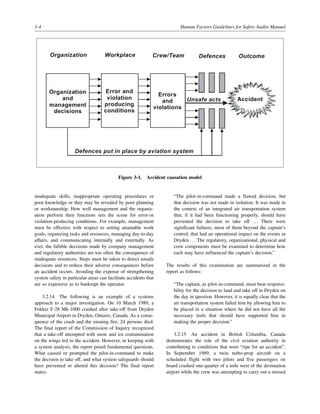
  • 71.
    Chapter 5. HumanFactors and the Auditor 5-9 Appendix 1 to Chapter 5 TIPS FOR CROSSING THE LANGUAGE BARRIER7 Verbal Behaviour • Clear, slow speech. Enunciate each word. Do not use colloquial expressions. • Repetition. Repeat each important idea using differ- ent words to explain the same concept. • Simple sentences. Avoid long, compound sentences. • Active verbs. Avoid passive verbs. Non-Verbal Behaviour • Visual restatements. Use as many visual restate- ments as possible such as pictures, graphs, tables and slides. • Pauses. Pause more frequently. • Summaries. Hand-out written summaries of verbal presentations. Attribution • Silence. When there is a silence, wait. Do not jump in to fill the silence. The other person is probably just thinking more slowly in the non-native language or translating. • Intelligence. Do not equate poor grammar and mispronunciation with lack of intelligence; it is usually a sign of second (or third) language use. • Differences. If unsure, assume that there is a difference in perception, rather than a similarity. Comprehension • Understanding. Do not assume that colleagues understand. • Checking comprehension. Have colleagues repeat their understanding of the material back to you. Do not simply ask if they understand. Let them explain what they understand to you. Design • Breaks. Take more frequent breaks. Second language comprehension is exhausting. • Small modules. Divide the audit material into smaller modules. • Longer time frame. Allocate more time for each module than in a unilingual relationship. Motivation • Encouragement. Verbally and nonverbally encour- age and reinforce speaking by non-native language participants. • Drawing out. Explicitly draw out marginal and passive participants. • Reinforcement. Do not embarrass novice speakers. 7. Adapted from Nancy J. Adler, International Dimensions of Organizational Behaviour, Second Edition, PWS-Kent, 1991, pp. 84-85.
  • 72.
    6-1 Chapter 6 HUMAN FACTORSIN AIRCRAFT MAINTENANCE 6.1 INTRODUCTION 6.1.1 In aviation initiatives relating to Human Factors, the focus has traditionally been on the flight crews and to a lesser degree the air traffic controllers. Much less attention has been paid to the same Human Factors that affect the performance of aircraft maintenance technicians (AMTs). During aircraft design, attention is given to ergonomic considerations necessary to improve the work environment for the pilots (thereby reducing the risk of pilot errors) but until recently, little attention was given to ergonomic considerations that would reduce the risk of errors by AMTs. In some ways this is understandable because when a pilot or an air traffic controller commits an error, the adverse consequences may be evident almost immediately. However, when an AMT commits an error, the adverse consequences may not become apparent for weeks, months, or even years. Unsafe acts by AMTs generate latent unsafe conditions such as loose panels, chafed wires or undetected cracks but because of the time delay of the consequences, it is almost impossible in many occurrences to reconstruct the actual context and operating conditions under which the AMT committed the error. Without any equivalent of flight recorders or ATC tapes to help reconstruct the actual events surrounding maintenance errors, there is little substantive data available to develop understanding of Human Factors in aircraft maintenance. Notwithstanding this shortcoming and the resultant lack of literature in this area, the continuing, reliable performance of aircraft maintenance personnel who inspect and repair aircraft is vital to aviation safety. Further, as in flight operations, the effectiveness of management’s control systems and supervision are vital to setting the conditions that will protect the maintenance system against inevitable AMT errors. 6.1.2 The range of maintenance errors that may lead to aviation disasters is enormous. Several major aviation accidents serve as vivid reminders of the vulnerability of aviation safety to maintenance errors. In 1979 an unapproved DC-10 engine-change procedure, where the engine and pylon were removed and then installed as a unit, resulted in the separation of one of the wing-mounted engines during take-off. Collateral damage to the hydraulic system led to a loss of control and destruction of the aircraft. All on board perished. In 1985, an improperly repaired pressure bulkhead on a Boeing 747 exploded causing a control system failure and the destruction of the aircraft with great loss of life. In 1988, deterioration on an improperly maintained Boeing 737 went undetected, leading to a structural failure of the upper fuselage. A safe landing was executed and one person was fatally injured. Each of these accidents involved much more than failures of individuals to competently fulfil their assigned duties. Rather, they each are indicative of deep-rooted or systemic unsafe conditions within the respective maintenance organizations. 6.1.3 In March 1989, a twin-jet Fokker F-28 engaged in regional operations in Canada crashed on take-off. The subsequent commission of inquiry systematically examined potential contributory factors well beyond the proximate cause of the accident (i.e. that the crew attempted a take-off with wings contaminated by ice). The inquiry found sys- temic problems in the operator’s maintenance organization. Subsequently, in a workshop on Human Performance in Maintenance, twelve Human Factors elements were identified as having potential for degrading the ability of aircraft maintenance technicians to perform their duties safely and effectively. The so-called “Dirty Dozen” includes: 6.1.4 These types of problems can permeate virtually every level of aircraft maintenance activity starting with the aircraft or component manufacturer, through daily line servicing and maintenance, repair and overhaul activities at approved maintenance organizations (AMOs). Today, these problems can extend to maintenance activities of an ever- 1. Lack of communication 8. Pressure 2. Complacency 9. Lack of assertiveness 3. Lack of knowledge 10. Stress 4. Distraction 11. Lack of awareness 5. Lack of teamwork 6. Fatigue 7. Lack of resources 12. “Destructive” workplace norms
  • 73.
    6-2 Human FactorsGuidelines for Safety Audits Manual increasing number of subcontractors. They can also be found in inspection, repair and overhaul, as well as during aircraft modification programmes for upgrades or conversions. 6.1.5 Complicating the issue, today’s modern aircraft are designed to have a virtually unlimited lifetime provided they are adequately inspected and refurbished. In years past, maintenance was reactive; physical defects were repaired as they occurred.Today’s maintenance regimes are much more pro-active, initiating preventive measures before safety-threatening defects arise. Ideally, technical difficulties that could affect flight safety can be predicted, and system defects can be eliminated through effective repair actions before the defects become dangerous. The focus of aircraft maintenance is shifting from repair of worn-out or broken parts to condition monitoring, inspec- tion and replacement of entire components — before they fail. This requires a much higher degree of judgement in the application of acceptable wear standards. 6.1.6 This chapter is provided for ICAO safety oversight auditors responsible for airworthiness, to help them apply the basic concepts and frameworks described in Chapters 2, 3, and 4 in the aviation maintenance environ- ment. Although many of the examples cited elsewhere in this manual are based on the performance of flight crews, aviation safety is equally dependent on the reliable and safe performance of AMTs. A comprehensive airworthiness audit will address SARPs related to Human Factors. As well, the airworthiness safety auditor is well situated to provide meaningful information to States on the implemen- tation and operation of effective safety management pro- grammes, taking account of the impact of Human Factors in aircraft maintenance, including the effects of organiz- ational and management factors. 6.1.7 ICAO safety oversight auditors will find more specific direction for auditing airworthiness SARPs in Chapter 10 of this manual and in the audit protocols in Doc 9735. 6.2 CONTEMPORARY MAINTENANCE PROBLEMS 6.2.1 Chapters 2 and 3 outlined some of the basic Human Factors concepts and organizational and manage- ment factors affecting aviation safety. In particular, the SHEL and Reason models provided conceptual frameworks for understanding the context in which normal, healthy, qualified, experienced and well-equipped personnel commit human errors whether they are pilots, air traffic controllers or AMTs. Bearing these frameworks in mind, the following are some of the contemporary problems affecting the AMT’s daily operating context. • Time pressures. Increasingly, airline operations are an around-the-clock proposition, especially for maintenance and inspection personnel. Competition in the industry is fierce, and economic pressures have necessitated increased aircraft utilization rates with fewer operational spares. As a result, person- nel at both the maintenance base and in flight-line servicing are under tremendous time pressures to meet scheduled departure times. Maintenance personnel daily face a delicate balance between enabling the maximum number of revenue flight hours and performing needed maintenance. • New technology. To remain competitive, many airlines are introducing new aircraft incorporating the latest technology and structures built with composite materials, glass cockpits, highly automated systems and built-in diagnostic test equipment. Maintenance and test equipment, as well as procedures, have also become more automated (computer-based). Consequently, main- tenance personnel who apprenticed on mechanical systems must now adapt to computerized systems. This often requires a return to the classroom. At the same time, many must maintain their traditional skills for the older aircraft fleets. Workers must therefore be more adept than ever, maintaining the necessary up-to-date knowledge and skills to work safely on mixed fleets. • Ageing fleets. Notwithstanding the introduction of new technology aircraft, many airlines are operating fleets of aircraft with an average age of twenty to twenty five years, with plans to continue operating them indefinitely. As these aircraft age, they become maintenance-intensive, requiring careful inspection for signs of fatigue, corrosion and general deterioration. For inspectors, inspection work, which is often rivet by rivet and in awkward, hard-to-see areas, is tedious and monotonous. Considering the consequences of failing to detect the often subtle signs of age-related deterioration, the work is also stressful. Several recent aircraft occurrences have highlighted problems of ageing wiring (chafing in wiring bundles) creating the risk of in-flight fires. • Lack of feedback. Unlike pilots and air traffic controllers, diligent AMTs are often unaware that they have created a serious safety discrepancy. The
  • 74.
    Chapter 6. HumanFactors in Aircraft Maintenance 6-3 errors in their performance may lay dormant and undetected for months. Even when there is an accident, perhaps months or years later, they may have little reason to believe that their performance created the unsafe conditions that contributed to the accident. In the case of the DC-10 engine disc failure in 1989 near Sioux City Iowa, the suspected failure in inspection procedures occurred seventeen months before the accident. • “Fix-it” focus. The immediate focus of the AMT is on ensuring the airworthiness and serviceability of specific components in accordance with deadlines. Less attention has been paid to the systemic health of the entire aircraft, let alone the entire mainten- ance organization. To illustrate: an AMT in a main- tenance depot forgets to install an anti-vibration clamp on an engine-mounted hydraulic tube and months later the tube fails in fatigue. Later another AMT working on the same aircraft at a different maintenance base discovers the error, replaces the failed hydraulic tube and correctly installs an anti- vibration clamp. The discrepancy is duly recorded as “clamp missing”, but there is no follow-up to determine why the first AMT omitted the clamp, or more importantly, why the maintenance organiz- ation failed to detect the omission. • Causal analysis. There has often been inadequate analysis of the contributing Human Factors to errors in aircraft maintenance. Following an incident involving flight crews, much more than “procedural error” is recorded. For example, records elaborate specific performance failures such as rushed approach, improper crew response, poor crew coordination or incomplete readback of clearance. With the exception of major accidents where causal factors for specific maintenance errors may be recreated, maintenance errors tended to be lumped under the rubric “maintenance or inspection de- ficiency”. This approach to human errors in aviation maintenance has severely limited the ability of maintenance organizations to identify and mitigate those organizational practices that facilitate the creation and perpetuation of unsafe conditions. • Expansions and mergers. Deregulation in the aviation industry has necessitated significant restructuring in some airlines. Many airlines are expanding rapidly to meet new markets, while other expansions are the result of corporate mergers, sometimes involving take-overs of bankrupt air- lines. Resultant corporate pressures such as lay-offs, relocations, shortages in certain skilled trades, a chaotic corporate climate, merging seniority lists and conflicting organizational goals place added stress on maintenance and inspection personnel. • Subcontracting. Often related to the organizational changes resulting from deregulation, is the out- sourcing of many maintenance activities to subcon- tractors. This is not an inherently unsafe practice, providing the necessary defences are introduced to assure that the quality of the work performed meets safety requirements. However, too often it does not. Unlicensed personnel working with inadequate supervision and poor quality control can create conditions highly conducive to safety problems in airworthiness. 6.3 REPRESENTATIVE EXAMPLES OF MAINTENANCE OCCURRENCES 6.3.1 The following three aviation occurrences, which are representative of the types of systemic or organizational factors that create the contexts in which AMTs commit errors, each have significant potential to cause an accident. • Missing O-ring seals. In May 1983, shortly after take-off from Miami, an L-1011 experienced complete loss of oil pressure sequentially on all three engines. The crew succeeded in returning safely to Miami and landing with one engine operating. All three chip detector assemblies had been installed without O-ring seals. Simply put, the mechanics failed to follow the required work card procedures that clearly specified the installation of the O-rings on the chip detectors. There were, however, organizational elements in this incident. The investigation revealed that the mechanics had routinely received the chip detectors with the O- rings already installed and had never actually been required to perform that portion of the work card. At least one general foreman was aware of the discrepancy between procedures specified on the work card and actual work practices but had not taken positive action to ensure procedural compliance. • Missing windscreen. In June 1990, a BAC 1-11 experienced a rapid decompression on departure. The pilot-in-command’s windscreen separated, and he was partially sucked out of the aircraft. The co- pilot safely assumed control while the cabin crew saved the pilot-in-command from being completely sucked out of the aircraft. The windscreen had been
  • 75.
    6-4 Human FactorsGuidelines for Safety Audits Manual replaced only twenty-seven hours before the accident. Several organizational factors had facilitated the mechanic installing the wrong bolts for the windscreen, which later caused the separ- ation. The mechanic completed the misassembly on his own without obtaining a verification that it had been correctly completed. The work was done late at night under conditions of poor lighting making it difficult to detect that the bolts, which were too short, were incorrectly aligned. The shift manager demonstrated poor trade practices and failed to adhere to company standards by authorizing the use of the wrong bolts. Furthermore, the shift manager’s continuing failure to follow established procedures had not been detected by the company’s internal safety audit programme. • Missing screws. In September 1991, an Embraer 120 experienced a sudden structural break-up in flight and crashed. The investigation revealed that the attaching screws on top of the left side, leading edge of the horizontal stabilizer had been removed and had not been reinstalled, leaving the leading edge/de-ice boot assembly secured to the horizontal stabilizer by only the bottom attachment screws. This accident, too, reflects unfavourably on com- pany management and the regulatory authority’s surveillance of the operator’s compliance with approved maintenance procedures. Basically, com- pany practices for end-of-shift communications with the incoming shifts were inadequate. These communications failures involved not only verbal briefings but also completion of necessary forms and maintenance work cards. Furthermore, person- nel requiring necessary information did not seek it out. Other incidents at this company were also indicative of a lax organizational culture that condoned unapproved practices in which personnel failed to challenge departures from accepted safe practices. This work had also been conducted during a night shift in poor lighting, making it difficult to notice the missing screws on the dark side of the aircraft. 6.3.2 In the three occurrences described above, the behaviour of the organizations and the individuals within the organizations before the occurrences was similar. For example: • maintenance and inspection personnel did not adhere to established methods and procedures; • those responsible for ensuring adherence to established procedures and methods did not oversee compliance in a systematic manner that would detect potential for failures over the long-term; • high-level maintenance management did not actively confirm compliance with the maintenance procedures prescribed by their organization; • maintenance work was performed by personnel who were not assigned to do the job but who, with good intentions, carried out the work on their own initiative; and • lack of proper and/or positive communication was evident, extending the sequence of unsafe acts. 6.3.3 These are the types of systemic deficiencies that should be identified through company and/or regulatory safety oversight programmes. 6.4 COMMON ISSUES AFFECTING HUMAN PERFORMANCE IN AIRCRAFT MAINTENANCE 6.4.1 The performance of AMTs can be adversely affected by most of the factors mentioned earlier (Chap- ter 2, Appendix 1, refers). An elaboration on some of these in the context of aircraft maintenance and inspection tasks is provided in the following paragraphs. Aircraft design and configuration 6.4.2 The design and configuration of aircraft are always a compromise of many competing demands. The accessibility that is essential for maintenance is often sacrificed in favor of aircraft performance or payload. An AMT, at a minimum, must be able to reach a part, remove it using normal strength and reach and easily replace it with the correct orientation. Variability between models of aircraft can contribute to errors when differences in the configurations require maintenance tasks to be carried out in a different manner than usual or require slightly different parts. In addition, while good part design incorporates feedback that helps the maintenance technician know that something has been performed correctly, variation in this feedback can also lead to errors. For example, an AMT may become accustomed to the ratchet effect of a particular electrical connector providing feedback when the instal- lation is correct, and may over-tighten an electrical connector that does not have this feature.
  • 76.
    Chapter 6. HumanFactors in Aircraft Maintenance 6-5 Work environment 6.4.3 Pilots work in conditions with relatively constant comfort factors. Similarly air traffic controllers work in a relatively stable physical environment. The work environment of the AMT is extremely variable. Three quite different sets of environmental conditions can be identified: a) Ramp maintenance. Working outdoors on a ramp, the AMT faces large fluctuations in temperatures, wind, noise, visibility, ambient lighting, and moisture creating slippery work surfaces. In addition, appropriate tools, support equipment and material may not be readily accessible. Just as these factors affect the physical well-being (and perhaps health) of the AMT, they also create conditions conducive to committing maintenance errors. b) Technical shop maintenance. Working conditions in a technical maintenance shop, such as an electri- cal or tire shop, are much more stable than those on the ramp. Ambient temperatures, noise and light levels, air quality, and availability of tools and materials all tend to be less variable than for work out of doors, thereby reducing the potential of these factors as being contributory to maintenance errors. Indeed, the work environment of an avionics shop may be likened to that of an air conditioned office. c) Hangar maintenance. Much aircraft maintenance work is conducted within the unique environment of a large aircraft hangar. High ceilings make proper lighting difficult, and large, open doors make controlling temperature, humidity and drafts prob- lematic. Thus, working conditions in the hangar tend to lie somewhere between those of ramp main- tenance and those of technical shop maintenance. 6.4.4 The propensity for committing maintenance errors is related to these working conditions. None of them are impervious to maintenance errors, nor are they equally susceptible to errors for the same contributing factors. Each requires careful attention to work layout and task design, taking into account typical working conditions for that type of work. The nature of maintenance work 6.4.5 Many maintenance tasks involve physical exertion, often requiring a high degree of coordinated teamwork. Heavy and awkward lifting and moving of components may be necessary. Awkward postures may need to be held for prolonged periods to work in restricted spaces and/or on unsuitable support stands. Stretching, reaching and lifting may all contribute to physical fatigue. 6.4.6 Maintenance work also requires a high level of specialized knowledge and well-developed technical skills. The organization of work varies from one operator to another. Some AMTs will have broad, generalist responsi- bilities, while others will be highly specialized. Achieving and maintaining the requisite levels of proficiency remains an organizational challenge to the reduction of maintenance errors. 6.4.7 Even in the best conditions, the physical environment for aircraft maintenance creates conditions that facilitate human error. Power tools, operating engines, test equipment etc. all generate a lot of ambient noise and contribute to making interpersonal communications diffi- cult. In addition, technicians frequently are working with toxic or hazardous materials, or they employ techniques (such as X-rays) which can be hazardous if not handled correctly. Lighting presents a challenge, regardless of the time of day, to working on the underside of aircraft or in irregularly shaped, inaccessible component bays. The height of aircraft necessitates regular use of ladders and maintenance stands, and manual and mental dexterity may suffer if the technician is unsteady or off-balance. 6.4.8 Since many maintenance tasks are too extensive to be completed in a single shift, effective handovers to the subsequent shift are an important part of job quality. Although documentation of work completed should ensure seamless continuity of work tasks, cross-shift misunder- standings do occur as evidenced by the Embraer-120 accident described earlier. Although not always required, maintenance should rely on the sign-off of task cards as an assurance that work has been satisfactorily completed. Unfortunately, the practice is often to sign-off a large number of tasks at once (the so-called serial sign-off) even when tasks have not been confirmed as having been completed. 6.4.9 Maintenance work is often conducted at night, when attention can be devoted to maintenance items deferred during that day’s operations. As seen elsewhere in this manual, night work and shift-work create additional conditions conducive to facilitating maintenance errors (e.g. circadian disrhythmia). Scheduling and shift work 6.4.10 As mentioned above, airlines operate around the clock and under significant time pressures. Aircraft maintenance organizations must support these operations.
  • 77.
    6-6 Human FactorsGuidelines for Safety Audits Manual Consequently, AMTs are frequently subjected to shift work, which results in the same type of disruptions to their natural body rhythms as flight crews experience traversing several time zones overnight. For those working the night shift, the issue of fatigue can be quite serious. A recent study estimated that 75 per cent of persons working at night experienced sleepiness during every night shift, of which some 20 per cent reported falling asleep on the night shift. It is not a coincidence that many of the world’s major industrial accidents (including maintenance-related aviation accidents) had their genesis in errors committed during the early hours of the morning. 6.4.11 Scheduling can either exacerbate the effects of such circadian disrhythmia or can alleviate some of the natural stresses inherent in changing sleep cycles. Research has shown that rotating shifts should move in the direction of a longer biological day, that is that rotation should be to later shifts rather than earlier ones. However, schedulers regularly face the situation in which workers want a schedule that optimizes their time off — even if that schedule is more disruptive to their sleep cycles. Schedul- ing of shift work is not often a subject on management’s agenda, yet the potential for serious maintenance errors frequently originates with fatigued employees. Automation 6.4.12 An important dimension of the changing nature of the AMT’s work is the increasing reliance on automation and computerization. More and more processes, operations and decisions are aided or even controlled by computers and advanced technology systems. Applications go well beyond computer-aided design and computer-assisted learning. There is an increasing reliance on computerized systems for virtually all aspects information management, including scheduling, reporting, tool and inventory control, access to current information, etc. Most aircraft manufac- turers either have or are developing electronic versions of their maintenance manuals. Technicians can acquire up-to- date information directly on video terminals on the main- tenance floor. The entire maintenance manual, all airworthi- ness directives, service bulletins, job cards and specialized inspection procedures for an aircraft can be readily accessed by the technician at a video terminal close to the aircraft. 6.4.13 Aircraft maintenance technicians spend a significant proportion of their shift on paperwork. Increasingly, records can be accurately (and legibly) maintained using computerized systems, improving access by subsequent shifts and enabling further reference as required. 6.4.14 Many new-generation aircraft have a built-in capability to assess the status of on-board equipment. On these aircraft, when an in-flight equipment malfunction occurs, information on it is automatically stored and trans- ferred telemetrically to the aircraft maintenance facility by the built-in test equipment without any input from the flight crew. On landing, AMTs can be standing by with the required tools and materials to quickly return the aircraft to service. 6.4.15 Increasingly, specialized test equipment is required on the hangar floor and in the technical shops. Automated equipment for the performance of repetitive or monotonous tasks is under continuous development such as devices that will traverse an aircraft’s external skin and inspect it for cracks, corrosion, damaged rivets or other flaws. 6.4.16 All advanced automation systems for aircraft maintenance must be designed with the capabilities and limitations of the AMT and his work environment in mind. Special training is also necessary to ensure that AMTs possess and retain the requisite skills to fully and safely exploit the capabilities of new technology, otherwise auto- mation introduces new sets of problems and further factors potentially contributing to maintenance errors. Technical knowledge and skills 6.4.17 The AMT is required to possess a wide range of knowledge and skills, sometimes referred to as abilities. The growing sophistication and complexity of aircraft systems and special maintenance test equipment increas- ingly requires in-depth knowledge and at the same time, new physical skills often requiring a high degree of manual dexterity. 6.4.18 Technical knowledge refers to the understand- ing of a body of information that is applied directly to the performance of a maintenance or inspection task. Three broad categories of knowledge are required: a) Airline process knowledge refers to the processes and practices of the airline or repair station where the AMT works, such as shift handover procedures, parts tagging requirements and work sign-off requirements. b) Aircraft structures and system knowledge refers to the physical aircraft structure, systems and equip- ment. Example are the location and function of hydraulic pumps and rework options for corroded or fatigued parts.
  • 78.
    Chapter 6. HumanFactors in Aircraft Maintenance 6-7 c) Maintenance task knowledge refers to the specific knowledge required to perform a particular task such as bleeding a hydraulic system. 6.4.19 Technical skills refer to the tasks or subtasks that a maintenance technician must be able to perform without having to refer to other information, such as being able to lock wire, use a torque wrench or remove standard parts. 6.4.20 Although some technical knowledge and skills can be acquired on the job, for the most part, formal training programmes are fundamental to the acquisition of the core knowledge and competencies. Training 6.4.21 The root causes of many of the errors by AMTs can be found in inadequate or inappropriate training regimes. Since maintenance work combines in-depth knowledge, complex mental processing and advanced manual skills, maintenance training must facilitate the efficient learning of knowledge about things as well as the development of skills to do things in accordance with prescribed procedures. Not surprisingly, training methods for both the initial and recurrent training of AMTs vary throughout the world. Some training programmes take the candidate through a highly structured programme of classroom work, supplemented by some practical training on basic aircraft types. Graduates of such programmes require much more training, particularly practical training, before they are ready to perform maintenance tasks on large commercial aircraft in the context of a competitive airline milieu. In some States, training programmes are based on apprenticeships whereby the apprentice works alongside journeymen AMTs for several years. Graduates from these programmes may have developed sound skills in their trade but may demonstrate shortcomings in the formal knowledge required for complex problem solving. 6.4.22 A significant portion of all AMT training is provided through on-the-job training (OJT). OJT has many positive aspects. One is the opportunity for trainees to develop proficiency by performing many of their job tasks while observing highly-skilled technicians perform the tasks under actual job conditions. Another is the oppor- tunity to build a one-on-one relationship with a mentor. Unfortunately, too often the OJT trainer, although highly qualified as a technician, has not received training as an instructor (and may not even be interested in the training function). OJT programmes are often unstructured, lack the necessary imparting of formal knowledge and do not include an adequate system for evaluating the effectiveness of the training or validating the training programme, including the effectiveness of the trainer. 6.4.23 Regardless of the approach taken to train AMTs, an effective training programme requires: • a detailed task analysis of the jobs to be performed; • clearly defined training objectives with performance standards, arranged in a progressive sequence of manageable blocks, taking account of the capa- bilities and limitations of the trainees to be targeted; • trainers who have been selected for their technical competence, their training and their experience as trainers; • formal instruction and evaluation for the critical knowledge elements; • structured skills practice, progressively developing skills under the supervision of instructors trained in instructional methods; and • continuing evaluation and validation of the training programme. Information transfer and communications 6.4.24 Information transfer and communications are probably the most critical Human Factors in aircraft maintenance. Without the sharing of information among maintenance managers and their personnel, manufacturers, dispatchers, pilots, the public, the government and others, safety standards would be difficult to maintain. There is an enormous volume of information that must be created, recorded, stored and retrieved, conveyed, assimilated, and applied in order to keep the aircraft airworthy. 6.4.25 Communications in aviation maintenance are vulnerable to errors in the four basic disciplines of com- munications: a) Reading. Reams of technical documentation including maintenance manuals, schematics, service bulletins and job cards must be presented in a language and format that are user-friendly to inspectors and AMTs around the world who under- take scheduled aircraft maintenance, diagnose problems and repair aircraft. Much of this docu- mentation may only be available in a language other than the mother tongue of the AMT.
  • 79.
    6-8 Human FactorsGuidelines for Safety Audits Manual b) Speaking. Maintenance managers, supervisors and AMTs must be able to accurately present detailed technical information orally — both up and down the hierarchy — achieving a high level of comprehension. This may require the speaker trying to accurately translate the original written technical documentation into the mother tongue of the listeners. c) Listening. Maintenance managers, supervisors and AMTs must all possess effective listening skills for accurately assimilating detailed technical infor- mation. Fortunately, this oral comprehension may be achieved in part through the use of the participants’ mother tongue. d) Writing. Managers and supervisors must be able to provide unambiguous written direction to AMTs. In addition, AMTs must be able to accurately record technical discrepancies, actions completed, etc. 6.4.26 At every step of the information transfer process, there is significant potential for failure to achieve the understanding requisite to safety. 6.4.27 Communication problems can have their origin in the manufacturers documentation for aircraft systems and maintenance procedures. The challenge for the manu- facturer in providing all related documentation in simple, understandable language for AMTs around the world, most of whom do not speak the primary language of the manu- facturer, is enormous. There is an anecdote of a service bulletin which “proscribed” a particular procedure — meaning that it was prohibited. Understandably, the technician reading this believed there had been a typo- graphical error and that the manufacturer really meant that the procedure was “prescribed” — meaning that it was the correct procedure to be followed. 6.4.28 The civil aviation authority must also face the communication challenge. Maintenance-related regulations must be accurately presented and their currency main- tained; maintenance-related enforcement actions and safety programmes must be credible and communicated to the entire aviation community to have maximum prevention value. The regulatory authority and its inspectors may become the interlocutors with the manufacturer and the airline — interpreting and modifying the manufacturers’ directions as required, taking account of local operating conditions. 6.4.29 Above all, in healthy maintenance organiz- ations management communicates with maintenance super- visors and technicians to foster an organizational culture of safety. This requires establishing and nurturing open dialogue involving management, supervisors and tech- nicians, which encourages the reporting of all hazardous situations or practices without fear of recrimination. Without an atmosphere of openness, communications dry up, unsafe conditions are overlooked (or knowingly hidden) and unwittingly, the stage is set for an accident. (Appen- dix 1 to Chapter 3 refers.) Teamwork 6.4.30 As aircraft are becoming increasingly complex, the importance of teamwork in aircraft maintenance is growing. At the same time, aircraft maintenance is demanding increased specialization to cope with the new aircraft materials, systems and the reliance on computerized systems. Ironically, as specialization increases, there is a tendency to organize technical specialists into distinct departments to the extent that these become functional silos. To often, there has been an unhealthy inhibition about communications and the sense of teamwork necessary to integrate AMTs into a coherent and effective entity. The accident record offers many examples of failures at the interfaces between technical specialties and/or between work shifts where information that was critical to flight safety was not transmitted or understood. 6.4.31 Organizations built around functional silos tend to treat technical specialists as having interchangeable skills. A centralized job control centre dispatches them as they are required. Too often the job control centre misinterprets the job requirements, dispatching the wrong AMTs who then arrive at the job with an inadequate understanding of the job requirements, perhaps having brought the wrong tools, etc. Observations made in a number of international operators’ maintenance facilities reflect separate lines of accountability and limited common goals. Individual, rather than team performance, is encouraged. The resultant lack of team identity can lead to indifferent worker attitudes, with individual AMTs con- cluding that their diligence will be worthless because of others’ poor performance. Typically, such organizations blame the AMTs for their errors; disciplinary measures are used to punish offenders, and little effort is spent ident- ifying and correcting systemic organizational deficiencies that compromise safety. 6.4.32 Because many maintenance tasks are complex, requiring multiple specialist skills and more than a single shift to complete, maintenance managers must coordinate the work of diverse specialists on different crews. Coordi- nating the efforts of different trades on different shifts, ensuring compliance with prescribed procedures, remains a significant challenge for maintenance managers.
  • 80.
    Chapter 6. HumanFactors in Aircraft Maintenance 6-9 6.4.33 Given the global experience with Crew Resource Management (CRM) in improving teamwork in flight operations, some airlines are providing CRM-type training for their maintenance organizations. This training, like its cockpit counterpart, emphasizes communications, leadership, assertiveness, decision making and stress management — all skills that are vital to effective team operations. Unlike flight crews, which work collectively and in close proximity, AMTs may be working on many seemingly disjointed tasks which are spread out around a large hangar. Nevertheless, organizations that embrace the team concept attempt to integrate the various specialists into coherent teams. Individual AMTs develop a sense of identity when they are treated as key players rather than anonymous cogs in a wheel. At least one airline has reported improvements in operating performance in such areas as on-time departures and job injuries after providing specialized team training for its maintenance personnel. Some are referring to this type of training as Maintenance Resource Management (MRM). However, a caution con- cerning MRM is warranted. Just as CRM training is highly contextual, the same is true for MRM training. To be effective, MRM training programmes must take into account local cultural considerations. Simple adaptations of existing programmes may be totally inappropriate. An important dimension of an effective MRM training programme is an appreciation of how Human Factors can affect performance and hence safety. Coupled closely with MRM training is the development of a corporate safety culture, including an incident and error reporting system aimed at better understanding the underlying factors contributing to human errors. The types of issues covered in this chapter are typically covered in effective MRM training. 6.5 MANAGING MAINTENANCE ERRORS 6.5.1 Increasingly, the aircraft maintenance com- munity is recognizing that errors in maintenance are inevitable and pervasive. Attention is being focussed on how to better manage these errors. Initiatives undertaken seek to both reduce the numbers of errors and mitigate the consequences of those that remain. Maintenance errors include both human errors (Chapter 2 refers) and system errors such as inadequate staffing, tools and matériel. 6.5.2 Many States have mandatory occurrence reporting systems which systematically collect data on accidents and serious incidents. Voluntary or confidential reporting systems operated by some States (and by some operators) are also effective tools for providing the data for understanding why errors are committed. Some States and operators are currently implementing programmes aimed specifically at learning from the lessons of errors com- mitted in aircraft maintenance. Such programmes are aimed at identifying the contributing factors to maintenance errors and making the system more resistant to similar errors. One State has established a Maintenance Error Management System (MEMS) to identify prevailing industry practices that should be included in such programmes, for example: • clearly identified aims and objectives; • demonstrable corporate commitment with responsi- bilities for MEMS clearly defined; • corporate encouragement of uninhibited reporting of occurrences and participation by individuals; • well-defined disciplinary policies and boundaries; • an occurrence investigation process; • criteria for initiating error investigations; • trained investigators; • MEMS training for staff, where necessary; • appropriate follow-up action based on investigation findings; • feedback of results to workforce; • analysis of the collective data showing contributing factor trends. 6.5.3 Boeing has designed a tool to help airlines systematically understand the factors contributing to main- tenance errors. The Maintenance Error Decision Aid (MEDA) is based on the following premise: AMTs do not make errors on purpose; most maintenance errors result from a series of contributing factors; and since many contributing factors are part of the airline’s day-to-day processes, they can be controlled. Therefore, MEDA provides the first-line supervisor with a structured method for analysing and tracking the contributing factors leading to maintenance errors and for recommending error prevention strategies. 6.5.4 Boeing reports that MEDA is facilitating a reduction in departure delays and is contributing to a change in organizational culture in participating operators from one of punishing those who deviate from established procedures to one of attempting to understand why. Appendix 1 to this Chapter provides a further description of the MEDA process.
  • 81.
    6-10 Human FactorsGuidelines for Safety Audits Manual 6.5.5 Experience is showing that States and operators implementing a maintenance error management programme (perhaps employing a tool like MEDA) are more effective in developing and implementing strategies for reducing the frequency of maintenance-related errors and/or reducing their consequences. To be effective such programmes pre- suppose: • a clear distinction between errors committed in the normal fulfilment of assigned tasks as opposed to those committed through recklessness or negligence (which may warrant disciplinary action); • a blame-free work environment (requiring mutual labour/management trust and respect); • an openness in communications between labour and management; and • a corporate culture of error tolerance. 6.6 MAINTENANCE SAFETY CULTURE 6.6.1 As discussed, maintenance creates its own scope for errors and unsafe conditions. The working culture created by management on the ramp, on the maintenance hangar or technical shop floor is critical to establishing safe flight operations. (Creating a culture of safety is discussed in Chapter 3). The concept of a distinct maintenance safety culture is elaborated on in the following paragraphs. 6.6.2 A safe maintenance organization will foster the conscientious reporting of maintenance errors, especially those that jeopardize airworthiness, so that effective action can be taken. This requires a culture in which staff feel comfortable reporting errors to their supervisor or line manager immediately after the error is recognized. Management then must follow-up, investigating such things as: • the exact nature of the error and the process and practices being carried out at the time the error occurred; • the written procedures in place covering the engineering and maintenance practice that was being undertaken when the error occurred; • any variations to the written procedures that are performed regularly by the aircraft maintenance technicians, have been accepted as the norm, and why these variations have been deemed appropriate under the circumstances; • the training previously undertaken by the staff involved; • the environmental conditions within the workplace at the time the error occurred; • other extenuating circumstances, including the adequacy of supervision and management of the processes under investigation. 6.6.3 Mishaps must then be reviewed by management with a view to reducing or eliminating the systemic risks revealed by the investigation. Management must demon- strate that the errors or mishaps will be handled in a fair and reasonable manner, and must protect members of the staff who have reported their error from shame, embarrass- ment or punishment. Management’s action here will determine the level of trust by the maintenance technicians that will be essential for a true culture of safety. The focus of the follow-up should be on the change that is necessary to strengthen the barriers to, and defences against such errors which could be retraining of personnel, changes to maintenance procedures, changes in design or improved workplace conditions. 6.6.4 Disciplinary action should only be necessary in (hopefully rare) instances of what can be objectively called recklessness. Recklessness may be defined as behaviour in which individuals disregard the fact that their conduct will significantly and unjustifiably increase the risk that a mishap or occurrence of substantive consequences will occur. Recklessness involves a gross deviation from the standard of care that a reasonable AMT would observe under the same conditions. Since the investigation of violations involving recklessness may lead to disciplinary action, they should be conducted separately from those investigations aimed at identifying and correcting the underlying systemic deficiencies in the maintenance organization. 6.7 SUMMARY 6.7.1 In this chapter, it has been shown how the AMT can create a latent unsafe condition which may lie dormant for months (or even years) before surfacing, perhaps in combination with an unsafe act or other unsafe condition, to generate significant accident potential. The basic con- cepts of Human Factors, including organizational, manage-
  • 82.
    Chapter 6. HumanFactors in Aircraft Maintenance 6-11 ment and cultural factors apply fully to the AMT. However, the AMT’s duties for the inspection and repair of aircraft create a working context that is quite different from that of flight crews or air traffic controllers. Increasingly, as more is understood about the impact of Human Factors on the performance of AMTs, many of the world’s safest operators are developing and implementing programmes and tools consistent with a true safety culture. 6.7.2 Indicators that the ICAO airworthiness safety auditor might watch for regarding the demonstrated com- mitment of the civil aviation authority to improving Human Factors performance within an aircraft maintenance organization’s engineering and maintenance functions include: • adequacy of maintenance documentation; • quality of communications up and down the chain of authority and communications within the main- tenance organization, particularly at shift changes; • attention to all environmental factors affecting human performance; • quality of training programmes with regard to currency of both job-related knowledge and technical skills; • Human Factors awareness programmes and Main- tenance Resource Management training pro- grammes; • a formal maintenance error management pro- gramme; • error reporting and trend analysis systems aimed at the identification of systemic safety deficiencies; • the means for deciding and effecting any necessary changes to reduce or eliminate identified safety deficiencies; and • a blame-free and error-tolerant safety culture. 6.7.3 The airworthiness safety auditor may find the MEDA checklist provided at Appendix 1 to this chapter a useful tool. 6.7.4 With this background information in mind, ICAO safety oversight auditors responsible for airworthi- ness issues are again referred to Chapter 10 for more specific instructions for auditing the effective implemen- tation of SARPs and best industry practices related to Human Factors, and to Doc 9735. REFERENCES Daniel J. Garland, John A. Wise and V. David Hopkin (eds.), Handbook of Aviation Human Factors, Lawrence Erlbaum Associates, London, 1999. ICAO, Human Factors Training Manual, Doc 9683, 1998. ICAO, Safety Oversight Audit Manual, Doc 9735. United Kingdom Human Factors Combined Action Group, People, Practices and Procedures in Aviation Engineering and Maintenance: a Practical Guide to Human Factors in the Workplace. U.S. Department of Transport, Human Factors Guide for Aviation Maintenance. U.S. FAA, Human Factors in Aviation Maintenance and Inspection, Web site: http://hfskyway.faa.gov. – – – – – – – – – – – –
  • 83.
    6-12 Human FactorsGuidelines for Safety Audits Manual Appendix 1 to Chapter 6 MAINTENANCE ERROR DECISION AID (MEDA) 1. Boeing has developed an aid for maintenance managers for reducing the frequency and consequences of maintenance errors. The Maintenance Error Decision Aid (MEDA) provides a structured framework for documenting contributing factors to errors and for recommending suitable error prevention strategies. MEDA is founded on the following basic tenets: • Maintenance errors are not made on purpose. • Most maintenance errors result from a series of contributing factors. • Many of these contributing factors are part of an airline process, and therefore can be managed. 2. The traditional approach to following-up on main- tenance errors was all too often to identify the cause of a maintenance error and then to discipline whoever made that error. The MEDA process goes much further but without the disciplinary action (unless there has been a clear violation of procedures). Having investigated the event caused by a maintenance error and identified who made the error, MEDA facilitates the following actions: • determination of factors that contributed to the error by interviewing the persons responsible (and others if necessary) to obtain all the pertinent information; • identification of organizational or system barriers that failed to prevent the error and the contributing factors to their failure; • gathering of ideas for process improvement from the persons responsible (and others as applicable); • maintenance of a maintenance error data base; • analysis of patterns in maintenance errors; • implementation of process improvements based on error investigations and analyses; • provision of feedback to all employees affected by these process improvements. 3. MEDA checklists are provided to facilitate the interview process (data acquisition) and data entry in the maintenance error data base. The following are ten areas in which data should be collected with a view to understand- ing the context in which maintenance errors are committed. Many of the following deficiencies call for improved tracking and measuring of the AMT’s technical perform- ance on the job. a) Information includes work-cards, maintenance procedures manuals, service bulletins, engineering orders, illustrated parts catalogues and any other written or computerized information provided either internally or by the manufacturer that is considered necessary for the fulfilment of the AMT’s job. Some of the factors contributing to why the infor- mation was problematic or was not used at all include: • the extent to which it was readable and understandable (including the format, level of detail, use of language, clarity of illustrations, completeness, etc.); • its availability and accessibility; • its accuracy, validity, and currency; and • the extent to which it conflicted with other information. b) Equipment/tools includes all the tools and materials necessary for the correct completion of the maintenance or inspection task. In addition to drills, wrenches, screwdrivers, etc. it includes non- destructive test equipment, work stands, test boxes, and special tools identified in the maintenance procedures. Equipment or tools can compromise the performance of the an AMT when they are: • unsafe for use by the AMT (e.g. missing protective devices unstable); • unreliable, damaged or worn out; • unsuitable for task; • unavailable; • cannot be used in intended environment (e.g. because of space limitations, the presence of moisture or uneven surfaces;
  • 84.
    Chapter 6. HumanFactors in Aircraft Maintenance 6-13 • missing instructions; • too complicated to use, or have • poor layout of controls or displays; or • miscalibrated or incorrect scale readings. c) Aircraft design configuration and parts includes those aspects of individual aircraft design or con- figuration that limit the AMT’s access for mainten- ance. In addition, it includes replacement parts that are either incorrectly labelled or are not available, leading to the use of substitute parts. Contributing factors that may lead to errors by the AMT include: • complexity of installation or test procedures; • bulk or weight of component; • inaccessibility; • configuration variability (e.g due to different models of same aircraft type or modifications); • parts not available or incorrectly labelled; • potential for incorrect installation (because of inadequate feedback, absence of orientation or flow direction indicators, or identical connec- tors). d) Job/task includes the nature of the work to be completed including the combination and sequence of the various tasks comprising the job. Some of the contributing factors conducive to facilitating main- tenance errors in this area include: • repetitive or monotonous tasks; • complex or confusing tasks (e.g. a long procedure with multiple or concurrent tasks, or the requirement for exceptional mental or physical effort); • new or changed tasks; • tasks or procedures that vary by aircraft model or maintenance location. e) Technical knowledge/skills includes airline process knowledge, aircraft system knowledge and mainten- ance task knowledge, as well as the technical skills to perform the assigned tasks or subtasks without error. Some of the related contributing factors compromising job performance are: • inadequate skills in spite of training, trouble with memory items or poor decision making; • inadequate task knowledge due to inadequate training or practice; • inadequate task planning leading to interrupted procedures or too many scheduled tasks for time available (e.g. failure to get all necessary tools and materials first); • inadequate airline process knowledge, perhaps due to inadequate training and orientation (e.g failure to order necessary parts on time); • inadequate aircraft system knowledge (e.g. incomplete post-installation test and fault isolation). f) Individual factors include the factors affecting individual job performance that vary from person to person. As discussed in Appendix 1 to Chapter 2, these include factors brought to the job by the individual (e.g. body size and strength, health and other personal factors) as well as those caused by interpersonal or organizational factors (e.g. peer pressure, time constraints, job-induced fatigue, scheduling or shift work). The MEDA checklist includes possible individual factors contributing to maintenance errors as follows: • physical health including sensory acuity, pre- existing disease or injury, chronic pain, medications, drug or alcohol abuse; • fatigue due to task saturation, workload, shift scheduling, lack of sleep or personal factors; • time constraints due to fast work pace, resource availability for assigned workload, pressures to meet deadlines; • peer pressures to follow group’s unsafe practices or ignore written information; • complacency, due to over-familiarity with repetitive task or hazardous attitudes of invulnerability or over-confidence; • body size or strength not suitable for reach or strength requirements (for instance, in confined spaces);
  • 85.
    6-14 Human FactorsGuidelines for Safety Audits Manual • personal events such as death of a family member, marital problems or a change in finances; • workplace distractions (for example, due to interruptions in a dynamically changing work environment). g) Environment and facilities include all the factors that can affect not only the comfort of the AMT, but also create health or safety concerns which may become a distraction. Some of the environmental factors that MEDA identifies as being potentially contributory to maintenance errors are: • high noise levels that compromise communi- cations or feedback or affect concentration; • excessive heat affecting the AMT’s ability to physically handle parts or equipment or causing personal fatigue; • prolonged cold that affects sense of touch or smell; • humidity or rain that affects aircraft, parts or tool surfaces, including use of documents; • precipitation that affects visibility or necessi- tates bulky, protective clothing; • insufficient lighting for reading instructions or placards, conducting visual inspections or performing the task; • wind that affects the ability to hear or communicate, or that irritates eyes, ears, nose or throat; • vibrations that make instrument reading difficult or induce fatigue in hands or arms; • cleanliness that affects the ability to perform visual inspections, compromises footing or grip or reduces available work space; • hazardous or toxic substances that affect sensory acuity, cause headaches, dizziness or other discomfort, or require the wearing of awkward, protective clothing; • power sources that are inadequately protected or marked; • inadequate ventilation that causes personal discomfort or fatigue; • work space that is too crowded or inefficiently organized. h) Organizational factors (also discussed in Chapter 3) include internal communication with support organizations, the level of trust that is established between management and AMTs, awareness and acceptance of management’s goals, union activities and so on. All these factors can affect the quality of work and therefore the potential for maintenance error. Some of the organizational factors that MEDA identifies as being potentially contributory to maintenance errors are: • inconsistent, late or otherwise poor quality of support from technical organizations; • company policies that are unfair or inconsistent in their application or inflexible in considering special circumstances; • company work processes such as inappropriate SOPs, inadequate work inspections or outdated manuals; • union action that becomes a distraction; • corporate change such as restructuring that creates uncertainty, relocations, lay-offs or demotions. i) Leadership and supervision are tightly linked to organizational factors. Although supervisors do not normally perform maintenance tasks, they can contribute to maintenance errors through poor planning, prioritizing and organizing of job tasks. Supervisors and management must provide a vision of where the maintenance function is headed and how it is going to be accomplished. In their daily activities their acts must match their words. The following areas of weakness in leadership and supervision can create a work environment conducive to maintenance errors: • inadequate planning or organization of tasks affecting availability of time or resources to complete work properly; • inadequate prioritization of work; • inadequate delegation or assignment of tasks;
  • 86.
    Chapter 6. HumanFactors in Aircraft Maintenance 6-15 • unrealistic attitude or expectations leading to inadequate time to complete the job or leading to staff frustrations; • excessive or inappropriate supervisory style, second-guessing AMTs or failing to involve them in decisions affecting them; • excessive or aimless meetings. j) Communication refers to any breakdown in written or oral communication that prevents the AMT from obtaining the correct information regarding a maintenance task in a timely manner. Some MEDA examples of interfaces between employees where breakdowns in communication occur thereby creating the potential for maintenance errors follow: • between departments — incomplete or vague written direction, incorrect routing of infor- mation, personality conflicts, or failure to pass time-sensitive information; • between mechanics — failure to communicate at all; miscommunication due to language barriers, use of slang or acronyms, failure to question when in doubt or failure to offer suggestions when change is needed; • between shifts — inadequate handovers due to poor (or rushed) verbal briefings, inadequate maintenance of records (job boards, checklists, etc.); • between maintenance crew and lead — when the lead fails to pass important information to the crew, including an adequate handover briefing at the start of a shift or feedback on performance, the crew failing to report problems or opportunities to the lead, or when roles and responsibilities are unclear; • between lead and management — when management fails to pass important information to the lead, including discussion of goals and plans, feedback on work completed and the like, and when the lead fails to report problems or opportunities to management; and • between the flight crew and maintenance — vague or incomplete logbook entries, late notifi- cation of defects, ACARS/datalink not used. 4. For more information concerning the MEDA tool, visit the Boeing Web site at http://www.boeing.com/ commercial/aeromagazine/aero-03/textonly/m01txt.html.
  • 87.
    7-1 Chapter 7 HUMAN FACTORSIN AIR TRAFFIC SERVICES 7.1 INTRODUCTION 7.1.1 The provision of Air Traffic Services (ATS) requires large human-machine systems designed with the principal objective of achieving the safe, orderly and ex- peditious flow of air traffic. In addition to their principal aim, ATS systems have several secondary objectives, including fuel conservation, noise abatement, minimum environmental disturbance, cost effectiveness, impartiality towards all users within the rules and regulations, and the granting of users’ requests whenever possible. In such systems, humans (controllers and flight service specialists) rely on their equipment (hardware) to fulfil the functions of the system. To fully exploit the capabilities of their equip- ment, they must be able to effectively interface with the ATS system through software support, and more import- antly, must interact with other persons within the ATC system and with the users of the system (controllers, flight service specialists and flight crews). While a safe and efficient ATC system must include appropriate technology, it must also comprise trained and knowledgeable pro- fessional air traffic controllers who can understand and apply such technology and provide an effective air traffic service — safely. 7.1.2 Most Human Factors issues in ATC derive from fundamental human capabilities and limitations. For example, the information a controller (liveware) actually sees on a display can depend on what is displayed (hard- ware), how appropriate it is for the task (software), whether it is obscured by glare (environment) and what the control- ler is expecting to see after conversing with the pilot (live- ware). As air traffic demands increase, so does the depen- dence on technological tools to aid the controller in such areas as conflict prediction and resolution, information transfer and memory. Achieving the expected benefits from any technological solution requires the successful matching of the technology with natural human capabilities and limi- tations for interfacing with the other elements of the system (the hardware, the software, the environment and the liveware). 7.1.3 Given the continuous growth in air traffic world- wide, there has been a parallel increase in demand for air traffic services that often stretches the capabilities of ATC systems to the limits of its capacity. A traditional method for expanding capacity has been the division of the airspace into smaller, more manageable sectors. However, increased sectorization of airspace may create so many more coordi- nation and liaison problems as to be counter-productive. Alternative solutions are required, for example: • replacement of manual functions by automated ones; • automated data handling and presentation such as data link; • automated assistance for cognitive human tasks such as problem-solving and decision making such as collision avoidance systems; • provision of better data to controllers such as satellite communications and controller pilot data link communications; • flexible use of airspace based on operational requirements rather than geographic boundaries, including direct routing; • a change from short-term, tactical interventions to solve problems that arise to strategic planning of efficient traffic flows to prevent problems from arising in the first place, such as air traffic flow management. 7.1.4 Such advances are changing the working environment and the role of controllers, and thus, ATC pro- cedures and practices. To ensure the continuing integrity of the ATC system and safe flight operations, diligence in the application of known Human Factors principles during the design, development and implementation of these changes will be required. 7.1.5 This chapter is provided for ICAO safety over- sight auditors responsible for air traffic services to help them apply the basic concepts and frameworks described in
  • 88.
    7-2 Human FactorsGuidelines for Safety Audits Manual Chapters 2, 3 and 4 in the air traffic services environment. Although many of the examples cited earlier in this manual are based on the performance of flight crews, they can be applied equally to the safe and reliable performance of air traffic controllers. A comprehensive safety audit will address SARPs related to Human Factors in air traffic services (Chapter 10 refers). The safety oversight auditor responsible for air traffic services can also provide meaningful information to States on the implementation and operation of effective safety management programmes, taking account of the impact of Human Factors in ATC, including the effects of organizational and management factors, as well as cultural factors. 7.2 ATC IN AVIATION ACCIDENTS Several major aviation accidents serve as reminders of the vulnerability of aviation safety to failures to respect the importance of Human Factors. • In 1956 a DC7 collided with a Constellation over Grand Canyon, U.S.A., killing all on board. (This accident precipitated the transformation of the American ATC system to what we know today.) • In 1976 a Trident 3 en route from Heathrow to Istanbul collided at FL 330 with a DC-9 flying from Split to Cologne, killing all 178 people on board. An error committed by a controller, working under nearly impossible conditions in the Zagreb air traffic control centre, triggered the accident. • In 1977, two Boeing 747s collided on the runway in Tenerife killing 583 persons. Misunderstanding of verbal communications between the aircraft taking- off and ATC led to the second aircraft continuing to taxi down the active runway in restricted visibility. • In 1991, a Boeing 737 landing at Los Angeles collided on the runway with a Fairchild Metroliner that had been cleared to hold 2 200 feet from the threshold on the same runway for an intersection take-off. (Forgetting about an aircraft which has been cleared to position to hold for further clear- ance is a common error — usually corrected with- out consequence.) 7.3 ERRORS AND ATC 7.3.1 Controllers and flight service specialists commit errors for the same reasons as all other persons these reasons being lack of skill, lack of information, misunder- standing, fatigue, lack of motivation and so on. Fortunately, most of these errors are identified and corrected before an unsafe situation develops. Indeed, considering the number of departures annually around the world, the frequency and severity of serious incidents and accidents involving air traffic services is remarkably low. The ATC system includes several built-in defences to protect against human or technical failures such as position reports, single direction routes, standard aircraft cruising altitudes and readback of instructions. Nonetheless, analyses have shown that most ATC errors occur in the following situations: • under light to moderate traffic conditions and complexity; • during a controller’s first fifteen minutes on position; and • when controllers have less than six years’ experience. 7.3.2 Factors under the general headings of inatten- tion, forgetfulness or lack of vigilance appear to be con- tributory in as much as 50 per cent of all ATS occurrences. Unfortunately, the human is inherently ill-suited for the monitoring function; yet the ATC system requires a high level of reliability in monitoring. To compensate for lapses in vigilance, the ATC system incorporates various redundancies, such as readback of clearances and effective first-line supervision. 7.3.3 Distraction appears to be the close companion of lapses in vigilance. Multiple concurrent tasks such as monitoring, communicating, preparing of flight data and interacting with the computer are highly vulnerable to dis- traction. Controllers may focus a disproportionate amount of attention on a relatively minor problem, such as a delayed response from a pilot, to the detriment of more important tasks. 7.3.4 Because compliance with SOPs is the principal guarantee of a coherent and coordinated ATC system, failure to apply SOPs, for whatever reason, potentially compromises the overall integrity of the system. Blatant or wilful non-compliance may be rare, but for a variety of reasons, SOPs are not always followed. In their desire to accommodate traffic and provide the users with a high level of service, controllers may compromise SOPs by, for instance, reducing longitudinal separation or accepting hand-offs outside designated areas of responsibility. In essence, these are errors in judgement. However, systematic non-compliance with SOPs calls into question the effective- ness of supervision and management.
  • 89.
    Chapter 7. HumanFactors in Air Traffic Services 7-3 7.4 COMMON ISSUES AFFECTING HUMAN PERFORMANCE IN ATC 7.4.1 The everyday performance of controllers and flight service specialists can be adversely affected by most of the factors mentioned in earlier chapters of this manual. An elaboration on some of these in the context of air traffic services is provided in the following paragraphs. The nature of ATC work 7.4.2 Air traffic control requires a lot of cognitive processing in the synthesis and analysis of significant amounts of information, the mastery of often complex procedures, real-time problem solving, and the listening and speaking skills necessary for effective information transfer. Specific cognitive skills required include: • Perception for sensing and reacting to visual and aural information. An example is detecting and resolving emerging deviations from planned flight paths. • Attention (or vigilance) sometimes for prolonged periods of intense activity, and sometimes for prolonged periods of relative inactivity. • Learning to master the procedures, practices and peculiarities of the position as well as from day-to- day operational experience. • Memory to interpret the evolving situation correctly and quickly, both short-term for dealing with a situation in real-time as well as long-term for inte- grating knowledge and procedures. • Information processing to synthesize many diverse pieces of changing data about traffic, weather, aerodrome conditions, navigation aids, etc. into a coherent “picture” and to manage that picture in accordance with existing plans and procedures. • Situation awareness to successfully integrate all the relevant information into a coherent and current picture. This includes knowledge of the present, past and pending situation, system functioning, human roles and tasks, and ATC roles, procedures and objectives. A controller’s worst nightmare is losing this “picture”, this understanding. • Planning to integrate the time element by extrapolating from the controller’s picture to develop expected aircraft sequencing and spacings in accordance with established procedures and objectives. • Communicating (usually orally) for both the reception and correct interpretation of information as well as for sending information and instructions, often through the barriers of language and radio noise. Effective communicating also requires a feedback mechanism to confirm understanding. • Problem solving to resolve deviations from plans (e.g. developing conflicts) and to cope with unfore- seen circumstances such as system outages or aircraft emergencies. • Decision making for not only the timely selection of the best alternative course of action for a particu- lar situation, but also to appreciate how that de- cision will affect subsequent traffic. Simply put, not only must the traffic flow safely and expeditiously, it must continue to be orderly. • Motivation to adhere to high standards. Although controllers generally take great pride in their pro- fession, there is little research to demonstrate the effects of job irritants, such as unsuitable pro- cedures, inadequate equipment, or poor rostering, on their desire and ability to do a good job. The controller’s workplace 7.4.3 Controllers work in a physical environment, whether it is in a control tower or an IFR control unit, that is generally benign in terms of temperature, humidity, light and noise. Generally, the controller’s workstation is purpose-built incorporating all necessary communications, job aids and information displays with varying degrees of automation. Nevertheless, controllers regularly face work- space conditions which are fraught with potential for human errors (e.g. equipment malfunctions, displays that are difficult to read or interpret, workload, frequency congestion, personal discomfort). 7.4.4 ATC workspaces must remain safe and efficient under the most demanding working conditions, including peak air traffic demands, partial or total system degra- dations, shortages in staffing, and around-the-clock oper- ations. Poor decisions about work station design set in place the latent unsafe conditions that will eventually facilitate controller errors. This applies particularly to decisions about the displays and codings, the types and sensitivities of control and input devices, the layout of the equipment, communications channels available and the means to activate them, and the perceived relationships between displays and the input devices. Something as simple as an ill-fitting headset can compromise the effective transfer of information vital to safe operations.
  • 90.
    7-4 Human FactorsGuidelines for Safety Audits Manual 7.4.5 Increasingly, ATC workstations incorporate the latest automated features and functions, such as automatic dependent surveillance and controller-pilot data link com- munications. Previously hitherto, much of the information transmitted between one controller and another and between pilots and controllers was by speech, and the message formats included formal acknowledgements that messages were received and understood. Now, more infor- mation is being transmitted automatically between aircraft and ground systems, between satellites and computers and through various other communication systems without the direct participation or involvement of the controller. Recog- nizing the vulnerability ofATC to human error, ICAO’s Air Navigation Commission directed the Secretariat to place special emphasis on Human Factors issues that may influence the design, transition and in-service use of future CNS/ATM systems. Subsequently, ICAO published Human Factors Guidelines for Air Traffic Management (Doc 9758). Workload 7.4.6 The rapid, continued growth in air traffic on a global scale is outpacing the ability of most ATC systems to modernize and grow to handle the increasing volumes and complexity of traffic. Shortages of qualified controllers are widespread. These shortages are often exacerbated by the high attrition in ATC training systems and the difficulty of attracting people with the requisite aptitudes, due in part to low pay scales and poor working conditions in many States. Thus, the ageing controller workforce is frequently working excessive overtime to cope with the shortage of controllers. Ironically, for many controllers, overtime provides the means for achieving an acceptable level of remuneration. 7.4.7 With widespread staff shortages in many facilities, supervisors are spending a disproportionate amount of time at a control position. In addition to frequently lacking the required levels of proficiency, regular line controllers of supervisors performing controller duties are not available to provide real-time supervision. Thus they often fail to maintain a large perspective of changing traffic conditions and to make timely, strategic decisions for opening and closing sectors. Teamwork 7.4.8 Much of the controller’s work is performed independently; there is little collective decision making except, perhaps, in an emergency. Nevertheless, there is an increasing awareness of the need for teamwork in ATC, particularly for teams of one to four individuals able to blend their skills with others in the group to provide mutual support and assistance when needed. For the stability of the group, each must perform in a predictable, conformist way. Each controller would tacitly understand what teammates know and what they will do under the circumstances. There may be little overt communication among them, but rather a broad, mutual understanding. 7.4.9 Given the growth in CRM training for flight crews around the world, there has been a collateral recog- nition of the need for improved teamwork by air traffic controllers. The overriding goal ofTeam Resource Manage- ment (TRM) training has been the enhancement of the liveware-liveware interfaces of the controller through the development of five sets of competencies: • enhancing decision-making skills; • developing effective interpersonal communication styles; • developing leadership/followership abilities; • engendering a ‘team’ concept for enhanced oper- ational performance; and • dealing with stress. Judgement 7.4.10 Judgement can be considered as a sense applied to making correct decisions. In making a decision, a controller must consider all the factors which have (or should have) an impact on the outcome of the decision. When controllers properly recognize, analyse and evaluate all the factors and subsequently make the most appropriate decision, they have demonstrated good judgement. How- ever, many of the factors addressed elsewhere in this chapter, such as stress, boredom and fatigue, can impair judgement and thereby facilitate errors in judgement. These involve: • doing something that should not have been done or not doing something that should have been done; • not doing enough when more should have been done or doing too much when less was required; or • acting too early when there should have been a delay or acting without delay when this was required. 7.4.11 Feedback is important for recognizing errors in judgement and initiating mitigating action. Failure to
  • 91.
    Chapter 7. HumanFactors in Air Traffic Services 7-5 recognize the error allows an increase in the potential for further errors in judgement based on the misinformation created by the initial error. However, acknowledging the initial error may depend on the attitude of the controller. Some controllers consistently demonstrate thought patterns that make such admissions of error difficult and must learn to recognize these patterns in their own behaviour and correct them. Stress 7.4.12 Air traffic control has been frequently cited as a stressful occupation because of the high task demands, time pressures and the potential consequences of errors, all of which may be exacerbated by purported equipment inadequacies and shortages of qualified controllers. On the other hand, some would argue that by virtue of their selection, training and experience, controllers are better equipped than many people to cope with stress and that indeed some seem to thrive on it. Nevertheless, in some States, there has been a notable incidence of stress-related illness. 7.4.13 The nature of ATC does include some inherent aspects that are conducive to personal stress: • increasing workload versus resource availability; • shift work; • overtime to compensate for shortages in the skilled controller workforce; • change as new equipment and procedures are intro- duced, often with inadequate attention to the effects of Human Factors on normal human performance; • age in that older controllers tend to burn out and lose their adaptability to shift work; • domestic difficulties relating to shift work or life- style choices; • post traumatic or critical incident stress following a serious loss of separation. Boredom 7.4.14 Related to stress is the issue of boredom which perhaps arises from over-familiarity with repetitive tasks or prolonged periods of simple monitoring or otherwise low workload. Controllers tend to be high achievers, seeking challenge for their personal satisfaction. Boredom tends to increase as controller skill and experience increase. When time drags, controllers may invent procedures or diversions to make the time pass more quickly. The increasing forms of automated assistance in ATC may have the unintended effect of increasing boredom. To some extent, boredom can be alleviated by giving the controller some discretion over controlling the work flow, including the choice of how much automation to use. Shift work 7.4.15 Shift work is an inevitable requirement for maintaining around-the-clock flight operations. As ex- plained elsewhere in this manual, disruptions to personal circadian rhythms can seriously affect human performance. Changing shifts has the same effects on the body as trans- meridian. Studies support rotating shift patterns rather than working several consecutive nights, but shift patterns should move in the direction of a longer biological day, in other words, to later shifts rather than earlier ones. 7.4.16 In addition to the normal physiological effects on performance, shift work can induce domestic problems for the shift worker. Obtaining sufficient restorative sleep during the rest cycle may be difficult and family relations may suffer. Fatigue 7.4.17 Controllers are subject to acute fatigue from working a particularly demanding shift, such as one with a high volume and complexity of traffic, and they may be subject to chronic fatigue due to the cumulative effects, over a long period, of excessive workloads, inadequate rest periods, inadequate restorative sleep, personal stress, etc. In any case, fatigue can adversely affect controller perform- ance. In particular, judgement may be impaired resulting in poor planning and decision making. Some controllers ex- acerbate the effects of fatigue by choosing work schedules that maximize their number of consecutive days off duty or by volunteering for excessive overtime. 7.4.18 Management has a role to play in minimizing the deleterious effects of fatigue, including attention to: • adequate rest breaks during each shift; • meal breaks; • shift length; • scheduling of shift changes; • use of overtime, etc.
  • 92.
    7-6 Human FactorsGuidelines for Safety Audits Manual Language 7.4.19 English is the commonly used language of aviation. In principle, its universal use as recommended by ICAO (Annex 10, Volume II, 5.2.1.2) should reduce the scope of misunderstandings and subsequent errors. How- ever, for most controllers English is their second or third language. Naturally, their ability to discriminate nuances when listening to radiotelephony (perhaps from a pilot whose first language is not English) and their ability to compose and transmit messages, other than with standard phraseology such as “cleared to land”, frequently do not meet the intent of the Recommended Practice. The chal- lenge of communicating effectively is magnified by noisy backgrounds, poor radio reception, accents, frequency con- gestion and so on. Thus, the accident record contains many examples where inadequate information transfer was causal or contributory, even when all parties were fully functional in English. Information transfer 7.4.20 The ATC system may be thought of as an information management system in which nearly all infor- mation changes rapidly over short period of time. Coordi- nating with each other, controllers must direct and provide advisory services to pilots and airport vehicles. This is con- ducted almost exclusively by means of voice messages over a radio telephone (R/T). Notwithstanding technical ad- vances in the quality of radio equipment, R/T procedures have changed little in the past fifty years. The following are some of the more common human performance variables that compromise the communication process, thereby facili- tating losses of aircraft separation. a) Non-standard phraseology. The correct use of standard phraseology in ATC is vital to the safe and expeditious flow of orderly air traffic. Yet, investi- gations into ATC occurrences consistently reveal a high frequency of significant deviations from the use of standard phraseology. b) Callsign confusion. Given the profusion of operators during recent years, aircraft with similar- sounding callsigns or flight numbers frequently arrive concurrently in congested terminal areas. Considering that similar types of equipment fly on similar route structures and operate on the same radio frequency, it is not surprising that the wrong aircraft is sometimes acting on a clearance or instruction meant for another aircraft. c) Inadequate coordination. Coordination can take many forms: verbal communication between con- trollers, appropriate marking of flight progress strips, physically pointing out traffic or other body gesture, and in many cases, when handing off from one sector to another coordination may be auto- mated. Yet, breakdowns in coordination with other controllers, both inside and outside the unit, frequently contribute to losses of separation. As traffic increases, and more sectors are opened, paradoxically there is an associated increase in workload because of the need to coordinate with an increasing number of adjacent sectors. d) Language. Much has already been said about the language issue. Inadequate understanding of the language of air traffic control is exacerbated by accelerated speech rates and poor enunciation during busy periods, poor R/T discipline, and use of non-standard phraseology. e) Readback/hearback problems. Breakdowns in effective information transfer are frequently caused by inaccurate readback of clearances. The readback requirement varies by State leading to frustrations for both controllers, who either do or do not expect a readback, and by pilots, who are accustomed or not accustomed to providing a readback. Although readback errors can be related to poor radio reception, workload pacing factors, external noise, distractions etc. most often readback errors are due to expectancy whereby pilots and controllers only hear what they want to hear. f) Frequency congestion. Increasing air traffic in an ATC system of relatively limited capacity can lead to frequency congestion. At such times, speech rates increase, messages are delayed, call sign con- fusion may set in, readbacks are completed without adequate attention to the verification process, and language difficulties exacerbate comprehension necessitating repeated messages, etc. Surveillance systems 7.4.21 ATC tends to be of two types: procedural separation and separation radar control with lower separation criteria based on primary or secondary radar systems. Today vast areas of the world, including most oceanic control, are covered only by procedural control. The controller has no plan view of the air traffic situation but instead relies on creating a mental picture of it by monitoring (often outdated) flight progress strips. New satellite-based technologies are being developed and implemented which may provide the
  • 93.
    Chapter 7. HumanFactors in Air Traffic Services 7-7 necessary up-to-date surveillance data for controllers, such as automatic dependent surveillance and controller-pilot data link communications. Automated equipment 7.4.22 The gathering, storage, compilation, inte- gration, presentation and communication of information are essential processes in ATC, and all of them can be aided by automation. New-generation equipment provides more accurate, reliable and up-to-date data about the position of each aircraft, its plans and intentions, its flight level and speed, and its flight progress. Long-term trends are for more information about each aircraft and reduced separ- ation between aircraft requiring reduced delays in dealing with aircraft. This will lead to controllers having less time to deal with each aircraft. Software for conflict prediction and conflict resolution is being incorporated in some of this equipment. 7.4.23 Some of the human considerations to be taken into account when designing and implementing automated systems include: • maintenance of controller expertise for manually handling traffic in the event of system degradation; • maintenance of the controller’s mental picture of the evolving situation; • acceptable controller workloads, in terms of both volume and complexity; • maintenance of controller job satisfaction; • maintenance of unambiguous task-sharing and assignment of responsibilities between controllers; • integration of proven, traditional practices with new technological capabilities (e.g. paper progress strips versus electronic progress strips); • effects of system reliability on the trust necessary for the controller to use the new equipment; • availability of pertinent information to other con- trollers on the team; • human-machine interface considerations (e.g. visual displays, input devices, physical layouts, equipment sensitivities, system logic, warnings and alerts). 7.4.24 Successful introduction of automation depends on the approach taken at the design stage where considerable compromise is required to balance considerations such as operational requirements, desirable features, technological feasibility and cost. Multidisciplinary teams, including end- users, engineers, human performance specialists, and so on must work together to develop and test prototypes in actual operational conditions. Ageing equipment 7.4.25 Although much new, highly automated equip- ment is being introduced around the world, in many ATC facilities ageing equipment is a problem. Partial or total system failures interrupt reliable service, sometimes at the most inopportune times. Difficulties in the maintenance of old technology, such as the procurement of spare parts, capacity and compatibility limitations, all can seriously compromise the effectiveness of ATC processes and frustrate the most diligent controllers. 7.4.26 Often, and particularly for most trans-oceanic flights, controllers maintain their mental picture of the air traffic situation based on pilot position reports. These reports are often delayed due to difficulties reporting through garbled high frequency radios or through a third party such as a flight service specialist. Controllers who lack automated aids for keeping track of traffic control large numbers of aircraft by managing paper progress strips in a tray. Situational awareness 7.4.27 Maintaining the mental picture is so important to controllers that a few more words about situational awareness from the perspective of the controller are war- ranted. Situational awareness may be considered from three levels of cognition: perceiving the situation, comprehending the significance of the situation and finally, projecting the situation into the future to make effective plans for dealing with the situation. 7.4.28 Some of the factors that the controller must continuously integrate to maintain a valid mental picture include: • air traffic; • current and forecast weather, including local effects; • terrain, including obstacles and altitude restrictions; • performance capabilities of different aircraft types;
  • 94.
    7-8 Human FactorsGuidelines for Safety Audits Manual • operating characteristics of particular operators; • availability and limitations of navigation aids; • aerodrome conditions; • airport services available; • ATC equipment capabilities; • current operating procedures, restrictions, and accepted practices; and • current capabilities of immediate colleagues and adjacent sectors. 7.4.29 Many of the changes under development or implementation in ATC with respect to automation have the potential for affecting how controllers develop and maintain their situational awareness. For instance: • many of the verbal messages exchanged between controllers and between pilots and controllers are being replaced by transmitted data which appears only in visual form (e.g. data link); • changing workload and work rate, affecting how the mental picture is assembled and refreshed; • replacement of paper flight strips with an electronic mode, also affecting how the mental picture is assembled and its strength relative to concurrent messages. 7.5 SELECTION AND TRAINING OF CONTROLLERS 7.5.1 One way of reducing the scope for errors in ATC is to ensure the availability of sufficient numbers of qualified controllers, possessing all the requisite knowl- edge, abilities and skills for the various tasks. This requires an effective system for screening enough candidates of sufficient demonstrated aptitude and intelligence to enter ATC training, the conduct of an efficient ab initio training scheme, as well as the maintenance of an efficient recurrent training programme to keep infrequently used skills sharp or for acquiring new skills. 7.5.2 The job tasks and functions of controllers have been critically examined on a broad basis, but there is some commonality in the conclusions about the requirements for becoming a successful controller. These include general intelligence, spatial and abstract reasoning, numerical ability, memory skills, task sharing, verbal fluency and manual dexterity. Furthermore, age, medical history, eye- sight, hearing, emotional stability and educational back- ground are also relevant as selection criteria for controllers. To varying degrees, national ATC selection schemes incor- porate variations on these themes. 7.5.3 The objective of ATC training is to ensure that controllers possess the required knowledge, skills and experience to perform their duties safely and efficiently, in accordance with established standards. As for most training for complex skills, ATC training is progressive, building gradually from first principles to increasingly complex concepts. Classroom instruction is augmented by practical training, in laboratories or simulators, to develop skills in applying newly-acquired knowledge, procedures and work practices. Increasingly, computer assisted instruction will be used to help the candidates quickly develop the requisite background knowledge. As soon as practicable, the candi- dates begin on-the-job training (OJT) acquiring practical experience while working with experienced controllers in centres and towers. 7.5.4 Notwithstanding the need for OJT, implement- ing an effective OJT programme remains a significant chal- lenge. The task of the OJT coach is demanding and not all controllers are suited to be good coaches. Coaching must be recognized as a specialist task, requiring controllers who are not only good at their jobs but who have an aptitude and an interest in coaching junior controllers. OJT coaches, must also receive specialized training in how to be an effective coach while continuing to perform their ATC duties. 7.5.5 National systems for qualifying neophyte con- trollers vary. Some systems qualify controllers early in their training but limit their scope of duties to particular specialties such as approach control. They may upgrade to other specialties later in their careers. Others systems require qualification across all or most positions to which the controller may eventually be assigned. Regardless of the qualification method, training must ensure competence in handling high levels of traffic at the required work positions. A knowledge of basic ATC practices and pro- cedures is essential even in sophisticated systems, since safety may depend on such knowledge in the event of a system failure. Regular, additional training may be needed to maintain the controller’s proficiency in the manual functions needed should the system fail. Refresher training and competency checks are also required to ensure that the controller retains the professional knowledge and skills that are used infrequently in automated systems but may never- theless still be needed.
  • 95.
    Chapter 7. HumanFactors in Air Traffic Services 7-9 7.5.6 An important part of the ATC training challenge concerns upgrading controller capabilities, often to cope with equipment modernization programmes or other system changes. Here, controller retraining is required, generally incorporating both formal instruction as well as OJT. Another frequently overlooked aspect of controller training concerns team effectiveness. Most training is aimed at individual controllers. Recently, however, there have been developments, particularly in Europe, in including team processes in ATC training curricula. 7.6 FUTURE CHANGES AFFECTING ATC 7.6.1 It has been mentioned that ATC throughout the world is undergoing significant changes much of which are based on new technology. ICAO’s vision is for a future air navigation system comprising communications, navigation, surveillance and air traffic management (CNS/ATM) based on a complex and interrelated set of technologies dependent mainly on satellites. While new technology has the poten- tial to mitigate some of the human performance problems of earlier technologies, it introduces a new set of conditions capable of compromising safe human performance. Data link 7.6.2 Data link has been used for many years for providing operational data to the operator (e.g. engine monitoring data). It now has the potential for reliably over- coming many of the deficiencies of voice communications, particularly those of HF radios in oceanic control. Con- troller pilot data link communication will permit the auto- matic handling of digital information transfer, with a hard copy for the recipient. However, early experience has shown that use of data link does not improve the timeliness of communications, and does introduce several unforeseen and undesirable effects, such as lack of acknowledgement of message receipt, potentially delayed consideration of the message by the receiver, no means to convey the sense of urgency (as exists with voice communications), and absence of reinforcement of the message through a read- back process. Free flight 7.6.3 The basis of the CNS/ATM system is the Global Navigation Satellite System (GNSS) permitting (in theory) access to a reliable navigation signal from all parts of the globe except for the polar regions. This liberates the aircraft to fly direct routes, without reference to ground-based navi- gation aids and predetermined routes. However, without reliable, fail-safe systems for conflict prediction and resol- ution, the potential of “free flight” will not likely be attained. Emerging practices requiring controller and pilot cooperation now facilitate the maintenance of safe separ- ation in some situations. A major shift in operating philos- ophy may be required as more responsibility for maintain- ing adequate separation is transferred from the controller to the cockpit. Surveillance 7.6.4 CNS/ATM introduces a new surveillance tool, Automatic Dependent Surveillance (ADS), whereby the air- craft’s position (as derived from GNSS signals) is relayed digitally to ATC permitting the creation of a radar-like picture of the traffic. For now, however, ADS will not permit a reduction of separation standards approximating those for radar. In advanced versions of ADS (ADS-B) the aircraft will broadcast the signal for use by other aircraft as well as ATC. Appropriately equipped aircraft will be able to assemble the ADS-B data to form a plan view of the current traffic situation for display in the cockpit. Again the issue of responsibility for maintaining aircraft separation (pilots or controllers?) arises. 7.6.5 Successful implementation of these new tech- nologies will require coordinated and parallel development of the various subsystems of CNS/ATM and the collabor- ation of controllers, pilots and human performance specialists, as well as the many champions of new tech- nology — the engineers, the carriers and the manufacturers. Overlooking human performance problems in any one element may compromise the integrity and safety of the entire system. 7.6.6 Another major change with safety implications concerns the management of ATS. Traditionally, ATS has been provided by the government, but in an increasing number of States, management of ATS is being consigned by government to some form of private or corporate enter- prise. In principle, this is a healthy change, which draws a clear demarcation between the government’s role as regu- lator and the role of service provider. The traditional dual- role of government creates a potential conflict of interest. The risk is that the pursuit of profit may be allowed to undermine safety. On the other hand, the application of sound business practices, including comprehensive safety management, offers the potential to systematically improve the interfaces between the ATC service providers, the users and the regulators.
  • 96.
    7-10 Human FactorsGuidelines for Safety Audits Manual 7.6.7 For the controllers, one thing is sure, any fundamental change in management (and management philosophy) will change the existing culture of the organiz- ations involved. By their nature, controllers are conserva- tive, trusting the proven methods of the past and being highly suspicious of change. (See Chapter 3 for a broader discussion of the role of corporate safety culture on human performance.) 7.7 SUMMARY 7.7.1 Safety in aviation will continue to be highly dependent on the reliability of ATS. That reliability will be directly linked to the ability of ATC planners and managers to incorporate the many lessons of history regarding the impact of Human Factors on controller performance. 7.7.2 Maintaining around-the-clock services, under periods of both extremely high and low workloads, using modern (often unproven) equipment interfacing with some rather antiquated ATC systems, while transcending the problems of language, radiotelephony, and others, will con- tinue to pose significant challenges. However, in the final analysis, the integrity of the ATC system will be dependent on the quality of the training and supervision that the con- trollers receive. Inadequacies in either area will permit the pernicious effects of the unsafe conditions described in this chapter to compromise controller performance, and thus system safety. 7.7.3 The ICAO safety oversight auditor is well situated to comment on the effectiveness of the State in im- plementing ATS systems consistent with accepted Human Factors principles. Indicators that the ICAO safety oversight auditor might watch for regarding the regulator’s and management’s commitment to improving Human Factors performance in ATS include: • quality of selection criteria, initial and recurrent training, and retention programmes for air traffic controllers; • provision of a work environment (including the associated equipment and procedures) that is sensi- tive to the natural capabilities and limitations of ATS personnel; • Human Factors awareness programmes and ATC Team Resource Management training programmes; • availability of qualified first-line supervisors to provide defence-in-depth for active controllers; • error reporting and trend analysis systems aimed at the identification of systemic safety deficiencies; • the means for deciding on and effecting any necessary changes to reduce or eliminate identified safety deficiencies; and • a blame-free (or error tolerant) safety culture. 7.7.4 With this background information in mind, ICAO safety oversight auditors responsible for ATC issues are referred to Chapter 10 for more specific instructions for auditing the effective implementation of SARPs and best industry practices relating to Human Factors and to Doc 9735. REFERENCES V. David Hopkins, Human Factors in Air Traffic Control, Taylor & Francis, 1995. ICAO, Human Factors Training Manual, Doc 9683, 1998. ICAO, Human Factors Guidelines for Air Traffic Manage- ment Systems, Doc 9758, 2000. Anne R. Isaac and Bert Ruitenberg, Air Traffic Control: Human Performance Factors, Ashgate, 1999. Christopher D. Wickens et al, The Future of Air Traffic Control: Human Operators and Automation, National Academy Press, 1998.
  • 97.
    8-1 Chapter 8 ACCIDENT ANDINCIDENT INVESTIGATION [RESERVED]
  • 98.
  • 99.
    10-1 Chapter 10 AUDITING HUMANFACTORS STANDARDS AND RECOMMENDED PRACTICES (SARPs) 10.1 INTRODUCTION 10.1.1 Auditing Human Factors Standards and Rec- ommended Practices (SARPs) poses many unique chal- lenges for the ICAO safety oversight auditor. Although the field of Human Factors is not new, the idea that Human Factors can be effectively audited is relatively new. In this regard, ICAO is breaking new ground. 10.1.2 While SARPs aim to promote common inter- national standardization considerable differences remain in the universal, practical implementation of various ICAO SARPs. For instance, in some States the predominant pilot training and licensing emphasis is directed at the individual licence holder, while in others the maintenance of standards is primarily addressed through the airline operator. 10.1.3 Associated with these contrasting perspectives are different approaches to aviation safety problems. Some States favour a broad, industry-wide systems approach to analysis and remedial action, while others prefer to focus on specific problem areas. Some authorities believe that the most effective action takes place at the points of aircraft and procedures design, and thus feel that any action at the level of individual operational personnel is misplaced. Others look to line management within the aviation industry to provide an appropriate focus for implementation of change. Thus, airline operators vary considerably in the practical emphasis they place on the operational aspects of Human Factors. 10.1.4 In many States, further problems derive from a lack of suitable resources, including appropriately trained physiologists, psychologists, ergonomists, aviation special- ists, managers and legislators. Furthermore, some national authorities are more active in pursuit of their regulatory enforcement activities than others. 10.1.5 In short, there remains considerable potential for confusion and misunderstanding with respect to the application of Human Factors principles in commercial aviation. In many States, the resulting uncertainty and lack of definition have resulted in little or no action with respect to Human Factors as yet. It is believed that the ICAO Uni- versal Safety Oversight Audit Programme offers a unique opportunity for stimulating much needed activity with respect to Human Factors. 10.1.6 A growing number of ICAO’s Annexes contain SARPs that require a demonstration of knowledge of human performance and limitations. The object of this knowledge is flight safety. Simple classroom recitation of facts pertinent to Human Factors will not be enough. Operational and maintenance personnel must be able to demonstrate this knowledge by applying it on the job. Some SARPs identify specific skill requirements with respect to human performance. Other SARPs specify that particular documentation and programmes should be prepared and utilized in accordance with accepted Human Factors principles. 10.1.7 The Safety Oversight Manual (Doc 9735) includes a brief auditing protocol for each of these ICAO requirements pertaining to Human Factors principles and to human performance and limitations. Although the emphasis is on auditing SARPs, safety auditors should keep in mind that the objectives of the ICAO Universal Safety Oversight Programme include observing and assessing the State’s adherence to “associated procedures, guidance material and safety-related practices”. Furthermore, safety auditors are expected “to provide Contracting States with advice (rec- ommendations) to improve the safety oversight capability.” In other words, safety auditors may wish to go deeper than verifying paper compliance with SARPs and draw upon the broader reference material available concerning human performance and limitations. 10.1.8 This chapter provides the safety auditor with further guidance material and instructions to facilitate auditing the implementation of SARPs, as well as industry- wide safety practices relating to Human Factors. States that have progressed the furthest with respect to implementing effective Human Factors programmes will have already taken measures consistent with the guidance in this manual. This chapter should be of benefit to States seeking to improve their own internal safety auditing capability.
  • 100.
    10-2 Human FactorsGuidelines for Safety Audits Manual 10.1.9 The material in this chapter is presented in the same order as the ICAO Annexes to facilitate the work of the auditor and to parallel the audit protocols in Doc 9735. Whereas auditors with particular expertise will evaluate personnel licensing, air operations, airworthiness, etc., ICAO’s safety oversight audit teams will not include specialists in human performance and limitations. Auditing Human Factors SARPs is not a separate activity. It should form an integral part of each auditor’s work as the im- plementation of all other SARPs is being evaluated. For example, the auditing of operations should evaluate the im- plementation of the related Human Factors SARPs regard- ing operational training, operations manuals, etc. In some instances, an explicit line of questioning may be warranted (e.g. provision of CRM training). In other instances, a particular line of questioning may be extended to include the related Human Factors aspects: for example, when verifying that particular training has been given, did it include the appropriate attention to human performance and limitations? When checking the availability of reference materials in technical libraries, are Human Factors reference materials included? 10.1.10 The audit of Human Factors-related SARPs and safety practices parallels most other areas of the audit. Basically, the auditor should: a) review the State’s system for establishing require- ments for knowledge and skills in human perform- ance and limitations; b) review the State’s written directions to operators; c) check the State’s means for verifying continuing compliance with these directions; d) discuss these requirements with officials of the Civil Aviation Authority and representative oper- ators, obtaining a copy of the State’s requirements if practicable; e) verify implementation of the requirements by reviewing actual documentation in use by represen- tative personnel and discussing with line personnel, if practicable; f) make notes suitable for writing the draft report; g) discuss identified deficiencies with responsible officials; and h) formulate findings and recommendations for the draft report. 10.1.11 As outlined in Chapter 5, preparing credible findings and recommendations poses a major challenge for safety auditors. This is particularly so in the sometimes contentious domain of Human Factors. Cultural differences may compound the problem for the safety auditor. The safety auditor may discover numerous areas of inadequate implementation of the SARPs and industry safety practices; yet, the auditor should focus on the identification and effective communication of those major problem areas most likely to compromise aviation safety (i.e. those with a high probability of systemic implications or likely to result in disastrous consequences). Following discussions with the officials responsible for the problem areas, the auditor should draft findings that concisely summarize the systemic deficiency and focus on the problem, while avoiding implicit recommendations for a particular solution. 10.1.12 If safety is to be enhanced, those responsible for those safety aspects must be personally convinced of the need for change; i.e. they willingly accept the finding’s articulation of the safety deficiency. This is the starting point for needed change. The auditor may gently nudge the process along with a carefully worded recommendation. Good safety recommendations: • focus attention on eliminating or reducing the safety deficiency; • seek general remedies but do not prescribe specific solutions for the identified problems; and • allow the responsible authorities wide latitude in selecting the most suitable solutions, taking into account local conditions. In short, good safety recommendations focus on what needs fixing, rather than on how to fix it. 10.1.13 This chapter contains considerable back- ground information and direction. It is recognized that time constraints will limit the extent to which safety oversight auditors will be able to follow this direction. As a result, initial audits may be more thorough in some areas than in others. Nevertheless, it is anticipated that with follow-up and successive audits of individual States and as experience is gained, auditors will delve deeper into the safety issues of human performance and limitations. 10.1.14 The remaining sections of this chapter parallel the order of the Annexes as follows: 10.2 Annex 1 — Personnel Licensing and Training 10.3 Annex 6 — Operations of Aircraft 10.4 Annex 8 — Airworthiness of Aircraft 10.5 Annex 11 — Air Traffic Services (Reserved) 10.6 Annex 13 — Accident and Incident Investi- gation (Reserved) 10.7 Annex 14 — Aerodromes (Reserved)
  • 101.
    Chapter 10. AuditingHuman Factors SARPs 10-3 10.2 ANNEX 1 — PERSONNEL LICENSING AND TRAINING 10.2.1 Introduction 10.2.1.1 Since 1989, Annex 1 — Personnel Licensing, has specified the requirements for human performance training relevant to the licence being issued or the function being discharged. These licensing requirements for oper- ational and maintenance personnel should not present problems for training institutions, airlines and licensing authorities. A broad international consensus regarding training requirements, methods, objectives and course content has evolved over the 1990s. Guidance material is widely available, syllabi are readily developed and training methods are well established. 10.2.1.2 This section addresses the human perform- ance and limitations knowledge and skills required by holders of the various aviation licences and ratings. Although the licensing and training requirements will be specifically audited by the personnel licensing auditor, other auditors should be vigilant for indications regarding the extent to which these formal requirements are incorporated into the day-to-day experience of the pertinent aviation personnel. In other words, auditors should watch for gaps between paper compliance with the requirements and systematic implemen- tation of the safety intent of the requirements.
  • 102.
    10-4 Human FactorsGuidelines for Safety Audits Manual 10.2.2 Pilots’ licences — Basic human performance knowledge Audit Authority: Annex 1, Chapter 2, requires that “the applicant [for a licence] shall have demonstrated a level of knowledge appropriate to the privileges granted … [in] human performance” relevant to that licence. 10.2.2.1 Doc 9683, Part 2, 1.8 provides a curriculum for human performance training for pilots that meets the training requirements for the airline transport pilot licence (ATPL). With minor adjustments it can be made applicable to the commercial pilot licence (CPL), to the instruc- tor/instrument ratings and to the private pilot licence (PPL). For instance, the curriculum for the PPL might focus on pilot judgement and decision-making.1 On the other hand, the curriculum for the ATPL and instructor/instrument ratings might focus on crew coordination, communication with other crew members/personnel, small group dynamics and crew management. Currently, skills in these areas are covered by crew resource management (CRM) training programmes (see 10.2.3). 10.2.2.2 Across the industry it is considered that approximately 35 hours are required to properly present human performance training similar to that in the curriculum provided in Doc 9683. The minimum is esti- mated to be 20 hours. In order to provide an indication of the relative importance of each topic, the percentages of total time to be given to each subject are suggested as follows: 10.2.2.3 Whatever the time allocated to a given pro- gramme, a balanced introduction to human performance training should be achieved if these relative percentages are applied. 10.2.2.4 Course content that is generally consistent with the following outline meets ICAO’s intent. (See Chap- ters 2 and 3 of this manual for further understanding of the supporting principles of Human Factors, including organiz- ational and management factors. Module 1: Introduction to Human Factors in Aviation In this module, the rationale for Human Factors training should be explained; e.g. since 1940, three out of four acci- dents have had at least one contributing factor relating to human performance. Training should have a practical orien- tation and be relevant to the operational aspects of flight. Therefore, only information that relates to pilot perform- ance should be included. The SHEL model might promote understanding of the interactions between the different components of the system, as well as the potential for conflict and error arising from the various mismatches that can occur in practice. An introduction to the Reason model may help under- standing of the potential for breakdowns in complex socio- technological systems. Module 2: The Human Element (Aviation Physiology) Breathing; recognizing and coping with: — hypoxia — hyperventilation Module Title Time Per cent 1 Introduction to Human Factors 1.75 hrs 5% 2 The Human Element (Aviation Physiology) 3.5 hrs 10% 3 The Human Element (Aviation Psychology) 3.5 hrs 10% 4 Liveware-Hardware (Pilot-Equipment Relationship) 4.75 hrs 15% 5 Liveware-Software (Pilot-Software Relationship) 3.5 hrs 10% 1. For the purposes of this Manual, Human Factors principles are those which apply to aeronautical design, certification, training, operations and maintenance and which seek safe interface between the human and other system components by proper consideration of human performance. 6 Liveware-Liveware (Interpersonal Relations) 7.0 hrs 20% 7 Liveware-Environment (The Organizational Environment) 10.5 hrs 30% Total 35.0 hrs 100% Module Title Time Per cent
  • 103.
    Chapter 10. AuditingHuman Factors SARPs 10-5 Pressure effects; effects on ears, sinuses and closed cavities of: — trapped or evolved gases — decompression — underwater diving Limitations of the senses — visual — aural — vestibular — proprioceptive — tactile Acceleration effects; positive and negative “G’s” — aggravating conditions Disorientation — visual illusions — vestibular illusions — coping mechanisms Fatigue/alertness — acute — chronic — the effects on skill and performance Sleep disturbances and deficits Circadian dysrhythmia/jet lag Personal health Effects of: — diet/nutrition — alcohol — drugs (including nicotine/caffeine) — medications (prescribed; over-the-counter) — blood donations — aging — pregnancy Psychological fitness/stress management Module 3: The Human Element (Aviation Psychology) Human error and human reliability Workload (attention and information processing) — perceptual — cognitive Information processing — mind set and habit patterns — attention and vigilance — perceptual limitations — memory Attitudinal factors — personality — motivation — boredom and complacency — culture Perceptual and situational awareness Judgement and decision-making Stress — symptoms and effects — coping mechanisms Skills/experience/currency versus proficiency Module 4: Liveware-Hardware (Pilot-Equipment Relationship) Controls and displays — design (movement, size, scales, colour, illumi- nation, etc.) — common errors in interpretation and control — “glass” cockpits; information selection — habit patterns interference/design standardization Alerting and warning systems — appropriate selection and set-up — false indications — distractions and response Personal comfort — temperature, illumination, etc. — adjustment of seat position and controls Cockpit visibility and eye-reference position Motor workload Module 5: Liveware-Software (Pilot-Software Relationship) Standard operating procedures — rationale — benefits — derivation from human limitations and the acci- dent/incident record
  • 104.
    10-6 Human FactorsGuidelines for Safety Audits Manual Written materials/software — errors in the interpretation and use of maps/charts — design principles and correct use of checklists and manuals — the four Ps (i.e. philosophy, policy, procedures, and practices) Operational aspects of automation — overload/underload and phase of flight; com- placency and boredom — staying in the loop/situational awareness — automated in-flight equipment; appropriate use, effective task allocation, maintenance of basic flying skills Module 6: Liveware-Liveware (Interpersonal Relations) Factors influencing verbal and non-verbal communication between and with: — flight deck crew — cabin crew — maintenance personnel — company management/flight operations control — air traffic services — passengers How verbal and non-verbal communication affects infor- mation transfer and thus safety and efficiency of flight. Crew problem solving and decision-making. Introduction to small group dynamics/crew management. (See also Chapter 2 for further information on this topic; further, see Chapter 4 for the potential effects of cultural differences on interpersonal relationships.) Module 7: Liveware-Environment (The Organizational Environment) — A systemic view of safety — The aviation system: components — General models of organizational safety — Organizational structures and safety — Culture and safety — Procedures and safety — Safe and unsafe organizations 10.2.2.5 Chapter 3 to this manual provides consider- able discussion of organizational and management factors, including Reason’s accident causation model, which provides a useful framework for considering the impact of organizational factors on crew performance. 10.2.2.6 Auditors should note that the level of knowl- edge to be demonstrated for a commercial or an airline transport pilot licence should be much deeper than for a private pilot licence. These advanced licences should go beyond the seven modules outlined above to include such things as: • Reason’s model of accident causation; • latent unsafe conditions; • impact of automation on human performance; • common physiological effects on human perform- ance (e.g. circadian rhythms, jet lag, fatigue, sleep and rest, high altitude flying); • crew resource management (CRM); and • visual illusions. 10.2.2.7 For further guidance on the requirements for advanced licences, safety auditors may refer to Transport Canada’s Human Factors for Aviation — Advanced Hand- book (TP 12864) available in both French and English. Instructions for auditors Pilots’ licences — Knowledge of human performance 1. Check that the State’s documents adequately describe the knowledge requirements for human performance for each licence type. a) Curriculum content? b) Time allocated to each training module and curriculum proportions? c) Additional knowledge requirements for commercial and airline transport licences? 2. Review the State’s guidance to operators for implementing these requirements. 3. Review the State’s means for ensuring compliance with the requirements. Discuss with officials of the civil aviation authority and with representative aviation training centres. 4. If practicable, for each licence type, verify by reviewing: a) training curricula; b) instructional lesson plans; and c) training records of representative applicants.
  • 105.
    Chapter 10. AuditingHuman Factors SARPs 10-7 10.2.3 Airline transport pilot licence (ATPL) — Human performance skills Audit Authority: Annex 1, 2.5.1.5 and 2.9.1.5, require that applicants “shall have demonstrated the ability to perform … procedures … for crew … coordination, including allocation of pilot tasks, crew cooperation and use of checklists” and to “communicate effectively with other flight crew members”. 10.2.3.1 In addition to the knowledge requirements, applicants for an ATPL for both aeroplanes and helicopters are required to demonstrate specific skills relating to human performance. These skills pertain to those associated with aircraft required to be operated with a co-pilot and are generally considered today to be part of the suite of skills associated with CRM. 10.2.3.2 Typically, CRM training programmes include six major areas of skills development, all related to improv- ing crew coordination and interpersonal communications. These include: • communication and interpersonal skills; • maintaining situation awareness; • problem solving, decision making and judgement; • leadership and followership; • stress management; and • critique. 10.2.3.3 Evaluating competence in these skills under actual flight conditions can be problematic. However, Line- Oriented Flight Training (LOFT) offers a reasonable fac- simile, wherein the effectiveness of an applicant’s crew coordination and communications skills can be assessed. 10.2.3.4 Appendix 2 to Chapter 2 of this manual provides background information on both CRM training and LOFT. Safety auditors verifying the implementation of Annex 1 SARPs should be aware that human performance skills in CRM and LOFT are also audited per Annex 6 — Operation of Aircraft. Further information in this regard is presented later this chapter. 10.2.3.5 Safety auditors should bear in mind that the focus of their audit should be on the effectiveness of the State’s measures to implement the provisions of this SARP with respect to crew coordination and communications. It is not the auditor’s role to evaluate the skills training per se. However, weaknesses noted in skills training may be indicative of ineffective implementation of the requirements and oversight by the State. Instructions for Auditors Airline transport pilot licence (ATPL) — Human performance skills 1. Review the State’s direction to aviation training centres concerning human performance skills for granting of ATPLs, including testing criteria for crew coordination and communications skills for both the initial granting of the licence and for licence renewals. 2. Check the State’s means for ensuring compliance with these requirements, in particular with respect to skills verification. 3. Discuss with officials of CAA and representative aviation training centres. 4. Verify by reviewing: a) ground and flight instructional lesson plans used by representative instructors; and b) representative training and test records. 5. Talk to representative applicants, if practicable.
  • 106.
    10-8 Human FactorsGuidelines for Safety Audits Manual 10.2.4 Pilots — Instrument rating Audit Authority: Annex 1, 2.6.1.1 and 2.10.1.1, require that applicants “shall have demonstrated a level of knowledge appropriate to the privileges granted to the holder of the instrument rating … [in] human performance relevant to instrument flight”. 10.2.4.1 There is no official ICAO documentation specifically relating to the knowledge and skills for human performance and limitations required for an instrument rating. However, there are many practical Human Factors aspects which the safety auditor may wish to consider in assessing a State’s documentation supporting implemen- tation of these SARPs. • effective instrument scanning techniques: — vulnerability to fixating on one instrument; • maintaining situational awareness (i.e. timely inte- gration of information concerning aircraft’s pos- ition, attitude, airspeed, etc.; traffic, diversion alter- nates, time, potential for visual illusions, aircraft and fuel state, etc.); • managing in-flight paperwork and cockpit configur- ation; • managing workload, stress and boredom: — planning and preparation; • vulnerability to: — unusual attitudes, spatial disorientation (and vertigo); — landing illusions; — visual limitations (empty field myopia, night vision, etc.); — short term memory limitations; • effects of circadian dysrhythmia on cockpit per- formance; • crew coordination requirements: — division of workload; — briefings and use of checklists; — radio communications. Instructions for Auditors Instrument rating — Knowledge of human performance 1. Review the State’s direction to aviation training centres concerning knowledge of human performance required for granting of instrument ratings, including testing criteria for initial ratings and rating renewals. 2. Check the State’s means for ensuring compliance with these requirements. 3. Discuss with officials of the CAA and representative training centres. 4. Verify by reviewing: a) ground and flight instructional lesson plans used by representative instrument instructors; and b) representative training and test records. 5. Talk to representative applicants, if practicable.
  • 107.
    Chapter 10. AuditingHuman Factors SARPs 10-9 10.2.5 Flight instructor rating Audit Authority: Annex 1, 2.11.1.1 requires that applicants “shall have met the knowledge requirements of the issue of a commercial pilot licence … [and] shall have demon- strated a level of knowledge appropriate to the privileges granted … [in] human performance relevant to flight instruction.” 10.2.5.1 There is no official ICAO documentation specifically relating to the knowledge and skills for human performance required of a flight instructor. Nevertheless, given the licensing requirements described above, clearly the instructor must have sufficient knowledge appropriate to the level of the licence being taught. For example, an instructor teaching at the private pilot level does not require the same level of knowledge of CRM practices as one teaching to the level of an ATPL. In any event, the knowledge must be broadly based. It must include how pilot performance is influenced by such issues as the design of the cockpits, temperature and altitude, the functioning of the organs of the body, the effects of emotions, and interaction and communication with other participants in the aviation community, such as other crew members and air traffic personnel. 10.2.5.2 The role of the instructor with respect to human performance is much more about shaping students’ attitudes than it is about imparting specific Human Factors knowledge (which can be read and assimilated by the licence applicants themselves). Attitudes towards Human Factors are influenced not only within but beyond the formal classroom setting. Thus, the instructor must learn how to integrate human performance considerations into every aspect of day-to-day line instruction. 10.2.5.3 In assessing a State’s implementation of the knowledge requirements for human performance for flight instructor ratings, the following are several valuable areas where a State may choose to provide guidance to aviation training centres: • differentiating between classroom knowledge of Human Factors facts and the practical application of this knowledge in flight; • integrating Human Factors considerations into all aspects of flight operations, including lesson plans that include details with respect to specific Human Factors considerations (e.g. rushed procedures, work overload, effects of personal fatigue on judgement, communications). • helping students with respect to: — developing safe attitudes towards human capabilities and limitations; — maintaining self-discipline in flight operations with respect to the application of Human Factors knowledge (e.g. personally recognizing dangerous thought patterns); — maintaining situational awareness (of weather, traffic, diversion alternates, time, potential for visual illusions, aircraft and fuel state, etc.); — monitoring personal state (hypoxia, fatigue, stress, etc.); — dealing with stress; • assessing student performance with respect to hu- man performance (knowledge, skills and attitudes); • the instructor as a role model for students. 10.2.5.4 For further guidance on the requirements for a flight instructor rating, safety auditors may refer to Trans- port Canada’s Human Factors for Aviation — Instructor’s Guide (TP 12865) available in both French and English. Instructions for Auditors Flight instructor rating — Knowledge of human performance 1. Review the State’s direction to aviation training centres concerning knowledge of human performance skills required for granting flight instructor ratings for both aeroplanes and helicopters. 2. Check the State’s means for ensuring compliance with the requirements. 3. Discuss with officials of the CAA and representative aviation training centres, especially regarding their practical application of human performance knowledge and skills in everyday flight operations. 4. If practicable, verify at representative aviation training centres by reviewing for both aeroplanes and helicopters: a) curricula for initial and recurrent training programs; and b) instructional lesson plans.
  • 108.
    10-10 Human FactorsGuidelines for Safety Audits Manual 10.2.6 Aircraft maintenance technician licence — Knowledge requirement Audit Authority: Annex 1, 4.2.1.2 requires that applicants “shall have demonstrated a level of knowledge relevant to the privileges to be granted and appropriate to the responsibilities of an aircraft maintenance licence holder, in … human performance and limitations relevant to the duties of an aircraft maintenance licence holder.” 10.2.6.1 Although Annex 1 does not differentiate knowledge requirements for particular licence endorse- ments, specific training programmes should be designed to be relevant to the duties of the technician. For example, the requirements for personnel engaged in line servicing are different than those for personnel engaged in repair and overhaul tasks or inspection duties. The following is a base- line syllabus for human performance training for ATMs is drawn from Doc 9683: — Definition and meaning of Human Factors — Costs of maintenance errors — Classification of maintenance errors — Prevention of maintenance errors — Human/machine systems — Communications: verbal and written — Workplace environment and safety — Shift work, fatigue and scheduling — Training/OJT (On-the-Job Training) — Maintenance Resource Management (MRM) 10.2.6.2 Industry experience suggests that such a basic training syllabus can be effectively covered in approximately 16 hours. However, should an effective MRM programme with appropriate skills development also be provided, the time required should be doubled. 10.2.6.3 States that have implemented a requirement for a Maintenance Error Management programme should also require that appropriate training be provided for cap- turing the contributing factors to human maintenance errors in a way that will enhance understanding of the underlying human performance issues. 10.2.6.4 Safety auditors evaluating the implemen- tation of the Human Factors requirements for licensing aviation maintenance personnel should also review Chap- ter 6 of this manual in which information is provided on how Human Factors affect the performance of AMTs. 10.2.6.5 Further information is also provided in the Human Factors Guide for Maintenance published by the Office of Aviation Medicine at the U.S. Federal Aviation Administration. Instructions for Auditors Aircraft maintenance technician licence — Knowledge of human performance and limitations 1. Review the State’s direction to operators and approved maintenance organizations concerning knowledge of human performance and limitations required for granting of licences to aircraft maintenance technicians. 2. Check the State’s means for ensuring compliance with these requirements. Discuss with officials of the State’s airworthiness authority and representative maintenance training organizations. 3. Verify by reviewing: a) curricula for initial and recurrent training programmes; b) instructional lesson plans; and c) representative training records. 4. Talk to representative maintenance technicians, if practicable.
  • 109.
    Chapter 10. AuditingHuman Factors SARPs 10-11 10.2.7 Air traffic controller licence — Knowledge requirement Audit Authority: Annex 1, 4.3.1.2, requires that applicants “shall have demonstrated a level of knowledge appropriate to the holder of an air traffic control licence … [in] human performance relevant to air traffic control.” 10.2.7.1 Doc 9683 establishes a baseline of specific knowledge of human performance and limitations for Hu- man Factors training for air traffic controllers. It parallels the basic knowledge requirements outlined above for candidates for the various pilots’ licences. 10.2.7.2 As with the pilot training requirements, a balanced introduction to human performance is sought; i.e. training should be in the relative percentages indicated above even if less than the suggested number of hours of instruction is provided. 10.2.7.3 The contents for the suggested seven training modules are as outlined in 10.2.2.4. Naturally, the material should be adapted for controllers, using real ATC examples (rather than pilot examples) wherever possible. This course outline is designed for ab initio training. For the training of qualified controllers, the curriculum should take into account the level of operational experience of the target group. 10.2.7.4 Although Annex 1 does not specifically address requirements with respect to knowledge and/or skills relating to human performance and limitations for different ATC ratings, States may have provided such direction. Safety auditors may choose to obtain a copy of such direction. 10.2.7.5 An aspect of controller training that traditionally has received little attention is training control- lers to work as a team. Most of the training is aimed at indi- vidual controllers, whether in a simulator or during OJT. Recently, a trend has developed to include team processes in the ATC training curricula. This training is becoming known as Team Resource Management (TRM). Like its counterparts for flight crews and aircraft maintenance technicians, CRM and MRM, TRM aims to enhance the human interfaces in the aviation system through the development of skills in the following aspects of human performance: • decision making; • effective interpersonal communications; • leadership/“followership”; • “team” concept (versus enhanced operational per- formance); and • managing stress. 10.2.7.6 Although ICAO does not specifically mention the development of skills in human performance and evaluation for air traffic controllers, as in flight crew training the application of Human Factors knowledge requires development of related skills. Thus, safety auditors may wish to look at the means by which States expect Human Factors knowledge to be applied in practice. In preparation for an audit of the implementation of the Human Factors requirements for the licensing of air traffic controllers, safety auditors should also review the infor- mation in Chapter 7 of this manual relating to Human Factors affecting the air traffic controller. Module Title Time Per cent 1 Introduction to Human Factors 1.75 hrs 5% 2 The Human Element (Aviation Physiology) 3.5 hrs 10% 3 The Human Element (Aviation Psychology) 3.5 hrs 10% 4 Liveware-Hardware (Controller-Equipment Relationship) 4.75 hrs 15% 5 Liveware-Software (Controller-Software Relationship) 3.5 hrs 10% 6 Liveware-Liveware (Interpersonal Relations) 7.0 hrs 20% 7 Liveware-Environment (The Organizational Environment) 10.5 hrs 30% Total 35.0 hrs 100%
  • 110.
    10-12 Human FactorsGuidelines for Safety Audits Manual Instructions for Auditors Air traffic controller licence — Knowledge of human performance 1. Review the State’s direction concerning knowledge of human performance required for licences for air traffic controllers. 2. Check the State’s means for ensuring compliance with these requirements. Discuss with officials of the CAA and of the ATC training institute. 3. Verify by reviewing: a) curricula for initial and recurrent training programmes, including the content and the relative proportions of the training modules, b) instructional lesson plans, and c) representative training records. 4. Talk to representative controllers, if practicable.
  • 111.
    Chapter 10. AuditingHuman Factors SARPs 10-13 10.2.8 Flight operations officer/flight dispatcher licence — Knowledge requirement Audit Authority: Annex 1 specifies requirements for most licensed personnel to demonstrate a level of knowledge relevant to the privileges of the licence in human performance and limitations, but specifies no such require- ment for flight operations officers and flight dispatchers. However, Annex 6 does recommend such knowledge relevant to dispatch duties (see 10.3). 10.2.8.1 Not all States require that flight operations officers/flight dispatchers be licensed. Further, Annex 1 has not yet been amended to require that applicants for a flight operations officer’s or flight dispatcher’s duties demonstrate a level of knowledge of human performance and limitations commensurate with their assigned duties. However, Annex 6 (Parts I and III) does recommend that these per- sonnel should not be assigned to duty unless they have demonstrated the knowledge and skills cited above. 10.2.8.2 If States do not require licensing of flight operations officers/flight dispatchers, safety auditors for personnel licensing may choose not to look into this item. However, if States do require a knowledge of human per- formance and limitations as a condition for licensing such personnel, safety auditors should consider the following instructions. Instructions for Auditors Flight operation officer/flight dispatcher licence — Knowledge of human performance and limitations 1. If the State requires flight operations officers/flight dispatchers to demonstrate a knowledge of human performance and limitations: a) review the State’s direction to operators for training flight operations officers/flight dispatchers; and b) obtain a copy of the requirements, if possible. 2. Check the State’s means for ensuring compliance with the requirements. 3. Verify at representative operators by reviewing: a) curricula for initial and recurrent training programmes; b) instructional lesson plans; and c) representative training records. 4. Talk to representative flight operations officers/flight dispatchers, if practicable.
  • 112.
    10-14 Human FactorsGuidelines for Safety Audits Manual 10.2.9 Aeronautical station operator licence — Knowledge requirement Audit Authority: At the time of writing, Annex 1 did not specify that an applicant for an aeronautical station operator licence must be able to demonstrate a knowledge of or skills in human performance and limitations, nor did Annex 6 specify any training requirements in this regard. 10.2.9.1 Given the absence of an audit authority, safety auditors may choose not to comment on the adequacy of a State’s system for licensing aeronautical station operators with respect to human performance and limitations. Nevertheless, there are many parallels in what a flight operation officer/flight dispatcher should know vis- à-vis Human Factors and what an aeronautical station operator should know. The following are some practical aspects of human performance and limitations which States may have chosen to take into account in the training requirements for aeronautical station operators: • maintaining situational awareness (real time inte- gration of information regarding weather, aircraft location, other traffic, effectiveness of radios, time, airport conditions, availability of ground support, any special pilot needs, etc.); • barriers to effective information transfer by radio (e.g. frequency congestion, language difficulties, cockpit workload, rate of speech, non-standard phraseology); • managing personal workload, stress and boredom; • priorities and timings for communicating with flight crews. Instructions for Auditors Aeronautical station operator licence — Knowledge of human performance and limitations At the discretion of the auditor, review the State’s direction for training aeronautical station operators in knowledge of human performance and limitations.
  • 113.
    Chapter 10. AuditingHuman Factors SARPs 10-15 10.3 ANNEX 6 — OPERATION OF AIRCRAFT 10.3.1 Introduction 10.3.1.1 Since 1995, Annex 6 has specified require- ments for ensuring that aircraft are operated in accordance with Human Factors principles, taking account of normal human performance and limitations. Many of the require- ments are logical extensions of the licensing requirements, going beyond simple certification to practical application in day-to-day flight operations such as the types of operational training that should be provided by operators to flight crew, cabin attendants, and operations personnel. This section also includes practical guidance for confirming that all documentation relating to flight operations is presented in a format consistent with Human Factors principles, i.e. whether it is “user friendly”. 10.3.1.2 For training in operations, a broad inter- national consensus concerning methods, objectives and course content has evolved over the past decade. Guidance material is widely available, effective syllabi can be readily developed, and training methods are well established. The training programmes of safety-conscious operators will take account of this worldwide experience, consistently including pertinent Human Factors considerations. 10.3.1.3 In auditing the effective implementation of Annex 6, during visits to industry safety auditors should bear in mind that they are not evaluating the operator per se, but rather the focus is on ensuring the effectiveness of the civil aviation authority in regulating, enforcement and its safety oversight of operators. Much of the audit with respect to Human Factors simply involves extending the line of questioning of existing audit protocols to ensure that human performance and limitations are an intrinsic con- sideration in all operational activities. During the visits to industry, auditors should watch for gaps between paper compliance with the State requirements and actual systematic implementation of the safety intent behind the requirements. 10.3.1.4 Before commencing an audit of aircraft operations, it is recommended that OPS auditors review Chapters 2, 3 and 4 of this manual for a broader appreci- ation of the impact of Human Factors on flight operations personnel.
  • 114.
    10-16 Human FactorsGuidelines for Safety Audits Manual 10.3.2 Operator training programmes Audit Authority: Annex 6, Part I, 4.2.2.1, requires that operators provide an operations manual for the use and guidance of operations personnel. Appendix 2 requires that operations manuals “shall contain … information on the operators’ training programme for the development of knowledge and skills related to human performance.” The Appendix to Annex 6, Part III specifies the same requirement. 10.3.2.1 Doc 9376 — Preparation of an Operations Manual provides guidance to operators on the preparation of an operations manual, including the direction that an operator’s training programme include information on Human Factors training. In reviewing operations manuals to verify the effectiveness of the State’s means for ensuring compliance with these Annex 6 SARPs, safety auditors should confirm the presence of the following: • Human Factors training for flight crews in such areas as: — crew resource management; — line-oriented flight training; and — use of automation. • Human Factors training for other operations staff such as: — flight navigators and flight engineers; — cabin attendants; and — flight operations officers/flight dispatchers. • Guidance on the conduct of instrument ratings, including knowledge and skills related to human performance. Instructions for Auditors Operator training programmes — Knowledge and skills related to human performance 1. Review the State’s direction to operators for the inclusion of information in operations manuals on the operator’s training programme regarding knowledge and skills related to human performance. 2. Verify the State’s means for ensuring compliance with requirements through discussions with: a) civil aviation authority officials; and b) senior representatives of a major operator. 3. Review sample operations manuals: a) approved by regulatory authority; and b) in use by representative operational staff and flight crews.
  • 115.
    Chapter 10. AuditingHuman Factors SARPs 10-17 10.3.3 Operator flight crew training programmes — Knowledge and skills related to human performance Audit Authority: Annex 6, Part I, 9.3.1, requires that “An operator shall establish and maintain a ground and flight training programme … [which] shall also include training in knowledge and skills related to human performance … ”. Annex 6, Part III, Section II, 7.3.1, specifies the same requirement for helicopter operators. 10.3.3.1 When implementing training programmes, operators seek to develop professional competence among operational personnel which would allow them to properly discharge their responsibilities and thus contribute to not only safe but also to efficient operations. Traditionally, training programmes for operational personnel centred on the development of technical competence. Evidence from accident investigations, however, has clearly established that lapses in human performance underlie an overwhelm- ing majority of accidents and incidents. Therefore, it is essential to broaden the scope of training programmes for operational personnel to develop new competencies, including knowledge of human capabilities and limitations, in addition to technical competence. 10.3.3.2 Training programmes for flight crews should include not only an introduction to the knowledge require- ments specified under the personnel licensing requirements of Annex 1, but also the development of the skills and attitudes essential for safe flight. Many of the required skills pertain to the development of competence in CRM. 10.3.3.3 The realization of the benefits of CRM training depends on their integration into the philosophies, policies, procedures and practices of operators. The incor- poration of a CRM training module is a good beginning but is not in itself enough. To be effective, CRM principles must be embedded in every aspect of the operator’s standard operating procedures. Furthermore, CRM training should not be limited to flight crews, but it should be extended to include maintenance personnel, flight oper- ations officers/flight dispatchers and cabin crews. 10.3.3.4 For pilots, an important adjunct to CRM training is LOFT training. With the increasingly widespread application of cockpit automation technologies, knowledge and skills in their use are becoming more important. Therefore, operator’s training programmes should also include direction regarding LOFT and the safe use of cockpit automation. The principles of both CRM and LOFT are described more fully in Appendix 2 to Chapter 3 of this manual, as well as in Docs 9683 and 9376. Instructions for Auditors Operator flight crew training programmes — Knowledge and skills related to human performance 1. Review the State’s direction to operators to ensure that flight crew training programmes include knowledge and skills related to human performance relevant to the duties of the following operational personnel: a) pilots; b) flight engineers and navigators; c) cabin attendants; d) flight operations officers/flight dispatchers; and e) aircraft maintenance technicians. 2. Check that flight crew training programmes provided by representative operators include both initial and recurrent training in: a) crew resource management (CRM); b) line-oriented flight training (LOFT); and c) use of automation in flight operations. 3. Review the State’s approval process for operator’s training programmes for: a) initial training; and b) recurrent training. 4. Verify during industry visit to representative major operators by: a) checking curricula for initial and recurrent training programmes; b) reviewing training records of individuals; and c) talking to representative flight crew members, if practicable.
  • 116.
    10-18 Human FactorsGuidelines for Safety Audits Manual 10.3.4 Flight crew training programmes — Human performance skills Audit Authority: Annex 6, Part I, 9.3.1 and Annex 6, Part III, Section II , 7.3.1, require that flight crew member training programmes “shall also include training in the … skills related to human performance”. 10.3.4.1 While the initial emphasis in human performance training should be upon the acquisition of knowledge of basic Human Factors, the training must also develop appropriate operational behaviours, skills and atti- tudes to maximize operational performance. This requires that operators strive to ensure that academic knowledge is developed into practical application in the cockpit. For example, a pilot with a proper knowledge of physiology should be able to identify an unfit condition with potentially dangerous and undesirable consequences and declare that he is not fit to fly thereby exercising a judge- ment skill. The following is a list of Human Factors skills outlined according to the interfaces of the SHEL model. Some skills are of necessity included in more than one interface. • Liveware-Liveware (L-L): — communication skills — listening skills — observation skills — operational management skills — leadership and followership — problem solving — decision making • Liveware-Hardware (L-H): — scanning — detection — decision making — cockpit adjustment — instrument interpretation/situational awareness — manual dexterity — selection of alternative procedures — reaction to breakdowns/failures/defects — emergency warnings — workload both physical and allocation of tasks — vigilance • Liveware-Environment (L-E): — adaptation — observation — situational awareness — stress management — risk management — prioritization and attention management — coping/emotional control — decision making • Liveware-Software (L-S): — computer literacy — self-discipline and procedural behaviour — interpretatio, — time management — self-motivation — task allocation • The Human Element: A further area for human performance skills development relates to the physiological and psychological state and well- being of operational personnel themselves; these may be referred to as the Human Element. They include: — recognition/coping: disorientation (motion systems), stress — fatigue — pressure effects — self-discipline/control — perception — attitudes and the application of knowledge and exercise of judgement 10.3.4.2 The development of human performance skills provides the necessary link to transition from classroom knowledge to practical application of that knowl- edge in the cockpit. To reinforce such skills development, wherever practicable, Human Factors considerations should be built-in to all relevant aspects of flight crew and instruc- tor training. Based on the types of issues listed above, there are meaningful examples at every stage of a flight for the trainer to draw upon. 10.3.4.3 Regular assessment is very much a part of aviation industry practice to ensure that performance standards are met. This is particularly important in skills development. Experiential learning, such as that found in CRM and LOFT training, generally includes formal assess- ment as a part of the training. Safety auditors should bear in mind the need for some form of formal evaluation when auditing the effectiveness of human performance skills training programmes.
  • 117.
    Chapter 10. AuditingHuman Factors SARPs 10-19 Instructions for Auditors Flight crew training programmes — Human performance skills 1. Check that the State’s documents adequately describe the human performance skills requirements for each type of flight crew member, including some form of evaluation of the trainees’ skills development. 2. Review the State’s guidance to operators for implementing these requirements. 3. Review the State’s means for ensuring compliance with the requirements. Discuss with officials of the civil aviation authority and with representative aviation training centres. 4. If practicable, for each type of flight crew member, verify by reviewing: a) training curricula; b) instructional lesson plans; and c) training records of representative flight crew members.
  • 118.
    10-20 Human FactorsGuidelines for Safety Audits Manual 10.3.5 Flight crew training programmes pilots — Crew resource management (CRM) training Audit Authority: Annex 6, Part I, 9.3.1 and Annex 6, Part III, Section II, 7.3, require that flight crew member training programmes “shall also include training in the … skills related to human performance … ”. 10.3.5.1 Annex 6 requires training in both knowledge and skills related to human performance. Perhaps the most significant area of skills development for commercial and airline transport pilot licences is in CRM. The importance of effective CRM in safe air transport operations is now universally accepted. CRM training is but one practical application of Human Factors. Before delving into what constitutes an effective CRM training programme, the safety auditor may wish to review the basic concepts of CRM and its valuable partner LOFT provided in Appen- dix 2 to Chapter 2 of this manual. 10.3.5.2 Although CRM training can be approached in many different ways, there are some essential features. The training should focus on the functioning of the flight crew as an intact team, not simply as a collection of technically competent individuals. The training should encourage crew members to use their individual personal and leadership styles in ways that foster crew effectiveness. Stressful situations experienced during training increase the probability that a crew will handle actual stressful situa- tions competently (e.g. coping with simulated emergency conditions). 10.3.5.3 Experience within the aviation community clearly shows that development and implementation of CRM training programmes within an airline is a long-term effort. While operators may be tempted to acquire “off-the- shelf” programmes, to be effective, CRM training pro- grammes should be tailored for an operator’s specific organizational needs, including full consideration of their corporate culture as well as cross-cultural issues. 10.3.5.4 CRM involves behaviour change which does not occur quickly. Therefore, to be effective, CRM training should include at least three phases, each building on the previous phase: a) the awareness phase where CRM issues are defined and discussed; b) the practice and feedback phase where trainees gain experience with CRM techniques; and c) the reinforcement phase where CRM principles are addressed on a long-term basis. 10.3.5.5 No matter how effective the classroom and practice sessions are, adequate reinforcement will not occur unless CRM is embedded in the operator’s total training programme. To become an inseparable part of the organiz- ation’s culture requires the support of the highest levels of management. Safety auditors should be vigilant for signs of inadequate managerial commitment to this vital aspect of flight safety. 10.3.5.6 Auditors should also note that an effective curriculum for CRM includes both knowledge of the under- lying concepts of CRM as well as skills development. CRM concepts to be understood 10.3.5.7 The following topics provide the “language” and awareness upon which skills appropriate to the oper- ational environment can be developed: • Common language or glossary of terms. • Concept of synergy (a combined effect that exceeds the sum of the individual effects). • Need for individual commitment to CRM principles. • Guidelines for continued self-improvement (con- tinuation training). • Individual attitudes and behaviour and how they affect team effort. • Complacency and its effect on team performance. • Fitness to fly (the concept that each individual is responsible to arrive at work “fit to fly”). • Impact of the context or environment, such as company policy and culture, air traffic control and aircraft type. • Resources available: identification and use. • Identification and assignment of priorities. • Human components and behavioural characteristics, specifically, awareness of the human being as a composite of many complex characteristics, often
  • 119.
    Chapter 10. AuditingHuman Factors SARPs 10-21 not controllable. Each crew member must be aware of these characteristics in order to adjust his or her own actions and behaviour. • Interpersonal relationships and their effects on team work. The way in which crew members approach or respond to each other has a critical effect on team- building and team results. • “Team required” versus “individual” tasks. Some problems require a team solution while others may be solved through individual effort. • Identification of norms (tacitly accepted actions, procedures and expectations). Whether consistent with or deviant from written policy, norms exert strong pressures upon individuals to conform. • Pilot judgement. For example, once all information is available to the pilot-in-command, the situation may be clear-cut or may require judgement. These judgement calls are the ones which are most likely to spark dissent, produce initial resistance and have a negative effect on the team. • Statutory and regulatory position of the pilot-in- command as team leader and commander. (All decision making must be done by or funnelled through the pilot-in-command.) • Ground rules: policies and procedures to be followed during the course of instruction, as well as subsequent operations. For example, management support for the programme and concepts taught; management support for those who attempt to act in accordance with learned principles; and absence of punitive action during the course and afterwards in actual flight operations. • Attitudes towards use of cockpit automation. 10.3.5.8 Further guidance concerning the design and implementation of effective CRM programmes can be found in Doc 9683, Part 2, Chapter 2. Skills to be developed 10.3.5.9 In addition to developing an understanding of the CRM concept, an effective CRM programme fosters skills development in the following six major areas: • Communication/interpersonal skills: — cultural influence — barriers, e.g. rank, age, crew position — polite assertiveness — participation — listening — feedback — legitimate avenues of dissent: conflict resol- ution and mediating • Situational awareness: — total awareness of surrounding environment — reality versus perception of reality — fixation/distraction — monitoring (constant/regular) — incapacitation: partial/total, physical/mental, overt and subtle • Problem solving/decision making/judgement: — conflict management — review (immediate, ongoing) • Leadership/“followership”: — team-building — managerial and supervisory skills: plan, organize, direct, control — authority — assertiveness — barriers — cultural influence — roles — professionalism — credibility — responsibility of all crew members — time/workload management • Stress management: — fitness to fly: mental and physical — fatigue — incapacitation in varying degrees • Critique (three basic types): — pre-mission analysis and planning — ongoing review — post-mission Basic CRM training principles 10.3.5.10 Safety auditors should bear in mind the following basic principles when considering the effective- ness of a CRM programme: • Pilot-group participation is essential. • Instructors/coordinators must be credible.
  • 120.
    10-22 Human FactorsGuidelines for Safety Audits Manual • The terms and principles used must be familiar to the pilots and must be common in the organization. • Techniques that work well in one culture may not work at all in another. The availability of the personal skills and other resources required by some of the techniques is an obvious consideration. Note.— The term culture is used here in its broadest sense and includes both national and corporate culture: the norms of organizations and their management, ethnic origin, religion, etc. • Instructor training is critical. Instructors require special training to develop understanding and skills above and beyond the basic syllabus. • In virtually all instances, more than one technique can be used effectively. • There is considerable confusion regarding the optimum use of simulators. As a general guideline, high-fidelity simulators are not required in aware- ness training; however, they are required for aircraft handling/skill training such as LOFT. • More than one type of medium, such as lectures, film strips, audio or video recordings, can be effectively used in several for the techniques, and equally important, several techniques can effec- tively utilize the same media. 10.3.5.11 Doc 9376 — Preparation of an Operations Manual, Chapter 4, Attachment K includes an example of a CRM training programme. 10.3.5.12 Regular assessment is a normal part of maintaining standards for the operational effectiveness of flight crew. Thus, good CRM programmes include some measures for assessing the skills development of training candidates, as well as provision for evaluating the effective- ness of the training programme. How best to meet this requirement is best left to individual operators. However, safety auditors may wish to review the material in Doc 9683, Part 2, 1.14 on this aspect. Instructions for Auditors Flight crew training programmes pilots — Crew resource management (CRM) training 1. Review the State’s direction to operators for skills training in human performance, in particular with respect to CRM training requirements. 2. Check the State’s means for ensuring compliance with the requirements. 3. Verify at representative operators by reviewing: a) curricula for initial and recurrent training programmes; b) instructional lesson plans; and c) a sample of pilot training records. 4. Talk to representative flight crews, if practicable.
  • 121.
    Chapter 10. AuditingHuman Factors SARPs 10-23 10.3.6 Flight crew training programmes pilots — Line-oriented flight training (LOFT) Audit Authority: Annex 6, Part I, 9.3.1 and Annex 6, Part III, Section II, 7.3.1, require that flight crew member training programmes “shall also include training in the … skills related to human performance … ”. 10.3.6.1 As mentioned above, effective CRM training requires a “reinforcement” phase. Across the aviation industry there is increasing recognition that one of the most effective means for achieving this reinforcement is through full mission simulation of situations that are representative of line operations, with special emphasis on situations that involve communications, management and leadership. Such LOFT training should be considered an important element of consolidating the human performance skills developed in CRM training. 10.3.6.2 LOFT can have a significant impact on aviation safety through improved training and validation of operational procedures. LOFT presents to flight crews scenarios of typical, daily operations in their airline with reasonable and realistic difficulties and emergencies intro- duced to provide training and evaluation of proper cockpit management techniques. The result is an appreciation by the operator of operational shortcomings on the part of flight crews and an evaluation of the adequacy of cockpit procedures and instrumentation, as well as overall effective- ness of crew training. 10.3.6.3 Each LOFT scenario should be developed with specific training objectives. They should anticipate crew actions as much as possible and permit crews to use alternate strategies for dealing with any problems encoun- tered. Effective LOFT scenarios are planned in consider- able detail, otherwise training objectives may not be fully met. 10.3.6.4 LOFT is a validation of training programmes and should not be used as a method for evaluating the performance of individual pilots. Indeed, industry practice has shown that the best LOFT evaluations come not from the instructors or coordinators, but rather from the crew’s self-critique, which is an important skill to be learned in CRM training. Good LOFT sessions are positive learning experiences for the crew. Doc 9683, Part 2, 2.4.26 to 2.4.34 contains direction regarding the role of performance evaluation and assessment in LOFT. 10.3.6.5 As with CRM instructors, LOFT instructors or coordinators should be carefully selected and provided with special training to prepare them for facilitating this training. Without such preparation, the resultant lack of standardization will compromise the effectiveness of the LOFT programme. 10.3.6.6 Doc 9376 recognizes the importance of LOFT (4.5 refers) and provides a LOFT scenario in Attach- ment L to Chapter 4 as an example to be included in the training programme of the operator’s operations manual. 10.3.6.7 The safety auditor is not required to evaluate LOFT programmes. However, the implementation of a LOFT programme does provide the auditor with a good indication that the teaching of CRM skills is being taken seriously by an operator. For further guidance on the design and implementation of LOFT programmes, see Doc 9683, Part 2, 2.4. Instructions for Auditors Flight crew training programmes pilots — Line-oriented flight training (LOFT) 1. Review the State’s direction to operators for skills training in human performance, in particular with respect to LOFT. 2. Verify at representative operators by reviewing: a) curricula for initial and recurrent training programmes; b) instructional lesson plans; and c) a sample of training records. 3. Talk to representative flight crews, if practicable.
  • 122.
    10-24 Human FactorsGuidelines for Safety Audits Manual 10.3.7 Flight crew training programmes pilots — Use of automation Audit Authority: Annex 6, Part I, 9.3.1 and Annex 6, Part III, Section II, 7.3, require that flight crew member training programmes “shall also include training in the … skills related to human performance … ”. 10.3.7.1 Advanced technology cockpits are increas- ingly being introduced into service around the world. The resultant level of cockpit automation introduces new sets of Human Factors problems and requires new skill sets for flight crews. The accident record already shows that mis- matches at the new human-equipment interfaces have facili- tated many fatal human errors. The following are several areas of contemporary concern about automation in the cockpit: • loss of situational awareness, including system awareness; • over-reliance on automation; • boredom and automation complacency; • automation intimidation; • mode confusion and misapplication of automation; • vulnerability to gross errors; • workload management; • design of the crew interface and crew coordination; • pilot selection; • training and procedures; • the role of the pilot in automated aircraft; and • maintenance of the captain’s command authority. 10.3.7.2 Fortunately, CRM and LOFT training provide an opportunity for developing flight deck practices conducive to the safe use of cockpit automation. For trainers, however, automation presents several new issues as well. Some of the issues that have been raised regarding advanced technology aircraft have been identified as follows: • Adequacy of transition training. Do pilots, after completing their transition training, have sufficient skills, knowledge and understanding to operate the aircraft’s complex systems safely and efficiently? This includes consideration of the depth of training to ensure that pilots thoroughly understand the various systems’ interdependencies in the event of system degradation or failures. • Currency. Flight guidance systems and other automated systems are certainly more complex than in earlier aircraft. Thus, the elapsed time since the last transition training is important. Has the pilot received sufficient reinforcement of initial skills and knowledge? • Guidelines. Has the airline clearly established guidelines on the proper use of automation, includ- ing when not to use it? Do these guidelines take into account the performance of non-operational duties (e.g. coordinating special passenger require- ments)? • Operational procedures and checklists. Have new procedures and checklists reflecting the new distribution of workloads been implemented — especially for crews transitioning from three-pilot cockpits to two pilot crews? • CRM/LOFT training. Have CRM and LOFT training programmes and scenarios been modified to reflect real situations and problems encountered in advanced technology aircraft, or are these pro- grammes merely a continuation of earlier pro- grammes with conventional electromechanical cockpit systems? • Instructor selection and training. Are instructors (and check pilots) for advanced technology aircraft given special training to equip them for dealing with the unique problems posed by automation? • Regulatory authority. Has the regulatory authority developed and maintained in-house expertise (knowledge and skills) regarding the use and limita- tions of the various types of automated systems, or is the regulatory authority unduly dependent upon the word of the manufacturer or the national airline? 10.3.7.3 Once again, safety auditors will not be required to evaluate the quality of instruction given by airlines with respect to the proper use of automation. However, the extent to which CRM and LOFT training programmes specifically address the unique challenges posed by advanced technology aircraft reflects on the adequacy of that training in fulfilling the intent of SARPs for training in knowledge and skills related to human performance. 10.3.7.4 Further background information regarding training issues and the use of automation in advanced technology aircraft is found in Doc 9683, Part 2, Chapter 3.
  • 123.
    Chapter 10. AuditingHuman Factors SARPs 10-25 Instructions for Auditors Flight crew training programmes pilots — Use of automation 1. Review the State’s direction to operators for skills training in human performance, in particular with respect to the use of automation. 2. Verify at representative operators by reviewing: a) curricula for initial and recurrent training programmes; b) instructional lesson plans; and c) a sample of pilot training records. 3. Talk to representative flight crews, if practicable.
  • 124.
    10-26 Human FactorsGuidelines for Safety Audits Manual 10.3.8 Training programmes cabin crew — Human performance knowledge Audit Authority: Annex 6, Part I, 12.4 f) and Annex 6, Part III, Section II, 10.3 f), require that “An operator shall establish and maintain a training programme, approved by the State of the Operator, to be completed by all persons before being assigned as a cabin crew member. Cabin crew shall complete a recurrent training programme annually. These training programmes shall ensure that each person … is … knowledgeable about human performance as related to passenger cabin safety duties including flight crew-cabin crew coordination.” 10.3.8.1 Training programmes for cabin crew, including the knowledge requirements for human perform- ance, must be approved by the State. ICAO has provided some guidance for States in this respect in the Training Manual (Doc 7192), Part E-1, Chapter 7. 10.3.8.2 An important element of the training for cabin crew includes knowledge and skills in CRM. As for flight crews, effective CRM training requires three phases: a) awareness of the common terminology relating to CRM; b) practice and feedback, probably involving role playing in emergency situations; and c) reinforcement which includes annual re-currency. 10.3.8.3 Given the practical nature of this training, the knowledge requirements are translated into operational settings. In essence, this application of knowledge involves skills development. In assessing States’ implementation of these SARPs, safety auditors should find approved training programmes for each operator which include the following types of basic knowledge and skills development: Knowledge • importance of human performance in accident causation; • common Human Factors terminology; • concept of synergy (i.e. a combined effect that exceeds the sum of the individual effects); • individual attitudes and behaviour versus team effectiveness; • personal responsibility for maintaining fitness to fly; • impact of organizational factors (e.g. corporate policies, procedures, practices and culture); • management of available resources; • setting priorities; • importance of interpersonal relations to team building. Skills to be developed • communications and interpersonal skills, including: — barriers — cultural influence (See Chapter 4 of this Manual) — feedback — legitimate dissent • situation awareness, including: — surrounding environment (e.g. phase of flight, aircraft serviceability, cabin state) — perceptions versus reality — fixation and distractions — monitoring (constant/regular) — incapacitation • problem solving and decision making: — conflict management — review • leadership and followership • team building: — managerial and supervisory skills (i.e. planning, organizing, directing and controlling) — authority and assertiveness — roles (including command relationships with pilot-in-command) — professionalism — time/workload management 10.3.8.4 Doc 9376, 4.15, provides further guidance to operators on the conduct of cabin crew training which states that cabin crews should also receive: a) joint training with flight crews in handling of emergencies; and b) training in assisting flight crews (of two-pilot crews) in the event of flight crew incapacitation, including the philosophy and use of checklists.
  • 125.
    Chapter 10. AuditingHuman Factors SARPs 10-27 Instructions for Auditors Cabin crew training programmes — Human performance knowledge 1. Review the State’s direction to operators for training cabin crew with respect to human performance. 2. Check the State’s means for ensuring compliance with the requirements. 3. Verify at representative operators by reviewing: a) curricula for initial and recurrent training programmes; b) instructional lesson plans; and c) representative training records. 4. Talk to representative cabin attendants, if practicable.
  • 126.
    10-28 Human FactorsGuidelines for Safety Audits Manual 10.3.9 Flight operations officers/flight dispatchers — Knowledge and skills in human performance Audit Authority: Annex 6, Part I, 10.2 d) and 10.3, and Part III, Section II, 8.2 c) and 8.3), recommend that “A flight operations officer/flight dispatcher should not be assigned to duty unless that officer has … demonstrated to the operator knowledge and skills related to human performance relevant to dispatch duties.” Annex 6, Part I, 10.3 and Part III, Section II, 8.3, recommend that “A flight operations officer/flight dispatcher … should maintain complete familiarization … including knowledge and skills related to human performance.” 10.3.9.1 Although not all States require that flight operations officers/flight dispatchers be licensed, Parts I and III of Annex 6, do recommend that these personnel should not be assigned to duty unless they have demon- strated the knowledge and skills relevant to their duties. 10.3.9.2 The simplest way to meet the component of this requirement is to ensure that flight operations offi- cers/flight dispatchers meet the basic knowledge require- ments for human performance laid down for a private pilot licence. In other words, a simplified version of the 35 hour syllabus outlined in 10.2 would be appropriate for flight operations officers/flight dispatchers to develop an under- standing of basic Human Factors principles, particularly those that impact on the flight crews with whom they interface in the normal performance of their duties. Flight operations officers/flight dispatchers should also undertake route familiarization flights and be exposed to CRM training (Doc 9376, 4.16.2 and 4.17.4 refer). 10.3.9.3 With respect to skills training for flight operations officers/flight dispatchers, no specific ICAO guidance material exits. However, there are many practical Human Factors skills that flight operations officers/flight dispatchers should master to be effective in the safe per- formance of their duties. The following are some that safety auditors may wish to watch for in State’s guidance to operators: • maintaining situational awareness (the real time integration of information regarding weather, aircraft location, other traffic, time, effectiveness of radios, airport conditions, availability of ground support, any special pilot needs, etc.); • barriers to effective information transfer by radio (e.g. frequency congestion, language difficulties, cockpit workload, rate of speech, non-standard phraseology); • managing personal workload, stress and boredom; • priorities and timings for handling items not directly related to flight operations (e.g. catering, special passenger needs); • risk management; and • collaborative decision making, including pilots, controllers and dispatchers. Instructions for Auditors Flight operations officers/flight dispatchers — Knowledge and skills in human performance 1. Review the State’s direction to operators for training flight operations officers/flight dispatchers in knowledge and skills in human performance relevant to their duties. 2. Check the State’s means for ensuring compliance with the requirements, both for initial assignment and on a recurrent basis. 3. Verify at representative operators: a) curricula for initial and recurrent training programmes; b) instructional lesson plans; and c) representative training records. 4. Talk to representative flight operations officers/flight dispatchers, if practicable.
  • 127.
    Chapter 10. AuditingHuman Factors SARPs 10-29 10.3.10 Documents 10.3.10.1 Related to the training issues discussed above is the preparation of documents that assist in putting the knowledge and skills in human performance and limi- tations into operational effect specifically, aircraft operating manuals, flight crew checklists, operations manuals and maintenance procedures manuals. Annex 6 contains the SARPs outlining these requirements. 10.3.10.2 Flight operations and aircraft maintenance are highly proceduralized, requiring intensive written material with which aviation workers must cope. Correctly perceiving and acting upon all this material creates a context that is most conducive to human errors, yet failure to accurately follow instructions can prove fatal. With the stakes so high, it is essential that all documentation per- taining to flight operations and aircraft maintenance be designed so as to minimize the risk of errors of any kind. 10.3.10.3 Typography is the arrangement, style or general appearance of printed matter. From a document design point of view, two factors are important in selecting the most appropriate typography: a) Legibility (or discriminability): This characteristic enables the reader to quickly and positively dis- tinguish one character from all other letters and characters. Legibility depends on the width of the characters, the font, illumination on the page, and the contrast between the characters and the back- ground. b) Readability: This quality of words or text allows for rapid recognition of a single word, word groups, abbreviations and symbols. Readability depends on the spacing of individual characters, spacing of words, spacing of lines, and the ratio between the area occupied by the characters and the background area. 10.3.10.4 NASA is in the process of documenting best industry practices with inputs from operators, manu- facturers and regulators. Their focus is on better under- standing the typographical and environmental factors that affect our ability to read and comprehend documentation and written procedures. The following is a summary of design tips published by NASA in 1992:2 • The age groups of the readers using the documen- tation should be considered in selecting typography. A conservative approach should be taken, especially for graphs and tables. • The quality of the print process and the paper should be well above normal standards. • Sans-serif fonts are usually more legible than fonts with serifs; (serifs are the slight projections or little hooks on some fonts, such as the font used in this manual). • Use of more than two different typefaces for emphasis creates confusion. • Long chunks of text should be set in lower-case letters. • Long strings of text set in italics or upper-case letters are difficult to read. • Black characters over white (or yellow) background are best for most cockpit documentation. • White characters on a black background are difficult to read. However, if required: — use minimum amount of text, — use a relatively large type size, — use a sans-serif font. • Documentation using dot matrix print is difficult to read and should not be used for critical information. • Use anti-glare plastic to laminate documents. • The font used should facilitate differentiation of the shapes of characters, avoiding similarly shaped characters (e.g. C versus O and B versus E versus R). • If uppercase is required, the first letter of the word should be made larger in order to enhance the legibility of the word. • For important text, the main body of each letter (i.e. the height of the “x” character) should not be less than 0.10 inch. • In selecting font height, there should be a clear distinction between the main body of each letter and the overall font size; e.g. the height of an “h” or a “y” should be greater than the height of an “x”. 2. It is understood that these conclusions were based on analysis of text written in the English language using the Roman alphabet. While the design tips may apply in other languages using the Roman alphabet, their ramifications in other languages are not documented.
  • 128.
    10-30 Human FactorsGuidelines for Safety Audits Manual • The height-to-width ratio of the selected font should ensure that letters are neither short and fat, nor tall and skinny. (The recommended height-to- width ratio is 5:3.) • Adequate horizontal spacing between characters is required (not less than 25 per cent of the overall font size). • Line spacing should be not less than 25–33 per cent of the overall size of the font. 10.3.10.5 Safety oversight auditors are not expected to check all State documentation against specific typo- graphical design tips. However, should a document which is difficult to read be encountered, these criteria are offered as guidelines. 10.3.10.6 The following are some further, practical Human Factors considerations which auditors may use in assessing State’s implementation of the SARPs pertaining to the design of aviation documentation in accordance with Human Factors principles. In general, all written direction for operations staff and flight crews and any supporting graphical presentations should be: • comprehensive (sufficient detail); • clear (unambiguous); • concise (need-to-know information); • current (up-to-date); • consistent (both internally and externally with other documents, including regulations); • readily accessible (both in terms of getting hands on a copy as well as locating needed information easily); • legible under actual working conditions (e.g. appropriate font, print size, use of colour); • relevant (to assigned duties); and • durable under actual working conditions.
  • 129.
    Chapter 10. AuditingHuman Factors SARPs 10-31 10.3.11 Aircraft operating manuals Audit Authority: Annex 6, Part I, 6.1.3 and Part III, Section II, 2.2.5 require that “The operator shall provide operations staff and flight crew with an aircraft operating manual … The design of the manual shall observe Human Factors principles.” 10.3.11.1 Operators are required to provide operations staff and flight crew with an operating manual for each aircraft type operated, containing the normal, abnormal and emergency procedures relating to the operation of the aircraft. The manual shall include details of aircraft systems and the checklists to be used. 10.3.11.2 Different aircraft manufacturers have their own preferences as to the layout, content and presentation of aircraft operating instructions. Differences between manufacturers result in some aircraft operating manuals being more user friendly than others. Nevertheless, many operators use the manufacturer’s aircraft operating manuals as is, keeping them up-to-date as amendments are issued by the manufacturers. When the aircraft are new, the manuals are at their best. As the years pass, aircraft fleets age and some aircraft are no longer in service, and aircraft operating manuals frequently become outdated, worn and scarce. Photocopies of missing pages, ink amendments, etc. become too common and compromise the utility of the manuals. 10.3.11.3 Some large airlines prepare their own versions of the aircraft operating manuals, and are well situated to keep them current. However, individual prefer- ences again result in a lack of standardization of content and presentation. 10.3.11.4 No specific ICAO guidance material is provided regarding how aircraft operating manuals are to be designed and utilized in accordance with Human Factors principles. However, the general design suggestions included above should prove useful. Instructions for Auditors Aircraft Operating Manuals 1. Review the State’s direction to operators for designing aircraft operating manuals in accordance with Human Factors principles. 2. Check the State’s means for ensuring compliance with these requirements. 3. Verify by reviewing sample aircraft operating manuals at major airlines actually in use by representative flight crew and operations staff.
  • 130.
    10-32 Human FactorsGuidelines for Safety Audits Manual 10.3.12 Checklists Audit Authority: Annex 6, Part I, 4.2.5 and 6.1.3 and Annex 6, Part III, Section 2, 2.2.5, require that “The design and utilization of checklists shall observe Human Factors principles.” 10.3.12.1 Checklists are an integral part of standard operating procedures (SOPs). They depict sets of actions relevant to specific phases of operations that flight crews must perform or verify. Checklists also provide a frame- work for verifying aircraft and systems configurations. They relate to flight safety in that they guard against normal vulnerabilities in human performance. Yet checklists are used under conditions in the cockpit that are not necessarily conducive to clear understanding. Examples of such conditions are: • sub-optimal viewing conditions (e.g. night oper- ations, dim lighting and direct sunlight); • fast and frequent changes of visual accommodation between far- and near-vision (e.g. looking for other traffic and then reading an approach plate); • interruptions and distractions while following pro- cedural sequences from manuals and checklists (e.g. ATC communications, flight attendants and company calls); and • age groups with different visual acuities within the pilot population. 10.3.12.2 As with aircraft operating manuals, there are significant differences in checklist content, presentation and layout, sometimes depending on the aircraft manufac- turer’s or the airline’s preferences and practices. Too often, checklists become worn and out of date, compromising their safe utility. From the perspective of user-friendliness, photocopies and hand-written amendments are not suitable for cockpit use. 10.3.12.3 Although Annex 6, Part I, 6.1.3 requires that operations manuals include the checklists to be used, Doc 9376 contains no specific direction in this regard. Nevertheless, PANS-OPS, Part XIII, Chapter 2 includes information on the philosophy and objectives of checklists as well as guidance in the following areas with respect to the design and use of checklists: • order of checklist items; • number of checklist items; • checklist interruptions; • checklist ambiguity; • checklist coupling; and • typography. Appendix 2 to Chapter 3 of this manual contains a summary of this guidance. 10.3.12.4 In addition to confirming that State guidance to operators is consistent with the SARPs and guidance material, safety auditors may wish to confirm that checklists are: a) available in a form that will be durable under sustained cockpit operations (Naturally, checklists available on a CRT are not subject to the normal wear and tear of cockpit operations.); b) current and free of discrepancies (Examples have been cited whereby crews of two-pilot aircraft were using checklists designed for three-pilot crews.); and c) consistent with the aircraft operating manual and with prescribed procedures for cabin crew, particularly for emergencies. 10.3.12.5 The Human Factors considerations outlined earlier in this section for documents are equally applicable to the design and use of checklists (i.e. clear, concise, etc.). Further, the general considerations regarding the most appropriate typography for aviation documents, provided in this chapter is relevant to checklists. Instructions for Auditors Checklists 1. Review the State’s direction to operators for the design and use of checklists in accordance with Human Factors principles. 2. Check the State’s means for ensuring compliance with these requirements. 3. Verify by reviewing checklists actually in use by representative flight crews at a major airline. 4. If feasible, monitor cockpit use of checklists during a revenue flight.
  • 131.
    Chapter 10. AuditingHuman Factors SARPs 10-33 10.3.13 Accident prevention and flight safety programme Audit Authority: Annex 6, Part I, 3.2 requires that operators “establish and maintain an accident prevention and flight safety programme.” The Appendices to Annex 6 require that the operations manual contain “details of the accident prevention and flight safety programme … including a statement of safety policy and the responsibility of personnel”. 10.3.13.1 Since the accident record consistently demonstrates that at least three out of four accidents result from performance errors made by apparently healthy and properly certificated personnel, accident prevention and flight safety programmes must take account of Human Factors. Indeed, the entire initiative by ICAO of including SARPs that address Human Factors is aimed at accident prevention. Taken collectively, fulfilment of these SARPs constitutes a significant contribution to any accident prevention programme. 10.3.13.2 Much of this manual is dedicated to ident- ifying aspects of normal human performance capabilities that are vulnerable to human error. Through an effective accident prevention and flight safety programme, operators can proactively identify unsafe conditions (safety hazards that may compromise expected human performance) and implement further measures to strengthen system defences and mitigate the risks of those hazards. The Accident Prevention Manual (Doc 9422) provides guidance material for developing and maintaining accident prevention pro- grammes. Specifically, it: a) outlines accident prevention concepts and methods; b) provides examples of practical applications; and c) fosters an exchange of accident prevention ideas. 10.3.13.3 The following are several “safety markers” associated with effective accident prevention and flight safety programmes. Pursuit of such activities by States and operators has the potential for reducing the probability and consequences of human errors. Indeed, history has shown that those companies that include these types of activities in their accident prevention programmes consistently have the safest accident records over the long term. • Organization. Has the operator made safety a key consideration in its organizational structure and goals, through such things as: — corporate vision, safety policies and safety goals clearly communicated to all; and — trained and competent safety officers with clearly defined responsibilities and minimal conflict of interest in their reporting chain. • Safety culture. Does the company consistently demonstrate a concern for safety throughout the organization as evidenced by its approach to: — allocation of resources (equipment, personnel, training, etc.); — feedback systems (incident reporting, flight operations, quality assurance (FOQA), etc.); — development and use of sound SOPs; — risk management (proactively identifying and eliminating unsafe conditions); — learning from errors (blame-free error tolerance); and — diligent regulatory compliance. (Chapter 3 and Appendix 1 to Chapter 3 of this manual contain information including tangible evidence of an effective safety culture.) • Training programmes. Does the company consist- ently allocate a high priority to effective training programmes, such as: — crew resource management and line-oriented flight training; — maintenance resource management; and — joint flight crew/cabin crew training. • Data collection. Does the company have tools for systematically gathering the data that facilitates an accurate understanding of day-to-day flight oper- ations and maintenance practices, such as: — a mandatory occurrence reporting system; — a confidential (voluntary) incident reporting programme; — a maintenance error management system (e.g. use of maintenance error detection aid); — a FOQA programme for analysis of routine flight data recorder information; — a line operations safety audit (LOSA) programme for gathering diagnostic infor- mation on organizational strengths and weak- nesses through observation of normal flight operations; and — regular safety surveys and system-wide safety audits.
  • 132.
    10-34 Human FactorsGuidelines for Safety Audits Manual • Information sharing. Does the company freely share safety-related information accurately and fully with employees and external agencies through such means as: — the State’s mandatory occurrence reporting system; — ICAO’s ADREP and IATA’s SIE systems; and — service difficulty reports. • Safety analysis. Does the company carefully analyse its safety-related data with a view to under- standing normal performance and identifying unsafe conditions through: — monitoring key trend indicators (occurrences by type, property damage, personal injuries and time lost, disciplinary or enforcement actions, etc.); — performance measurement against established benchmarks; — comparing company experience to industry norms; — statistical analytical methods; — relationships to other quality monitoring programmes (e.g. ISO 9000). • Safety promotion. Does the company actively promote safety among all personnel through such means as: — a safety newsletter or web site; — safety briefings, posters, videos, etc.; and — recognition of individual or team merit. 10.3.13.4 It is not the role of the ICAO safety over- sight auditor to assess the effectiveness of operators’ accident prevention programmes; rather, the safety auditor should focus on the adequacy of requirements for accident prevention and flight safety programmes for operators on the State’s registry and the check State’s means for ensuring compliance with those requirements. The effectiveness of the State’s efforts in this regard should be evident during the industry visit. Instructions for Auditors Accident prevention and flight safety programme 1. Review the State’s direction to operators for the establishment and maintenance of accident prevention and flight safety programmes which takes account of normal human performance and limitations. 2. Check the State’s means for ensuring compliance with these requirements. Discuss with CAA officials. 3. Verify by reviewing sample accident prevention and flight safety programmes during the industry visit. Discuss these programmes with senior representatives of a major airline, and if practicable, with representative flight crew, operational and maintenance personnel.
  • 133.
    Chapter 10. AuditingHuman Factors SARPs 10-35 10.4 ANNEX 8 — AIRWORTHINESS OF AIRCRAFT 10.4.1 Introduction 10.4.1.1 Since 1995, Annex 6 has specified require- ments for ensuring that aircraft are operated in accordance with Human Factors principles, taking account of normal human performance and limitations. Annex 6 also provides some direction for aircraft maintenance personnel. This section includes guidance for ensuring that Human Factors principles are applied in day-to-day maintenance oper- ations; i.e. the basic licensing requirements for Human Factors must be converted into knowledge and skills that promote safe practices on the hangar floor. This includes providing a work environment for aviation maintenance technicians that takes account of normal human perform- ance and limitations. Annex 8 — Airworthiness of Aircraft was amended in 2001 to include additional Human Factors requirements beyond those specified in Annex 6. 10.4.1.2 When auditing the effective implementation of Annex 6, during industry visits safety auditors should bear in mind that they are not evaluating the operators of the maintenance facility per se, but rather the focus is on ensuring the effectiveness of the civil aviation authority in regulating, enforcement and its safety oversight of oper- ators. Much of the audit with respect to Human Factors simply involves extending the line of questioning of existing audit protocols to ensure that human performance and limitations are an intrinsic consideration in all mainten- ance activities. During the visits to industry, auditors should watch for gaps between paper compliance with the State requirements and actual systematic implementation of the safety intent of the requirements. 10.4.1.3 Before airworthiness auditors begin their task, it is suggested that they review Chapter 6 of this manual for a broad appreciation of the impact of Human Factors on the performance of aircraft maintenance technicians.
  • 134.
    10-36 Human FactorsGuidelines for Safety Audits Manual 10.4.2 Maintenance programme Audit Authority: Annex 6, Part I, 8.3.1 requires that “The operator shall provide for the use and guidance of maintenance and operational personnel concerned, a maintenance programme [which] shall observe Human Factors principles”. There is no parallel requirement in Annex 6, Part III, for helicopters. 10.4.2.1 Basically, maintenance programmes are required to establish the maintenance tasks and intervals required for each aircraft type, taking into account the planned use of the aircraft. Typically, maintenance pro- grammes include a structural integrity programme and when applicable, a condition monitoring and reliability programme. 10.4.2.2 ICAO has not provided specific guidance for implementing this SARP. However, there are many practical Human Factors aspects which the airworthiness safety auditor may wish to consider in assessing a State’s implementation of this SARP. For example, does the maintenance programme meet the following criteria: • Is it readily available to and understandable by all maintenance technicians? • Is it authoritative (i.e. based on information and/or experience from State of Design or from the organization responsible for the type design)? • Do maintenance tasks and intervals take into account natural human performance and limitations of aircraft maintenance technicians (i.e. are the tasks achievable with the available human resources and technical capabilities under the prevailing work conditions)? • Are special training or equipment requirements for structural integrity and/or condition monitoring programmes available to aircraft maintenance technicians performing the tasks? Instructions for Auditors Maintenance programme — Human Factors principles 1. Review the State’s direction to approved maintenance organizations and operators regarding the design and application of the operator’s maintenance programme in accordance with Human Factors principles. 2. Check the State’s means for ensuring compliance with these requirements. 3. Verify by: a) reviewing maintenance programmes of representative maintenance organizations; and b) confirming that maintenance and operational personnel are aware of the approved programme.
  • 135.
    Chapter 10. AuditingHuman Factors SARPs 10-37 10.4.3 Maintenance manuals Audit Authority: Annex 6, Part I, 8.7.2 requires that a maintenance organization shall provide a maintenance organization’s procedures manual for the use and guidance of maintenance personnel working on aeroplanes. As yet, the SARP does not specifically state a requirement that such maintenance procedures manuals be designed and utilized in accordance with Human Factors principles. On the other hand, Annex 6, Part III (Helicopters), Section II, Chapter 6, not only requires a maintenance manual for the use and guidance of maintenance organiz- ations and personnel, but para 6.2.4 requires that the “design and application of the maintenance manual shall observe Human Factors principles”. 10.4.3.1 ICAO specifies requirements for several “maintenance manuals” variously called the operator’s maintenance control manual, the maintenance manual, or the maintenance organization’s procedures manual. Not- withstanding nomenclature, these manuals provide authori- tative direction for the conduct of aircraft maintenance. Depending on the manual, the direction varies from general statements of maintenance policy through detailed pro- cedures for the inspection, repair, servicing or overhaul of specific equipment and components. This section treats maintenance manuals generically. 10.4.3.2 According to the Airworthiness Manual (Doc 9760), the purpose of a maintenance manual is to: • provide to the personnel the necessary information to enable them to fulfil their various roles in complying with the terms and conditions of the approval and the relevant airworthiness requirements; • provide airworthiness management for the mainten- ance activities undertaken by the organization; • substantiate to the airworthiness authority how the activities included in the approval and the relevant airworthiness requirements will be satisfied. 10.4.3.3 Annex 6, Part I, 8.7 requires that a mainten- ance organization’s procedures manual (for aeroplanes) include information on such issues as: • scope of work authorized; • approved servicing, maintenance and inspection procedures; • procedures for signing and releases; • procedures for disseminating up-to-date airworthi- ness information; and • procedures used to establish the competence of maintenance personnel. 10.4.3.4 Each of these areas suggest Human Factors aspects which may affect flight safety. Work requirements laid down in a “maintenance manual” (whether it be an operator’s maintenance control manual or an approved maintenance organization’s maintenance procedures manual) must recognize the human performance and limi- tations of normal aircraft maintenance technicians, for example: • competence and capacity of assigned personnel (in terms of training, experience, physical and psycho- logical well-being, other workload, etc.); • availability of suitable tools, supplies, documen- tation, work-space, etc.; • realistic work goals and timings; and • availability of qualified and experienced supervision. 10.4.3.5 Not only must maintenance manuals specify work requirements that are in accordance with Human Factors principles, but the documents themselves too should be consistent with Human Factors principles. Like the operations manual, to be effective the maintenance manual must be user friendly. Notwithstanding the absence of specific guidance in this regard, the following are some practical Human Factors considerations for safety auditors to reference in assessing the State’s attention to human per- formance and limitations in aircraft maintenance activities. In general, written direction for maintenance staff and any supporting graphical presentations should be: • comprehensive (sufficient detail); • clear (unambiguous); • concise (need-to-know information); • current (up to date); • consistent (both internally and externally with other documents, including regulations); • readily accessible (both in terms of getting hands on a copy as well as locating needed information easily);
  • 136.
    10-38 Human FactorsGuidelines for Safety Audits Manual • legible under actual working conditions (e.g. appropriate font, print size, use of color); • relevant (to assigned duties); • durable (under actual working conditions). 10.4.3.6 Further, the general considerations regarding the most appropriate typography for aviation documents provided in section 10.3.7 of this chapter are relevant to maintenance procedures manuals. 10.4.3.7 Doc 9642, Part IV, Chapter 2 Appendix B, 4.7 also specifies that the qualifications and training pro- cedures for AMTs should be included in the maintenance manual. Logically, documentation of such qualifications should include the AMT’s knowledge and skills in human performance and limitations. Instructions for Auditors Maintenance manuals — Design and application per Human Factors principles 1. Review the State’s direction to operators and approved maintenance organizations for preparation of maintenance manuals, to ensure that their design and application observe Human Factors principles and that they include documentation of qualifications and training procedures for AMTs in the area of human performance and limitations. 2. Check the State’s means for ensuring compliance with the State’s requirements. 3. Verify by reviewing sample maintenance manuals at major operators and approved maintenance organizations actually in use by representative maintenance personnel.
  • 137.
    Chapter 10. AuditingHuman Factors SARPs 10-39 10.4.4 Maintenance training programmes Audit Authority: Annex 6, Part I, 8.7.5.4, and Part III, Section II, 6.3, require that “The training programme established by the maintenance organization shall include training in knowledge and skills related to human perform- ance, including co-ordination with other maintenance personnel and flight crew.” 10.4.4.1 A baseline training syllabus to meet the licensing requirements for aircraft maintenance technicians was provided in section 10.2.6 of this chapter. Some maintenance organizations are promoting improved effec- tiveness in maintenance teamwork through a Maintenance Resource Management (MRM) programme. Others are implementing programmes to manage maintenance errors, using some form of Maintenance Error Management System (MEMS) or a Maintenance Error Decision Aid (MEDA). Such organizations should include related train- ing in their maintenance training programmes. (See Chap- ter 6 of this manual for a further information on MRM, MEMS and MEDA.) 10.4.4.2 Doc 9642, Part IV, Chapter 2, 4.2 g) states that the organization’s maintenance manual should include details of their training programme, together with the details of the training facilities which will be used. Logically, this would include all training, including that relating to knowledge and skills in human performance and limitations, whether related to licensing requirements or not. 10.4.4.3 The SARPs recognize the importance of coordination between AMTs and other maintenance personnel and flight crew. As discussed in Chapter 6 of this Manual, critical human errors have been made due to failures at these interfaces, such as inadequate documen- tation of work at shift changes, breakdowns in accurate information transfer from flight crews to AMTs, inadequate oversight by supervisors. Safety auditors should look for indications that maintenance training programmes include the means for increasing awareness of the vulnerability of interpersonal transactions to inadequate coordination. 10.4.4.4 Doc 9642, Part IV, Chapter 2, 2.4.2 states that procedures should exist to ensure that AMTs are assessed for competence in relation to their role within the organization. Logically, this should include an assessment of their knowledge and skills in relevant areas of human performance and limitations. 10.4.4.5 Airworthiness safety auditors may also wish to consult the Human Factors Guide for Aviation Mainten- ance by the U.S. Department of Transport or visit their Human Factors in Aviation Maintenance and Inspection web site at http://hfskyway.faa.gov. Instructions for Auditors Maintenance training programmes — Knowledge and skills related to human performance 1. Review the State’s direction to operators and approved maintenance organizations for the conduct of maintenance training programmes, including training in knowledge and skills related to human performance and coordination with other maintenance personnel and flight crew. 2. Check the State’s means for ensuring compliance with the requirements. 3. Verify by: a) reviewing sample maintenance manuals at major approved maintenance organizations to confirm inclusion of details on their training programme, including human performance and limitations; b) reviewing means for assessing AMTs’ knowledge and skills in human performance and limitations; and c) discussing with airworthiness authorities and with officials of a representative operators and/or approved maintenance organizations.
  • 138.
    10-40 Human FactorsGuidelines for Safety Audits Manual 10.5 ANNEX 11 — AIR TRAFFIC SERVICES [Reserved] 10.6 ANNEX 13 — ACCIDENT AND INCIDENT INVESTIGATION [Reserved] 10.7 ANNEX 14 — AERODROMES [Reserved] — END —