Herman Miller
Foam Alternative
Group 4
Shira Bergman • Brian Della Mora
Boning Qu • Teresa Vasievich
Overview
1. Who is Herman Miller?
2. Prioritization of Factors
3. Polyurethane: Gold Standard
4. How Foam Works
5. Our Solution
6. The Program
7. Shortcomings
2
1. Who is Herman Miller?
3
4
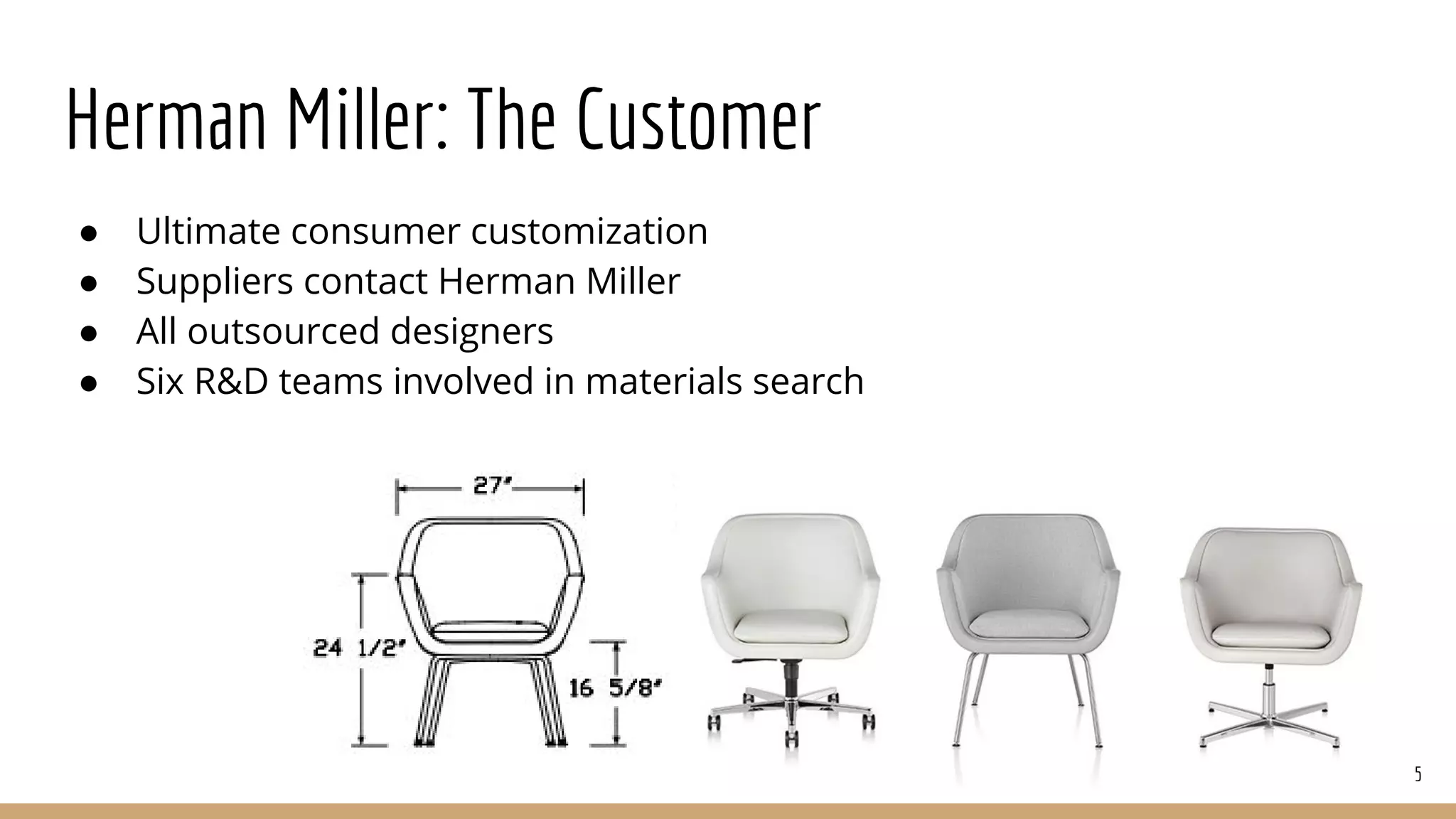
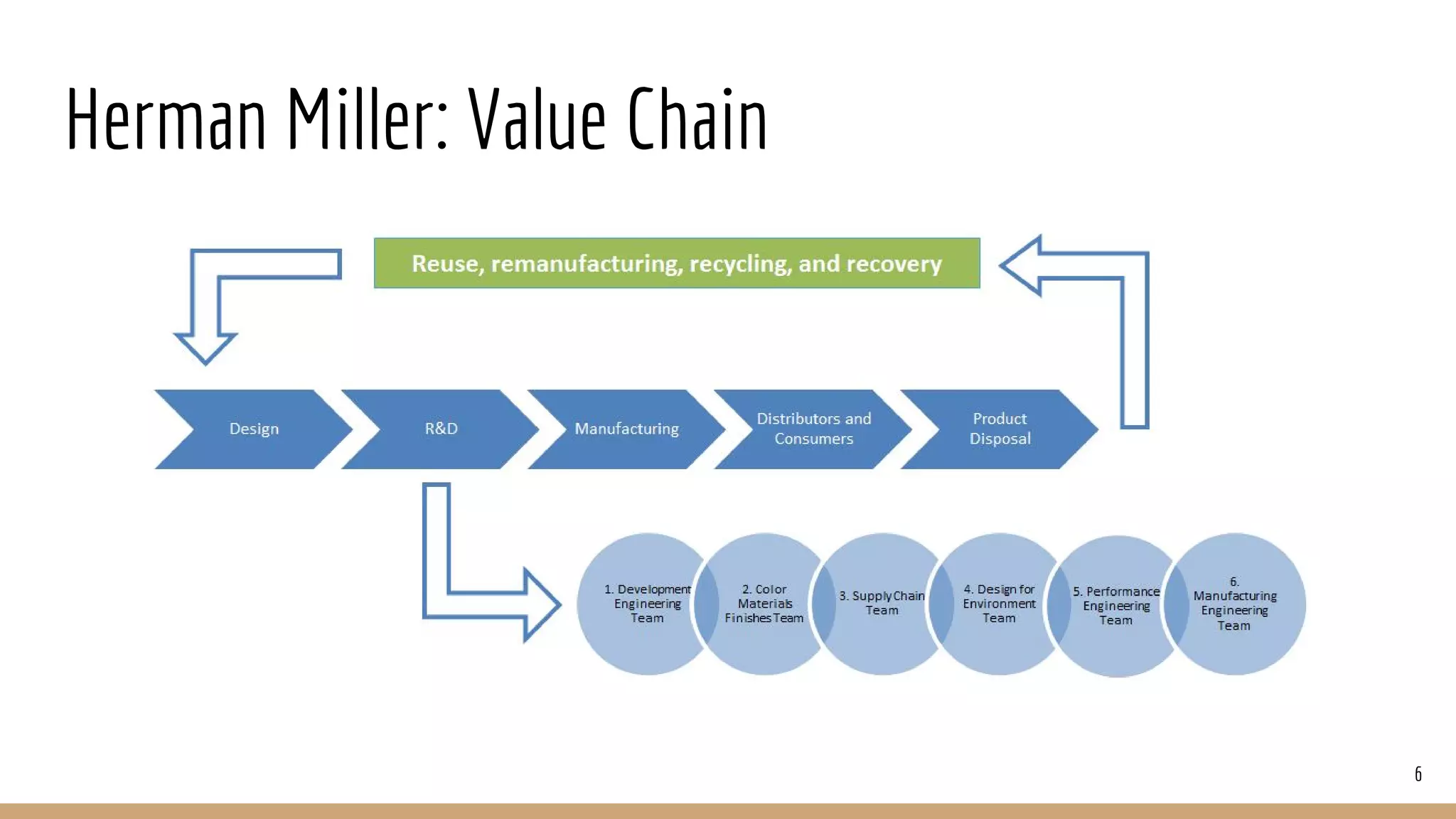
Herman Miller: The Customer
● Ultimate consumer customization
● Suppliers contact Herman Miller
● All outsourced designers
● Six R&D teams involved in materials search
5
Herman Miller: Value Chain
6
2. Prioritization of Factors
7
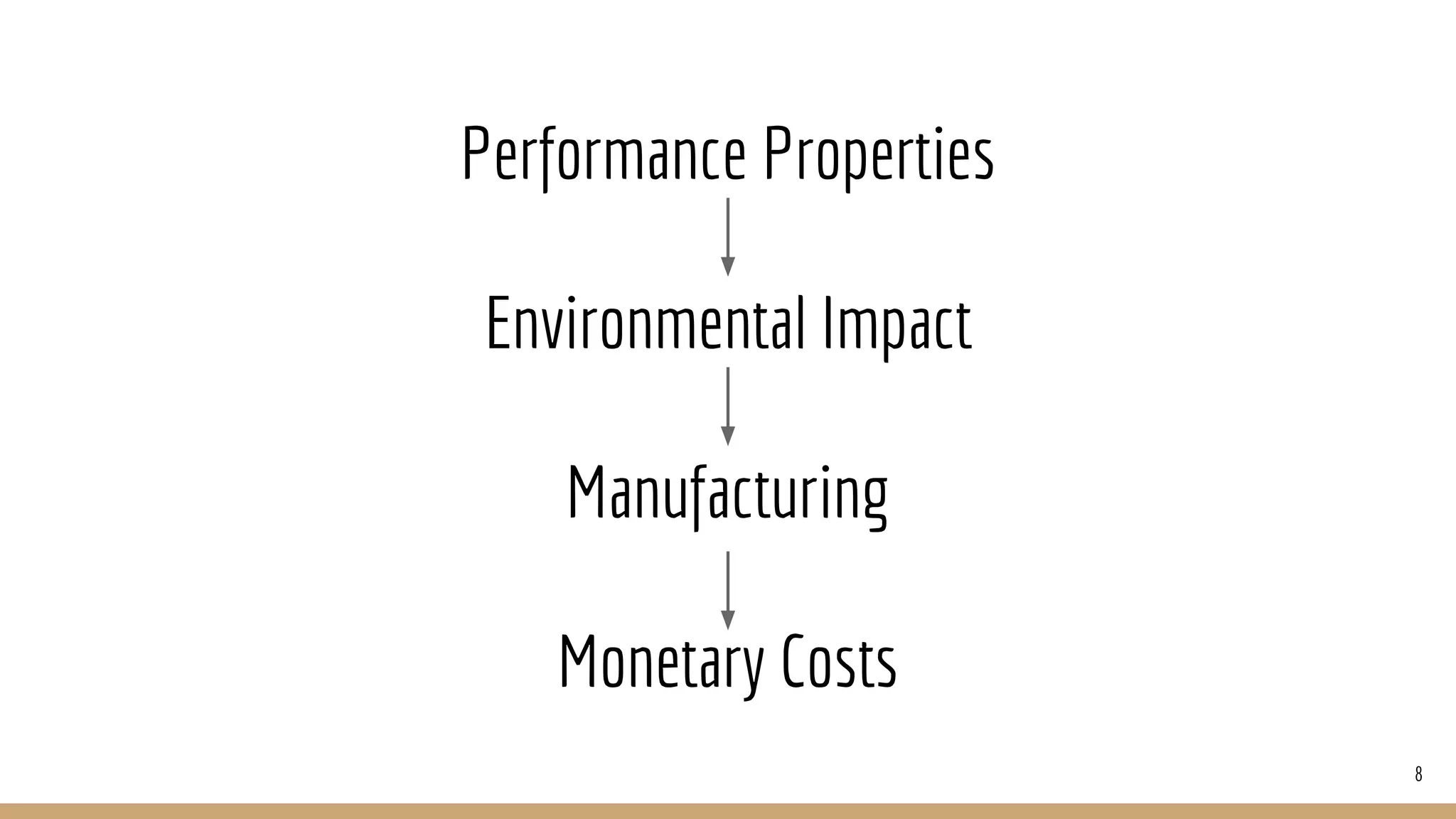
Performance Properties
Manufacturing
Monetary Costs
Environmental Impact
8
Prioritization: Performance Properties
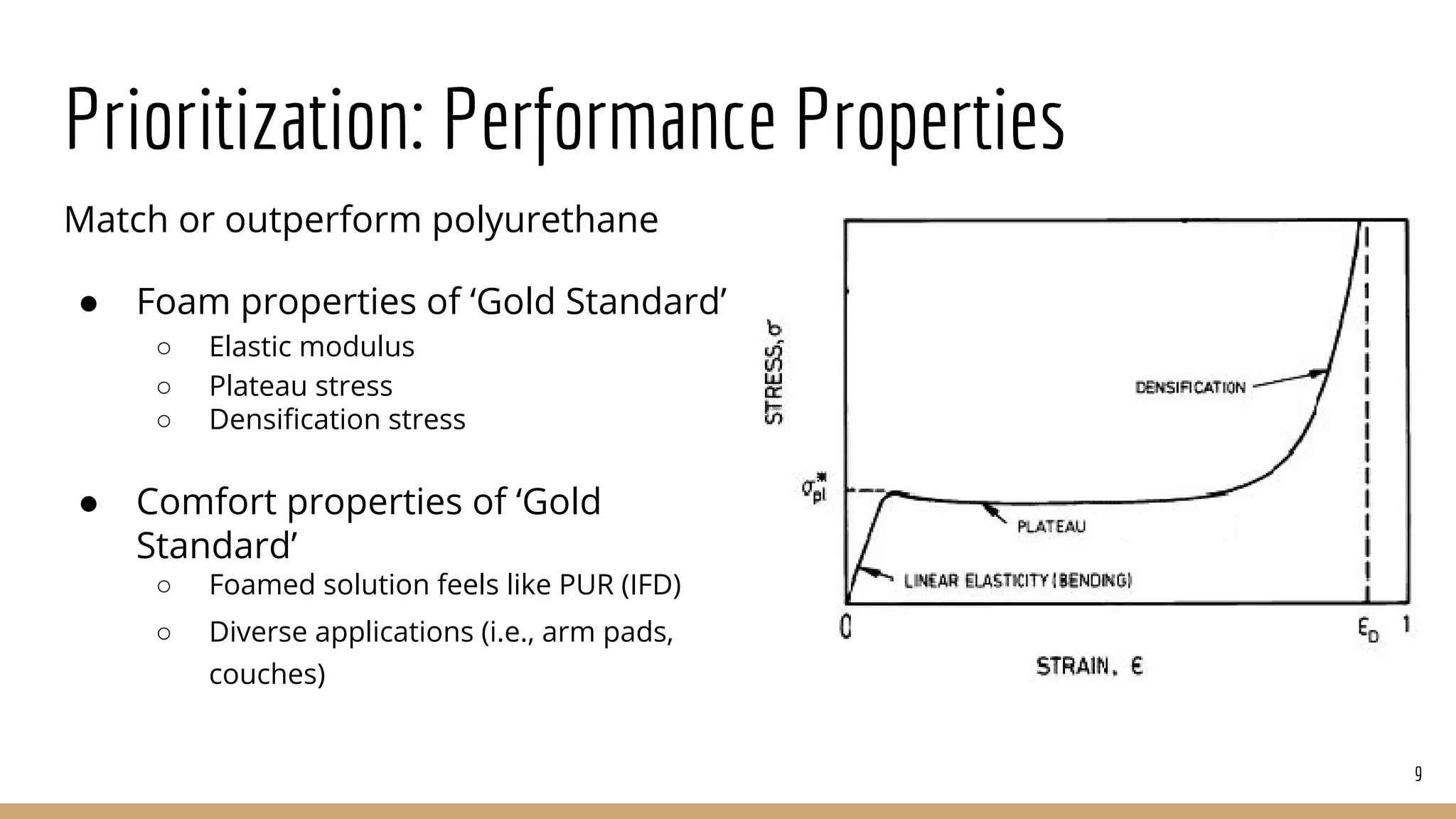
Match or outperform polyurethane
● Foam properties of ‘Gold Standard’
○ Elastic modulus
○ Plateau stress
○ Densification stress
● Comfort properties of ‘Gold
Standard’
○ Foamed solution feels like PUR (IFD)
○ Diverse applications (i.e., arm pads,
couches)
9
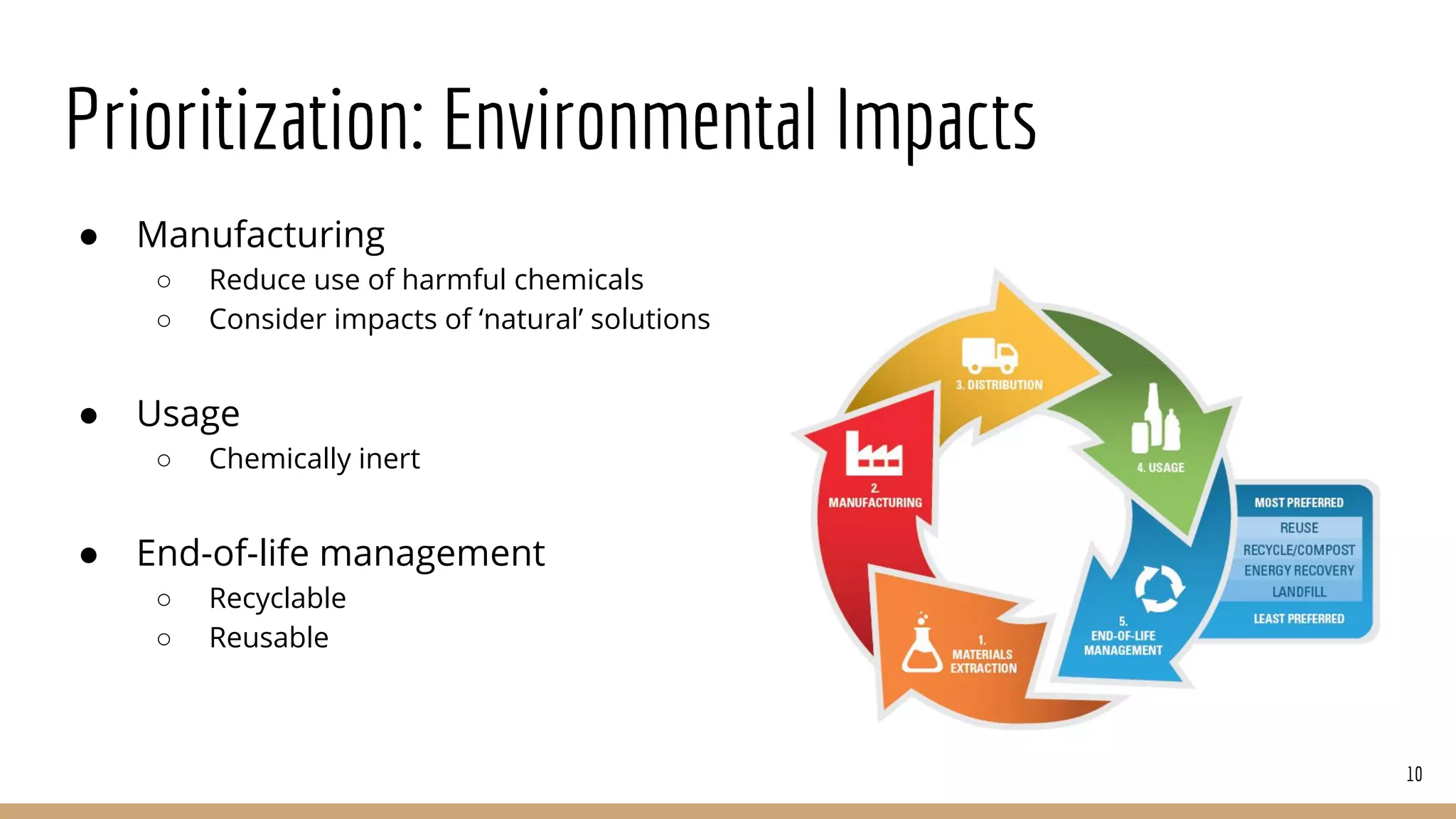
Prioritization: Environmental Impacts
● Manufacturing
○ Reduce use of harmful chemicals
○ Consider impacts of ‘natural’ solutions
● Usage
○ Chemically inert
● End-of-life management
○ Recyclable
○ Reusable
10
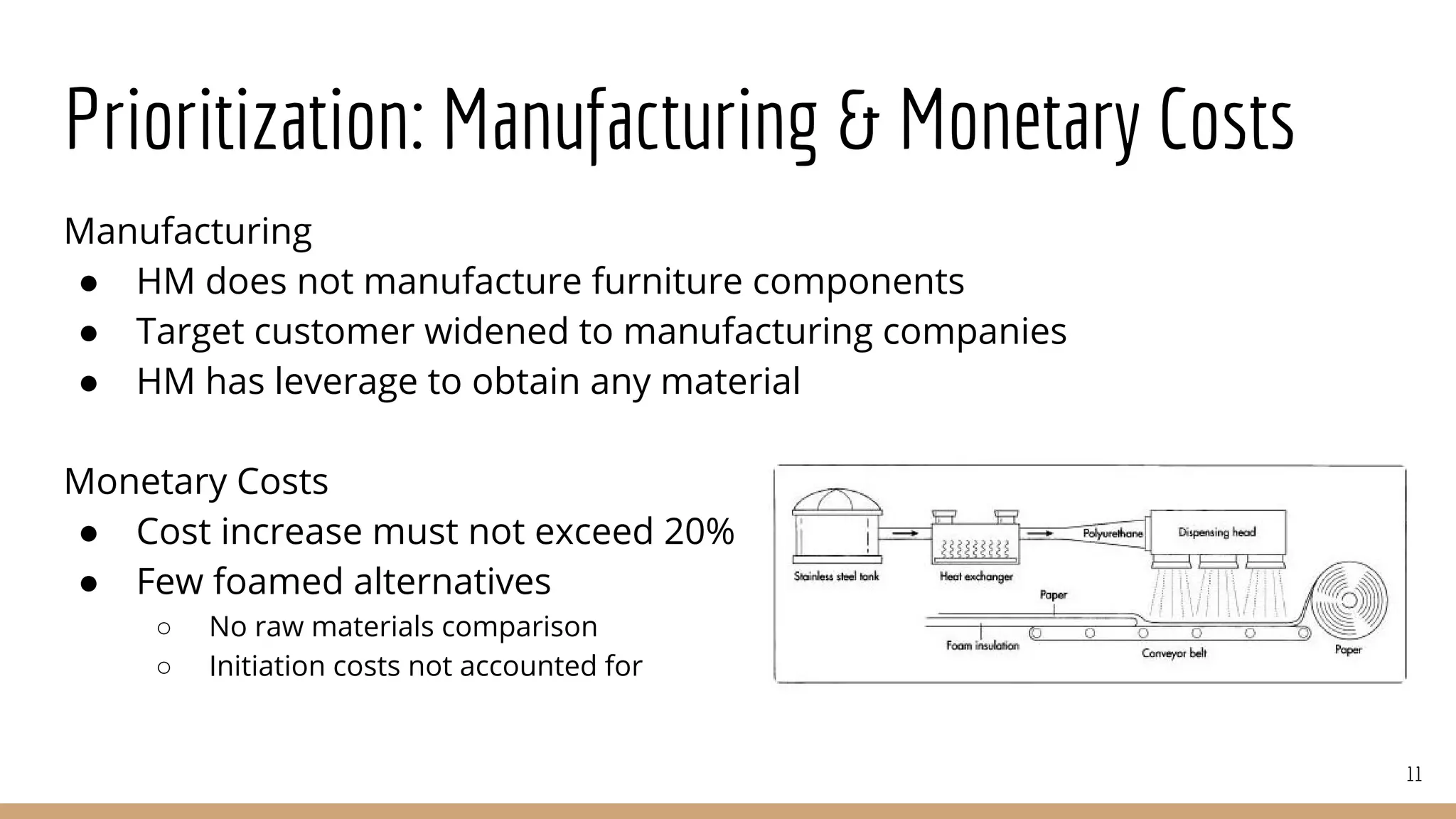
Prioritization: Manufacturing & Monetary Costs
Manufacturing
● HM does not manufacture furniture components
● Target customer widened to manufacturing companies
● HM has leverage to obtain any material
Monetary Costs
● Cost increase must not exceed 20%
● Few foamed alternatives
○ No raw materials comparison
○ Initiation costs not accounted for
11
3. Polyurethane: Gold Standard
12
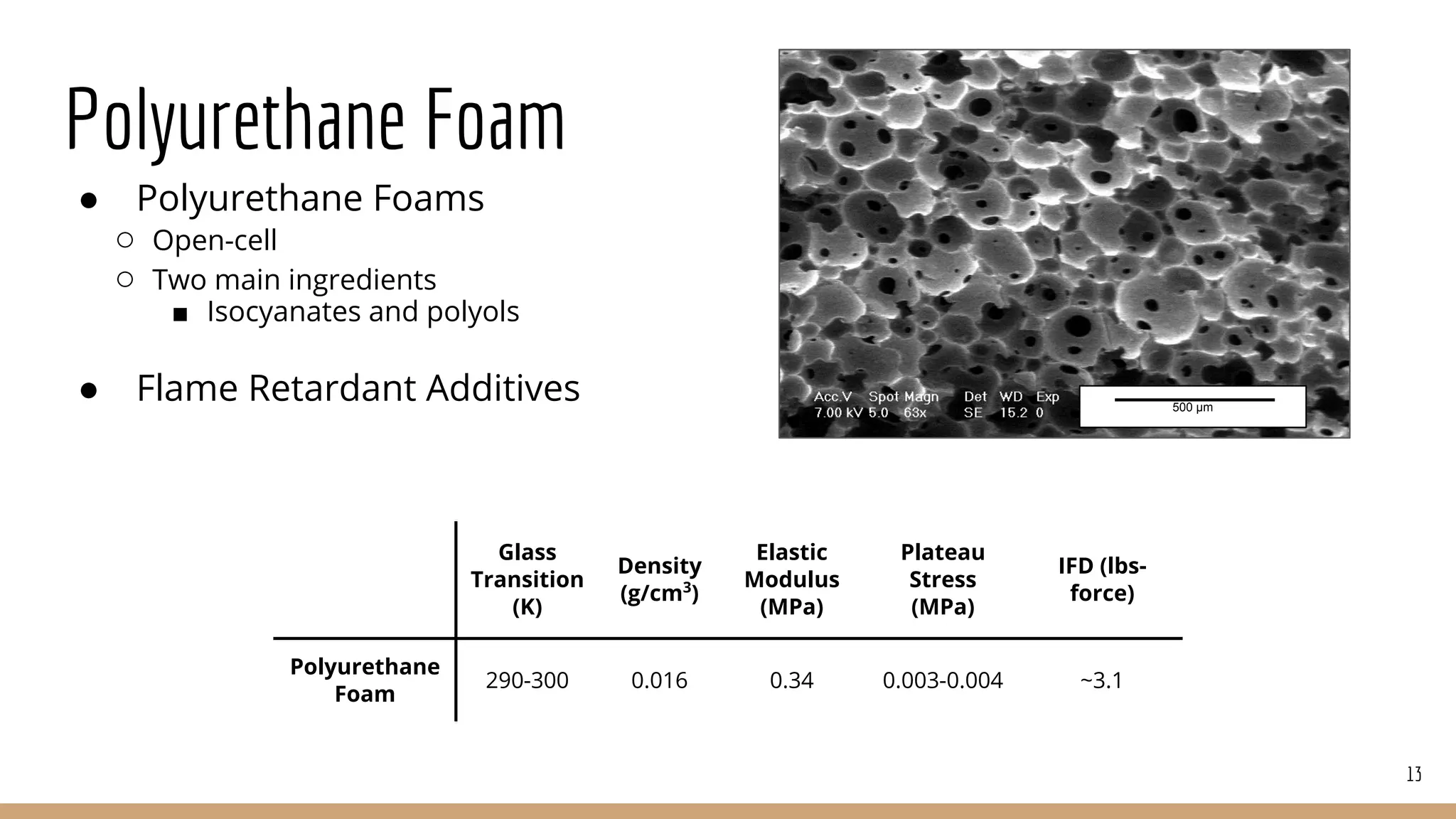
Polyurethane Foam
● Polyurethane Foams
○ Open-cell
○ Two main ingredients
■ Isocyanates and polyols
● Flame Retardant Additives
Glass
Transition
(K)
Density
(g/cm3
)
Elastic
Modulus
(MPa)
Plateau
Stress
(MPa)
IFD (lbs-
force)
Polyurethane
Foam
290-300 0.016 0.34 0.003-0.004 ~3.1
500 μm
13
4. How Foam Works
14
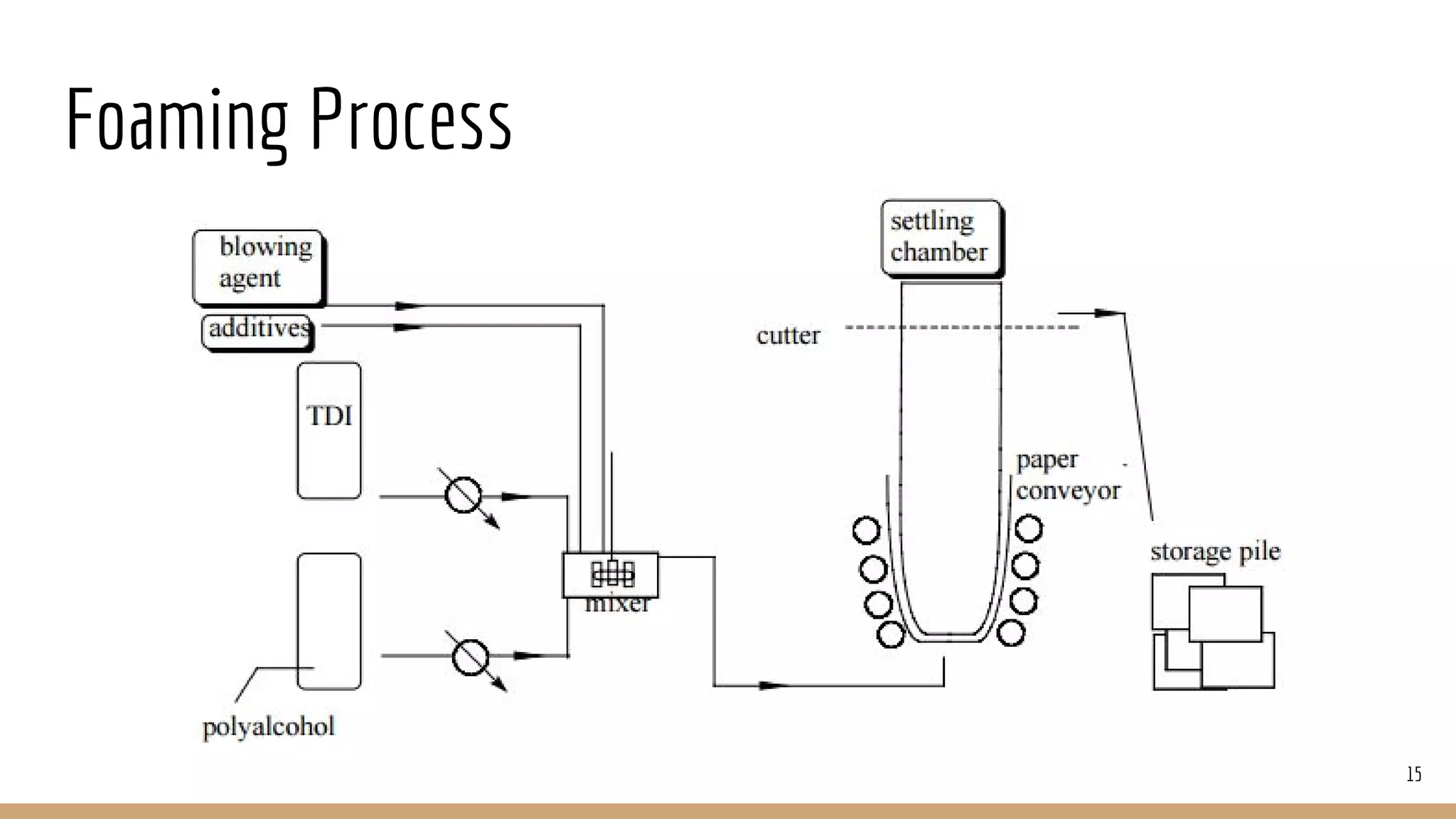
Foaming Process
15
How Foams Work
● Material Properties of Solid
○ Young’s Modulus
○ Resin Density
● Microscopic Properties of Foam
○ Relative Density
○ Cell Size
○ Cell Density
16
How Foams Work
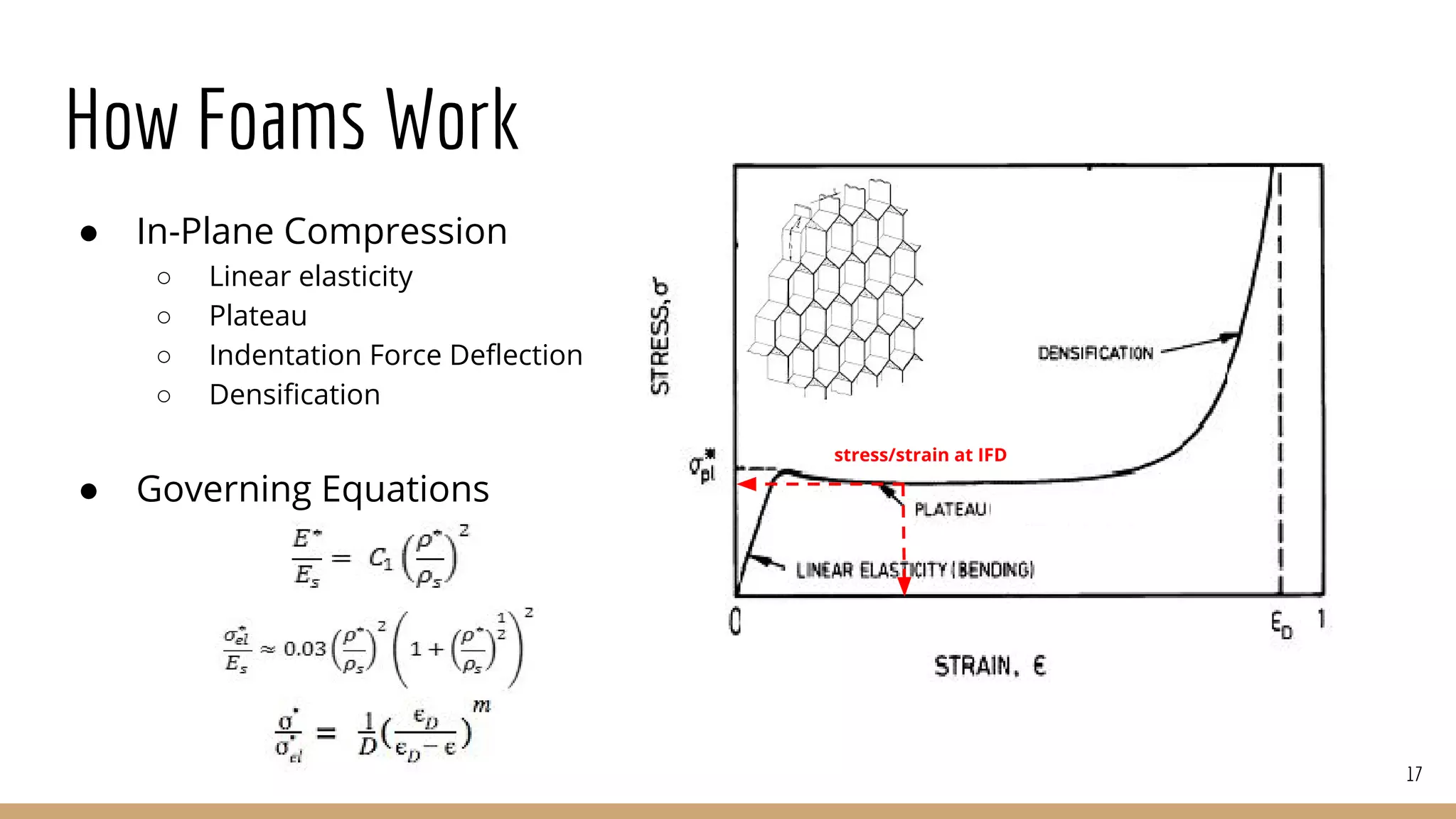
● In-Plane Compression
○ Linear elasticity
○ Plateau
○ Indentation Force Deflection
○ Densification
● Governing Equations
17
stress/strain at IFD
How Foams Work - Darcy’s Law
● Air flow through foam
○ Permeability of medium
○ Dynamic viscosity of fluid (air)
● Governs recovery time
18
5. Our Solution
19
Program to Predict Foam
● Inputs
○ Resin options
■ Non-isocyanate involved
■ Thermoplastic elastomer
■ Resin density
■ Resin elastic modulus
○ Relative density
● Outputs
○ Stress-strain curve
○ Recovery time
○ IFD
20
Factors Affecting Foam
● Relative Density
○ Stress in each region
● Transition Points
○ Strain at buckling
○ Length of plateau
● Darcy’s Law
○ Air velocity
○ Recovery time
21
Our Solution - Assumptions
22
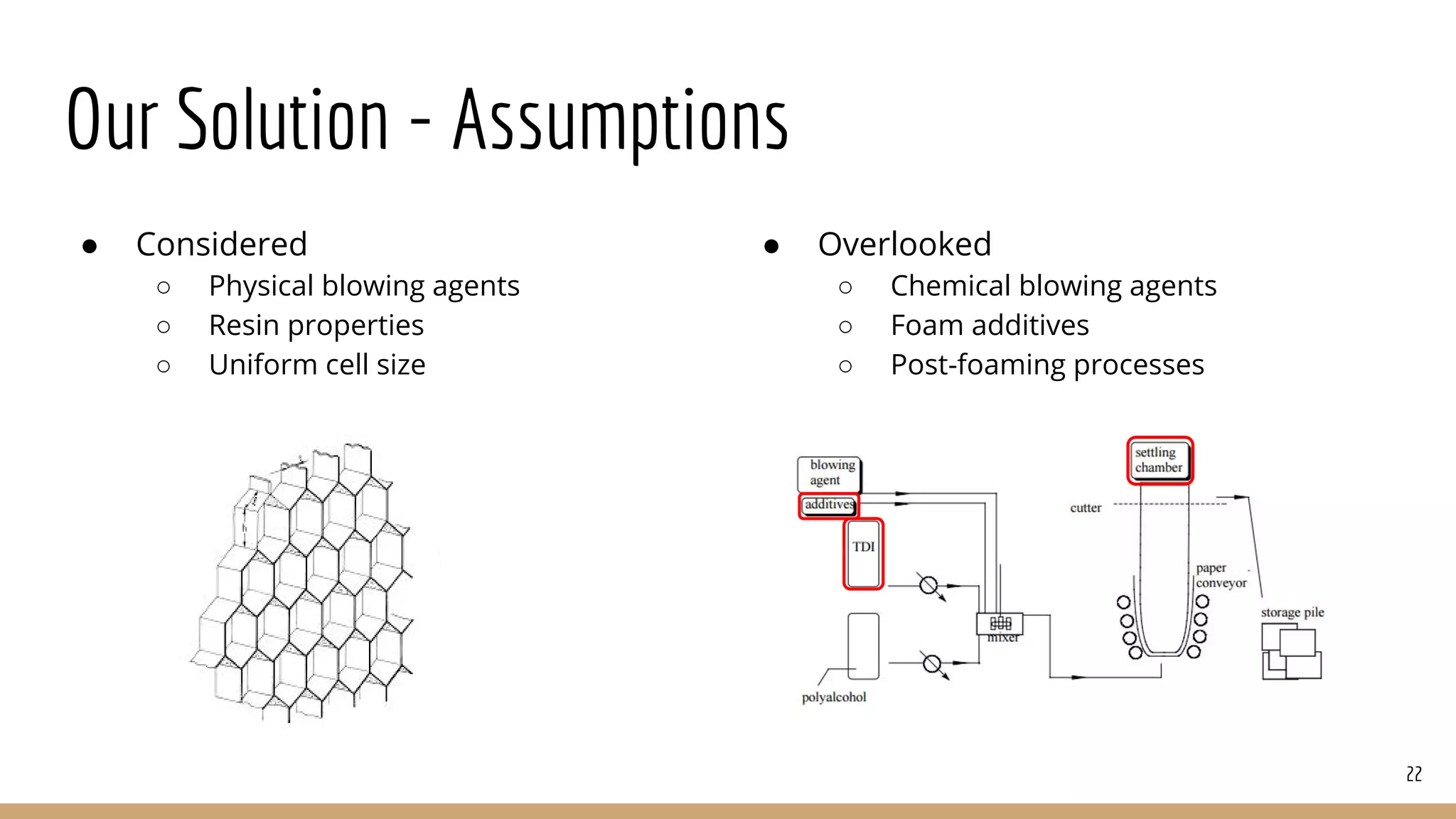
● Considered
○ Physical blowing agents
○ Resin properties
○ Uniform cell size
● Overlooked
○ Chemical blowing agents
○ Foam additives
○ Post-foaming processes
Shortcomings
Inaccuracy of Program
● Lack of accurate foaming conditions
● Lack of calibrated constants for each material
Problems with Solution
● Environmental problems unresolved
● ‘Ideal’ resin unknown
23
Questions?
24
References
https://ir.library.oregonstate.
edu/xmlui/bitstream/handle/1957/2487/FPL_2031ocr.pdf;
jsessionid=8D30129A19AA18B020122730E7BF353E?sequence=1
25

Herman Miller Flexible Foam Substitute