ACUTE HEPATITIS
(vs. Chronic
Hepatitis)
Dr. A. B. M. Adnan
Associate Professor, Hepatology
Pathophysiology:
Acute Hepatitis (mild)
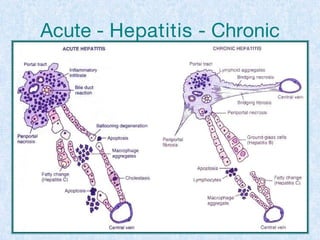
 Acute inflammation of the liver parenchyma.
 Acute inflammatory cell infiltration
 Inflammatory exudates and oedema
 Swelling of cells, balloon degeneration
→ All result in organomegaly
Pathophysiology:
Acute Hepatitis (severe)
In severe organ inflammation:
 Widespread cell damage and cell death
 Organ shrinkage
 Features of organ failure (hepatic failure)
• disorientation, confusion, coma
• deepening jaundice
• bleeding manifestation
Pathophysiology:
Chronic Hepatitis
• Persistant hepatocyte injury
– Alcohol, virus, drugs, toxins, genetic etc.
• Chronic inflammation – chronic hepatitis
– Cell necrosis + Fibrosis
• Bridging fibrosis.
• Regeneration of remaining hepatocytes
forming nodules.
• Loss of vascular arrangement results in
regenerating hepatocytes ineffective.
Acute - Hepatitis - Chronic
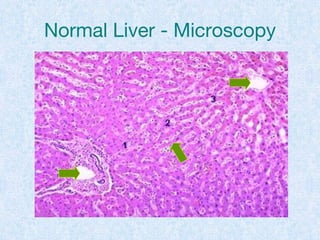
Normal Liver - Microscopy
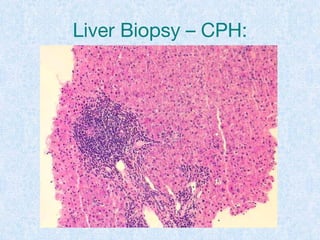
Liver Biopsy – CPH:
Causes of Acute Hepatitis
A.Viral causes
B.Non-viral causes
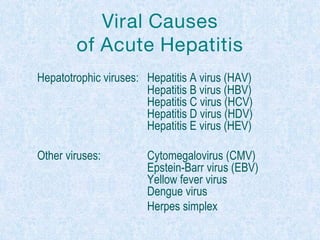
Viral Causes
of Acute Hepatitis
Hepatotrophic viruses: Hepatitis A virus (HAV)
Hepatitis B virus (HBV)
Hepatitis C virus (HCV)
Hepatitis D virus (HDV)
Hepatitis E virus (HEV)
Other viruses: Cytomegalovirus (CMV)
Epstein-Barr virus (EBV)
Yellow fever virus
Dengue virus
Herpes simplex
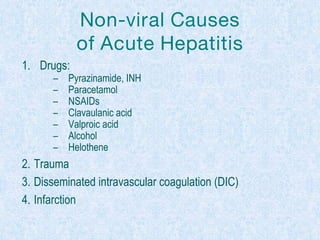
Non-viral Causes
of Acute Hepatitis
1. Drugs:
– Pyrazinamide, INH
– Paracetamol
– NSAIDs
– Clavaulanic acid
– Valproic acid
– Alcohol
– Helothene
2. Trauma
3. Disseminated intravascular coagulation (DIC)
4. Infarction
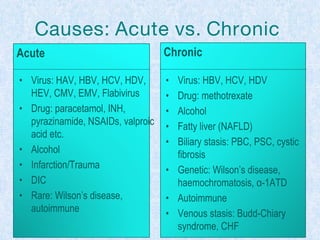
Chronic
Acute
Causes: Acute vs. Chronic
• Virus: HAV, HBV, HCV, HDV,
HEV, CMV, EMV, Flabivirus
• Drug: paracetamol, INH,
pyrazinamide, NSAIDs, valproic
acid etc.
• Alcohol
• Infarction/Trauma
• DIC
• Rare: Wilson’s disease,
autoimmune
• Virus: HBV, HCV, HDV
• Drug: methotrexate
• Alcohol
• Fatty liver (NAFLD)
• Biliary stasis: PBC, PSC, cystic
fibrosis
• Genetic: Wilson’s disease,
haemochromatosis, α-1ATD
• Autoimmune
• Venous stasis: Budd-Chiary
syndrome, CHF
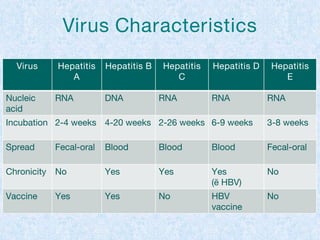
Virus Characteristics
Virus Hepatitis
A
Hepatitis B Hepatitis
C
Hepatitis D Hepatitis
E
Nucleic
acid
RNA DNA RNA RNA RNA
Incubation 2-4 weeks 4-20 weeks 2-26 weeks 6-9 weeks 3-8 weeks
Spread Fecal-oral Blood Blood Blood Fecal-oral
Chronicity No Yes Yes Yes
(ē HBV)
No
Vaccine Yes Yes No HBV
vaccine
No
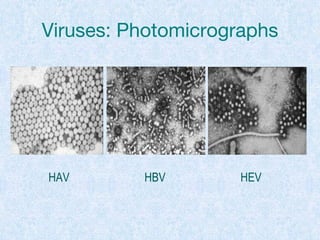
Viruses: Photomicrographs
HAV HBV HEV
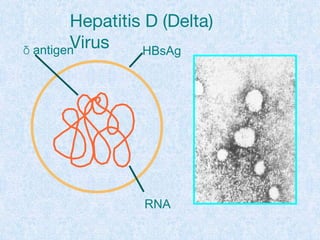
HBsAg
RNA
 antigen
Hepatitis D (Delta)
Virus
Clinical Features:
Symptoms
• Asymptomatic
• Prodromal symptoms: weakness, myalgia,
arthralgia, headache
• GI symptoms: anorexia, nausea, vomiting,
lose stool, constipation, abdominal
discomfort/pain
• Yellow urine, yellow eyes (jaundice)
• Features of cholestasis: pruritus, pale stool,
deep jaundice
Clinical Features: Signs
• Jaundice
• Tender hepatomegaly
• Ill looking
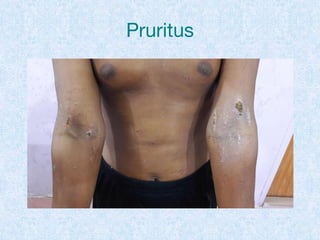
• Scratch marks for pruritus
• Splenomegaly
• Features of complications: Hepatic
failure, bleeding, infection
Pruritus
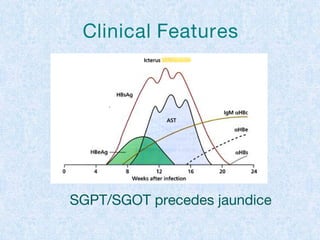
Clinical Features
SGPT/SGOT precedes jaundice
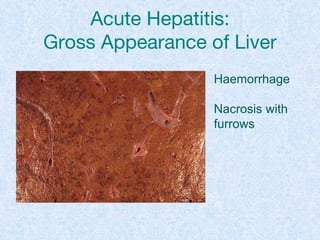
Acute Hepatitis:
Gross Appearance of Liver
Haemorrhage
Nacrosis with
furrows
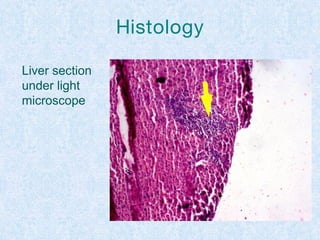
Histology
Liver section
under light
microscope
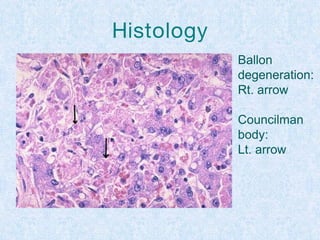
Histology
Ballon
degeneration:
Rt. arrow
Councilman
body:
Lt. arrow
Outline
• Pathophysiology of acute hepatitis
• Difference with chronic liver disease
• Causes of acute (vs. chronic) hepatitis
• Characteristics of hepatotrophic viruses
• Clinical features
• Complications
• Investigations
• Management
• Fulminant hepatic failure
Complications
• Acute liver failure/Fulminant HF (esp. AVH
in pregnancy)
• Hepato-renal syndrome
• Hypoglycaemia
• Cholestatic hepatitis (hepatitis A)
• Aplastic anaemia
• Chronic liver disease and cirrhosis
(hepatitis B and C)
• Relapsing hepatitis
Investigations
• Liver function tests:
– SGPT, SGOT
– Serum bilirubin
– Prothrombin time
• Viral markers:
- HBsAg, Anti-HEV IgM, Anti-HAV IgM, Anti-HCV
• USG of liver:
- Hypoechoic liver parenchyma
• Others:
- CBC, Blood sugar, RFT, electrolytes etc.
Management
A. General measures:
1. Complete bed rest
2. Nutrition: normal diet
3. Remove offending cause, if any.
B. Medications:
1. Mostly symptomatic
PPI, anti-emetics, laxatives, UDCA, antibiotics
2. Avoid sedatives, narcotics, NSAIDs, diuretics,
alcohol,
elective surgery/trauma
3. Management of complications.
Acute Liver Failure
Acute Liver Failure
• Synonym: Fulminant hepatic failure.
• Liver failure occurring in the setting of acute
hepatitis.
• Feature of liver failure: encephalopathy,
bleeding manifestation, hypoalbuminaemia.
• Definition: the syndrome occurring within 8
weeks of onset of the precipitating illness, in the
absence of evidence of preexisting liver disease.
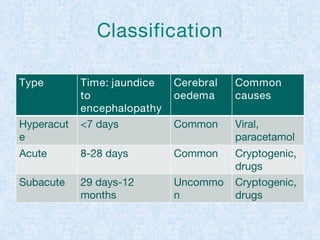
Classification
Type Time: jaundice
to
encephalopathy
Cerebral
oedema
Common
causes
Hyperacut
e
<7 days Common Viral,
paracetamol
Acute 8-28 days Common Cryptogenic,
drugs
Subacute 29 days-12
months
Uncommo
n
Cryptogenic,
drugs
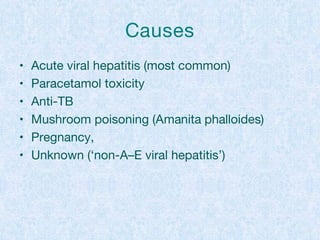
Causes
• Acute viral hepatitis (most common)
• Paracetamol toxicity
• Anti-TB
• Mushroom poisoning (Amanita phalloides)
• Pregnancy,
• Unknown (‘non-A–E viral hepatitis’)
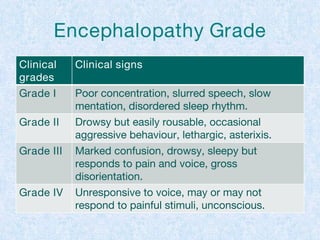
Encephalopathy Grade
Clinical
grades
Clinical signs
Grade I Poor concentration, slurred speech, slow
mentation, disordered sleep rhythm.
Grade II Drowsy but easily rousable, occasional
aggressive behaviour, lethargic, asterixis.
Grade III Marked confusion, drowsy, sleepy but
responds to pain and voice, gross
disorientation.
Grade IV Unresponsive to voice, may or may not
respond to painful stimuli, unconscious.
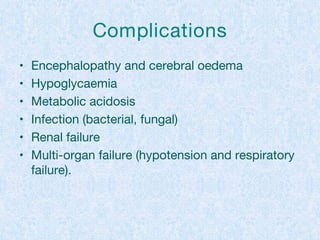
Complications
• Encephalopathy and cerebral oedema
• Hypoglycaemia
• Metabolic acidosis
• Infection (bacterial, fungal)
• Renal failure
• Multi-organ failure (hypotension and respiratory
failure).
Monitoring
Cardiorespiratory
• Pulse
• Blood pressure
• Central venous pressure
• Respiratory rate
Neurological
• Intracranial pressure monitoring (specialist units)
• Conscious level
Fluid balance
• Hourly output (urine, vomiting, diarrhoea)
• Input: oral, intravenous
Investigations
• To determine cause:
Anti-HEV IgM, anti-HBc IgM, anti-HAV IgM,
CMV, HCV, EBV.
S. caeruloplasmin & copper, u. copper, slit-lamp exam.
Autoantibodies: ANA, ASMA, LKM, SLA.
• LFTs: Prothrombin time (2 hourly), ALT, s. bilirubin.
• To assess complication:
RBS (2-hourly), creatinine, electrolytes, ABG, CBC,
platelet
• USG, Doppler study
Management
• Admission in HDU/ICU
• Surveillance of complications
• Maintenance of nutrition
• Treatment of complications
• Transplantation.

Hepatitis Acute versus Chronic Causes Pathophysiology.pdf

  • 1.
    ACUTE HEPATITIS (vs. Chronic Hepatitis) Dr.A. B. M. Adnan Associate Professor, Hepatology
  • 2.
    Pathophysiology: Acute Hepatitis (mild) Acute inflammation of the liver parenchyma.  Acute inflammatory cell infiltration  Inflammatory exudates and oedema  Swelling of cells, balloon degeneration → All result in organomegaly
  • 3.
    Pathophysiology: Acute Hepatitis (severe) Insevere organ inflammation:  Widespread cell damage and cell death  Organ shrinkage  Features of organ failure (hepatic failure) • disorientation, confusion, coma • deepening jaundice • bleeding manifestation
  • 4.
    Pathophysiology: Chronic Hepatitis • Persistanthepatocyte injury – Alcohol, virus, drugs, toxins, genetic etc. • Chronic inflammation – chronic hepatitis – Cell necrosis + Fibrosis • Bridging fibrosis. • Regeneration of remaining hepatocytes forming nodules. • Loss of vascular arrangement results in regenerating hepatocytes ineffective.
  • 5.
  • 6.
    Normal Liver -Microscopy
  • 7.
  • 8.
    Causes of AcuteHepatitis A.Viral causes B.Non-viral causes
  • 9.
    Viral Causes of AcuteHepatitis Hepatotrophic viruses: Hepatitis A virus (HAV) Hepatitis B virus (HBV) Hepatitis C virus (HCV) Hepatitis D virus (HDV) Hepatitis E virus (HEV) Other viruses: Cytomegalovirus (CMV) Epstein-Barr virus (EBV) Yellow fever virus Dengue virus Herpes simplex
  • 10.
    Non-viral Causes of AcuteHepatitis 1. Drugs: – Pyrazinamide, INH – Paracetamol – NSAIDs – Clavaulanic acid – Valproic acid – Alcohol – Helothene 2. Trauma 3. Disseminated intravascular coagulation (DIC) 4. Infarction
  • 11.
    Chronic Acute Causes: Acute vs.Chronic • Virus: HAV, HBV, HCV, HDV, HEV, CMV, EMV, Flabivirus • Drug: paracetamol, INH, pyrazinamide, NSAIDs, valproic acid etc. • Alcohol • Infarction/Trauma • DIC • Rare: Wilson’s disease, autoimmune • Virus: HBV, HCV, HDV • Drug: methotrexate • Alcohol • Fatty liver (NAFLD) • Biliary stasis: PBC, PSC, cystic fibrosis • Genetic: Wilson’s disease, haemochromatosis, α-1ATD • Autoimmune • Venous stasis: Budd-Chiary syndrome, CHF
  • 12.
    Virus Characteristics Virus Hepatitis A HepatitisB Hepatitis C Hepatitis D Hepatitis E Nucleic acid RNA DNA RNA RNA RNA Incubation 2-4 weeks 4-20 weeks 2-26 weeks 6-9 weeks 3-8 weeks Spread Fecal-oral Blood Blood Blood Fecal-oral Chronicity No Yes Yes Yes (ē HBV) No Vaccine Yes Yes No HBV vaccine No
  • 13.
  • 14.
  • 15.
    Clinical Features: Symptoms • Asymptomatic •Prodromal symptoms: weakness, myalgia, arthralgia, headache • GI symptoms: anorexia, nausea, vomiting, lose stool, constipation, abdominal discomfort/pain • Yellow urine, yellow eyes (jaundice) • Features of cholestasis: pruritus, pale stool, deep jaundice
  • 16.
    Clinical Features: Signs •Jaundice • Tender hepatomegaly • Ill looking • Scratch marks for pruritus • Splenomegaly • Features of complications: Hepatic failure, bleeding, infection
  • 17.
  • 18.
  • 19.
    Acute Hepatitis: Gross Appearanceof Liver Haemorrhage Nacrosis with furrows
  • 20.
  • 21.
  • 22.
    Outline • Pathophysiology ofacute hepatitis • Difference with chronic liver disease • Causes of acute (vs. chronic) hepatitis • Characteristics of hepatotrophic viruses • Clinical features • Complications • Investigations • Management • Fulminant hepatic failure
  • 23.
    Complications • Acute liverfailure/Fulminant HF (esp. AVH in pregnancy) • Hepato-renal syndrome • Hypoglycaemia • Cholestatic hepatitis (hepatitis A) • Aplastic anaemia • Chronic liver disease and cirrhosis (hepatitis B and C) • Relapsing hepatitis
  • 24.
    Investigations • Liver functiontests: – SGPT, SGOT – Serum bilirubin – Prothrombin time • Viral markers: - HBsAg, Anti-HEV IgM, Anti-HAV IgM, Anti-HCV • USG of liver: - Hypoechoic liver parenchyma • Others: - CBC, Blood sugar, RFT, electrolytes etc.
  • 25.
    Management A. General measures: 1.Complete bed rest 2. Nutrition: normal diet 3. Remove offending cause, if any. B. Medications: 1. Mostly symptomatic PPI, anti-emetics, laxatives, UDCA, antibiotics 2. Avoid sedatives, narcotics, NSAIDs, diuretics, alcohol, elective surgery/trauma 3. Management of complications.
  • 26.
  • 27.
    Acute Liver Failure •Synonym: Fulminant hepatic failure. • Liver failure occurring in the setting of acute hepatitis. • Feature of liver failure: encephalopathy, bleeding manifestation, hypoalbuminaemia. • Definition: the syndrome occurring within 8 weeks of onset of the precipitating illness, in the absence of evidence of preexisting liver disease.
  • 28.
    Classification Type Time: jaundice to encephalopathy Cerebral oedema Common causes Hyperacut e <7days Common Viral, paracetamol Acute 8-28 days Common Cryptogenic, drugs Subacute 29 days-12 months Uncommo n Cryptogenic, drugs
  • 29.
    Causes • Acute viralhepatitis (most common) • Paracetamol toxicity • Anti-TB • Mushroom poisoning (Amanita phalloides) • Pregnancy, • Unknown (‘non-A–E viral hepatitis’)
  • 30.
    Encephalopathy Grade Clinical grades Clinical signs GradeI Poor concentration, slurred speech, slow mentation, disordered sleep rhythm. Grade II Drowsy but easily rousable, occasional aggressive behaviour, lethargic, asterixis. Grade III Marked confusion, drowsy, sleepy but responds to pain and voice, gross disorientation. Grade IV Unresponsive to voice, may or may not respond to painful stimuli, unconscious.
  • 31.
    Complications • Encephalopathy andcerebral oedema • Hypoglycaemia • Metabolic acidosis • Infection (bacterial, fungal) • Renal failure • Multi-organ failure (hypotension and respiratory failure).
  • 32.
    Monitoring Cardiorespiratory • Pulse • Bloodpressure • Central venous pressure • Respiratory rate Neurological • Intracranial pressure monitoring (specialist units) • Conscious level Fluid balance • Hourly output (urine, vomiting, diarrhoea) • Input: oral, intravenous
  • 33.
    Investigations • To determinecause: Anti-HEV IgM, anti-HBc IgM, anti-HAV IgM, CMV, HCV, EBV. S. caeruloplasmin & copper, u. copper, slit-lamp exam. Autoantibodies: ANA, ASMA, LKM, SLA. • LFTs: Prothrombin time (2 hourly), ALT, s. bilirubin. • To assess complication: RBS (2-hourly), creatinine, electrolytes, ABG, CBC, platelet • USG, Doppler study
  • 34.
    Management • Admission inHDU/ICU • Surveillance of complications • Maintenance of nutrition • Treatment of complications • Transplantation.