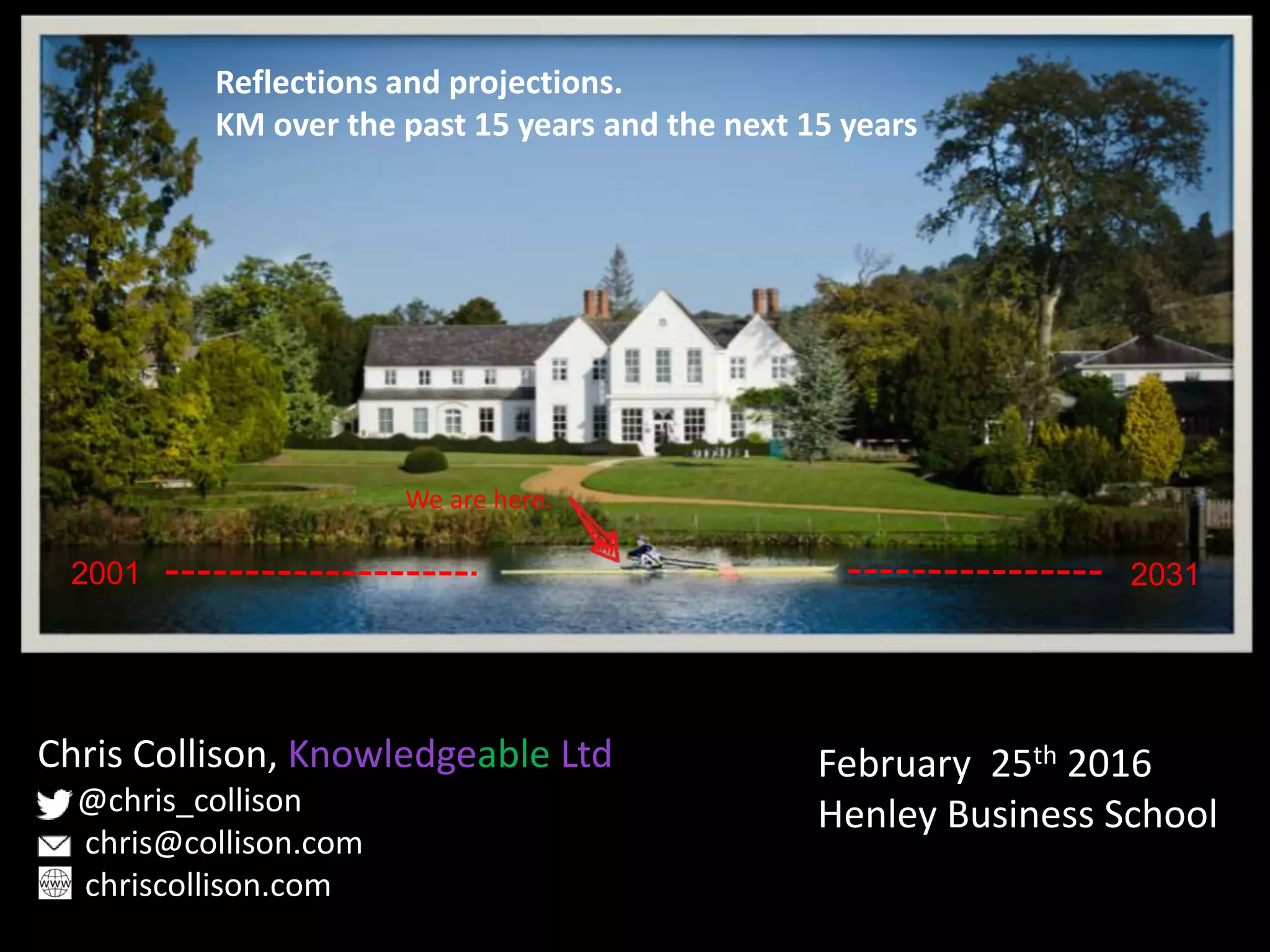



2001 2031
We are here.
Reflections and projections.
KM over the past 15 years and the next 15 years
Chris Collison, Knowledgeable Ltd
@chris_collison
chris@collison.com
chriscollison.com
February 25th 2016
Henley Business School
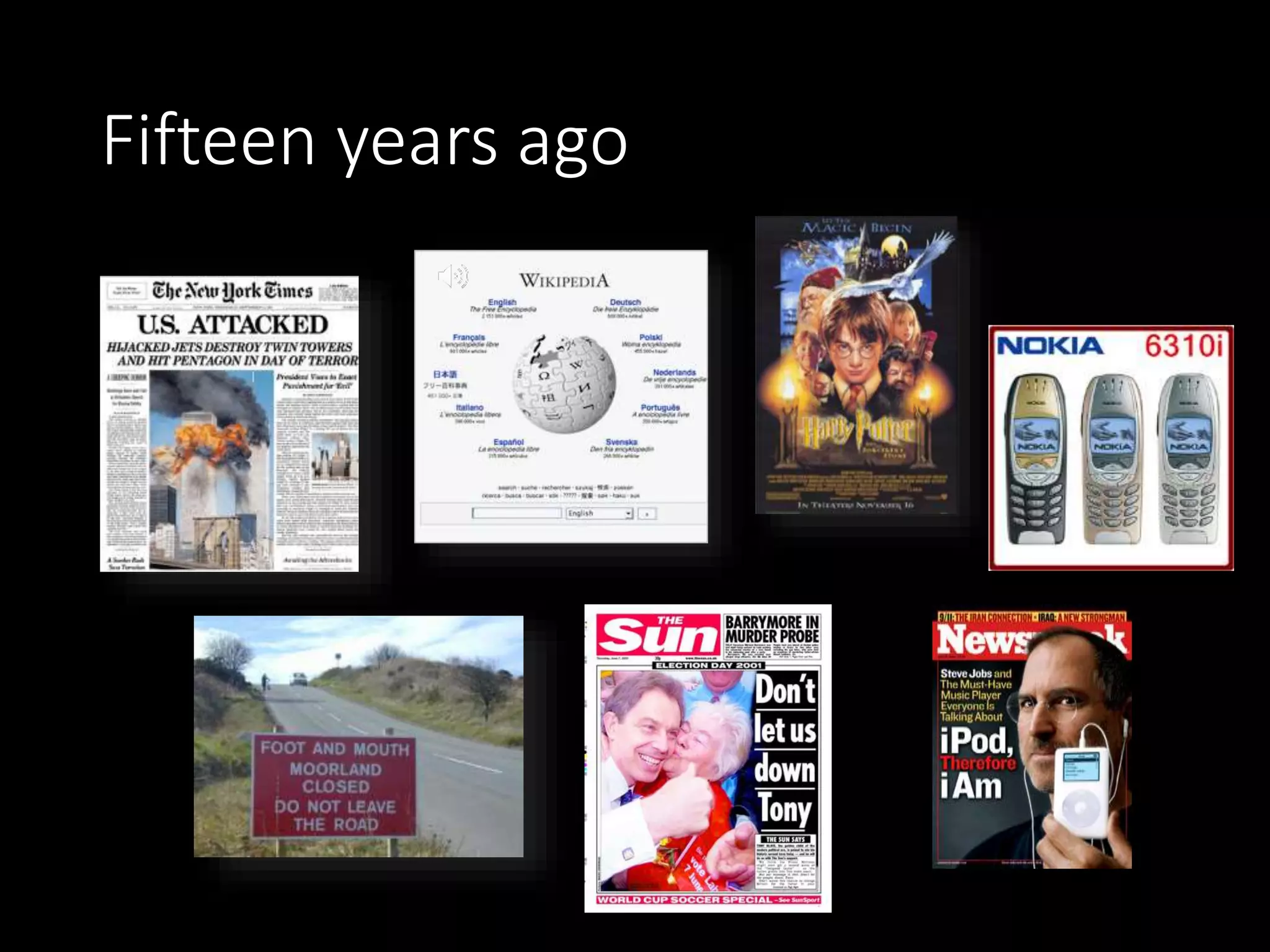
Fifteen years ago
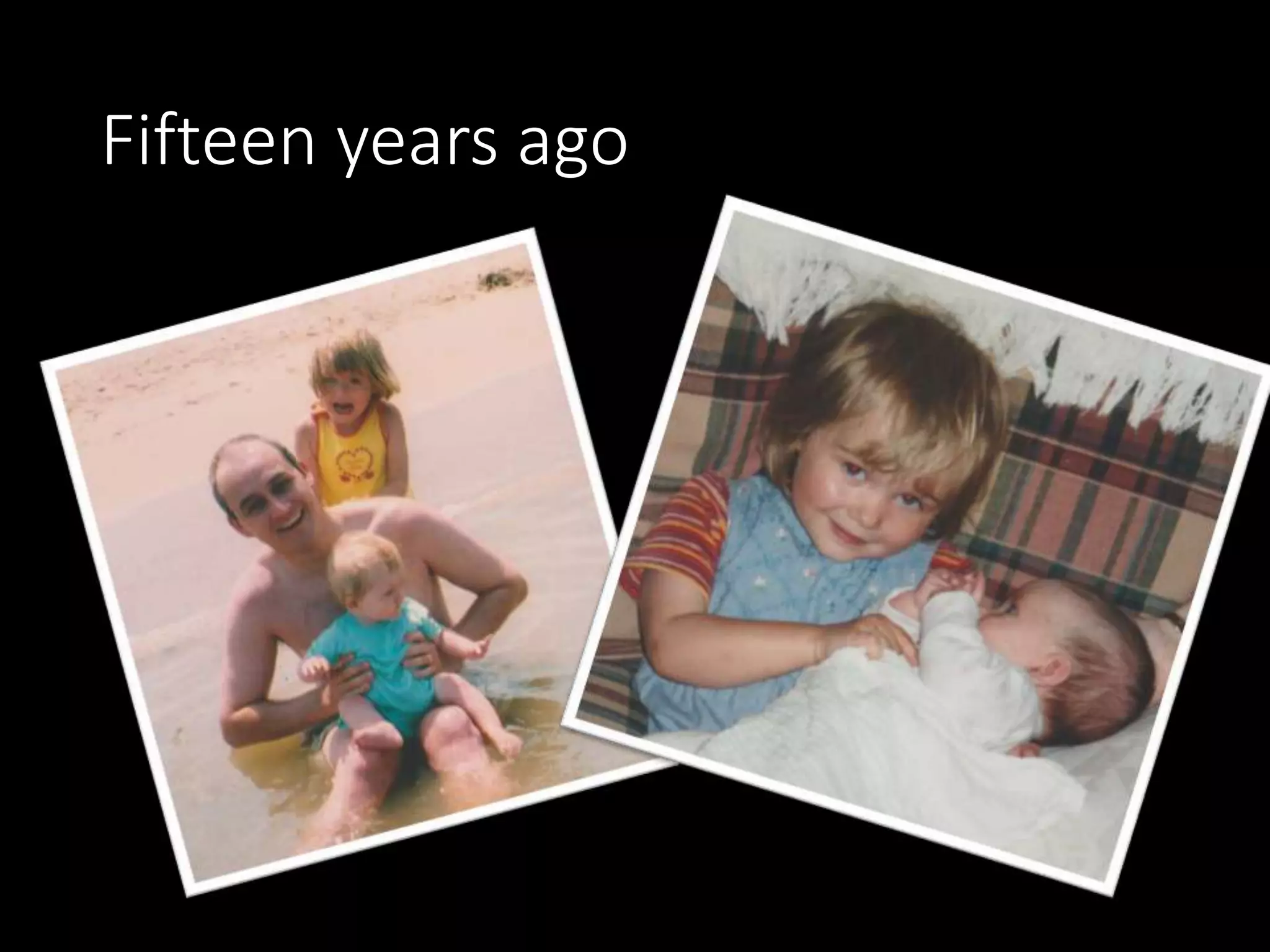
Fifteen years ago
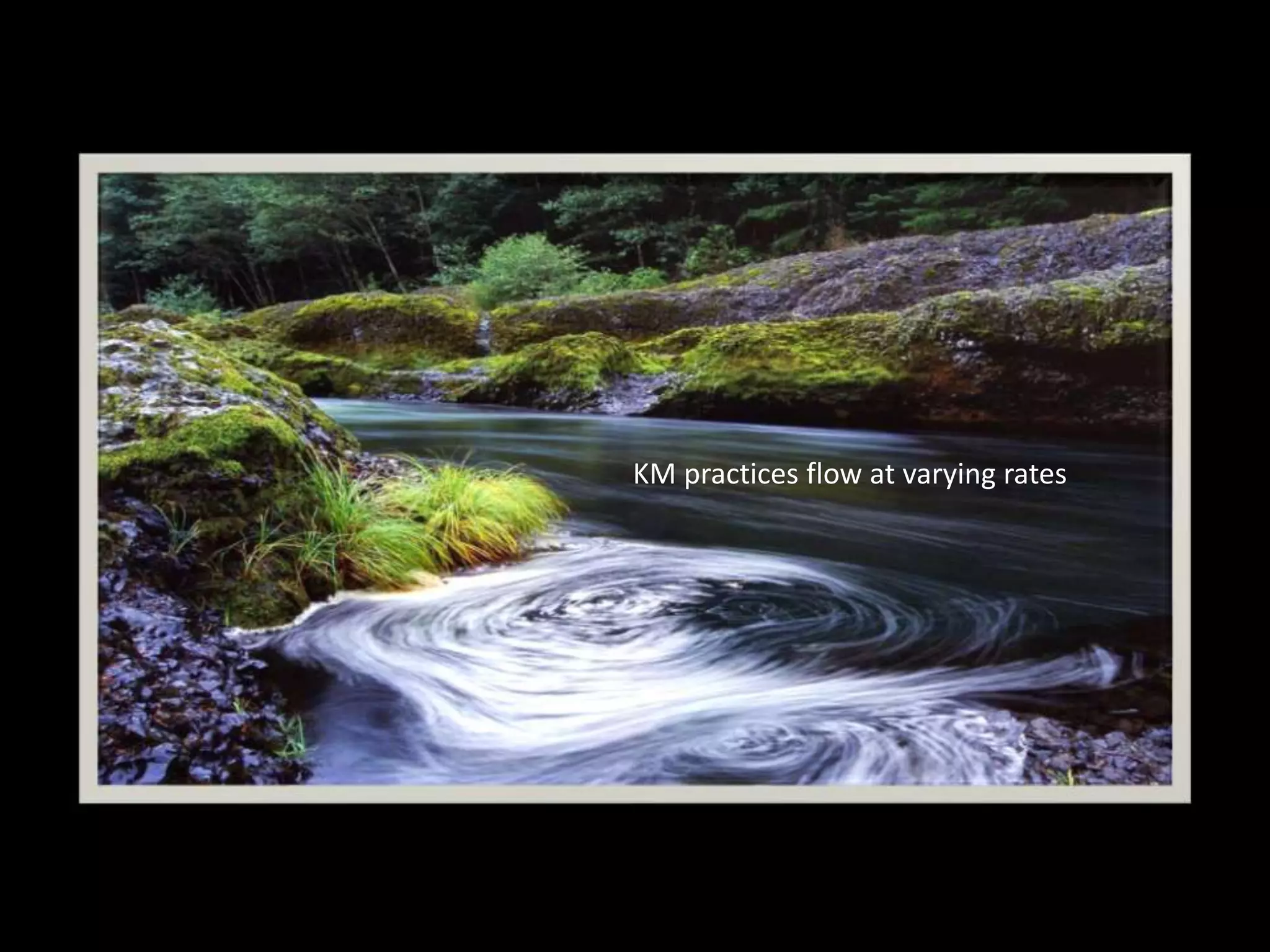
KM practices flow at varying rates
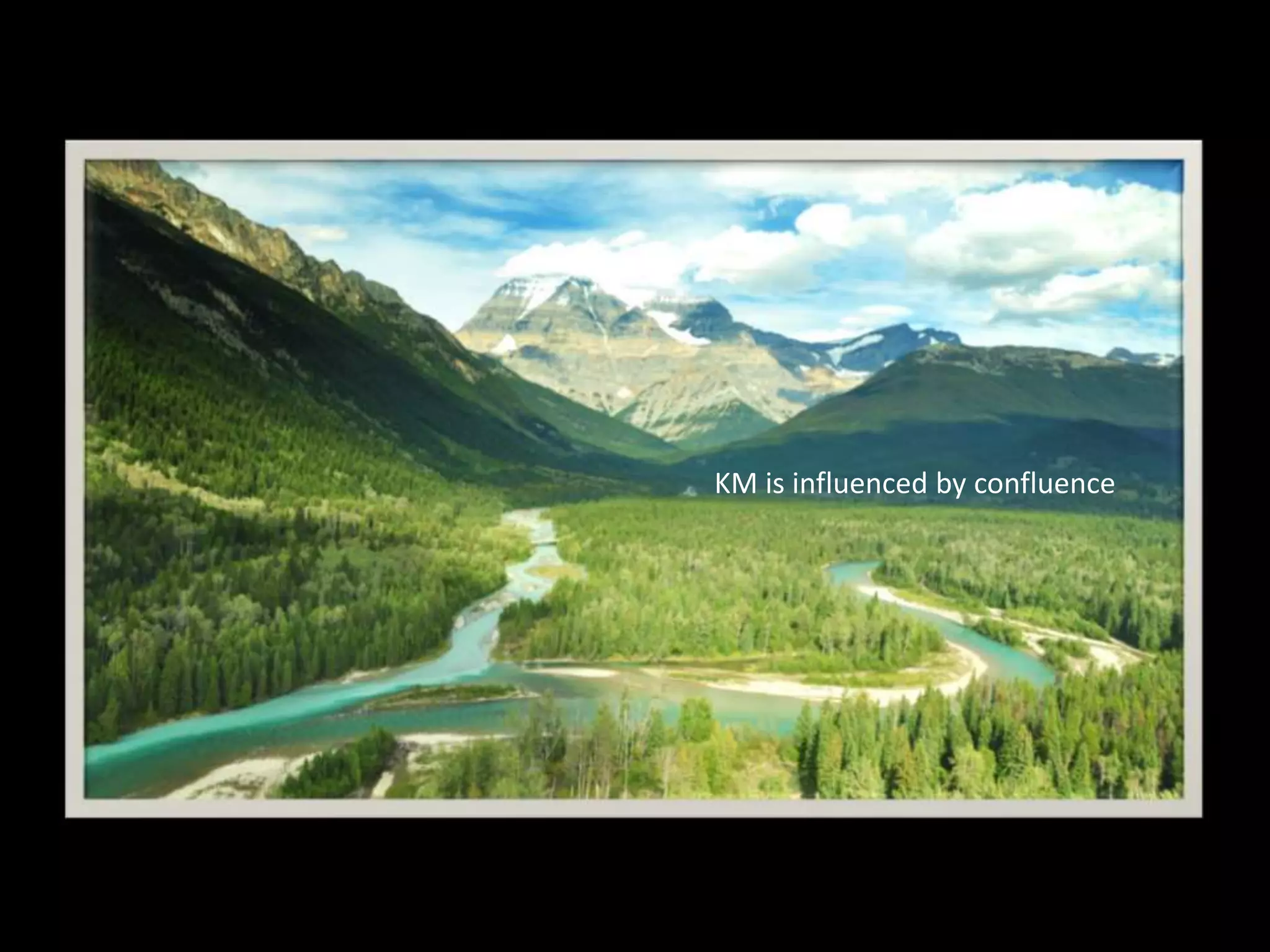
KM is influenced by confluence
Just in case
Just enough
Just in time
Just for me
Collaboration
Social Media
Sharing
Knowledge
Assets
Learning
Culture
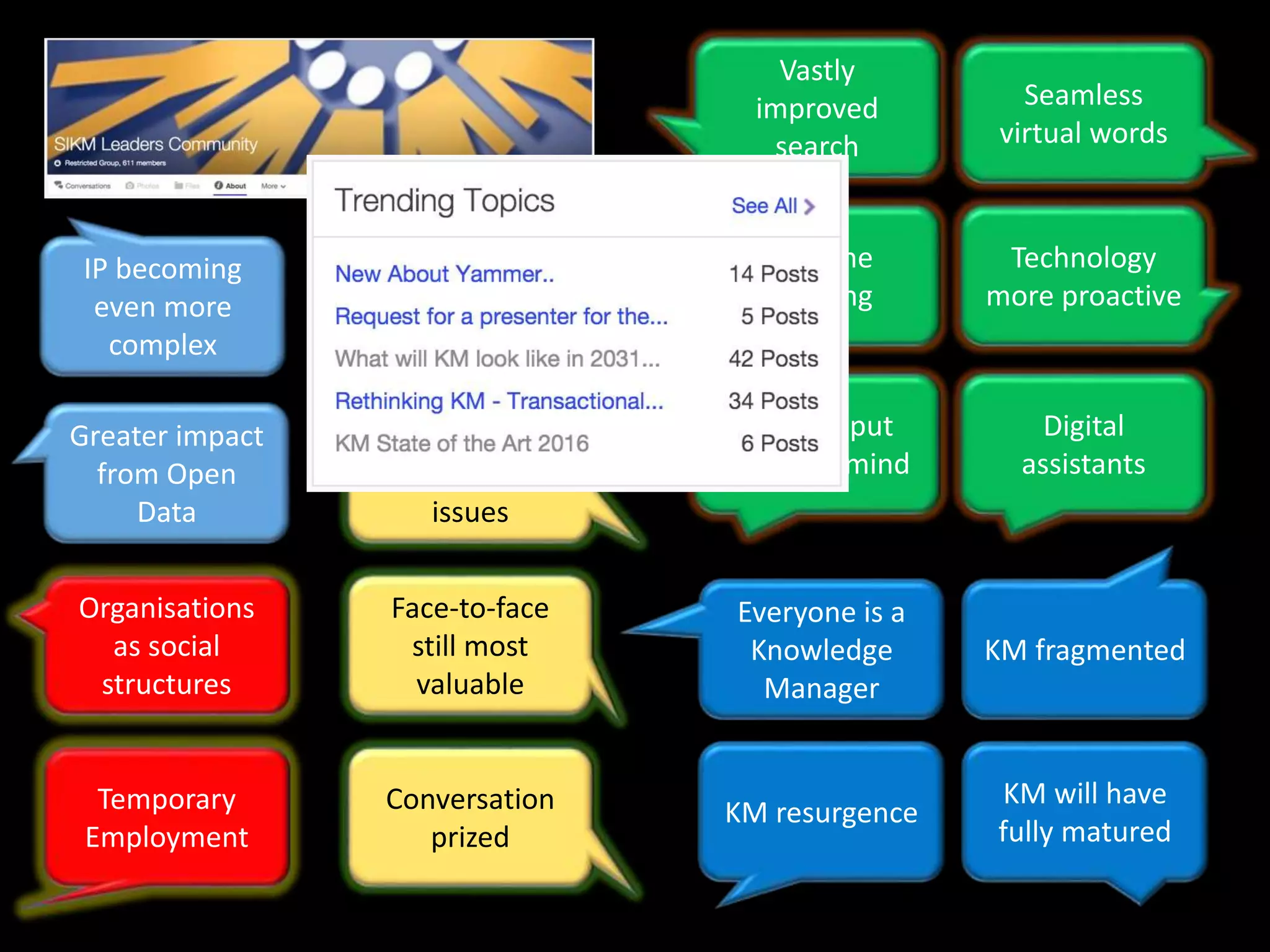
Connecting
people to
content
Communities
of Practice
Connecting
people
Personal KM
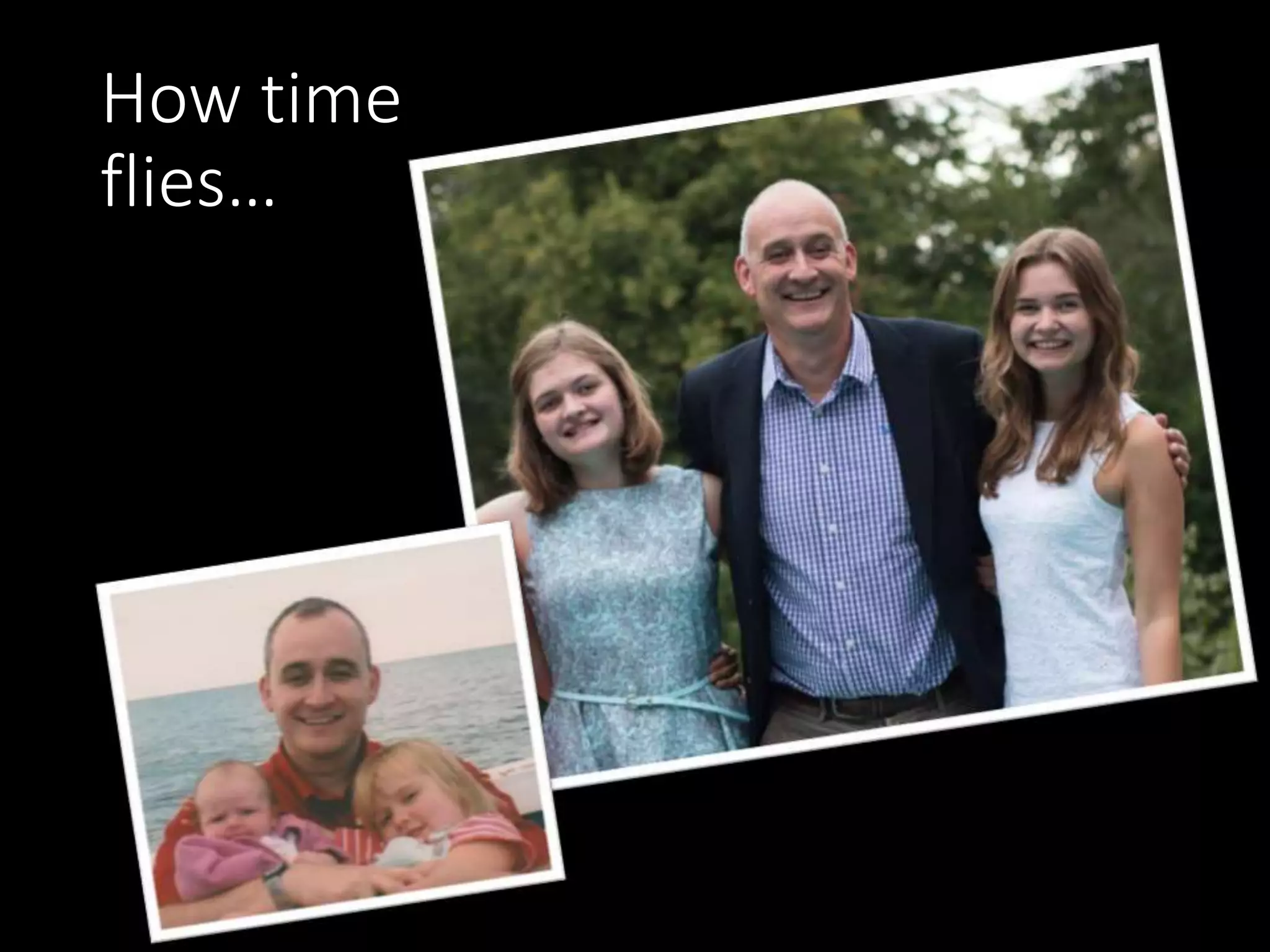
How time
flies…
Life in 2030 – Daily Telegraph
• http://www.telegraph.co.uk/news/worldnews/120
65239/Designer-babies-flash-floods-and-AI-
running-your-life-what-the-world-could-ook-like-in-
2030.html
Life in 2030 – Sony Ericsson Employees
• https://www.youtube.com/watch?v=I9L79_xEQ-U
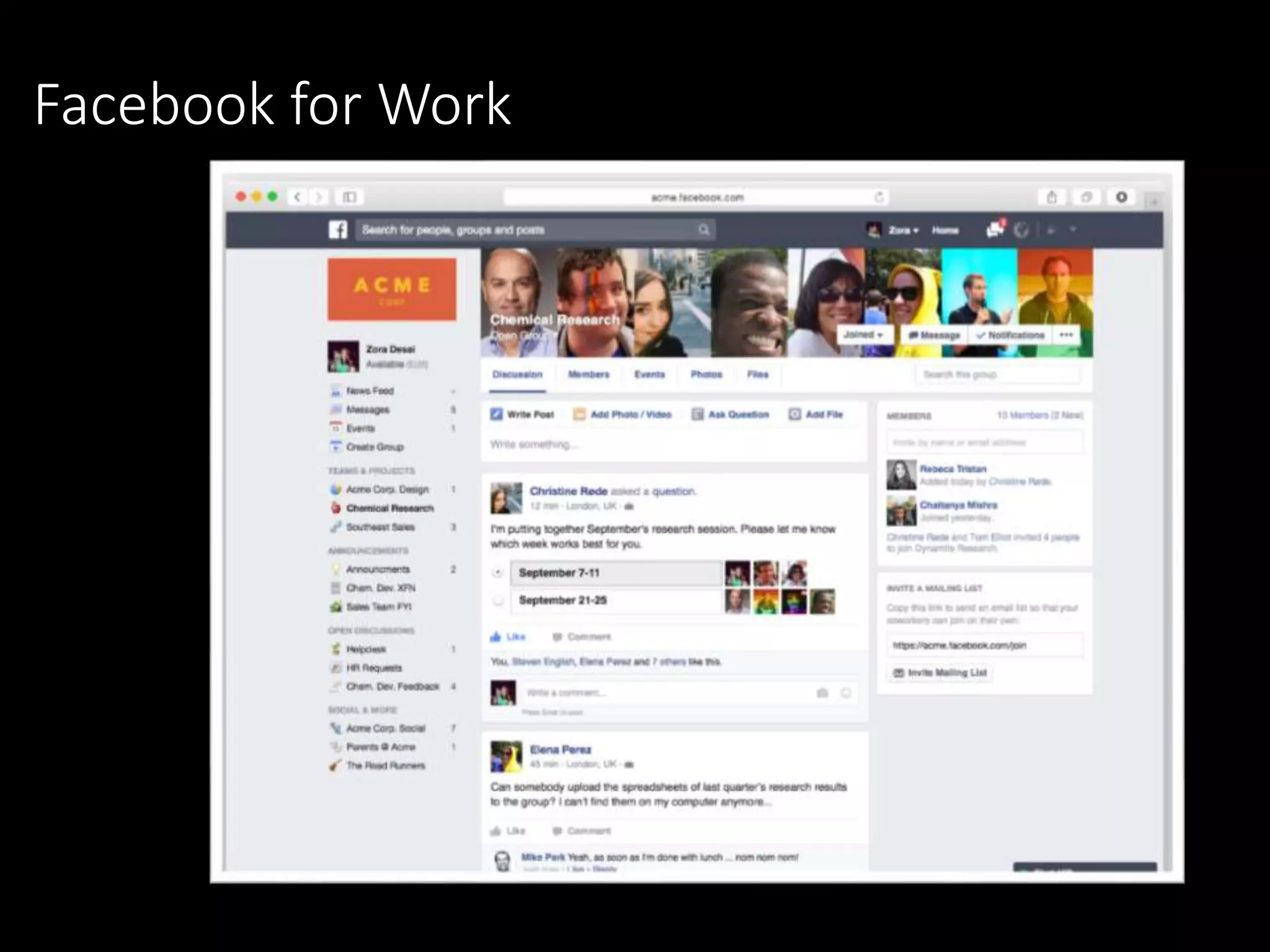
Facebook for Work
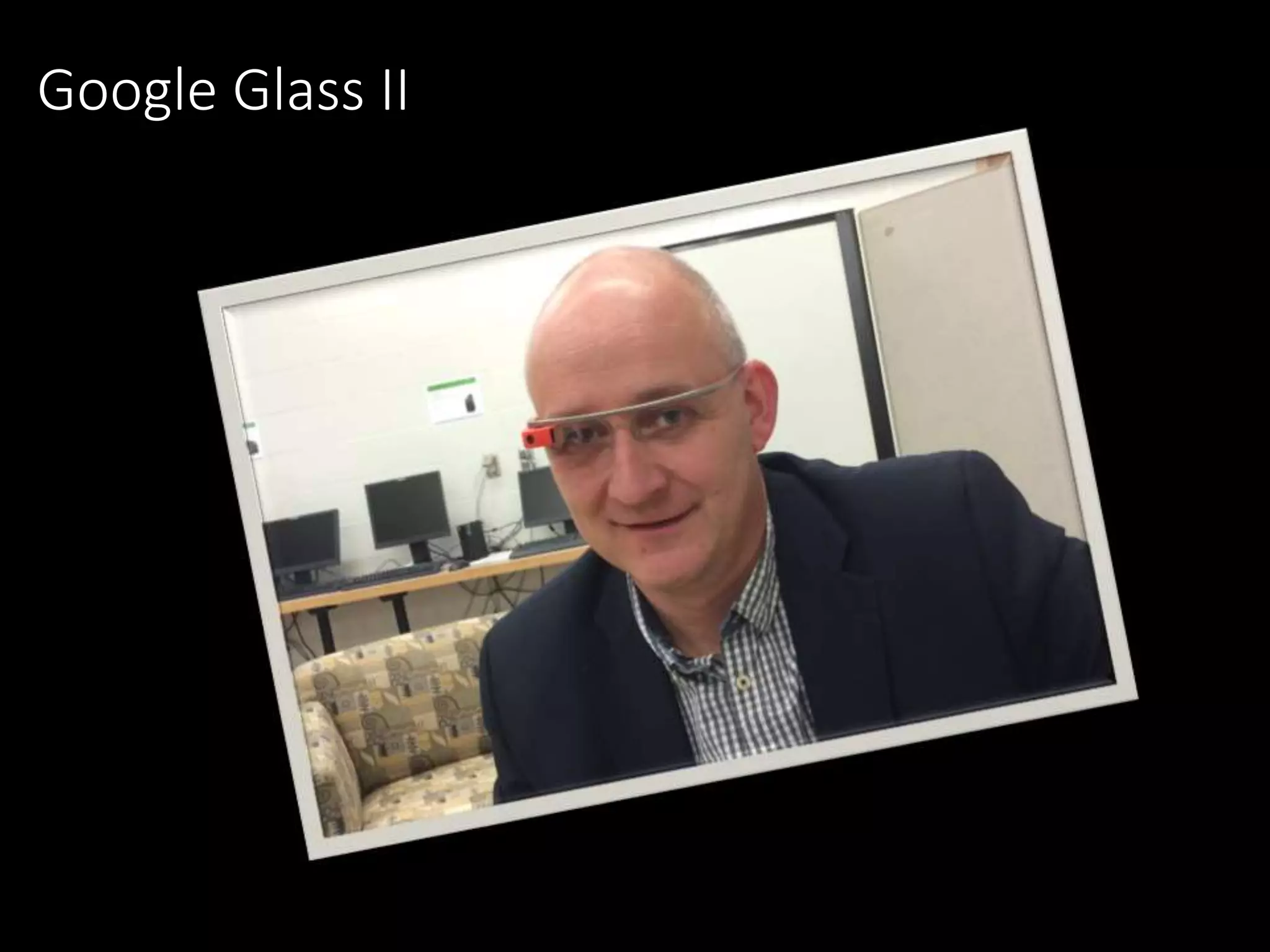
Google Glass II
Microsoft Hololens
• https://www.youtube.com/watch?v=aThCr0PsyuA
Digital
assistants
KM will have
fully matured
Seamless
virtual words
Everyone is a
Knowledge
Manager
Machine
Learning
Ubiquitous
Social
Broadcasting
Vastly
improved
search
Greater impact
from Open
Data
Technology
more proactive
Direct input
from the mind
KM resurgence
KM fragmented
Temporary
Employment
Organisations
as social
structures
Conversation
prized
Face-to-face
still most
valuable
Still addressing
human nature
issues
IP becoming
even more
complex
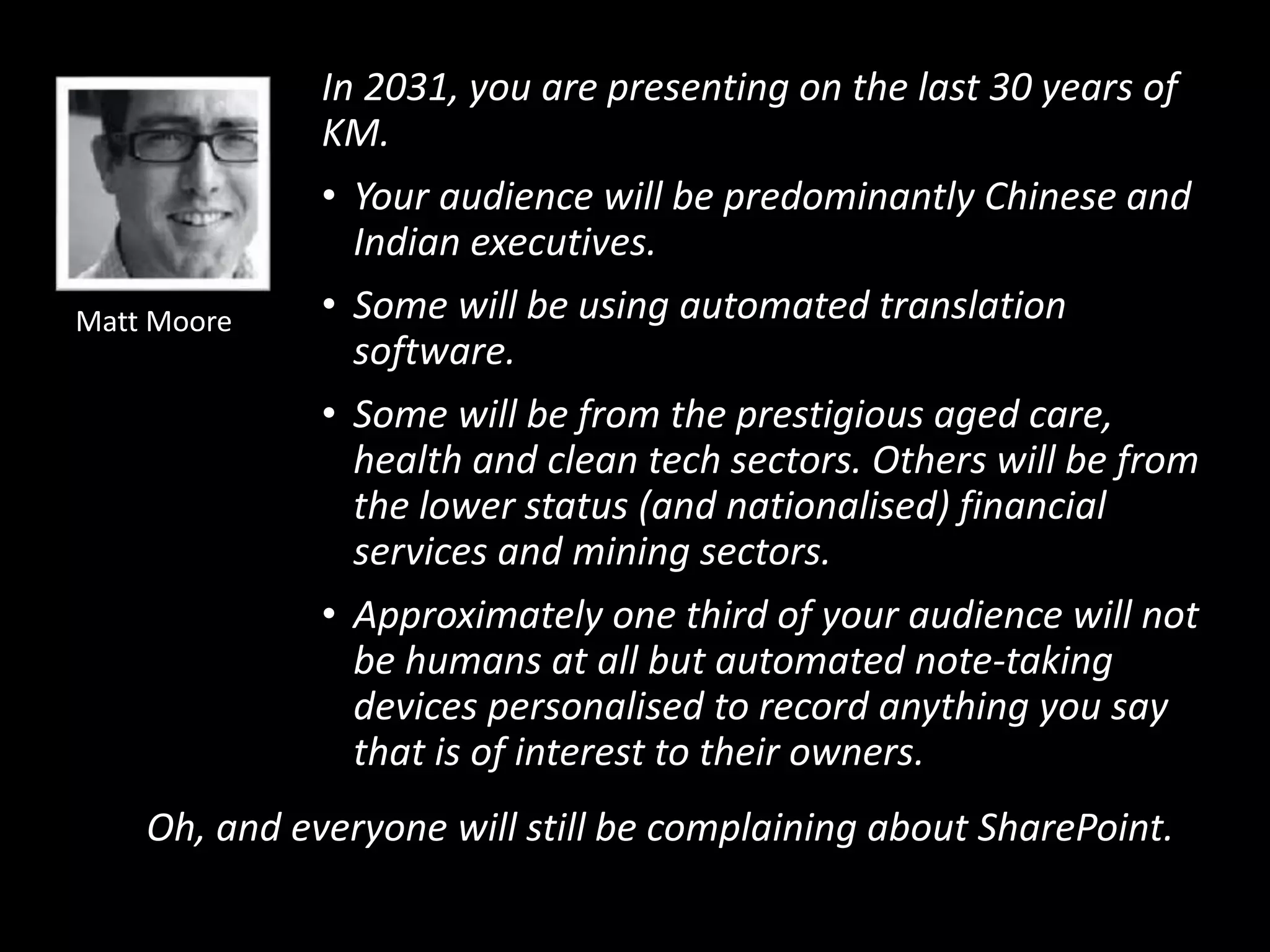
In 2031, you are presenting on the last 30 years of
KM.
• Your audience will be predominantly Chinese and
Indian executives.
• Some will be using automated translation
software.
• Some will be from the prestigious aged care,
health and clean tech sectors. Others will be from
the lower status (and nationalised) financial
services and mining sectors.
• Approximately one third of your audience will not
be humans at all but automated note-taking
devices personalised to record anything you say
that is of interest to their owners.
Oh, and everyone will still be complaining about SharePoint.
Matt Moore
Just in case
Just enough
Just in time
Just for me
Just decided for you
Just thought you should know
Just from me
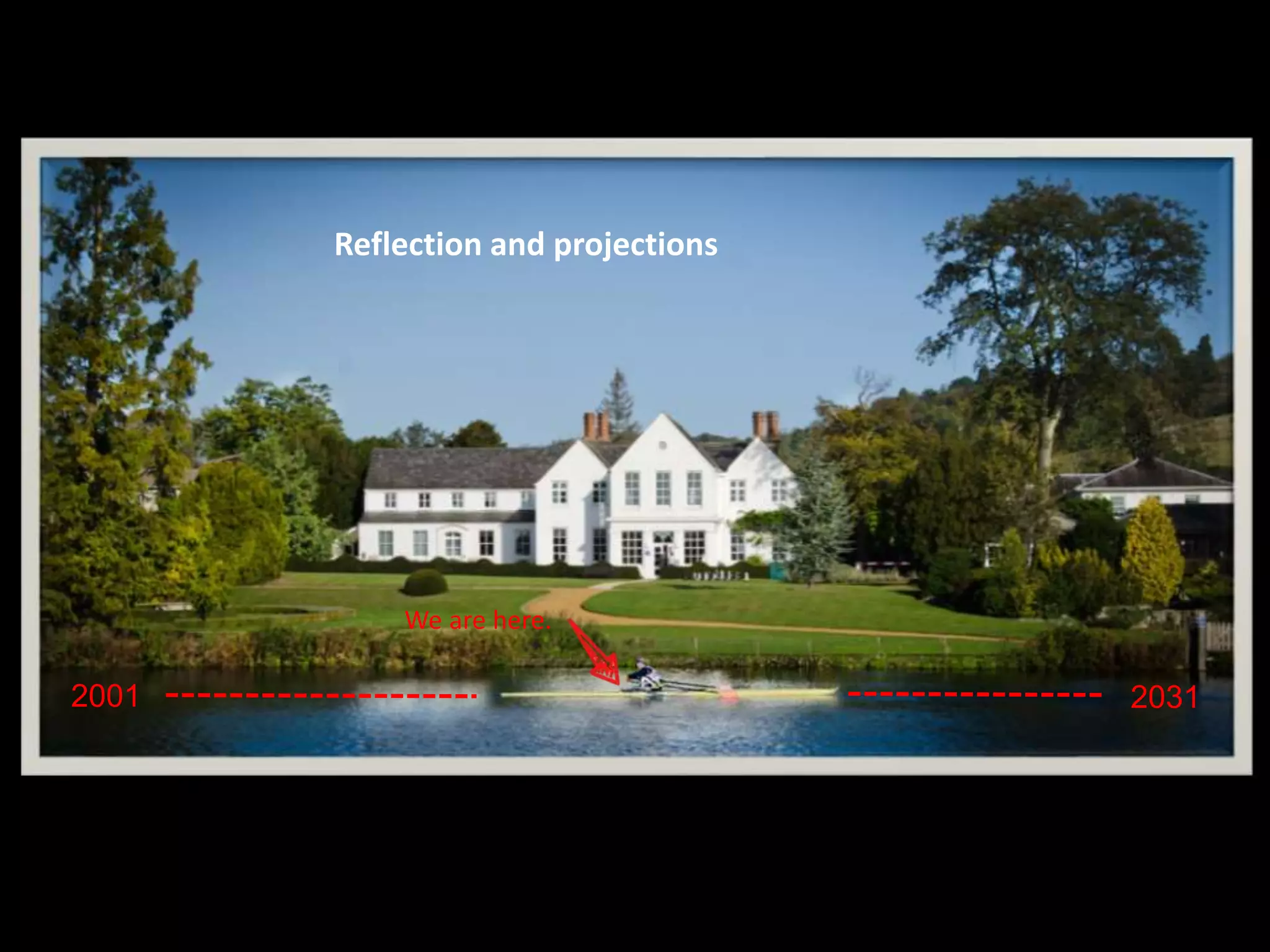
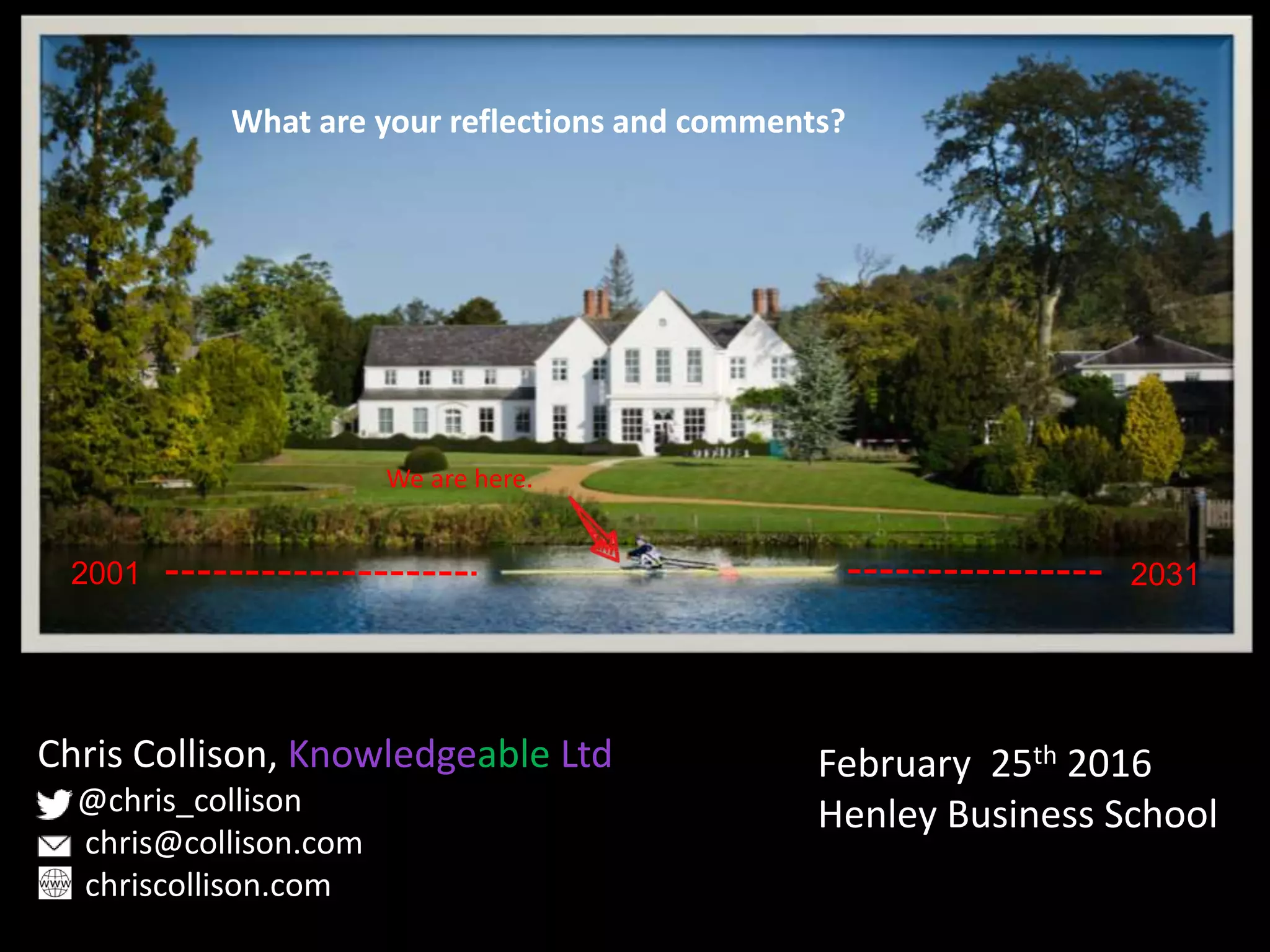
2001 2031
We are here.
Reflection and projections
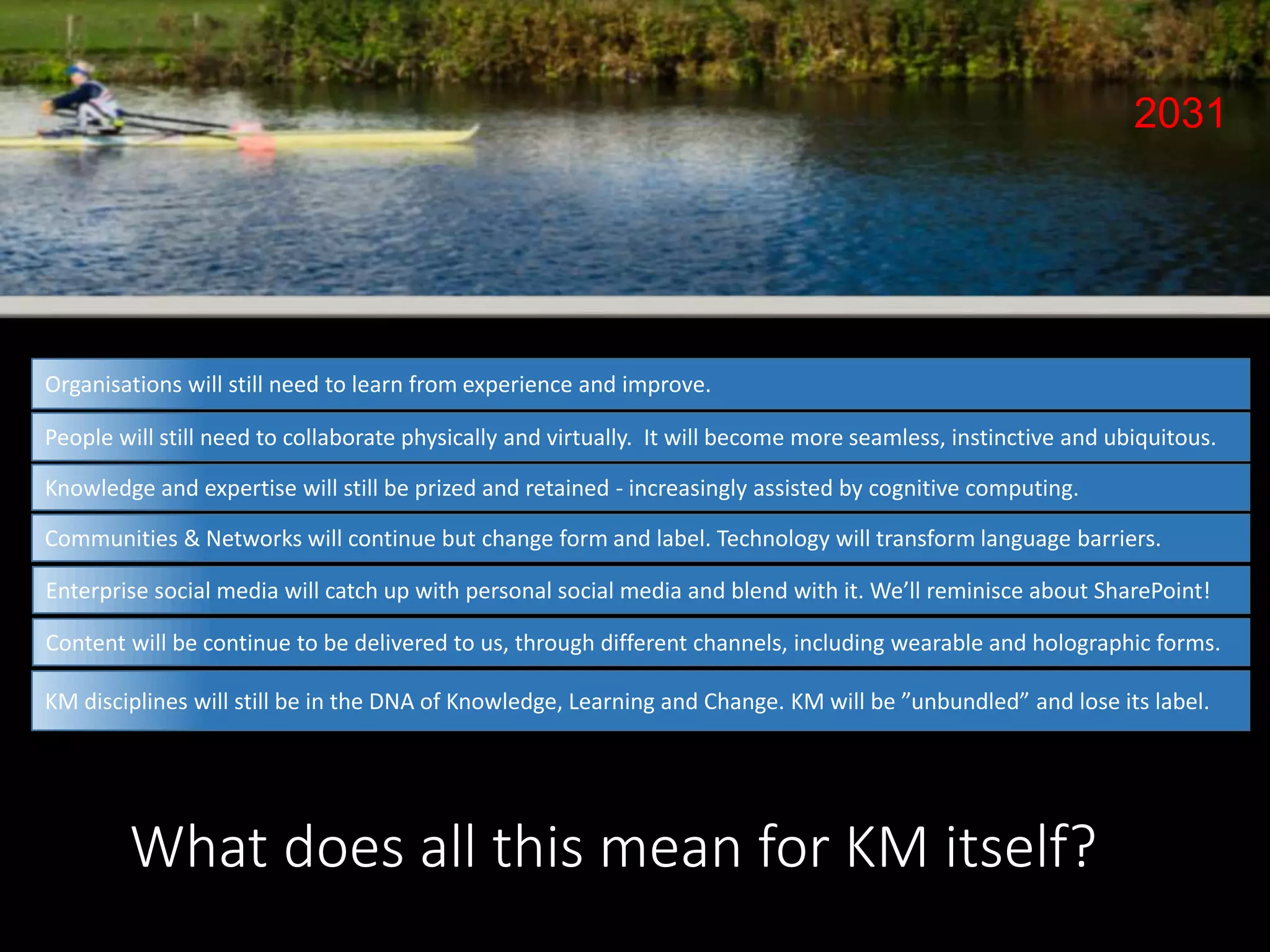
2031
Organisations will still need to learn from experience and improve.
People will still need to collaborate physically and virtually. It will become more seamless, instinctive and ubiquitous.
Knowledge and expertise will still be prized and retained - increasingly assisted by cognitive computing.
Communities & Networks will continue but change form and label. Technology will transform language barriers.
KM disciplines will still be in the DNA of Knowledge, Learning and Change. KM will be ”unbundled” and lose its label.
Enterprise social media will catch up with personal social media and blend with it. We’ll reminisce about SharePoint!
Content will be continue to be delivered to us, through different channels, including wearable and holographic forms.
What does all this mean for KM itself?
2001 2031
We are here.
What are your reflections and comments?
Chris Collison, Knowledgeable Ltd
@chris_collison
chris@collison.com
chriscollison.com
February 25th 2016
Henley Business School

Henley Forum - reflections and projections for Knowledge Management - Chris Collison

  • 1.
    2001 2031 We arehere. Reflections and projections. KM over the past 15 years and the next 15 years Chris Collison, Knowledgeable Ltd @chris_collison chris@collison.com chriscollison.com February 25th 2016 Henley Business School
  • 2.
  • 3.
  • 10.
    KM practices flowat varying rates
  • 11.
    KM is influencedby confluence
  • 12.
    Just in case Justenough Just in time Just for me
  • 13.
  • 16.
  • 18.
    Life in 2030– Daily Telegraph • http://www.telegraph.co.uk/news/worldnews/120 65239/Designer-babies-flash-floods-and-AI- running-your-life-what-the-world-could-ook-like-in- 2030.html
  • 19.
    Life in 2030– Sony Ericsson Employees • https://www.youtube.com/watch?v=I9L79_xEQ-U
  • 21.
  • 22.
  • 23.
  • 24.
    Digital assistants KM will have fullymatured Seamless virtual words Everyone is a Knowledge Manager Machine Learning Ubiquitous Social Broadcasting Vastly improved search Greater impact from Open Data Technology more proactive Direct input from the mind KM resurgence KM fragmented Temporary Employment Organisations as social structures Conversation prized Face-to-face still most valuable Still addressing human nature issues IP becoming even more complex
  • 25.
    In 2031, youare presenting on the last 30 years of KM. • Your audience will be predominantly Chinese and Indian executives. • Some will be using automated translation software. • Some will be from the prestigious aged care, health and clean tech sectors. Others will be from the lower status (and nationalised) financial services and mining sectors. • Approximately one third of your audience will not be humans at all but automated note-taking devices personalised to record anything you say that is of interest to their owners. Oh, and everyone will still be complaining about SharePoint. Matt Moore
  • 26.
    Just in case Justenough Just in time Just for me Just decided for you Just thought you should know Just from me
  • 27.
    2001 2031 We arehere. Reflection and projections
  • 28.
    2031 Organisations will stillneed to learn from experience and improve. People will still need to collaborate physically and virtually. It will become more seamless, instinctive and ubiquitous. Knowledge and expertise will still be prized and retained - increasingly assisted by cognitive computing. Communities & Networks will continue but change form and label. Technology will transform language barriers. KM disciplines will still be in the DNA of Knowledge, Learning and Change. KM will be ”unbundled” and lose its label. Enterprise social media will catch up with personal social media and blend with it. We’ll reminisce about SharePoint! Content will be continue to be delivered to us, through different channels, including wearable and holographic forms. What does all this mean for KM itself?
  • 30.
    2001 2031 We arehere. What are your reflections and comments? Chris Collison, Knowledgeable Ltd @chris_collison chris@collison.com chriscollison.com February 25th 2016 Henley Business School

Editor's Notes

  • #3 It feels like a long time!
  • #4 It feels even longer when you look at your family photos!
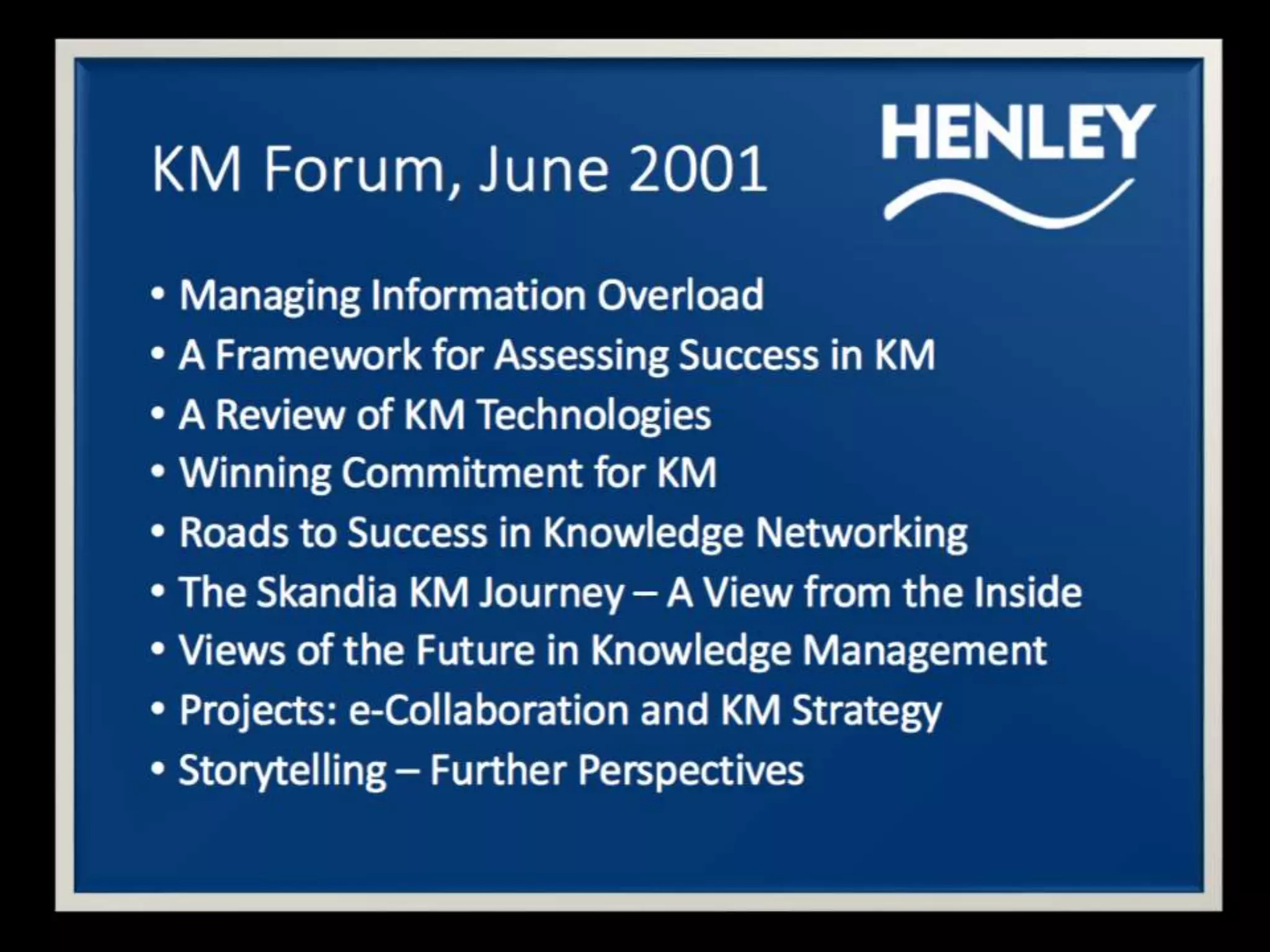
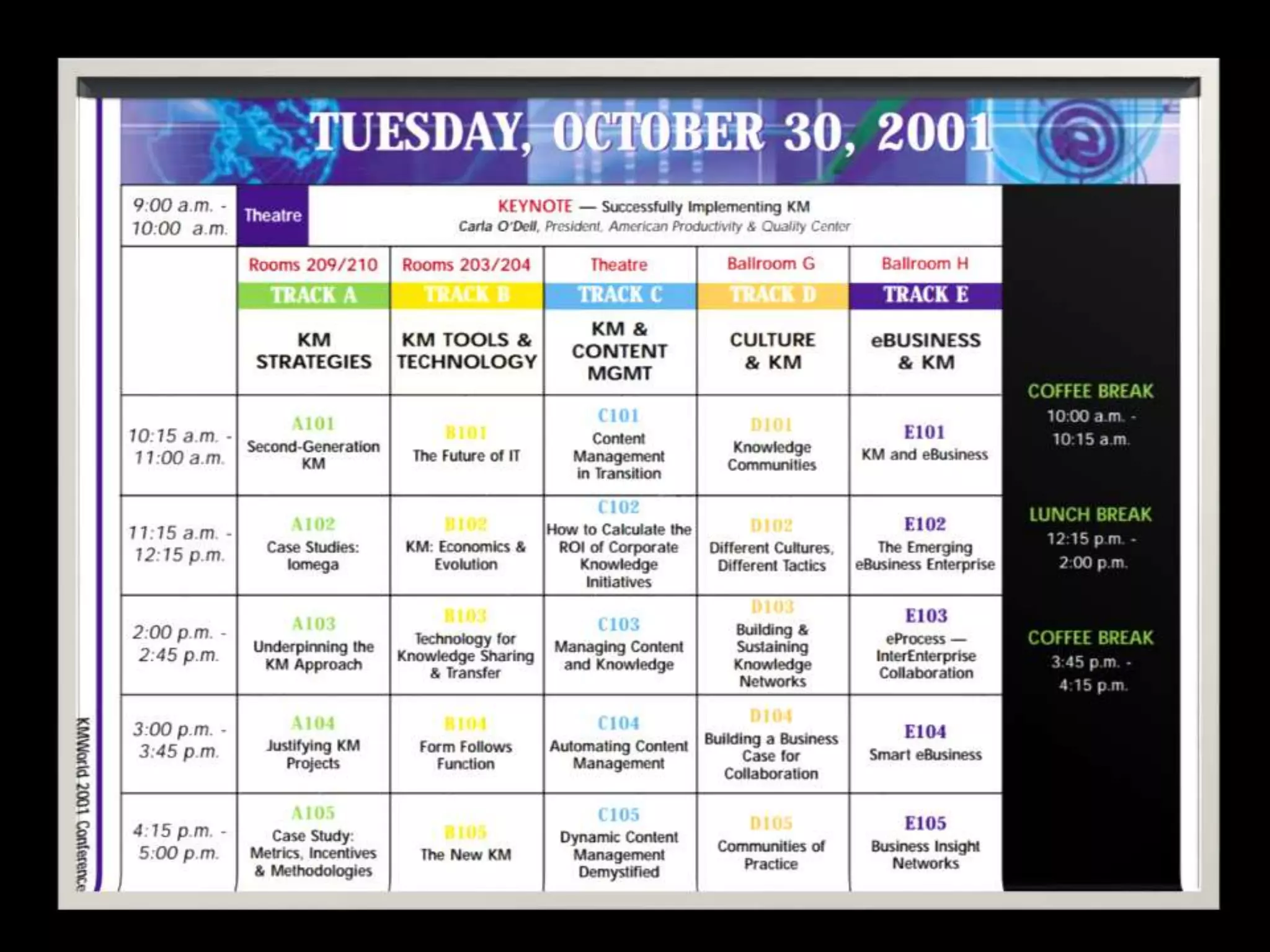
  • #5 Here’s what the 2001 KM Forum was looking at back in 2001 at this very same conference. Not so different…
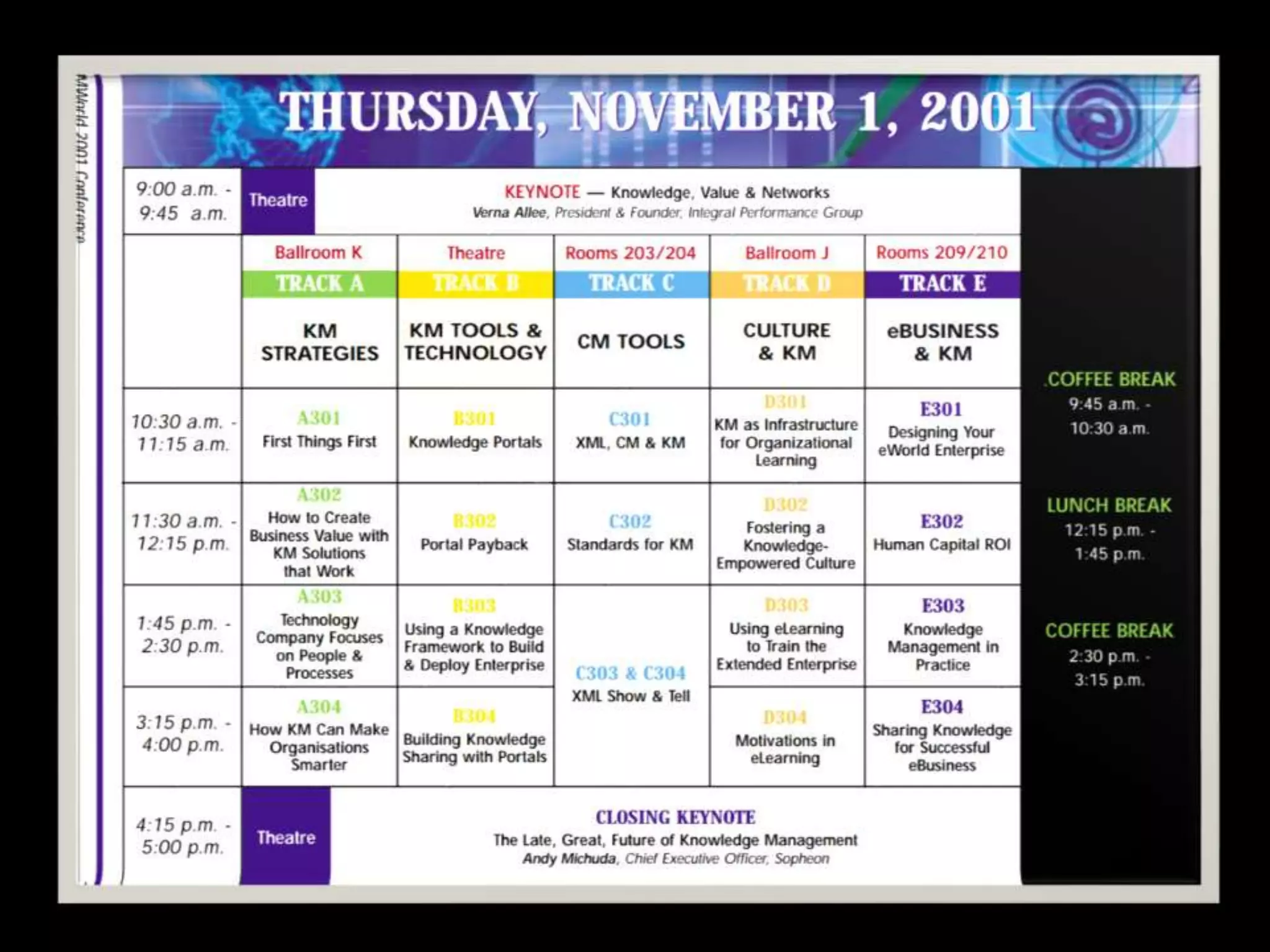
  • #6 And here’s the agenda from KM World
  • #7 … and having attended this 3 months ago, I can tell you that not much changed there either!
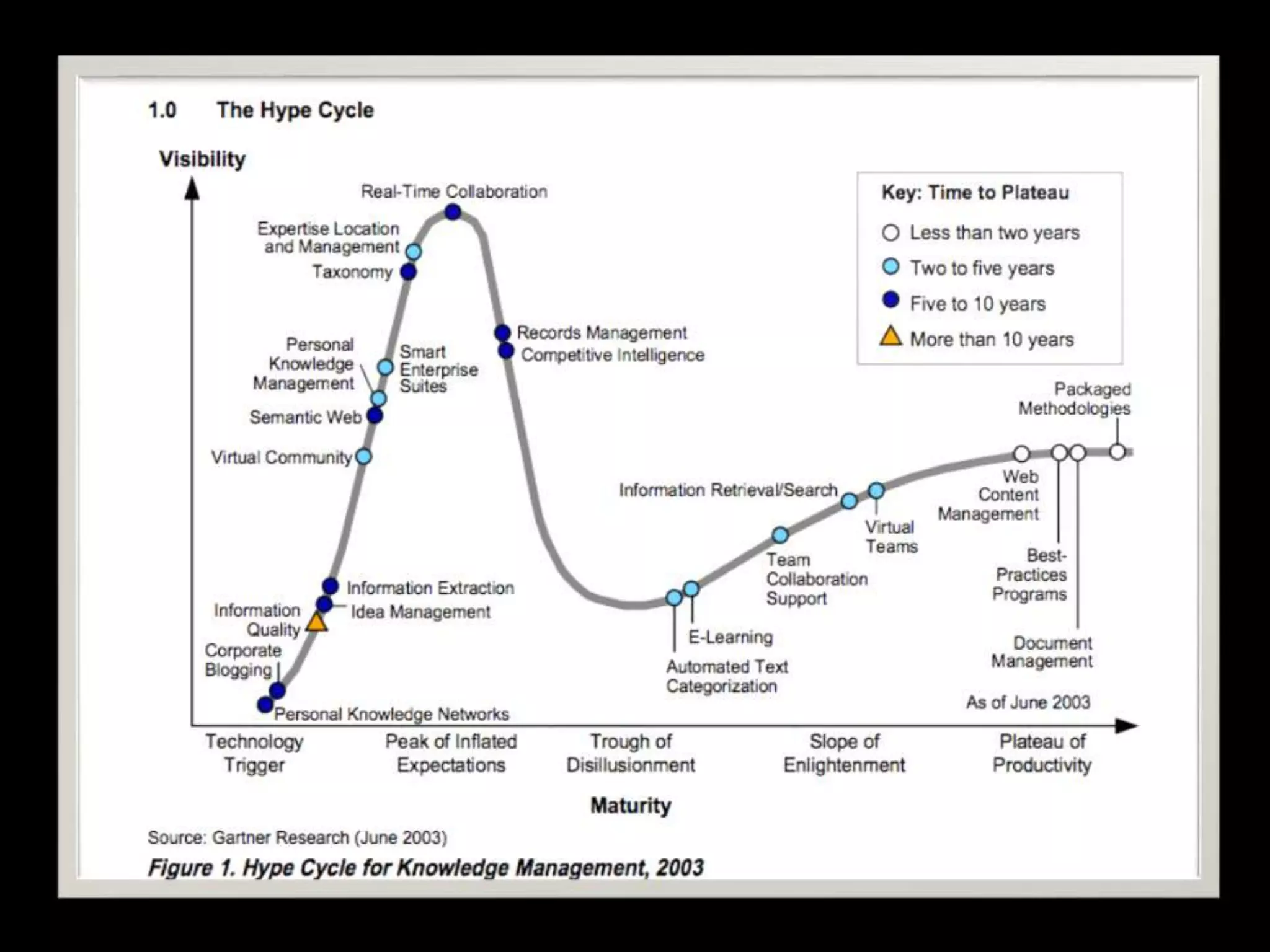
  • #8 I couldn’t find the Gartner hype cycle for KM from 2001, but here’s the next closest.
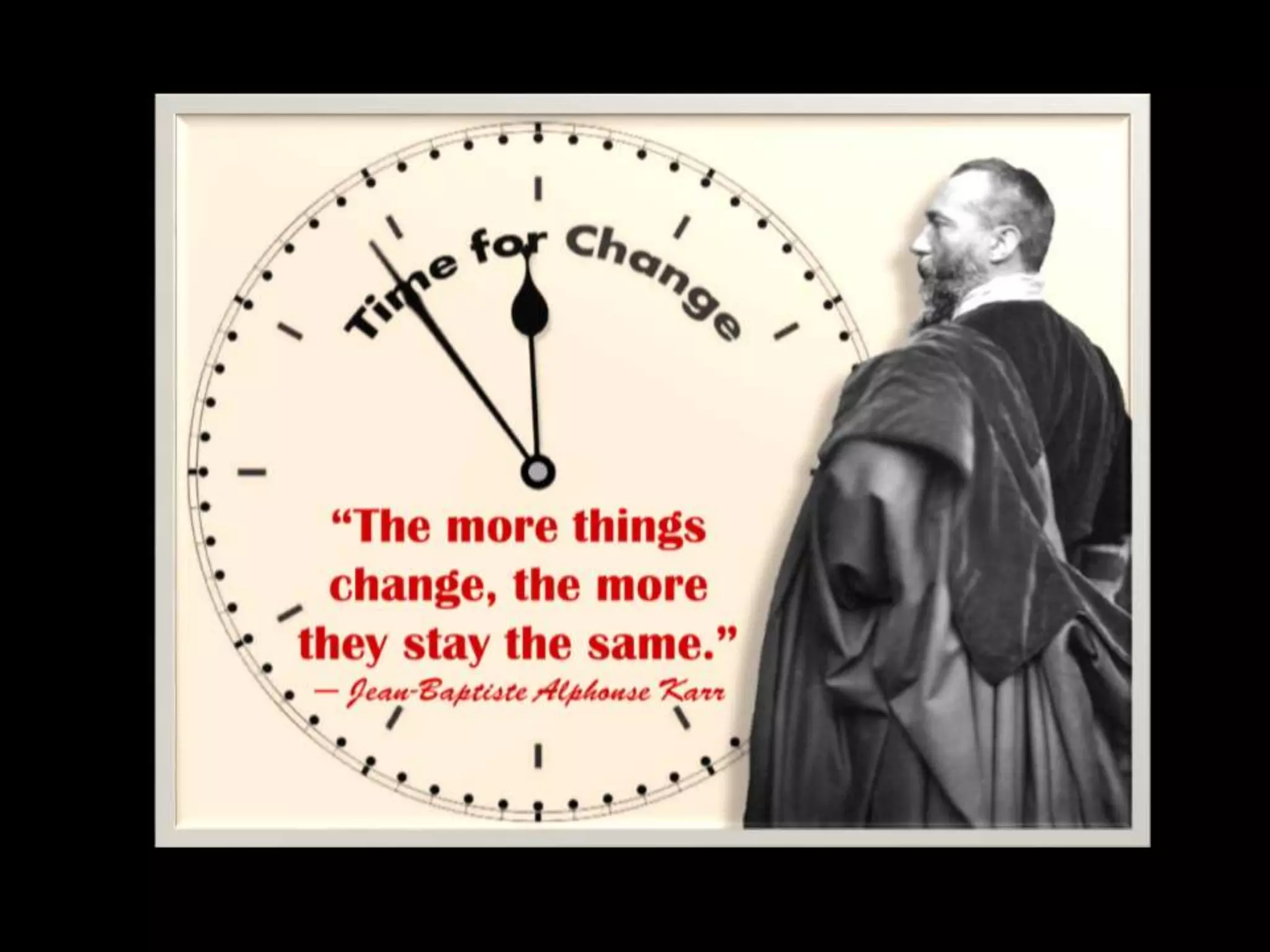
  • #9 You might say this!
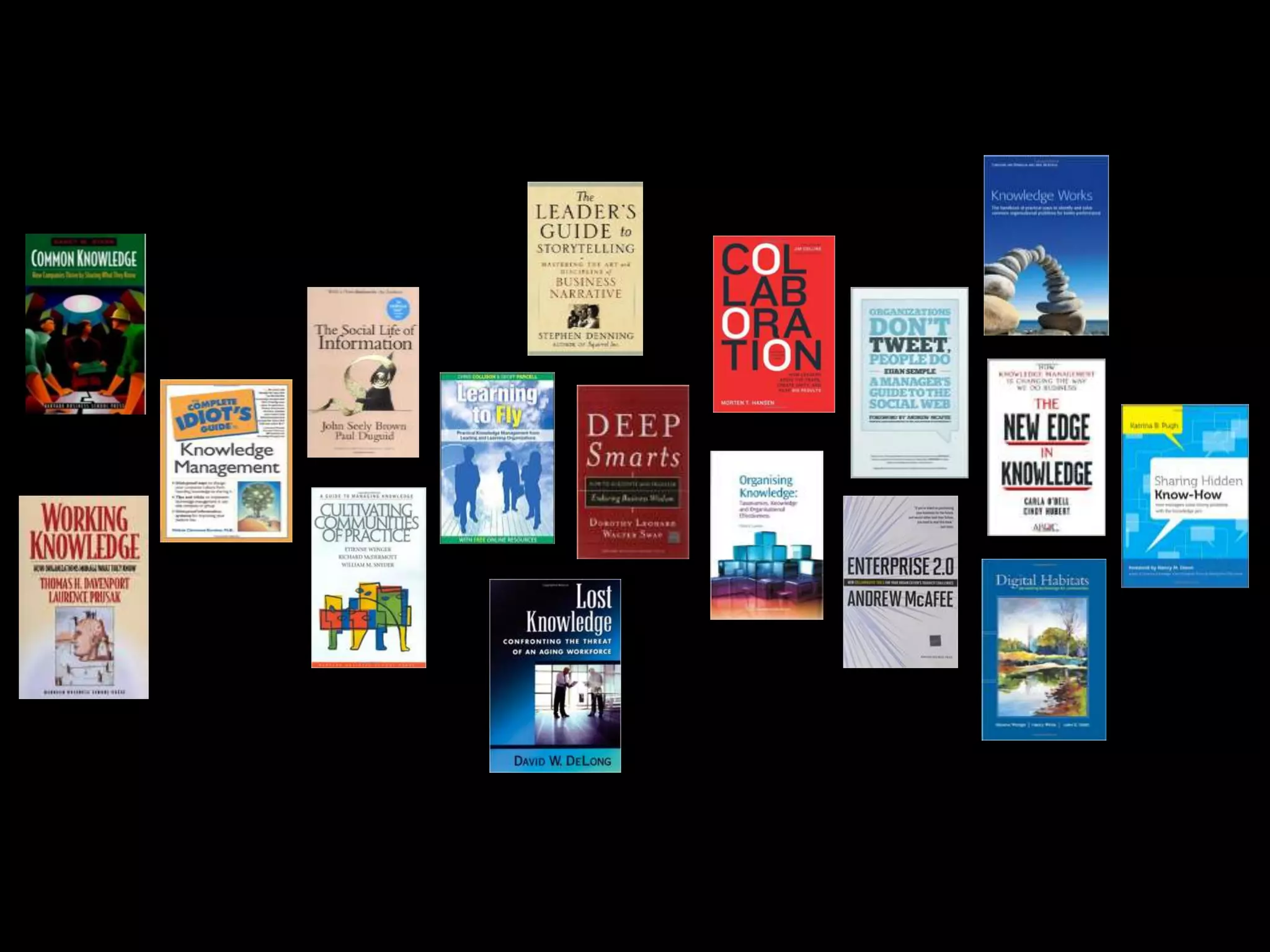
  • #10 This is a tour of some of my KM books in chronological order. There is a general oscillation between holistic, case-study-based books (Common Knowledge, Working Knowledge Learning to Fly, Knowledge Works and the New Edge in Knowledge) – and more specific tools-focus. (Taxonomy, Communities, Retention). You can see the impact of social media around 2008-9.
  • #11 Different KM practices evolve and develop at different paces. For example communities of practice and lessons learned go through spirals of improvement and iteration. Other developments seem to go past in the fast lane!
  • #12 We have also seen significant shifts in KM due to changes in other related disciplines. The rise of Social media over the past 10 years has added much momentum to KM – probably changing KM’s mix and perception from then on
  • #13 At a high level, we have seen a shift from a focus on Knowledge capture and Information management - just in case KM, which generated a response to information overload in the form of distillation and curation and the formation and management of knowledge assets – “just enough”. Timeliness – As Dave Snowden says – “we don’t’ know what we know until we need it” – is also a critical issue. Finally, the growth of personalisation and tailored knowledge flows over the last 5 years. 5 ears ago, when we searched for the same word on google, we got the same result. That’s no longer the case
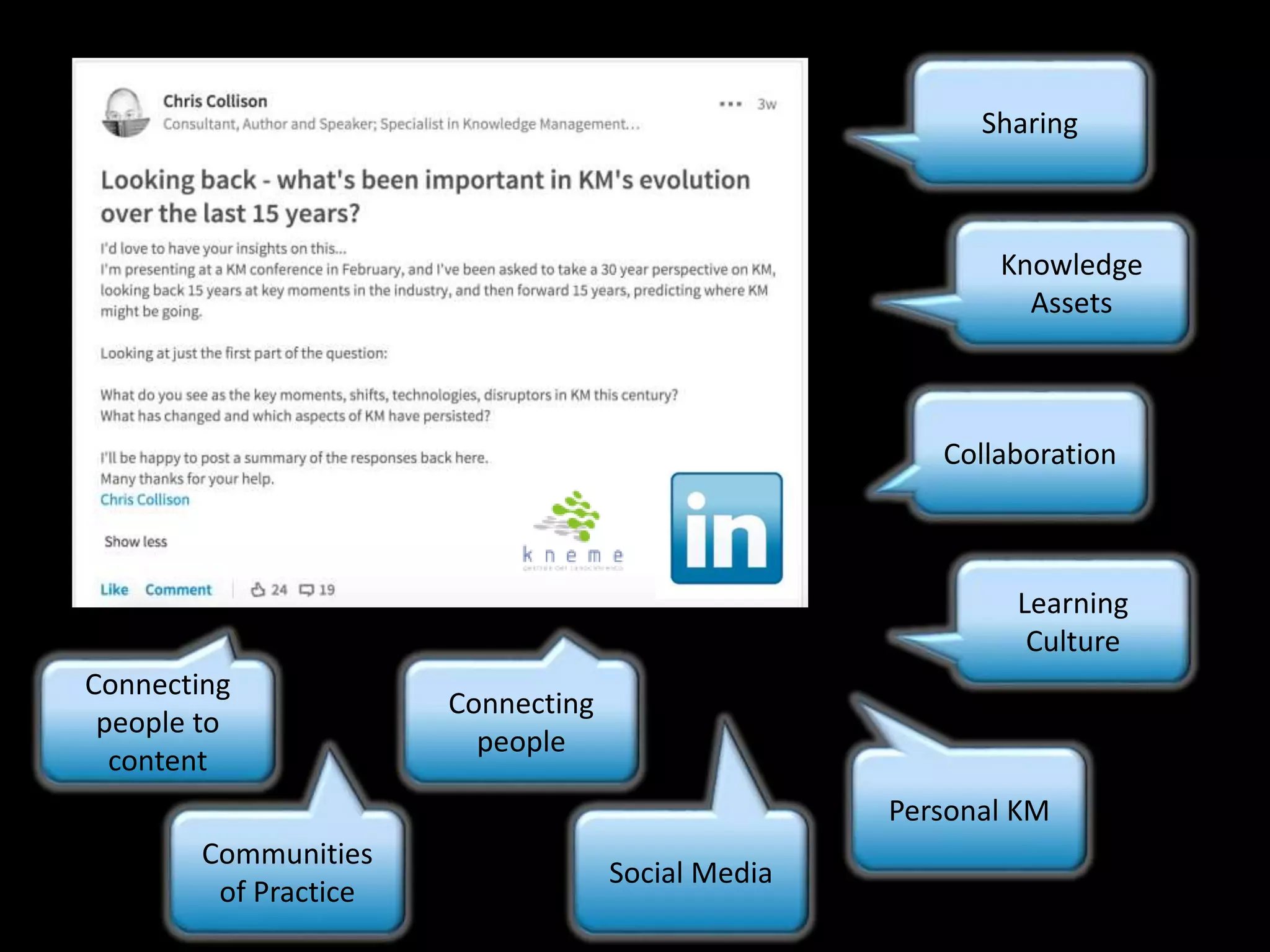
  • #14 These are some of the responses I got from a LinkedIn forum when I asked for the big influencers in KM over the past 15 years, no big surprises here.
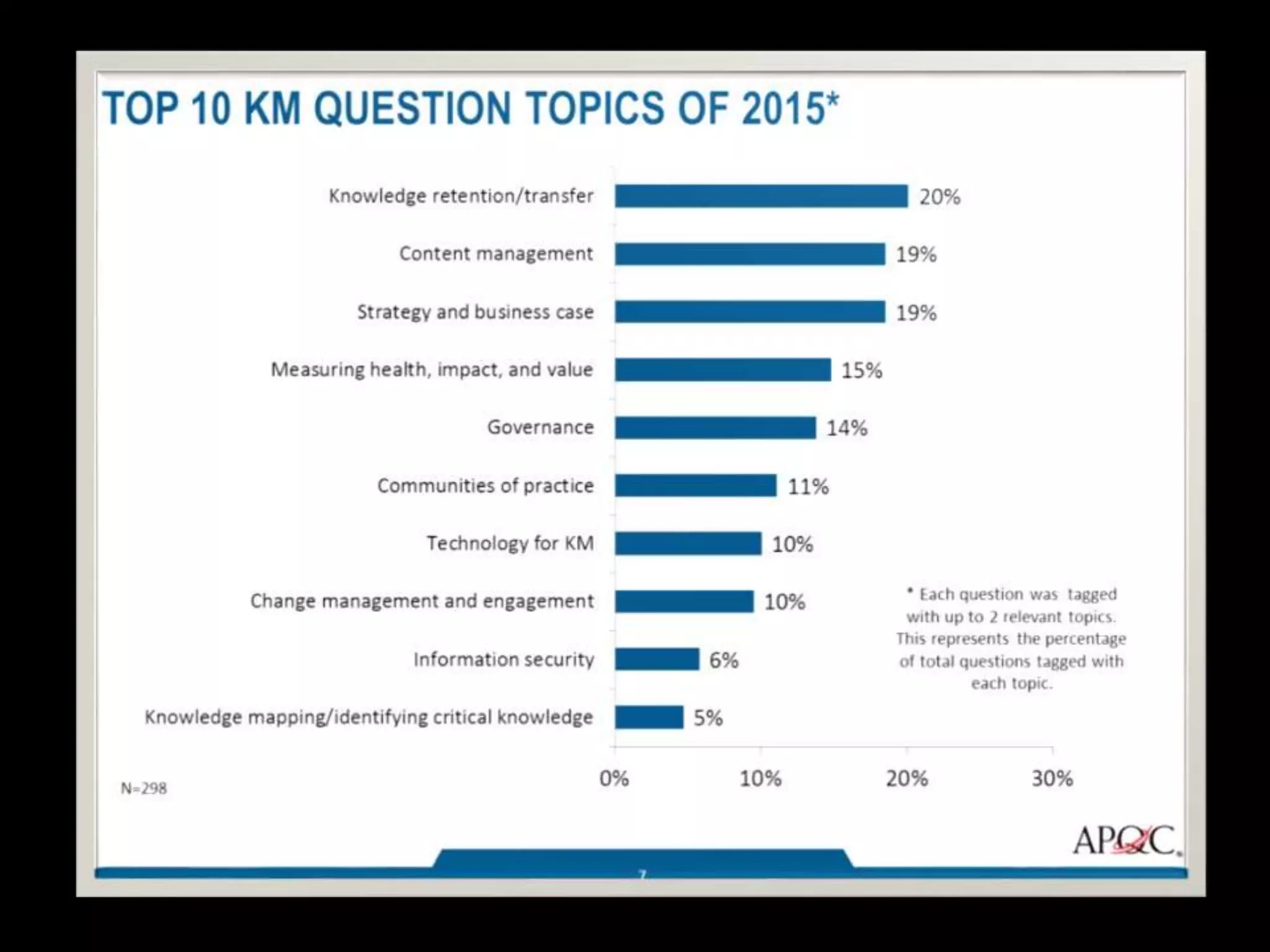
  • #15 APQC recently reviews their year and looked at the top areas of interest in their membership. Lots of parallels with Henley, but perhaps with more emphasis on content
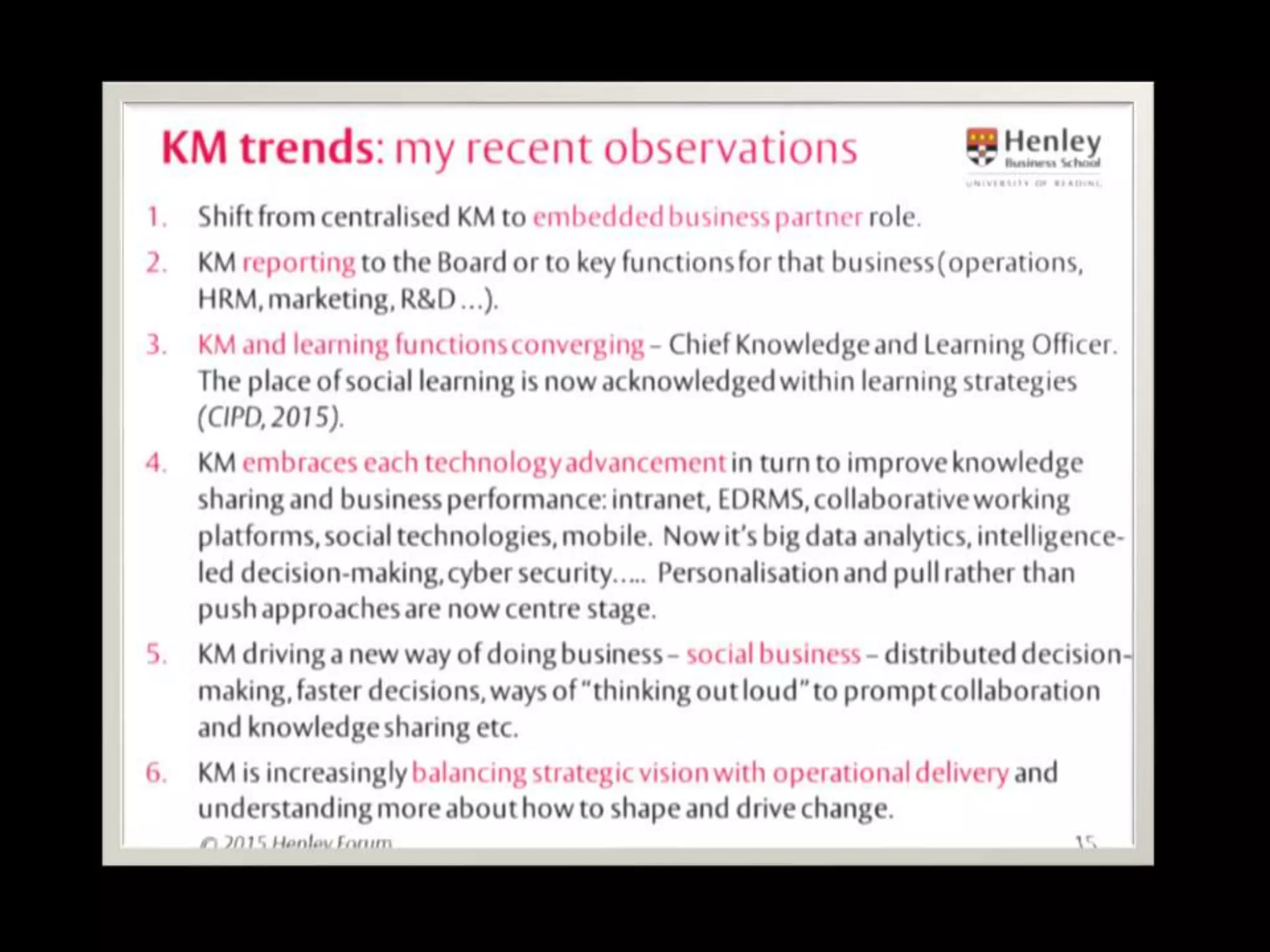
  • #16 Now beginning to look forward, here’s a summary from Christine’s work combining KM Trends from the annual forum survey with other inputs.
  • #17 So how time flies when you’re having fun!
  • #18 So now let’s fast forward!
  • #19 This is quite a sobering video from the Daily Telegraph which sets the global perspective on 5 trends.
  • #20 Sony Ericsson Employees take a more networked view – and they don’t seem to assume that we’ll all have iPhones.
  • #22 Facebook for work. Now being trialed by a number of organistions – you know the kind – fast-moving, edgy, entrepreneurial, innovative, nimble ones. Like RBS! Functionally the same as SharePoint at full stretch – but from a familiarity perspective – it’s worlds apart. Zero barrier to entry. I think Facebook for work will be a significant disrupter in the next 5 years. Why would you not use it when everyone understands it?
  • #23 This was me two years ago at a Pharmaceutical client’s R&D site where they were experimenting using Google Glass to track the movements of scientists and augment the lab notebooks. Google withdrew Glass from the market to focus on the corporate market, The next release of Google Glass comes out in May.
  • #24 This is also a real thing! Microsoft Hololens shows how virtual reality could transform access to knowledge, experts and support creative collaboration in some amazing ways. If you haven’t seen this before, then prepare to be amazed! Now imagine that in a corporate setting as the convergence of real-time expertise access and information resources in my moment of need. Very much a just-for-me and just-in-time world,
  • #25 I asked the SIKM community, one of the longest –standing KM leaders communities – for their thoughts on the key developments over the next 15 years. (I’ll read out some specific quotes). Technology will continue to disrupt (positively) the KM marketplace, but that doesn’t mean that human KM is going away – but we’ll continue to get better at it, especially as the nature of he employment contract, the psychological contract and the very nature of organizations shifts. IP will continue to evolve to keep the lawyers busy (the ones which haven’t been replaced by robots), as Open Data and the sharing economy combine with the changes to organizations to create what the Chinese might describe as “interesting times”. At an individual level, we’ll see more of a shift to personal social broadcasting. Periscope is just the tip of a bigger iceberg. Add personal drone. virtual reality and wearable technology to the mix and we’ll all be streaming and broadcasting in multiple dimensions. And google search will have to keep pace What does all this mean for KM? The community had different views. They agreed that KM will be devolved further into the workforce, which could create a resurgence for expertise to help with that shift. As part of that maturing, KM as an ever growing umbrella may find that the unifying material will have stretched too thinly to be meaningful. How broad can a broad church become? More of this later.
  • #27 So going forward from “just for me”, I think we’ll see that increase in social broadcasting with our employees (whatever “employees” means then) - thousands of potential channels to tune into in real time. In 2001, our only employee “footprints” were emails! Think how much that will be enriched. And by the way, will any of us even use email in 2031? Cognitive computing will better anticipate our knowledge needs based on current context, history, geography, proximity to others – and suggest answers to the questions we hadn’t even though to ask ourselves. Ultimately, some of those decisions will be made for us - and we will have to decide what we, and our children do to thrive in that world.
  • #28 So to go back to our timeline – how do we summarise all this?
  • #29 Some things are “evergreen”. People will always need to talk, learn, reflect, collaborate and interact. Expertise will continue be prized, but the bar will be raised on machine learning. Employment boundaries will change and become more permeable; communities and networks will become more flexible. Technology will change significantly, offering huge opportunities to a smaller number of people who understand how to integrate behaviour, understanding and technology. So for KM? I don’t think we’ll be using the label in 2031 – but well recognise today’s KM DNA in a series of sub-disciplines which it has become unbundled into. Knowledge, Learning and Change will still be fundamental to success.
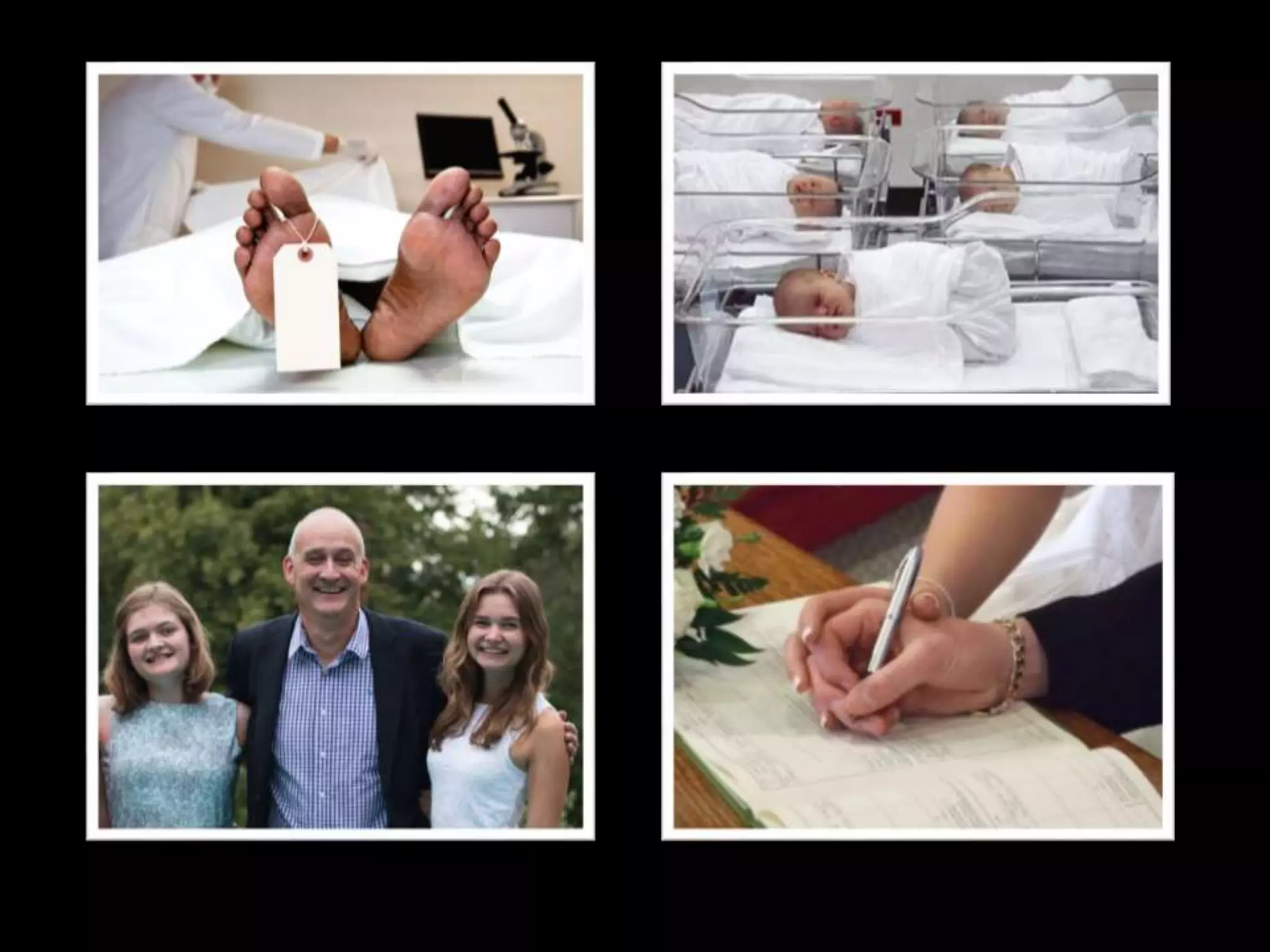
  • #30 A couple of years ago, a respected thought leader in KM blogged that KM wasn’t quite dead, but was in its death throes. I think he confused death throes for labour pains. We’ll see KM as the mother and father of many thriving child disciplines. However, just like Martha and Hannah – these child disciplines may one day chose to take on a new surname – but they will always have my DNA.
  • #31 I’m not going to ask for questions, because I’m not really the one with the answers!