





Andrew G. L. McGinn, M.D., FACC Cardiology North Memorial Heart and Vascular Institute 763-581-5400 Heart Health September 21, 2010
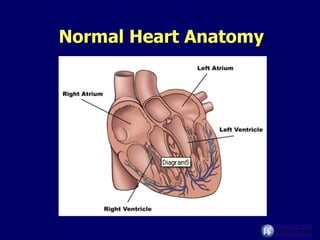
Normal Heart Anatomy
Normal Heart Function Body’s engine Beats 60-80 times each minute =40 million times each year Pumps 5 quarts of blood each minute =1800 gallons each day
 
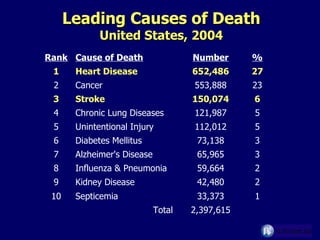
Leading Causes of Death United States, 2004 2,397,615 Total 1 33,373 Septicemia 10 2 42,480 Kidney Disease 9 2 59,664 Influenza & Pneumonia 8 3 65,965 Alzheimer's Disease 7 3 73,138 Diabetes Mellitus 6 5 112,012 Unintentional Injury 5 5 121,987 Chronic Lung Diseases 4 6 150,074 Stroke 3 23 553,888 Cancer 2 27 652,486 Heart Disease 1 % Number Cause of Death Rank
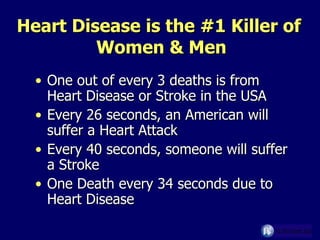
Heart Disease is the #1 Killer of  Women & Men One out of every 3 deaths is from Heart Disease or Stroke in the USA Every 26 seconds, an American will suffer a Heart Attack Every 40 seconds, someone will suffer a Stroke One Death every 34 seconds due to Heart Disease
You are only as old as your coronary arteries.
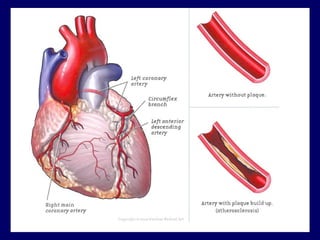
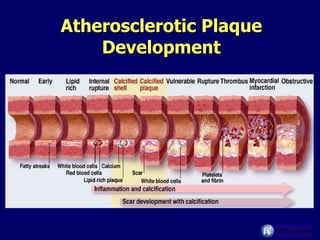
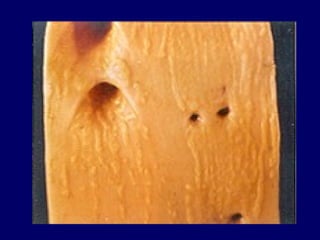
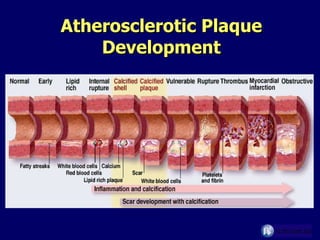
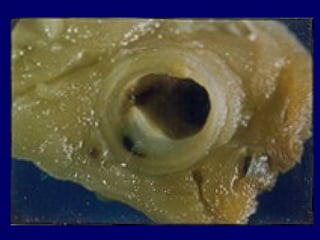
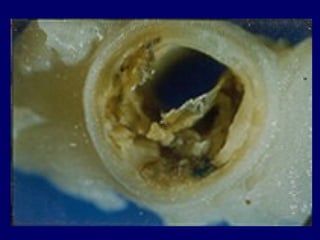
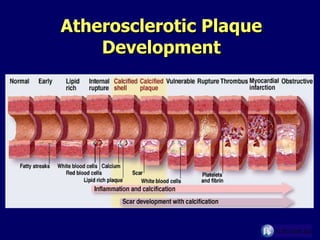
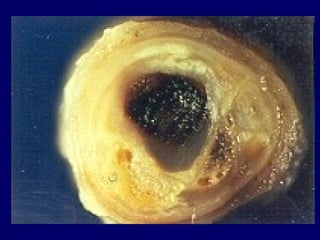
Atherosclerotic Plaque Development
 
Atherosclerotic Plaque Development
 
 
Atherosclerotic Plaque Development
 
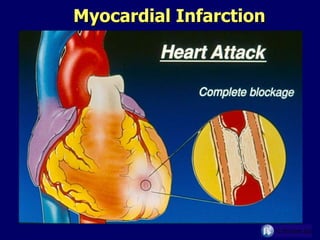
Myocardial Infarction
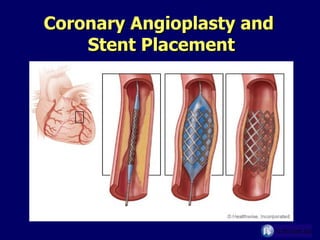
Coronary Angioplasty and  Stent Placement
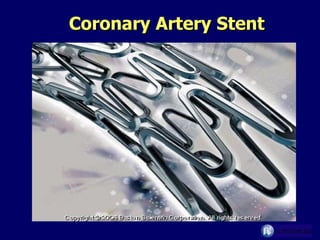
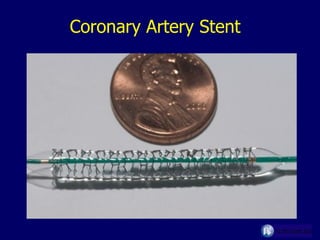
Coronary Artery Stent
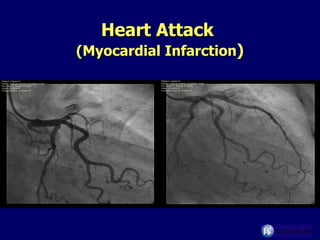
Heart Attack  (Myocardial Infarction )
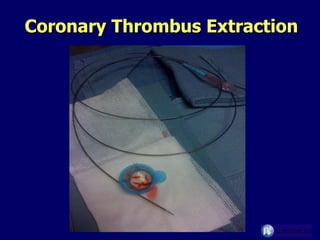
Coronary Thrombus Extraction
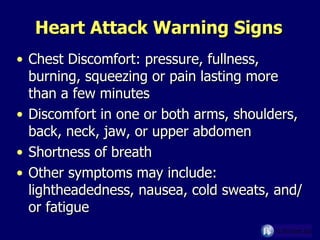
Heart Attack Warning Signs Chest Discomfort: pressure, fullness, burning, squeezing or pain lasting more than a few minutes Discomfort in one or both arms, shoulders, back, neck, jaw, or upper abdomen Shortness of breath Other symptoms may include: lightheadedness, nausea, cold sweats, and/or fatigue
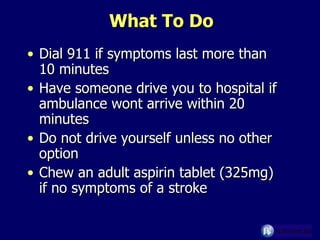
What To Do Dial 911 if symptoms last more than 10 minutes Have someone drive you to hospital if ambulance wont arrive within 20 minutes Do not drive yourself unless no other option Chew an adult aspirin tablet (325mg) if no symptoms of a stroke
Denial  Not just a river in Egypt
 
 
Heart Disease Prevention What you can do to take care of your heart?
Heart Disease Prevention Heart Disease develops gradually over many years – so have great opportunity to prevent it 80+% of heart disease may be prevented with healthy lifestyle and appropriate use of medications
Modifiable Risk Factors for  Heart Disease  Hypertension Smoking  Abdominal Obesity Physical Inactivity Diabetes or Metabolic Syndrome  Abnormal Cholesterol  Lack of Daily Fruit and Vegetable Intake Insufficient Sleep
 
Heart Attack Prevention Aspirin   Heart Attack Primary Prevention (No known CAD or other Atherosclerosis) Aspirin 81 to 162 mg/Day if at higher risk: Men 45+ years old Diabetic men 40+ if additional risk factor Secondary Prevention   (Known CAD or other Atherosclerosis) Aspirin 81-325mg/Day unless  contraindicated
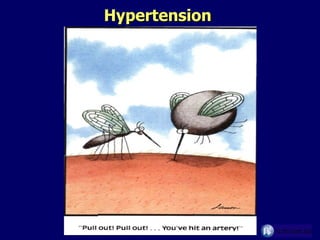
Hypertension
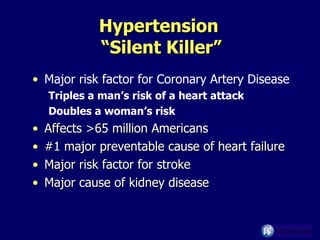
Hypertension  “Silent Killer” Major risk factor for Coronary Artery Disease Triples a man’s risk of a heart attack Doubles a woman’s risk Affects >65 million Americans #1 major preventable cause of heart failure Major risk factor for stroke  Major cause of kidney disease
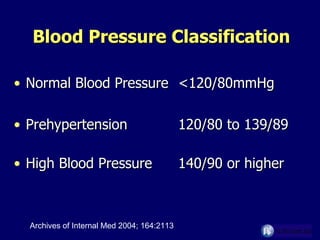
Blood Pressure Classification Normal Blood Pressure  <120/80mmHg Prehypertension  120/80 to 139/89 High Blood Pressure  140/90 or higher Archives of Internal Med 2004; 164:2113
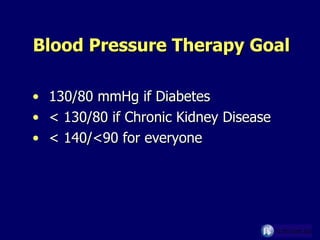
Blood Pressure Therapy Goal 130/80 mmHg if Diabetes < 130/80 if Chronic Kidney Disease < 140/<90 for everyone
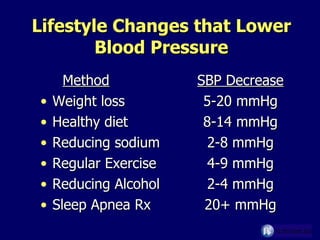
Lifestyle Changes that Lower Blood Pressure Method   SBP Decrease Weight loss 5-20 mmHg Healthy diet 8-14 mmHg Reducing sodium 2-8 mmHg Regular Exercise 4-9 mmHg Reducing Alcohol 2-4 mmHg Sleep Apnea Rx 20+ mmHg
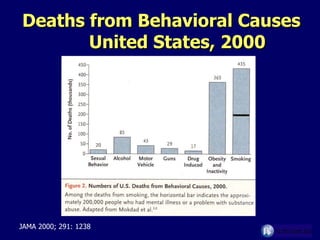
Deaths from Behavioral Causes United States, 2000 JAMA 2000; 291: 1238
Smoking:  The Real Reason Dinosaurs Became Extinct
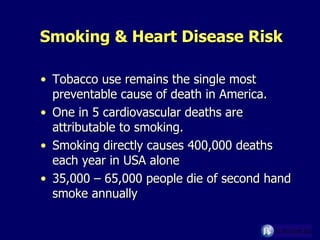
Smoking & Heart Disease Risk Tobacco use remains the single most preventable cause of death in America. One in 5 cardiovascular deaths are attributable to smoking. Smoking directly causes 400,000 deaths each year in USA alone  35,000 – 65,000 people die of second hand smoke annually
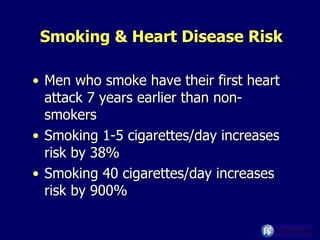
Smoking & Heart Disease Risk Men who smoke have their first heart attack 7 years earlier than non-smokers Smoking 1-5 cigarettes/day increases risk by 38% Smoking 40 cigarettes/day increases risk by 900%
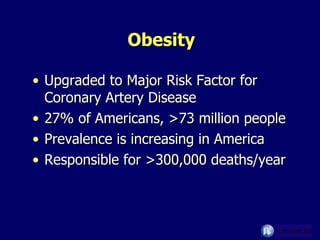
Obesity Upgraded to Major Risk Factor for Coronary Artery Disease 27% of Americans, >73 million people Prevalence is increasing in America Responsible for >300,000 deaths/year
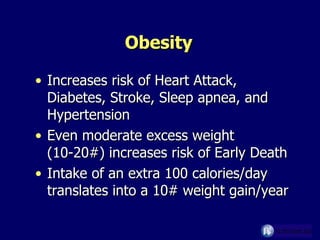
Obesity Increases risk of Heart Attack, Diabetes, Stroke, Sleep apnea, and Hypertension Even moderate excess weight (10-20#) increases risk of Early Death Intake of an extra 100 calories/day translates into a 10# weight gain/year
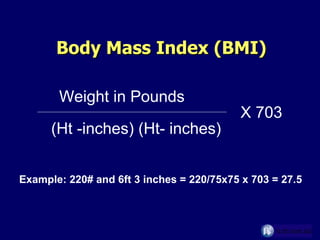
Body Mass Index (BMI) Weight in Pounds (Ht -inches) (Ht- inches) X 703 Example: 220# and 6ft 3 inches = 220/75x75 x 703 = 27.5
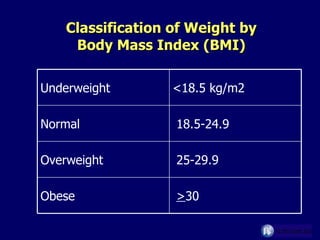
Classification of Weight by Body Mass Index (BMI) > 30 Obese 25-29.9 Overweight 18.5-24.9 Normal <18.5 kg/m2 Underweight
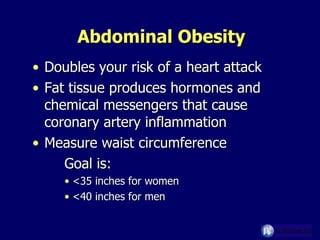
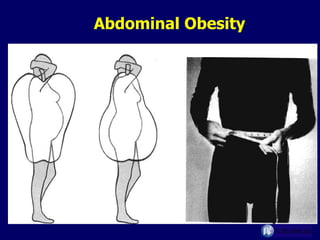
Abdominal Obesity Doubles your risk of a heart attack Fat tissue produces hormones and chemical messengers that cause coronary artery inflammation Measure waist circumference Goal is: <35 inches for women  <40 inches for men
Abdominal Obesity
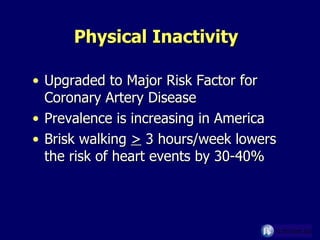
Physical Inactivity  Upgraded to Major Risk Factor for Coronary Artery Disease Prevalence is increasing in America Brisk walking  >  3 hours/week lowers the risk of heart events by 30-40%
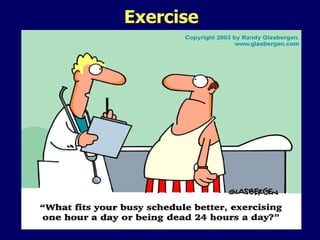
Exercise
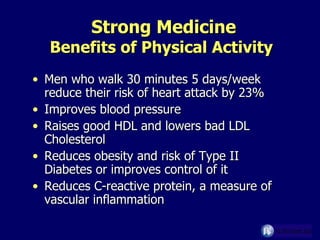
Strong Medicine Benefits of Physical Activity Men who walk 30 minutes 5 days/week reduce their risk of heart attack by 23% Improves blood pressure Raises good HDL and lowers bad LDL Cholesterol  Reduces obesity and risk of Type II Diabetes or improves control of it Reduces C-reactive protein, a measure of vascular inflammation
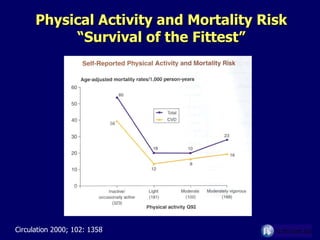
Physical Activity and Mortality Risk “Survival of the Fittest” Circulation 2000; 102: 1358
Exercise
 
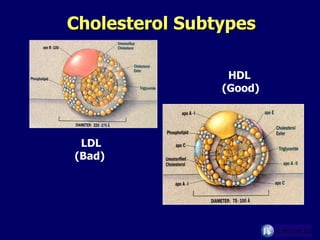
Cholesterol Subtypes LDL (Bad) HDL (Good)
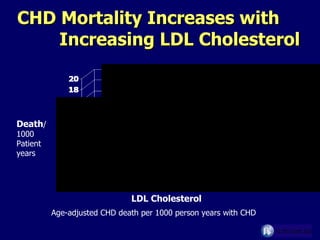
CHD Mortality Increases with  Increasing LDL Cholesterol LDL Cholesterol   Death / 1000 Patient  years Age-adjusted CHD death per 1000 person years with CHD
Cholesterol and CV Risk Lowering cholesterol by 10% lowers risk by 30% for women and men Statin medications lower risk of a heart attack by 30+%  If you have coronary artery disease, diabetes, an aneurysm, or a previous stroke, you most likely should be taking a Statin medication
Treatment of High Cholesterol Diet and Exercise will lower cholesterol and make cholesterol less likely to be deposited in the blood vessel wall Medication to lower cholesterol can decrease the risk of a heart attack by 30+% The lower the LDL cholesterol the better; the higher the HDL cholesterol the better
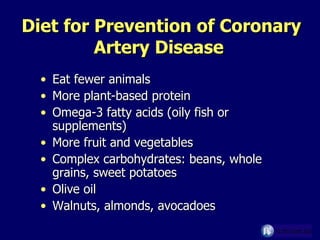
Diet for Prevention of Coronary Artery Disease  Eat fewer animals More plant-based protein Omega-3 fatty acids (oily fish or supplements) More fruit and vegetables Complex carbohydrates: beans, whole grains, sweet potatoes Olive oil Walnuts, almonds, avocadoes
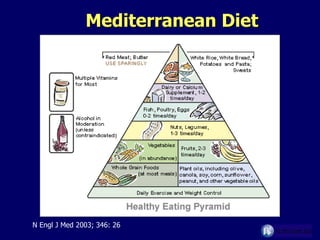
Mediterranean Diet N Engl J Med 2003; 346: 26
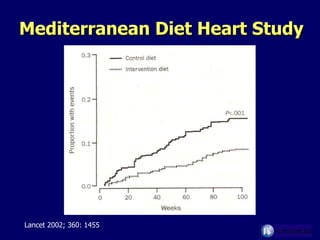
Mediterranean Diet Heart Study Lancet 2002; 360: 1455
“ Let your food be your medicine and your medicine be your food ”   --Hippocrates 420 B.C.
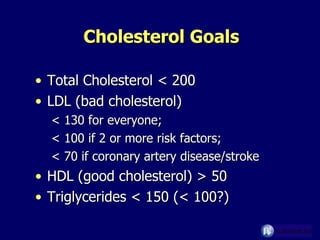
Cholesterol Goals Total Cholesterol < 200 LDL (bad cholesterol) < 130 for everyone; < 100 if 2 or more risk factors; < 70 if coronary artery disease/stroke HDL (good cholesterol) > 50 Triglycerides < 150 (< 100?)
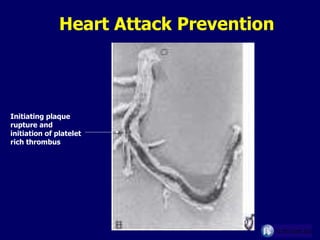
Initiating plaque rupture and initiation of platelet rich thrombus Heart Attack Prevention
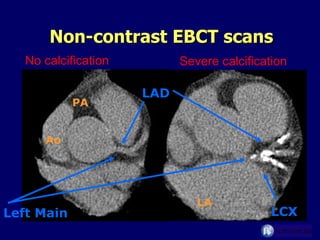
Non-contrast EBCT scans Left Main LAD LCX Ao LA PA No calcification Severe calcification
Coronary Calcium Score Screening tool for Coronary Artery Disease Safe Relatively inexpensive Amount of calcium is related to burden of atherosclerosis. As the amount of calcium increases, the likelihood of having obstructive disease increases, as does the likelihood of having a coronary event.  Negative calcium score has high negative predictive value for coronary event over next 5 years
Diabetes and Heart Disease At any age, Diabetic individuals are  3-7 times more likely to have heart disease than non-diabetics Heart attacks occur 10 years earlier in Diabetics
Diabetes and Heart Disease If you have diabetes you should receive the same treatment and medications as if you already had a heart attack, stent or bypass surgery Most diabetics will require medicine for their cholesterol and blood pressure even if they don’t need medicine to control their blood sugar
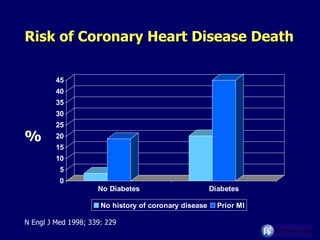
Risk of Coronary Heart Disease Death  % N Engl J Med 1998; 339: 229
Insufficient Sleep At least 7 hours of restful sleep/night is recommended Adults who sleep 5 or fewer hours/night have: Increased Vascular Inflammation Increased Risk of Diabetes Increased Coronary Calcium
Obstructive Sleep Apnea Snoring, daytime sleepiness, not refreshed after hours in bed, morning headaches. If untreated is associated with increased risk of: Hypertension Stroke Heart Attack Congestive Heart Failure Death Arrhythmias Edema
Heart Disease is Preventable Heart Disease develops gradually over 20+ years – so have a great opportunity to prevent it 80+% of heart disease events may be preventable through lifestyle changes  and appropriate medication
“A goal without a plan is just a wish” -Antoine de Saint-Exupery (1099-1944)
 
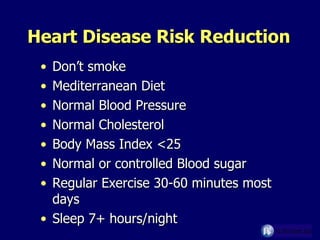
Heart Disease Risk Reduction  Don’t smoke Mediterranean Diet Normal Blood Pressure Normal Cholesterol Body Mass Index <25 Normal or controlled Blood sugar Regular Exercise 30-60 minutes most days Sleep 7+ hours/night
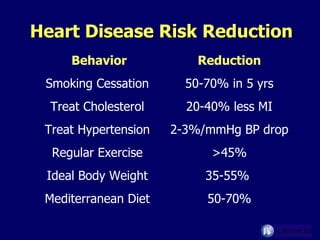
Heart Disease Risk Reduction 50-70% Mediterranean Diet 35-55%  Ideal Body Weight >45% Regular Exercise 2-3%/mmHg BP drop Treat Hypertension 20-40% less MI Treat Cholesterol 50-70% in 5 yrs Smoking Cessation Reduction Behavior
 
For copies of this presentation, please contact: [email_address]
 

Heart Health

  • 1.
    Andrew G. L.McGinn, M.D., FACC Cardiology North Memorial Heart and Vascular Institute 763-581-5400 Heart Health September 21, 2010
  • 2.
  • 3.
    Normal Heart FunctionBody’s engine Beats 60-80 times each minute =40 million times each year Pumps 5 quarts of blood each minute =1800 gallons each day
  • 4.
  • 5.
    Leading Causes ofDeath United States, 2004 2,397,615 Total 1 33,373 Septicemia 10 2 42,480 Kidney Disease 9 2 59,664 Influenza & Pneumonia 8 3 65,965 Alzheimer's Disease 7 3 73,138 Diabetes Mellitus 6 5 112,012 Unintentional Injury 5 5 121,987 Chronic Lung Diseases 4 6 150,074 Stroke 3 23 553,888 Cancer 2 27 652,486 Heart Disease 1 % Number Cause of Death Rank
  • 6.
    Heart Disease isthe #1 Killer of Women & Men One out of every 3 deaths is from Heart Disease or Stroke in the USA Every 26 seconds, an American will suffer a Heart Attack Every 40 seconds, someone will suffer a Stroke One Death every 34 seconds due to Heart Disease
  • 7.
    You are onlyas old as your coronary arteries.
  • 8.
  • 9.
  • 10.
  • 11.
  • 12.
  • 13.
  • 14.
  • 15.
  • 16.
    Coronary Angioplasty and Stent Placement
  • 17.
  • 18.
  • 19.
    Heart Attack (Myocardial Infarction )
  • 20.
  • 21.
    Heart Attack WarningSigns Chest Discomfort: pressure, fullness, burning, squeezing or pain lasting more than a few minutes Discomfort in one or both arms, shoulders, back, neck, jaw, or upper abdomen Shortness of breath Other symptoms may include: lightheadedness, nausea, cold sweats, and/or fatigue
  • 22.
    What To DoDial 911 if symptoms last more than 10 minutes Have someone drive you to hospital if ambulance wont arrive within 20 minutes Do not drive yourself unless no other option Chew an adult aspirin tablet (325mg) if no symptoms of a stroke
  • 23.
    Denial Notjust a river in Egypt
  • 24.
  • 25.
  • 26.
    Heart Disease PreventionWhat you can do to take care of your heart?
  • 27.
    Heart Disease PreventionHeart Disease develops gradually over many years – so have great opportunity to prevent it 80+% of heart disease may be prevented with healthy lifestyle and appropriate use of medications
  • 28.
    Modifiable Risk Factorsfor Heart Disease Hypertension Smoking Abdominal Obesity Physical Inactivity Diabetes or Metabolic Syndrome Abnormal Cholesterol Lack of Daily Fruit and Vegetable Intake Insufficient Sleep
  • 29.
  • 30.
    Heart Attack PreventionAspirin Heart Attack Primary Prevention (No known CAD or other Atherosclerosis) Aspirin 81 to 162 mg/Day if at higher risk: Men 45+ years old Diabetic men 40+ if additional risk factor Secondary Prevention (Known CAD or other Atherosclerosis) Aspirin 81-325mg/Day unless contraindicated
  • 31.
  • 32.
    Hypertension “SilentKiller” Major risk factor for Coronary Artery Disease Triples a man’s risk of a heart attack Doubles a woman’s risk Affects >65 million Americans #1 major preventable cause of heart failure Major risk factor for stroke Major cause of kidney disease
  • 33.
    Blood Pressure ClassificationNormal Blood Pressure <120/80mmHg Prehypertension 120/80 to 139/89 High Blood Pressure 140/90 or higher Archives of Internal Med 2004; 164:2113
  • 34.
    Blood Pressure TherapyGoal 130/80 mmHg if Diabetes < 130/80 if Chronic Kidney Disease < 140/<90 for everyone
  • 35.
    Lifestyle Changes thatLower Blood Pressure Method SBP Decrease Weight loss 5-20 mmHg Healthy diet 8-14 mmHg Reducing sodium 2-8 mmHg Regular Exercise 4-9 mmHg Reducing Alcohol 2-4 mmHg Sleep Apnea Rx 20+ mmHg
  • 36.
    Deaths from BehavioralCauses United States, 2000 JAMA 2000; 291: 1238
  • 37.
    Smoking: TheReal Reason Dinosaurs Became Extinct
  • 38.
    Smoking & HeartDisease Risk Tobacco use remains the single most preventable cause of death in America. One in 5 cardiovascular deaths are attributable to smoking. Smoking directly causes 400,000 deaths each year in USA alone 35,000 – 65,000 people die of second hand smoke annually
  • 39.
    Smoking & HeartDisease Risk Men who smoke have their first heart attack 7 years earlier than non-smokers Smoking 1-5 cigarettes/day increases risk by 38% Smoking 40 cigarettes/day increases risk by 900%
  • 40.
    Obesity Upgraded toMajor Risk Factor for Coronary Artery Disease 27% of Americans, >73 million people Prevalence is increasing in America Responsible for >300,000 deaths/year
  • 41.
    Obesity Increases riskof Heart Attack, Diabetes, Stroke, Sleep apnea, and Hypertension Even moderate excess weight (10-20#) increases risk of Early Death Intake of an extra 100 calories/day translates into a 10# weight gain/year
  • 42.
    Body Mass Index(BMI) Weight in Pounds (Ht -inches) (Ht- inches) X 703 Example: 220# and 6ft 3 inches = 220/75x75 x 703 = 27.5
  • 43.
    Classification of Weightby Body Mass Index (BMI) > 30 Obese 25-29.9 Overweight 18.5-24.9 Normal <18.5 kg/m2 Underweight
  • 44.
    Abdominal Obesity Doublesyour risk of a heart attack Fat tissue produces hormones and chemical messengers that cause coronary artery inflammation Measure waist circumference Goal is: <35 inches for women <40 inches for men
  • 45.
  • 46.
    Physical Inactivity Upgraded to Major Risk Factor for Coronary Artery Disease Prevalence is increasing in America Brisk walking > 3 hours/week lowers the risk of heart events by 30-40%
  • 47.
  • 48.
    Strong Medicine Benefitsof Physical Activity Men who walk 30 minutes 5 days/week reduce their risk of heart attack by 23% Improves blood pressure Raises good HDL and lowers bad LDL Cholesterol Reduces obesity and risk of Type II Diabetes or improves control of it Reduces C-reactive protein, a measure of vascular inflammation
  • 49.
    Physical Activity andMortality Risk “Survival of the Fittest” Circulation 2000; 102: 1358
  • 50.
  • 51.
  • 52.
    Cholesterol Subtypes LDL(Bad) HDL (Good)
  • 53.
    CHD Mortality Increaseswith Increasing LDL Cholesterol LDL Cholesterol Death / 1000 Patient years Age-adjusted CHD death per 1000 person years with CHD
  • 54.
    Cholesterol and CVRisk Lowering cholesterol by 10% lowers risk by 30% for women and men Statin medications lower risk of a heart attack by 30+% If you have coronary artery disease, diabetes, an aneurysm, or a previous stroke, you most likely should be taking a Statin medication
  • 55.
    Treatment of HighCholesterol Diet and Exercise will lower cholesterol and make cholesterol less likely to be deposited in the blood vessel wall Medication to lower cholesterol can decrease the risk of a heart attack by 30+% The lower the LDL cholesterol the better; the higher the HDL cholesterol the better
  • 56.
    Diet for Preventionof Coronary Artery Disease Eat fewer animals More plant-based protein Omega-3 fatty acids (oily fish or supplements) More fruit and vegetables Complex carbohydrates: beans, whole grains, sweet potatoes Olive oil Walnuts, almonds, avocadoes
  • 57.
    Mediterranean Diet NEngl J Med 2003; 346: 26
  • 58.
    Mediterranean Diet HeartStudy Lancet 2002; 360: 1455
  • 59.
    “ Let yourfood be your medicine and your medicine be your food ” --Hippocrates 420 B.C.
  • 60.
    Cholesterol Goals TotalCholesterol < 200 LDL (bad cholesterol) < 130 for everyone; < 100 if 2 or more risk factors; < 70 if coronary artery disease/stroke HDL (good cholesterol) > 50 Triglycerides < 150 (< 100?)
  • 61.
    Initiating plaque ruptureand initiation of platelet rich thrombus Heart Attack Prevention
  • 62.
    Non-contrast EBCT scansLeft Main LAD LCX Ao LA PA No calcification Severe calcification
  • 63.
    Coronary Calcium ScoreScreening tool for Coronary Artery Disease Safe Relatively inexpensive Amount of calcium is related to burden of atherosclerosis. As the amount of calcium increases, the likelihood of having obstructive disease increases, as does the likelihood of having a coronary event. Negative calcium score has high negative predictive value for coronary event over next 5 years
  • 64.
    Diabetes and HeartDisease At any age, Diabetic individuals are 3-7 times more likely to have heart disease than non-diabetics Heart attacks occur 10 years earlier in Diabetics
  • 65.
    Diabetes and HeartDisease If you have diabetes you should receive the same treatment and medications as if you already had a heart attack, stent or bypass surgery Most diabetics will require medicine for their cholesterol and blood pressure even if they don’t need medicine to control their blood sugar
  • 66.
    Risk of CoronaryHeart Disease Death % N Engl J Med 1998; 339: 229
  • 67.
    Insufficient Sleep Atleast 7 hours of restful sleep/night is recommended Adults who sleep 5 or fewer hours/night have: Increased Vascular Inflammation Increased Risk of Diabetes Increased Coronary Calcium
  • 68.
    Obstructive Sleep ApneaSnoring, daytime sleepiness, not refreshed after hours in bed, morning headaches. If untreated is associated with increased risk of: Hypertension Stroke Heart Attack Congestive Heart Failure Death Arrhythmias Edema
  • 69.
    Heart Disease isPreventable Heart Disease develops gradually over 20+ years – so have a great opportunity to prevent it 80+% of heart disease events may be preventable through lifestyle changes and appropriate medication
  • 70.
    “A goal withouta plan is just a wish” -Antoine de Saint-Exupery (1099-1944)
  • 71.
  • 72.
    Heart Disease RiskReduction Don’t smoke Mediterranean Diet Normal Blood Pressure Normal Cholesterol Body Mass Index <25 Normal or controlled Blood sugar Regular Exercise 30-60 minutes most days Sleep 7+ hours/night
  • 73.
    Heart Disease RiskReduction 50-70% Mediterranean Diet 35-55% Ideal Body Weight >45% Regular Exercise 2-3%/mmHg BP drop Treat Hypertension 20-40% less MI Treat Cholesterol 50-70% in 5 yrs Smoking Cessation Reduction Behavior
  • 74.
  • 75.
    For copies ofthis presentation, please contact: [email_address]
  • 76.

Editor's Notes

  • #34 Prevalence data is based on NHANES 3 data. Reference: Greenlund KJ et al. Prevalence of Heart Disease and Stroke Risk Factors in Persons with Prehypertension in the United States, Archives of Internal Medicine 2004;164:2113-2118
  • #67 This is data from Steve Haffner’s landmark study in the NEJM looking at the risk of coronary events in patients with Diabetes. This study helped modify the NCEP guidelines and changed diabetes from being considered a risk factor to being considered the equivalent of coronary artery disease. First we look at people who have had coronary disease or MI. Obviously having the disease is the greatest risk of all… In patients with no prior CV disease, and NO diabetes, the risk over 7 years of a cardiovascular event is 3.5%... Close to 97% will not have an event in the next 7 years. If you have had a heart attack, the risk of a second event is almost 5 times higher 18.8%. Now look at the right – diabetes. Having diabetes gives you more risk of having a CV event than having the disease itself. And if you have diabetes and have had a heart attack you have a 50/50 chance of having another event in the next 7 years. This is why if you have diabetes, you should receive the same aggressive treatment, as if you have already had a heart attack.
  • #73 As important as living longer is living better: Less comorbidities, restrictions, pills…Living well is the best revenge!