Harmonic Sequence
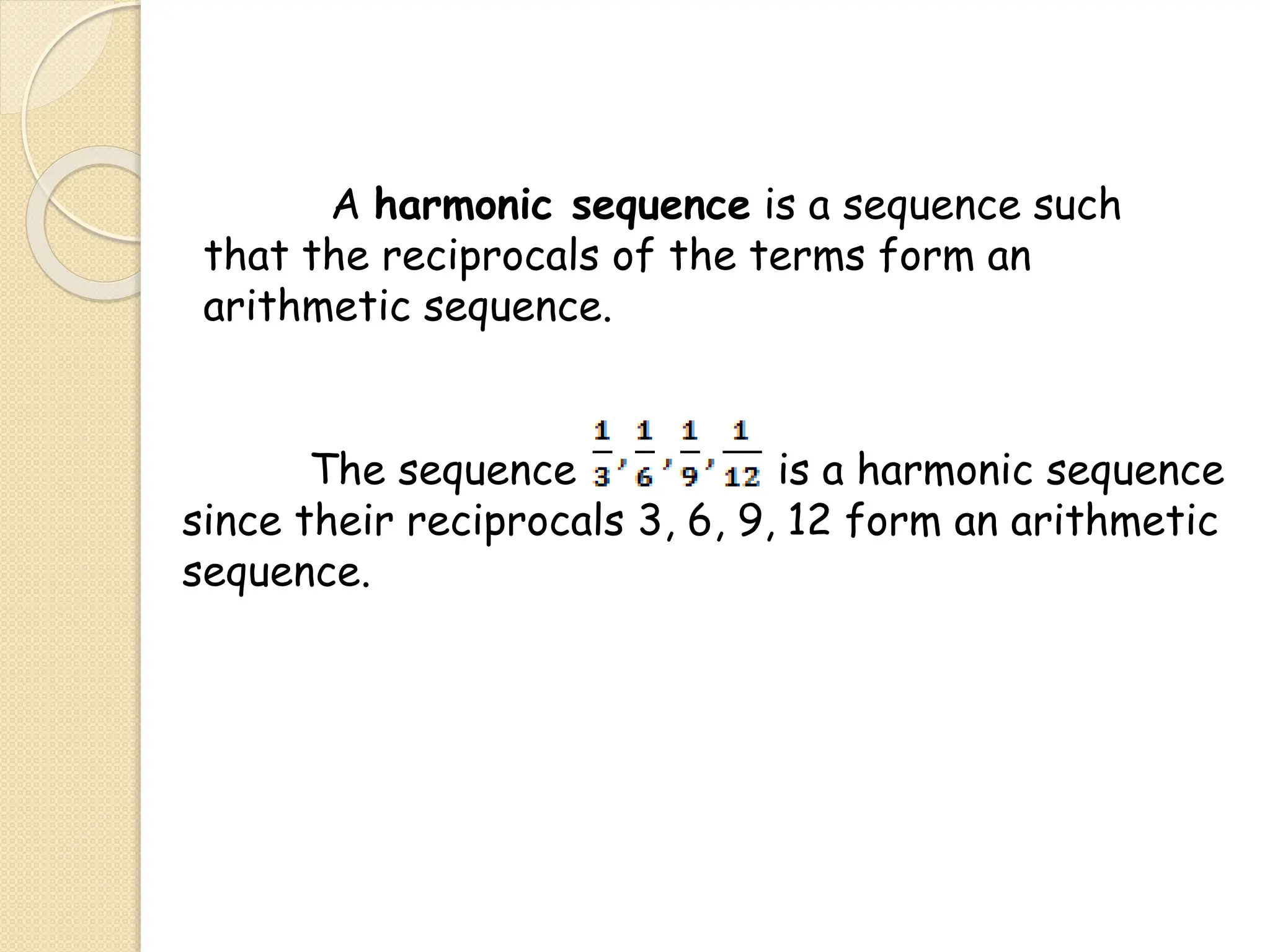
A harmonic sequence is a sequence such
that the reciprocals of the terms form an
arithmetic sequence.
The sequence is a harmonic sequence
since their reciprocals 3, 6, 9, 12 form an arithmetic
sequence.
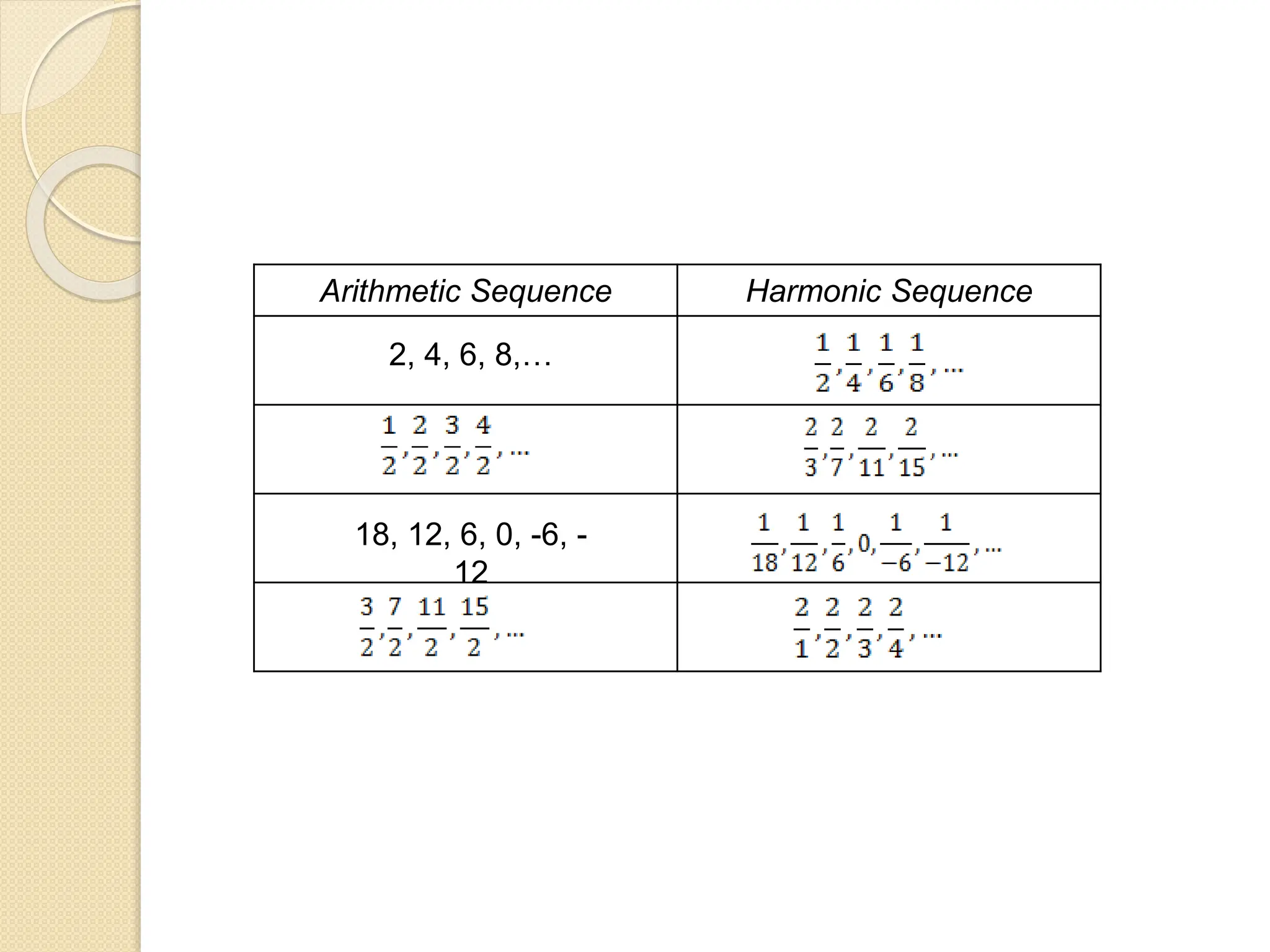
Arithmetic Sequence Harmonic Sequence
2, 4, 6, 8,…
18, 12, 6, 0, -6, -
12
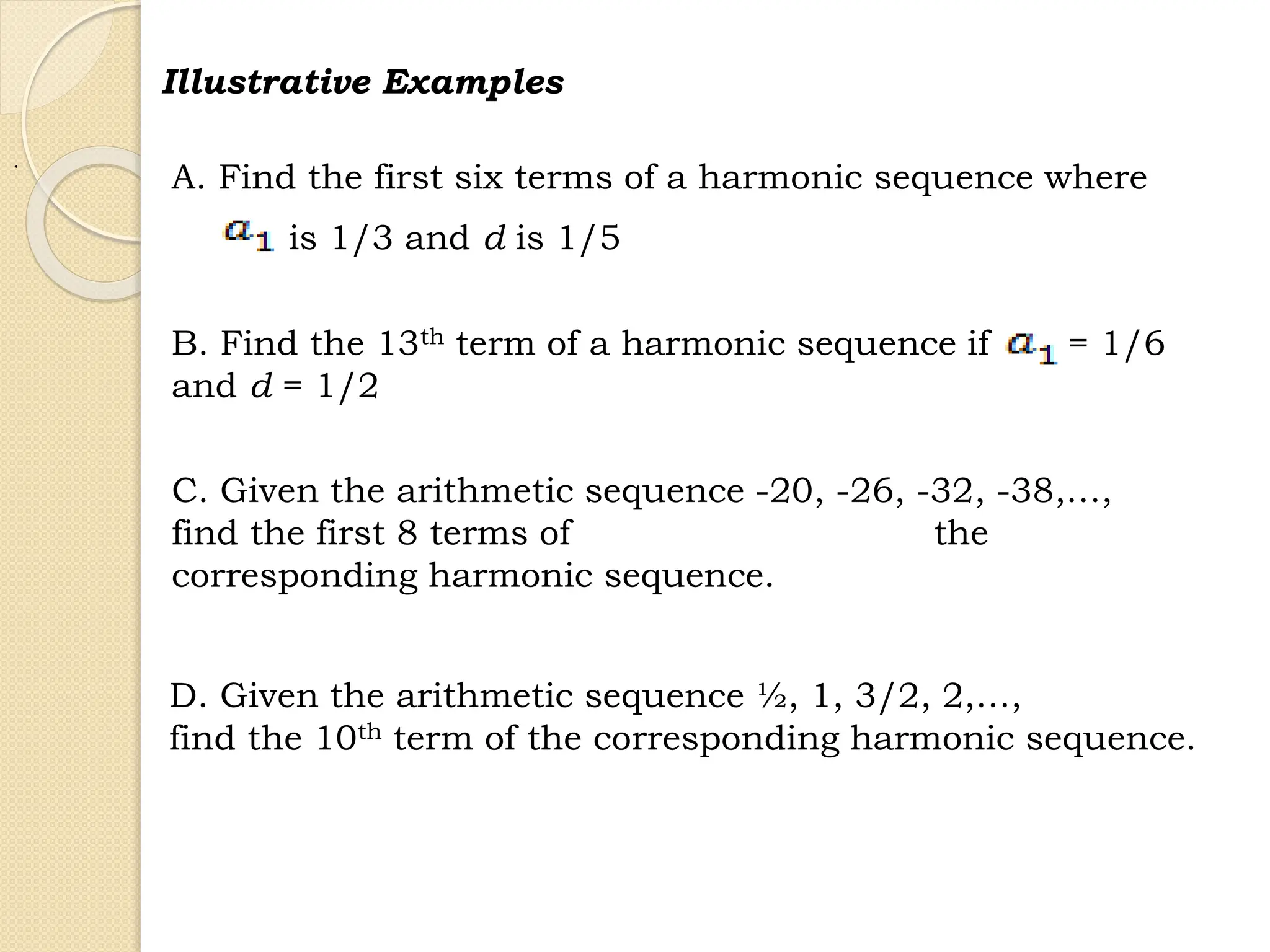
Illustrative Examples
A. Find the first six terms of a harmonic sequence where
is 1/3 and d is 1/5
.
B. Find the 13th term of a harmonic sequence if = 1/6
and d = 1/2
C. Given the arithmetic sequence -20, -26, -32, -38,…,
find the first 8 terms of the
corresponding harmonic sequence.
D. Given the arithmetic sequence ½, 1, 3/2, 2,…,
find the 10th term of the corresponding harmonic sequence.
Fibonacci Sequence
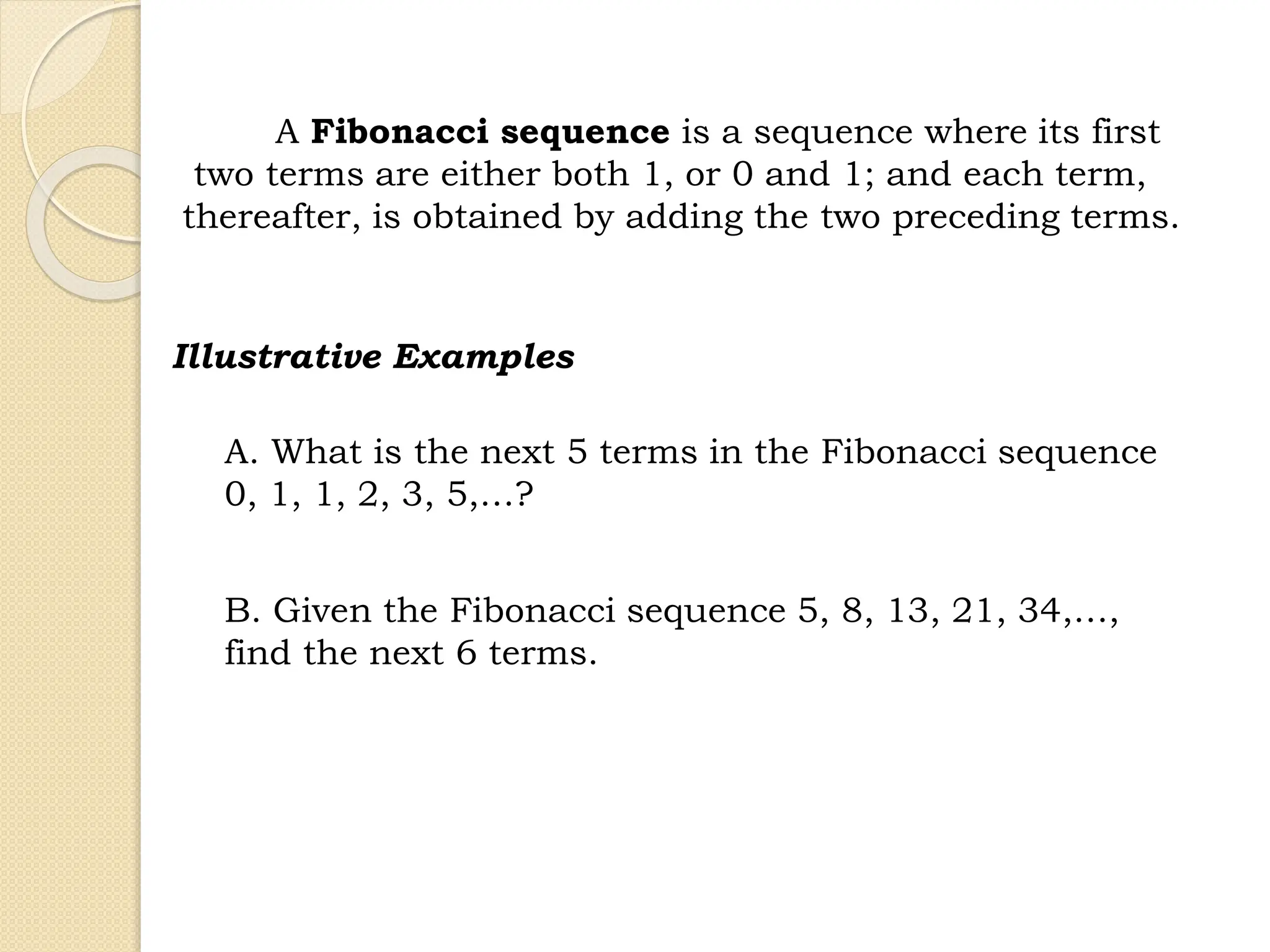
A Fibonacci sequence is a sequence where its first
two terms are either both 1, or 0 and 1; and each term,
thereafter, is obtained by adding the two preceding terms.
Illustrative Examples
A. What is the next 5 terms in the Fibonacci sequence
0, 1, 1, 2, 3, 5,…?
B. Given the Fibonacci sequence 5, 8, 13, 21, 34,…,
find the next 6 terms.

Harmonic-and-Fibonacci-Sequences.pptx

  • 1.
  • 2.
    A harmonic sequenceis a sequence such that the reciprocals of the terms form an arithmetic sequence. The sequence is a harmonic sequence since their reciprocals 3, 6, 9, 12 form an arithmetic sequence.
  • 3.
    Arithmetic Sequence HarmonicSequence 2, 4, 6, 8,… 18, 12, 6, 0, -6, - 12
  • 4.
    Illustrative Examples A. Findthe first six terms of a harmonic sequence where is 1/3 and d is 1/5 . B. Find the 13th term of a harmonic sequence if = 1/6 and d = 1/2 C. Given the arithmetic sequence -20, -26, -32, -38,…, find the first 8 terms of the corresponding harmonic sequence. D. Given the arithmetic sequence ½, 1, 3/2, 2,…, find the 10th term of the corresponding harmonic sequence.
  • 5.
  • 6.
    A Fibonacci sequenceis a sequence where its first two terms are either both 1, or 0 and 1; and each term, thereafter, is obtained by adding the two preceding terms. Illustrative Examples A. What is the next 5 terms in the Fibonacci sequence 0, 1, 1, 2, 3, 5,…? B. Given the Fibonacci sequence 5, 8, 13, 21, 34,…, find the next 6 terms.