Applied Media Aesthetics 
Chapter 1 
Group 1 Members: Joe Katulak, Cynthia Porta, Julian 
Ellzy, Melissa Thompson, and Kristal Noyan
Applied Aesthetics and Contextualism 
• Art is not always something finite such as a 
painting in a museum 
• We encounter things that can be considered 
art on an everyday basis based on the context 
of the given situation 
• Composition can greatly affect the way that 
we view or perceive a given situation
Contextual Perception 
• We screen out most of the sensations that reach our eyes and 
ears, and stabilize and simplify as much as possible what we do 
perceive. 
• Stabilizing the environment- our perceptual mechanisms are 
designed to stabilize and simplify our surroundings as much as 
possible so that they can become manageable. Also. Our 
“hardwired” perceptual stabilizers is the figure-ground 
principle, whereby we order our surroundings into foreground 
figures that lie in front of, or move against, a more stable 
background 
• Selective Seeing-In our habitual ways of seeing, we generally 
select information that agrees with how we want to see the 
world, and we screen out almost everything that might 
interfere with our constructs.
The Power of Context 
• Many of our perceptions are guided, if not 
indicated, by the event context 
• Context is something we perceive, & evaluate 
specific perceptual phenomena. Every 
aesthetic elements operate within, & is 
dependent on the context.
The Medium as a Structural Agent 
• Even when your primary function is to 
communicate specific information, you exert 
considerable influence on how a specific 
message is received.
E.T. Flying Bike Scene
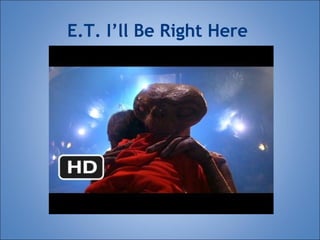
E.T. I’ll Be Right Here
Method 
• There are five main image elements that are incorporated 
into television and film (also known as fundamental image 
elements) 
• light and color 
• two-dimensional space 
• three-dimensional space 
• time and motion 
• sound 
• Encoding- the molding or beginning process when 
composing a shot 
• Encoding includes everything that makes up a shot 
such as cameras, lenses, lighting, sound, framing and 
others
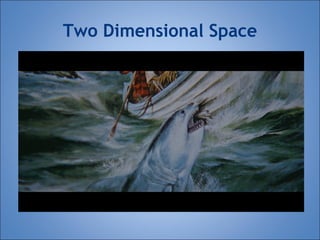
Two Dimensional Space
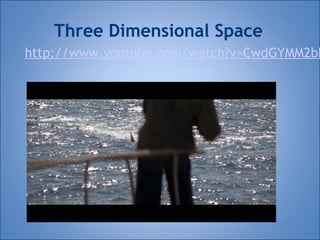
Three Dimensional Space 
http://www.youtube.com/watch?v=CwdGYMM2bHM
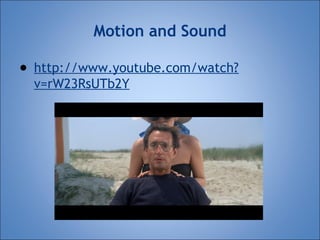
Motion and Sound 
● http://www.youtube.com/watch? 
v=rW23RsUTb2Y

Group1 Sight, Sound, Motion 2014

  • 1.
    Applied Media Aesthetics Chapter 1 Group 1 Members: Joe Katulak, Cynthia Porta, Julian Ellzy, Melissa Thompson, and Kristal Noyan
  • 2.
    Applied Aesthetics andContextualism • Art is not always something finite such as a painting in a museum • We encounter things that can be considered art on an everyday basis based on the context of the given situation • Composition can greatly affect the way that we view or perceive a given situation
  • 4.
    Contextual Perception •We screen out most of the sensations that reach our eyes and ears, and stabilize and simplify as much as possible what we do perceive. • Stabilizing the environment- our perceptual mechanisms are designed to stabilize and simplify our surroundings as much as possible so that they can become manageable. Also. Our “hardwired” perceptual stabilizers is the figure-ground principle, whereby we order our surroundings into foreground figures that lie in front of, or move against, a more stable background • Selective Seeing-In our habitual ways of seeing, we generally select information that agrees with how we want to see the world, and we screen out almost everything that might interfere with our constructs.
  • 5.
    The Power ofContext • Many of our perceptions are guided, if not indicated, by the event context • Context is something we perceive, & evaluate specific perceptual phenomena. Every aesthetic elements operate within, & is dependent on the context.
  • 6.
    The Medium asa Structural Agent • Even when your primary function is to communicate specific information, you exert considerable influence on how a specific message is received.
  • 7.
  • 8.
    E.T. I’ll BeRight Here
  • 9.
    Method • Thereare five main image elements that are incorporated into television and film (also known as fundamental image elements) • light and color • two-dimensional space • three-dimensional space • time and motion • sound • Encoding- the molding or beginning process when composing a shot • Encoding includes everything that makes up a shot such as cameras, lenses, lighting, sound, framing and others
  • 10.
  • 11.
    Three Dimensional Space http://www.youtube.com/watch?v=CwdGYMM2bHM
  • 12.
    Motion and Sound ● http://www.youtube.com/watch? v=rW23RsUTb2Y