ARTAPP GROUP 3
Presented by: Angel Griffin Batlag
CONTEXT AND
PERSPECTIVE
UNIT INTENDED LEARNING OUTCOMES
1. Define what is context and perspective.
2.Determine the three basic types of perspective
and how they impact interpretations of an
artwork.
At the end of this unit, you should be
able to:
CONTEXT AND PERSPECTIVE
-are both important factors in
shaping our understanding and
interpretation of any given
situation, event, or piece of
information.
Is seeing also understanding?
The physiological processes that
come together to form our vision,
or sight capabilities, are a
component of the larger complex
process of how we ‘see’ or
comprehend the world.
PERSPECTIVE
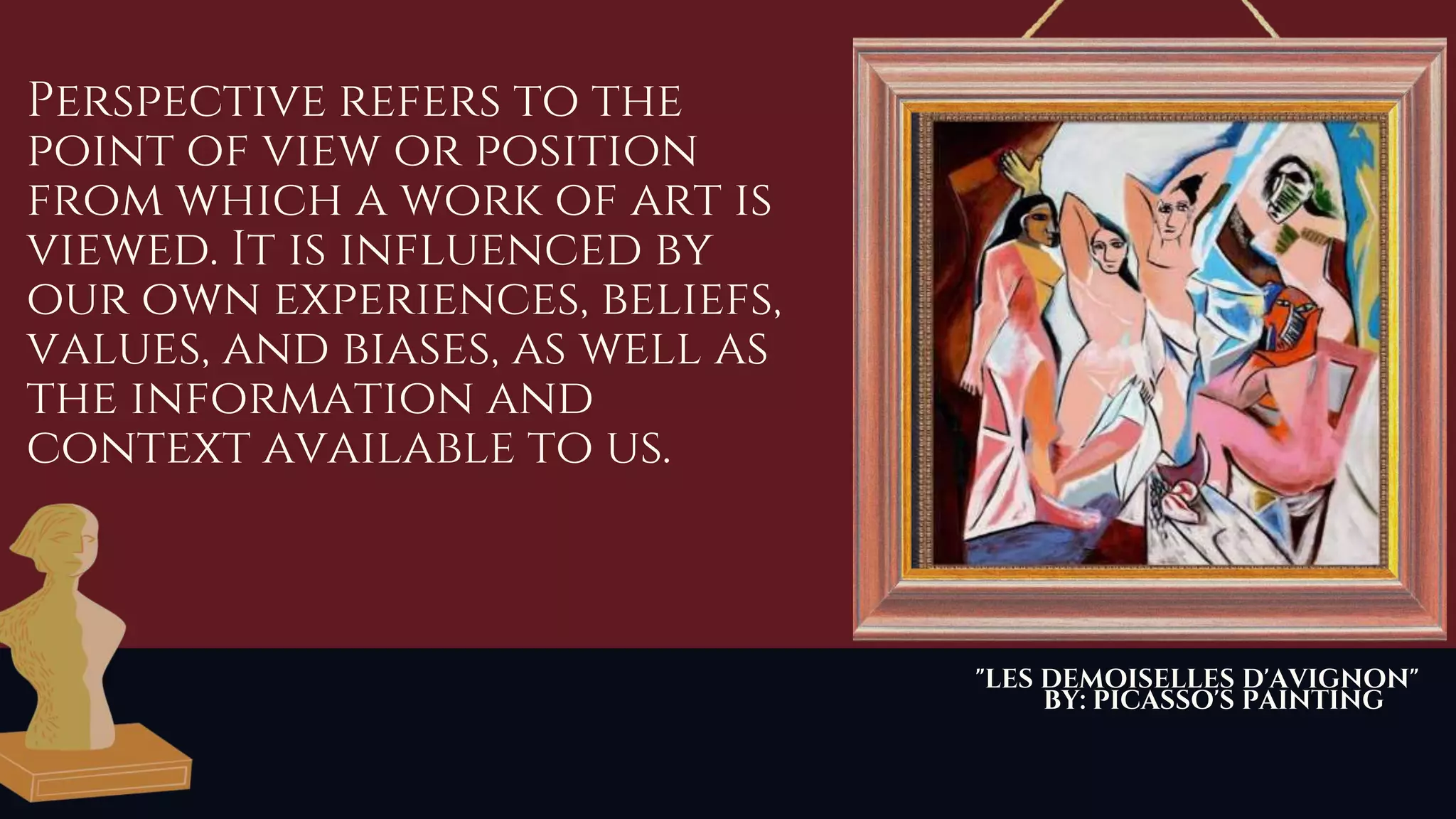
Perspective refers to the
point of view or position
from which a work of art is
viewed. It is influenced by
our own experiences, beliefs,
values, and biases, as well as
the information and
context available to us.
"LES DEMOISELLES D'AVIGNON"
BY: PICASSO'S PAINTING
3 BASIC TYPES
OF
PERSPECTIVE
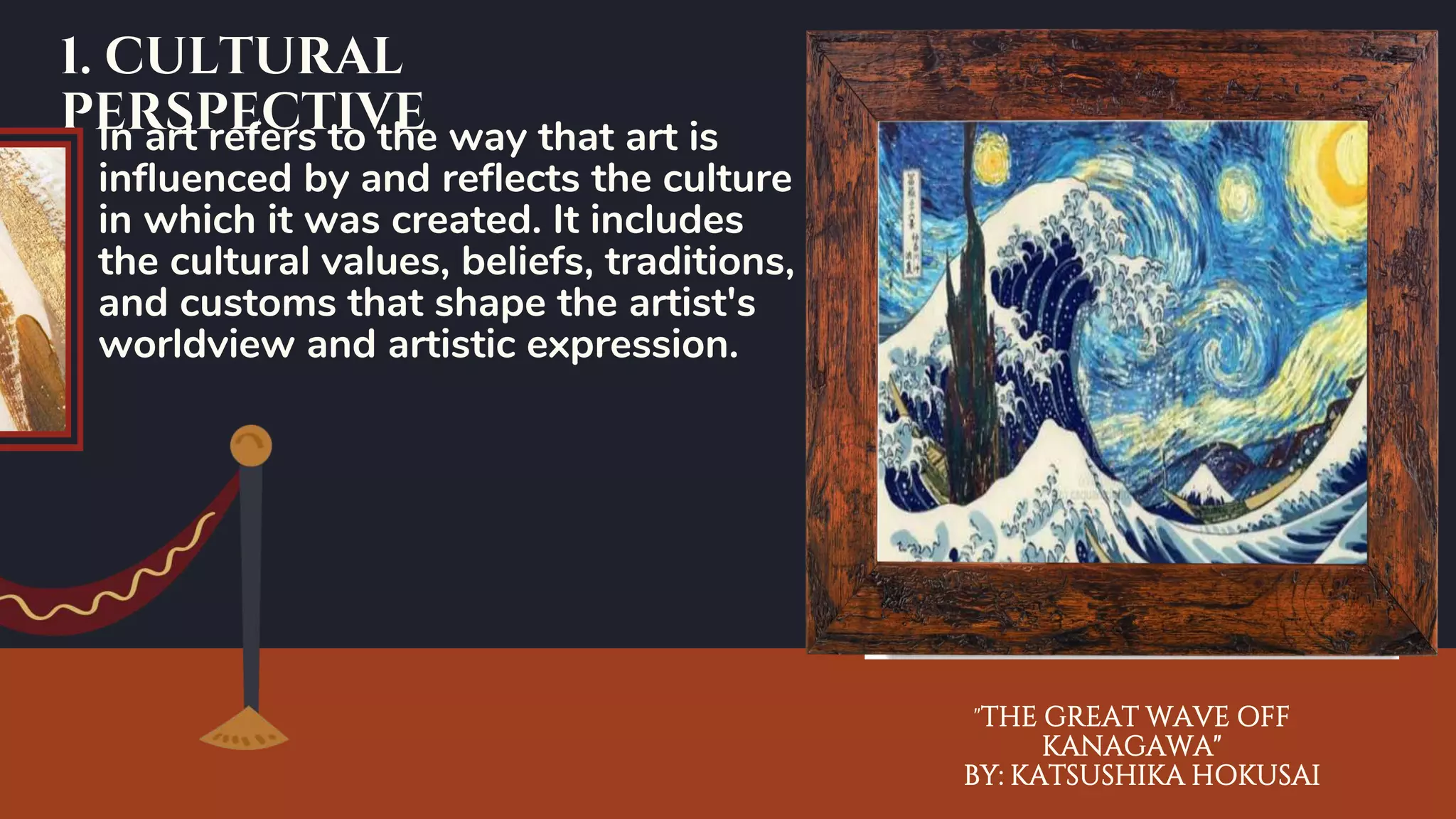
1. CULTURAL
PERSPECTIVE
"THE GREAT WAVE OFF
KANAGAWA"
BY: KATSUSHIKA HOKUSAI
In art refers to the way that art is
influenced by and reflects the culture
in which it was created. It includes
the cultural values, beliefs, traditions,
and customs that shape the artist's
worldview and artistic expression.
2.Historical Perspective
In art refers to the study of art in its
historical context. It involves
examining artworks within the
social, political, economic, and
cultural context of the time and
place in which they were created.
"LIBERTY LEADING THE
PEOPLE"
BY: EUGENE DELACROIX
3.PERSONAL
PERSPECTIVE
In art refers to the unique viewpoint,
experiences, and style of the artist that
shape their artistic expression. It
includes the artist's individual ideas,
emotions, beliefs, and experiences that
inform their creative decisions and
influence the meaning and
interpretation of their artwork.
"THE TWO
FRIDAS"
THANK YOU FOR
LISTENING!
Don't hesitate to ask any questions!

GROUP 3 CONTEXT AND PERSPECTIVE (BATLAG).pptx

  • 1.
    ARTAPP GROUP 3 Presentedby: Angel Griffin Batlag CONTEXT AND PERSPECTIVE
  • 2.
    UNIT INTENDED LEARNINGOUTCOMES 1. Define what is context and perspective. 2.Determine the three basic types of perspective and how they impact interpretations of an artwork. At the end of this unit, you should be able to:
  • 3.
    CONTEXT AND PERSPECTIVE -areboth important factors in shaping our understanding and interpretation of any given situation, event, or piece of information.
  • 4.
    Is seeing alsounderstanding? The physiological processes that come together to form our vision, or sight capabilities, are a component of the larger complex process of how we ‘see’ or comprehend the world.
  • 5.
  • 6.
    Perspective refers tothe point of view or position from which a work of art is viewed. It is influenced by our own experiences, beliefs, values, and biases, as well as the information and context available to us. "LES DEMOISELLES D'AVIGNON" BY: PICASSO'S PAINTING
  • 7.
  • 8.
    1. CULTURAL PERSPECTIVE "THE GREATWAVE OFF KANAGAWA" BY: KATSUSHIKA HOKUSAI In art refers to the way that art is influenced by and reflects the culture in which it was created. It includes the cultural values, beliefs, traditions, and customs that shape the artist's worldview and artistic expression.
  • 9.
    2.Historical Perspective In artrefers to the study of art in its historical context. It involves examining artworks within the social, political, economic, and cultural context of the time and place in which they were created. "LIBERTY LEADING THE PEOPLE" BY: EUGENE DELACROIX
  • 10.
    3.PERSONAL PERSPECTIVE In art refersto the unique viewpoint, experiences, and style of the artist that shape their artistic expression. It includes the artist's individual ideas, emotions, beliefs, and experiences that inform their creative decisions and influence the meaning and interpretation of their artwork. "THE TWO FRIDAS"
  • 11.
    THANK YOU FOR LISTENING! Don'thesitate to ask any questions!