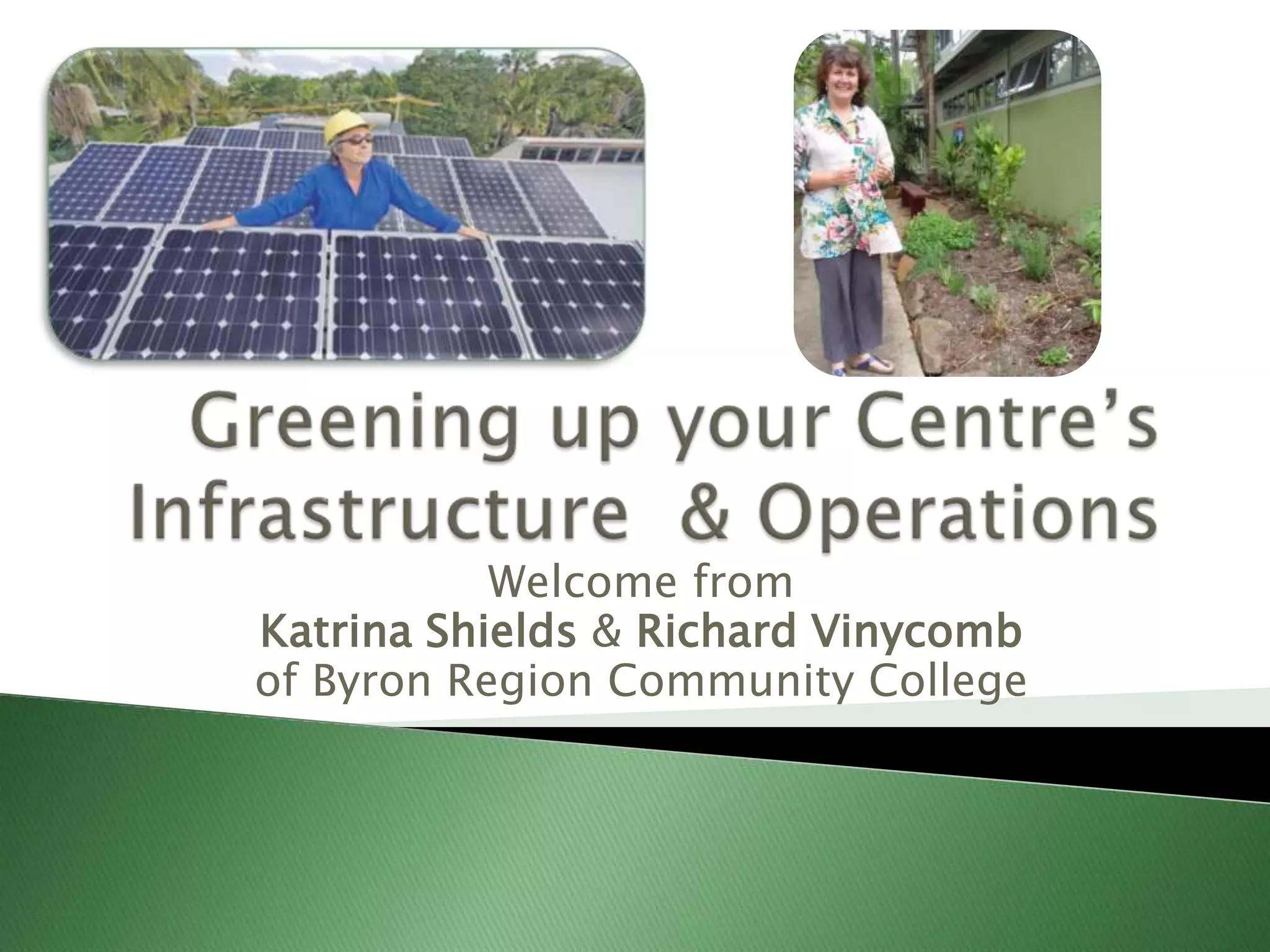
Welcome from
Katrina Shields & Richard Vinycomb
of Byron Region Community College
   Identify where environmental improvements
    can be made in infrastructure & operations
    through savings in:
    energy, waste, water, travel &
    transport, greener catering and using your
    purchasing power.

   Reflect on what might work for you, share
    change strategies and aspirations...

            We encourage your participation..
   Australia has the highest greenhouse gasses
    emissions per capita in the developed world.

   Our waste production is 2nd highest in the
    world after the USA, with 690kg per year
    being sent to landfill per person.

   Our power consumption per capita is four
    times the average in the world...
Like all organisations and households our centres
    have significant environmental impacts from their
    buildings and operations:
    Physical building footprints
    Energy required to run normal operations
    (and associated emissions)
    Consumption of resources (everything from
    cars to copiers to paper clips!)
   Waste produced as a result of normal
    operations
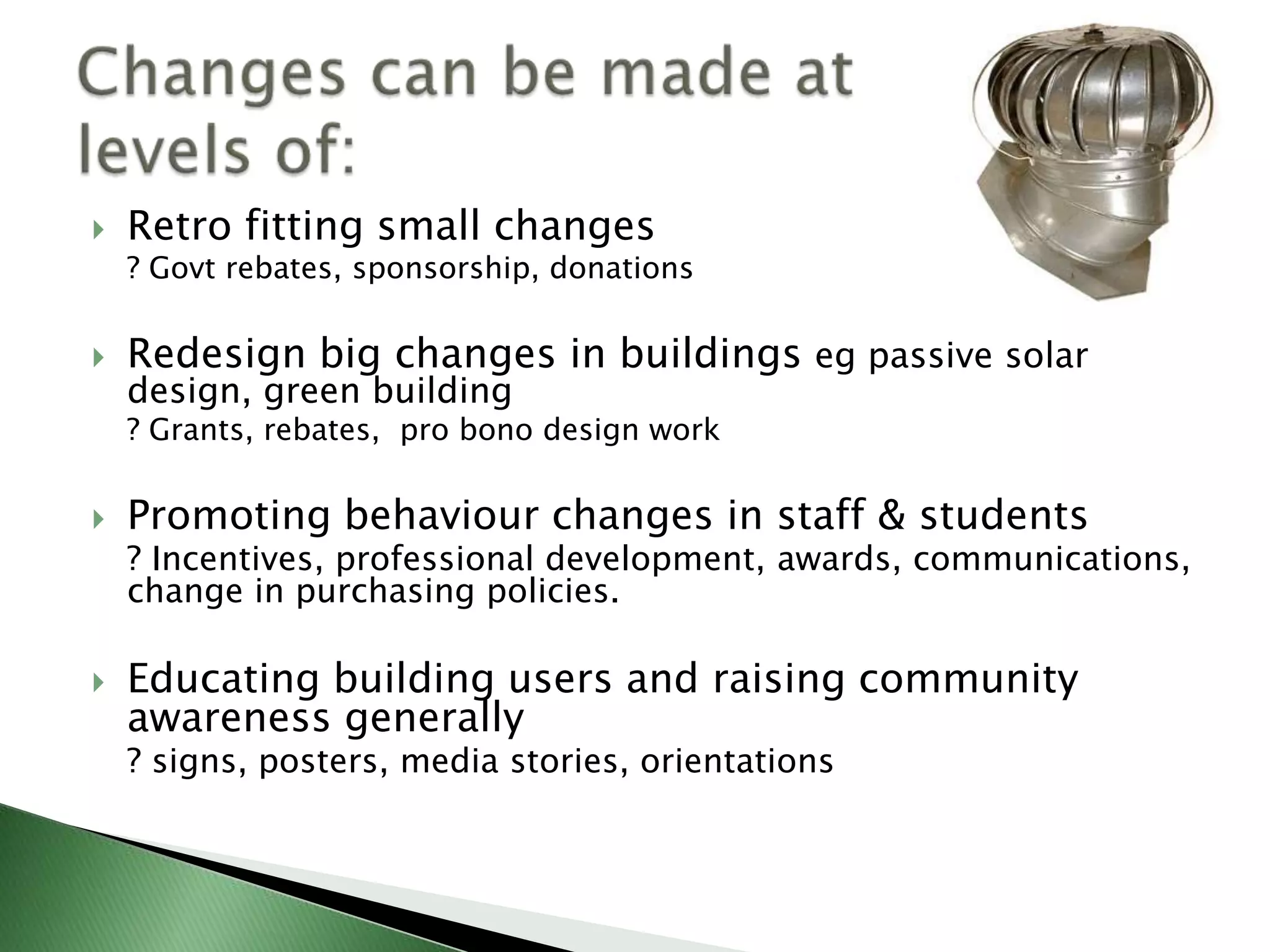
   Retro fitting small changes
    ? Govt rebates, sponsorship, donations

   Redesign big changes in buildings eg passive solar
    design, green building
    ? Grants, rebates, pro bono design work

   Promoting behaviour changes in staff & students
    ? Incentives, professional development, awards, communications,
    change in purchasing policies.

   Educating building users and raising community
    awareness generally
    ? signs, posters, media stories, orientations
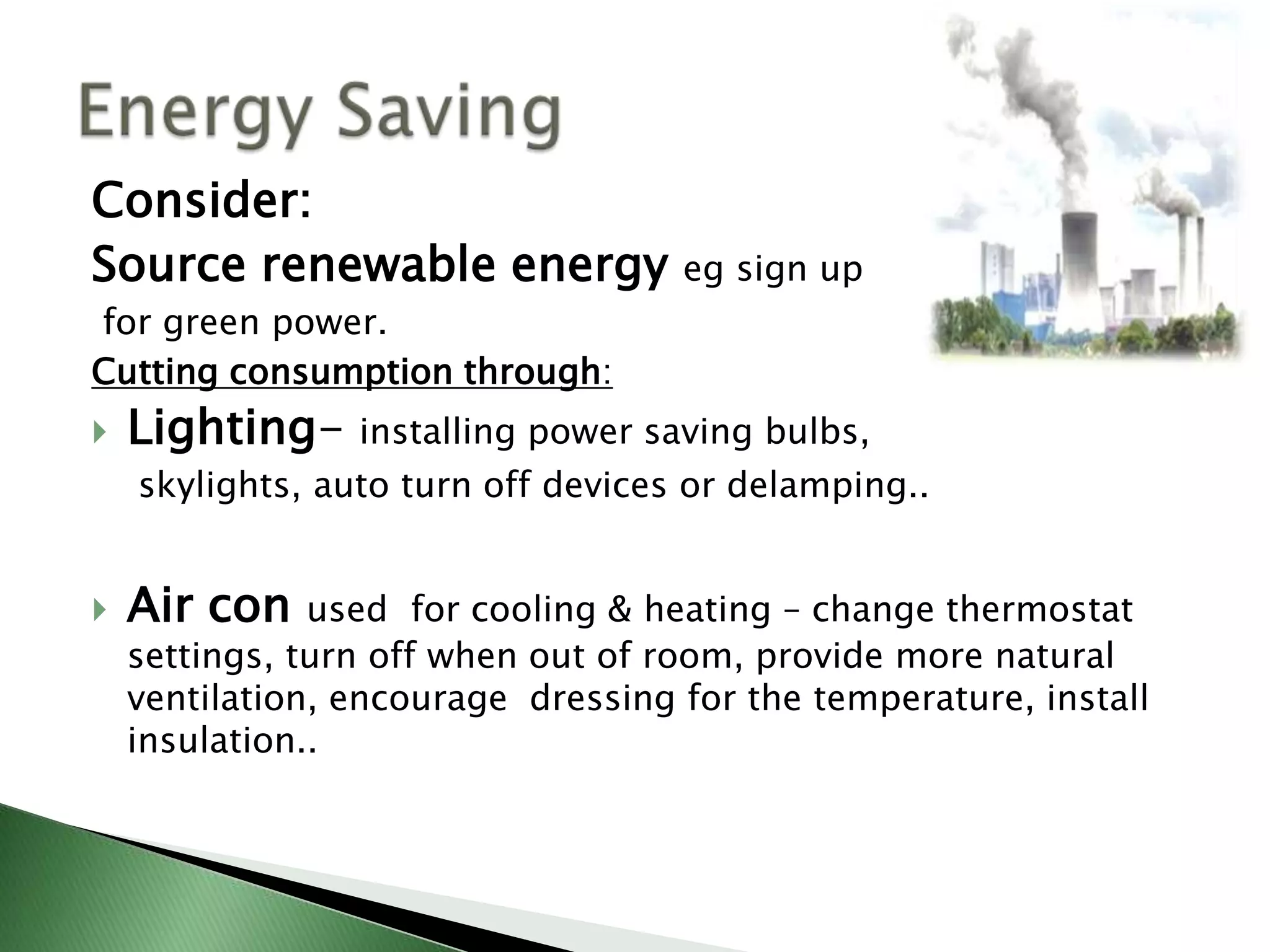
Consider:
Source renewable energy             eg sign up
for green power.
Cutting consumption through:
   Lighting- installing power saving bulbs,
    skylights, auto turn off devices or delamping..


   Air con    used for cooling & heating – change thermostat
    settings, turn off when out of room, provide more natural
    ventilation, encourage dressing for the temperature, install
    insulation..
   Equipment use – do you need all the
    fridges, TV’s, printers etc?
   Standby power or “ghost load” – turning off at
    the wall
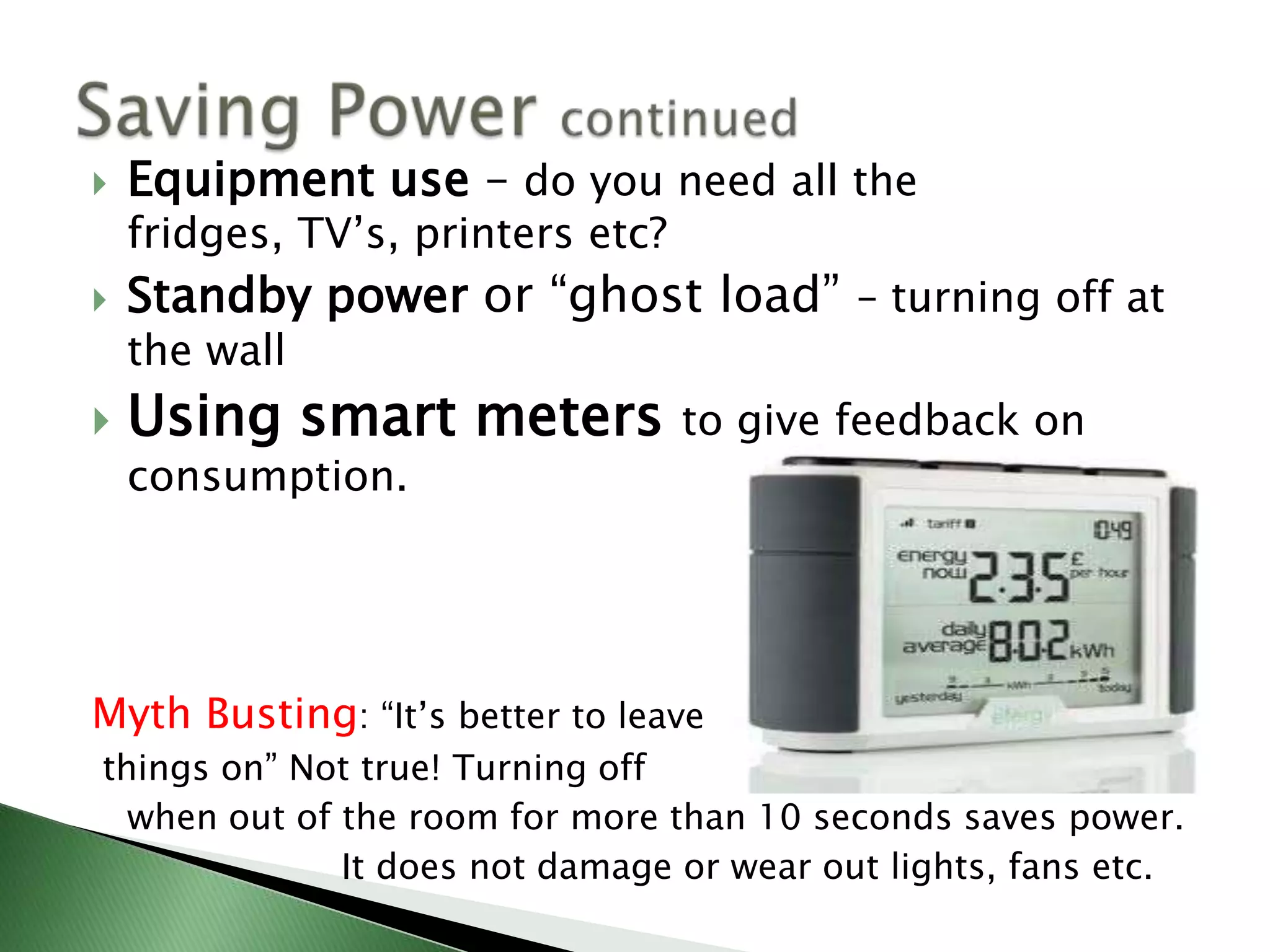
   Using smart meters             to give feedback on
    consumption.


Myth Busting: “It’s better to leave
things on” Not true! Turning off
  when out of the room for more than 10 seconds saves power.
              It does not damage or wear out lights, fans etc.
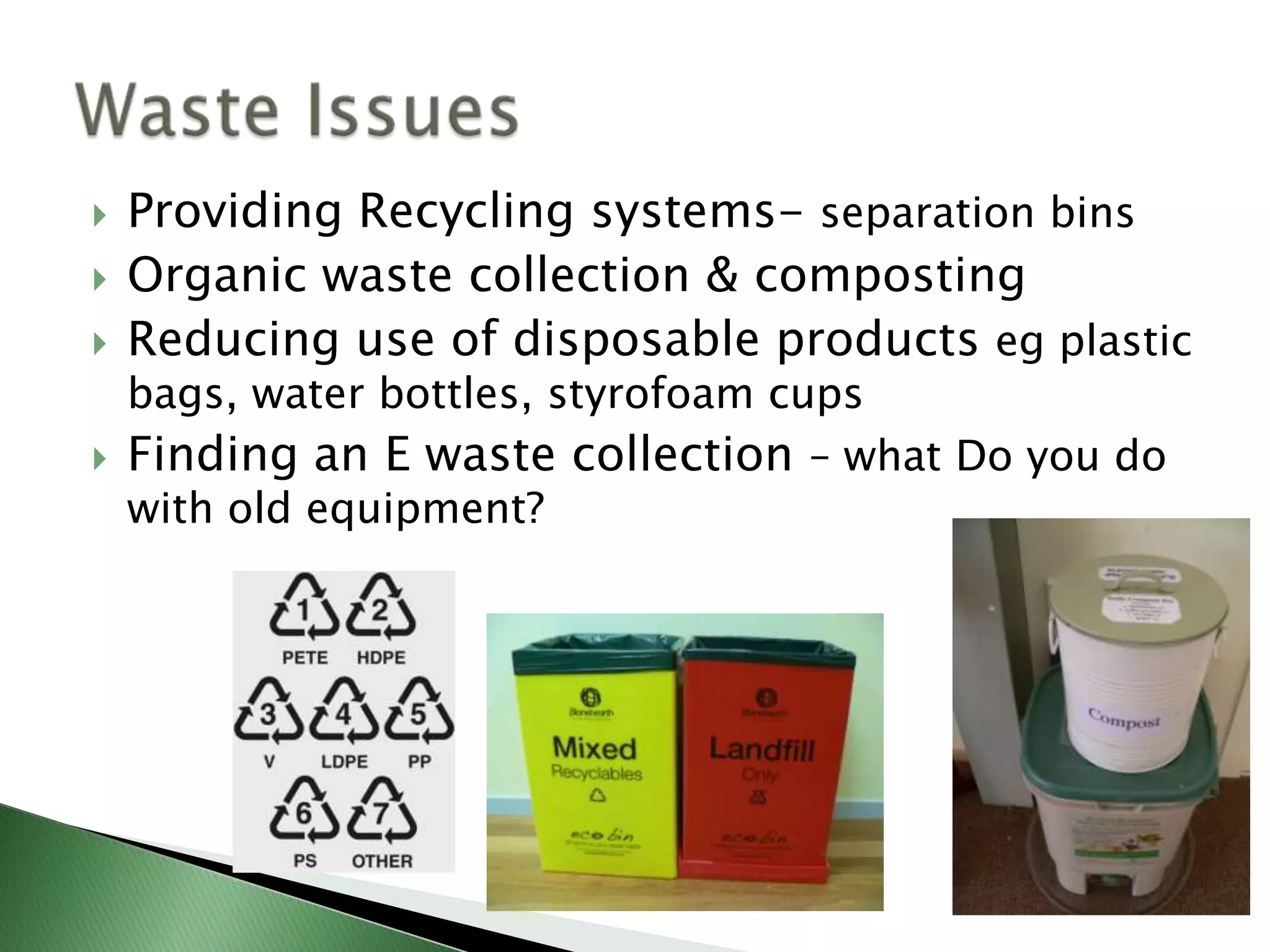
   Providing Recycling systems- separation bins
   Organic waste collection & composting
   Reducing use of disposable products eg plastic
    bags, water bottles, styrofoam cups
   Finding an E waste collection – what Do you do
    with old equipment?
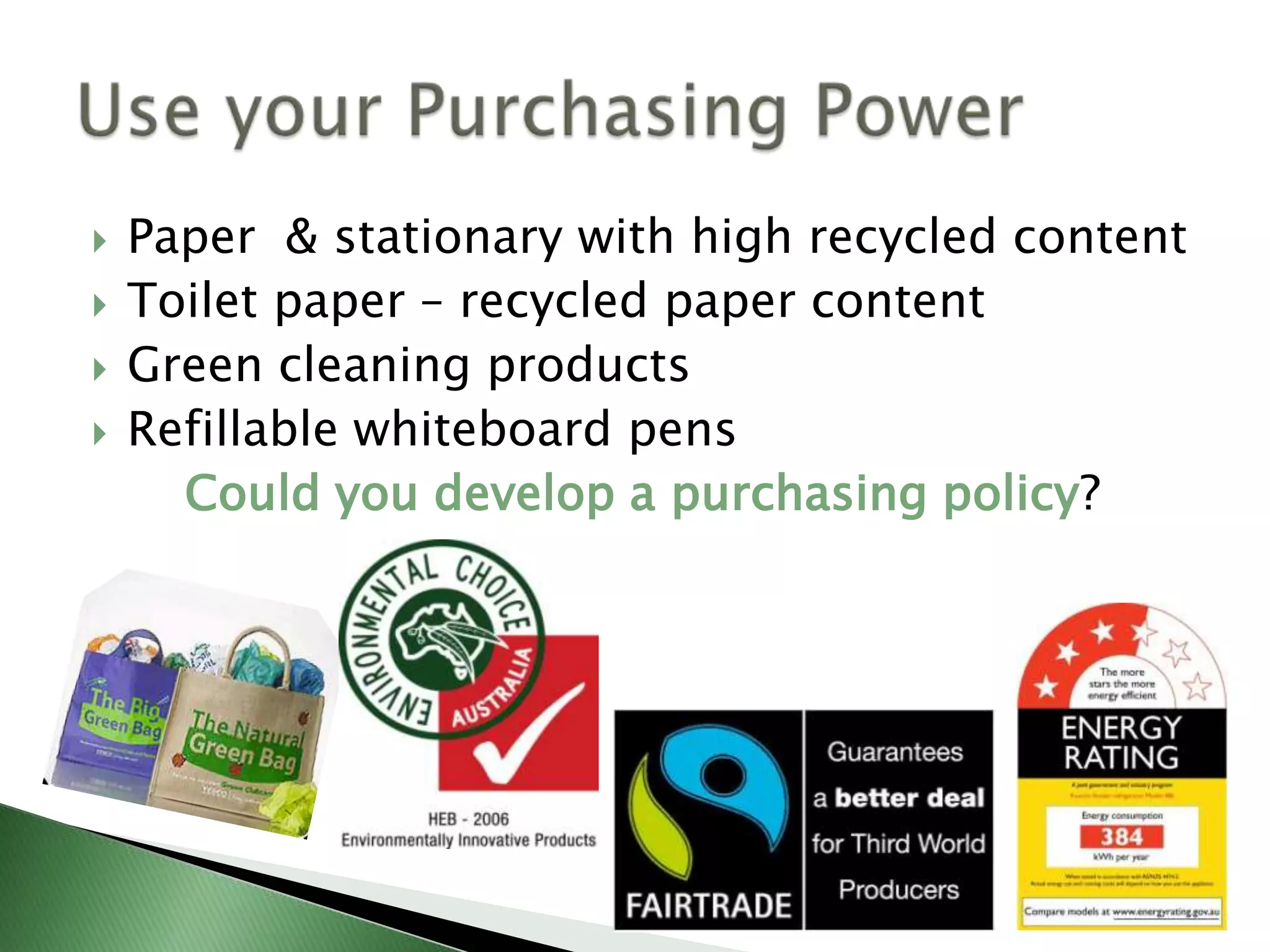
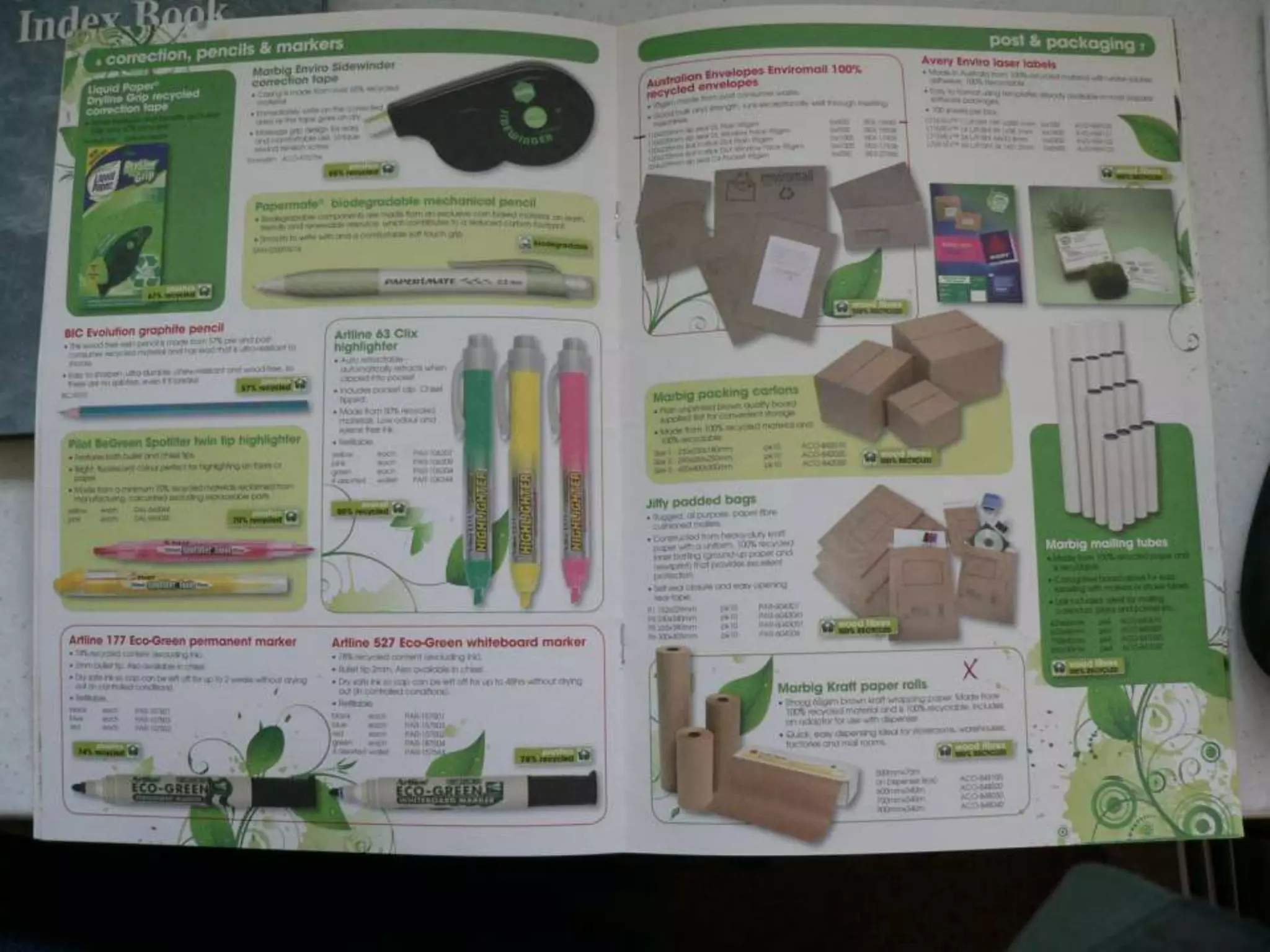
   Paper & stationary with high recycled content
   Toilet paper – recycled paper content
   Green cleaning products
   Refillable whiteboard pens
      Could you develop a purchasing policy?
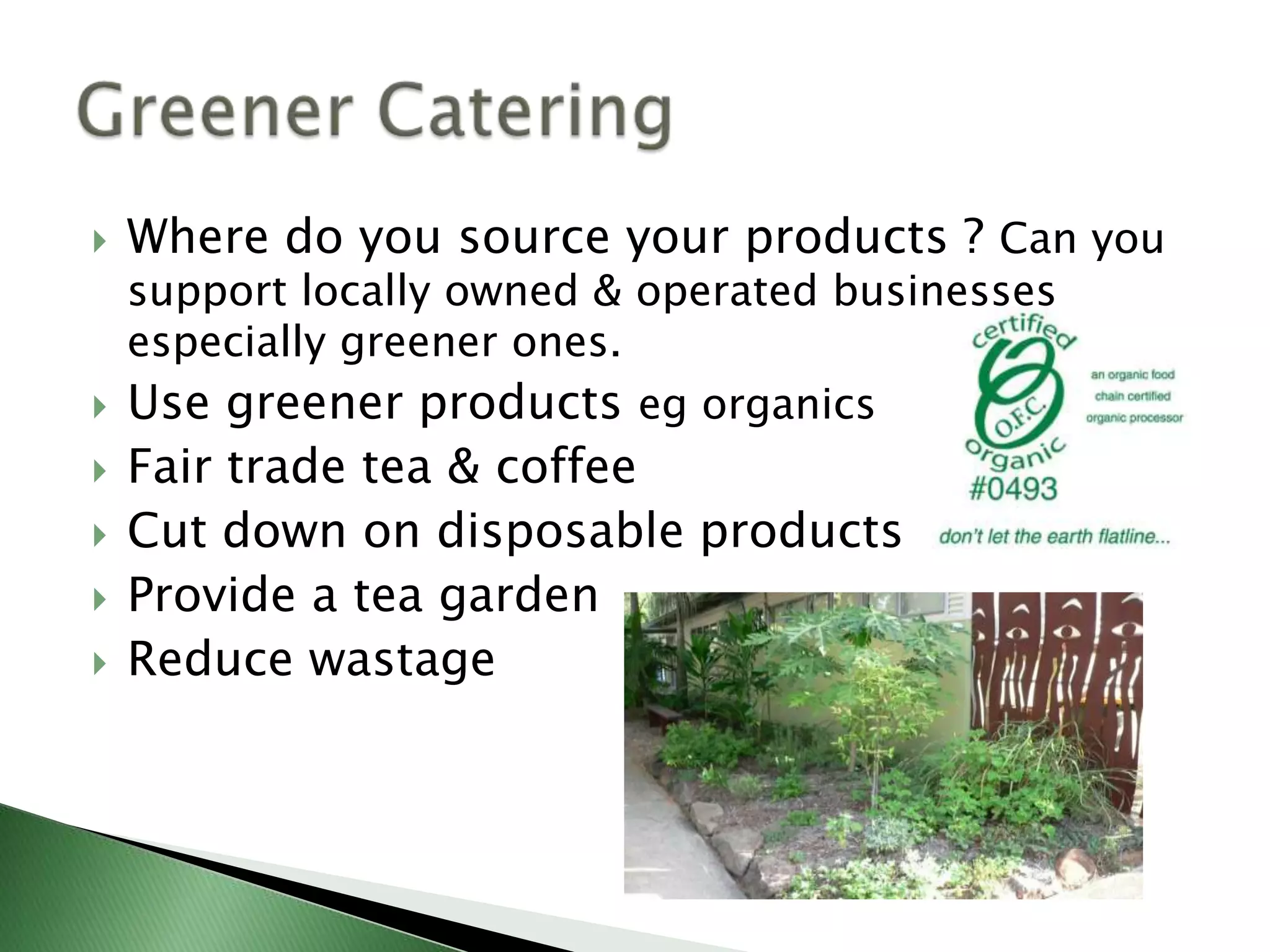
   Where do you source your products ? Can you
    support locally owned & operated businesses
    especially greener ones.
   Use greener products eg organics
   Fair trade tea & coffee
   Cut down on disposable products
   Provide a tea garden
   Reduce wastage
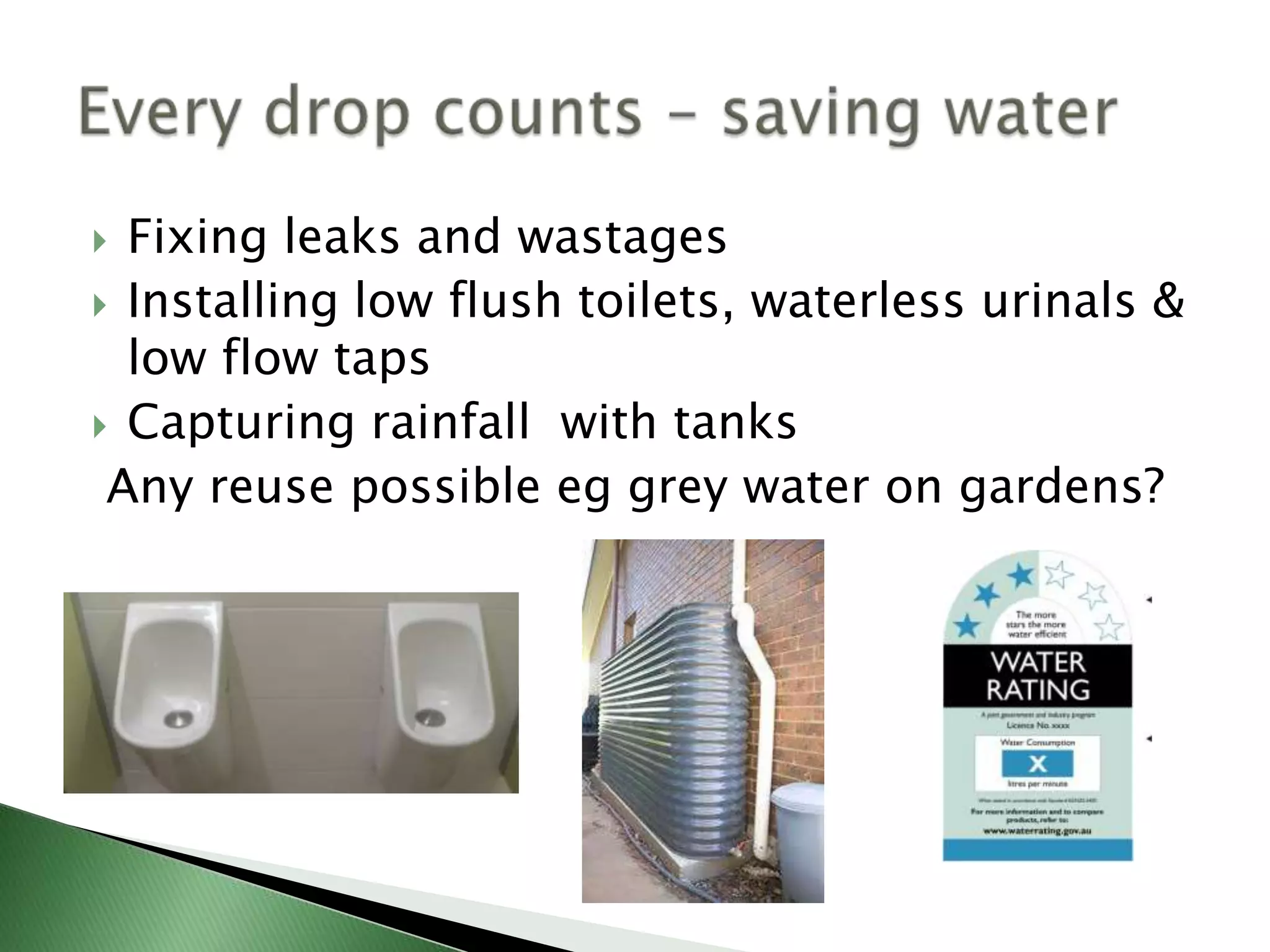
 Fixing leaks and wastages
 Installing low flush toilets, waterless urinals &
  low flow taps
 Capturing rainfall with tanks
 Any reuse possible eg grey water on gardens?
   Fleet cars - are they petrol guzzlers?
   Reducing need for travel- eg e-
    conferencing, on-line learning
   Encouraging use of public transport eg
    providing info
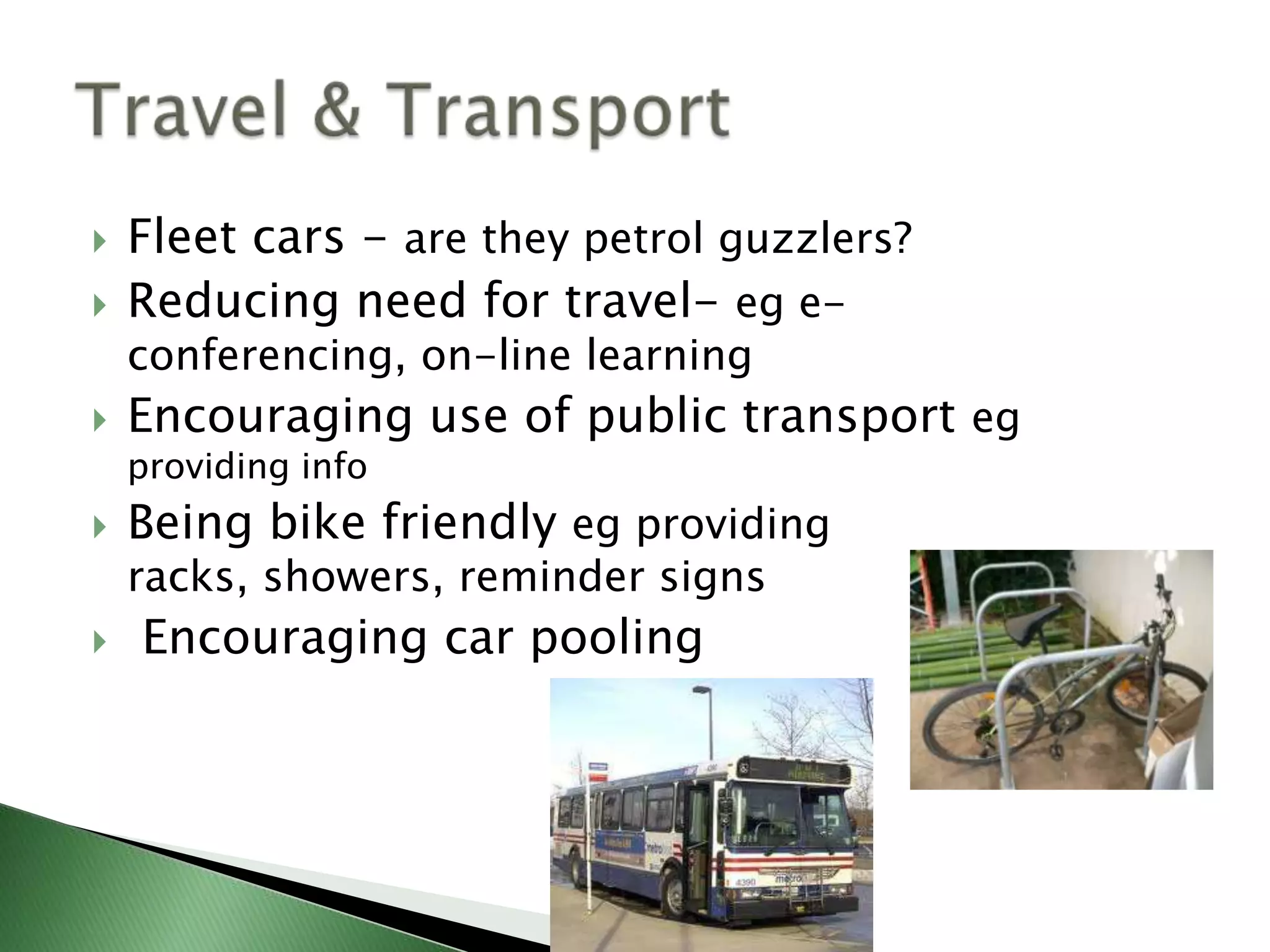
   Being bike friendly eg providing
    racks, showers, reminder signs
   Encouraging car pooling
   What other benefits or advantages might
    there be for you to make these sorts of
    changes ?


   Who could help you with the greening up
    process?
   How can you encourage behaviour change
    and staff development around these issues?


   What has worked or might best work for you?
    Any good news stories to share?
   What is stopping you from moving on this?
    What do you need to get moving?


   What’s on your enviro wish list? What is your
    vision for your centre in 5 years time?
www.greenbiz.com

                          www.environment.nsw.gov.au/sustainbus
                          /industryandsmallbusiness


                        www.resourcesmart.vic.gov.au/for_businesses


Queensland              www.health.qld.gov.au/carbon_management/
Health Carbon           green_office_guide.pdf
Management Unit
              www.energyrating.gov.au/library/pubs/greenofficeguide.pdf
www.aashe.org/resources


Australian Campuses Towards Sustainability


www.acts.asn.au
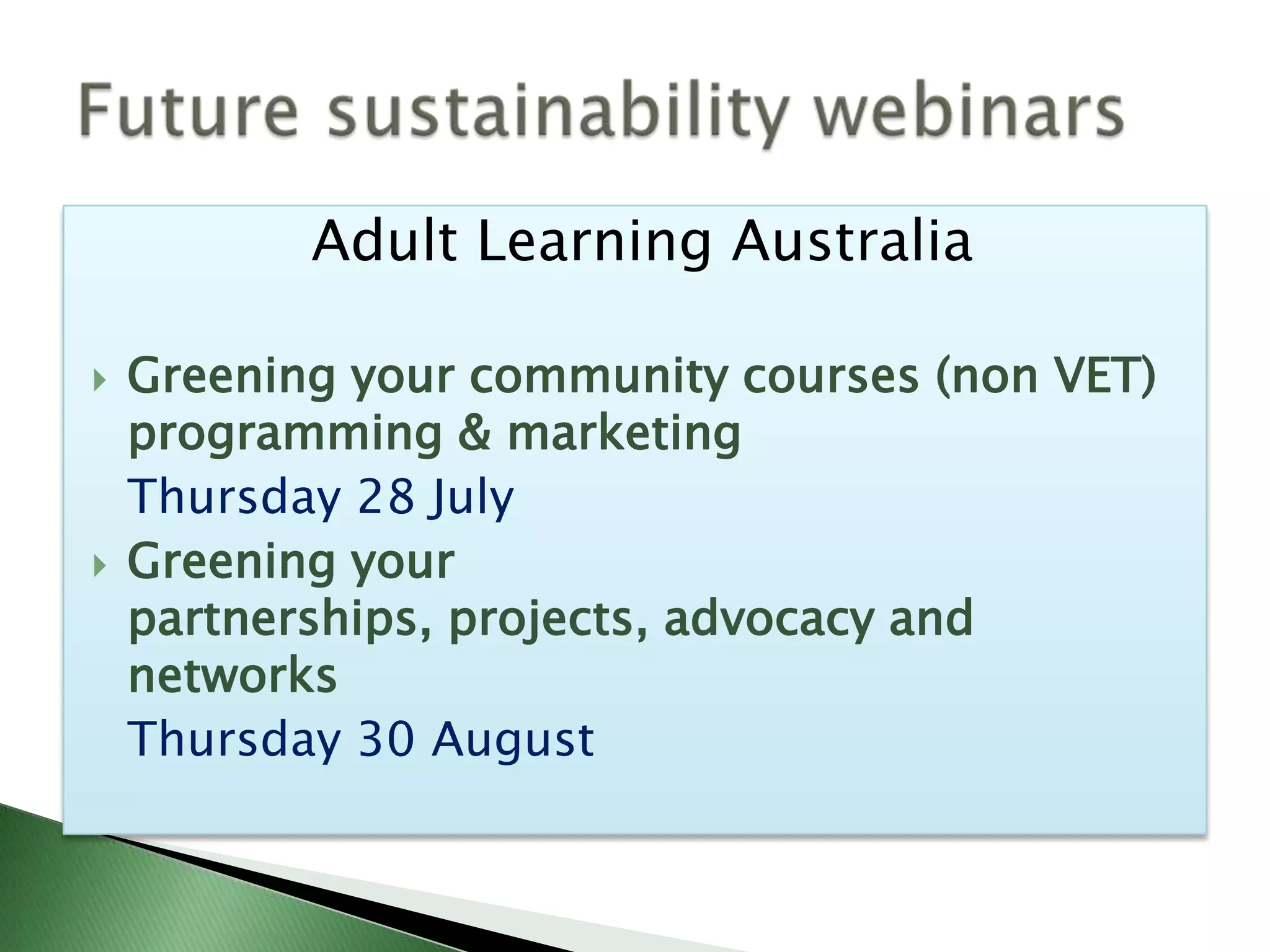
Adult Learning Australia

   Greening your community courses (non VET)
    programming & marketing
    Thursday 28 July
   Greening your
    partnerships, projects, advocacy and
    networks
    Thursday 30 August
Thanks for your participation from Katrina, Richard,
                Patricia and Michael

Greening infrastructure & operations, session 2, July 2011

  • 1.
    Welcome from Katrina Shields& Richard Vinycomb of Byron Region Community College
  • 2.
    Identify where environmental improvements can be made in infrastructure & operations through savings in: energy, waste, water, travel & transport, greener catering and using your purchasing power.  Reflect on what might work for you, share change strategies and aspirations... We encourage your participation..
  • 3.
    Australia has the highest greenhouse gasses emissions per capita in the developed world.  Our waste production is 2nd highest in the world after the USA, with 690kg per year being sent to landfill per person.  Our power consumption per capita is four times the average in the world...
  • 4.
    Like all organisationsand households our centres have significant environmental impacts from their buildings and operations:  Physical building footprints  Energy required to run normal operations (and associated emissions)  Consumption of resources (everything from cars to copiers to paper clips!)  Waste produced as a result of normal operations
  • 5.
    Retro fitting small changes ? Govt rebates, sponsorship, donations  Redesign big changes in buildings eg passive solar design, green building ? Grants, rebates, pro bono design work  Promoting behaviour changes in staff & students ? Incentives, professional development, awards, communications, change in purchasing policies.  Educating building users and raising community awareness generally ? signs, posters, media stories, orientations
  • 6.
    Consider: Source renewable energy eg sign up for green power. Cutting consumption through:  Lighting- installing power saving bulbs, skylights, auto turn off devices or delamping..  Air con used for cooling & heating – change thermostat settings, turn off when out of room, provide more natural ventilation, encourage dressing for the temperature, install insulation..
  • 7.
    Equipment use – do you need all the fridges, TV’s, printers etc?  Standby power or “ghost load” – turning off at the wall  Using smart meters to give feedback on consumption. Myth Busting: “It’s better to leave things on” Not true! Turning off when out of the room for more than 10 seconds saves power. It does not damage or wear out lights, fans etc.
  • 8.
    Providing Recycling systems- separation bins  Organic waste collection & composting  Reducing use of disposable products eg plastic bags, water bottles, styrofoam cups  Finding an E waste collection – what Do you do with old equipment?
  • 9.
    Paper & stationary with high recycled content  Toilet paper – recycled paper content  Green cleaning products  Refillable whiteboard pens Could you develop a purchasing policy?
  • 11.
    Where do you source your products ? Can you support locally owned & operated businesses especially greener ones.  Use greener products eg organics  Fair trade tea & coffee  Cut down on disposable products  Provide a tea garden  Reduce wastage
  • 12.
     Fixing leaksand wastages  Installing low flush toilets, waterless urinals & low flow taps  Capturing rainfall with tanks Any reuse possible eg grey water on gardens?
  • 13.
    Fleet cars - are they petrol guzzlers?  Reducing need for travel- eg e- conferencing, on-line learning  Encouraging use of public transport eg providing info  Being bike friendly eg providing racks, showers, reminder signs  Encouraging car pooling
  • 14.
    What other benefits or advantages might there be for you to make these sorts of changes ?  Who could help you with the greening up process?
  • 15.
    How can you encourage behaviour change and staff development around these issues?  What has worked or might best work for you? Any good news stories to share?
  • 16.
    What is stopping you from moving on this? What do you need to get moving?  What’s on your enviro wish list? What is your vision for your centre in 5 years time?
  • 17.
    www.greenbiz.com www.environment.nsw.gov.au/sustainbus /industryandsmallbusiness www.resourcesmart.vic.gov.au/for_businesses Queensland www.health.qld.gov.au/carbon_management/ Health Carbon green_office_guide.pdf Management Unit www.energyrating.gov.au/library/pubs/greenofficeguide.pdf
  • 18.
  • 19.
    Adult Learning Australia  Greening your community courses (non VET) programming & marketing Thursday 28 July  Greening your partnerships, projects, advocacy and networks Thursday 30 August
  • 20.
    Thanks for yourparticipation from Katrina, Richard, Patricia and Michael